21 Modern Traditional Dining Room Ideas for Classic Sophistication
Some dining rooms host holidays, homework, and every birthday in between, yet still manage to feel calm and pulled together. That staying power is the heart of modern traditional dining room ideas: classic shapes, honest wood, and tailored details, softened just enough for real family life.
Rooms in this style lean on pieces that age well: a solid wood table, upholstered host chairs, a chandelier with real presence, and millwork that gives plain walls some architecture. Warm earth tones sit comfortably here too, the way terracotta and sage green home decor pairs clay warmth with garden calm. The 21 ideas ahead build the look layer by layer, from rugs and lighting to the small styling moves that make guests linger after dessert.
Wingback Host Chairs

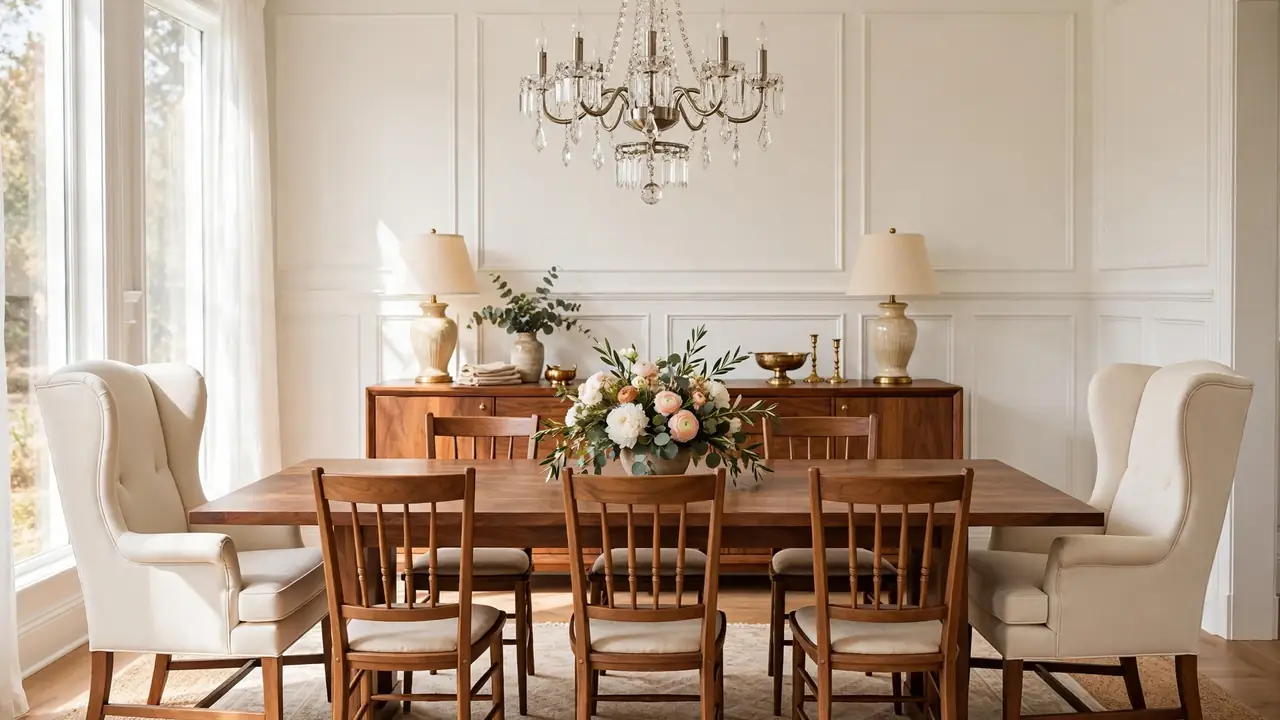
Two wingback chairs at the head and foot of the table change the whole posture of a dining room. Their tall backs frame the table like punctuation, giving the host seats real presence without a full matching set. Cloth wings also soften echoes in rooms with hard floors and bare walls.
Side chairs can stay simple and lighter in scale, which keeps the room from feeling like a furniture showroom. Choose upholstery that shrugs off spills, such as performance linen or a tight cotton weave in cream or pale gray. In my experience, guests settle in longer when the end chairs feel like armchairs, and long dinners are exactly what this style does best.
Crystal Chandelier Glow
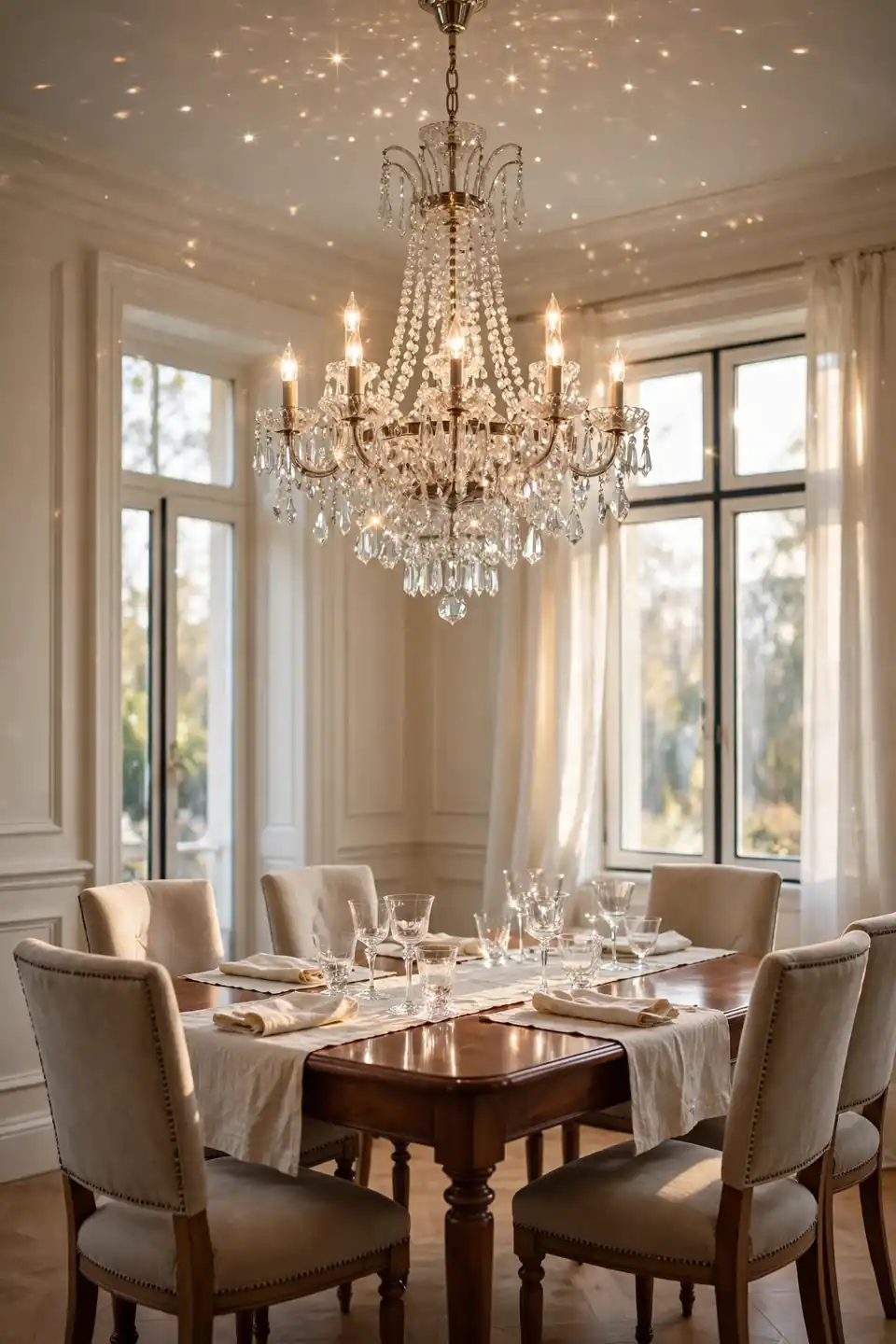
- Hang the chandelier so its lowest point sits about 30 inches above the tabletop.
- Pick a fixture roughly one half to two thirds the width of the table.
- Crystal or glass drops scatter candlelight and daylight across the ceiling, softening shadows on faces.
- Put the fixture on a dimmer so weeknight dinners and holidays share one light source.
- Match metal finishes to the hardware already in the room, brass with brass, nickel with nickel.
A chandelier earns its place by doing two jobs at once: lighting the meal and marking the room’s center from the doorway. Scale matters more than sparkle. An undersized fixture floats and looks lost, while one slightly too grand still reads as a deliberate statement in a traditional room.
Wainscoting Wall Panels

Quick Tip: Run wainscoting up to chair rail height, about 36 inches, and paint it the same color as the trim. Panels protect walls from chair backs while adding the shadow lines that make a plain box room feel built, not decorated. Picture frame molding above the rail doubles the effect for very little money.
Millwork suits this style because it reads as architecture rather than ornament. Keep panel spacing even, and let the gaps land behind the sideboard and chairs where the eye rests. A satin finish wipes clean after spaghetti night, which matters more than any design rule in a room that hosts real meals.
Sideboard Styling Layers

BEFORE: The sideboard held a single lonely lamp and a stack of mail, its long surface reading as storage instead of a styling moment. The wall above it stayed blank, so the whole end of the room felt like an afterthought.
AFTER: A pair of lamps now anchors both ends, a low stack of art books sits center, and a framed landscape hangs above at eye level. A small bowl catches keys and mail, so the surface stays styled on ordinary Tuesdays too.
Symmetry does the heavy lifting on a sideboard, and this style loves symmetry. Work in pairs where you can: two lamps, two candlesticks, two stacks of books. One organic piece, like a branch in a vase, keeps the arrangement from stiffening into a hotel lobby display.
Layered Rug Foundation
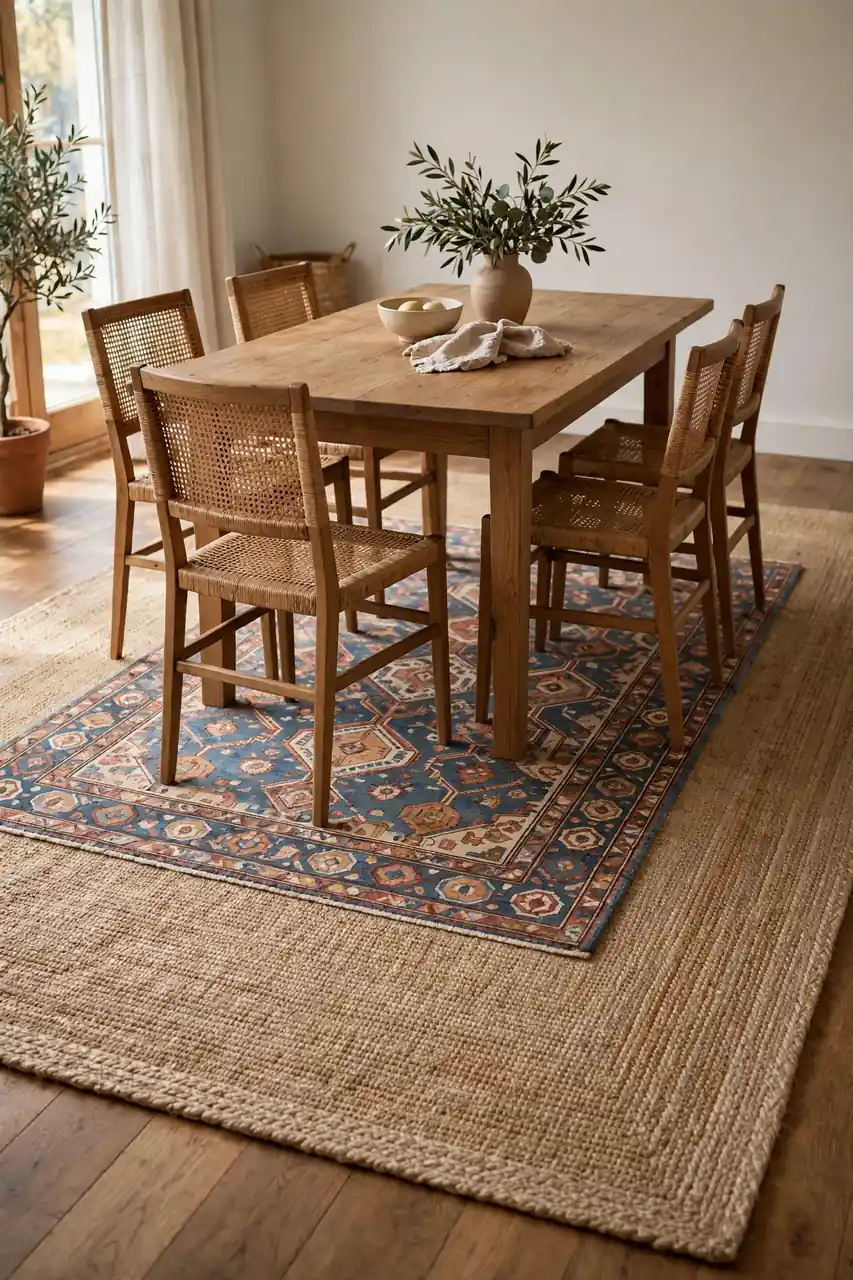
- Measure the table and chairs first; the rug should extend at least 24 inches beyond the table on every side.
- Lay a large, low pile base rug in a warm neutral that hides crumbs and chair marks.
- Center a smaller patterned rug on top, leaving a border of the base visible on all sides.
- Pull every chair out as if guests were sitting down, and confirm all legs stay on the rug.
Two rugs sound fussy until a red wine spill lands on the small top layer instead of the big expensive one. The layered edge also gives a plain floor the tailored border this style loves. Choose patterns that share one color with the curtains or chair fabric.
Round Versus Rectangular Tables

Table shape quietly decides how conversation flows, how many guests fit, and how the room breathes around the edges.
| Feature | Round Table | Rectangular Table |
|---|---|---|
| Guest Count | Six guests with elbow room | Eight to ten in a line |
| Conversation | Everyone joins one talk | Small groups form at ends |
| Best Room | Square rooms and bay nooks | Long, narrow dining rooms |
| Watch Out | Centerpieces can crowd the middle | End seats feel far apart |
Rectangular tables suit the long, narrow rooms most homes actually have, and they leave clear lanes for serving. Round tables shine in square rooms, where they soften corners and keep every guest inside the conversation. Extendable versions of either shape earn their keep at holidays.
Linen Upholstered Seating

Do:
- Choose performance linen that releases stains in a normal wash cycle.
- Mix two chair styles: upholstered hosts and wooden sides.
- Keep seat height near 19 inches so elbows rest naturally at the table.
Don’t:
- Pick dry clean only fabrics for a room built around food.
- Push every chair pattern into competition with the rug.
- Skip seat cushions on wooden chairs guests use for hours.
Linen brings the softness this style needs without the formality of silk or velvet everywhere. Its slight wrinkle reads as relaxed rather than sloppy, especially in oatmeal, flax, and pale gray tones. I’ve noticed families actually use the dining room more once the chairs forgive everyday life.
Brass Sconce Lighting
Cost: Moderate, hardwired pairs start near two hundred dollars
Time: One afternoon for an electrician to install both
Skill Level: Advanced for wiring, beginner for styling
Best For: Rooms where a chandelier alone leaves corners dark
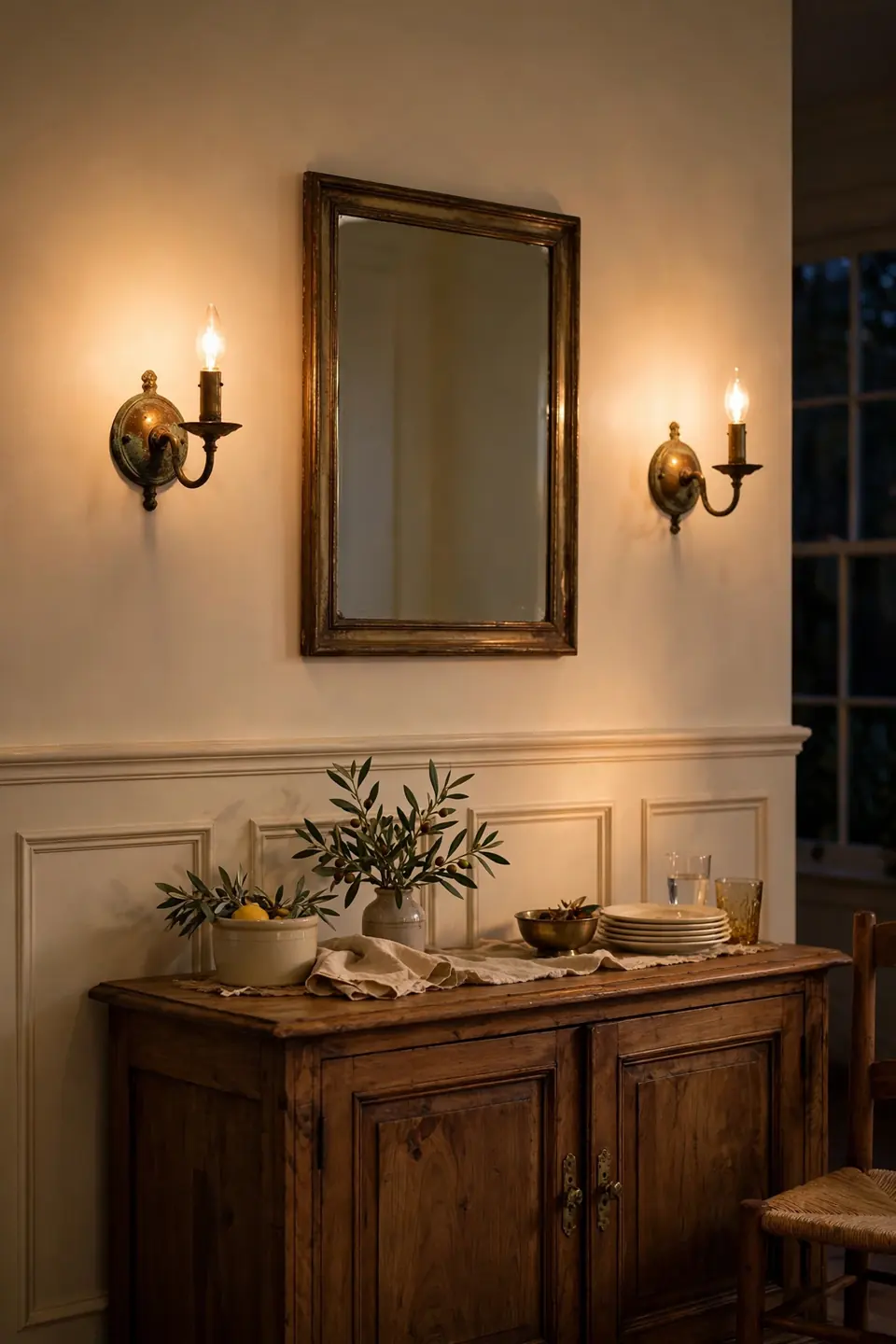
Sconces wash the walls with the same warm glow that makes vintage brass home decor accents feel collected rather than matched. Place pairs flanking a sideboard or mirror, and let their light graze the wainscoting so the millwork shadows show. Brass shades aimed downward keep the bulbs hidden from seated guests. Match the sconce finish to the chandelier so the room reads as one decision. On dimmers, they carry weeknight dinners without the overhead light at all.
Floral Centerpiece Arrangements

A low, wide arrangement of garden roses, hydrangeas, and trailing greenery gives the table a center that guests can talk across. Fresh flowers suit this style because they echo the formality of the room while staying alive and slightly unruly.
Build the arrangement in a footed compote or a wide silver bowl, both shapes this style has loved for a century. Keep the tallest stems below eye level when seated, roughly 12 inches, and let a few blooms nod over the rim. When fresh flowers fade, dried hydrangeas hold the same shape for months of ordinary Tuesdays. One arrangement, confidently sized, beats three small vases every time.
Built In China Cabinet
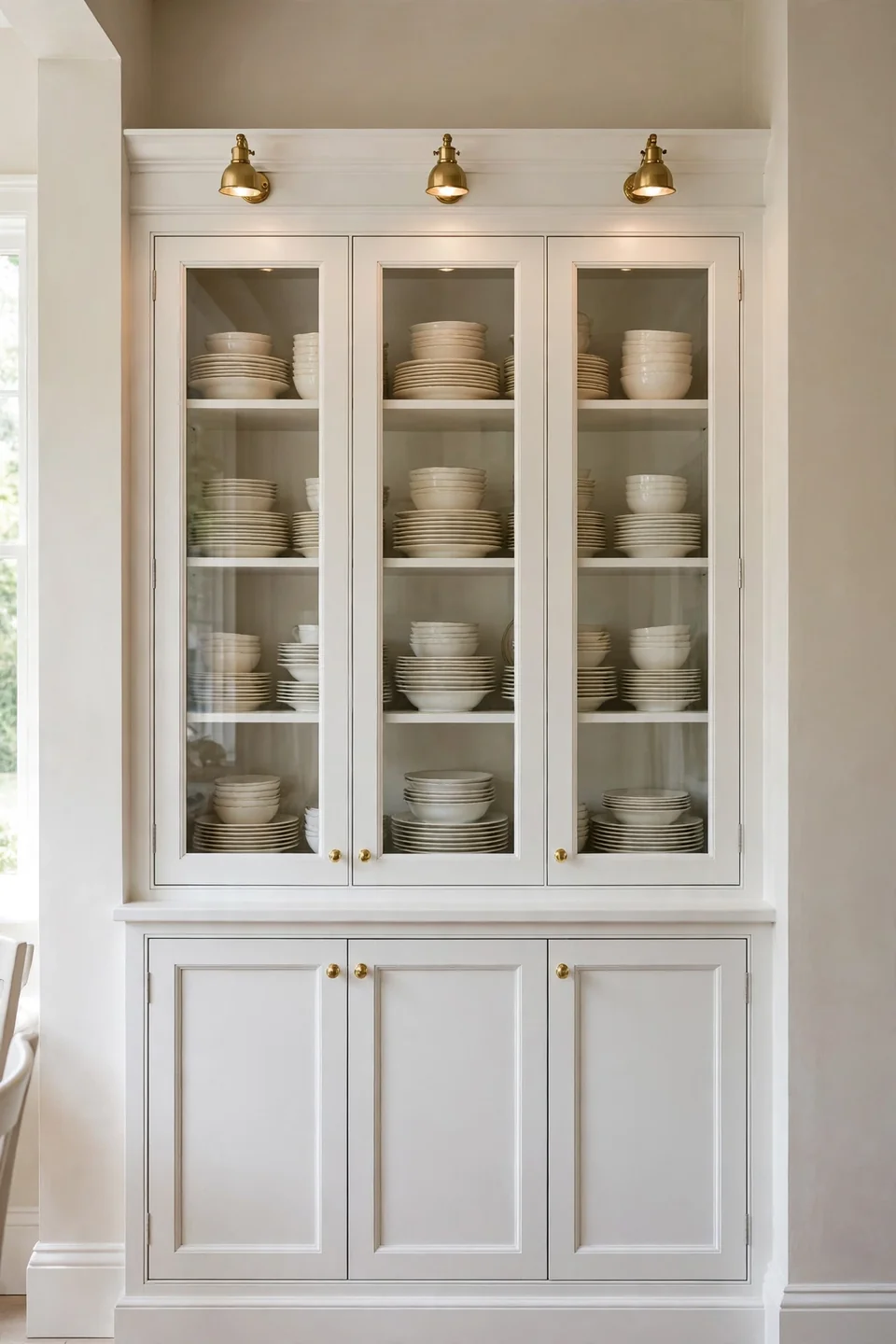
- Paint built ins the same color as the trim so they read as original architecture.
- Display white and cream china in the front rows; color hides behind glass less gracefully.
- Leave one shelf partly empty so the collection breathes instead of crowding.
- Add small brass picture lights above the cabinet crown for evening glow.
- Store everyday dishes in the closed base and save the glass doors for the good pieces.
Built ins give this style its sense of permanence, the feeling that the room was always meant for gathering. Even one wall of shelving around a doorway changes how finished the space feels. Cabinets also end the serving dish shuffle, since platters finally live where the meals happen.
Velvet Dining Chairs
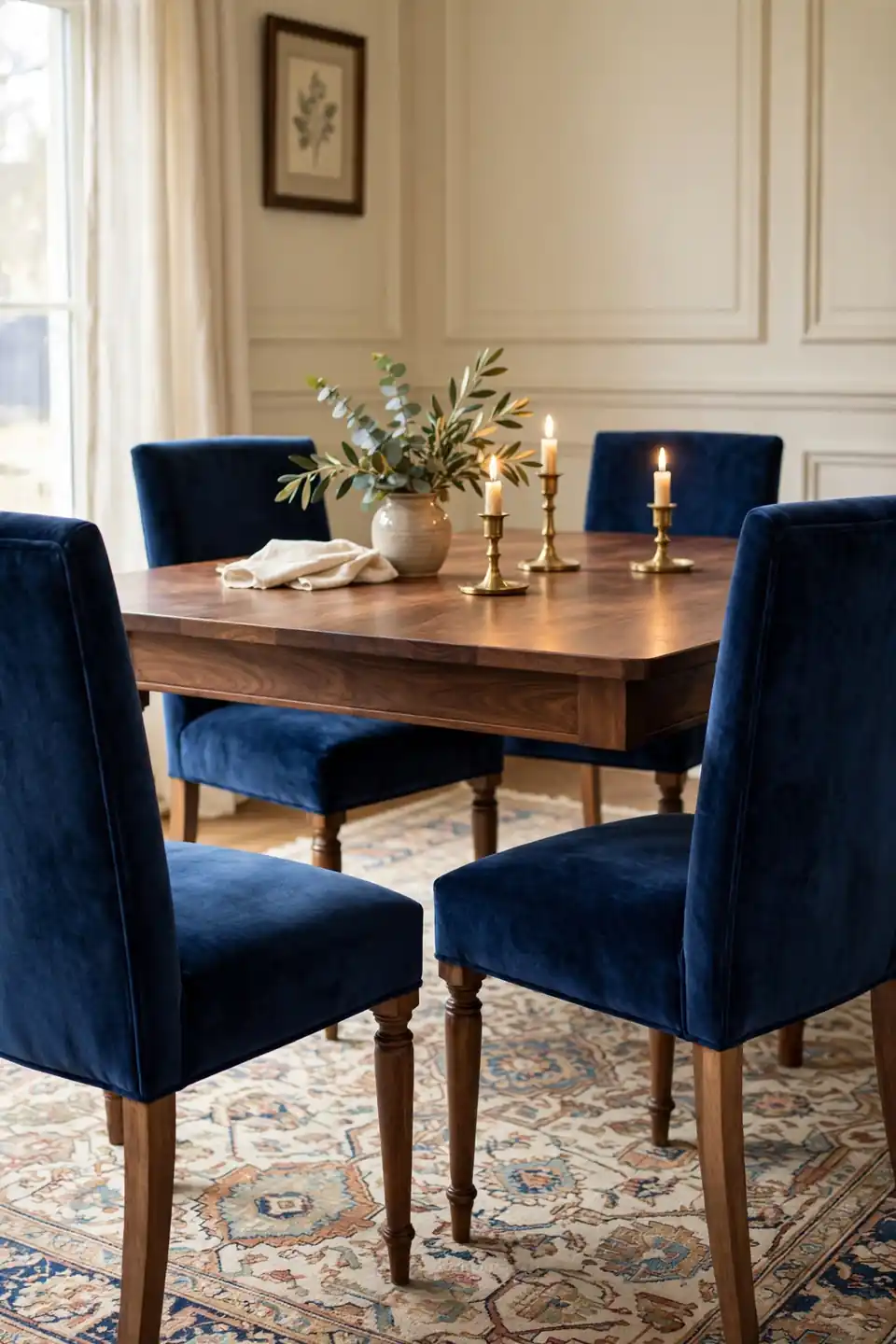
Quick Tip: Choose cotton velvet in a deep, forgiving shade like navy, hunter, or burgundy for dining chairs. Velvet hides crumbs and small spills between cleanings far better than pale linen does, and its pile catches candlelight in a way flat fabrics never manage.
Velvet side chairs with wooden legs strike this style’s favorite balance: formal fabric, honest frame. Brush the pile one direction before guests arrive, and small marks disappear. A full set in velvet can feel heavy, so many rooms use it only on the host chairs and keep linen on the sides. The mix also stretches the budget toward the chairs people photograph most.
Crown Molding Details
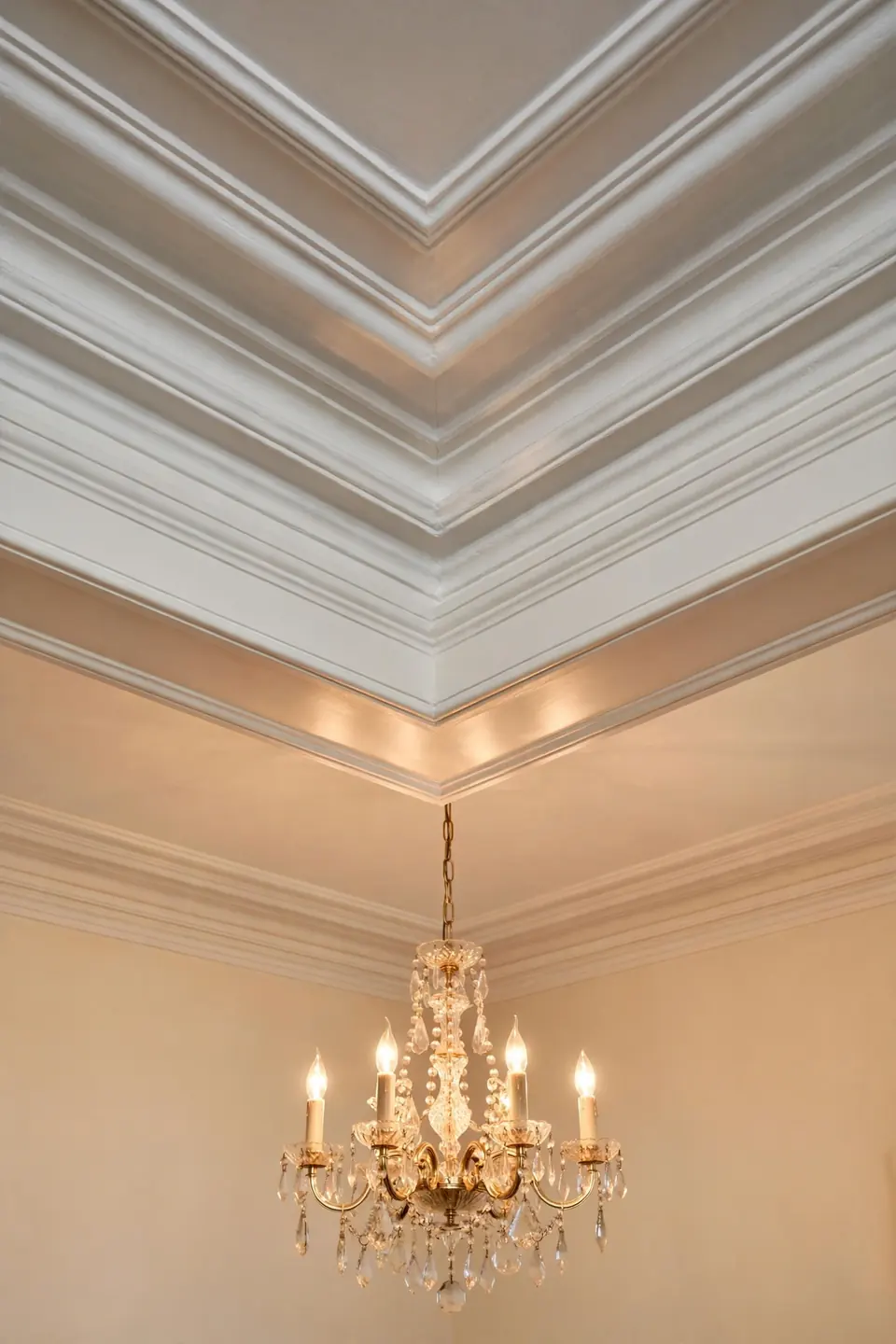
BEFORE: The ceiling simply stopped at the walls, and the tall room felt like a rental box no matter how good the furniture got. Every photo of the space showed the same unfinished edge at the top.
AFTER: A stacked crown profile, built from three simple trim pieces, now caps every wall and catches a line of light from the chandelier. The room reads as architecture first and furniture second, exactly the order this style prefers.
Built up crowns cost less than single large profiles and paint up to look like one carved piece. Match the crown depth to ceiling height: shallow profiles for eight foot ceilings, deeper stacks for nine and above. Caulk and one careful paint line separate a crisp install from a wavy one.
Layered Table Settings
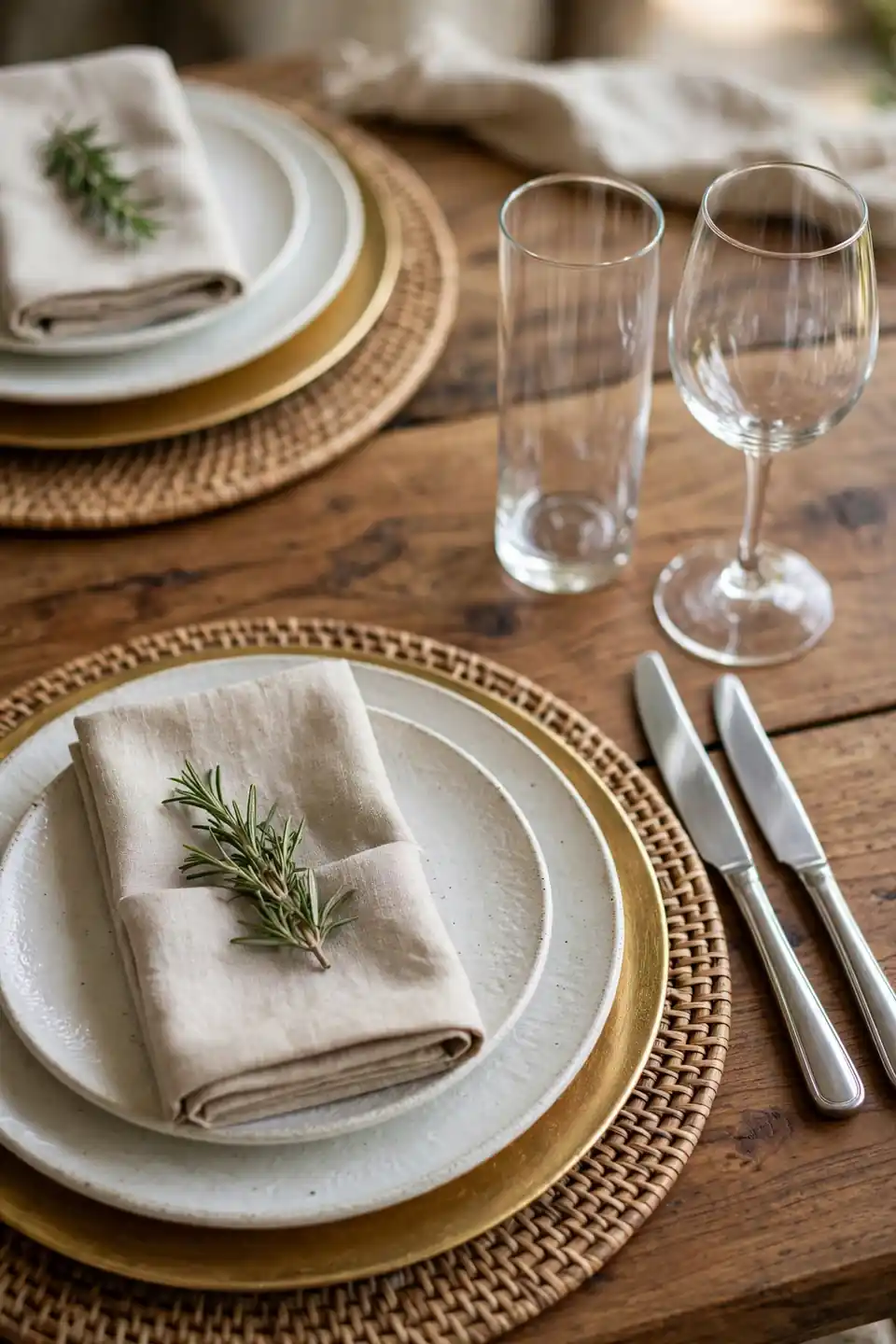
- Start with a charger or a woven placemat to anchor every setting.
- Stack the dinner plate, then the salad plate, keeping rims aligned.
- Fold the napkin under the forks or lay it across the plate in a soft rectangle.
- Set glassware above the knives: water first, then wine, in the order of use.
- Finish with one small flourish per setting, a sprig of rosemary or a handwritten place card.
Layers give a table the collected, generous feeling this style is known for, and they cost nothing but a few extra minutes. Keep the palette to two metals and one accent color so the settings feel planned rather than piled. Guests notice the care before they notice any single piece.
Wood Tone Table Finishes
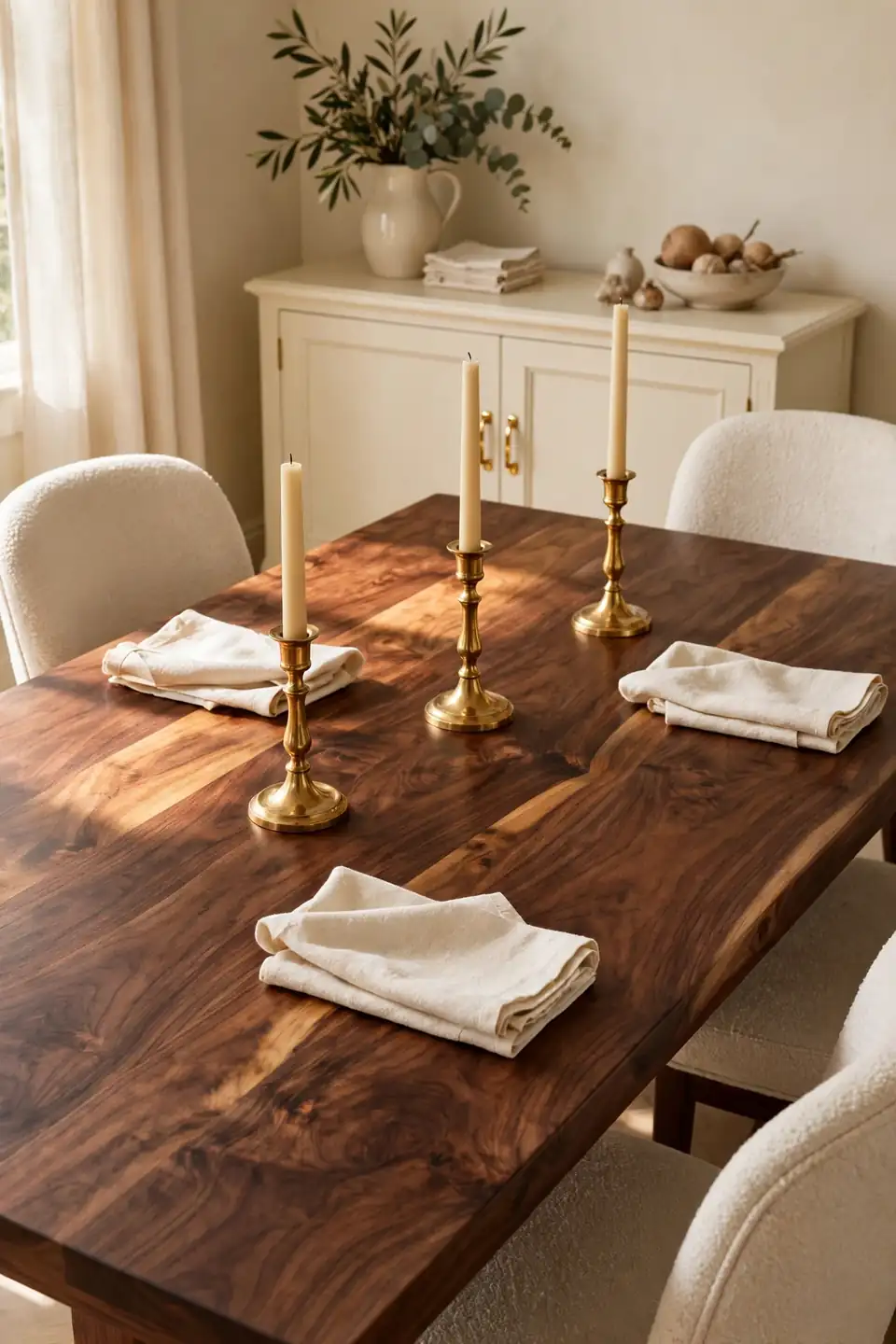
The table finish sets the room’s temperature before a single chair or curtain enters the picture.
| Feature | Dark Walnut | Light Oak |
|---|---|---|
| Mood | Deep, formal, evening ready | Airy, casual, daylight friendly |
| Care | Shows dust, hides stains well | Hides dust, shows stains fast |
| Pairs With | Cream linen, brass, deep green | White linen, nickel, pale blue |
| Watch Out | Can darken small rooms | Can feel unfinished bare |
Medium tones split the difference and forgive the most, which is why so many family tables land there. Whatever the finish, keep the sideboard one shade lighter or darker rather than an exact match. A little separation keeps the wood pieces from merging into one heavy block.
Window Drapery Panels

Do:
- Hang panels high and wide so the glass stays fully visible in daylight.
- Let hems just kiss the floor or puddle one inch for a softer line.
- Line the panels so the fabric hangs in even, tailored folds.
Don’t:
- Mount rods at the window frame, which shrinks the whole wall.
- Choose skimpy panels that stretch flat instead of folding.
- Match the drape color exactly to the wall, which flattens both.
Drapery is where this style spends real money, because tall, full panels change plain windows into architecture. A muted stripe or small tone on tone pattern keeps large expanses of fabric interesting. Panels that frame a garden view also pull the outdoors into the meal.
Dining Rug Sizing Rules
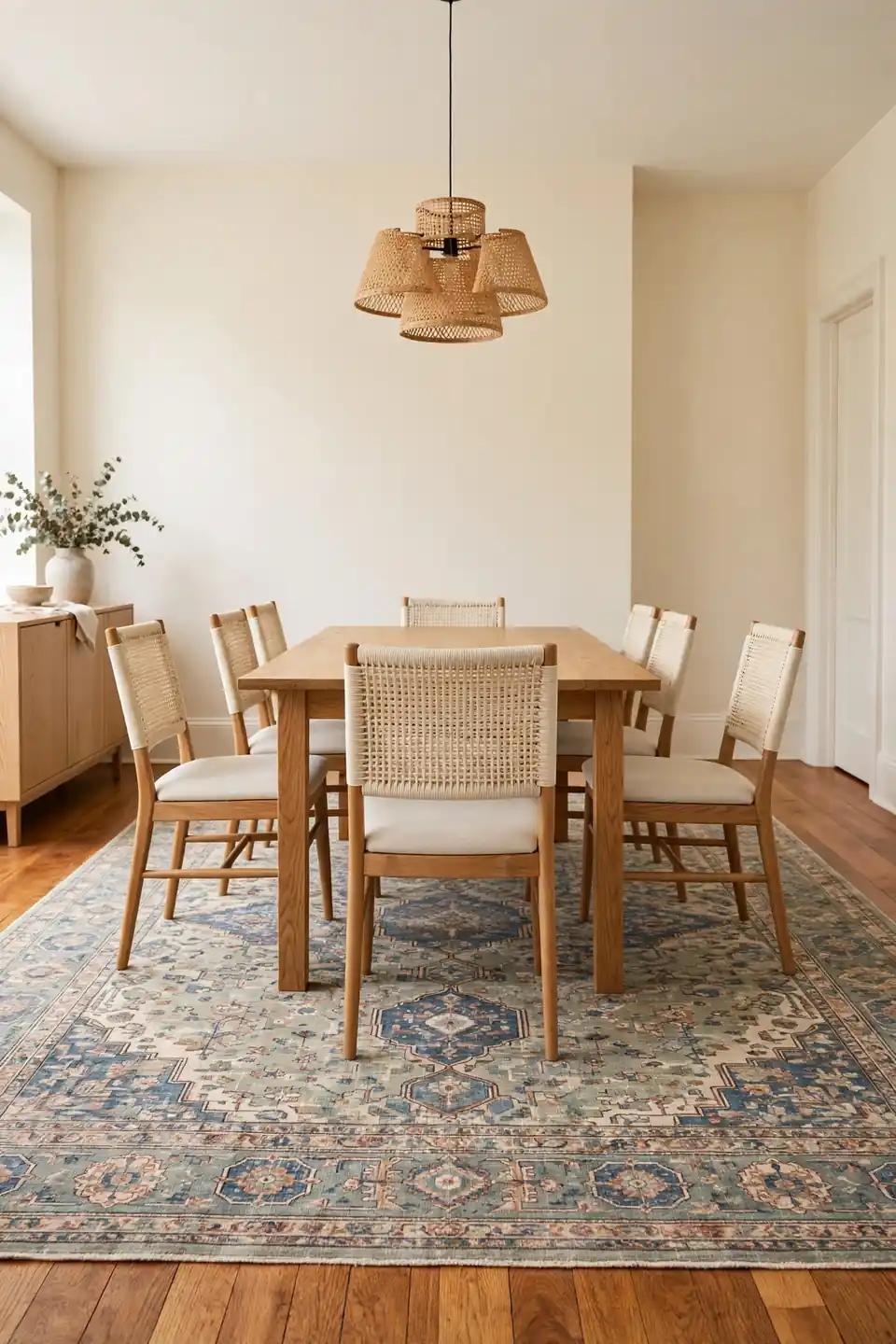
Cost: Moderate, a wool blend rug outlasts synthetics by years and anchors the whole room
Time: One hour to measure, mark, and lay correctly
Skill Level: Beginner, painter’s tape does the hard part
Best For: Hardwood floors that echo and chill bare feet in winter
Tape the rug outline on the floor and live with it for a day before ordering. Pull the chairs out, sit down, stand up, and check that the back legs never leave the tape. That small test prevents the most common dining room mistake: a beautiful rug two sizes too small. The tape outline also shows where a sideboard will crowd the pattern.
Gallery Wall Artwork

A grid of framed landscapes or botanical prints gives a dining room the collected calm of a library. Matching frames in black, walnut, or aged gold keep varied art reading as one decision. Hang the grid’s center at eye level for a standing viewer, since dining art is mostly seen while entering and serving.
This is where modern traditional dining room ideas borrow from grandmillennial style: needlepoint, silhouettes, and small oil paintings mixed without apology. Keep spacing at two inches between frames, and let one larger piece anchor a corner. Thrift stores and estate sales stock exactly this art, often in frames worth more than the canvas.
Bench Seating Mix
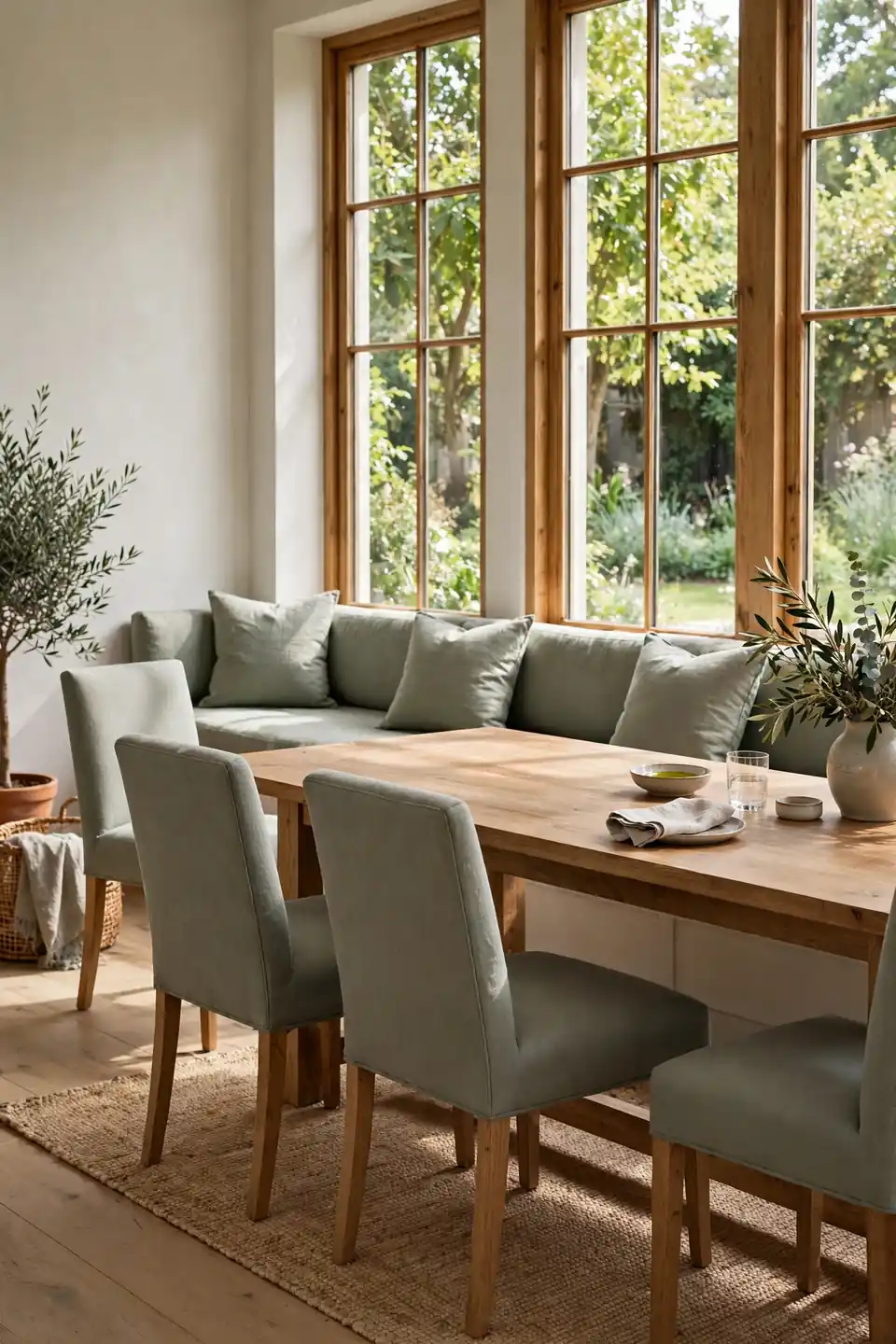
- Set a bench on the window side so sight lines across the table stay open.
- Choose a bench with an upholstered top if kids will slide along it daily.
- Keep two chairs at the ends so the bench never reads as a waiting room.
- Match the bench wood tone to the table legs for a built in feeling.
- Slide the bench fully under the table between meals to widen the walkway.
A bench loosens the formality just enough for weeknight dinners while keeping the tailored bones this style loves. It also seats three cousins where two chairs fit, which every holiday host understands. Cushions in the chair fabric tie the mix together, and they soften the bench’s long straight line.
Candlelight Evening Ambience
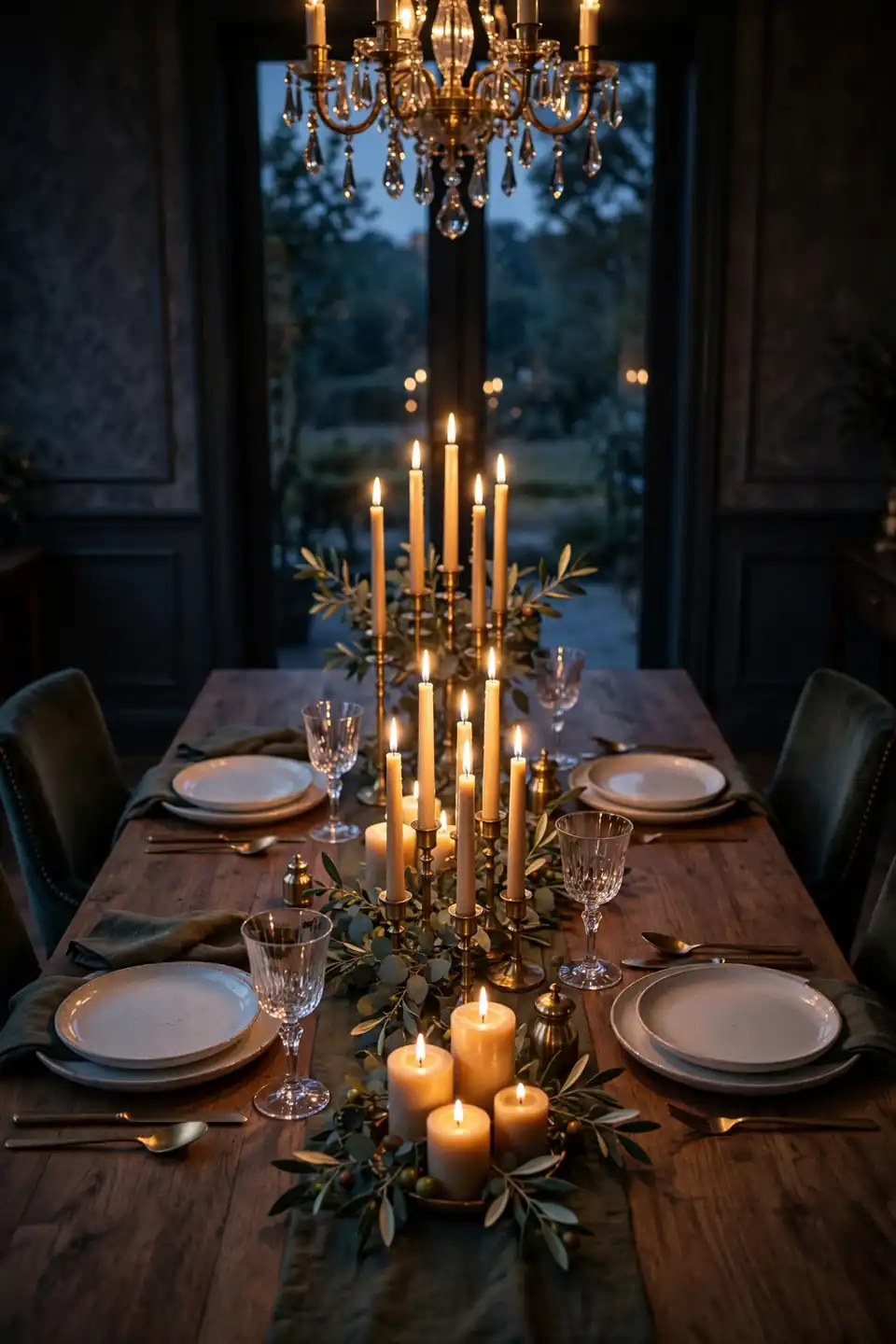
Quick Tip: Cluster candles at three heights down the table center, and keep every flame below seated eye level. Mixed heights stop the row from looking like an airport runway, and low flames let guests see each other clearly across the table all evening.
Candlelight flatters traditional rooms because carved wood, crystal, and brass all answer a flame with depth. Battery candles handle the sideboard and mantel safely, while real tapers earn their place on the table itself. Dim the chandelier to half and the room settles into the glow people remember. It is the cheapest atmosphere a dining room can buy.
Painted Ceiling Accent
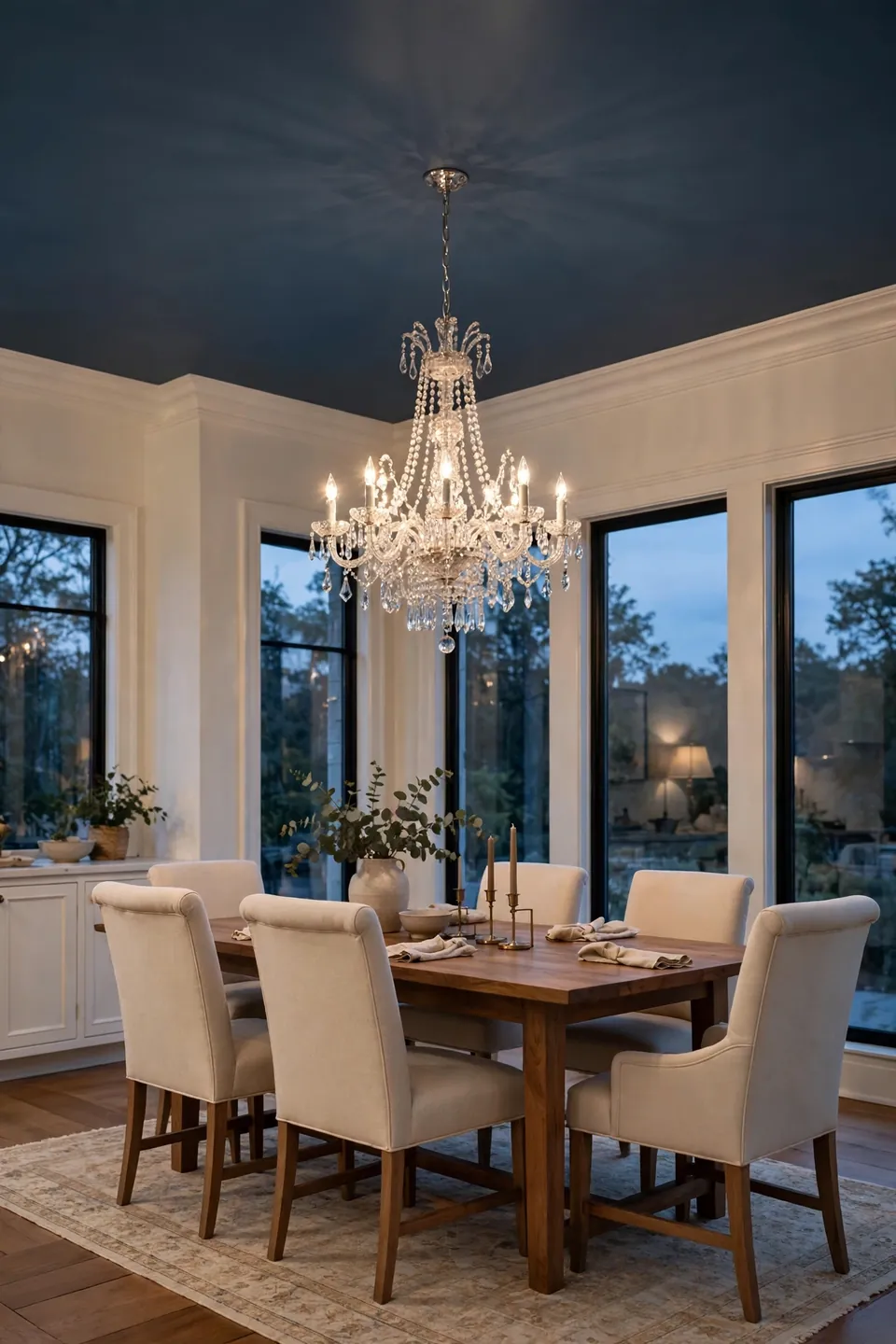
BEFORE: The white ceiling vanished from notice, and the chandelier hung against a blank nothing that made its crystals look dusty. Guests admired the table, then forgot the room the moment they stood up.
AFTER: A soft, deep shade of blue gray now wraps the ceiling, and the chandelier sparkles against it like stars at dusk. The crown molding reads crisper, the walls feel taller, and dinner ends with everyone looking up at least once.
Paint companies call the ceiling the fifth wall, and this style finally treats it that way. Keep the color one family with the walls, only deeper, so the room feels wrapped rather than topped. Test the shade at night under the chandelier, since ceiling color lives mostly by lamplight.
Serving Cart Styling
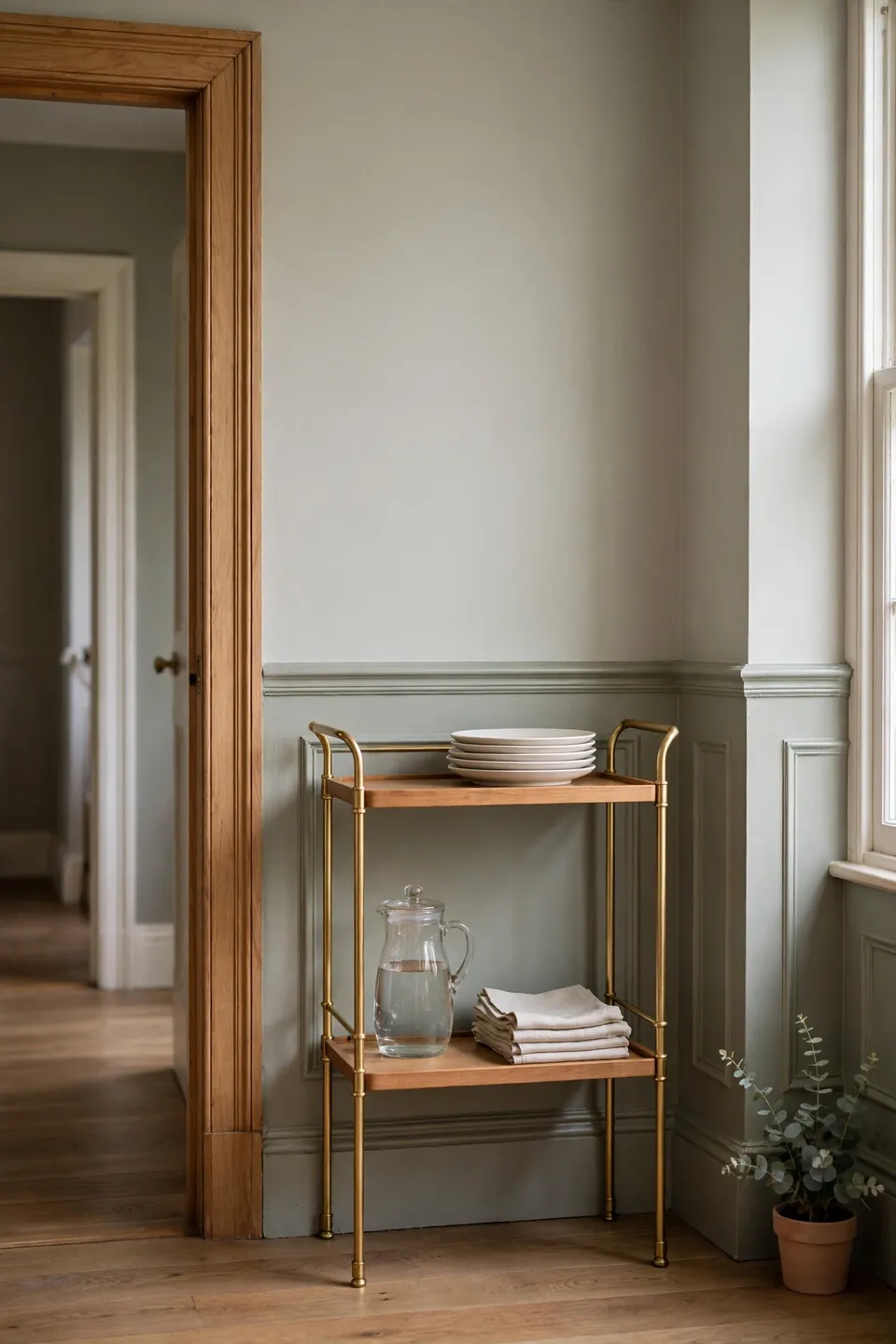
- Park a slim bar cart or tea trolley against the shortest wall, near the kitchen door.
- Load the top tier with the meal’s serving pieces so the table stays clear for elbows.
- Keep drinks, a water pitcher, and spare napkins on the lower tier within easy reach.
- Style the cart between meals with a small plant, stacked plates, and one framed photo.
A serving cart solves the oldest dining room problem: everything landing on the table at once. It also gives small rooms the sideboard moment they cannot fit along a wall. I’ve seen this work well in many cases where a buffet was impossible, and guests read it as thoughtful hosting.
Conclusion
Classic bones, comfortable chairs, light that flatters everyone at the table: that is the whole recipe, and none of it needs a renovation. Start with one layer, the rug or the chandelier, and let the room gather its details slowly. These modern traditional dining room ideas reward patience, because every piece you add should be one you would keep for decades. Good rooms are built one honest layer at a time. Save this list on Pinterest before your next antique store trip, try one idea this weekend, and share it with a friend whose dining room deserves a second life.