21 Vintage Inspired Sunroom Decorating Ideas for Timeless Charm
Sunlight does half the decorating in a glass room, and the other half comes from pieces with a past. The gentle mix at the heart of vintage-inspired sunroom decorating ideas pairs white wicker, faded florals, and worn wood with all that modern glass, softening the glare into a glow. No single piece needs to be a genuine antique; patina, shape, and fabric do the convincing.
Start with what the room already gives you: strong light, a view of green, and hours nobody wants to spend anywhere else. In my experience, secondhand wicker and one good rug change the mood faster than any paint colour. The same warm layering drives cinnamon and cream living room decor, where thrifted texture beats matching sets every time. Below, twenty one ideas build the look slowly, from five minute plant moves to a painted floor weekend.
White Wicker Seating
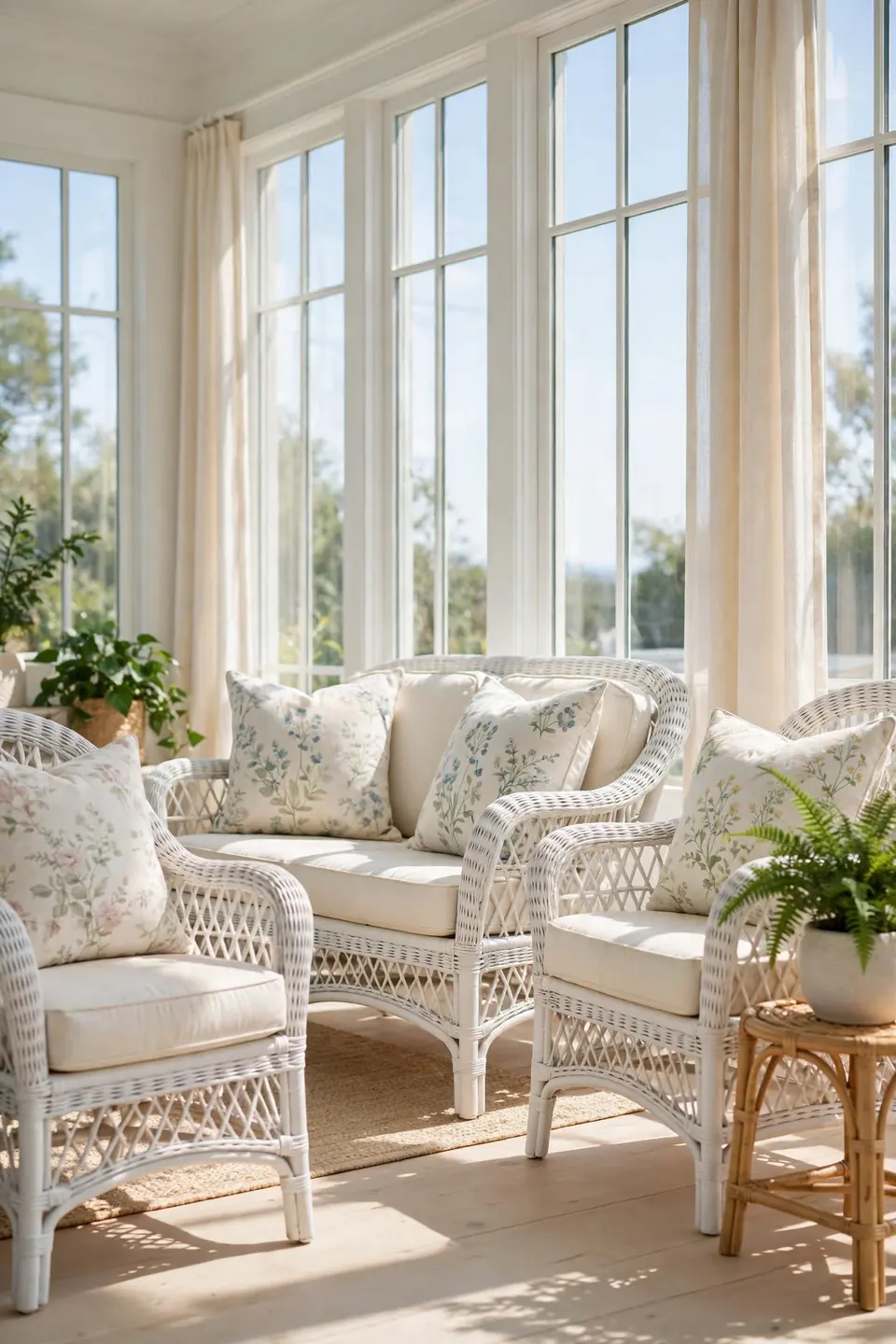
Wicker carries a whole sunroom because its weave throws tiny shadows that read as texture, not clutter. White paint on the frames keeps the look airy against glass walls, while natural honey tones can feel heavy by midday. A loveseat plus two armchairs gives flexible seating without blocking the light path.
Check secondhand pieces for sagging seats and brittle strands before falling for the shape. A firm base matters, because cushions cannot rescue a frame that dips in the middle. One can of exterior white paint and new foam inserts revive a tired set for the price of a single new chair, in most cases.
Floral Cushion Layers
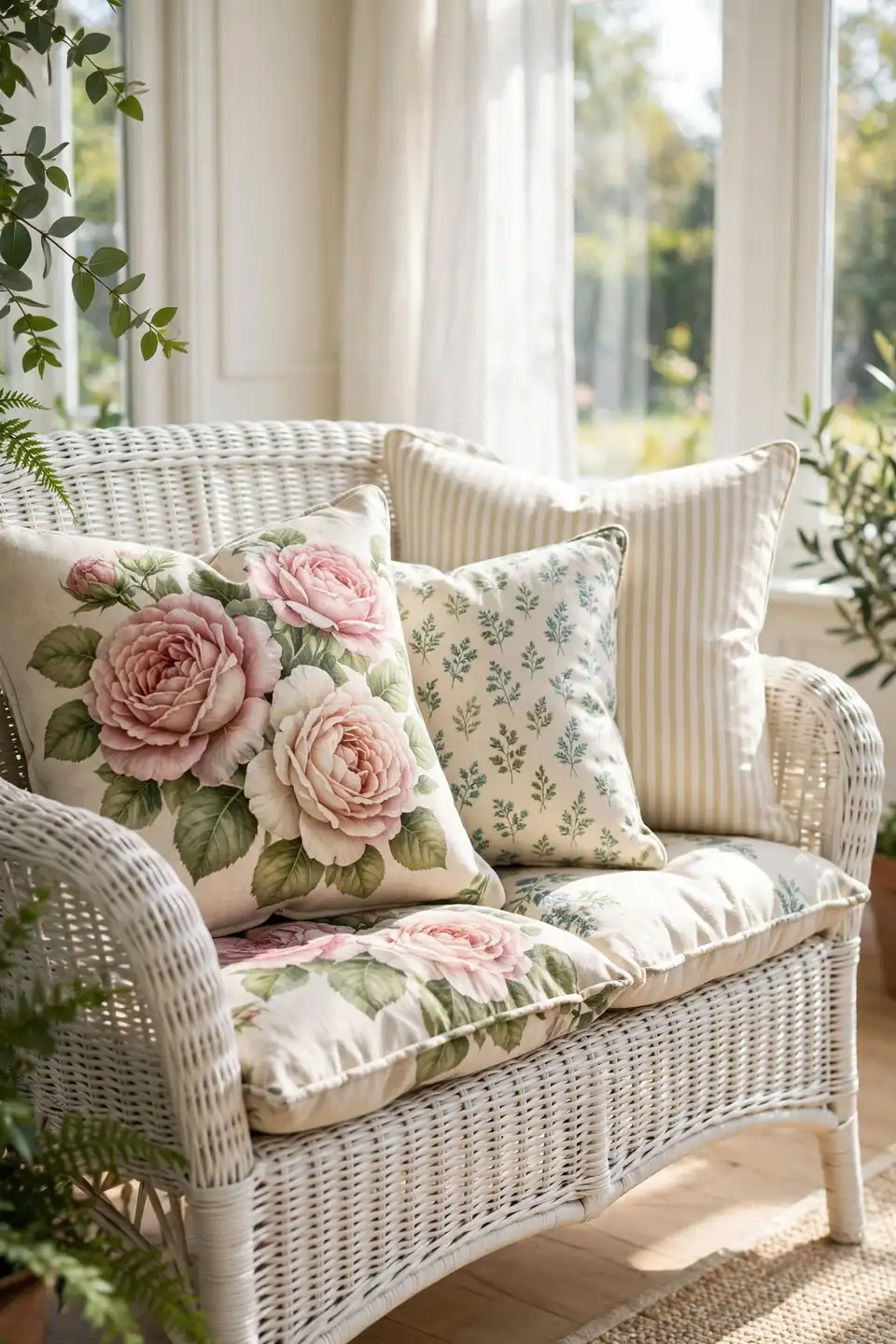
- Faded cabbage rose prints suit sun-flooded rooms, since strong light bleaches bold patterns toward pastel anyway.
- Layer three scales together: one large bloom, one small sprig, one plain ticking stripe.
- Keep the base cushions plain cream so prints can swap seasonally without reupholstering anything.
- Outdoor fabrics in vintage prints survive sun and watering spills better than indoor cotton.
- Stop at five cushions per loveseat; more turns seating into storage.
Rotate the prints rather than the furniture when the room starts feeling flat. Moving the boldest cushion to the chair nearest the window changes the whole focal point, and washing covers twice a summer keeps whites honest under strong sun and plant dust.
Lace Curtain Light
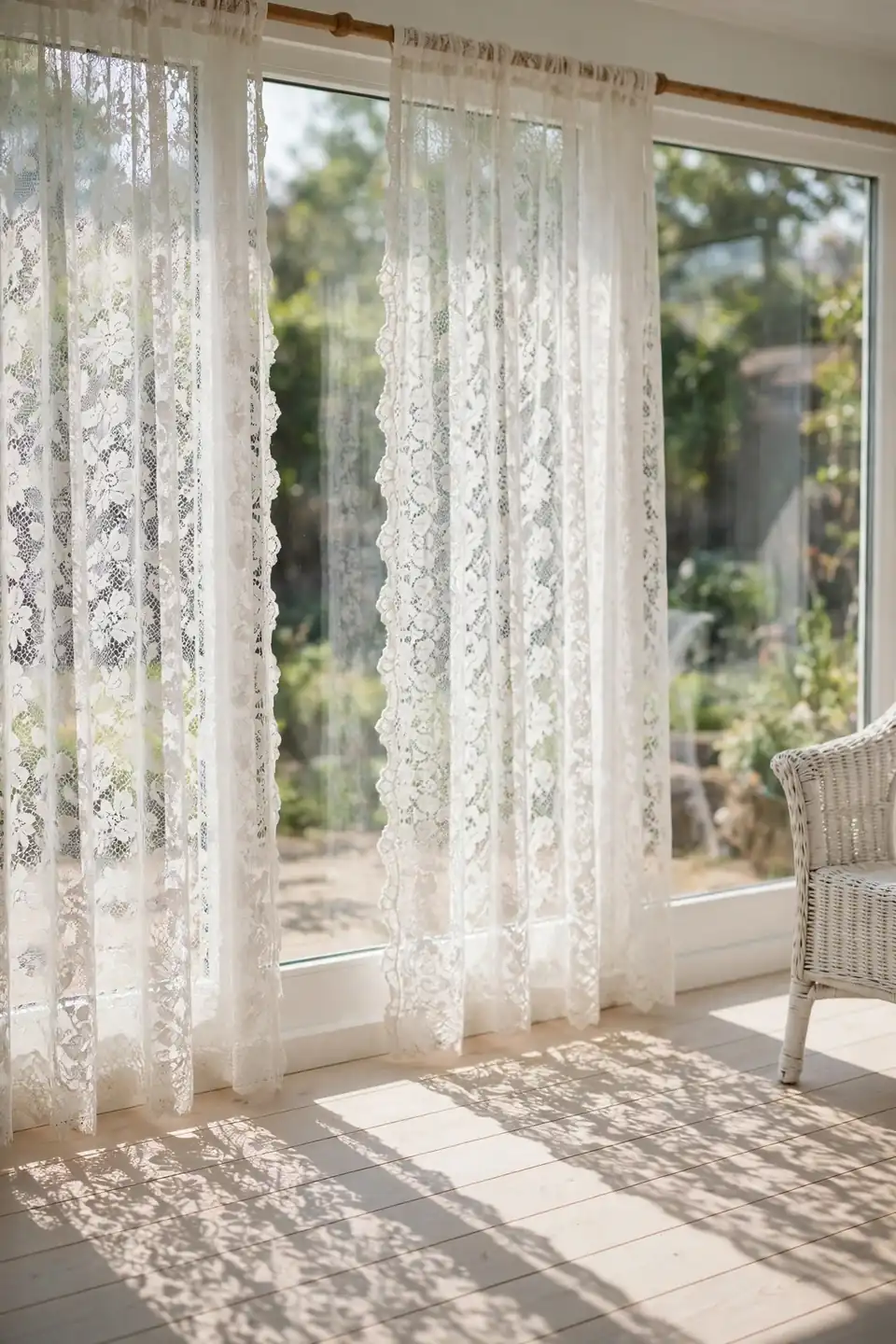
Quick Tip: Hang lace panels on clip rings instead of rod pockets. Clips let the panels slide fully clear of the glass on bright mornings, gather prettily at the sides by afternoon, and come down in minutes for washing when pollen and plant mist dull the pattern.
Lace earns its place by filtering glare without stealing the garden view, and its pattern throws soft shadows across the floorboards at noon. Vintage panels turn up cheaply at estate sales; measure drop length first, because sunroom windows often run taller than standard door panels. Ivory reads warmer than bright white against old glass.
Faded Corner Revival
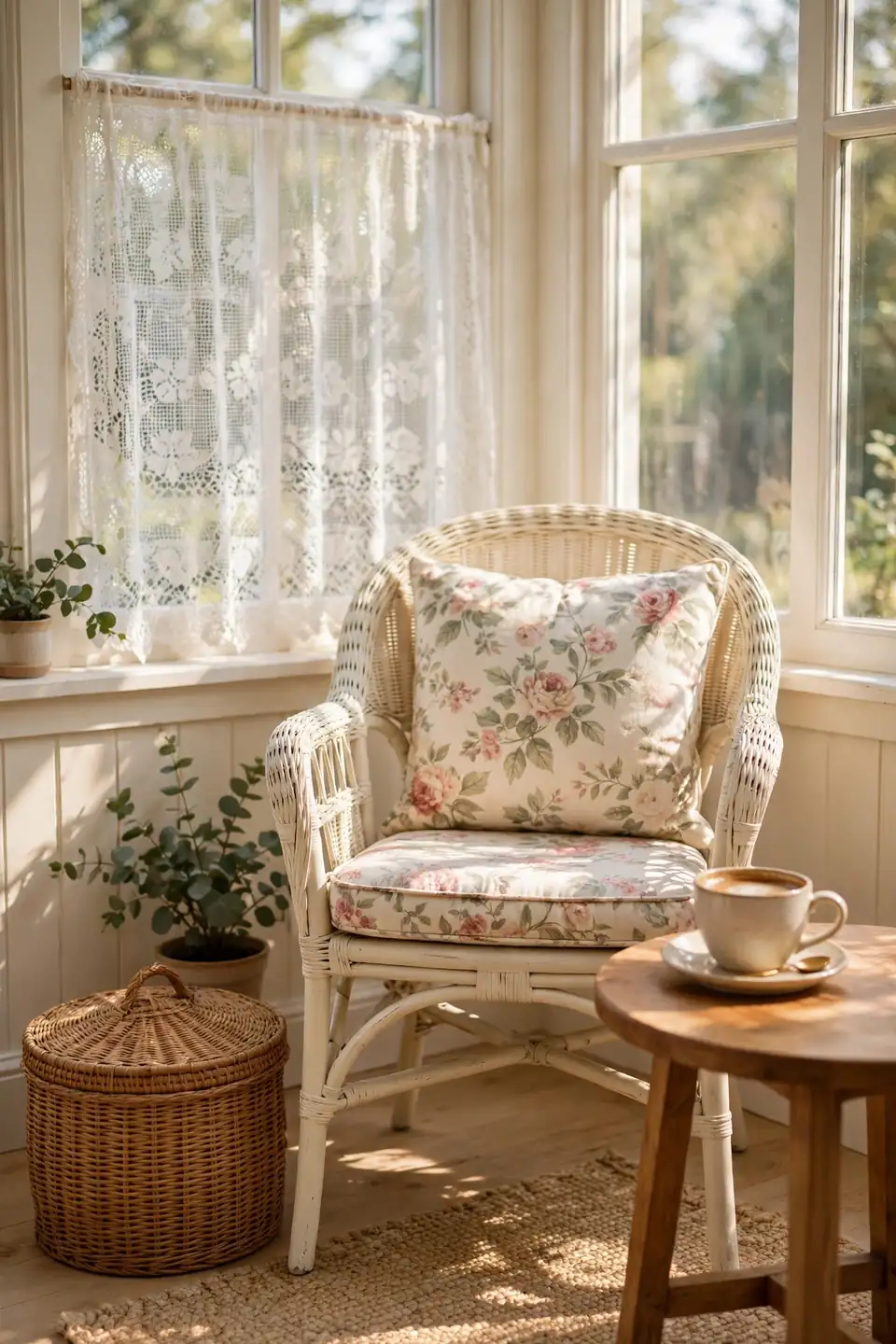
BEFORE: The corner beside the door held a grey plastic chair, a stack of seed trays, and a blind with two broken slats. Light poured in all day, yet nobody sat there, and the whole room felt like storage with windows.
AFTER: A painted wicker chair in soft cream, one floral cushion, and a small round table turned the same square metre into the morning coffee seat. The trays moved into a lidded basket, and the blind gave way to a lace panel.
Corners respond to the smallest budgets because they need only one chair, one surface, and one reason to linger. Start with the corner nearest the door; it sets the first impression for everyone entering, and its success funds the confidence for bigger changes elsewhere.
Tiered Plant Stands
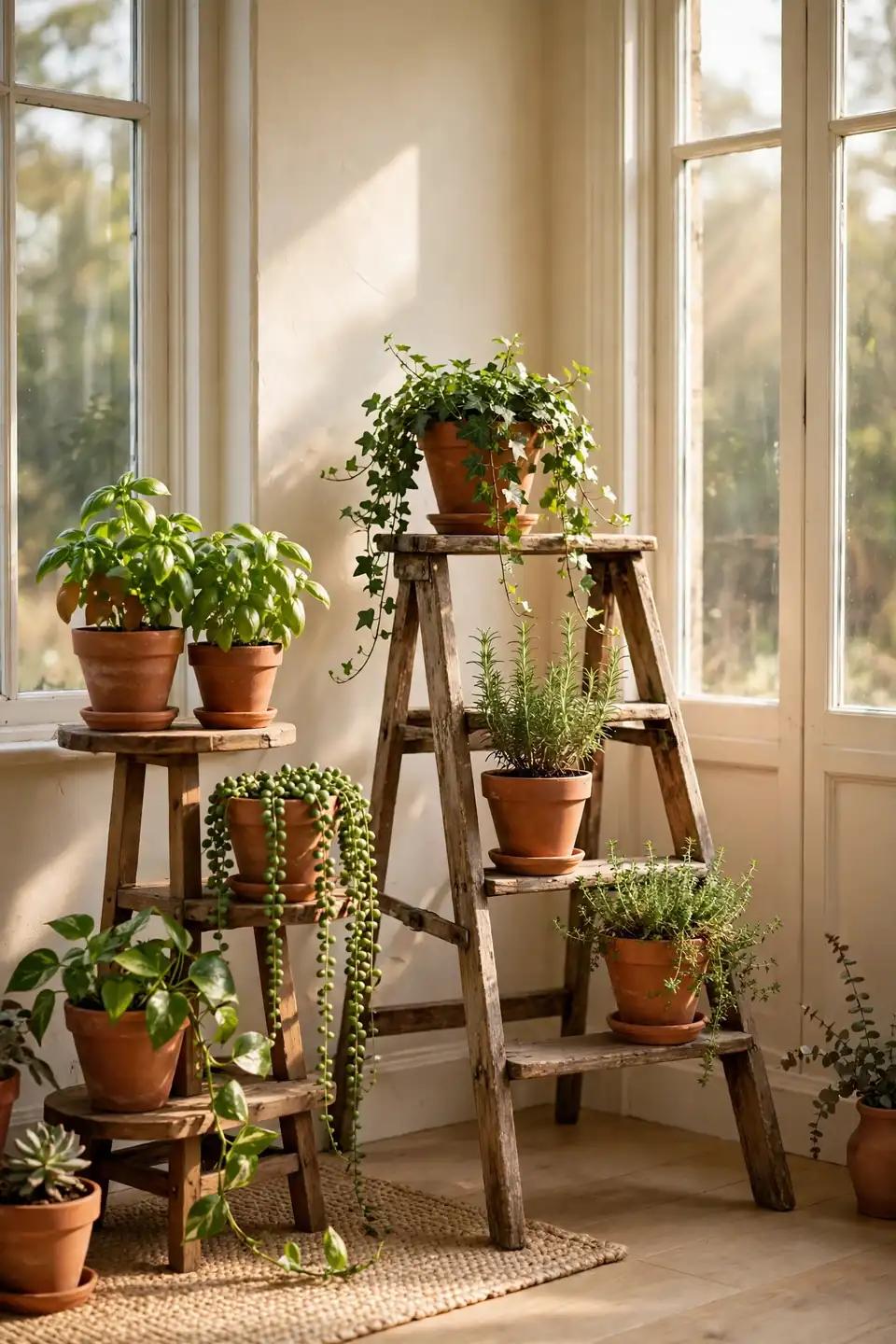
- Set the tallest stand against the glass where light is strongest and pots stay visible.
- Group plants by thirst, thirsty herbs together, succulents apart, so watering follows one route.
- Place saucers under every pot, whatever the stand material claims about water resistance.
- Leave the middle tier half empty for the watering can and a folded cloth.
- Rotate each pot a quarter turn weekly so growth leans toward the room evenly.
Old step ladders, tea trolleys, and plant theatres all do this job beautifully, and their worn edges suit the vintage mood better than new chrome racks. I’ve seen this work well in many cases where floor space was too tight for a bench.
Bamboo Or Linen Shades
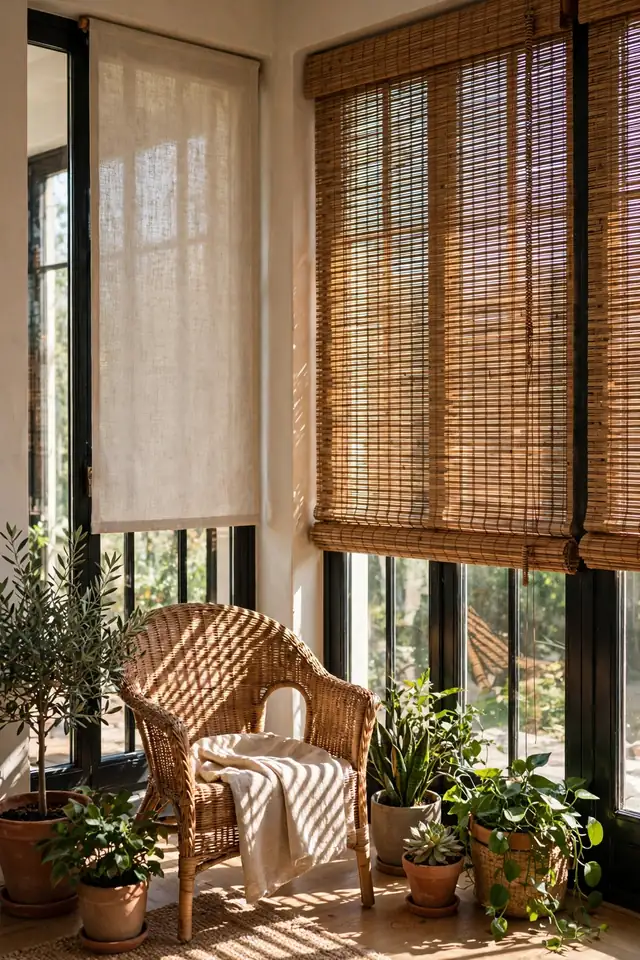
| Feature | Bamboo Blinds | Linen Shades |
|---|---|---|
| Light control | Filters glare, keeps view | Softens light, blurs view |
| Texture | Woven slats, natural grain | Smooth weave, gentle folds |
| Vintage fit | Pairs with wicker and rattan | Pairs with lace and florals |
| Care | Dust weekly, wipe spills | Machine wash, iron lightly |
| Cost | Low, sold ready made | Medium, often custom sewn |
Bamboo usually wins in plant heavy rooms because dust and mist wipe off slats in seconds, while linen suits quieter corners where fabric softness matters more. Many sunrooms end up mixing both: bamboo on the sunniest wall, linen where the reading chair sits. Measure twice before ordering either.
Potted Herb Windowsill
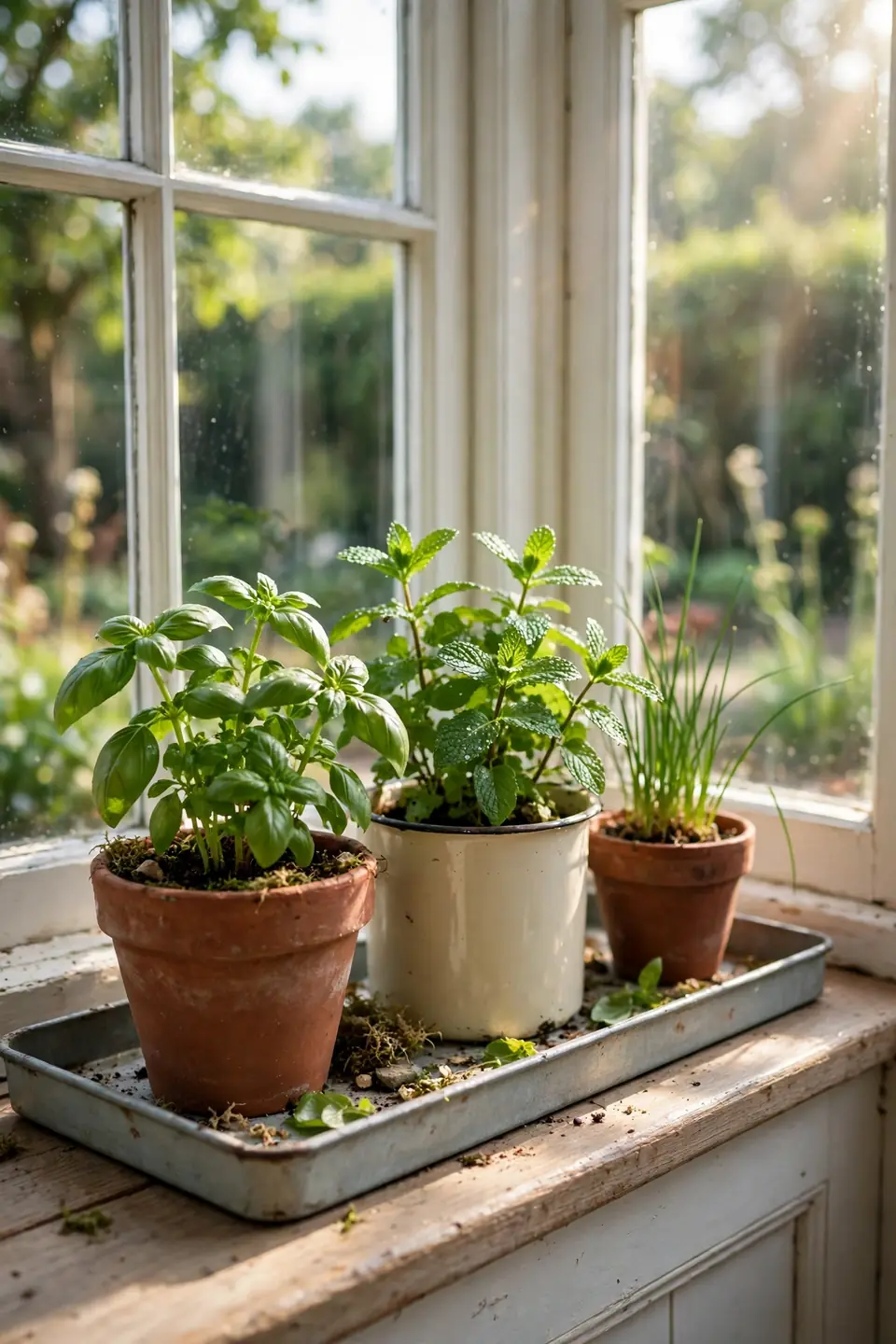
Do:
- Choose herbs you actually cook with; basil, mint, and chives earn their light.
- Line the sill with a tray so watering never reaches the paintwork.
- Mismatched terracotta and enamel pots suit the vintage mood better than uniform plastic.
- Snip little and often; trimming keeps herbs bushy instead of leggy.
Don’t:
- Crowd the sill edge to edge; air flow prevents mildew herbs hate.
- Water on a fixed schedule rather than checking soil with a finger first.
- Let mint share a pot; its roots bully every neighbour within a season.
A herb sill pays rent twice, once in scent every time the sun warms the leaves, and again at dinner. Keep the tallest pot at the end nearest the door so the sight line across the room stays low.
Vintage Rug Foundation
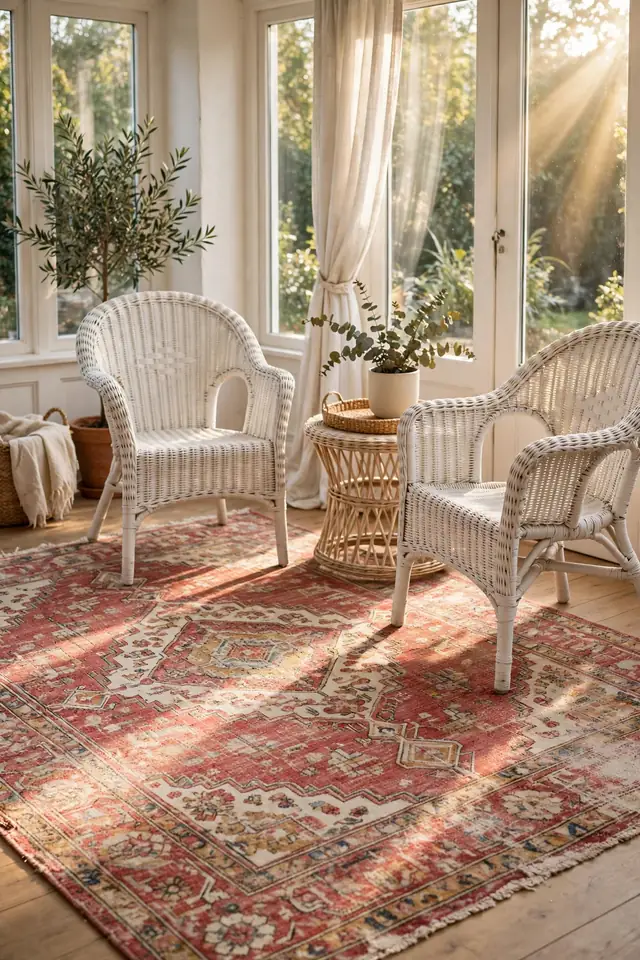
Cost: Low, secondhand rugs in sunroom sizes are plentiful | Time: One afternoon of hunting and cleaning | Skill Level: Beginner, no tools beyond a vacuum | Best For: Cold tiles, echoing glass rooms, and defined seating zones | Works In: Tiled, wooden, and concrete floored sunrooms alike | Result: Instant age and softness underfoot
A faded oriental rug grounds all the pale wicker and stops the room drifting into greenhouse territory. Flatweave wool survives sun and soil best; save deep pile rugs for shaded corners where feet land bare in the morning and fading spreads evenly. Vacuum grit from the weave weekly before it grinds the fibres down.
Painted Checkerboard Floor
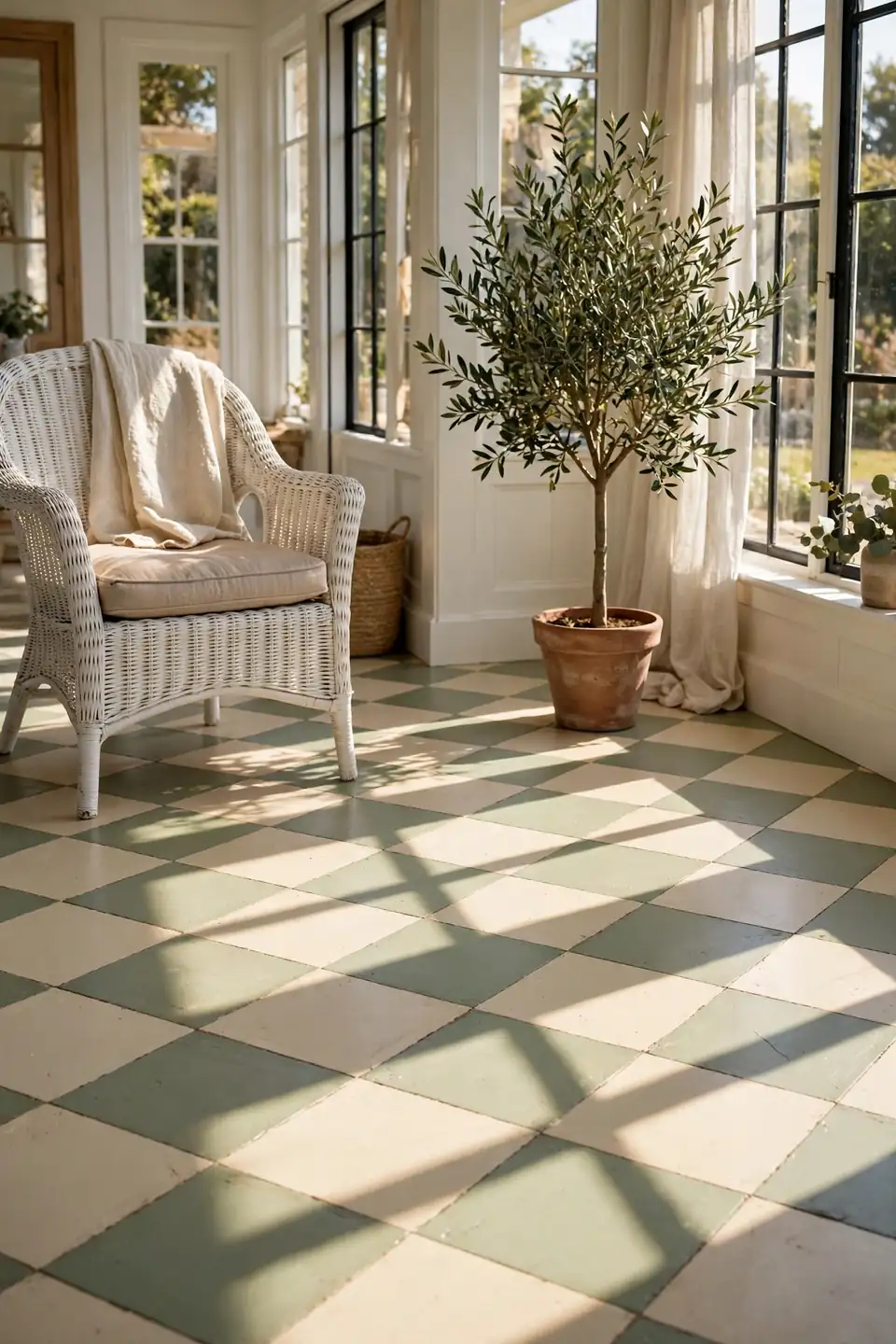
Paint turns a tired concrete or plywood sunroom floor into the room’s biggest vintage statement. Cream and soft sage squares read gentler than classic black and white, and the pattern hides dust, soil, and paw prints between cleanings far better than plain boards ever manage. Stencils keep the squares honest where tape lines wander.
Mask the grid with painter’s tape over a sealed base coat, roll two thin coats per colour, then seal everything twice. In my experience the sealing matters more than the painting; unsealed squares scuff within a month under chair legs and plant pots dragged across them.
Rattan Peacock Chair
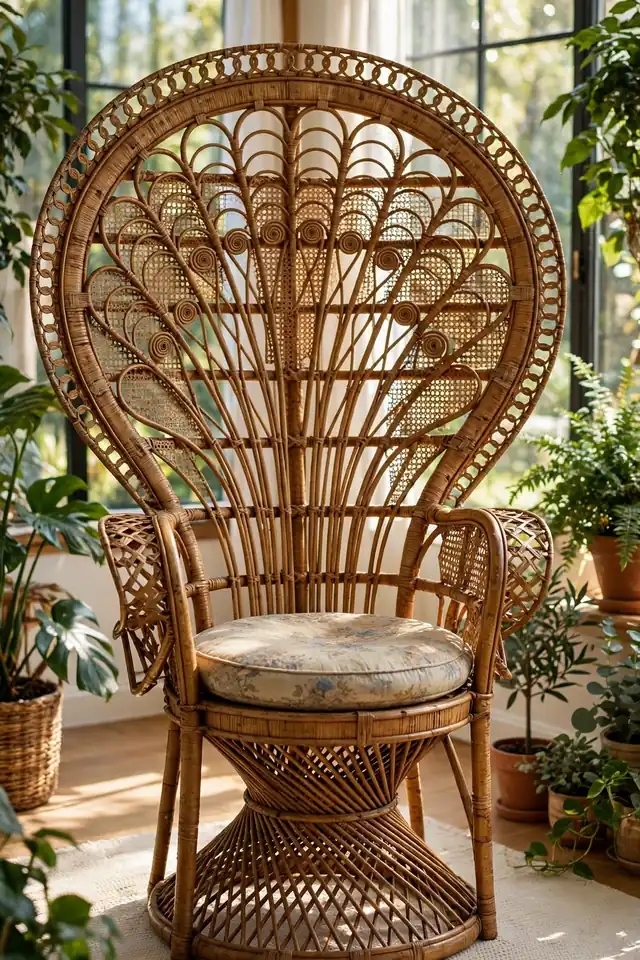
- One statement chair anchors the room better than four ordinary seats competing for attention.
- Original peacock chairs from the seventies surface regularly at estate sales and auctions.
- Check the fan back for broken bindings; loose cane unravels fast once it starts.
- A round cushion in faded floral cotton softens the seat and echoes the room’s prints.
- Angle the chair toward the garden, not the door, for the full throne effect.
Statement seating pairs naturally with the wood and wool layering found in modern chalet interior design inspiration, where one bold piece carries a calm room. Keep everything around a peacock chair low and plain, and its silhouette does the decorating for the whole corner.
Botanical Print Gallery
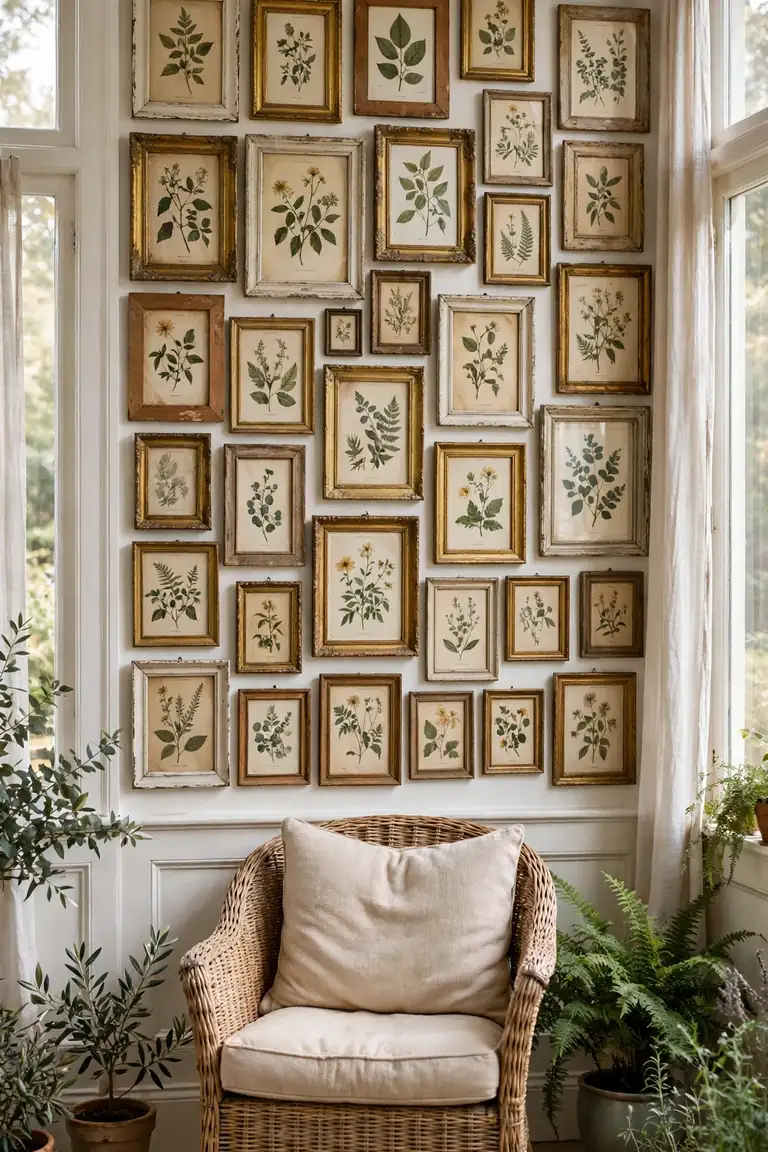
Quick Tip: Frame pages from damaged old gardening books rather than buying art prints. The aged paper, soft ink colours, and slightly foxed edges look genuinely old, and a mixed set of thrifted frames in cream and gilt finishes the gallery for very little money.
Hang the gallery on the one solid wall most sunrooms have, at eye level from the nearest chair. A botanical theme keeps the art calm against busy plants, and spacing frames a finger’s width apart makes the whole group read as one large piece. Swap two prints each spring and the wall feels newly hung.
Drab Patio Door Fix
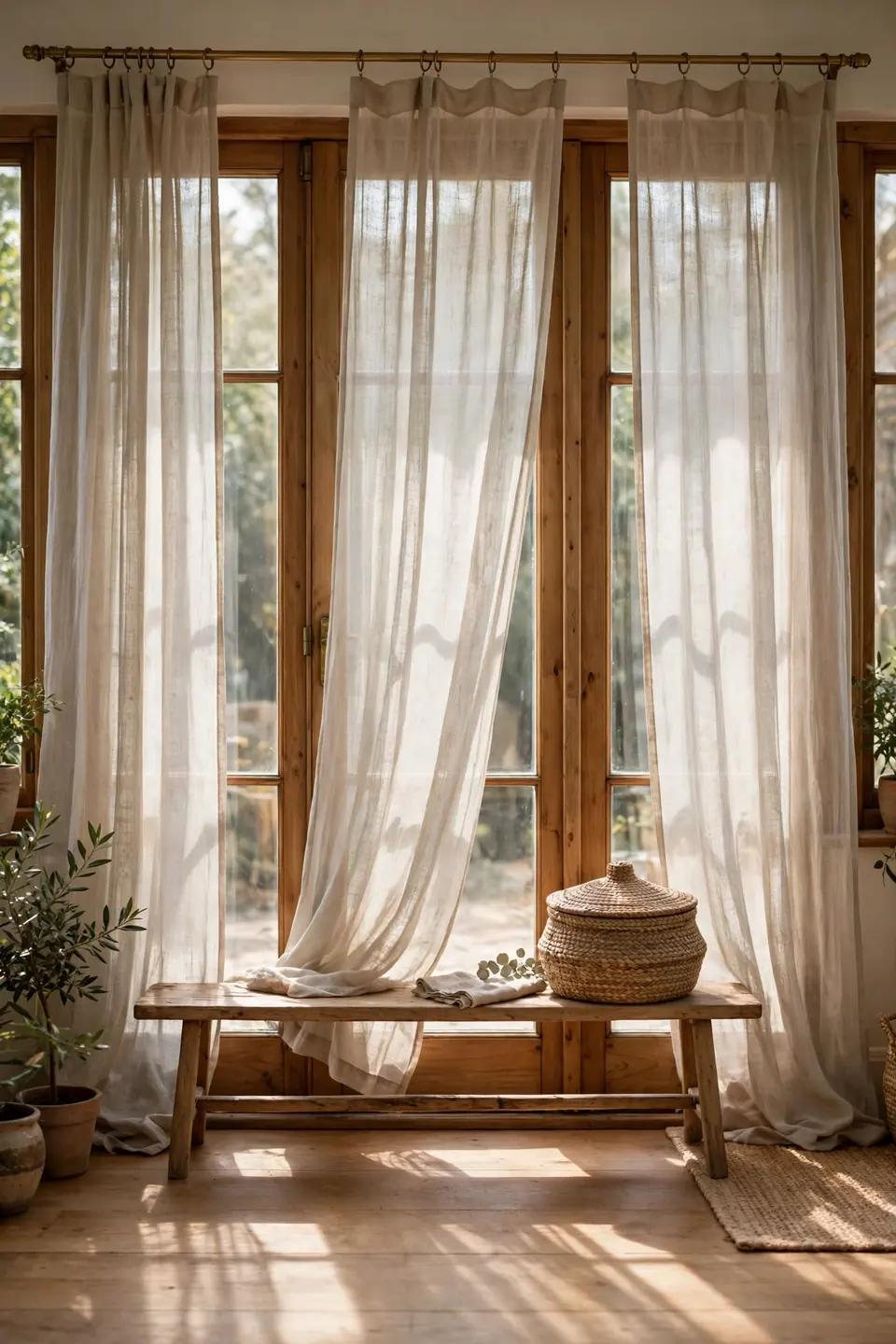
BEFORE: The patio doors wore a faded vertical blind that rattled in every breeze, and the step below collected shoes, a mop bucket, and bags of compost. Guests read the whole arrangement as a service entrance, not part of the room.
AFTER: Sheer linen curtains on a brass rail softened the doors, while a narrow bench with a lidded basket below gave shoes and clutter a proper home. Morning light now falls through fabric instead of slats, striping the floor gently.
Doorways decide whether a sunroom feels finished, and this small fix sums up vintage-inspired sunroom decorating ideas at their best: soft fabric, honest storage, nothing pretending to be grander than it is. The bench also gives plant watering a natural pause point.
Afternoon Tea Tray Setup
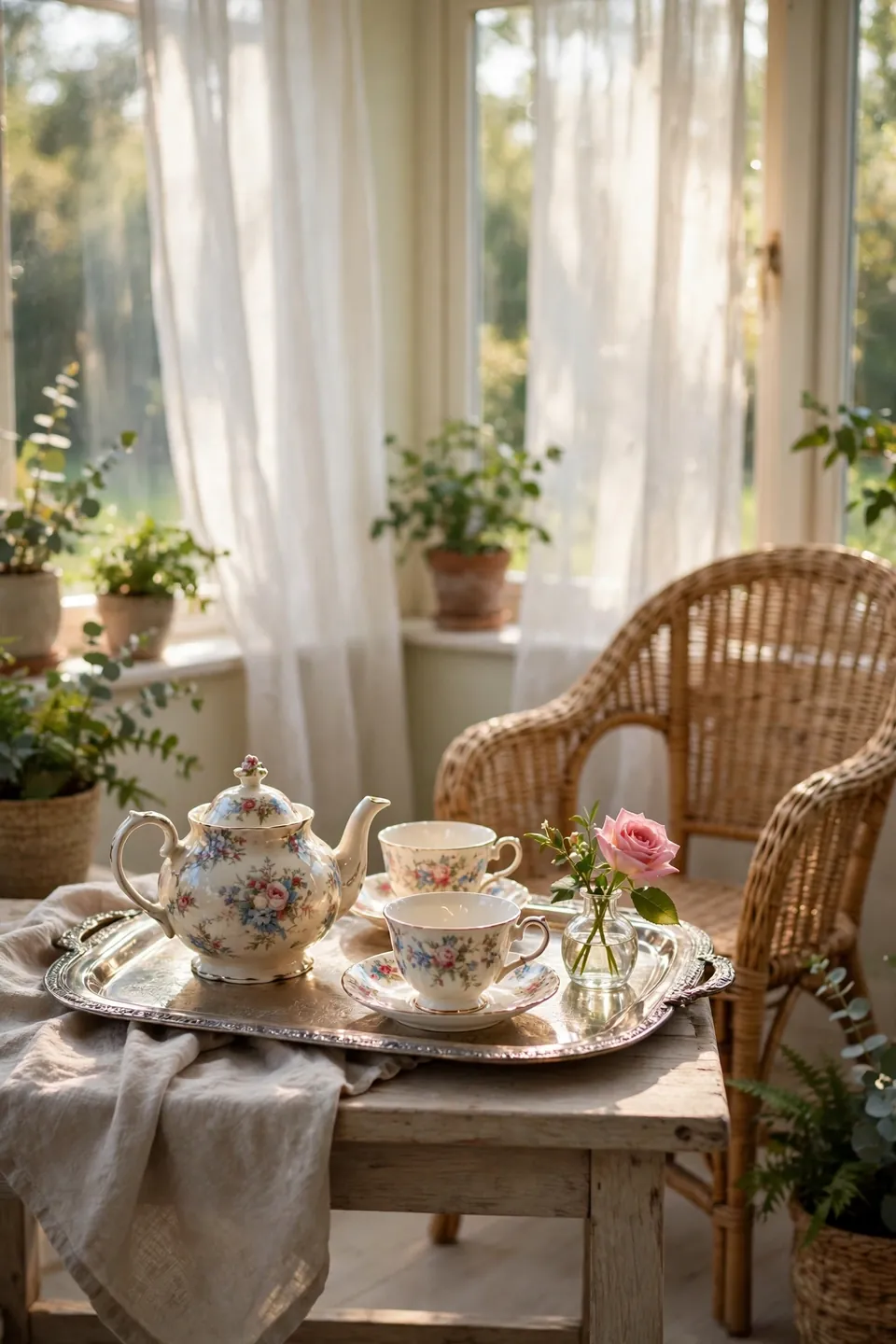
- Claim one tray permanently; a silver or enamel tray keeps the whole ritual in one place.
- Keep the pot, two cups, and a small vase on the tray between uses as display.
- Fold a linen napkin under the pot to catch drips and soften the metal rattle.
- Park the tray on a low table beside the best chair, never on the floor.
- Add one fresh stem in the vase weekly; yesterday’s garden rose beats any arrangement.
A standing tea ritual turns the sunroom from a room people admire into a room people use daily. Vintage china mixes happily across patterns as long as the colours stay soft, and chipped rims simply prove the set lives a real life.
Porcelain Versus Terracotta Pots
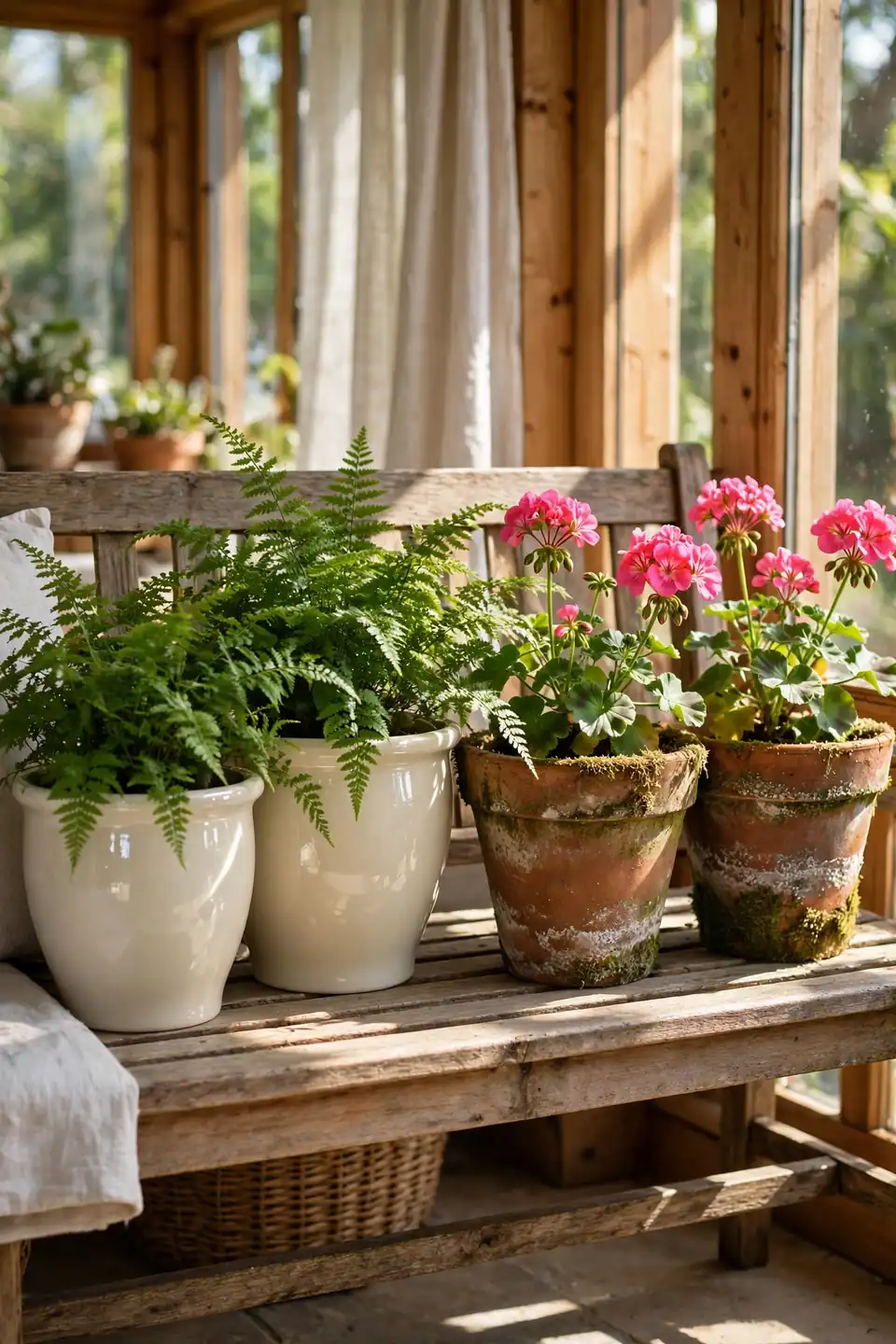
| Feature | Porcelain Pots | Terracotta Pots |
|---|---|---|
| Water habits | Glazed walls slow evaporation | Porous clay breathes, dries fast |
| Aging | Stays bright, may chip | Grows moss and salt marks |
| Weight | Heavier, stable in wind | Lighter, easy to shuffle |
| Vintage character | Formal, cottage garden feel | Rustic, farmhouse warmth |
| Best plants | Ferns and flowering bulbs | Herbs, geraniums, succulents |
Terracotta usually wins on a bright sill because its aging looks intentional within a single season, while porcelain earns the shadier corners where its glaze catches low light. Mixing both across one room keeps the collection from feeling bought in a single afternoon. Either way, saucers are non-negotiable furniture protection.
Hanging Fern Baskets
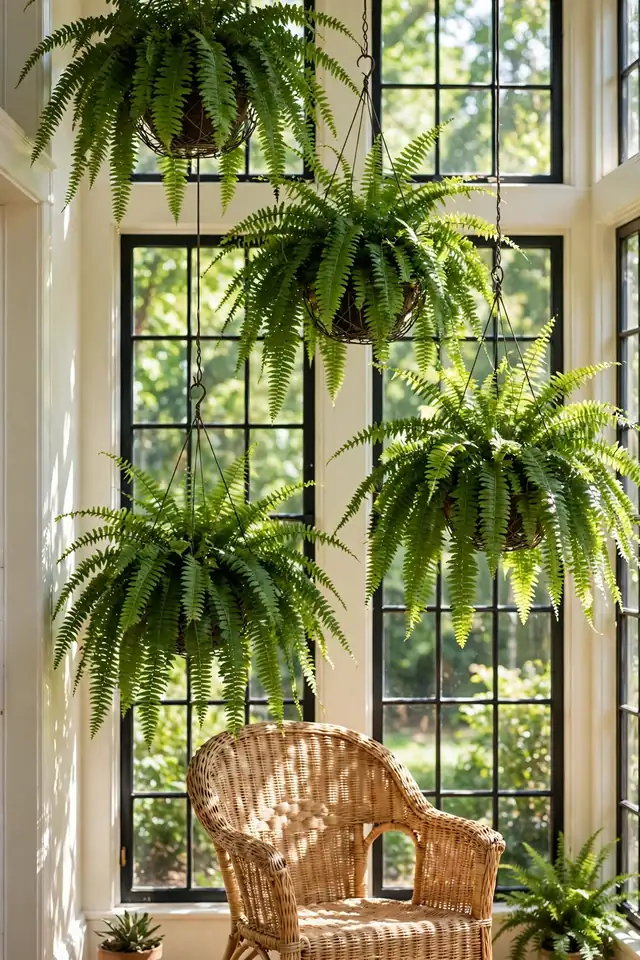
Do:
- Hang baskets at staggered heights so fronds layer instead of colliding.
- Choose wire or moss lined baskets that drain freely after a weekly soak.
- Keep the fullest basket above the chair, where its shade cools the seat.
- Mist fronds on bright mornings; sunroom air dries faster than any other room’s.
Don’t:
- Hang baskets over bare floors without a drip tray or plant below catching water.
- Fix hooks into glazing bars; the frames were never built to carry soil weight.
- Forget the rotation; unturned baskets grow lopsided toward the glass within weeks.
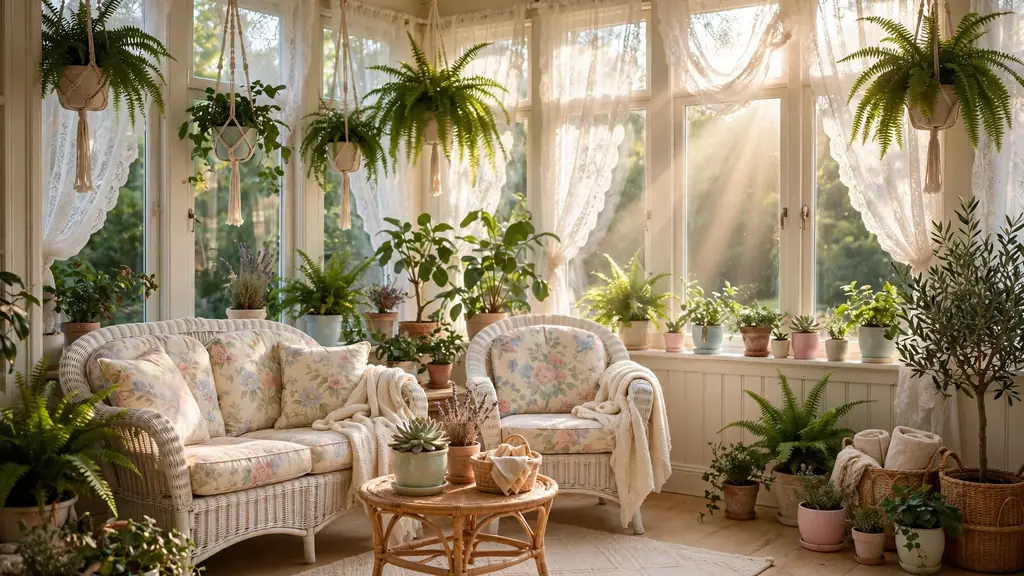
Boston ferns forgive the bright, moving air of a sunroom better than most hanging plants, and their arch softens all the lines of glass and frames. Three baskets at varied heights read as one ceiling from the doorway.
Woven Storage Baskets
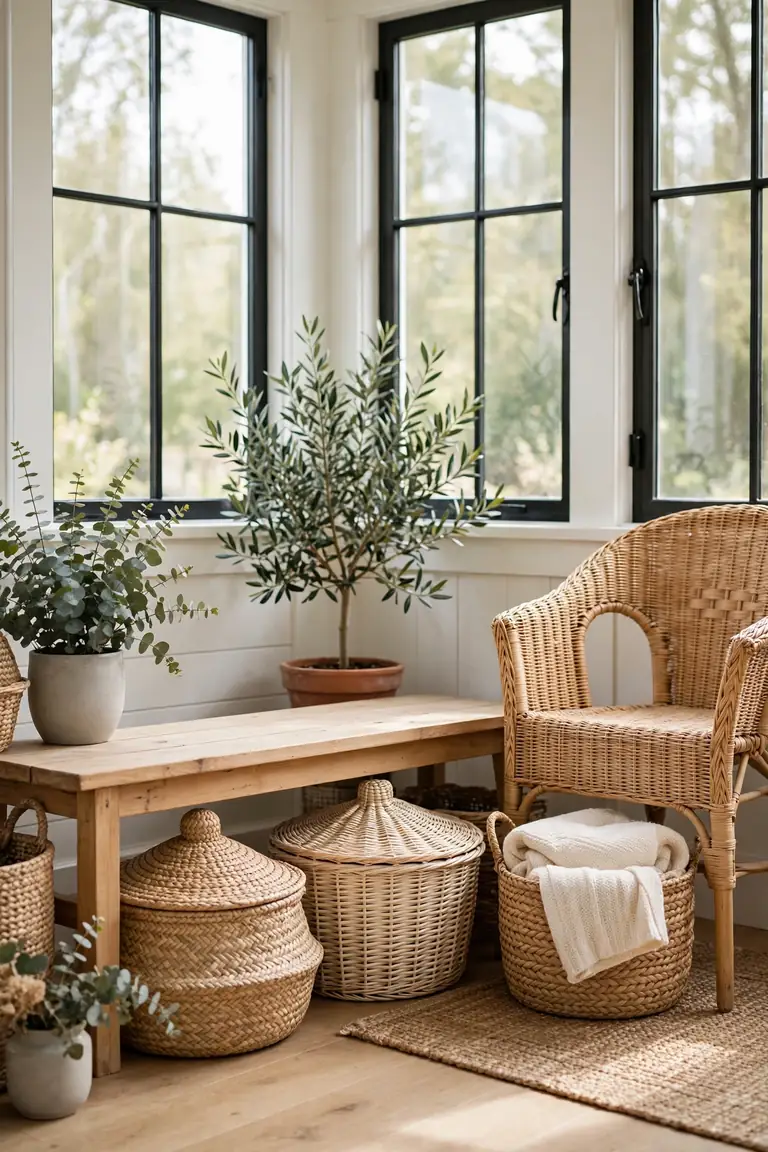
Cost: Very low, baskets are flea market staples | Time: One hour to sort and assign jobs | Skill Level: Beginner, no tools needed | Best For: Seed trays, throws, tools, and watering clutter | Works In: Corners, under benches, and beside doors | Result: Floors stay clear and corners look planned
Lidded baskets are the quiet machinery of a tidy sunroom, swallowing the clutter that makes glass rooms feel like sheds. One beside each chair holds throws and books; one by the door takes tools and twine; labels in pencil on card tags keep the system honest. Natural seagrass and willow both age gracefully in strong light.
Pastel Painted Furniture
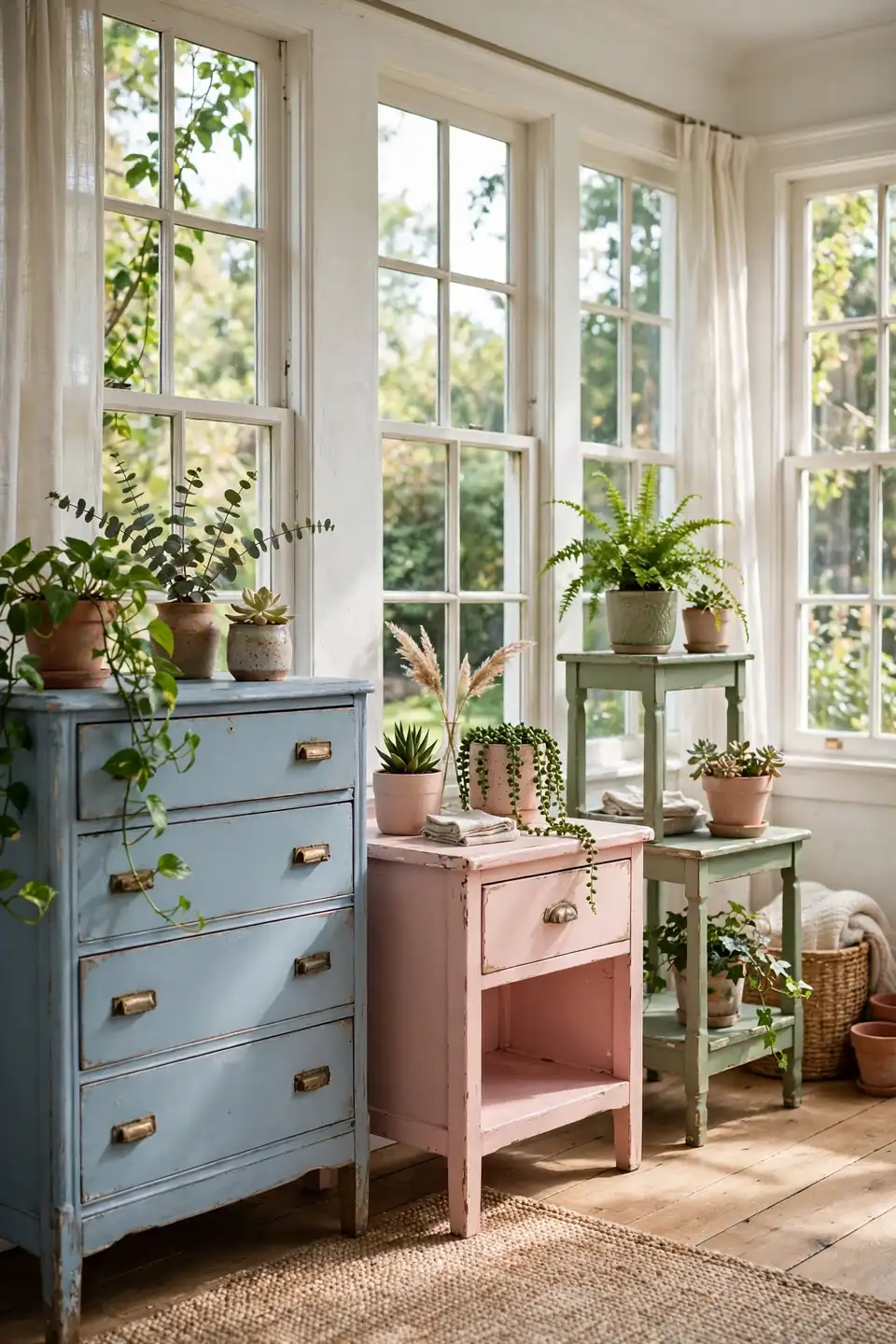
Soft colour on secondhand furniture ties a sunroom together faster than any other single change. Powder blue on a dresser, blush on a side table, and sage on a plant stand let each piece stay individual while the pastel family keeps them related. Test colours on drawer sides first, since sunroom light shifts every pastel paler by noon.
Chalk and milk paints forgive rough prep, which suits old sunroom pieces with flaking varnish. Distress the edges lightly where hands would naturally wear them, then wax rather than varnish, so the finish keeps deepening instead of peeling in the strong light.
String Light Glow
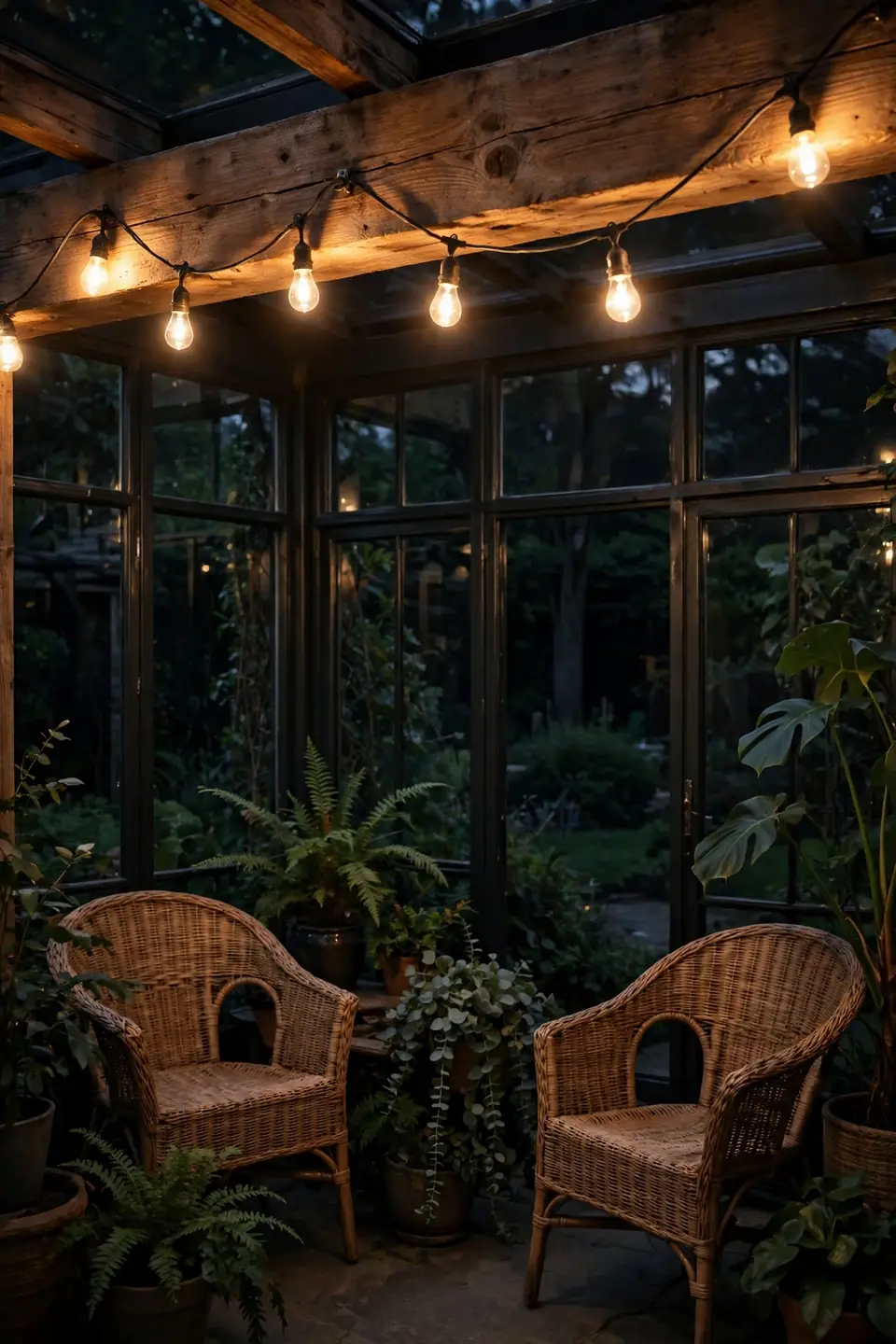
- Warm white bulbs flatter plants and skin; blue white strands make a sunroom feel like an office.
- Run one strand along the longest beam rather than zigzagging the whole ceiling.
- Vintage style socket cord in black or brown reads older than plastic white cable.
- A plug-in dimmer turns glare into candlelight levels for evening reading and drinks.
- Keep strands clear of watering routes; mist and electricity make poor neighbours.
Evening is when vintage sunrooms outshine every other room in the house, because glass returns the warm light twice over. Switch the strands on at dusk even in summer, and the garden beyond the glass turns into a dark, calm backdrop.
Reading Nook Layers
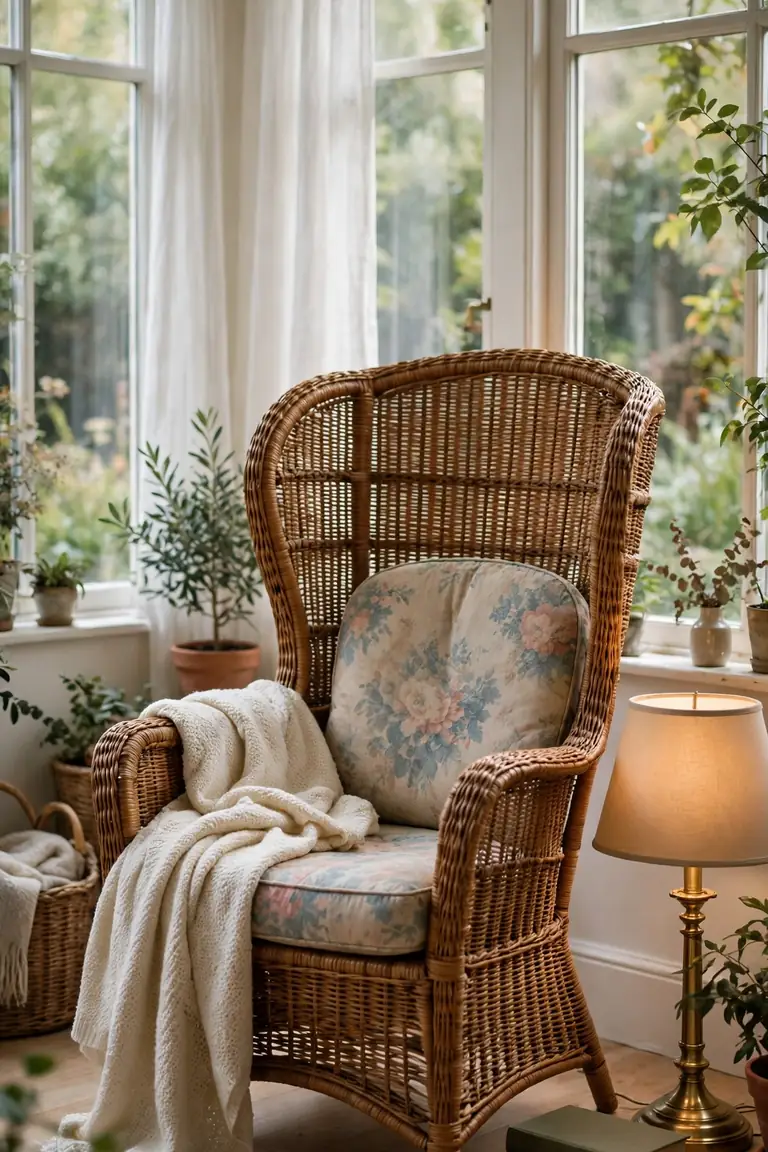
Quick Tip: Layer the nook in the order you use it: chair first, then light at shoulder height, then a surface within arm’s reach, then the throw. Built in that order, the corner works from day one instead of waiting for the perfect final piece.
Every sunroom deserves one corner designed purely for sitting still, and the reading nook is where vintage pieces earn their keep. A high backed chair, a faded cushion, and a lamp with a warm shade create shelter that glass walls cannot give on their own. Books stacked beside the chair mark the seat as claimed territory.
Bare Window Transformation
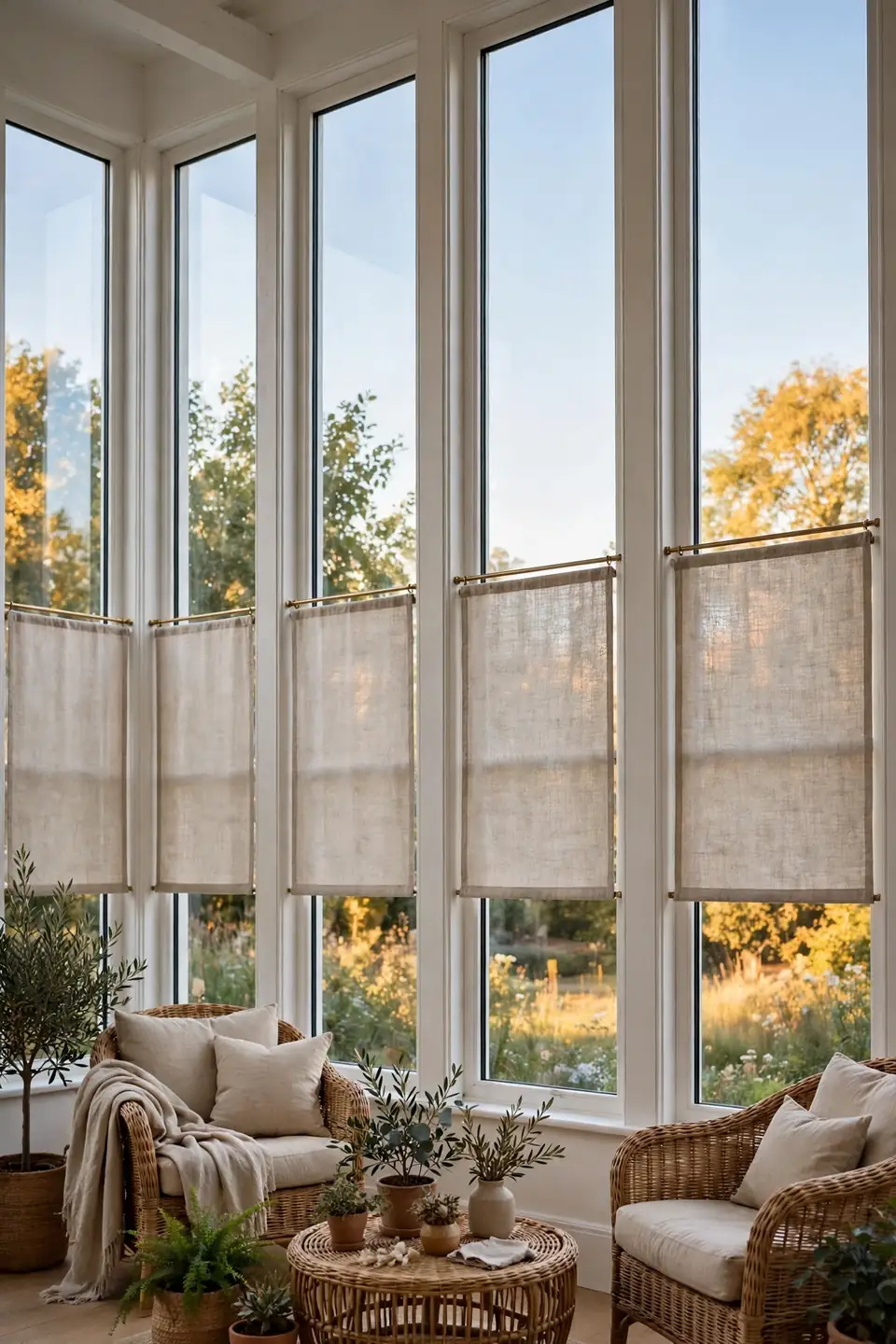
BEFORE: Bare glass on three sides made the room blinding by ten and chilly looking by four, whatever the season. Plants crowded the sills for shade, furniture huddled in the centre, and the beautiful framework of windows went completely unnoticed.
AFTER: Half height linen panels on slim brass rails dressed the lower glass while leaving the sky fully open above. Sight lines settled at seated eye level, glare vanished, and the window frames finally read as architecture instead of exposure.
Dressing the lower half of tall windows is the kindest compromise in any glass room, keeping privacy and softness where you sit while the weather performs overhead. Slim rails cost little, and panels move to the wash without a ladder.
Seasonal Swap Routine

- Photograph the room each solstice; the pictures show what the season is asking for.
- Swap heavy throws for cotton ones in spring, and reverse the trade in autumn.
- Move tender plants to the brightest wall as days shorten, back again in spring.
- Wash every cushion cover during the swap; sun fades hide dust until fabric moves.
- Store off season pieces in one lidded basket so the next swap takes minutes.
A twice yearly rhythm keeps a vintage room feeling collected rather than frozen, because pieces rest and return like old friends. The swap afternoon doubles as a deep clean and a plant health check, so nothing in the room quietly declines unnoticed.
Conclusion
A sunroom dressed this way stops being a pass-through and becomes the seat everyone claims first. None of it asks for a renovation: wicker, lace, plants, and paint, layered one calm decision at a time. That patience is exactly what vintage-inspired sunroom decorating ideas reward, because the room keeps improving as finds arrive. Save this list to your Pinterest board before your next flea market trip, try the smallest idea this weekend, and share a photo of the corner that changes first. I’ve seen how small changes like these can completely shift the way a space feels, and a glass room shows the shift fastest of all.