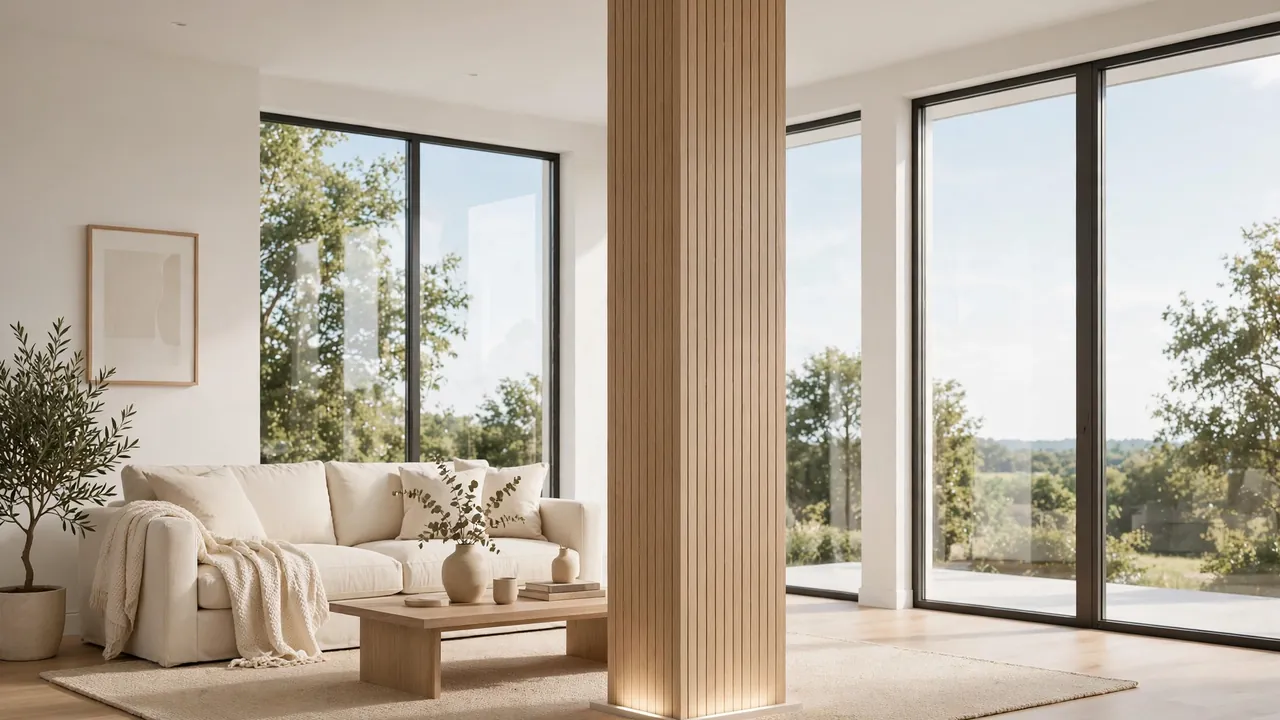
How to Decorate a Living Room With a Support Column
That lone column in the middle of your living room can feel like a decorating curse, but how to decorate a living room with a support column is simpler than you might expect.
In my experience, most people try to hide the column, which only draws more attention to it. The real trick is to style it on purpose so it looks like it belongs. Once you stop fighting it, the whole room feels more intentional. If your room also has a tricky window, this guide on how to decorate around an awkwardly placed window pairs well with these ideas.
Below are ten practical approaches, from paint tricks to lighting ideas. Pick what fits your style and budget, then enjoy the result.
Why Support Columns Feel Awkward
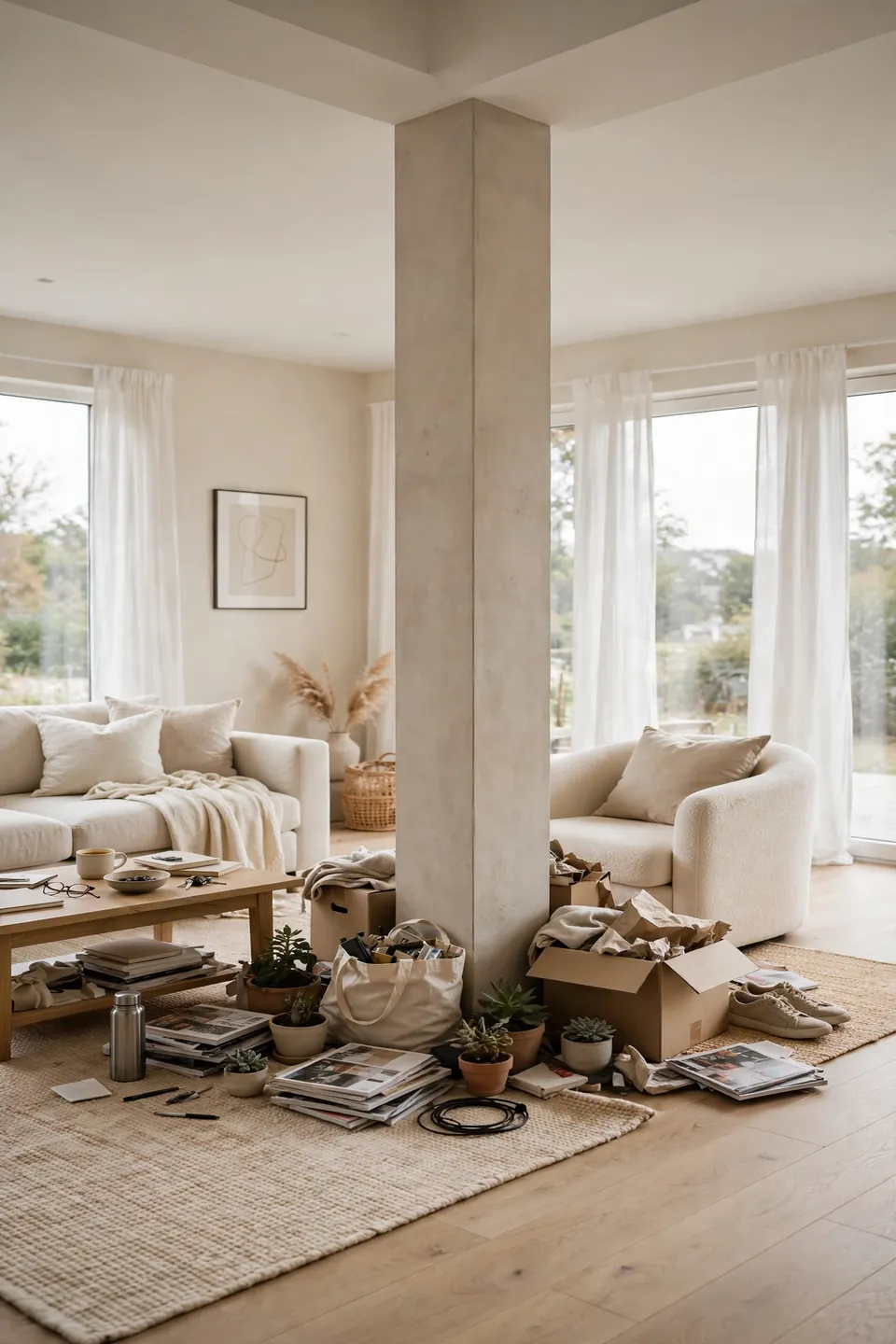
Most living rooms are designed around open sightlines, so a column landing in the middle breaks every visual rule you know. It chops the seating area in half, blocks the television view from one chair, and makes traffic flow feel cramped. You end up arranging furniture around it instead of arranging for comfort.
The frustration is real, and it is shared by anyone with an open floor plan. Builders place these columns for structure, not style, which is why they feel like afterthoughts. But once you understand why the column bothers you, you can pick the fix that solves it.
Paint It to Blend
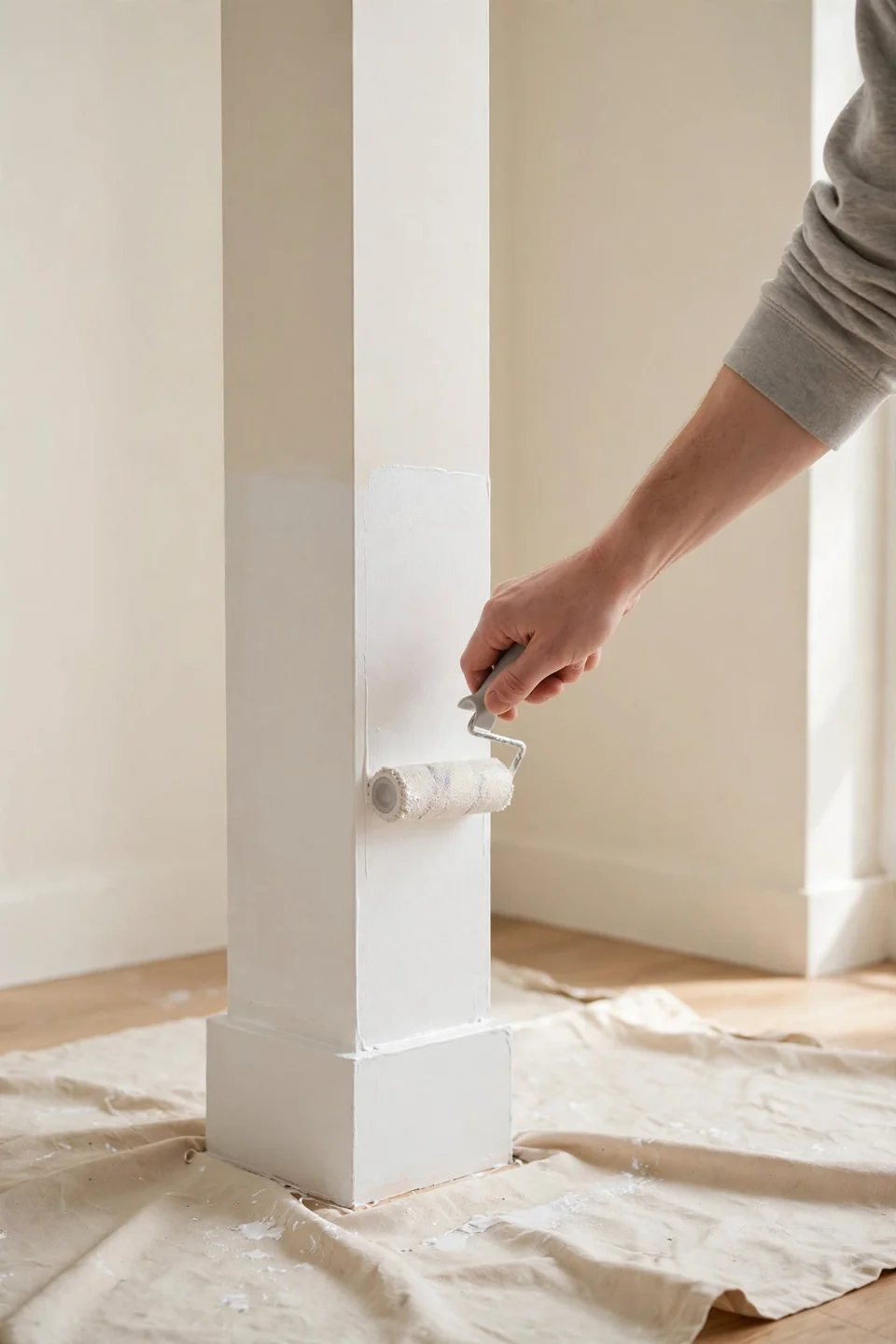
Paint is the fastest and cheapest way to make a column disappear into the room. When the column wears the same color as the walls, your eye slides right past it. A little prep work makes all the difference here.
- Clean the column with a damp cloth and let it dry fully, since dust ruins paint adhesion.
- Apply a stain-blocking primer, especially if the column is raw drywall or patched concrete.
- Roll on two thin coats of wall paint in a matte or eggshell finish to avoid shiny patches.
- Paint any trim or baseboard on the column the same color so nothing outlines it.
Turn It Into Art
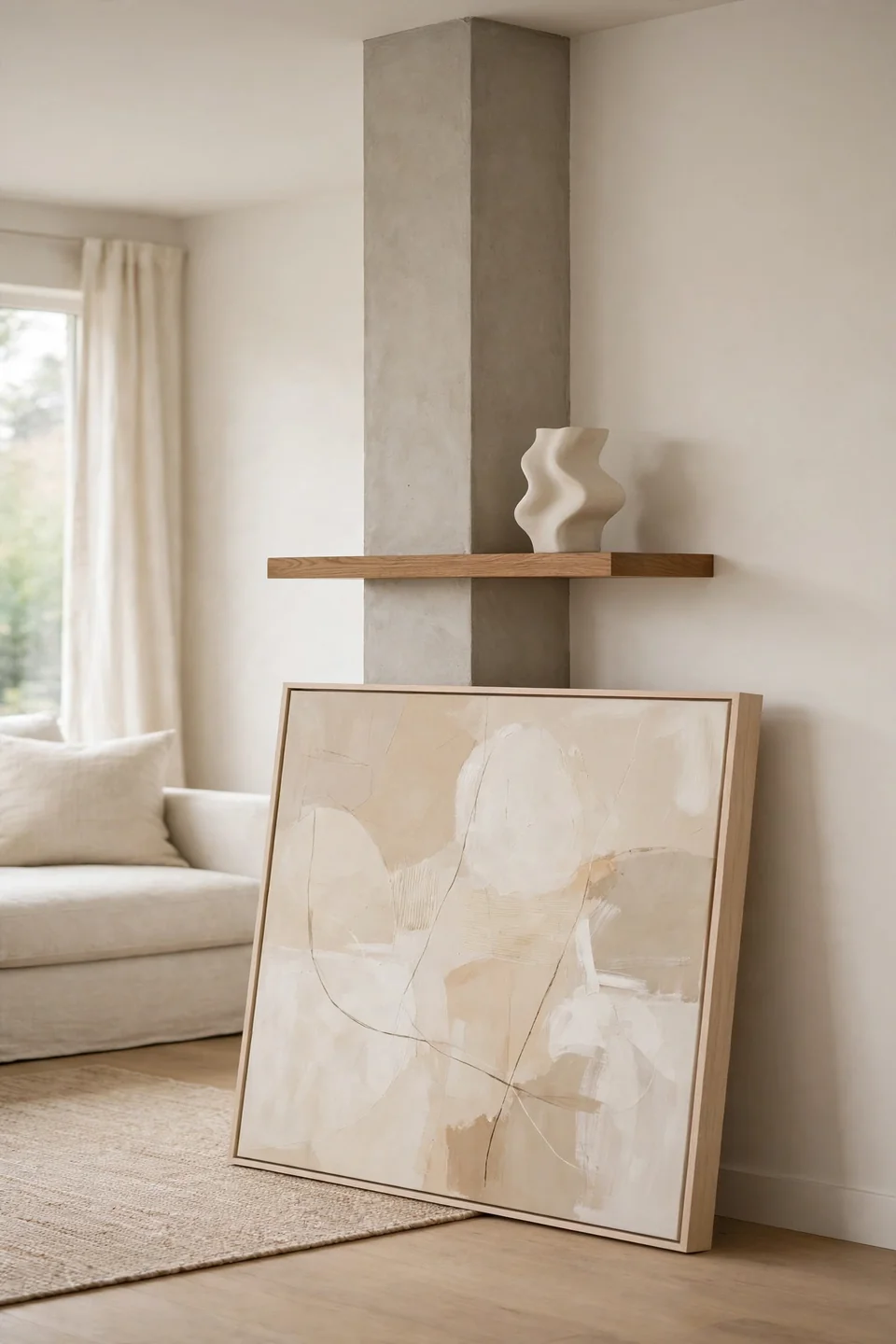
Quick Tip: Treat the column like a gallery pedestal instead of an obstacle. One oversized piece of art leaned against it or a sculptural vase on a floating shelf turns the column into a deliberate focal point rather than something you apologize for.
Art draws the eye on purpose, which is exactly what you want. Choose pieces with colors that echo your sofa or rug so the column feels connected to the room. Keep the scale bold, since small frames get lost on a wide column. Step back often and check the view from your main seat.
Wrap It in Wood
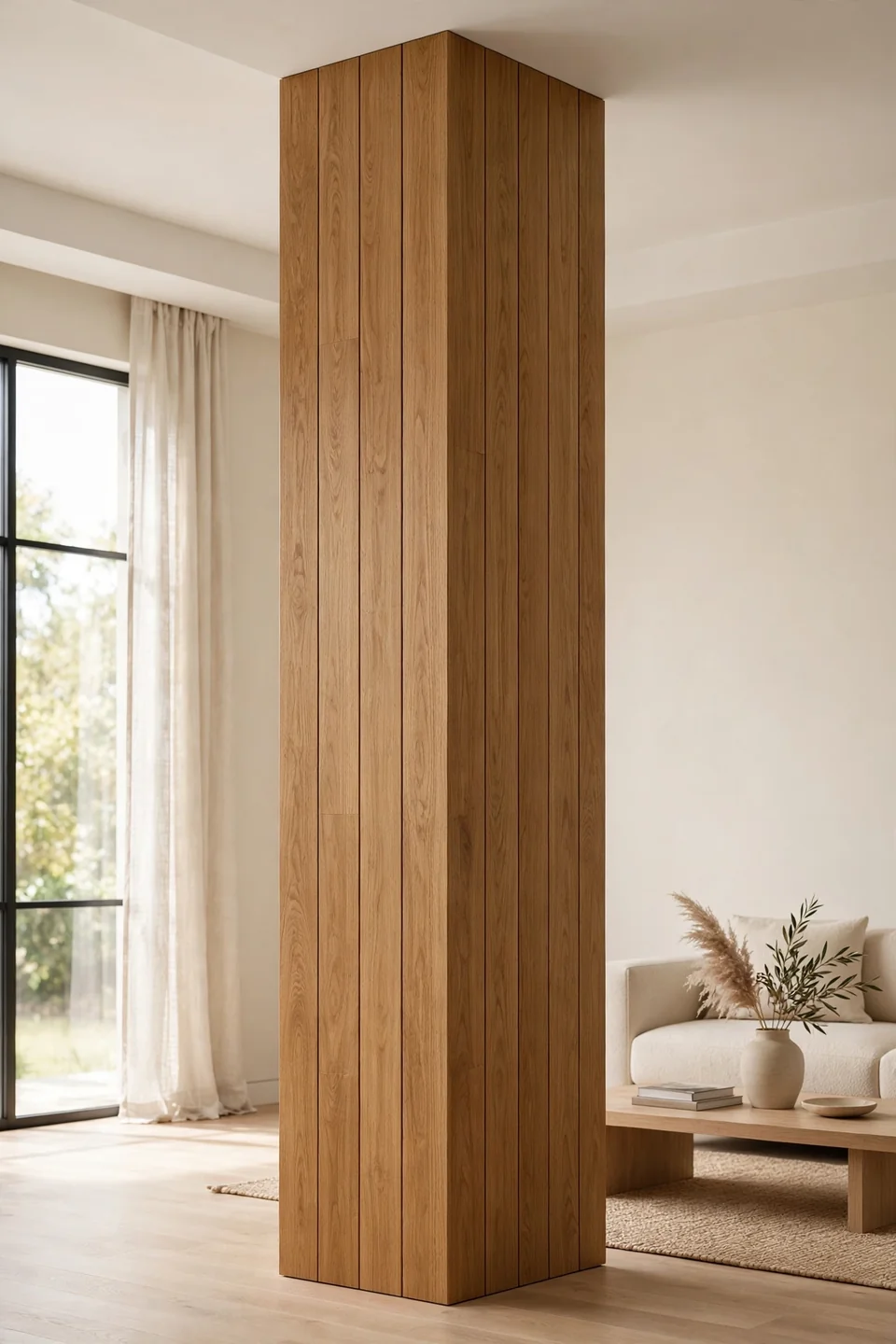
Common Mistake: Most people wrap a column in the cheapest thin paneling they can find, then wonder why it looks flat and fake. Thin boards warp, show every seam, and cheap stain turns orange within a year.
The Fix: Use real wood planks at least half an inch thick, or quality shiplap with tight joints. Stain a sample board first and live with it for two days before committing. Thick wood reads as architecture, not decoration.
Wood wrapping works because it gives the column visual weight that matches its structural job. A wrapped column looks like it was always meant to be there. Keep the finish consistent with your floors or beams for a cohesive feel. I have noticed vertical planks make low ceilings feel taller, which is a welcome bonus.
Use It as a Divider
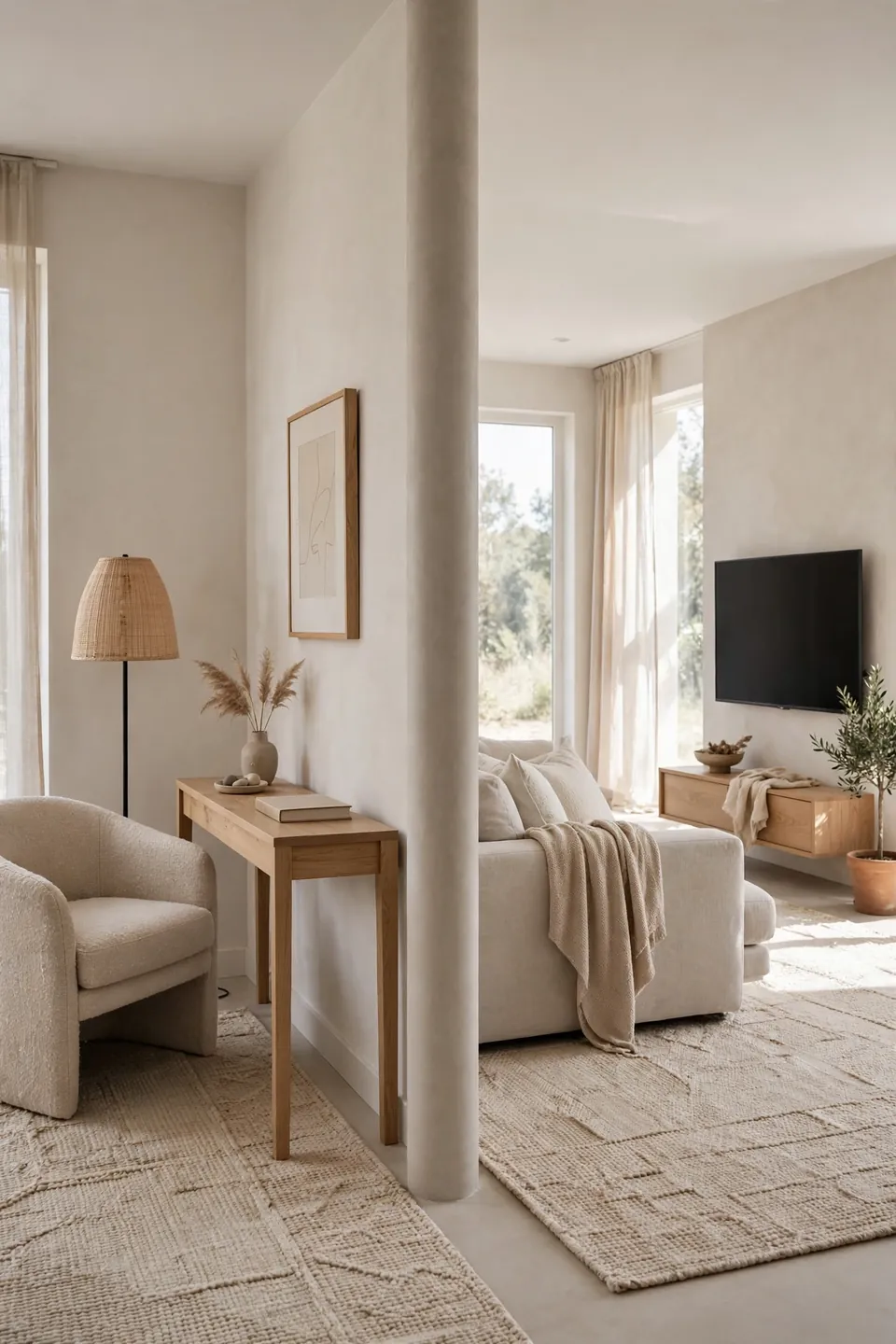
What You Need:
- A slim console table: anchors one side of the column and defines the zone behind it.
- A low bookshelf: creates a visual wall without blocking light between zones.
- A large area rug: placed on one side, it signals where the living zone ends.
- A floor lamp: marks the boundary with light and adds function to the edge.
- Two matching plants: flank the column to soften the hard transition.
Zoning gives the column a real job as a room divider. One side becomes the TV lounge while the other holds a reading chair. This approach to how to decorate a living room with a support column works best when both zones share one color story.
Add Shelving Around It
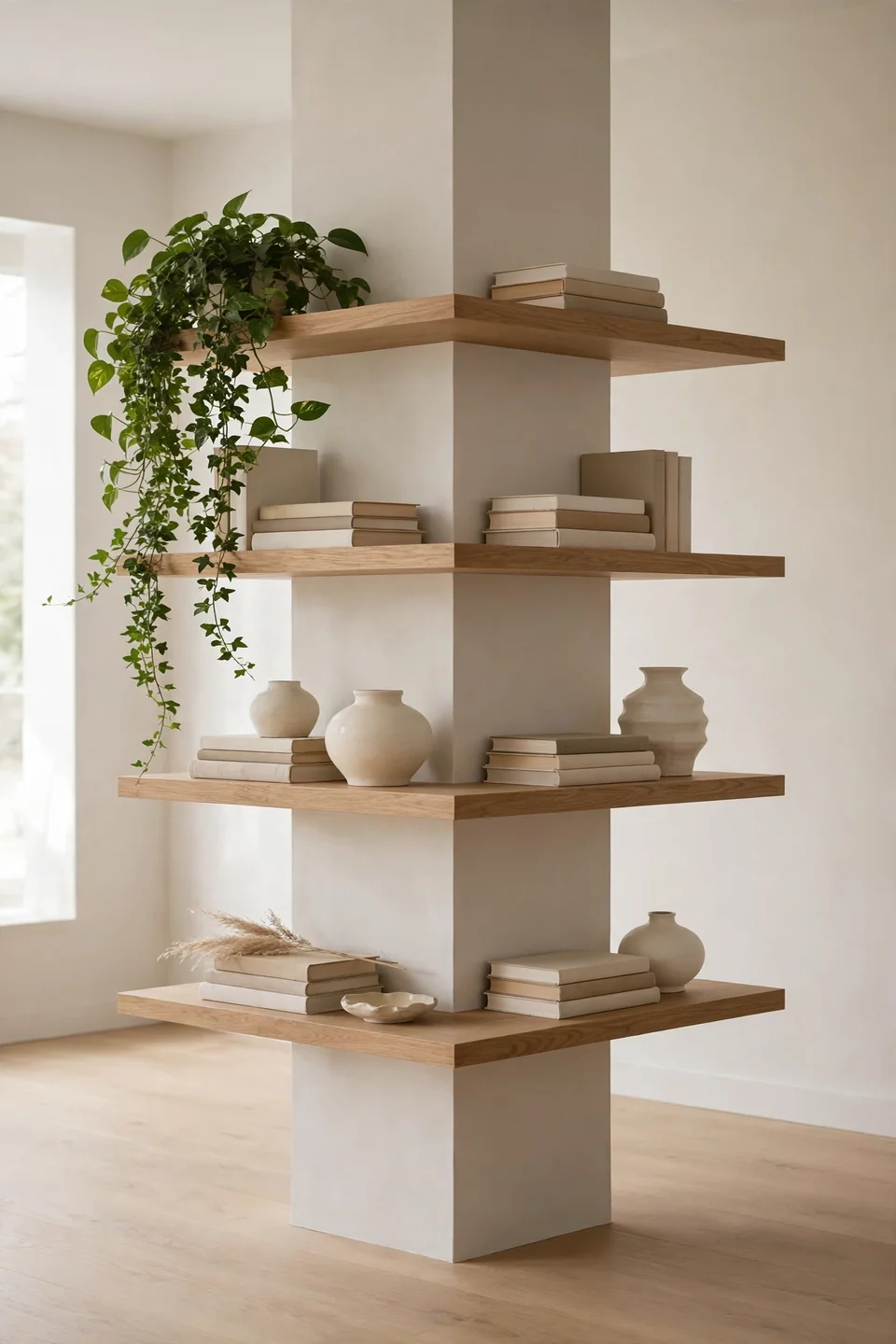
Before: The column stands bare and useless, a dead zone you walk around. Nothing about it invites you closer, so it stays an obstacle in every layout you try.
After: Floating shelves wrap two or three sides of the column, holding books, plants, and small art. The column becomes the room’s library corner, and guests gravitate toward it instead of around it.
Shelving works because it makes the column useful, and useful things stop feeling like obstacles. Keep shelf styling simple with breathing room between objects. Match the shelf finish to nearby furniture so the column ties into the room. Check weight limits before loading shelves with heavy books.
Light It Up
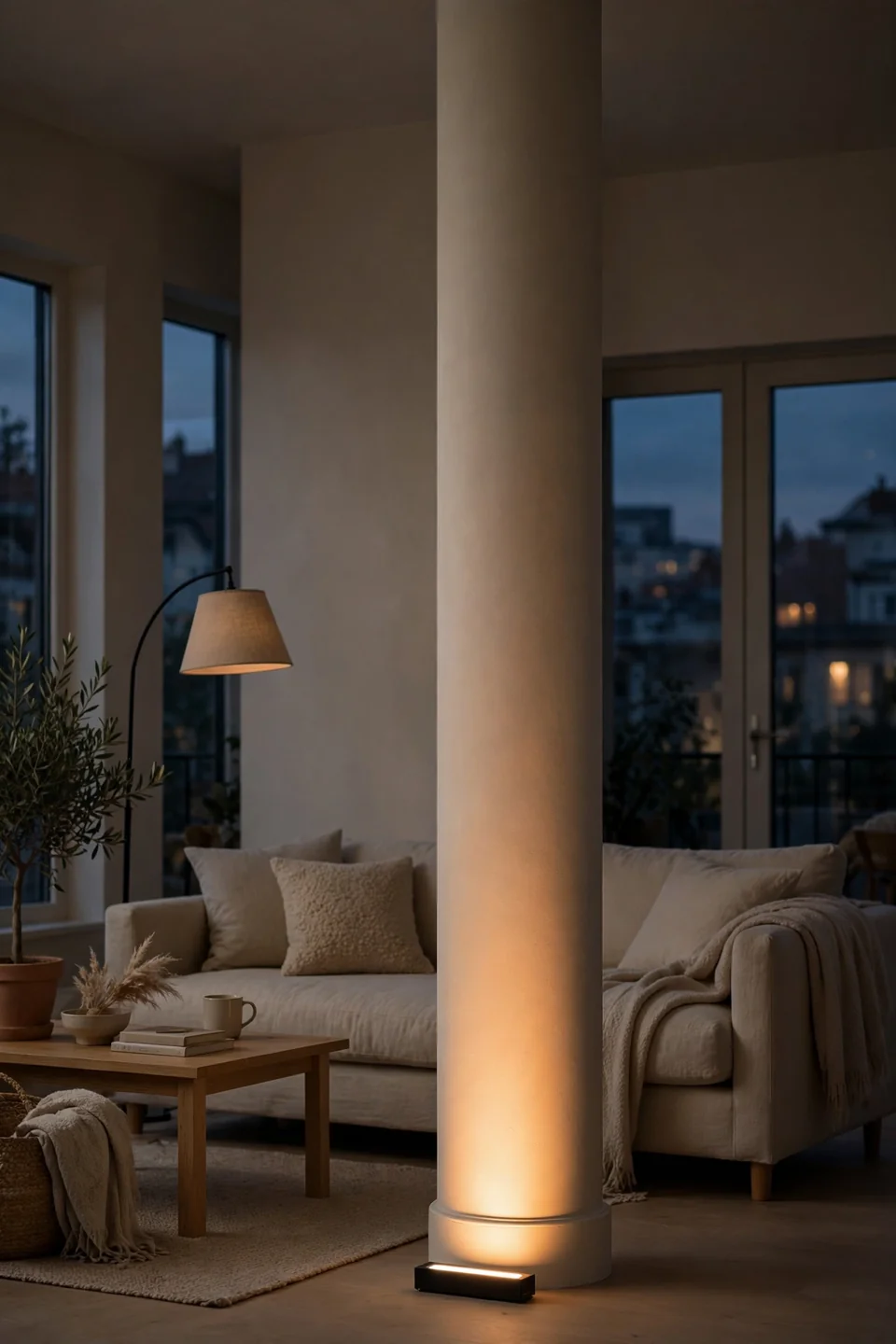
Do This:
- Wash the column with a slim uplight to make it glow softly at night.
- Add a picture light above any art you hang on the column.
- Use warm 2700K bulbs so the column feels cozy, not clinical.
Avoid This:
- Do not point a harsh spotlight straight at the column from above.
- Avoid cool daylight bulbs that make the column look like an office pillar.
- Skip string lights wrapped around it, which read as dorm room decor.
Lighting changes how the column feels after dark, which is when you use the room most. A softly lit column becomes ambiance instead of an obstacle. Put the column light on a dimmer so you can tune the mood. Test the effect at night before you finalize placement.
For more ideas on opening up tight spaces, see this guide on how to make a narrow entryway look wider, which uses similar light tricks.
Style the Base
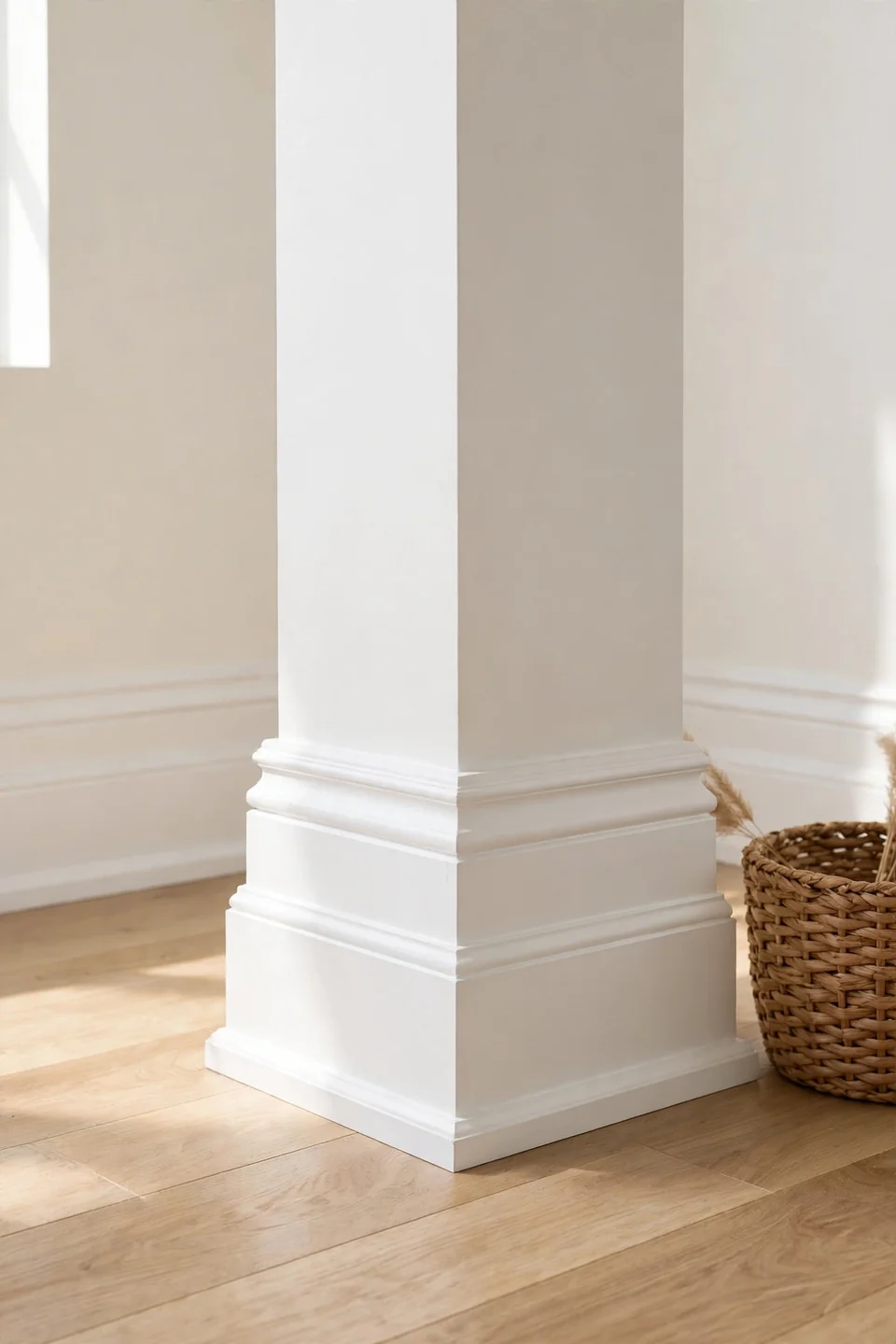
Time Needed: 1 hour | Difficulty: Easy | Cost: Under $50 | Best For: Columns with scuffed or damaged bases
The base of a column takes the most abuse from feet, vacuums, and toys. A simple base wrap or a ring of molding hides scuffs and gives the column a finished look. Choose a base treatment that matches your existing baseboards. This small detail makes the whole column look intentional.
Common Column Mistakes

The biggest mistake is ignoring the column and hoping guests will not notice it. They always notice it. An unstyled column drags down every other design choice in the room, no matter how nice your sofa is. Another common error is painting it a bold accent color without a plan, which turns it into a sore thumb instead of a feature.
People also overload columns with too many small decorations, creating visual clutter. Three tiny frames and a mini plant do not style a column, they just add noise. Pick one strong move per column and commit to it fully.
Pro Tips for Tricky Columns
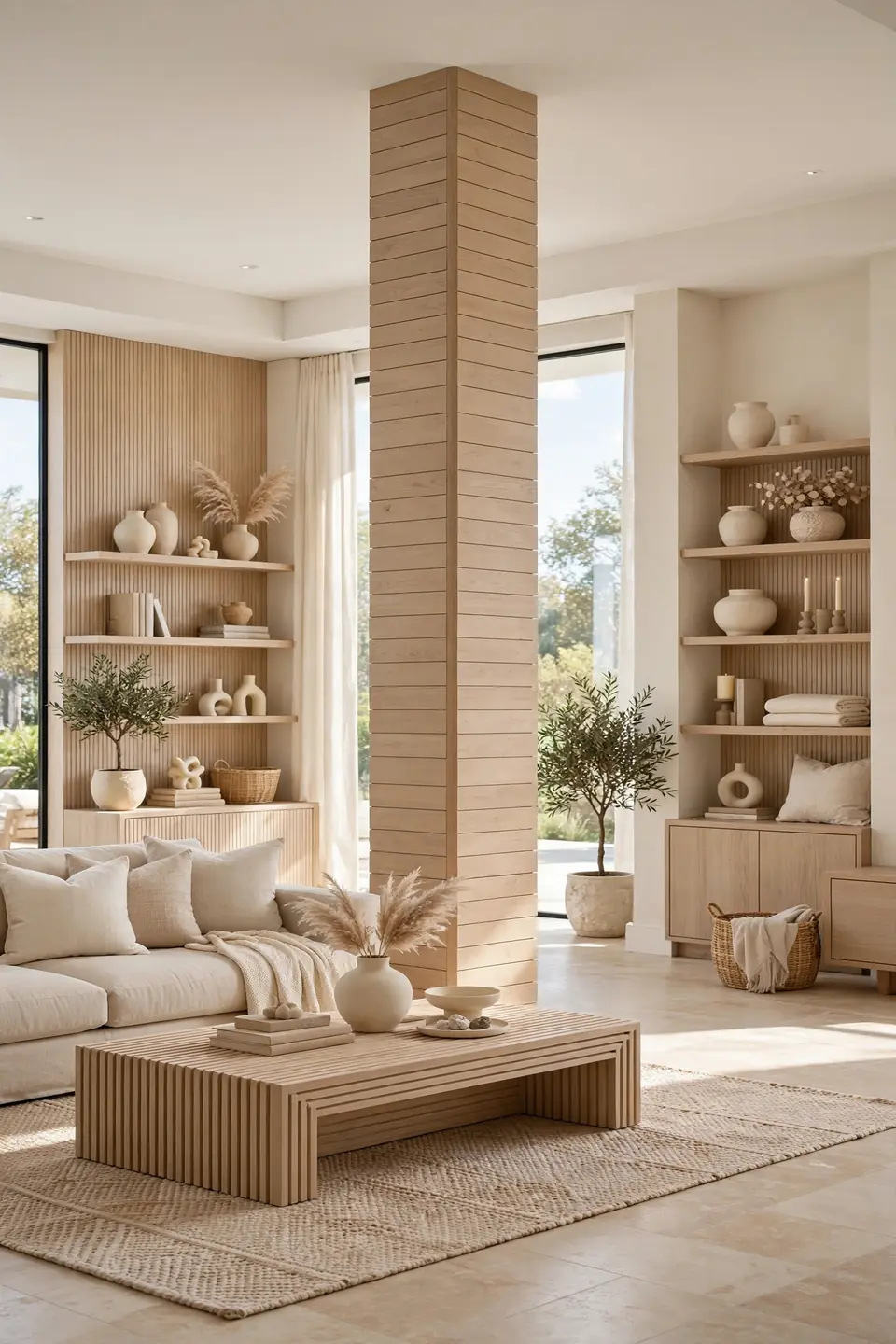
These finishing touches separate a decent column makeover from a great one. Small details make the column feel like part of the original design rather than an afterthought. Keep these pro moves in mind as you finalize your decorating plan.
- Step back to the room entrance after each change, since that is the view guests see first.
- Photograph the column with your phone to spot styling issues your eyes miss in person.
- Repeat one material from the column elsewhere in the room for a cohesive designer look.
- Live with each change for two days before adding more, so you avoid overdecorating.
Conclusion
That column does not have to be the thing you apologize for when guests come over. Once you learn how to decorate a living room with a support column, it stops being an obstacle and starts being a feature. Whether you painted it, wrapped it in wood, or lit it up, you gave it a purpose. Save this guide on Pinterest so you can revisit these ideas when you are ready to start. I have seen how one styled column can shift the whole feel of a room, and yours is next. Share these tips with a friend who is staring at their own awkward column right now.
2 Comments