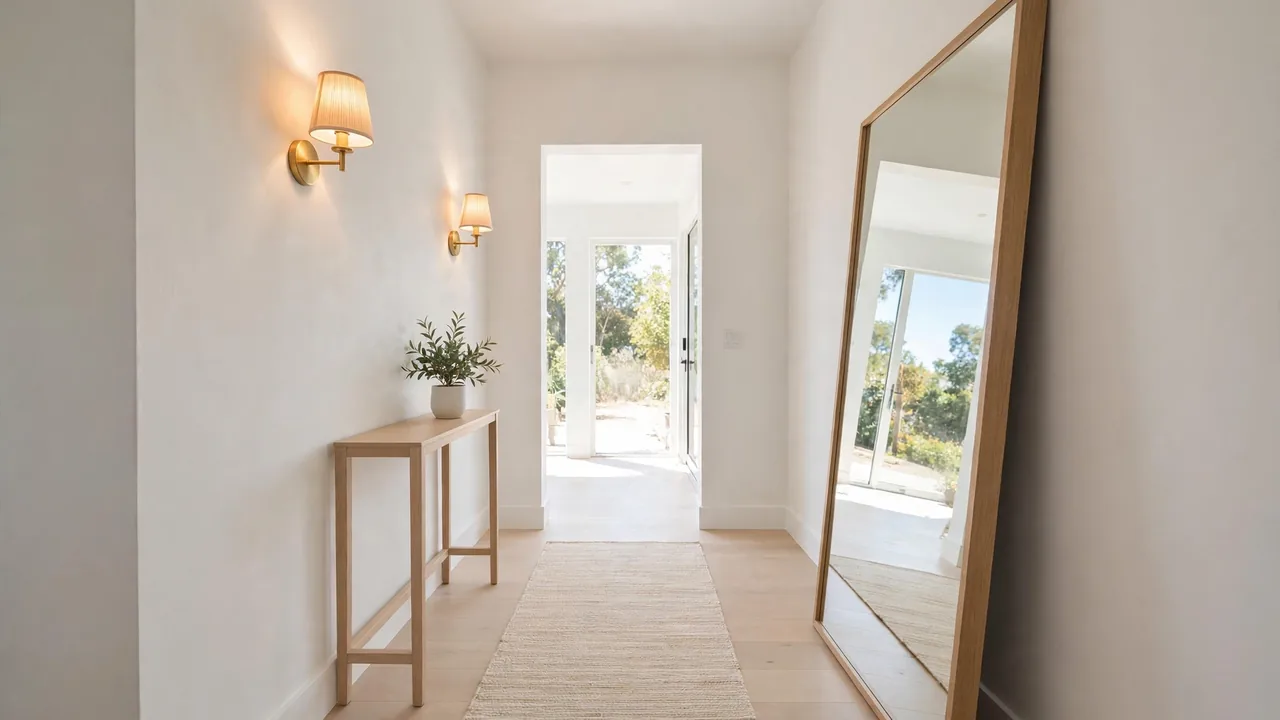
How to Make a Narrow Entryway Look Wider
That tight, tunnel-like squeeze when you walk through your front door is exactly why so many people search for how to make a narrow entryway look wider. In my experience, the cramped feeling rarely comes from the actual measurements. It comes from dark colors, poor light, and clutter telling your brain the walls are closing in.
The fix is simpler than you might think. With the right paint, a mirror, smart lighting, and a clear floor, you can visually double the width of the same hallway. For more small-space storage ideas, read our guide on how to organize cleaning supplies in a small home.
You do not need to renovate or spend much. Most steps take an afternoon and work for renters too.
Why Narrow Entryways Feel Squeezed
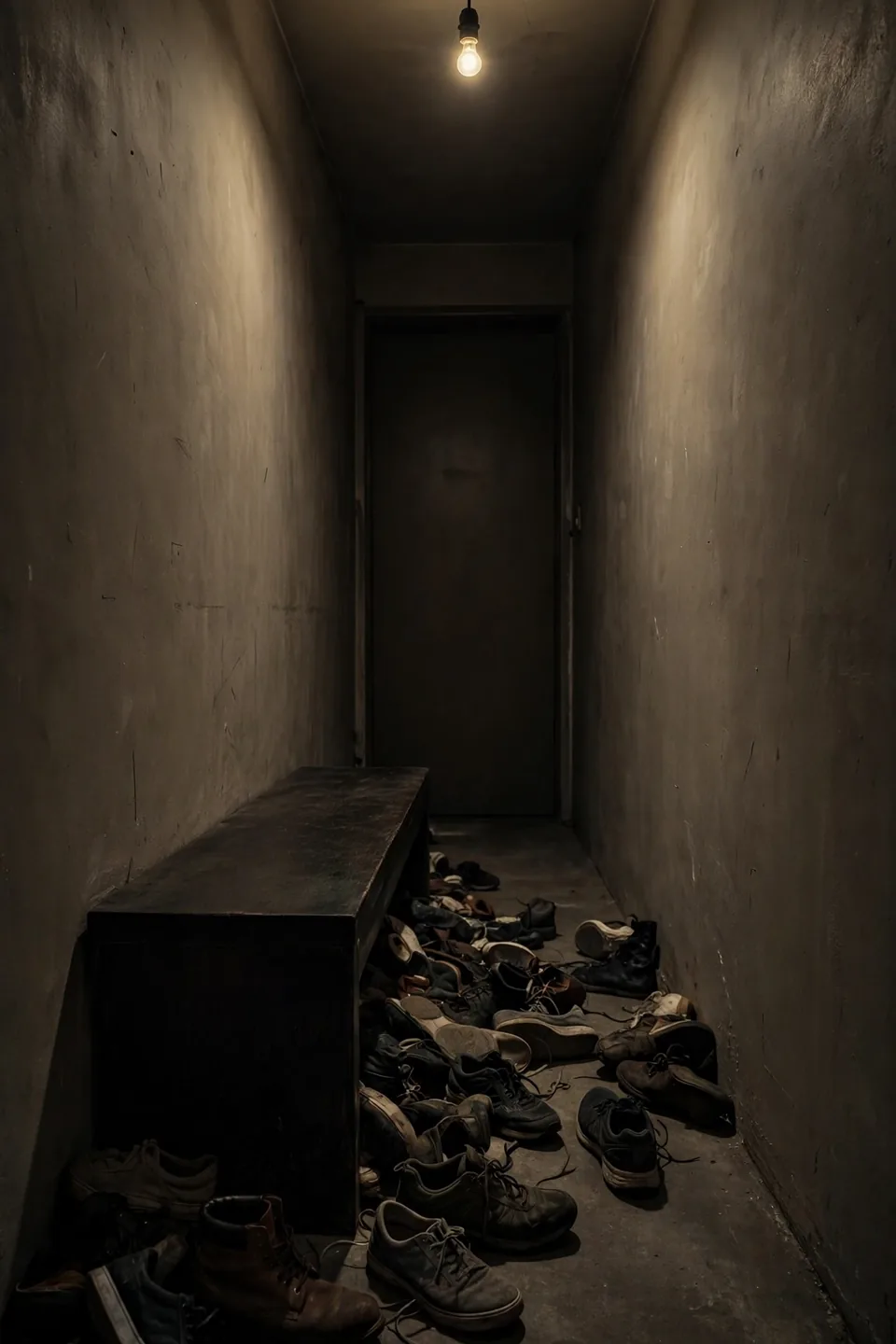
A narrow entryway tricks your brain before you even take off your shoes. The walls press in from both sides, the floor disappears fast, and the whole space reads as a tunnel rather than a welcome. Dark paint or bulky furniture makes it worse.
The good news is that most of this feeling comes from visual cues, not actual measurements. Light, lines, and reflections reshape how the brain reads width. In my experience, a few targeted changes can make the same hallway feel almost twice as wide without moving a single wall.
Lighten the Walls
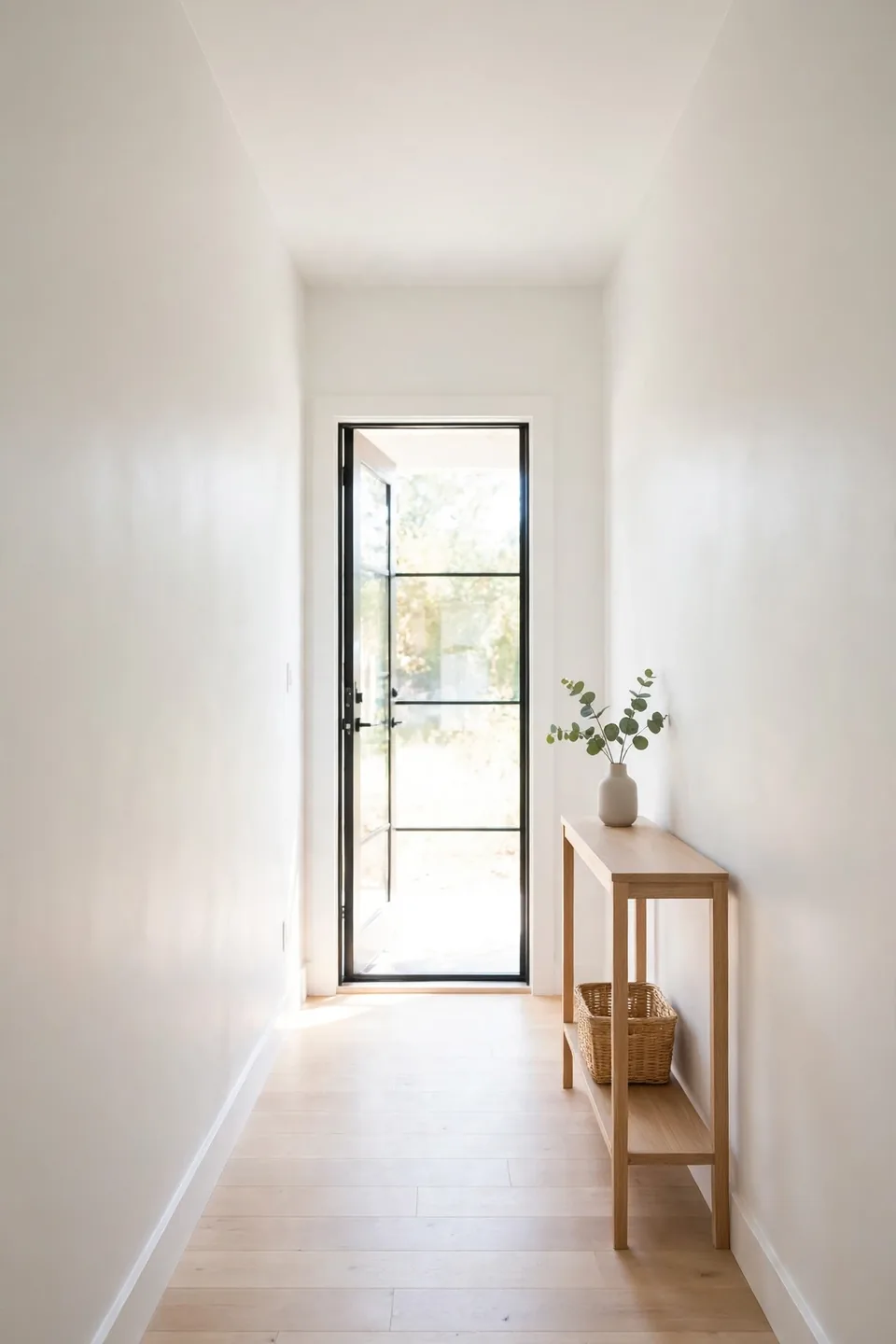
Wall color sets the tone for everything else. Light shades bounce natural and artificial light around, pushing the walls visually outward. A fresh coat in the right tone can widen a narrow entryway more than any furniture trick you try.
- Choose a soft white, warm beige, or pale gray with a warm undertone that flatters your floors.
- Paint the ceiling the same color to blur the edges where the walls meet it.
- Keep the finish in eggshell or satin so light reflects gently across the surface.
- If you love color, save it for one small accent, like a pillow or a frame, not the walls.
Use Wide Stripes
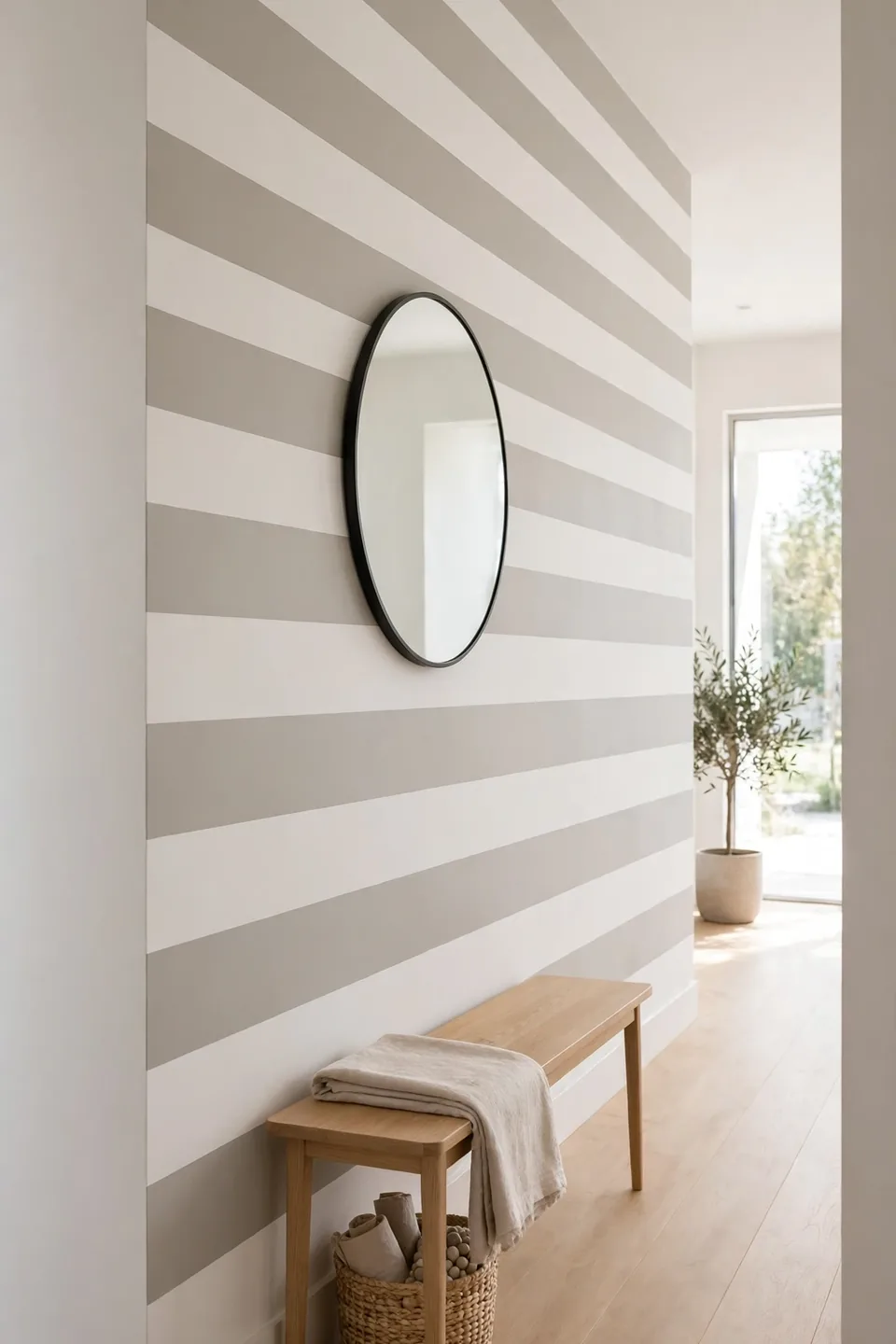
Quick Tip: Wide horizontal stripes draw the eye side to side, which makes walls feel farther apart. Keep stripes at least six inches wide and use low-contrast tones, like soft white with warm gray, so the pattern widens without shouting.
You can get this look with paint, striped wallpaper, or even peel-and-stick panels that remove cleanly. Keep the stripe rhythm consistent along the whole wall. One striped wall is usually enough, since covering every wall can feel busy in a tight space, so stop at one and enjoy the width.
Add Big Mirrors
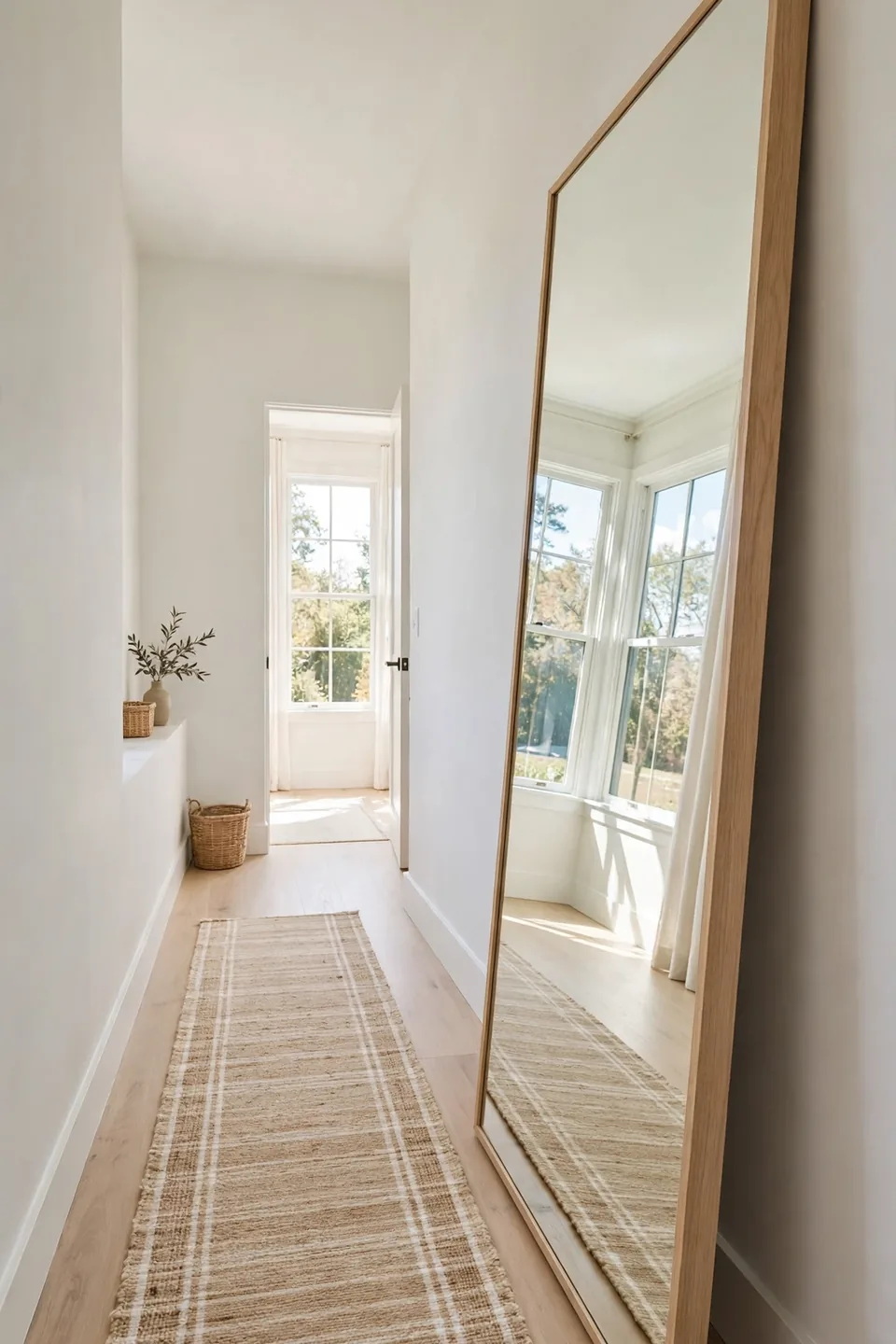
Common Mistake: Hanging a tiny mirror or a cluster of small ones and expecting a big result. Small mirrors chop the wall into pieces and add visual clutter, which makes a narrow entryway feel even tighter than before.
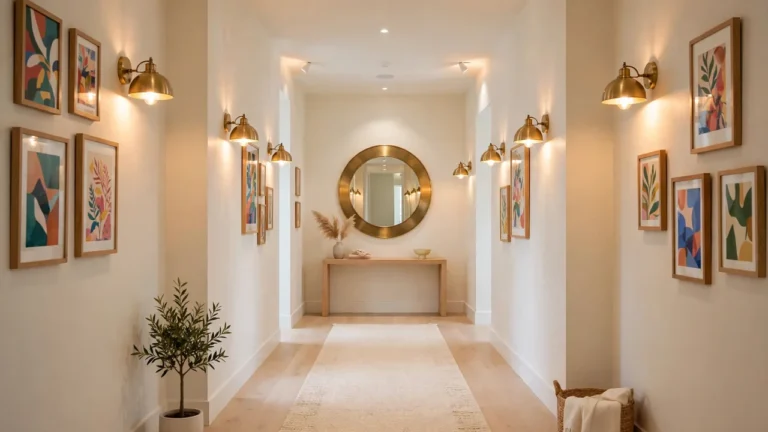
The Fix: Go large. One tall mirror, or a wide mirror spanning most of the wall, doubles the light and visually extends the floor. Place it where it reflects a window or a bright lamp for the strongest widening effect.
Keep the frame slim and simple so the mirror itself does the work. A floor-leaning mirror works beautifully in entryways with limited wall space, and it costs less than a custom installation. Just make sure it is secured safely if kids or pets use the area daily.
Choose the Right Runner
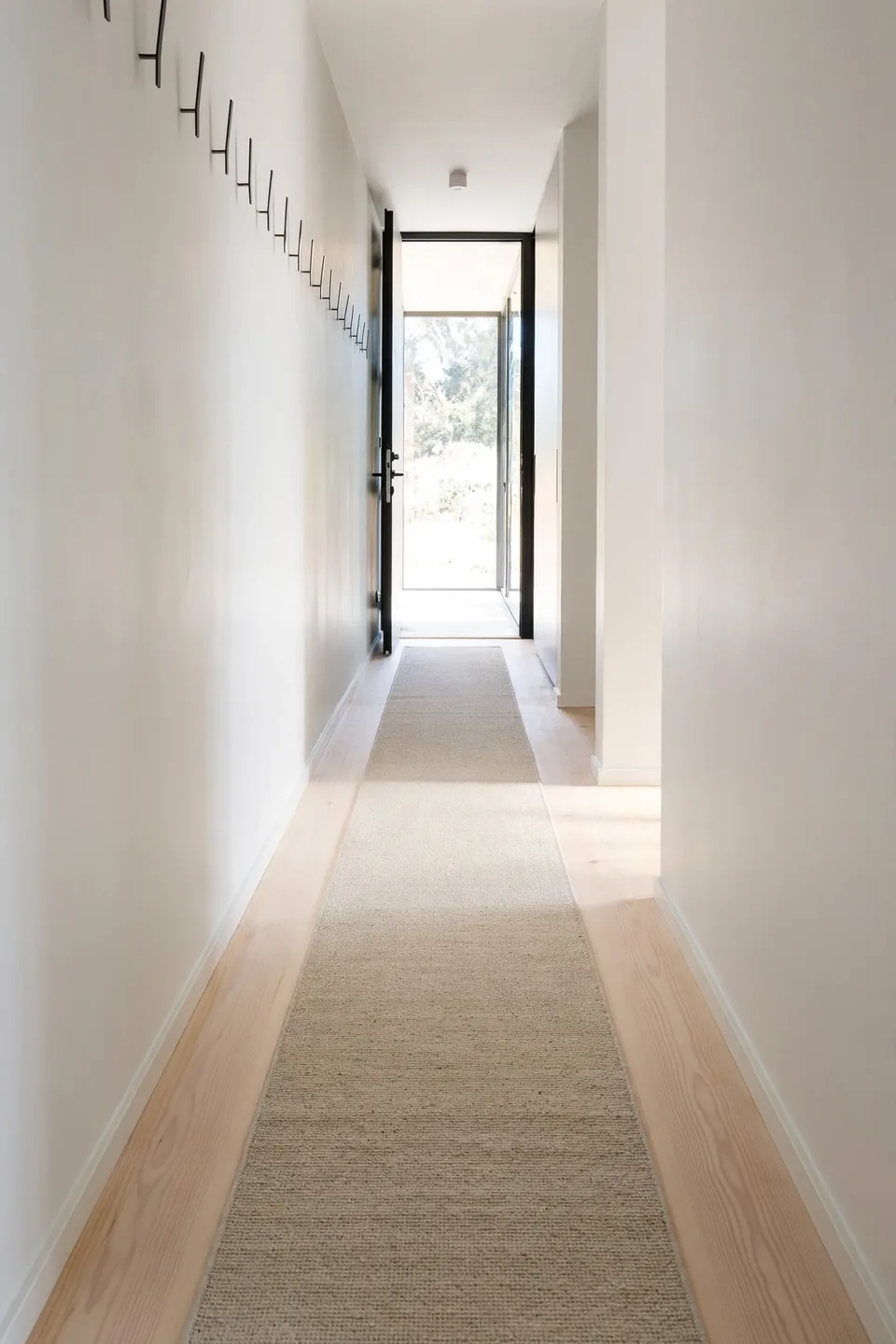
What You Need:
- A low-pile runner in a light color, which keeps the floor bright and trip-safe.
- A non-slip rug pad, so the runner stays put on hard floors.
- A measuring tape, because the runner should fill most of the hallway length.
- Painter’s tape, to mark placement on the floor before you buy or unroll.
A runner pulls the eye straight down the hall, which reads as length rather than width, and learning how to make a narrow entryway look wider often starts with this simple floor move. Leave a few inches of bare floor on each side. Avoid dark, heavy patterns that visually narrow the floor.
Keep It Uncluttered
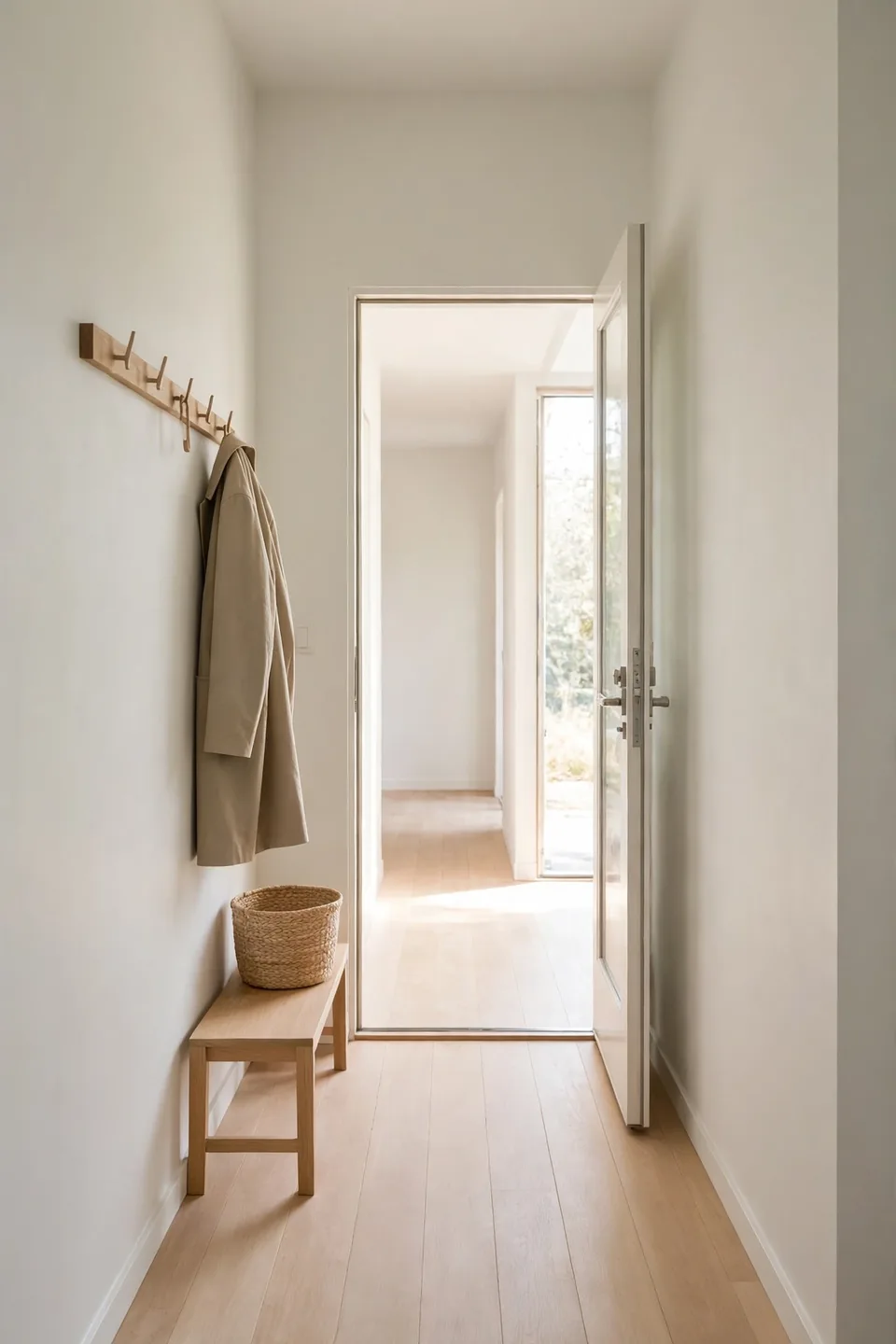
Before: Coats pile on hooks, shoes spill across the floor, and bags stack on the bench. The walkway shrinks to a sliver, and every step feels like squeezing past a closet.
After: Only daily essentials stay out, each with a home. The floor line runs clear from door to hall, and the space breathes again.
Edit ruthlessly. Move off-season coats and extra shoes to another closet, and give every remaining item a hook, bin, or shelf. Clear floors are the fastest free way to widen a narrow entryway, because the eye reads open floor as open space, and that trick costs nothing at all.
Light It Brightly
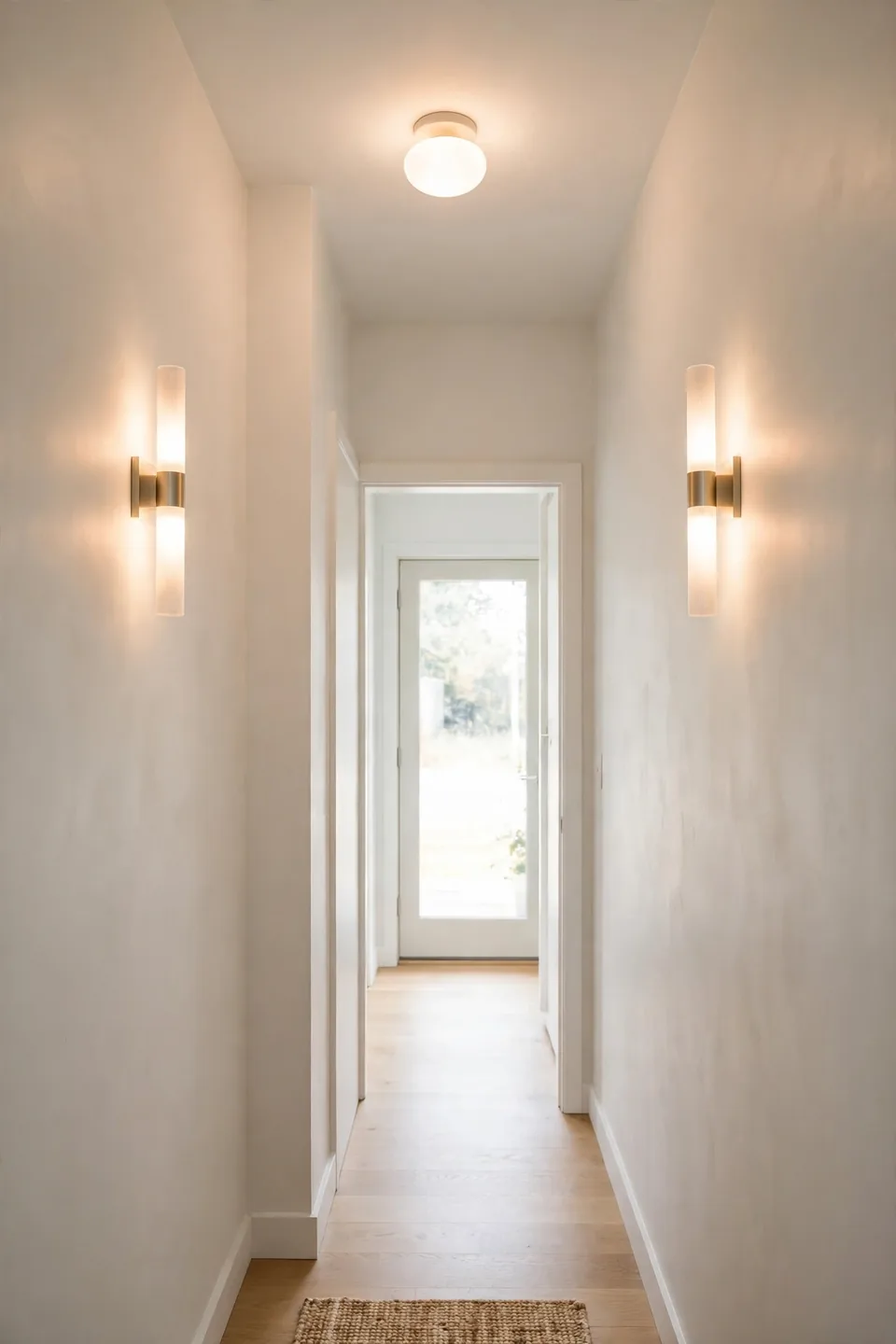
Do This:
- Add two light sources along the hall so no dark pockets form.
- Use warm white bulbs around 3000K for a welcoming glow.
- Place a slim wall sconce or picture light to wash the walls with light.
- Keep shades light and translucent to spread brightness evenly.
Avoid This:
- Relying on a single dim ceiling fixture.
- Using cool harsh bulbs that make the space feel clinical.
- Blocking light with tall furniture pushed against the walls.
- Letting bulbs burn out before replacing them.
Bright, even light pushes walls outward and erases the tunnel feeling that makes entryways feel tight. Small plug-in sconces or battery-operated picture lights work well in rentals where wiring changes are off limits, and they install in minutes. Two or three small sources beat one bright fixture for the most natural result.
For a related wall styling idea, see our guide on how to decorate a bedroom with a slanted wall for more ways to work with tricky walls.
Draw Eyes Down the Hall
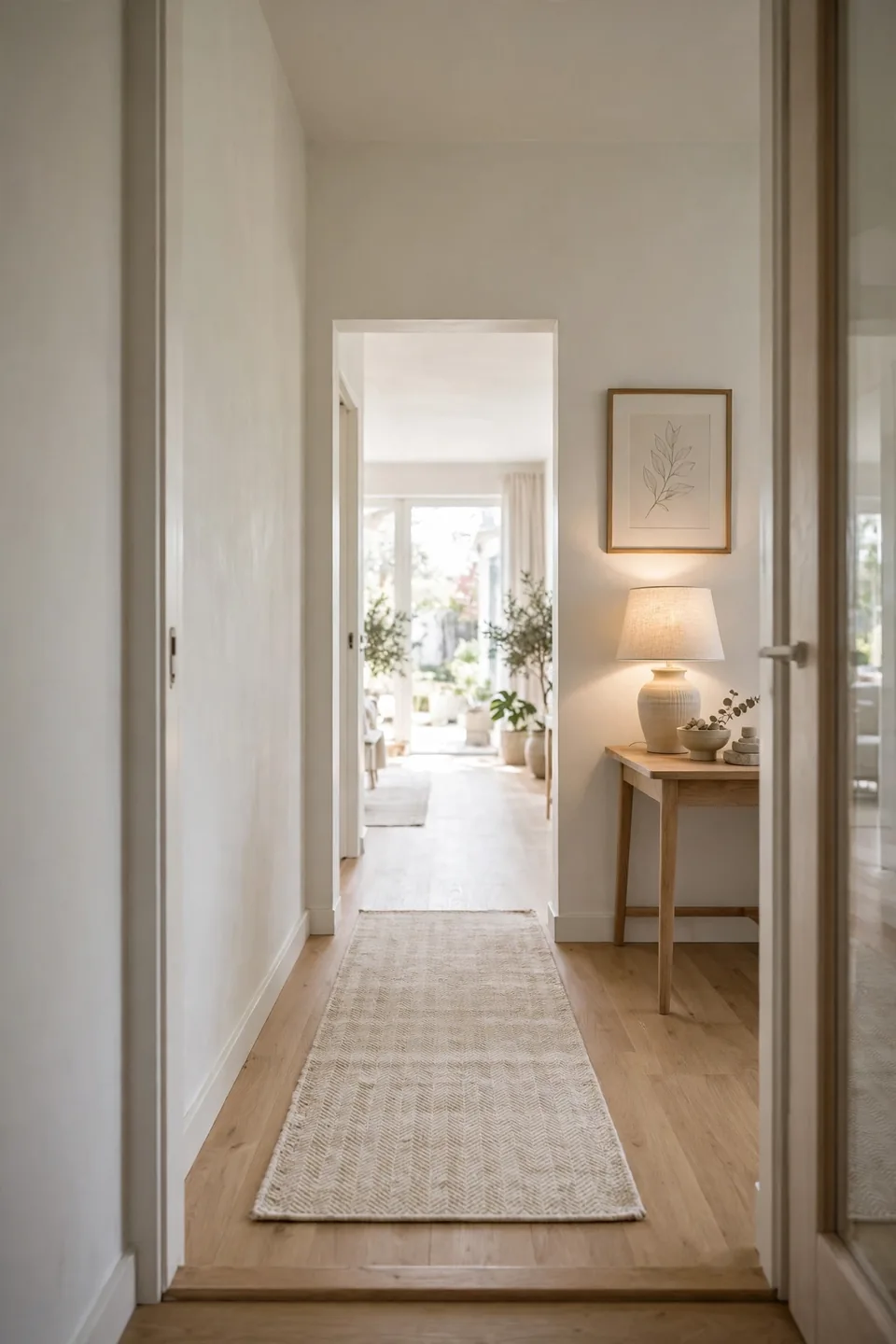
Time Needed: One afternoon | Difficulty: Easy | Cost: Low to medium | Best For: Long narrow entryways that feel like tunnels
A focal point at the far end, like art, a console with a lamp, or a pretty door curtain, pulls the gaze forward. When the eye travels the length of the hall, the brain registers distance instead of tightness. Keep the end point simple and bright so it invites rather than blocks.
Common Narrow Entryway Mistakes
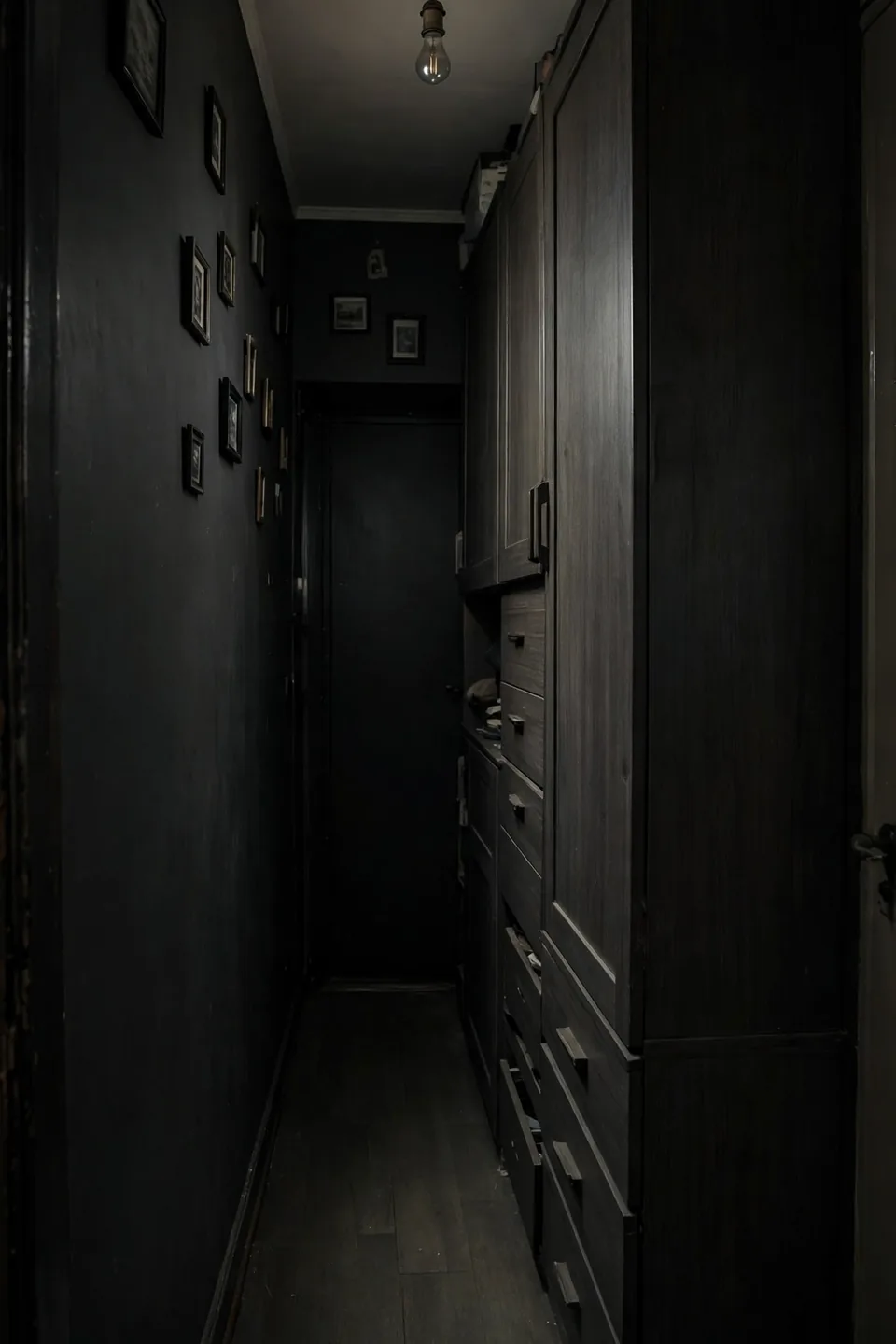
The biggest mistake I see is treating a narrow entryway like a storage room. Bulky benches, deep shoe racks, and oversized consoles eat the precious width you are trying to fake. Dark paint is another common trap, since it absorbs light and pulls the walls closer together visually.
Hanging art too small or too high also works against you. Tiny frames get lost and add clutter, while high placement wastes the eye-level zone where width is read. Keep pieces at eye level and choose slim profiles. Less truly is more here.
Pro Tips for Wider Entryways
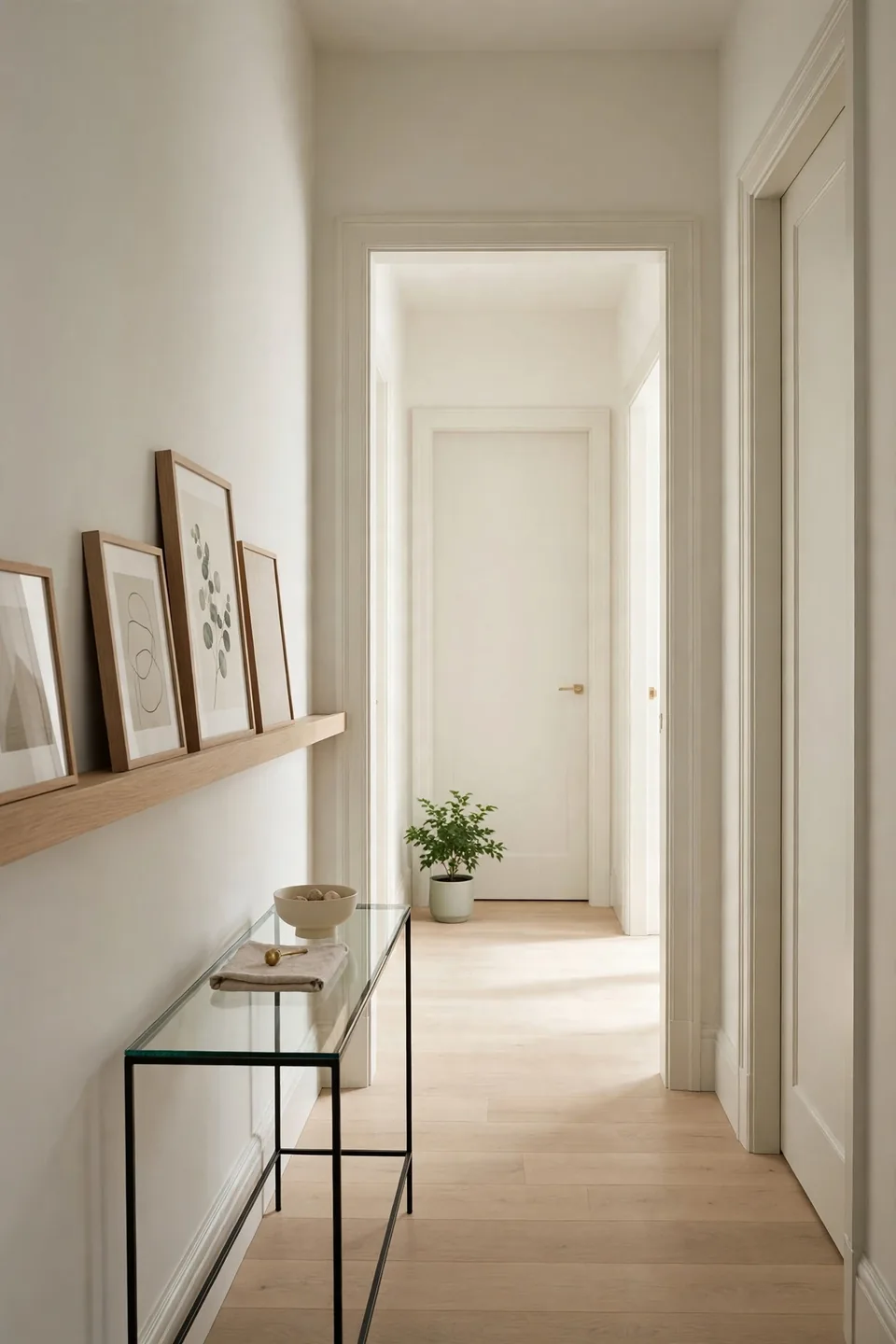
These finishing touches layer on top of the big changes and push the widening effect even further. Most take only minutes and cost almost nothing, yet they polish the whole result and make the entryway feel truly finished and welcoming.
- Match your trim and doors to the wall color so the edges disappear.
- Keep one long horizontal line, like a chair rail or picture ledge, running the length of the wall.
- Use clear or open furniture, like a glass-top console, to keep sight lines open.
- Add a subtle scent or small plant at the far end to reward the eye for traveling.
Conclusion
A narrow entryway stops feeling like a squeeze the moment light, color, and clear floors start working together. Once you know how to make a narrow entryway look wider, the same tricks apply to hallways and corridors all over your home. I have seen how a brighter entry changes the whole mood of a house, because the first thing you see sets the tone for everything after it.
Save this guide on Pinterest so you can find it when you are ready to start, and share it with a friend whose hallway needs the same rescue. Your front door deserves a grand entrance, not a tight squeeze.
2 Comments