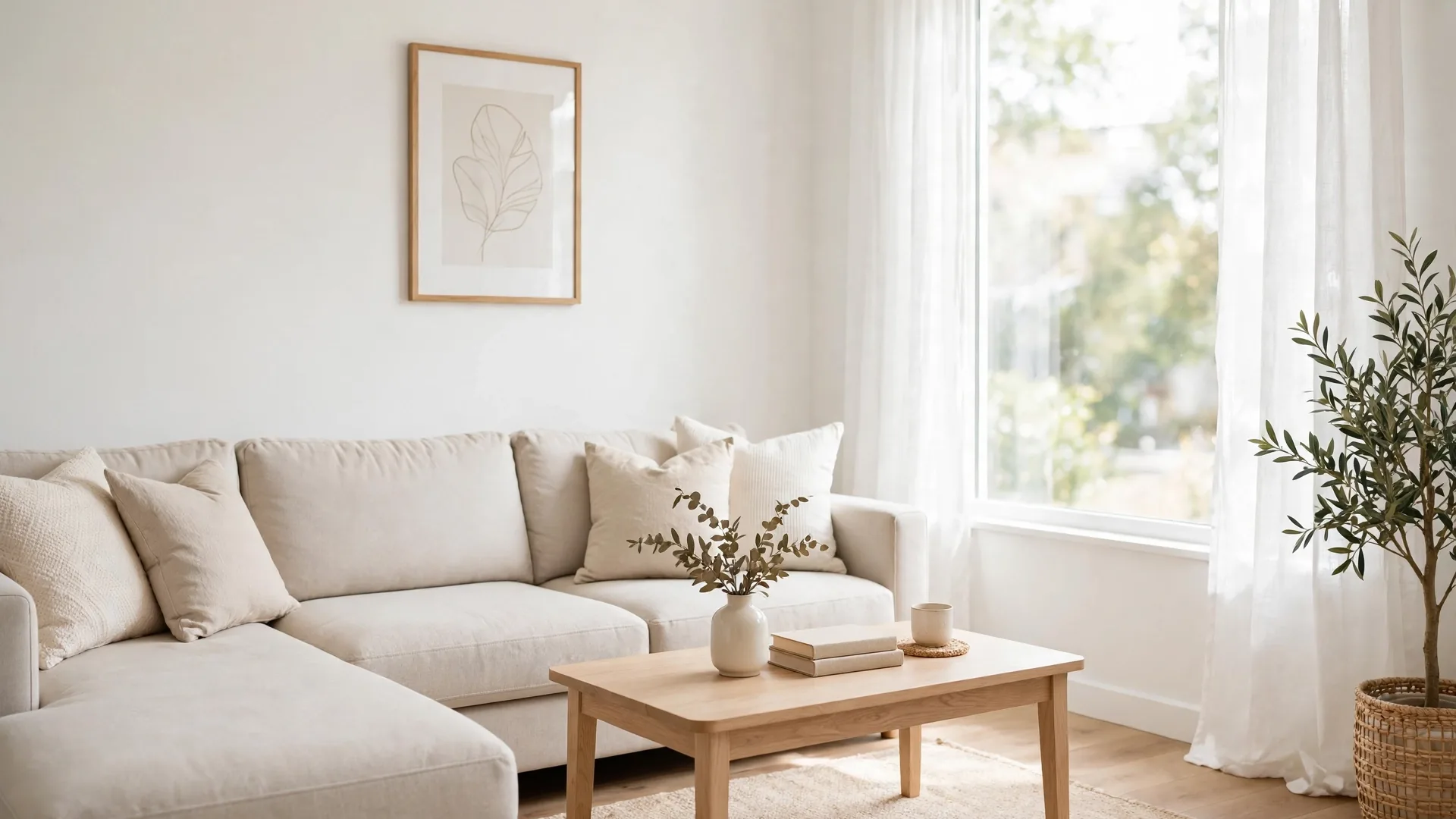
25 Small Living Room Ideas With Sectional Sofa to Maximize Comfort
Fitting a big comfortable sofa into a tiny space feels impossible until you discover the right small living room ideas with sectional sofa layouts that actually work. The trick is not buying a smaller sofa, but choosing smarter shapes, lighter fabrics, and placements that keep walkways open. If you enjoy seasonal styling too, our christmas fireplace mantel decor ideas show how a neutral sectional becomes the perfect backdrop for holiday decor.
In this guide, you will find 25 practical ideas covering low-profile frames, leg styles, smart storage, and layout tricks that make every square foot count. In my experience, one thoughtful change like switching to an open leg base can make the whole room feel twice as large. Read through, save your favorites to Pinterest, and turn your compact living room into a space that feels both generous and calm.
Corner Floating Layout for small living room ideas with sectional sofa
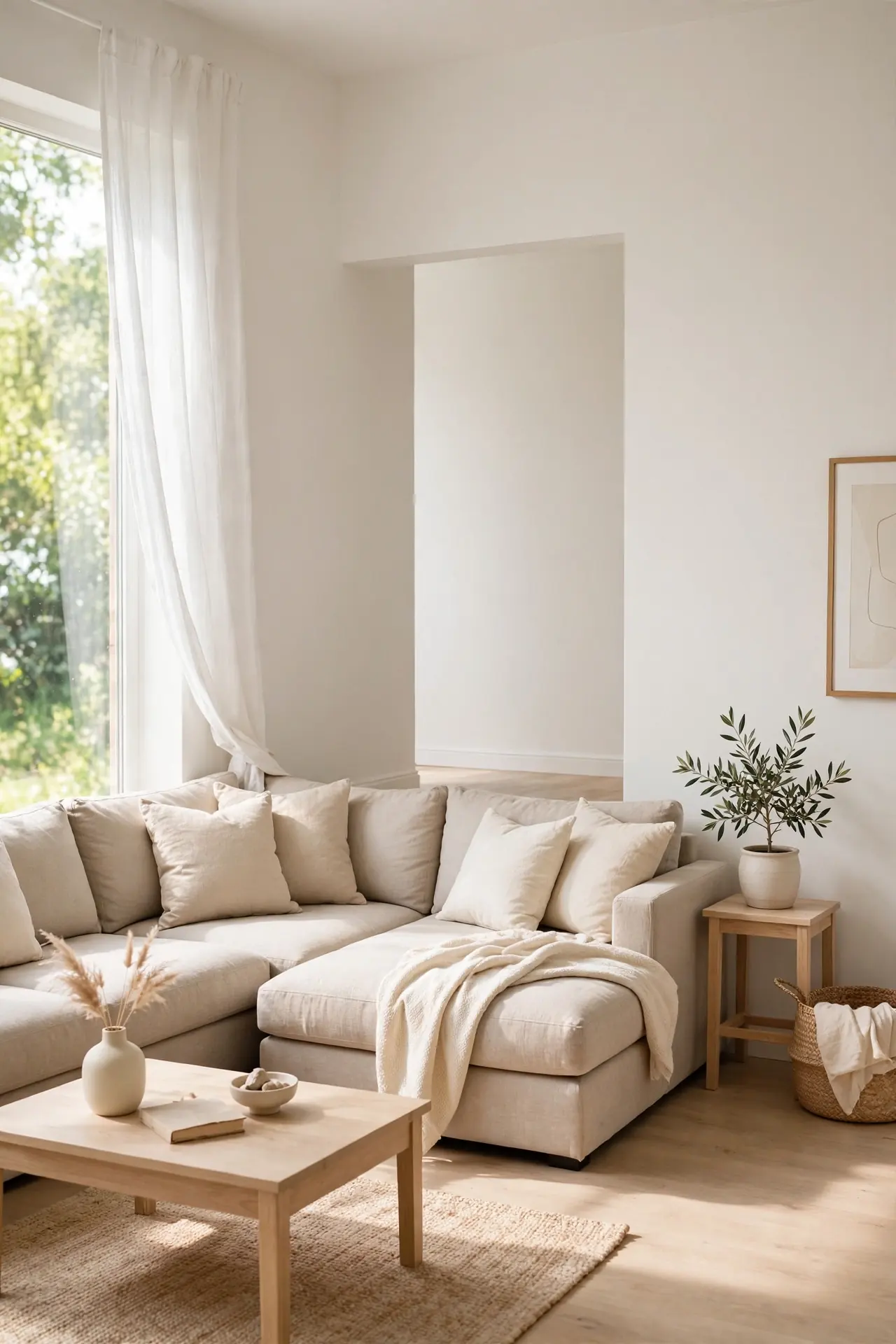
A compact L-shaped sectional does its best work when it stops hugging the wall. Pull it six to eight inches into the room so a slim console table fits behind it, giving you storage and display space while keeping the walkway clear.
Keep the palette light, creams and warm beige, so the floating position feels intentional, not crowded. A narrow arc floor lamp over the corner seat and a round jute rug underneath anchor the arrangement. In my experience, this small gap behind the sofa makes the whole room breathe easily. Tuck slim baskets into the gap for hidden extra storage.
Light Fabric Upholstery
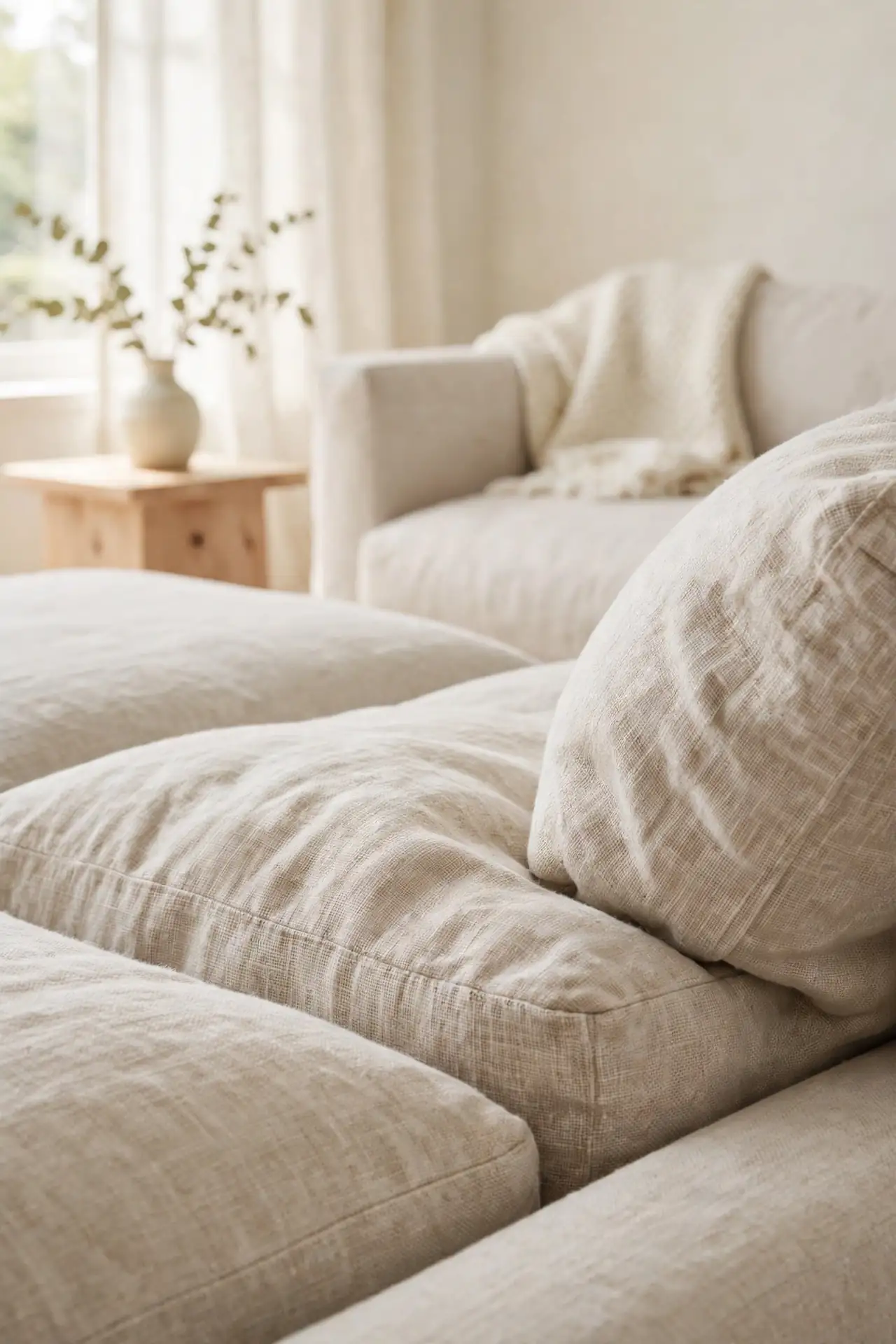
Heavy dark fabrics swallow a small room whole.
- Choose performance linen or a cotton blend in ivory or warm greige; both hide daily wear and bounce light around the room.
- Skip bold patterns on the main upholstery; texture like boucle or slub weave adds interest instead.
- A solid light fabric makes the sectional look smaller, freeing room for a light wood side table.
- Stain-resistant finishes matter with a light sofa; look for washable slipcovers or treated fibers before you commit.
Pair the light upholstery with a pale oak coffee table and sheer curtains to keep the brightness flowing. Add two small cushions in soft sage or sand for gentle contrast. This keeps seating generous while the room stays airy. One caution: light fabric near a dining zone needs washable covers.
Low Profile Design
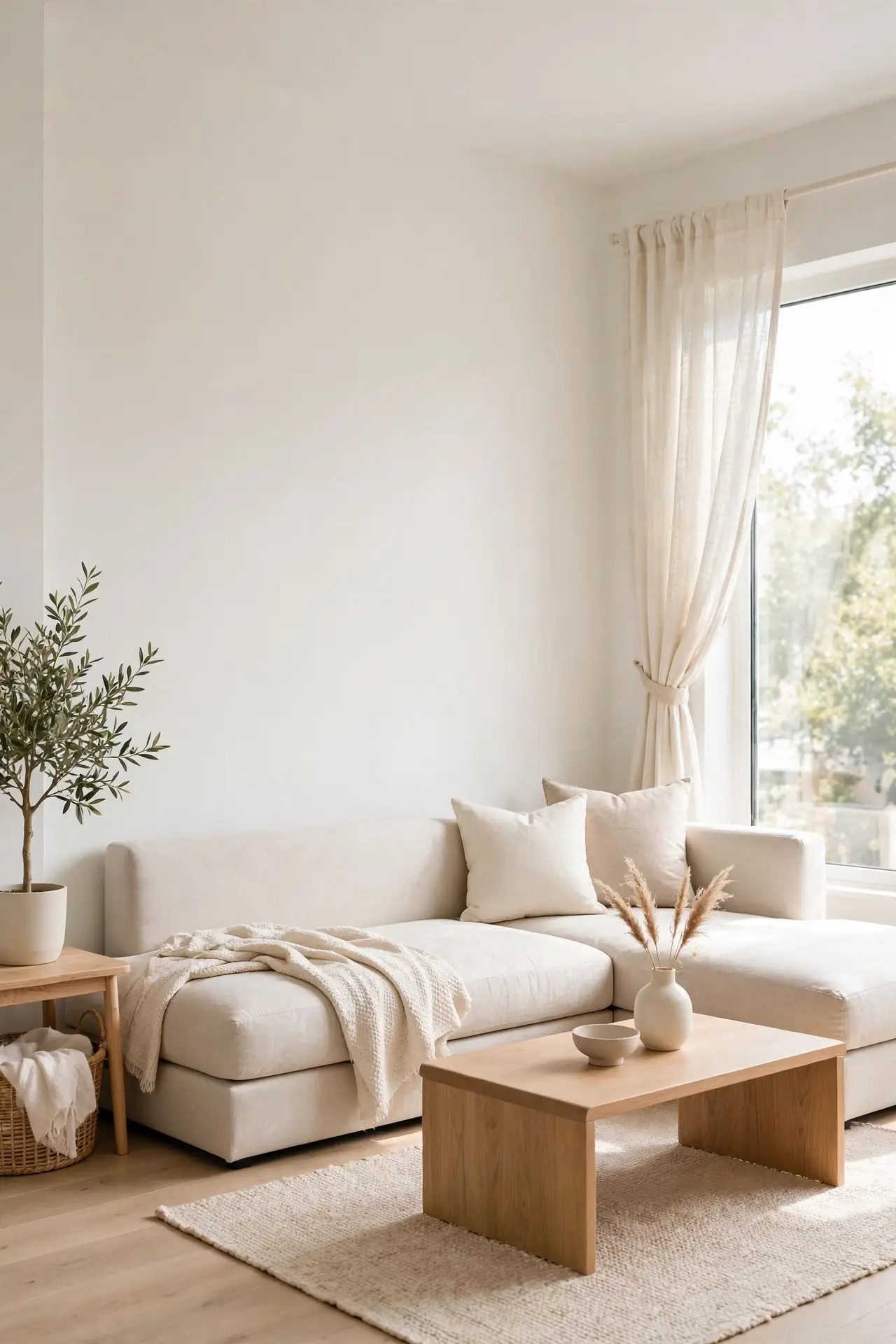
Quick Tip: Pick a sectional with a seat height under 17 inches and slim back cushions, since anything taller reads like a wall across a small room. Keep the arms narrow too, no wider than five inches, so the bulk stays minimal. Measure your doorway first so the lower profile actually fits through it.
Low seats keep sightlines open, so windows and artwork stay visible above the backrest. Match the profile with a low bench or nesting tables in pale wood. Your eye travels further, the ceiling feels higher, and the room reads noticeably calmer. I’ve noticed this one change buys the most visual space per dollar.
Open Leg Base
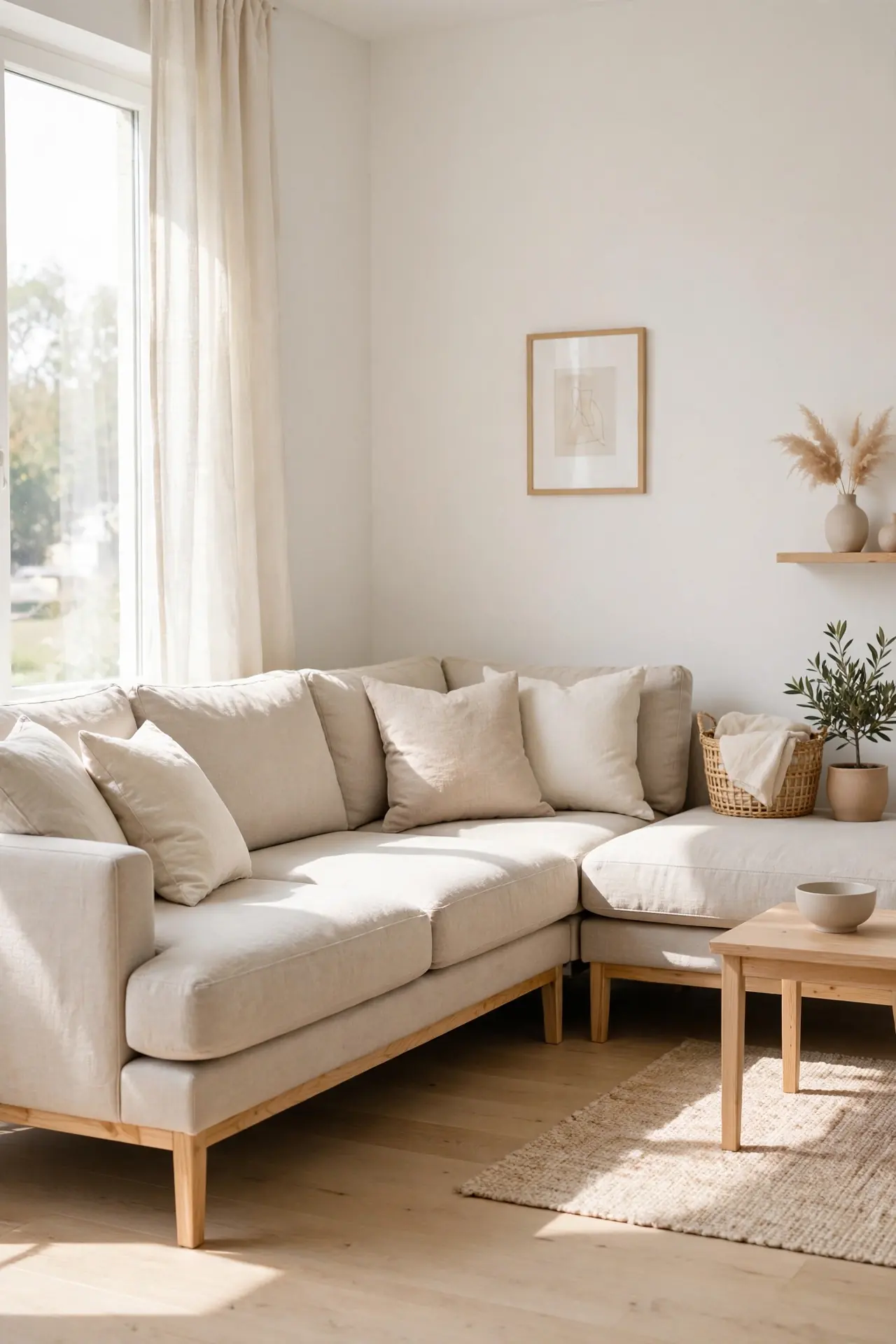
BEFORE: The sectional sits on a low skirted base that hides the floor beneath it. The solid block of fabric reads heavy and makes the room feel smaller than its actual measurements.
AFTER: The same sofa now rests on slim tapered legs, revealing a strip of floor underneath. Light passes below the seat and the whole piece looks like it floats above the rug.
Among small living room ideas with sectional sofa, choosing an open leg base is one of the cheapest visual tricks. Aim for legs at least four inches tall in light wood or slim metal. Dust the space beneath monthly, since every crumb shows. A flat mop reaches it in seconds.
Wall Hug Placement
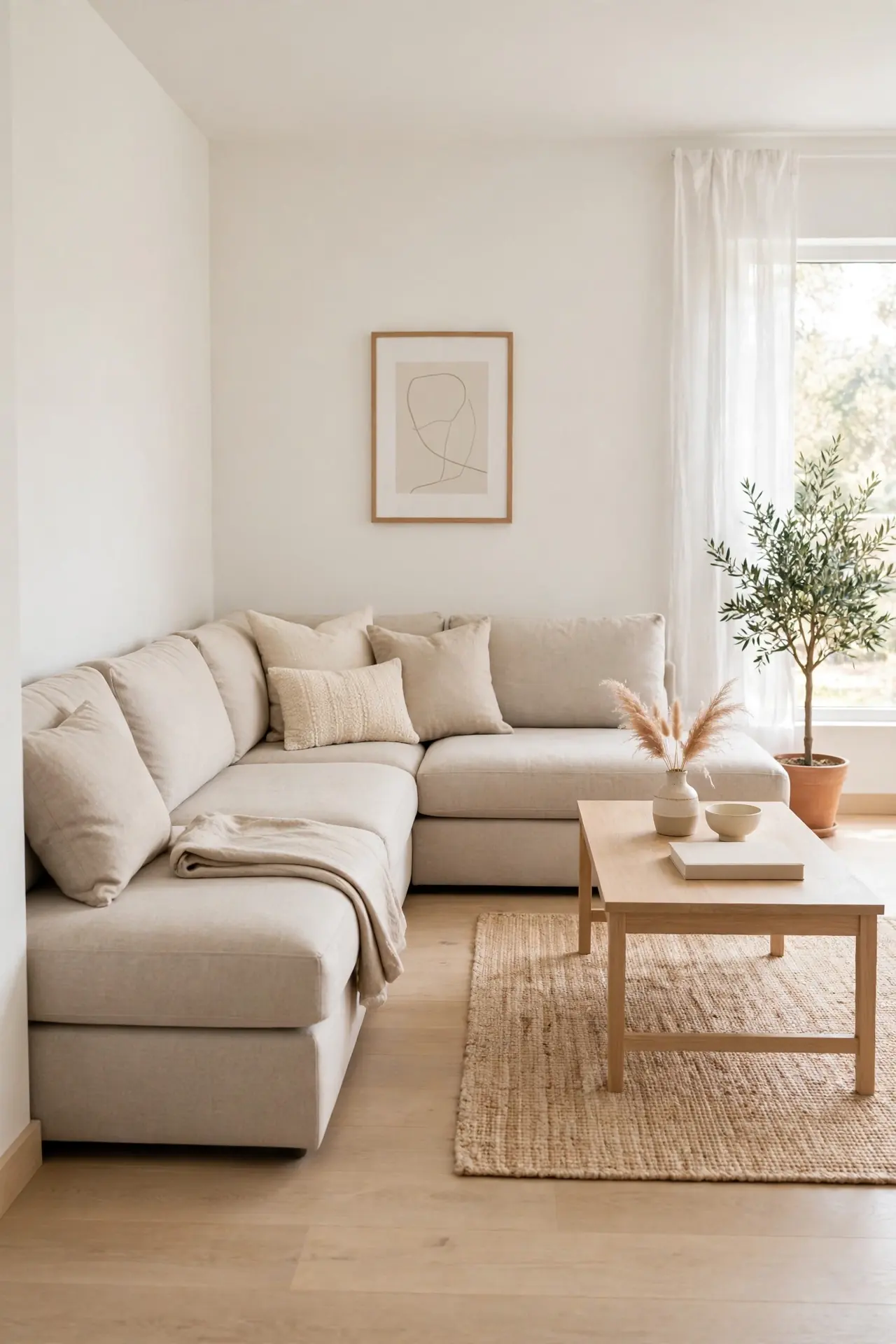
A sofa against the wall can still look intentional.
- Push the sectional’s back edge flush to the longest wall, leaving no gap where remotes and crumbs disappear.
- Place a slim console or floating shelf on the wall above to draw the eye up and add storage.
- Layer a soft throw and two cushions in cream and warm beige to echo the minimalist palette.
- Finish with a small round side table in light wood at the open end for balance.
Wall-hugging placement gives you one uninterrupted walking lane, which matters most in rooms under 200 square feet. Keep the front edge clear of baskets and ottomans so the lane stays usable day to day. A slim runner rug along it marks the path without stealing floor space.
Slim Arm Style
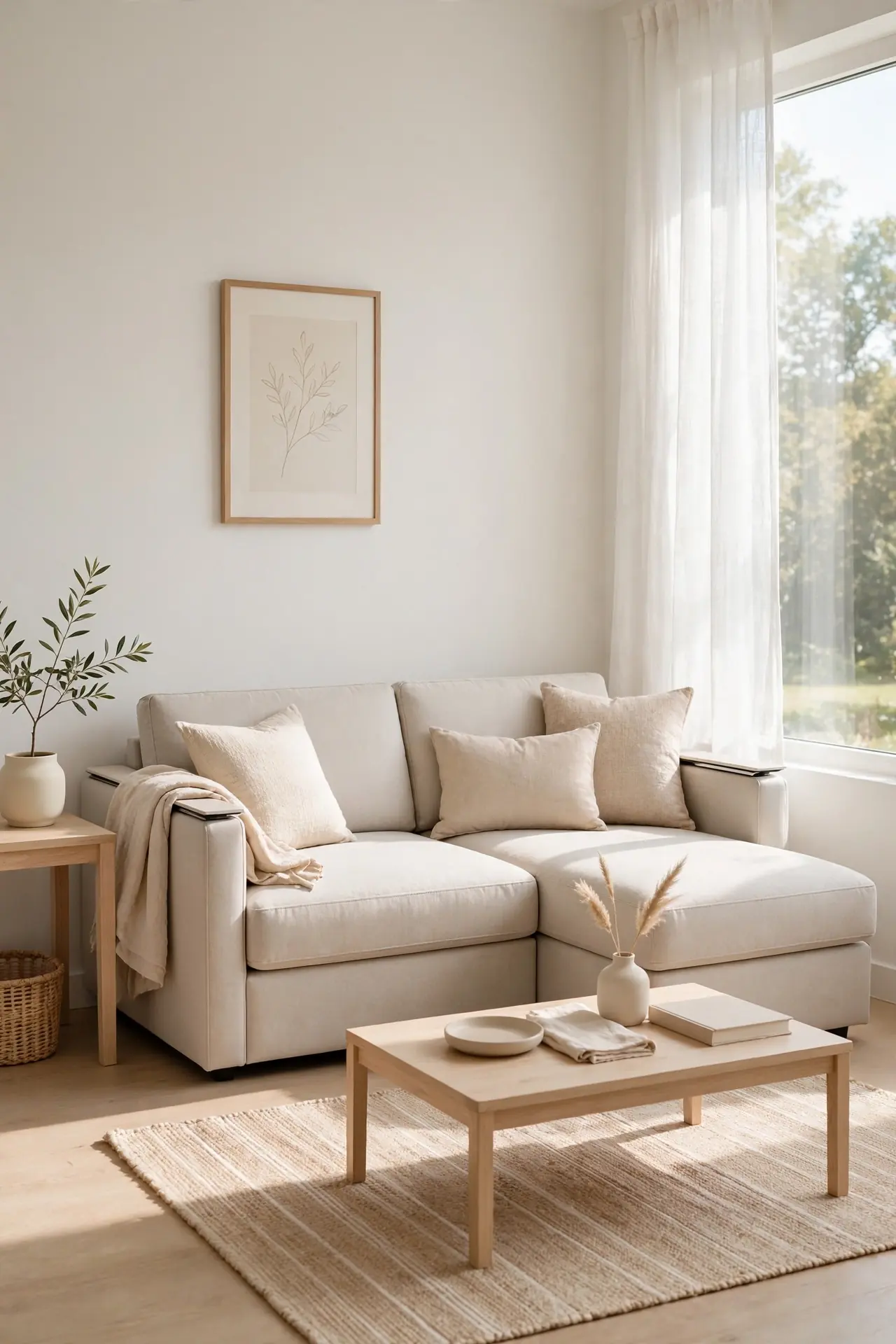
| Slim Track Arms | Wide Rolled Arms |
|---|---|
| Only 2 to 3 inches wide per side | Eats up 6 to 8 inches per side |
| Preserves open sightlines across the room | Creates visual bulk that crowds small spaces |
| Sleeps three, seats four comfortably | Seats three, feels tight for guests |
| Fits rooms under 200 square feet | Needs rooms over 250 square feet |
Arms steal more space than most buyers expect. A track arm saves roughly ten inches of total width versus a rolled arm, often the difference between a walkway and a wall. Choose low arms in linen or boucle, then match cushions to the frame so it melts away. That choice buys back nearly a foot.
Neutral Tone Palette
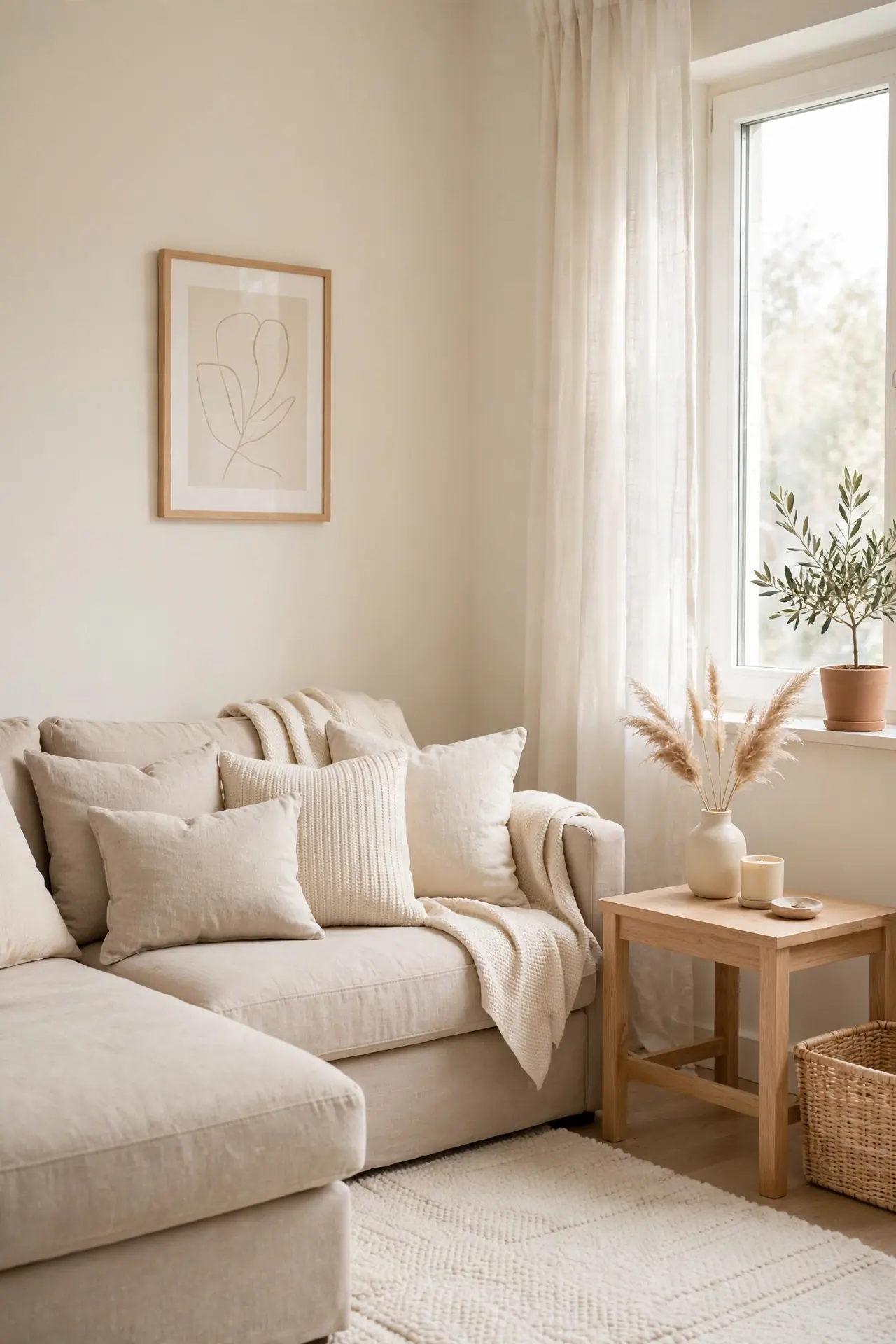
DO:
- Keep the sectional, rug, and curtains in three shades of beige so the room reads as one calm field.
- Repeat one warm oak tone across legs, shelves, and frames for cohesion.
- Add texture through knits, jute, or boucle instead of new colors.
DON’T:
- Skip high-contrast black accents; they chop a pale room into hard edges.
- Avoid mixing cool gray with warm cream in one seating area.
- Never slide a boldly patterned rug under the sectional.
A neutral palette hides the sectional’s size. When every surface sits in the same family, the eye glides instead of stopping, and corners stop announcing themselves. Introduce one contrasting element only, perhaps a sage throw or a clay vase, then pull it back. I’ve noticed two-tone minimal rooms feel calmer than matched sets.
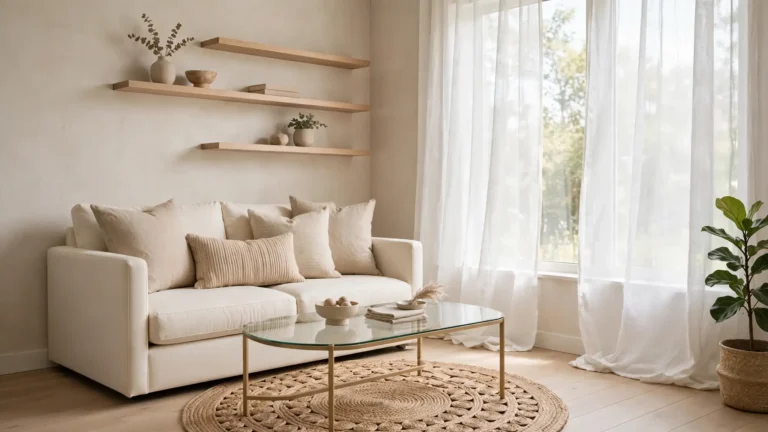
Glass Coffee Table
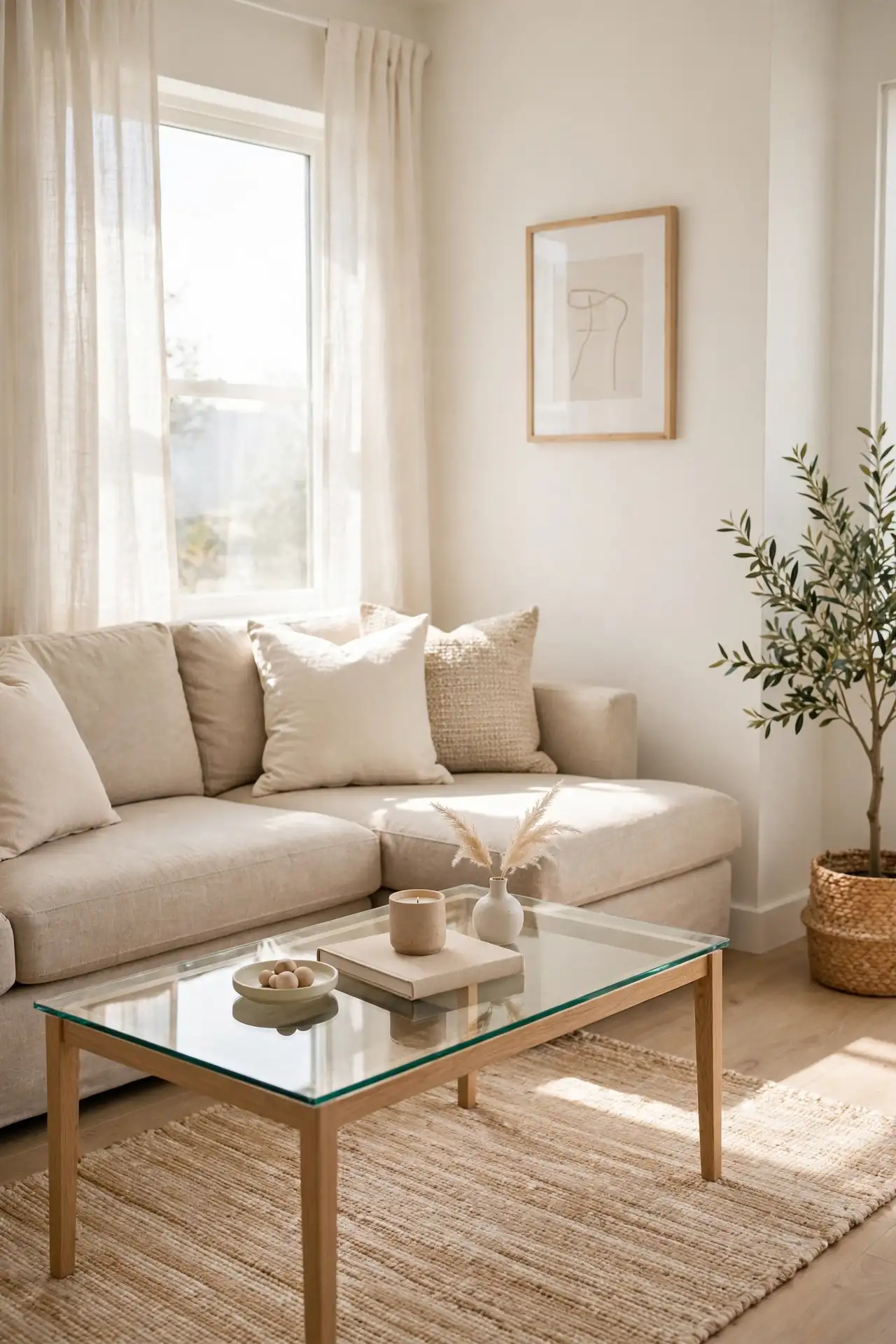
Best Size: 40 to 46 inches long, roughly two thirds of the sectional width | Best Shape: Round or oval, because sharp corners catch shins in tight traffic lanes | Budget: $80 to $150 for a sturdy tempered glass top | Style Pairing: Oak or brass legs keep the base light and airy
A solid coffee table acts like a wall in the middle of the room. Glass erases that barrier, letting the eye travel straight through to the rug beneath, which reads as extra floor. Choose a tempered top with rounded edges, keep styling to a tray plus one plant, and let the transparency do the work.
Rounded Edge Ottoman
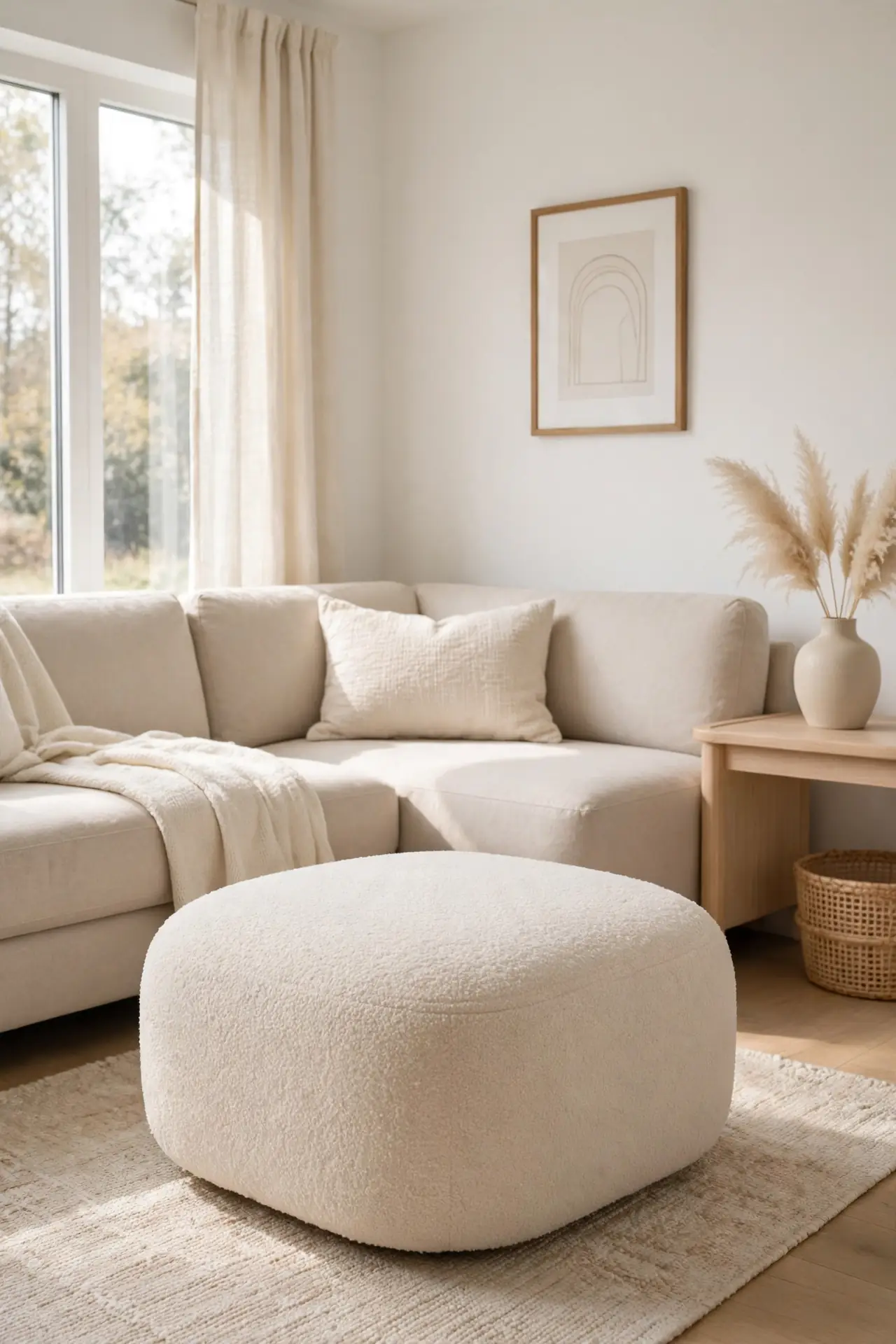
Sharp corners punish shins and eyesight in a tight room, which is why a rounded ottoman earns its place fast. It doubles as extra seating when friends visit, a footrest on movie nights, and, with a tray on top, a backup side table. Choose a firm top that holds drinks without wobbling, and pick a neutral performance fabric that shrugs off crumbs and pet hair.
Park it against the chaise end of the sectional by day, then pull it out when guests arrive. One low, round piece keeps traffic flowing, saves precious floor space, and keeps bruised shins out of the story.
Vertical Storage Wall
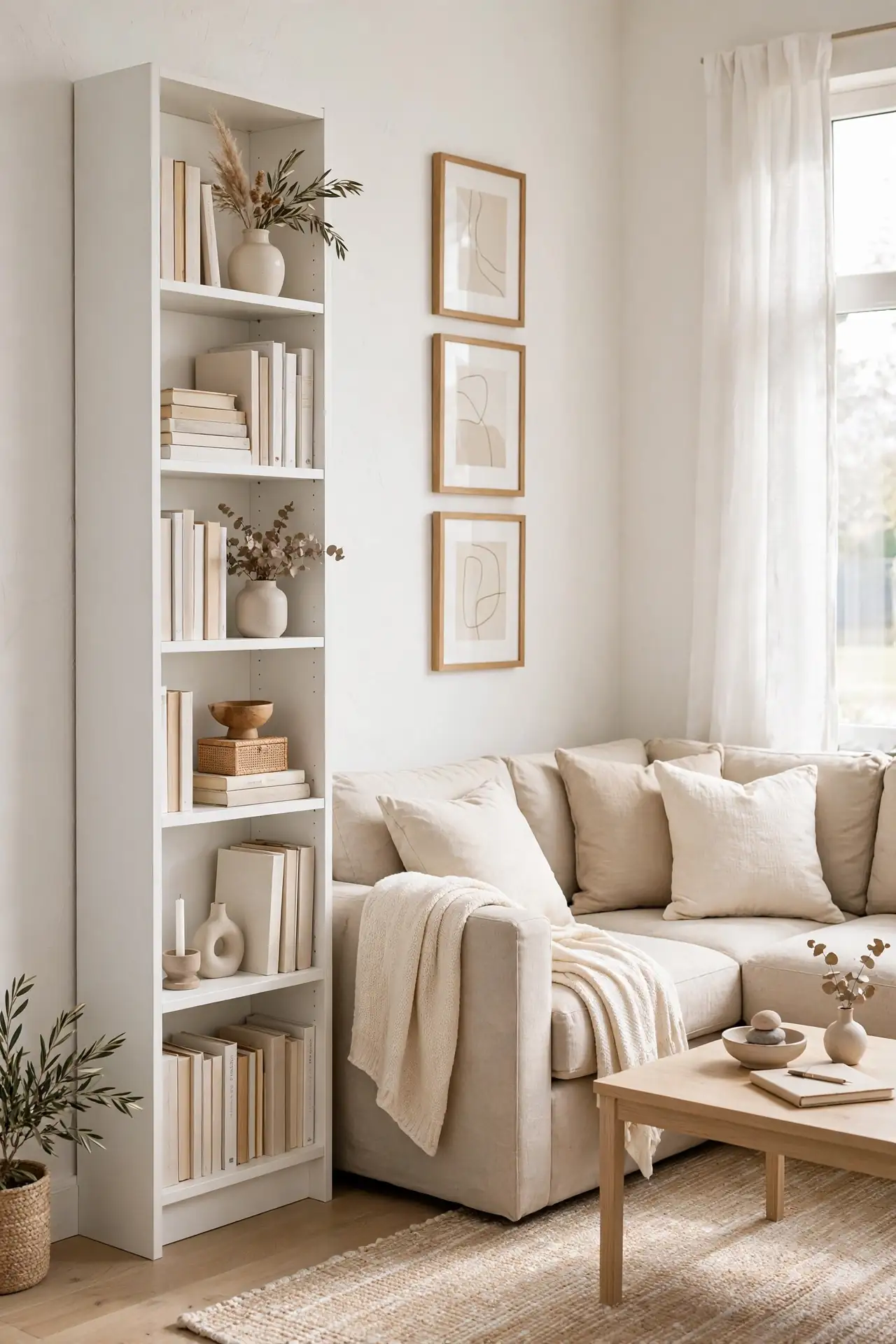
- Mount floating shelves above the sectional back for books and small plants, keeping floor space clear.
- Use closed cabinets below and open display above so clutter hides while decor shows.
- Paint shelves the same white as the walls so the unit reads as architecture.
- Leave one shelf half empty; breathing room makes the wall feel intentional.
- Add slim LED strips so the wall becomes the room’s evening glow source.
Small rooms run out of floor before they run out of walls. Drawing storage upward frees the square footage the sectional needs to breathe, and a full wall of shelves anchors seating like a headboard anchors a bed. Measure twice, bracket into studs, and load heavy items low. The room gains capacity without losing walkway.
Mirror Behind Sofa
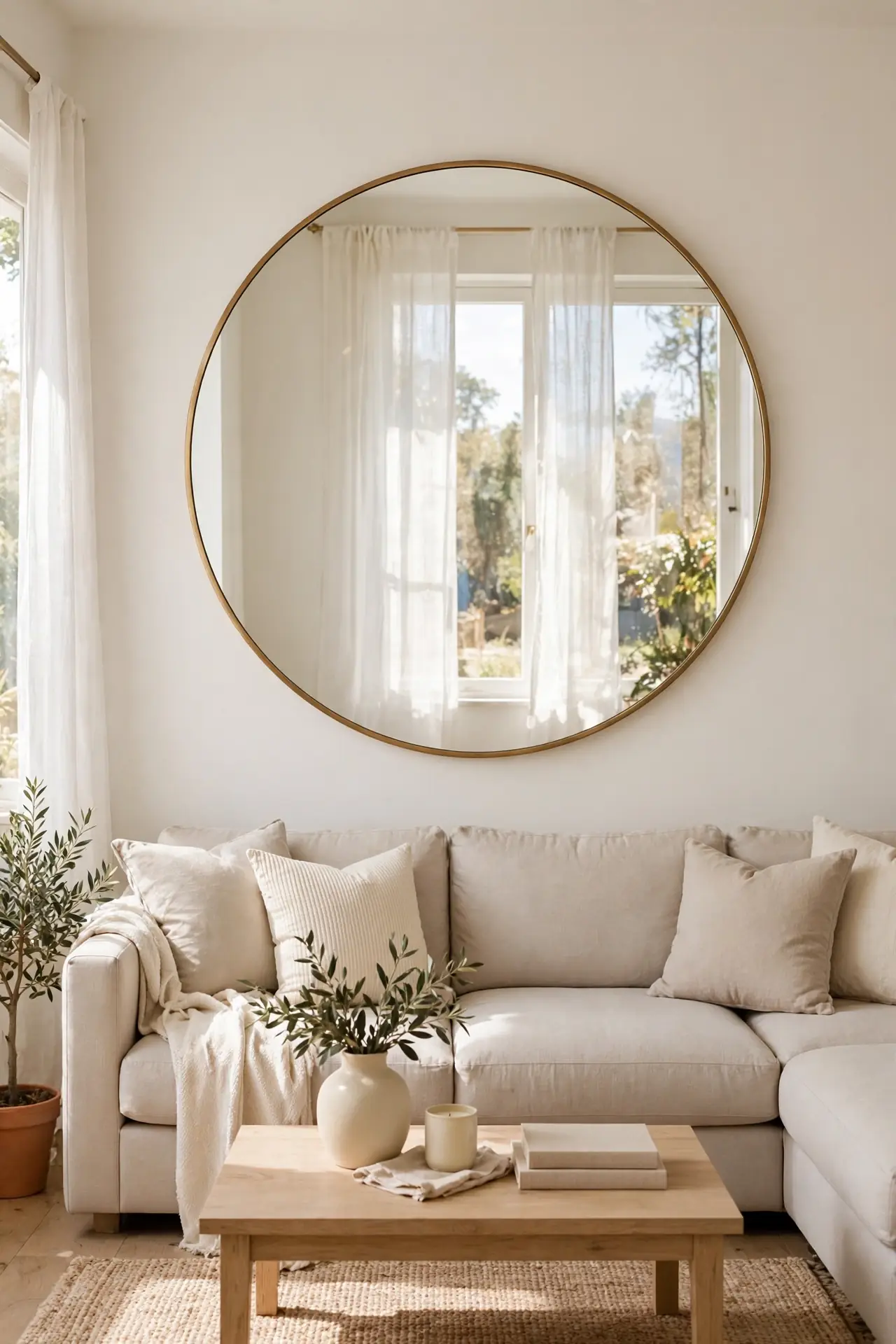
Quick Tip: Hang the mirror 6 to 8 inches above the sofa back so the frame reads as one visual unit with the seating below. A round or arch mirror softens the hard lines of an L-shaped sectional and bounces window light across the room, which makes tight walls feel like they breathe.
Positioning matters more than size here. A mirror behind the sectional catches the light from the opposite window and throws it back into the seating zone, which doubles the brightness without a new bulb. Choose a thin brass or matte black frame that matches your coffee table legs so the wall looks intentional, not empty.
Sheer Curtain Panels
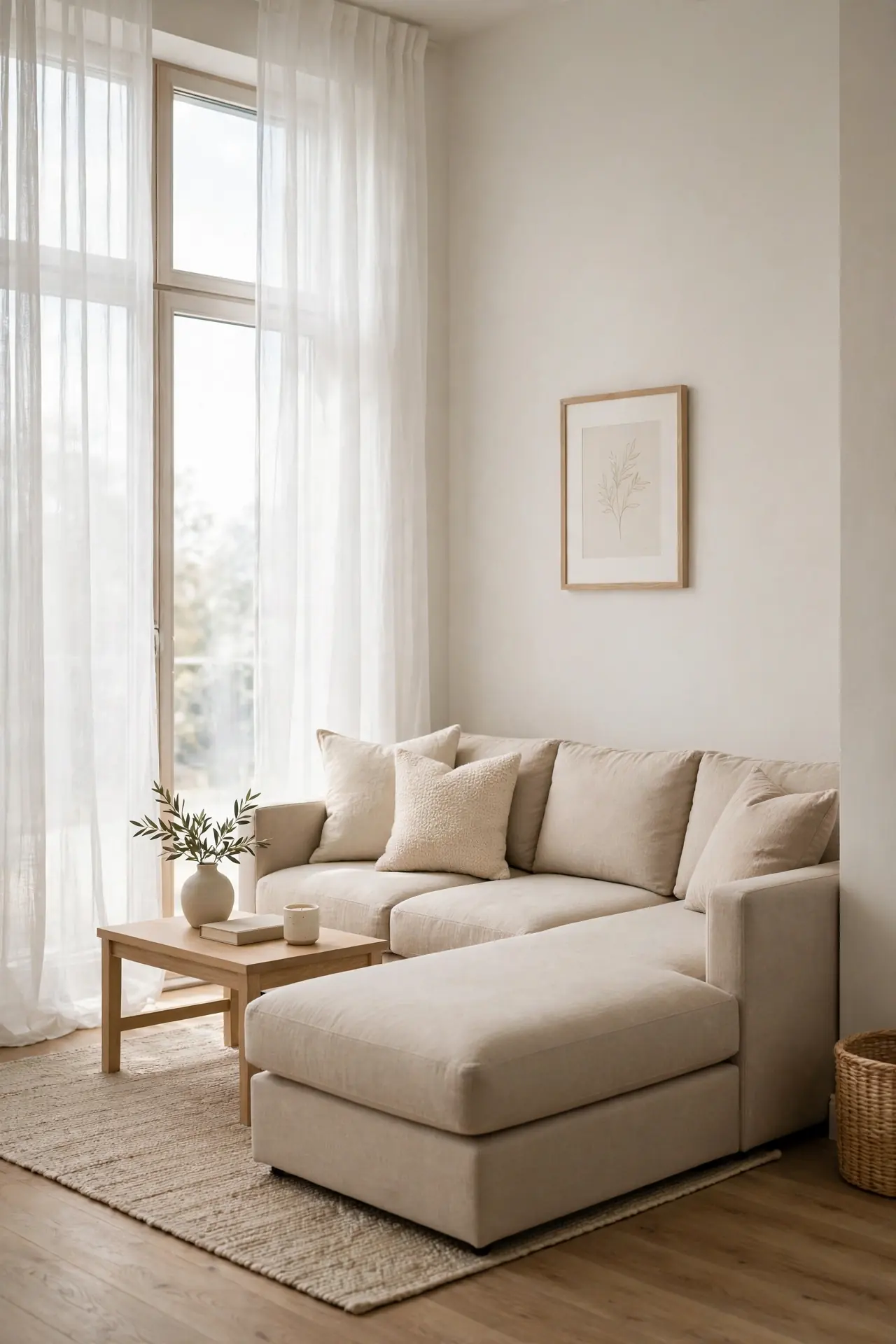
BEFORE: Heavy patterned drapes swallowed the only window and left the sectional sitting in a cave of dim fabric. The room felt cramped even though the sofa fit fine, because the light died at the window frame.
AFTER: Swap them for white or ivory sheer panels on a slim rod mounted 4 inches above the frame. Daylight filters through all day, the ceiling line looks higher, and the neutral weave lets the sectional keep the spotlight.
Hang the rod about 8 inches past each side of the window so the panels stack clear of the glass and expose the pane. Floor-grazing sheers pull the eye upward and make a low ceiling feel taller, which is exactly what a compact sectional zone needs. Keep the fabric unlined for glow.
Rug Anchor Zone for small living room ideas with sectional sofa
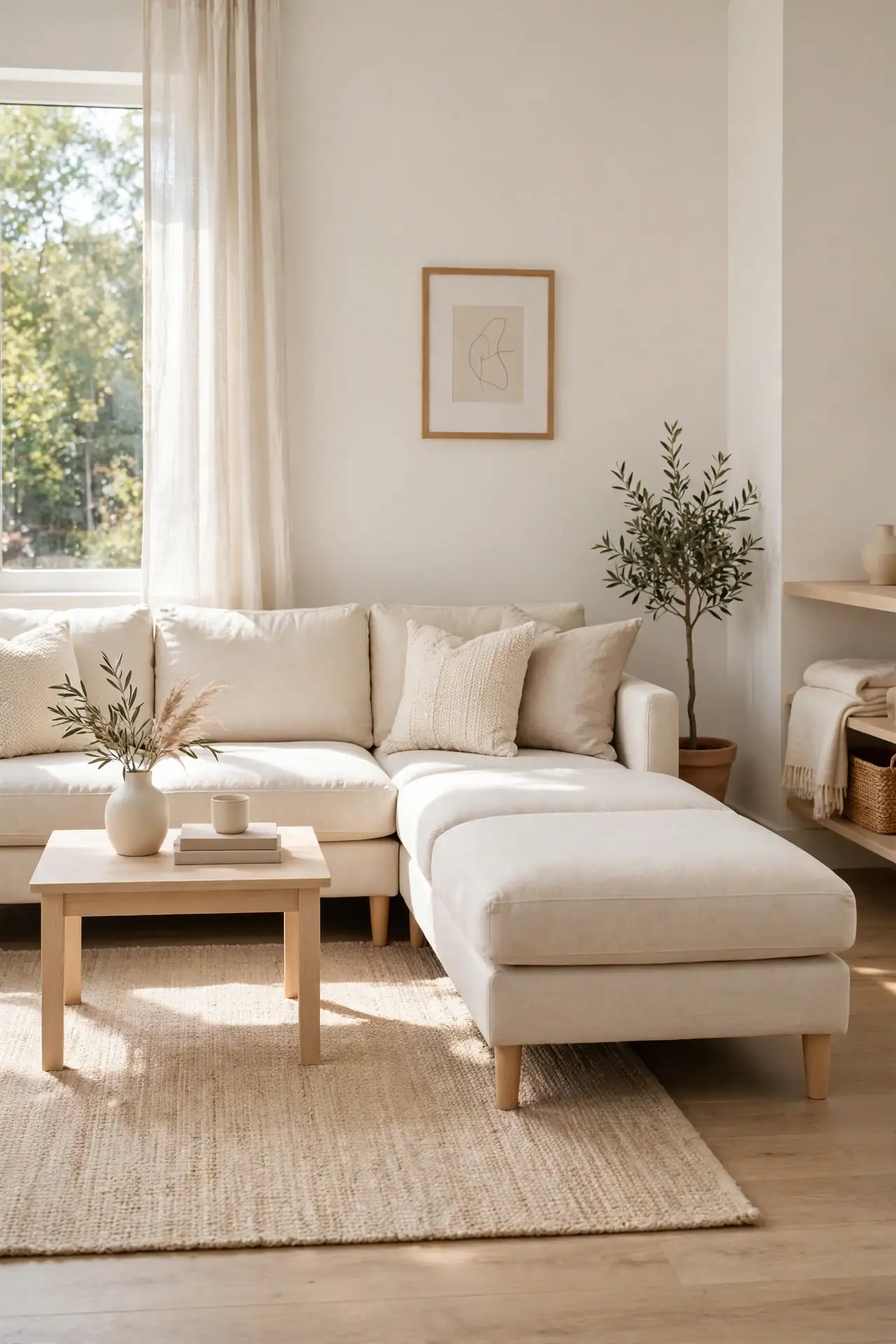
- Measure the sectional’s footprint, then pick a rug that runs at least 6 inches past each side with the front legs of every section on it.
- Lay it before the sofa arrives, because sliding a 5×7 under a heavy sectional is a two-person job.
- Choose a low-pile weave in cream or oatmeal so crumbs shake out fast.
- Center your coffee table on it with 16 to 18 inches between the table edge and the cushions.
A rug turns a floating sectional into a deliberate zone and squares off an awkward L shape. Skip busy patterns that fight the sofa fabric, and let the rug echo your wall tone. Borrow the same layering logic from cozy reading corner ideas in bedroom setups to finish the corner behind the chaise.
Armless Chaise End
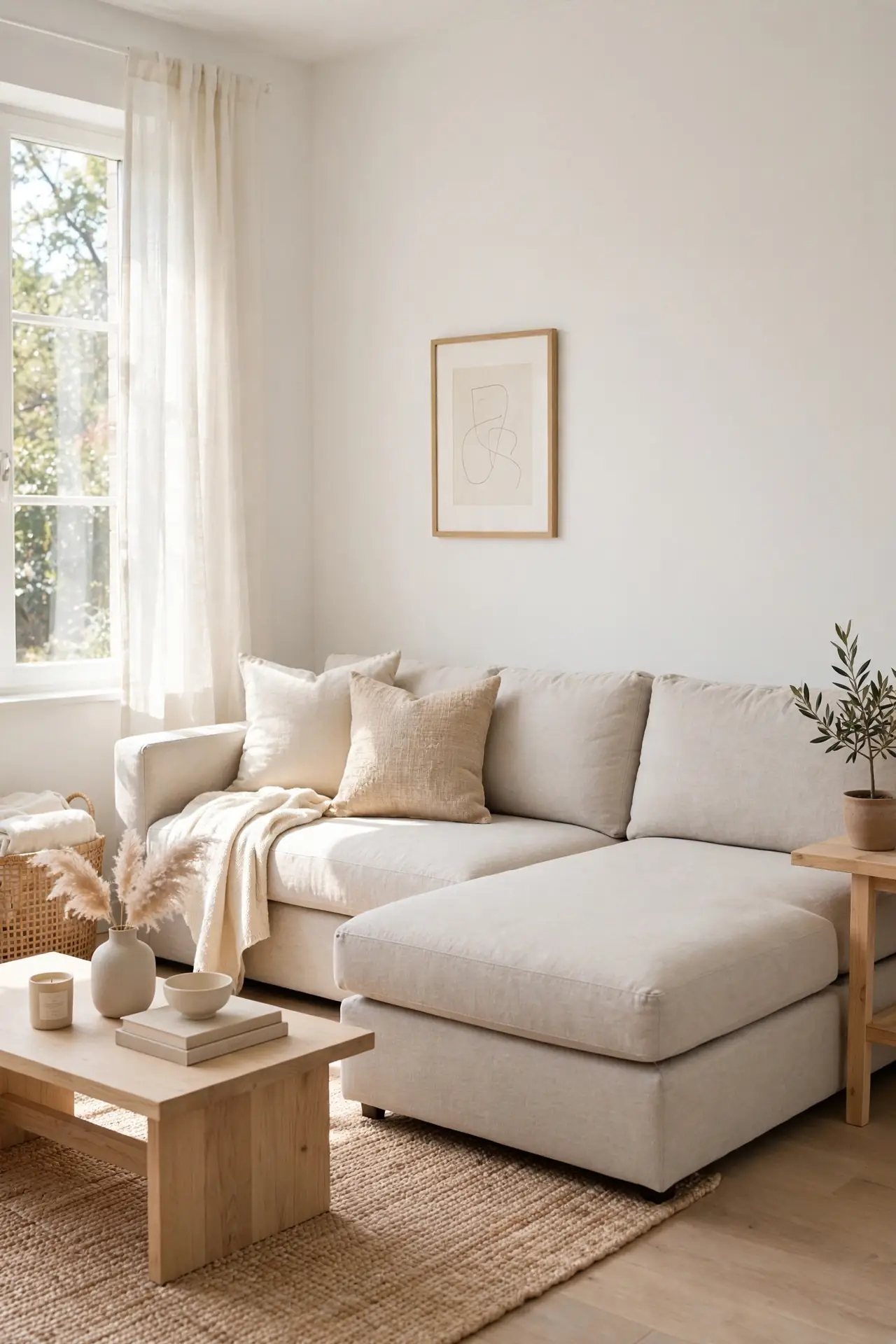
| Armless Chaise End | Standard Chaise with Arm |
|---|---|
| Saves 6-8 inches of floor width | Arm eats into walking space |
| Open sightline, room feels wider | Visual bulk on the exposed side |
| Doubles as extra guest seating | Arm blocks one sitting direction |
| Legs swing freely off the side | Armrest traps knees and feet |
Shop sectionals with a true armless chaise end and you gain a stretch-out seat without surrendering the walkway. I’ve noticed buyers skip this option because it looks less plush, but the open side keeps the L shape from boxing in a small room. Add a slim lumbar pillow at the back corner for support.
Multifunction Ottoman
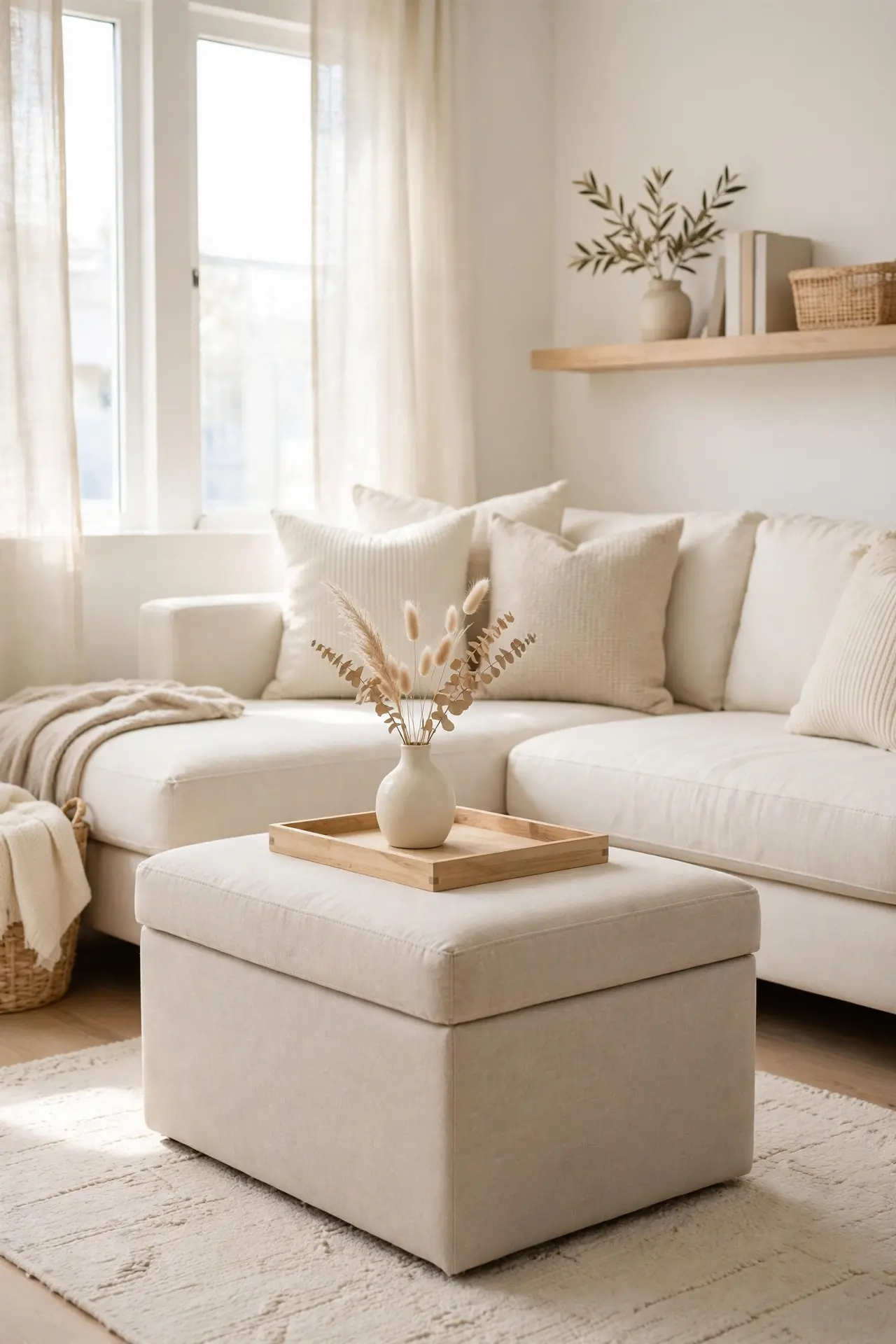
DO:
- Pick an ottoman with hidden storage to swallow throws, remotes, and kids’ toys.
- Match its fabric to the sectional so it reads as an extension of the sofa.
- Size it at two-thirds of the sofa seat width so feet rest without crowding.
DON’T:
- Don’t buy one wider than the chaise, or it blocks the walkway.
- Don’t pick a dark color that turns it into a visual roadblock.
- Don’t skip the storage, because a plain cube wastes your best hidden space.
A good ottoman works three jobs at once: footrest, coffee table, and toy chest, which is exactly what a compact sectional layout needs. Set a tray on top for drinks, stash the clutter inside, and put your feet up when the day is done at last.
Floating Shelf Ledges
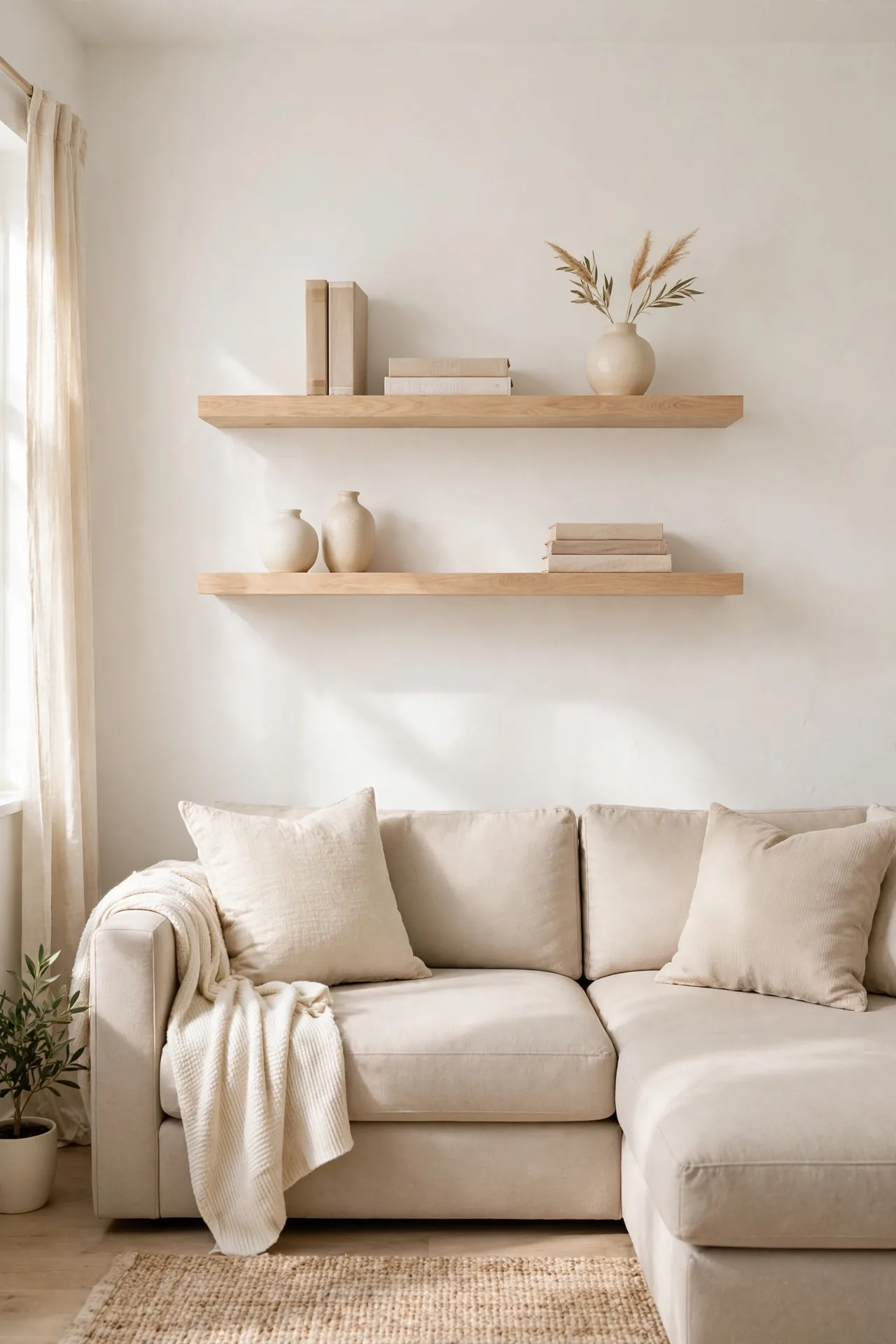
Cost: $25-40 per pair of shelves | Time: One afternoon | Skill Level: Beginner, basic drilling only | Best For: Renters and small-space owners | Materials: Two 36-inch pine ledges, hidden brackets, wall anchors | Placement: 18 inches above the sofa arm | Style Tip: Three to five objects per shelf, natural pine or white stain finish
Shallow pine ledges above the sofa arm keep books, small plants, and prints within reach without stealing floor space. Mount two 36-inch shelves at different heights, and style each with only three to five objects. In my experience, leaving breathing room between pieces keeps the wall feeling airy instead of cluttered.
Bright Corner Lamp
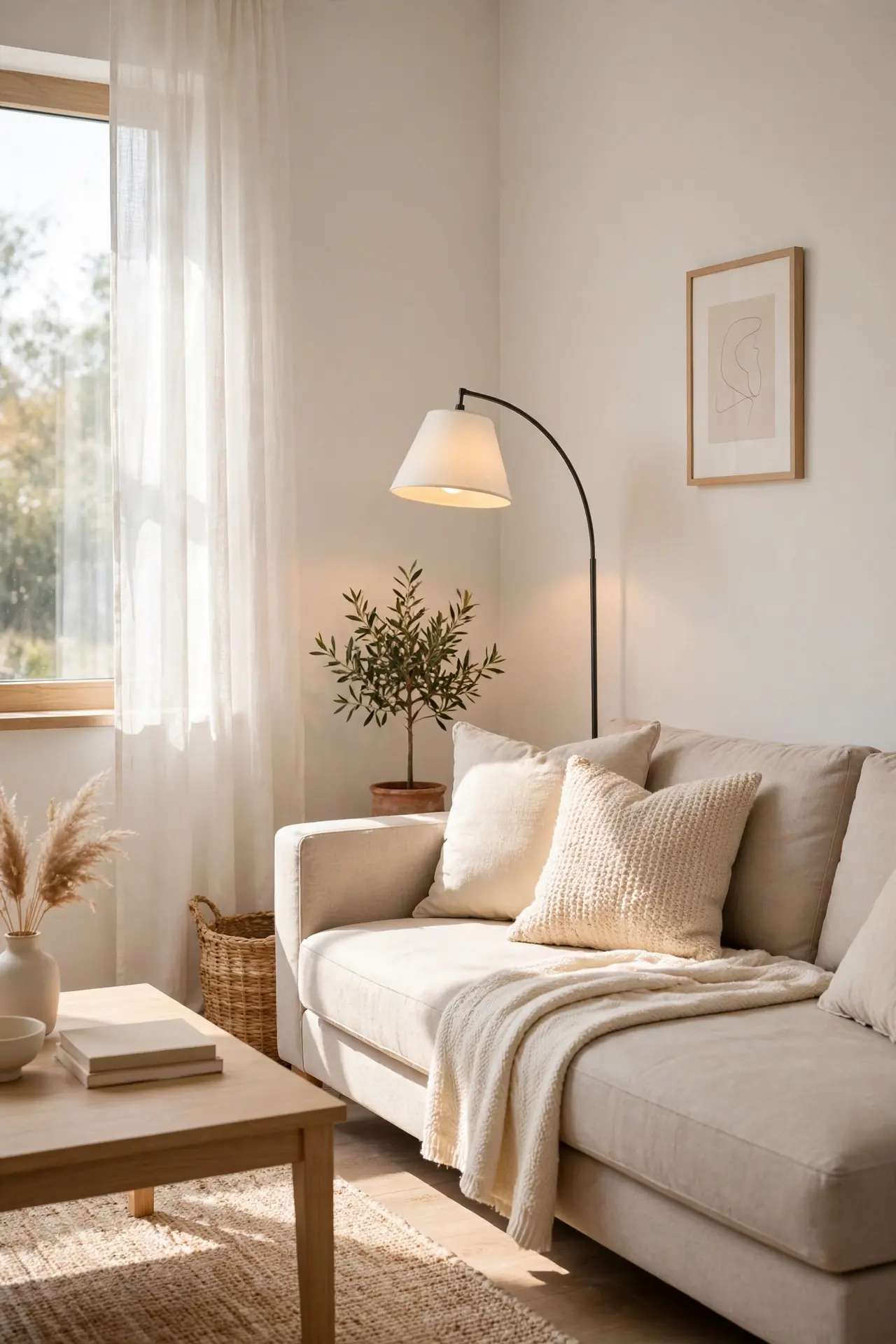
Dark corners make a sectional feel boxed in, and a tall arc floor lamp solves it in one move. A slender brass or matte white lamp arched over the corner seat throws warm light exactly where you read, freeing the side table for a drink instead of a lamp base.
Look for a lamp around 70 inches tall with a weighted round base that slides under the sectional’s edge. A 2700K warm LED keeps the palette soft and creamy, and a foot switch means no reaching behind furniture. Dim it low in the evening for a calm, hotel-like glow that makes the whole corner inviting.
Slim Side Tables for small living room ideas with sectional sofa
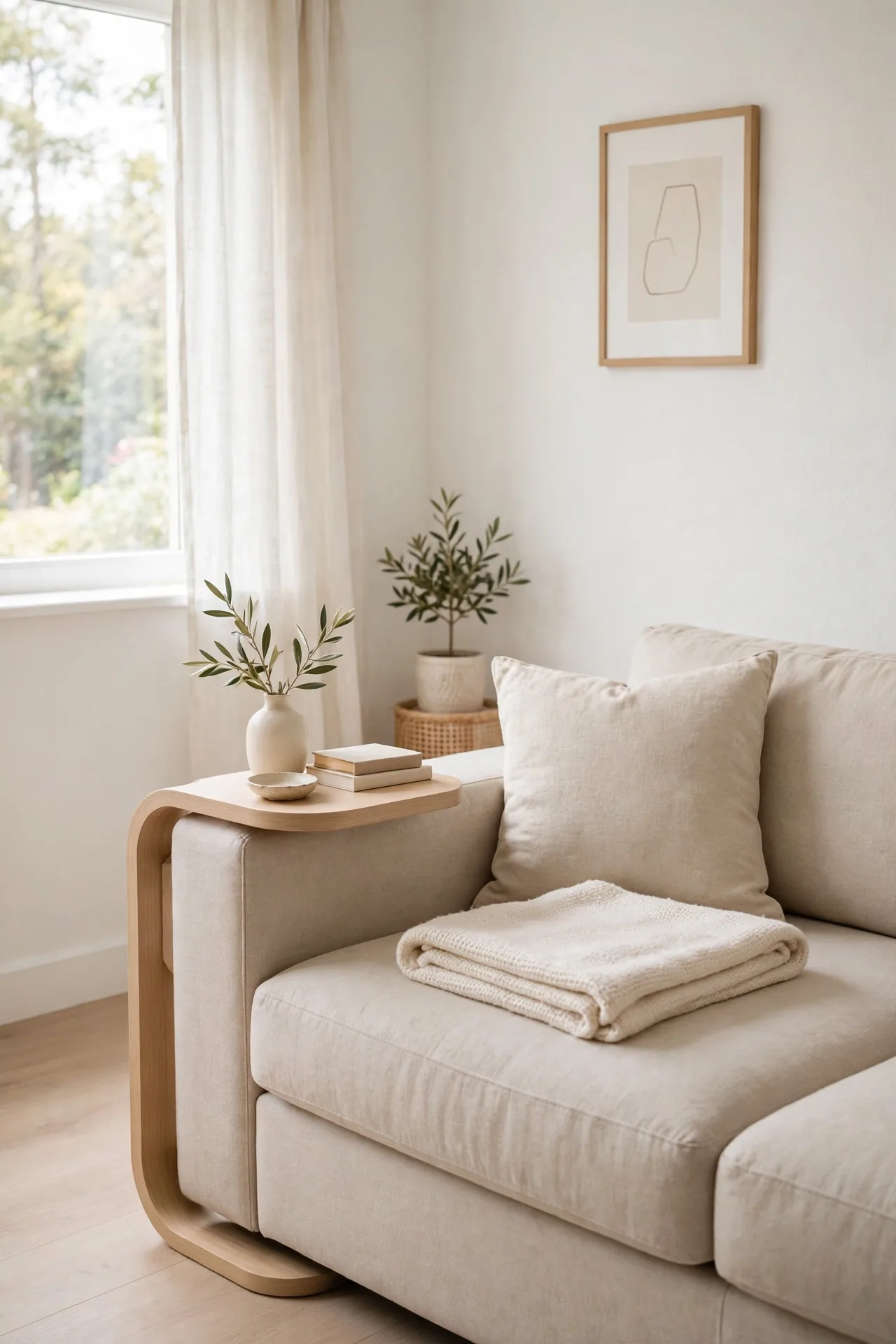
- A 14-inch round metal side table tucks into the sectional’s corner without blocking walkways.
- Choose a C-shaped table that slides over the chaise so your coffee stays at arm’s length.
- A light wood drum table doubles as hidden storage for remotes and chargers.
- Keep tabletops small, 12 to 16 inches wide, so every seat has a landing spot for a drink.
Matching narrow tables in white or pale oak keeps the sightlines open around the sectional. I’ve noticed that when arranging small living room ideas with sectional sofa layouts, two small tables beat one big coffee table for walkability. Slide one at each end and the room stays balanced and easy to move through.
Light Wood Accents
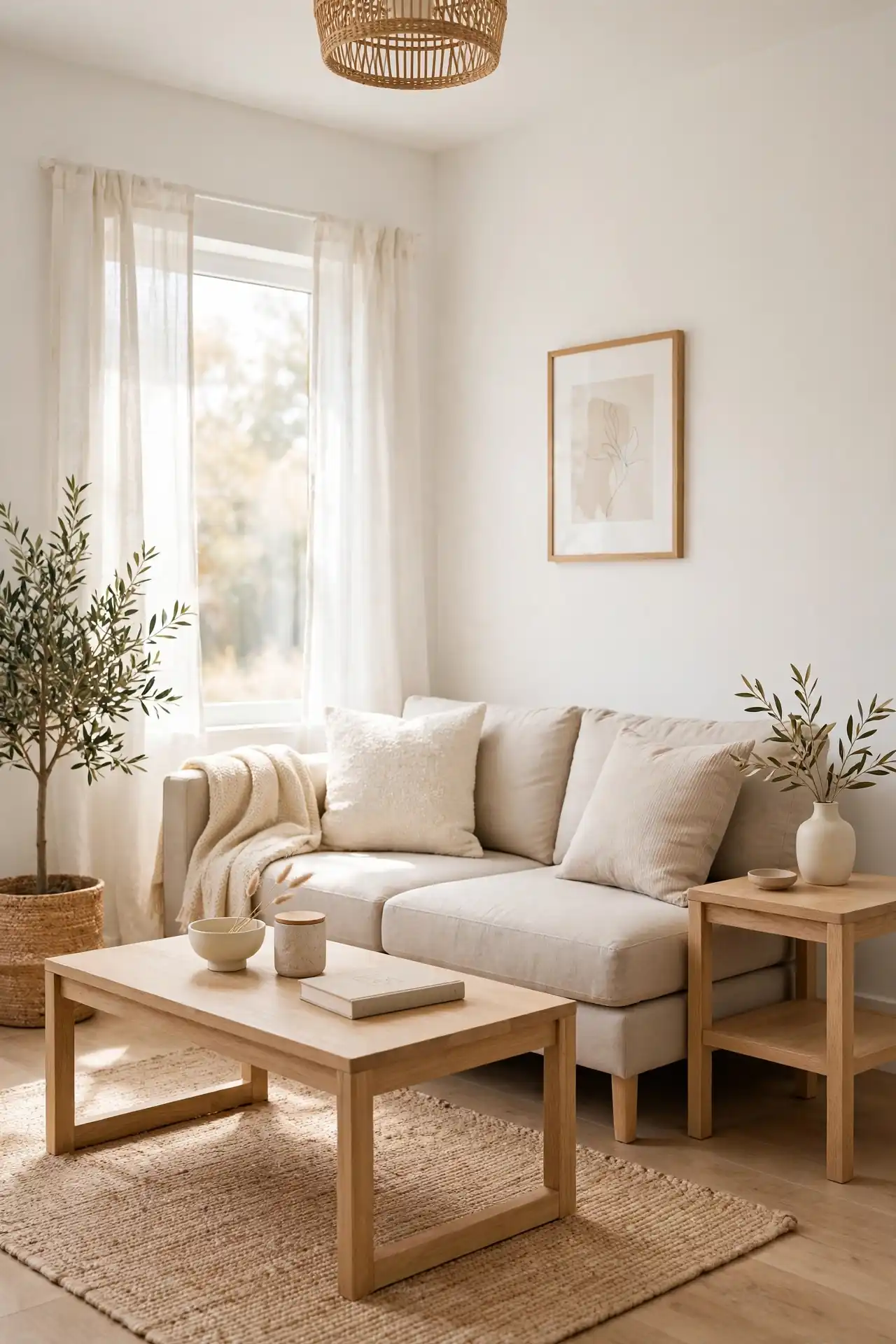
Quick Tip: Stick to one wood tone, pale oak or ash, across every accent so the room reads as one calm scheme. Mixing two or three tones chops a small room into visual pieces. If your flooring is dark, light wood accessories on top of it still brighten the seating zone without a full refloor.
Repeat that pale tone in a picture frame, a tray on the coffee table, and the lamp base for a connected look. Pale wood reflects daylight instead of swallowing it, which keeps a neutral sectional feeling light and open. Replace one heavy dark item at a time and watch the corner lift.
Textured Throw Layers
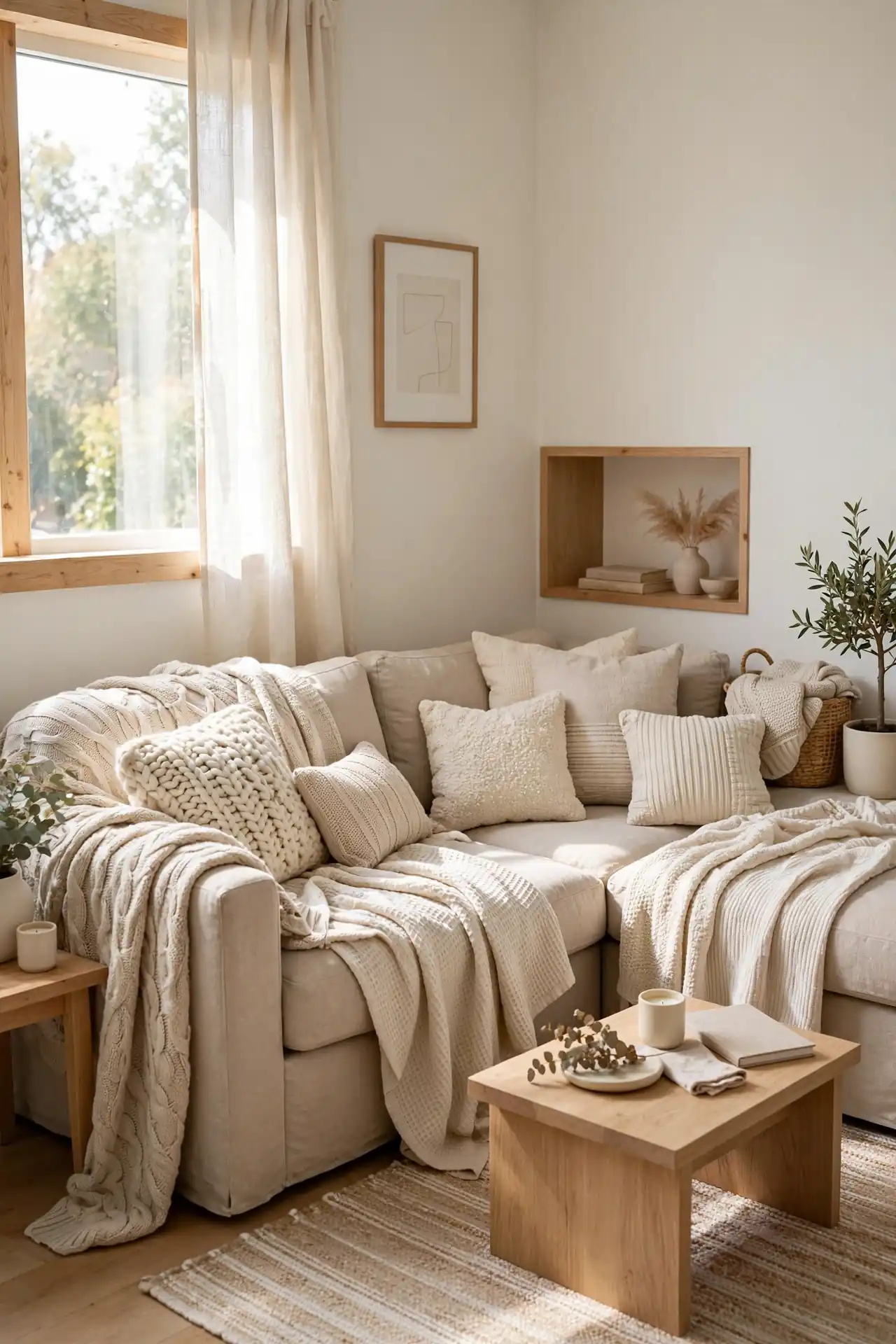
BEFORE: A plain beige sectional can read flat and unfinished, especially under bright daylight. The seating looks tidy but gives the eye nothing to rest on.
AFTER: A chunky knit throw draped over the chaise corner plus a waffle-weave blanket folded across the arm adds instant depth. Two linen lumbar pillows in cream and oatmeal finish the layered, collected look.
Keep throws in tonal neutrals, ivory, sand, and soft gray, so the layering reads rich rather than busy. Drape rather than fold for a relaxed line, and wash throws every few weeks so they stay fresh. One rule: never cover more than a third of the sectional or the bulk returns.
Greenery Soft Corner
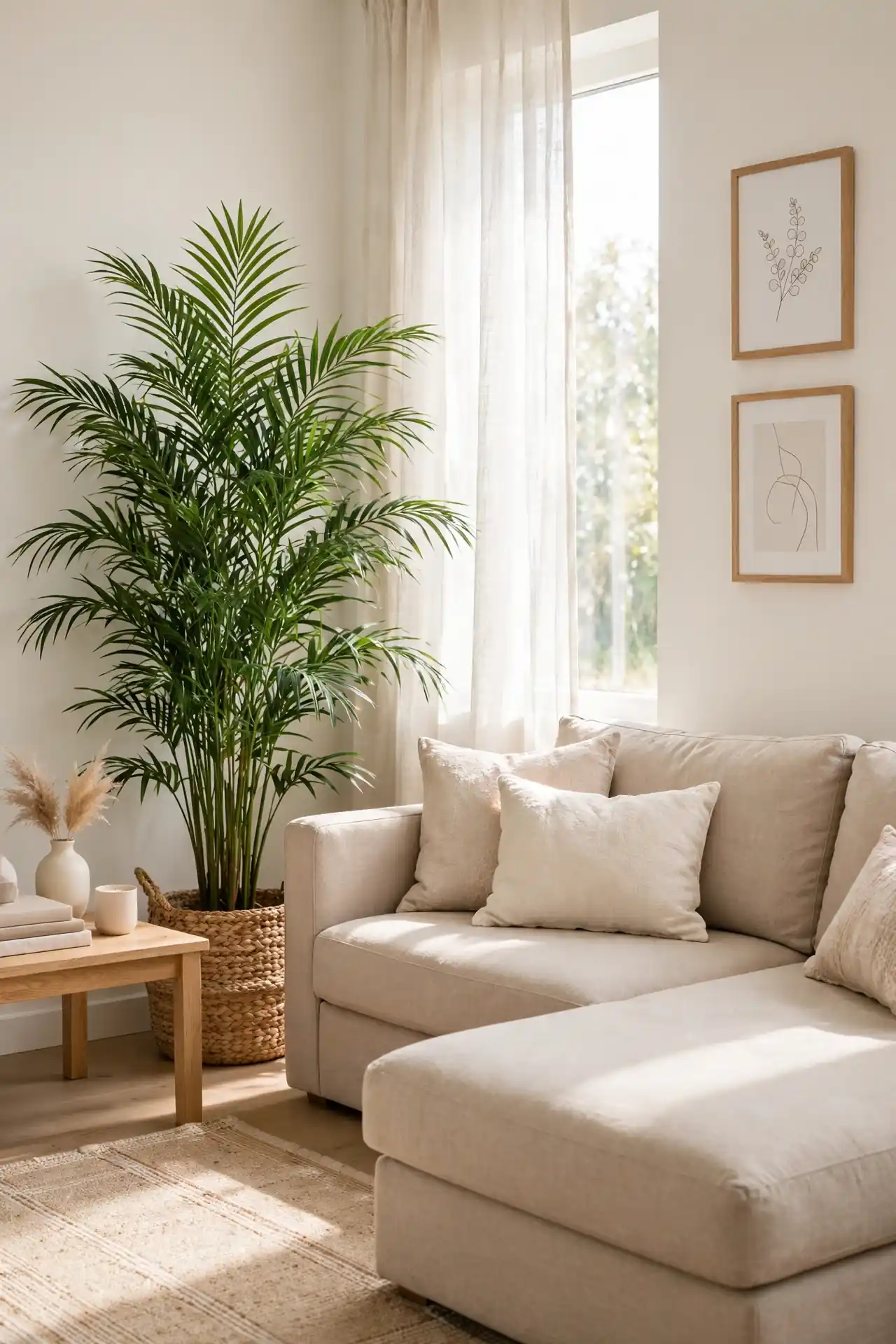
- Set one tall plant like a snake plant or olive tree in the corner behind the chaise, in a woven basket pot.
- Layer two smaller plants at different heights on a slim side table beside the arm, keeping leaves a few inches from the fabric.
- Finish with a trailing pothos on the floor at the chaise’s other end to balance the tall plant’s height.
Greenery breaks up the bulky footprint of a sectional and pulls daylight deeper into the room. I’ve noticed three pots is the sweet spot so the corner reads styled rather than crowded. Wipe leaves monthly; dust dulls the look fast in bright rooms. Choose pots in white or cream to match the room.
Sectional Facing Window
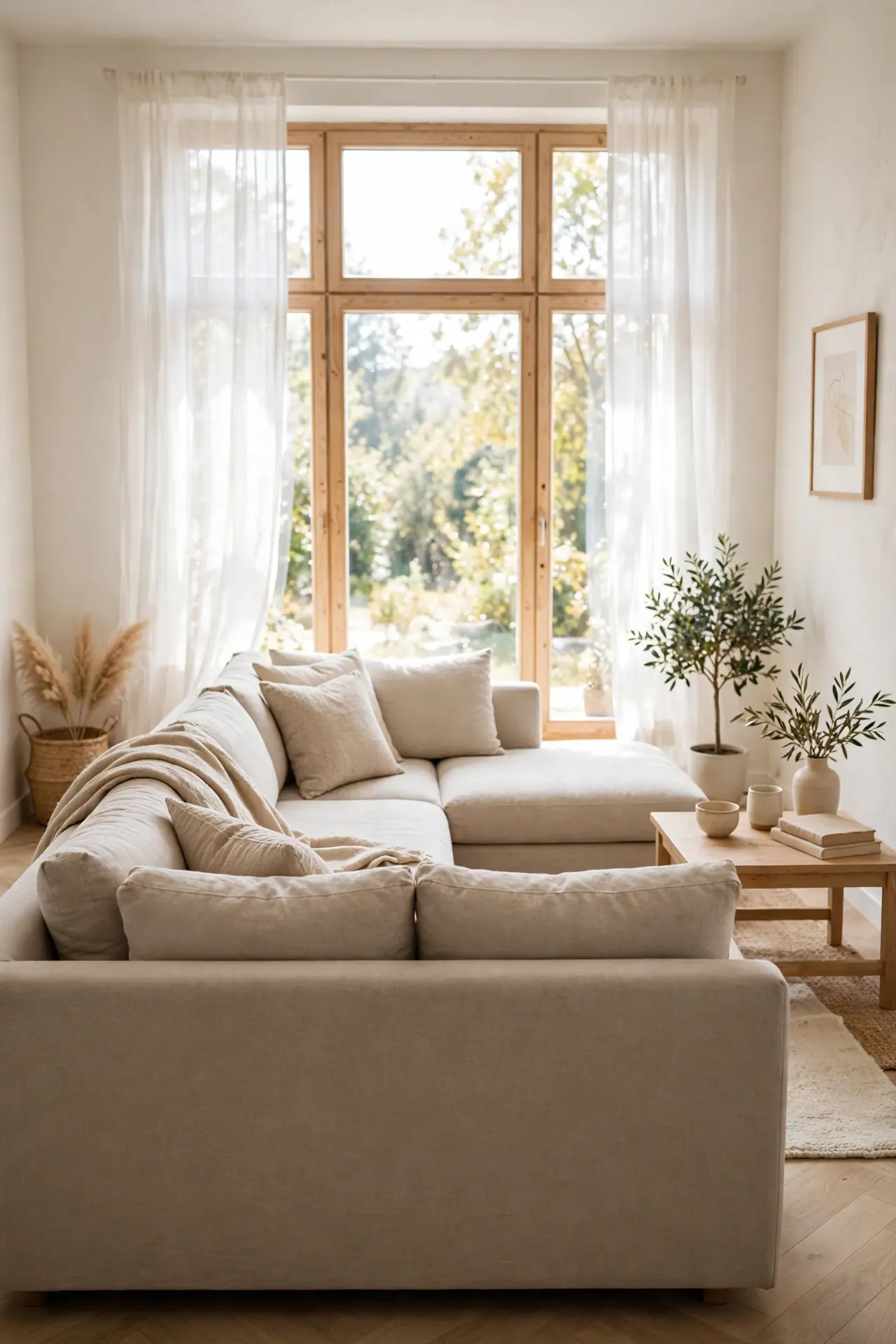
| Feature | Facing the window | Back to the window |
|---|---|---|
| Light on faces | Direct light fills the seating area | Glare on screens, backlit faces |
| View access | Everyone enjoys the view | View stays behind you |
| TV glare | More glare opposite the window | Screen stays shaded |
| Layout flow | Chaise anchors the room | Opens floor toward the window |
Facing the window suits reading corners and bright mornings, while back-to-window setups suit evening TV watching with fewer reflections. Test the spot at midday before you commit, since glare changes fast across seasons. Whichever wins, keep the sill clear so curtains close without snagging on the chaise.
Hidden Storage Base
DO:
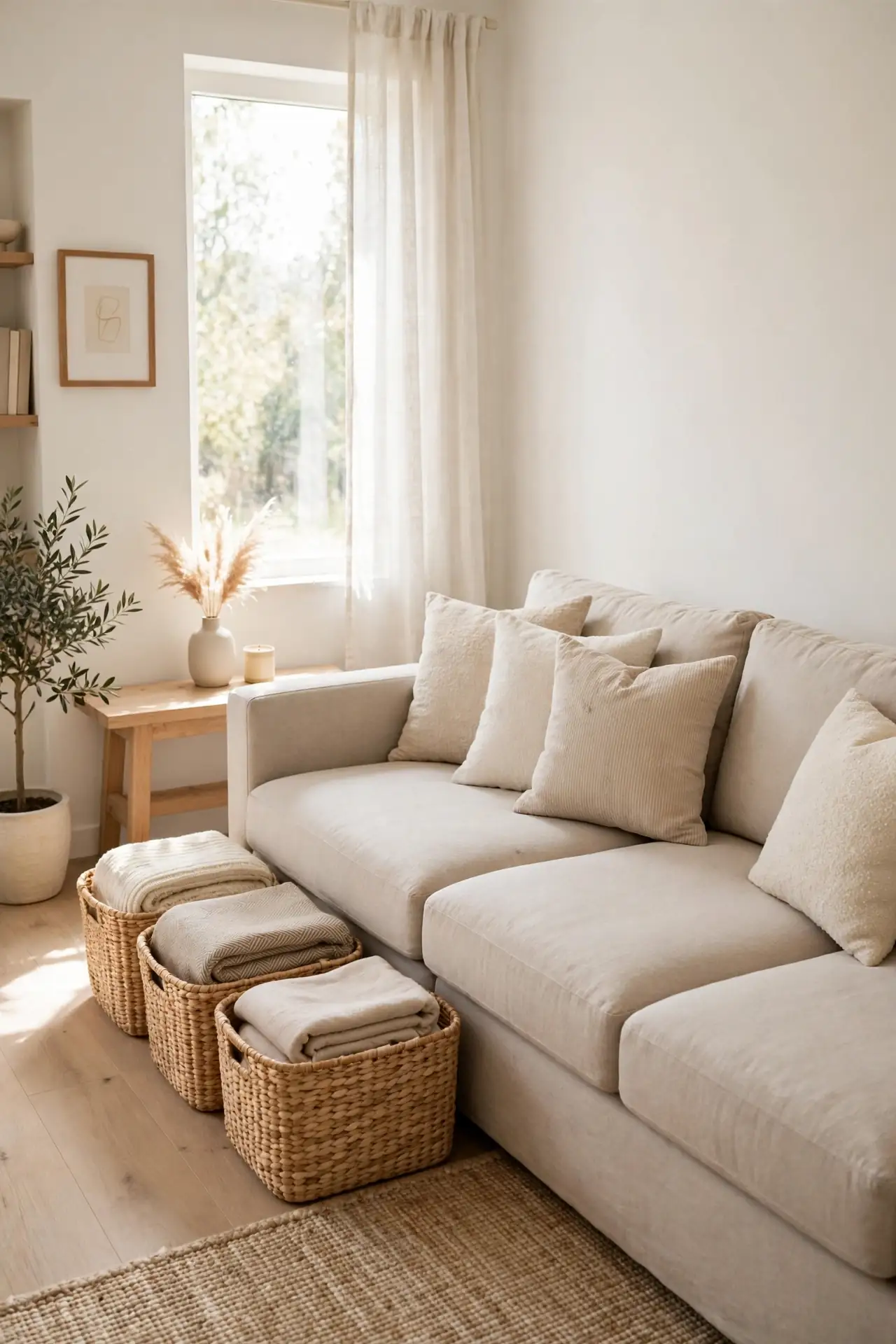
- Pick a sectional with a lift-up chaise base for spare blankets and board games.
- Store only soft, flat items so the lid closes flush every time.
- Tape a short inventory list inside the lid so nothing gets forgotten.
DON’T:
- Don’t overload it with heavy boxes that strain the hinges.
- Don’t store damp items inside, since trapped moisture invites mildew.
- Don’t let children climb on the open lid, which can snap shut.
A storage base gives you a whole closet’s worth of space without adding a single bulky cabinet to the room. It works best when every item inside has a home elsewhere in your routine, so the base never becomes a junk drawer. Sort contents twice a year and donate what you stopped reaching for.
Modular Split Pieces
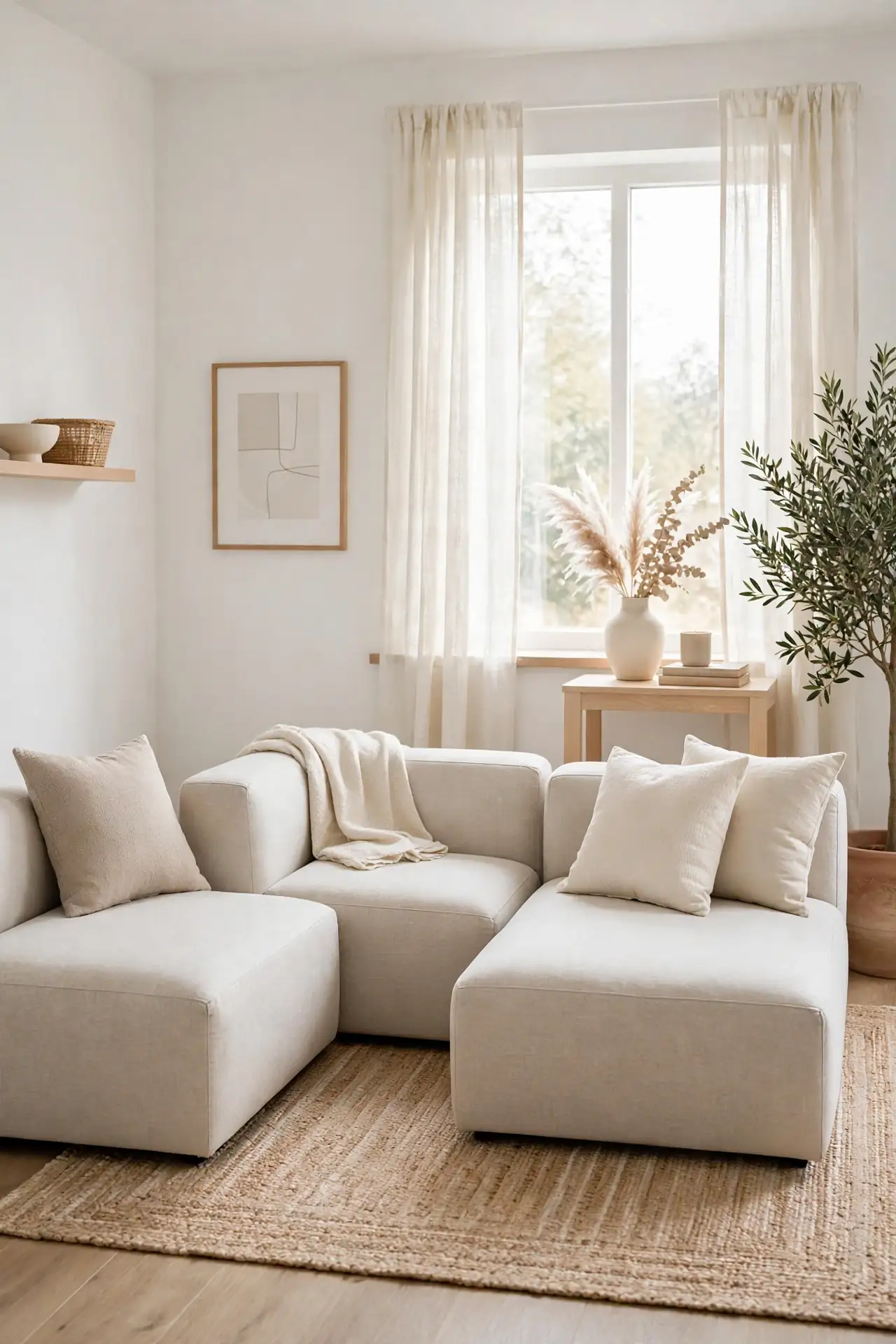
Cost: Low to medium | Time: One afternoon | Skill Level: Beginner | Best For: Renters who rearrange often
Modular sectionals earn their keep in compact rooms because every piece moves on its own. Slide the chaise to the opposite end for a new layout in minutes, or pull the corner unit away from the wall to open a reading nook behind it. In my experience, renters get the most value here, since the same sofa adapts to each new floor plan without buying new furniture. Try living with one arrangement for two weeks before reshuffling, so you notice what actually bothers you about the flow. A small rug under just the front legs ties the scattered pieces back into one zone.
Balanced Walkway Space
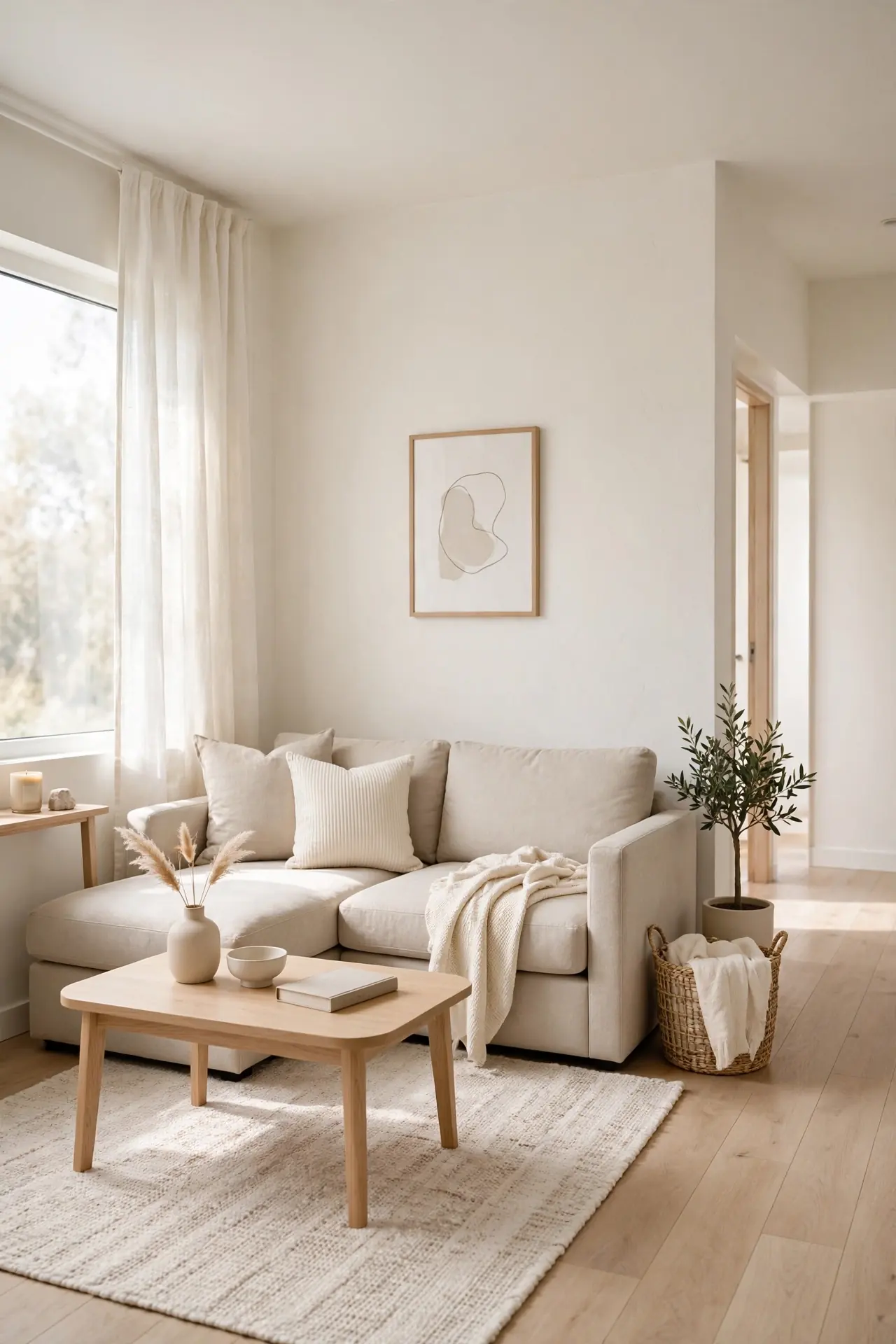
Walkways decide whether a sectional feels cozy or cramped. Leave at least thirty inches between the chaise edge and the nearest wall or furniture, enough for someone to pass without turning sideways. Measure with a tape before you push the sofa into place, since eyeballing it almost always lies.
Keep the path from door to window straight and uncluttered, shifting the coffee table closer to the sofa if it juts into the lane. In tight rooms, six extra inches of clearance changes how the space feels at a glance. Never sacrifice the walkway for a bigger rug or side table.
Conclusion
Your small living room does not need a tiny sofa to feel spacious. As these small living room ideas with sectional sofa setups show, the right frame, fabric, and layout let you keep the comfort of a full sectional without crowding the room. Start with one change, like floating the sofa off the wall or swapping in a glass coffee table, and notice how the space opens up. I have seen how small changes like these can completely shift the way a space feels. Save this guide to Pinterest, try your favorite ideas this weekend, and enjoy a living room that finally feels made for you.
One Comment