23 Window Box Flower Ideas for a Colorful Curb Appeal Boost
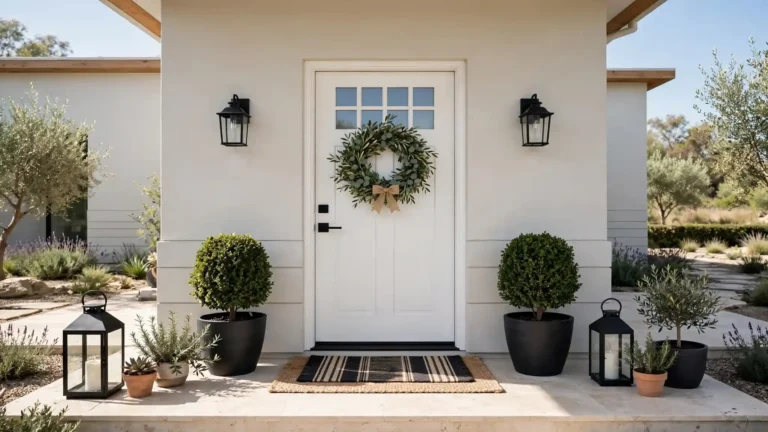
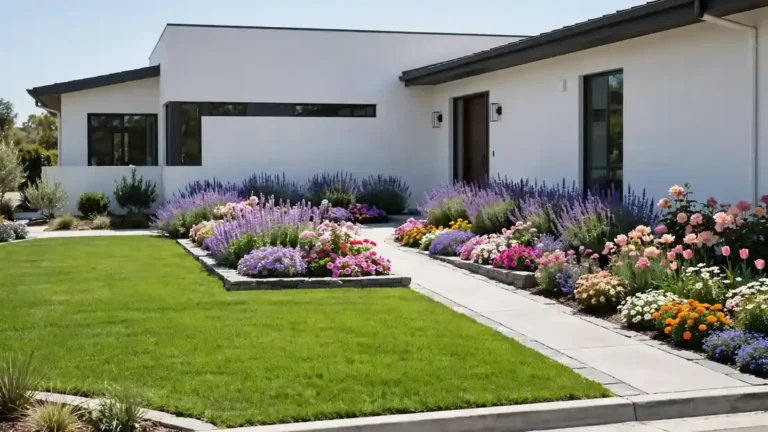
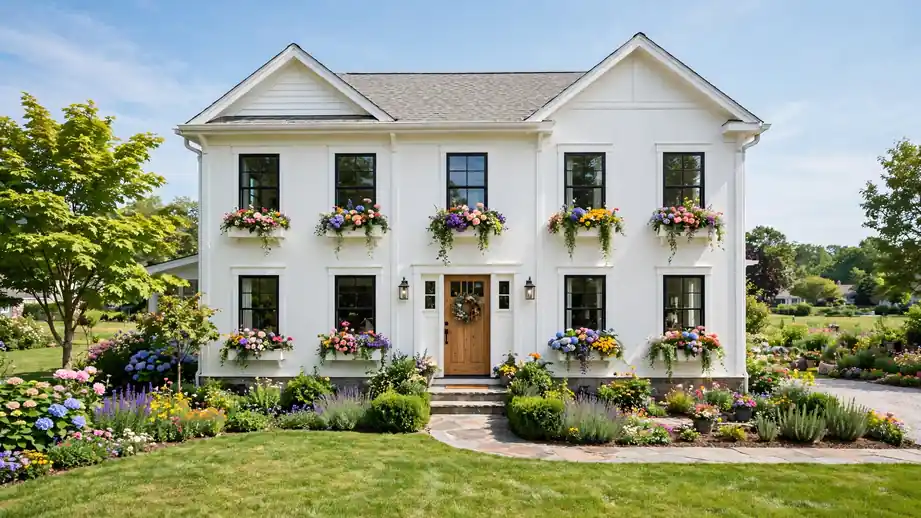
Nothing lifts a home’s curb appeal quite like window box flower ideas done well. A simple wooden box under your front windows holds an entire miniature garden, spilling color where everyone sees it. Pair the look with a coordinated front porch planter and the whole entry feels intentional.
The secret is treating each box like a tiny landscape with structure, fillers, and spillers working together. Pick plants that suit your sun exposure, water them consistently, and swap in seasonal blooms to keep the display fresh all year. Below you will find twenty three planting combinations that actually work, from classic geraniums to creative succulent mixes, each with clear steps you can follow this weekend.
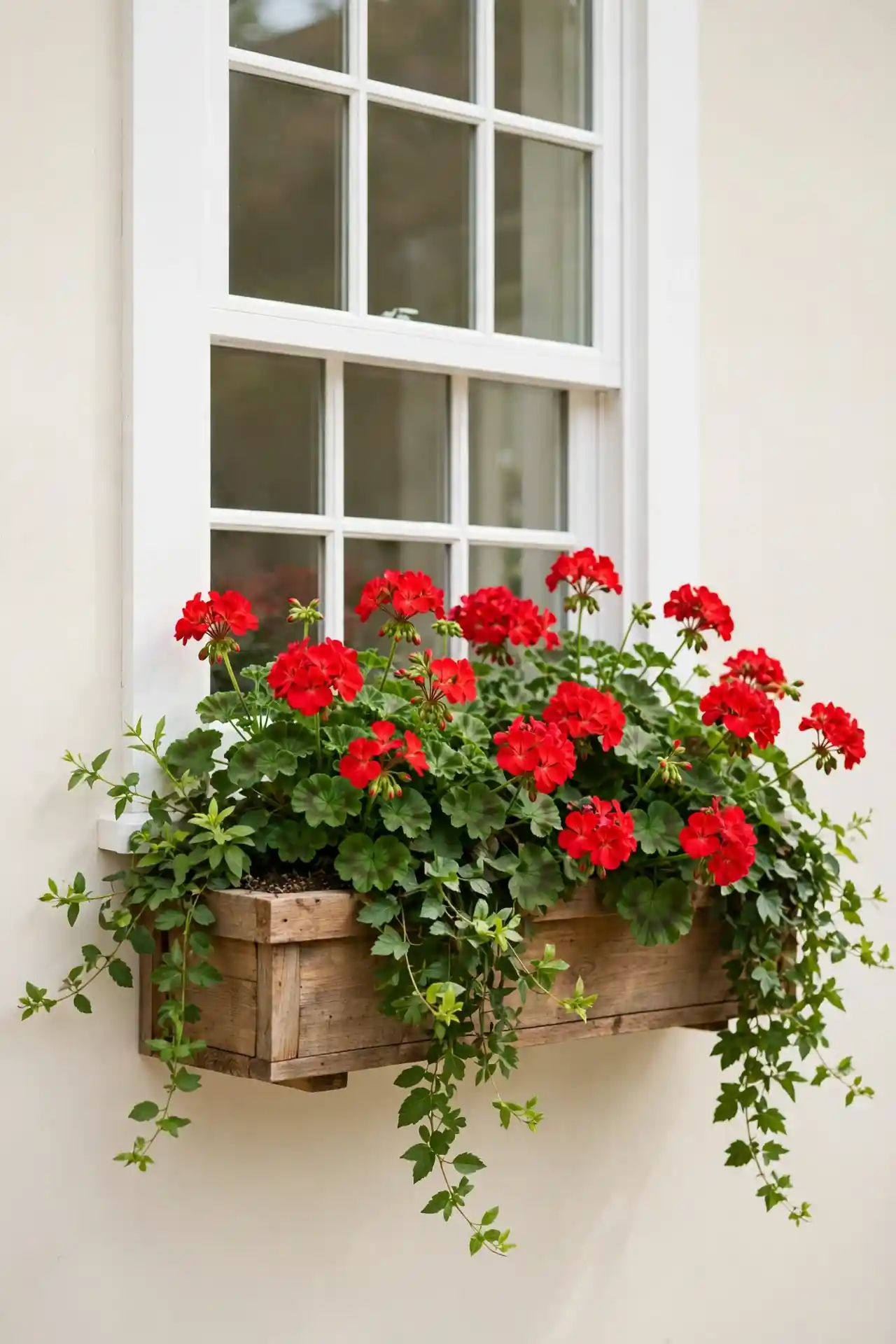
Classic Red Geraniums

Red geraniums are the undisputed classic for window boxes, and for good reason. Their bold clusters of blooms hold color from late spring straight through the first frost, asking for almost nothing in return. Plant them in rich potting soil, give them full sun, and deadhead the spent flowers every week to keep new buds coming.
Pair them with white alyssum or trailing lobelia at the front edge for a crisp contrast that makes the red pop. In my experience, a box of geraniums watered every other morning outperforms fancier plantings that get fussed over too much. Simple really does win here.
Trailing Ivy Cascades
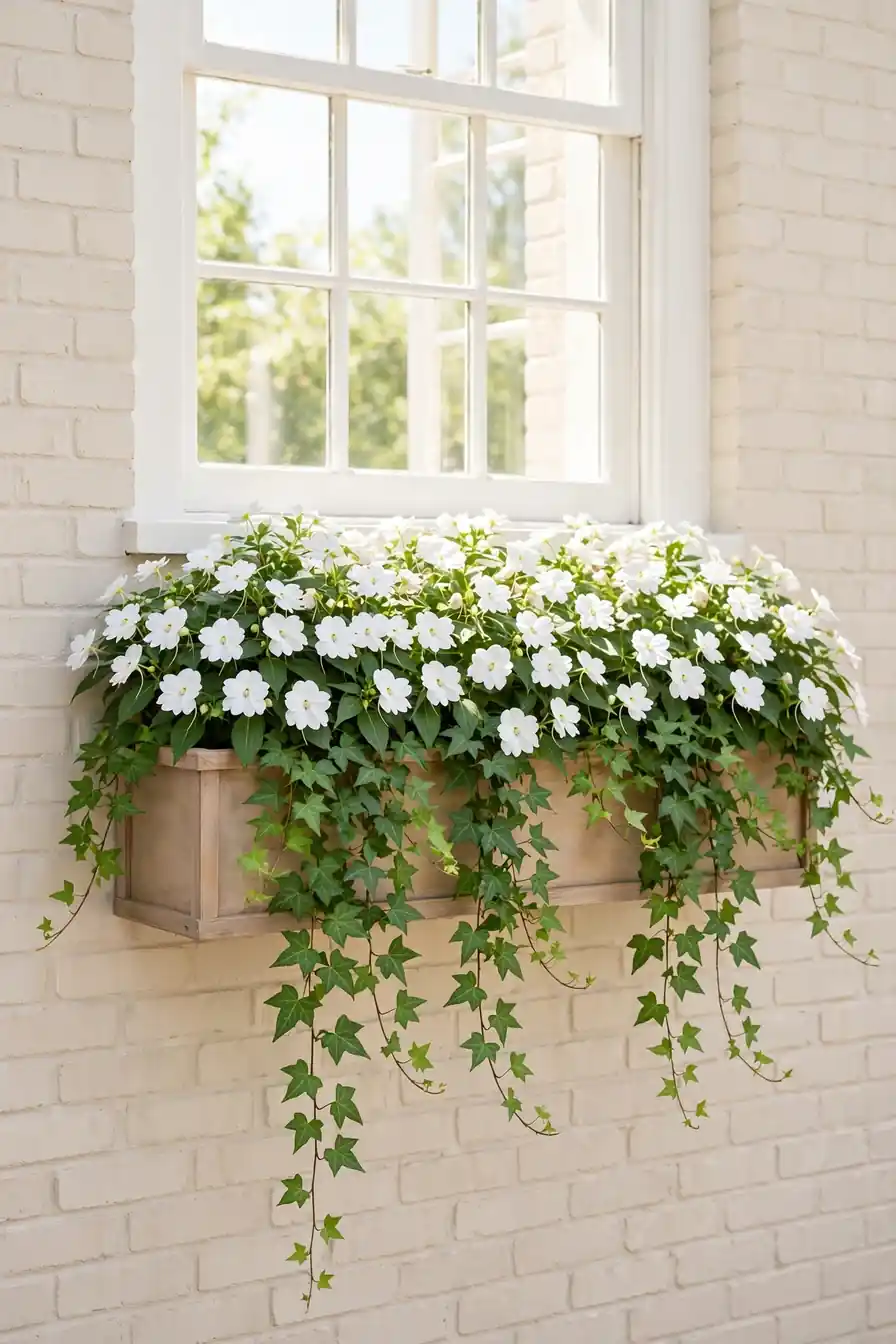
- Start with English ivy or variegated ivy for reliable trailing that reaches two feet by midsummer.
- Plant ivy along the front edge so the vines spill over and soften the hard lines of the box.
- Mix in a few upright blooms like impatiens behind the ivy for color at the back.
- Trim the vines monthly to keep them full rather than leggy and thin.
- Ivy tolerates shade well, making it perfect for north-facing windows that get little direct sun.
The cascading effect draws the eye downward and makes even a plain facade look layered and intentional. I have seen this work well in many cases where homeowners wanted greenery without constant replanting, since ivy returns reliably year after year in mild climates with minimal care.
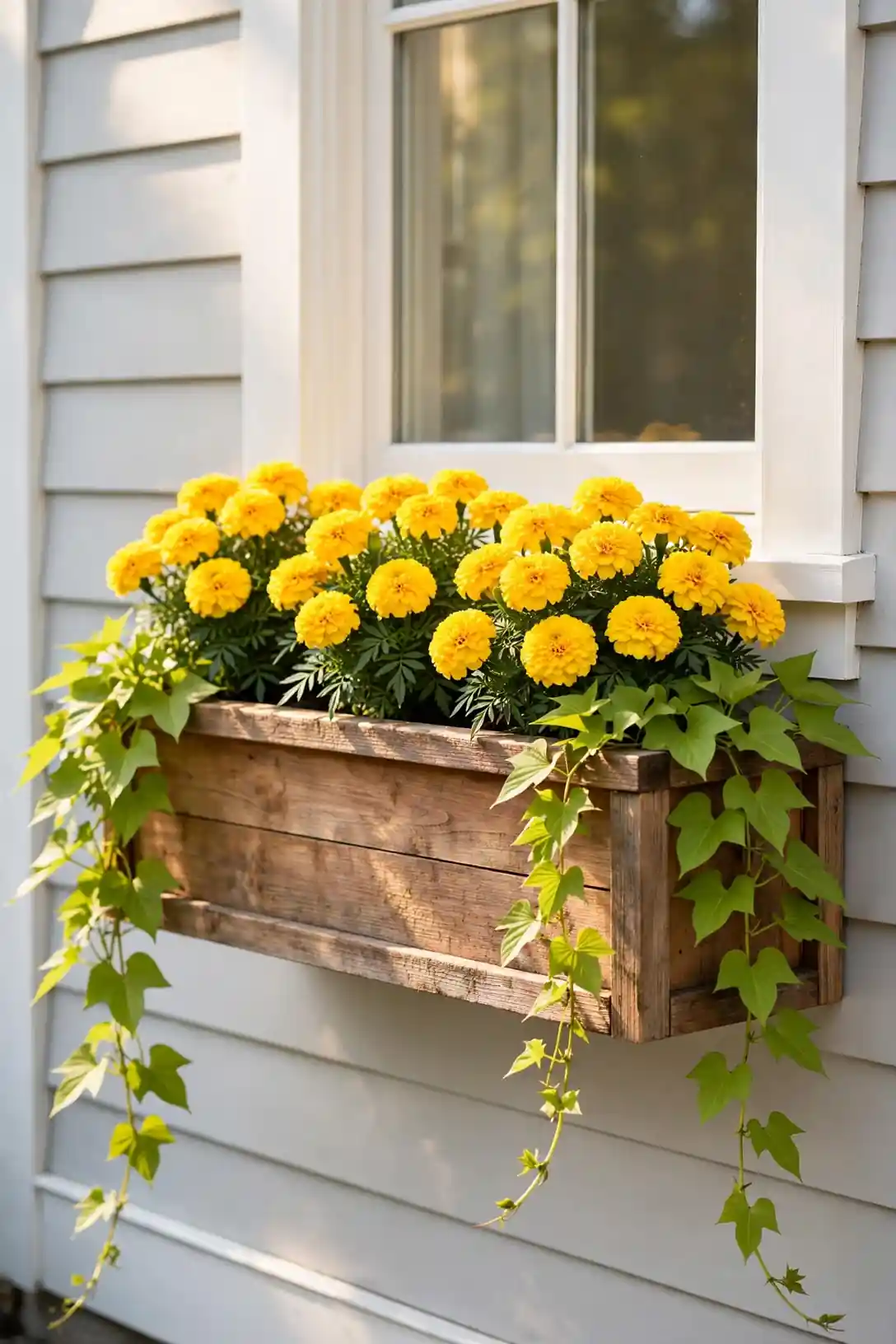
Sunny Marigold Rows
Quick Tip: Choose French marigolds over African varieties for window boxes. They stay compact at eight to ten inches and bloom nonstop without deadheading, which means less work for you all season.
Marigolds bring a cheerful golden glow that reads beautifully from the street, even from a passing car. Their tidy mounds fill a box quickly, and they shrug off heat that wilts fussier flowers. Space plants six inches apart, water at the base to avoid wet foliage, and feed monthly with a balanced fertilizer. In my experience, a row of marigolds paired with deep green sweet potato vine looks far more expensive than it is.
Petunia Color Bursts
BEFORE: The window box sat half empty with a few leggy petunias stretching toward the sun. Bare soil showed between the plants, and the whole window looked tired and unfinished.
AFTER: Now the same box overflows with wave petunias in pink, purple, and white, planted just six inches apart. The blooms knit together into a solid carpet of color that spills softly over the edges.
Wave petunias are bred to spread, so they fill gaps faster than any other annual I know. Water daily in hot weather, feed every two weeks, and shear back by one third in midsummer for a fresh flush. That one haircut keeps them blooming hard until frost.
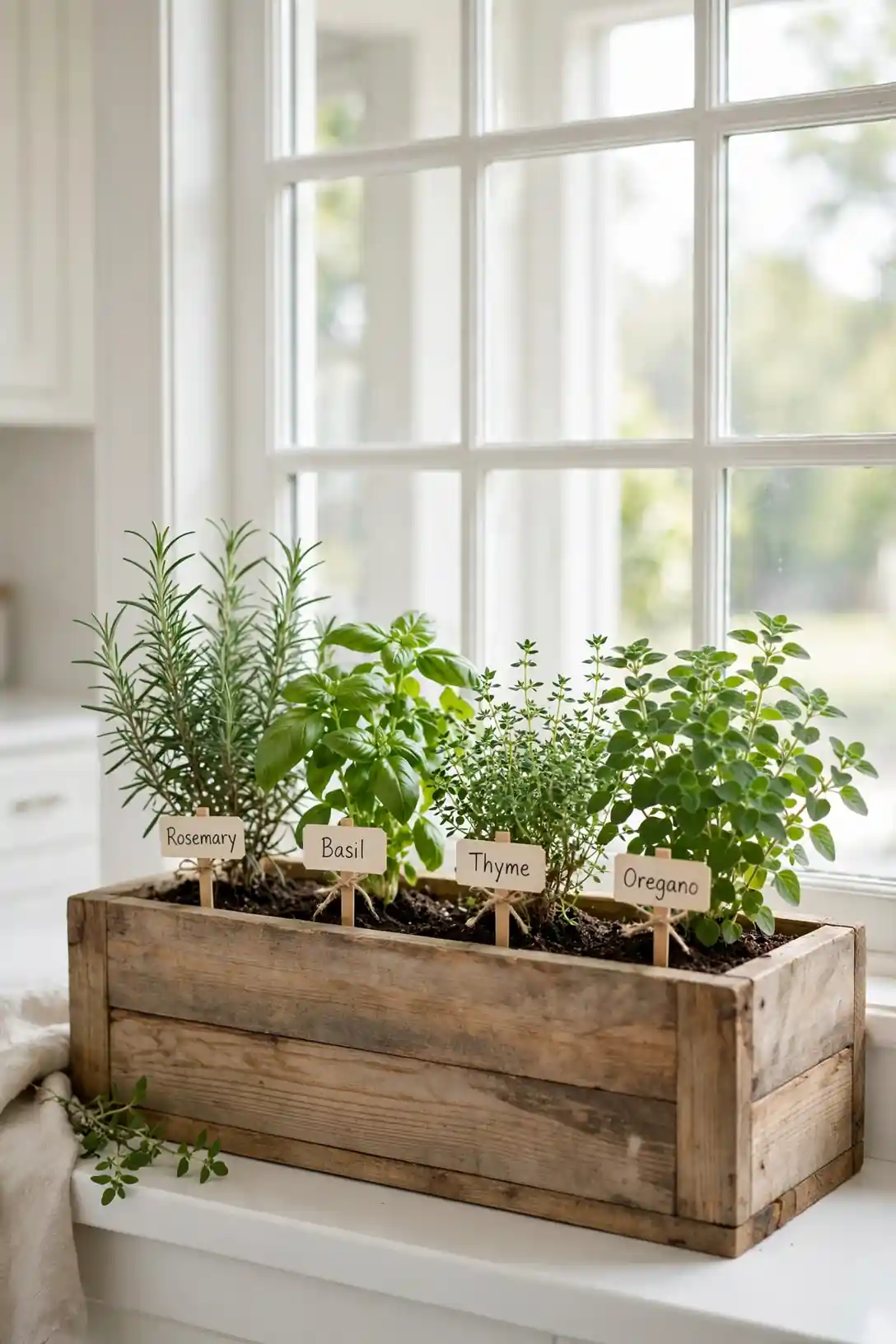
Kitchen Herb Mix
- Choose a box at least eight inches deep so herb roots have room to grow.
- Plant tall herbs like rosemary and basil at the back, with thyme and oregano trailing at the front.
- Add a small tag or marker for each herb so guests and kids can identify them.
- Snip regularly for cooking, which keeps the plants bushy and productive.
A kitchen window herb box puts fresh flavor within arm’s reach while looking beautiful. I have noticed that herbs grown this close to the kitchen actually get used instead of forgotten. Keep the soil moist, harvest often, and replace basil after it flowers for the best taste.
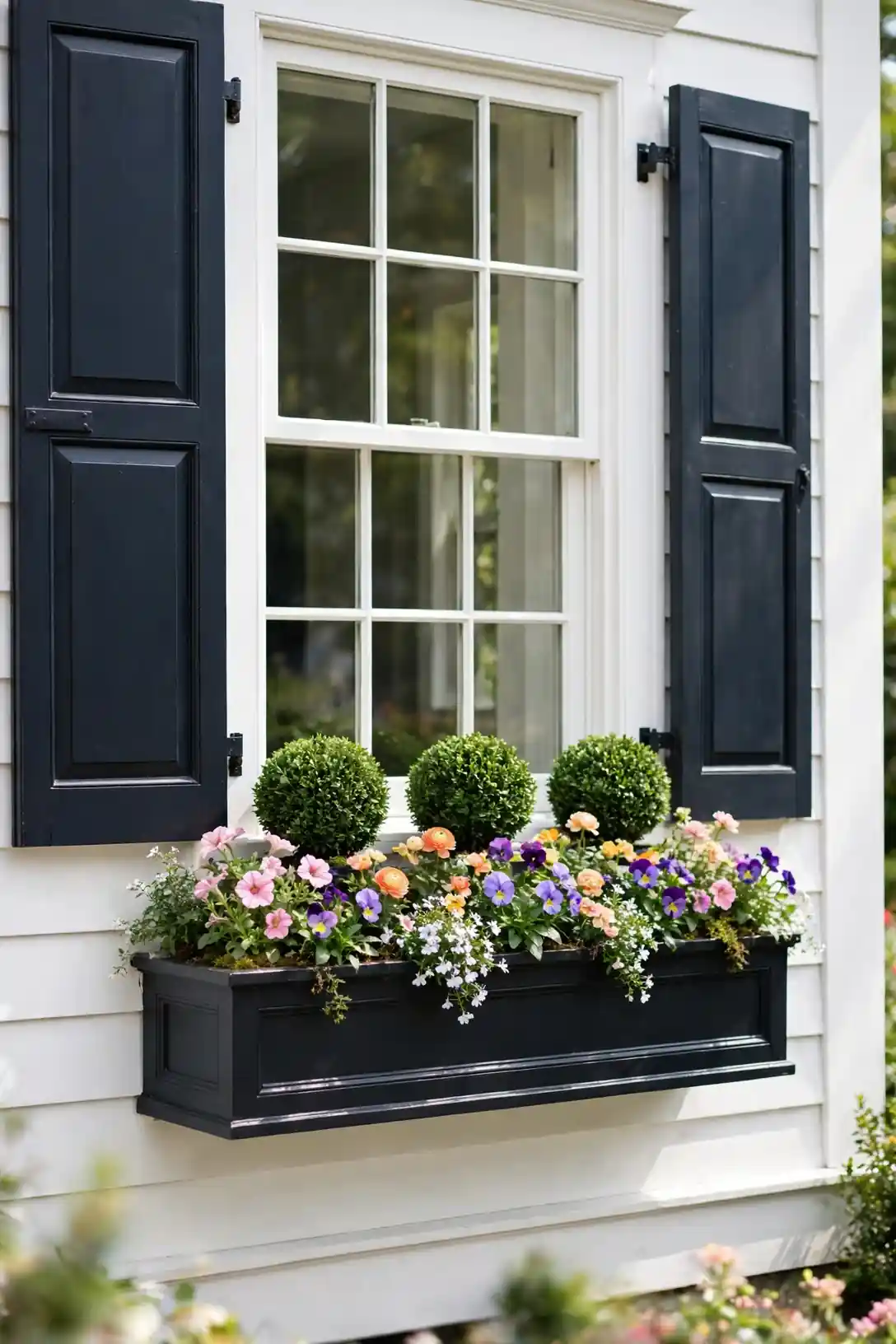
Boxwood Topiary Edges
| Feature | Real Boxwood | Faux Boxwood |
| Water needs | Regular watering | None |
| Lifespan | Years with care | 2-3 seasons in sun |
| Cost | Moderate | Low upfront |
| Look | Natural growth | Always perfect |
Boxwood gives a window box instant structure and a classic, tailored feel that flowers alone cannot match. Tuck small boxwood balls or a low hedge row along the back of the box, then fill the front with seasonal color that you can swap out spring and fall. Trim lightly twice a year to keep the shapes crisp, and water deeply during dry spells since boxes dry out faster than ground plantings. That simple backbone makes every seasonal refresh look polished.
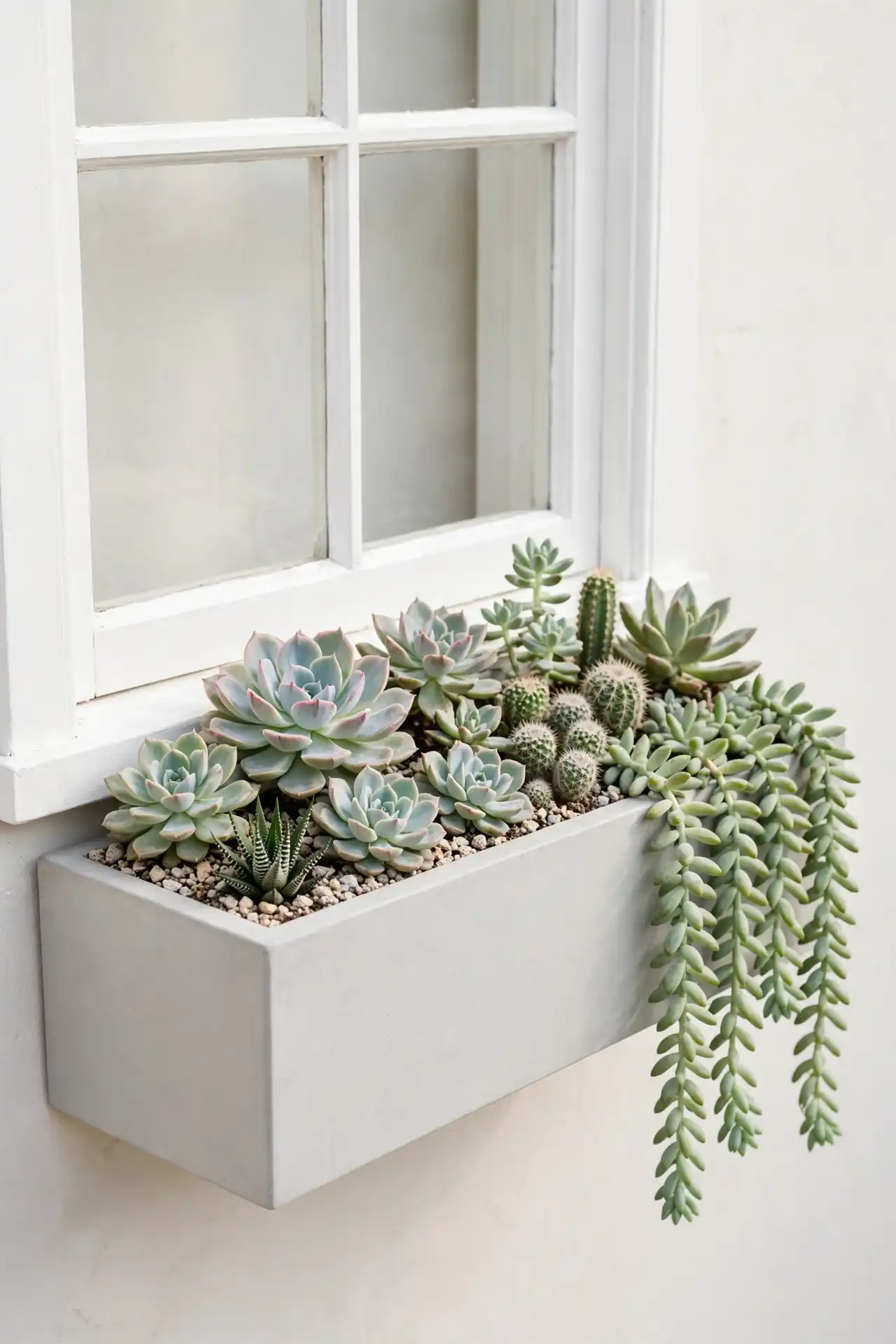
Succulent Mix Planters
DO:
- DO use a gritty, fast-draining cactus mix so roots never sit in water.
- DO combine rosette shapes like echeveria with trailing sedum for contrast.
- DO place the box where it gets at least six hours of bright sun.
- DO let the soil dry fully between waterings.
DON’T:
- DON’T use regular garden soil, which stays too wet and rots succulents.
- DON’T overcrowd; leave room for rosettes to grow and show their shapes.
- DON’T forget drainage holes in the bottom of the box.
Succulents turn a window box into a low-maintenance sculpture garden that thrives on neglect. They need far less water than flowers, making them ideal for busy households or hot, dry exposures. That easy-care nature is exactly why so many beginners succeed with them on their first try.
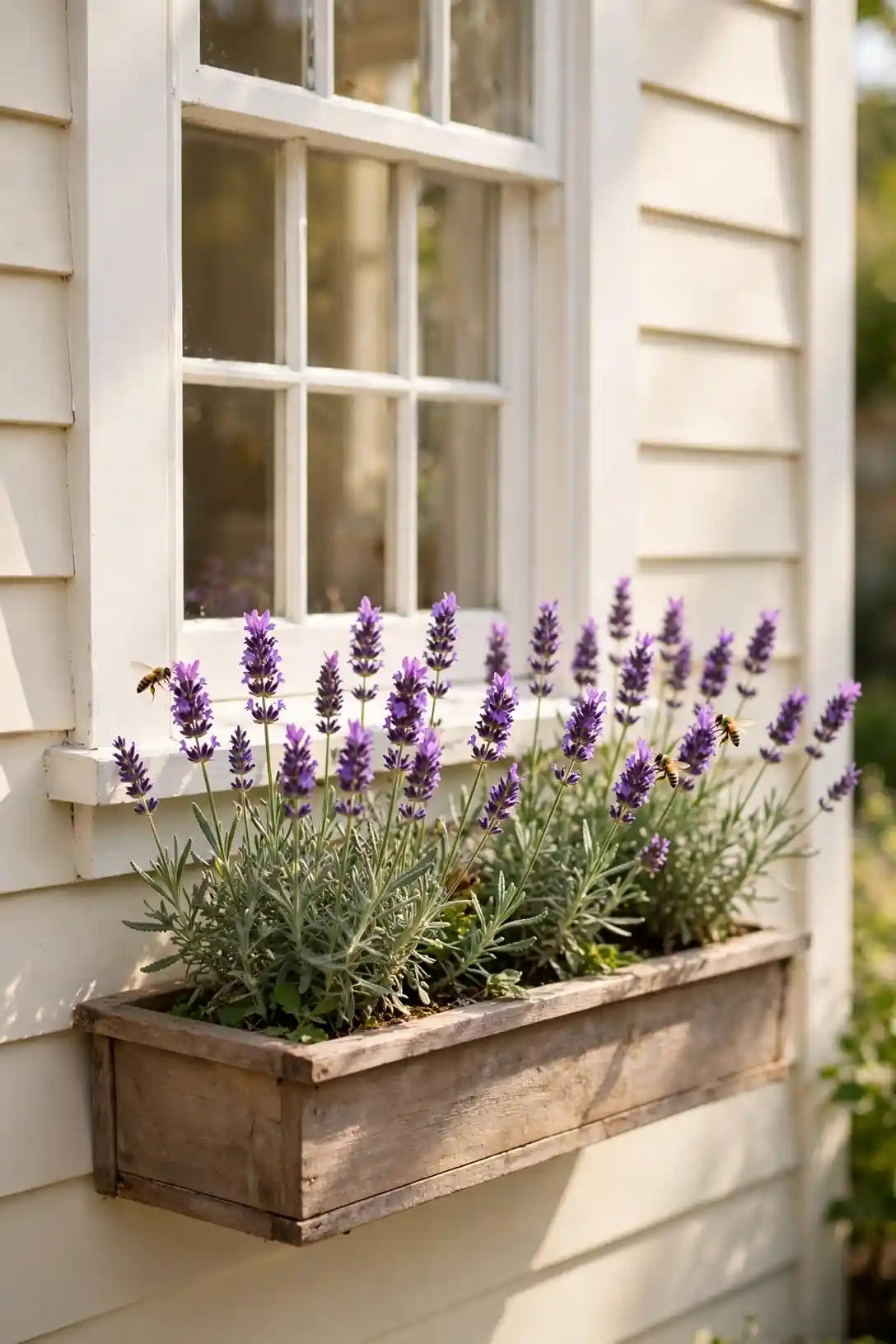
Lavender Line Up
Cost: Low, a few nursery pots | Time: One afternoon to plant | Skill Level: Beginner friendly | Best For: Sunny south-facing windows | Result: Fragrant purple blooms
Lavender brings fragrance, silvery foliage, and purple blooms that bees absolutely love, all in one tidy plant. English lavender varieties stay compact enough for boxes and return each year in most climates, which makes them a smart long-term choice. Plant in very well-draining soil with extra grit, avoid overwatering at all costs, and shear the plants lightly after flowering to keep them tidy and full. In my experience, a lavender-lined window box smells wonderful every time you open the window on a warm evening.
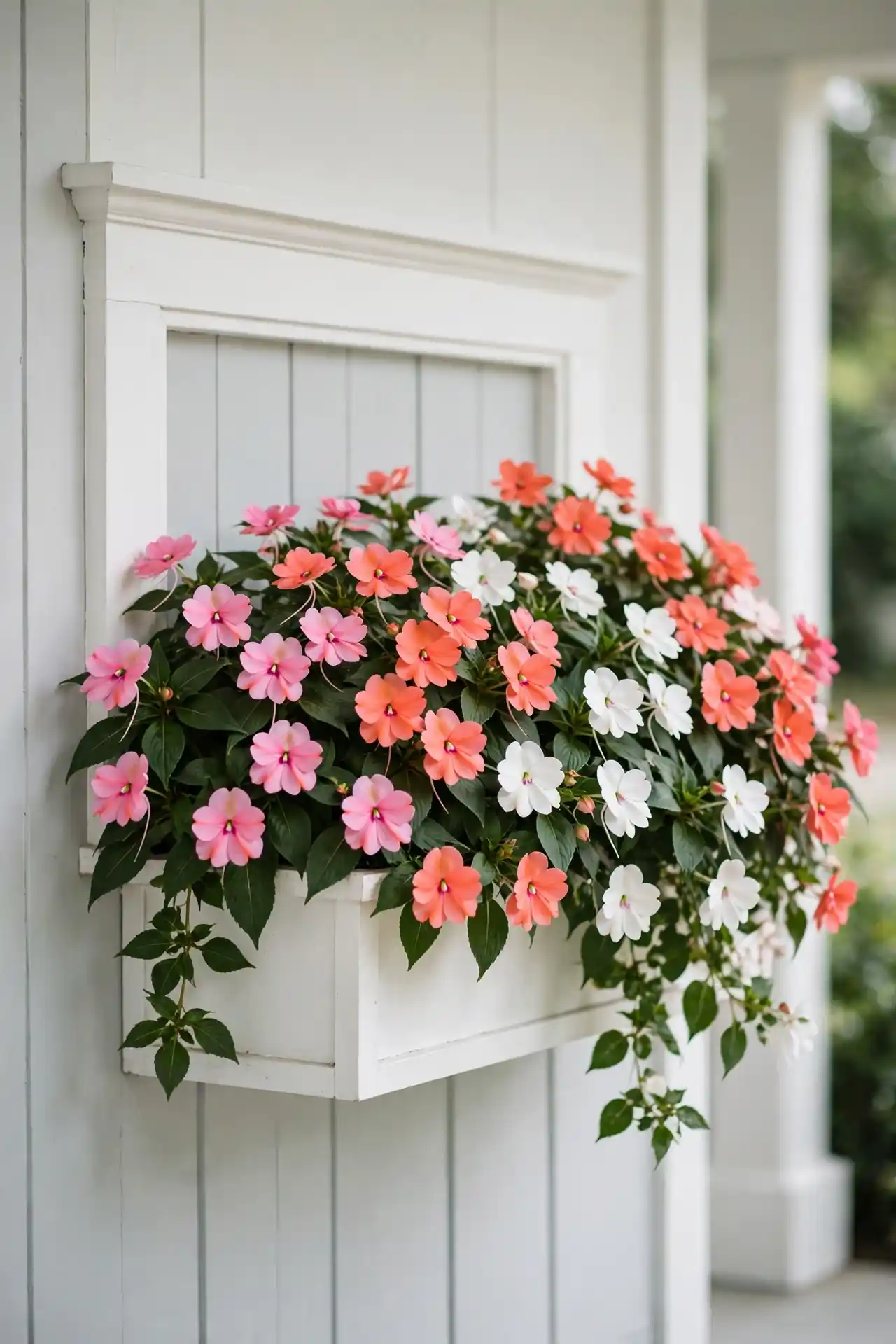
Impatiens Shade Pops
Impatiens are the answer for shady windows where sun-loving flowers simply refuse to bloom. Their bright faces glow in low light, lighting up north-facing exposures that defeat most other annuals. Choose New Guinea impatiens for larger blooms and sturdier plants that handle a bit more sun. They come in nearly every color except true blue, so matching your home’s trim is easy.
Keep the soil evenly moist, since impatiens wilt dramatically when dry but recover quickly after watering. A layer of mulch on top helps retain moisture between waterings. For deep shade, stick with white and pastel shades, which show up best where light is scarce.
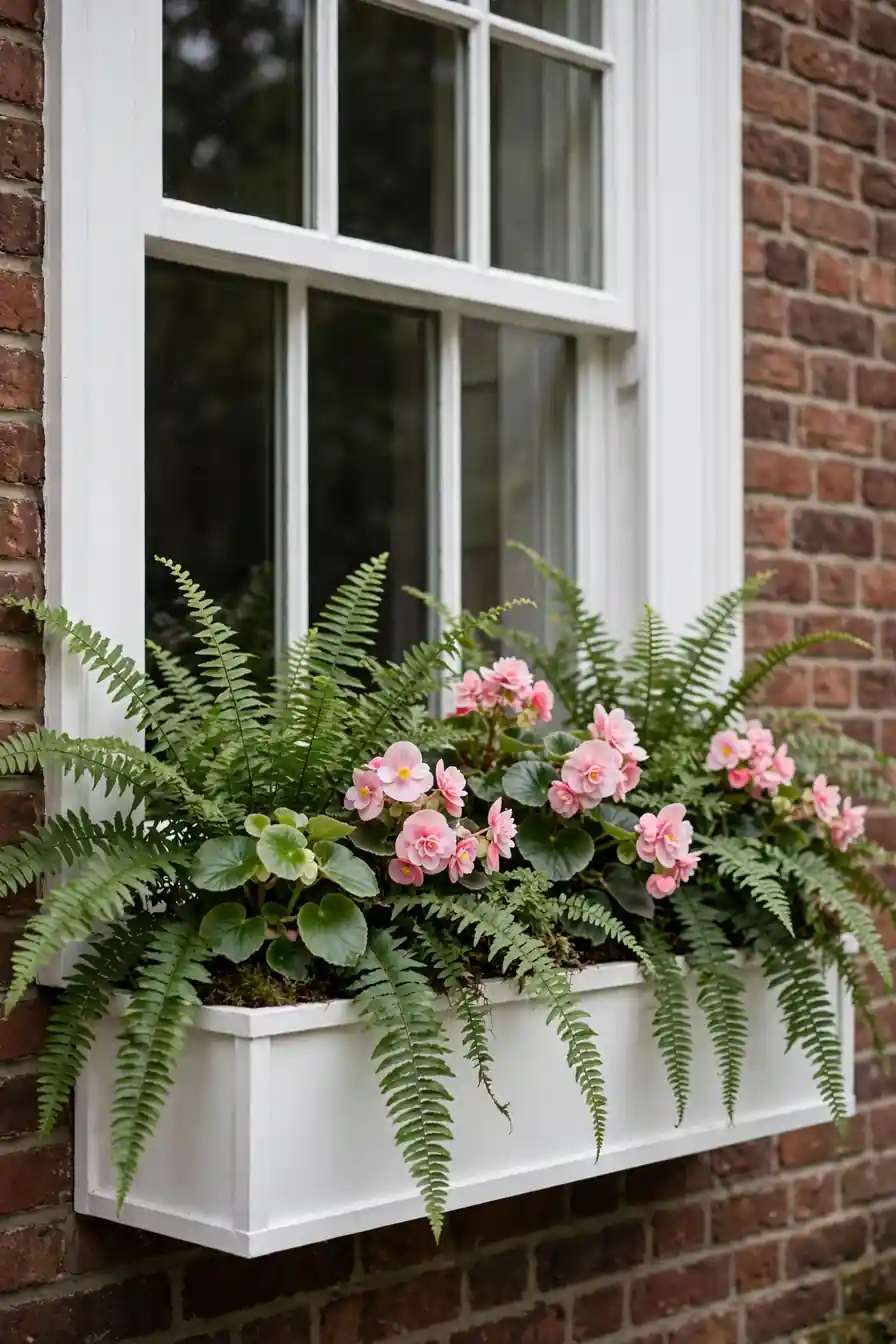
Fern Fringe Fillers
- Boston ferns and asparagus ferns add soft, feathery texture that contrasts beautifully with bold blooms.
- Tuck ferns between flowering plants to fill gaps and hide bare soil.
- Ferns love humidity, so mist them on hot afternoons or group boxes together.
- In fall, bring prized ferns indoors to overwinter as houseplants.
- Pair with impatiens or begonias for a lush shade-box combination.
Ferns bring a woodland softness that makes a window box feel established and full from day one. That feathery texture plays well against almost any flower, which is why designers use ferns as their secret filler. Keep them watered and they will reward you all season long.
Begonia Bright Borders
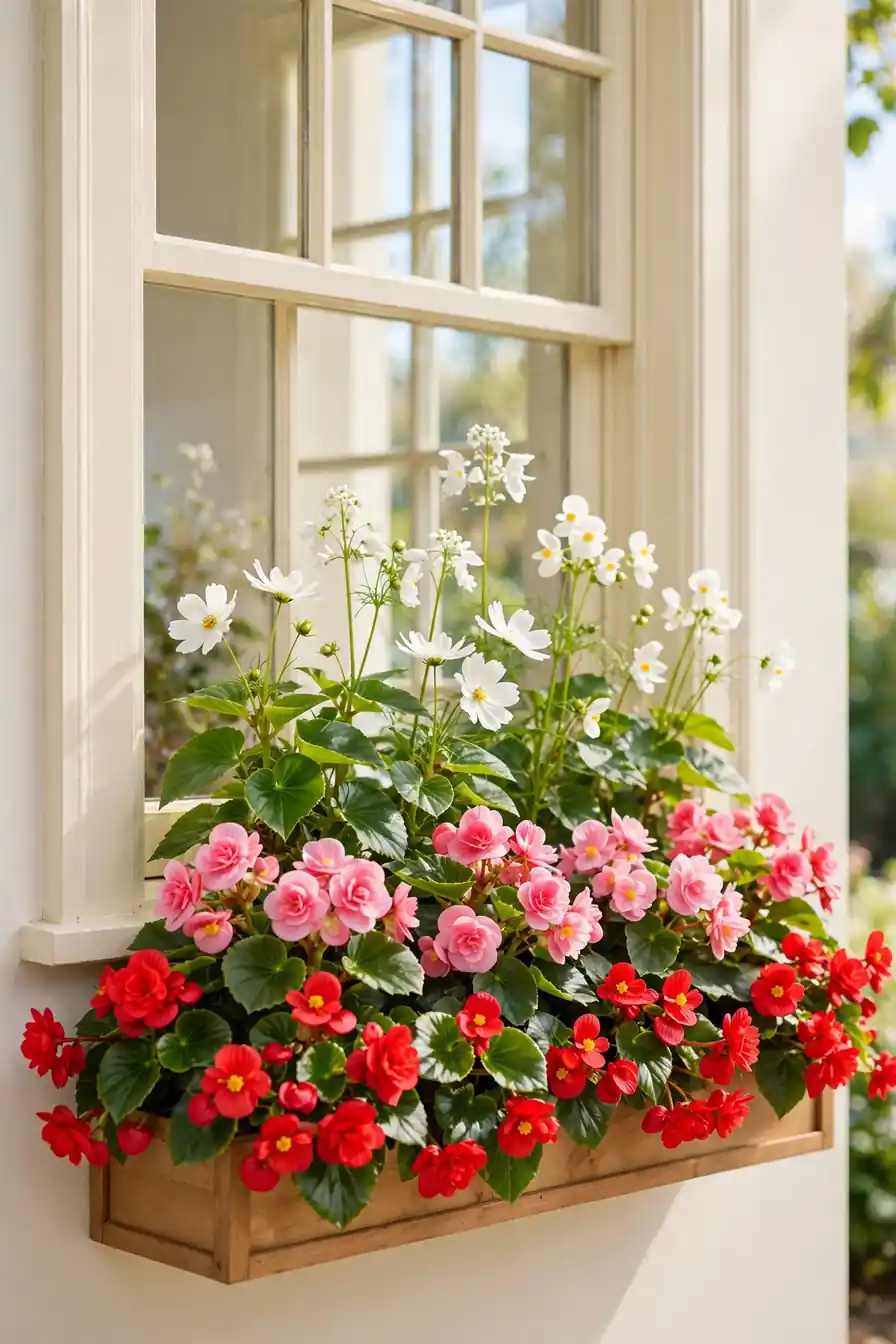
Quick Tip: Wax begonias are nearly indestructible in window boxes. They tolerate sun or shade, need little deadheading, and bloom until frost. For bigger impact, try dragon wing begonias, which cascade beautifully over the edges.
Begonias form neat, glossy mounds that edge a box beautifully and bloom nonstop for months. Their waxy leaves shrug off rain and heat alike. Plant them six inches apart along the front edge, water when the top inch dries, and enjoy one of the lowest-effort displays you can grow. That reliability is why I recommend them to every beginner. In my experience, a begonia-edged box still looks fresh in October when fancier plantings have given up.
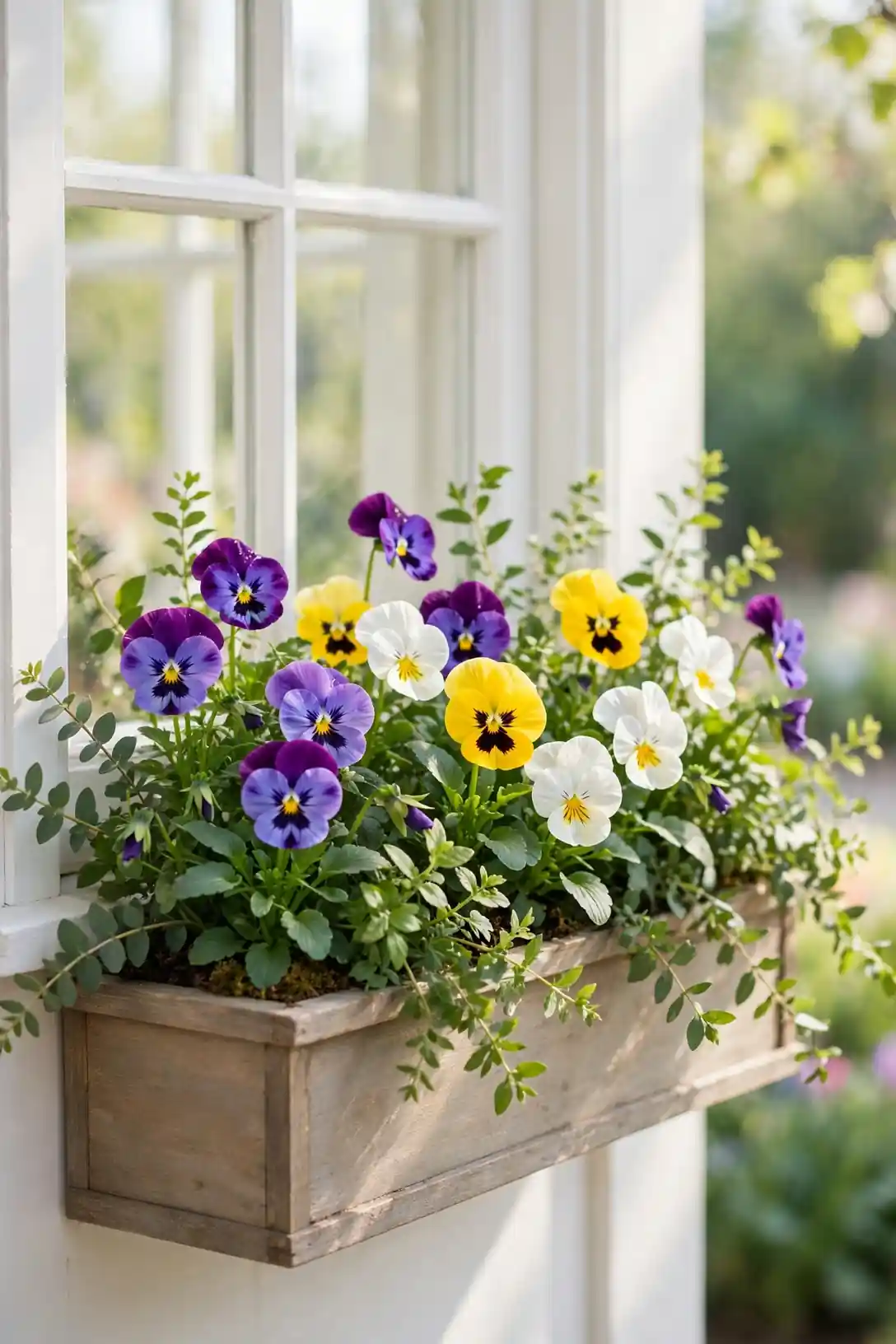
Pansy Face Forward
BEFORE: The spring window box looked bare and brown, with leftover winter mulch and nothing green in sight. The windows seemed to disappear into the facade.
AFTER: Cheerful pansy faces in purple, yellow, and white now nod above the box edge. The display took one afternoon to plant and instantly made the whole house look awake and welcoming.
Pansies are the perfect cool-season flower, thriving in the chill of early spring and fall when summer annuals sulk. Plant them the moment nights stay above freezing, and they will bloom for weeks. That early color is worth celebrating after a long winter with everything you have.
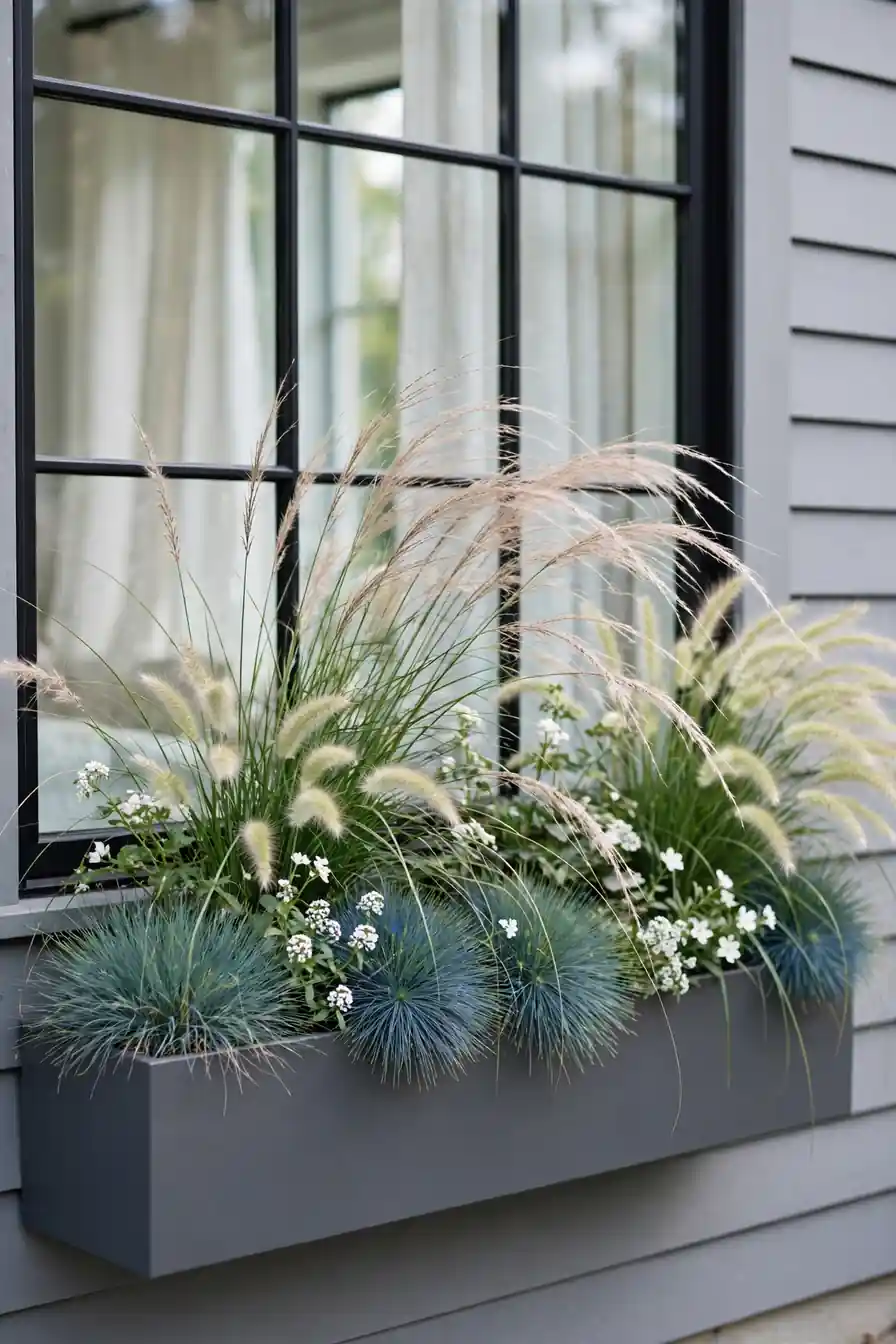
Ornamental Grass Sways
- Pick compact grasses like blue fescue or dwarf fountain grass that stay under eighteen inches.
- Plant one grass per box as a central thriller, surrounded by lower flowers.
- Water regularly the first month, then grasses tolerate drier conditions.
- Comb out dead blades in late winter before new growth starts.
- Pair with purple fountain grass for dramatic color, or stick with green varieties for a calm, neutral look.
Ornamental grasses add movement and a modern, airy feel that flowers alone cannot create. Their arching blades catch the breeze and the light, bringing the whole planting to life. That gentle motion makes even a simple box feel dynamic and alive from across the street.
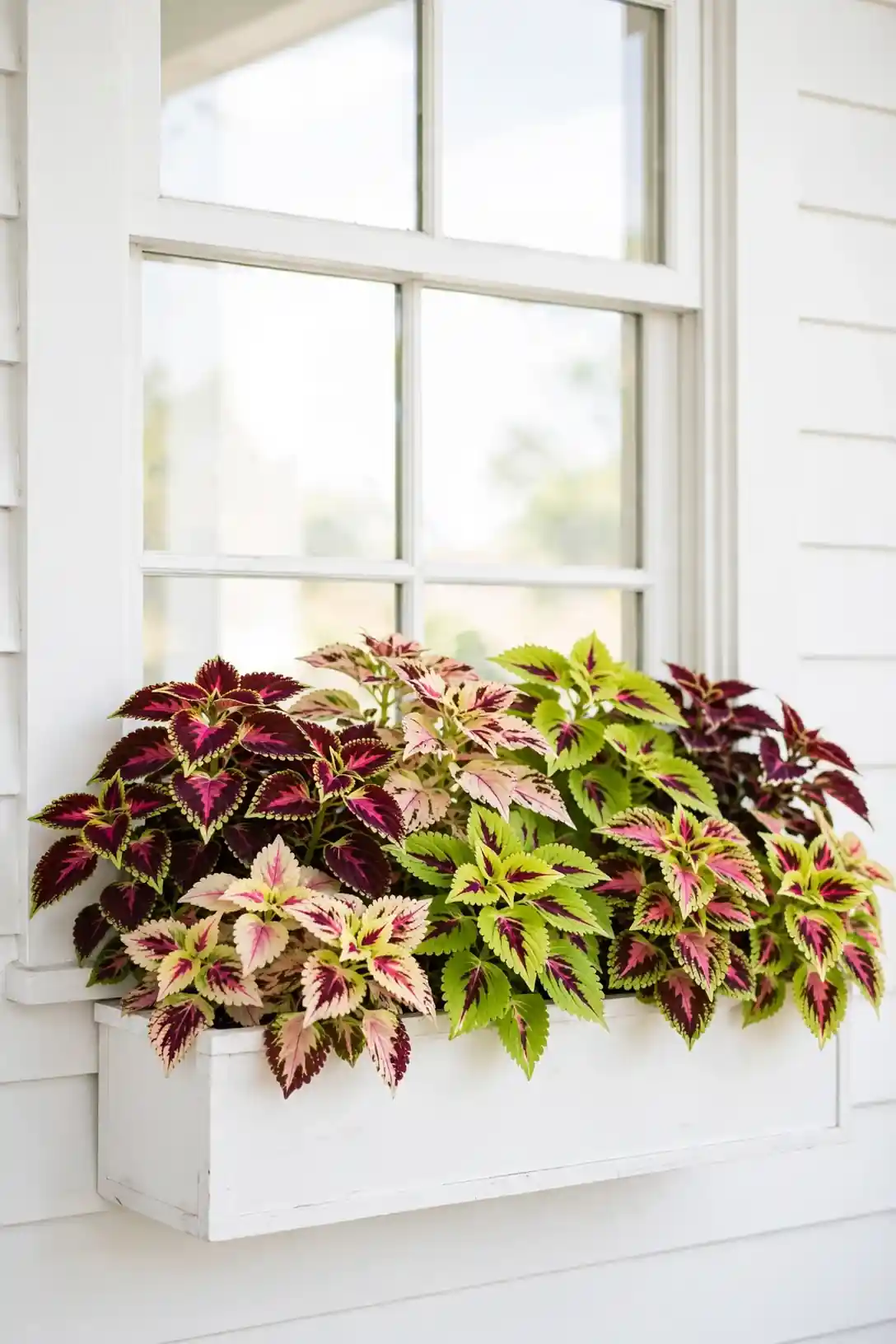
Coleus Pattern Play
| Feature | Sun-tolerant Coleus | Shade Coleus |
| Best light | 4-6 hours sun | Dappled shade |
| Leaf colors | Bold reds and oranges | Pinks and limes |
| Size | Up to 24 inches | 12-18 inches |
| Pinch back | Monthly | Rarely needed |
Coleus offers the boldest foliage patterns of any annual, with leaves painted in burgundy, lime, pink, and cream. No flowers needed when the leaves look this good. Pinch the growing tips monthly to keep plants bushy, and pull any flower spikes so energy stays in the foliage. That one habit keeps the patterns vivid all season. In my experience, a coleus-only box in mixed patterns looks like a living tapestry and needs almost no deadheading.
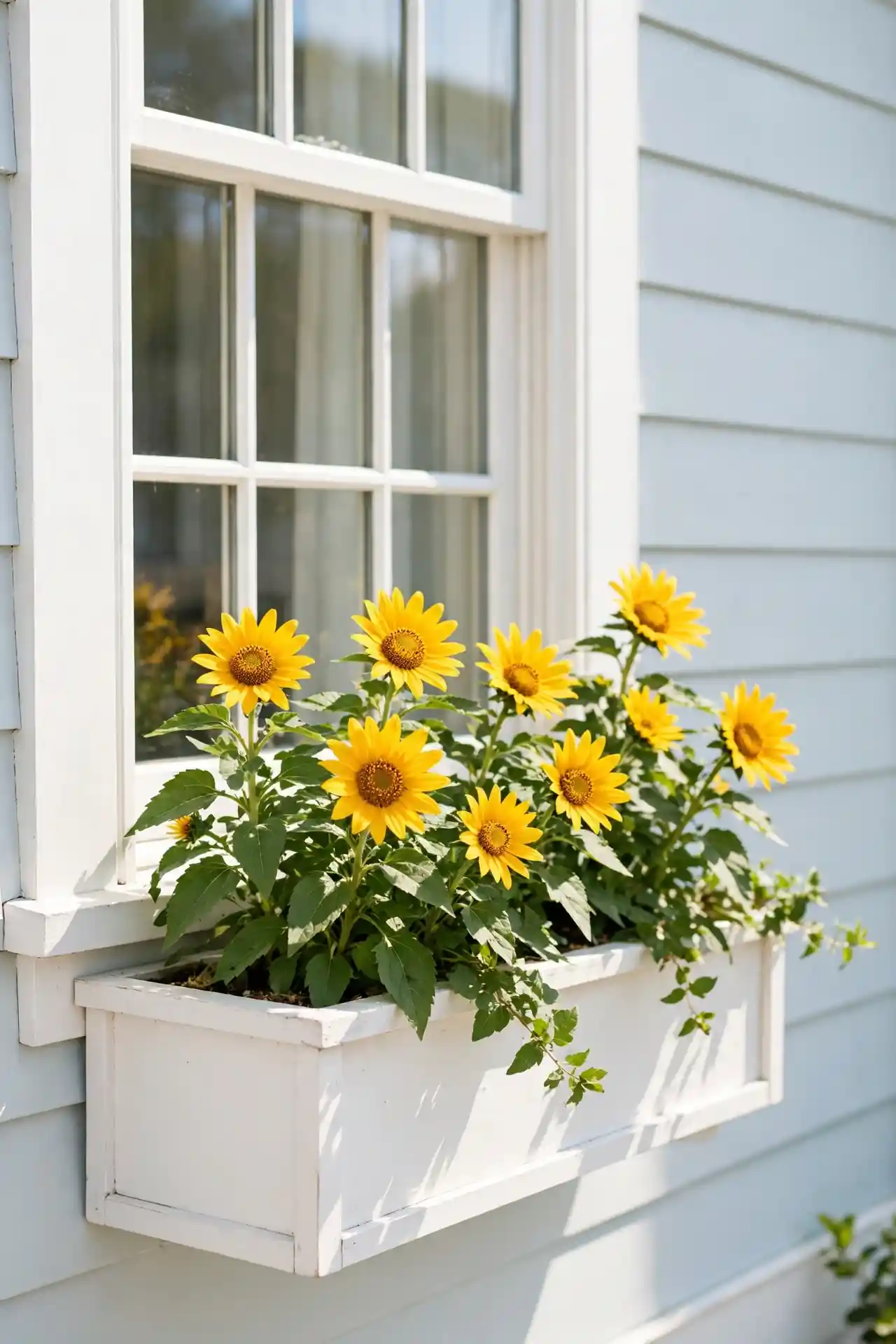
Dwarf Sunflower Stands
DO:
- DO choose dwarf varieties like Teddy Bear or Sunspot that top out at two feet.
- DO plant in the center back so blooms rise above lower flowers.
- DO stake stems in windy spots to keep them upright.
- DO deadhead spent blooms to encourage side buds.
DON’T:
- DON’T plant full-size sunflowers, which overwhelm a window box.
- DON’T let the soil dry out completely during bud formation.
- DON’T crowd; give each plant eight inches of space.
Dwarf sunflowers bring unbeatable cheer to a window box, their golden faces tracking the sun all day. Kids especially love watching the buds open. Plant after the last frost, water deeply, and enjoy weeks of happy blooms. For more sunny-spot inspiration, browse these outdoor patio ideas that pair beautifully with bright, bold plantings.
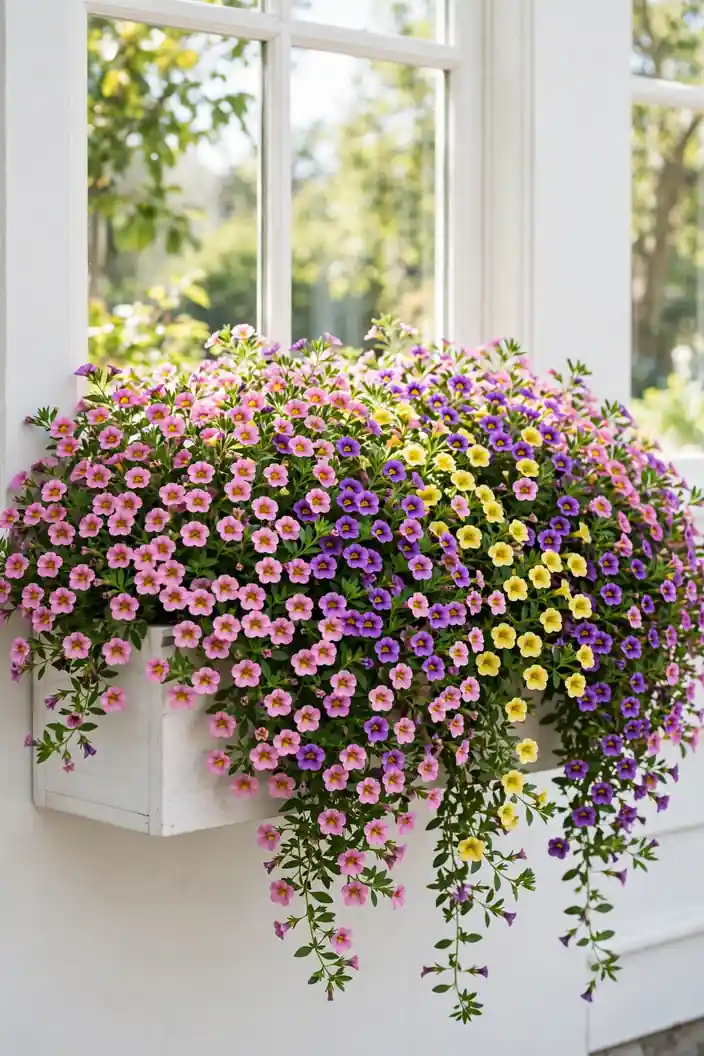
Calibrachoa Bell Clusters

Cost: Low | Time: One afternoon | Skill Level: Beginner | Best For: Full sun boxes | Result: Hundreds of tiny blooms | Colors: Pink, purple, yellow, red, white
Calibrachoa, often called million bells, covers itself in hundreds of tiny petunia-like flowers from spring to frost. The trailing habit is perfect for window boxes, spilling over edges in sheets of color. Water daily in summer heat, feed biweekly, and trim back lanky stems in August for a strong fall finish. That one midsummer trim doubles the flower power when autumn arrives. In my experience, calibrachoa outperforms regular petunias in rainy climates because the small blooms never turn to mush.
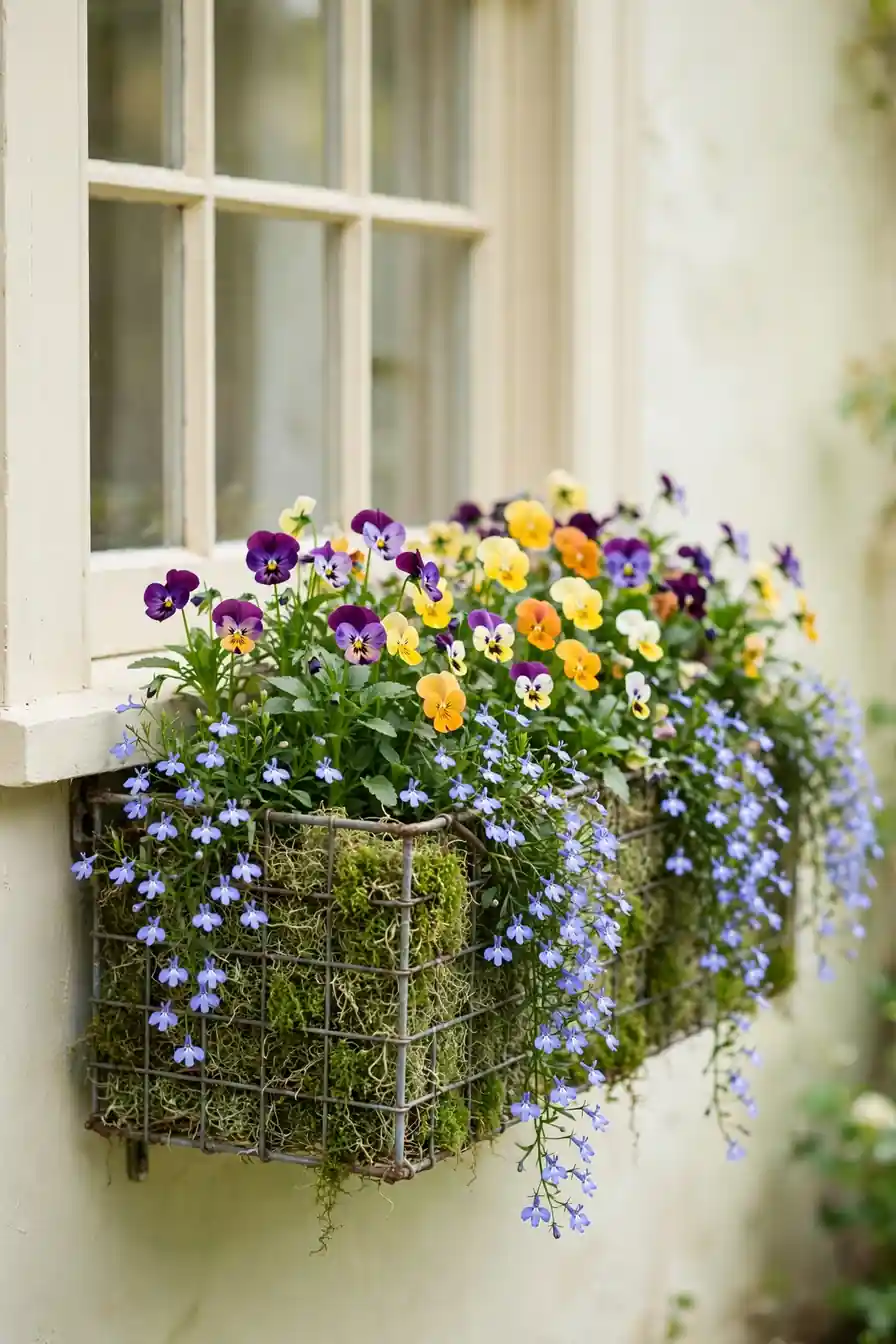
Moss Lined Boxes
Moss-lined wire boxes bring a natural, cottage-garden charm that plastic and wood cannot quite match. The moss holds moisture around the roots while giving the whole planting a soft, organic frame. Line a wire frame with sheet moss, fill with potting soil, and plant densely so no gaps show. Poke small holes through the moss sides and tuck in trailing plants like lobelia for a fully planted look.
Water moss-lined boxes more often than solid ones, since moisture escapes through the sides. That extra watering is the only tradeoff for their unmatched texture and charm. In shady spots, the moss itself stays green and lovely all season.
White Bloom Contrast
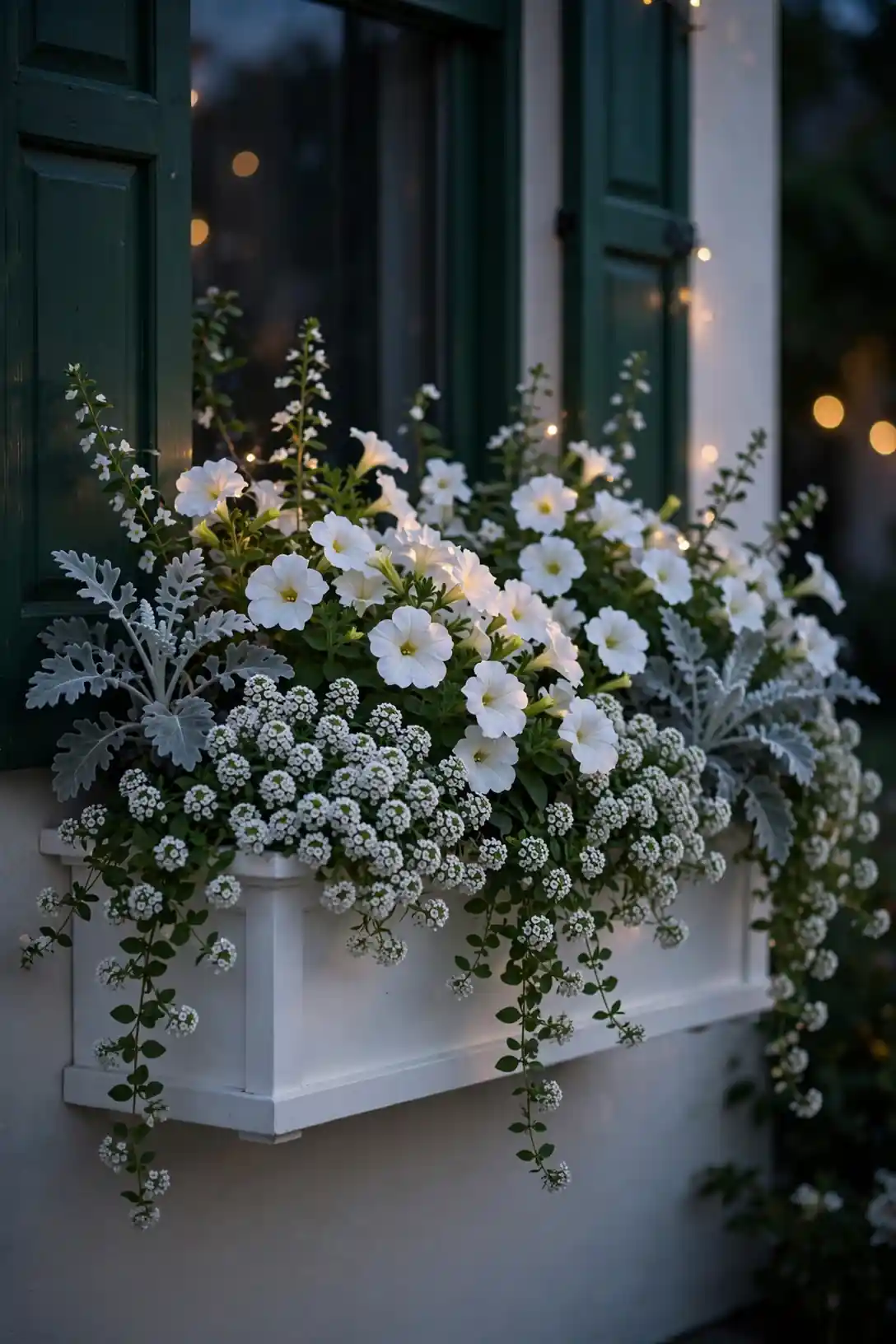
- White flowers glow at dusk, making your windows beautiful long after sunset.
- Try white petunias, bacopa, and sweet alyssum for a moon-garden effect.
- Add silver foliage like dusty miller to deepen the white-on-white contrast.
- White plantings look crisp against any house color, from brick to blue siding.
- Deadhead regularly to keep every bloom bright and fresh.
An all-white window box is quietly dramatic, glowing softly in evening light when colors fade. That moonlight effect gives your home a magical quality after dark. I have seen this work well in many cases where homeowners wanted elegance without fuss and endless replanting all season long.
Sweet Potato Vines
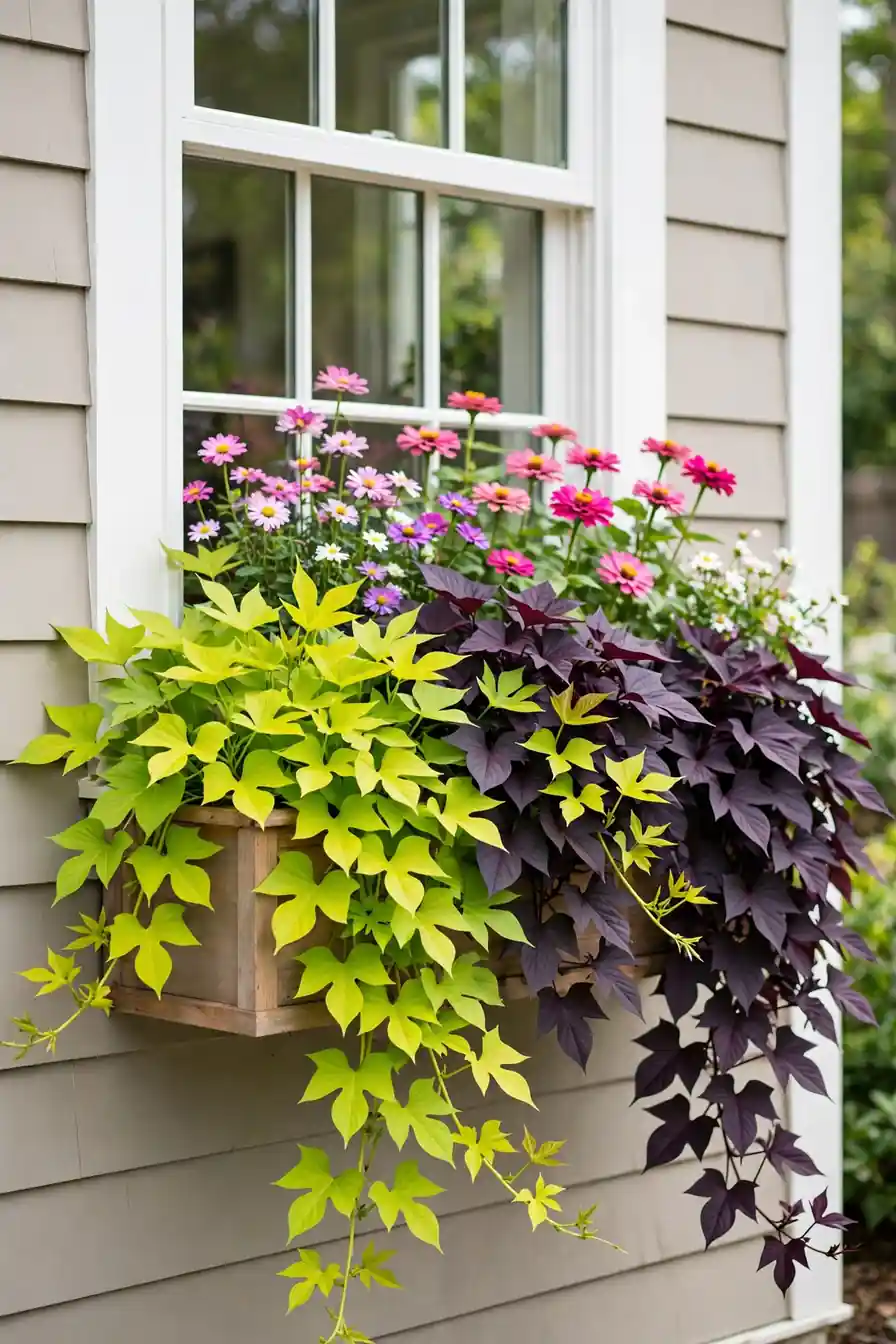
Quick Tip: Sweet potato vine grows incredibly fast, sometimes six inches a week. Plant just one or two per box and let them do the work of filling space. Pinch the tips to encourage branching instead of one long runner.
Chartreuse and deep purple sweet potato vines are the hardest-working spillers in any window box. Their bold leaves add drama and fill gaps faster than flowers can. Tuck them at the front corners, water regularly, and trim when they threaten to take over. That vigorous growth means one plant can transform a whole box. In my experience, the lime-green Marguerite variety brightens shady boxes like nothing else.
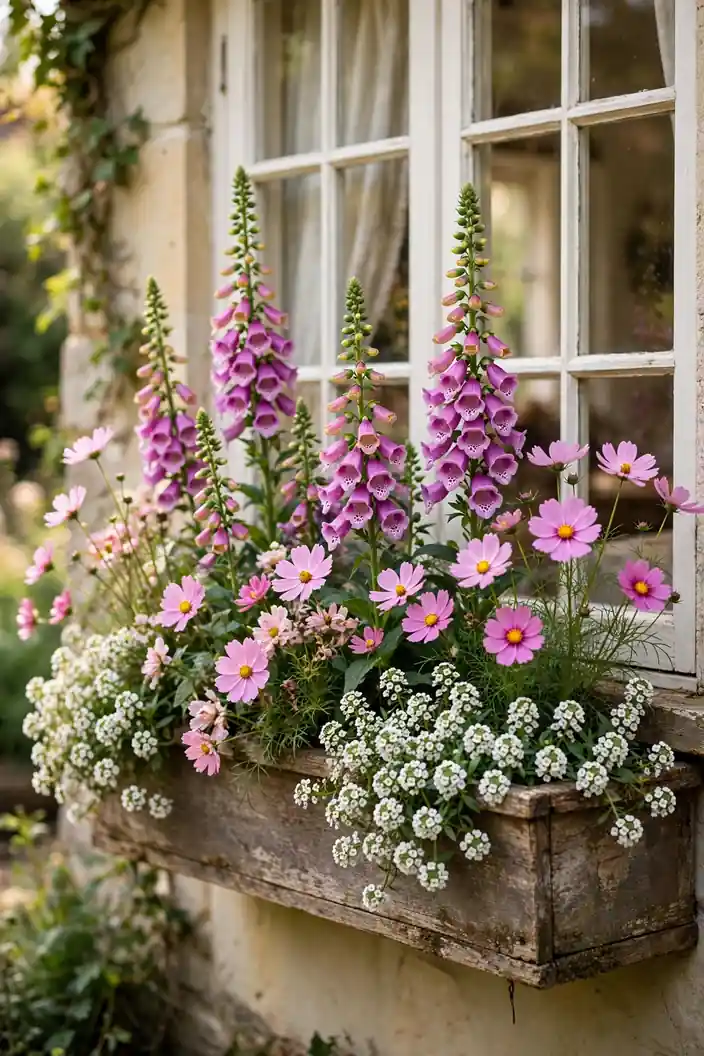
Cottage Garden Mix
BEFORE: The narrow box held a single row of one flower type, neat but boring. It looked like an afterthought rather than a garden.
AFTER: Now foxgloves rise at the back, cosmos dance in the middle, and alyssum spills over the front. The jumbled abundance looks naturally charming, like an English cottage garden in miniature.
Cottage style means joyful abundance, so plant densely and mix heights, colors, and textures freely. That controlled chaos is the whole point, and it forgives mistakes beautifully. Water well, deadhead often, and let the garden do its happy, rambling thing all summer long without a worry.
Autumn Mum Displays
- Wait until nights cool in early fall, then replace tired summer annuals.
- Choose garden mums in bronze, rust, and deep red for autumn richness.
- Plant them tightly, three to five per box, for instant fullness.
- Water daily until established, since fall winds dry boxes quickly.
- Tuck in ornamental kale or dried grasses for extra texture.
Mums are the undisputed stars of fall, and a box full of them brings instant autumn warmth to your windows. Their dense blooms hide every gap and glow in the low fall light. That rich color carries your curb appeal right through Thanksgiving with zero fuss.
Winter Evergreen Fill
| Feature | Fresh Evergreen Cuttings | Faux Evergreen Stems |
| Lifespan | 6-8 weeks | Multiple seasons |
| Scent | Wonderful pine fragrance | None |
| Cost | Low | Higher upfront |
| Maintenance | Mist occasionally | Dust yearly |
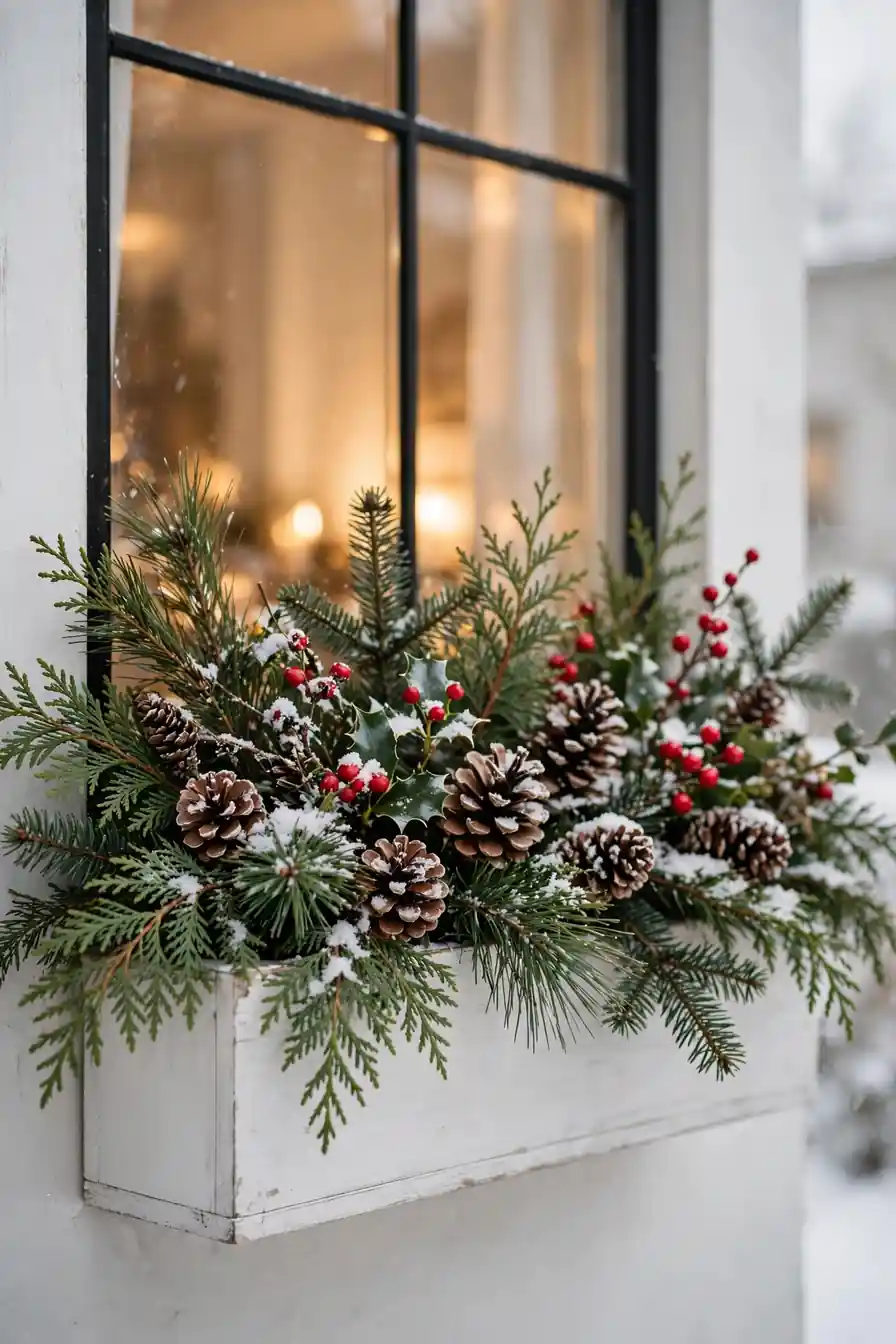
Winter window boxes deserve love too, and evergreen cuttings make them beautiful long after flowers fade. Push pine, cedar, and fir branches into the soil, add pinecones and red berries, and your windows look festive for months. That green life against the winter gray lifts the whole house. In my experience, a winter box with twinkle lights woven through the greens becomes the prettiest feature on the street after dark. Start right after Thanksgiving for the longest enjoyment.
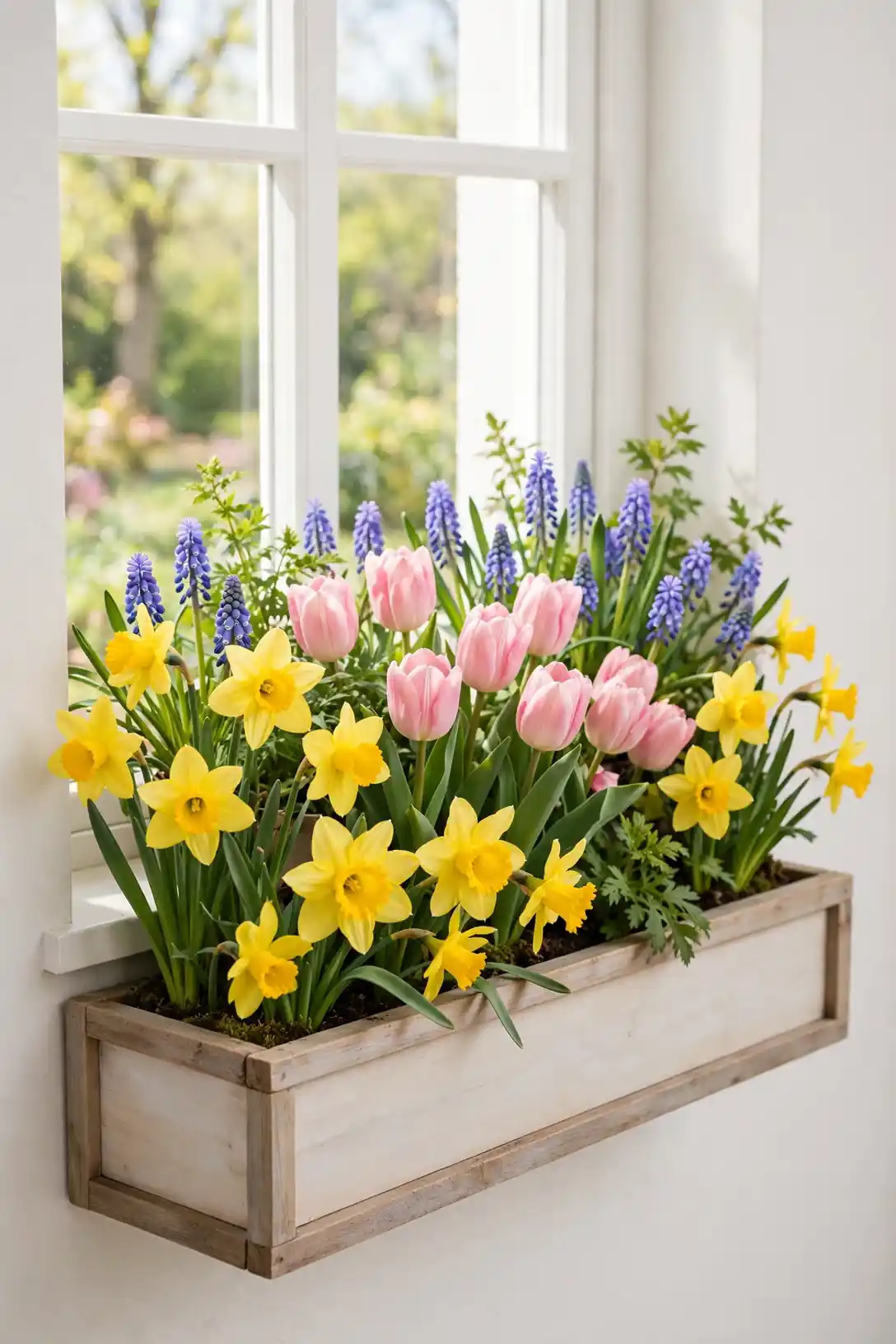
Spring Bulb Waves
DO:
- DO plant bulbs in fall, six inches deep, for spring blooms.
- DO layer daffodils, tulips, and grape hyacinths for weeks of color.
- DO let foliage die back naturally to feed next year’s bulbs.
- DO add pansies on top for instant color while bulbs grow.
DON’T:
- DON’T plant bulbs too shallow, or frost will damage them.
- DON’T cut green leaves early, which starves the bulb.
- DON’T overwater in winter; bulbs rot in soggy soil.
Spring bulbs turn a window box into the happiest spot on the house after a long winter. That first daffodil opening feels like a small celebration. Plant in fall, be patient, and enjoy the earliest color of the year right outside your window every single spring.
Conclusion
Which of these window box flower ideas will you try first? Start with one box and a simple combination, then expand as your confidence grows. Save this guide to your Pinterest garden board so you can find it when planting season arrives. Share a photo of your finished boxes in the comments, I would love to see what you create. In my experience, small plantings like these completely change how a home feels from the street, and they cost far less than most people expect. Pick your favorite look this weekend, grab a few nursery plants, and give your windows the colorful frame they deserve.