23 Warm Minimalist Bedroom Design Ideas for a Cozy, Serene Retreat
A bedroom should feel like a deep breath at the end of a long day, and warm minimalist bedroom design gives that feeling a clear shape. Soft wood tones, gentle linen, and quiet light replace clutter and noise, so the room calms the mind the moment you walk in. In my experience, the warmest minimal rooms are not empty at all; they hold a few well chosen pieces that earn their place. This guide walks through 23 ideas that bring warmth and calm together, from bedding layers to lighting choices that make evenings feel softer.
Each idea below works on its own, so start with one corner and build from there. If you love the relaxed feel of modern cottage living room decor, you will find a similar warmth here, trimmed down to quieter lines. A reading chair, a warmer bulb, or a softer rug can change how the whole room feels without a full makeover. Keep what feels restful, let go of what feels busy, and let the room grow calmer over time.
Warm Wood Accents

Credit: Polina
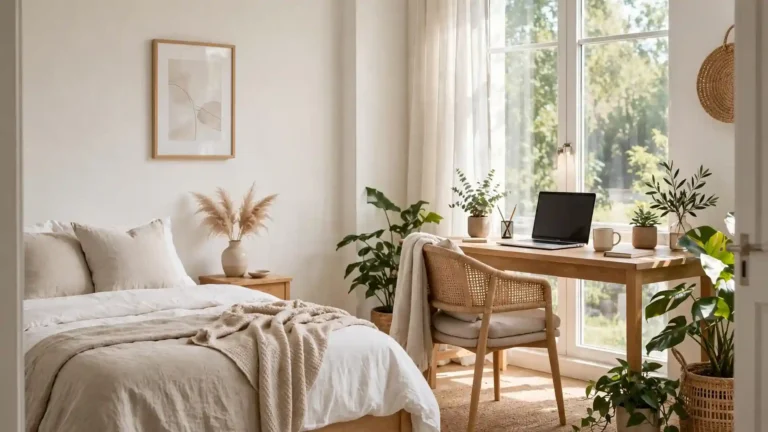
Wood brings instant warmth to a spare room, and one timber headboard can anchor the whole space. Honey oak, pale ash, and walnut each read differently in morning light, so hold samples against the wall before you commit. A bench at the foot of the bed adds a second note of grain. Matte finishes work best here, since soft surfaces catch light gently and feel close to nature.
Small wooden details carry that warmth further. A turned lamp base, a tray on the nightstand, or a frame in natural oak ties the room together. I’ve noticed rooms feel calmer when wood tones repeat in two or three places rather than appearing everywhere. Choose pieces with visible grain and simple shapes, and let the wood make the room feel lived in.
Soft Linen Layers

Credit: dada _design
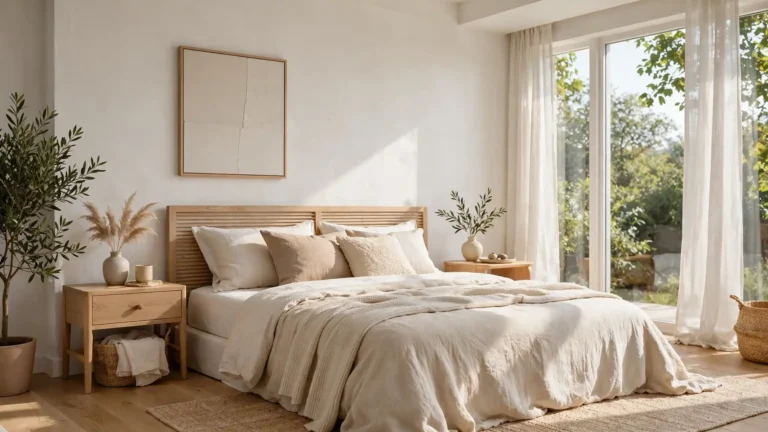
- Choose washed linen in oatmeal, sand, or soft white for a relaxed drape.
- Layer a light duvet over a flat sheet, then fold a throw across the foot.
- Mix two textures, such as linen and cotton, so the bed feels deep rather than flat.
- Wash bedding in cool water and skip heavy starch for a soft, lived in hand.
Linen softens with every wash, which makes it a kind choice for a room meant to rest the senses. The slight wrinkles are part of its charm, so embrace them instead of fighting for crisp lines. A bed dressed in linen invites slow mornings and quiet evenings alike.
Calm Neutral Palettes

Credit: Aljona Ovtšinnikova
Quick Tip: Paint one test patch beside the bed and watch it through a full day of light before painting the whole wall. Warm whites shift with sun and lamplight, and a shade that looks creamy at noon can turn grey by evening.
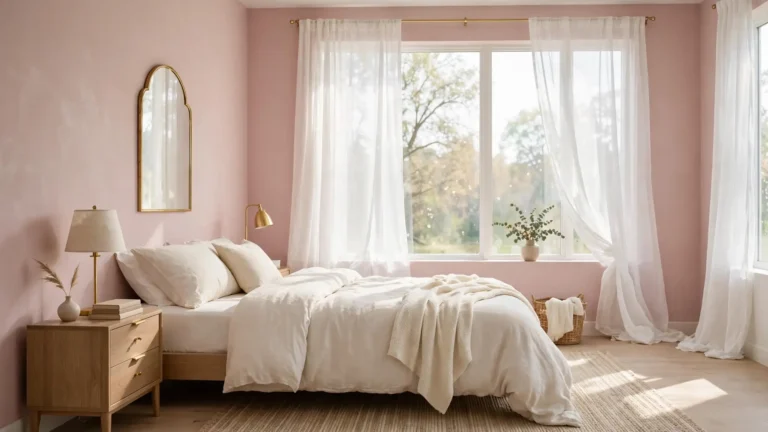
Warm whites, sand, and pale clay form the backbone of a calm bedroom palette. Keep the wall color close to the bedding color, then add depth through wood and fabric rather than bold paint. The result feels settled and gentle, a backdrop that lets rest take center stage. I’ve seen this work well in many cases, especially in rooms with limited daylight, where a warm base keeps shadows soft.
Bare Room To Warm
Credit: Ariel Marcon
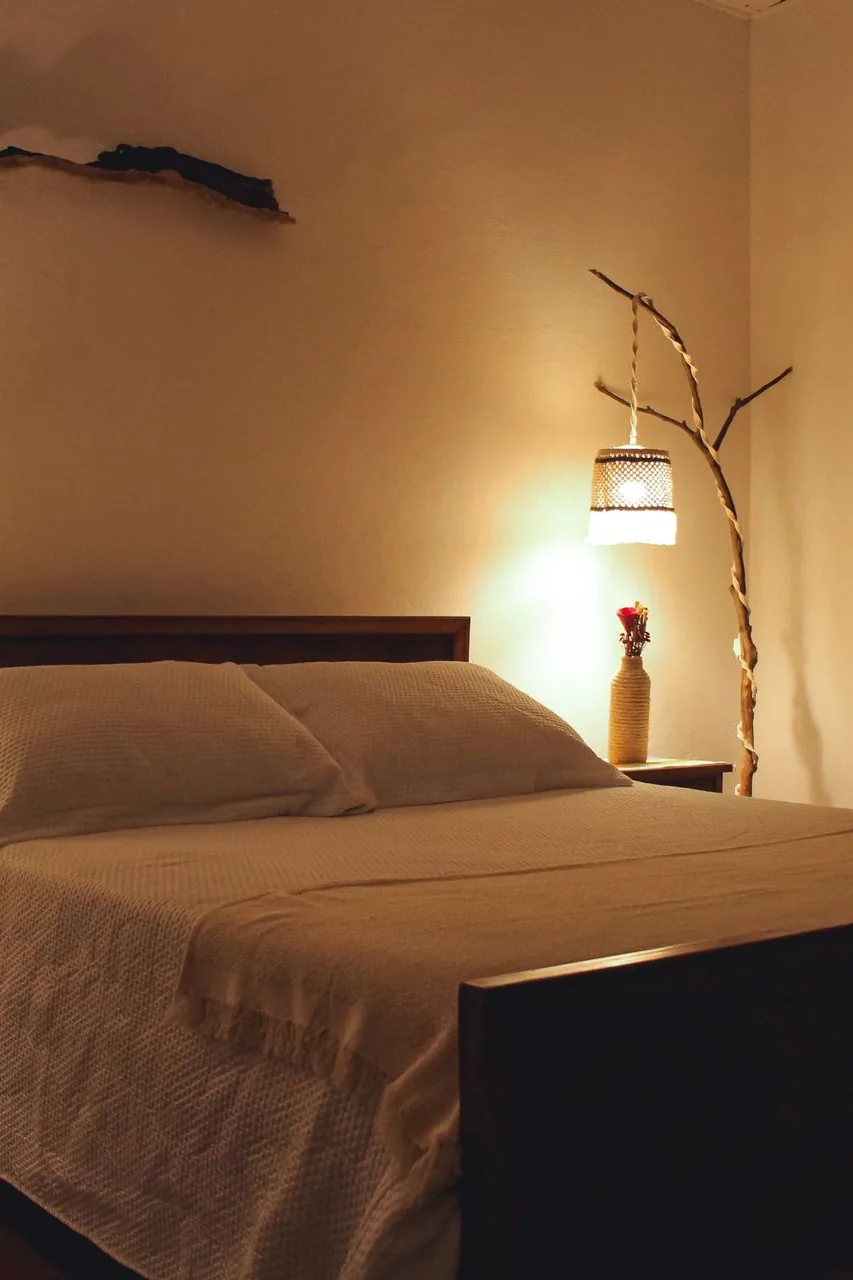
BEFORE: A metal frame, a bare bulb, and stark white walls made the room feel cold. Nothing softened the corners, and mornings felt harsh despite the heater running.
AFTER: A wooden headboard, linen bedding, and two warm lamps changed the mood completely. A rug softened the floor, and the same four walls now feel like a retreat.
The shift took one weekend and a small budget. Start with light, since warm bulbs cost little and change everything. Then add one textile, such as a throw or a rug, and notice how the room softens. Small layers build calm faster than one big purchase.
Layered Lighting Steps

Credit: Yusuf P
- Replace cool bulbs with warm white ones near the bed.
- Add a dimmer or a low lamp for evening wind down.
- Place one light source at each side of the bed for balance.
- Let daylight lead during the day with sheer curtains that soften glare.
- Hide cords behind furniture so the glow stays the focus.
Layered light lets the room shift from bright mornings to gentle evenings without effort. Overhead light alone flattens a room, while lamps at different heights create pools of warmth. Keep switches within reach of the bed so the last light goes out without a cold trip across the floor.
Wood Versus White

Credit: İbrahim Doğan
| Option | Feel | Best For |
|---|---|---|
| Warm Wood | Rich and grounded | Cool north rooms |
| White Wash | Light and airy | Small dark rooms |
| Mixed Tones | Balanced and lived in | Most bedrooms |
Wood and white each bring something valuable, and the calmest rooms often blend both. A white base keeps the space bright and open, while wood stops it feeling clinical or cold. Match the balance to your light: darker rooms welcome deeper wood tones, while bright rooms can carry more white without losing warmth. Consider the floor too, since a wooden floor already adds warmth and may need less timber elsewhere. The goal is warmth with breathing room, not a showroom, so step back and judge the whole room rather than one wall.
Bedroom Styling Rules

Credit: Curtis Adams
Do:
- Repeat one warm tone in bedding, art, and a throw.
- Leave breathing room on nightstands for a lamp and a book.
- Choose natural fibers for the pieces closest to the skin.
Don’t:
- Fill every surface, since empty space is part of the calm.
- Mix more than three accent colors in one room.
- Hang art too high above the bed where it floats away.
Good styling in a minimal bedroom is mostly restraint. Each object should earn its place by adding warmth, texture, or memory. When a surface starts to feel busy, remove one thing and live with the gap for a day. Often the room feels better, not emptier.
Small Bedroom Facts

Credit: Rappunk G Ononiwu
Cost: Under $150 for bedding and lighting swaps.
Time: One afternoon to restyle the bed and lamps.
Skill Level: Beginner friendly, no tools required.
Best For: Rooms under 150 square feet that feel stark.
Small rooms reward warm minimalism because every choice shows. One warm rug can ground the whole floor, and one wooden accent can carry the palette. Keep furniture low and light in color so the ceiling feels higher. The room may be small, but the calm it offers can feel generous. In my experience, small bedrooms calm down fastest when the bed itself gets attention first, since it fills most of the floor. Dress it well, and the rest of the room follows.
Textured Throw Layers

Credit: Nataliya Vaitkevich
A throw is the fastest way to warm a minimal bed, and texture matters more than pattern here. Chunky knit, waffle weave, and brushed wool each catch light differently, so the bed gains depth without new colors. Drape the throw across the lower third of the bed, letting it fall naturally rather than folding it into stiff lines.
Keep a second throw within reach for cold nights, folded over a chair or a bench. The casual drape signals rest, and the room feels ready rather than staged. Choose washable fibers so comfort never turns into worry, and let the throw be the piece that invites you to slow down.
Cozy Reading Corners

Credit: Gabriela Pons
- Place a chair near the window where daylight does the work.
- Add a small side table for a book, a candle, and a warm drink.
- Choose a lamp with a warm bulb so evening reading stays gentle.
- Keep a soft blanket on the chair arm, ready without fuss.
- Face the chair toward the room so the corner feels open, not hidden.
A reading corner turns an unused corner into the room’s kindest spot. It asks for little: a comfortable seat, good light, and something soft nearby. Even a small nook can hold this ritual, and the habit of reading before sleep often improves rest itself.
Warm Art Choices
Credit: Max Vakhtbovych
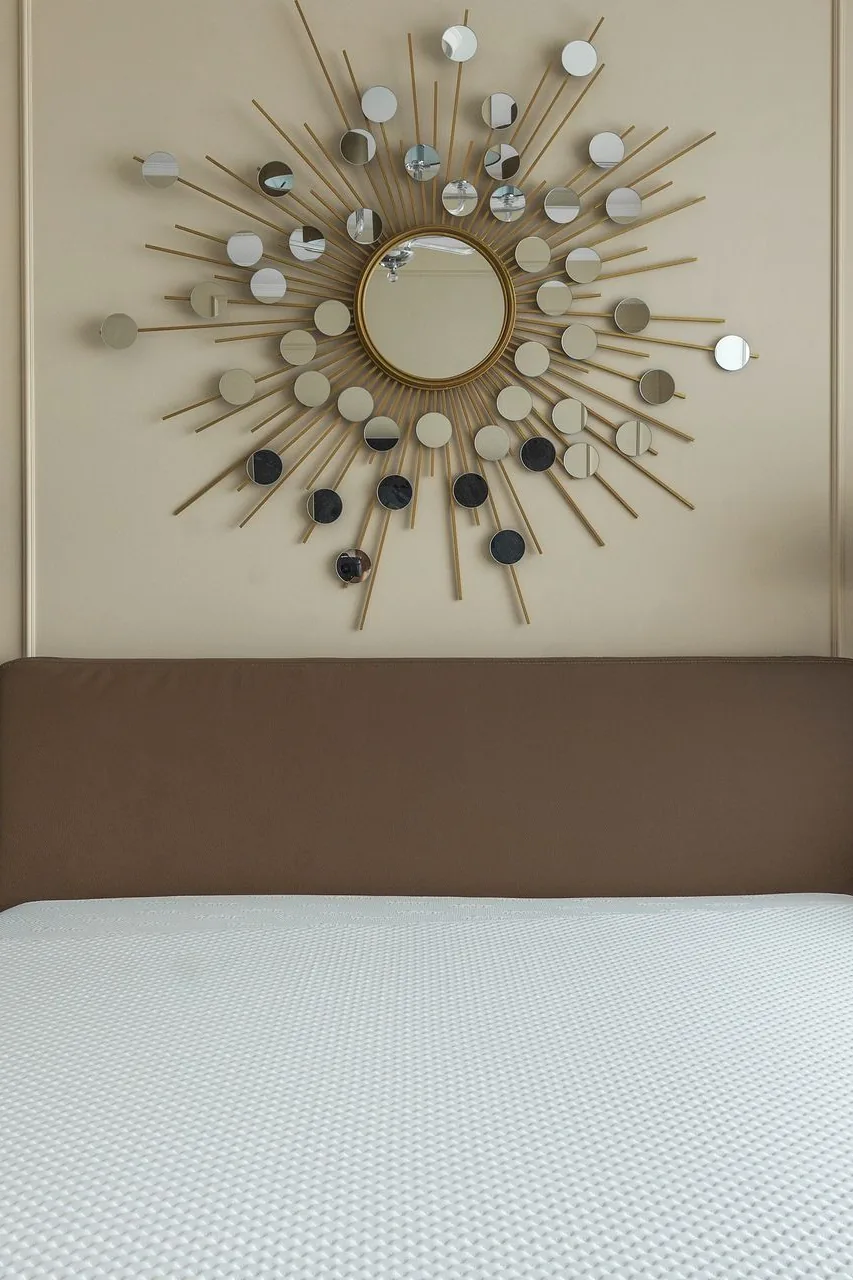
Quick Tip: Hang art at eye level from the bed, roughly 8 inches above the headboard, so it connects with the furniture instead of floating near the ceiling. One large piece calms a wall faster than many small ones.
Art warms a minimal room when it carries a personal note: a landscape from a favorite trip, a print in warm ochre, or a textile hanging with soft texture. The same eye for balance behind living room picture frame ideas works above a bed, where spacing and scale matter more than quantity. Choose frames in wood to echo the room’s warm tones.
Cluttered To Calm
Credit: Charlotte May
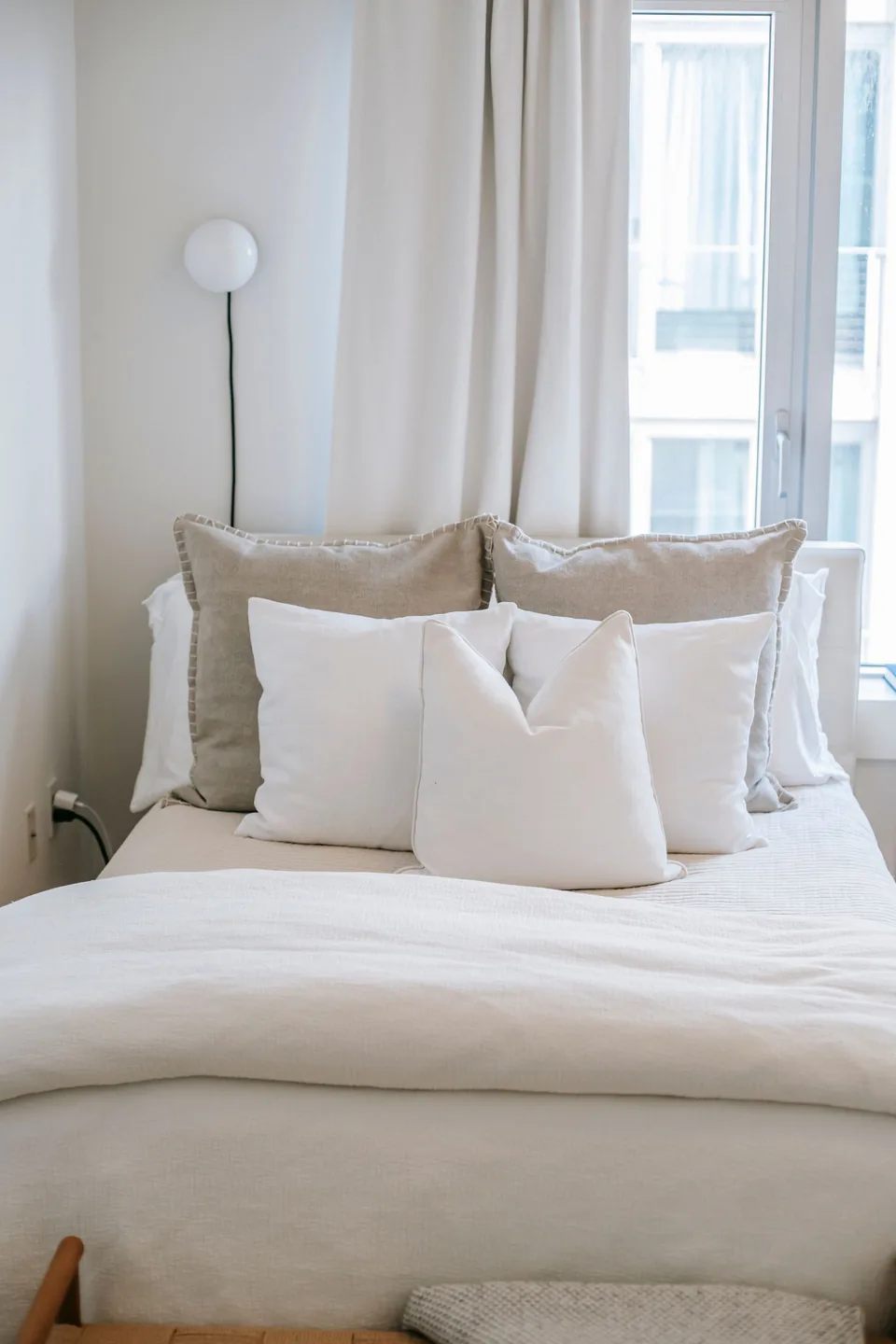
BEFORE: Every surface held something: books stacked on books, chargers tangled on the nightstand, and a chair buried under clothes. The room looked busy even when clean, and sleep came slowly.
AFTER: One basket holds the extras, the nightstand keeps only a lamp and a book, and the chair stands clear. The room breathes again, and evenings feel slower.
This is where warm minimalist bedroom design proves its worth: calm comes from what leaves, not what arrives. Start with one surface, such as the nightstand, and clear it fully before moving on. Keep only what serves rest or joy, and give everything else a home outside the bedroom. The quiet that follows feels like a gift.
Morning Routine Steps

Credit: Anna Zanovelli Bacci
- Open the curtains first so daylight sets the room’s tone.
- Make the bed with a light hand, smoothing linen rather than perfecting it.
- Place a warm drink on the nightstand and sit for five quiet minutes.
- Put one item back in its place before leaving the room.
- Leave the phone on the dresser until the routine is done.
A calm room supports a calm morning, and small rituals protect that feeling. When the bed is made and the light is soft, the day starts with order rather than rush. These steps take minutes, yet they guard the serenity the room was designed to hold.
Rug Versus Bare Floor

Credit: Büşra Bulut
| Option | Feel | Best For |
|---|---|---|
| Wool Rug | Soft and insulating | Cold floors and bare feet |
| Bare Wood | Clean and open | Warm climates and allergies |
| Layered Rugs | Rich and collected | Large rooms needing warmth |
A rug changes how a bedroom feels underfoot, which matters more than it looks. Wool brings insulation and hush, while bare wood keeps the room crisp and easy to clean. Layered rugs suit larger rooms where one rug might float alone. Whatever you choose, keep the rug large enough to ground the bed, since a small rug can make the room feel scattered. I’ve noticed rooms feel warmer when the rug extends past the bed on both sides, so morning feet land on softness.
Bedding Layer Rules
Credit: Taryn Elliott
Do:
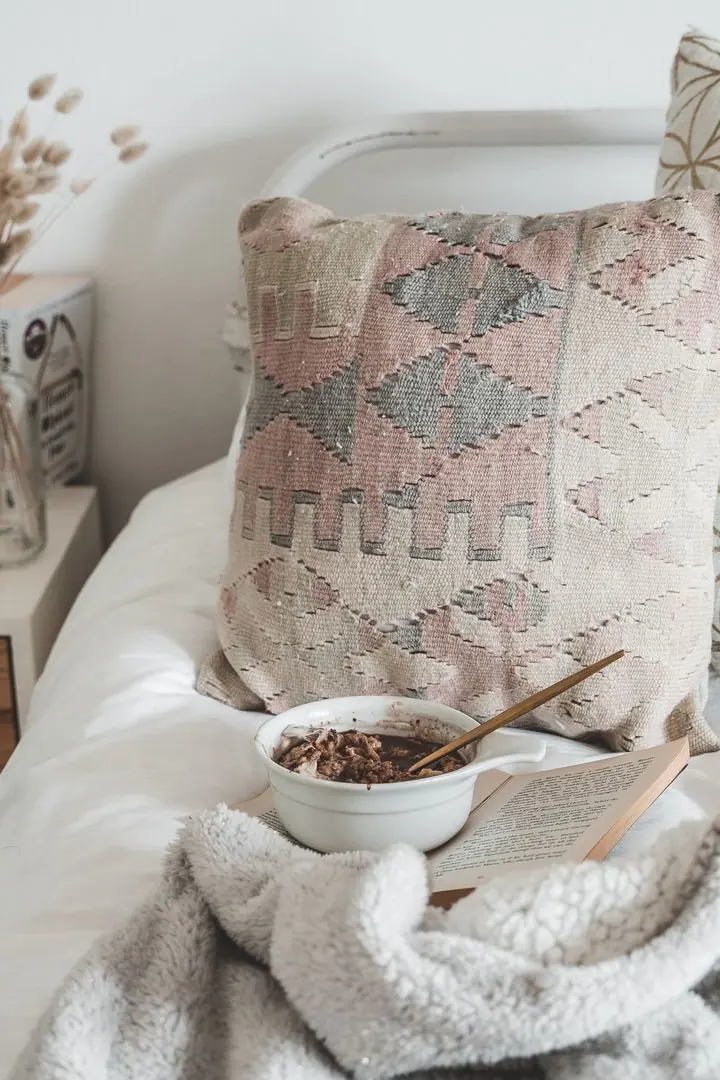
- Layer from light to heavy so the bed adapts through the night.
- Stick to warm neutrals with one soft accent, such as sage or clay.
- Fluff pillows daily so the bed looks inviting, not flat.
Don’t:
- Pile on decorative cushions that end up on the floor nightly.
- Choose slippery fabrics that slide off while you sleep.
- Match every textile exactly, since slight variation feels more natural.
Bedding is where minimalism meets comfort most directly. The bed fills the room, so its layers set the tone for everything else. Aim for a look that invites you in rather than one that demands upkeep. When the bed feels good, the whole room follows.
Budget Warmth Facts

Credit: Arina Krasnikova
Cost: $50 to $200 for throws, bulbs, and a rug.
Time: A single weekend, working one corner at a time.
Skill Level: Beginner friendly, no special tools needed.
Best For: Renters who want warmth without permanent changes.
Warmth does not require a renovation budget. Thrifted wood frames, sale linen, and warm bulbs deliver most of the feeling for little money. I’ve seen this work well in many cases, especially rentals where paint and fixtures cannot change. Spend where touch meets skin: bedding first, then light, then the floor. Keep receipts and return what does not suit the room, since a calm room comes from the right few pieces, not the most pieces.
Natural Light Tricks

Credit: Max Vakhtbovych
Daylight is the warmest light a bedroom can hold, and sheer curtains help it stay gentle. White or oatmeal sheers soften glare while keeping the room bright, so mornings feel golden rather than harsh. Keep windowsills clear so light flows in freely, without shadows cast by clutter.
Mirrors placed opposite a window bounce daylight deeper into the room, but keep them small and framed in wood so they feel warm, not stark. A mirror that reflects the bed doubles the sense of softness. With light handled well, the room needs fewer lamps, feels naturally calm, and stays welcoming from morning until night.
Warm Scent Ideas

Credit: KATRIN BOLOVTSOVA
- Choose cedar, sandalwood, or vanilla candles for evening calm.
- Place a linen spray on the nightstand for a quick refresh.
- Simmer dried orange and cloves on cold nights for a homely note.
- Keep scents light, since a bedroom should soothe, not overwhelm.
- Open the window for ten minutes daily so fresh air resets the room.
Scent shapes how a room feels after the eyes have taken it in. A gentle fragrance makes the space feel cared for and complete. Rotate scents with the seasons: lighter florals in spring, deeper woods in winter. The nose remembers calm, and the room becomes easier to rest in.
Evening Wind Down

Credit: Mateusz Pielech
Quick Tip: Dim the lights an hour before bed, switch the phone to silent, and leave it outside the room. The room’s warm glow then signals the body to slow down, and sleep often comes easier than in a bright, busy space.
Evenings set the tone for sleep, so give the last hour a gentle shape. A warm bath, a few pages of a book, and soft lamplight prepare the mind for rest. Keep the room cool, the bedding inviting, and the phone out of reach, and let the day’s noise fade at the door. The ritual matters more than any single product.
Stark To Serene
Credit: Charlotte May
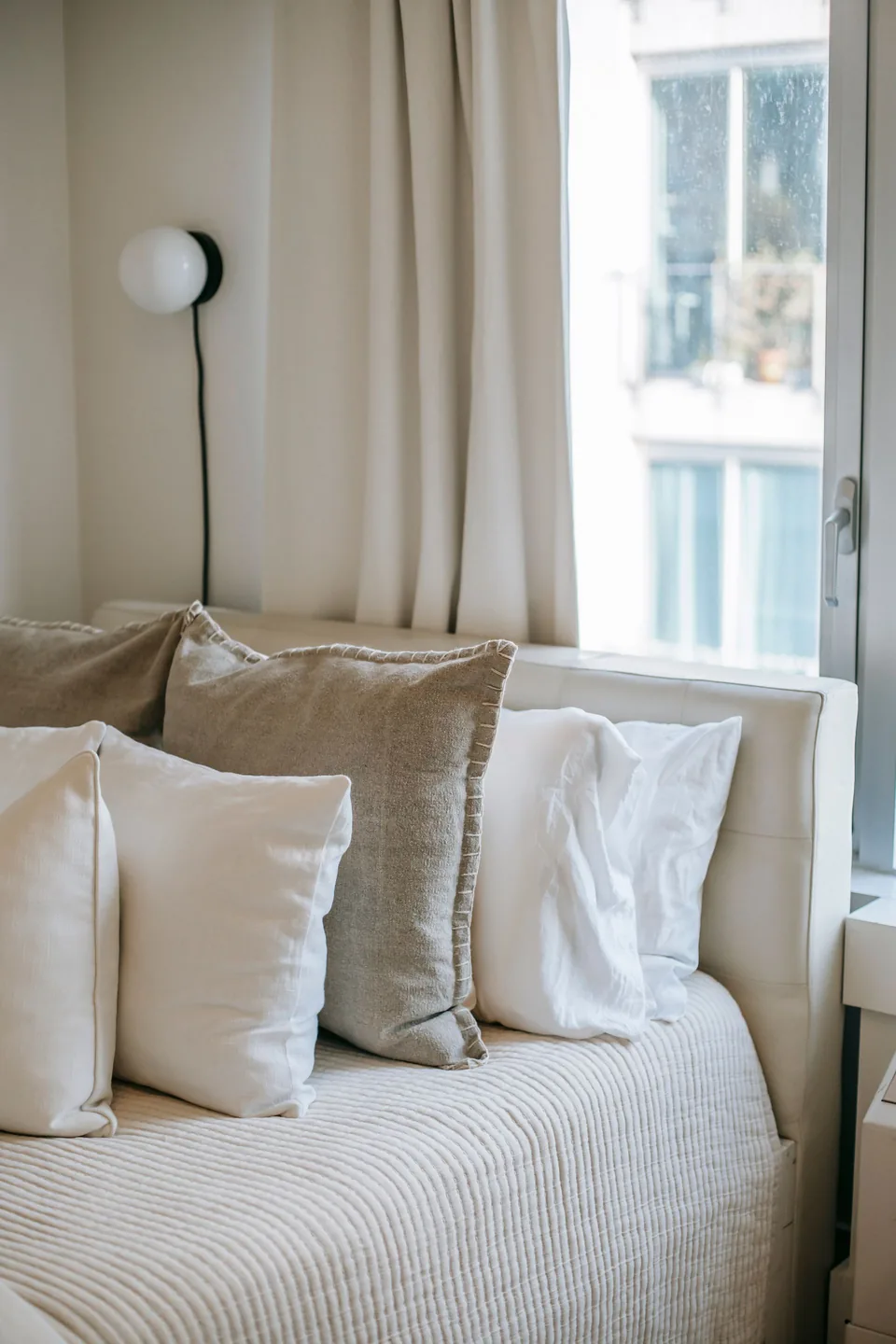
BEFORE: White walls, a grey duvet, and a single overhead light made the room feel like a studio set. It photographed well but felt cold to sleep in, and winter mornings were the hardest.
AFTER: Warm white paint, a wooden bench, and amber lamps gave the room a heartbeat. A wool throw and a plant softened the edges. The space now feels like a retreat rather than a display.
Serenity rarely arrives from one change. It builds as warm tones replace cool ones, layer by layer. Start with the wall color if you can paint, or with bedding and light if you cannot. Each warm layer moves the room further from stark and closer to serene.
Seasonal Swap Steps

Credit: Rachel Claire
- Swap heavy throws for light cotton as spring arrives.
- Change pillow covers to a softer shade for summer calm.
- Bring back wool and deeper tones when autumn cools the air.
- Store off season bedding in a basket under the bed.
- Rotate art or a vase of greenery to mark the new season.
Seasonal swaps keep a minimal room feeling fresh without new purchases. The structure stays the same, while textures shift with the weather. This rhythm also gives the room a quiet ritual, a small refresh that marks the year’s turning. Keep a small box of seasonal accents, such as a lighter throw and a vase, so swaps take minutes rather than a shopping trip.
Warm Versus Cool

Credit: Max Vakhtbovych
| Option | Feel | Best For |
|---|---|---|
| Warm Palette | Cozy and enveloping | North facing rooms |
| Cool Palette | Crisp and airy | Hot climates and bright rooms |
| Balanced Mix | Calm with contrast | Rooms with changing light |
Warm and cool palettes both suit minimal bedrooms, but they shape mood differently. Warm tones wrap the room like a blanket, while cool tones open it like a window. Most restful rooms lean warm with small cool notes, such as a grey vase or a white frame, to keep the palette from feeling heavy. Test paint and fabric in your own light before deciding, since the same shade shifts through the day.
Serene Sleep Rules

Credit: Max Vakhtbovych
Do:
- Keep the room cool, dark, and quiet for deeper sleep.
- Charge devices outside the bedroom overnight.
- Choose bedding that breathes so nights stay comfortable.
Don’t:
- Work from the bed, since the brain links the space to stress.
- Let laundry pile on the chair until it becomes a second wardrobe.
- Use harsh overhead light in the hour before sleep.
Sleep is the true test of a bedroom, and minimal warmth serves it well. A room that calms the senses makes rest come easier, night after night. Protect that calm with small habits, and the room will repay you with deeper mornings. Serenity, after all, is a practice, not a purchase.
Conclusion
These warm minimalist bedroom design ideas prove that less can feel like more when every piece carries warmth. From wood tones to linen layers, each idea shares one aim: a room that helps you rest deeply and wake gently. Start with the idea that feels easiest, and let the calm grow one layer at a time. Pin this guide to your bedroom board on Pinterest so you can return to it whenever the room needs a refresh. Your serene retreat is closer than you think, and it begins with a single warm choice.