21 Warm Beige Bedroom Ideas for a Soft, Serene Retreat
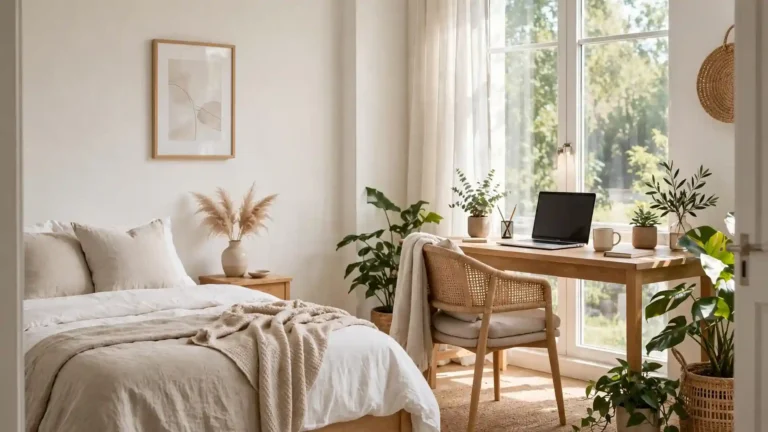
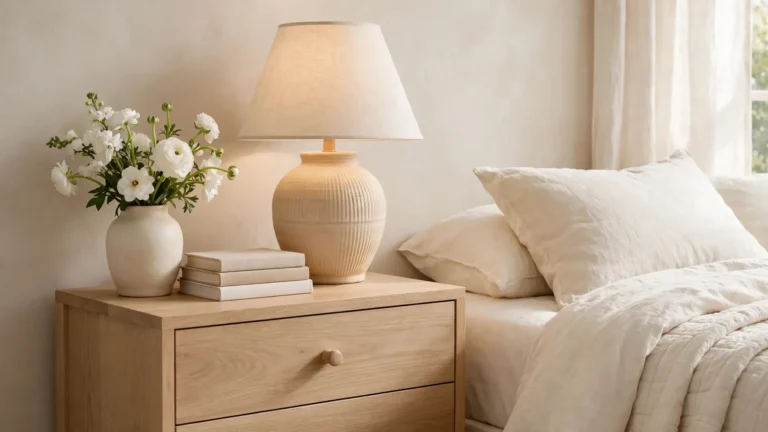
Beige gets dismissed as the safe choice, yet the calmest bedrooms anywhere prove it is the smart one. Done well, warm beige bedrooms feel like morning light that never leaves the room: soft, layered, and quietly rich. The secret is never a single beige piece. Five or six tones of sand, oat, stone, and cream stack through bedding, walls, wood, and lamplight until the whole room glows without one bold color anywhere.
A beige palette also borrows gracefully from neighboring styles, and the weathered wood and honest linen in modern farmhouse bedroom makeover ideas settle into sandy tones without any friction. The twenty one ideas ahead start with the bed, then move through walls, storage, lighting, and the small finishes that stop beige from ever reading flat. In my experience, the rooms that work best add one warm layer at a time and live with it for a week before adding the next.
Layered Beige Linen Bedding

One flat beige duvet reads as a hotel shortcut; three rumpled linen layers read as a retreat. Start with an oatmeal sheet set, fold a sand toned duvet back at the waist, then add a lighter cream throw across the foot. Linen wrinkles honestly, and those soft creases catch shadow in a way smooth cotton never manages.
Keep every layer inside one warm family, from pale oat to deep camel, and the bed looks deep rather than decorated. Swap the foot throw seasonally: gauzy cotton for summer, a nubby wool blend when evenings cool. Two sleeping pillows plus two Euro shams give enough height without the overstuffed look.
Oatmeal Upholstered Headboard
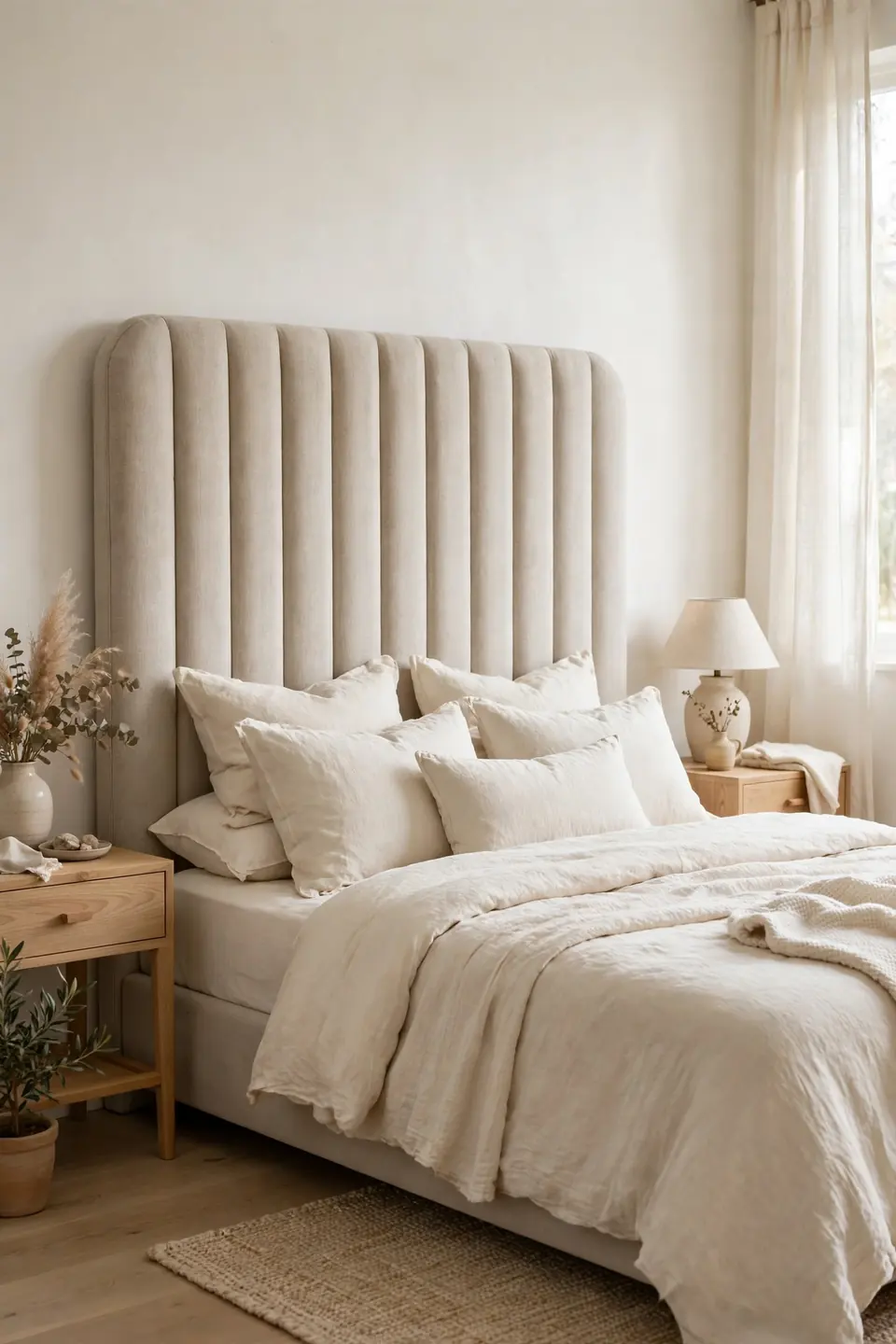
- Channel tufting in oatmeal linen gives the wall behind the bed quiet structure.
- Forty eight inches of height lets stacked pillows lean without hiding the silhouette.
- Rounded corners soften the geometry and suit low, restful furniture.
- Performance linen shrugs off hair oil and reads clean far longer.
- Wall mounted panels cost less and keep rental walls intact.
Fabric at the head of the bed changes how the whole room sounds, deadening echo and making late night pages turn quieter. Choose the upholstery tone half a shade deeper than the wall paint, and the bed gains a gentle outline that plain walls alone never give it.
Warm White Wall Paint

Quick Tip: Test warm whites on the wall behind the bed, not beside the window. North light cools every swatch, and a white that glows at noon can turn grey by supper. Live with three large samples for two full days before the roller comes out of the tray.
Warm white is the quiet engine of the whole palette, carrying a drop of yellow or peach that flatters oak, rattan, and skin tones alike. Paint walls and trim the same shade in different sheens, eggshell on walls and satin on woodwork, and the room gains depth without a single contrasting stripe.
Beige Limewash Accent Wall
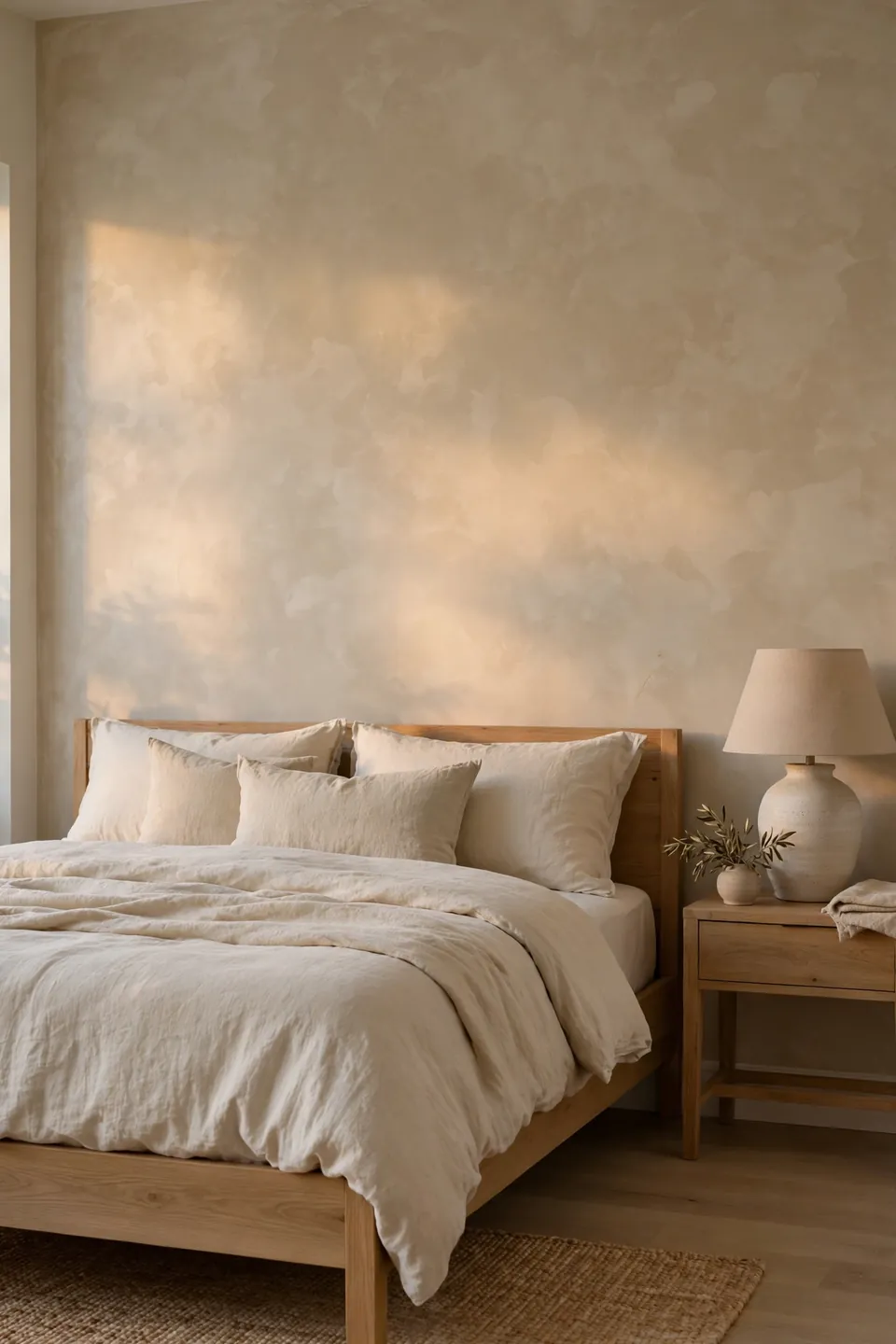
BEFORE: The wall behind the bed sat flat builder white, and every beige textile in front of it looked lost. Bedding read yellow by day, the oak frame read orange, and the room felt unfinished however the pillows were stacked.
AFTER: Two coats of beige limewash gave the wall a cloudy, chalky movement that flat paint never achieves. Bedding now settles into the wall instead of fighting it, the oak reads warm, and lamplight pools across the texture at night.
Limewash wants a porous surface and a loose hand, worked in random crosses with a block brush. Keep the finish on the bed wall only: one textured wall calms a room, while four walls of mottling feel like a cave by winter.
Light Oak Bed Frame
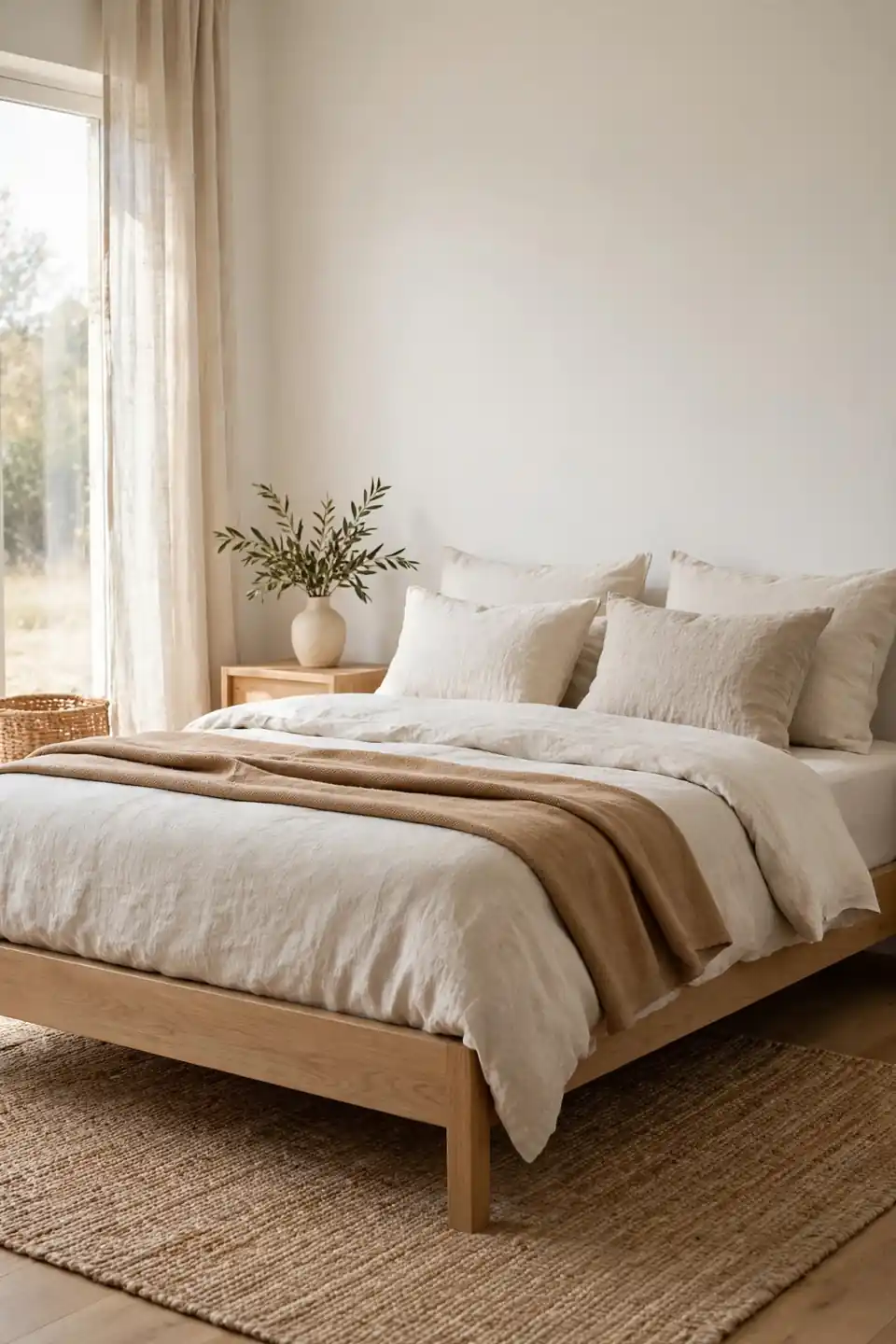
- Measure the room first; oak frames run generous, and king sizes swallow small floors.
- Choose white oak over red oak for a paler, calmer grain.
- Pick a low profile frame and let the bedding carry the height.
- Check slat spacing; gaps under four inches keep mattresses properly supported.
- Seal the wood with matte oil, never gloss, to hold the raw look.
Oak brings the warmth that beige textiles alone cannot supply, grounding pale bedding the way a tree trunk grounds a garden. In my experience, one honest wood piece per room is enough; a second oak piece should be smaller and quieter than the bed.
Rattan Nightstand Pairing
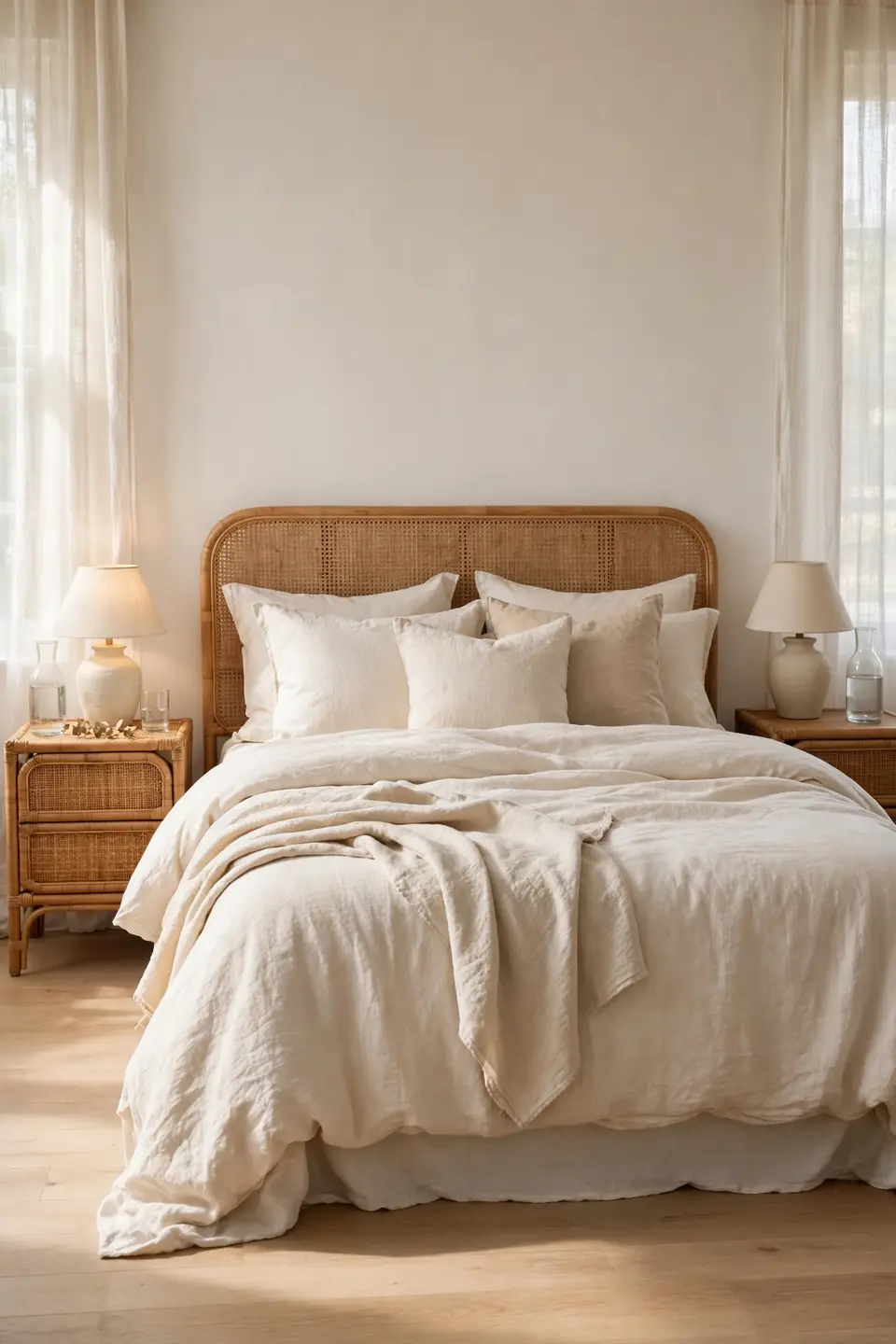
| Feature | Rattan Nightstand | Oak Nightstand |
|---|---|---|
| Cost | Gentle on the budget | Climbs with solid timber |
| Texture | Woven, airy, handmade feel | Smooth grain, tailored lines |
| Warmth | Golden tones, sunny cast | Deeper honey, grounded cast |
| Care | Dust with a soft brush | Polish twice a year |
| Footprint | Light, easy to move | Heavy, stays put |
| Pairs best | Linen and boucle | Upholstered headboards |
Rattan wins beside an upholstered headboard, where its woven texture stops the bed wall from going too smooth. Oak wins beside a wooden frame, echoing the grain across the room. Either way, keep the pair matched: two different nightstands in a calm room read as an accident, not a choice made on purpose.
Textured Throw Pillow Mix
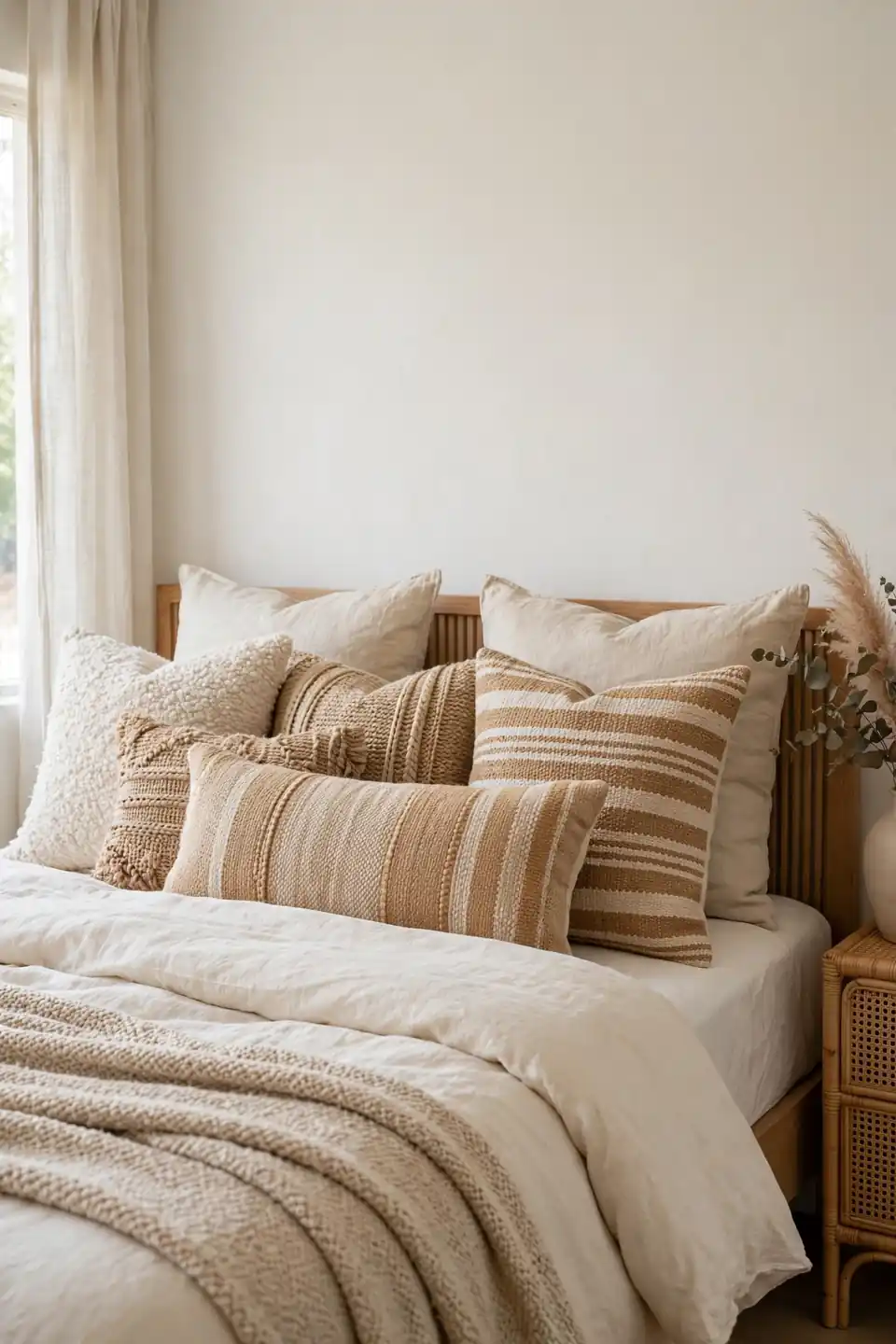
Do:
- Layer three textures minimum: linen, boucle, and one woven stripe.
- Keep every pillow inside the sand to camel range.
- Mix one large lumbar with two square cushions.
- Let the front pillow carry the only pattern.
Don’t:
- Mix beige with grey; the pairing turns muddy fast.
- Line pillows up in a stiff symmetrical row.
- Buy shiny satin covers that fight the matte palette.
- Stuff five pillows where two people actually sleep.
Texture does the work color refuses to do in a beige room, giving the eye quiet places to land. One rule settles every shopping trip: run a hand across the mix, and if every surface feels the same, swap one cover before buying anything else.
Natural Jute Area Rug
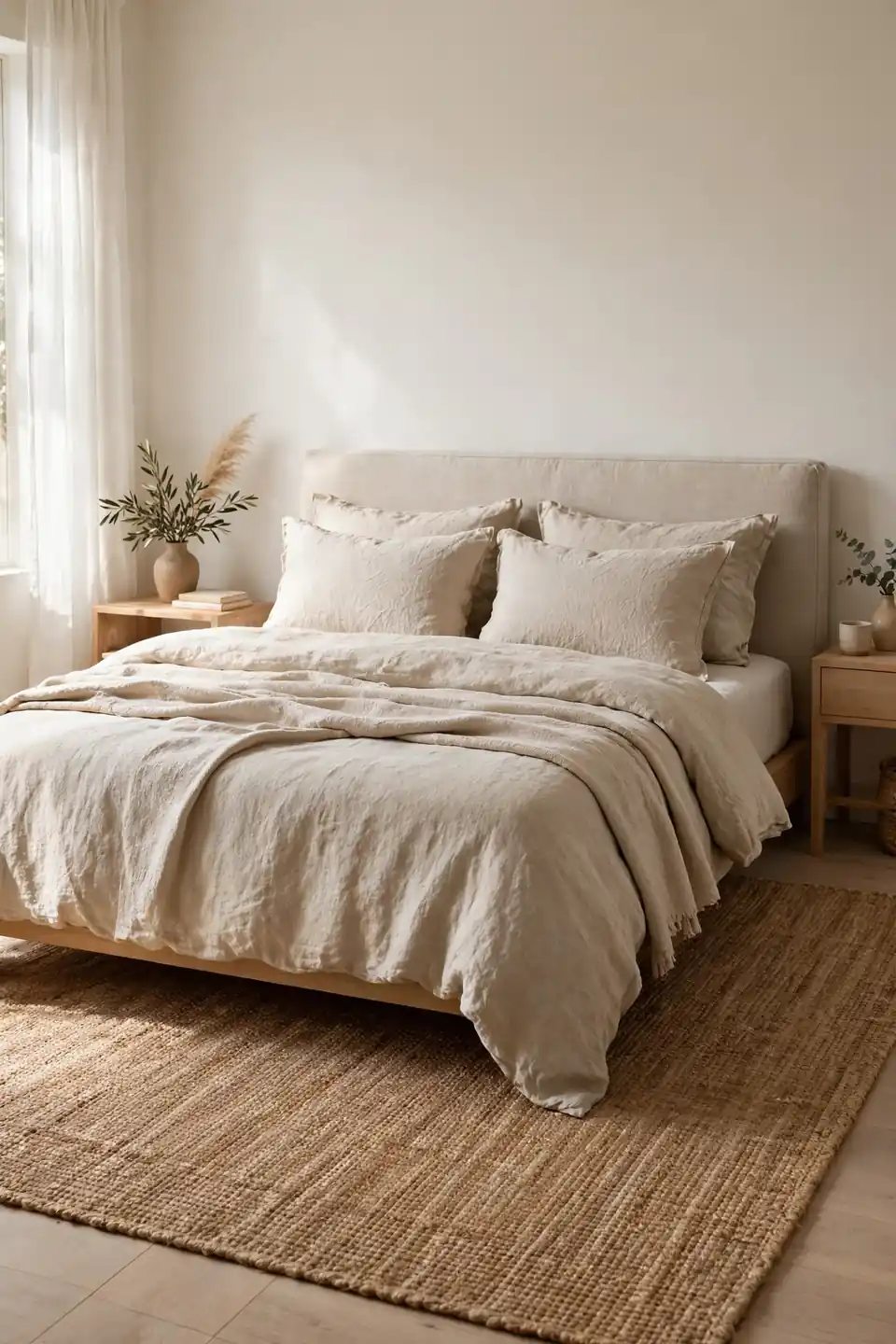
Cost: $60 to $180 for a large room size | Time: One hour to unroll and settle | Skill Level: Beginner, no tools needed | Best For: Grounding pale bedding and oak
A beige room without a rug floats; the eye slides across bare floor and the bed never quite lands. Jute fixes the geometry with a rough, sandy texture that flatters every smoother surface above it. Choose a weave with variation rather than a dyed uniform tone, and size up: the rug should reach past both nightstands and leave a soft border at the foot of the bed. Jute sheds in its first month, so shake it outdoors once before the furniture goes back. Under bare feet, that rough warmth is the day’s first luxury.
Camel Wool Blanket Layers
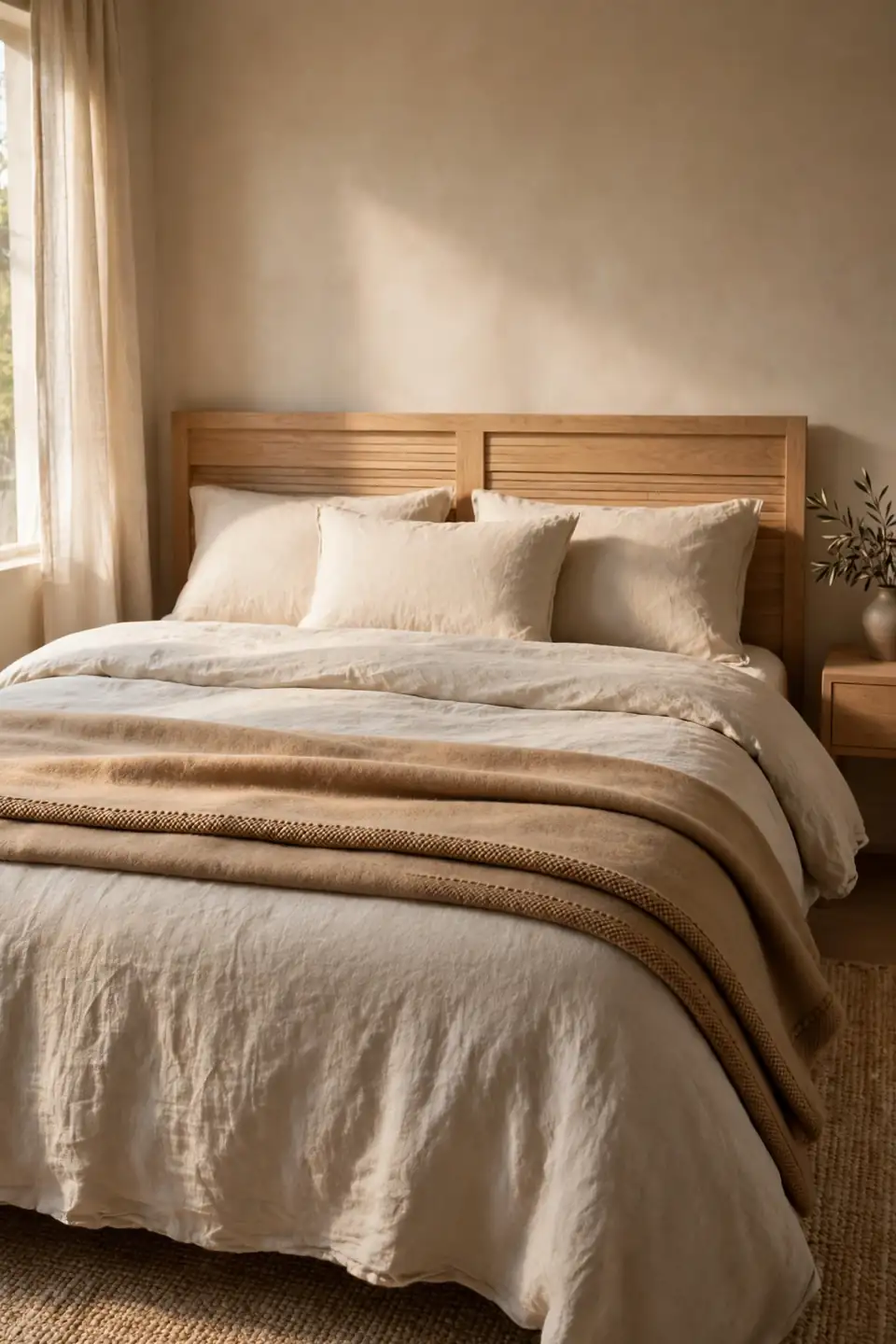
Camel is beige with courage, the deepest tone in the family and the one that keeps pale bedding from washing out. Drape a camel wool blanket across the lower third of the bed, folded once so the fringe or bound edge shows. Against oatmeal linen, that single band of deeper color reads like the shadow line in a painting.
Wool earns its place on cold nights and still looks right in July folded at the foot. Choose a tight weave with a brushed finish, and keep moths honest with a cedar block in the storage bench. One camel layer per bed is the limit; two start a brown room, not a beige one.
Cream Ceramic Table Lamps
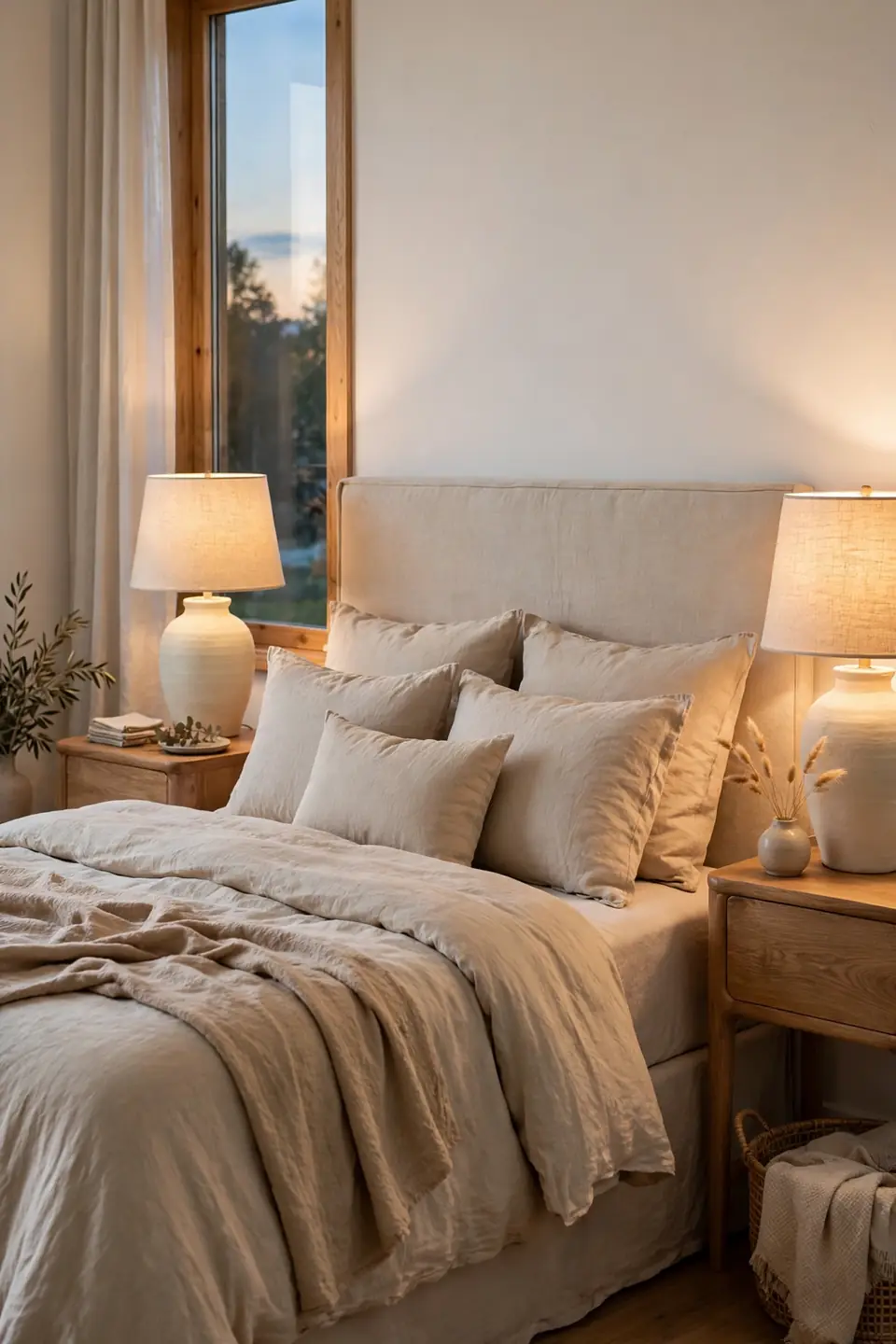
- Matte cream ceramic bases echo the bedding without matching it exactly.
- Drum shades in natural linen spread light sideways, never down harshly.
- A lamp height near thirty inches puts light at reading shoulder level.
- Warm bulbs at 2700K keep beige tones golden after dark.
- Cord clips behind the nightstand keep the calm uncluttered.
Lamplight is where beige either glows or dies, so treat the pair of lamps as makeup for the whole room. I’ve noticed that one warm bulb can rescue a wall color that looked wrong all afternoon. Keep wattage matched on both sides; uneven light makes a serene room feel subtly lopsided.
Beige Blackout Curtain Panels
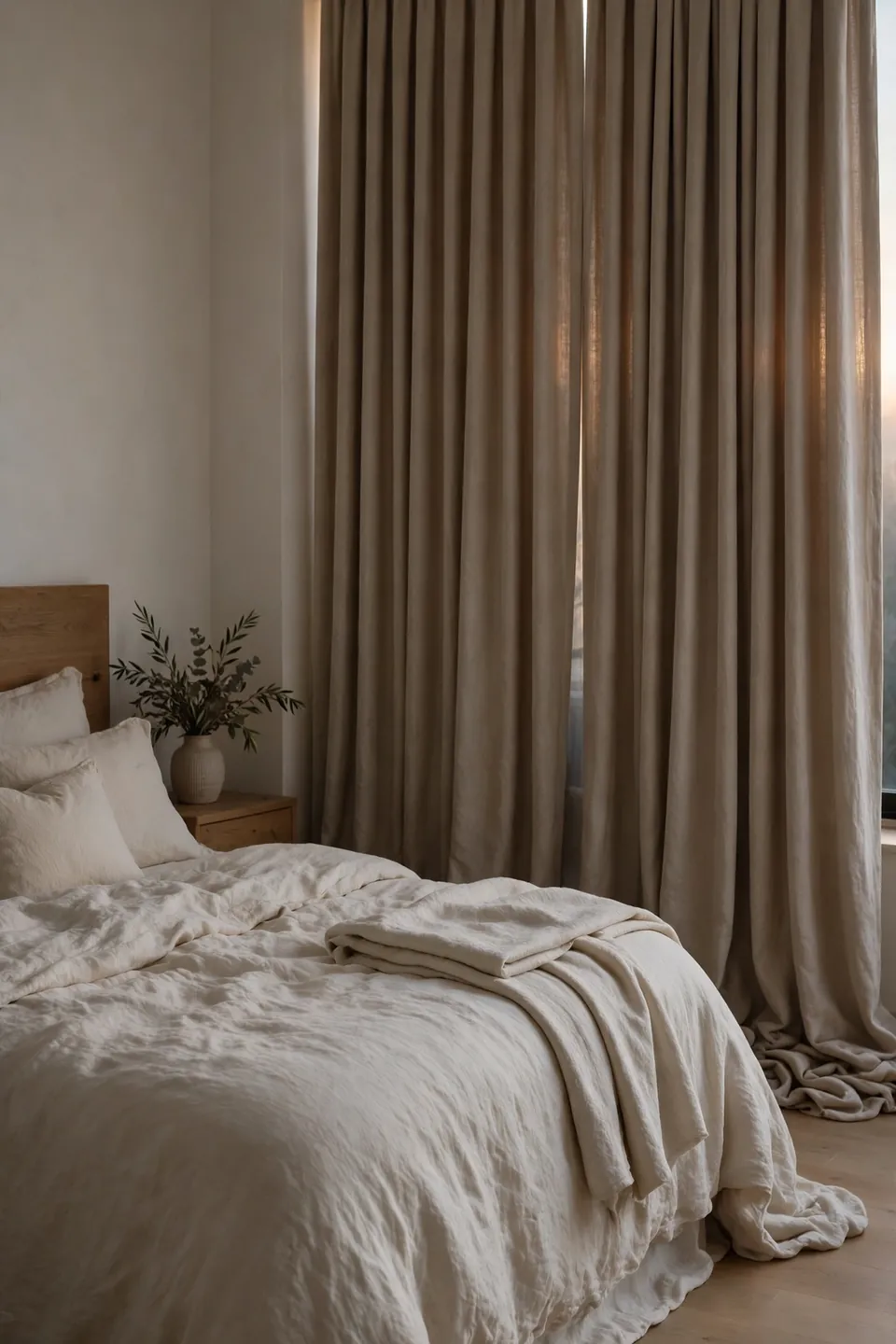
Quick Tip: Hang panels fifteen centimeters above the frame and let them kiss the floor. Short curtains chop a calm wall into bands, while full length panels stretch the room taller and make beige walls look deliberate rather than default design.
Blackout lining matters more in pale rooms than anywhere, because thin beige linen glows at dawn and wakes the whole bed. Lined panels in a shade half a step deeper than the walls give warm beige bedrooms their long, slow mornings, blocking early light without the plastic look of hotel drapes. Choose pinch pleats over grommets for softer folds. The room stays cave dark until you say so.
Cane Webbing Wardrobe Doors
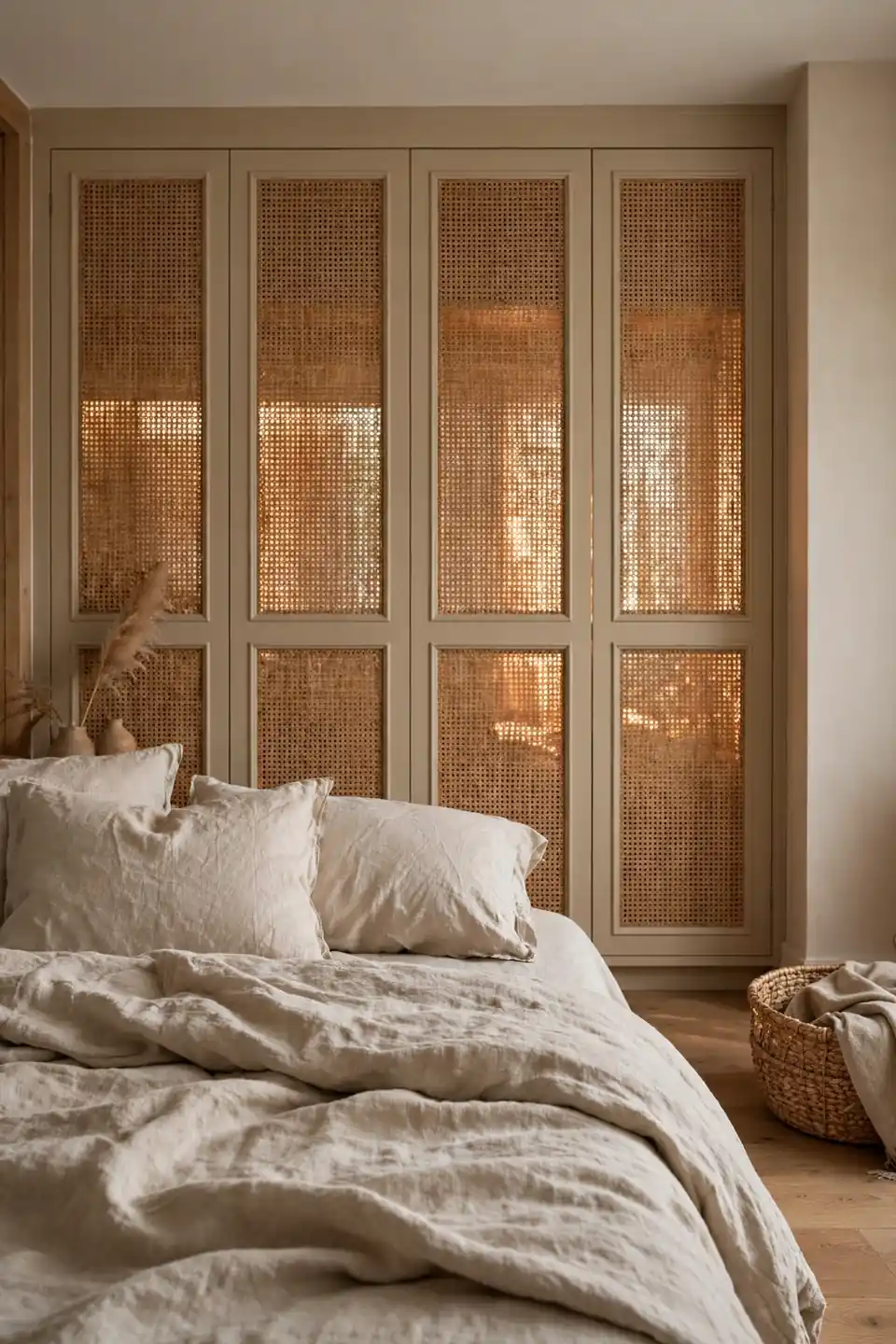
BEFORE: The wardrobe wall was flat slab doors in cold white laminate, the largest surface in the room and the least loved. Every soft textile near it looked cheaper, and the doors threw glare straight onto the bed.
AFTER: Cane webbing panels set into painted beige frames turned the wall into the room’s texture story. Light filters through the weave, hangers hide behind a warm screen, and the wardrobe finally belongs with the bedding.
Webbing breathes, which matters for stored linen in humid months. Styling a wardrobe wall this warm makes the corner beside it worth dressing too, and vintage-inspired dressing room decor shows how far that idea can go. Paint frames before the cane goes in; touch ups on cane are miserable work.
Sand Toned Reading Nook
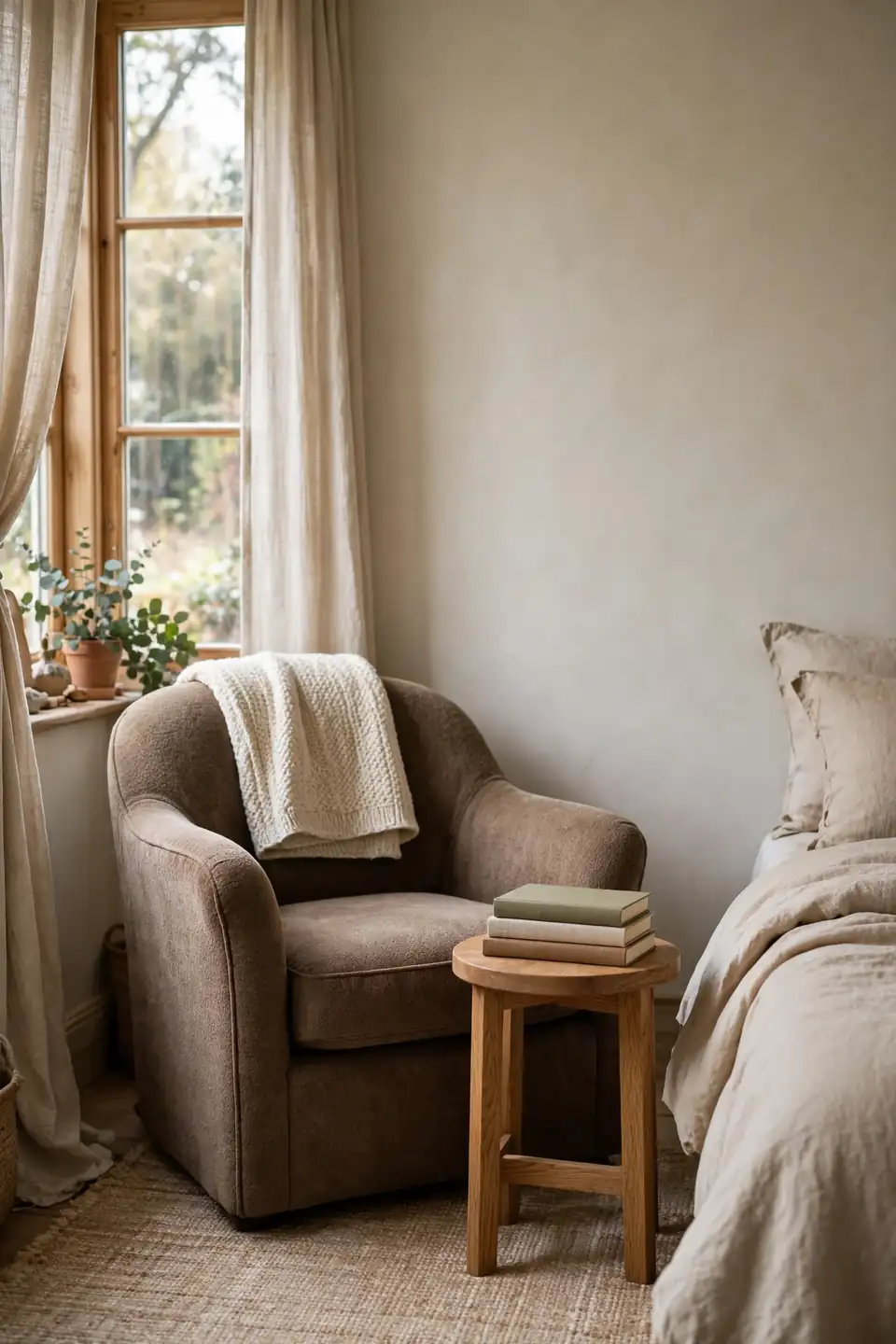
- Claim the corner nearest the window, where daylight does the early shift.
- Set one deep chair in sand toned upholstery, angled toward the room.
- Add a small oak side table at elbow height for books and tea.
- Layer a folded cream throw over the chair back for cold chapters.
- Finish with a low lamp behind the shoulder, never in the eyes.
A nook gives the bedroom a second job, and rooms with two jobs get loved harder. Keep the palette identical to the bed’s, one shade deeper, so the corner reads as part of the same sentence. A small stack of books is enough styling; more turns rest into display.
Boucle Accent Chair Corner
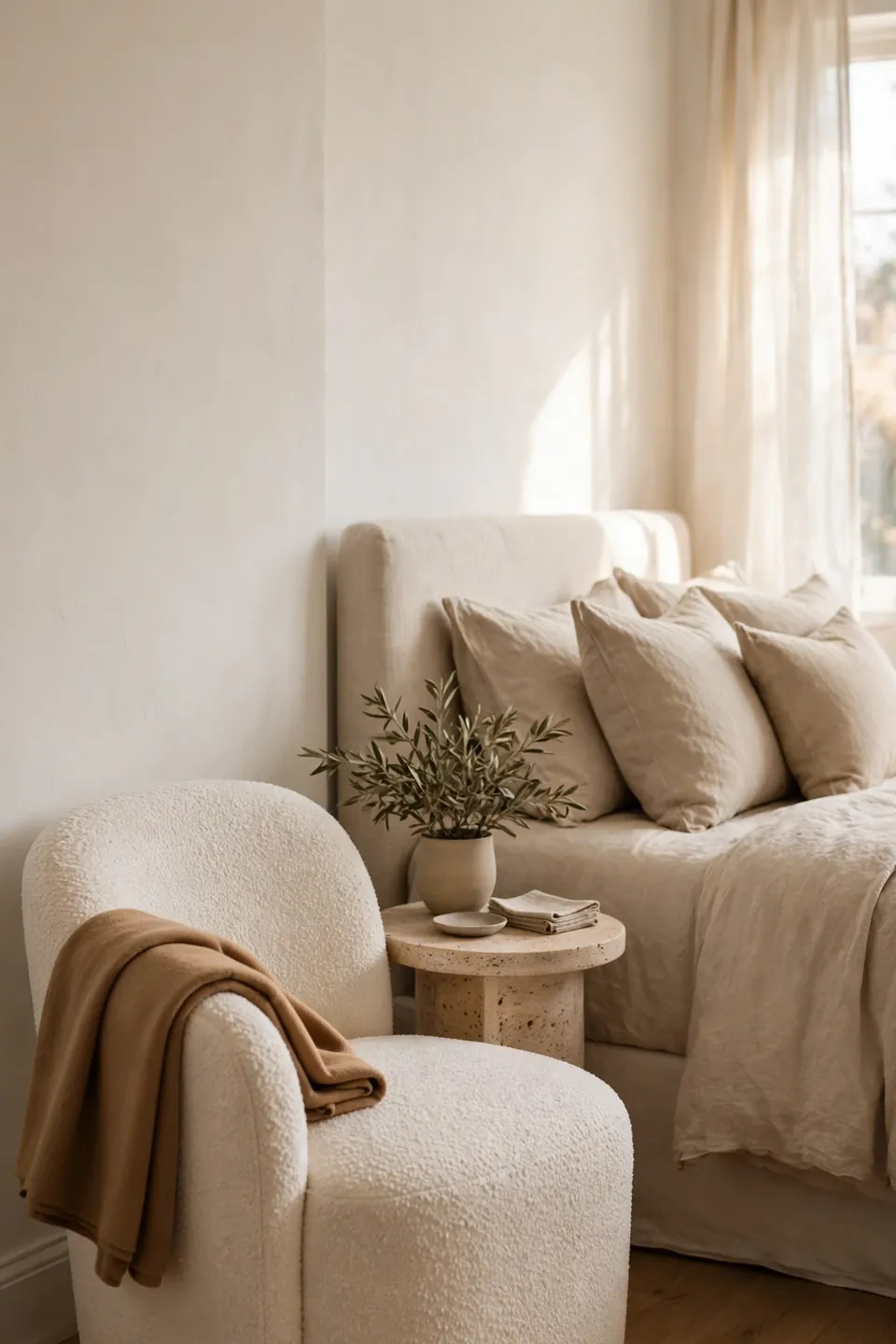
| Feature | Cream Boucle Chair | Natural Linen Chair |
|---|---|---|
| Texture | Looped, cloud soft pile | Flat weave, tailored calm |
| Warmth | Reads warm even in white | Reads cool without throws |
| Care | Brush pile weekly | Wipes clean easily |
| Cost | Higher for real wool | Gentle at most sizes |
| Best spot | Reading corners | Foot of the bed |
Boucle is the extrovert of beige textiles, all loops and shadow, and one chair of it can carry a quiet corner alone. Linen plays the long game instead, aging gracefully beside any bedding you buy later. Pick boucle for corners you see from the door, linen for corners you live in.
Woven Seagrass Storage Baskets
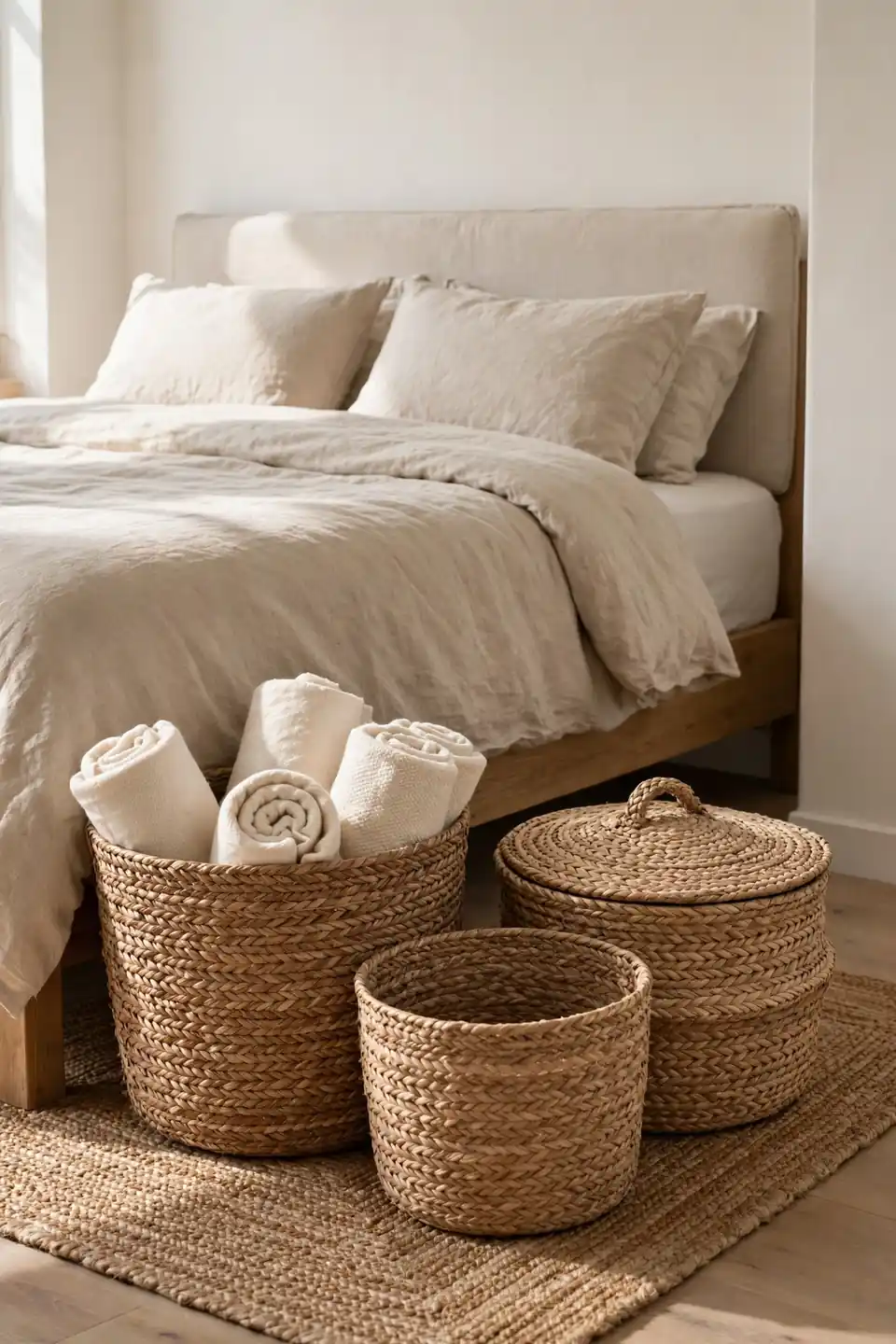
Do:
- Group baskets in threes at the foot of the bed.
- Keep spare throws rolled inside the largest basket.
- Choose lids for anything stored in open view.
- Match basket tones to the rug, not the bedding.
Don’t:
- Scatter single baskets in every corner of the room.
- Overfill until handles strain and lids sit crooked.
- Place seagrass where damp towels land daily.
- Buy plastic lined baskets that shine against matte fibers.
Seagrass carries the exact sandy tone the palette is built on, so baskets blend while they work. Tuck one beside the reading chair for the throw that never makes it back to the bed, and the room stays tidy without a single visible storage unit.
Beige Gallery Wall Frames
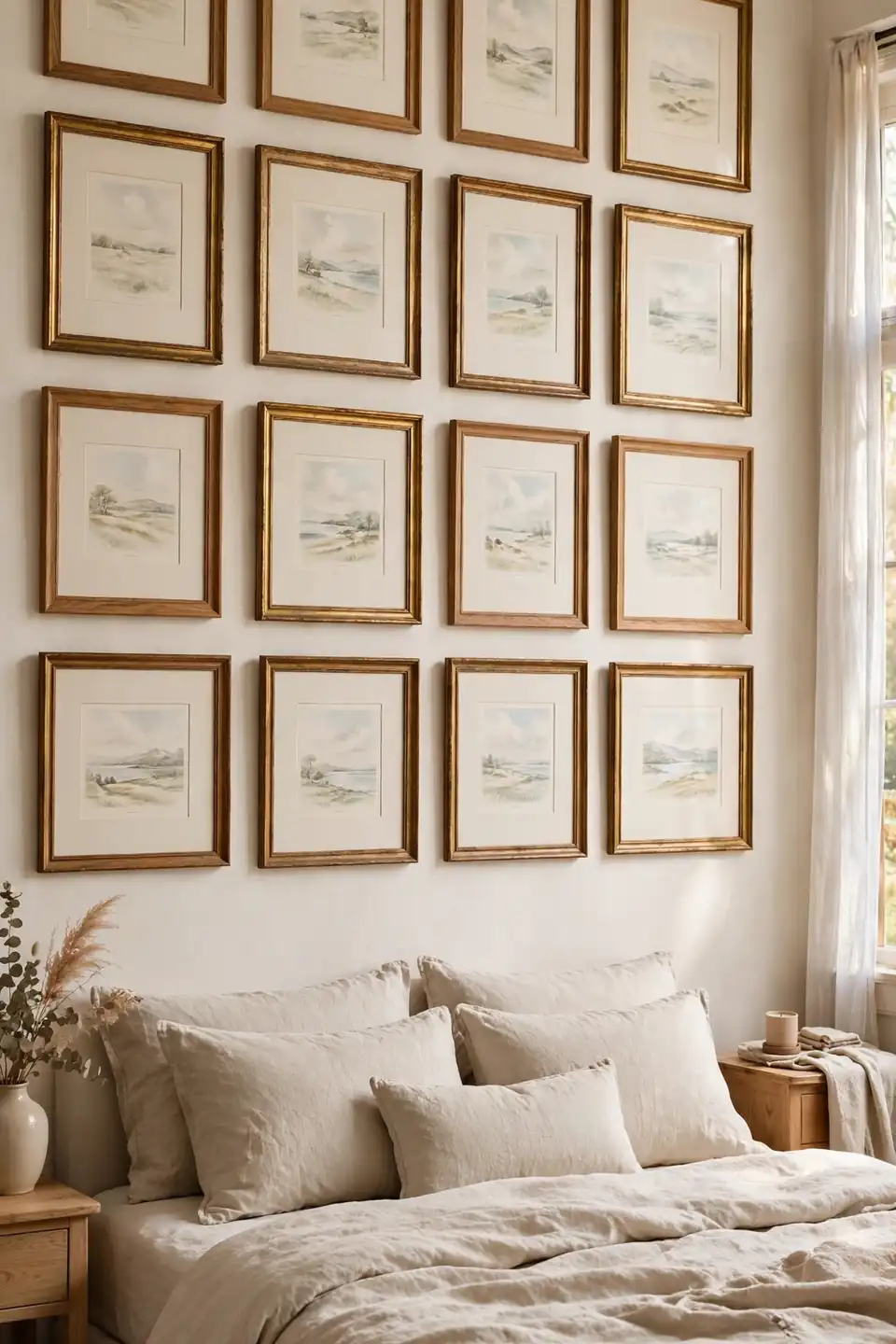
Cost: $30 to $90 for six thrifted frames | Time: One afternoon with paper templates | Skill Level: Beginner with a level | Best For: Blank wall facing the bed
The wall facing the bed is the view that starts every day, and beige frames filled with soft sketches, pressed leaves, and faded landscapes give it something gentle to say. Keep mats wide and creamy, frames thin and warm in oak or aged gold, and the art pale enough to whisper. Lay the arrangement on the bed first and live with the shapes for an evening before any nail touches plaster. Spacing of two fingers between frames keeps the group breathing. A gallery like this rewards slow collecting; the last frame should feel found.
Travertine Side Table Touch
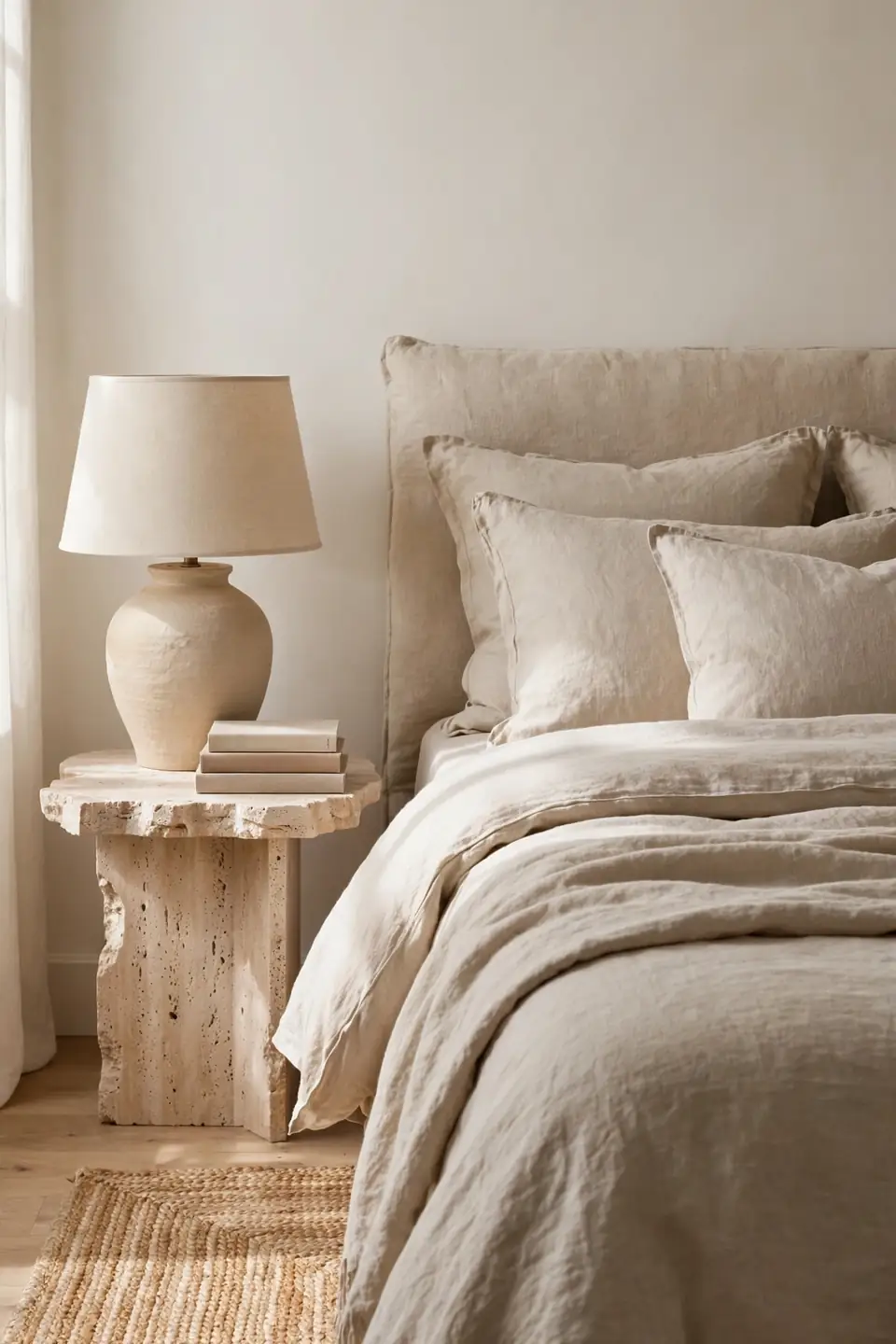
Stone sounds cold until it is travertine, the one rock that arrives pre warmed with beige tones baked in. A small travertine side table beside the bed or chair brings real weight to a room full of soft goods. Its pits and cloudy bands echo limewash and jute, tying the hardest and softest textures together.
Seal the surface before the first cup of tea lands; travertine drinks stains happily. Keep styling to two objects, a lamp and a small stack of books, so the stone stays the story. Felt pads under the base protect wood floors from a base that weighs more than it looks.
Flax Linen Duvet Set
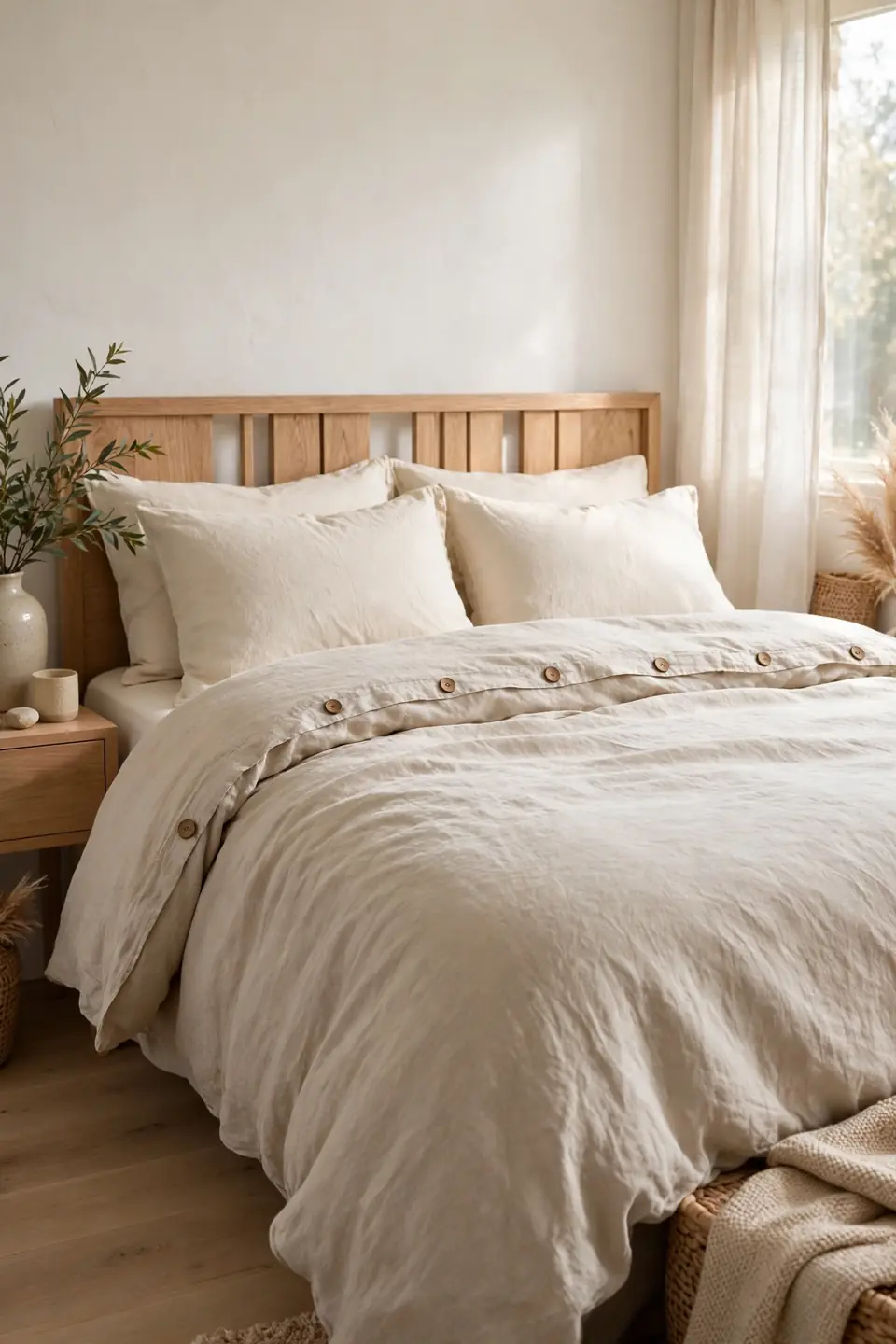
- Natural flax starts undyed, so its beige is the plant’s own color.
- Stonewashed sets arrive soft and skip the scratchy first month.
- Skip the top sheet; a washable duvet cover does the job.
- Coconut or horn buttons finish the closure without plastic shine.
- Flax dries fast on the line and wrinkles with honest charm.
Flax is the working fabric of the beige palette, tougher than cotton and softer every single year it stays in rotation. Buy the best set the budget allows and wash it weekly without guilt; linen improves under exactly the treatment that ruins lesser bedding. One set in rotation beats three tired ones.
Warm Brass Wall Sconces
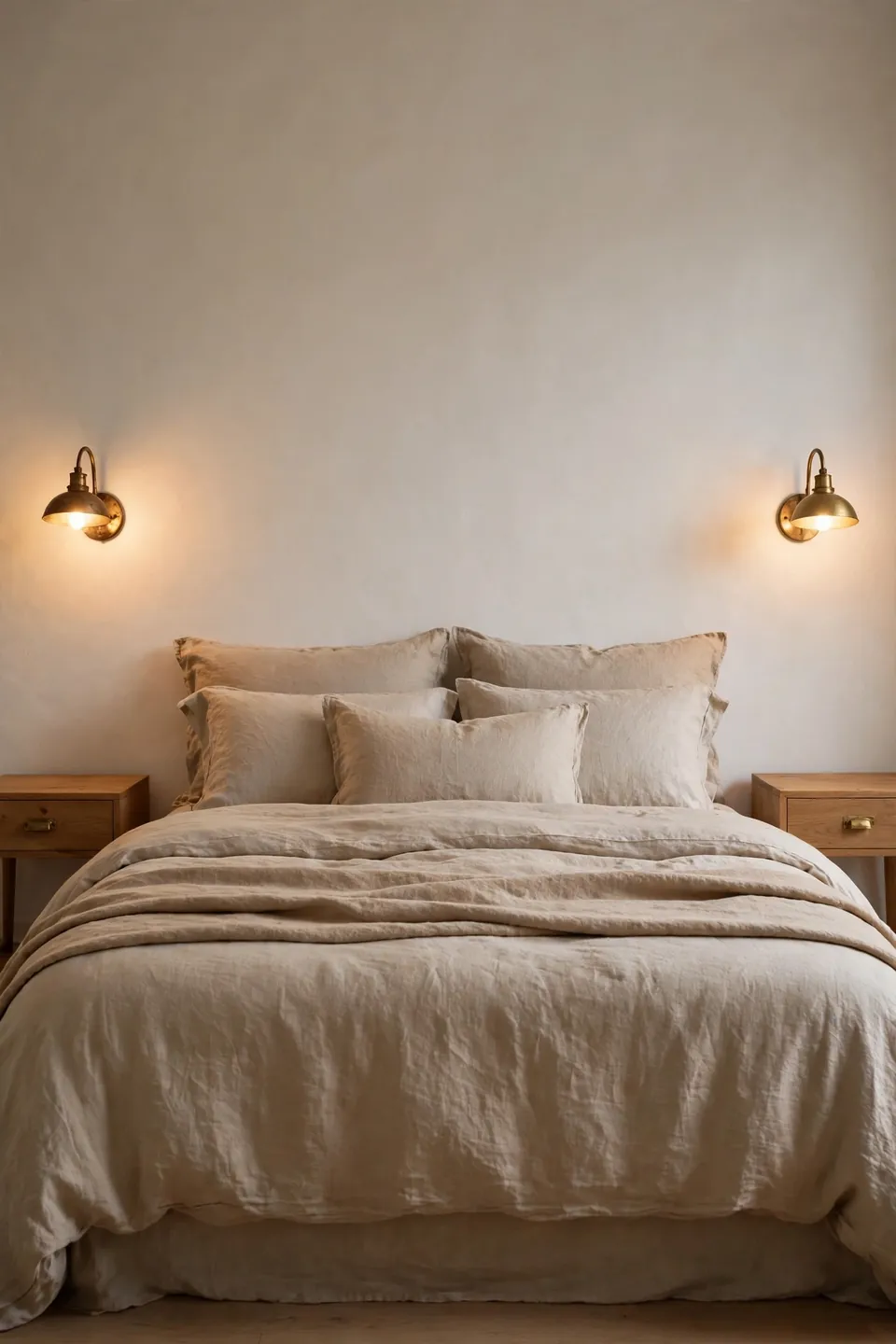
Quick Tip: Mount sconces at seated eye level beside the bed, roughly one hundred fifty centimeters from the floor. Higher fittings glare into mirrors and ceilings, while this height pools light exactly where pages and faces need it. Test the spot with a flashlight and tape before drilling anything.
Brass is the jewelry of a beige room, the one warm metal that deepens sandy tones instead of cooling them. Choose unlacquered brass and let fingerprints ripen the finish into a soft, lived glow over the first year. Two sconces free both nightstands entirely, which in a small room feels like gaining a whole shelf.
Beige Upholstered Bench Seat
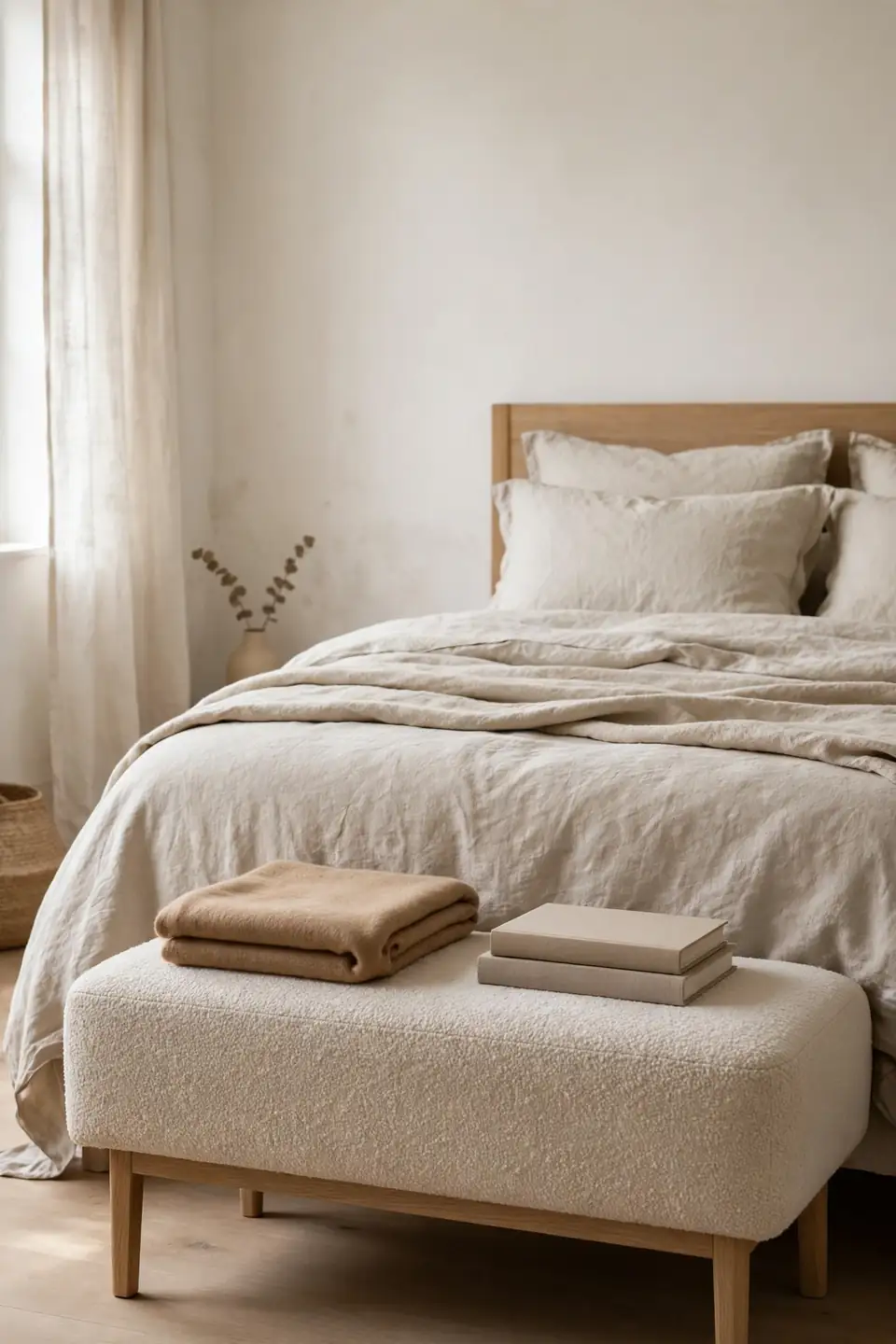
BEFORE: The foot of the bed was dead space where laundry landed and stayed for days. Nothing marked the end of the bed, so the whole sleeping area drifted visually into the room without an anchor or a purpose.
AFTER: A low bench in beige boucle now closes the bed like punctuation, holding the morning throw and two books. Sitting there to pull on shoes turned a laundry zone into the hardest working seat in the room.
Size the bench ten centimeters narrower than the mattress on each side, and keep its height below the top of the bedding layers. Legs in light oak repeat the frame, while a fully skirted bench leans traditional. Either style earns its floor space within one week of mornings.
Soft Beige Ceiling Paint

- Choose a ceiling tint two shades lighter than the walls.
- Test the color at noon and again under lamplight.
- Cut the edges with a brush before rolling the field.
- Roll in straight lanes, keeping a wet edge throughout.
- Let flat sheen hide every ripple the ceiling owns.
White ceilings can glare against warm walls, chopping the room at exactly the height where calm should wrap over the bed. A soft beige ceiling lowers the visual temperature and makes evening light feel pooled rather than spilled. The change costs one tin of paint and a Saturday, yet guests always ask what feels different.
Conclusion
Beige rewards the patient: one linen layer, one honest wood piece, one warm metal at a time. None of these twenty one changes asks for a full renovation, and most ask for nothing more than a weekend and a careful eye. Together they explain why warm beige bedrooms stay pinned, saved, and copied season after season without ever looking dated. Save this pin for your next slow Saturday, start with the bed, and let the room gather its calm layer by layer. I’ve seen how small changes like these can completely shift the way a space feels, especially at first light.