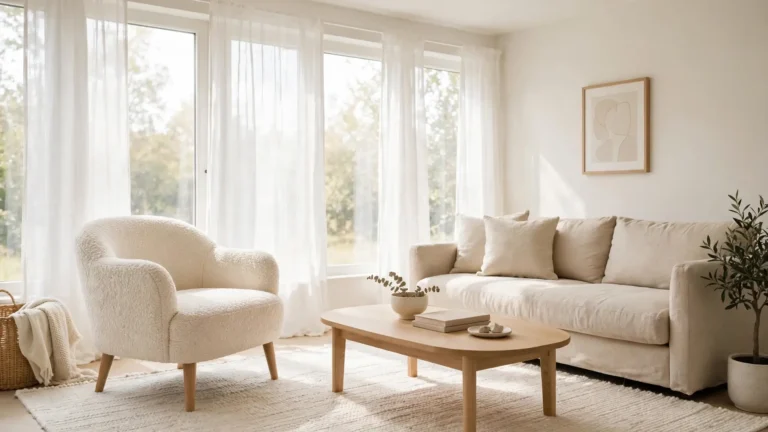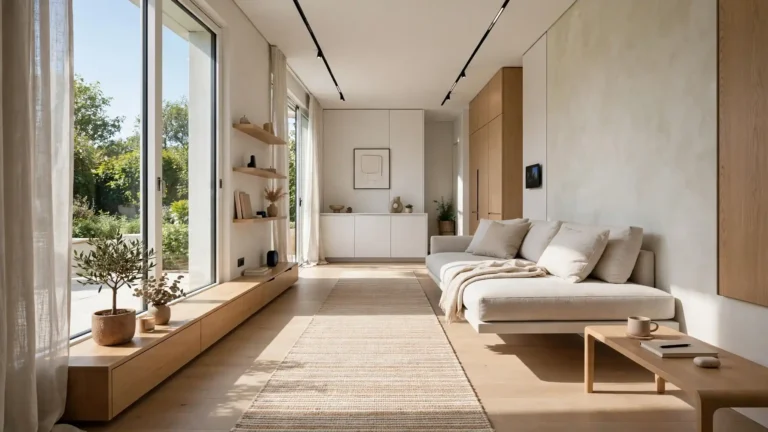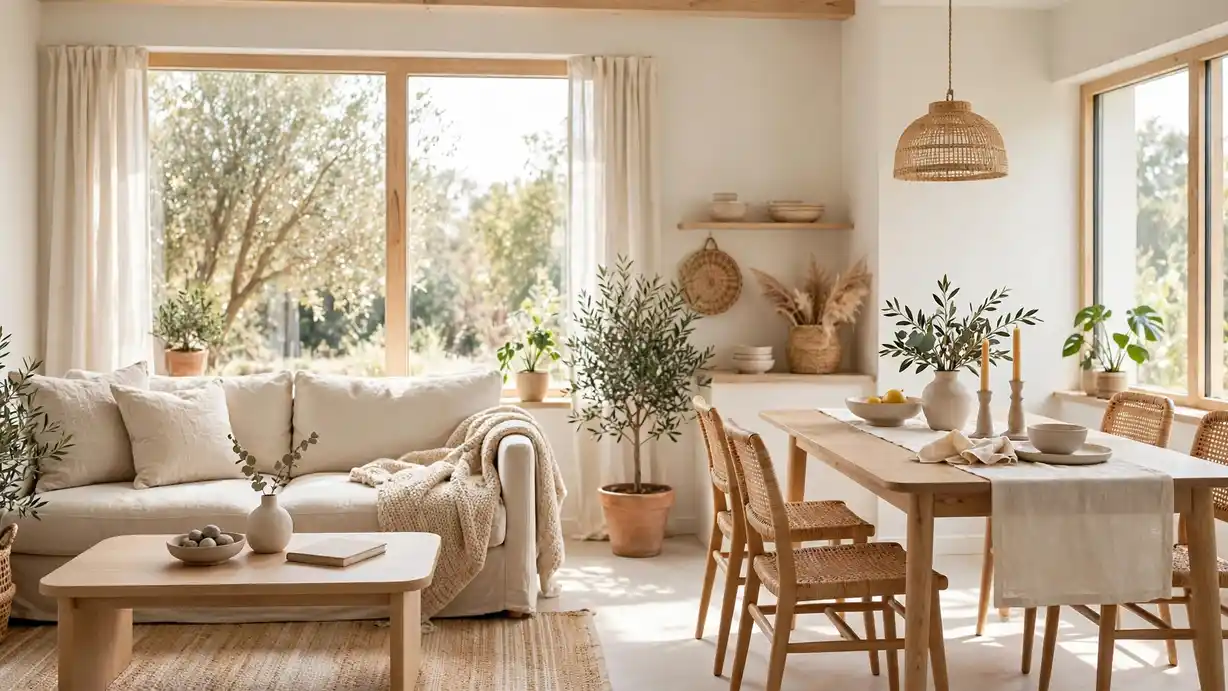
21 Small Living Room With Dining Area Ideas to Maximize Space
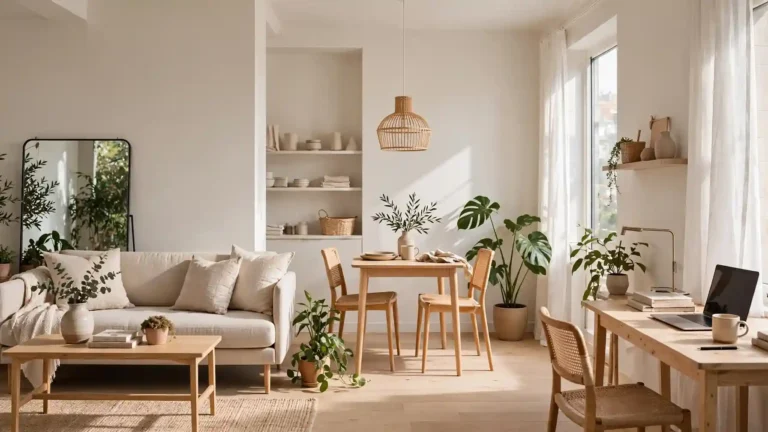
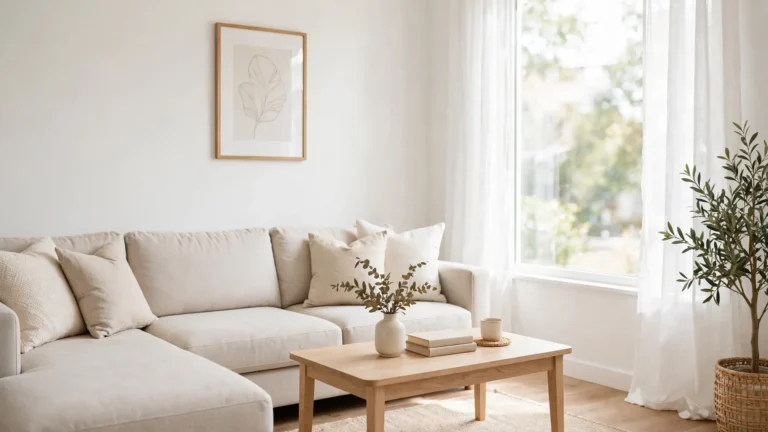
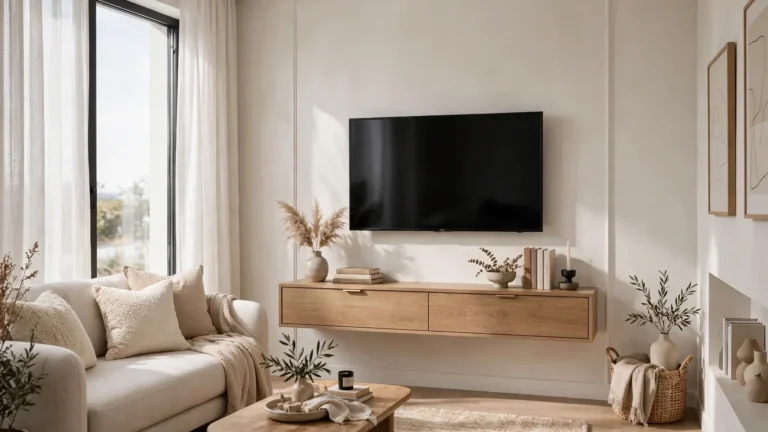
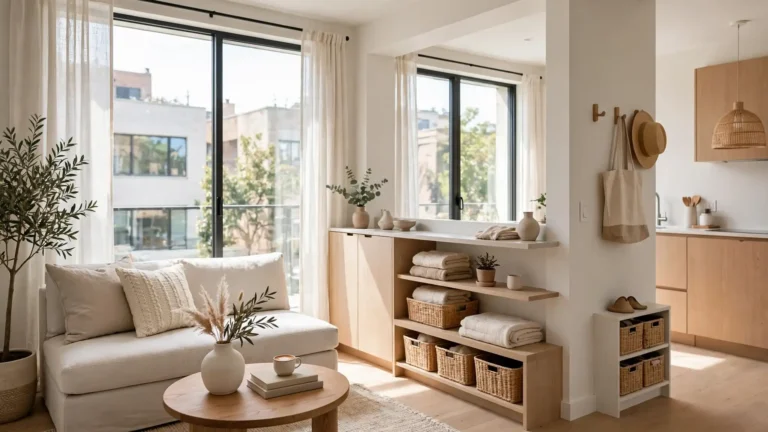
Living in a compact home does not mean giving up on style or comfort. A small living room with dining area can feel open, warm, and beautifully pulled together when every inch works hard. I have helped friends style these tricky combo spaces, and the right layout always makes the room feel twice its size.
The secret is zoning each function without building walls. Rugs, lighting, and smart furniture choices carve out a cozy lounge on one side and an inviting dining spot on the other. If you love sunroom ideas for their bright, airy feel, you will find the same light-first thinking works wonders here. These 21 ideas show you exactly how to blend both zones into one seamless, stylish room.
Rug Zone Anchors
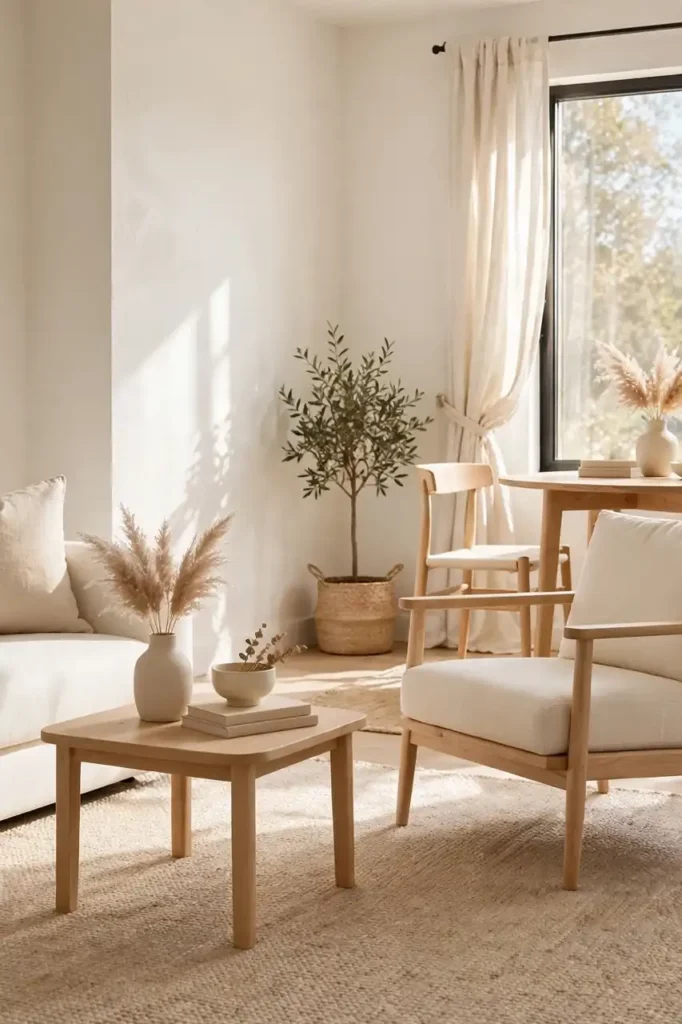
A rug under the sofa instantly tells the eye where the living zone begins. Choose one large enough for the front legs of every seat, and the whole corner reads as a deliberate lounge instead of furniture pushed together at random. The texture underfoot adds comfort that bare floors never give.
In my experience, a second smaller rug under the dining table completes the trick. Keep both rugs in the same color family so the zones feel connected, not chopped apart. This simple move adds warmth underfoot and visual order to the whole room at once, making mornings feel calmer.
Slim Console Dividers
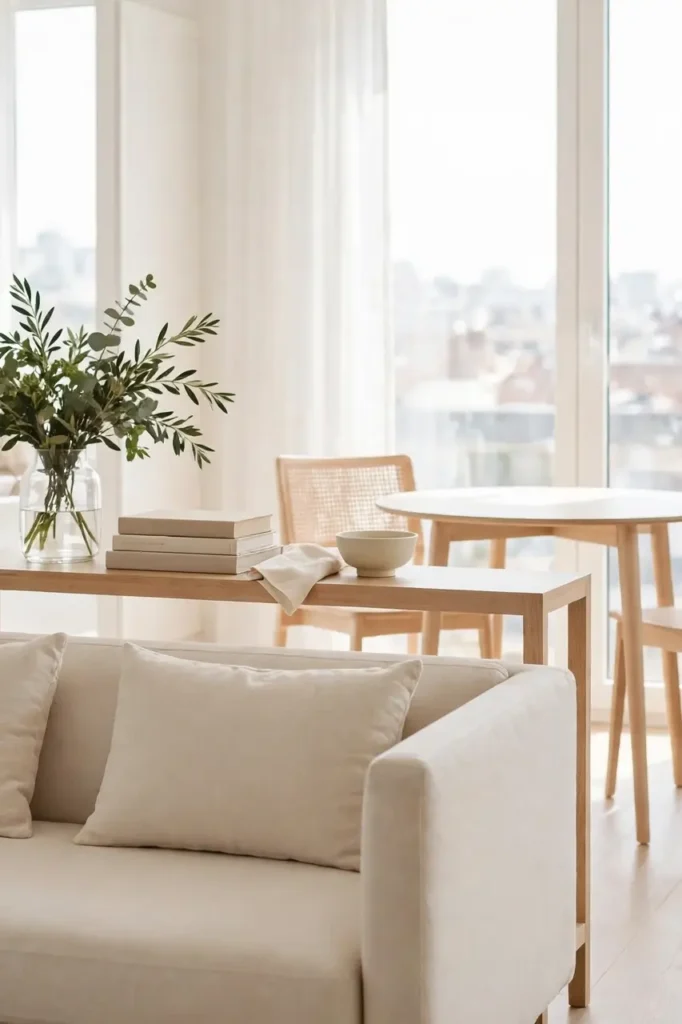
A slim console table behind the sofa draws a clean line between lounging and dining without blocking light or views.
- Pick a console no deeper than 12 inches so it never eats walkway space.
- Style the top with a lamp to give the living side its own glow at night.
- Use the lower shelf for dining linens to serve both zones at once.
- Anchor it with a small tray so keys and remotes stop wandering.
This one piece of furniture does the job of a half wall while keeping the room feeling open. I have seen this work well in many narrow apartments where every sightline matters for the sense of space.
Round Table Corners
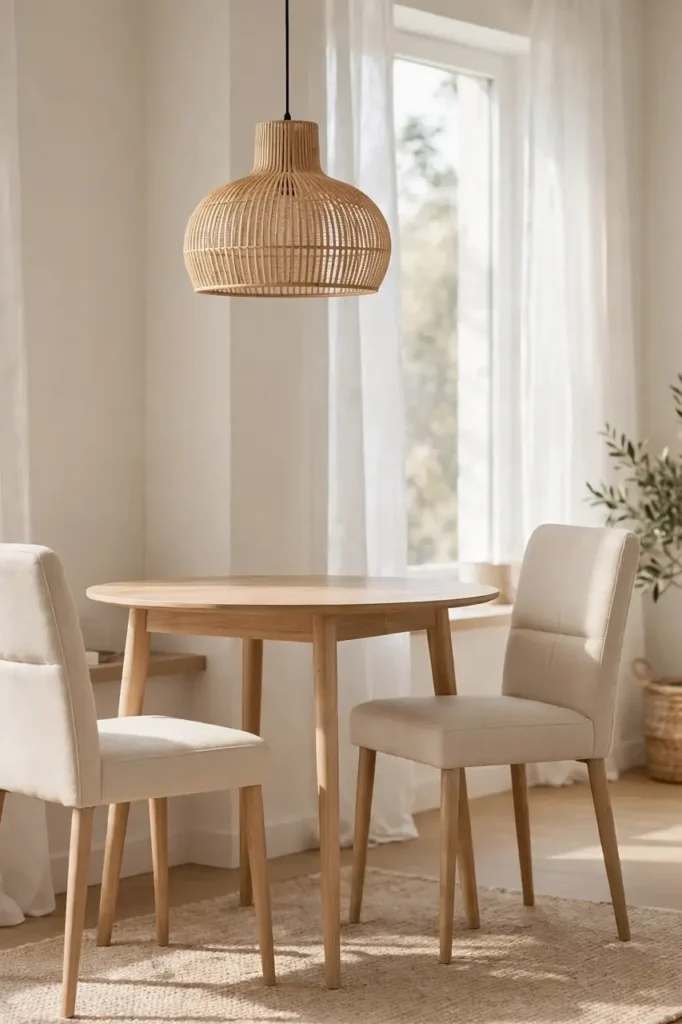
Quick Tip: A round table with no sharp corners lets traffic flow around it on all sides. In tight rooms this shape seats four people in the footprint where a rectangle would seat only two comfortably. Tuck it into a corner and pull it out when guests arrive.
Pair the table with chairs that slide fully underneath to keep walkways clear between meals. I have noticed that rooms with round tables simply feel calmer, because nobody is bumping hips on corners. Choose a pedestal base so legs never fight for foot room underneath, and the whole corner stays easy to move through.
Floating Sofa Layouts
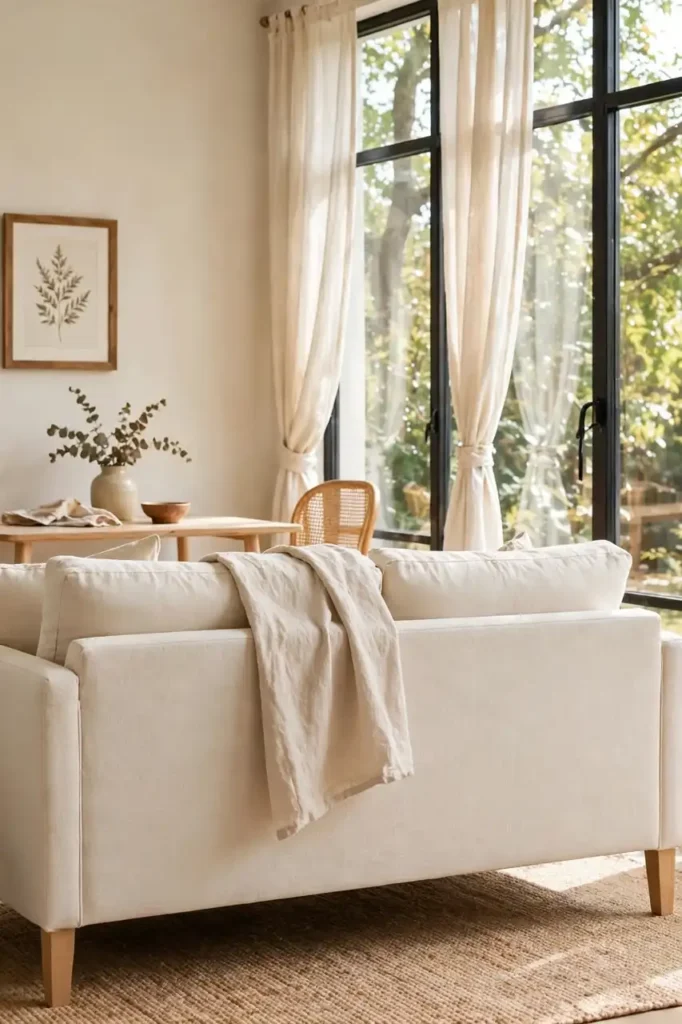
BEFORE: The sofa sat flat against the longest wall, and the dining table got squeezed into a dark corner by the kitchen. Both zones felt like afterthoughts, and the middle of the room became a dead walkway nobody used. Guests always ended up standing because nothing invited them to sit.
AFTER: Pulling the sofa a few feet off the wall opened a dining lane behind it. Now the sofa faces the window, and the table sits in the brightest spot. When a small living room with dining area shares one open rectangle, floating the main seat is the fastest way to give each function its own breathing room.
Banquette Bench Seating
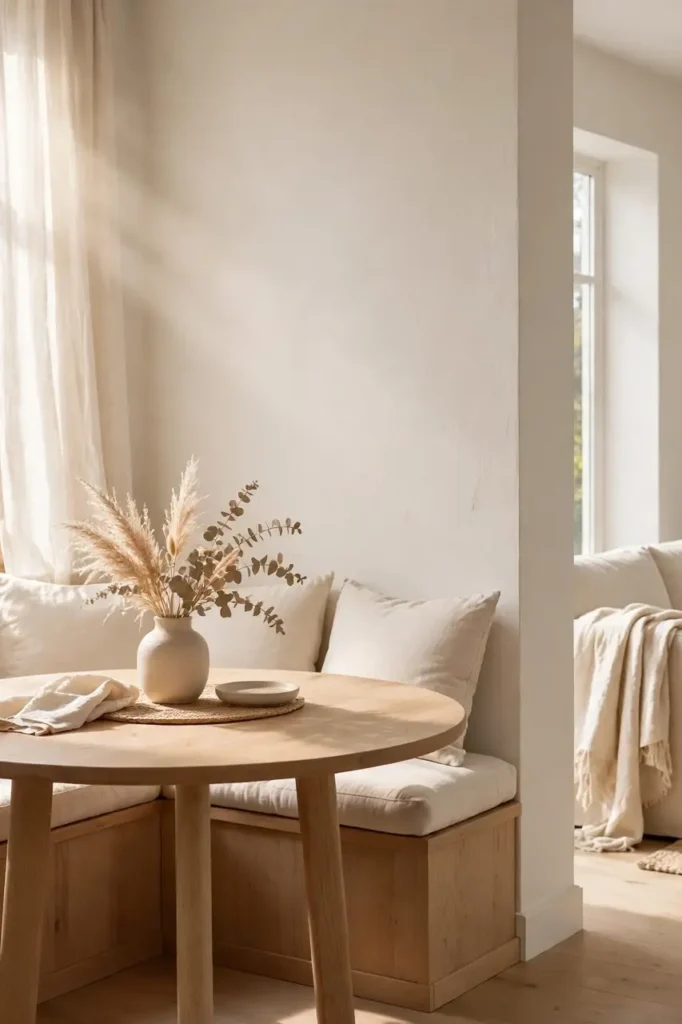
A banquette bench slides against the wall and seats three people where chairs would seat two.
- Measure your wall and order a bench with hidden storage inside the seat.
- Top it with a 4-inch foam cushion in wipeable fabric for daily comfort.
- Pair it with a round or oval table that one person can pull out easily.
- Add throw pillows in the living room palette to tie both zones together.
This setup is a small-space classic because it borrows zero floor area beyond the table itself. I have tried this in a rental, and the storage inside swallowed table linens, board games, and chargers I had nowhere else to keep.
Glass Table Pairings
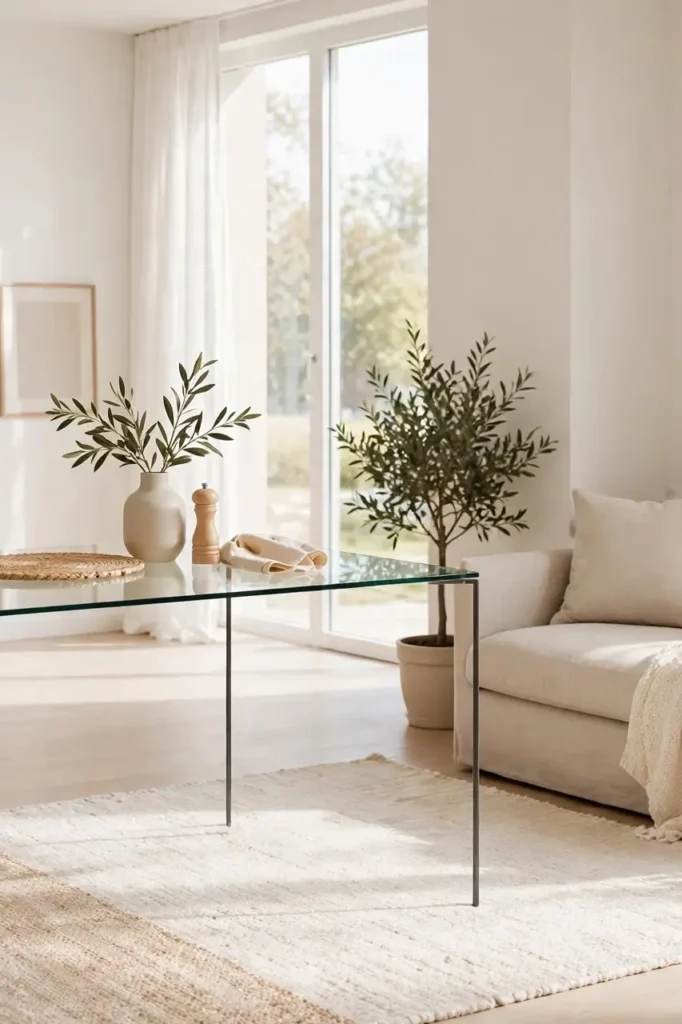
A glass dining table visually disappears, which keeps sightlines open across the whole room.
| Feature | Glass Table | Wood Table |
|---|---|---|
| Visual weight | Nearly invisible | Solid and grounding |
| Light flow | Passes straight through | Blocked at table height |
| Cleaning | Quick wipe, shows prints | Forgiving, needs polish |
| Best for | Dark or narrow rooms | Cozy, warm schemes |
Choose glass when the room feels cramped and wood when it needs warmth. Many experts recommend mixing the two moods with a glass top and warm wooden chairs for balance. The transparent surface keeps the floor visible, which tricks the eye into reading more square footage than truly exists.
Cozy small living room with dining area
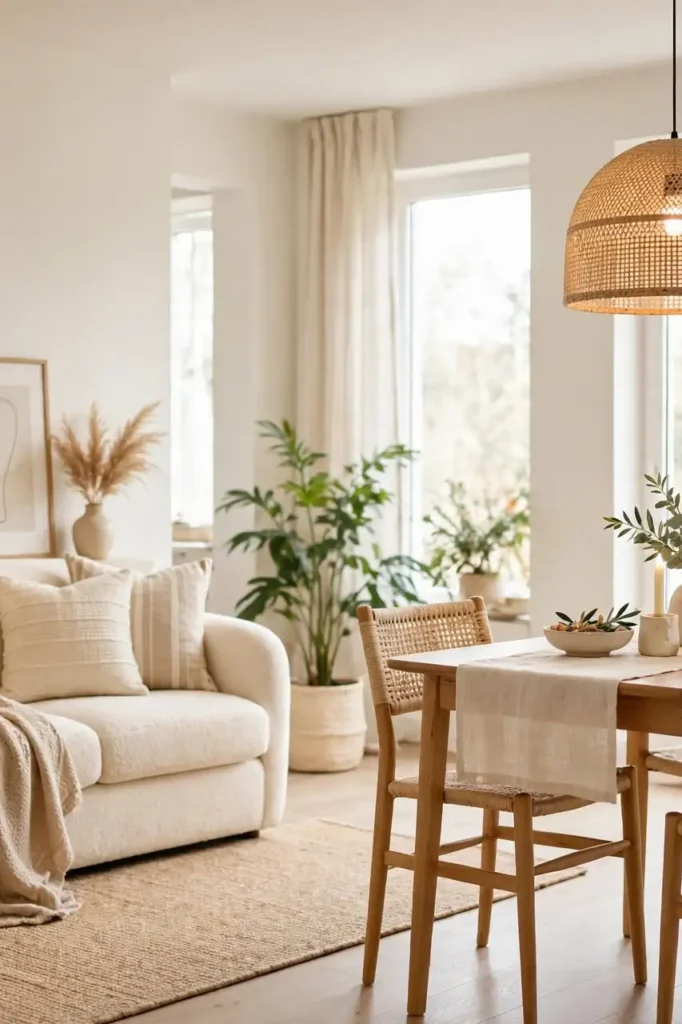
Layering soft textures across both zones makes the whole room feel like one welcoming home instead of two squeezed functions.
DO:
- Repeat one accent color in both the sofa throws and the dining chair cushions.
- Keep lighting warm (2700K) so evenings feel intimate on both sides.
- Use washable fabrics where food and lounging meet.
DON’T:
- Do not mix more than three wood tones or the room starts to look busy.
- Do not hang competing statement art in both zones at once.
- Do not block the natural path from sofa to table with ottomans.
When textures and tones flow between zones, guests stop noticing where one ends and the other begins. That visual calm is what makes a compact combo room feel generous.
Pendant Light Zones
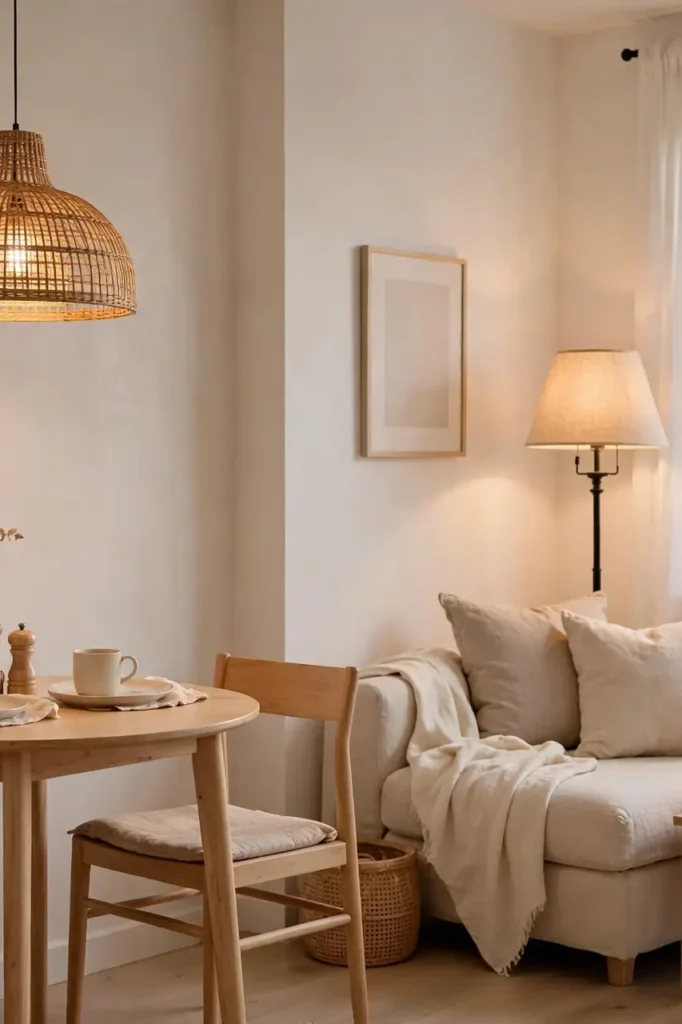
One pendant over the dining table tells everyone exactly where meals happen.
Cost: Low | Time: One afternoon | Skill Level: Beginner | Best For: Renters with a single ceiling hook
Hang it 30 inches above the tabletop so it lights plates without blocking faces. I have noticed that a single warm bulb over the table makes weeknight dinners feel like an occasion, even with takeout on paper plates. Keep the living side on a separate dimmer or lamp so each zone sets its own mood, and the whole room shifts easily from dinner to downtime without any fuss at all.
Fold-Down Wall Tables
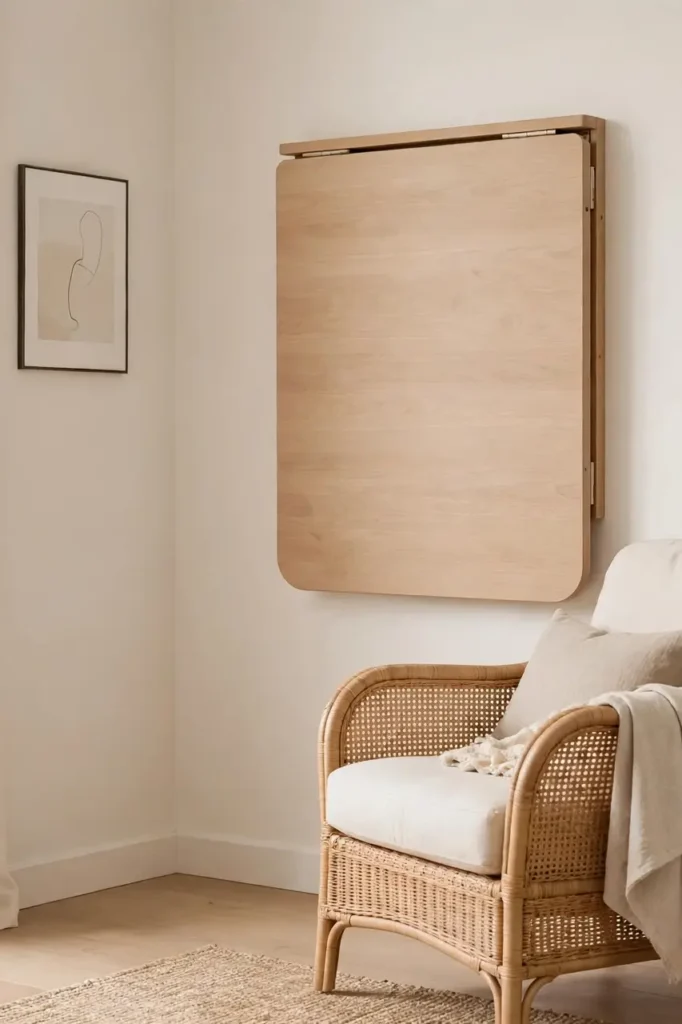
A wall-mounted drop-leaf table gives you a full dining surface at mealtimes and vanishes the rest of the day. Folded up, it is a slim console for keys and plants. Folded down, it seats four for dinner without stealing a single inch of permanent floor space.
Mount it at standard dining height and pair it with folding chairs stored in a closet. In my experience, this is the best trick for a small living room with dining area that mostly serves one or two people. You get a real table when it counts and your living room back the other twenty hours.
Open Shelf Dividers
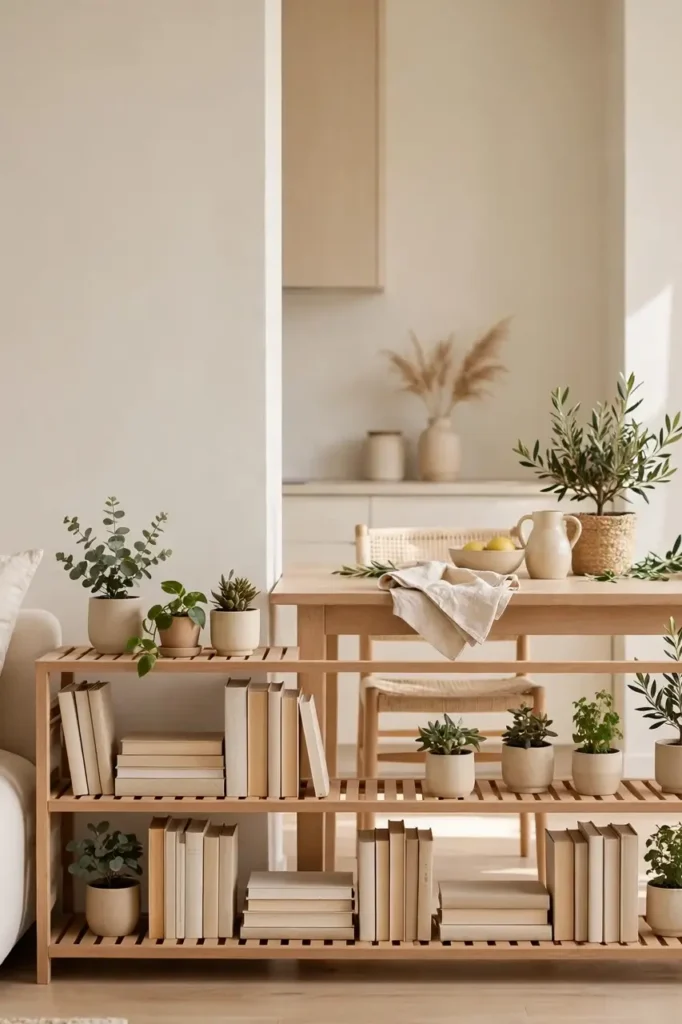
A low open shelf divides the room while letting light pass straight through.
- Keep the unit under 36 inches tall so sightlines stay open across the room.
- Style both faces so it looks finished from the sofa and the table.
- Store dining items on the table side and books on the lounge side.
- Leave some cubes empty to avoid a heavy, cluttered look.
This divider earns its footprint by storing things for both zones at once. I have seen this work well in studio apartments where a single shelf quietly does the job of a wall, and both sides stay tidy because everything has a visible home.
Mirror Wall Tricks
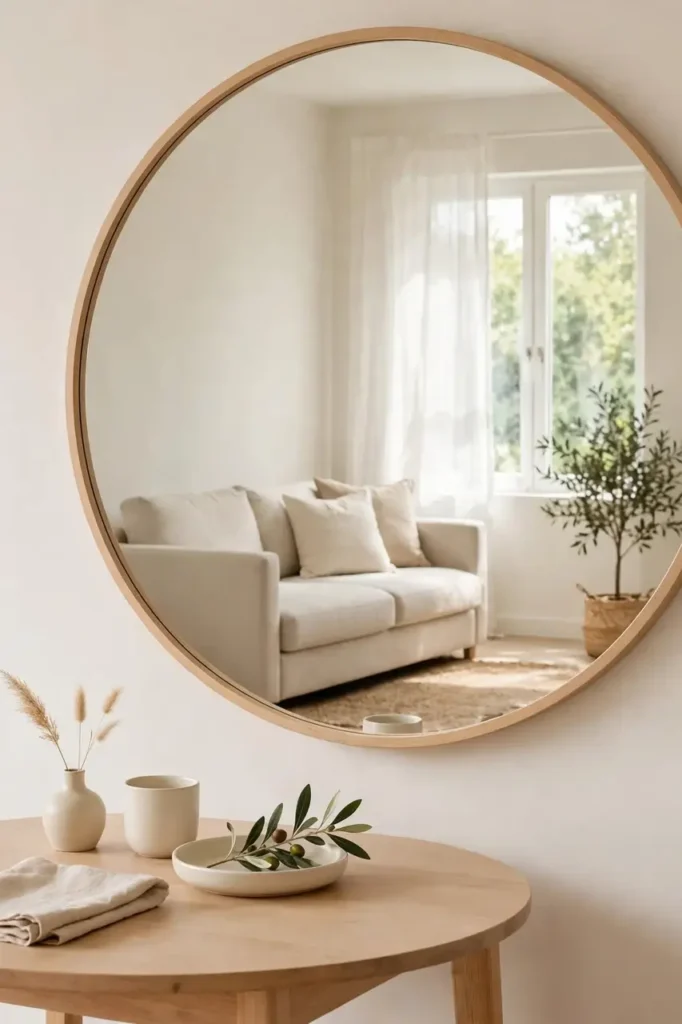
Quick Tip: Hang a large mirror on the wall behind the dining table to double the daylight and the sense of space. Position it to reflect a window, not a blank wall, so it bounces real light and greenery around the room. One oversized mirror beats a gallery of small ones here.
Keep the frame slim and simple so the mirror reads as a window rather than decor. I have noticed guests always assume the room is bigger than it is when a mirror catches the window light. It is the cheapest square footage you will ever add to a home, and it works instantly.
Linen Curtain Softness
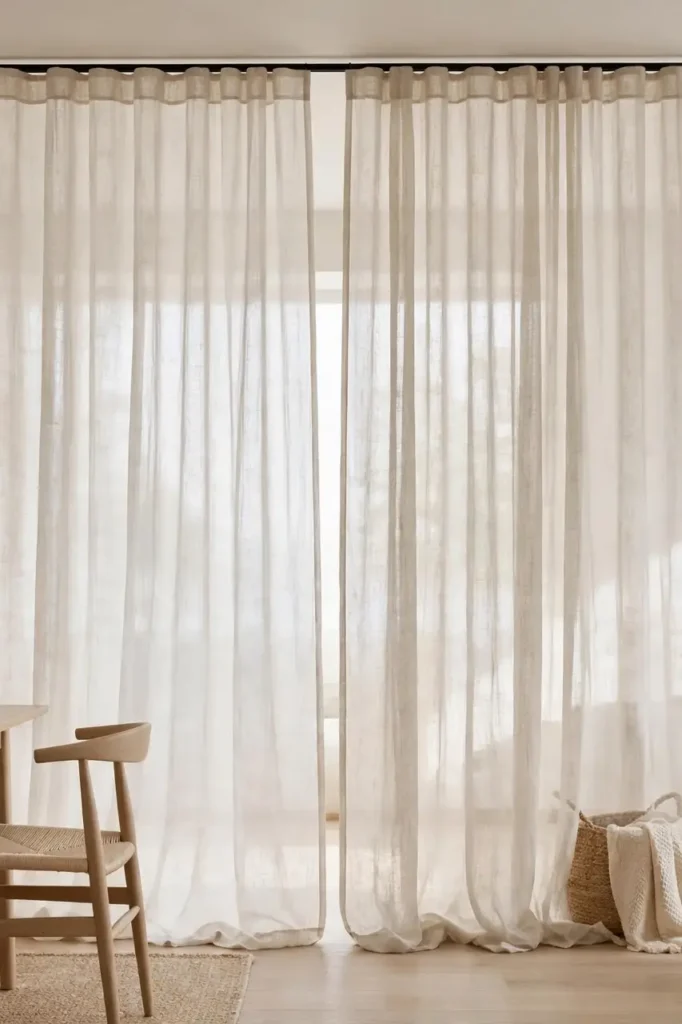
BEFORE: The dining table sat fully exposed to the living room, so every meal felt like eating in a hallway. Crumbs, laptops, and laundry were all visible at once, and the space never felt restful. Hosting felt stressful because there was nowhere to hide the everyday mess.
AFTER: A ceiling track with sheer linen panels now draws closed around the dining nook in seconds. Dinners feel private and calm, and the fabric softens the whole room beautifully. Open the panels by day for one airy space, close them for cozy evenings that feel worlds apart from the busy daytime layout.
Nesting Table Sets
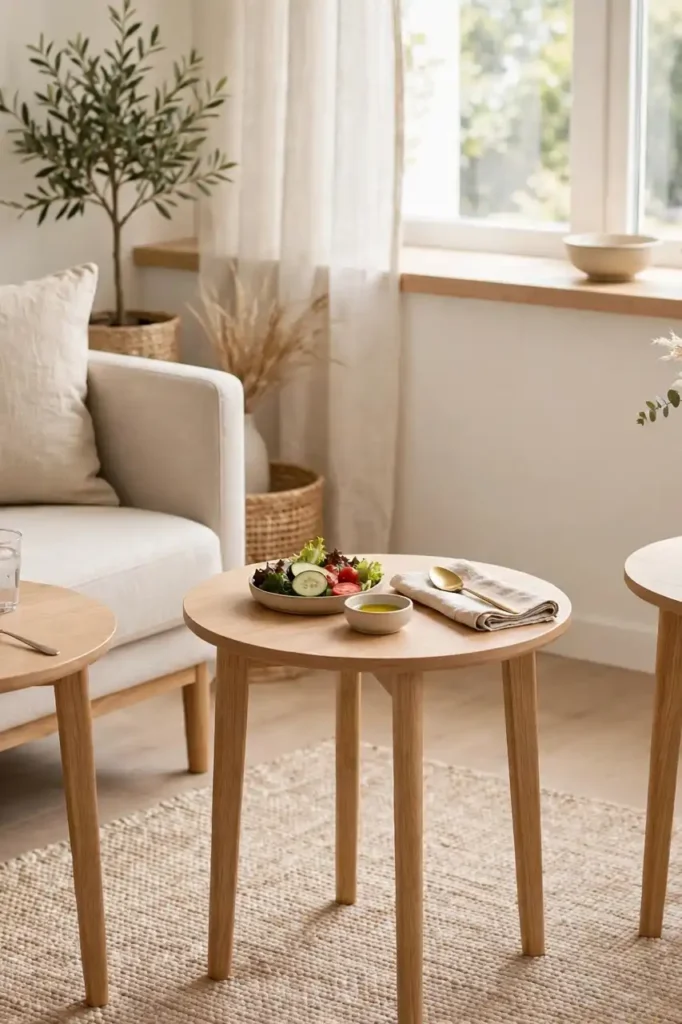
Nesting tables pull apart when you need surfaces and stack away when you do not.
- Buy a set of three in graduated sizes with a slim profile.
- Keep the largest beside the sofa as a permanent side table.
- Pull the smaller two up to the dining table when guests arrive.
- Stack them back together after the meal to reclaim the floor.
This flexible system means a small living room with dining area never has to choose between seating and surfaces. I have tried this at holiday dinners, and two extra tables appeared in seconds without moving a single heavy piece.
Bench Storage Combos
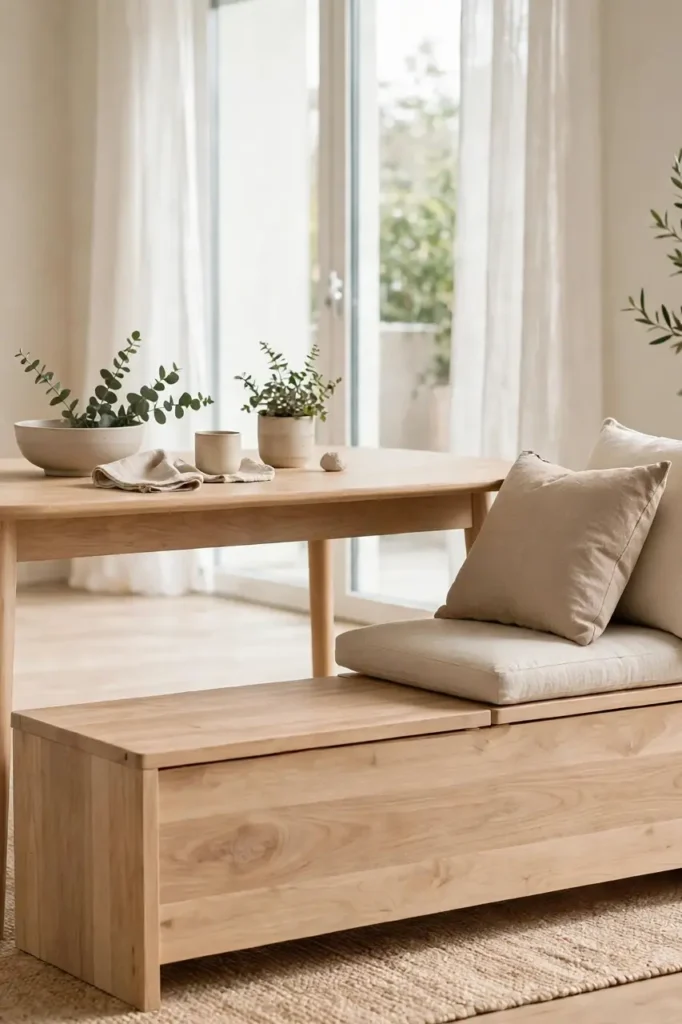
A storage bench at the dining table hides clutter and adds seats in one footprint.
| Option | Storage Bench | Dining Chairs |
|---|---|---|
| Seats | 2 to 3 people | 1 person each |
| Floor space | One rectangle | Scattered footprint |
| Hidden storage | Full seat volume | None |
| Flexibility | Doubles as coffee table | Easy to move solo |
Pick the bench when storage is tight and chairs when you rearrange often. That is why many experts recommend the bench for families and chairs for frequent entertainers. Either way, you gain comfortable seating without scattering extra furniture across the limited floor you have available in a compact home today with ease.
Gallery Wall Flow
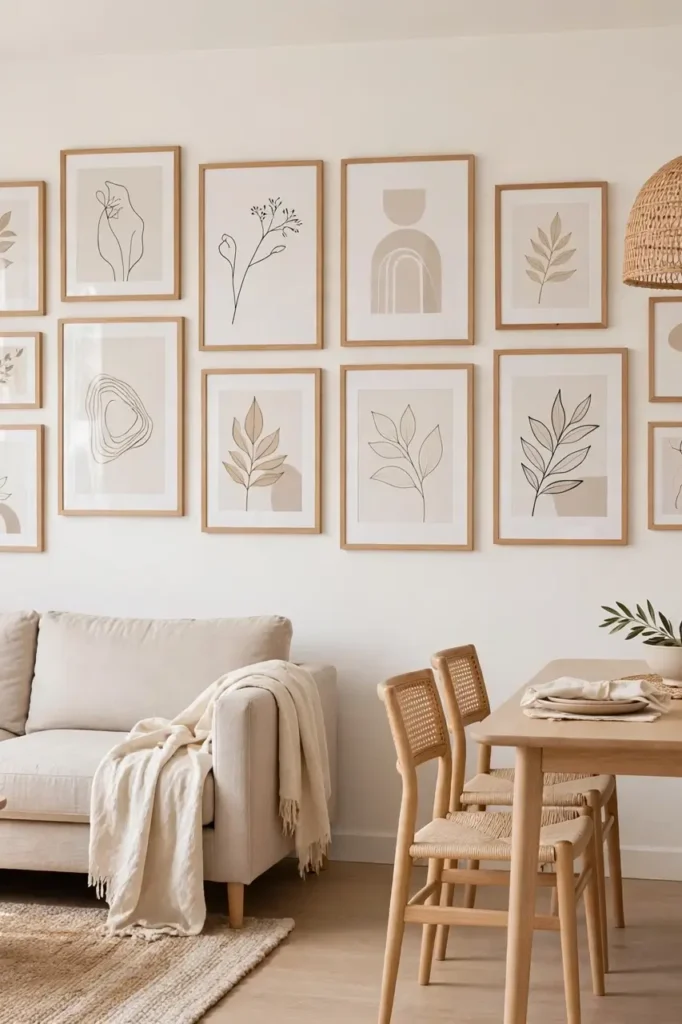
One gallery wall spanning both zones ties the whole room into a single story.
DO:
- Use matching frames so the collection reads as one installation.
- Start the arrangement over the sofa and let it drift toward the table.
- Mix art sizes but keep a consistent mat color throughout.
DON’T:
- Do not hang pieces higher than eye level or they disconnect from the furniture.
- Do not crowd frames near the dining pendant where they compete for attention.
- Do not use glass that glares under the dining light.
A shared art wall tells the eye this is one room with two moods, not two rooms fighting. Keep the palette tight and the whole space feels curated instead of crowded.
Plant Corner Fillers
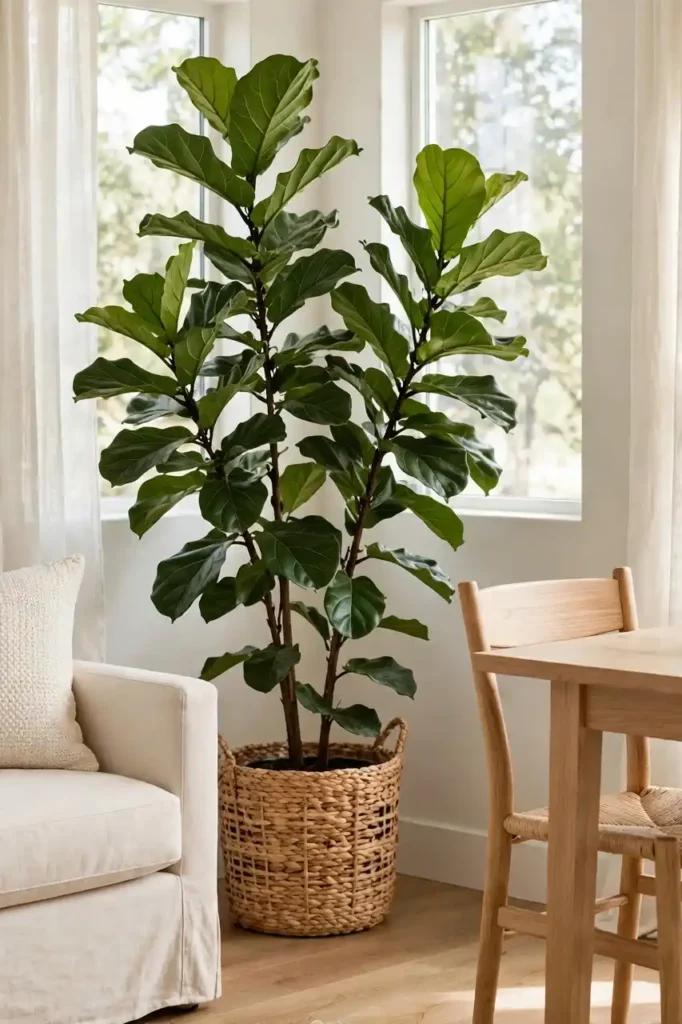
A tall plant softens the seam where the lounge meets the dining spot.
Cost: Low | Time: Under an hour | Skill Level: Beginner | Best For: Awkward corners that fit nothing else
Choose something with height, like a fiddle leaf or olive tree, to draw the eye upward and make ceilings feel taller than they are. I have noticed that one living thing in the transition zone makes the whole combo feel intentional and cared for. It breathes life into the exact spot where two functions meet, softening the boundary beautifully every single day of the week, guaranteed always.
Rug Layering Tricks
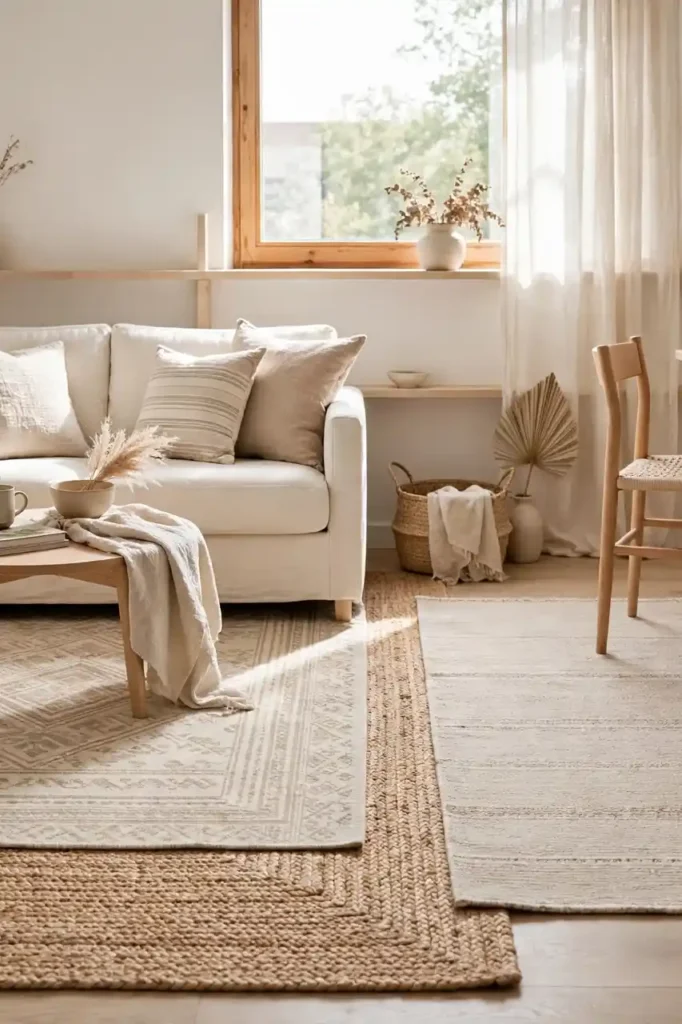
Layering a smaller patterned rug over a large natural-fiber base adds depth without visual noise. The big rug unifies the whole floor while the top layer marks the living zone clearly. Stick to one pattern and let texture do the talking so the room stays calm.
This trick works because the eye reads layers as luxury, even in a modest room. In my experience, a small living room with dining area feels more designed the moment the floor has intention. If you want more guidance on choosing the right base, these area rug for living room ideas break down sizes and placements. Keep the dining rug flat-weave so chairs glide easily across it.
Sconce Lighting Layers
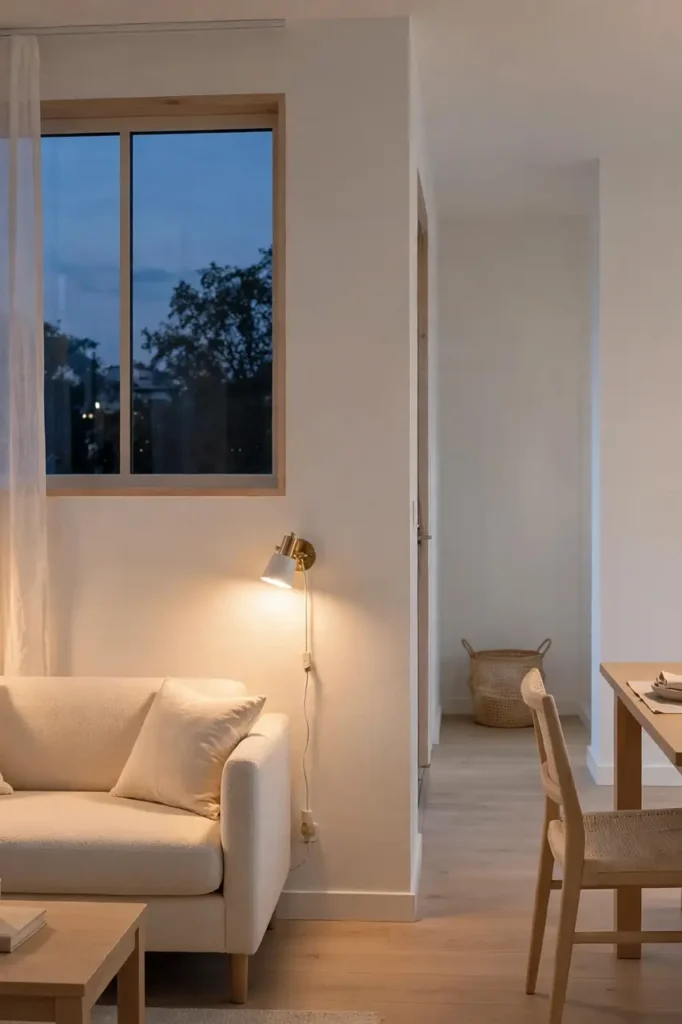
Wall sconces give the living side its own light source apart from the dining pendant.
- Mount plug-in sconces to avoid electrician costs in rentals.
- Place them at seated eye level, about 60 inches from the floor.
- Choose warm bulbs that match the dining pendant temperature.
- Add a dimmer plug for movie nights without touching the dining glow.
Layered light lets each zone set its own mood after dark. I have seen this work well in many open rooms where one overhead light used to flatten everything into sameness. The result feels like two rooms sharing one footprint, each glowing exactly as it should.
Ottoman Extra Seats
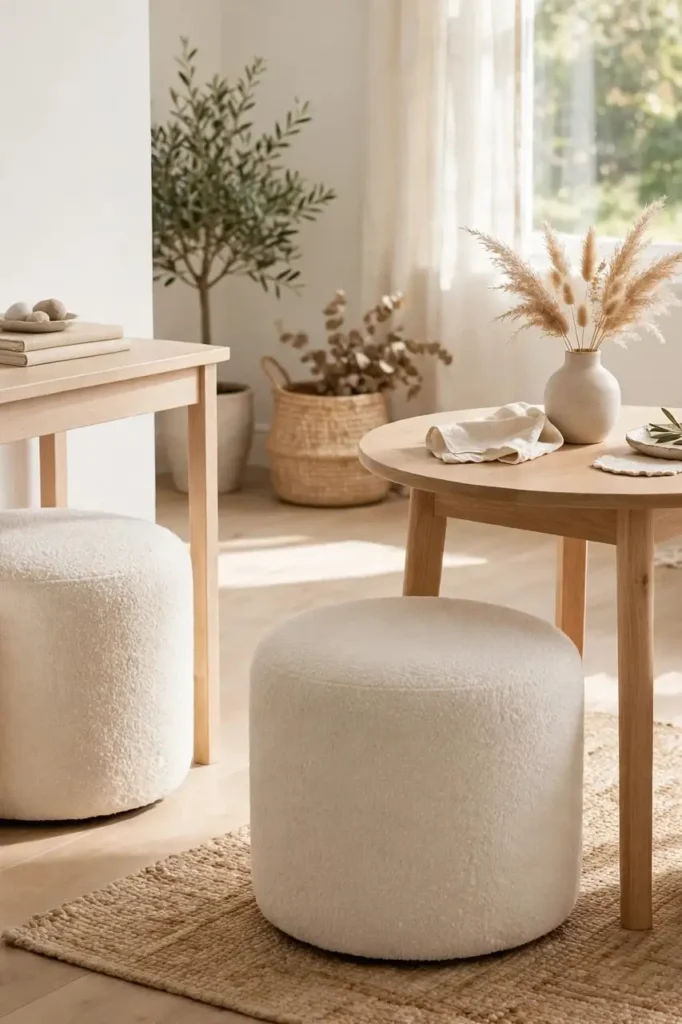
Quick Tip: A pair of sturdy ottomans works as footrests daily and extra dining seats when friends drop by. Look for ones rated to hold adult weight with a flat, firm top. Tuck them under a console or against the sofa so they never block walkways.
Choose a wipeable fabric since these seats will see both feet and food. I have noticed that guests love the casual feel of pulling up an ottoman, and kids treat them as their favorite spots in the house. It keeps the room flexible without a single bulky chair waiting around for company that rarely comes.
Curtain Room Dividers
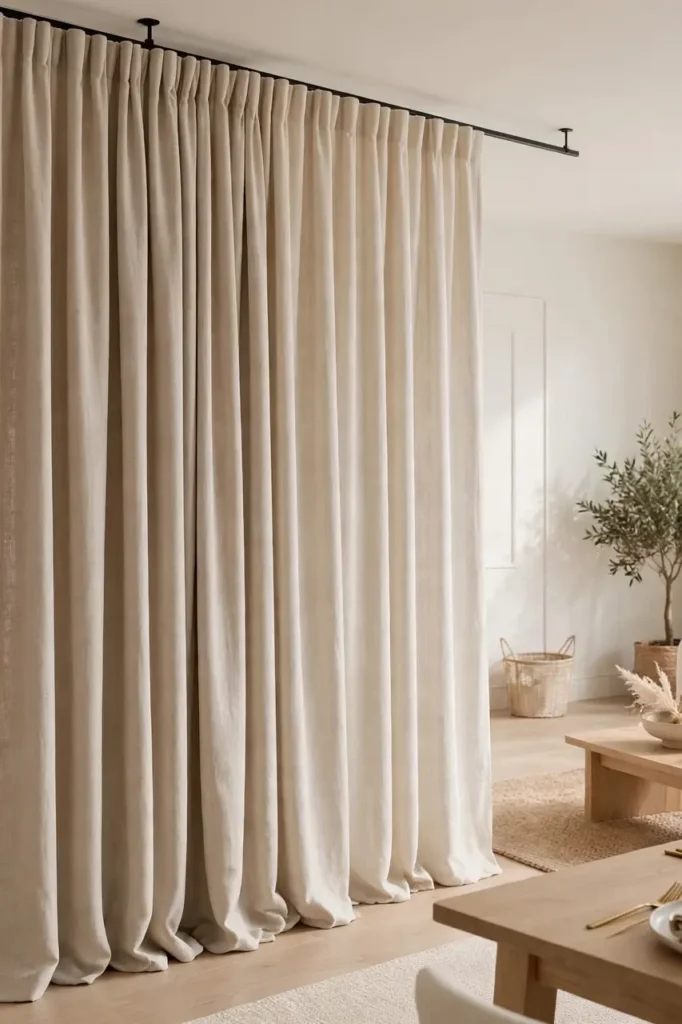
BEFORE: Everything happened in one sightline, so working from the sofa meant staring at dirty dishes. The room felt busy even when it was tidy, because every function competed for attention at once. Relaxing never quite happened with the dining mess in view.
AFTER: Full-height curtains on a ceiling track now sweep closed to hide the dining zone in seconds. Movie nights feel like a private lounge, and mornings reveal a fresh dining spot ready for coffee. A small living room with dining area gains a sense of occasion when each mode gets its own curtain call, and the fabric adds softness everywhere.
Bar Cart Corners
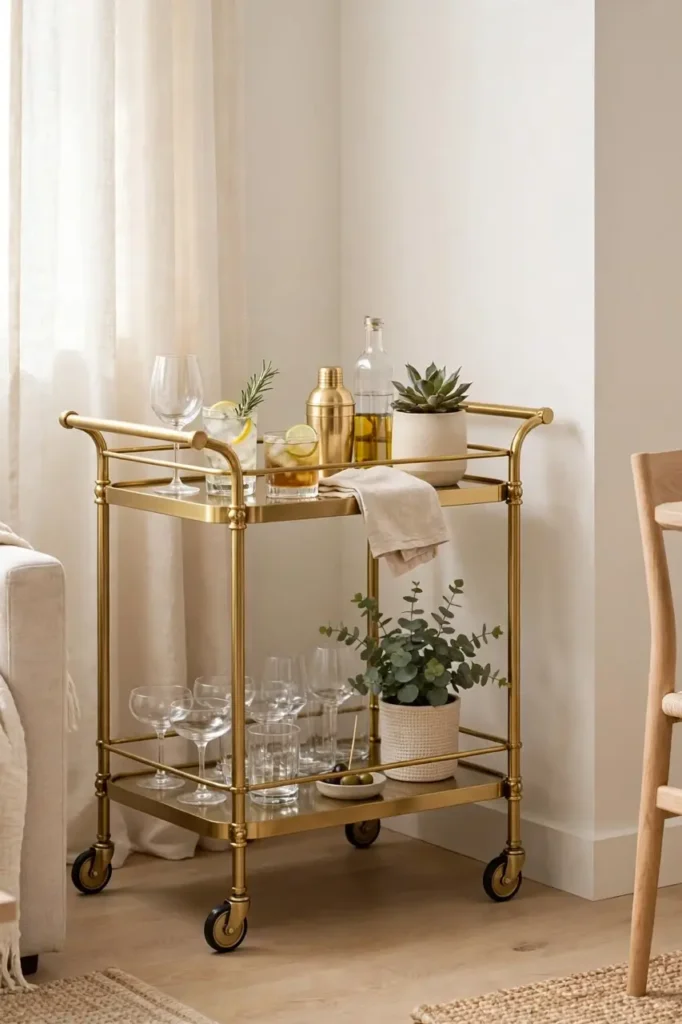
A bar cart in the corner serves both zones without claiming real estate.
- Pick a two-tier cart with locking wheels for stability.
- Stock the top with glasses and the bottom with bottles and linens.
- Roll it to the table for dinner, back to the sofa for evenings.
- Style it with a small plant so it reads as decor, not clutter.
This rolling helper means neither zone needs a dedicated drinks station taking up space. I have tried this in tight quarters, and the cart always ends up being the hardest-working piece in the room, gliding wherever the gathering happens to be.
Conclusion
A small living room with dining area asks for creativity, and these 21 ideas prove that limited square footage can still deliver big style and comfort. From zoning rugs to rolling bar carts, each trick helps both functions shine without crowding each other out or feeling like a compromise. I have seen how small changes like these can completely shift the way a space feels day to day. Pick the two or three ideas that fit your layout, try them this weekend, and save your favorites to Pinterest so the inspiration stays handy. Your cozy, hardworking combo room is closer than you think.