22 Scalloped Tile Bathroom Design Ideas for Elegant Charm
Scalloped edges bring a soft, rhythmic movement to hard bathroom surfaces that flat tile simply cannot match. These scalloped tile bathroom design ideas prove how fish scale shapes turn plain walls into gentle waves of texture, light, and color. I have noticed that even a narrow band of scallops changes the whole mood of a room, adding pattern without visual noise. The curved profile suits coastal cottages, vintage revivals, and sleek modern spaces equally well. Bright whites keep things airy and timeless, while deep greens and inky navy bring instant drama. Small bathrooms gain the most, since repeating curves make tight footprints feel layered and intentional instead of cramped.
The secret to a polished result is scale, grout color, and restraint. Pair glossy scallops with a matte floor for contrast, or wrap one color from floor to ceiling for a cocooning effect. If you love rich layered palettes elsewhere at home, our guide to burgundy and gold living room decor shows how bold pairings carry between rooms. Order ten percent extra tile for cuts around fixtures, and seal light grout against splashes so the finish stays fresh for years.
Sage Scalloped Vanity Wall

A sage green scalloped wall behind the vanity softens the hardworking corner of the bathroom. Curved tiles catch morning light in ways flat subway tile never manages, throwing shadows that shift through the day. Pair the green with brushed brass taps and warm oak to keep the palette grounded. In my experience, muted sage reads as a neutral, so white sanitaryware and stone floors sit beside it comfortably.
Keep surrounding walls plain so the scalloped feature holds the spotlight. A frameless round mirror lets the pattern run uninterrupted, while two small sconces flanking it give flattering light for daily routines. Use a penetrating sealer on the grout to protect the soft color from water spots. This look suits contemporary and modern farmhouse bathrooms equally well.
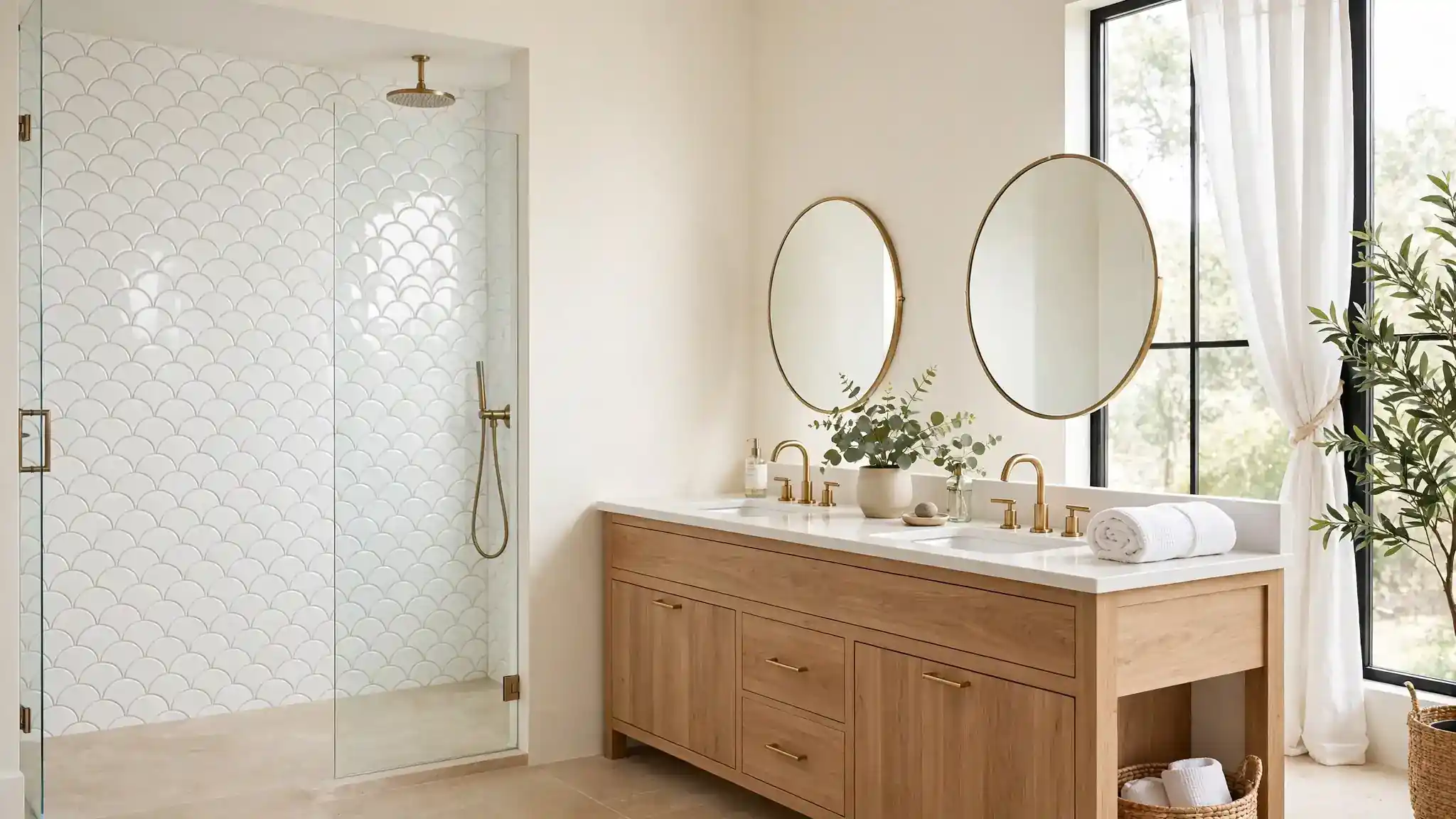
Cream Fish Scale Shower

- Run cream fish scale tiles floor to ceiling inside the shower for a seamless, spa-like envelope of texture.
- Choose a warm white grout that blends with the tile so the scalloped edges, not the grid, do the talking.
- Add a matching tiled niche with a slim marble shelf to keep shampoo bottles off the floor and out of sight.
- Pair with a frameless glass panel so nothing interrupts the continuous wave pattern.
Cream keeps the shower bright even in windowless bathrooms, and the glossy finish bounces light into every corner. I have seen this work well in many cases where homeowners want texture without committing to bold color. Finish with eucalyptus sprigs in a wall-mounted vase for a soft spa scent.
Terracotta Scallop Floor

Quick Tip: Terracotta-look scallops bring warmth underfoot, but real terracotta is porous. Choose a porcelain tile with a terracotta finish for the same sun-baked color with far better stain resistance in a wet bathroom.
Sun-baked tones pair beautifully with whitewashed walls and light oak, giving the room a relaxed coastal warmth. For more sun-washed inspiration, browse our Mediterranean bathroom design inspiration guide before you finalize the palette. Keep the walls simple so the patterned floor stays the hero, and use a medium-tone grout that hides everyday wear gracefully. A woven seagrass basket and linen hand towels complete the easy, vacation-like mood.
Navy Scalloped Accent Wall

BEFORE: The guest bathroom had plain white walls, a builder grade mirror, and zero personality. Guests used it daily, yet it felt like an afterthought. Nothing invited a second look.
AFTER: One wall of deep navy scallops now anchors the room like a piece of art. Brass sconces pick up the glossy curves, and the white vanity pops against the dark background. The same small room suddenly feels styled, moody, and memorable.
Navy works best as a single accent wall rather than a full wrap, which can overwhelm small spaces. Balance the depth with plenty of white above and warm metallics for contrast. I have noticed dark scallops photograph beautifully, so this is a strong pick for a guest bath you love showing off.
Blush Pink Powder Room

- Paint the upper walls a warm white to let the blush tile read soft, not sugary.
- Tile the lower half in matte blush scallops, stopping at a slim brass chair rail.
- Hang a round mirror with a thin brass frame to echo the curved tile edges.
- Add a small marble shelf for hand soap and a bud vase with fresh stems.
Blush brings a romantic glow that flatters skin tones, which guests always appreciate in a powder room. Keep lighting warm and dimmable so the pink reads cozy rather than stark. This palette pairs beautifully with vintage-style brass fixtures and a patterned hand towel.
Oversized Scallop Wall Tiles

| Standard Scallops | Oversized Scallops |
|---|---|
| 3 to 4 inches wide | 6 to 8 inches wide |
| Powder rooms, small baths | Large bathrooms, open showers |
| Delicate, detailed pattern | Bold, modern statement |
| More grout, more texture | Fewer lines, easier cleaning |
Scale changes everything with this pattern. Oversized scallops make a dramatic focal wall with fewer grout lines to scrub, while standard sizes feel intricate and classic. Measure your wall first, since very large tiles need generous square footage to show their full curve. In my experience, oversized tiles also install faster, which can trim labor costs on big walls. Whichever size you choose, order from one dye lot so every sheet matches perfectly.
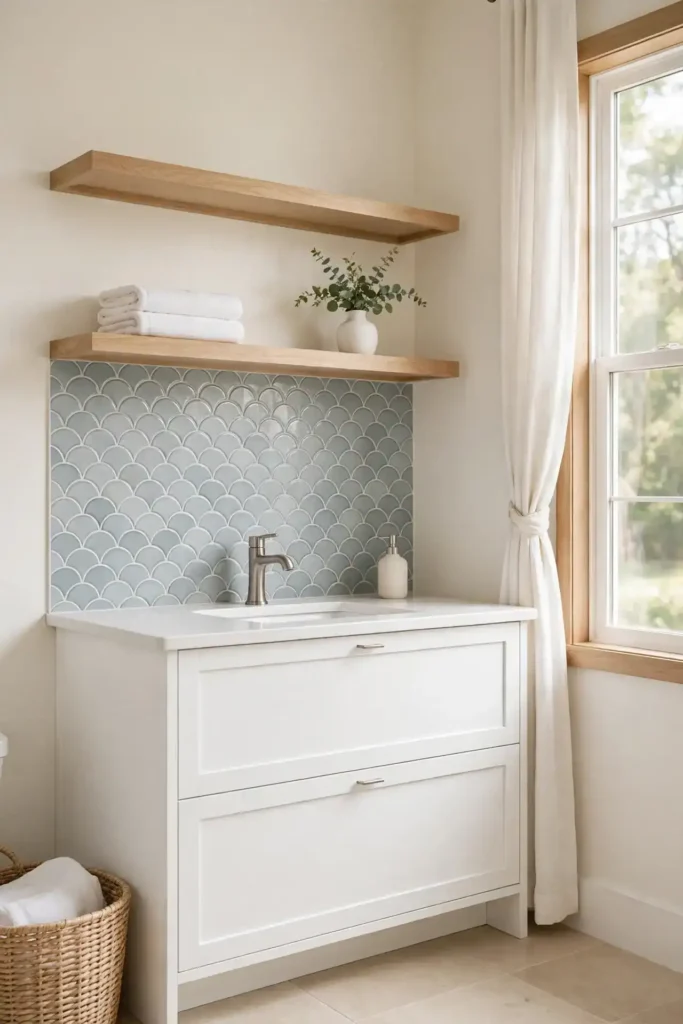
Pale Blue Scallop Backsplash
DO:
- Do extend the tile to the ceiling behind open shelving for a finished look.
- Do use a pale blue with gray undertones so it reads calm, not icy.
- Do seal the grout, since backsplashes catch toothpaste and soap daily.
DON’T:
- Don’t stop the tile awkwardly mid-wall without a shelf or trim to cap it.
- Don’t pair it with cool chrome if you want warmth; brushed nickel suits it better.
- Don’t use dark grout here; it carves the pattern into harsh outlines.
Pale blue scallops behind the vanity read like sea glass, calm and quietly coastal. The color hides water spots better than stark white, which busy families appreciate. Keep the vanity top simple in white quartz so the tile pattern carries the design.
Charcoal Scallop Floor Tiles

Cost: Mid-range; expect to pay slightly more than plain hex tile for the specialty shape. Time: One to two days for an average bathroom floor. Skill Level: Intermediate; the curved edges need careful cuts around the toilet flange. Best For: Grounding light, all-white bathrooms with a bold graphic base.
Charcoal scallops on the floor act like a patterned rug that never needs washing. The dark base hides dirt between cleanings, which makes it practical for family bathrooms and rentals alike. Pair it with white wall tile and black fixtures for a crisp graphic look, or soften it with oak accents and cream walls. I have noticed matte finishes show fewer water spots than glossy ones on floors, so choose matte here for easier maintenance.
Gold Trim Scallop Tiles

A slim line of gold trim along the top edge of a scalloped wall reads pure jewelry. Metallic strips or brass edging cap the curved tiles with a crisp, tailored finish. The glint catches both natural and artificial light, so the wall seems to glow at the edges. This detail suits glam powder rooms and luxe primary baths best.
Keep the gold to one horizontal line so it stays elegant rather than flashy. Match the trim finish to your faucet and mirror frame for a cohesive story. That is why many experts recommend repeating a metal finish at least three times in a room. With restraint, this small addition makes budget tile look custom and expensive.
Seafoam Scalloped Shower Niche
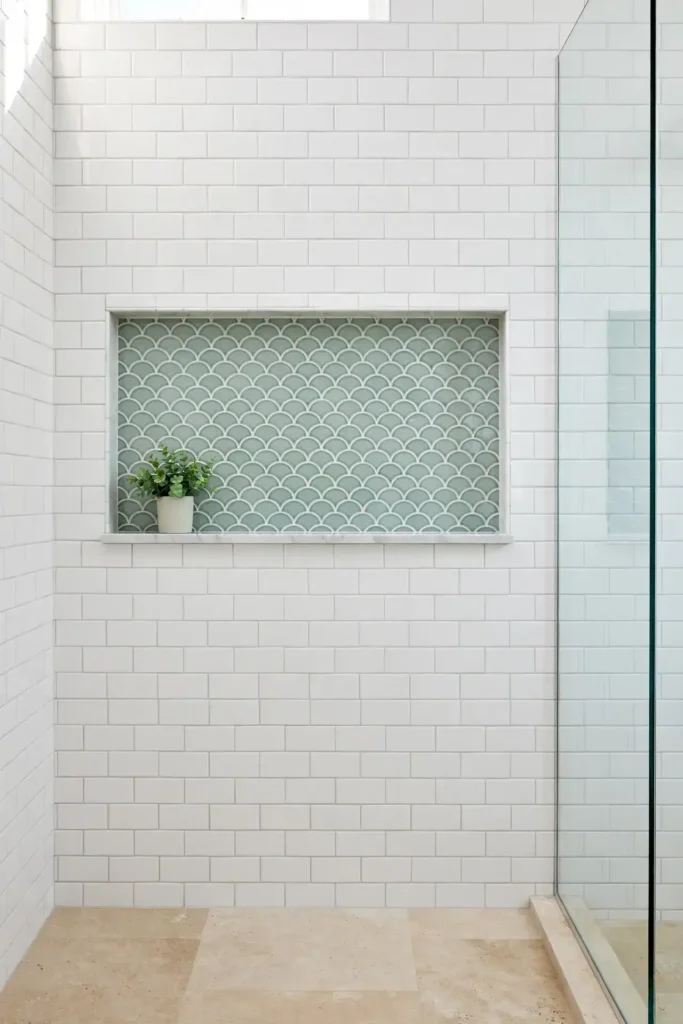
- Tile the back of the shower niche in seafoam scallops so stored bottles sit against a pretty backdrop.
- Frame the niche with the same trim as the surrounding field tile for a built-in, intentional look.
- Add a slim glass shelf inside deep niches to double storage without visual clutter.
- Slope the niche base slightly forward so water drains instead of pooling behind bottles.
A tiled niche turns dead wall space into the prettiest corner of the shower. Seafoam green reads fresh against white subway tile, and the small area keeps costs low. I have seen this work well in many cases as a weekend-friendly upgrade during a larger remodel.
Two Tone Scallop Border
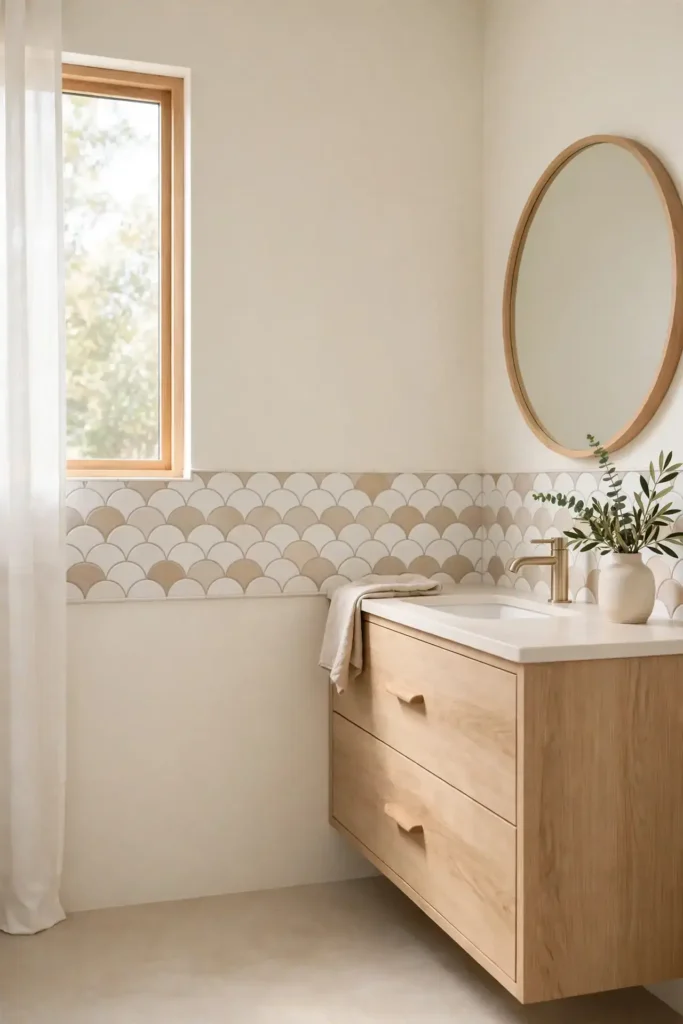
Quick Tip: A two-tone scallop border works best when the two colors share the same undertone. Pair warm white with soft beige, or pair two cool tones like pale blue and seafoam, so the stripe feels harmonious instead of clashing.
Run the border at chair-rail height around the room or as a single horizontal stripe in the shower. The double color adds a custom, designer feel for the cost of one extra box of tile. Keep the field tile above and below in a quiet solid so the border reads as deliberate jewelry, not noise. Match your grout to the lighter tone for a seamless blend.
Vertical Scallop Tile Column
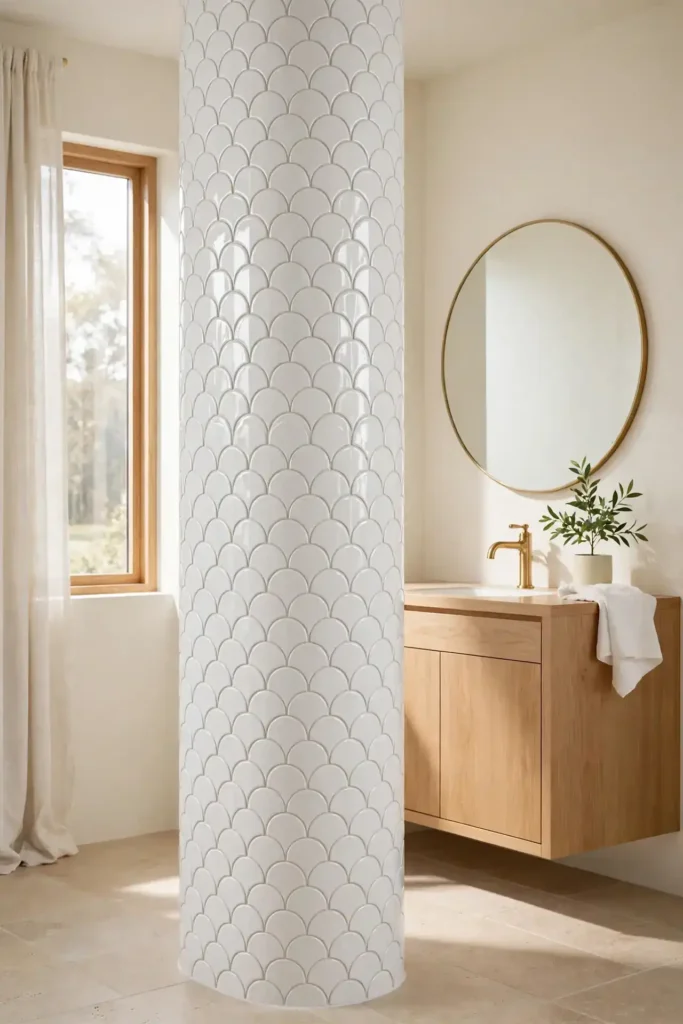
BEFORE: The structural column in the middle of the bathroom was an eyesore everyone tried to ignore. Painted the same flat white as the walls, it interrupted sightlines and collected scuffs. It served no visual purpose at all.
AFTER: Wrapped in vertical rows of glossy scallops, the column now looks like a deliberate design feature. Light ripples down the curves as you move through the room. What was once awkward has become the detail guests ask about first.
Awkward architecture becomes an asset when you dress it with intention. Choose a tile color that echoes the vanity wall so the column feels connected to the design. Use bullnose or metal trim on the corners for a clean, chip-resistant edge that stands up to daily bumps.
Scallop Tile Wainscoting
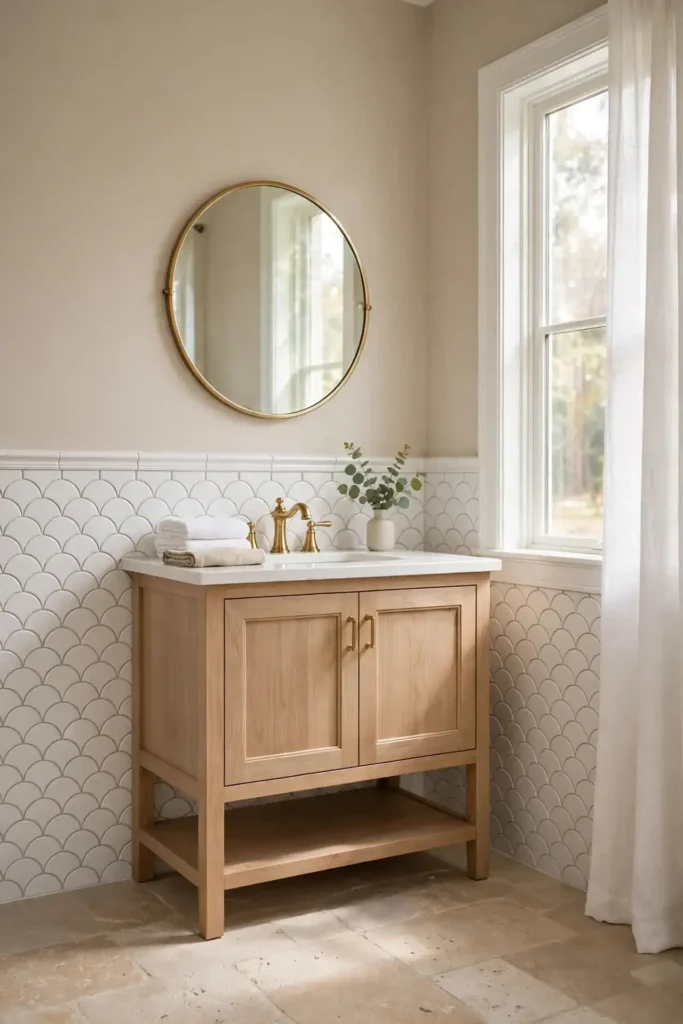
- Mark a level line at 42 inches around the room and protect the floor with rosin paper.
- Tile upward from the floor in stacked scallop rows, keeping each sheet level as you go.
- Cap the top edge with a pencil trim or painted wood chair rail for a crisp finish.
- Grout with a stain-resistant grout, then wipe the haze promptly for clean lines.
Wainscoting gives bathrooms a tailored, traditional feel while protecting lower walls from splashes. Scallops keep the classic idea fresh and playful instead of stuffy. Paint the upper walls a soft contrasting color, like warm greige, to let the tilework shine.
Mint Scallop Vanity Backsplash

| Mint Scallops | White Scallops |
|---|---|
| Fresh, playful, retro | Calm, timeless, minimal |
| Brass, warm wood | Chrome, cool gray |
| Hides spots well | Shows spots, wipes clean |
| Guest baths, kids’ baths | Primary baths, rentals |
Mint brings a cheerful retro energy that white simply cannot. It hides toothpaste splatter better too, a quiet win for family bathrooms. If resale worries you, remember a backsplash is a small, affordable area to re-tile later. Choose the color that makes your mornings happier. The retro hint of mint works beautifully in homes with mid-century or cottage character. Brass hardware and warm wood keep the green feeling fresh rather than dated, and a simple white shower curtain lets the backsplash stay the star.
Scalloped Mosaic Shower Floor

DO:
- Do choose small-scale scallop mosaics so the many grout lines add slip resistance.
- Do slope the pan correctly toward the drain before any tile goes down.
- Do seal the grout yearly since shower floors see constant water.
DON’T:
- Don’t use large glossy scallops on a shower floor; they get slippery when wet.
- Don’t skip a waterproof membrane under the mortar bed.
- Don’t use white grout on a shower floor unless you enjoy frequent scrubbing.
Scalloped mosaics make shower floors safer and prettier at once. The dense grout lines give bare feet grip, while the curved pattern hides the drain area gracefully. Pick a mid-tone grout that camouflages soap residue between deep cleans.
Beige Scallop Half Wall

Cost: Budget-friendly; beige ceramic scallops are widely stocked and affordable per sheet. Time: A single weekend for a half wall behind one vanity. Skill Level: Beginner-friendly with mesh-mounted sheets and basic tiling tools. Best For: Warm minimalism lovers who want texture without strong color.
Beige scallops deliver quiet luxury without shouting. The warm neutral layers beautifully with oak, travertine, and brushed brass, creating a bathroom that feels expensive yet calm. Because the color is forgiving, it suits rental-friendly refreshes and forever homes alike. I have noticed beige tile photographs warmly under both daylight and warm LEDs, so the room looks inviting at every hour. Cap the half wall with a slim stone ledge for a finished edge that doubles as a small shelf.
Dark Green Scallop Feature

Deep emerald scallops bring a jewel-box richness that turns an ordinary bathroom into a retreat. The glossy curves drink in light and throw it back in rippling highlights, so the wall feels alive. Pair the green with marble-look floors and aged brass for a classic, collected feel. Dark tile also recedes visually, which can make narrow rooms feel deeper.
Commit to the color on one wall or inside the shower only, keeping other surfaces light for balance. Warm lighting is essential; cool bulbs can turn deep green muddy and flat. Add a leafy plant nearby to echo the botanical tone. This is a confident choice that rewards bold decorators with a truly memorable space.
Scalloped Tile Tub Surround

- Wrap the tub apron and surrounding walls in the same scallop tile for a built-in, furniture-like look.
- Choose a grout color close to the tile so the surround reads as one continuous surface.
- Extend the tile to the ceiling on the shower side to contain splashes elegantly.
- Add a teak bath caddy across the tub to warm up the tiled surround.
A fully tiled tub surround turns a standard alcove tub into a custom centerpiece. The scalloped texture makes the large surface interesting instead of flat and cold. I have seen this work well in many cases where the tub wall is the first thing you see from the door.
Peach Scallop Powder Walls

Quick Tip: Peach reads warm and flattering under dim lighting, so pair it with a dimmable warm-white bulb. Avoid cool daylight bulbs here; they can push peach toward an orange tone that feels harsh instead of soft.
Peach scallops wrap a powder room in a gentle, candlelit glow that guests remember. The warm tone flatters every skin tone, which makes it a thoughtful choice for a guest-facing space. Balance the sweetness with crisp white trim and a dark-framed mirror for contrast. A single eucalyptus stem in a bud vase finishes the look without competing with the tile. Keep the vanity styling minimal so nothing fights the tile for attention.
Matte Black Scallop Details

BEFORE: The all-white bathroom felt sterile, like a showroom nobody lived in. Every surface matched, yet nothing had character. It was clean and bright, but completely forgettable and a little cold.
AFTER: Matte black scallops now edge the mirror and frame the shower niche. The dark curves add graphic punch without overwhelming the white base. Suddenly the room has an edge, a focal point, and a designer attitude.
Black works hardest in small doses, so use it as trim, borders, or niche backs rather than full walls. The matte finish keeps it sophisticated instead of stark. Repeat the black once more in fixtures or a mirror frame so the detail feels intentional and balanced.
Diagonal Scallop Tile Layout

- Snap diagonal chalk lines at 45 degrees across the wall to guide your first sheets.
- Start from the center and work outward so cut tiles land symmetrically at the edges.
- Use tile spacers consistently; diagonal layouts magnify any uneven gaps.
- Dry-lay a full section first to confirm the pattern flows before spreading thinset.
Setting scallops on the diagonal adds energy and makes narrow bathrooms feel wider. The angled rows catch light differently than straight stacks, creating extra movement. Expect more cuts and waste, so order fifteen percent extra tile and take your time with layout. Step back often to check the pattern reads evenly from the doorway.
Classic White Scallop Revival

| Handmade-Look Scallops | Machine-Cut Scallops |
|---|---|
| Varied glaze, artisan feel | Uniform glaze, crisp edges |
| Higher per sheet | Budget-friendly |
| Rustic, vintage charm | Clean, modern precision |
| Variation adds warmth | Even lines, minimal look |
White scallops never truly go out of style; they simply shift between vintage and modern. Handmade-look tiles bring soulful variation, while machine-cut versions suit strict minimalism. Either way, white keeps small bathrooms bright and lets your fixtures and textiles carry the personality. I have noticed white scallops pair with literally every fixture finish, from matte black to polished brass, so future updates stay easy. This is the safest pick if you want timeless appeal with a touch of personality.
Conclusion
These scalloped tile bathroom design ideas show how one curved shape can carry a whole room, from quiet beige half walls to dramatic navy accents. The pattern works in every budget and every bathroom size, which is why it keeps appearing in the prettiest spaces. Whether you tile a full shower or just a single niche, the scalloped texture rewards you daily with light, movement, and charm. I have seen how small changes like these can completely shift the way a space feels.
Pick the idea that made you pause, save it to your Pinterest board, and start with one wall. Your future self will thank you every single morning.