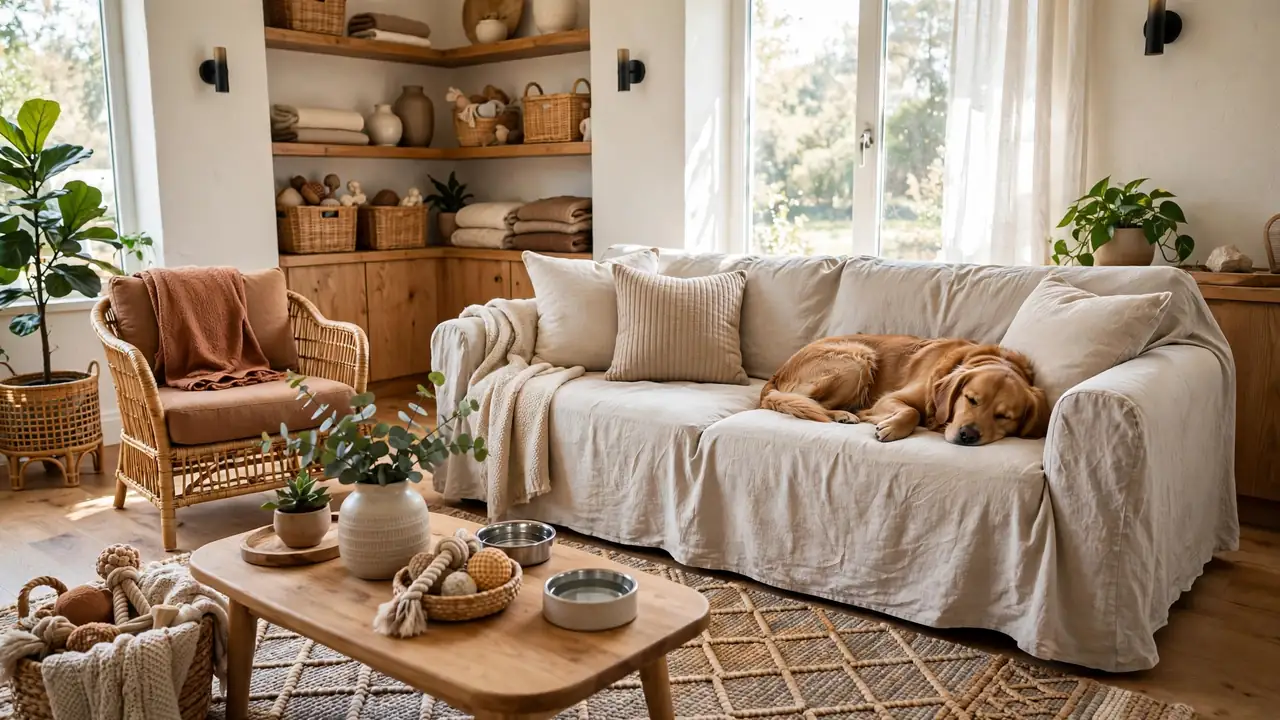
22 Pet Friendly Space Ideas for a Happy, Stylish Home
A home with pets should feel joyful, not fragile. These pet friendly space ideas create a happy, stylish home where animals and beautiful design live side by side. In my experience, pet owners are happiest when they stop fighting fur and mud and start designing for them instead. From washable sofa covers to window perches, these 22 ideas protect your furniture while giving your pets the comfort they deserve. The result is a home that looks great and feels like it truly belongs to everyone in it. Start with the spots your pets love most, and build smart style around their happy habits.
Below are 22 ideas, from washable covers to feeding charts. For more clever home ideas, see my teen boy bedroom ideas. Let’s design for the whole family.
Washable Sofa Covers
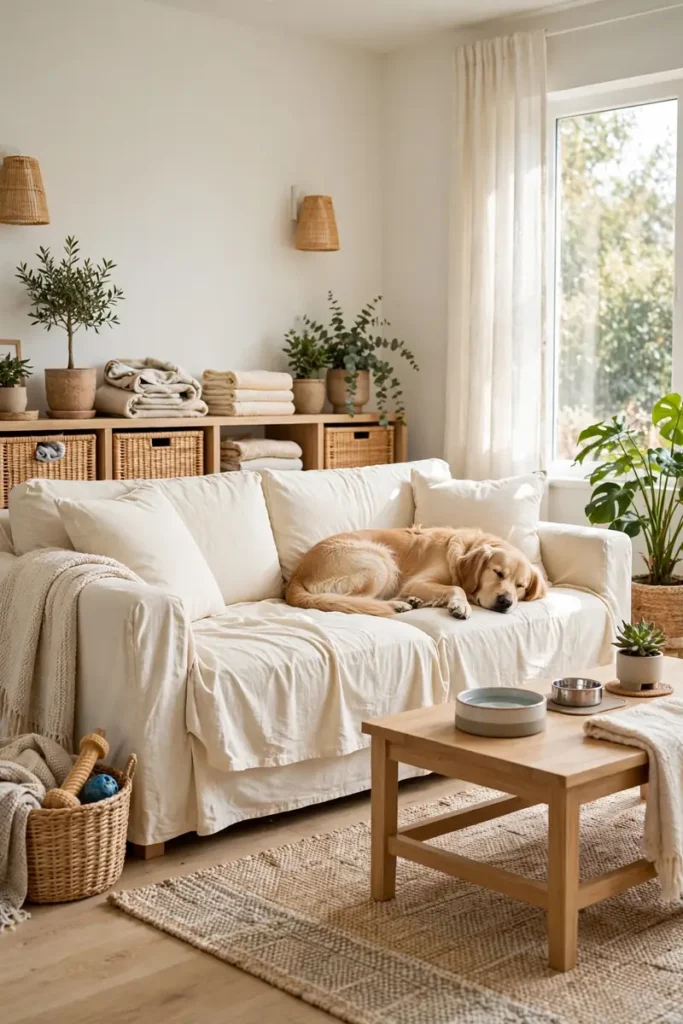
Pets claim the sofa within days, so make the sofa ready for them. Washable slipcovers in performance fabric handle fur, drool, and muddy paws without stress. Choose a medium tone that hides hair between washes, and keep a spare cover so the sofa never sits naked on laundry day.
I’ve seen washable covers save thousand-dollar sofas from pet reality. The trick is buying covers made for your exact sofa model so they fit snugly instead of baggy. Toss them in the wash weekly, and the living room always smells fresh and looks intentional. Measure your sofa before ordering so the fit stays tailored.
Pet Zone Rugs
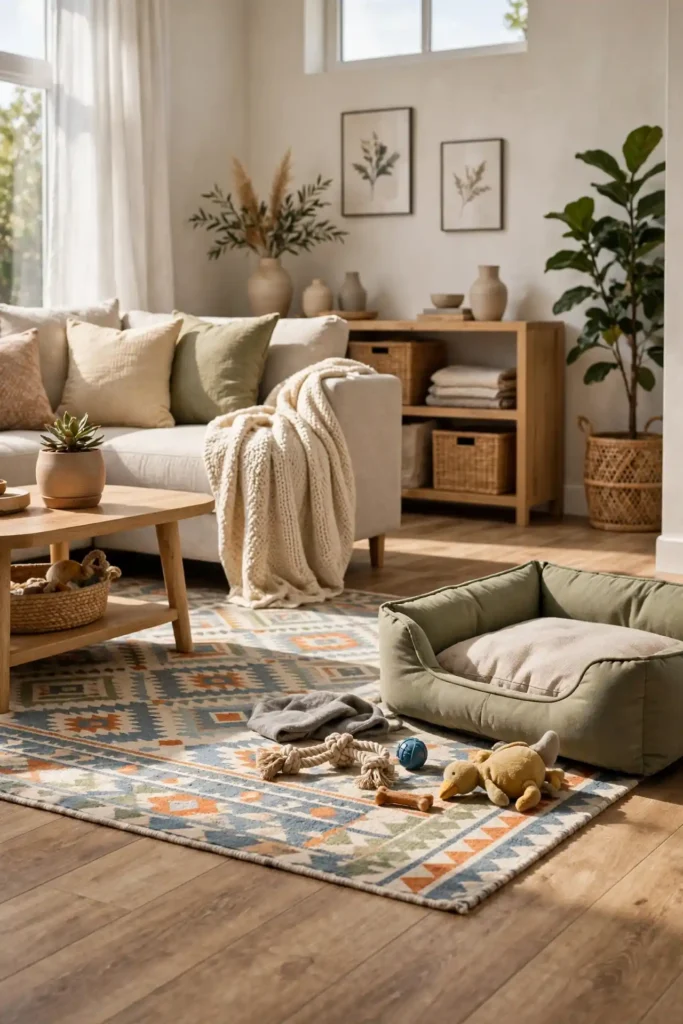
- Choose low-pile, patterned rugs that hide fur and withstand claws better than delicate weaves.
- Place a dedicated pet rug where your animal naps most, giving them a spot that is truly theirs.
- Pick washable rug pads so accidents never reach the floor beneath.
- Vacuum high-traffic pet zones twice weekly to keep fur under control.
Defined pet zones keep the rest of the house cleaner. A handsome rug marks their territory beautifully while protecting floors. When pets have their own appealing spot, they use your good furniture far less often. Rotate the rug yearly so wear stays even. A rug pad adds cushion pets appreciate.
Raised Feeding Stations
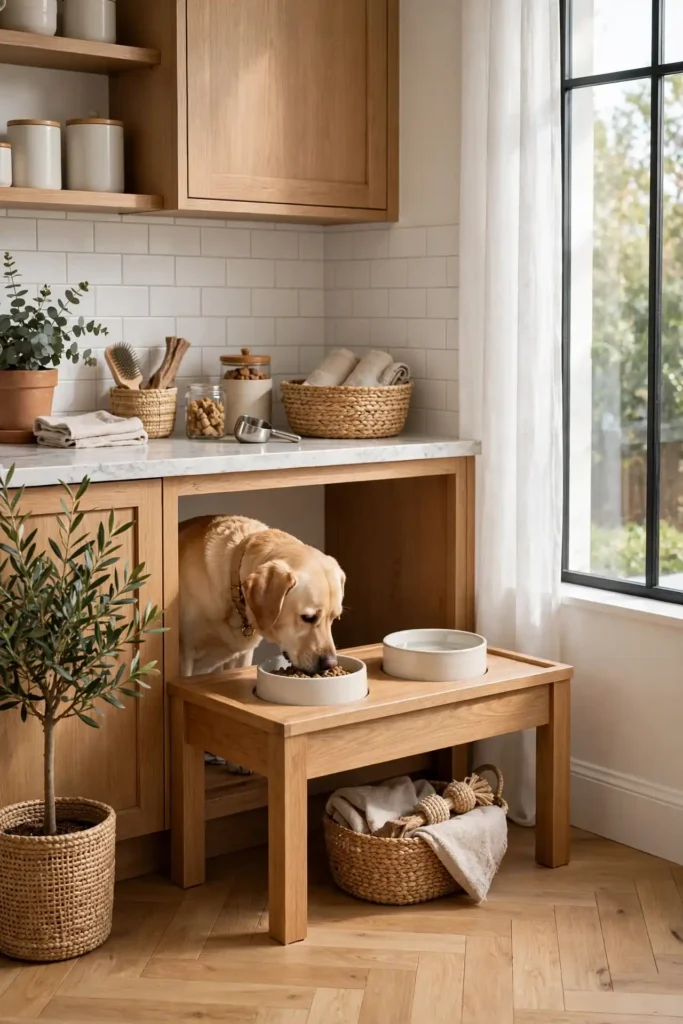
Quick Tip: Raise bowls to your pet’s chest height using a sturdy wooden stand. Raised feeding eases neck strain for taller dogs and keeps bowls from sliding across the floor during enthusiastic meals.
A beautiful feeding station beats bowls shoved in a corner. Wooden stands with ceramic bowls look like furniture, not an afterthought. Place a washable mat underneath to catch spills, and the feeding corner stays as tidy as the rest of the kitchen. Stainless steel bowls resist bacteria better than plastic ones. Wash bowls daily like your own dishes. The station keeps feeding tidy and dignified. Choose a stand wider than the bowls for stability.
Scratch Friendly Fabrics
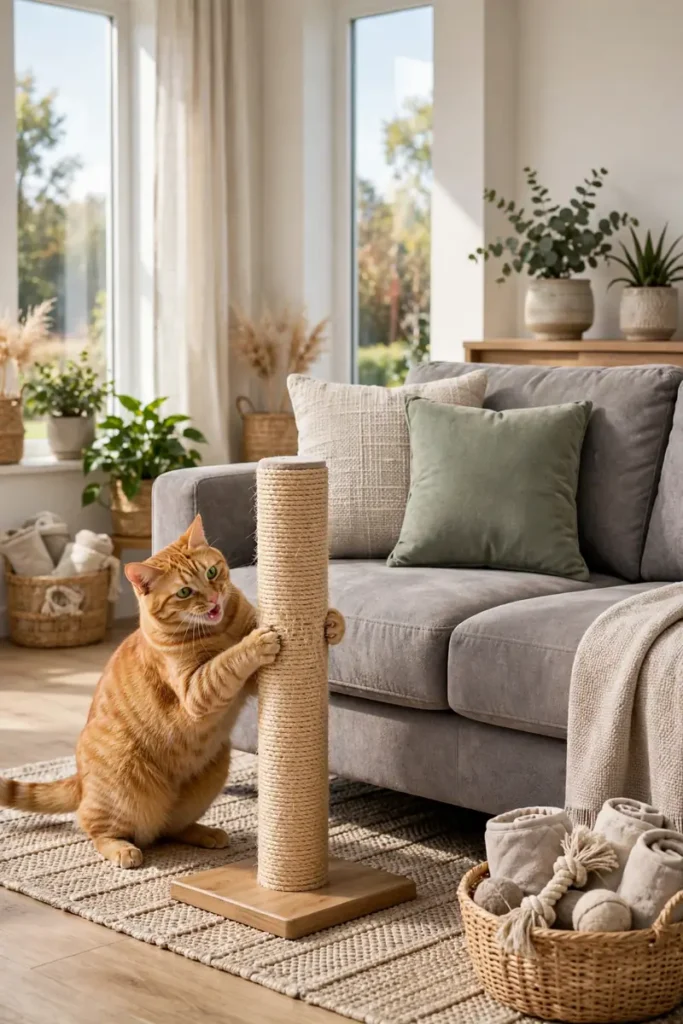
BEFORE: The cat shreds the sofa arms daily, and every chair shows the damage. You hide the worst spots with throws that never stay put. AFTER: Tight-weave microfiber and leather resist claws far better, and a tall sisal post gives the cat a legal scratching target it actually prefers.
Fabric choice matters more than any spray deterrent. Microfiber, canvas, and outdoor-grade fabrics shrug off claws that destroy linen and velvet. Place the scratching post right beside the favorite chair, and reward every use until the habit sticks. Trim claws regularly to reduce damage everywhere. Double-sided tape on corners deters scratching fast.
Hidden Litter Cabinets
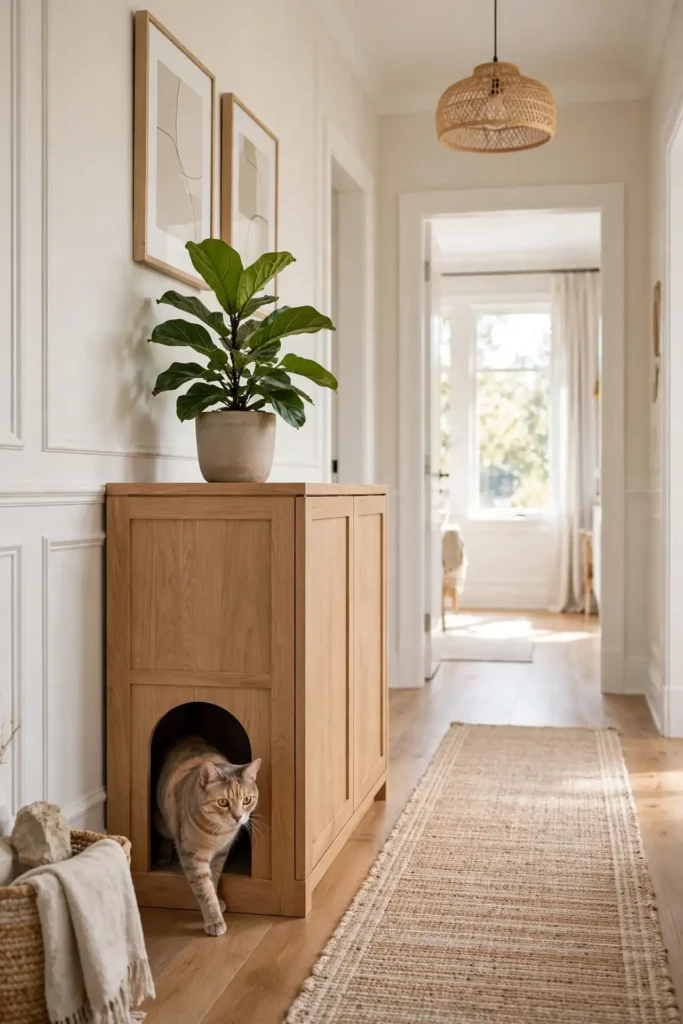
- Choose a ventilated cabinet or sideboard with a door you can modify.
- Cut a cat-sized entry in the side panel, sanding the edges smooth.
- Place the litter box inside on a washable tray for easy cleaning.
- Top the cabinet with decor so it reads as furniture, not a utility box.
Hidden litter cabinets keep the least glamorous pet necessity out of sight. The enclosure also contains odors and stray litter far better than an open box. Your cat gets privacy, and your hallway keeps looking like a hallway. Scoop daily so the enclosed space never smells. Add a motion-sensor light inside for the cat.
Leather Vs Fabric
| Feature | Leather Sofas | Performance Fabric |
|---|---|---|
| Fur | Wipes off in seconds | Needs regular vacuuming |
| Scratches | Shows marks, develops patina | Resists claws better |
| Smells | Does not absorb odors | Needs washable covers |
| Comfort | Cool in summer, needs conditioning | Soft and cozy year-round |
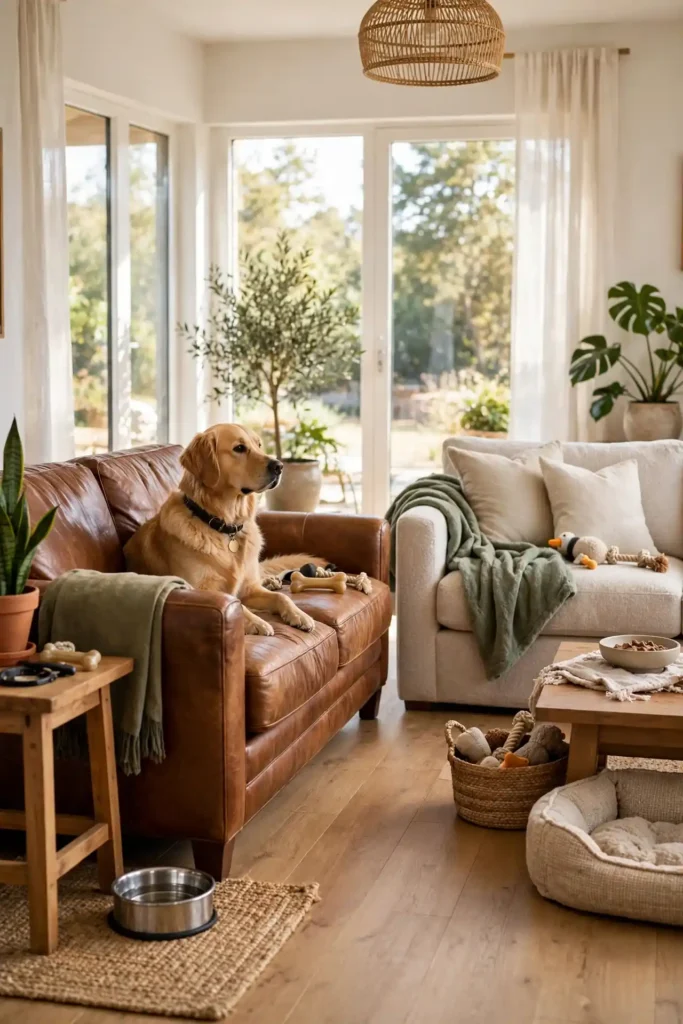
Dog owners often prefer leather for easy fur cleanup, while cat owners lean toward tight-weave fabrics that resist claws. Either way, choose quality: cheap versions of both fail fast under pet life. Slipcovers offer a third option for either base. Test fabric samples against claws before committing. For animal-inspired home tours, see my apartment tour in horse stables for rustic ideas that embrace animals at home.
Toy Basket Stations
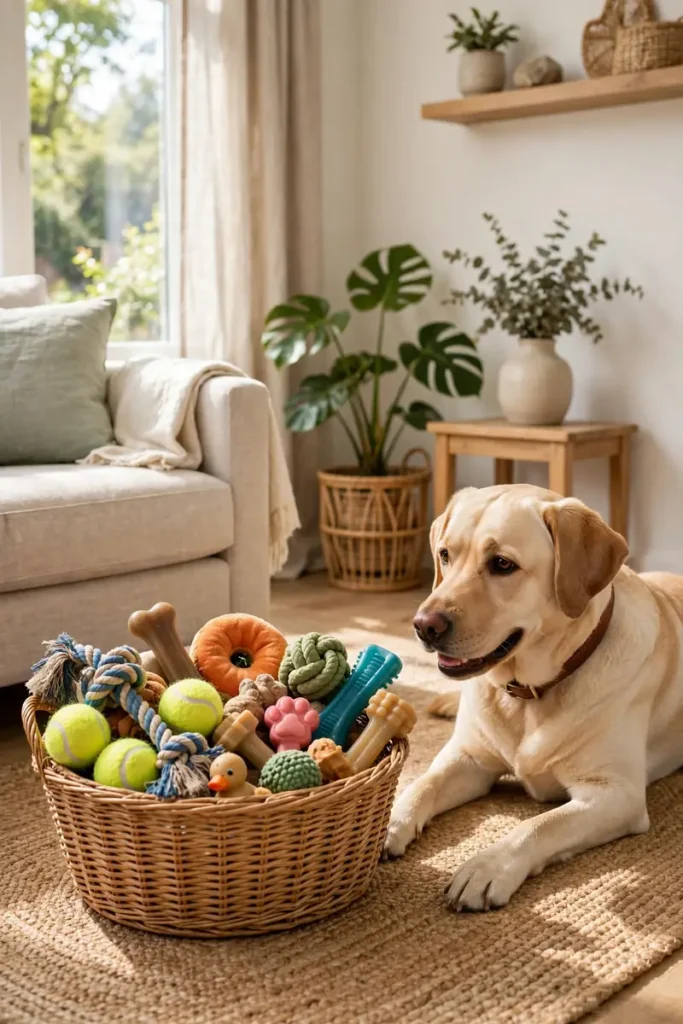
DO: keep one handsome basket for toys in the main living area. DO: rotate toys weekly so old favorites feel new again. DO: choose a basket sturdy enough to survive enthusiastic digging.
DON’T: let toys colonize every room in the house. DON’T: keep broken toys that could splinter or choke. DON’T: buy a basket so pretty you resent the slobber.
A toy station contains the chaos beautifully. Pets learn to bring toys to the basket, and cleanup takes seconds before guests arrive. The basket itself becomes part of the decor when you choose natural weaves that suit your style. Toss the basket in the wash monthly.
Grooming Kit Facts
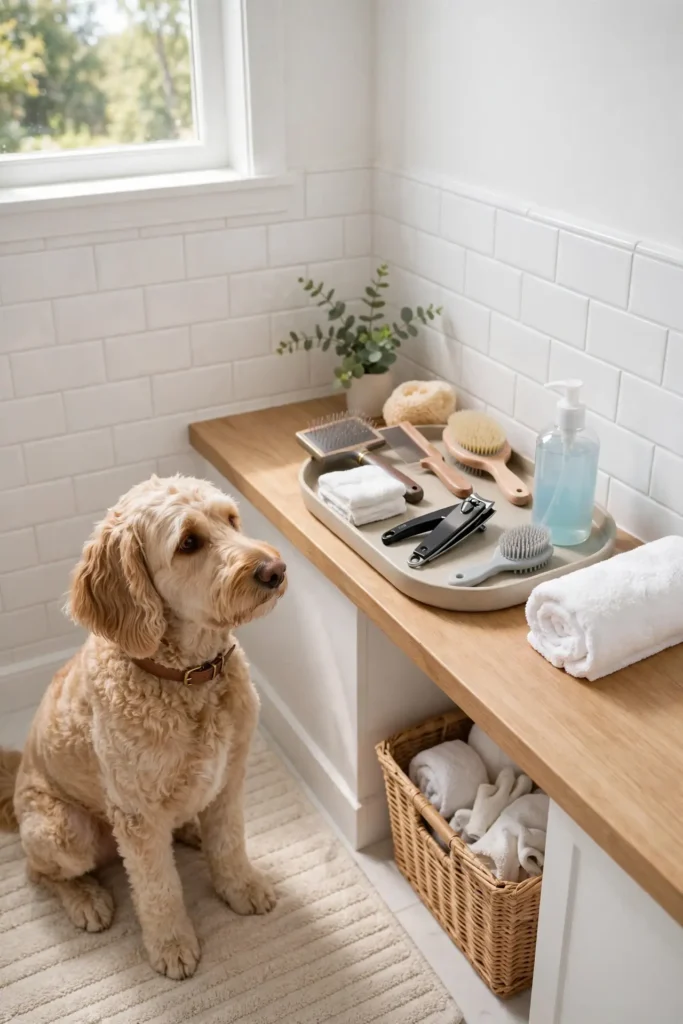
Cost: Low | Time: Minutes weekly | Skill Level: Beginner | Best For: Shedding breeds and long-haired pets needing regular at-home care
Regular grooming cuts household fur dramatically and keeps pets comfortable. A simple kit with a slicker brush, nail clippers, and gentle shampoo covers most needs. Groom in one consistent spot, ideally outdoors or on a washable mat, and the rest of the house stays cleaner between sessions. Brush short-haired pets weekly and long-haired ones daily. Reward calm behavior with treats during every session. Trim nails every two weeks to protect floors and furniture. A calm routine keeps pets cooperative.
Window Perch Shelves
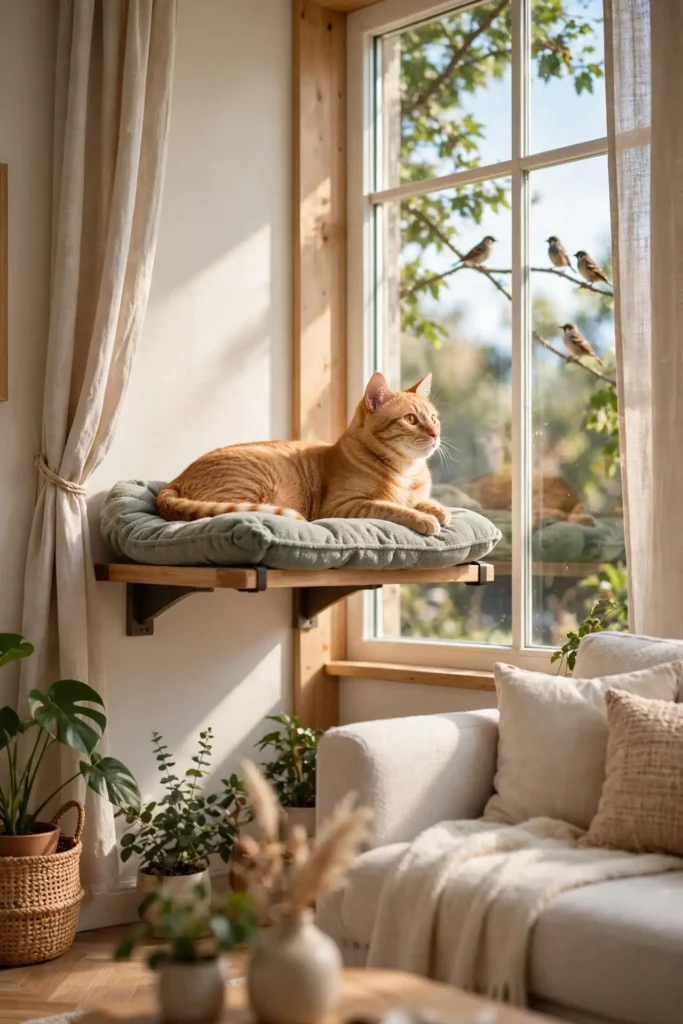
Cats are solar-powered, and a window perch is their favorite appliance. A sturdy mounted shelf with a soft cushion gives them sunbeams and birdwatching without crowding your sills. Mount into studs, since a leaping cat hits the shelf with real force.
I’ve noticed that cats with perches scratch furniture far less. The perch satisfies their climbing and watching instincts in one spot. Place it at a window with the best daily sun, and it becomes the most-used seat in the house. Add a second perch at a different window for variety. Suction-cup perches work for renters who cannot drill. Wash the cushion cover monthly.
Muddy Paw Stations
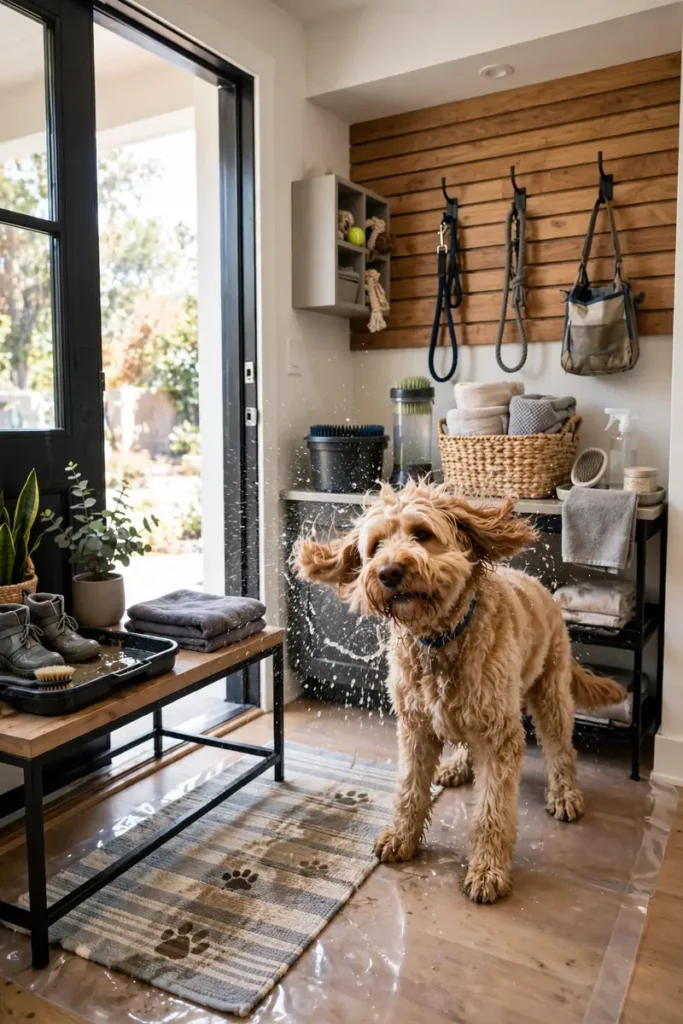
- Place a washable runner from the door inward to catch the first muddy steps.
- Keep a basket of old towels and a paw-washer cup right by the entrance.
- Train a solid “wait” at the door so you can wipe paws before release.
- Choose a darker runner pattern that hides dirt between washings.
A paw station at the entry saves your floors after every walk. The routine takes ninety seconds and prevents hours of mopping. Dogs learn the drill quickly when treats follow the towel, and the entry stays welcoming instead of muddy. Keep an old towel in the car for surprise mud.
Calming Corner Beds
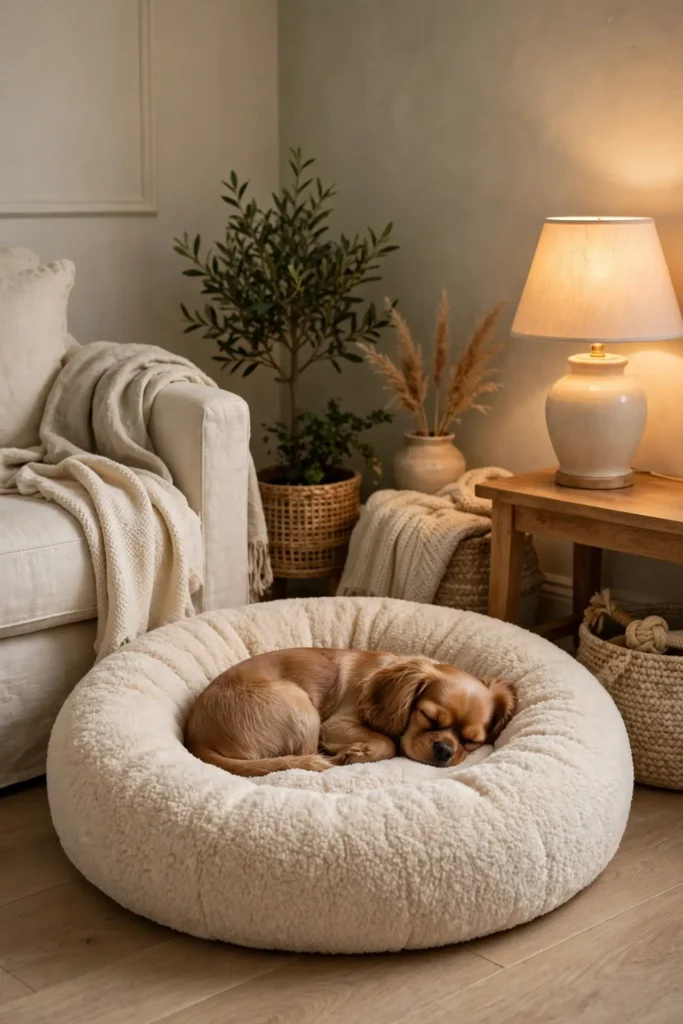
Quick Tip: Choose a donut-style bed with raised edges for anxious pets. The nest shape supports their head and neck while the enclosed feeling eases stress, much like swaddling comforts a baby.
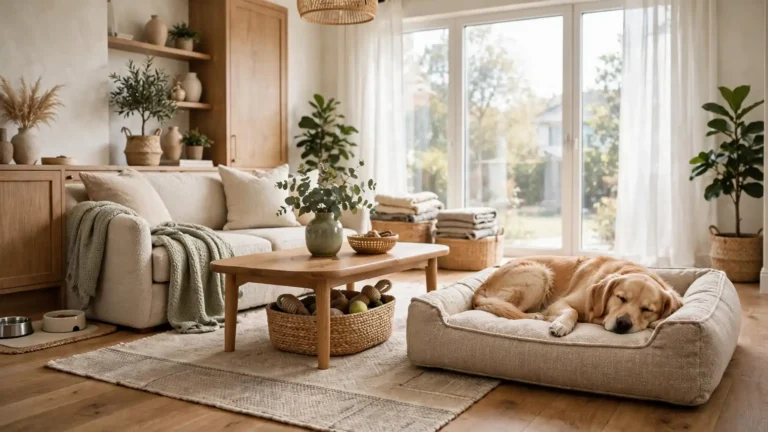
Every pet needs a retreat that is entirely theirs. A calming bed in a quiet corner gives nervous animals a safe harbor during storms and parties. Pick a washable cover, since the favorite bed gets the most use and the most drool. Place a worn t-shirt of yours in the bed for comfort. Keep the bed away from high-traffic hallways. Replace flattened beds yearly for proper support. The right bed becomes their favorite spot.
Furniture Guard Throws
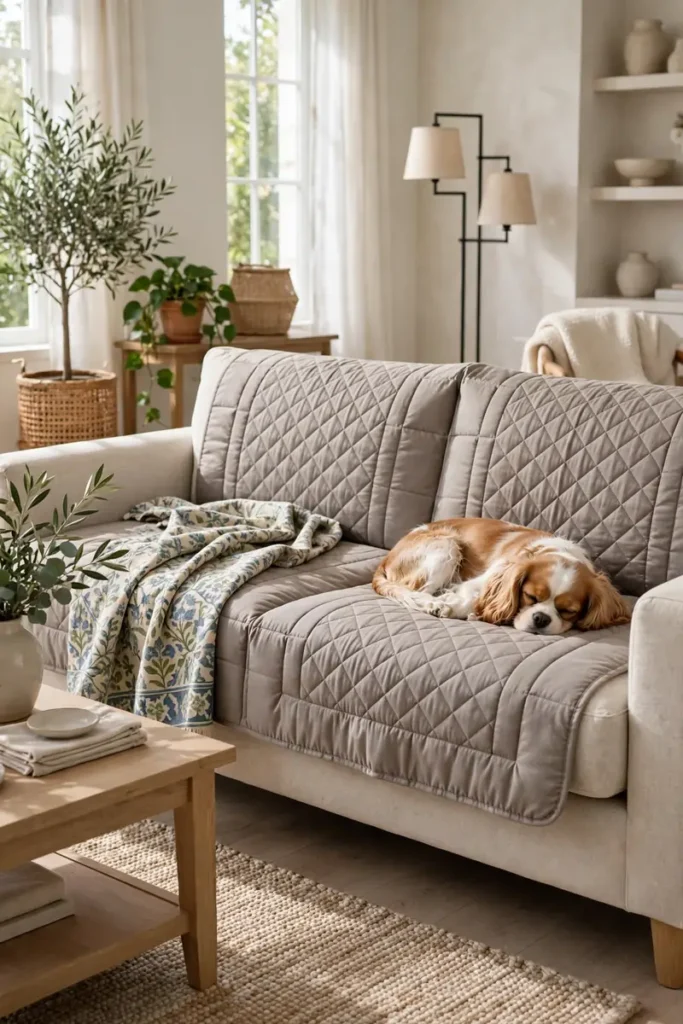
BEFORE: The good sofa bears every claw mark and stain, and you flinch each time the dog jumps up. Guests get the lint-roller treatment. AFTER: A quilted furniture guard in a pretty pattern protects the cushions completely, and it looks like intentional decor rather than a defeat.
Guards with tuck-in anchors stay put better than loose throws. Choose patterns that complement your decor so protection never looks like an apology. Shake them outside weekly, and the sofa underneath stays showroom-fresh for years. Buy two guards so one can wash while the other protects. Dark patterns hide fur between washes. The guards also protect against spills.
Treat Jar Displays

- Choose airtight glass jars with wooden lids to keep treats fresh and looking great.
- Label each jar with a small chalkboard tag so everyone grabs the right snack.
- Keep jars on a low shelf where you can reach them during training sessions.
- Store the bulk bags out of sight so the display stays pretty and uncluttered.
Glass treat jars turn training supplies into kitchen decor. The display keeps rewards visible and handy, which means you actually train more often. That’s why many experts recommend keeping treats visible: convenience drives consistency with pets. Keep a few jars for human snacks too, styled the same way.
Crate Vs Bed
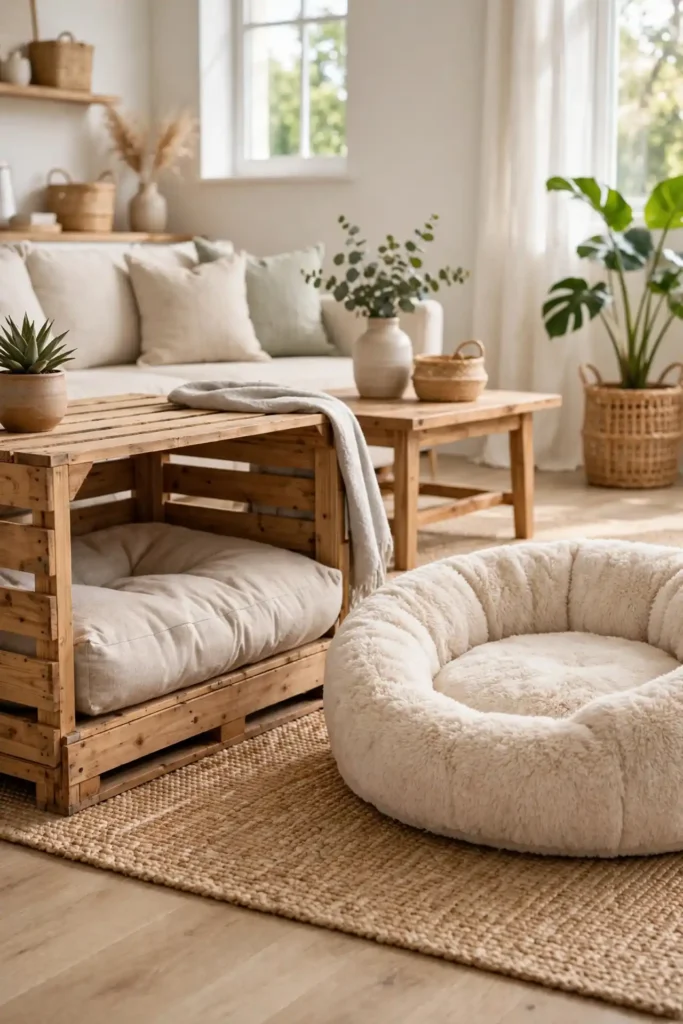
| Feature | Stylish Crate | Open Dog Bed |
|---|---|---|
| Security | Den-like, calms anxious dogs | Open, suits confident sleepers |
| Look | Doubles as side table | Soft, cozy, clearly pet zone |
| Training | Excellent for house training | Better for trained adult dogs |
| Space | Fixed footprint, stackable decor | Moves easily room to room |
Many owners use both: a crate for training and nights, plus a bed for daytime lounging. Wooden crate furniture looks like a side table, so the crate never screams kennel. Match the choice to your dog’s age and anxiety level. Introduce the crate gradually with treats, never as punishment. Cover three sides with a blanket for extra den coziness.
Leash Hook Walls
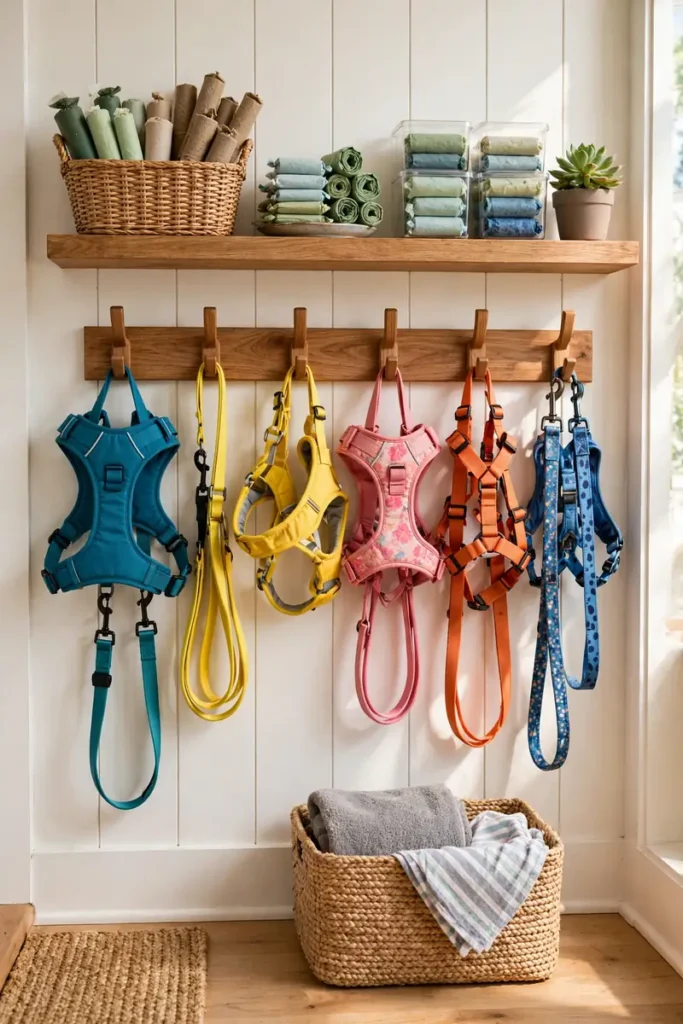
DO: mount hooks at your comfortable reaching height near the door. DO: give each pet its own labeled hook. DO: add a small shelf above for waste bags and treats.
DON’T: toss leashes on a chair where they tangle. DON’T: hang heavy gear on weak adhesive hooks. DON’T: forget a hook for the guest leash.
A leash wall ends the pre-walk scavenger hunt. Everything hangs in one visible spot, so walks start calm instead of chaotic. The setup takes twenty minutes to install and saves that much time every single week. Add a small mirror above so last checks happen at the door.
Air Purifier Facts
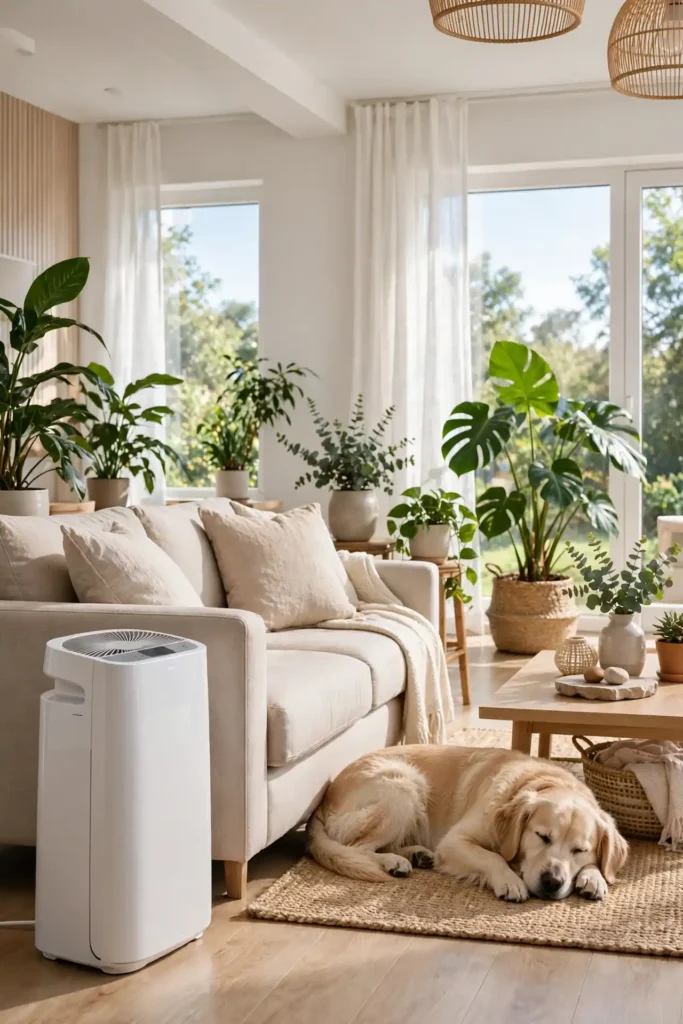
Cost: Medium | Time: Plug in and forget | Skill Level: Beginner | Best For: Allergy sufferers and multi-pet homes wanting fresher air
Pet dander floats everywhere, and a good HEPA purifier catches what vacuuming misses. Place one in the room where pets spend most time, and run it continuously on low. The air smells noticeably fresher within days, and allergy sufferers feel the difference fastest. Change filters on schedule or the purifier loses power fast. Choose a quiet model for bedrooms where pets sleep. The difference in dust on furniture is visible within a week. Clean air helps pets with allergies too.
Stain Resistant Paint
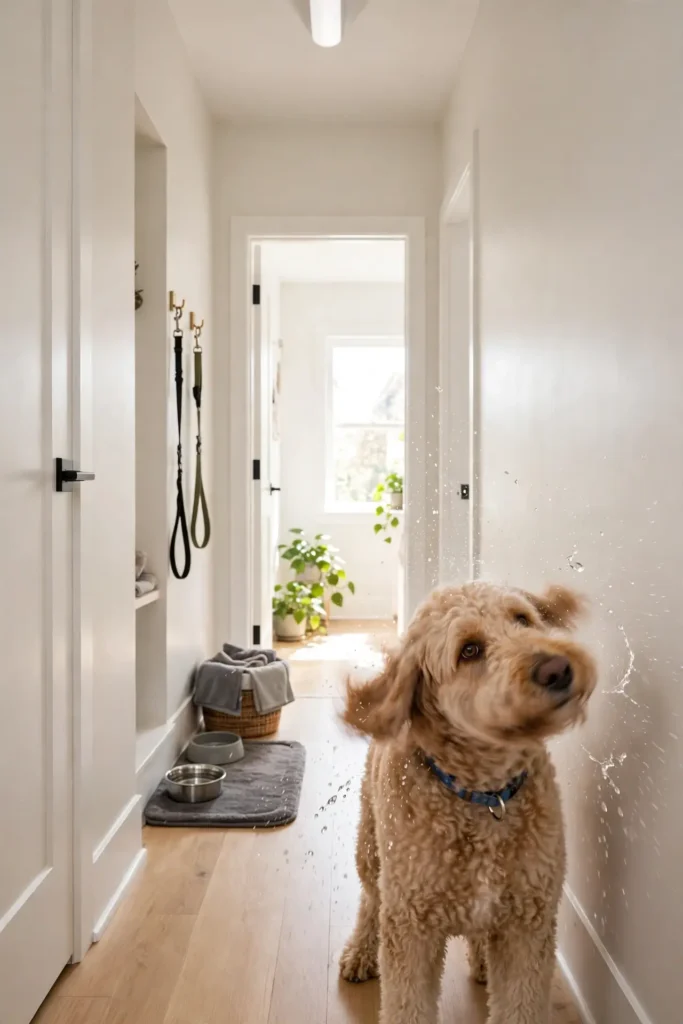
Walls take surprising abuse in pet homes, from shaking dogs to rubbing cats. Stain-resistant satin paint wipes clean with a damp cloth instead of needing touch-ups. Repaint high-traffic zones like hallways and entries in this finish, and muddy shake-offs stop being emergencies.
I’ve seen this work well in many cases: one weekend of repainting ends years of wall anxiety. Choose a warm neutral that hides scuffs between cleanings. The washable finish also survives kids, guests, and everything else life throws at walls. Keep leftover paint for quick touch-ups after rough weeks. Eggshell finish hides imperfections better than flat. Two coats last far longer than one.
Pet Photo Galleries
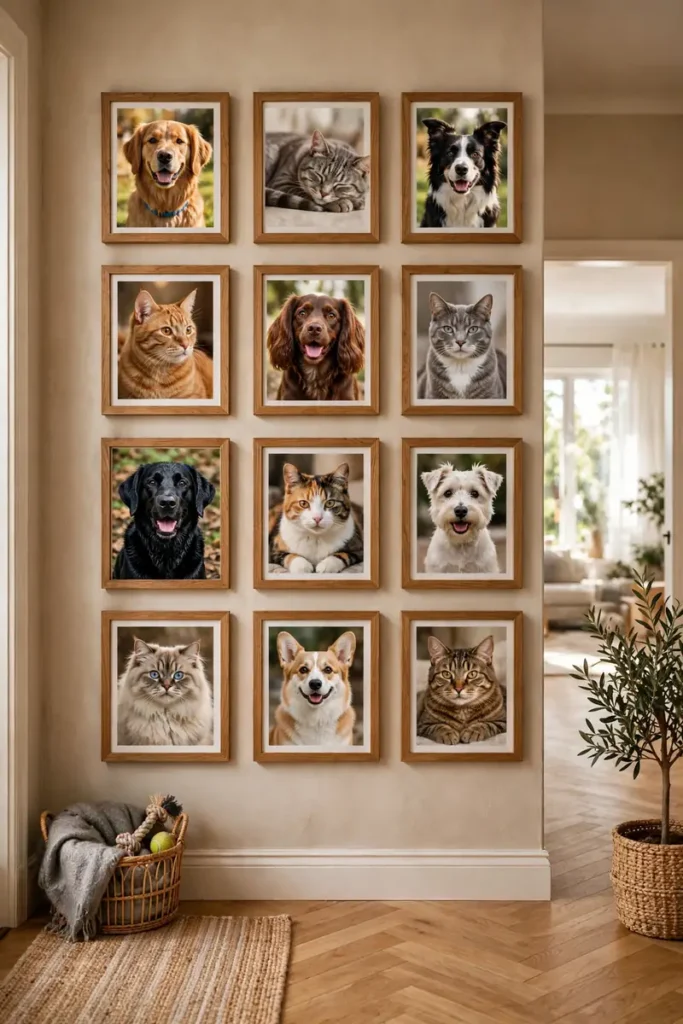
- Print favorite pet photos in matching frames for a gallery that feels designed, not random.
- Mix candid phone shots with one professional portrait as the centerpiece.
- Hang the gallery where guests naturally pause, like a hallway or stair wall.
- Update one frame each year to keep the display current as pets grow.
A pet photo gallery celebrates the family members with four legs. The display sparks joy daily and gives guests something wonderful to admire. This personal touch makes any house feel unmistakably like your home. Include a photo of your first pet for nostalgia. Black frames suit any wall color.
Enclosed Balcony Gardens
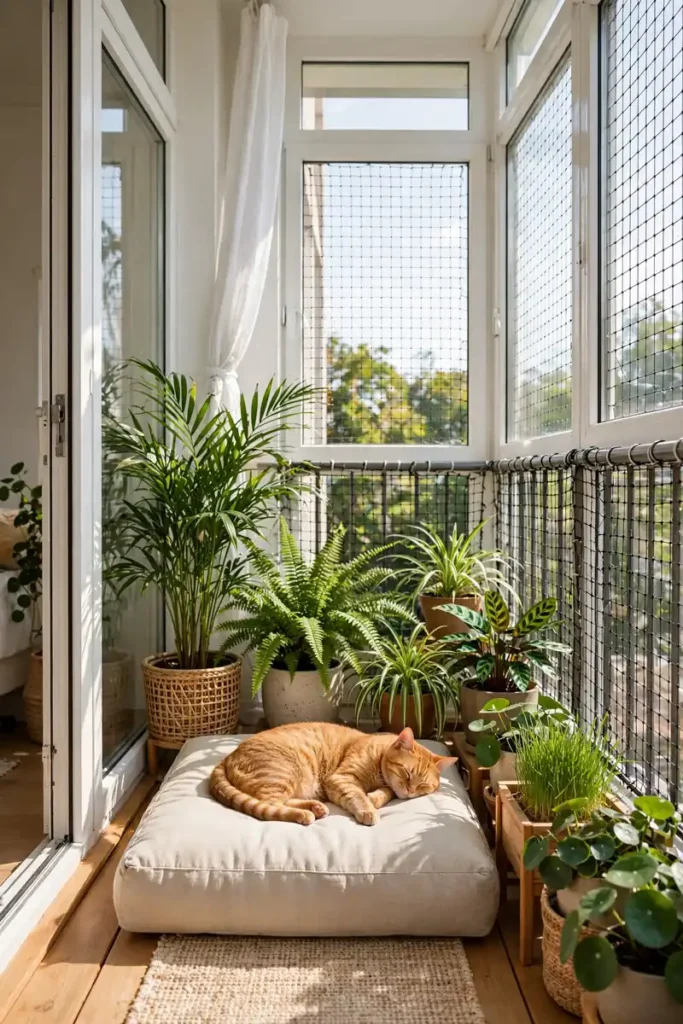
Quick Tip: Enclose the balcony with sturdy pet-safe netting before adding a single plant. The barrier keeps cats and small dogs secure while letting breezes and sunshine flood in all day.
A safe balcony garden gives indoor pets a taste of the outdoors. Fill it with pet-safe plants like spider plants and cat grass, avoiding lilies and other toxic varieties. Add a weatherproof cushion, and the balcony becomes their favorite sunny outpost. Check netting monthly for gaps or wear. Add a shallow water dish so pets hydrate outdoors. Supervise first visits until pets learn the boundaries. The fresh air enriches indoor pets enormously.
Quiet Retreat Corners
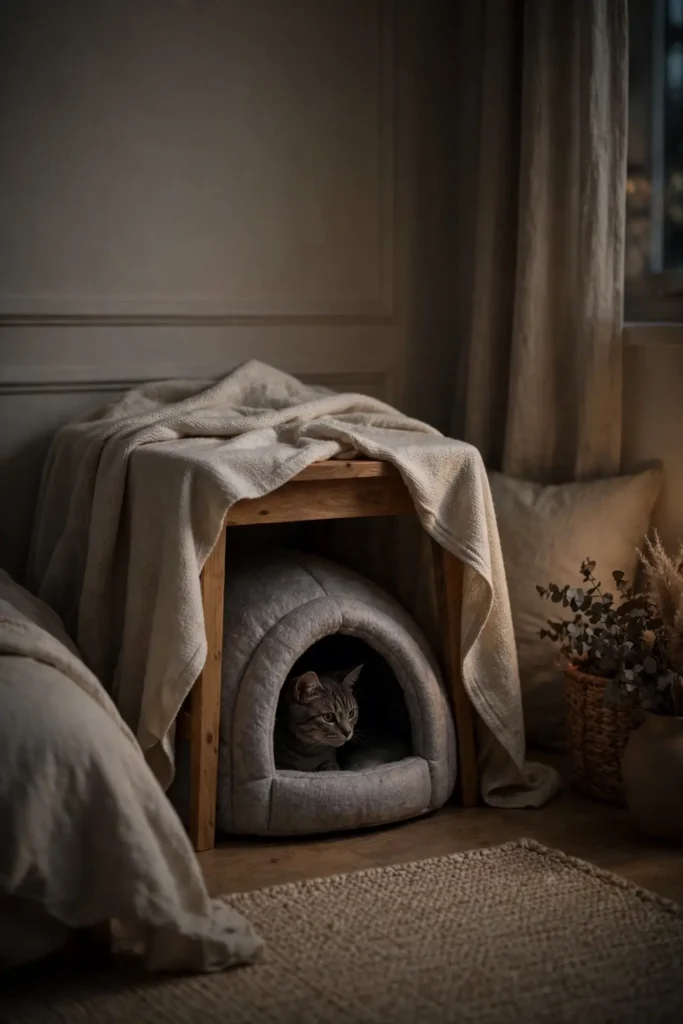
BEFORE: The nervous pet hides under your bed during every storm and gathering, unreachable and stressed. You worry while guests wonder. AFTER: A dedicated retreat corner with a covered bed gives them a proper hiding spot that feels safe instead of desperate.
Place the retreat in a low-traffic corner away from loud appliances. A draped table or covered crate works beautifully. Never drag a hiding pet out; let the safe space do its calming work, and they will emerge when ready. Add a ticking clock nearby; the rhythm soothes anxious pets. Keep the retreat available always, not just during storms.
Feeding Schedule Charts
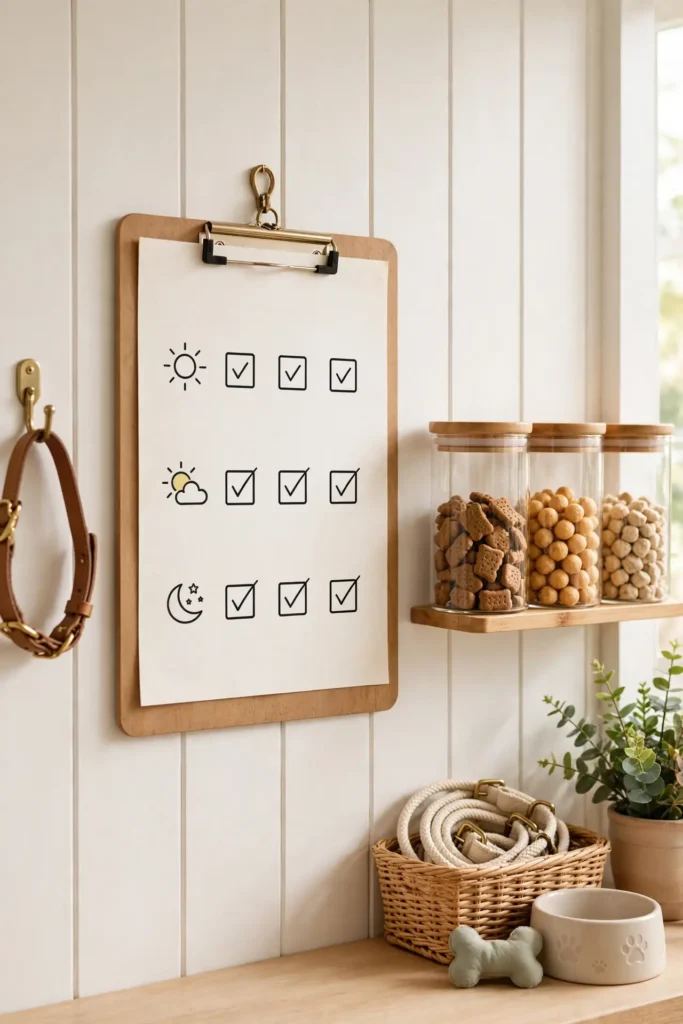
- Write each pet’s name, food type, and portion on a simple chart.
- Hang it inside a cabinet door or on the fridge where everyone sees it.
- Check off each meal so nobody double-feeds the hopeful beggar.
- Note medication times on the same chart for one-glance care.
A feeding chart ends the “did anyone feed the dog” debate forever. Multi-person households especially benefit, since hopeful pets exploit every gap. The chart also helps pet sitters keep routines perfect while you travel. Laminate the chart so it survives kitchen splashes. Use dry-erase markers for easy daily check-offs. The chart prevents both missed meals and double dinners.
Hardwood Vs Carpet
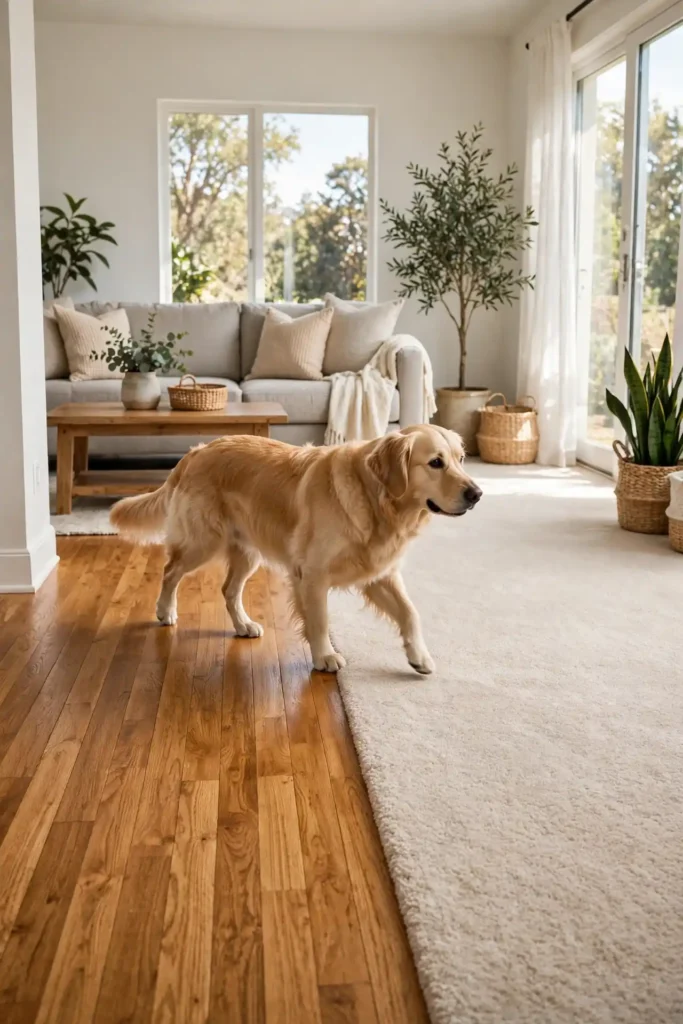
| Feature | Hardwood Floors | Carpet |
|---|---|---|
| Accidents | Wipe up fast, no staining | Absorbs fast, stains linger |
| Fur | Sweeps up in minutes | Traps fur, needs deep vacuuming |
| Comfort | Hard under paws, add rugs | Soft and warm for naps |
| Durability | Scratches show, refinishable | Wears flat in pet paths |
Hardwood wins for most pet homes thanks to easy cleanup, with rugs adding comfort where pets rest. If you love carpet, choose low-pile pet-rated styles in forgiving patterns. Either way, keep nails trimmed to protect whatever lies underfoot. Area rugs over hardwood give the best of both worlds. Luxury vinyl plank handles pets better than both.
Conclusion
A pet friendly home is a happy home. These pet friendly space ideas prove that beautiful design and beloved animals belong together, with the right fabrics, zones, and routines. Start with the idea that solves your biggest daily frustration, then build from there. I’ve seen how small changes like these can completely shift the way a space feels. Save your favorites on Pinterest, try one idea this weekend, and enjoy a home that loves your pets back. Your pets give you unconditional love; return it with thoughtful design. Start with one idea and watch tails wag. A home designed for pets is a home full of joy.


2 Comments