25 Modern Victorian Bathroom Design Ideas for Vintage Luxury
A bathroom can feel like a small private hotel suite when old world detail meets clean modern function. The best modern Victorian bathroom design starts with pieces that carry history, a clawfoot tub, an ornate mirror, patterned tile, then pairs them with reliable plumbing, bright light, and storage that actually works.
Every idea below follows one simple balance: one vintage hero, one modern helper, and a calm palette holding them together. Warm brass, soft cream, deep green, and marble tones keep the look collected rather than themed. If you are planning the rest of the house too, the gentle palette in these pale yellow and walnut bedroom ideas shows how soft color can carry from room to room. Start with the upgrade you will use every single day, and let the room grow from there.
Classic Clawfoot Tub Centerpiece
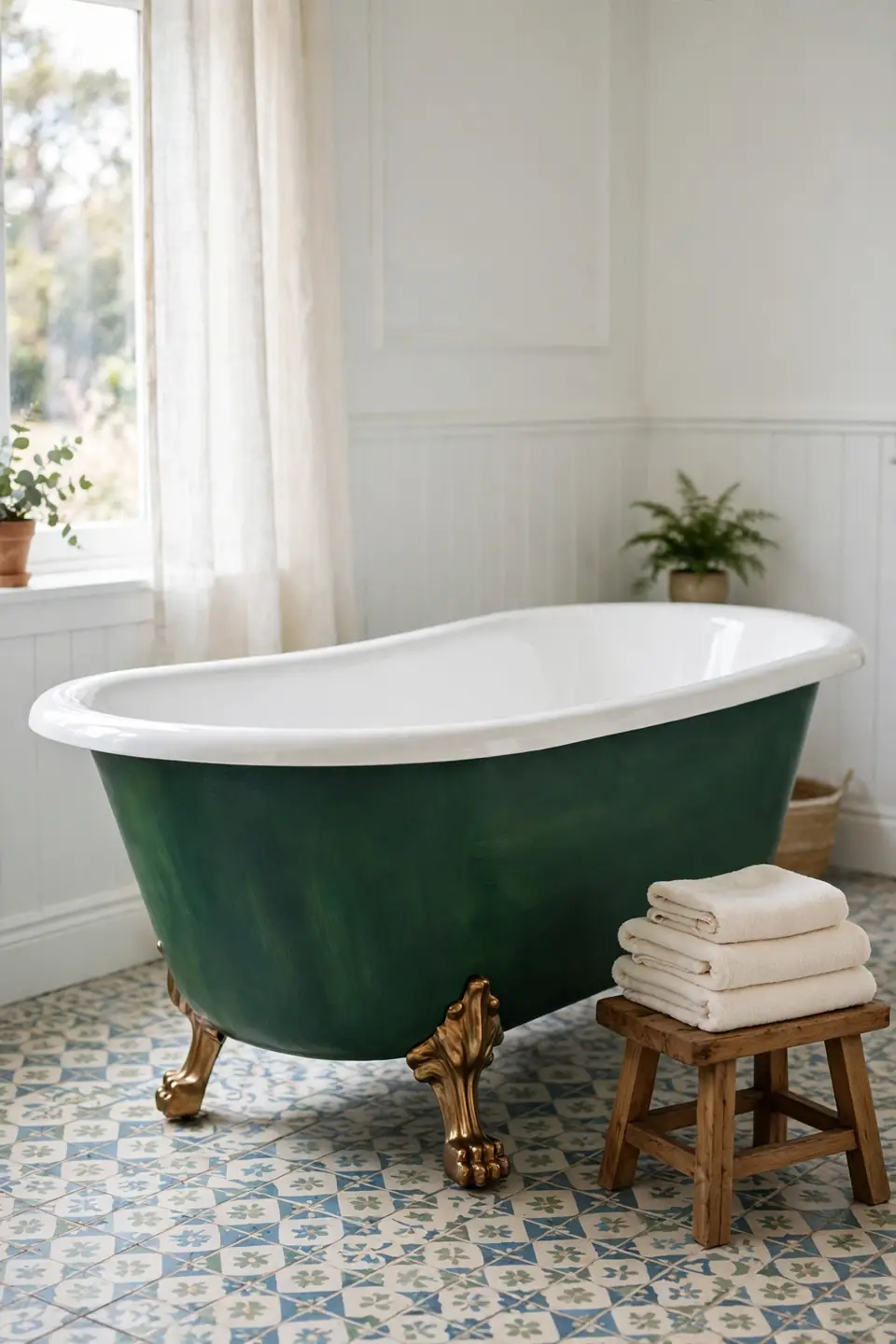
A clawfoot tub placed in the center of the room turns an ordinary soak into the main event. Cast iron holds heat far longer than acrylic, so the water stays warm while the painted exterior carries the color story of the room. White inside with a deep green or charcoal shell reads classic Victorian without feeling cold.
Give the tub breathing room on all sides so it reads as furniture, not plumbing. A small wooden stool beside it holds towels and a book within reach. Keep the floor under it simple and waterproof, and choose ball and claw feet in the same metal as your faucets for a joined up finish.
Ornate Gold Framed Mirror

- Pick a frame with carved corners so the mirror reads as furniture, not plain glass.
- Hang the center near eye level, about 160 cm from the floor.
- Match aged gold to warm brass taps so the metals agree.
- Size the glass at two thirds the vanity width or wider.
- Dust the frame dry, since water spots aged finishes quickly.
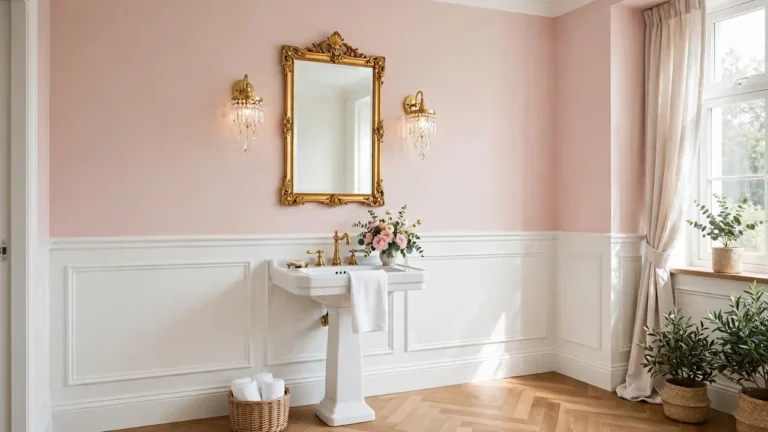
A mirror this decorative earns its wall, so keep everything around it quiet. Plain tiles, a simple shelf, and unpatterned towels let the frame carry the whole vintage note. In my experience, one ornate piece per wall is the line between collected and cluttered, and the mirror is the safest place to spend that allowance.
Patterned Encaustic Floor Tiles
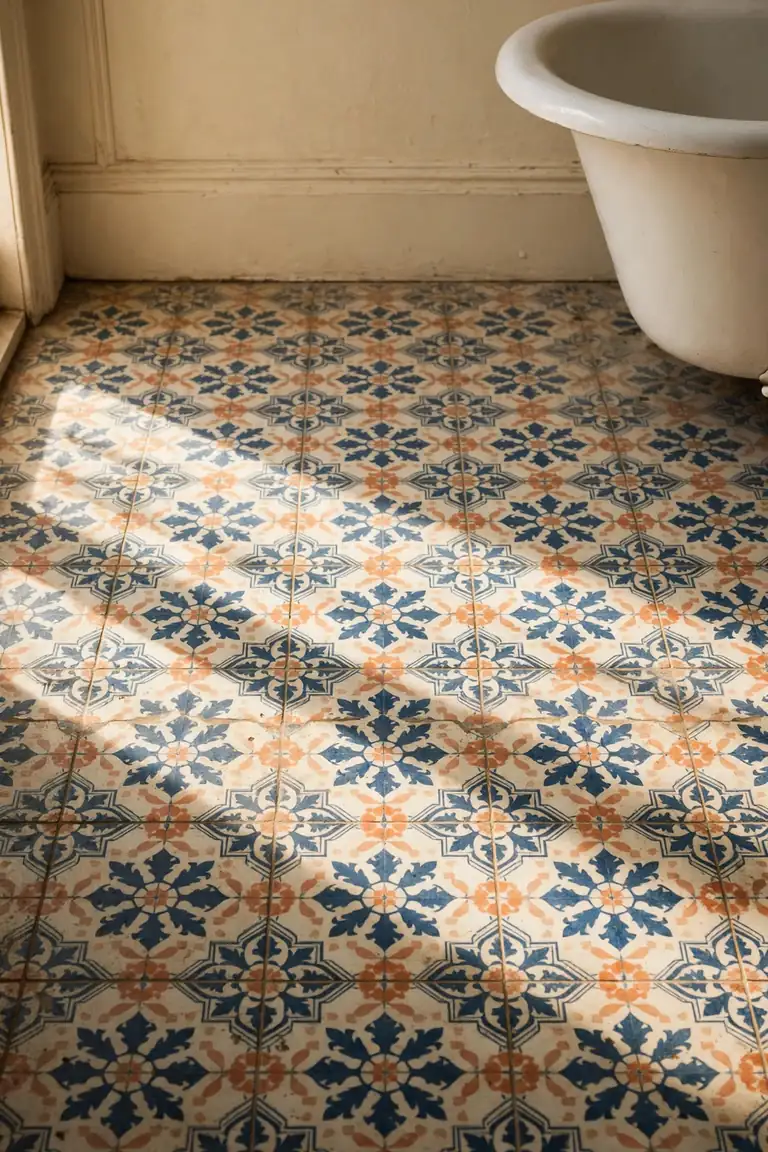
Quick Tip: Lay a loose row of tiles across the doorway before fixing anything. Stand back and check the pattern repeat at eye level, because a motif that looks balanced in a small sample can feel busy across a full floor.
Encaustic style tiles give a bathroom its Victorian heartbeat more than any other single choice. Cement originals are heavy and need sealing, but porcelain versions copy the patterns at half the weight and none of the upkeep. Keep the colors to two or three, like ink blue, cream, and a whisper of terracotta, and let the floor be the one loud voice in the room.
Deep Green Panelled Walls
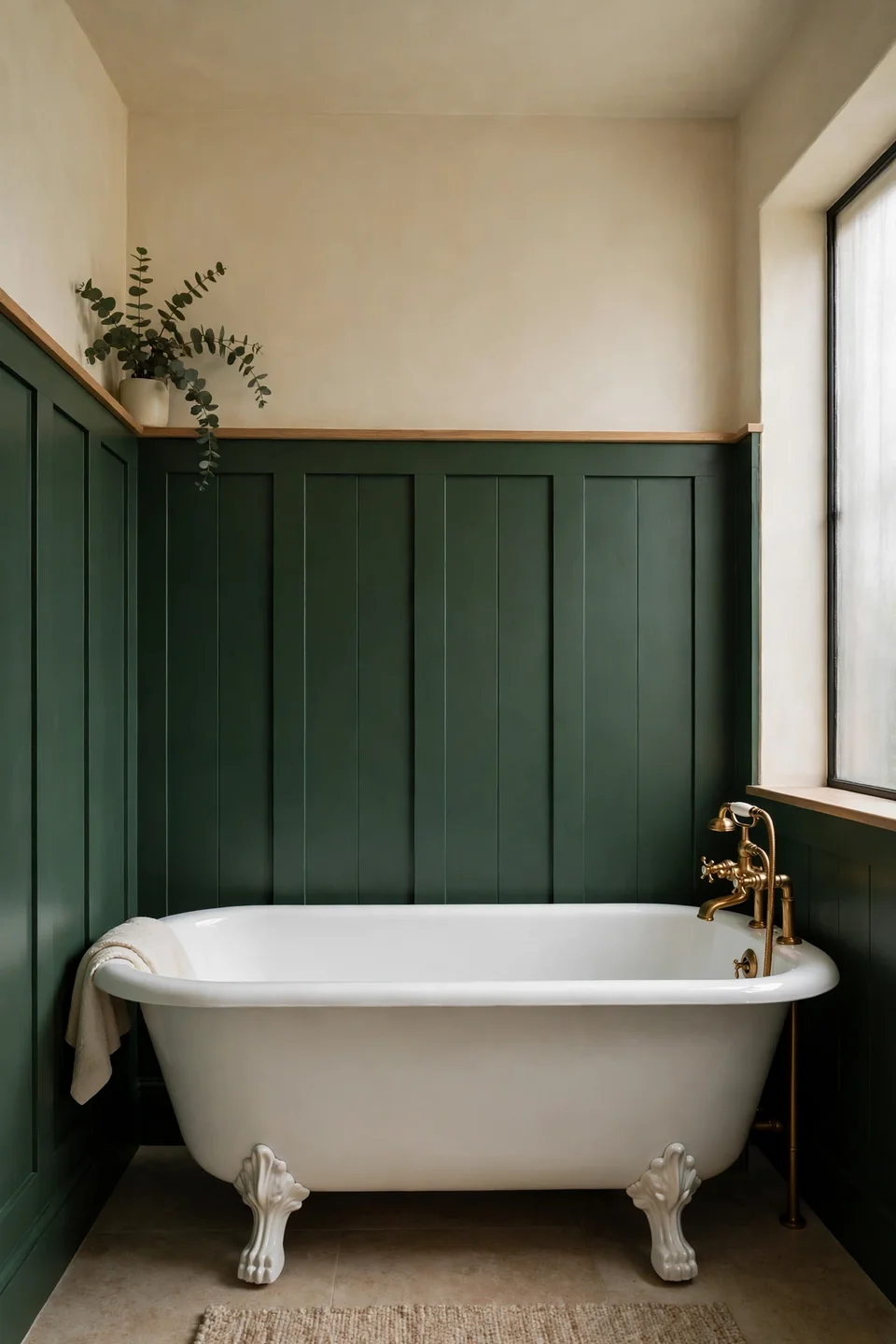
BEFORE: Flat white walls and a plain mirror made the room feel like a rental. The tub sat against a bare wall with nothing above it, the chrome fittings looked cold, and every sound echoed off hard, empty surfaces.
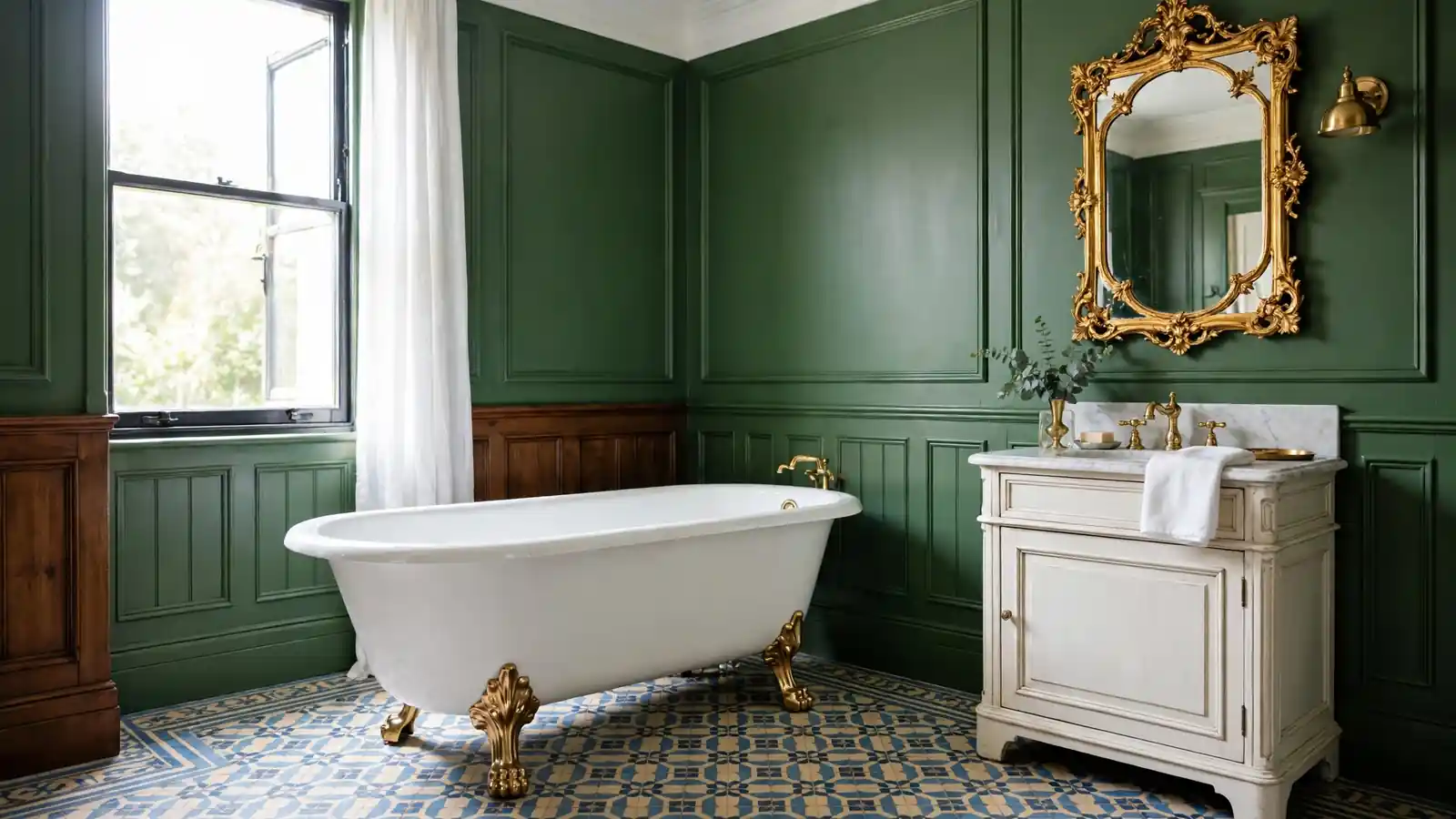
AFTER: Wall panels painted deep bottle green now rise two thirds of the wall, capped with a slim ledge. The dark color wraps the tub in shadow and warmth, brass fittings glow against it, and the room feels hushed and private.
Paneling suits Victorian rooms because the style was built on layered walls. Use moisture resistant board in splash zones and ordinary panels elsewhere. Keep the ceiling and the top third of the wall soft cream so the green stays rich instead of heavy.
Marble Topped Washstand Vanity
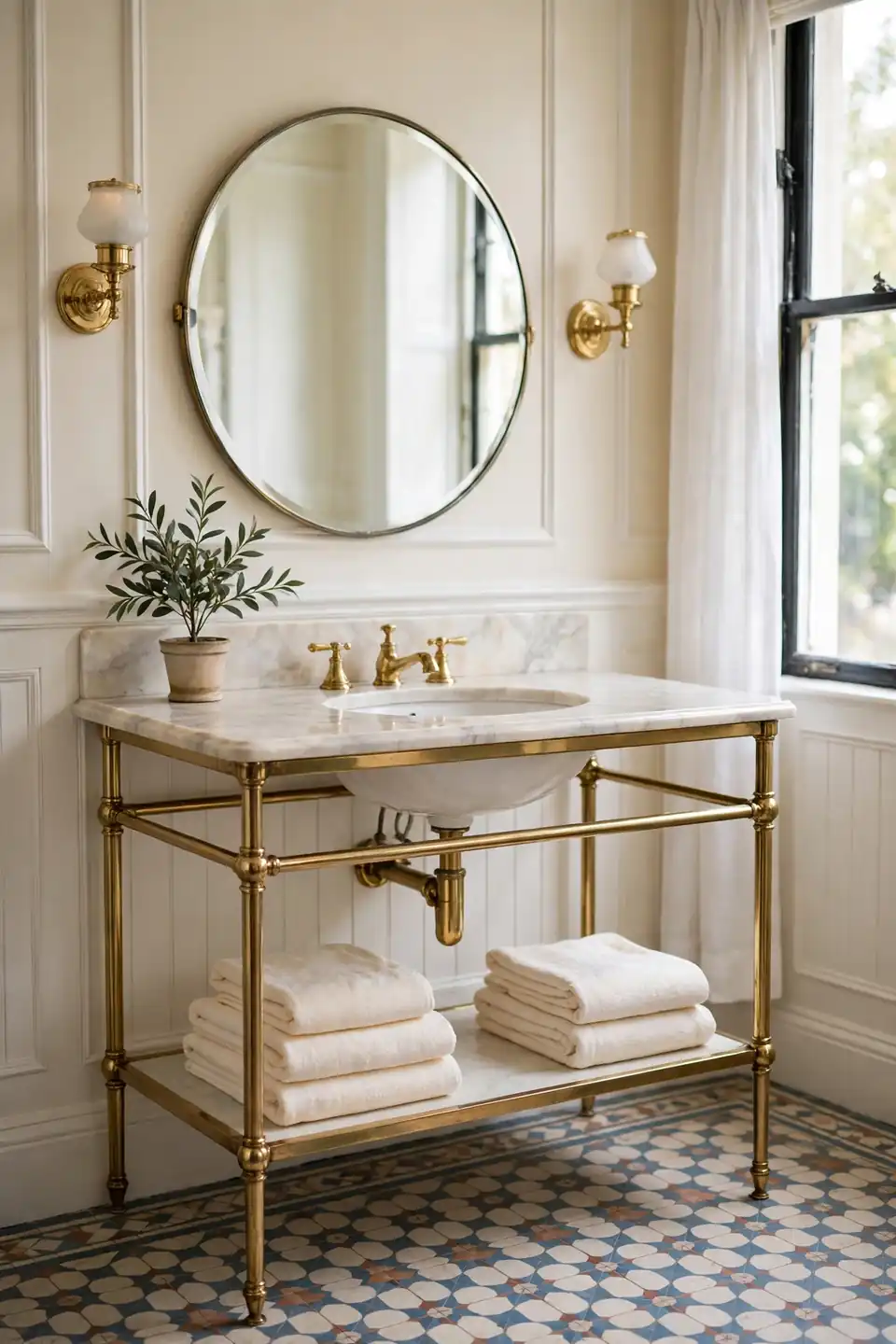
- Measure the alcove and leave at least 10 cm of clearance on each side of the stand.
- Choose a washstand frame in chrome or brass with an open lower shelf for towels.
- Set a marble slab on top, sealed twice, with cutouts matched to your basin and taps.
- Fit a deep rectangular or oval basin that sits proud of the stone surface.
- Hang a simple mirror above and keep styling to one tray and one plant.
The open frame keeps a small bathroom feeling light while the marble does the luxury work. Stone is porous, so wipe toothpaste and soap the same day and reseal the slab once a year. That small routine keeps the surface bright for decades.
Exposed Brass Pipe Shower
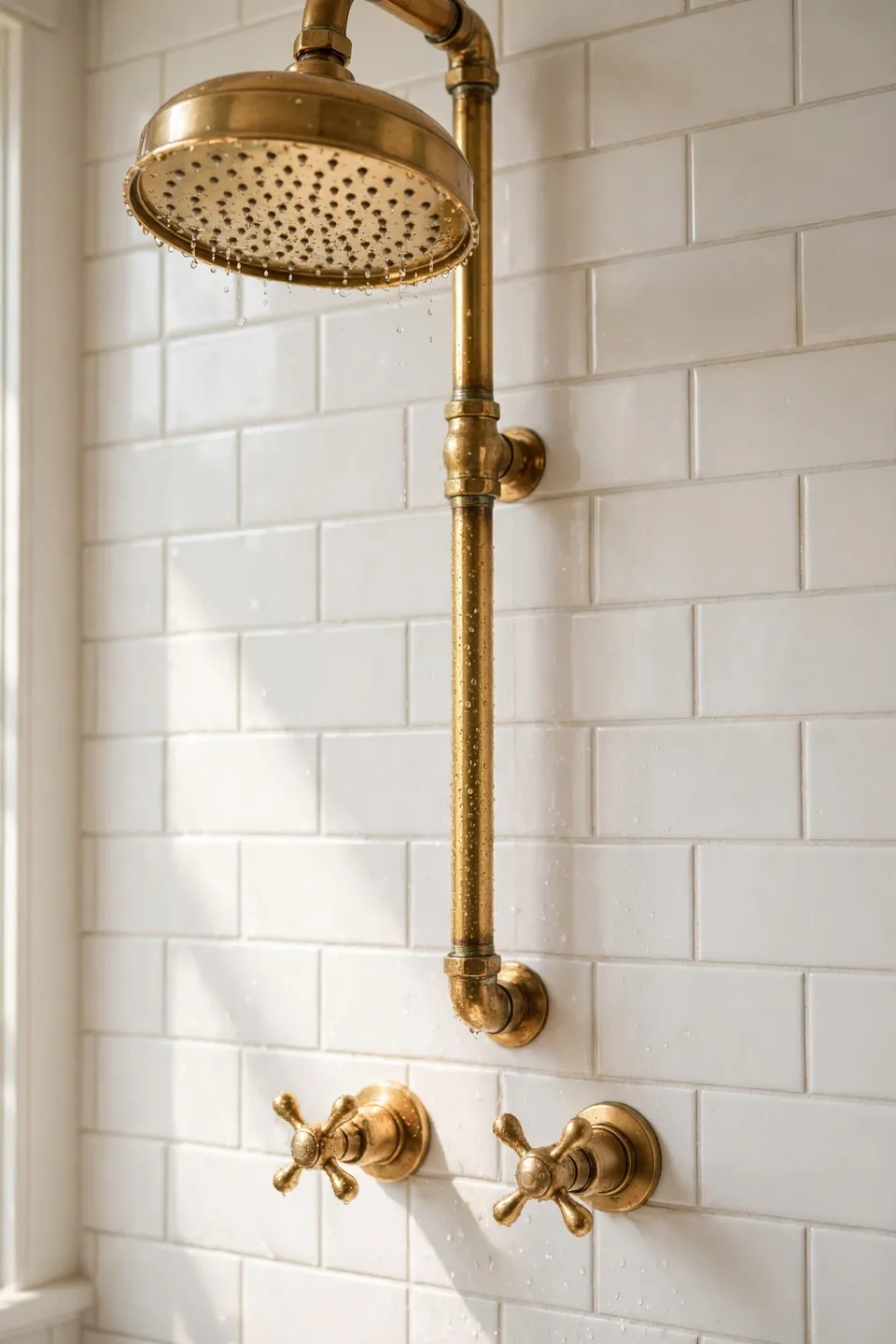
Exposed pipework was standard in Victorian bathrooms, and in brass it becomes decoration instead of plumbing. The choice is how much pipe you show, so decide with your cleaning habits and your love of character in mind before ordering.
| Option | Exposed Brass Shower | Concealed Modern Valve |
|---|---|---|
| Look | Visible riser pipe and cross handles | Clean wall, single lever plate |
| Feel | Vintage character, tactile controls | Minimal, hotel style calm |
| Repairs | Every joint reachable without opening walls | Valve hidden, wall opening needed |
Brass ages honestly, growing softer and deeper with steam and time. Pair the exposed riser with a large rain head and a handheld wand on a slide bar, and the vintage look gains real modern comfort.
High Tank Pull Chain Toilet
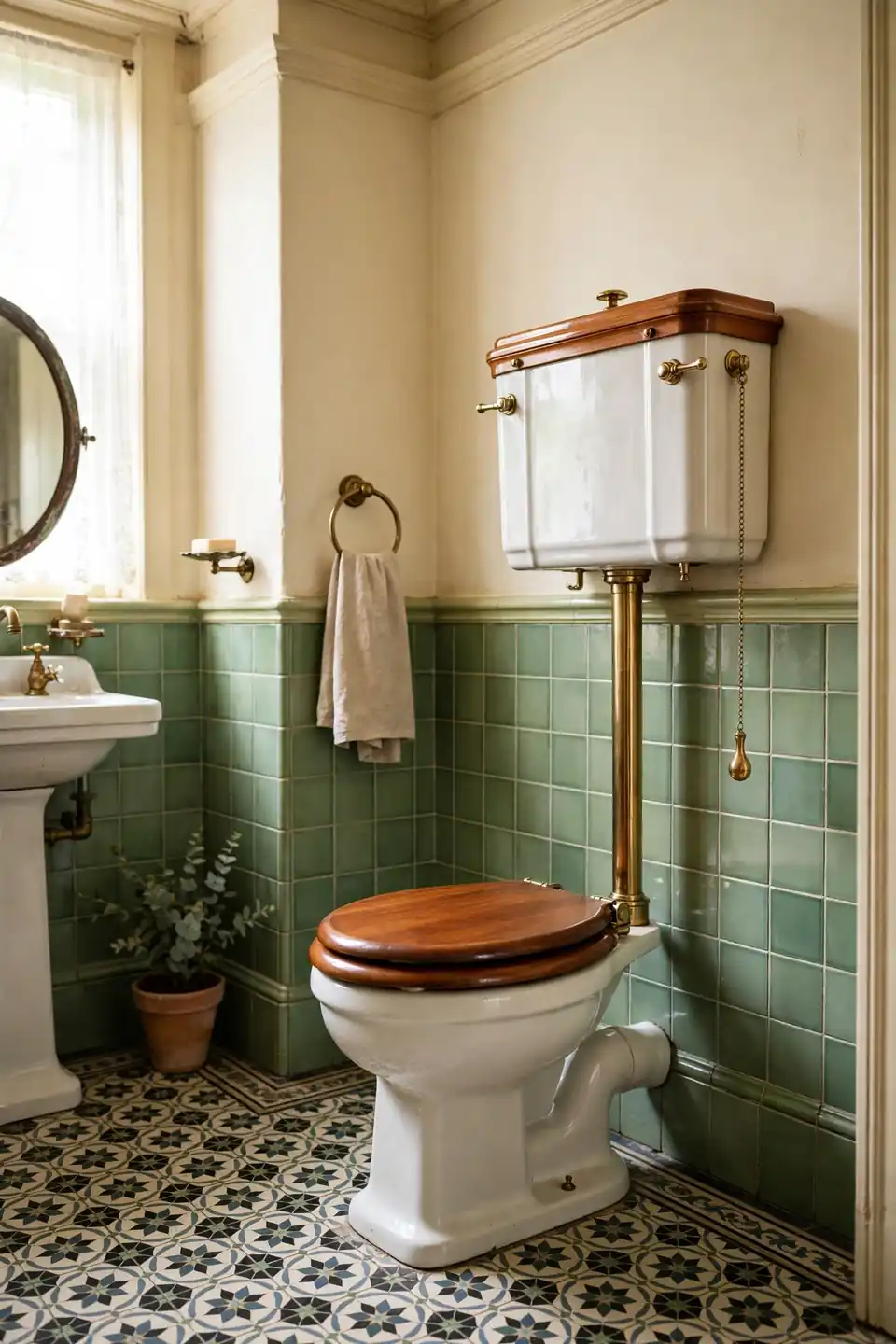
Do:
- Pick a high tank with a modern dual flush hidden in the period shell.
- Match the chain and pipe finish to your taps.
- Anchor the tank into studs or masonry, never plaster alone.
Don’t:
- Mount it so high the chain hangs out of reach.
- Fit a plastic seat that undercuts the vintage effect.
- Box in the pipework where leaks can hide unseen.
The high tank frees floor space and gives the room an unmistakable period silhouette. Modern innards keep water use low and flushing strong, so the look stays honest without the old drawbacks. Wooden seats in a dark stain complete the picture.
Stained Glass Window Accents
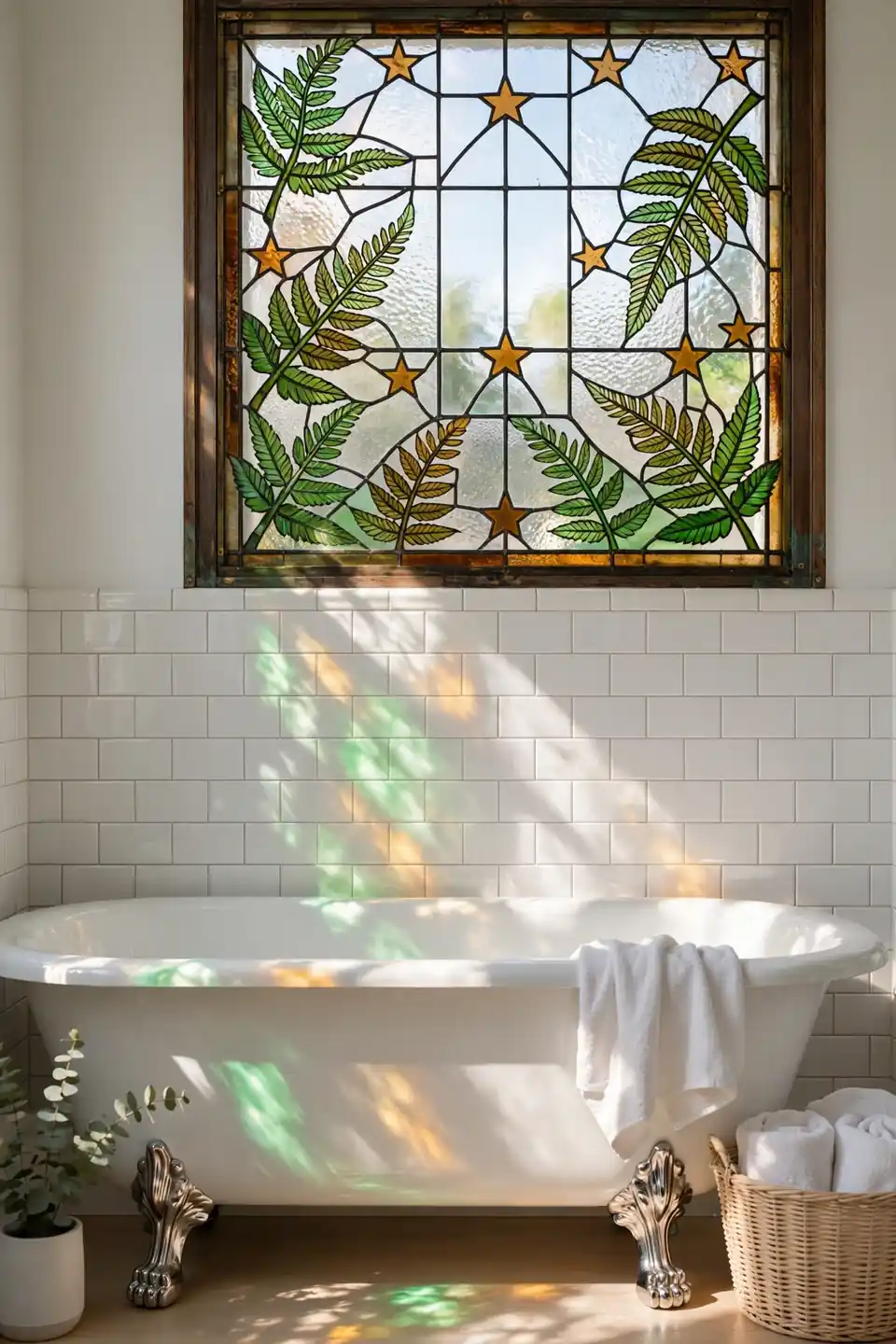
Cost: Medium for a made to measure panel
Time: One afternoon to fit a framed insert
Skill Level: Confident DIY or one glazier visit
Best For: Windows needing privacy without curtains
A panel of stained glass turns plain daylight into color that moves across the tiles all morning. Keep the design simple, with clear textured glass doing most of the work and two or three jewel tones as accents. Framed inserts that hang inside the existing window give the effect without replacing the glass, which suits renters and listed homes alike. In my experience, morning facing windows benefit most, since low sun throws the colors furthest across the room.
Twin Pedestal Basin Pair
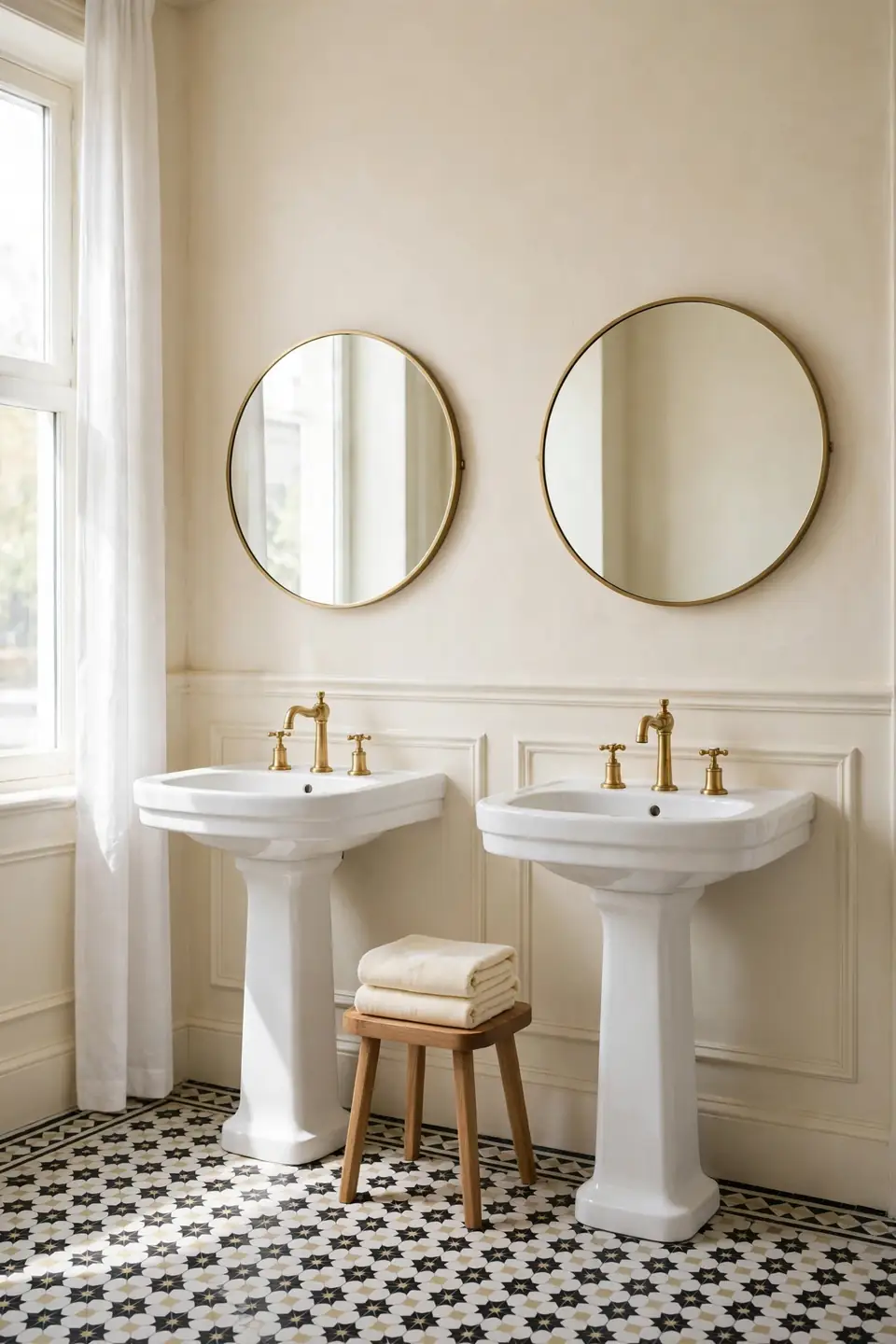
Two pedestal basins side by side give a shared bathroom its manners back. Each person keeps their own bowl, their own tap set, and their own mirror zone, while the open floor below keeps the room feeling larger than fitted furniture would.
Victorian pedestals hide the trap inside a graceful ceramic column, so there are no cupboards to date or chip. Storage moves to a wall cabinet or a narrow shelf between the basins. Match the pair exactly, keep the gap wide enough for an elbow, and the morning routine turns calm. A small stool with folded spare towels fills the space beneath the shelf.
Antique Brass Faucet Details
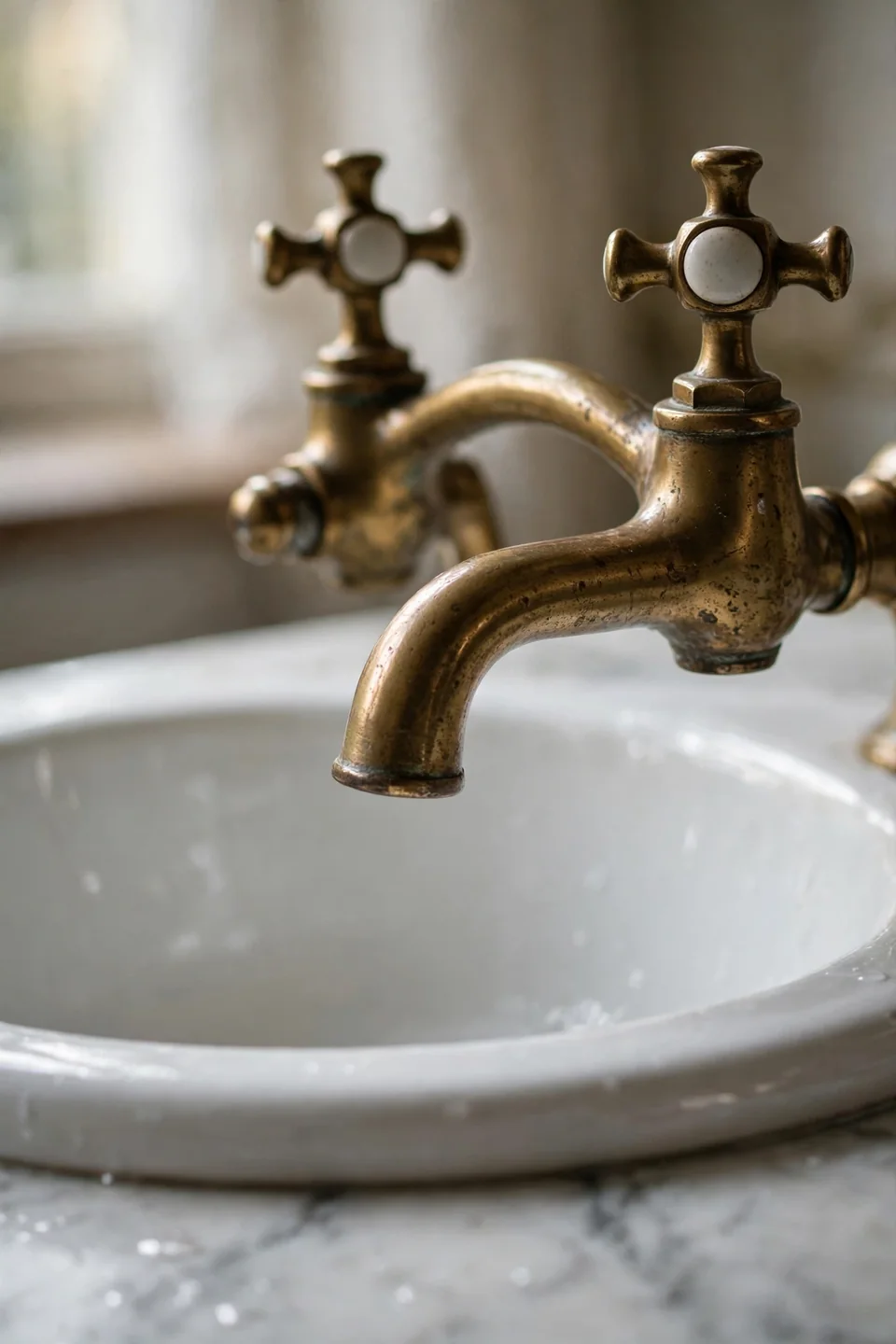
- Crosshead handles give the clearest Victorian signal and suit arthritic hands too.
- Choose unlacquered brass if you enjoy a finish that deepens with touch.
- Bridge mixers suit washstands, while wall mounted taps free up basin space.
- Keep every brass tone in the room within one family, warm or antique.
- Ceramic lever inserts with maker style caps add period charm.
Faucets are the jewelry of this style, touched and seen more than any other fitting. That’s why many experts recommend spending on taps before tiles, since quality brass outlasts trends and can move house with you. Cheap plated copies peel within two years and cheapen everything around them.
Navy and Cream Color Story
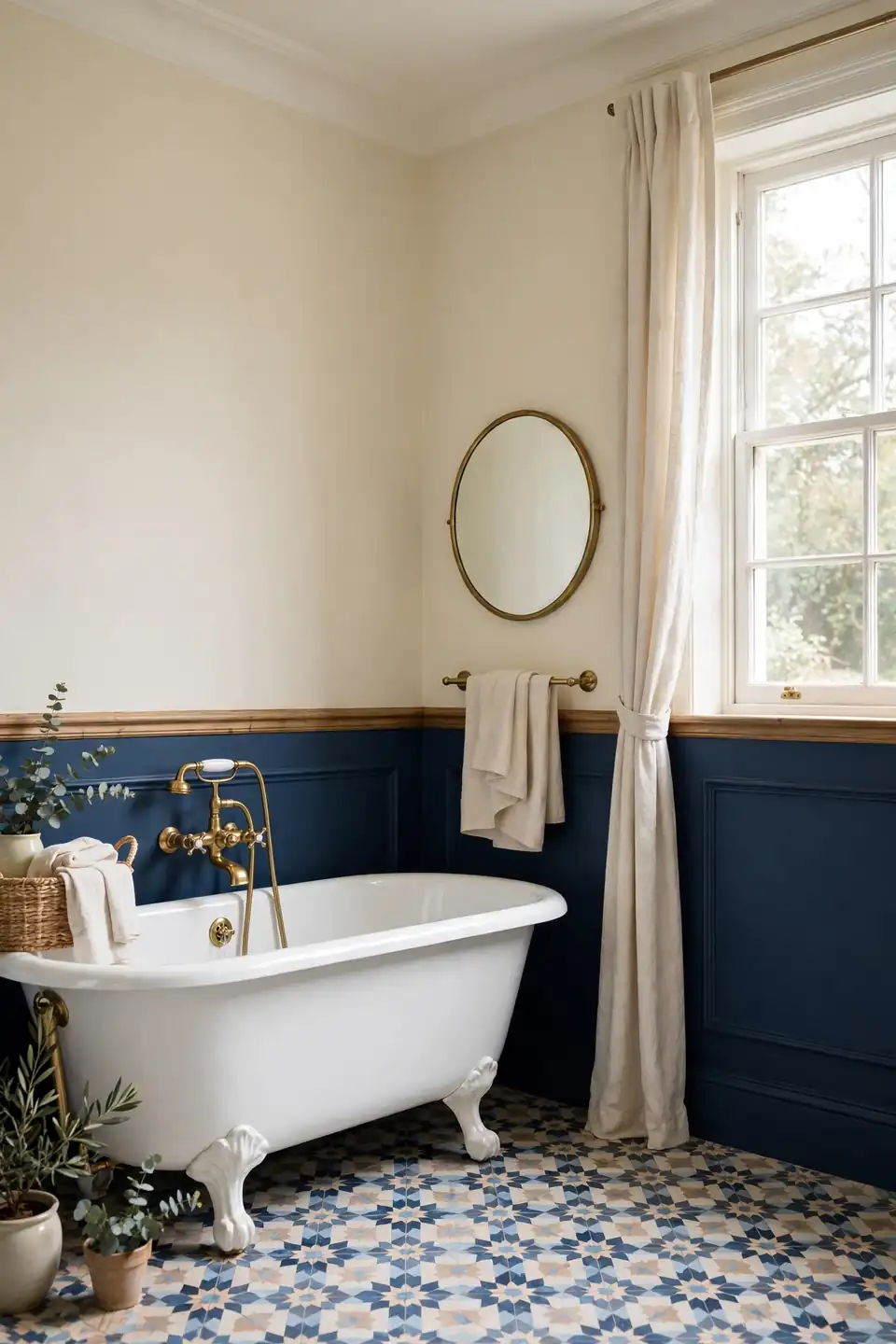
Quick Tip: Paint a large board in your chosen navy and lean it behind the tub for two days. Bathroom light changes fast, and a navy that looks royal at noon can turn nearly black by evening in a north facing room.
Navy below the picture rail and cream above it is the safest Victorian palette for small rooms. The dark band grounds tubs and tiles, while the pale upper walls bounce light back down. Brass is the natural third partner, warming the blue without adding a new color to manage. Keep textiles cream with a single navy stripe to repeat the pairing softly.
Wainscot Tile Half Walls

BEFORE: Tiles stopped at basin height with a raw cut edge, and paint above them marked with every splash. The line wandered from wall to wall, making the whole room feel unfinished no matter how clean it was.
AFTER: Gloss tiles now climb to a steady 120 cm line, capped with a rounded pencil trim. Paint above sits calm and dry, the trim throws a soft shadow line, and the walls wipe clean in seconds.
Half height tiling is a true Victorian habit, built for rooms that got wet daily. Gloss finishes reflect light at the height faces need it most. Choose the cap trim first, because its profile decides whether the wall reads cottage soft or townhouse crisp.
Crystal Chandelier Ceiling Light
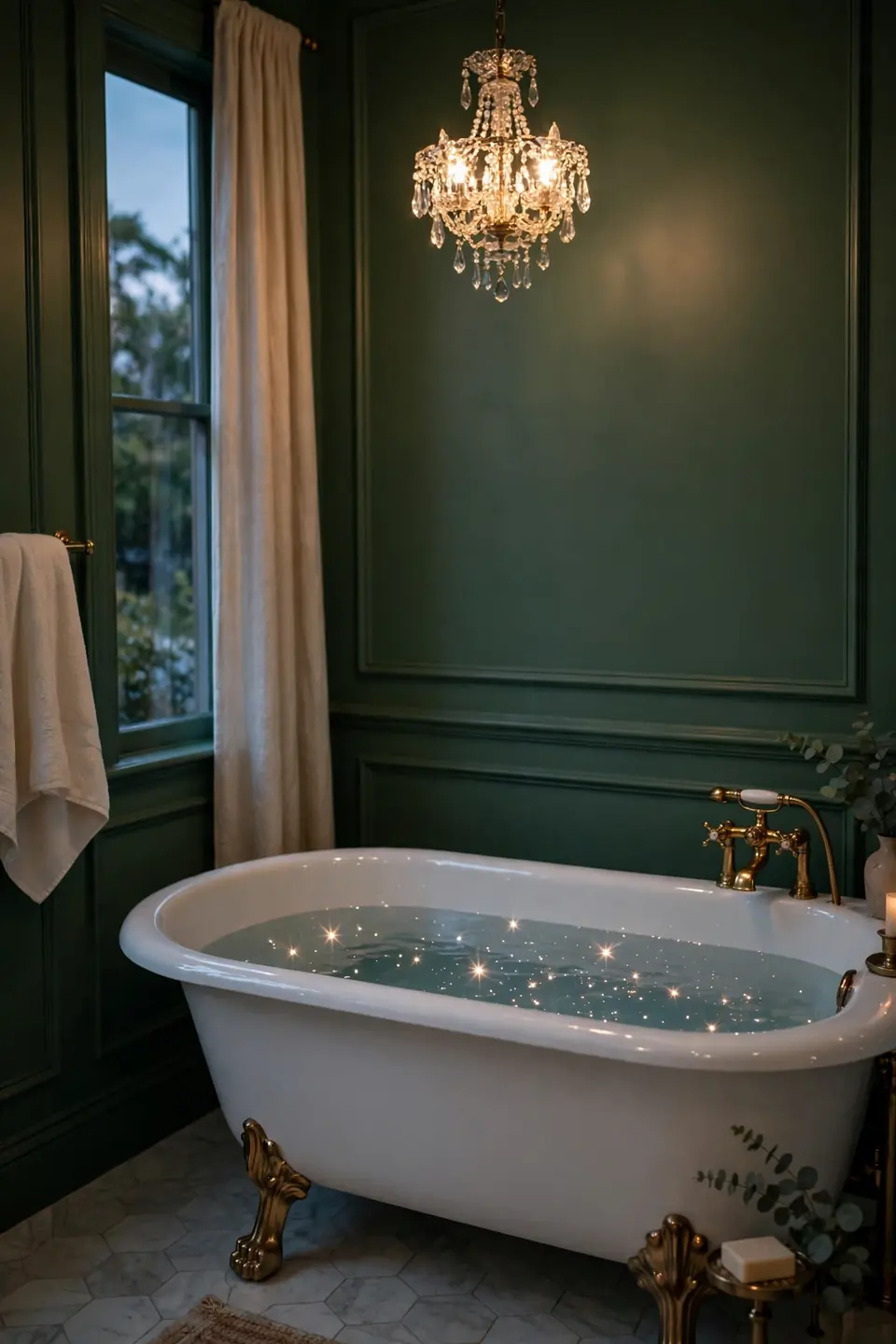
- Confirm the ceiling rose and joist can carry the weight, adding a support noggin if needed.
- Choose a bathroom rated fitting with sealed bulbs for steam safety.
- Hang the lowest crystal at least 200 cm above the floor, higher over a tub.
- Wire it on its own dimmer, separate from the mirror lights.
- Clean crystals twice a year with a microfiber glove and plain water.
A chandelier sounds grand, but in a small bathroom it takes the place of art, mirror jewelry, and a statement light all at once. Dim it low for evening soaks and the crystals throw soft sparks across the water. That mix of sparkle and daily usefulness is exactly what modern Victorian bathroom design does best.
Subway Tile Dark Grout
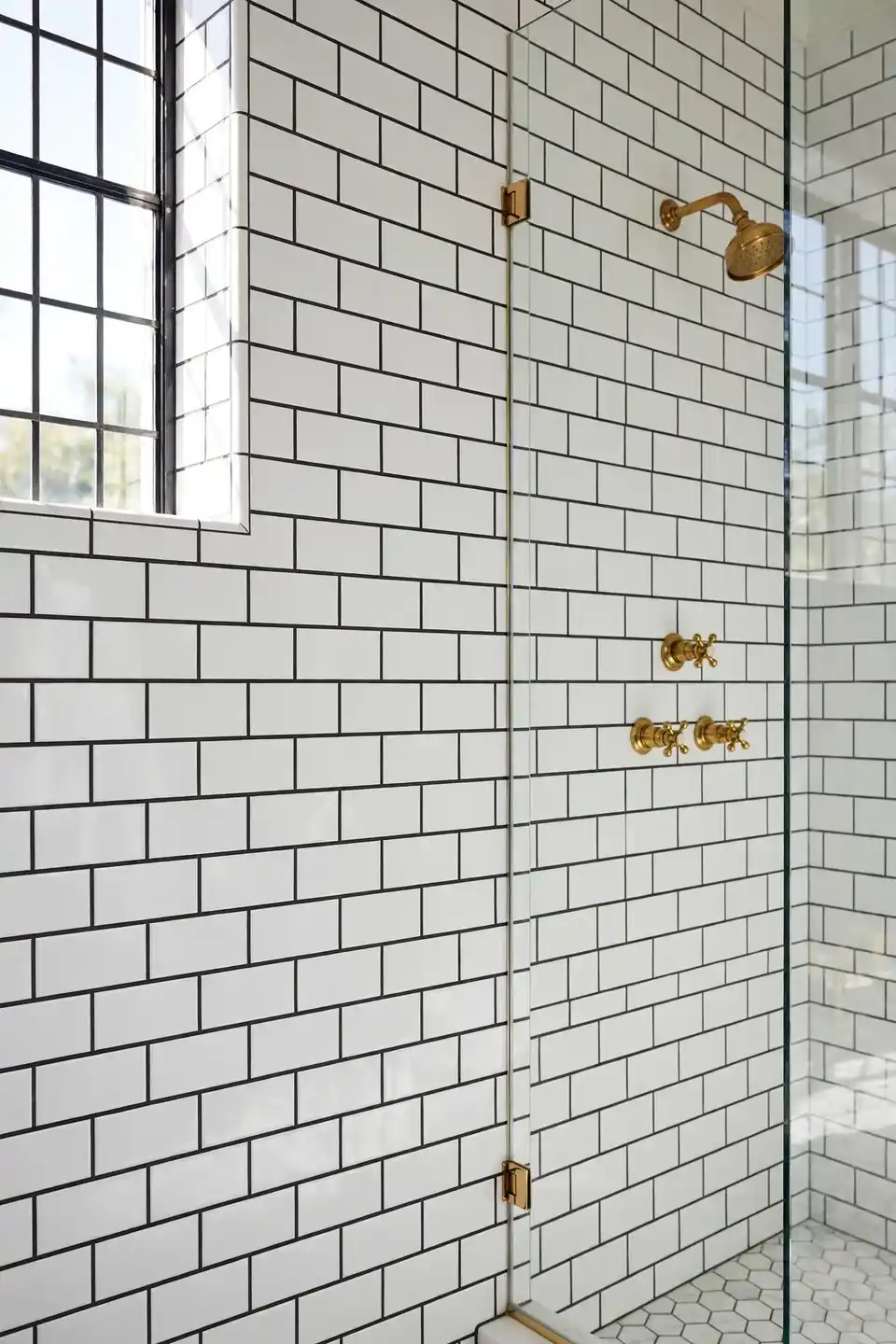
White subway tile is the Victorian workhorse, but the grout color decides its character. Two routes lead to very different rooms, and both suit the style honestly. Choose with your cleaning habits in mind, because grout is the part you will maintain every single week.
| Option | Pale Grey Grout | Charcoal Grout |
|---|---|---|
| Look | Soft grid, tiles blend together | Bold grid, every brick outlined |
| Care | Shows soap marks sooner | Hides stains and mildew longer |
| Mood | Calm, bright, spa like | Graphic, period, dramatic |
Charcoal grout forgives busy family use and sharpens white tile into a deliberate pattern. Seal it well at the start, because dark grout shows limescale as pale dusting in hard water areas. A quick squeegee after showers keeps both routes looking fresh.
Apothecary Glass Storage Jars
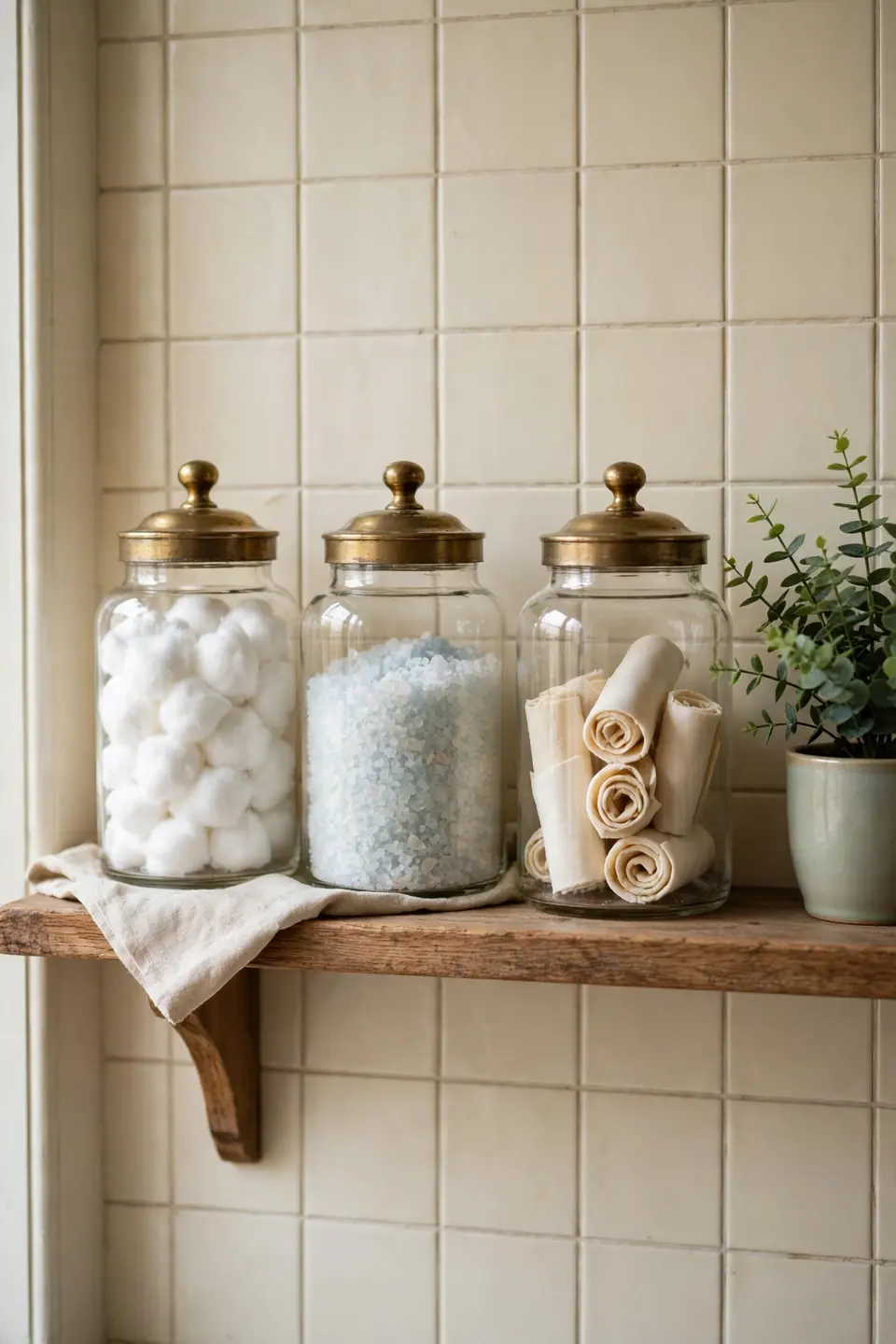
Do:
- Group jars in threes on one shelf or tray, never scattered singly.
- Fill with cotton balls, bath salts, and extra soap in plain shapes.
- Choose lids in brass or black to tie into the fittings.
Don’t:
- Store anything that humidity ruins, like loose powders or paper packets.
- Line jars along the tub edge where elbows knock them.
- Mix five jar shapes until the shelf reads like a flea market.
Glass storage suits this style because Victorian bathrooms displayed their remedies proudly. Clear jars keep daily items visible and honest, which stops the slow creep of bottles across every surface. Keep one empty jar in reserve so new purchases always have a home.
Victorian Botanical Print Art
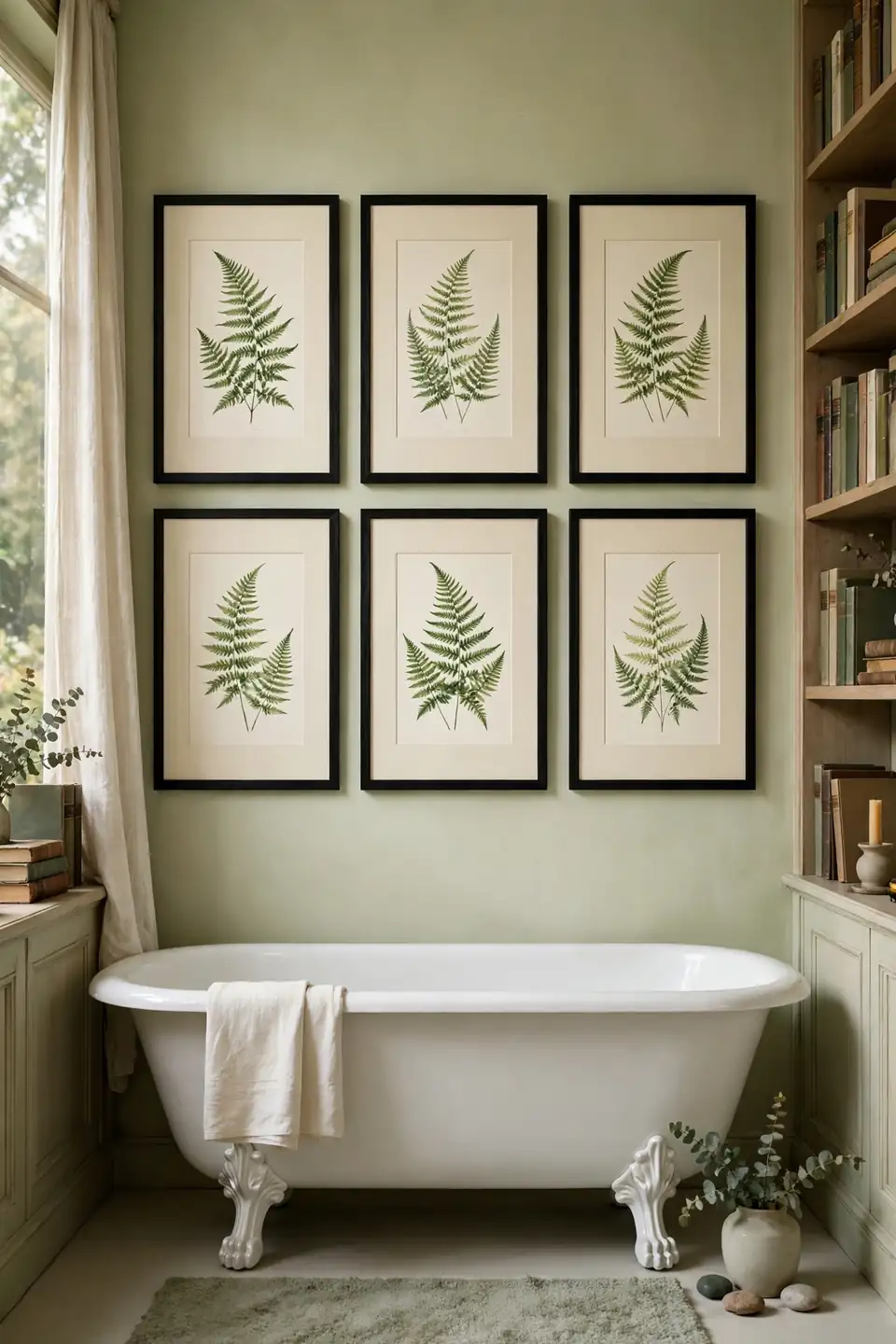
Cost: Low, prints and frames are inexpensive
Time: One hour to hang a grouped set
Skill Level: Beginner with a level and tape
Best For: Blank walls above tubs and towels
Botanical plates were the science art of the Victorian home, and a row of fern or flower studies suits bathroom walls perfectly. Keep mats wide and frames slim in black or aged gold. Glass fronts shrug off steam where canvas would suffer. Group four or six in a grid, and the wall gains the calm rhythm of a library print room. Choose images with green tones to echo plants on the sill. I’ve noticed small prints read better here than one oversized piece.
Cast Iron Radiator Comeback
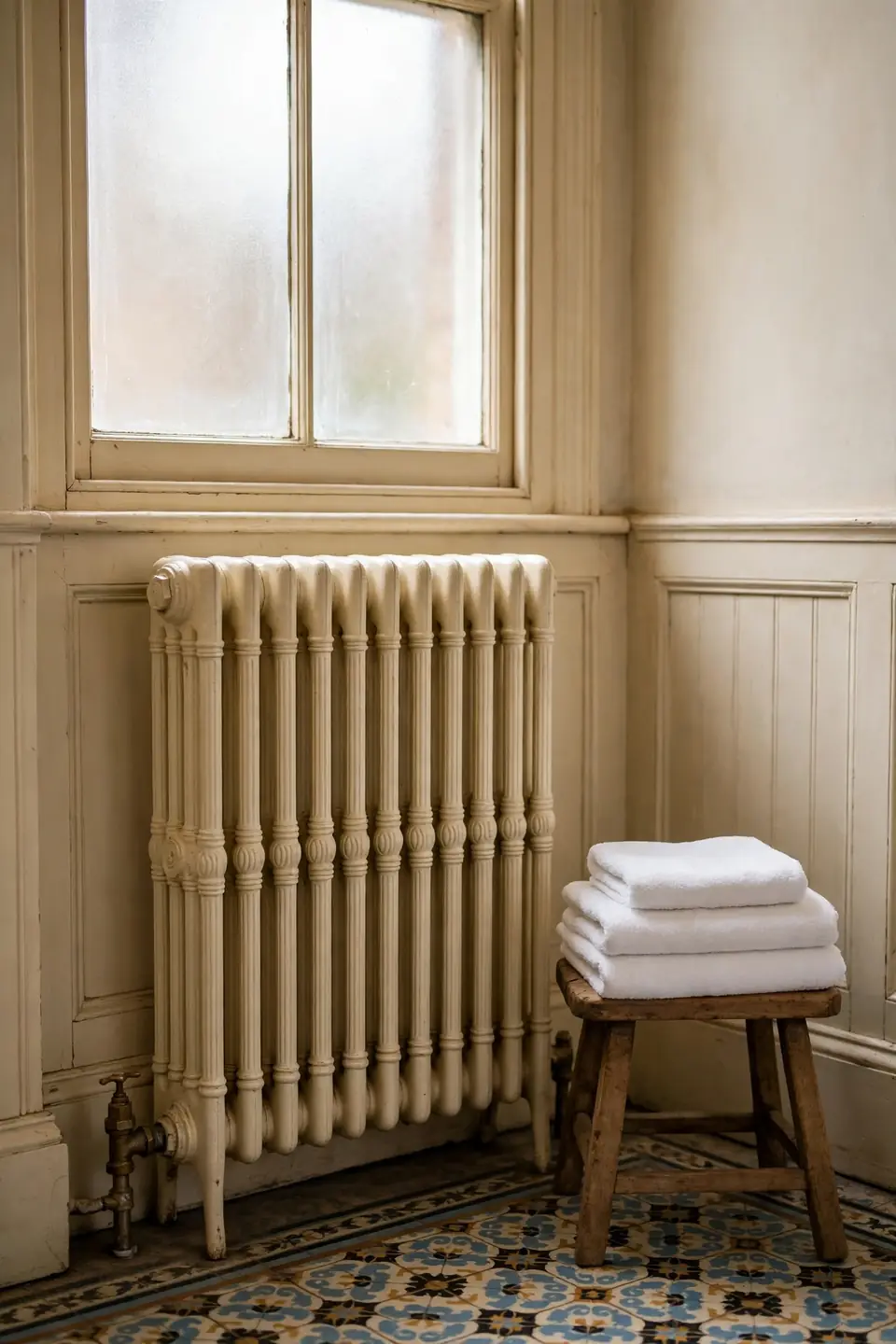
A column radiator in cast iron is both heater and sculpture. The deep sections hold heat long after the boiler rests, warming towels and tiles through the evening. Painted cream it blends in; painted to match deep wall colors it becomes part of the architecture.
Modern reproductions carry thermostatic valves and standard pipe sizes, so the vintage shape hides current efficiency. Place it where the original would have stood, usually under the window, and let cold air meet warm metal first. Bleed it each autumn and the whole room stays evenly warm. A radiator shelf above it holds plants safely clear of the heat.
Beadboard Panels and Ceiling
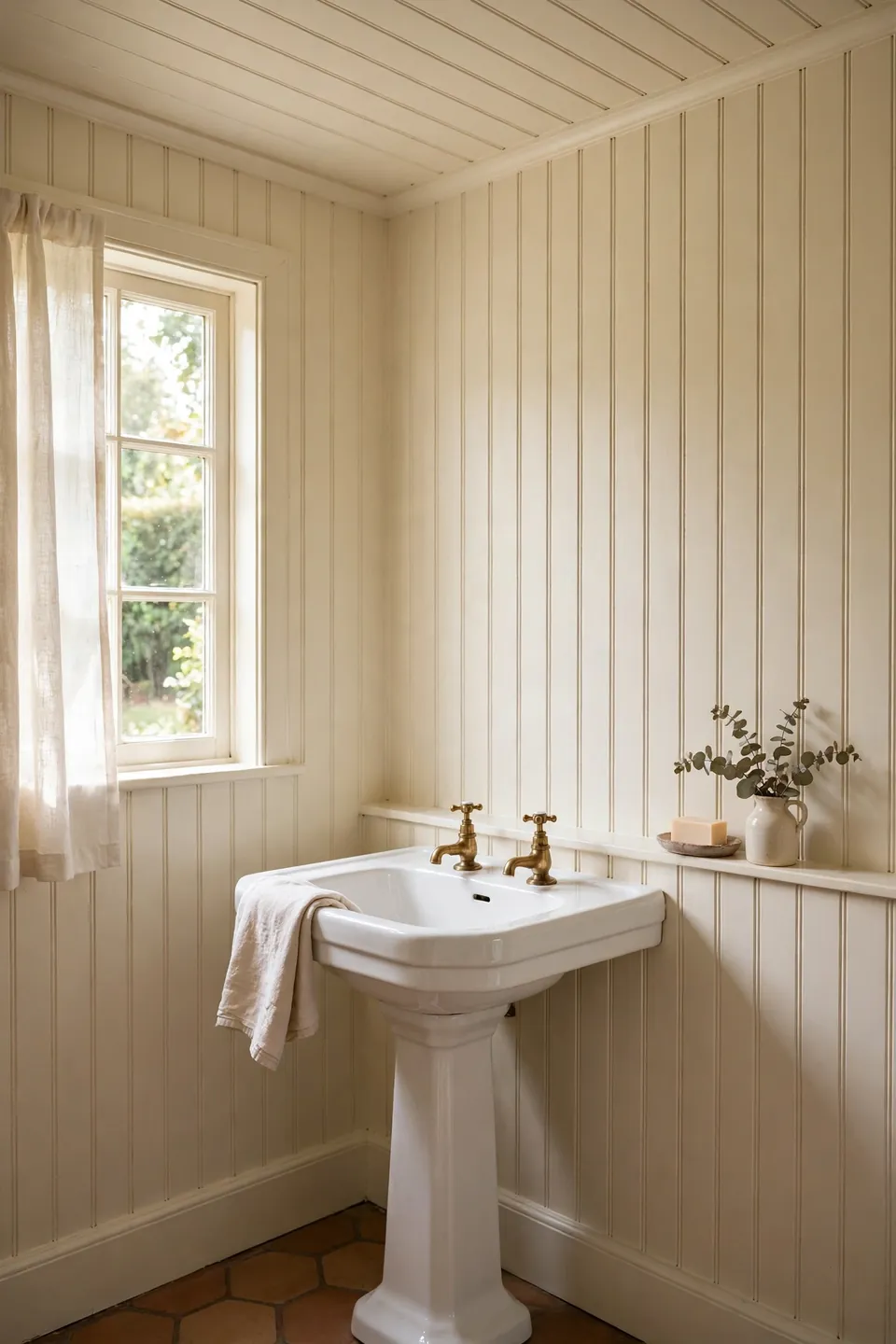
- Run beadboard vertically to stretch low ceilings upward.
- Paint it the wall color for texture without contrast.
- Cap the top edge with a simple ledge for bottles.
- Use moisture rated board behind basins and tubs.
- Carry it onto the ceiling for a cottage bathroom feel.
Beadboard was the budget paneling of Victorian cottages, and it still earns its keep. The narrow grooves catch shadow lines that flat paint cannot offer, giving pale rooms depth without darkness. It also forgives the small knocks of daily life better than plaster, and one damaged board swaps out in an hour. In my experience it suits narrow rooms best, where long lines pull the eye through.
Etched Glass Privacy Film
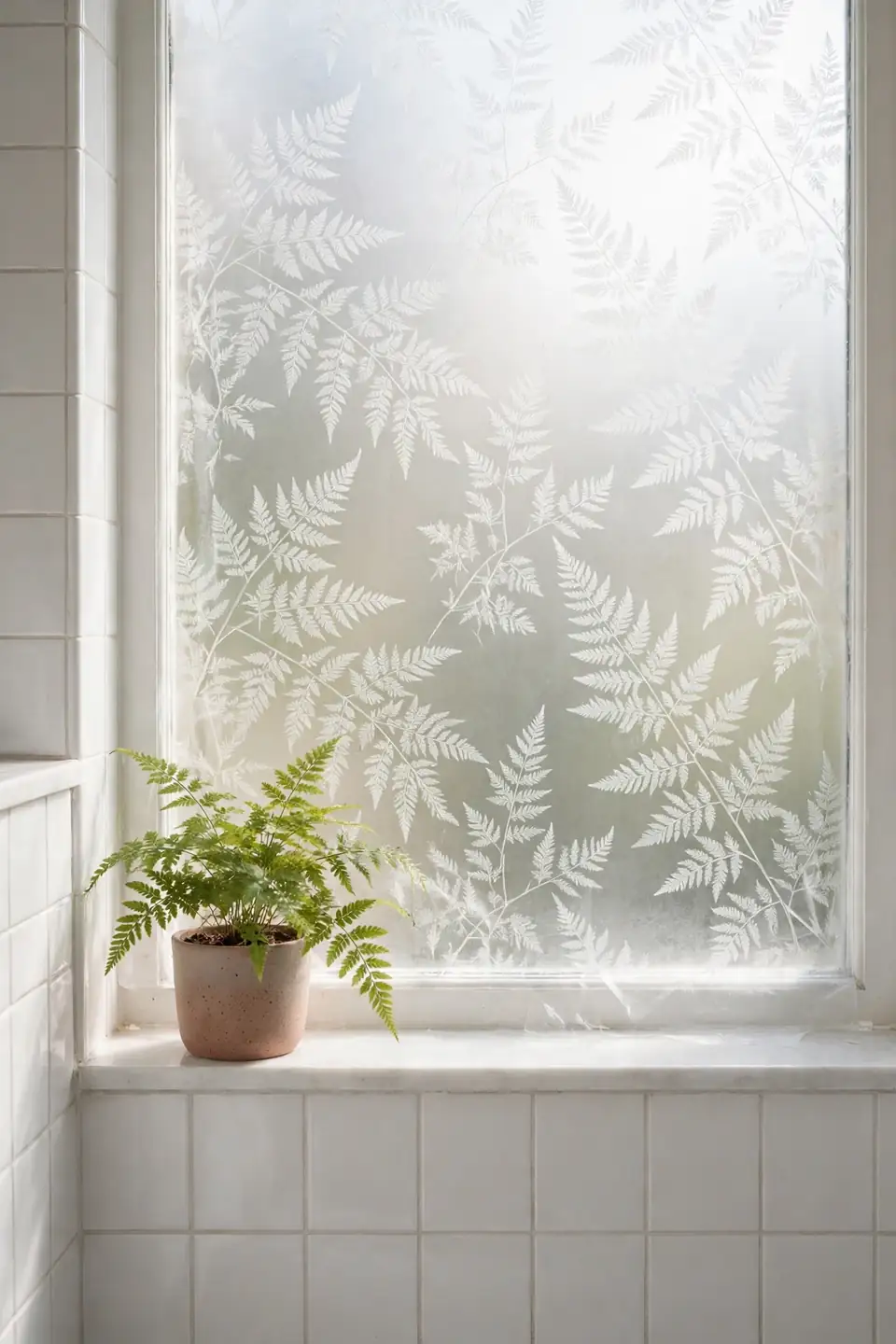
Quick Tip: Measure the glass twice and cut the film 2 cm oversize on every side. Trim the excess against the frame with a sharp blade after smoothing, and edges stay sealed instead of lifting in the steam.
Etched patterns of ferns, stars, and borders copied from period glass give privacy without losing daylight. Film costs a fraction of real etched panes and removes cleanly if tastes change. Choose one pattern per window and keep it off the top sash, so a band of clear glass still frames the sky. I’ve seen this work well in many cases where new glass was not an option.
Wooden Bath Caddy and Stool
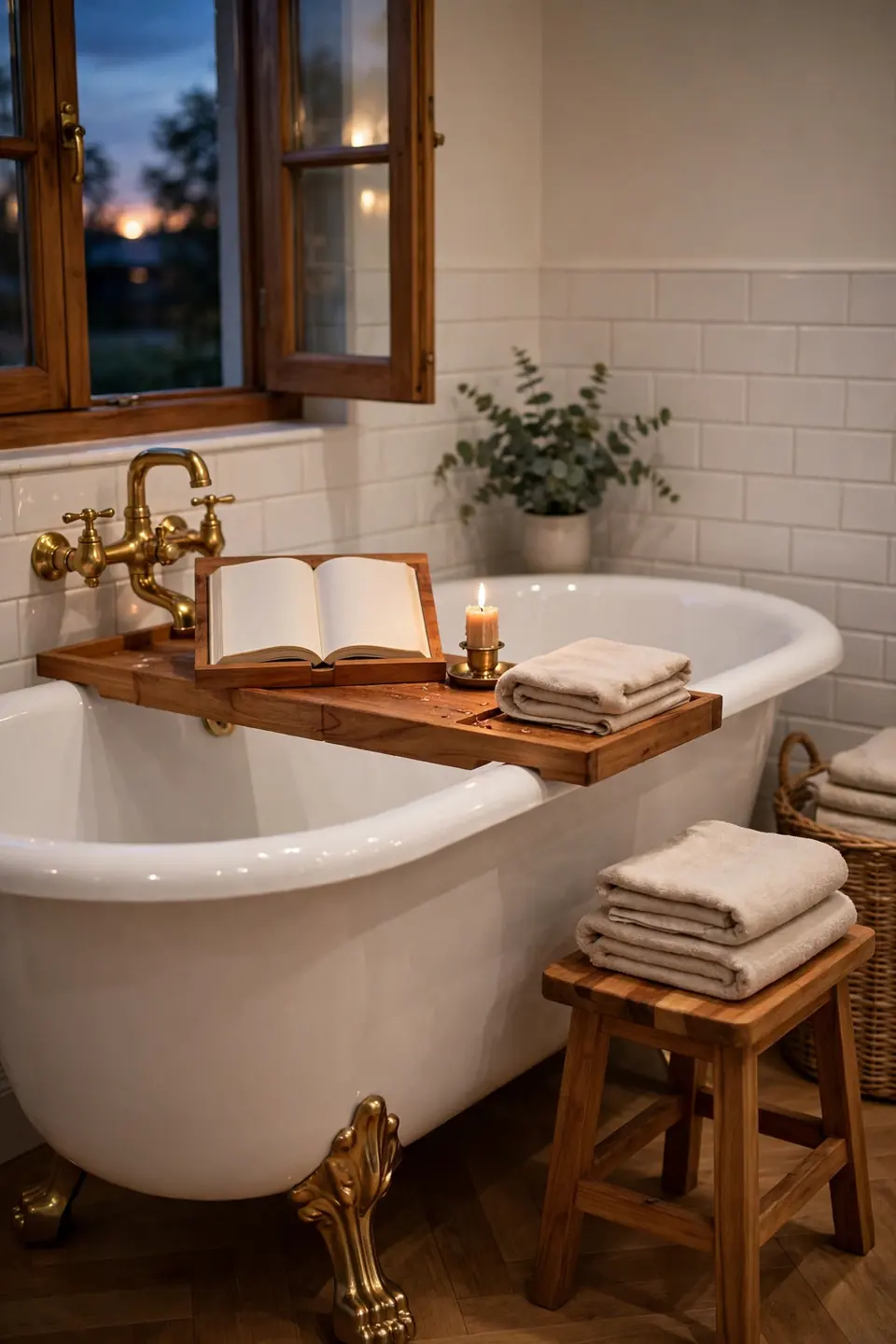
BEFORE: Bottles ringed the tub rim and fell in weekly. A plastic caddy sagged in the middle, books got damp, and every soak started with clearing a cluttered edge before the water even ran.
AFTER: A wide teak caddy now spans the tub with a book rest and a dry shelf. A matching stool holds folded towels beside the bath, and the rim stays clear except for one candle.
Wood warms a room full of ceramic and stone better than any accessory. Teak and bamboo shrug off splashes that would ruin softer timber. Oil the caddy twice a year and it deepens in color, quietly matching the brass as both age together.
Checkerboard Marble Floor Tiles
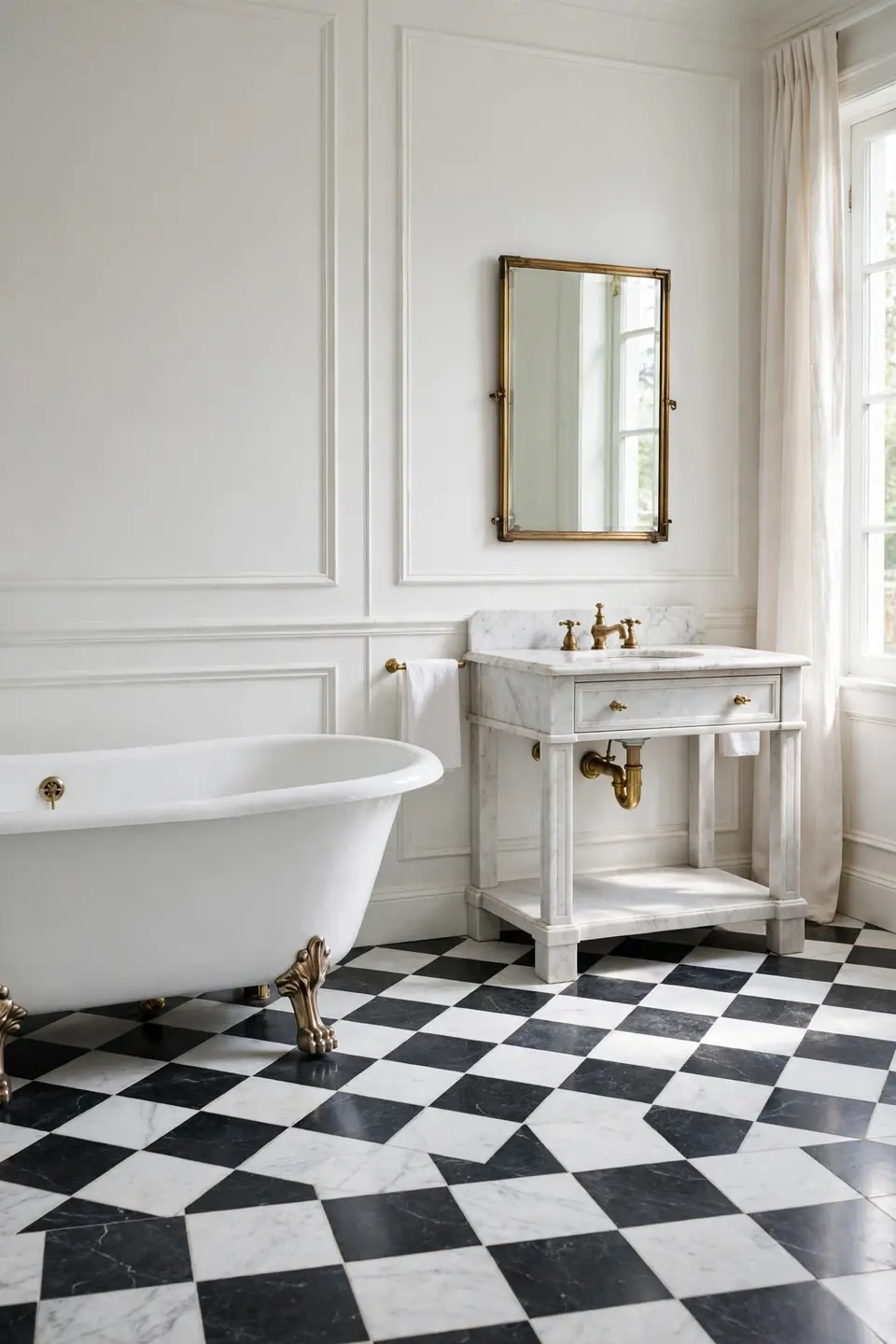
- Find the room center and dry lay the pattern outward from it.
- Alternate honed marble squares in black and white, keeping joints tight.
- Set border tiles last so cut edges hide along the walls.
- Seal every white square before grouting to stop stain creep.
- Grout in mid grey and buff the haze off the same day.
Few floors announce the era faster than checkerboard marble, yet the pattern stays graphic enough for modern tastes. It carries the same collected confidence you see in rustic European dining room decor, translated underfoot. Keep rugs off it; the pattern deserves the full stage, and bare marble stays cool and clean.
Open Shelf Towel Display
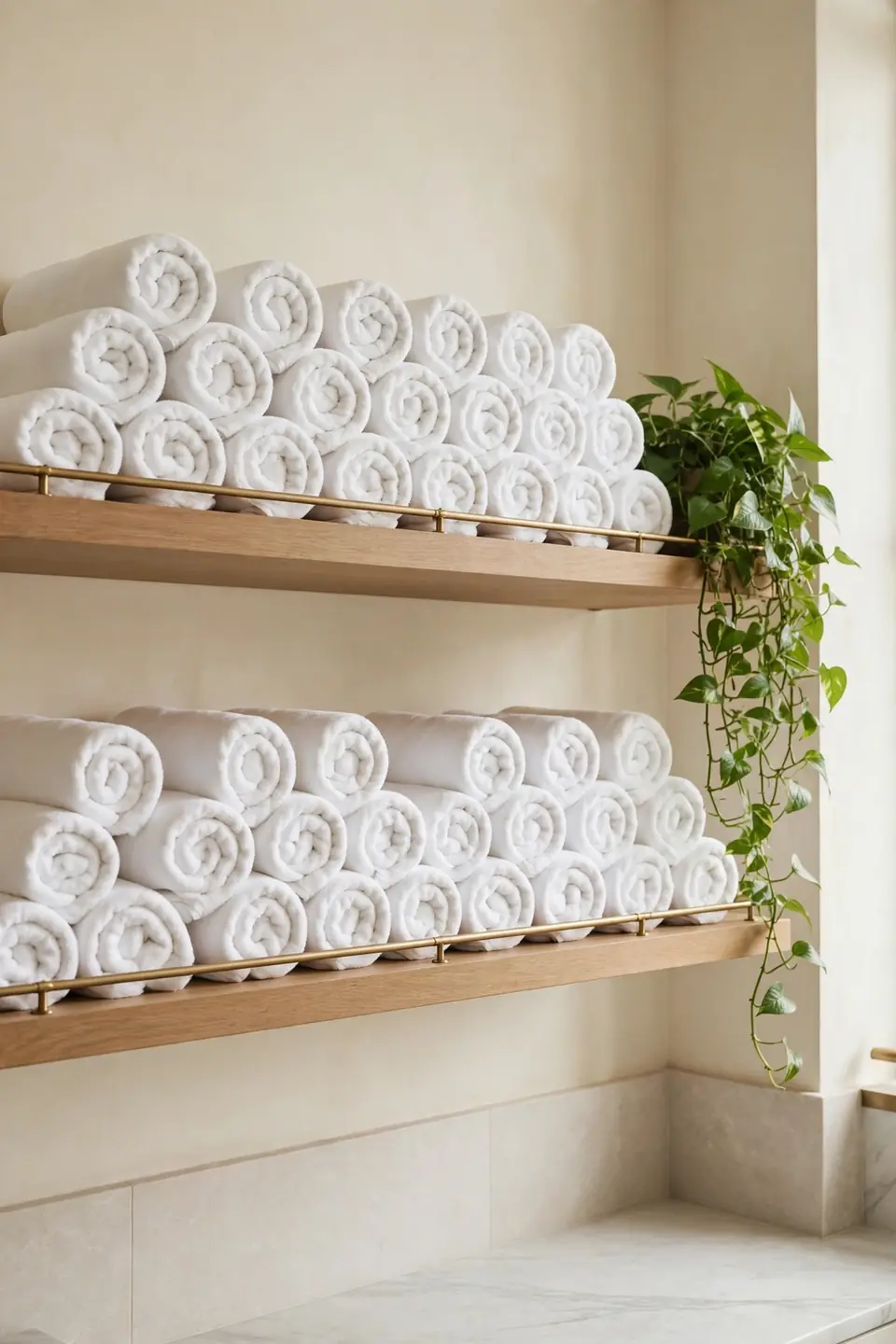
Victorian hotels stacked towels in the open, and the habit still solves storage in small rooms. The real decision is shelf material, because shelves work hard in steam and carry real weight when towels are wet and heavy.
| Option | Painted Wood Shelves | Brass Rail Shelves |
|---|---|---|
| Look | Soft, cottage, blends with walls | Hotel polish, reflects light |
| Strength | Holds heavy stacks when bracketed well | Slim rails, lighter loads only |
| Care | Repaint yearly in steamy rooms | Polish or let it patina |
Roll towels instead of folding them when shelves sit above shoulder height; rolls stay put and look tidier from below. Keep the lowest shelf for daily towels and the top one for spares and a plant. Two shelves usually beat three crowded ones.
Candle Lantern Evening Glow
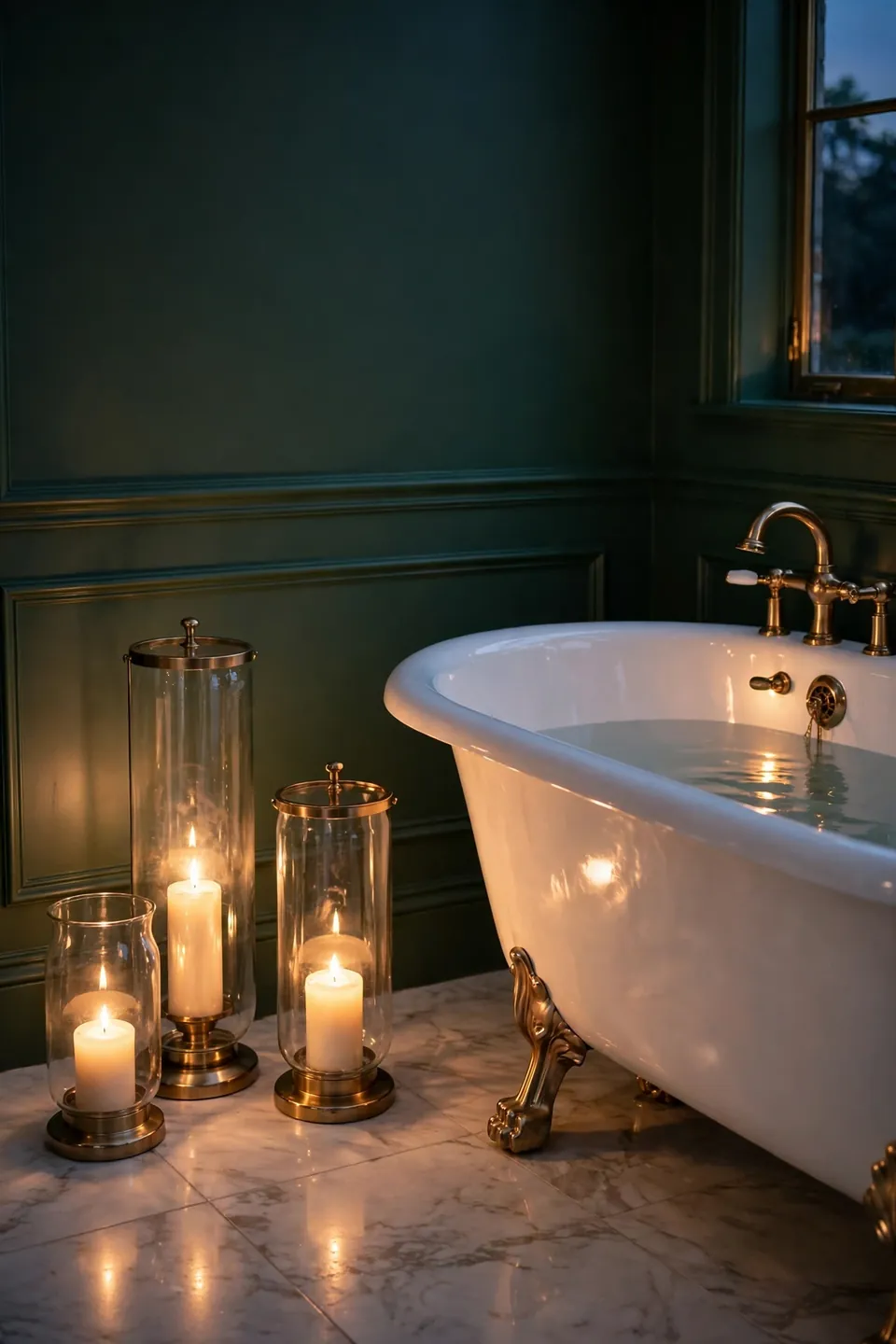
Do:
- Set lanterns on the floor or a stool, away from splash range.
- Use glass hurricanes so steam and drafts cannot reach the flame.
- Group two or three heights rather than one lonely candle.
Don’t:
- Leave candles burning while the room sits empty.
- Place them near hanging towels or wooden shelves.
- Choose scented candles that fight with bath oils and soap.
Candlelight flatters this style more than any bulb, turning brass warm and marble creamy. Electric candles now flicker convincingly and remove the fire worry entirely, which suits homes with children. Either way, low light is the cheapest evening upgrade a bathroom can get.
Frosted Sconce Lighting Pair
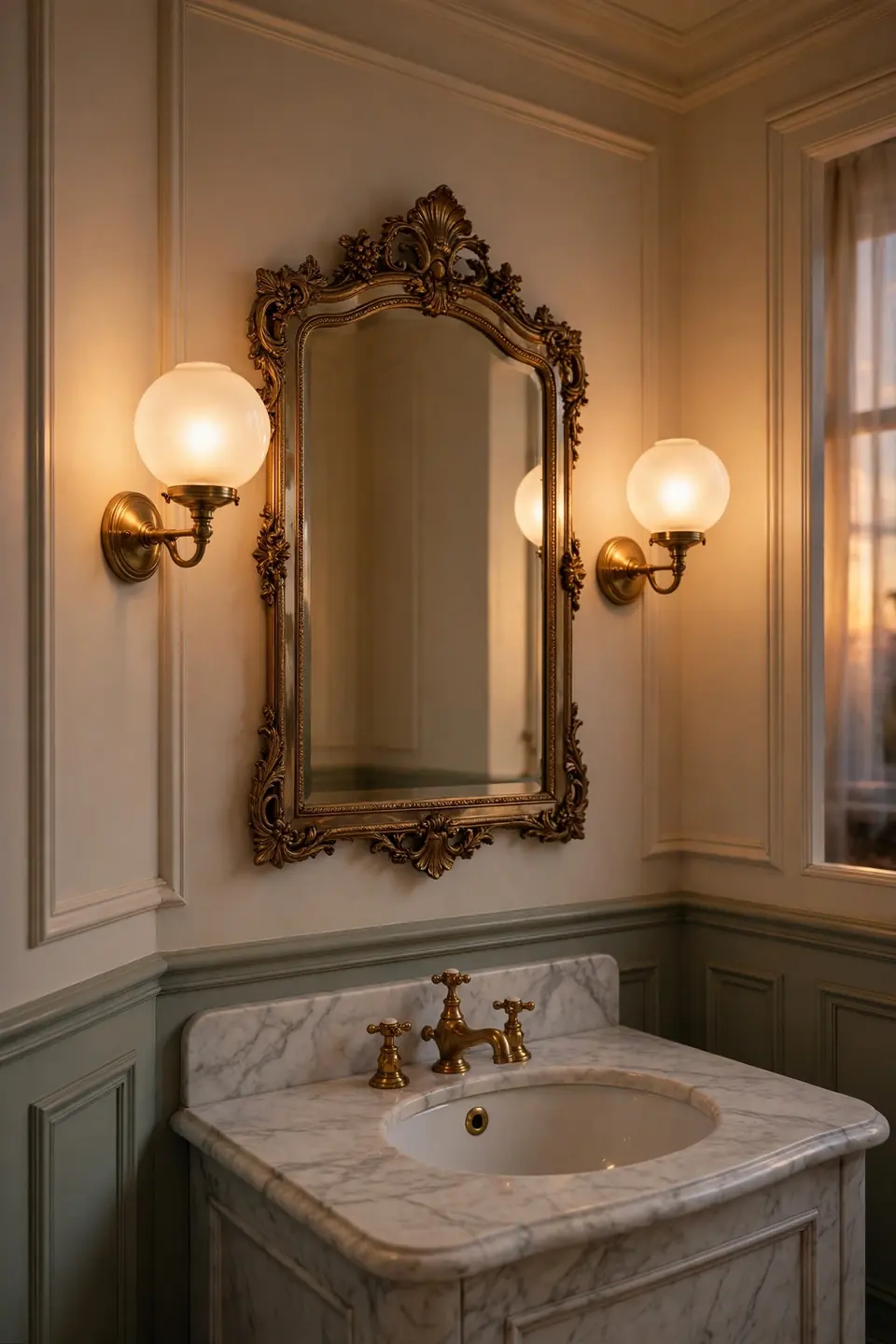
Cost: Medium, electrician fitting included
Time: Half a day for a wired pair
Skill Level: Professional fitting recommended
Best For: Mirror sides in windowless rooms
A sconce at each side of the mirror lights faces evenly, without the downward shadows a single ceiling light throws. Frosted glass shades copy the gaslight globes of the period while hiding modern bulbs. Set them at eye height, roughly 160 cm, and wire them separately from the main light so evenings can stay soft. Warm 2700K bulbs keep the glow honest. I’ve noticed guests always comment on rooms lit this way, because faces simply look kinder in the mirror.
Heirloom Rug Runner Warmth
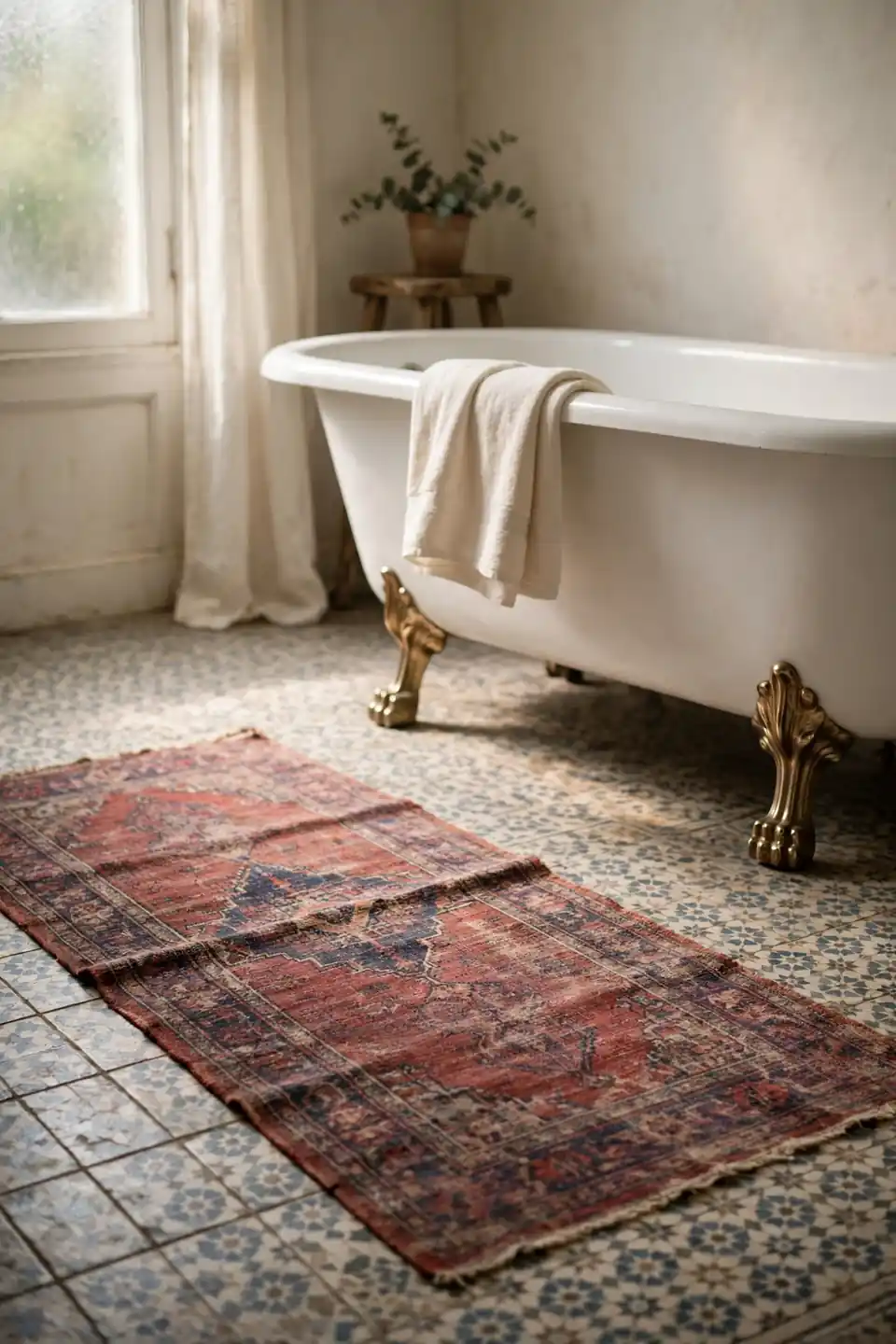
A worn look runner in faded reds and indigo brings the one soft note a tiled floor cannot give. Victorian homes layered textiles everywhere, and a rug in front of the tub catches drips while warming bare feet on winter mornings. It also quiets the echo that hard surfaces throw around a small room.
Choose flat weave wool or a washable vintage style print that can handle weekly shaking and monthly washing. Keep the pattern faded rather than bright, so it reads inherited instead of new. A non slip pad underneath is non negotiable on polished tile. Roll it up in summer if the room runs warm.
Conclusion
A beautiful bathroom rarely comes from one big renovation. It grows from choices like these, one fitting, one tile, one mirror at a time. Pin the ideas that stopped your scroll and build your own shortlist before you buy anything. In my experience, the rooms that age best mix patience with personality, letting modern Victorian bathroom design serve daily life while wearing its history proudly. Start with the piece you touch every morning, enjoy the change, and let the next layer follow when you are ready. Small patient steps build a room that feels loved rather than decorated, and that feeling never goes out of style.