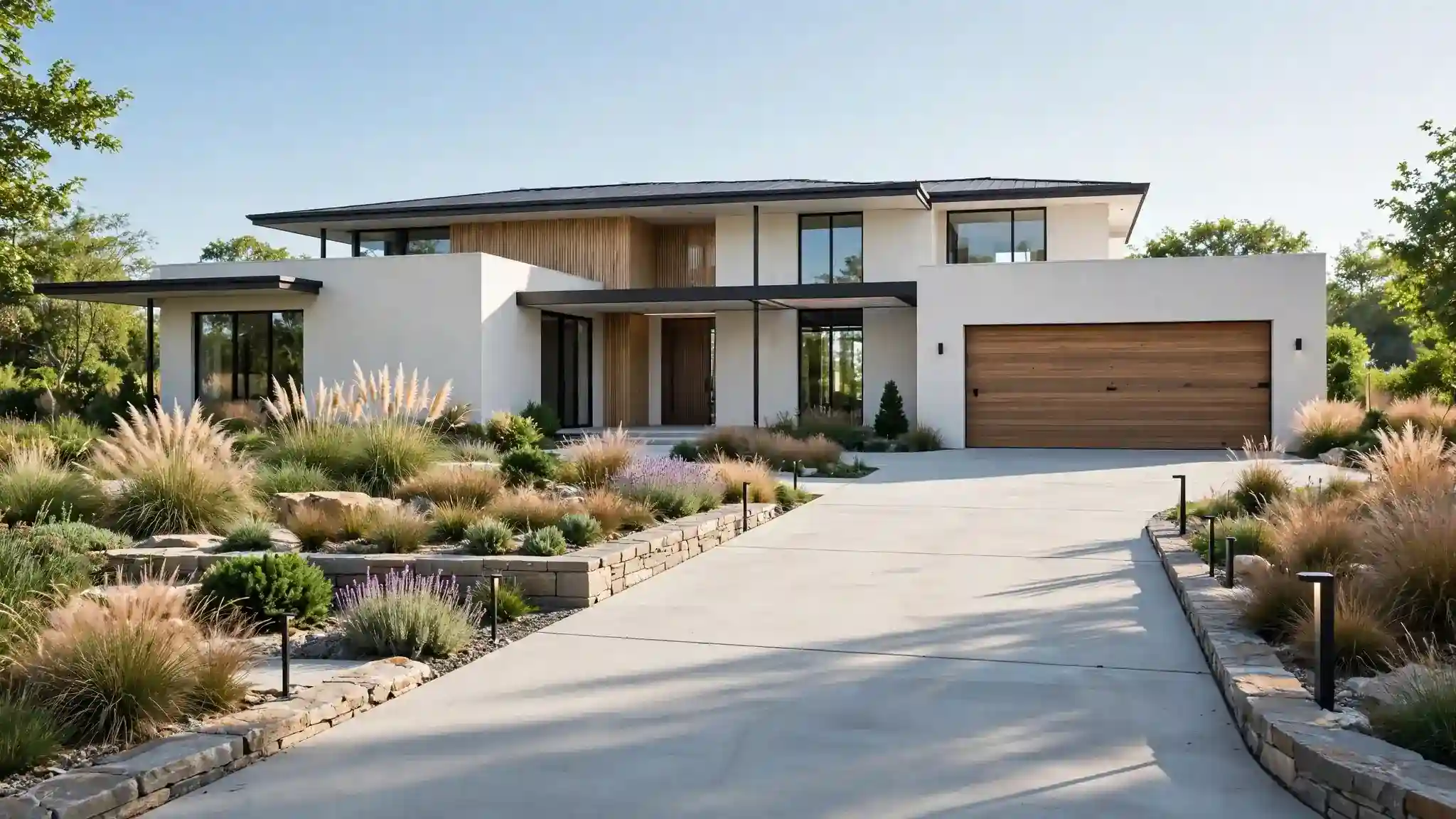
20 Driveway Landscape Ideas for Stunning Curb Appeal
Your driveway sets the tone for your entire home before guests ever reach the front door. These driveway landscape ideas turn that plain stretch of pavement into a welcoming entry worth admiring. From crisp stone edging to soft evening lighting, small upgrades along the drive create a polished first impression that lifts your whole property. A thoughtful approach blends plants, hardscaping, and light into one cohesive look that feels intentional from the street to the garage.
Below you will find twenty practical concepts that work with any home style and most budgets. Many pair beautifully with seasonal touches like cozy autumn planters, so if you love that look, these farmhouse fall porch decor ideas offer seasonal inspiration that carries from the porch to the pavement. Whether your drive is long or short, straight or curved, these upgrades deliver maximum curb appeal with minimal fuss.
Stone Border Edging
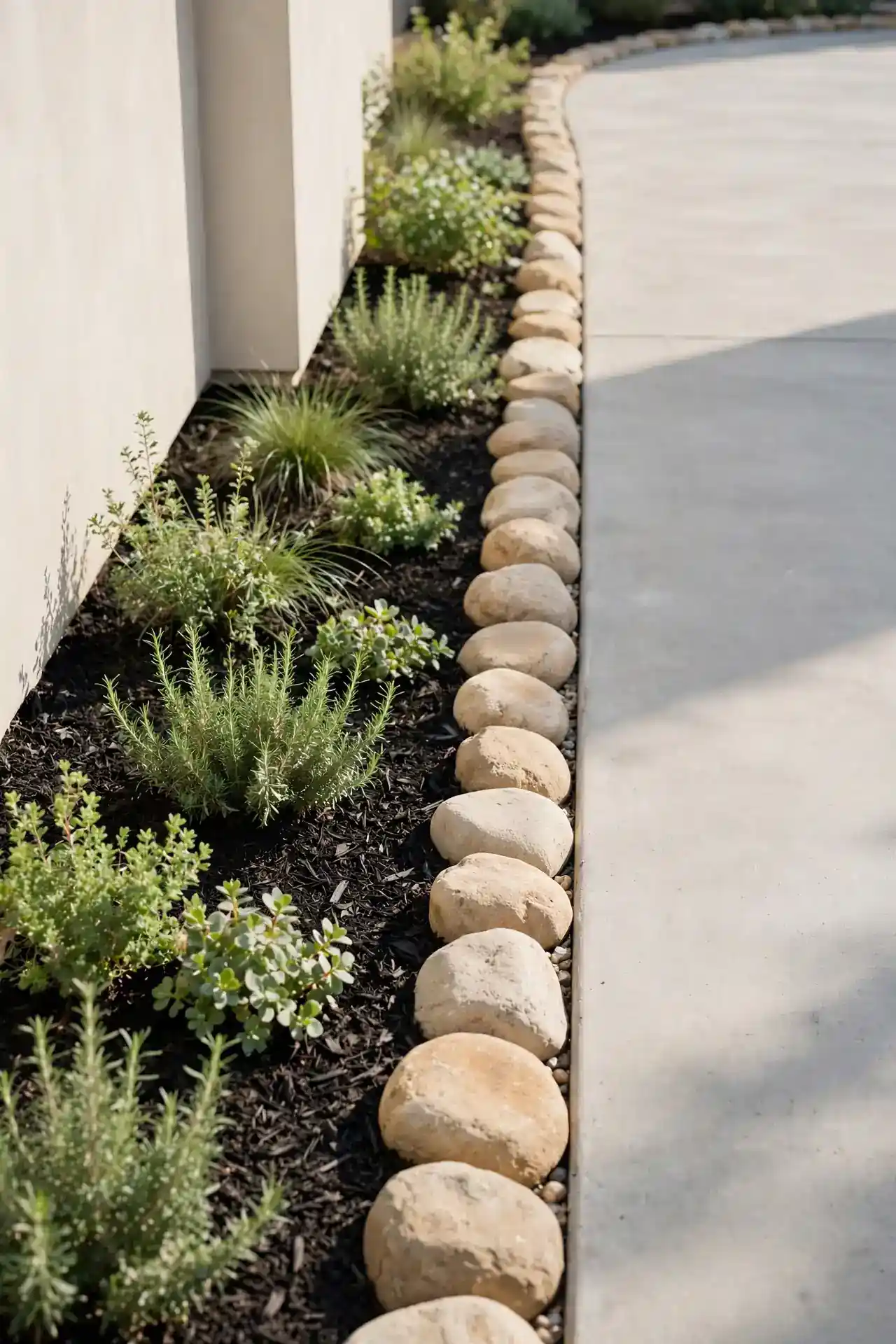
Nothing frames a driveway like a crisp stone edge running its full length. Flat fieldstone or cut limestone set in a shallow trench creates a clean boundary between asphalt and garden beds that looks intentional and expensive. In my experience, this single upgrade changes how the whole front yard reads from the street.
Choose stones with flat faces and set them snug against the pavement for a tidy line that mowers can ride along. A layer of landscape fabric beneath the edging keeps grass from creeping through and reduces weeding all season long. Tumbled stones soften the look for cottage gardens, while sawn bluestone suits modern homes.
Solar Path Lights
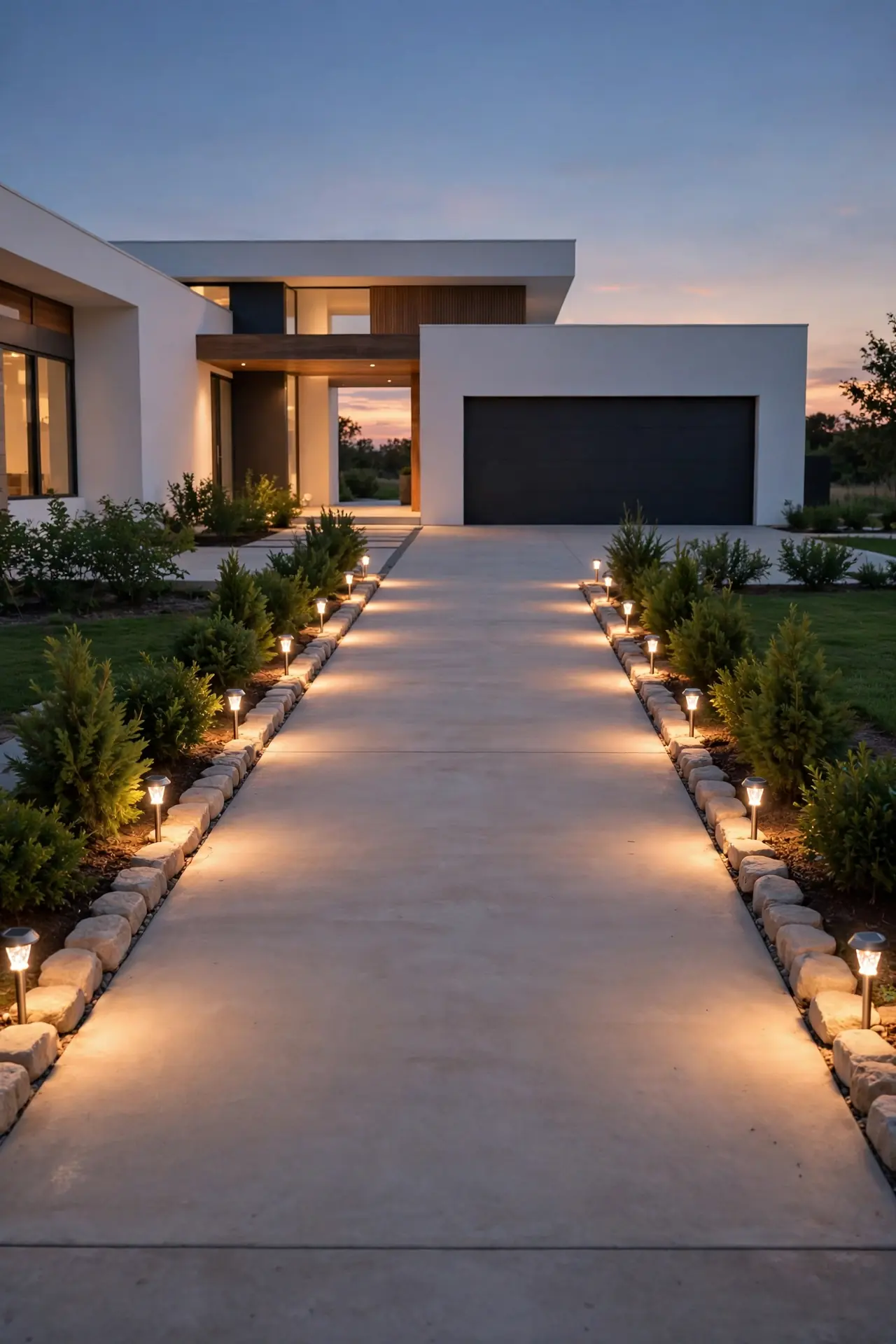
- Stake solar lights every six to eight feet along the driveway edge for an even glow that guides visitors after dark.
- Choose warm white fixtures over cool blue ones; warm light flatters stone and greenery and feels more inviting.
- Metal and glass fixtures outlast plastic stakes and keep their finish through rain and winter weather.
- Set lights back from the pavement edge so car doors and snow shovels never knock them over.
In my experience, a full charge from one sunny day keeps quality solar lights glowing until midnight. Wipe the panels monthly so dust does not dim the output. Combine them with a few low-voltage uplights near entry trees for layered lighting that feels professionally designed.
Layered Mulch Beds
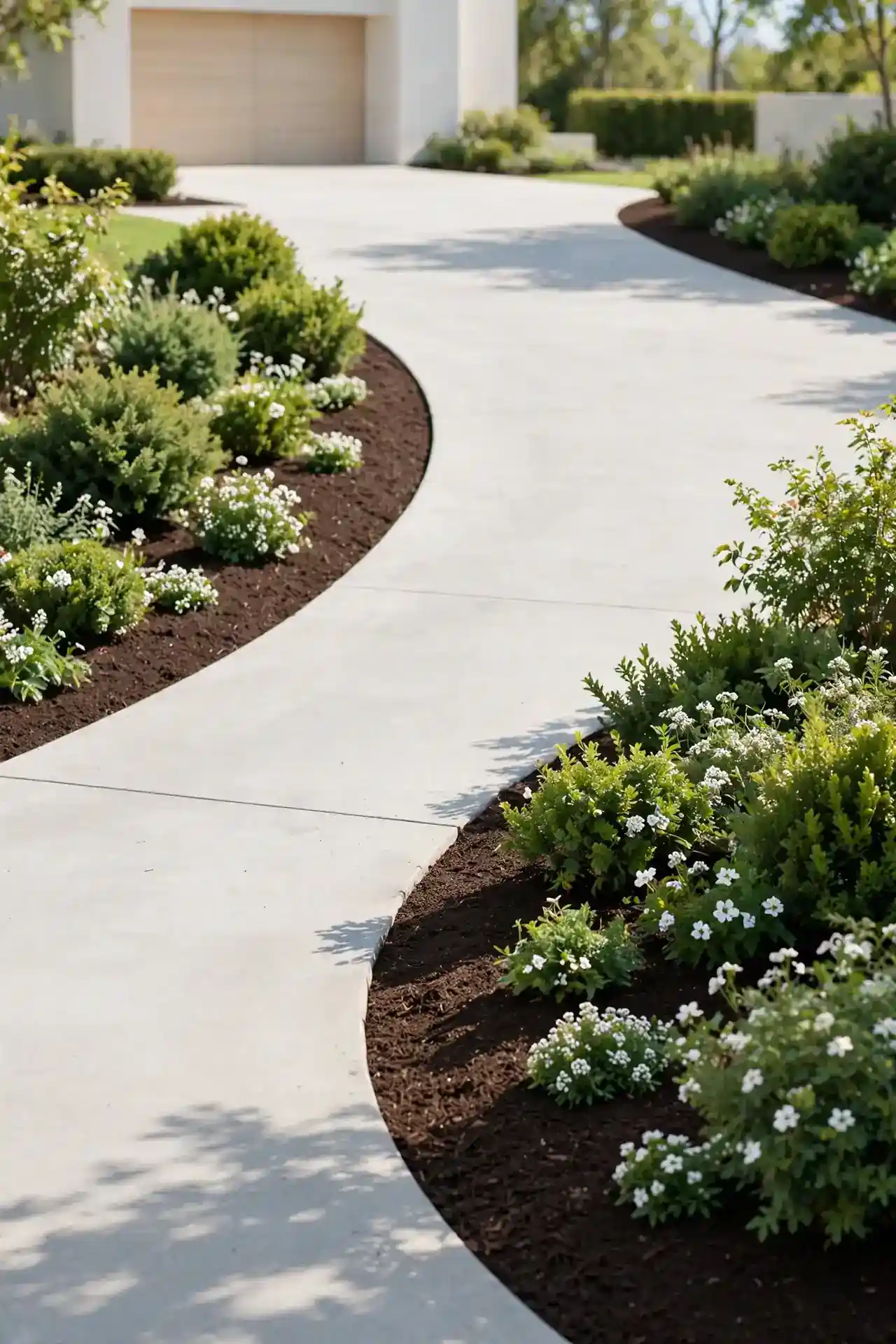
Quick Tip: Refresh mulch beds along the driveway each spring with two inches of shredded bark, which locks in moisture and gives the beds a rich, dark finish. Pull weeds before they seed and rake the surface smooth so the edges stay crisp through summer.
Dark bark mulch makes green foliage and pale stone pop while keeping soil cooler around plant roots. Avoid piling mulch against tree trunks or shrub stems, where trapped moisture invites rot. A clean bed edge cut with a spade gives the whole driveway border a tailored look that reads beautifully from the curb. Top it up annually rather than adding a thick new layer each time.
Paver Driveway Inlays
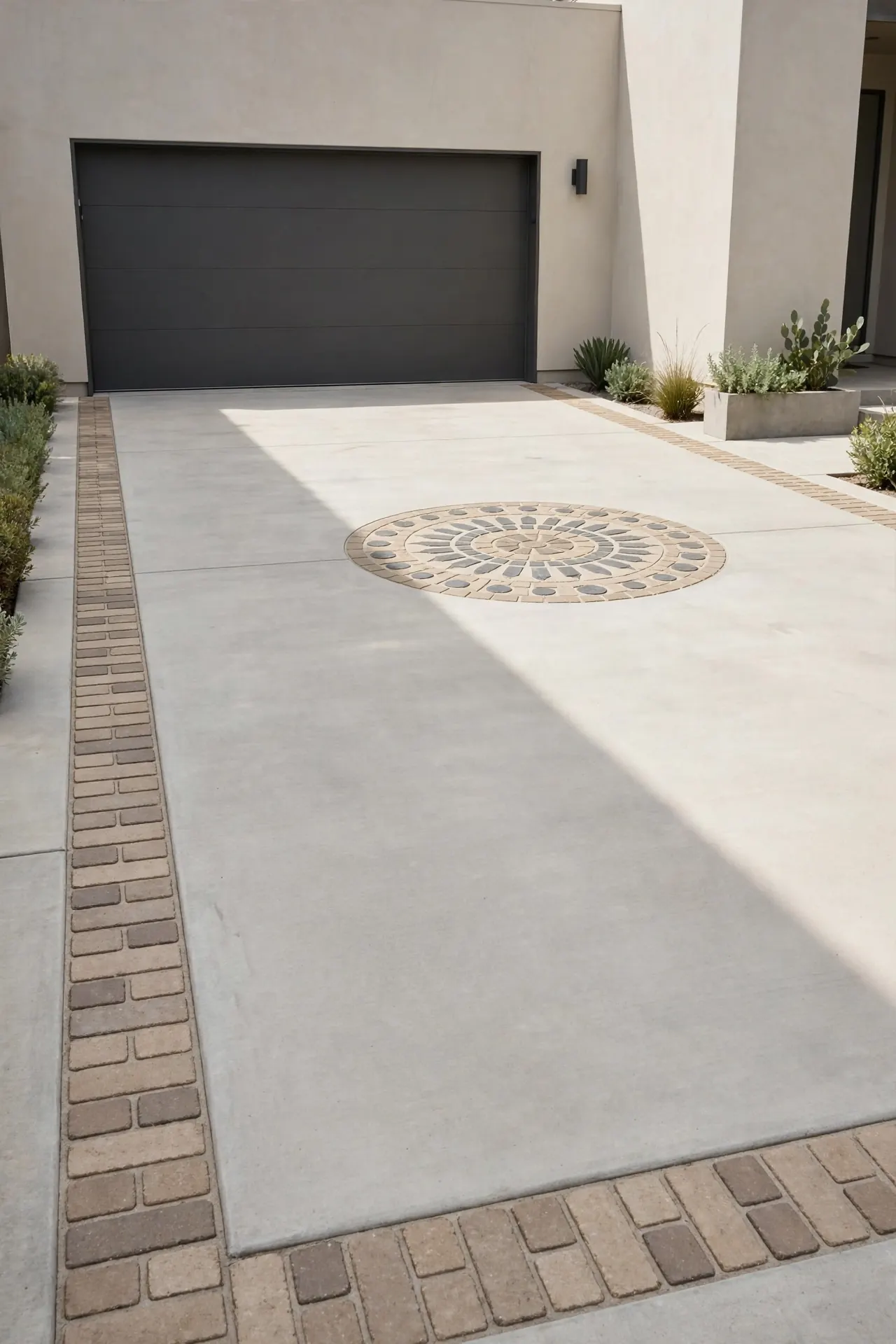
BEFORE: A plain concrete driveway can look flat and uninviting even when the landscaping around it shines. Cracks and stains draw the eye for all the wrong reasons.
AFTER: Inlayed brick or stone borders along the edges and a medallion near the garage break the slab into a custom design. The driveway suddenly looks like a planned architectural feature.
A contractor can saw-cut channels into existing concrete and set thin pavers with polymeric sand in a single day. Choose inlay colors that echo your home’s trim or roof for a cohesive, high-end finish. Seal the pavers after installation to lock in color and resist oil stains from parked cars.
Grass Paver Grid
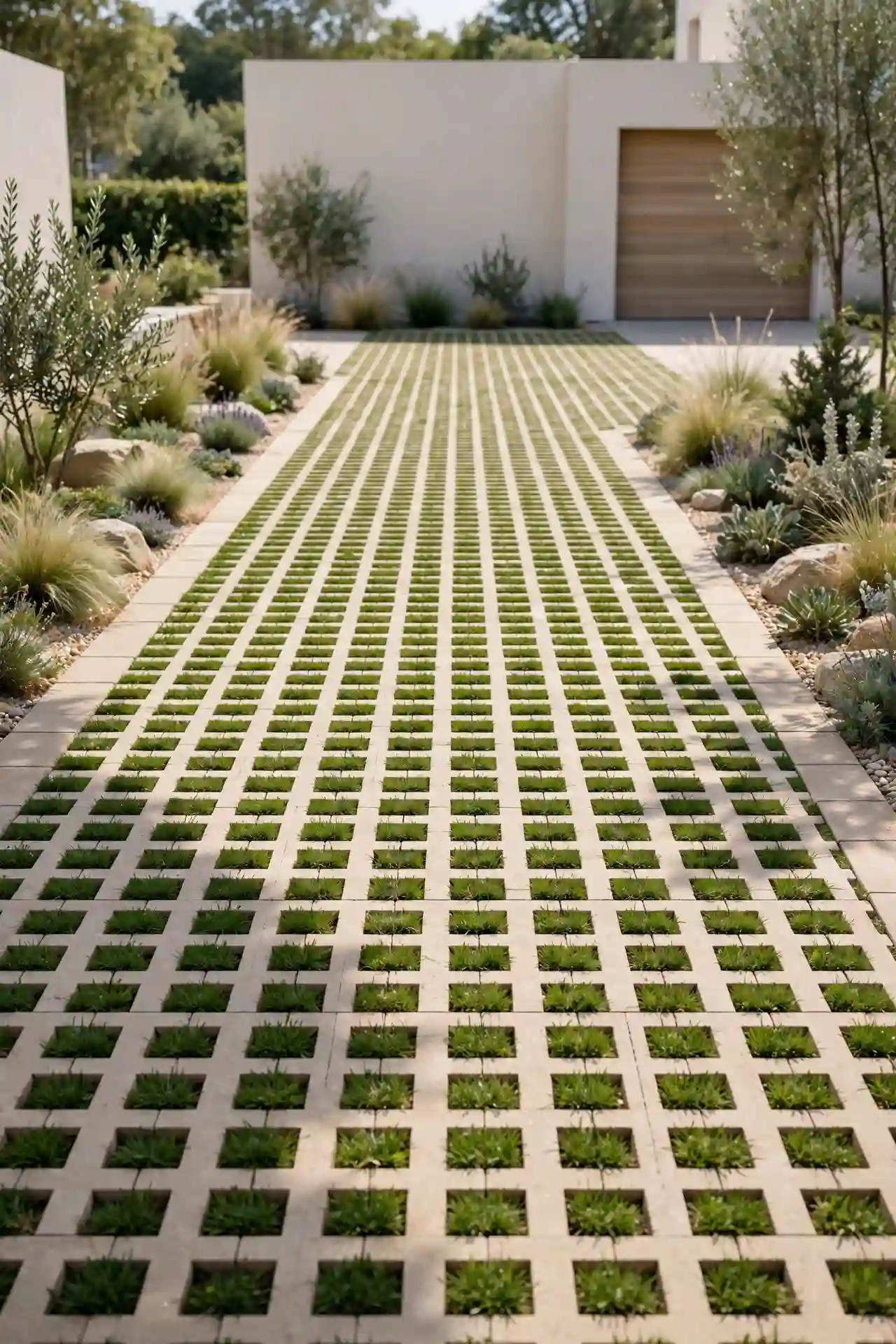
- Excavate four inches and compact a gravel base so the grid sits level and drains freely.
- Set interlocking plastic or concrete grids and fill the cells with topsoil mixed with sand.
- Seed with a tough turf blend or lay sod squares, then water daily until roots take hold.
- Mow high and reseed thin spots each spring to keep the grid lush and green.
Grass pavers handle car weight while letting rain soak through, which reduces runoff and keeps the yard cooler. They suit guest parking pads and overflow lanes better than daily-use driveways. I have seen them stay green for years with basic watering and an occasional overseed.
Native Plant Borders
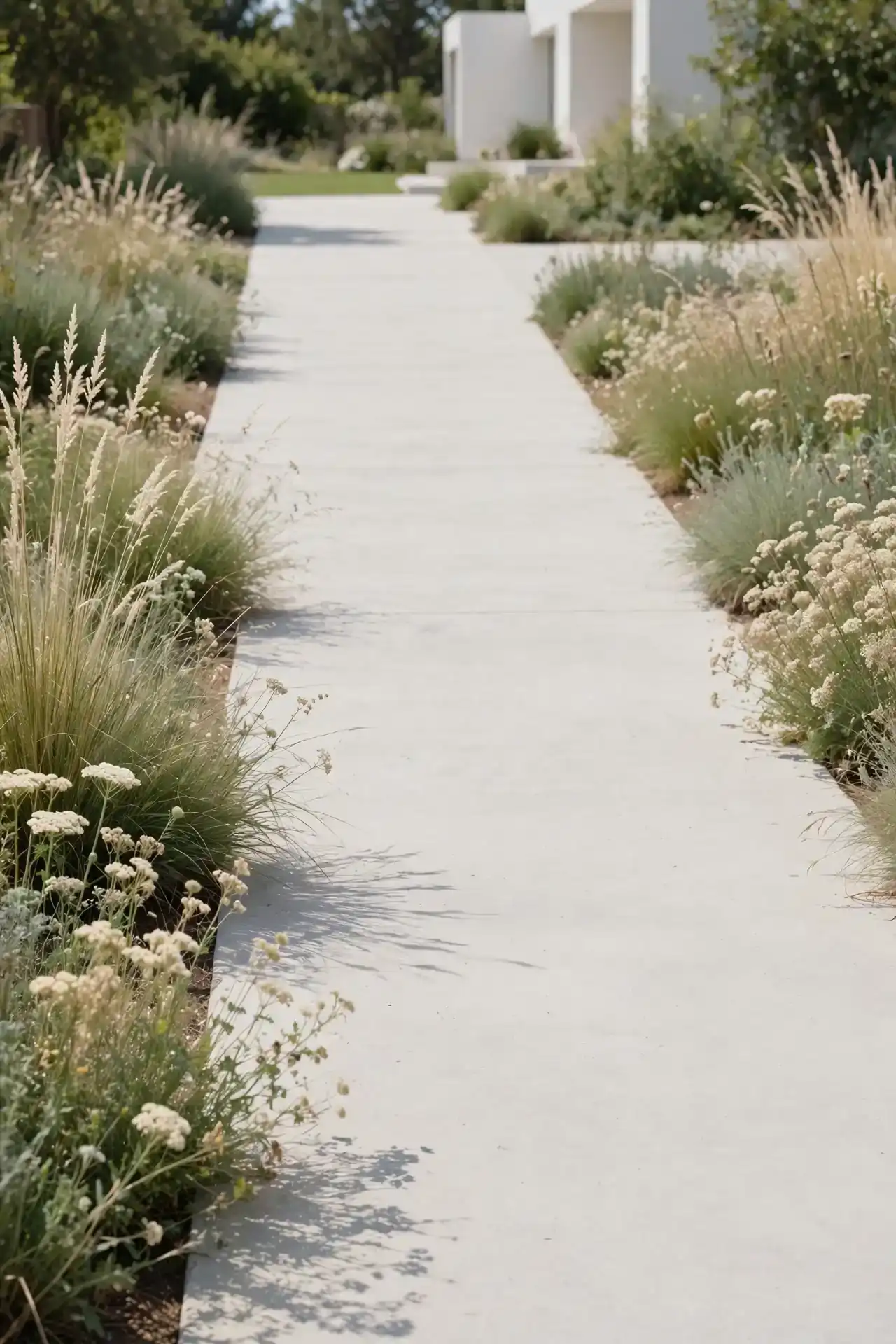
Native plants thrive with almost no fuss; here is how the two best border choices compare.
| Feature | Native Grasses | Native Wildflowers |
|---|---|---|
| Water needs | Low once established | Low once established |
| Maintenance | Cut back yearly | Deadhead monthly |
| Wildlife value | Shelter for birds | Nectar for pollinators |
Native borders shrug off heat, drought, and local pests once their roots settle in the first season. Plant in drifts of five or seven for a natural rhythm that guides the eye along the driveway. Mulch between young plants to suppress weeds, then let the planting knit together into a self-sustaining edge that looks better every year.
Symmetrical Planter Pairs
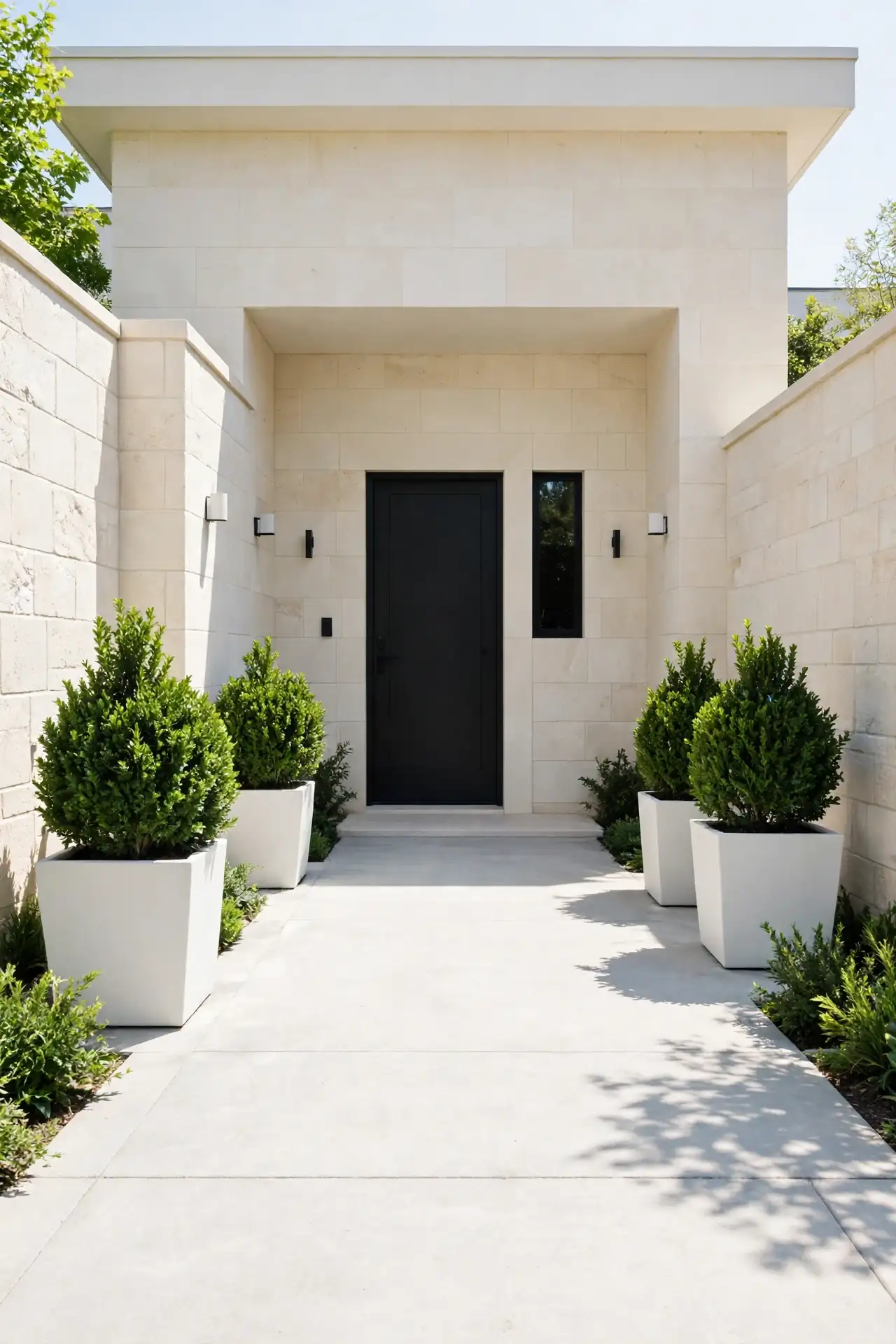
DO:
- Match pot size, color, and plant variety on both sides for true mirror symmetry.
- Flank the garage door or the walkway junction where they frame the view.
- Refresh with seasonal annuals so the pair always looks current.
- Water and feed both pots on the same schedule to keep growth even.
DON’T:
- Do not mix pot styles or heights; mismatched pairs look accidental.
- Do not block car doors or sightlines when backing out.
- Do not let soil dry out; paired planters show stress twice as fast.
Symmetry signals order and care, which is why classic homes use it at every entrance. Large lightweight pots filled with boxwood or dwarf conifers give year-round structure with almost no maintenance.
Gravel Ribbon Edges
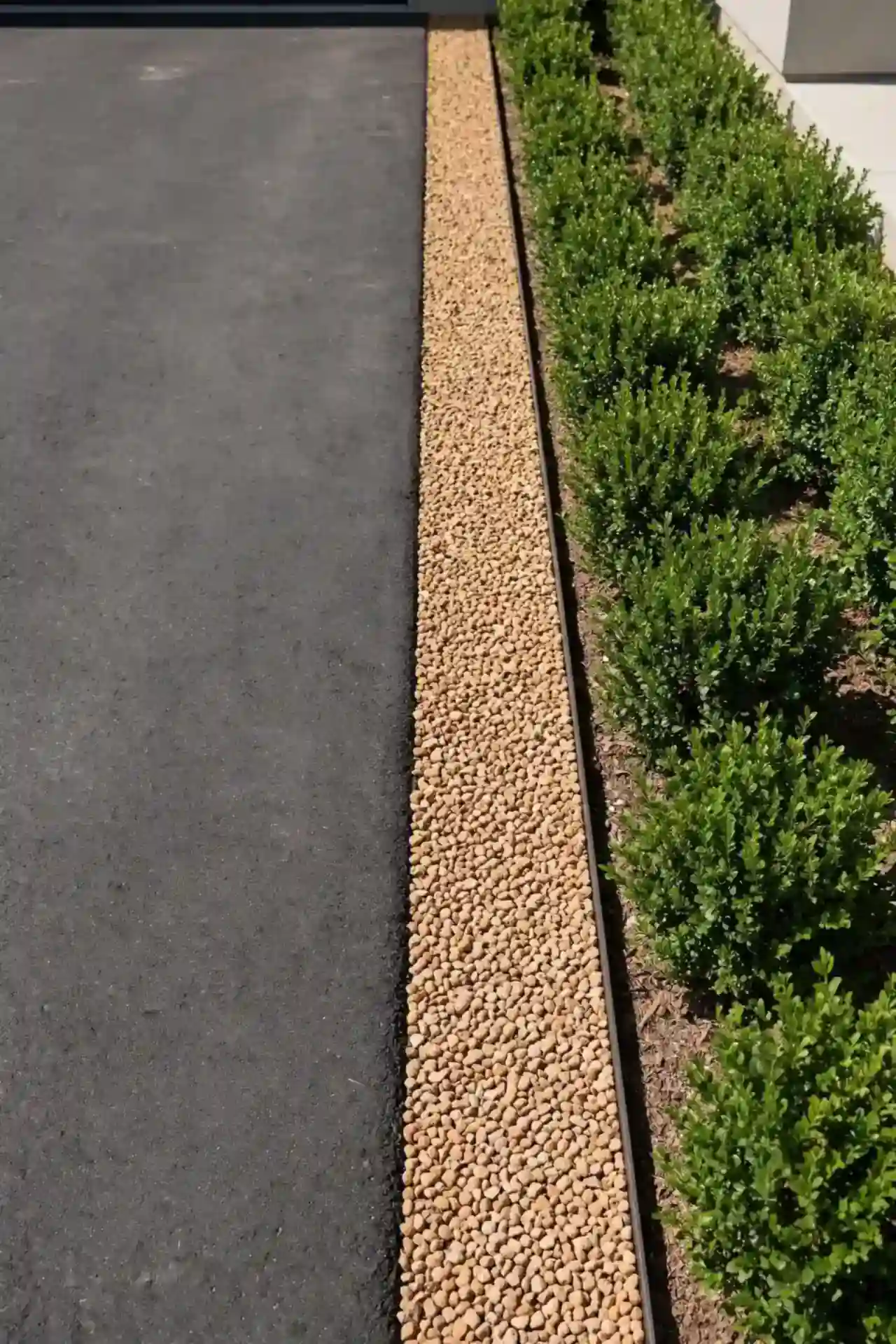
Cost: A two-foot gravel ribbon along a standard driveway runs a fraction of poured edging.
Time: Most homeowners finish both sides in a single weekend.
Skill Level: Beginner friendly; no special tools beyond a spade and rake.
Best For: Cottage and rustic homes where a relaxed edge suits the style.
Gravel ribbons absorb tire overshoot and protect bed edges from crumbling under wheels. Lay landscape fabric first, then two inches of crushed stone in a warm natural tone. Rake it level each spring and the edge stays crisp for years. Edge the ribbon with steel landscape edging to stop stones migrating onto the drive. Top up thin spots annually.
Boxwood Hedge Lines
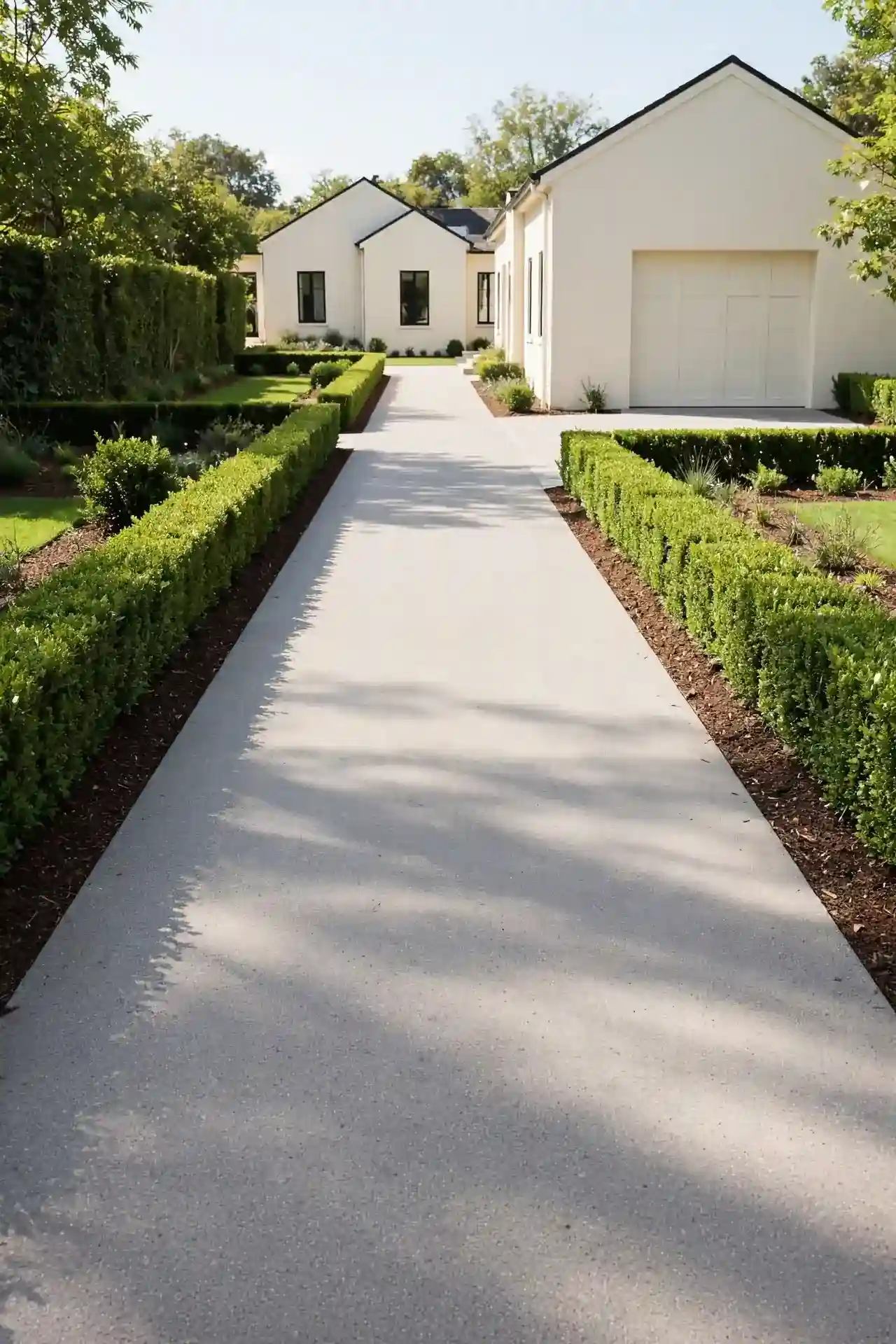
Low boxwood hedges flanking a driveway deliver instant formality without shouting for attention. Their dense evergreen foliage holds its shape through winter, keeping the entry crisp when flower beds go dormant. I’ve noticed they make even modest homes look well cared for year round. Space the hedge a foot back from the pavement so maturing shrubs never crowd car doors.
Plant dwarf varieties eighteen inches apart and shear lightly twice a season for a soft, natural line. Feed in early spring and water deeply during dry spells so foliage stays rich green. A thin bark mulch ring keeps roots cool and trimmers safely away from stems.
Flowering Cherry Accents
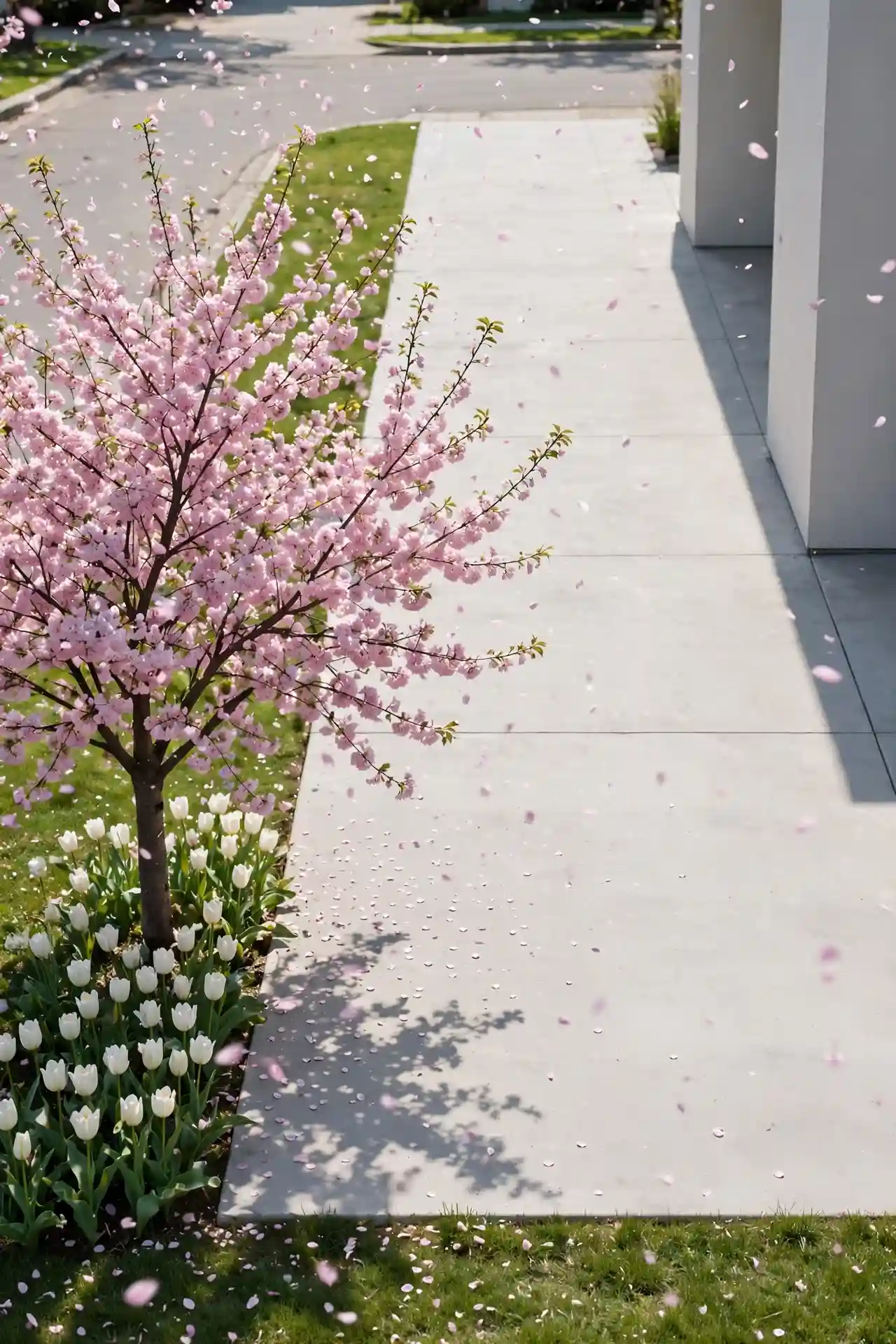
- Plant a single flowering cherry where the driveway meets the street for a landmark tree that announces the home.
- Choose disease-resistant varieties like Kwanzan or Yoshino for reliable spring blooms.
- Keep the trunk clear of mowers and string trimmers to protect young bark.
- Underplant with spring bulbs for color that finishes before summer shade arrives.
- Site the tree at least fifteen feet from the drive so roots never lift pavement.
One well-placed ornamental tree does more for curb appeal than a dozen small shrubs. Cherries peak in April with clouds of pink blossom, then provide light summer shade that cools the pavement. Fall brings golden foliage that extends the show into autumn.
Rain Garden Swales
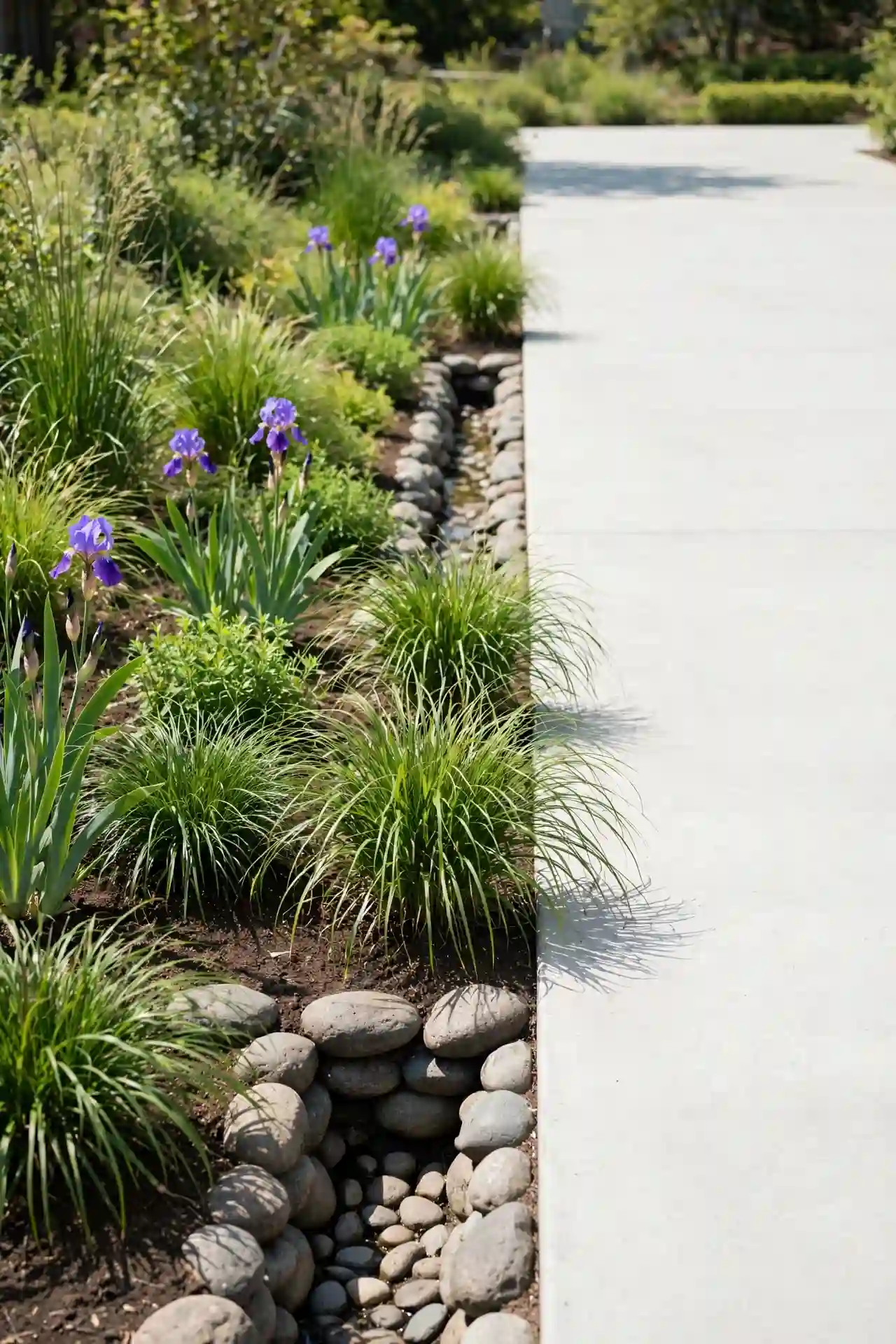
Quick Tip: Shape a shallow swale beside the driveway to catch runoff, then plant it with sedges and iris that tolerate both wet feet and dry spells. A stone-lined outlet keeps heavy storms from eroding the bed. Amended soil with compost helps the swale drain within a day after rain.
Rain gardens turn a drainage problem into a garden feature while keeping water away from foundations and garage floors. In my experience, they handle moderate storms beautifully once plants establish in the first year. Check local codes before digging near utilities, and keep the swale at least ten feet from the house. Choose plants rated for your zone so the swale thrives with almost no care.
Cobblestone Apron Edges
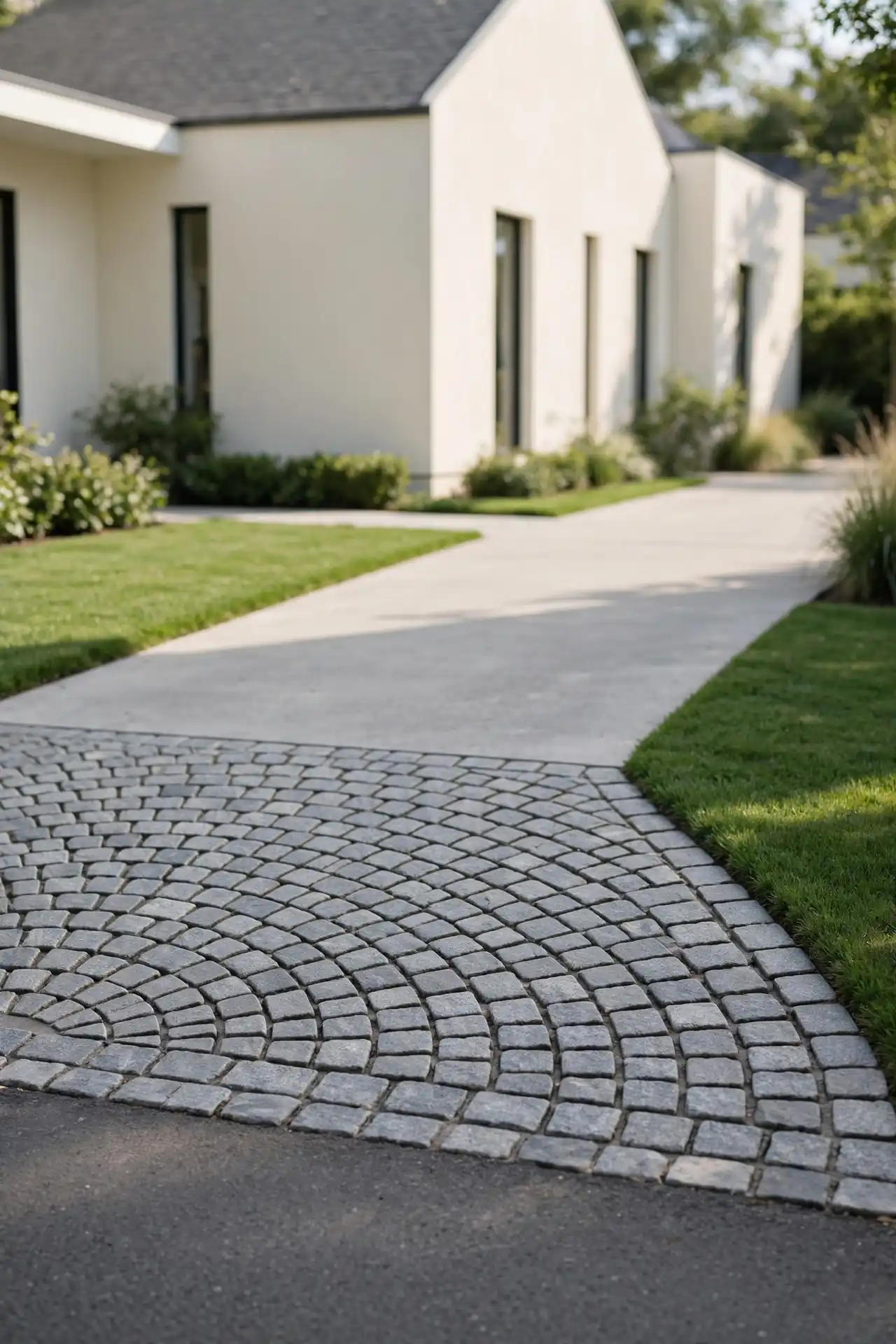
BEFORE: The spot where the driveway meets the street often looks unfinished, with grass wearing thin under turning tires. It becomes the scruffiest patch of the whole front yard.
AFTER: A cobblestone apron frames the driveway entrance like a welcome mat in stone. The textured edge handles turning wheels gracefully and gives the curb a finished, historic feel.
Set granite or concrete cobbles in a mortar bed so they never shift under car weight. Fan patterns look classic at the apron, while straight courses suit modern homes. Rinse the apron with a hose each month to keep dust from dulling the stone.
Uplighting Tree Canopy
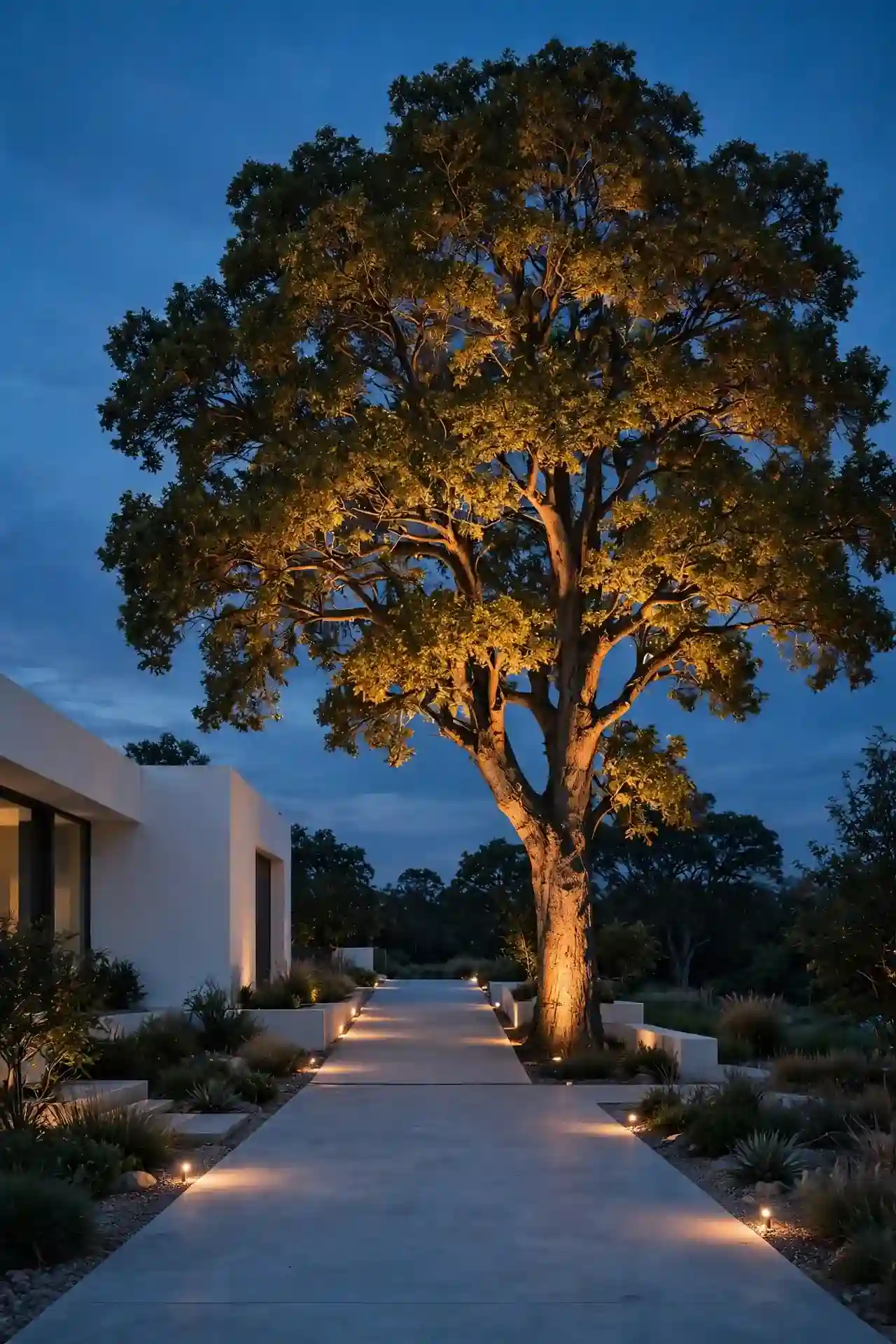
- Choose one or two mature trees near the driveway with strong branch structure.
- Bury low-voltage cable in a shallow trench from the transformer to each fixture.
- Aim adjustable well lights up into the canopy from three feet off the trunk.
- Set a dusk-to-dawn timer so the display runs automatically every night.
- Use warm 2700K LED bulbs so foliage glows amber rather than harsh white.
Uplighting turns ordinary trees into dramatic night sculptures and makes the whole property feel safe. For more ways to dress the entry, browse these farmhouse front porch ideas that pair perfectly with landscape lighting. I have seen a single lit oak double the evening curb appeal of a home.
Low Stone Walls
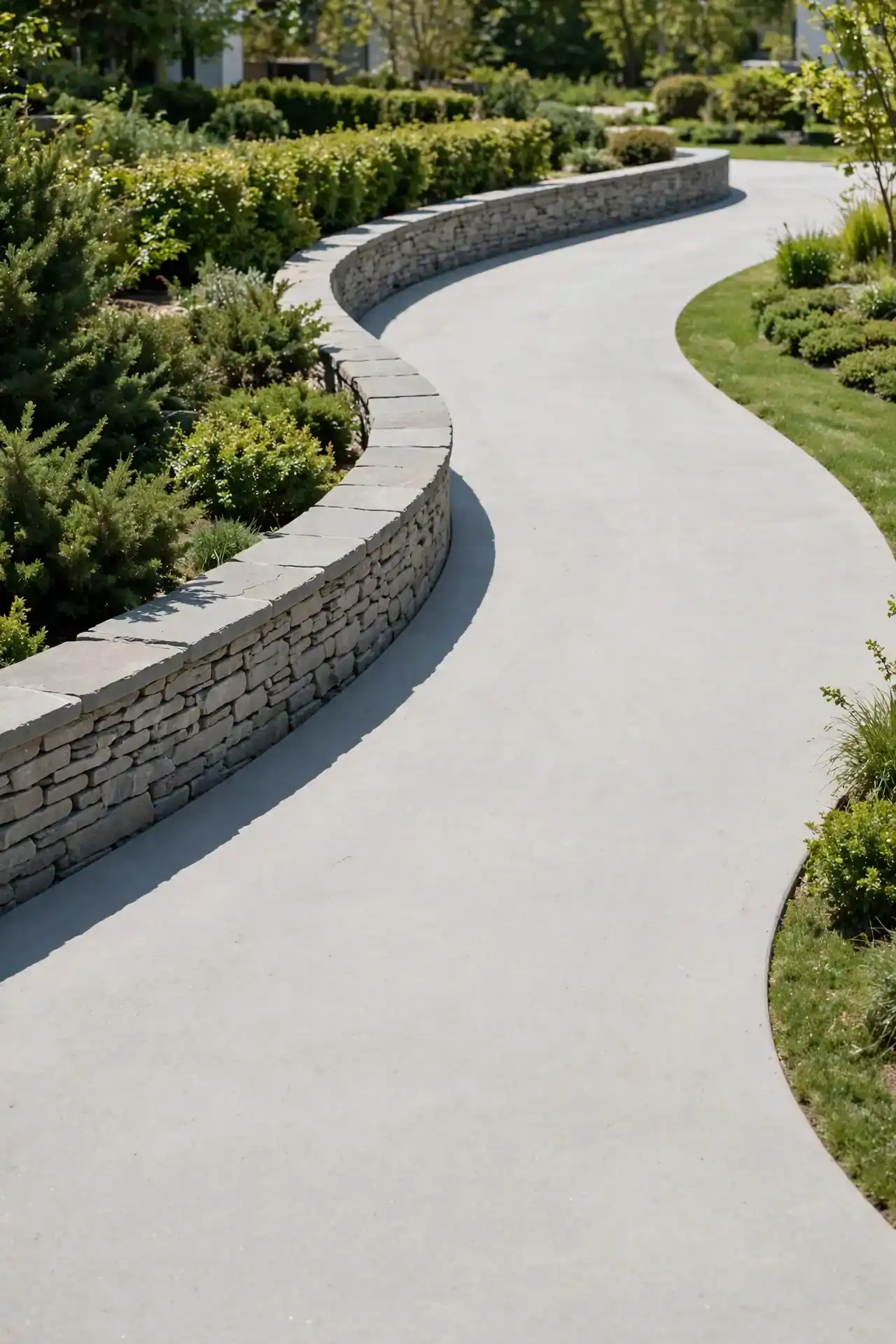
Low walls add structure; here is how the two most popular styles compare.
| Feature | Dry-Stack Stone | Mortared Stone |
|---|---|---|
| Look | Rustic, natural | Crisp, formal |
| Cost | Lower | Higher |
| Skill Level | DIY friendly | Pro recommended |
A wall eighteen to twenty-four inches high doubles as casual seating near the driveway entrance. Cap stones with a slight overhang shed rain and give a finished top line. Backfill with gravel behind the wall so water drains freely and frost never pushes the courses out of line. Curve the wall gently to follow the drive for a softer, more natural feel. Match the stone to your home’s foundation for a cohesive look.
Ornamental Grass Drifts
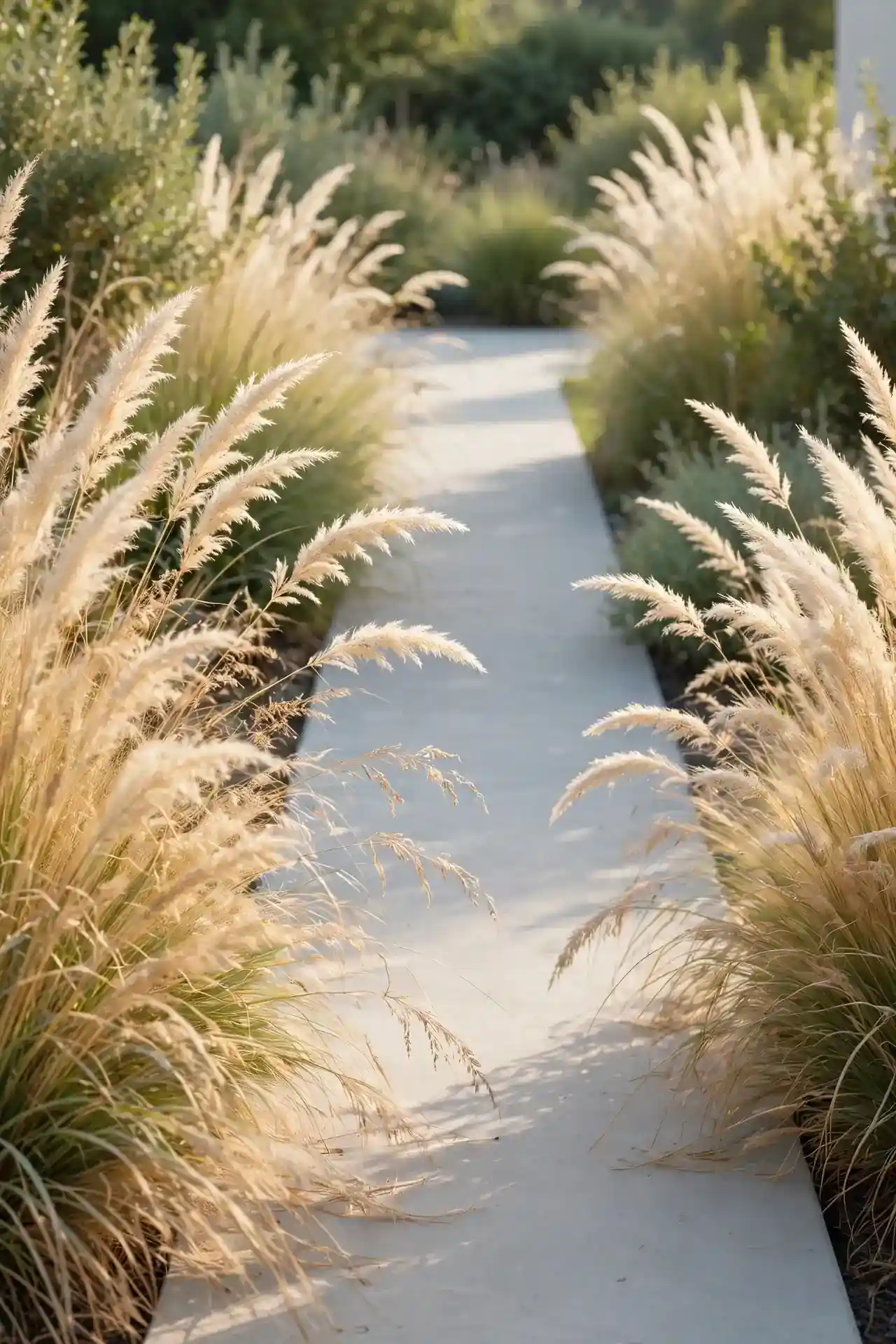
DO:
- Plant grasses in sweeping drifts of five or more for movement and texture.
- Cut clumps back in late winter before new growth emerges.
- Choose compact varieties near the drive so plumes never flop onto cars.
- Pair warm-toned grasses with cool stone for contrast.
DON’T:
- Do not plant pampas grass near walkways; its blades are sharp.
- Do not let self-seeders spread into lawn areas unchecked.
- Do not skip the spring cutback or clumps turn brown and messy.
- Do not plant aggressive spreaders without root barriers in place.
Ornamental grasses bring softness and motion that hardscaping alone cannot offer. Their seed heads catch morning light beautifully and sway gently in evening breezes.
Permeable Paver Driveway
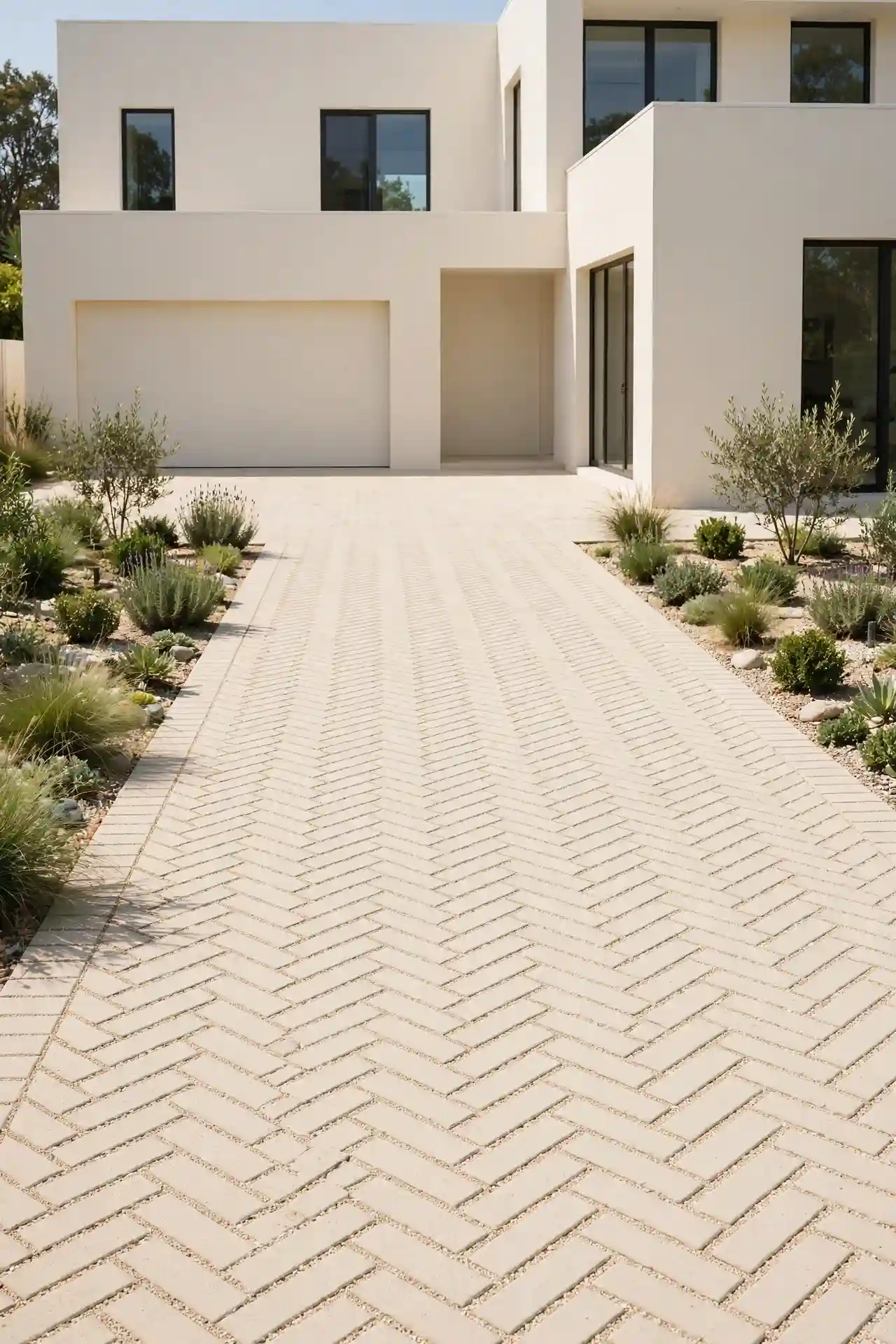
Cost: Higher upfront than asphalt, but rebates and longevity offset the price.
Time: A professional crew installs an average drive in three to five days.
Skill Level: Advanced; proper base prep makes or breaks the system.
Best For: Eco-minded homeowners and areas with strict stormwater rules.
Permeable pavers let rainwater filter through joints into a stone reservoir below, cutting runoff dramatically. Vacuum or sweep the joints yearly to keep them draining freely. The result looks like a premium paver driveway while quietly handling stormwater the smart way. Choose light-colored pavers to reduce heat and brighten the whole frontage. In my experience, neighbors always ask about the rich, textured finish.
Fragrant Herb Edges
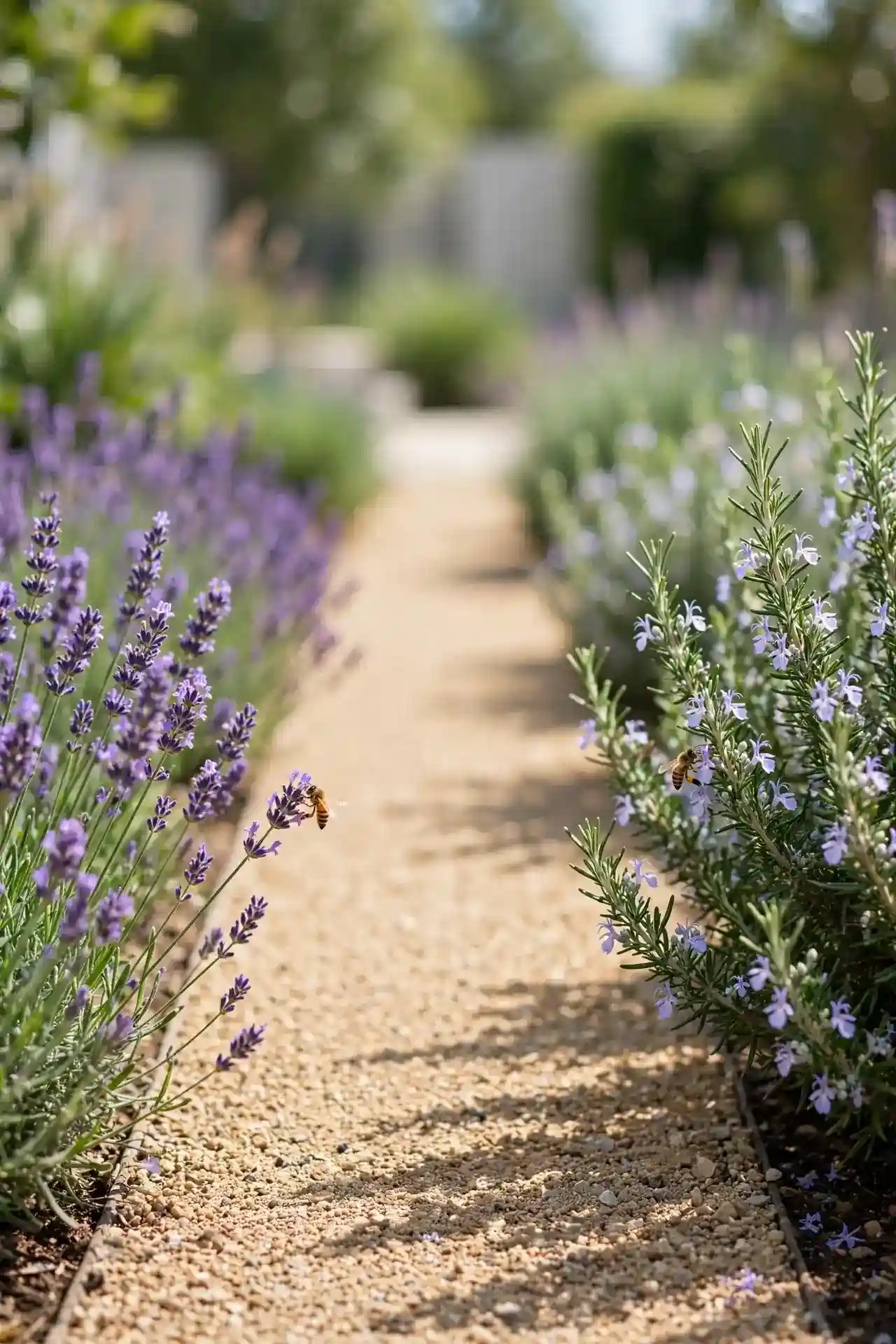
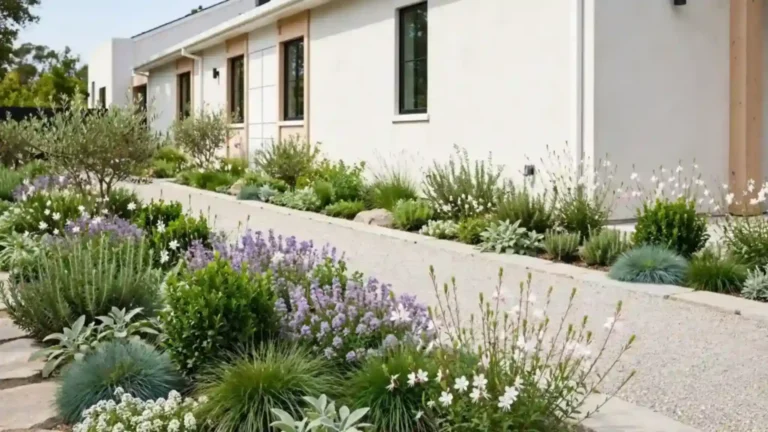
Lavender and rosemary planted along a driveway turn every arrival into a small sensory moment. Brush past the foliage and the air fills with scent that no flower bed can match. These tough Mediterranean herbs thrive in the heat reflected off pavement. Bees love the blooms, adding gentle life to the entry.
Shear lavender lightly after its first bloom to encourage a second flush of flowers. Rosemary needs sharp drainage, so plant it on a slight mound of sandy soil. Both shrug off drought once established and ask for little beyond sunshine. Harvest sprigs for the kitchen and the planting pays for itself.
Woodland Edge Planting
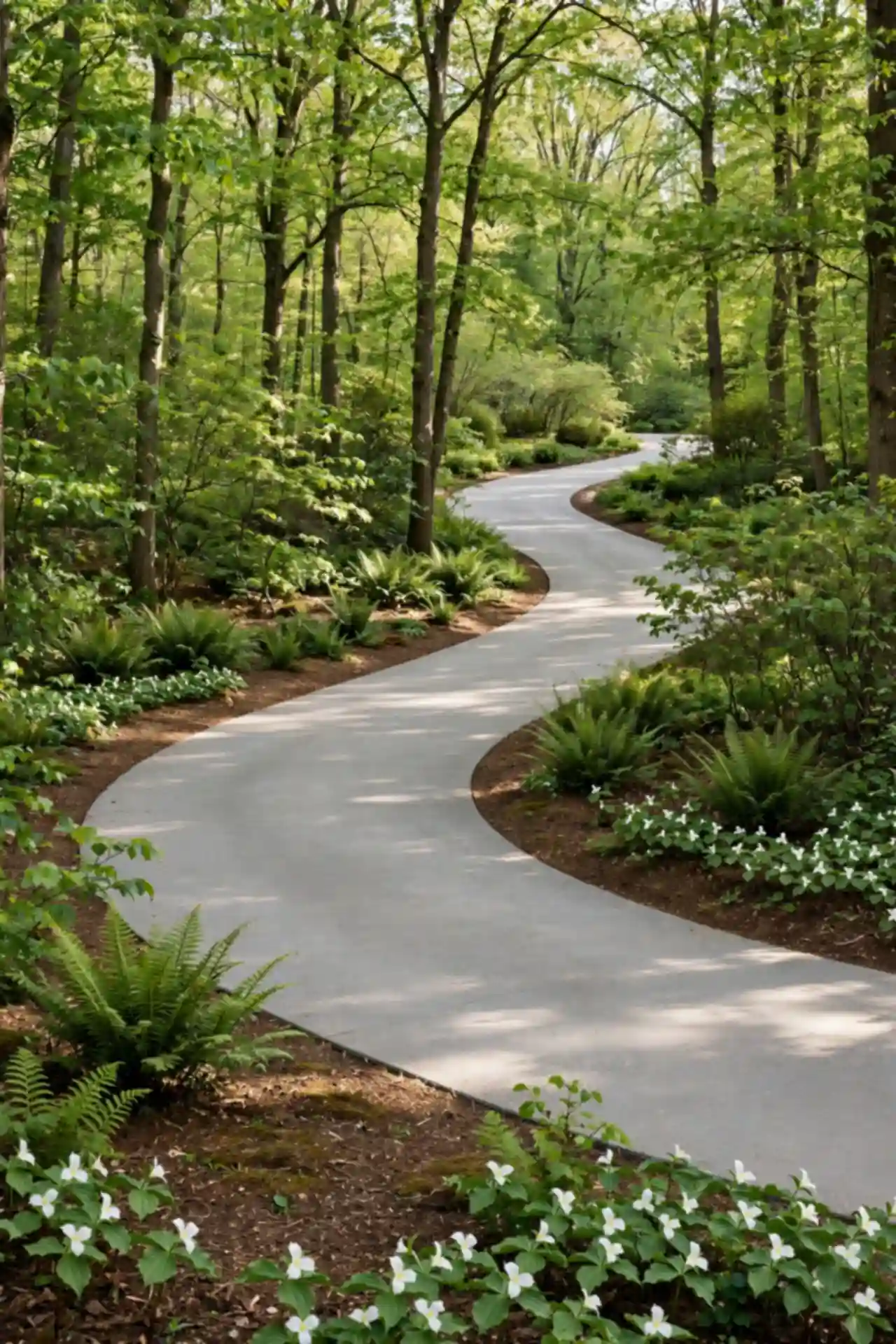
- Layer shade trees, understory shrubs, and ferns along wooded driveway edges for depth.
- Keep a clear trunk zone so drivers can see around gentle curves.
- Mulch the whole bed to mimic a forest floor and cut weeding.
- Add spring ephemerals like trillium for fleeting early color.
- Thin crowded saplings so remaining trees develop full, healthy crowns.
A woodland edge softens long rural drives and blends the property into its surroundings. In my experience, native plants settle in fastest here with almost no watering after year one. The layered look feels established within two seasons. Stick with one mulch type throughout for a unified forest-floor finish.
Terracotta Pot Clusters
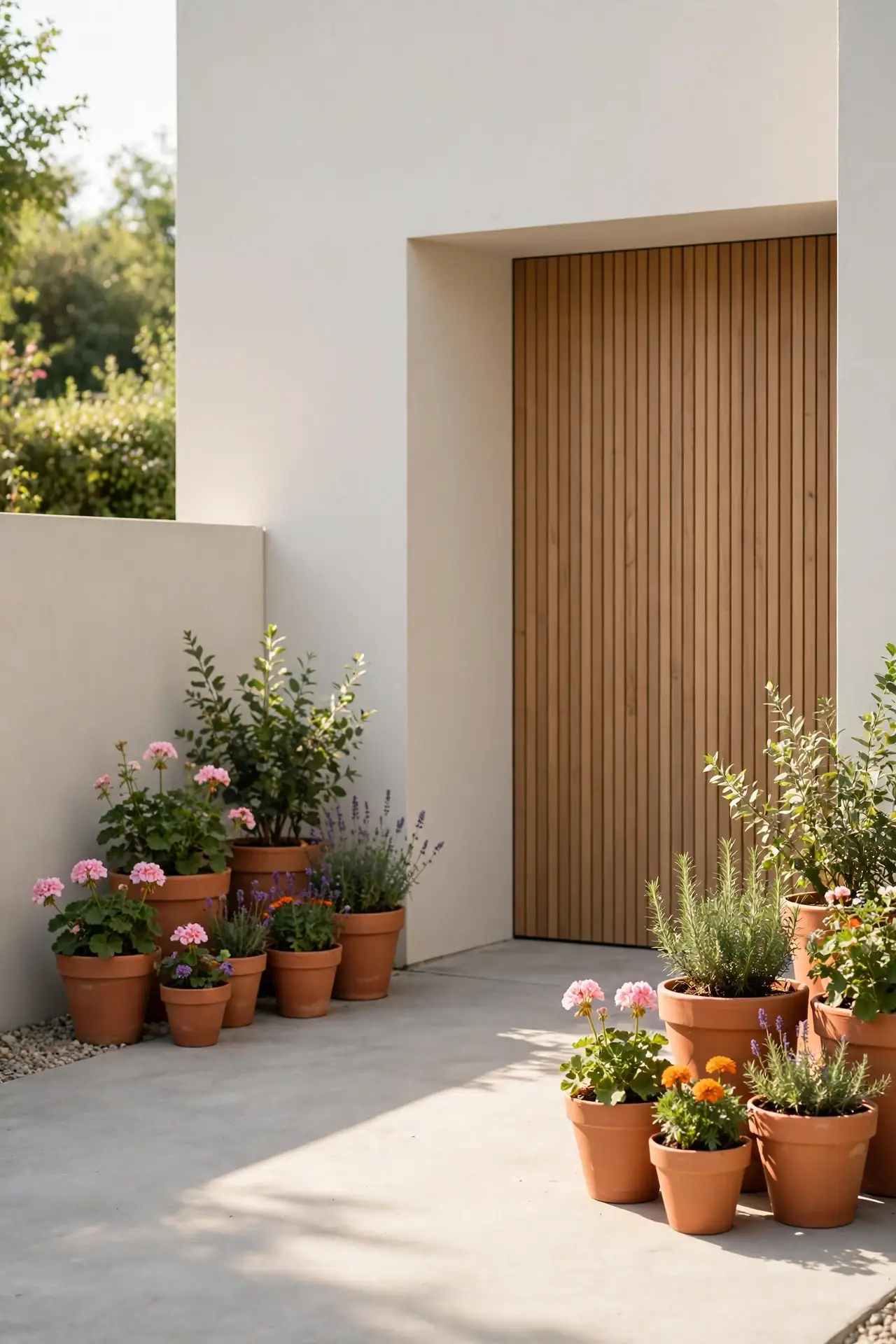
Quick Tip: Group terracotta pots in odd numbers near the garage corners or driveway gate, mixing heights for a collected look. Fill thrillers, fillers, and spillers in each pot so every cluster looks lush from every angle. Water daily in summer since clay pots dry quickly.
Terracotta’s warm clay tones flatter both modern and traditional homes while aging gracefully outdoors. Cluster three to five pots and rotate seasonal annuals through them for ever-changing color. Set pots on feet or stands so water drains freely and frost never traps moisture beneath. In winter, swap tender plants for evergreen sprigs and pinecones. The warm color pops against gray pavement.
Sculptural Boulder Groupings
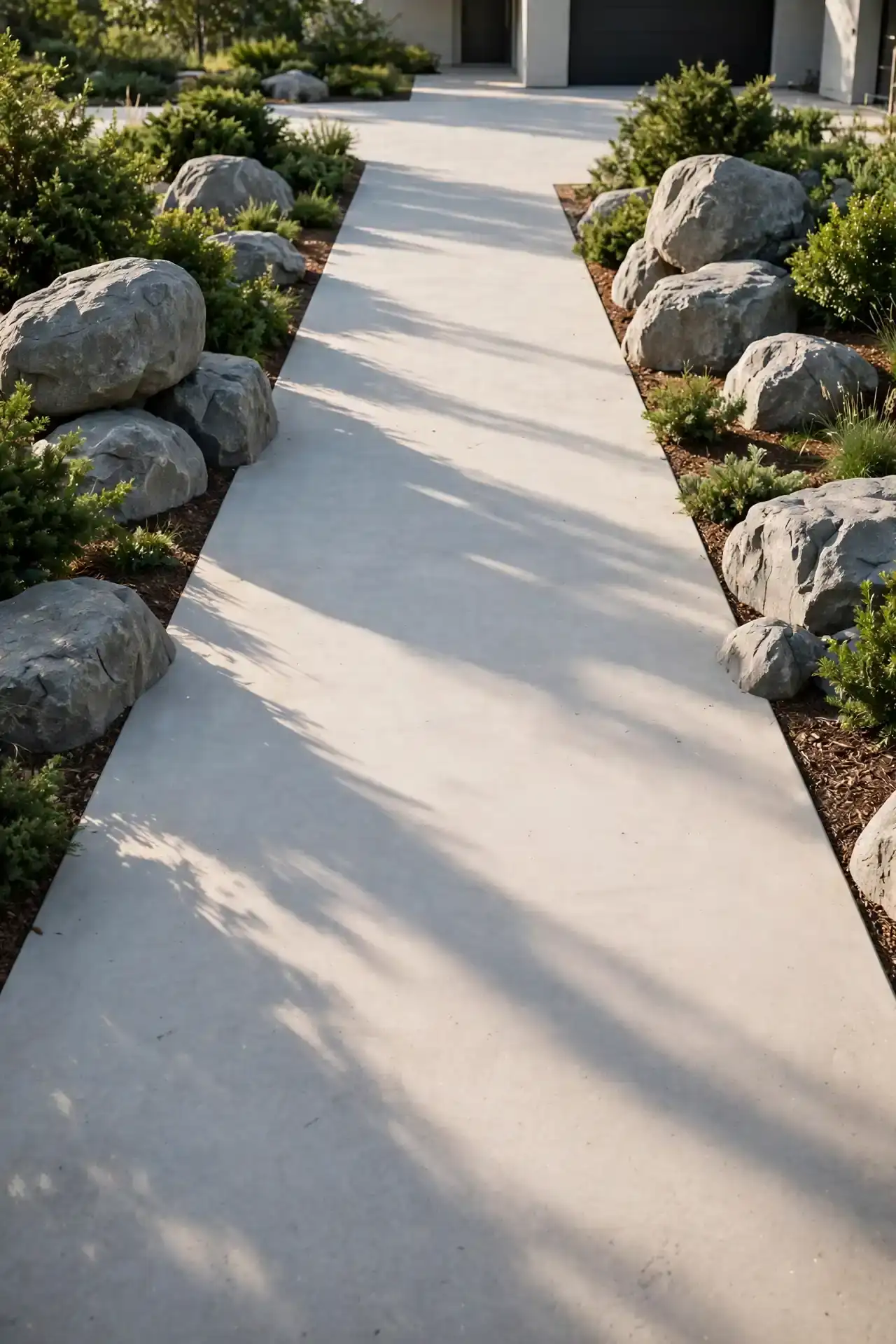
BEFORE: Bare mulch beds along a driveway can feel empty and unfinished no matter how tidy they are. Something solid and permanent is missing from the composition. Large beds especially suffer without a focal anchor.
AFTER: Grouped boulders of varying sizes anchor the beds with natural sculpture. They catch light and shadow all day, giving the landscape presence that plants alone cannot deliver.
Choose local stone so boulders match the region’s geology and look like they belong. Bury each stone a third deep so it sits naturally rather than perching on the surface. Group in odd numbers and vary heights for an artful, unforced arrangement.
Conclusion
Your driveway deserves the same design love as any room inside your home. These driveway landscape ideas prove that even simple changes like fresh edging, warm lighting, and thoughtful plantings can completely reshape your home’s first impression. Start with the project that excites you most, then build from there season by season.
Save this guide to Pinterest so you can revisit it when you are ready to begin, and share it with a friend who is planning their own curb appeal refresh. Small steps taken this weekend will greet you with a smile every time you pull in. Your future self will thank you.
One Comment