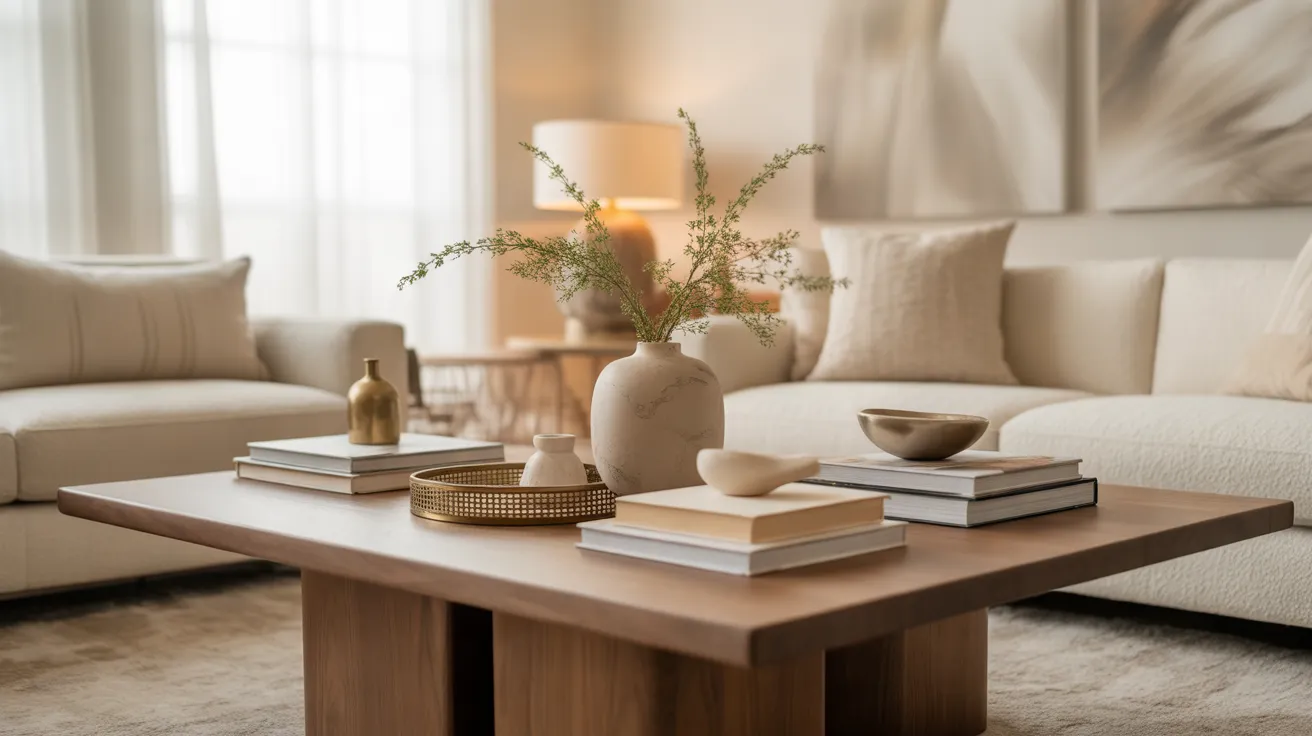
24 Coffee Table Decor Ideas for an Elegant, Luxe Finish
Your coffee table can set the tone for the entire living room. The right coffee table decor ideas can turn a plain surface into a polished focal point without making it feel crowded or overly formal.
From layered books and sculptural objects to trays, candles, ceramics, and natural greenery, small styling choices can add warmth, texture, and a luxurious finish. The key is knowing what to combine, how much to use, and where each piece should sit. In my experience, the most inviting tables usually balance useful items with a few carefully chosen decorative accents. You do not need a large budget or a designer showroom to create that look. These 24 ideas will give you practical combinations you can easily adapt to your table, room size, color palette, and everyday routine.
Layered Tray Styling
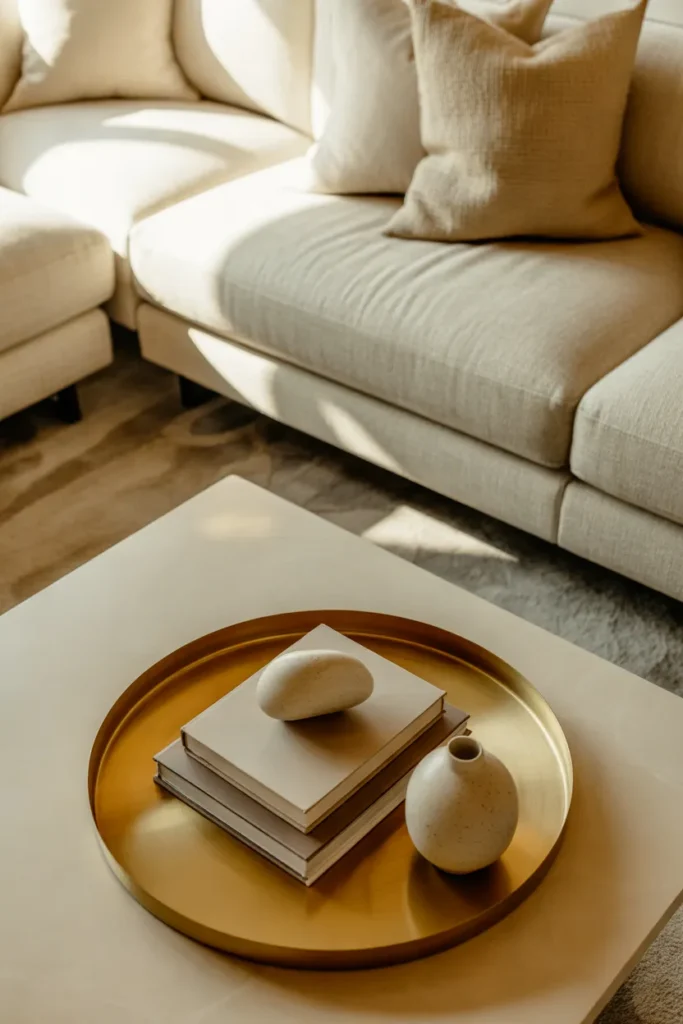
A well-chosen tray gives scattered coffee table pieces a defined home. Start with a shallow brass, wood, or stone tray large enough to hold three to five objects without crowding the surface. Keep the palette restrained so the arrangement feels intentional rather than busy.
Place the tallest piece toward the back, then add shorter objects in front. I’ve noticed this simple height variation makes a tabletop arrangement look more polished without requiring expensive accessories. Leave some tray space visible around the objects. That breathing room helps the entire setup feel lighter and more refined.
Stacked Coffee Table Books
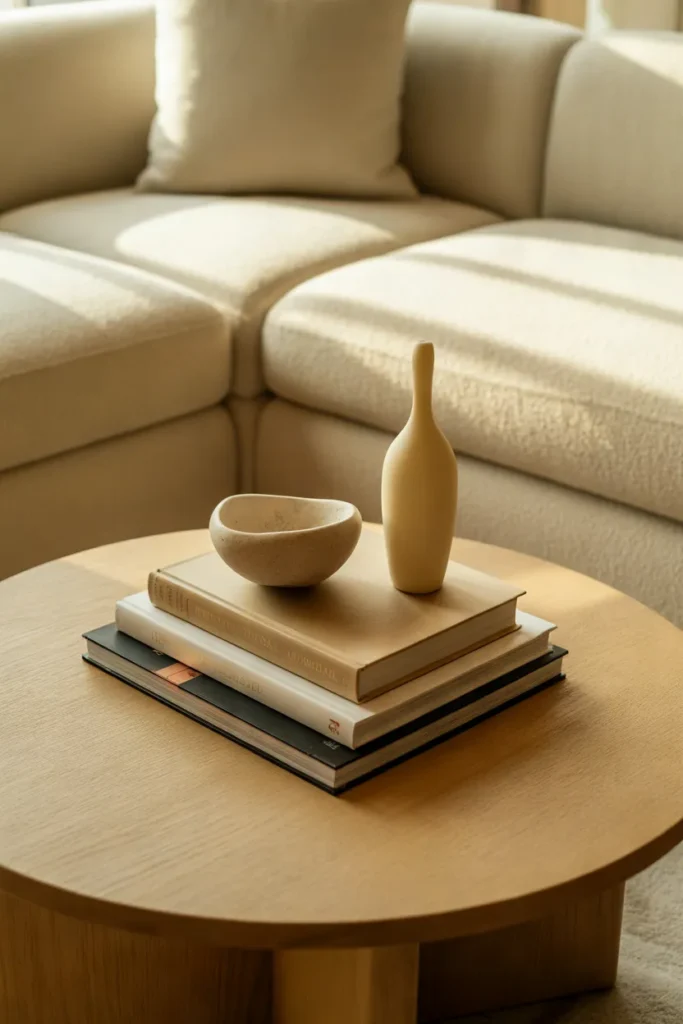
- Choose two or three hardcover books with neutral, muted, or coordinated covers.
- Place the largest book on the bottom for a stable visual foundation.
- Turn the top book slightly to create subtle movement.
- Add one small object, such as a bowl, candle, or stone sculpture.
- Keep the stack low enough that it does not block conversation across the table.
Books add height while giving smaller accessories a practical platform. For a luxe finish, look for linen, matte, textured, or understated covers instead of overly bright designs. Rotate books occasionally so the display feels fresh. A compact stack also works especially well on smaller tables where too many accessories quickly create visual clutter.
Oversized Ceramic Vase
Quick Tip:
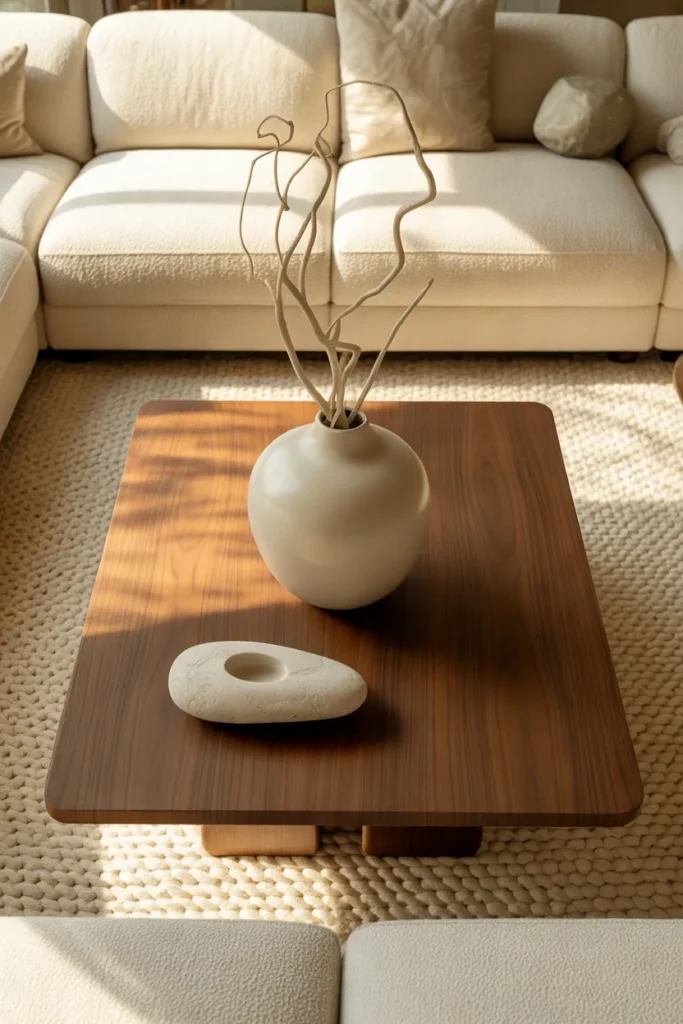
Choose a vase with enough visual weight to stand alone, but keep its shape simple. If the vessel is tall, use sparse branches rather than a dense arrangement. This keeps the table visually open and prevents the centerpiece from feeling oversized.
A large ceramic vessel creates an instant focal point with very few pieces. Matte finishes in ivory, taupe, sand, or soft gray pair easily with wood and stone surfaces. For a more relaxed arrangement, use dried stems with irregular heights rather than perfectly matched branches. Leave plenty of empty tabletop around the vase to emphasize its sculptural shape.
Brass Accent Objects
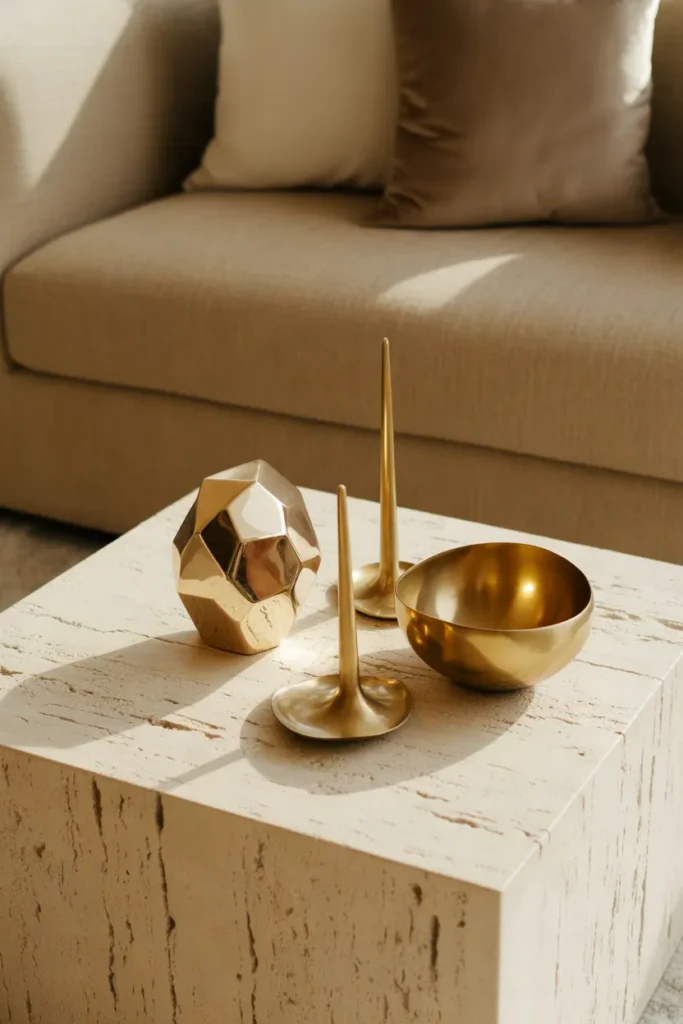
BEFORE:
A coffee table filled with unrelated metal finishes can look accidental. Too many shiny pieces also compete for attention, especially against reflective glass or polished stone.
AFTER:
A few coordinated brass accents create a consistent visual thread. The warm metallic finish adds richness while keeping the arrangement refined and controlled.
Keep brass pieces in different shapes but similar tones. A rounded bowl paired with a geometric sculpture creates contrast without looking mismatched. If your table already has strong wood grain or veining, use fewer accessories so the brass remains an accent rather than the main feature.
Sculptural Candleholders
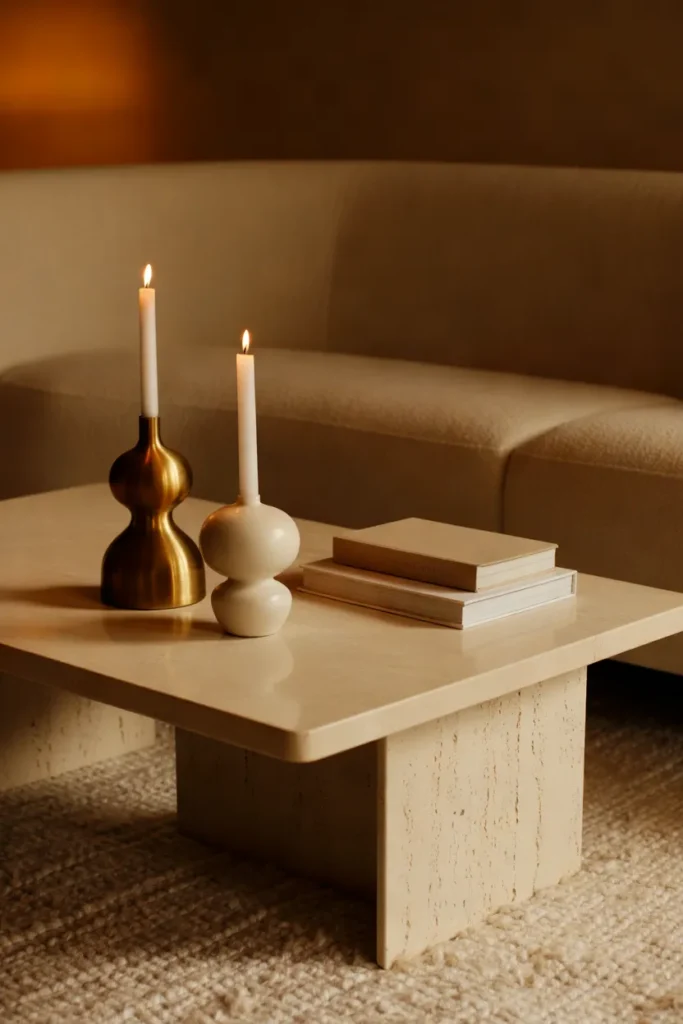
- Select two candleholders with different heights but related shapes.
- Position the taller holder slightly behind the shorter one.
- Add a low accessory, such as a small bowl or book, beside the pair.
- Use unscented neutral candles for a clean, cohesive appearance.
The right candleholders bring vertical interest without taking over the tabletop. In my experience, odd-height groupings look more natural than perfectly matched pairs. Brass, black, ceramic, and stone finishes all work well, but choose one dominant material and let the other accessories support it.
Marble and Wood Mix
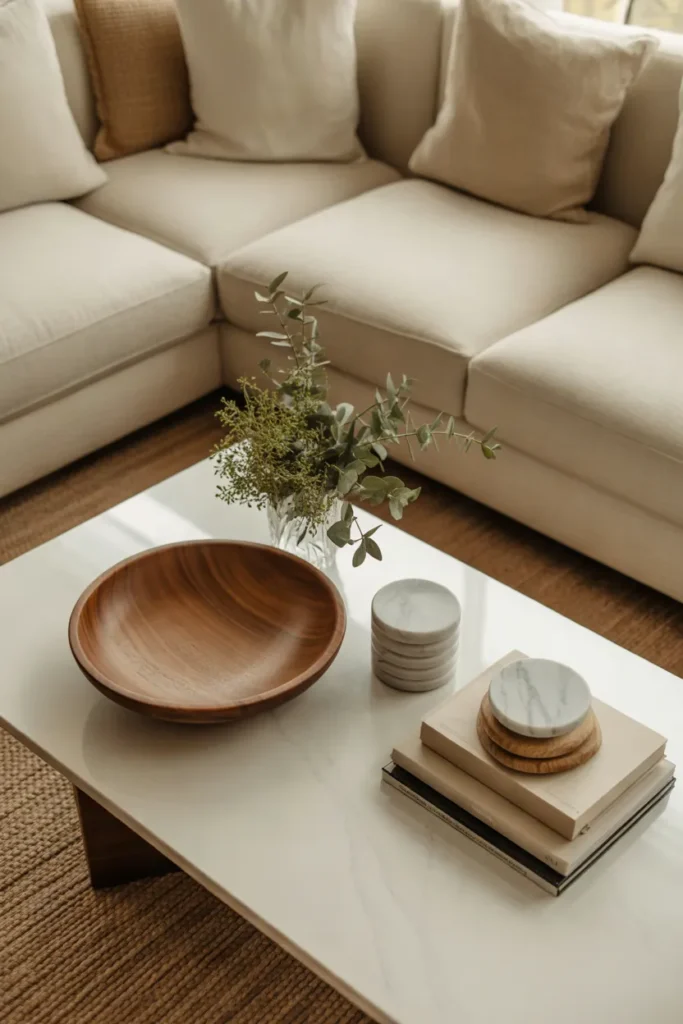
| Comparison | Option A | Option B |
| Main material | White marble | Warm wood |
| Visual effect | Crisp and polished | Soft and grounded |
| Best pairing | Brass accents | Ceramic accessories |
| Styling approach | Keep colors restrained | Mix light and dark tones |
Combining marble and wood gives a coffee table arrangement both contrast and warmth. The stone provides a polished surface, while wood prevents the display from feeling too formal. Keep one material dominant and use the other in smaller pieces. This balance works especially well in neutral living rooms with layered natural textures.
Curved Decorative Bowl
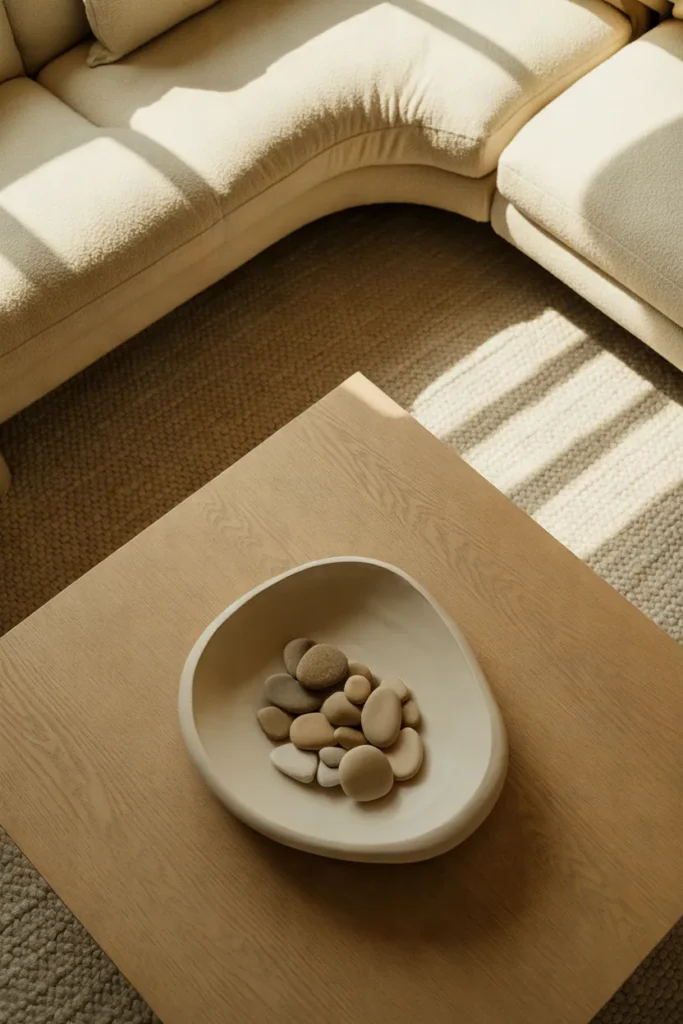
DO:
- Choose a low bowl with a wide, rounded silhouette.
- Keep the bowl mostly empty for a refined appearance.
- Add smooth stones, decorative beads, or a few wooden spheres.
- Position it where people can easily reach around it.
DON’T:
- Fill the entire bowl with small decorative pieces.
- Mix several unrelated colors inside the vessel.
- Choose a bowl so tall that it blocks the table’s visual flow.
- Place it directly against another large centerpiece.
A curved bowl softens tables with sharp rectangular edges and adds useful visual weight without creating height. Ceramic, marble, travertine, and carved wood all work beautifully. For everyday living, keep the contents easy to remove so the table remains practical for drinks, snacks, and casual gatherings.
Neutral Book Stack
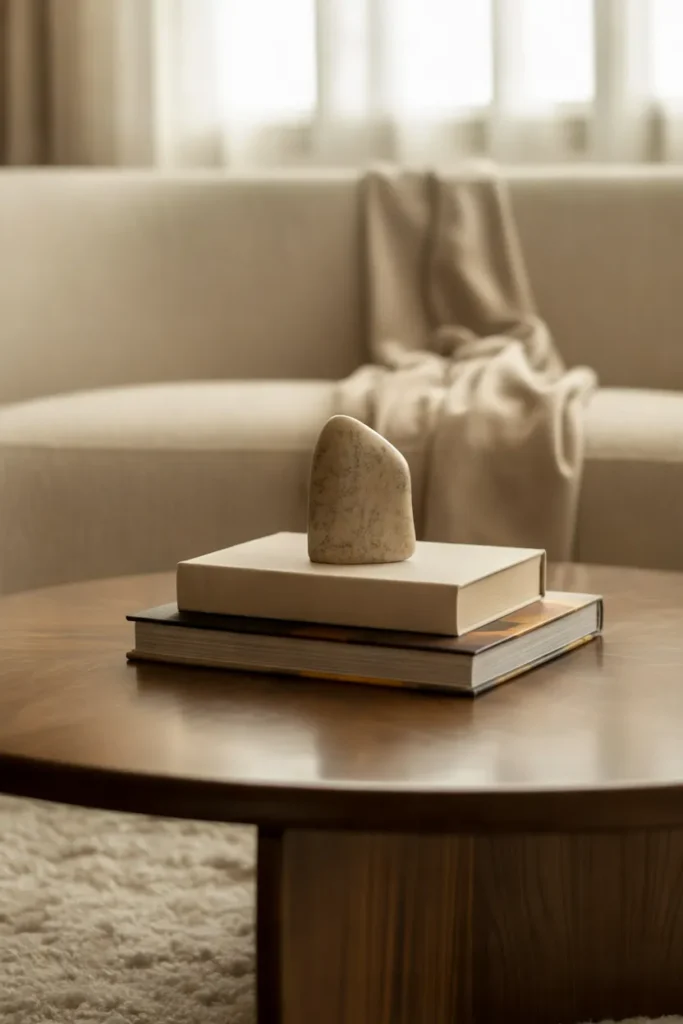
Cost: Moderate | Time: 5 minutes | Skill Level: Beginner
Best For: Neutral interiors | Works In: Small or large living rooms
Result: Added height with minimal clutter
Neutral books create a quiet foundation for smaller decorative pieces. Choose covers in cream, beige, tan, charcoal, or muted brown, then vary their sizes slightly. I’ve noticed that keeping the stack to three books usually provides enough height without making the table feel crowded. Finish with one compact object rather than several.
Glass Cloche Display
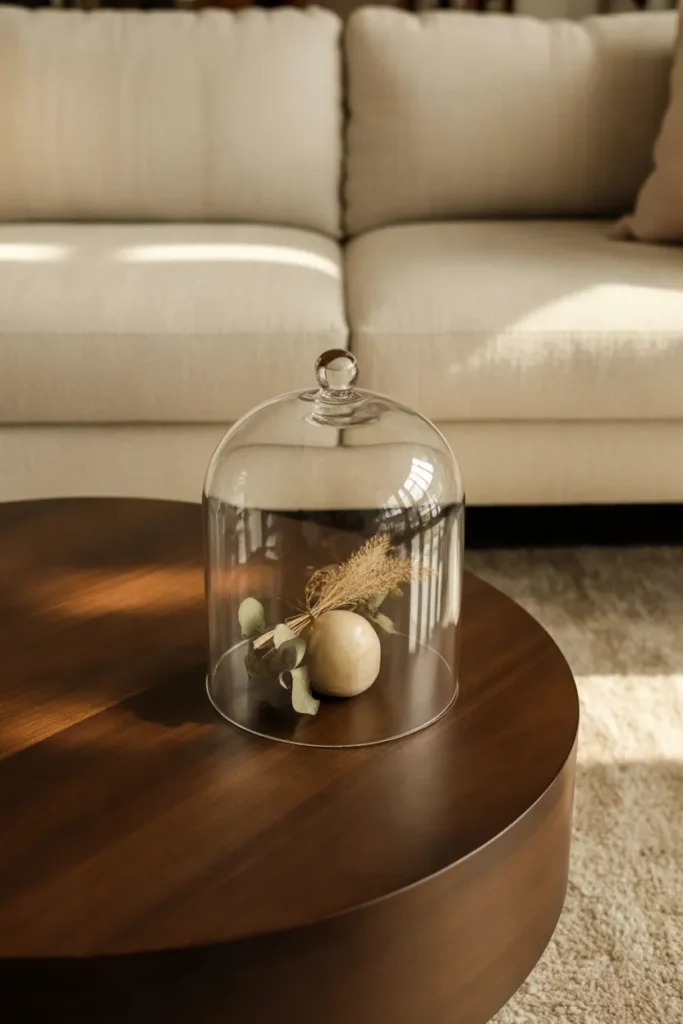
A glass cloche gives a small decorative object more presence while keeping the arrangement contained. Choose a simple ceramic piece, dried botanical accent, or small sculptural form for the interior. The transparent glass adds lightness, while the covered object becomes a clear focal point. Keep surrounding accessories minimal so the display remains easy to notice.
Layered Candle Arrangement
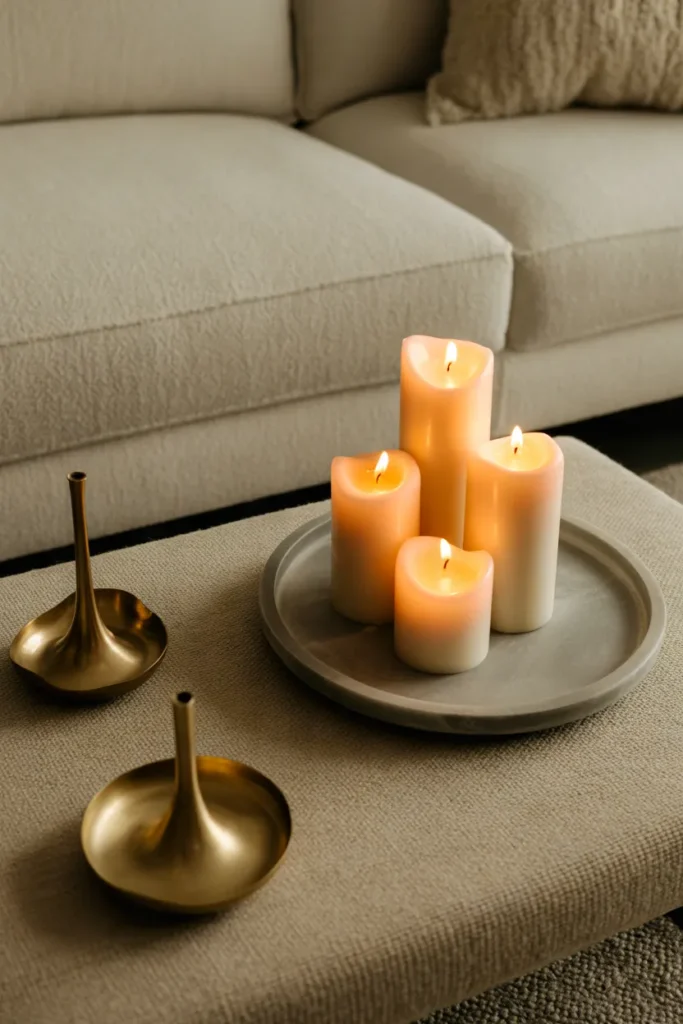
- Start with a shallow tray in stone, wood, or brushed metal.
- Place the tallest candle toward the back of the arrangement.
- Add two shorter candles slightly forward and to one side.
- Introduce one low accessory, such as a small bowl or decorative stone.
- Leave clear space around the tray for an uncluttered finish.
Varying candle heights creates depth while keeping the composition simple. For everyday styling, use flameless candles if the table sits in a busy family room. Unscented options are also useful around guests and meals. Keep the colors coordinated with your sofa, rug, or table finish for a cohesive look.
Mixed Metallic Details
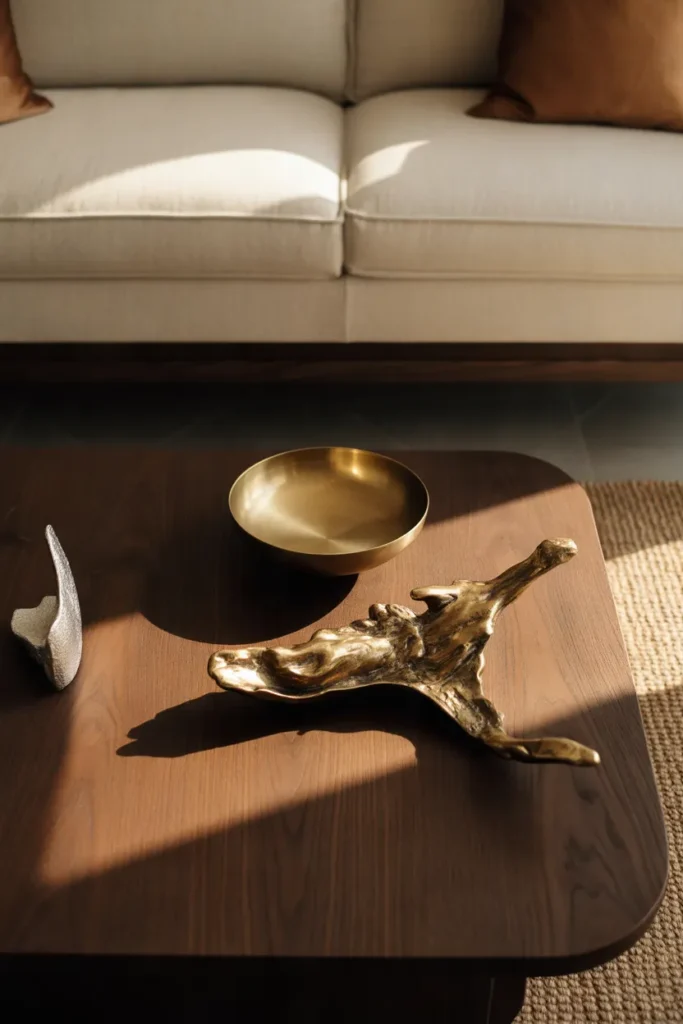
| Comparison | Option A | Option B |
| Metal mix | Brass + gold | Brass + silver |
| Overall effect | Warm and traditional | Crisp and contemporary |
| Best base | Walnut or dark wood | Marble or light wood |
| Styling amount | Two to three pieces | One dominant metal |
Mixed metals add dimension without requiring a complete decor change. The key is repetition: let one metallic finish appear twice, then use the second finish sparingly. Keep other accessories neutral so the metals remain subtle accents. This approach works particularly well when existing hardware or lighting already introduces more than one finish.
Low Greenery Bowl
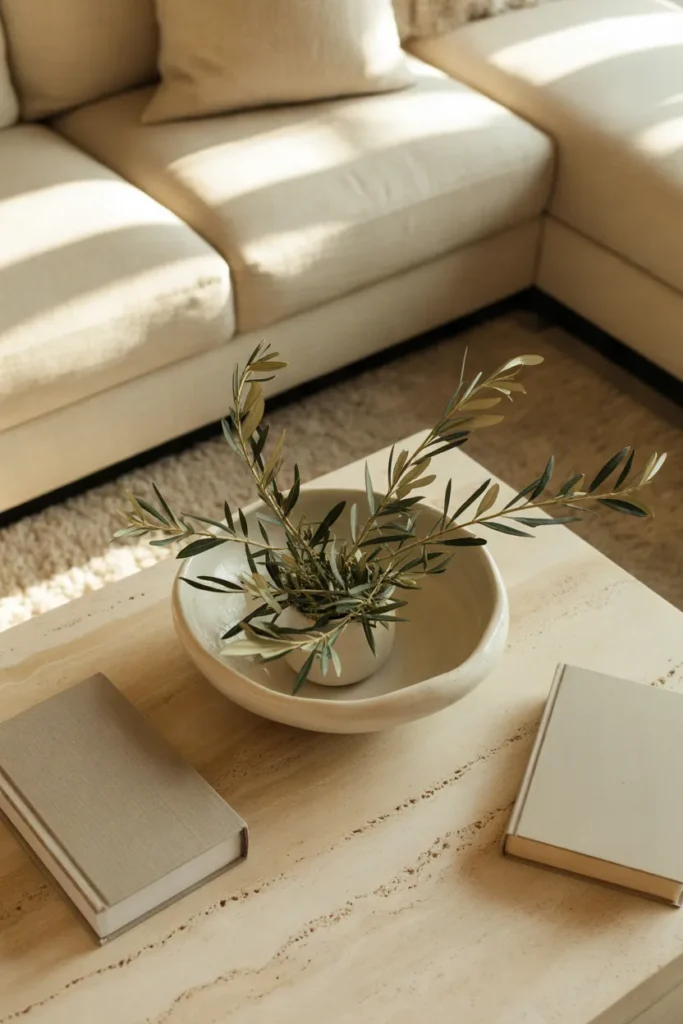
Quick Tip:
Choose greenery that stays below eye level when seated. Olive branches, eucalyptus, or restrained faux stems work well in a low bowl. Trim uneven stems rather than forcing a perfectly symmetrical shape.
Low greenery brings a natural element to the table without creating a tall visual barrier. An earthy green tone also breaks up cream, beige, and brown palettes with very little effort. If you love this earthy shade and want to carry it into other areas of your home, these olive green bedroom ideas offer beautiful inspiration for creating a calm, layered bedroom palette. For a polished arrangement, keep the bowl simple and let the branches provide most of the texture. This setup is especially practical for frequently used tables.
Oversized Coffee Table Tray
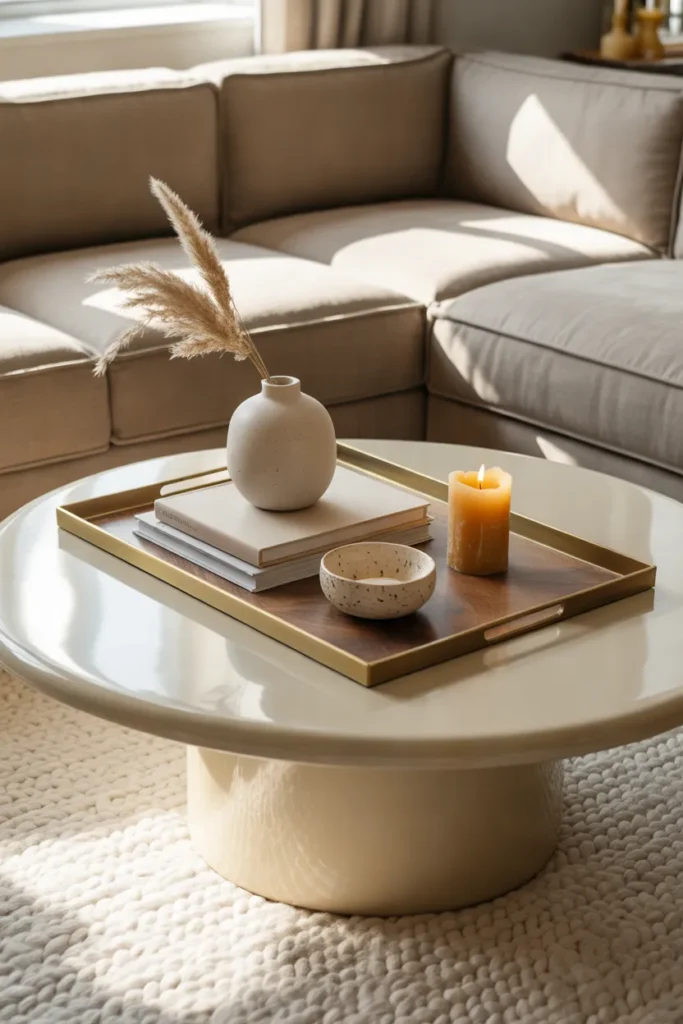
BEFORE:
Small accessories spread across a large tabletop can look disconnected. Empty areas may feel accidental, while scattered objects make cleaning and everyday use more difficult.
AFTER:
A generously sized tray gathers the pieces into one visual zone. The surrounding tabletop stays open, creating a cleaner composition with stronger definition.
Choose a tray that leaves several inches of visible tabletop around its edges. Rectangular trays suit long tables, while round trays work nicely on circular or square surfaces. Keep the contents varied in height and texture, but limit the palette to three or four complementary tones for a refined finish.
Decorative Bookends
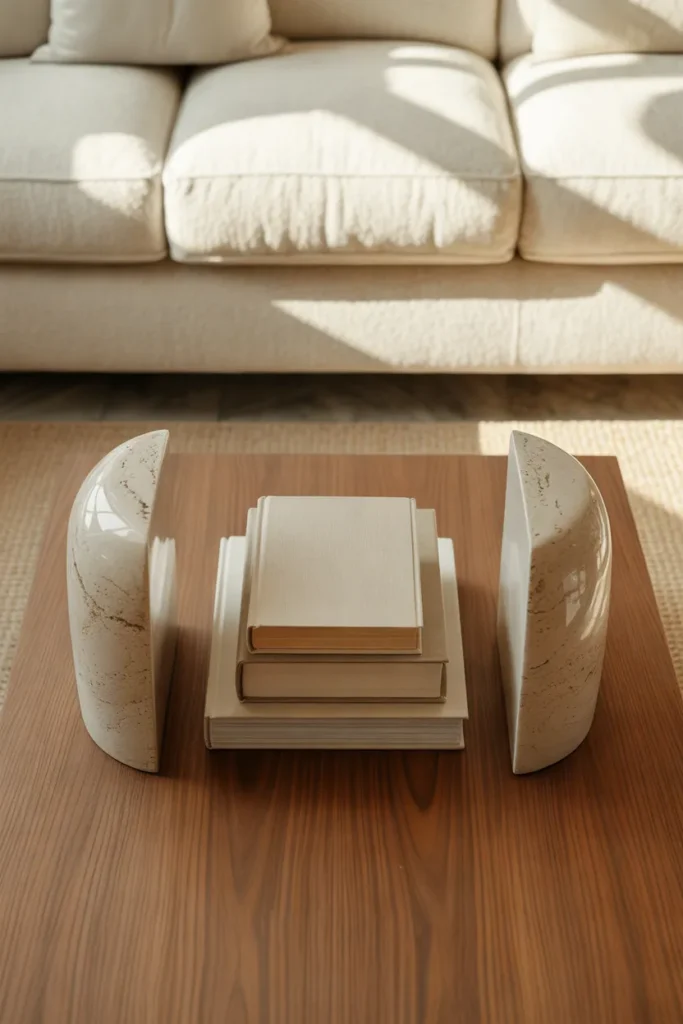
- Select two bookends with substantial visual weight, such as marble, stone, or brass.
- Place them at opposite ends of a small book collection.
- Use three to five books with coordinated neutral covers.
- Turn one book slightly outward to add visual variation.
- Finish with one low object beside the collection.
Bookends can make a simple reading stack feel more architectural. Look for rounded stone forms or clean geometric shapes that echo other lines in the room. Keep the books relatively low so the arrangement remains conversational. This setup also gives decorative objects a practical purpose instead of filling the table with unrelated accessories.
Stone Accent Collection
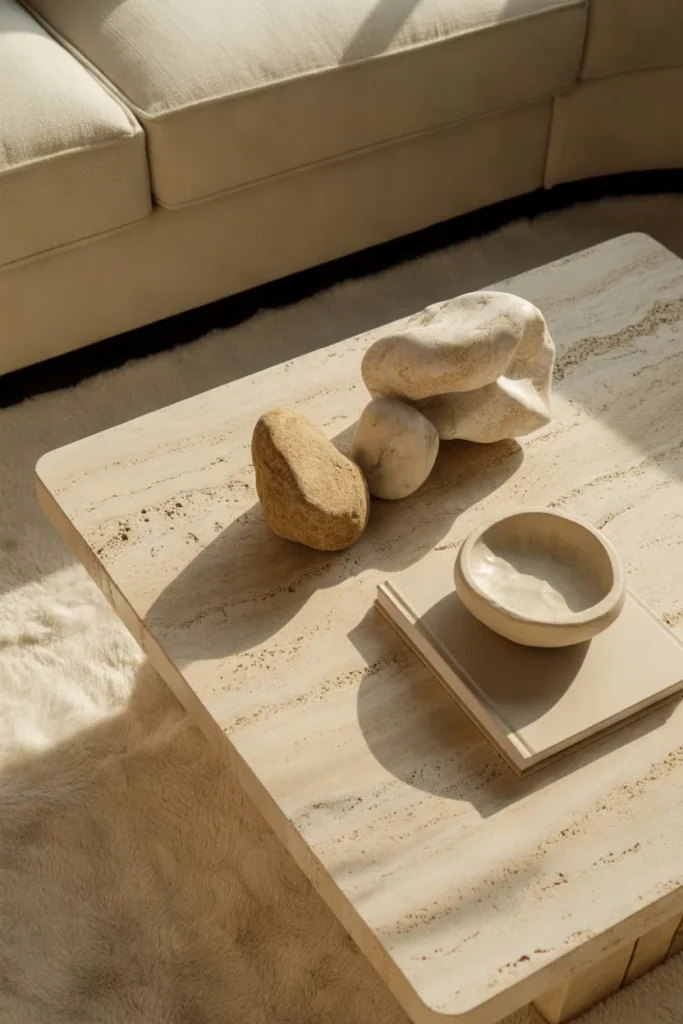
| Comparison | Option A | Option B |
| Stone finish | Honed and matte | Polished and glossy |
| Visual character | Organic and relaxed | Formal and refined |
| Best pairing | Wood accessories | Brass accessories |
| Maintenance | Simple dusting | Regular polishing |
Natural stone pieces add texture without introducing strong colors. Travertine, marble, limestone, and alabaster can all work, depending on the table and surrounding finishes. Mix rounded and angular shapes for subtle contrast. I’ve seen small stone objects look especially effective on wood tables because their cool, solid texture balances the warmth of the grain.
Black and Cream Contrast
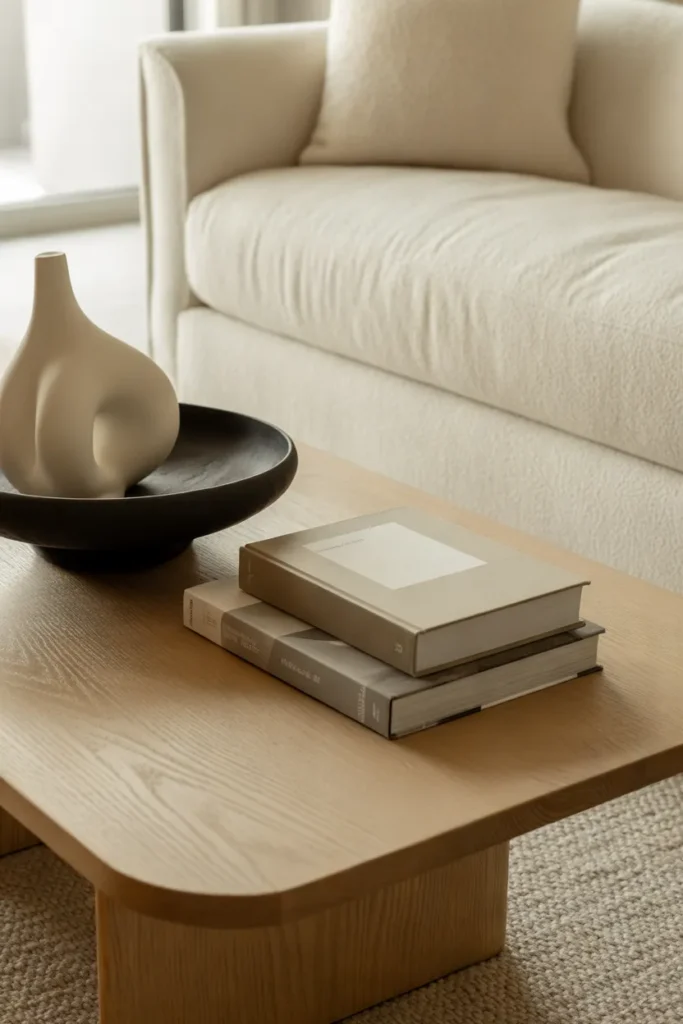
DO:
- Pair one or two black accents with mostly light accessories.
- Repeat black subtly elsewhere in the room.
- Balance dark objects with cream, beige, or warm wood tones.
- Choose matte black finishes for a softer contemporary look.
DON’T:
- Fill the entire table with dark accessories.
- Mix too many competing accent colors.
- Place every black piece together in one tight cluster.
- Use oversized dark objects that dominate the tabletop.
Black and cream create strong visual contrast without requiring bright color. A matte black bowl, candleholder, or sculpture can anchor lighter accessories and make the arrangement feel more intentional. For a balanced composition, spread dark accents across the tabletop rather than grouping them together. This technique suits modern, transitional, and minimalist rooms.
Natural Wood Elements
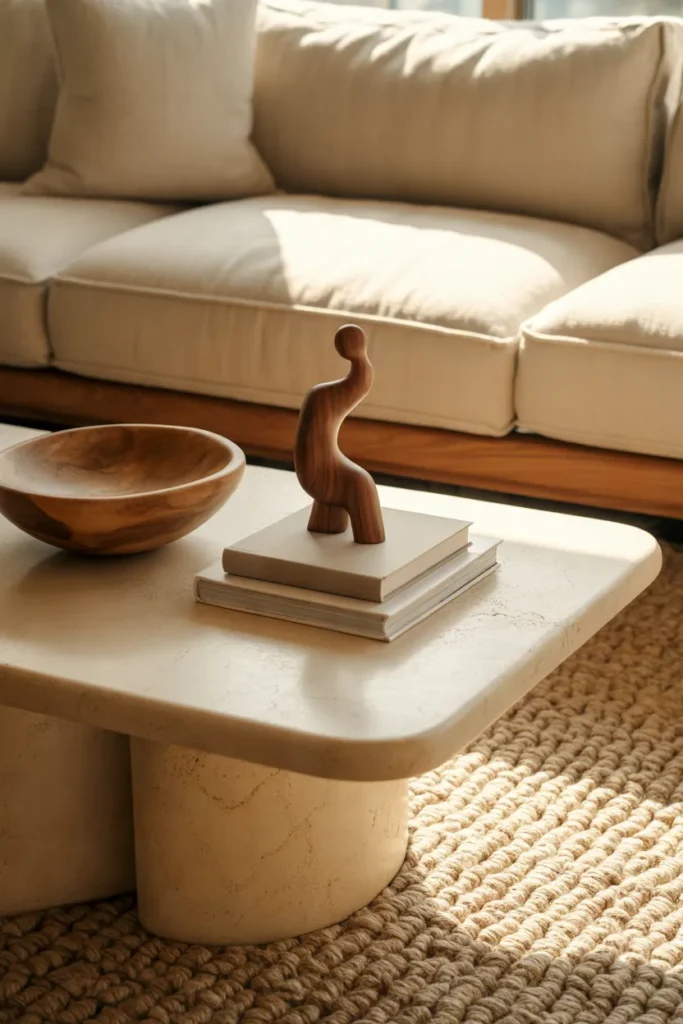
Cost: Low to Moderate | Time: 10 minutes | Skill Level: Beginner
Best For: Neutral rooms | Works In: Wood, stone, and glass tables
Result: Added warmth and texture
Natural wood accessories prevent a polished coffee table from feeling cold. Look for bowls, beads, small sculptures, or trays with visible grain and a simple finish. Walnut creates deeper contrast, while oak and lighter woods feel softer. Pair one substantial wooden piece with ceramic or stone accents to create material variety without visual clutter.
Decorative Bead Strand
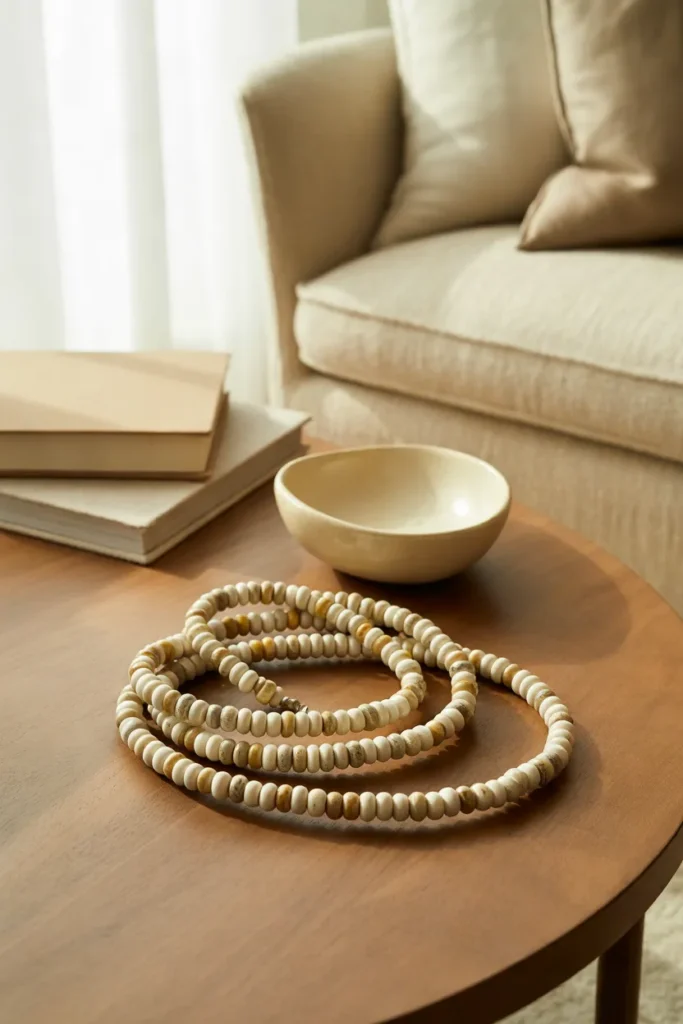
A decorative bead strand adds a relaxed layer to structured tabletop pieces. Lay it loosely beside a tray or let part of the strand curve around a small bowl. Choose wood, stone, or neutral ceramic beads in tones that connect with the room’s existing finishes.
Keep the strand slightly irregular rather than arranging it in a perfect circle. That small variation makes the display feel more natural and lived-in. If the table is narrow, use a shorter strand so it does not interfere with drinks or daily movement. It works particularly well alongside books and low vessels.
Layered Tray and Books
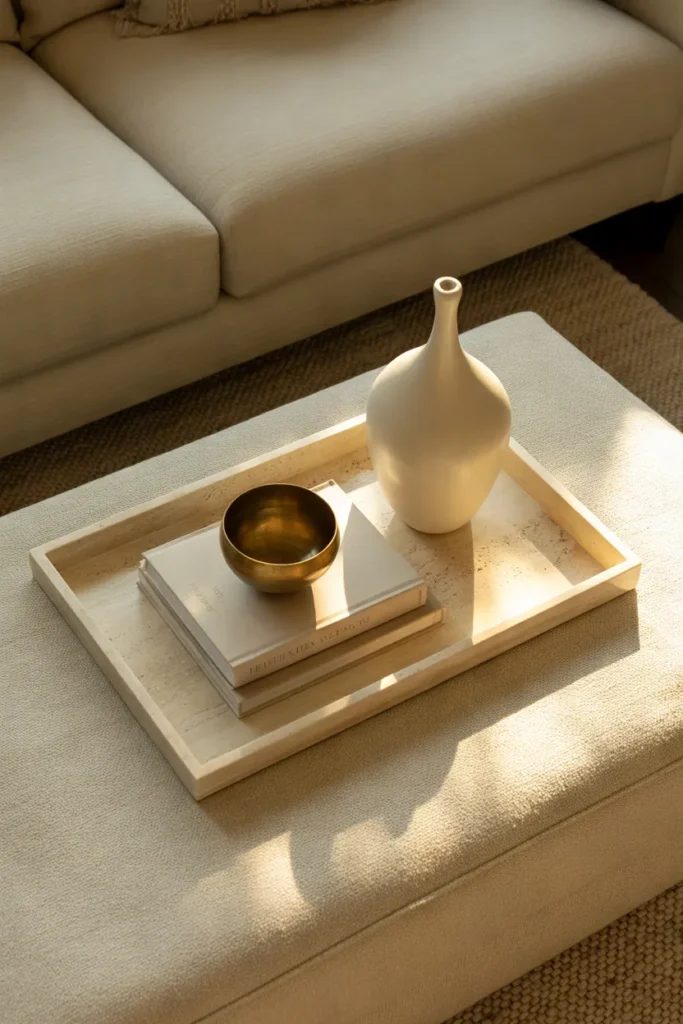
- Place two sturdy hardcover books near the center of the table.
- Set a shallow tray on top of the books, slightly offset for visual interest.
- Add one medium-height vessel toward the back of the tray.
- Place a smaller bowl or decorative object in front.
- Check the arrangement from the sofa and adjust the heights if needed.
Layering creates depth without filling every inch of the tabletop. Keep the lowest pieces broad and the upper accessories smaller so the arrangement rises gradually. A neutral book stack provides a quiet foundation, while stone, ceramic, or brass accessories add texture. This setup works especially well on long rectangular coffee tables.
Textured Ceramic Pieces
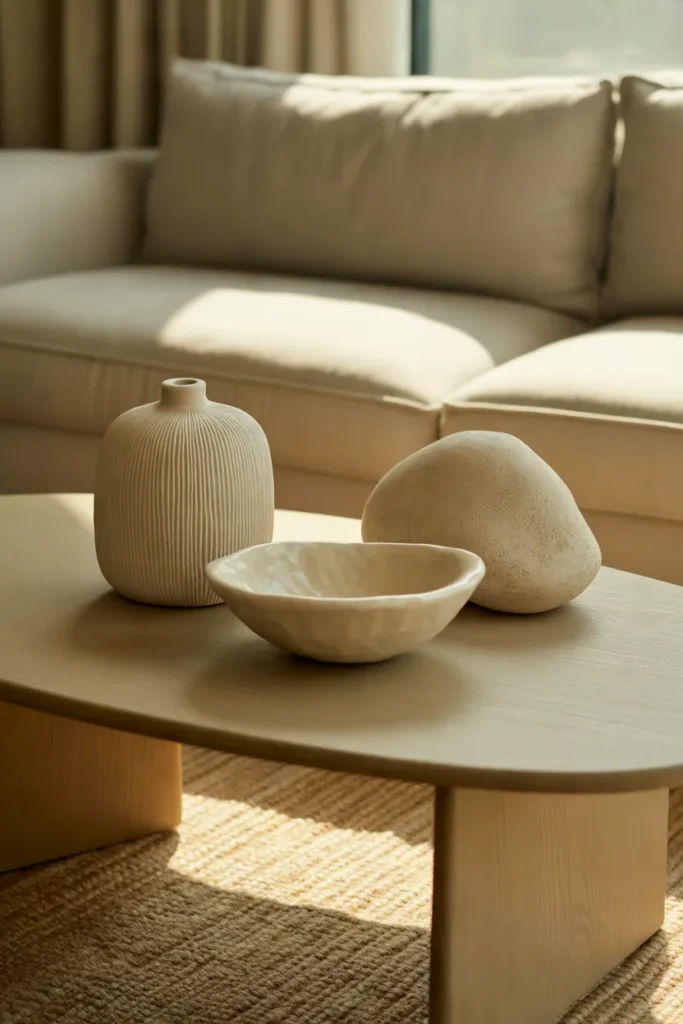
| Comparison | Option A | Option B |
| Texture | Ribbed ceramic | Smooth ceramic |
| Visual effect | More tactile | Cleaner and quieter |
| Best pairing | Matte wood | Marble or glass |
| Accent level | Noticeable detail | Subtle detail |
Texture keeps a neutral arrangement from looking flat. Ribbed, fluted, hammered, or hand-finished ceramics catch light differently throughout the day and add depth without introducing bold colors. Combine one strongly textured piece with smoother accessories for balance. Too many similar textures can make the display feel heavy, so let one vessel provide the main tactile detail.
Sculptural Object Pair
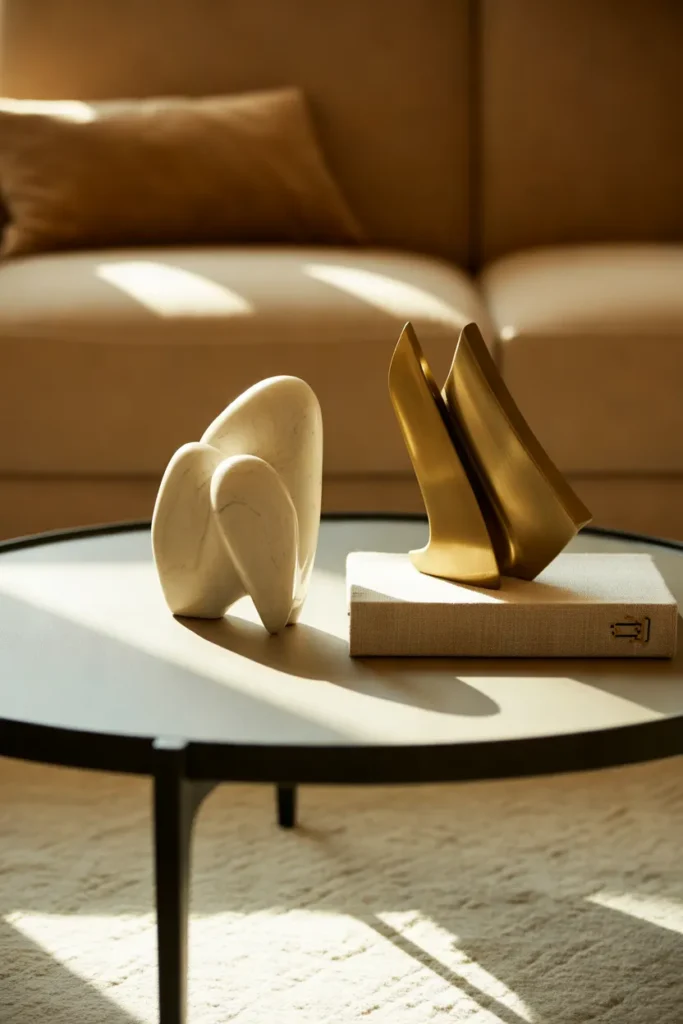
DO:
- Choose sculptures with contrasting but compatible silhouettes.
- Keep one piece noticeably taller than the other.
- Use neutral materials such as stone, ceramic, or brass.
- Leave open space between the objects.
DON’T:
- Select two pieces with identical shapes and sizes.
- Crowd sculptures against the edge of the table.
- Combine several statement objects in one small area.
- Ignore the table’s existing material and finish.
Two sculptural pieces can create a gallery-like focal point without overwhelming the room. Place them slightly apart so each silhouette remains visible. I’ve noticed that pairing an organic shape with a geometric one creates more visual interest than matching forms. Keep nearby accessories low and simple to let the sculptures carry the arrangement.
Coffee Table Floral Bowl
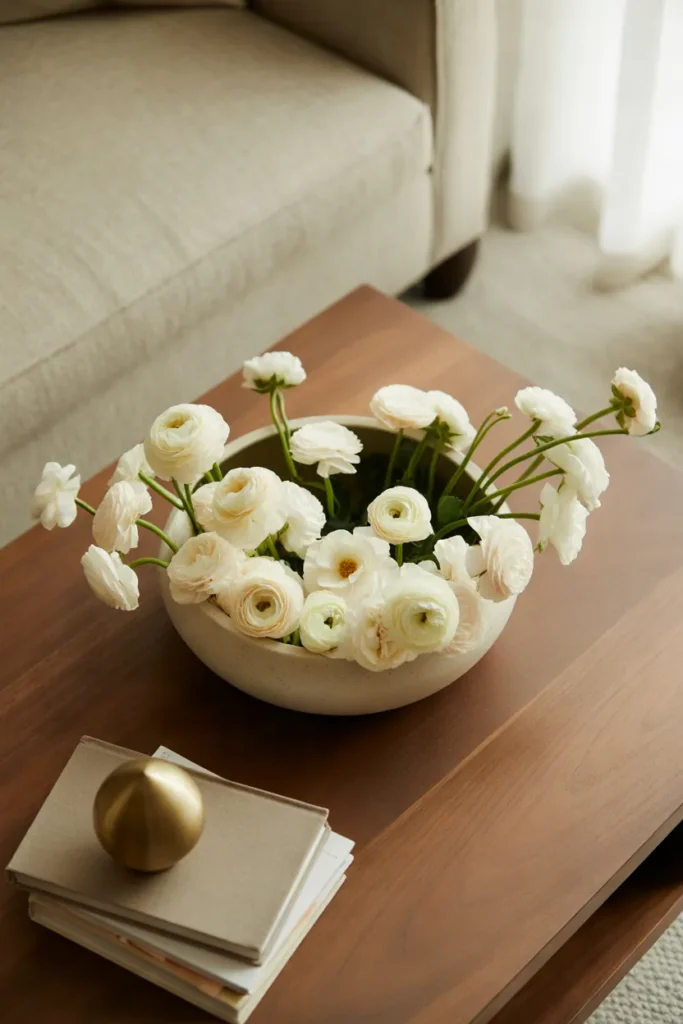
Cost: Moderate | Time: 15 minutes | Skill Level: Beginner
Best For: Entertaining spaces | Works In: Large coffee tables
Result: Fresh focal point
A floral bowl adds softness while keeping the arrangement low and practical. Choose flowers in white, cream, blush, or muted greenery to maintain a sophisticated palette. A shallow vessel spreads the arrangement horizontally instead of creating a tall centerpiece. For longer-lasting styling, quality faux stems can provide the same visual fullness with minimal upkeep.
Oversized Decorative Book
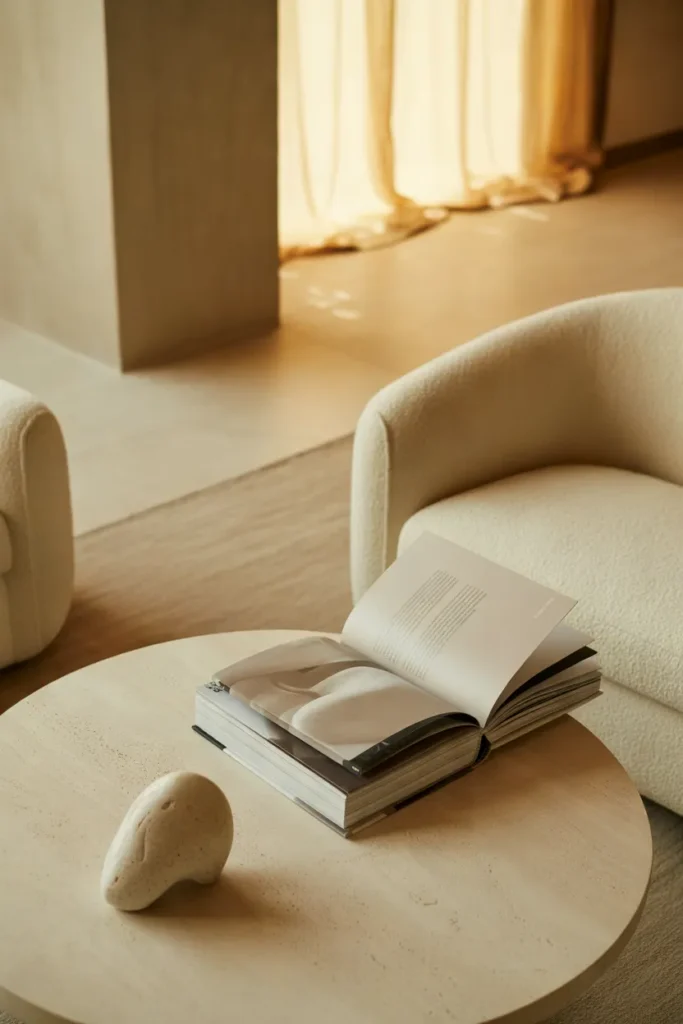
A single oversized book can provide enough visual weight for a small arrangement. Choose a large-format cover with restrained typography, linen texture, or an understated neutral color. Place it slightly off-center and add one compact object near the upper corner.
Opening the book to a beautiful interior, architecture, or design photograph can add visual interest, but keep the pages protected from direct sunlight and frequent spills. This approach is particularly useful for minimalist rooms where several decorative pieces would feel excessive. The result stays polished while giving the tabletop a clear focal point.
Rounded Glass Vessel
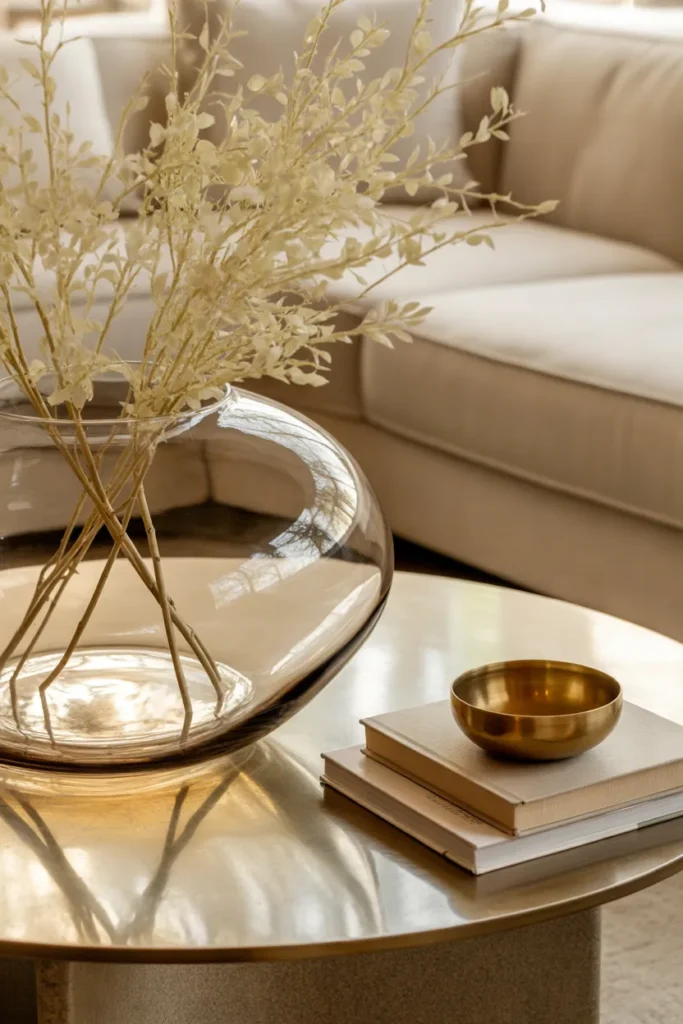
Quick Tip:
Choose clear or lightly tinted glass when the table already has a strong surface, such as marble or richly grained wood. Keep the stems sparse so light can pass through the vessel and preserve the table’s visual openness.
A rounded glass vessel brings softness and transparency to a luxe tabletop. Its curved silhouette contrasts nicely with rectangular books and trays, while the transparent material prevents the arrangement from feeling visually heavy. For a refined finish, use only a few branches and let their natural shape provide the movement. Keep the surrounding pieces low and restrained.
Conclusion
A beautifully styled coffee table does not need dozens of accessories. The strongest arrangements use a thoughtful mix of height, texture, shape, and negative space. These coffee table decor ideas can help you create a polished surface that still feels comfortable and practical for everyday life.
Start with one idea that suits your current table, then build from there. I’ve seen how a few small changes can completely shift the way a living room feels. Save this post on Pinterest so you can revisit your favorite looks, try an arrangement this week, and share it with someone who loves home decor too. Your next beautiful tabletop may be closer than you think.
One Comment