23 Fall Kitchen Decor Ideas for a Harvest Glow Now
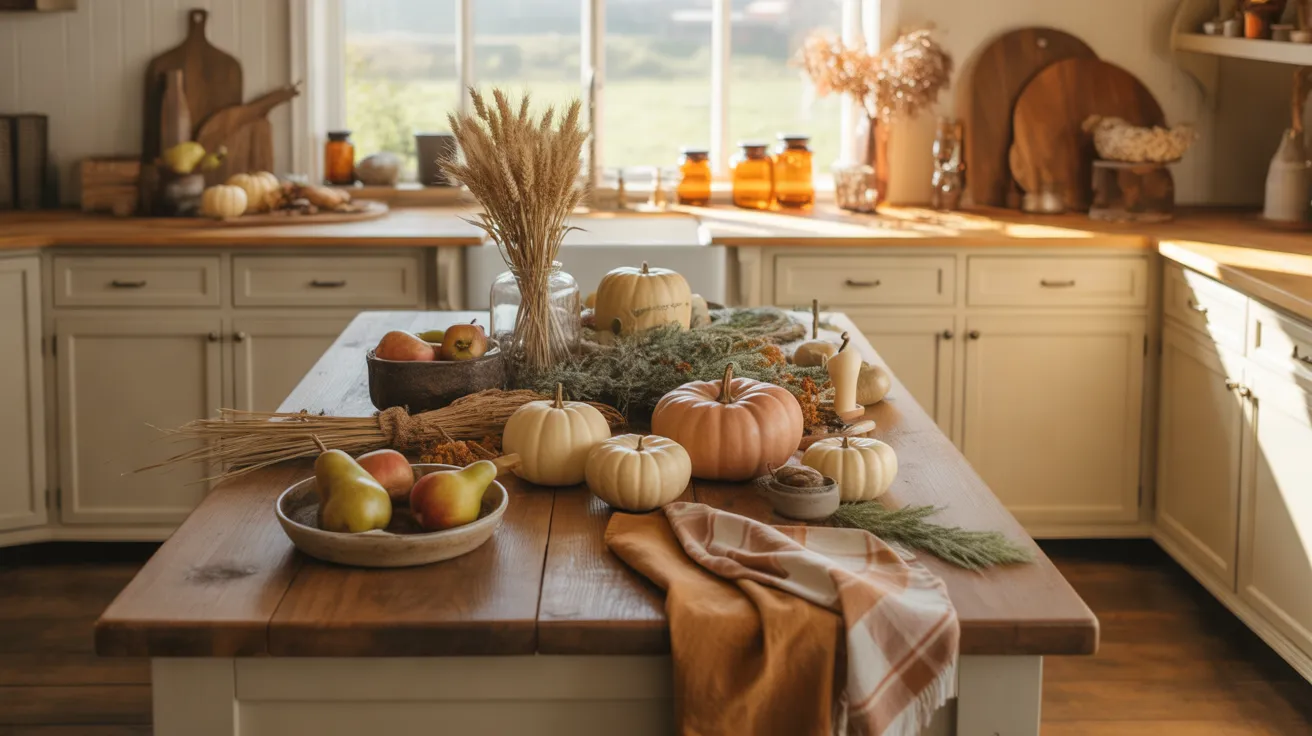
A few thoughtful details can make your kitchen feel completely ready for autumn. These fall kitchen decor ideas bring warmth, harvest color, and cozy texture without requiring a major makeover.
From pumpkins and dried wheat to warm ceramics, plaid linens, wooden accents, and seasonal produce, you can create a welcoming look using simple pieces that fit naturally into your existing kitchen. Whether you have a spacious farmhouse kitchen or a small apartment counter, there are ideas here that can work with your space and budget.
In my experience, the most inviting seasonal kitchens are not the ones filled with decorations. They are the ones where a few carefully chosen details add character while everyday spaces remain practical. Use these ideas for inspiration, then adapt the colors, textures, and arrangements to make your kitchen feel like your own.
Pumpkin Counter Display
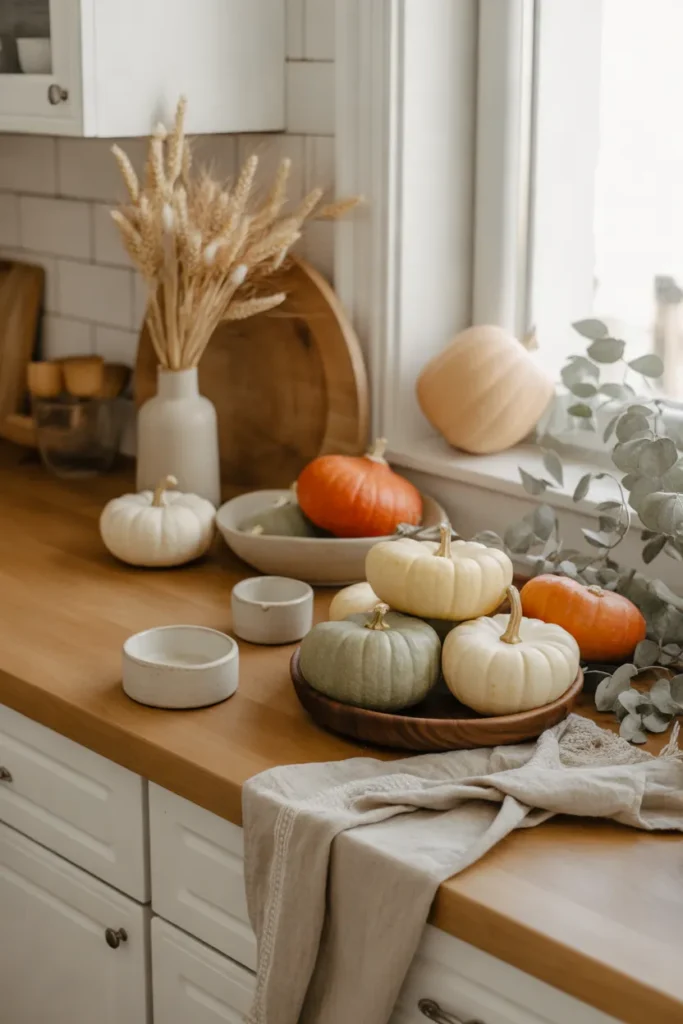
A simple pumpkin arrangement can give your kitchen an instant autumn focal point without taking over the counter. Mix two or three sizes, then add a small ceramic bowl or wooden riser to create height. Cream pumpkins keep the display soft, while muted orange adds just enough seasonal color.
For a polished fall kitchen decor look, place the tallest pumpkin toward the back and smaller pieces in front. Leave some counter space visible around the arrangement so the area still feels practical. In my experience, fewer well-placed pieces usually look more intentional than a crowded seasonal display.
Harvest Cutting Board
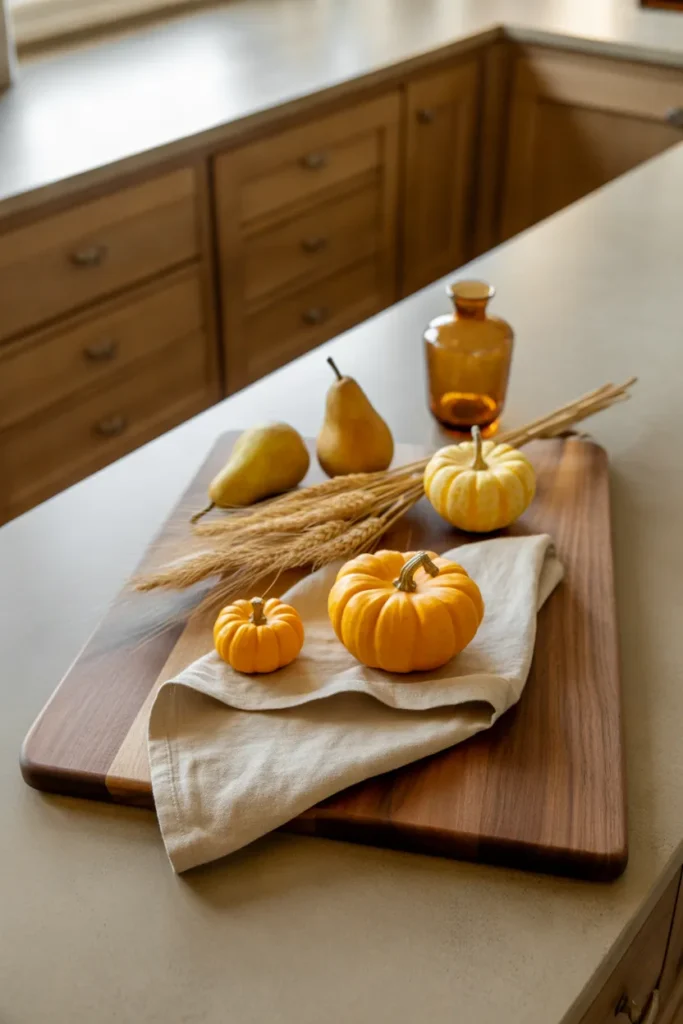
- Lean a large wooden cutting board against the backsplash for a natural backdrop.
- Layer a folded linen towel over one corner for softness.
- Add two small pumpkins in muted orange or creamy white.
- Tuck dried wheat stems behind the board for vertical texture.
- Keep the cutting surface mostly visible so the display remains functional.
A harvest board works especially well in kitchens with open counters because it adds seasonal character without requiring permanent changes. Choose warm wood tones that connect with existing cabinets or flooring. A few practical objects, such as a towel or serving bowl, can make the arrangement feel naturally lived in rather than staged.
Autumn Herb Shelf
Quick Tip:
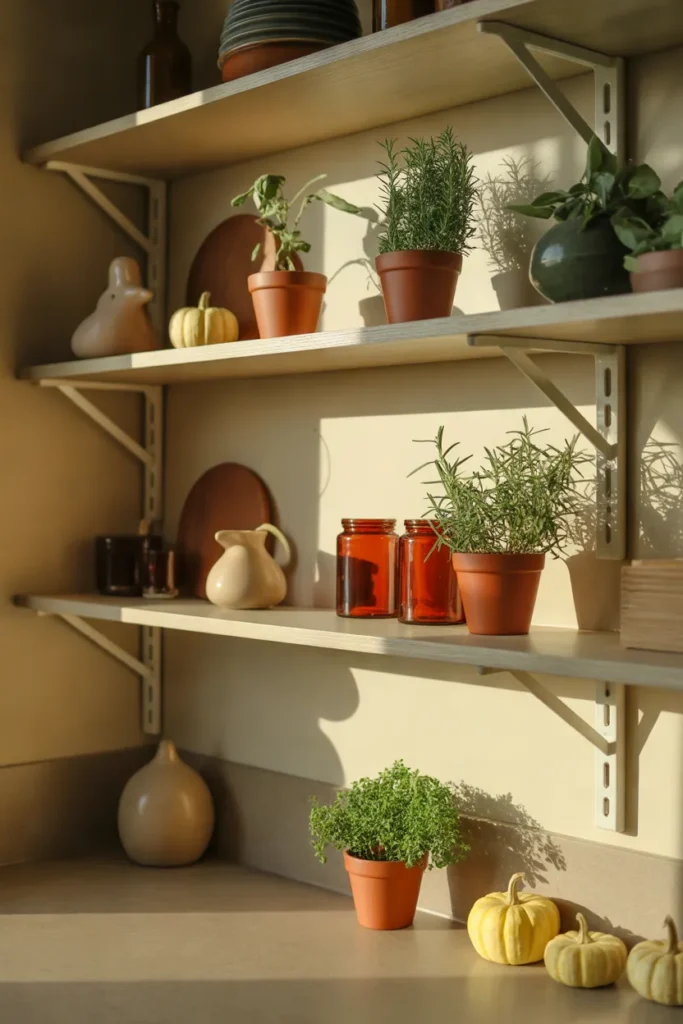
Group fresh herbs with dried seasonal stems to create a display that feels decorative and useful. Choose matching or coordinating pots, then place taller herbs toward the back. Keep the colors earthy so the shelf feels connected to the rest of the kitchen.
An autumn herb shelf brings texture and subtle seasonal color into an often-overlooked area. Sage, rosemary, and thyme work nicely with terracotta or neutral ceramic containers. I’ve noticed that edible greenery helps seasonal styling feel less temporary, especially in kitchens where every decorative item needs to earn its space.
Wheat Bundle Vignette
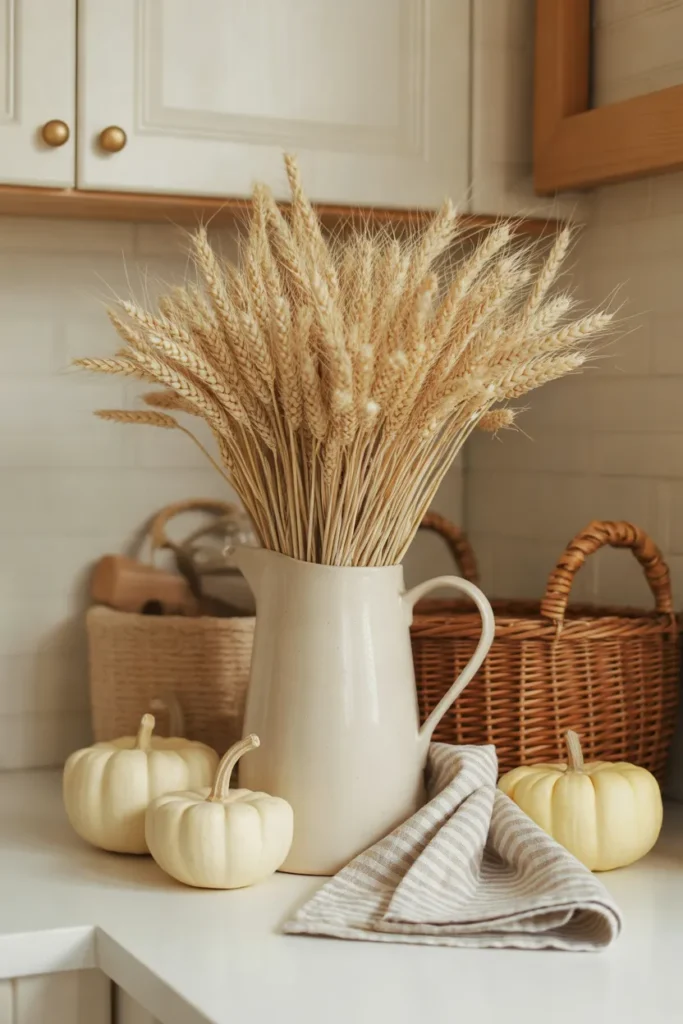
BEFORE: A bare kitchen corner can feel unfinished, especially beside open shelving or an empty backsplash area. Without height or texture, seasonal details may look scattered rather than connected.
AFTER: A tall wheat bundle creates vertical interest and gives the corner a clear focal point. Adding two small pumpkins and a woven basket grounds the arrangement while keeping the color palette calm and natural.
Choose a container with enough weight to keep tall stems secure. Place the arrangement where it will not interfere with cabinet doors, food preparation, or daily movement. Neutral wheat works especially well with white, cream, wood, and muted green kitchens.
Seasonal Mug Hooks
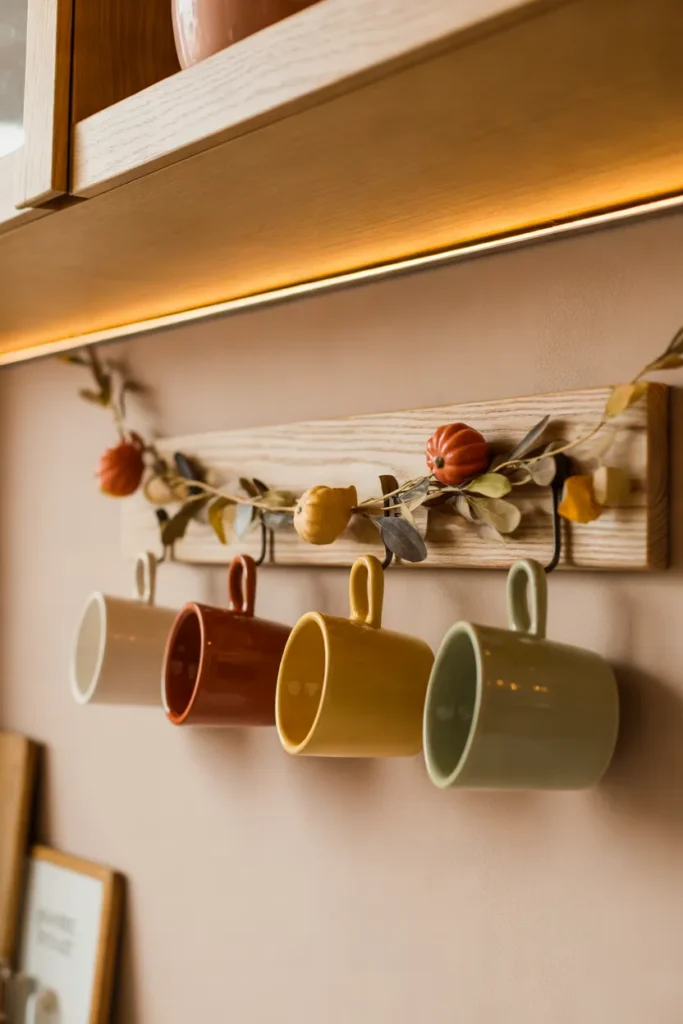
- Choose a visible spot: Install or use existing hooks beneath an open shelf or cabinet.
- Mix seasonal colors: Combine cream mugs with muted rust, mustard, or olive tones.
- Add small accents: Place a tiny pumpkin or dried leaf bundle nearby for seasonal texture.
- Keep spacing even: Leave enough room between mugs so the display stays tidy and easy to use.
A mug station gives everyday kitchenware a seasonal role while keeping counters clear. In my experience, using items you already own makes decorating easier to maintain throughout the season. Pick three to five mugs in related colors rather than collecting a large group that makes the wall feel busy.
Rustic Fruit Bowl
| Comparison | Option A | Option B |
| Color | Bright mixed colors | Muted harvest tones |
| Contents | Mostly decorative fruit | Fruit with small pumpkins |
| Styling | Filled to the rim | Loosely layered |
| Maintenance | More frequent sorting | Easy seasonal refresh |
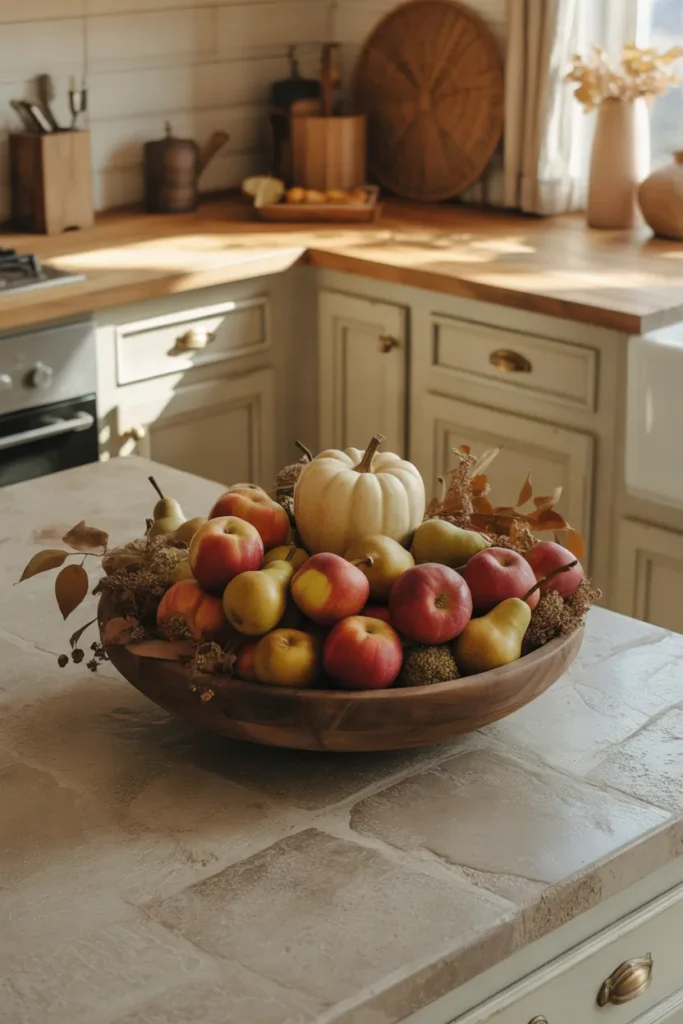
A wooden fruit bowl can become the center of a kitchen island without looking overly themed. Use apples and pears for natural color, then add just a few miniature pumpkins. Keeping the bowl loosely filled gives the arrangement breathing room and makes it easier to remove fruit when needed.
Copper Kitchen Accents
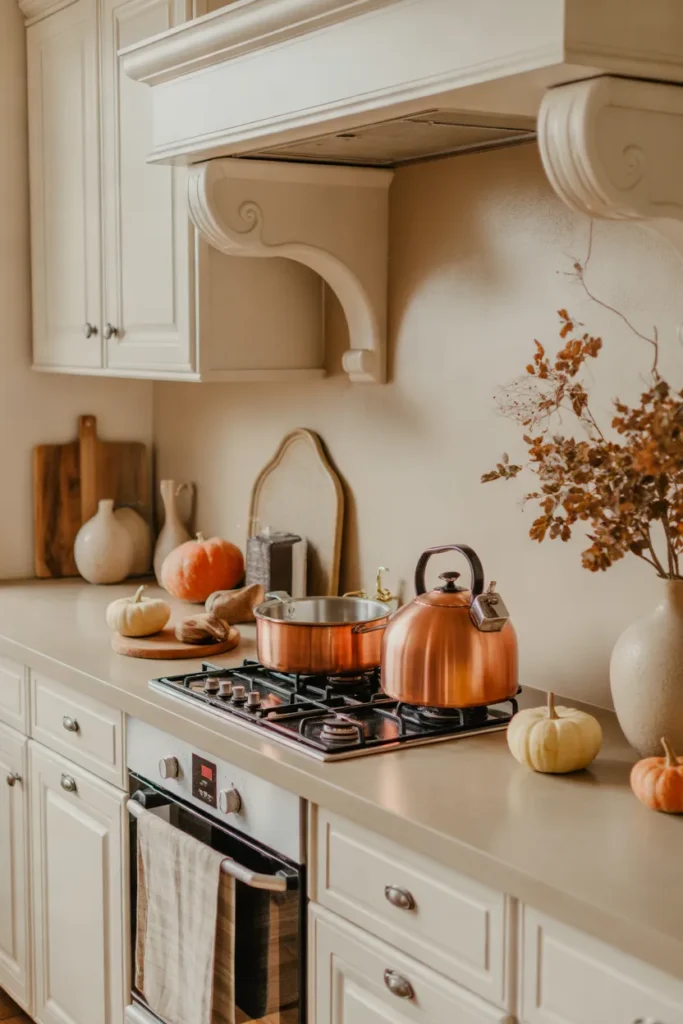
DO:
- Display one or two copper pans where their warm finish can be seen.
- Pair copper with cream ceramics and natural wood.
- Add a small rust or terracotta accent nearby.
- Keep the metallic pieces polished enough to catch natural light.
DON’T:
- Mix too many competing metallic finishes in one small area.
- Cover every surface with copper accessories.
- Place decorative cookware where it blocks daily kitchen tasks.
- Add overly bright orange pieces beside strong copper tones.
Copper works especially well because its warm finish naturally echoes autumn colors without relying on seasonal decorations. I’ve noticed that even one copper pan or kettle can add warmth to a neutral kitchen. Combine it with wood, linen, and muted ceramics for a layered look that stays sophisticated.
Plaid Linen Towels
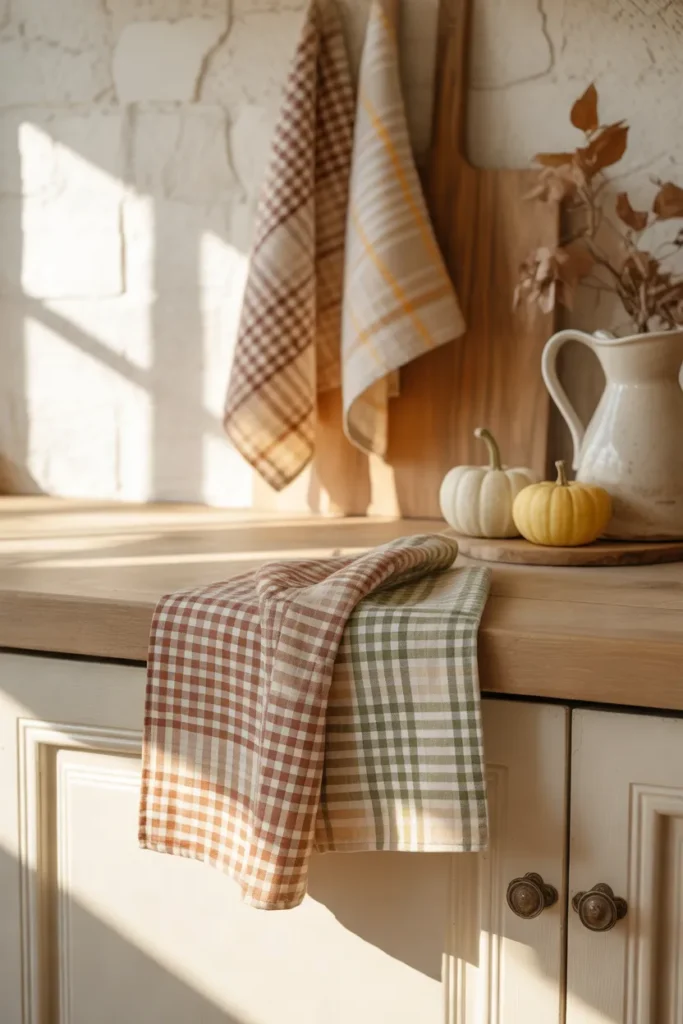
Cost: Low | Time: 10 minutes | Skill Level: Beginner
Best For: Neutral kitchens | Works In: Small or large spaces
Result: Instant seasonal color without permanent changes
Plaid towels offer one of the quickest ways to introduce autumn color without rearranging the entire kitchen. Look for simple checks in rust, cream, olive, or brown. Rotate two or three towels through the season and keep the rest stored away to prevent the display from feeling repetitive.
Dried Leaf Garland
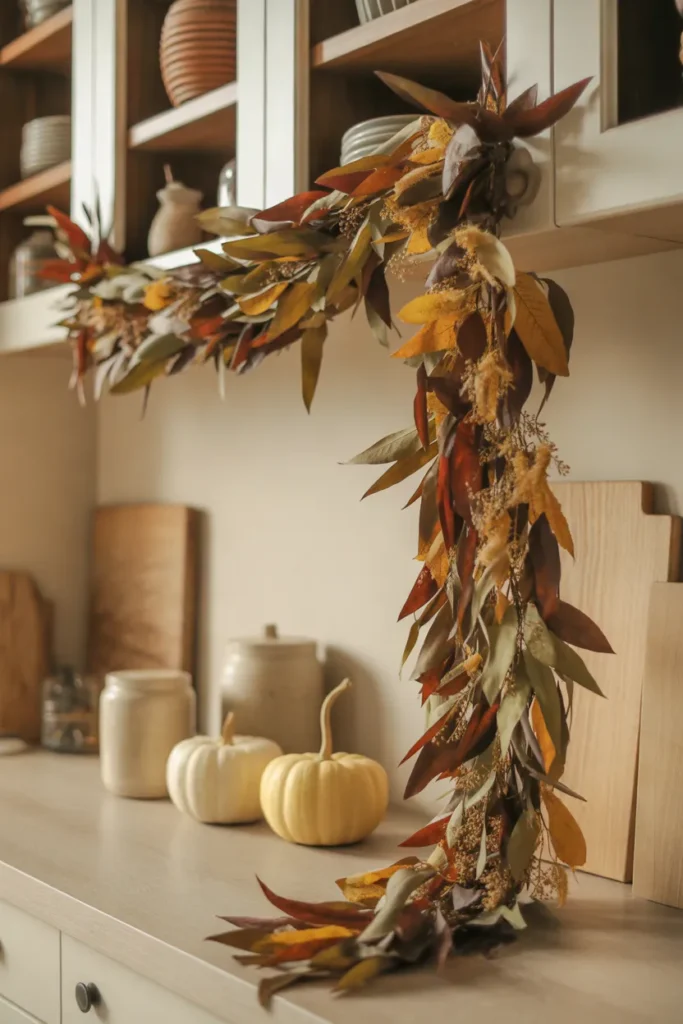
Two short garlands can frame a shelf or range hood more naturally than one oversized strand. Choose dried or faux leaves with varied shapes and muted colors, then secure the ends discreetly. Leave plenty of open space between decorative elements so the greenery adds texture without becoming the dominant feature.
Amber Glass Jars
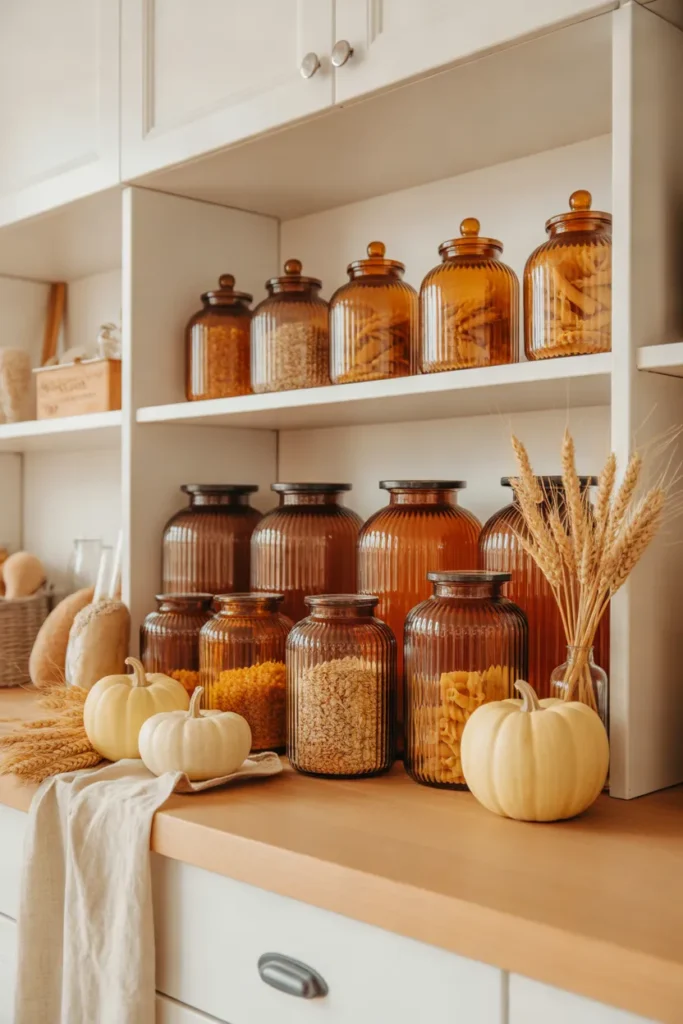
- Choose amber jars in two or three sizes for visual variety.
- Fill them with everyday pantry staples such as oats, beans, rice, or pasta.
- Add simple labels in cream, kraft paper, or black lettering.
- Group the jars beside a small pumpkin or dried wheat bundle.
- Keep frequently used ingredients within easy reach.
Amber glass adds a warm harvest tone while giving ordinary pantry staples a decorative purpose. For a cohesive display, repeat the same jar style instead of mixing several shapes. A few seasonal accents around the containers are enough to make the shelf feel ready for autumn without sacrificing useful storage.
Mini Pumpkin Sink Tray
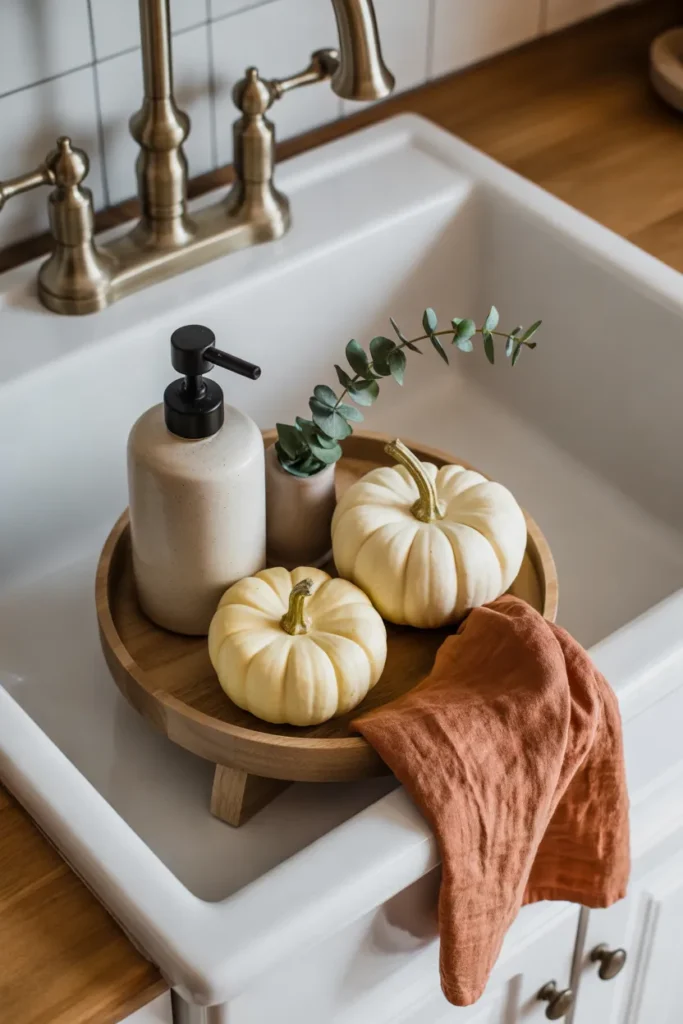
Quick Tip:
Keep seasonal accents beside the sink rather than directly around the faucet. A narrow tray can contain small pumpkins, a folded towel, and a soap dispenser while keeping water splashes away from decorative pieces.
The sink area often gets overlooked because it is one of the busiest kitchen zones. A compact tray creates a defined space for seasonal details without interfering with washing dishes. Choose washable materials and leave enough room around the faucet for comfortable daily use. Small changes work well here.
Harvest Window Sill
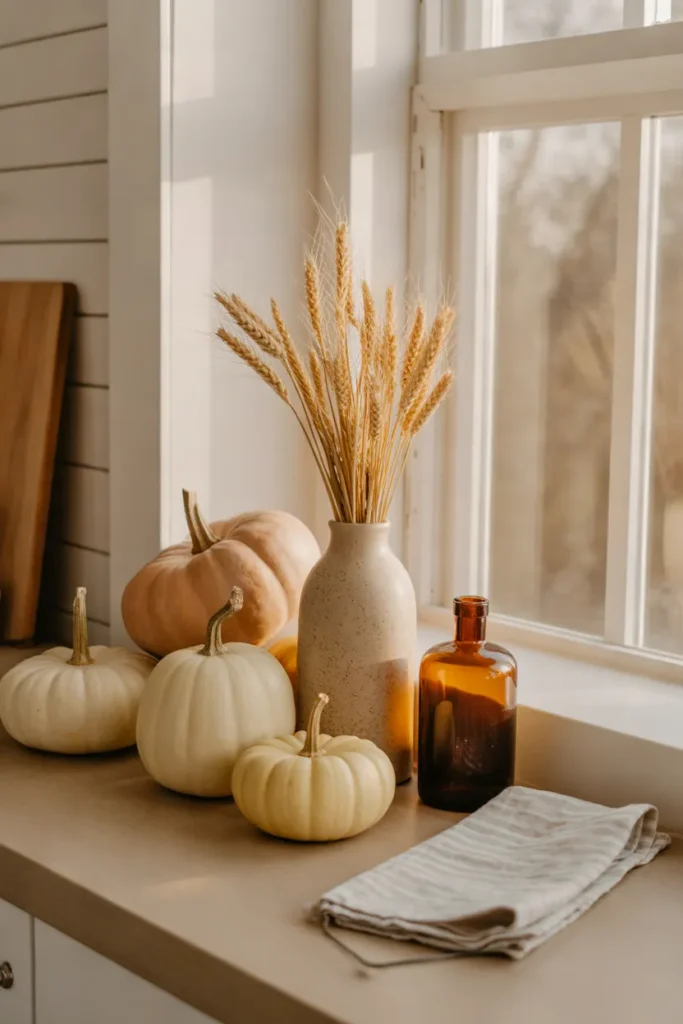
BEFORE: A wide window sill may become a forgotten strip of empty space, especially in a neutral kitchen. Without a few carefully chosen details, the area can look disconnected from the rest of the room.
AFTER: A small group of pumpkins and dried stems gives the sill a defined seasonal arrangement. Keeping the pieces low preserves natural light and leaves the window easy to open, clean, and enjoy.
Choose decorations that stay below the lower edge of the window glass. Cream pumpkins create a softer look, while one or two muted orange pieces add contrast. If the sill receives strong sunlight, use faux stems or dried materials that will hold their color longer.
Pumpkin Shelf Layering
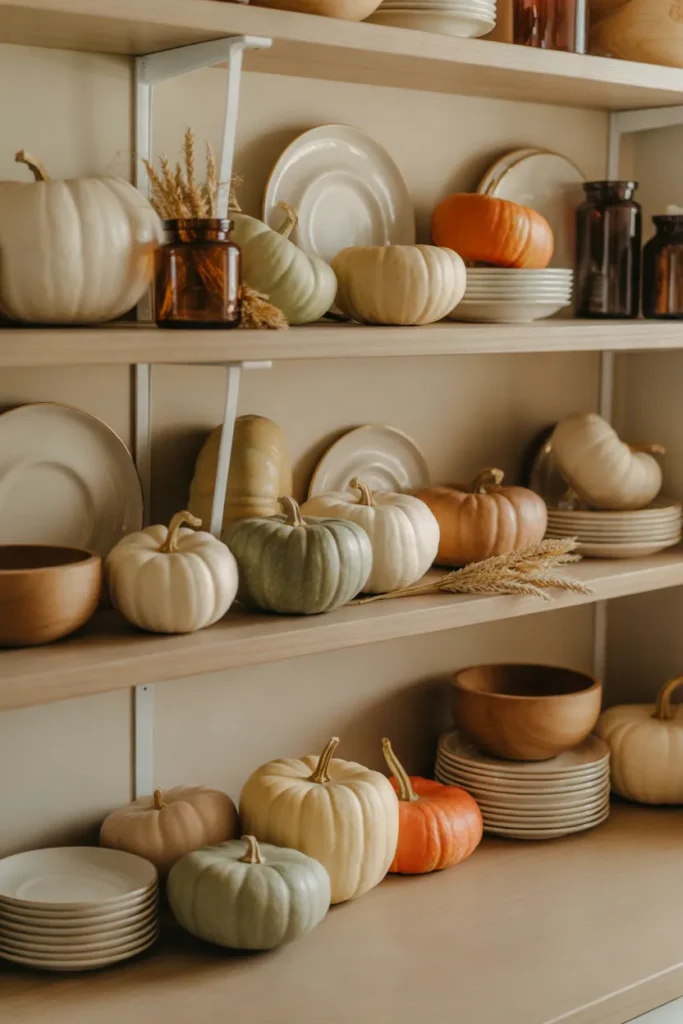
- Start with height: Place a taller ceramic pitcher or vase toward the back of the shelf.
- Add pumpkins: Position two or three pumpkins in different sizes in front of the taller piece.
- Layer practical pieces: Lean a small cutting board or plate behind the pumpkins.
- Fill small gaps: Add a short wheat bundle or folded linen for texture.
- Check the balance: Step back and remove anything that makes the shelf look crowded.
Layered shelves feel intentional because different heights guide the eye across the display. Keep larger objects toward the back and smaller accents in front. I’ve seen this approach work especially well on open shelving because everyday dishes remain visible while pumpkins, wheat, and warm textures bring a seasonal touch.
Cinnamon Spice Station
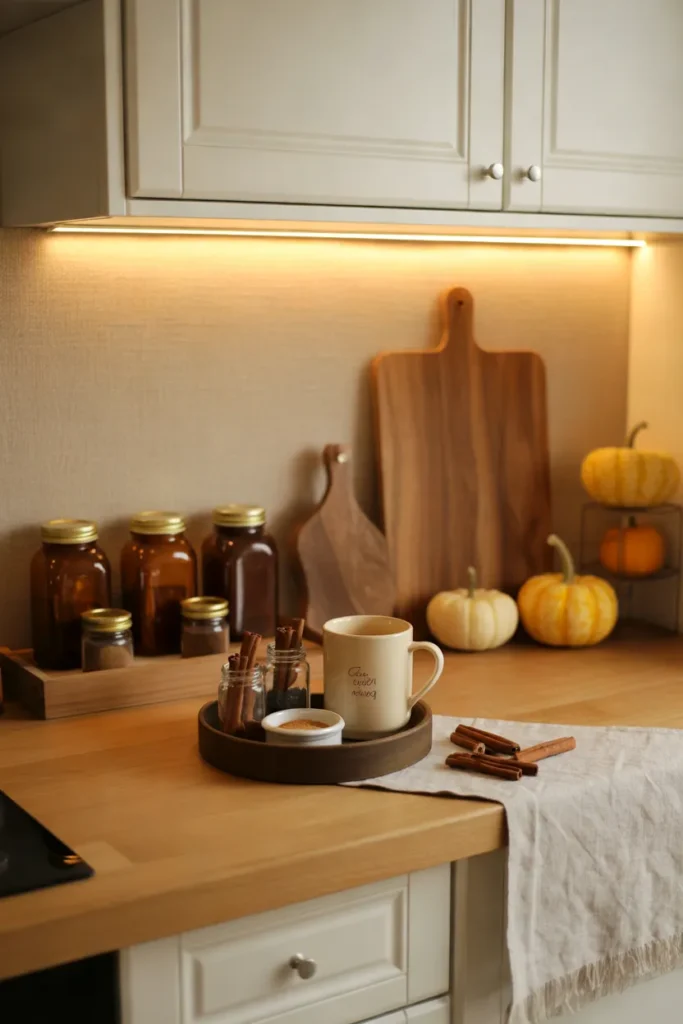
| Styling Choice | Option A | Option B |
| Container | Amber glass jars | White ceramic jars |
| Tray | Dark wood | Light bamboo |
| Accent | Mini pumpkins | Dried orange slices |
| Best Location | Coffee corner | Baking station |
A dedicated spice station makes seasonal cooking ingredients part of the decor. Store cinnamon, cloves, nutmeg, or pumpkin spice in matching containers and arrange them on a small tray. Add one seasonal accent rather than several. The result feels useful every day while giving the counter a subtle harvest character.
Fall Coffee Corner
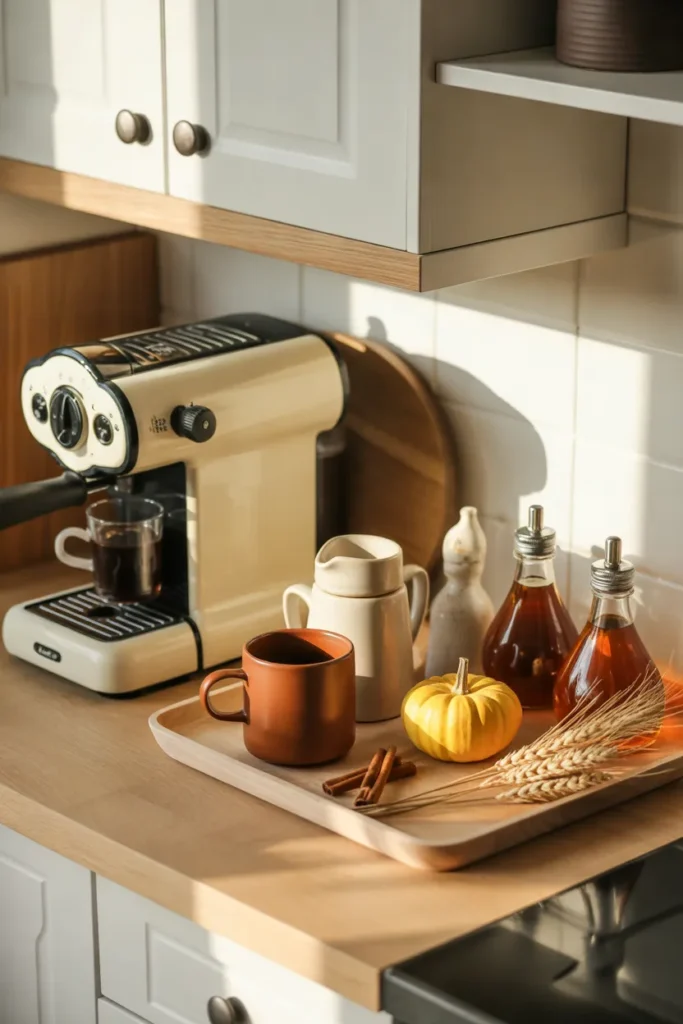
DO:
- Place coffee essentials together on one defined tray.
- Add one or two mugs in rust, cream, or olive.
- Keep cinnamon sticks in a small glass jar.
- Use a miniature pumpkin as the seasonal accent.
DON’T:
- Overfill the counter with decorative objects.
- Mix several unrelated color palettes.
- Hide frequently used coffee supplies behind decorations.
- Place dried stems too close to heat-producing appliances.
A seasonal coffee corner gives a small section of the kitchen a clear purpose and personality. Use everyday items as part of the display, then add one or two autumn accents for warmth. This approach is especially useful in compact kitchens where countertop space needs to remain functional throughout the day.
Rustic Bread Board
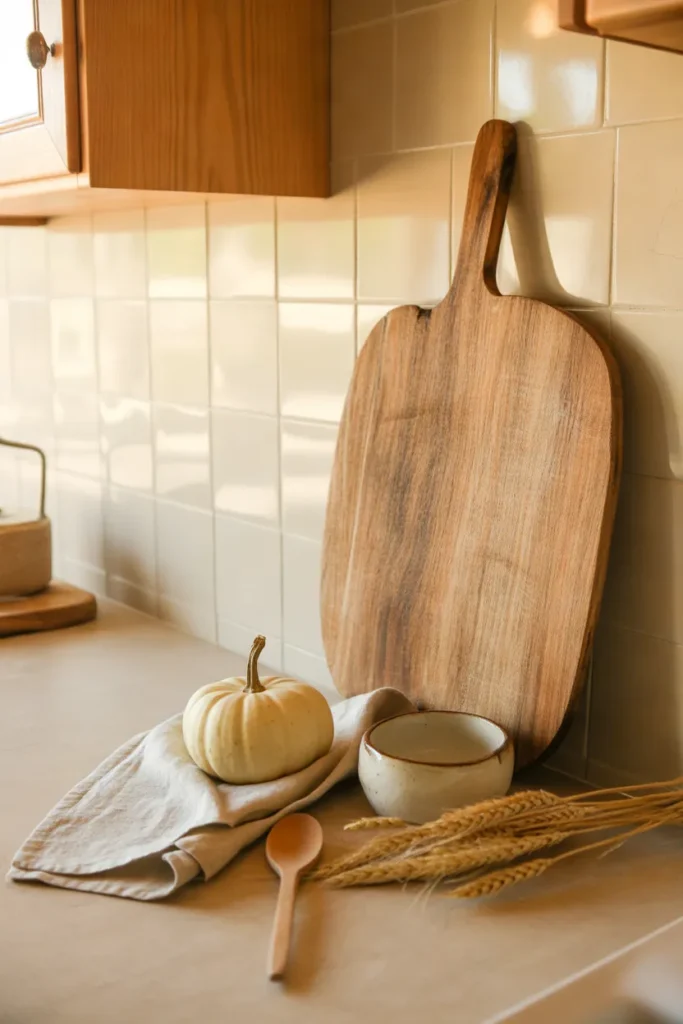
Cost: Low | Time: 15 minutes | Skill Level: Beginner
Best For: Countertops and open shelves | Works In: Farmhouse and modern kitchens
Result: Warm focal point with minimal accessories
A large bread board adds warmth while giving small seasonal pieces a natural backdrop. Lean it against the backsplash, then layer a towel, bowl, or pumpkin in front. In my experience, wood helps soften kitchens with lots of white cabinetry and makes autumn accents feel more connected.
Autumn Produce Basket
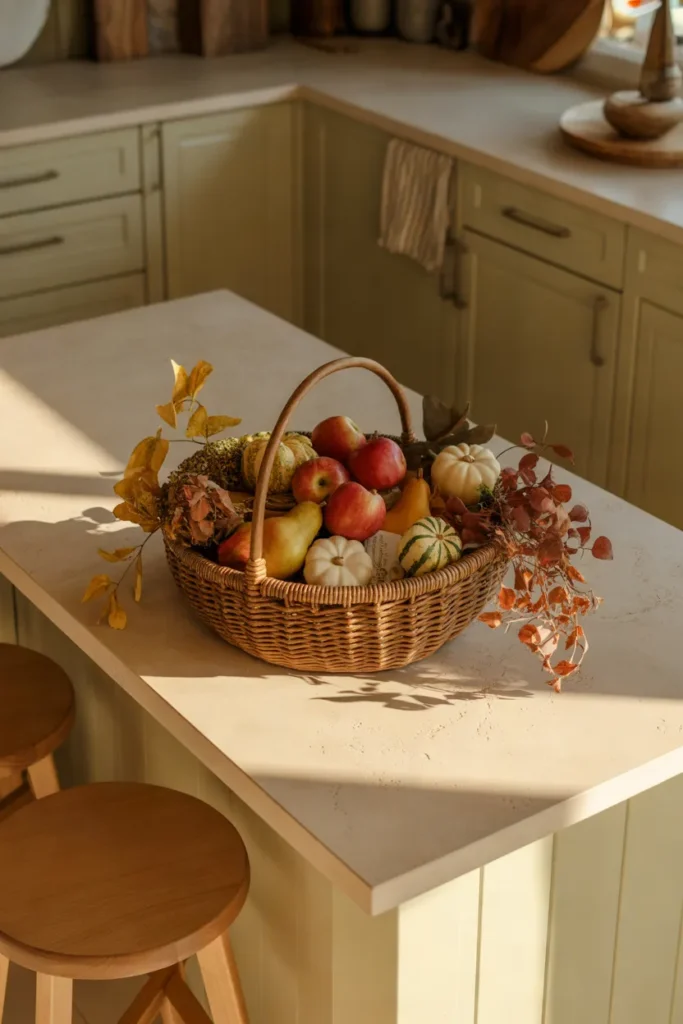
- Pick a medium or large woven basket with a sturdy base.
- Combine apples, pears, pumpkins, and small gourds for varied shapes.
- Keep the tallest pieces toward the center.
- Use muted colors for a calmer arrangement.
- Leave enough space around the basket for food preparation.
A produce basket brings natural color and texture to the kitchen while keeping seasonal ingredients close at hand. Choose fruits that are firm enough for display and refresh them as needed. For a smaller island, use a shallow basket so the arrangement adds height without taking over the available workspace.
Sage Green Accents
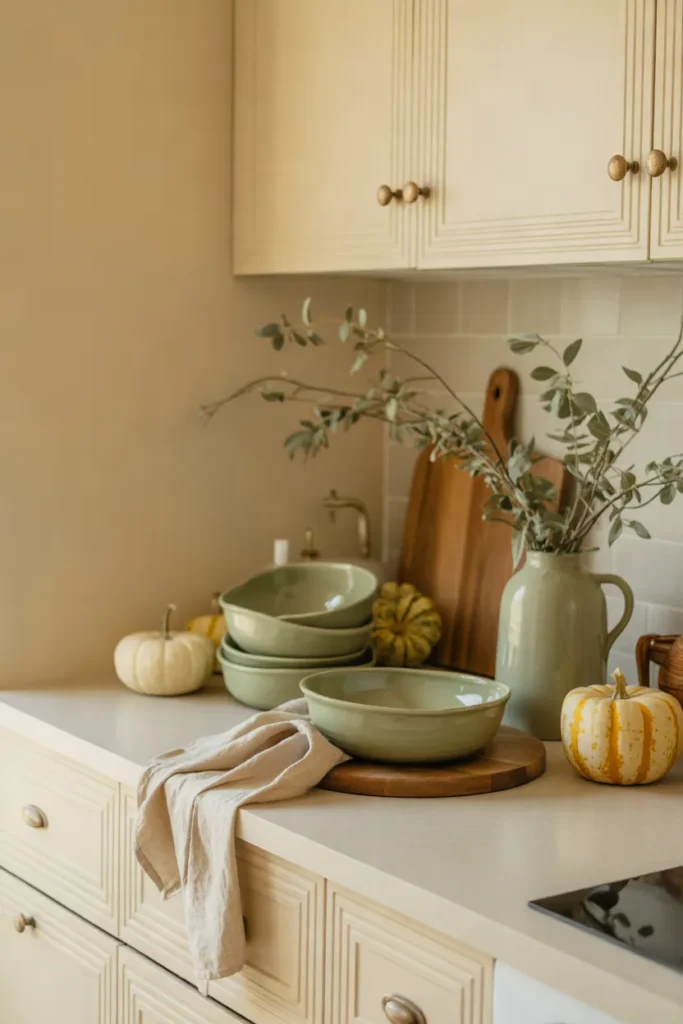
Cost: Low | Time: 20 minutes | Skill Level: Beginner
Best For: Neutral kitchens | Works In: Modern and farmhouse spaces
Color Palette: Sage, cream, warm brown, muted orange
Result: Subtle seasonal color with a fresh finish
Sage green gives autumn styling a softer direction than traditional orange and red. Use it through towels, bowls, pottery, or small decorative stems, then repeat the shade in one or two nearby pieces. This keeps the kitchen connected without making the seasonal palette feel heavy or overly themed.
Layered Counter Tray
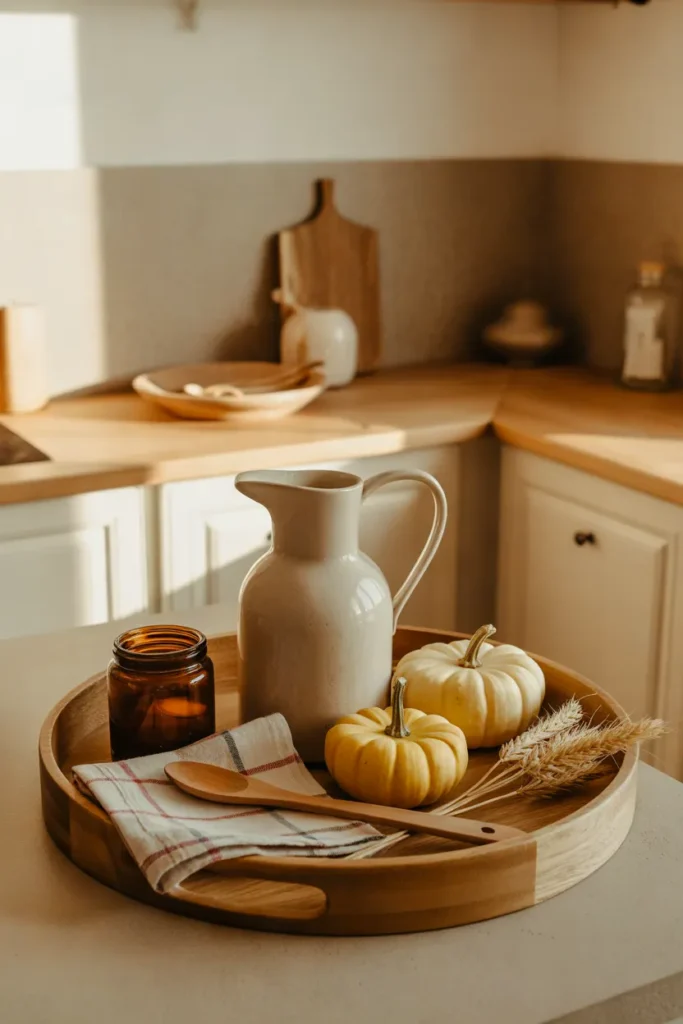
A well-layered tray can pull several small seasonal pieces into one organized display. Start with the largest object at the back, then place medium pieces beside it and smaller accents toward the front. Leave a little empty space so each item remains visible instead of blending into a crowded arrangement.
Use the tray near a backsplash, coffee station, or empty corner where it can stay together throughout the season. I’ve noticed that grouping decorations this way also makes cleaning easier because the entire arrangement can be moved at once. Choose wood, woven material, or ceramic to reinforce the warm harvest feel.
Plaid Chair Cushions
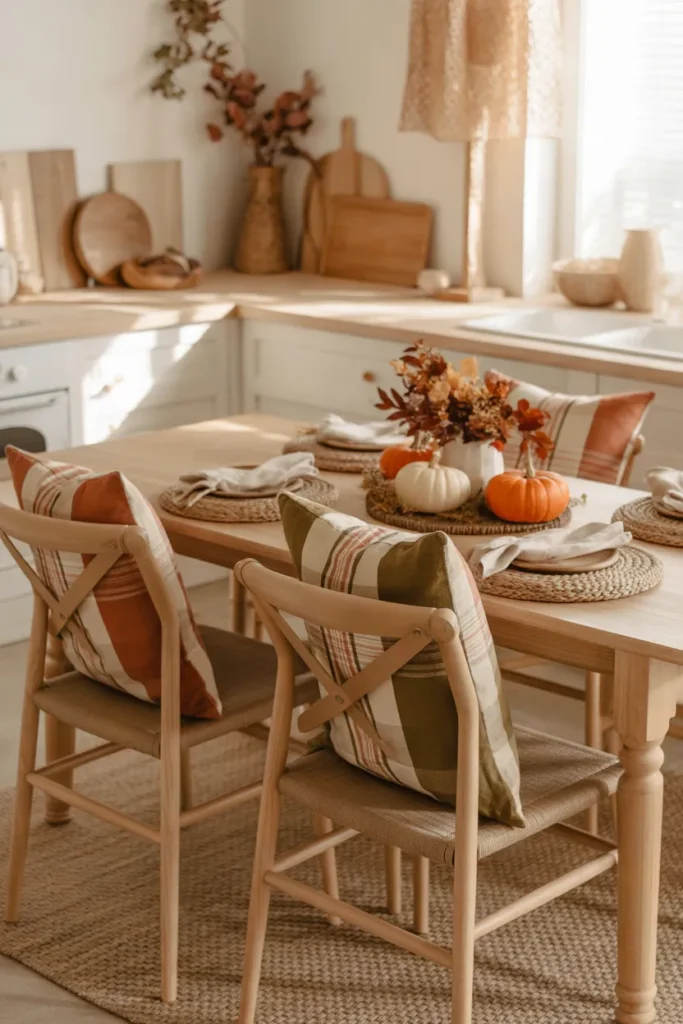
- Choose cushions with rust, cream, olive, or brown tones.
- Match the plaid loosely with existing kitchen textiles.
- Use washable covers for easier seasonal maintenance.
- Keep patterns consistent when several chairs are visible.
- Tie the look together with one small tabletop accent.
Chair cushions bring autumn color into the kitchen without using valuable counter or shelf space. They work especially well around breakfast tables and dining nooks where textiles can soften hard wood surfaces. For a balanced look, repeat one cushion color in a nearby towel, runner, or small decorative piece.
Harvest Table Runner
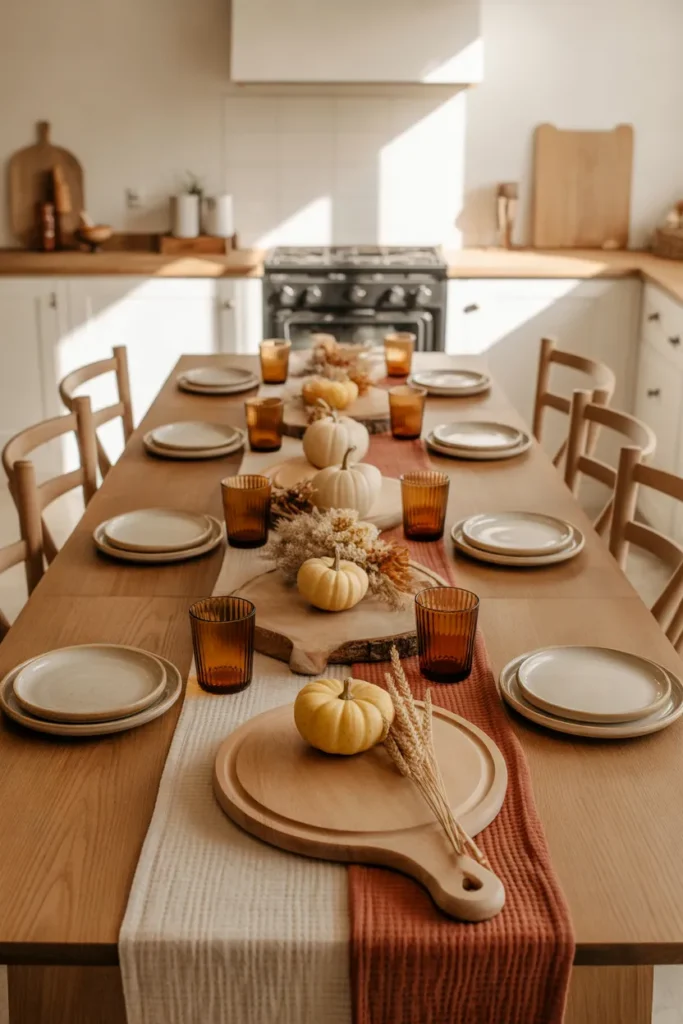
Cost: Low | Time: 15 minutes | Skill Level: Beginner
Best For: Kitchen tables and islands | Works In: Farmhouse, cottage, and modern spaces
Color Palette: Rust, cream, tan, muted green
Result: Defined seasonal dining area
A table runner gives an autumn kitchen a clear visual foundation without covering the entire surface. Choose a washable linen or cotton style in a muted harvest shade, then layer a few natural accents along the center. If you’re refreshing other areas of your home for the season, these fall mantel decor ideas can help you carry the same warm colors and natural textures into your fireplace area. Keep the ends mostly clear so chairs can move comfortably and the table remains practical.
Wooden Spoon Display
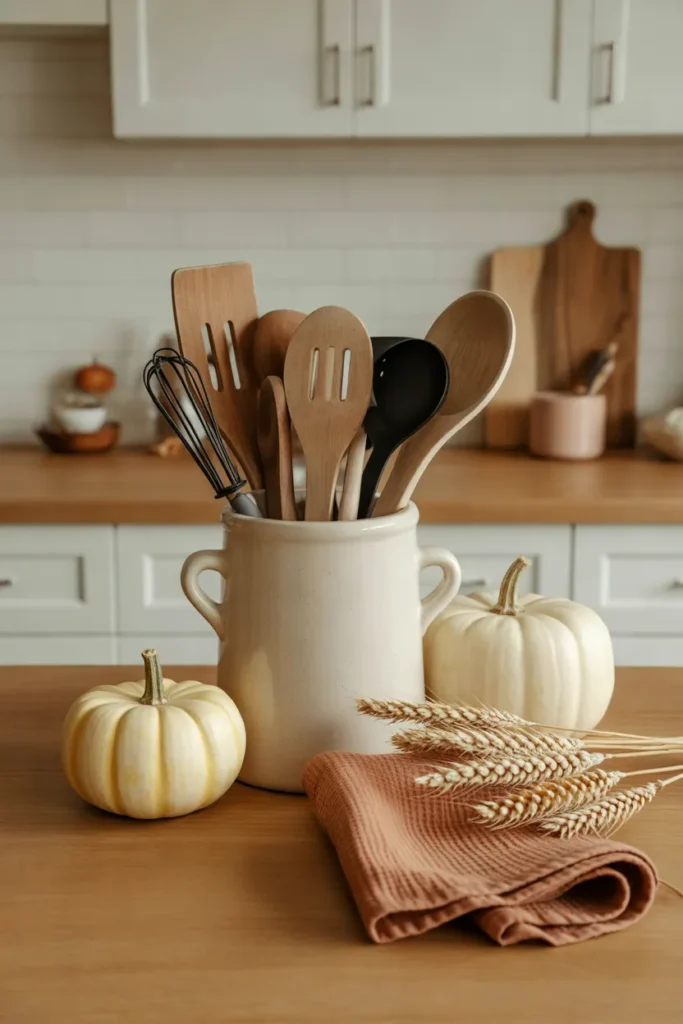
A wooden utensil crock can become part of the seasonal styling with almost no extra effort. Choose a ceramic or stoneware container in cream, beige, or soft gray, then position it beside a cutting board or small pumpkin. The natural wood handles add warmth while keeping frequently used tools within easy reach.
Group utensils loosely rather than packing the container too tightly. Add one seasonal accent nearby instead of decorating the crock itself. This approach keeps the display practical for cooking while giving the counter a warmer autumn character. It is especially useful for kitchens where storage and decoration need to share the same space.
Warm Ceramic Canisters
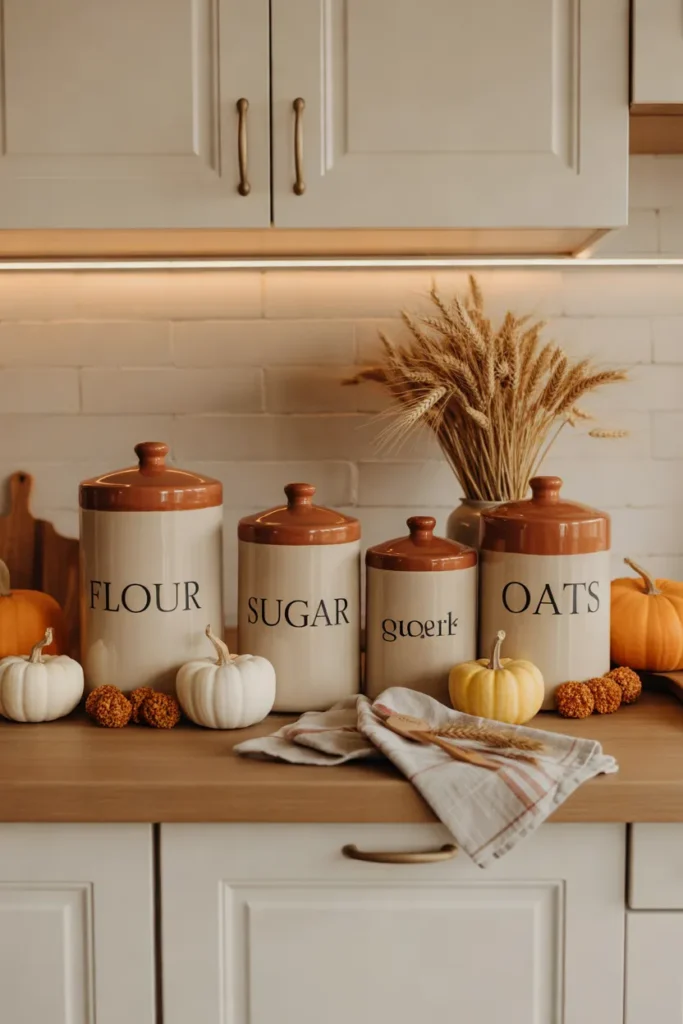
- Choose three matching canisters in cream, beige, terracotta, or warm brown.
- Use them for everyday staples such as flour, sugar, coffee, or oats.
- Arrange the tallest container toward the back.
- Add one small pumpkin or dried stem beside the group.
- Use simple labels for a clean, organized finish.
Warm ceramic canisters combine useful storage with seasonal color, making them especially helpful on open counters or shelves. Look for matte or lightly textured finishes that complement existing kitchen materials. A coordinated set creates visual order, while one small autumn accent nearby adds enough seasonal detail without making the countertop feel crowded.
Conclusion
Autumn decorating does not require a complete kitchen makeover. A few pumpkins, warm textiles, wooden accents, dried stems, or seasonal produce can bring noticeable warmth to everyday spaces. These fall kitchen decor ideas give you simple ways to refresh counters, shelves, tables, and small corners while keeping your kitchen functional.
I’ve noticed that small seasonal changes often have the biggest visual impact when they connect with colors and materials already in the room. Save this post on Pinterest, try your favorite ideas, and share it with someone looking for fresh autumn inspiration. Start with one corner and build from there.
3 Comments