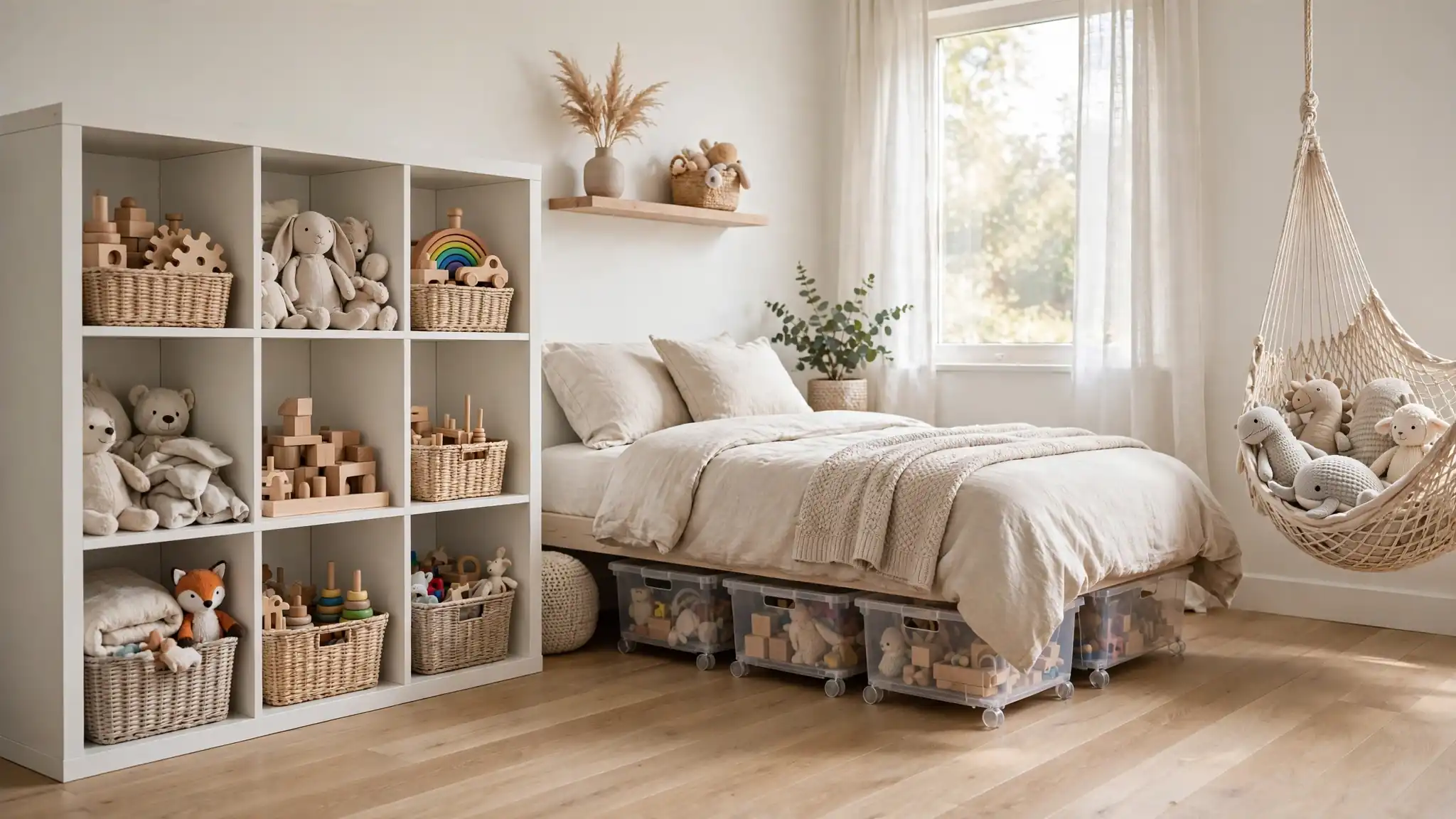
22 Kids Bedroom Storage Ideas for a Brilliant Organization
Smart kids bedroom storage ideas turn the daily toy explosion into a system children can actually follow. Kids do not hate tidying; they hate confusing systems with no clear home for anything. The trick is giving every toy, book, and art supply a visible, reachable spot, then making cleanup feel like a game. Low bins, picture labels, and open shelves work far better than deep toy boxes where things vanish. In my experience, children as young as three keep a room tidy when the system matches their height and logic. These 22 ideas blend clever organization with playful style, so the room stays functional without looking like a warehouse.
Storage works best inside a room a child truly loves. These teen boy bedroom decor ideas show how personality and function can share one space, and the same thinking shapes great kids rooms. Borrow the spirit, then use the 22 systems below to give everything a proper home. A room with a place for everything stays calmer for the whole family.
Underbed Rolling Bins
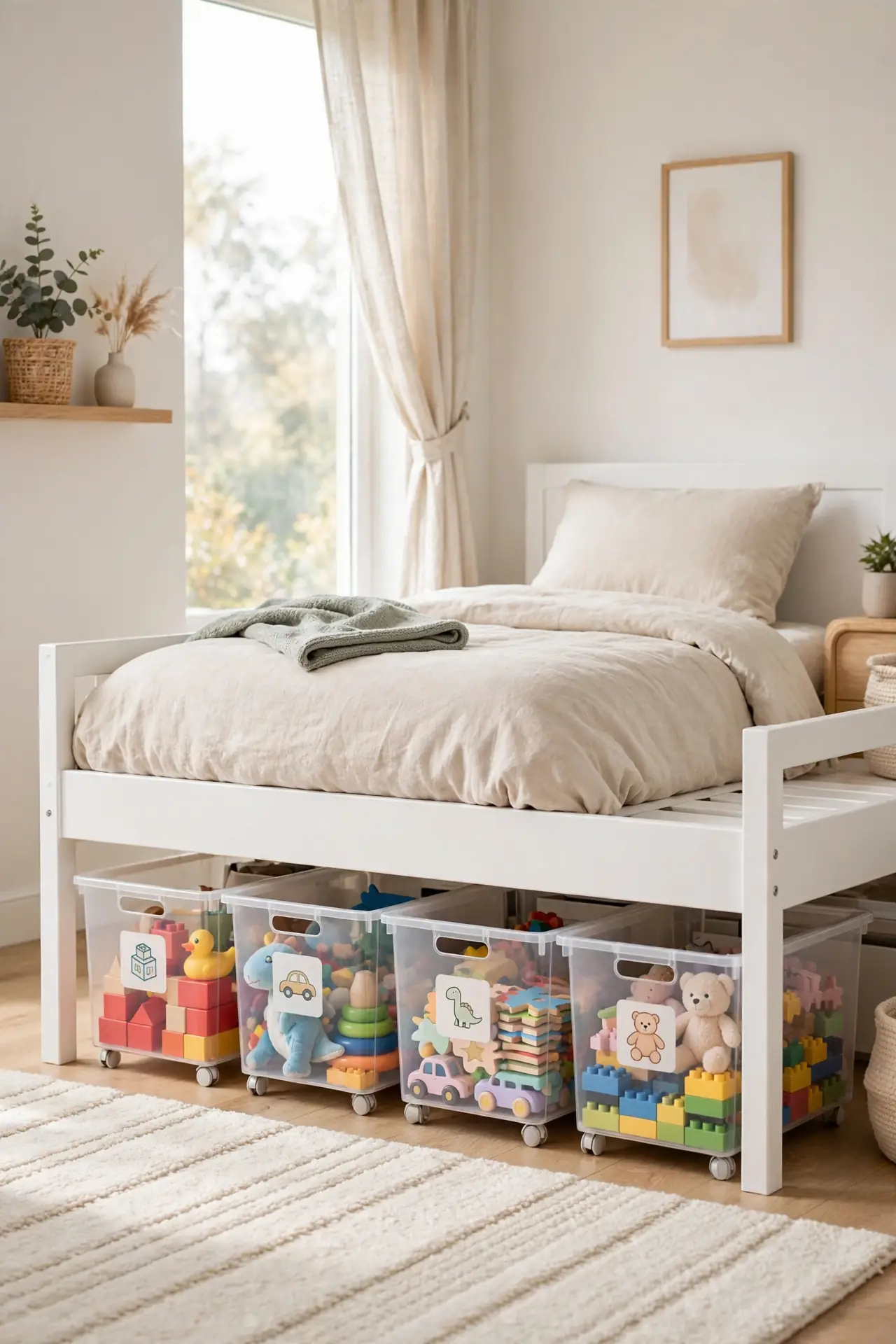
The space under the bed is the biggest wasted zone in most kids rooms. Low rolling bins slide right in, turning dead space into prime storage for toys, shoes, or off-season clothes. Choose clear bins or add picture labels so kids see what lives inside. The wheels matter most, because a bin a child can pull out alone is a bin that actually gets used.
Measure the clearance before buying, since beds sit at different heights. Two to four shallow bins beat one deep one, because shallow bins never become black holes. Line them up like drawers and teach the one-bin-at-a-time rule. Cleanup takes five minutes when every bin has a job.
Wall Cubby Shelves
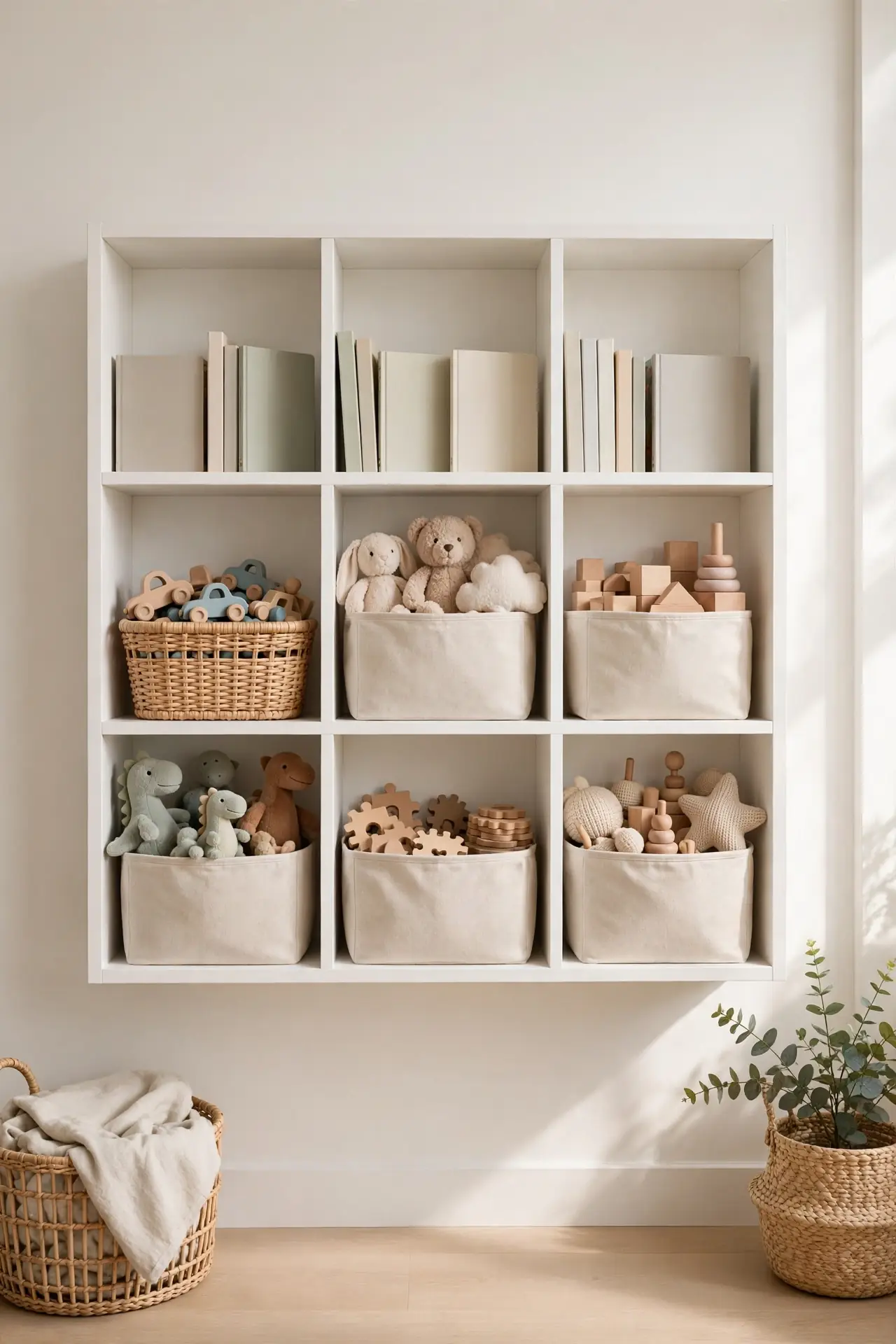
- Mount cubbies at your child’s eye level so every toy stays within reach.
- Assign one cubby per toy type, with a picture label on the front edge.
- Keep the top cubbies for display items and books you read together.
- Leave one cubby empty as breathing room for new treasures.
Wall cubbies work like open drawers that never jam and never hide toys. Kids see everything at a glance, which ends the dump-everything-out search. The grid look keeps the wall tidy even when the toys inside are colorful chaos. Anchor the unit to the wall for safety, then let the system do the teaching.
Toy Hammock Corner
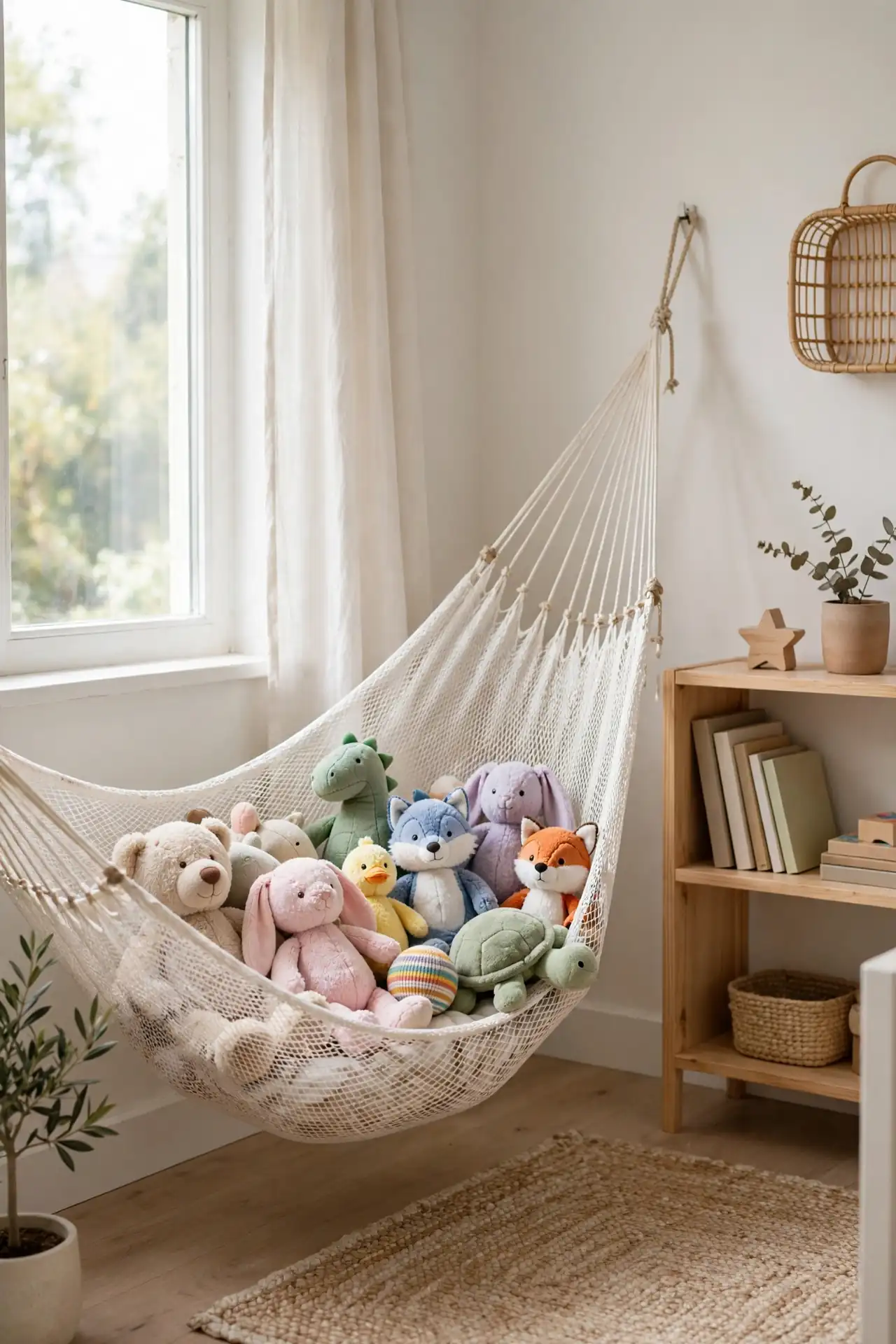
Quick Tip: Hang the hammock low in a corner, within easy reach of small arms. Stuffed animals pile in from the top and lift out through the front, so nothing gets buried. Choose a washable mesh that handles weekly toy rotations.
Stuffed animals multiply like rabbits, and a hammock corners them beautifully. The net uses empty air above the floor, which means zero footprint for dozens of plush friends. Kids love tossing toys up into it, so cleanup feels like a basketball shot. It also keeps beloved animals visible instead of squashed in a dark bin. Rotate the residents monthly to keep the collection fresh.
Labeled Basket System
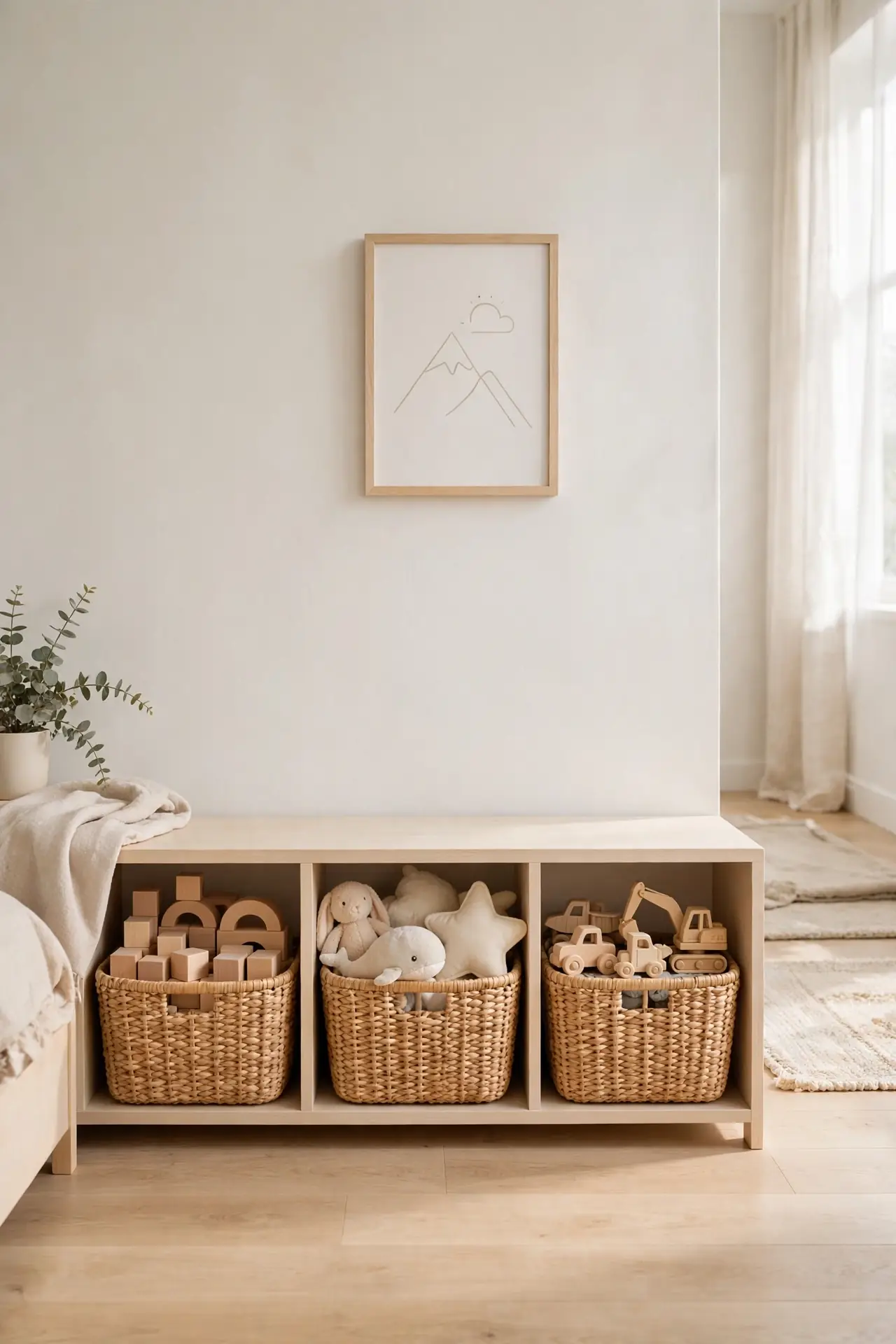
BEFORE: Toys live in one giant box where everything sinks to the bottom. Finding the red car means dumping the whole box, and cleanup never really happens.
AFTER: Labeled baskets sort toys by type, each with a picture label a non-reader can follow. Cleanup becomes a matching game, and the red car always lives in the car basket.
Labels turn chaos into a system kids run themselves. Use photos of the actual toys for toddlers and simple words for early readers. Keep baskets shallow and wide so nothing hides. Place the full set on a low shelf where every basket slides out like a drawer. The ten minutes spent labeling pays off every single day.
Overdoor Pocket Organizer
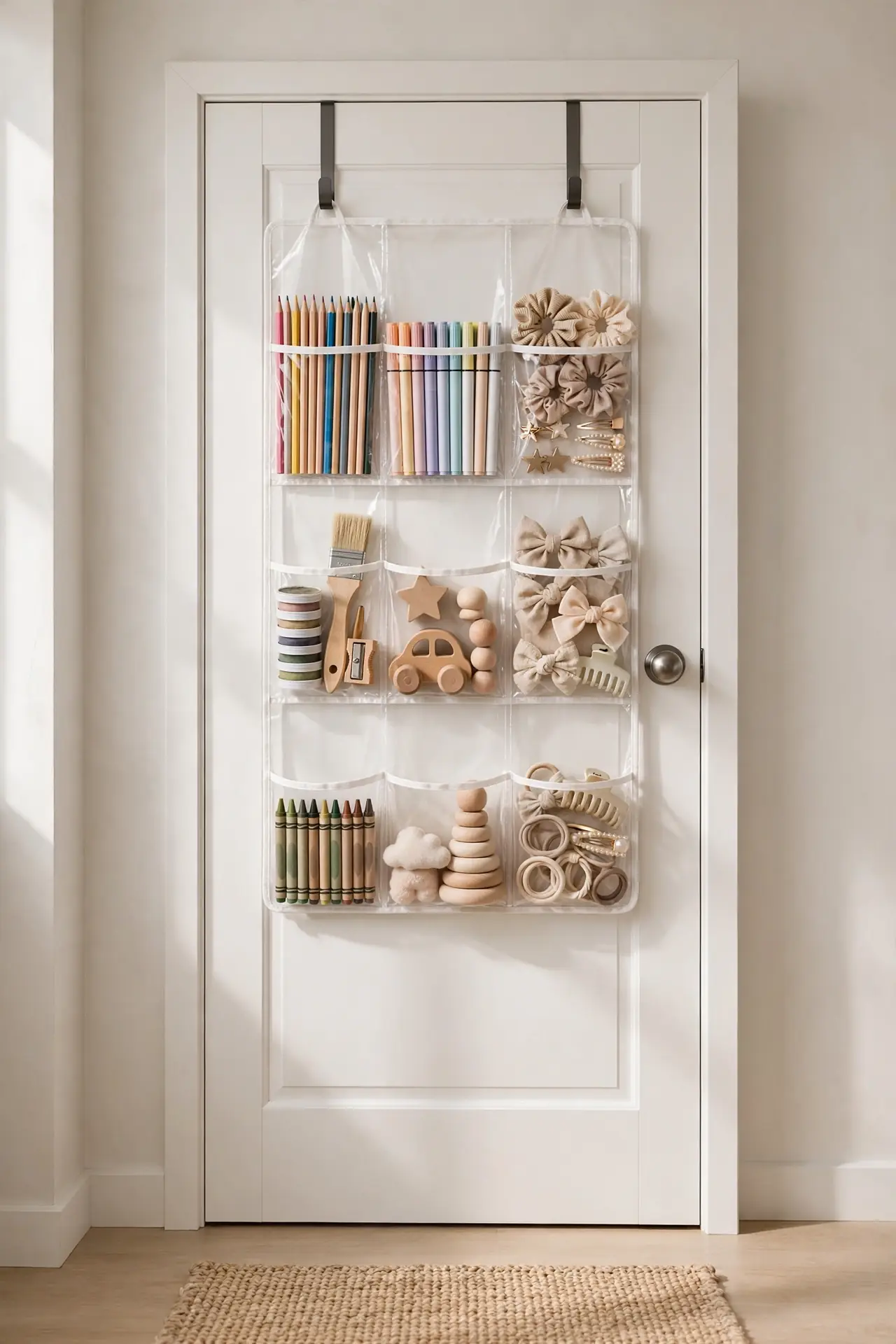
- Hook the organizer over the bedroom or closet door, no tools needed.
- Sort small toys, art supplies, and hair accessories into the clear pockets.
- Label the top row for daily items like sunglasses and headbands.
- Keep heavy items low so the door still swings freely.
The back of a door is free real estate most families ignore. A pocket organizer holds dozens of small items that otherwise scatter across every surface. Clear pockets let kids see everything, which cuts the morning search dramatically. It installs in seconds and moves easily when rooms change. For renters, this is pure gold. No holes, no damage, no arguments.
Loft Bed Drawers
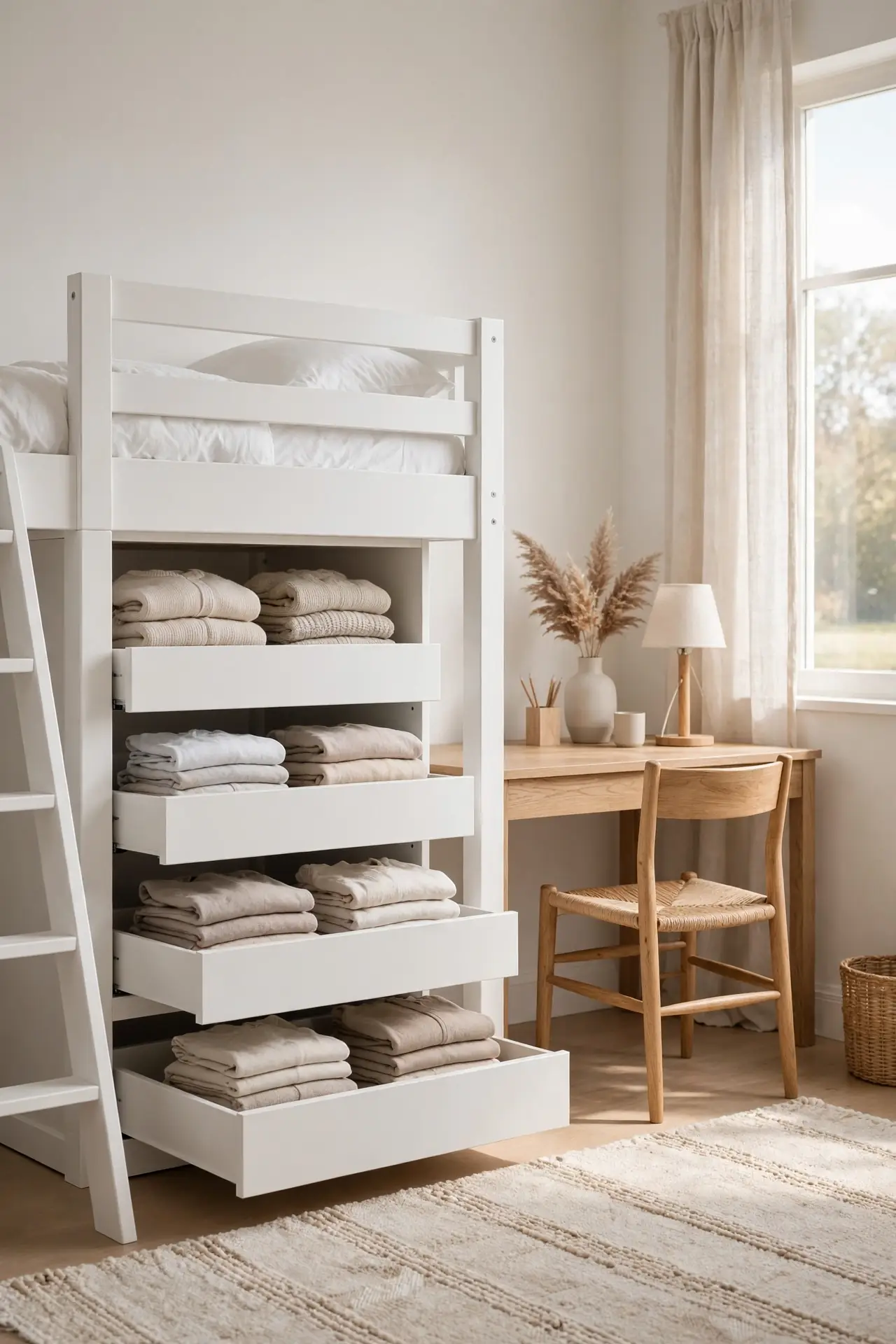
| Feature | Underbed Drawers | Open Floor Bins |
|---|---|---|
| Access | Pull out like real drawers, smooth and easy | Lift lids and dig through layers |
| Dust | Closed fronts keep clothes and toys clean | Open tops collect dust fast |
| Look | Built-in, tidy, furniture-grade finish | Casual, colorful, obviously bins |
| Cost | Higher, often part of the bed | Cheap, buy anywhere |
Drawers built into a loft or captain’s bed turn dead space into a dresser. Kids pull them open like real furniture, which makes putting clothes away feel grown up. The closed fronts hide the mess completely, so the room looks tidy even on lazy days. It costs more upfront but replaces a whole dresser.
Picture Book Ledges

DO: Mount ledges low enough for small hands to reach every book.
DO: Face book covers outward so kids choose by the pictures.
DO: Rotate the display weekly to keep reading exciting.
DON’T: Stack books spine-out where covers stay hidden.
DON’T: Overload ledges until books slide off.
DON’T: Mount them above a hard floor with no rug below.
Front-facing books invite reading in a way spines never do. A child picks the cover that catches the eye, which builds the daily reading habit naturally. Two or three slim ledges hold a surprising library along one wall. Keep a cozy cushion below and the reading corner builds itself.
Stackable Cube Units
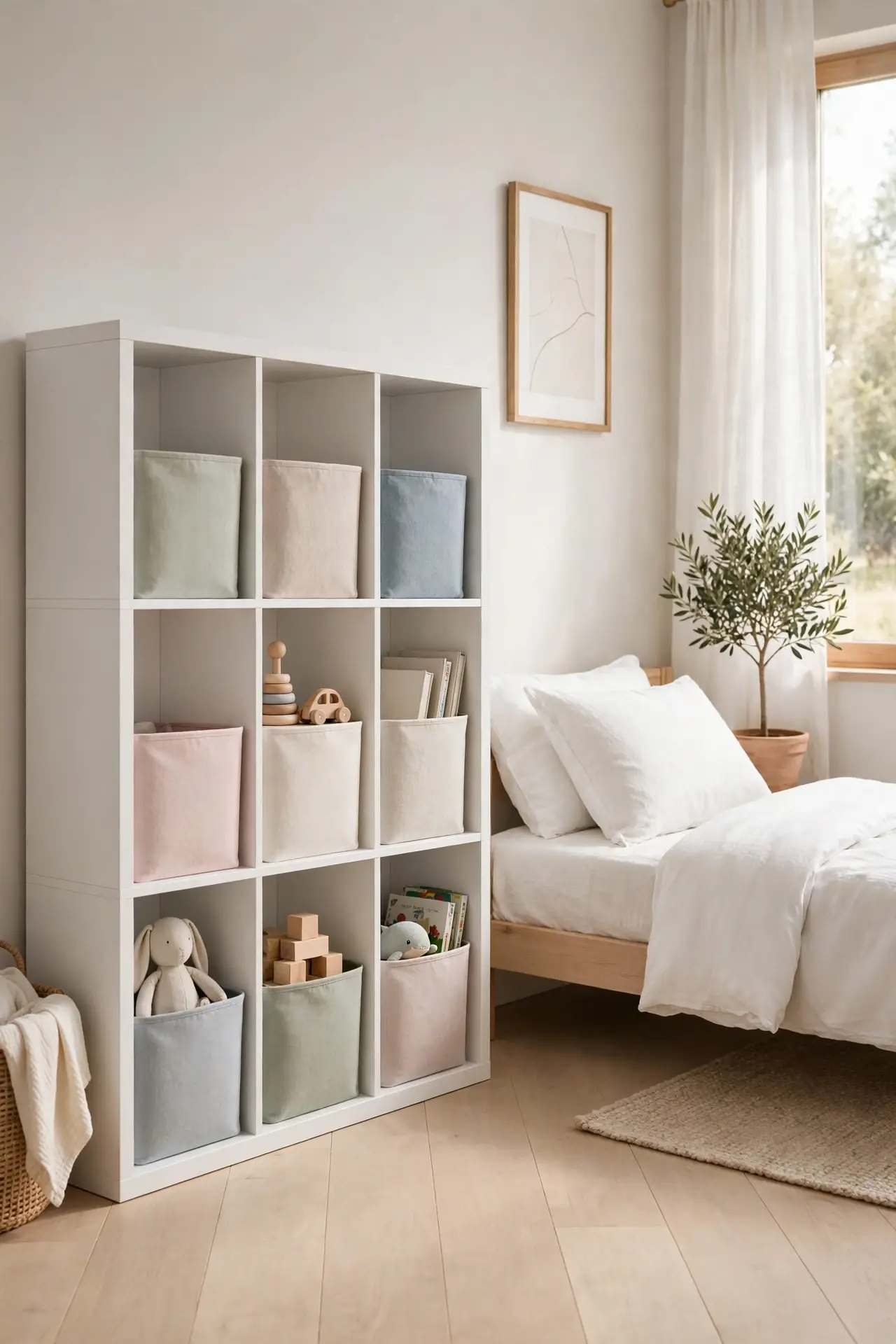
- Cost: Budget friendly, with cube units widely available at every price point.
- Time: One afternoon to assemble a sturdy six-cube storage tower.
- Skill Level: Easy, since most modern cubes need no tools at all.
- Best For: Growing toy collections that need flexible, expandable storage.
Cube units grow with the collection because you can add more anytime. Start with four cubes for a toddler, then stack higher as the toy count climbs. Mix open cubes for display with fabric bins for the messy stuff. The grid stays neat even when the contents are pure kid chaos. Anchor tall stacks to the wall for safety.
Toy Chest Bench
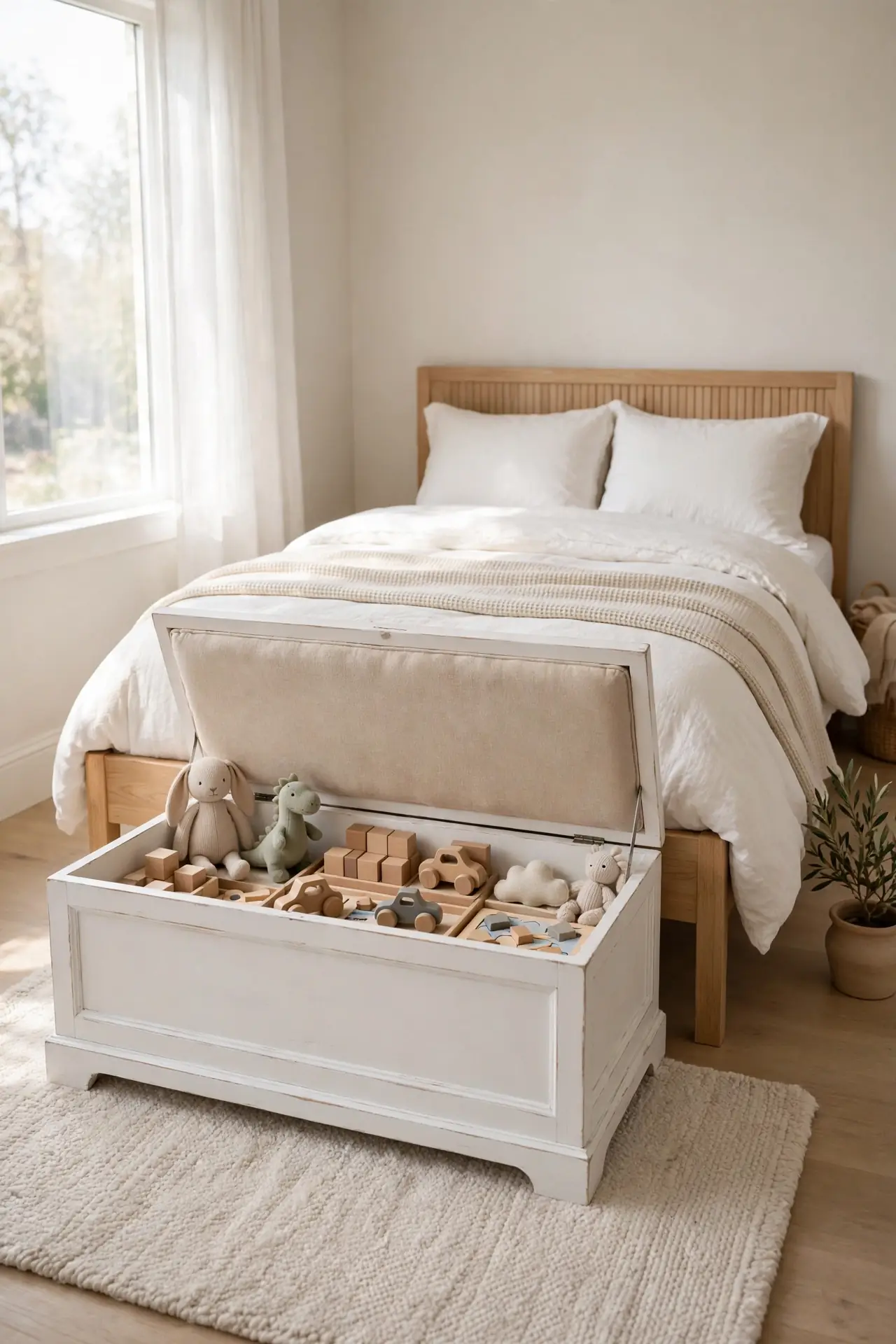
A toy chest that doubles as a bench earns its floor space twice over. Kids toss toys in fast, which beats any fussy sorting system for daily cleanup speed. The flat top becomes a reading perch or a stage for stuffed animal meetings. Choose one with a soft-close lid, because little fingers and heavy lids are a bad combination.
Place it at the foot of the bed or under the window for a natural landing spot. Add a cushion on top so it reads as furniture, not just a box. Once a month, sort the contents together and donate the forgotten toys. The chest stays useful for years when the clutter gets edited regularly.
Pegboard Toy Wall
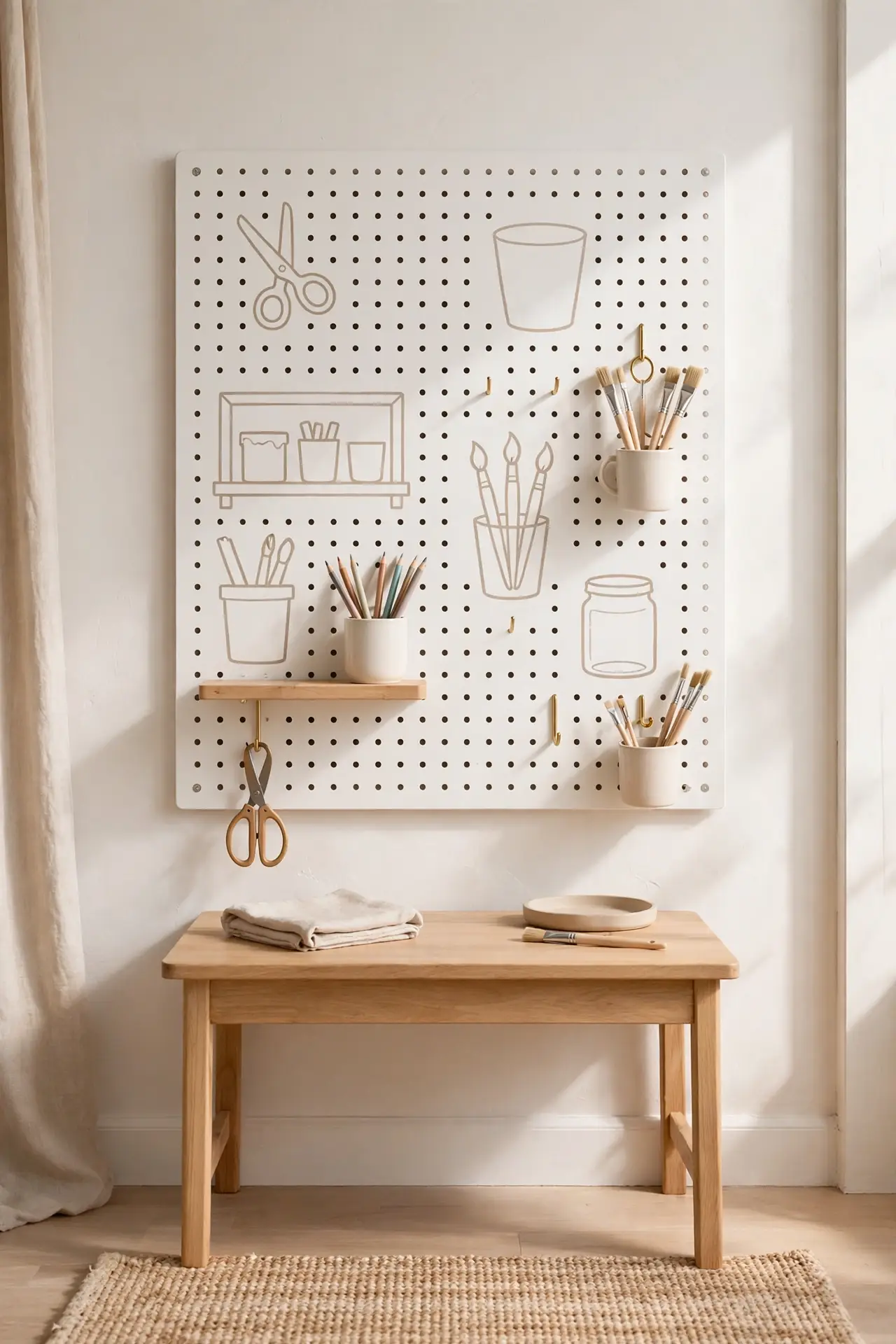
- Mount a pegboard panel beside the desk or play table at kid height.
- Add hooks, small shelves, and cups for art supplies and tiny toys.
- Outline each tool’s spot with paint so kids know where things return.
- Leave empty pegs for new treasures and seasonal swaps.
A pegboard turns a blank wall into a working organizer that kids actually enjoy using. Everything hangs visible and reachable, which ends the lost-scissors hunt for good. The painted outlines make cleanup a matching puzzle. Rearrange the hooks as interests change, because the board adapts to every phase. It looks like a little maker’s studio.
Rolling Craft Cart

Quick Tip: Dedicate each tier to one activity: coloring on top, stickers in the middle, and glue and scissors below. Roll the cart to the table for craft time, then park it in a corner when done. A caddy with a handle keeps the current project portable.
Craft supplies sprawl across every room without a mobile home. A three-tier rolling cart corrals the whole creative mess into one compact tower. Kids wheel it where the action is, which means glitter stays in one zone. The narrow footprint slides into closets and beside dressers. When craft time ends, the entire hobby disappears in one push.
Bedside Caddy Pocket
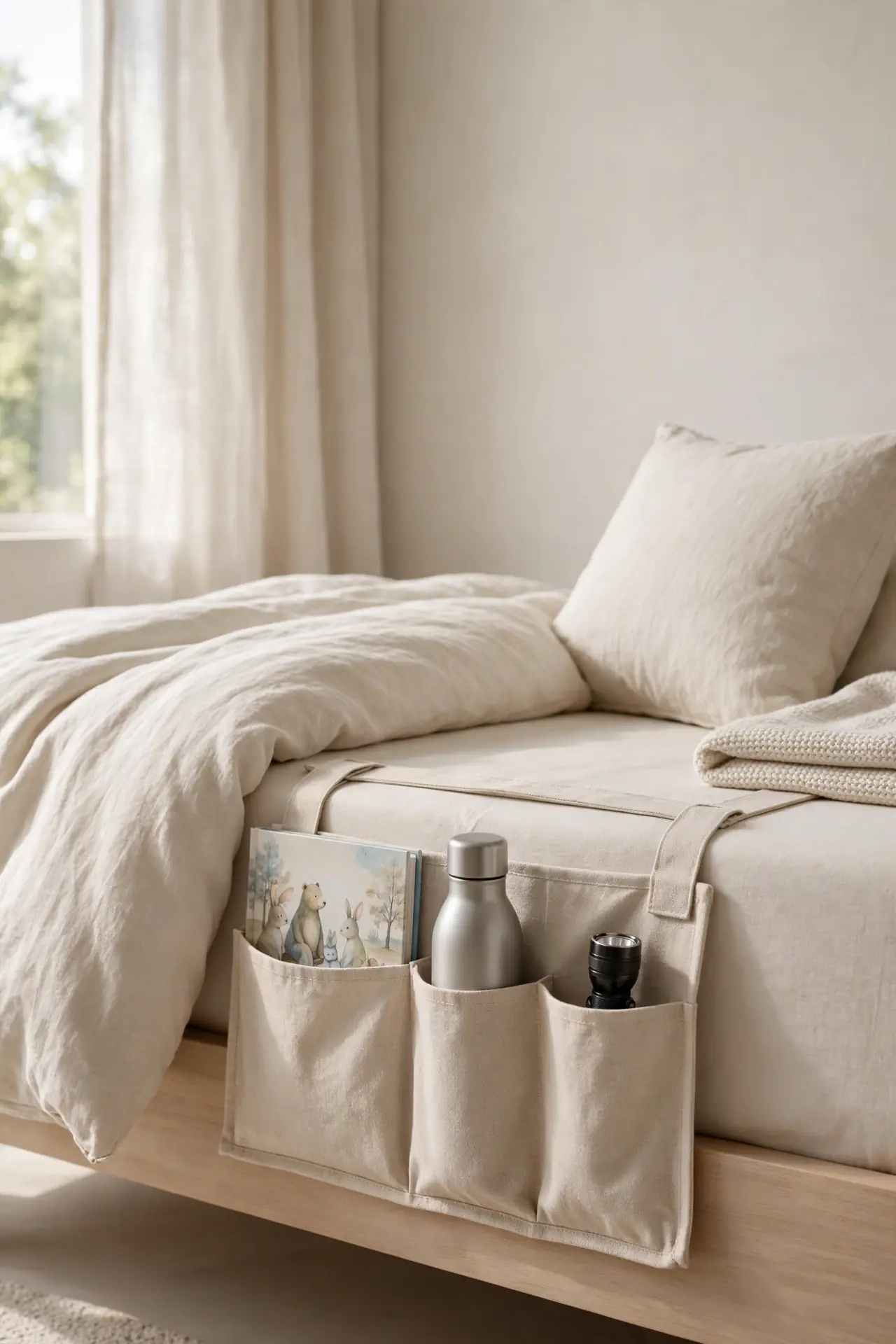
BEFORE: Books, water bottles, and flashlights pile on the floor beside the bed. Every morning starts with hunting for the missing library book.
AFTER: A fabric caddy hangs over the mattress edge, holding the book, water, and flashlight in neat pockets. The floor stays clear and bedtime runs smoother.
Nightstand space is precious in small kids rooms, and a hanging caddy creates storage from thin air. It slips between the mattress and the frame with no tools, holding everything a child needs at bedtime. Choose canvas with deep pockets that survive tugging. The floor stays clear for little feet, and morning cleanup starts one step ahead. Simple fabric, big difference.
Stuffed Animal Zoo
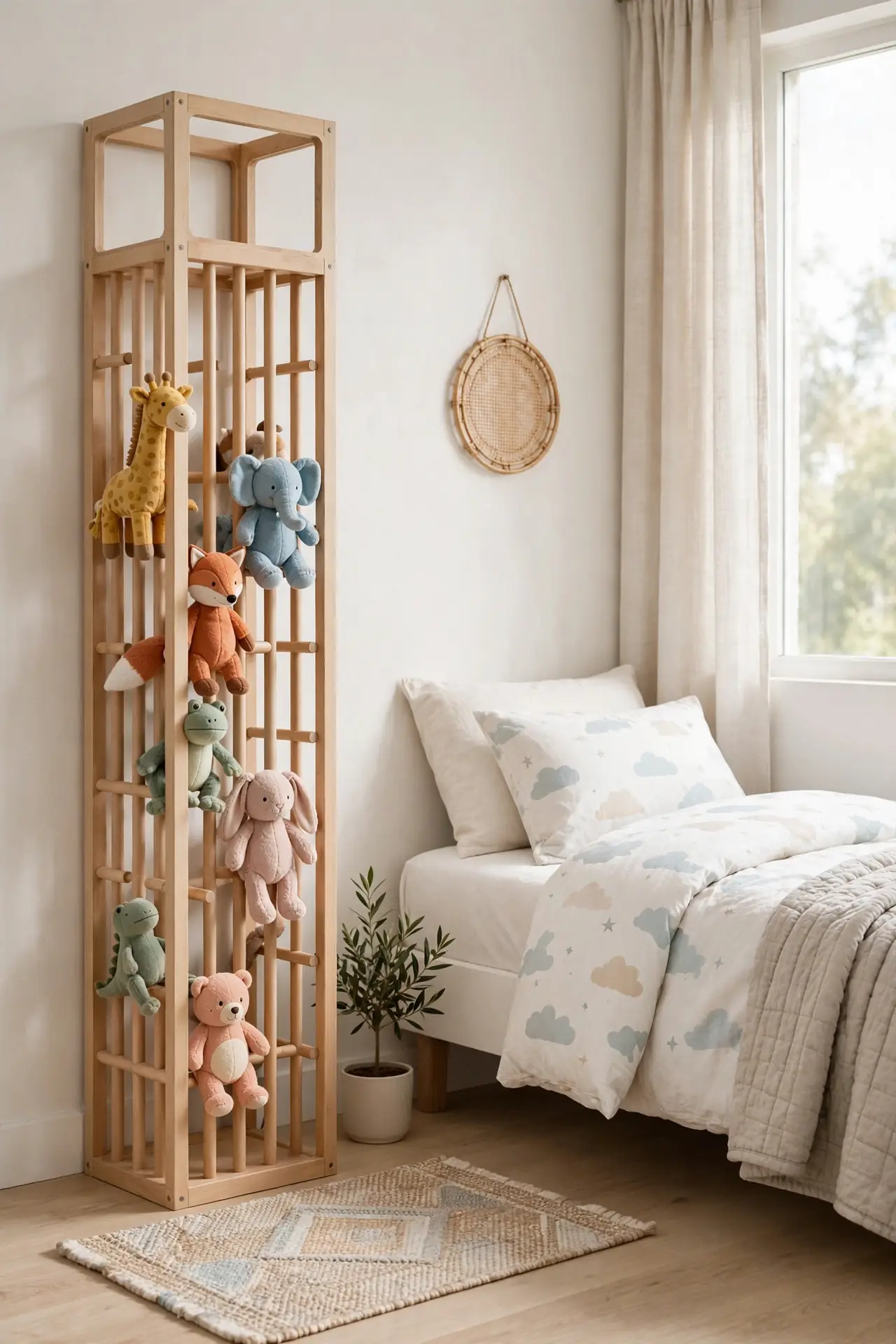
- Buy or build a tall open frame with vertical dowels, like zoo bars.
- Slot stuffed animals between the bars, biggest at the bottom for stability.
- Place it in a corner where kids can grab and return toys easily.
- Cap the collection at what fits, and donate the overflow together.
A stuffed animal zoo turns clutter into a display kids love. The bars keep every plush visible and reachable, which ends the pile-on-the-bed routine. Building one takes an afternoon with basic lumber and dowels. The natural capacity limit teaches gentle lessons about letting go. Kids adopt the zoo idea instantly. It looks charming and works brilliantly.
Drawer Divider Trays

| Feature | Divider Trays | Junk Drawer |
|---|---|---|
| Order | Every small item gets a labeled home | Everything migrates to one pile |
| Speed | Find anything in seconds flat | Digging takes forever |
| Capacity | Uses the full drawer efficiently | Wastes space on chaos |
| Cost | Cheap inserts, big payoff | Free, but costs your sanity |
Dresser drawers become black holes without dividers. Simple trays split one big space into tidy zones for socks, tees, and treasures. Kids maintain the system because every item has an obvious home. Adjustable bamboo dividers grow with changing needs. The whole upgrade costs less than a pizza and saves hours of daily searching.
Corner Bookshelf Tower
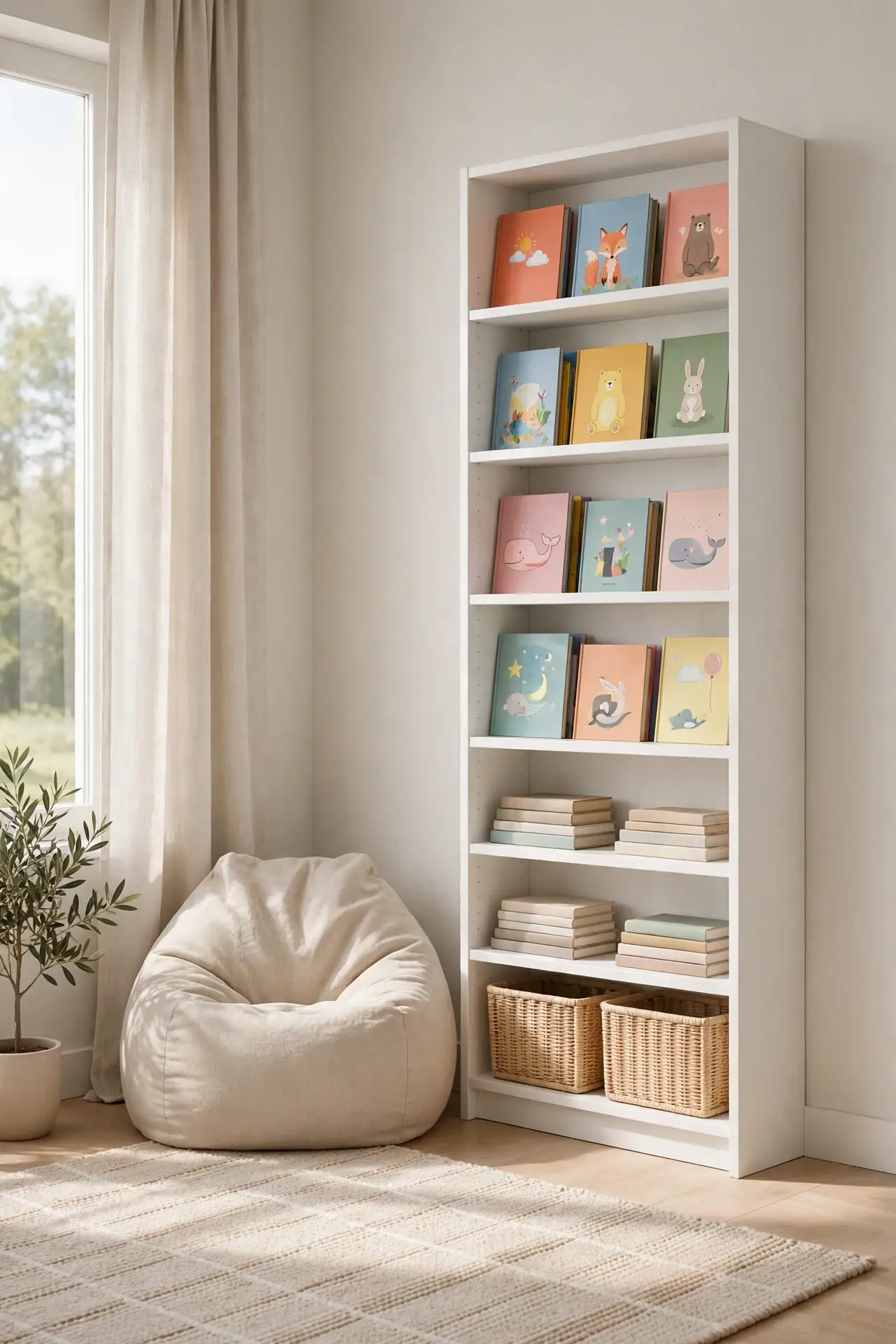
DO: Choose a tall narrow tower that fits snugly into the corner.
DO: Shelve books with covers facing out on the top rows.
DO: Anchor the tower to both walls for tip-over safety.
DON’T: Let the tower become a leaning pile of doom.
DON’T: Place heavy items on the very top shelf.
DON’T: Skip the wall anchors to save ten minutes.
Corners waste more space than any other spot in a kids room. A narrow tower turns that dead triangle into a library that holds dozens of books. Kids browse the shelves like a bookshop, which makes reading feel like an adventure. Keep a beanbag nearby and the corner becomes the favorite seat in the house.
Magnetic Strip Display
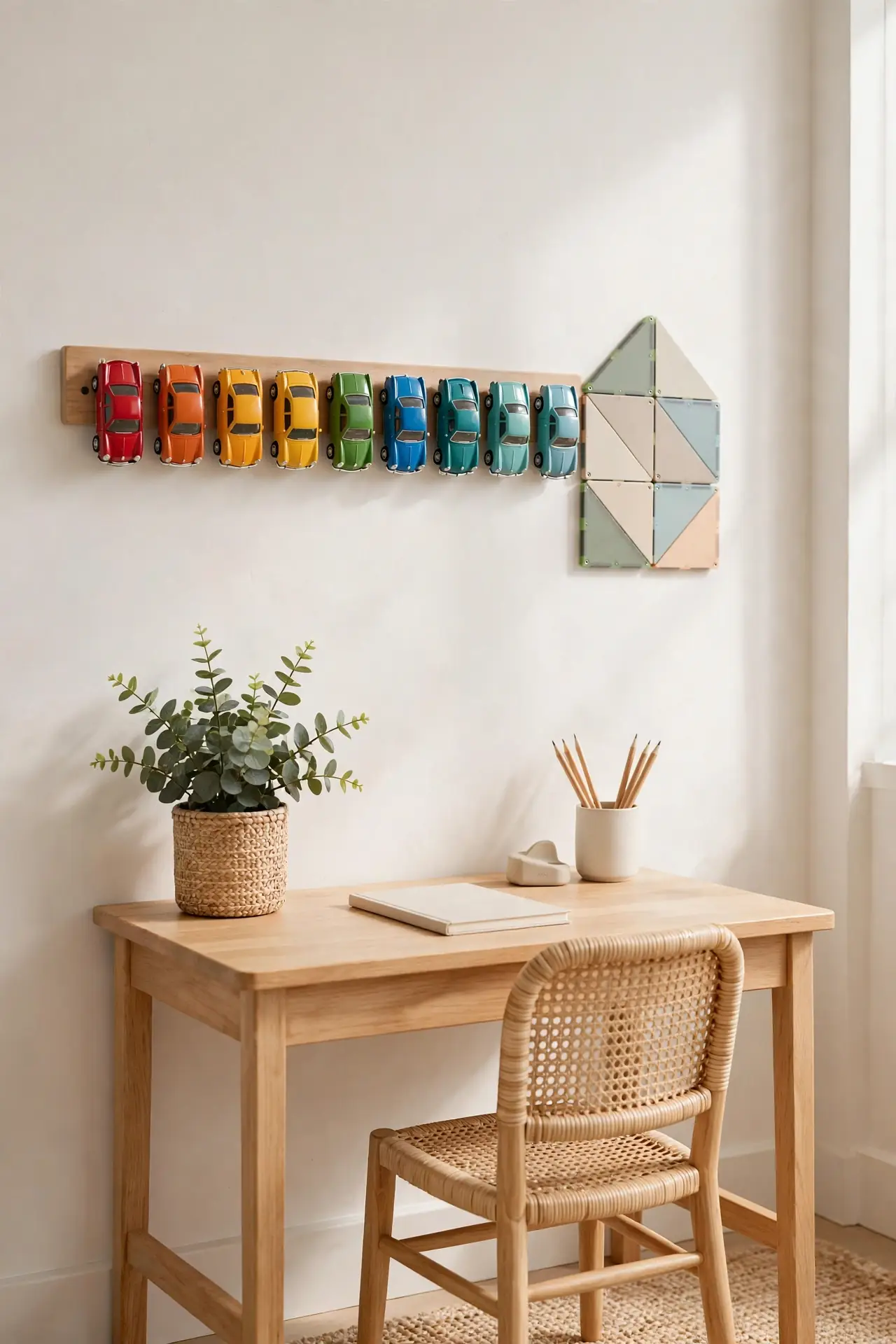
- Cost: Low, with magnetic strips costing very little at hardware stores.
- Time: About twenty minutes to mount one strip with screws.
- Skill Level: Beginner, needing only a drill and a level.
- Best For: Metal cars, magnetic tiles, and rotating art displays.
Magnetic strips turn metal toys into wall art that stores itself. Toy cars line up along the strip like a showroom, and magnetic tiles build straight onto it. Kids park their cars after playing, which means cleanup happens without nagging. Mount the strip low enough for small hands to reach. It holds art with magnets too, so the display rotates with their latest masterpieces.
Storage Stair Steps
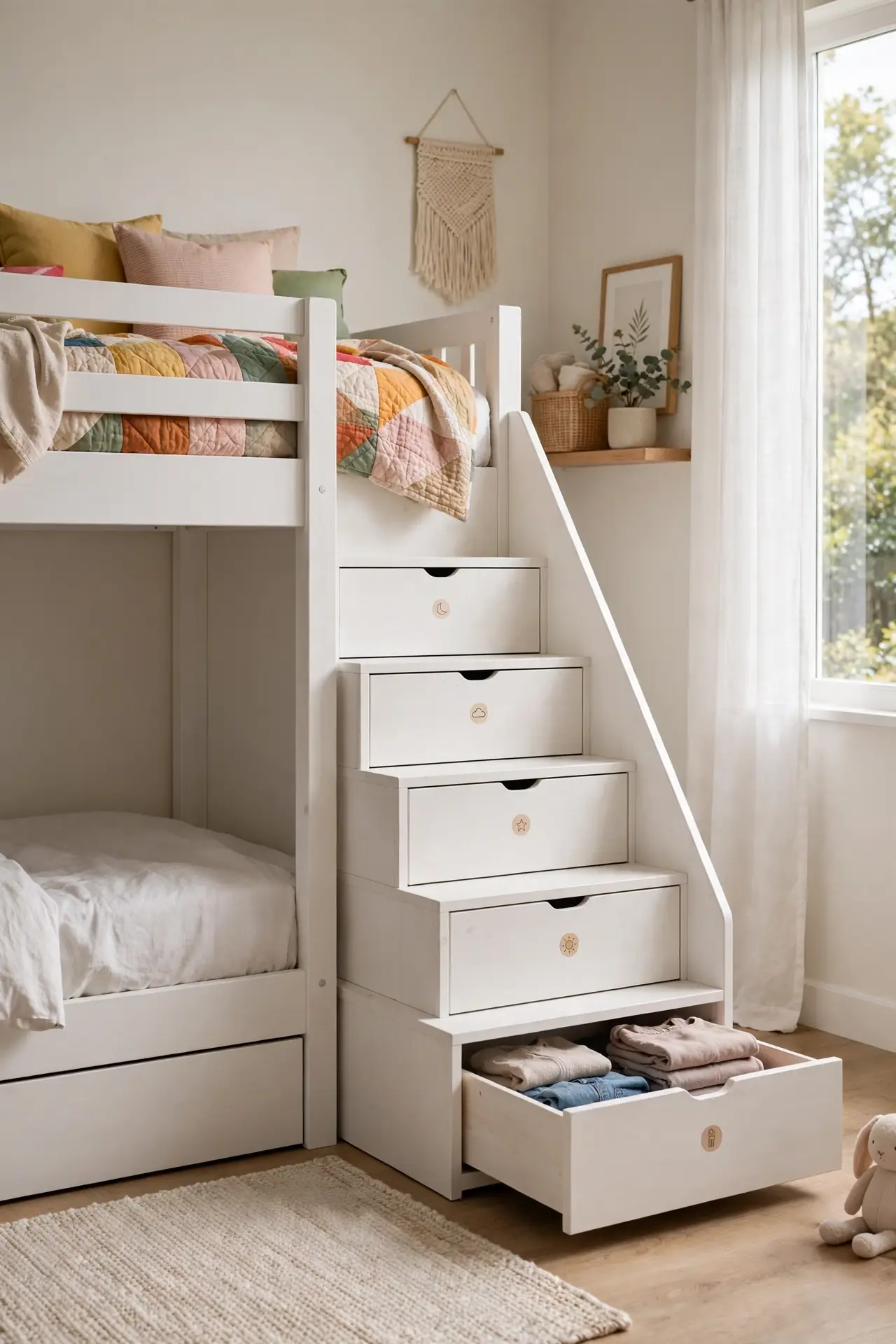
Bunk and loft beds waste the space around their ladders. Stair steps with built-in drawers replace the ladder and add serious storage in the same footprint. Each step opens to hold toys, books, or clothes. Kids climb safer on wide steps than on skinny ladder rungs, especially at night when they are sleepy.
The drawers work best for items kids need daily, since the steps sit right in the traffic path. Label each drawer with a picture so the system sticks. This upgrade costs more than a ladder, but it replaces a whole dresser. Safe climbing plus hidden storage is a genuine win.
Clip Rail Artwork
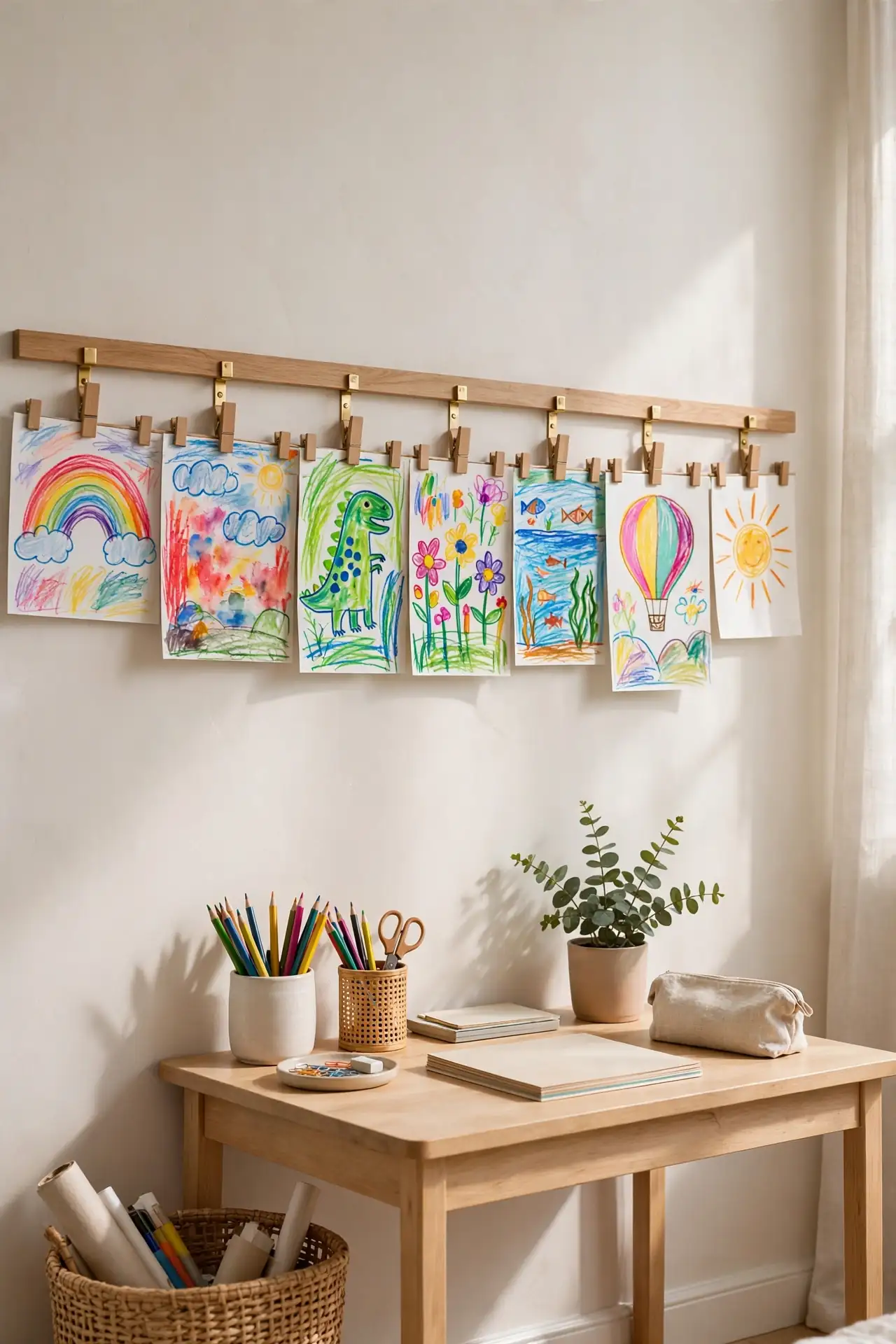
- Mount a wooden rail with clips along the wall at kid height.
- Clip up fresh artwork weekly and retire old pieces to a memory box.
- Mix drawings, certificates, and photos for a personal gallery.
- Keep spare clips handy so kids can update the display themselves.
Kids produce art faster than any frame budget can handle. A clip rail displays the latest masterpieces without a single nail per picture. Swapping takes seconds, so the gallery always feels fresh. For more ways to show off his style, these boys bedroom ideas pair display with decor. Retire old favorites to a keepsake box instead of the trash.
Wardrobe Rail Baskets
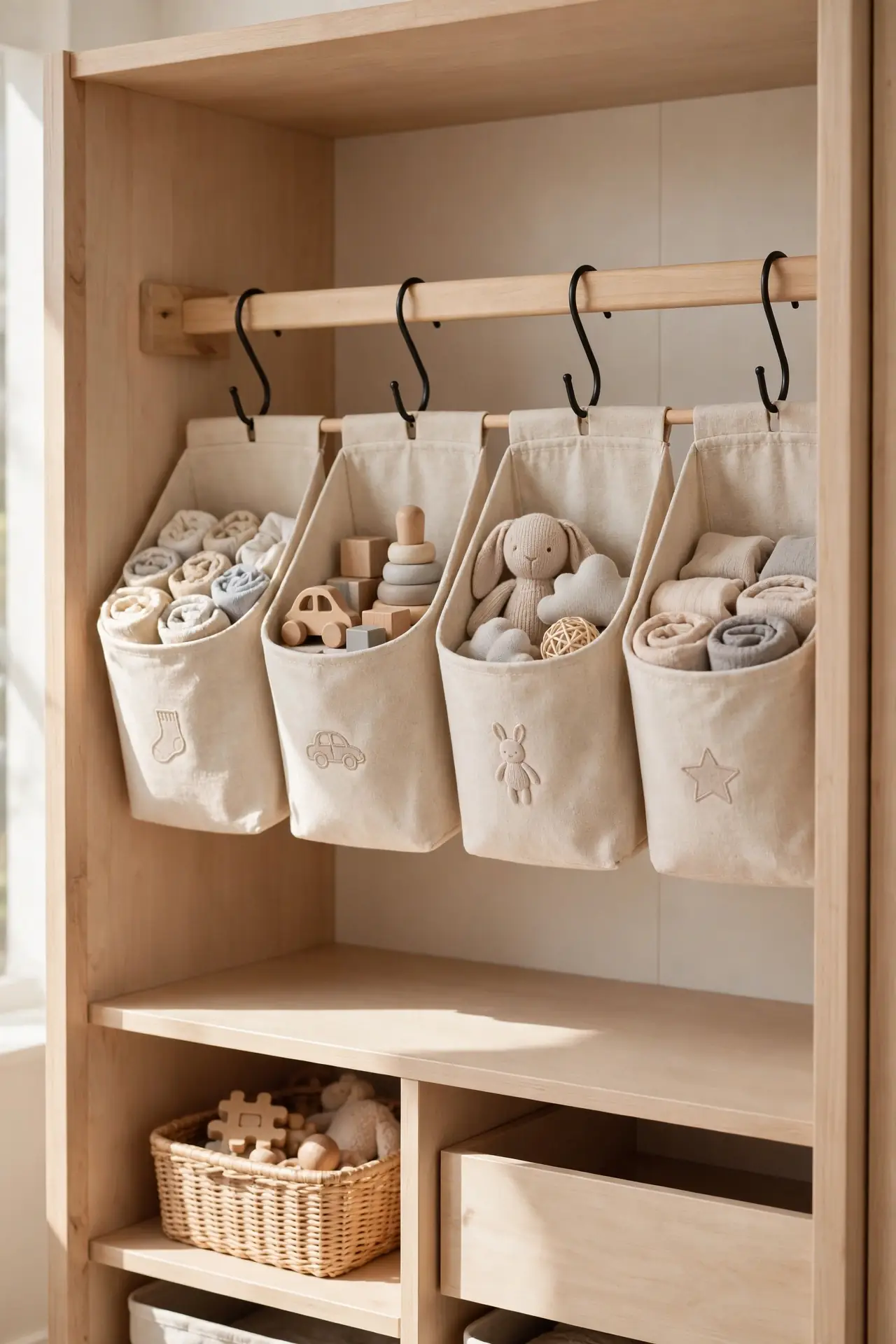
Quick Tip: Hang sturdy wire or fabric baskets from the wardrobe rail with S-hooks. Socks, belts, and small toys each get a basket, sorted by type. The baskets slide along the rail, so kids rearrange the order themselves. Label each basket with a picture tag so even toddlers sort correctly.
Wardrobe rails usually hold only hanging clothes, wasting the air below. Baskets turn that empty rail into a flexible sorting station. They lift small items off the closet floor where they become tripping hazards. The sliding design means the layout changes as needs change. It costs very little and installs in minutes.
Nightstand Book Niche
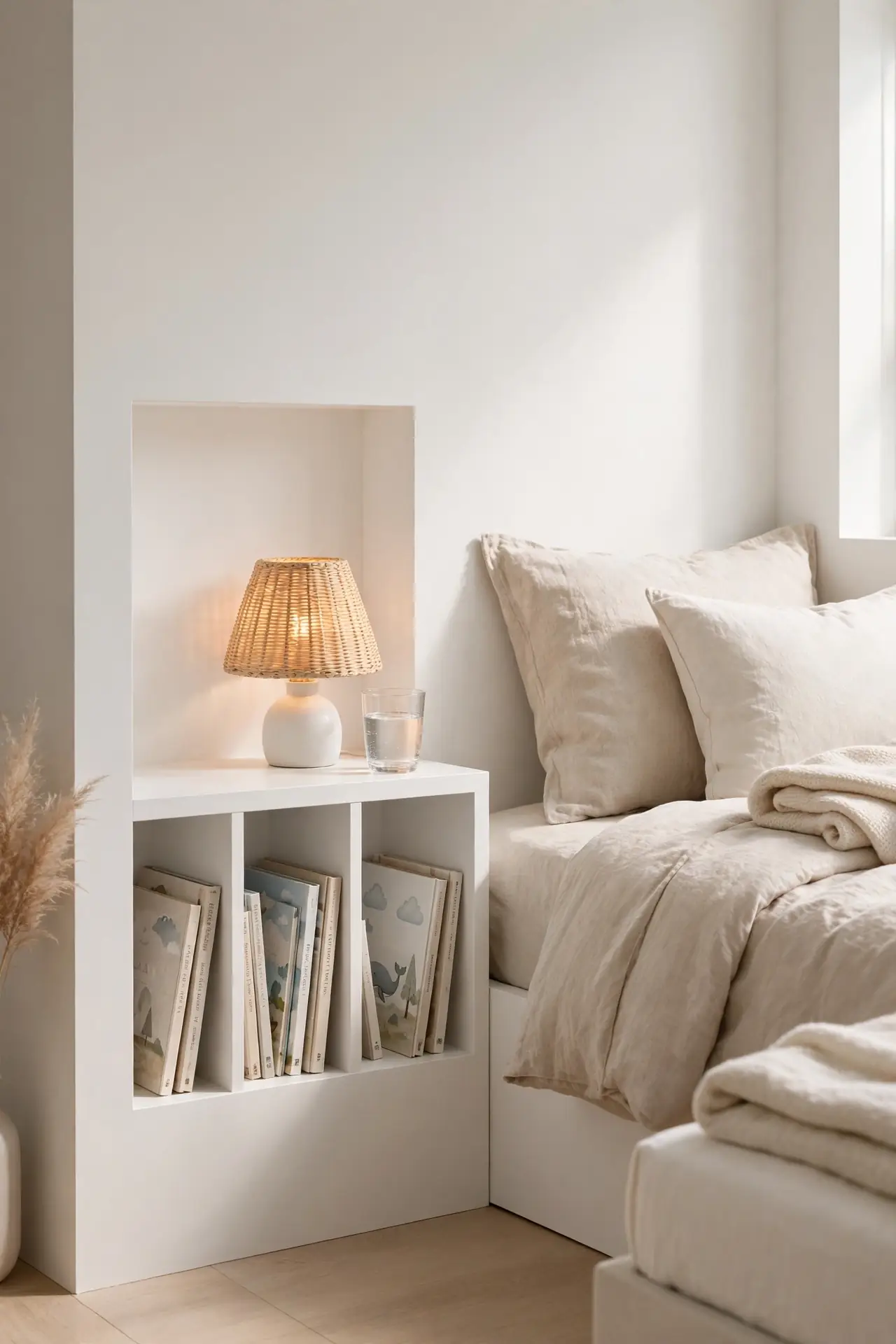
BEFORE: A wobbly stack of books teeters on the nightstand, threatening to topple every night. The lamp gets pushed aside and the water glass has no safe spot.
AFTER: A small cubby niche beside the bed holds books upright like a mini library. The lamp and water sit safely on top, and the stack stays put.
Bedtime reading thrives when books live within arm’s reach. A cubby niche keeps the current stack upright and visible, which invites one more chapter. The top surface stays clear for the lamp and water glass. Choose a unit with rounded edges for small kids’ rooms. Reading habits grow where books are easy to grab.
Foldaway Desk Storage

- Mount a fold-down wall desk at the right height for your child.
- Add shallow wall pockets above for pencils, paper, and books within reach.
- Fold the desk up after homework to free the floor for play.
- Keep a small stool tucked beside it as the dedicated chair.
Small rooms cannot spare floor for a full desk. A foldaway version gives kids a real homework surface that vanishes when playtime starts. The wall pockets keep supplies sorted without a single drawer. Folding it up becomes part of the cleanup routine. The room flips between study mode and play mode in seconds.
Hanging Closet Shelves
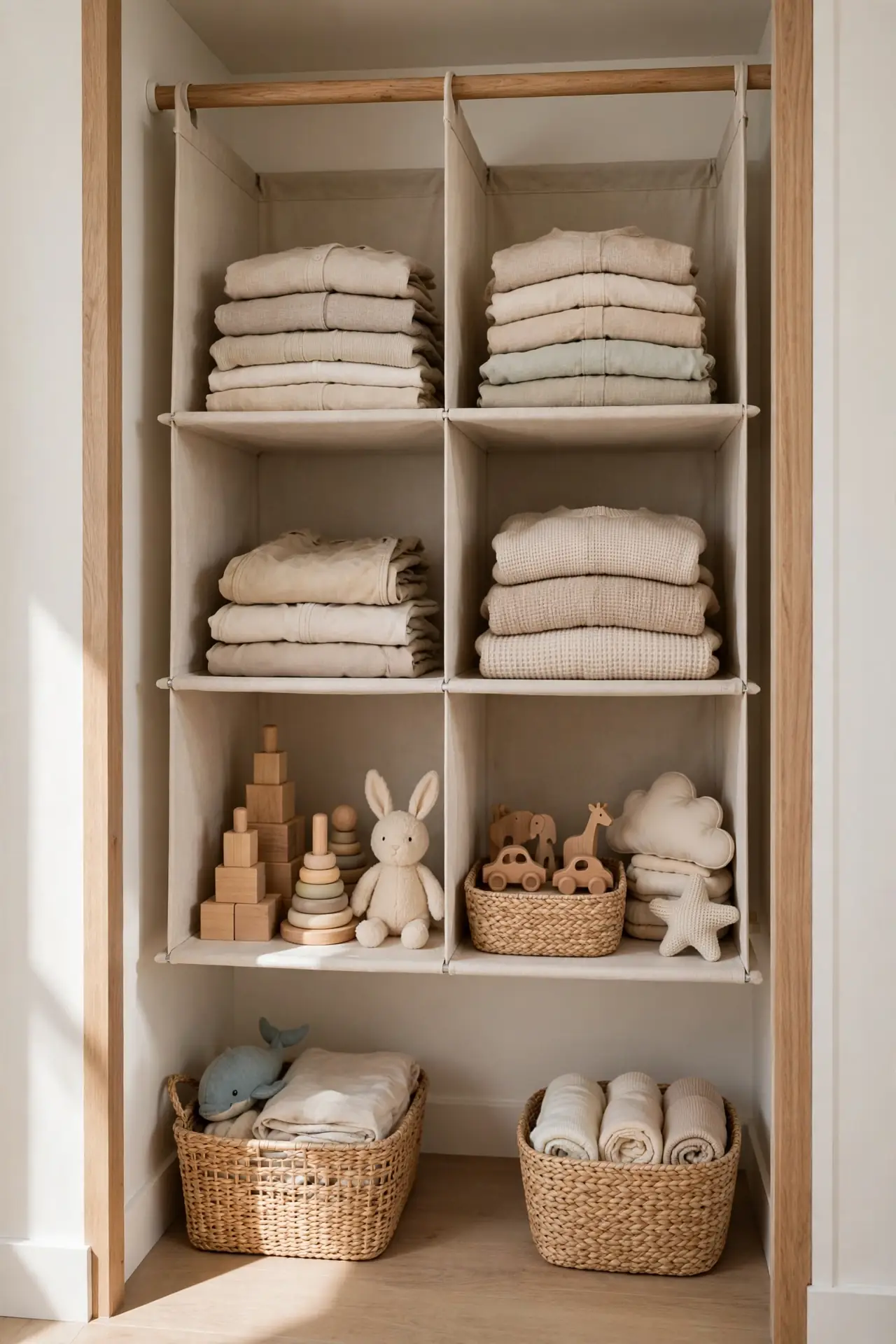
| Feature | Hanging Shelves | Fixed Shelving |
|---|---|---|
| Install | Hook over the rod in seconds, no tools | Needs brackets, screws, and patience |
| Flexibility | Move or remove anytime the needs change | Permanent, hard to adjust |
| Reach | Low tiers sit at kid height perfectly | Top shelves stay out of reach |
| Cost | Very cheap for the storage gained | Pricier with hardware and labor |
Closet rods leave a tall empty column that hanging shelves fill perfectly. Fabric tiers stack folded clothes, shoes, and toys where kids can reach them. The whole unit lifts out when seasons change. It turns a messy closet floor into organized vertical storage for very little money.
Conclusion
These 22 systems prove that brilliant kids bedroom storage ideas turn tidying into a game instead of a chore. Start with the spots that cause the most daily stress, like the toy zone or the closet floor, and build from there. Involve your child in labeling and sorting, because a system they helped create is one they will actually use. Save this list to Pinterest for your next organization weekend, then watch the room stay calmer with far less nagging. I have seen how small changes like these can completely shift the way a space feels for the whole family.

One Comment