24 Bedroom Rug Placement Ideas for a Cozy, Balanced Layout
Cold floors steal the cozy feeling from a bedroom faster than almost anything else. The right bedroom rug placement ideas fix that in one move, anchoring the bed, softening every step and giving the whole layout a finished, balanced frame.
Placement matters as much as the rug itself. A few inches too short and the bed looks stranded; a few inches too wide and nightstands crowd the edges. Fabric does similar quiet work at the window, so curtains for kitchen windows and a well placed rug together set the room’s whole mood. Ahead are twenty four layouts, from full coverage classics to small runner tricks, each with the sizing notes that make it work in real rooms.
Full Rug Under Bed
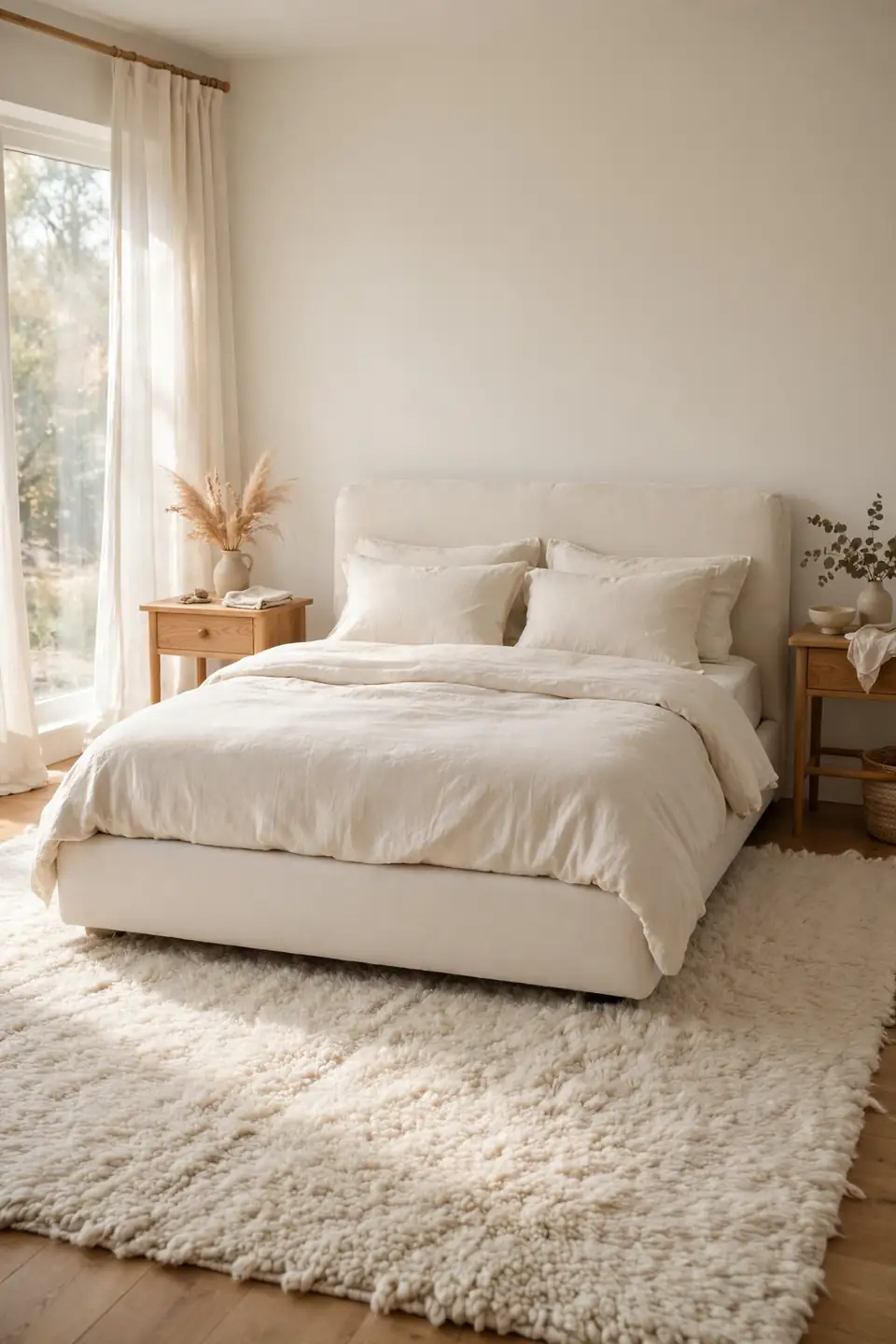
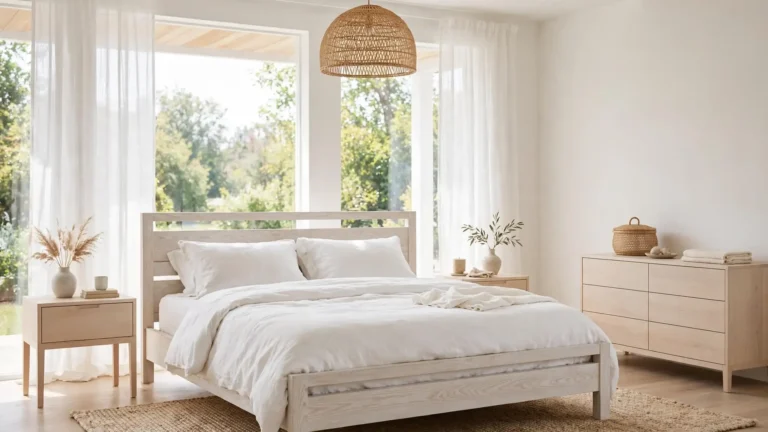
Wall to wall comfort starts with one generous rug sliding under the entire bed frame. The fabric runs from the wall behind the headboard to a good two feet past the footboard, so bare feet land on pile from every side. It is the most forgiving layout in wide rooms, since small shifts in bed position never expose a hard edge.
Choose a low, dense pile so the frame sits level and doors swing clear. I’ve noticed this layout calms echo in rooms with hardwood or tile more than any other. Anchor the corners with the nightstand legs or a thin grip pad and the whole setup stays put through sheet changes and weekend cleaning.
Two Thirds Coverage Rule
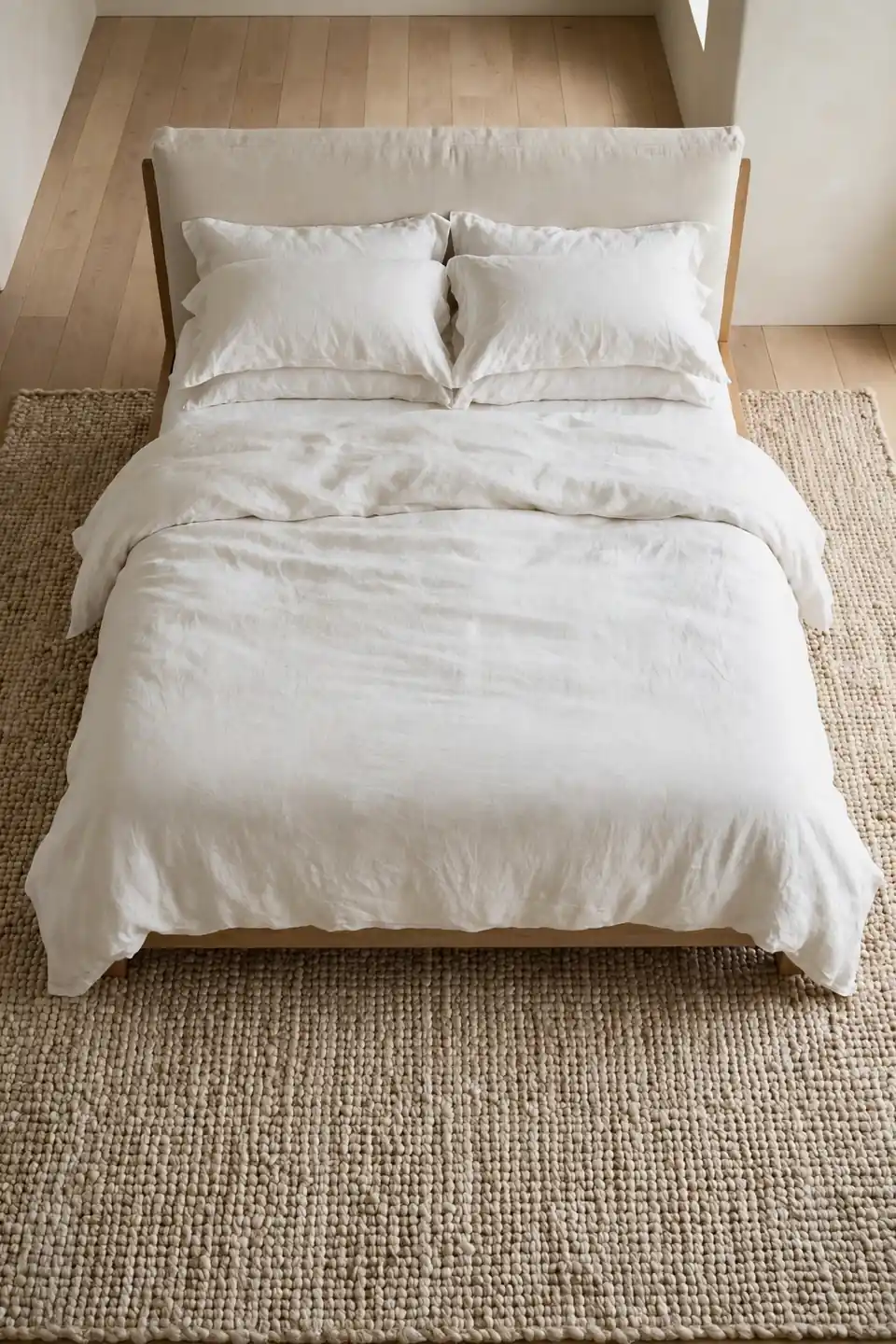
- Slide the rug under the lower two thirds of the bed, starting just below the pillows.
- Leave the headboard zone on bare floor so the top third reads calm and uncluttered.
- Let the rug extend eighteen to twenty four inches beyond each side of the mattress.
- Finish with at least eighteen inches of pile past the footboard for a balanced tail.
- Skip the rug pad only on wall to wall carpet; hard floors need the grip layer.
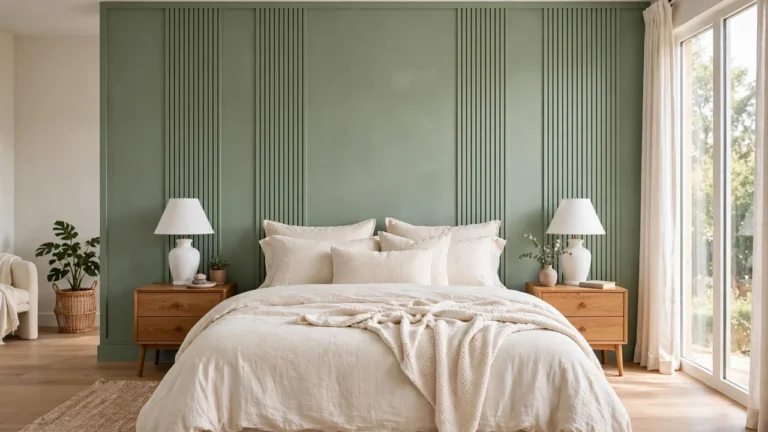
This is the layout stylists reach for most, because it frames the sleeping zone without swallowing the room. It suits queen and king beds in average rooms where a full size rug would crowd the dresser. Measure from the pillow line, not the headboard, and the proportions land right the first time.
Twin Runners Both Sides
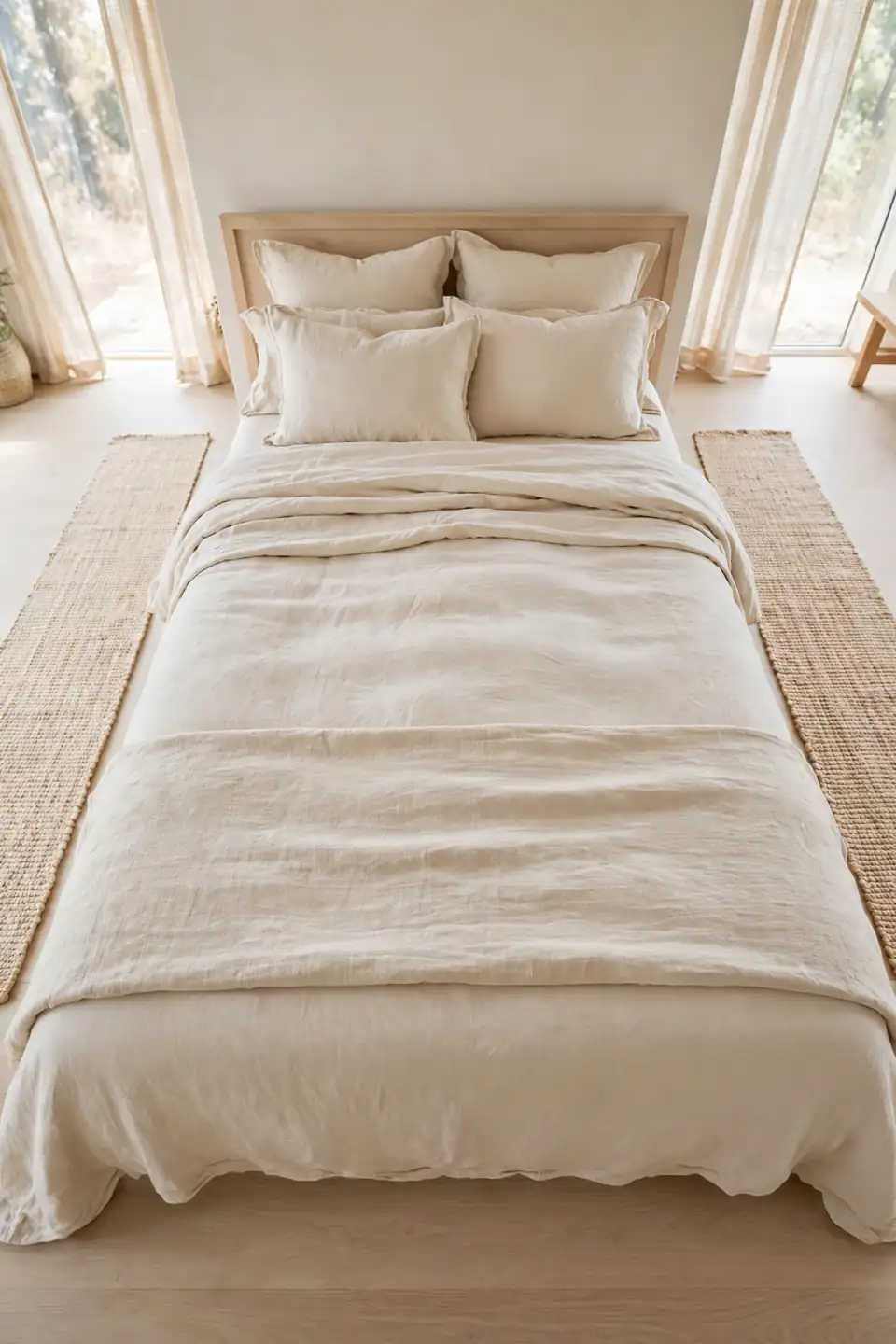
Quick Tip: Match runner length to the bed, not the room. A runner that stops beside the pillows gives morning feet a warm landing from hip to heel, while one that runs the full wall length turns the side strip into a hallway and shrinks the sleep zone visually.
Twin runners are the budget friendly answer when a full rug will not fit the plan or the doorway. They frame the bed like a picture mat, leave easy sweeping lanes at the foot, and let renters skip furniture lifting entirely. Washable weaves matter here for the same reason they anchor laundry room decor ideas: side strips catch the most dust, sock fluff and pet traffic of any spot in the room.
Bare Floor To Plush
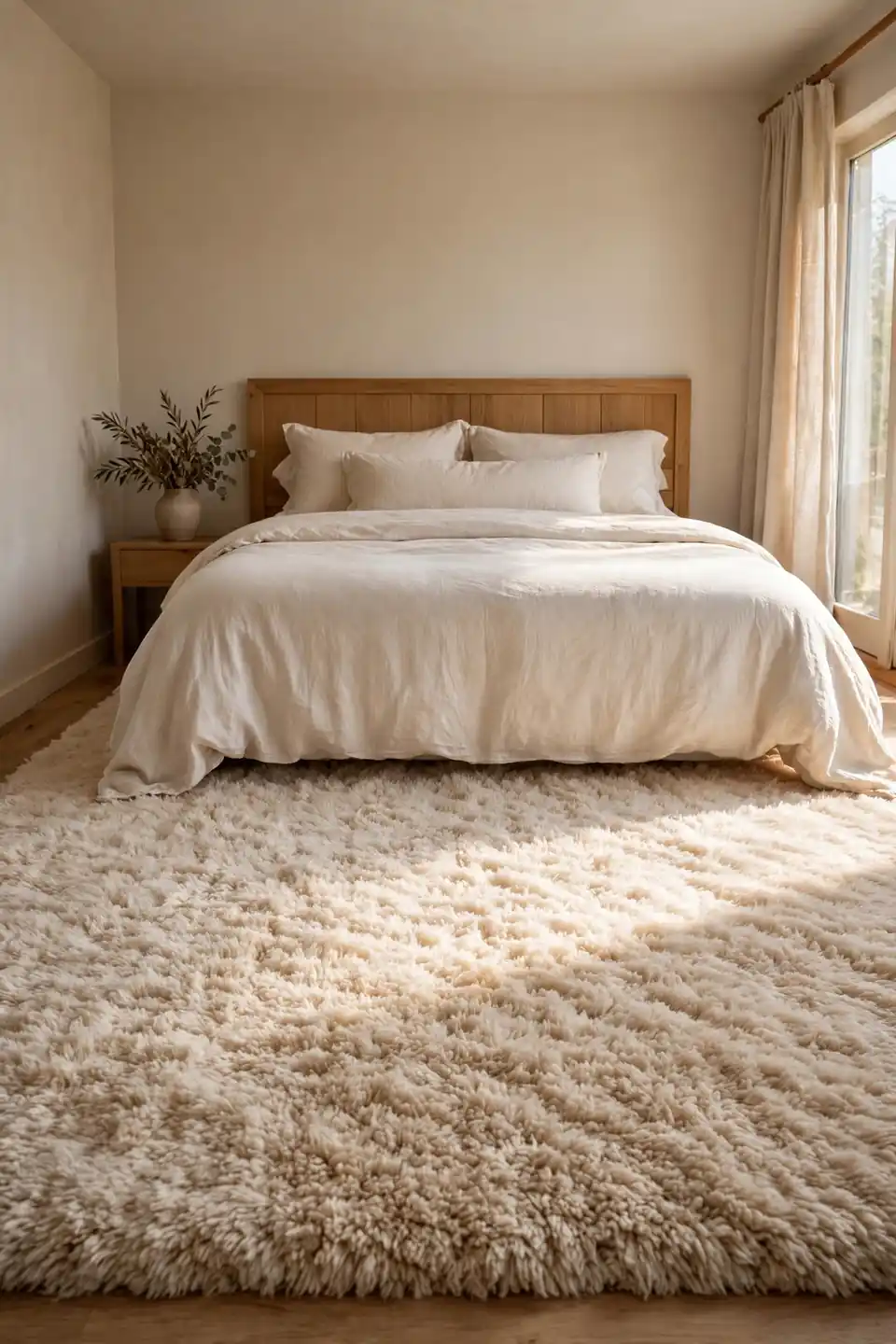
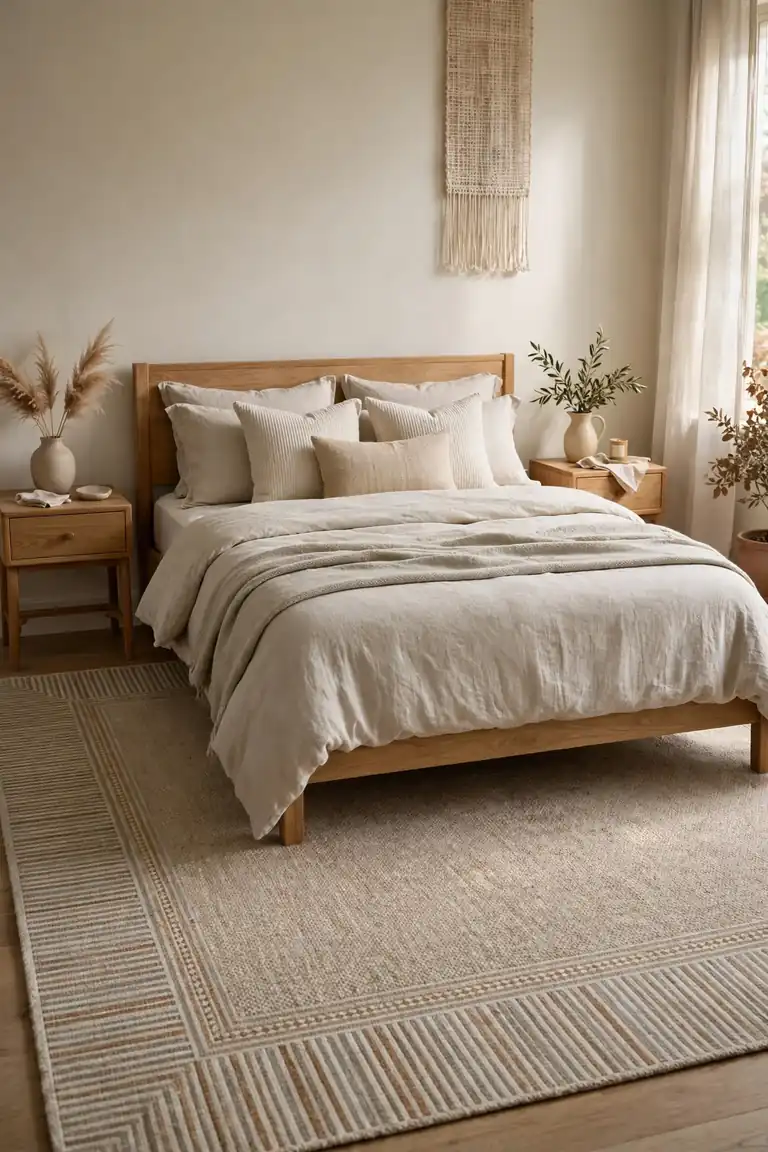
BEFORE: Hard boards met every morning step, and the bed frame looked like it floated on a cold stage. Sound bounced, the room felt wider than it was cozy, and winter drafts crept straight across the floor to the mattress.
AFTER: One oversized rug now runs wall side to wall side under the bed, swallowing the echo and giving every exit from the mattress a soft first step. The border of pile ties the nightstands, bench and bed into one calm island.
Big rooms forgive big rugs, and this is where going larger than the chart suggests often wins. Leave a slim frame of floor showing at the walls so the rug reads as a fitted layer rather than a loose mat. A grip pad underneath keeps corners honest.
Measure Before You Buy

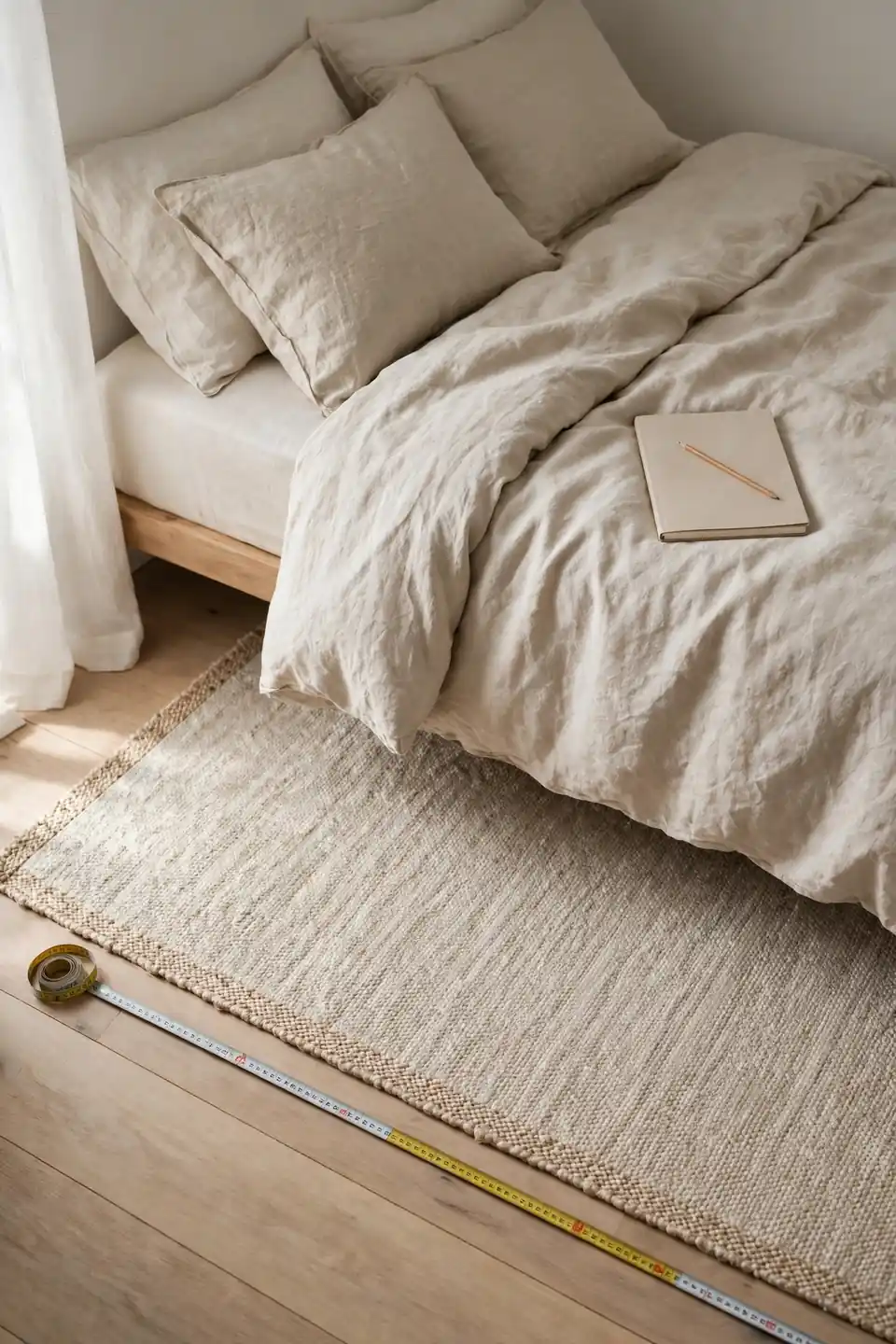
- Tape the rug outline on the floor with painter’s tape before ordering anything.
- Live with the tape for a day, walking the usual paths in socks and slippers.
- Check door swing and drawer clearance against the taped border twice.
- Add two inches to every side the tape test felt tight on.
- Order the size that matches the tape, not the size on sale that week.
Tape never lies, and it costs nothing. In my experience, most placement regrets trace back to guessing from the doorway instead of testing at floor level. Photograph the taped outline from the door and the bed; if the frame looks balanced in both shots, the real rug will behave the same.
Rug Size Showdown
| Feature | 5×8 Rug | 8×10 Rug |
|---|---|---|
| Side Border | About 12 inches past the mattress | Around 24 inches on each side |
| Foot Extension | Ends near the footboard edge | Extends 18 to 24 inches past it |
| Nightstand Legs | Front legs only, or none | All four legs sit on the rug |
| Room Feel | Cozy patch under the bed | Whole sleep zone on one layer |
| Best For | Small rooms, twin and full beds | Queen and king beds, wide rooms |
Charts help, but the tape test from the earlier section settles arguments faster. When the budget forces a choice, spend on the bigger size in the bedroom you use daily and let the guest room run smaller. Feet notice border width every single morning, long before eyes do.
Layered Rug Styling
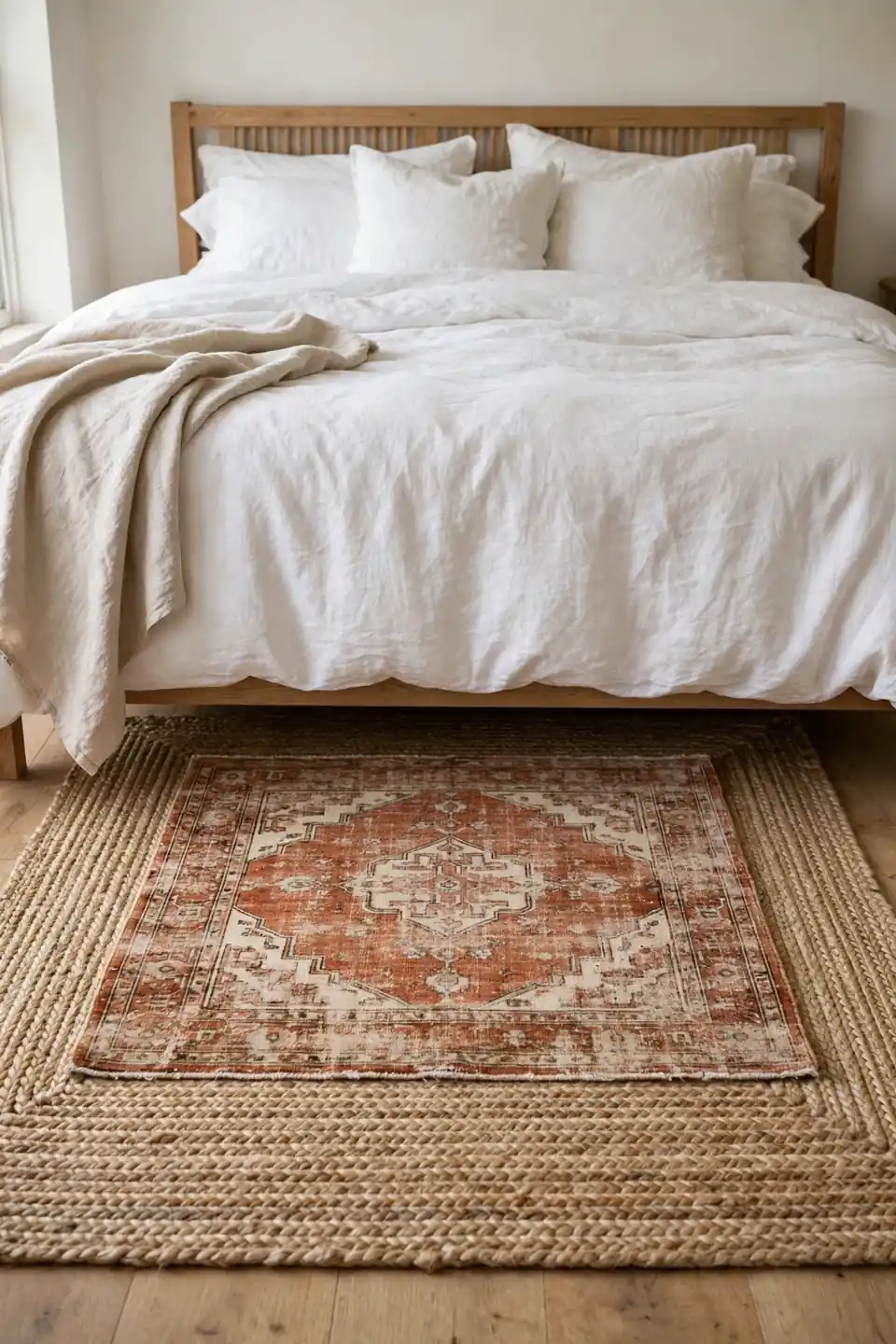
Do:
- Start with a large flat jute base covering the full bed zone.
- Center a smaller patterned rug over the base at the foot half.
- Keep the top layer thin so the bed frame sits level.
- Repeat one top rug color in the bedding.
Don’t:
- Stack two thick piles; every step will wobble.
- Let the top layer drift off center; it reads as a mistake.
- Mix three bold patterns in one small stack.
Layering solves the classic thrift store problem: the rug you love is one size too small. The base gives the footprint, the top layer gives the personality, and the bed stays the hero. I’ve seen this work well where one perfect rug sat out of budget.
Placement Quick Facts
Cost: Extra rug pad only, the layout itself is free
Time: One afternoon to measure, place and settle
Skill Level: Beginner, no tools beyond a tape measure
Best For: Renters and anyone testing a new layout
Facts on paper turn into comfort in practice once the rug lands in the right spot. Start with the two thirds layout if the room is new to you, live with it for a week, then nudge the rug forward or back in two inch steps until the morning walk feels automatic. Small shifts change how the bed lines up with windows, doors and light, so give each version a full day before judging it. The layout that survives a busy week is the one worth keeping.
Rug At Bed Foot
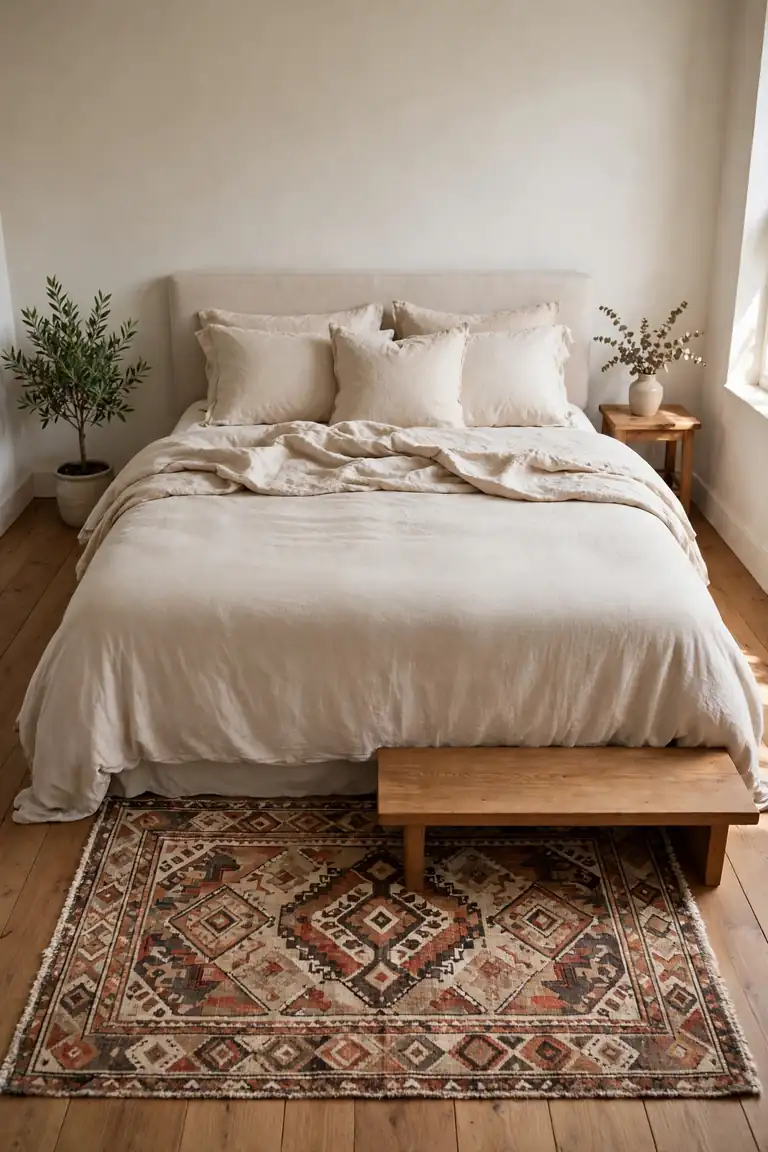
A rug that lives only at the foot of the bed works like a welcome mat for the whole room. It catches the eye from the doorway, warms the spot where shoes come off, and leaves the side floors free for easy cleaning. Benches and blanket ladders sit happily on its top edge.
Size the foot rug to run wider than the mattress by a few inches on both sides, or it looks lost. A low bench placed half on and half off the rug locks the composition together. This is the lowest commitment version of bedroom rug placement ideas, since one small rug changes the room without moving the bed at all.
Round Rug Accent Spot
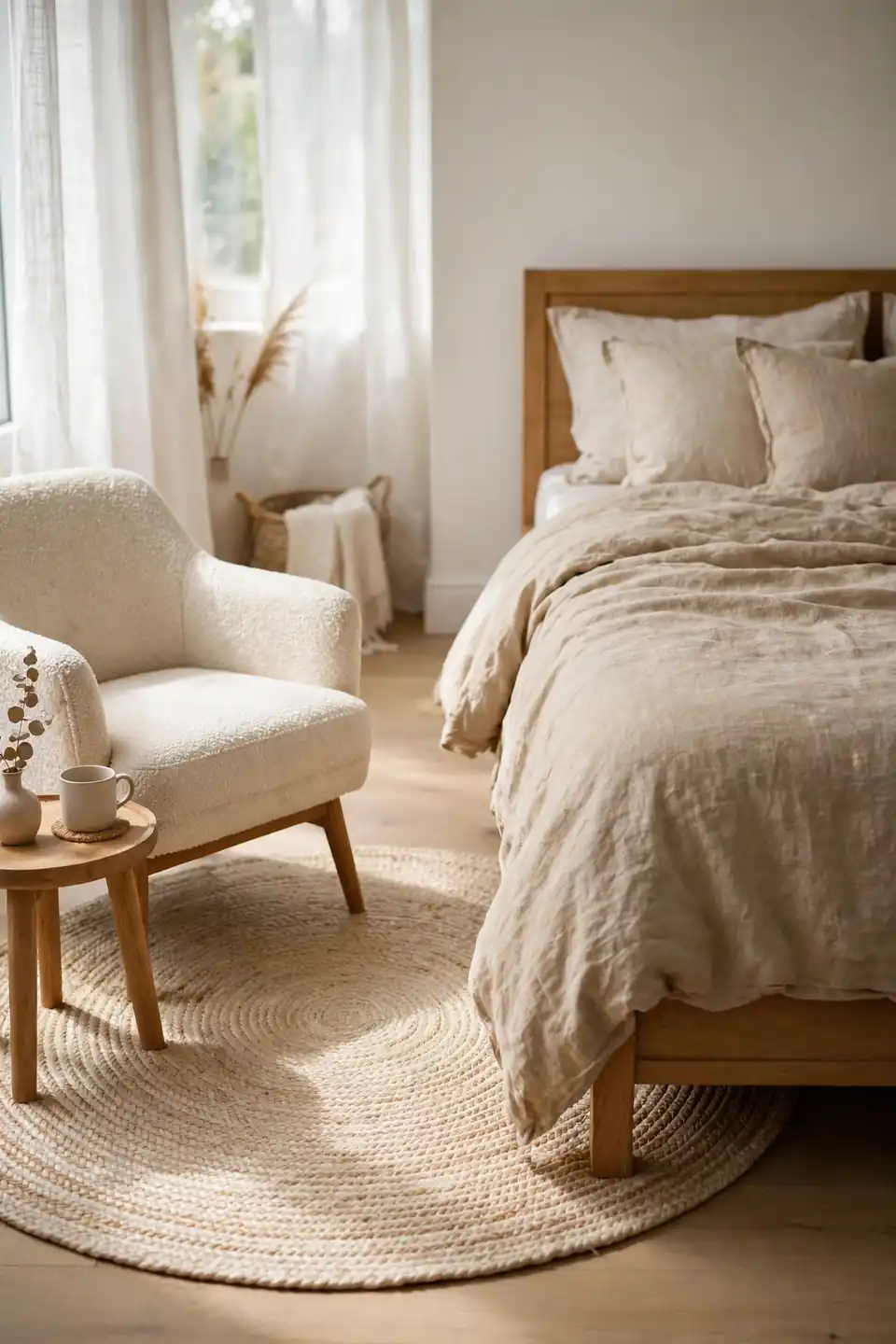
- Set a round rug beside the bed where a reading chair or vanity lives.
- Let one third of the circle slide under the bed edge to anchor it.
- Echo the circle in a round mirror, lamp shade or wall clock nearby.
- Keep the diameter near four feet so the spot reads as a zone, not a coaster.
- Choose a flat weave that chair legs can glide across without catching.
Round shapes soften rooms full of straight lines, and bedrooms are mostly rectangles stacked on rectangles. The circle breaks the grid in one move, marking a small personal territory inside the larger layout. It pairs especially well beside a window seat or a corner armchair where morning light lands.
Vintage Rug Character
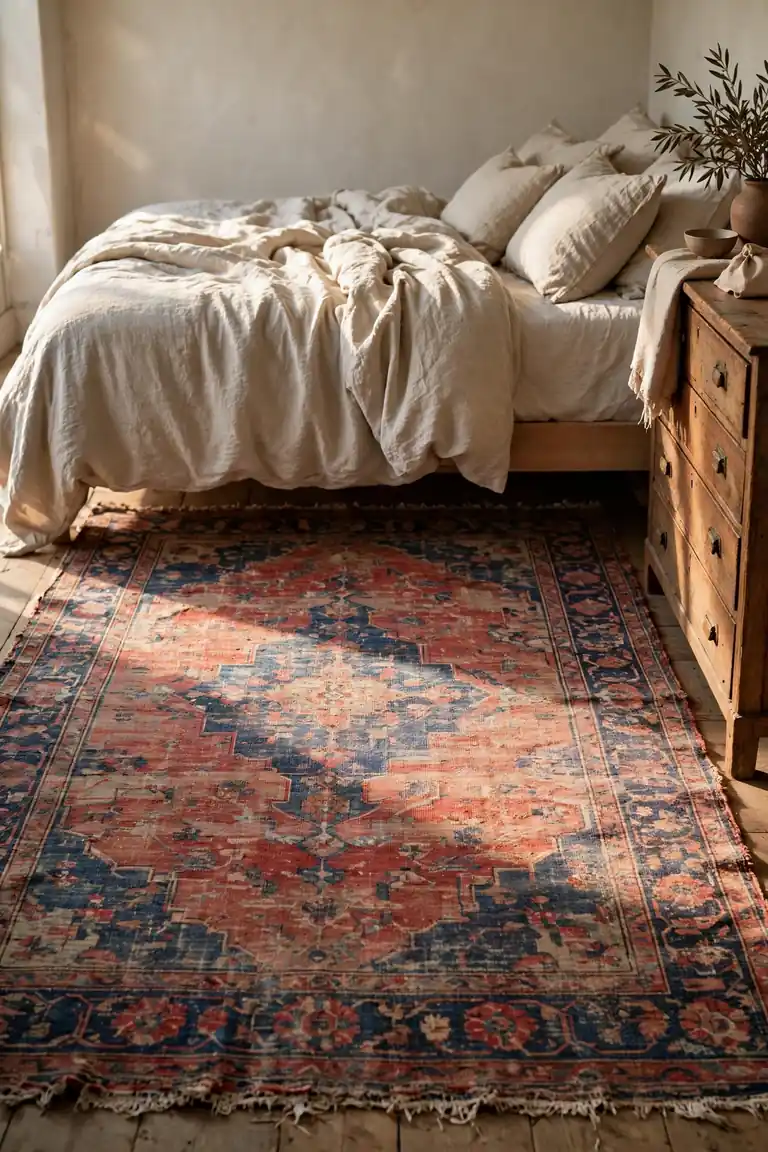
Quick Tip: Faded vintage rugs forgive imperfect placement, because their worn patterns hide edges and gaps. Let a corner slide under the dresser or a side run long past the bed; the aged look turns sizing accidents into charm instead of errors.
True vintage pieces bring color stories no new rug can copy: sun faded reds, softened indigo, wool that glows in low light. Center the pattern’s medallion with the bed, even if the rug’s edges land unevenly, and the eye accepts the whole arrangement. Add a modern pad beneath, since old wool on hard floors can creep with daily traffic. The result feels collected over years, not bought in one afternoon.
Cramped Room Rug Fix
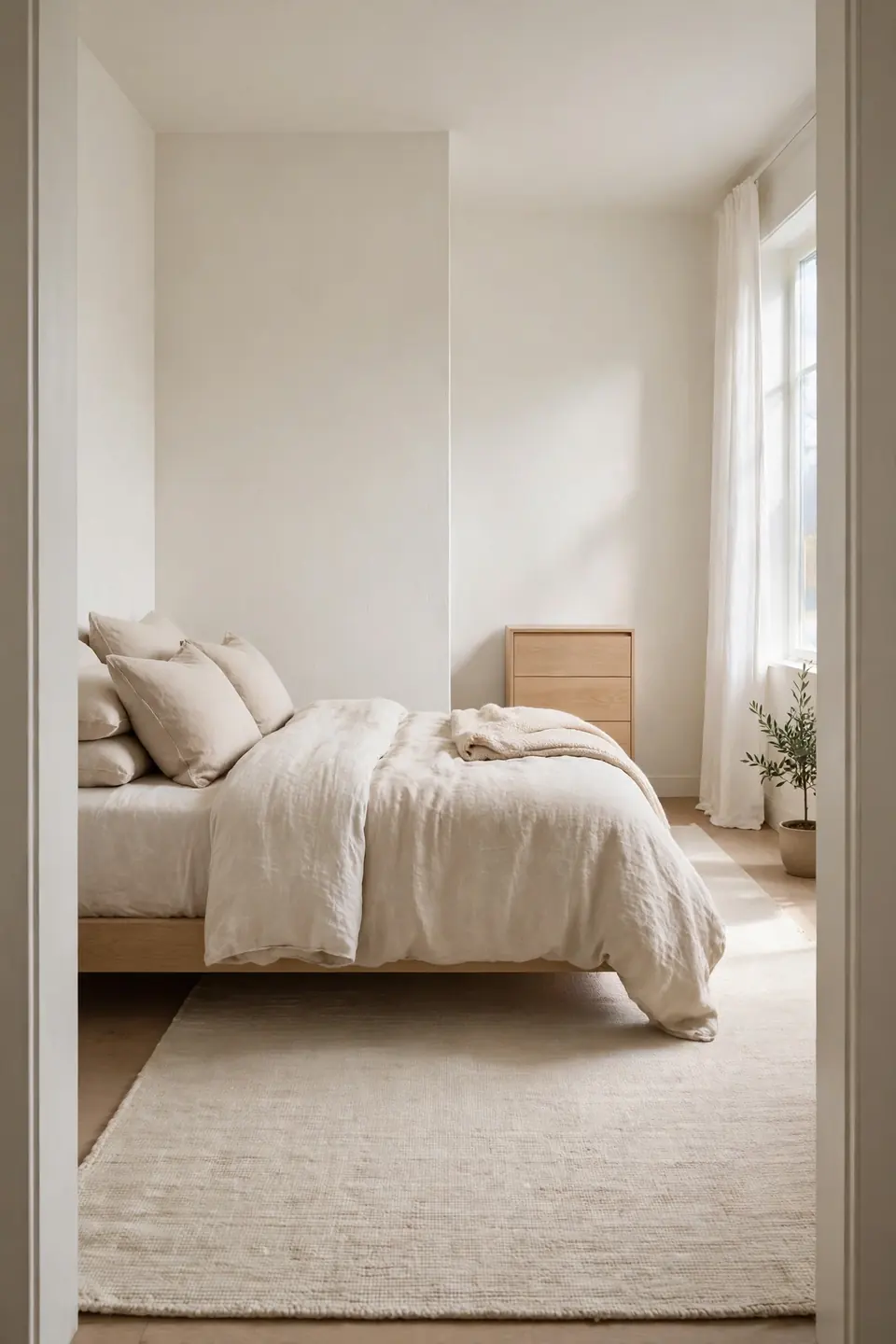
BEFORE: The small room felt chopped into islands: bed here, dresser there, cold gaps of floor between them. Every step crossed a border, and the space read smaller than its true measurements.
AFTER: One light toned rug now runs under the bed and reaches toward the dresser, stitching the islands into a single calm surface. The eye travels without stopping, and the room reads a full size larger.
Small rooms break the standard charts, since an 8×10 can swallow every visible board. Go one size down but keep the two thirds coverage, and choose pale, low contrast patterns that blur edges. Mirrors help, yet floor continuity does the heavier lifting here, because feet judge room size before eyes get a vote.
Center The Rug First
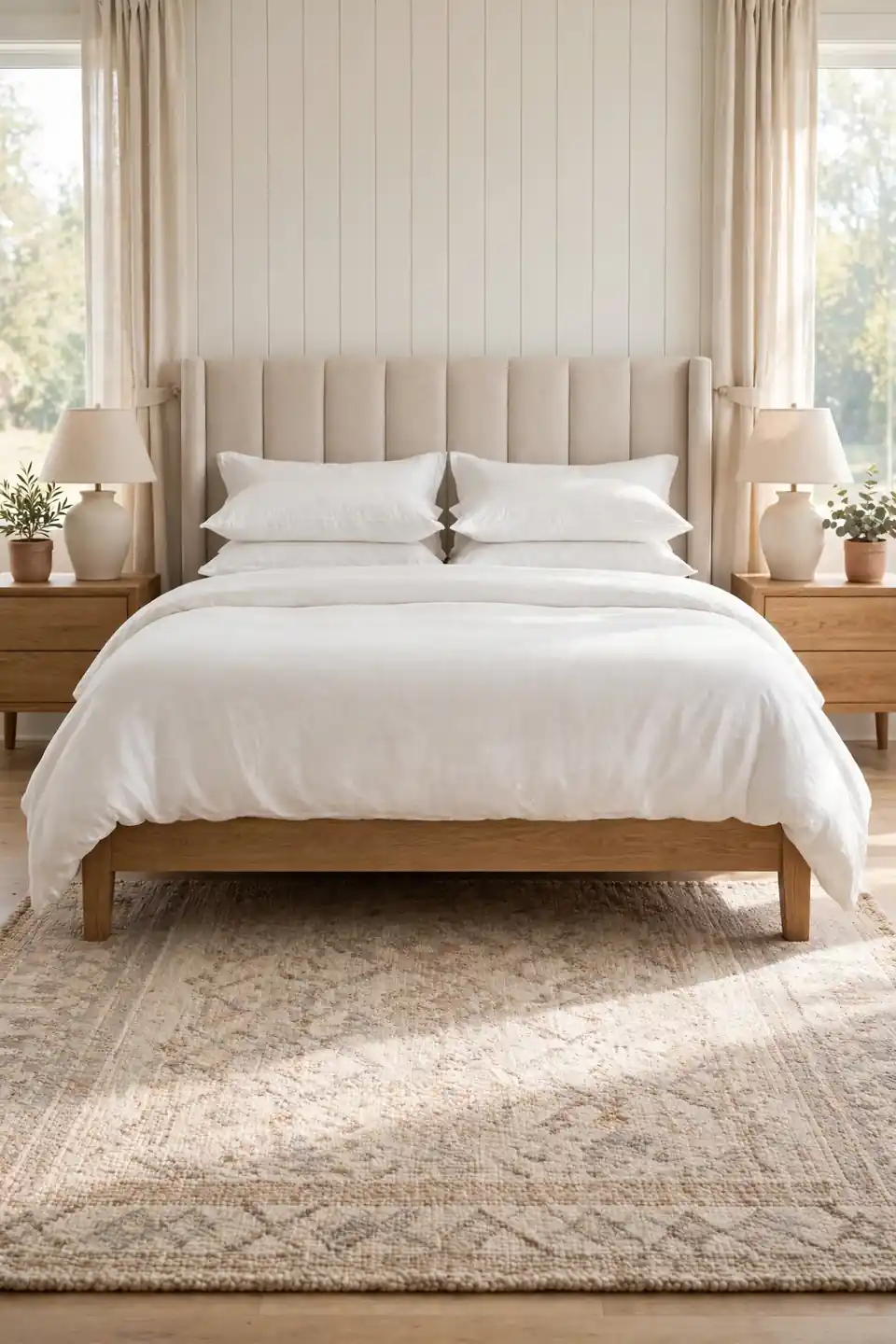
- Fold the rug in half lengthwise and mark the center crease with tape.
- Align that crease with the center line of the bed frame.
- Unfold one side at a time, walking the fabric flat as you go.
- Shift the whole rug in one inch nudges until both borders match.
- Weigh the corners down with the nightstands once the lines look even.
Off center rugs nag at the eye in a way few people can name but everyone feels. The crease method beats eyeballing from the doorway, because the bed itself becomes the measuring tool. Check the foot border against the footboard last; a straight tail line forgives tiny side differences.
Runner Or Area Rug

| Feature | Long Runner | Area Rug |
|---|---|---|
| Coverage | Side strips and foot path only | Whole bed zone in one piece |
| Cost | Lower, less material overall | Higher, scales with every foot |
| Cleaning | Light enough to shake outside | Needs two people to move |
| Layout Freedom | Mix lengths on each side | One fixed footprint to plan around |
| Best For | Narrow rooms, rental floors | Primary bedrooms, long stays |
Neither wins everywhere. Runners flex around odd door swings and radiators, while area rugs give that single calm field the eye loves. Some rooms run both: a full area rug below, one soft runner layered along the busiest side where feet land hardest each morning.
Jute Base Layer Look
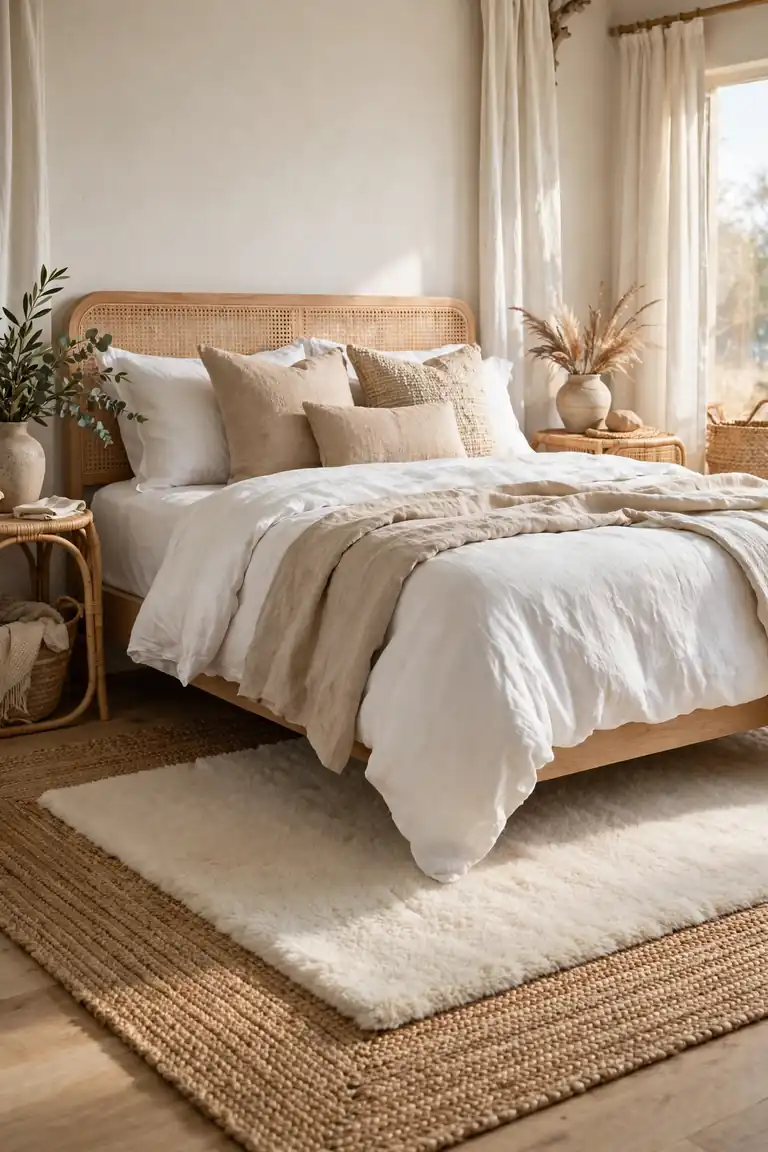
Do:
- Pick a tight, flat jute weave that furniture legs can rest on.
- Let jute borders peek out evenly on all sides of the top rug.
- Pair jute with soft wool or cotton above for contrast underfoot.
- Vacuum the exposed border weekly; jute sheds dust into its weave.
Don’t:
- Use chunky looped jute under a bed; legs wobble and dent it.
- Place jute where morning sun pools daily; fibers fade unevenly.
- Skip the pad between layers; the top rug will wander.
Jute brings the beach house calm that bedrooms borrow so well, and its neutral grid flatters patterned top rugs. The fibers feel firm, so keep the soft layer generous where bare feet land. Over a season, the base quietly protects the floor finish beneath everything.
Sizing Facts That Matter
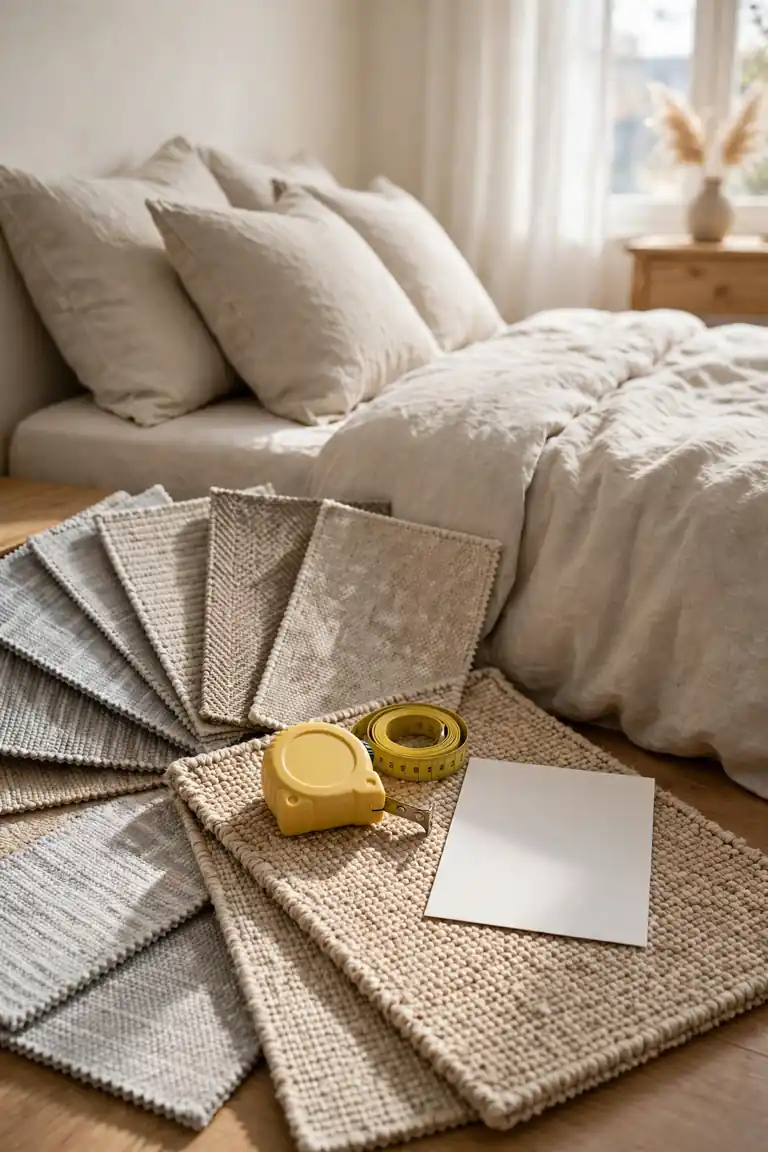
Cost: Mid range, the size sets the price
Time: One hour to lay, settle and style
Skill Level: Beginner, two people for large sizes
Best For: Queen beds in medium sized rooms
Numbers turn guesswork into a plan. For a queen bed, an 8×10 rug placed with the two thirds rule leaves roughly two feet of soft border on each side, which is the landing strip most people find comfortable. A 5×8 can work in a pinch when it slides further under the bed and the foot extension shrinks, though the sides feel tight. Write the room and bed measurements on one card, keep it in your phone, and every future rug decision takes minutes instead of weekends.
Nightstand Coverage Choices

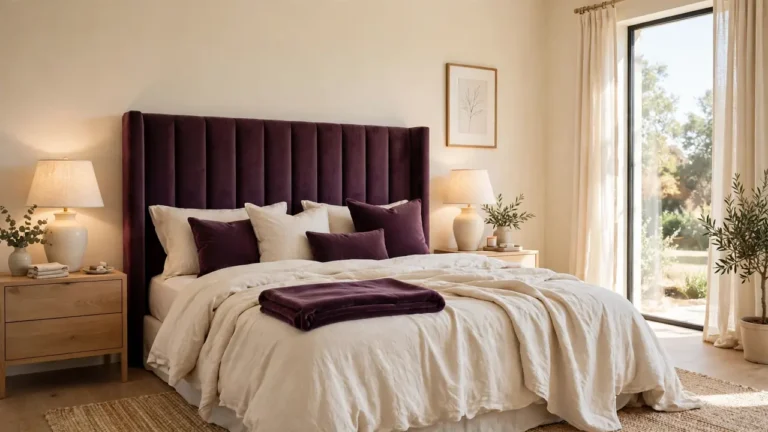
Whether nightstands stand on the rug changes the whole geometry. Legs on the pile pull the tables into the bed’s island, making the sleep zone read as one designed unit. Legs off the rug keep the tables floating on floor, which suits rugs that start below the pillow line.
Mixed setups, front legs on and back legs off, split the difference and level tables on uneven floors. That’s why many experts recommend picking one rule per room and holding it on both sides. Symmetry at the head of the bed is what the eye checks first. A thin pad under the rug edge levels the rest.
Extend Beyond The Bed

- Push the rug six inches wider than the bed on both sides at minimum.
- Aim for a two foot border where the room allows it.
- Extend the foot end further than the sides for a runway effect.
- Keep walkways on the rug, not half on and half off.
- Match the extension on both sides, even near a wall.
Borders are the difference between a rug that decorates and a rug that organizes. Generous extensions give the bed visual breathing room, stop the layout from feeling pinched, and catch the dust that would otherwise gather along the baseboards. When one side faces a wall, steal the extra inches from that hidden side.
Small Room, Bigger Rug
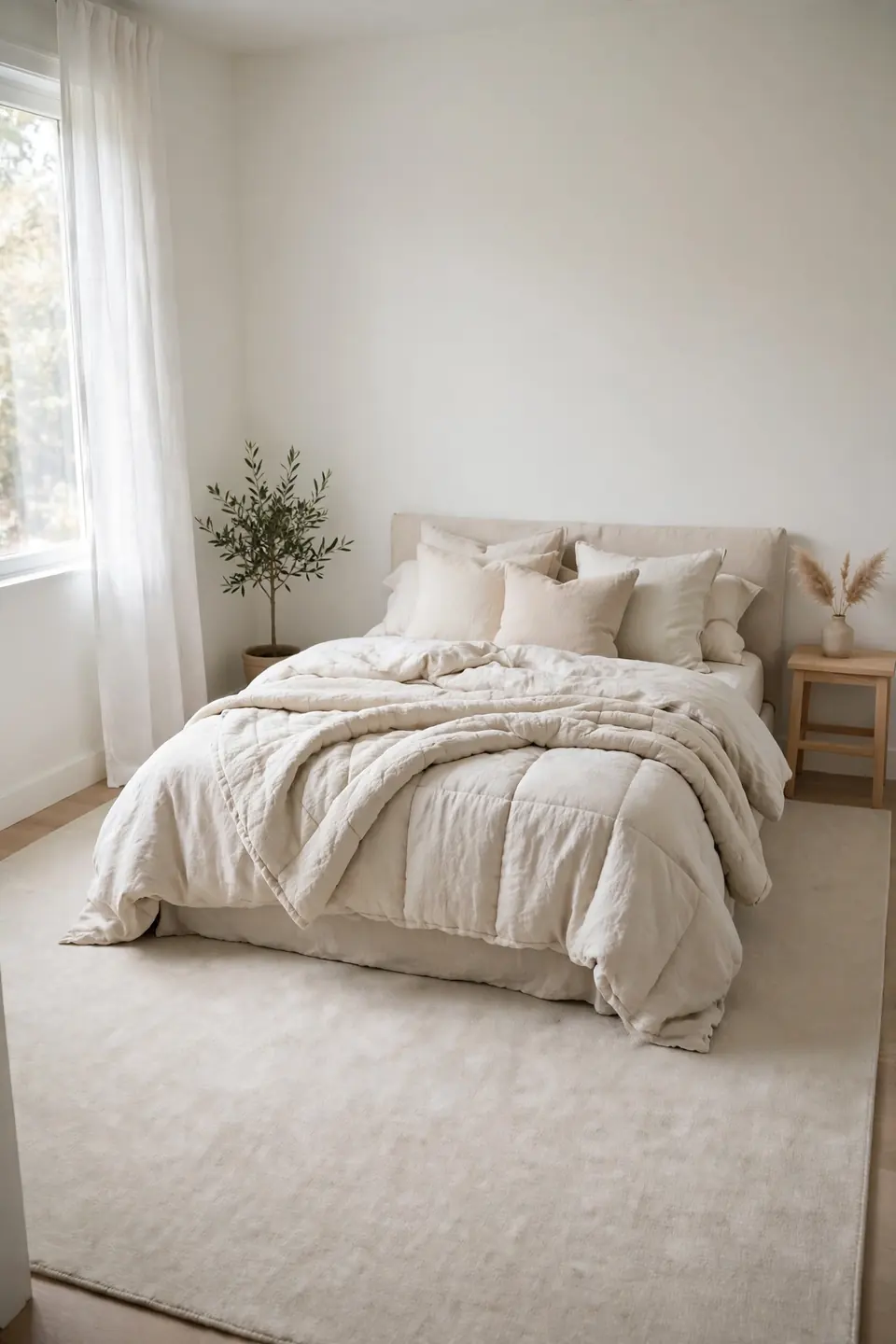
Quick Tip: In a small bedroom, size up instead of down. A rug that nearly touches the walls tricks the eye into reading the floor as one wide surface, while a small rug in the middle confirms every tight measurement at a glance. Tape the outline first if the idea feels backwards.
The trick works because borders of bare floor act like a frame, and frames announce size. Keep the pattern quiet and the pile low so the larger rug does not shout. Door clearance decides the final size, so tape the swing path before ordering, and let the rug stop just short of the door’s arc.
Dated Floor, Fresh Layer
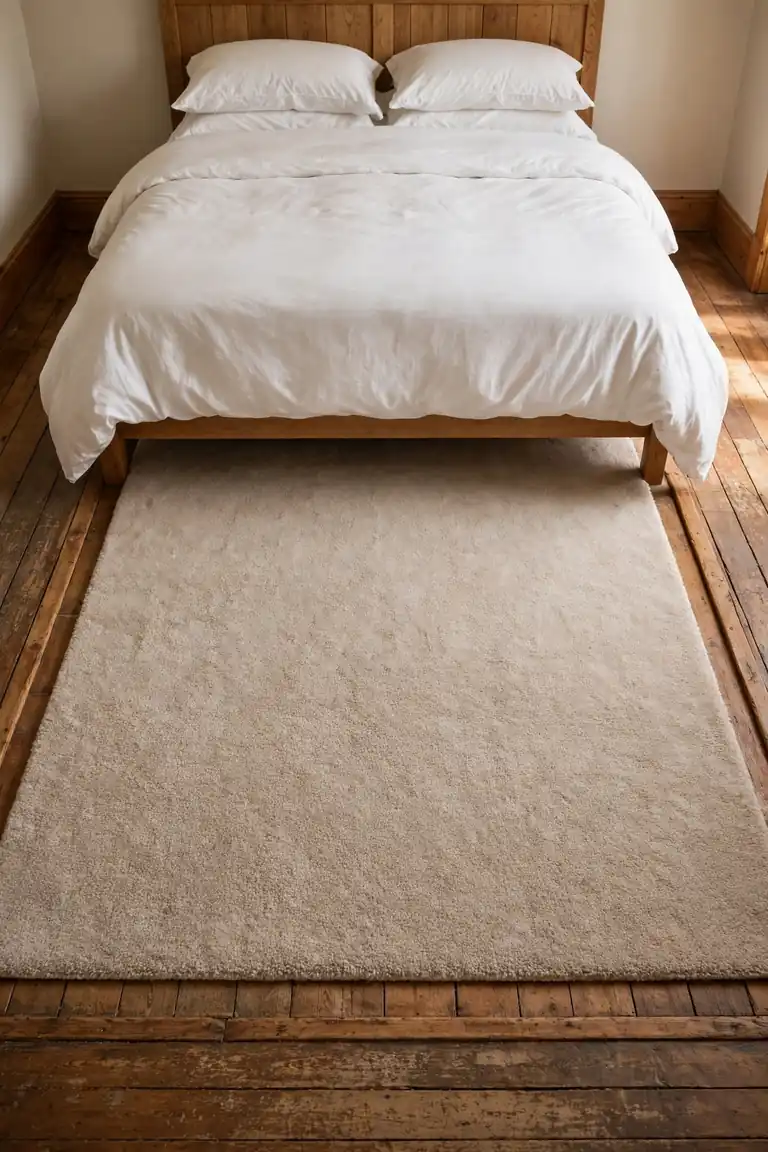
BEFORE: Scratched boards and a faded finish dated the whole bedroom, no matter how fresh the bedding looked. The cold surface set the mood before any decor got a chance to speak.
AFTER: A wide, soft rug now covers the tired center of the room, leaving only the better boards as a border. Warmth replaced wear, and the bed finally sits on a surface that matches its comfort.
Covering the middle is smarter than hiding everything, because floor at the edges still gives the room its structure. Match the rug tone to the best part of the wood, not the worst, and the border reads as chosen rather than leftover. Renters especially gain here, since the fix leaves with them.
Anchor With Furniture Weight
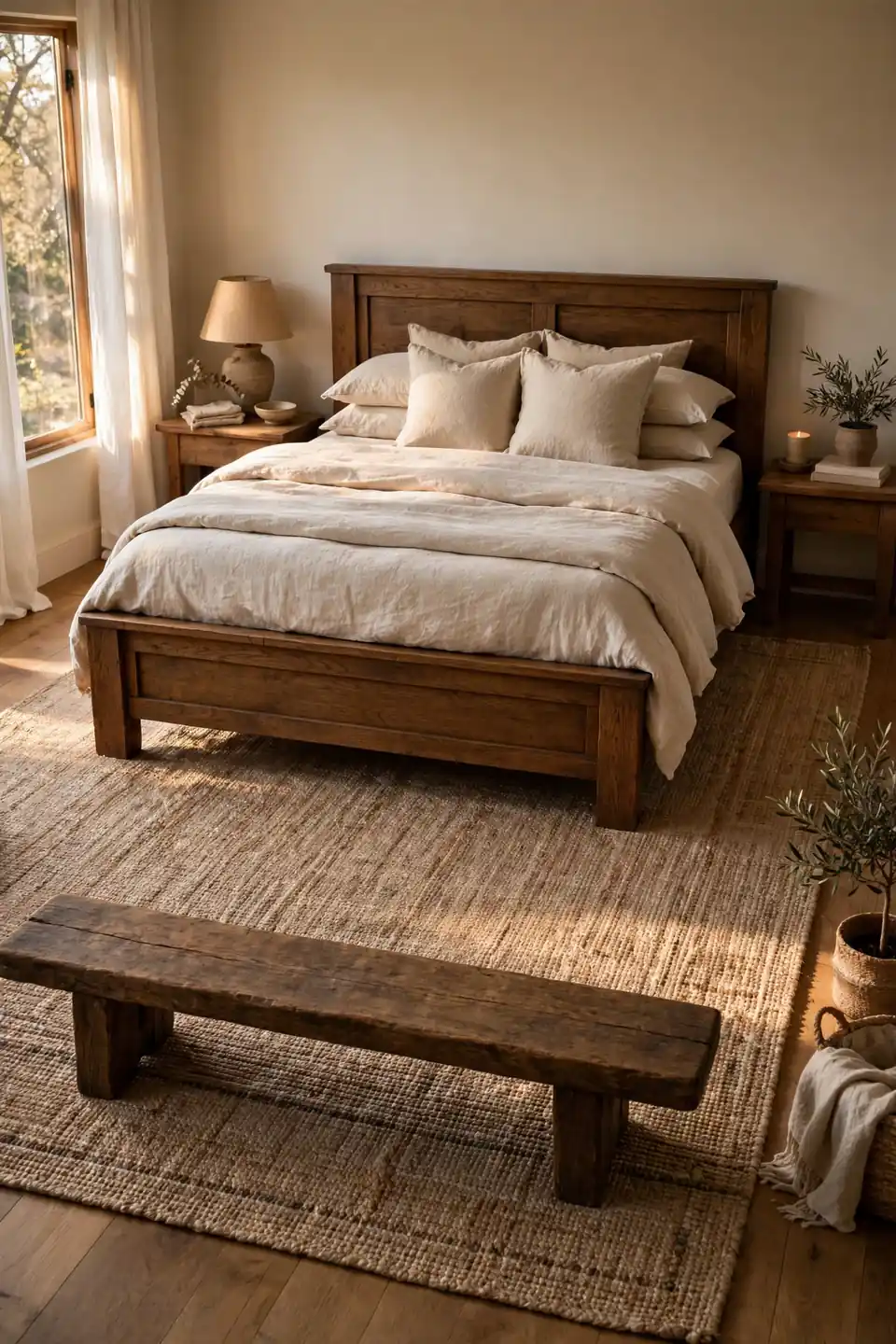
- Place the rug, then set the bed frame squarely onto its top zone.
- Slide nightstands onto the rug edges so their weight pins the corners.
- Rest a bench or trunk across the foot end of the rug.
- Check that no corner sits free where toes can catch and fold it.
- Walk the borders daily for a week before adding a pad.
Weight is the oldest rug anchor there is, and it still beats most gadgets. Heavy pieces at three points, head, sides and foot, keep the field flat through vacuuming and bed making. If a corner still lifts, that corner alone earns a strip of rug tape.
Wool Or Synthetic Fibers
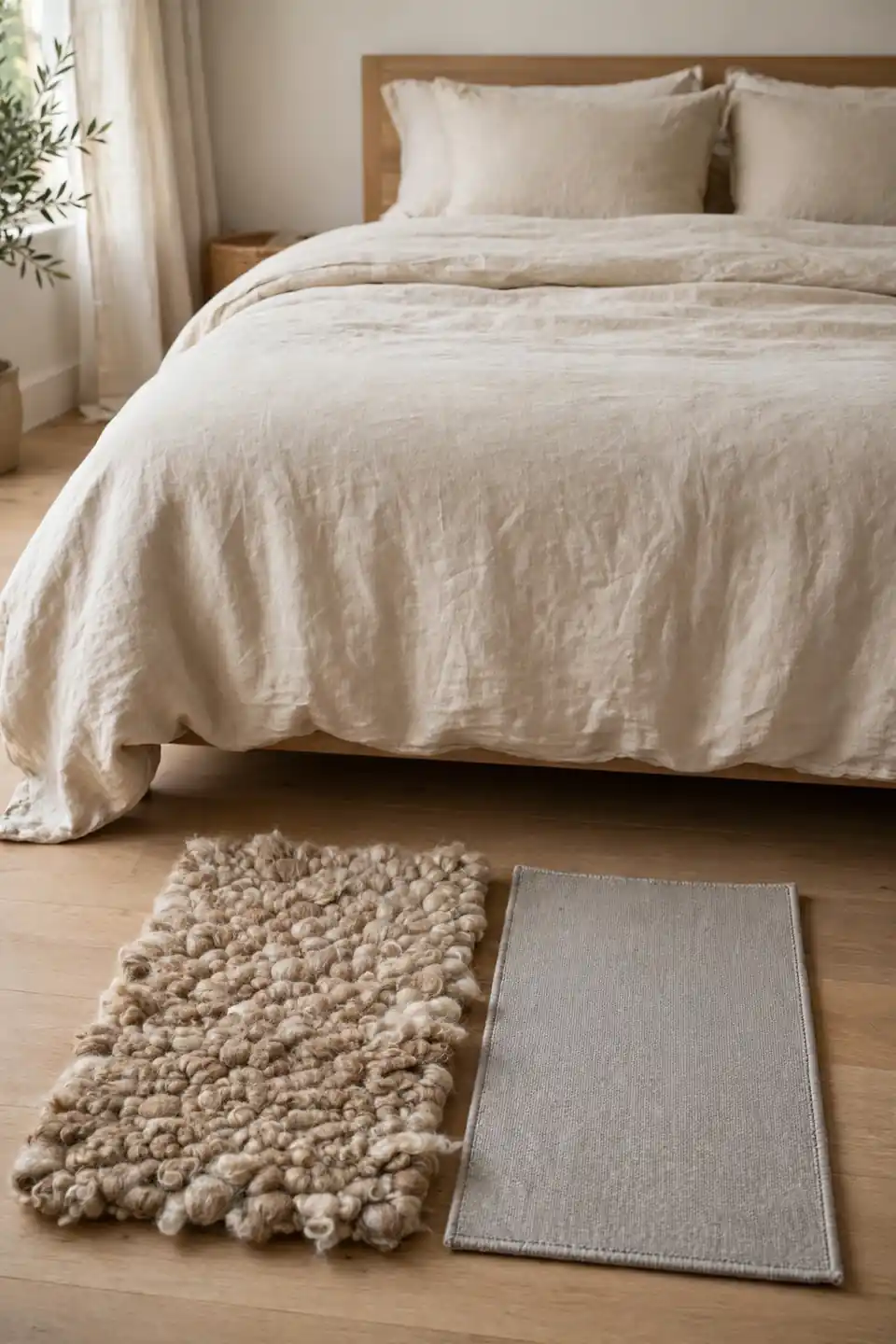
| Feature | Wool Rug | Synthetic Rug |
|---|---|---|
| Warmth | Natural insulation, warm all winter | Cooler feel, depends on pile height |
| Care | Sheds early, then lasts for years | Stain resistant, easy spot cleaning |
| Cost | Higher upfront, cheaper per year | Lower upfront, replaced more often |
| Feel Underfoot | Springy, rich, quietly luxurious | Smooth, even, slightly flatter |
| Best For | Primary bedrooms, long term homes | Guest rooms, rentals, busy homes |
Fiber decides how a placement feels five winters from now, not just on delivery day. Wool forgives the two thirds layout beautifully, since its body hides the line where pile meets floor. Synthetics win where spills, pets or rental rules make caution the smarter luxury.
Pattern Placement Balance
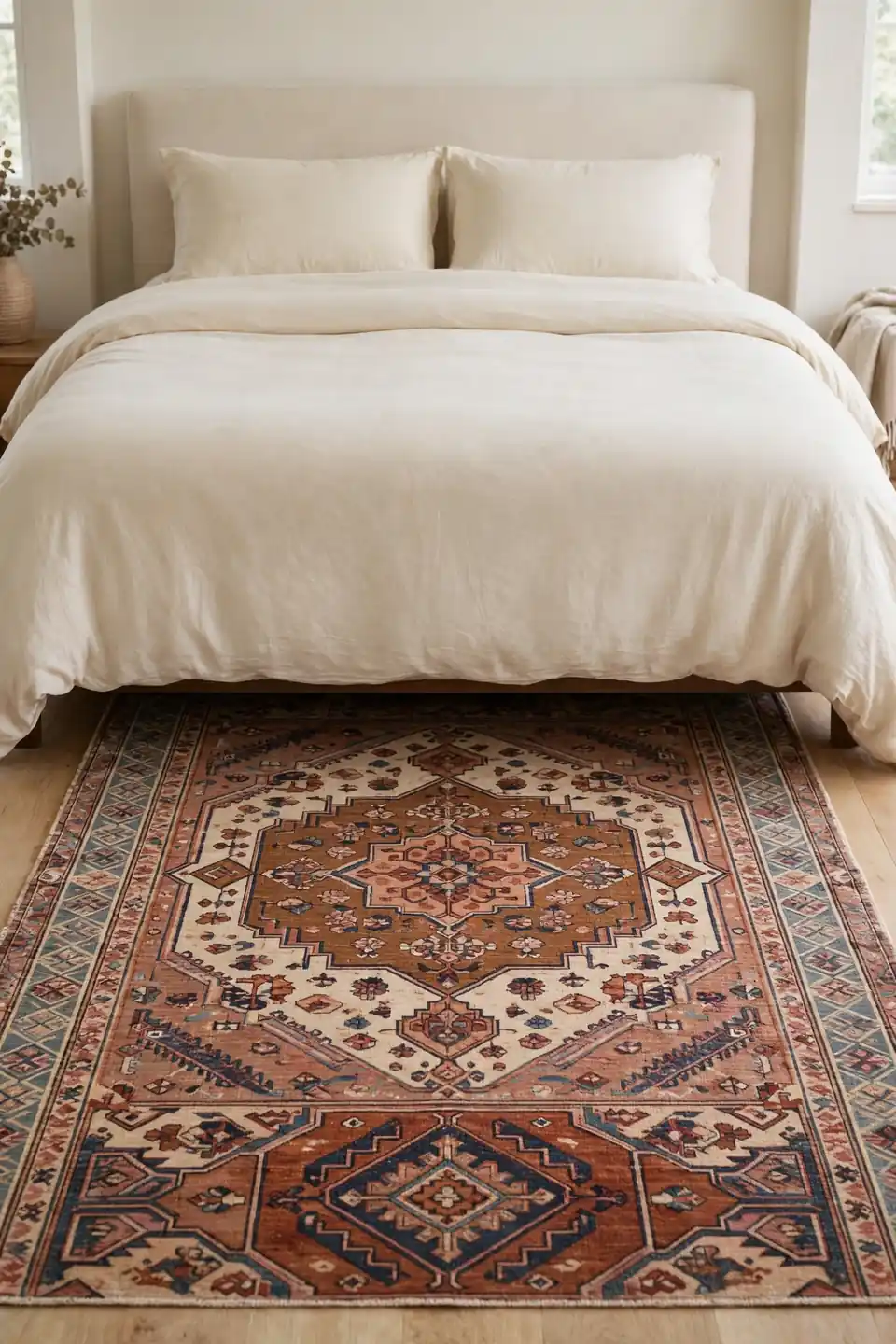
Do:
- Center a medallion or main motif with the middle of the bed.
- Let bold patterns run under the bed, calmer borders at the sides.
- Repeat one pattern color in a throw or cushion.
- Turn geometric prints to align with the room’s main lines.
Don’t:
- Hide the best part of the pattern fully under the mattress.
- Mix a busy rug with busy bedding in the same view.
- Leave a motif cut awkwardly at the doorway sightline.
Patterns reward a minute of standing back before the furniture moves in. Photograph the layout from the doorway, since that is the view guests and mornings share. If the motif fights the bedding in the photo, rotate the rug once before blaming the pattern itself.
Care Facts For Long Life
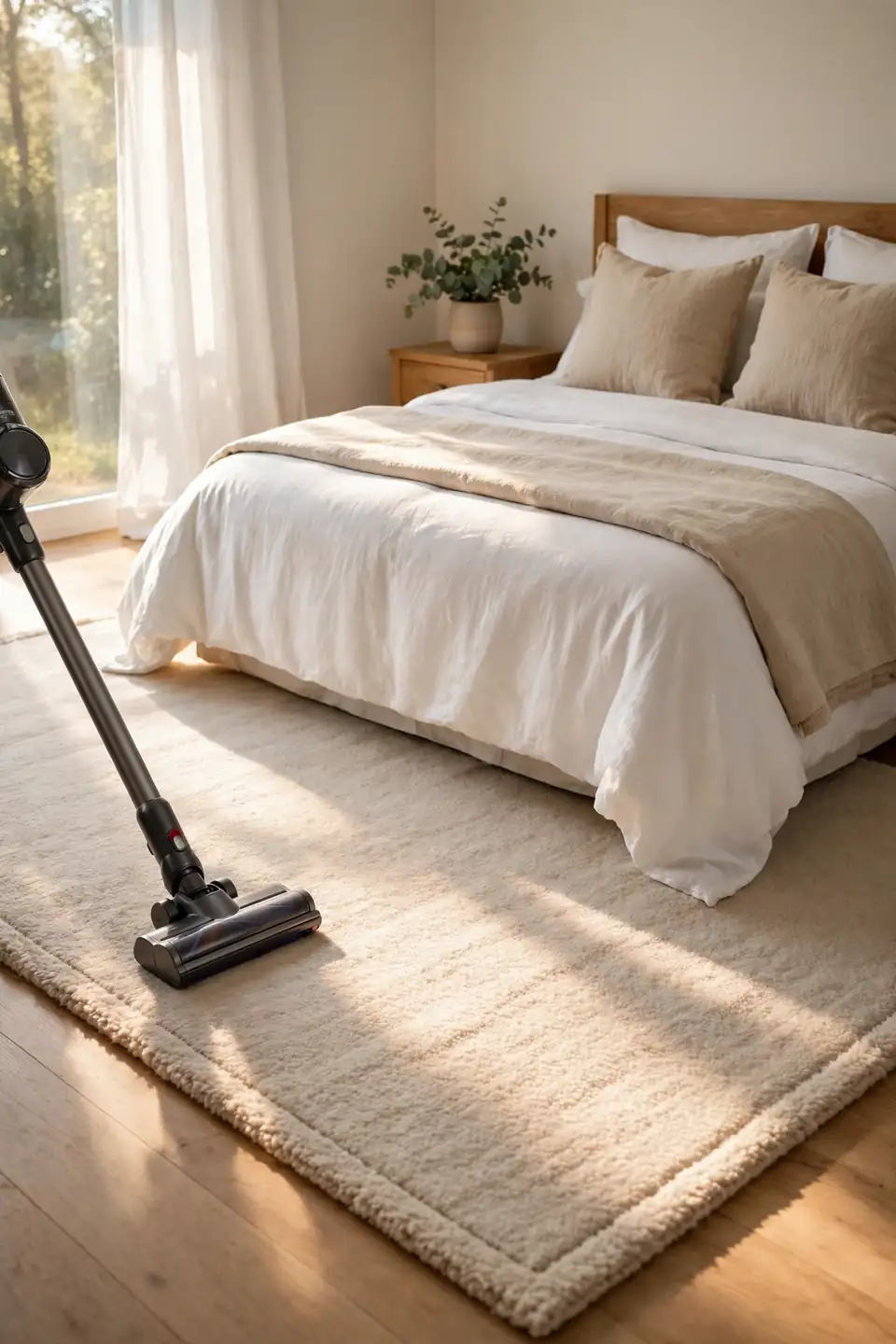
Cost: One pad and a yearly deep clean
Time: Ten minutes weekly to vacuum borders
Skill Level: Beginner, basic tools only
Best For: Busy homes keeping one rug for years
Placement and care are the same decision seen from two sides. A rug that sits square under the bed vacuums faster, wears evenly and dries flat after a deep clean. Rotate the rug half a turn once a year so sunlight and foot traffic share the fading fairly. Shake runners outside monthly, and beat the dust from area rugs on a dry, breezy day. Small habits like these stretch a good rug across a decade of mornings.
Conclusion
Every layout here comes back to one habit: decide where your feet land first, then let the rug serve that moment. Full coverage, two thirds, twin runners or a single foot rug all work when the borders stay honest and the bed stays the hero. Start with the tape test, trust your measurements, and nudge in small steps until the morning walk feels automatic. Save this pin for your next bedroom refresh, try one layout this weekend, and pass it to a friend with cold floors. Chosen well, bedroom rug placement ideas turn the hardest surface in the room into its coziest layer.