21 Handcrafted Pottery Shelf Styling Ideas for an Artful Display
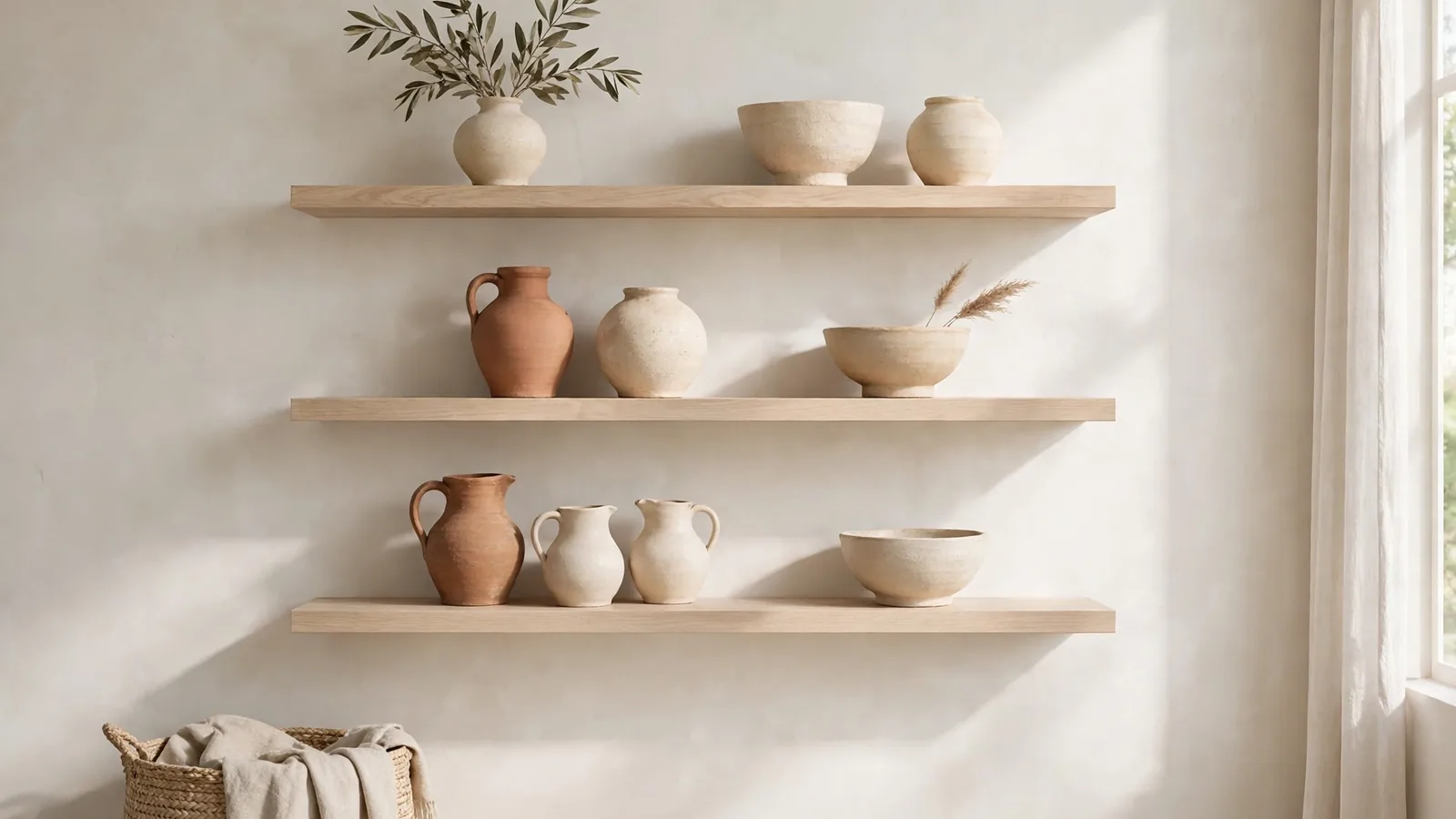
Open shelves ask for pieces with soul, and nothing answers like clay shaped by human hands. The best handcrafted pottery shelf styling ideas start with that honesty: visible fingerprints, soft glaze drips, and shapes no factory line would dare repeat. A shelf of handmade pieces feels collected over years, not ordered in one afternoon.
Pottery also plays well with bolder rooms. Pattern rich shelves in modern chinoiserie living room inspiration prove that handmade pieces hold their own beside lacquer and porcelain. In my experience, three textures are enough on any shelf: rough stoneware, smooth glaze, and one natural extra like wood or woven fiber. Keep that balance, and even a single crowded shelf reads calm instead of cluttered.
Cream Stoneware Vase Trio
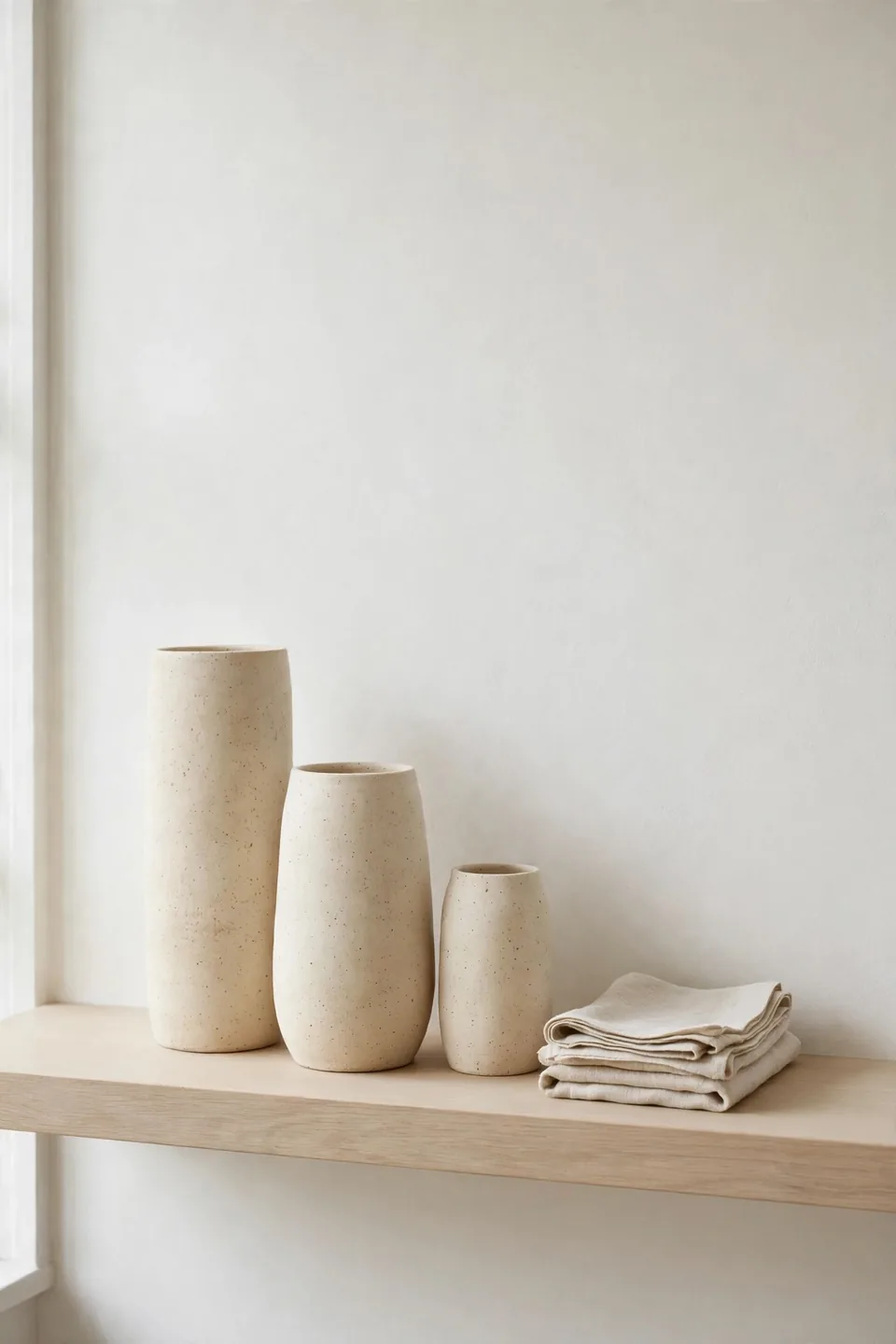
Three vases in soft cream stoneware can carry an entire shelf without a single flower between them. Vary the heights by at least a hand’s width, tallest at the back, so the silhouettes step down like a quiet skyline. Unglazed bases and speckled clay keep the group grounded and warm.
Leave breathing room on both sides of the trio instead of filling every inch. Empty space is what makes handmade shapes read as art rather than storage. I’ve noticed that cream on cream works best under warm light, where tiny glaze variations show up as gentle shadows across each curve. A small stack of linen napkins beside them adds one soft texture more.
Terracotta Jug Cluster

- Group jugs in odd numbers, three or five, with the tallest jug at the back corner.
- Mix raw terracotta with one whitewashed piece so the cluster feels collected, not matched.
- Tuck dried grasses or olive branches into one jug only, leaving the rest empty.
- Set the cluster on a woven mat or wooden board to protect the shelf surface.
- Keep handles turned at slightly different angles for a relaxed, lived in rhythm.
Terracotta brings the warmth of sun baked earth into rooms that lean cool and grey. Its rough surface catches side light beautifully, and small chips only add to the story. Dust the cluster monthly with a dry brush, since water spots mark raw clay faster than glazed pieces.
Matte Glaze Bowl Stack
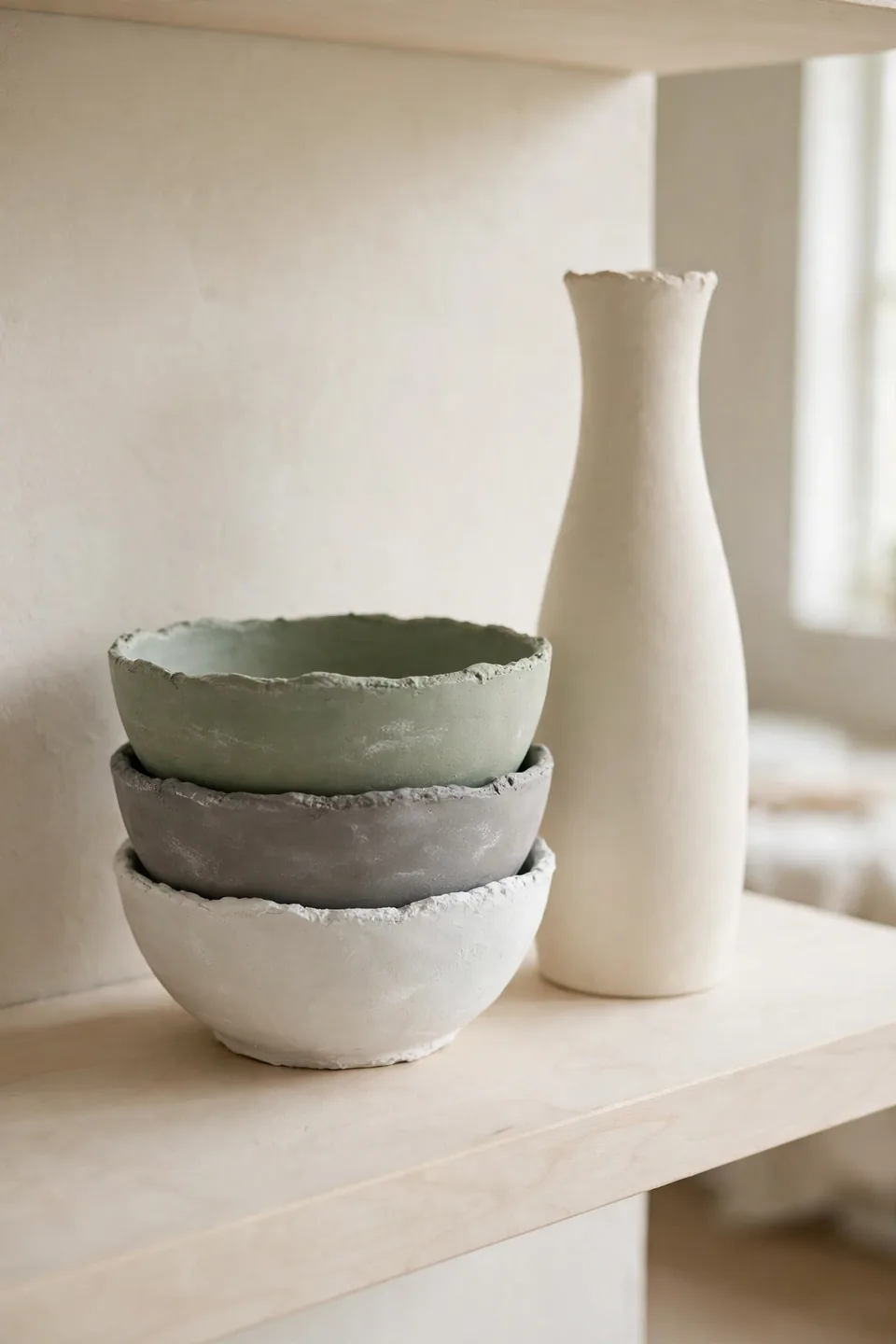
Quick Tip: Slip a small circle of felt or cork between stacked bowls. Matte glazes scuff where they rub, and one quiet layer keeps rims chip free while the stack stays silent when you lift the top bowl for serving.
A stack of matte bowls turns everyday storage into sculpture, especially in soft sage, stone, or chalk white. Keep the stack to four bowls at most; taller piles look nervous and tempt accidents. Slightly uneven rims are the charm here, so let each bowl sit at its own small angle. Rest the stack beside one tall piece for contrast. The quiet finish also photographs beautifully in morning light.
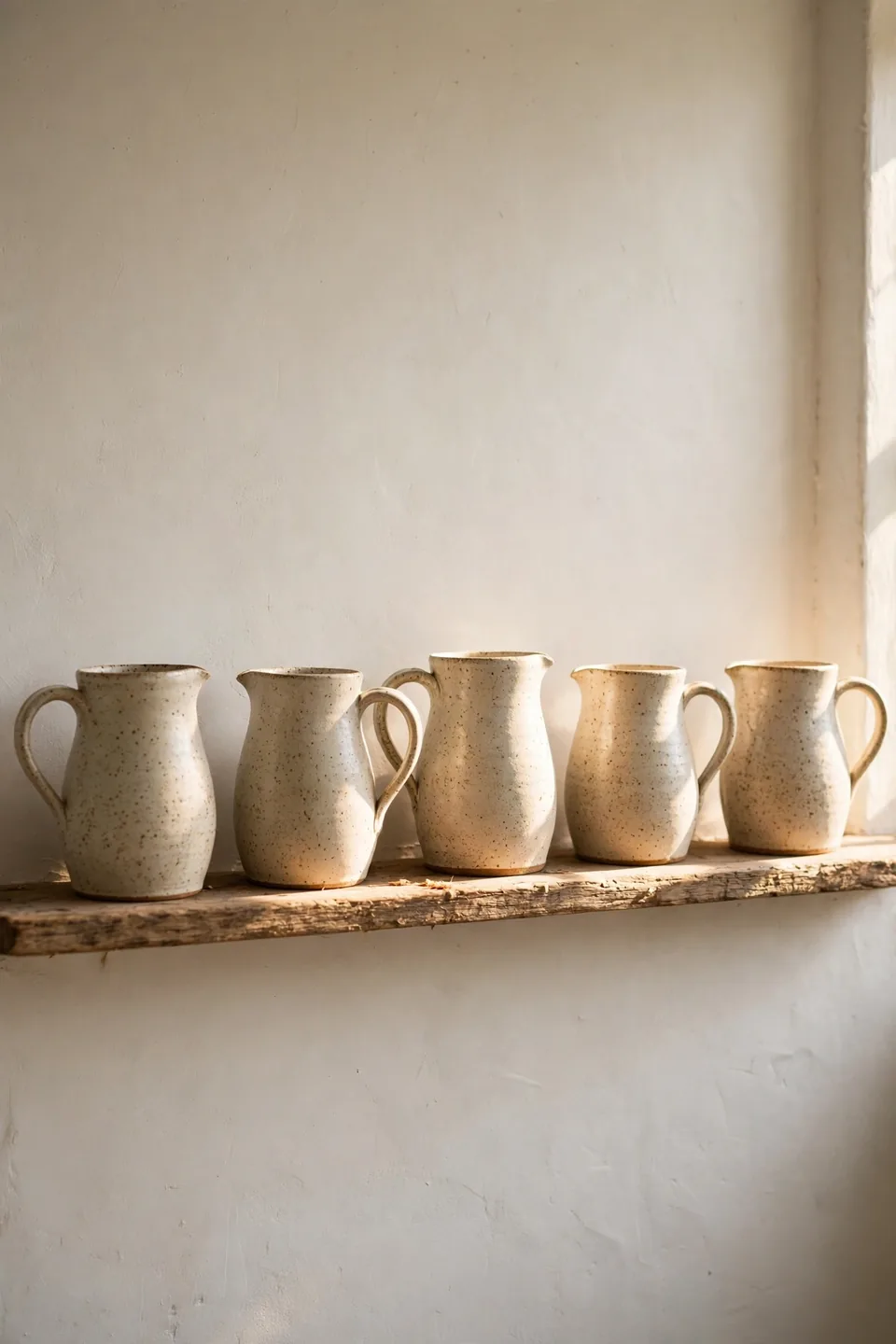
Rustic Pitcher Line Up
BEFORE: A row of mismatched mugs and a lone cereal box crowded the shelf, each piece fighting for attention. Nothing shared a color, a height, or a purpose, so the whole shelf read as storage overflow instead of display.
AFTER: Five rustic pitchers now stand in a loose line, handles alternating left and right like dancers mid step. Their shared stoneware body and speckled glaze tie them together, while small height changes keep the rhythm relaxed and handmade.
Pitchers earn their shelf space twice: sculptural when empty, useful the moment guests arrive. Fill one with wooden spoons near the stove or leave the whole row bare in a living room. Either way, the repeated silhouette does the styling work for you, quietly and completely.
Speckled Mug Display Row
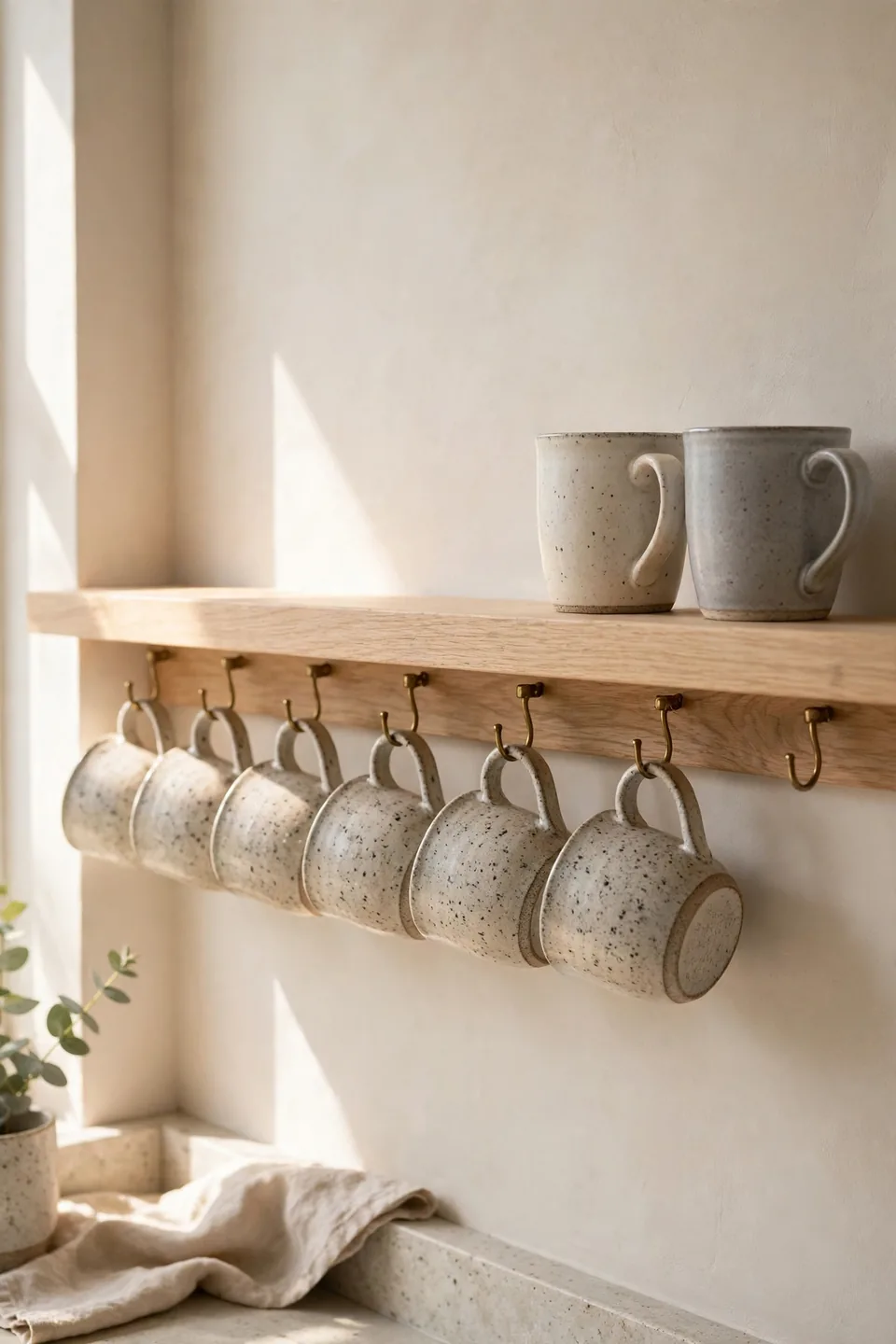
- Choose six to eight speckled stoneware mugs in one glaze family, cream, clay, or soft grey.
- Mount a slim rail or use the shelf edge, spacing hooks one hand apart for easy grabbing.
- Hang mugs with handles facing the same direction so the row reads calm and ordered.
- Rest two favorite mugs upright at the end of the row as a full stop.
A mug row turns the morning coffee ritual into the shelf’s daily performance. Speckles forgive coffee stains and hide tiny chips, which makes this the hardest working display in a busy kitchen. Rotate seasonal colors in slowly, one mug at a time, never all at once.
Anchor Piece Versus Accents
| One Large Anchor | Several Small Accents |
|---|---|
| Fills the shelf’s visual center in one move | Spread interest across the whole shelf length |
| Works best on long or deep shelves | Suits narrow shelves and small rooms |
| Needs empty space around it to breathe | Needs careful spacing to avoid clutter |
| One investment piece, fewer decisions | Budget friendly, collected piece by piece |
Most shelves want both: one anchor near the center, then small accents trailing toward the ends. Start with the anchor, live with it for a week, and add accents only where your eye keeps asking for more. Restraint early on saves money and shelf space later.
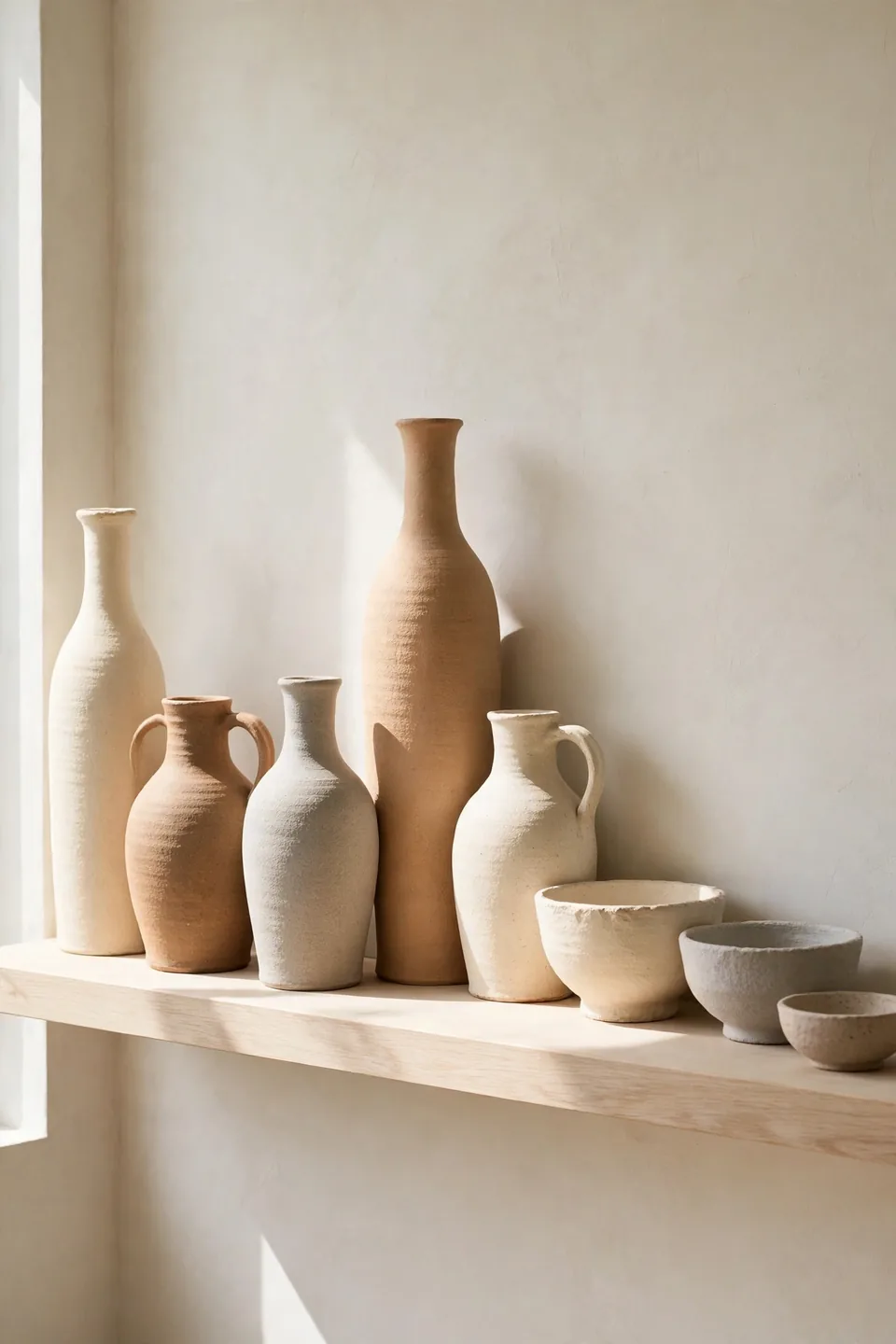
Mixed Heights Grouping Magic
Do:
- Stagger tall, medium, and low pieces across each shelf like a gentle skyline.
- Set the tallest pot slightly off center so the group feels natural.
- Repeat one low shape, like a small bowl, at both ends for balance.
Don’t:
- Do not line pieces in strict height order; it reads like a shop shelf.
- Avoid crowding tall vases so close that their shoulders touch and chip.
- Never push every piece against the back wall; depth needs shadow gaps.
Height play is the cheapest styling tool there is, since it costs nothing to rearrange what you own. Photograph the shelf from the doorway after each change. The arrangement that holds your eye longest, without one piece shouting, is the one worth keeping for the season.
Calm Neutral Shelf Palette
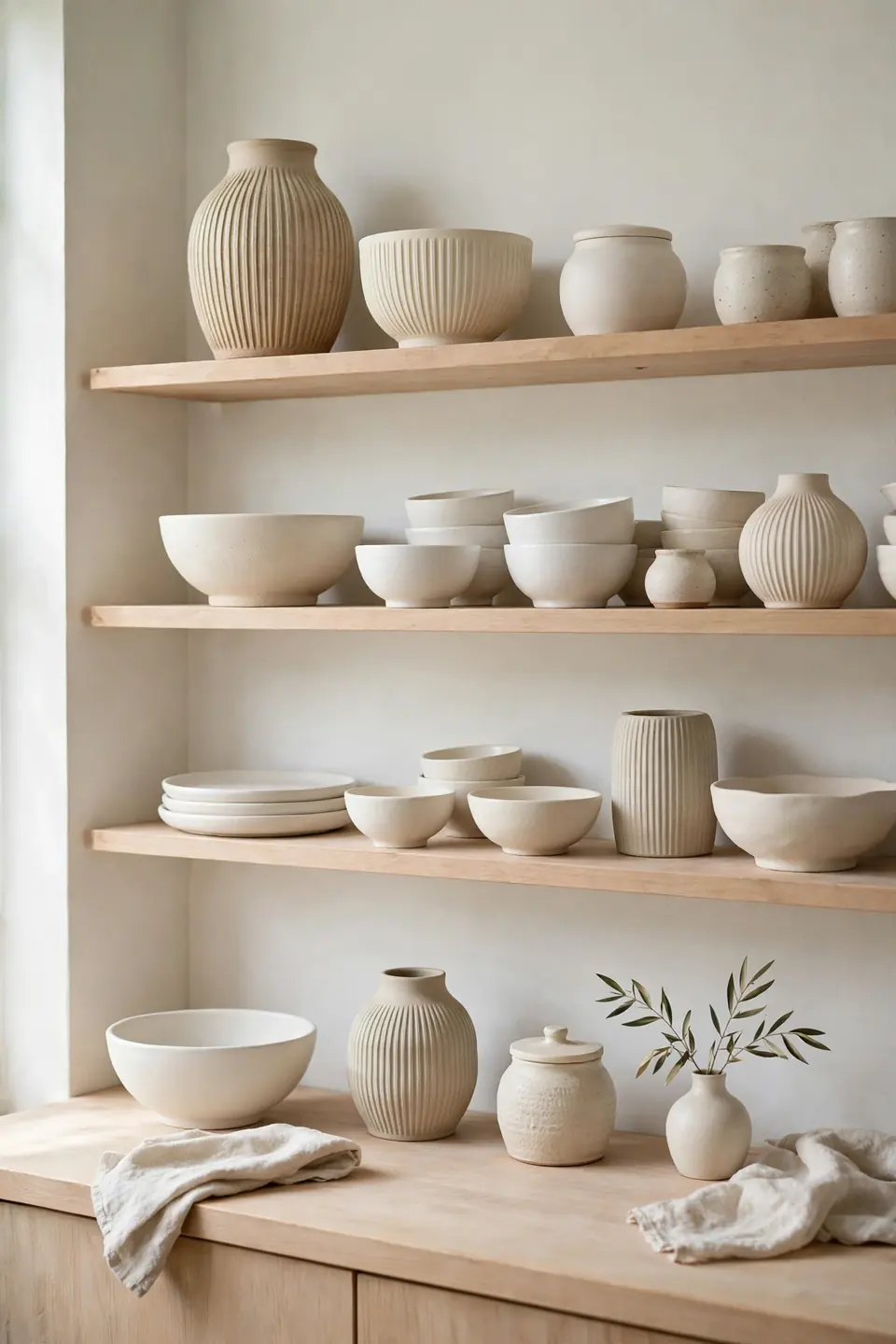
Cost: Low, most pieces come from what you already own | Time: One afternoon of editing | Skill Level: Beginner | Best For: Busy rooms that need visual quiet
Cream, stone, oatmeal, and soft white pottery on pale wood shelves lowers the visual temperature of any room. The trick is texture, not color: ribbed clay beside smooth glaze, matte beside shine. Warm bedroom schemes like mustard yellow and brown bedroom decor prove neutrals gain depth when one earthy tone leads the way. Keep metal or dark wood to one small accent so the palette stays airy from end to end. Natural light does the rest of the decorating here.
Baskets Meet Clay Warmth

Woven baskets soften the hard edges of clay and stoneware in a way few partners can. A shallow seagrass basket under a heavy pot lifts it visually, while a tall basket beside the shelf echoes the pottery’s earthy tones. Natural fibers also swallow visual noise, hiding small clutter inside their weave.
Keep baskets to one fiber and one tone per shelf so the pairing feels planned. Baskets age gracefully beside pottery: both gather patina, both forgive dust between deep cleans. When a basket frays, retire it to a closet shelf and bring a fresh one forward without guilt. The mix suits shelves in every room of the house.
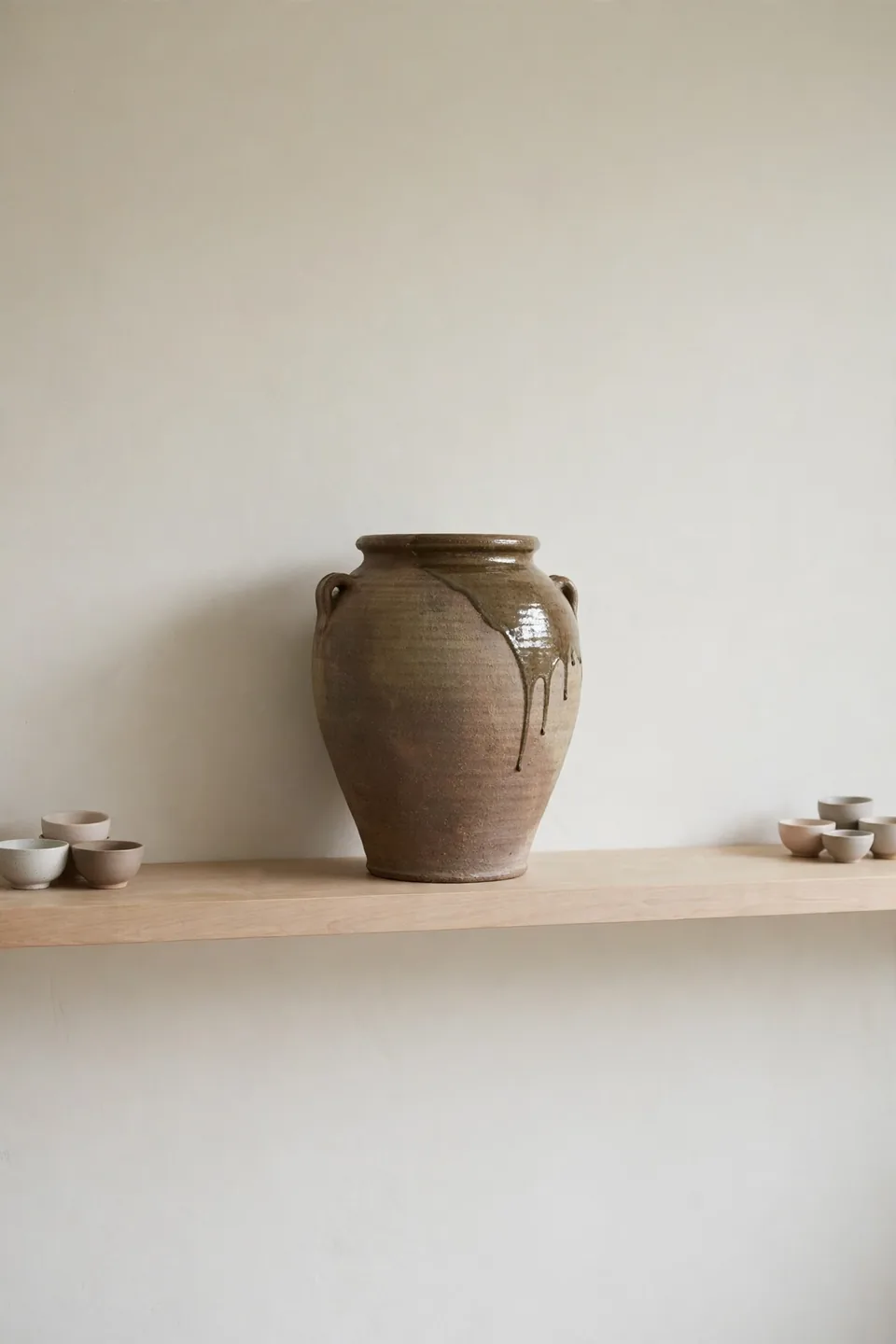
Single Statement Urn

- Choose one urn with real presence, at least as tall as two stacked bowls.
- Center it on the longest shelf and clear a hand’s width on both sides.
- Let smaller pieces gather at the far ends, low and quiet, like an audience.
- Pick an urn with a handmade flaw, a glaze drip or thumbprint, for character.
One bold urn does the work of a dozen small ornaments, and it never looks like clutter. The eye rests, the shelf breathes, and the piece earns compliments for years. That restraint is the heart of handcrafted pottery shelf styling ideas, where one honest piece outshines a crowded row every time.
Layered Plates Behind Bowls
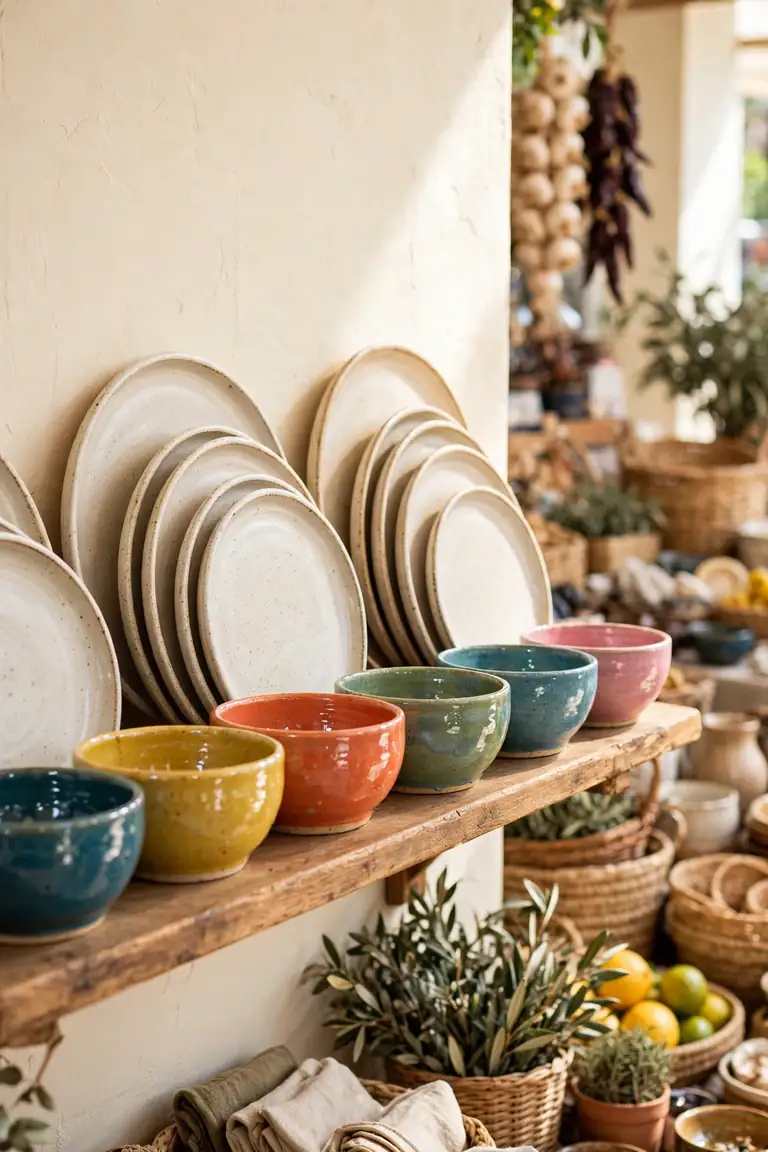
Quick Tip: Lean plates against the wall at a slight angle and anchor each one with a small wooden stand or a folded strip of museum putty. A bowl in front hides the stand and locks the whole layered row in place.
Plates standing behind bowls give a shelf the depth of a market stall in the best way. Choose plates with simple rims and let the bowls carry the color story in front. The layered look suits kitchens and dining rooms where the pottery still has to earn its keep at mealtimes. Swap one plate seasonally and the whole shelf feels new again.
Kitchen Shelf Working Pottery
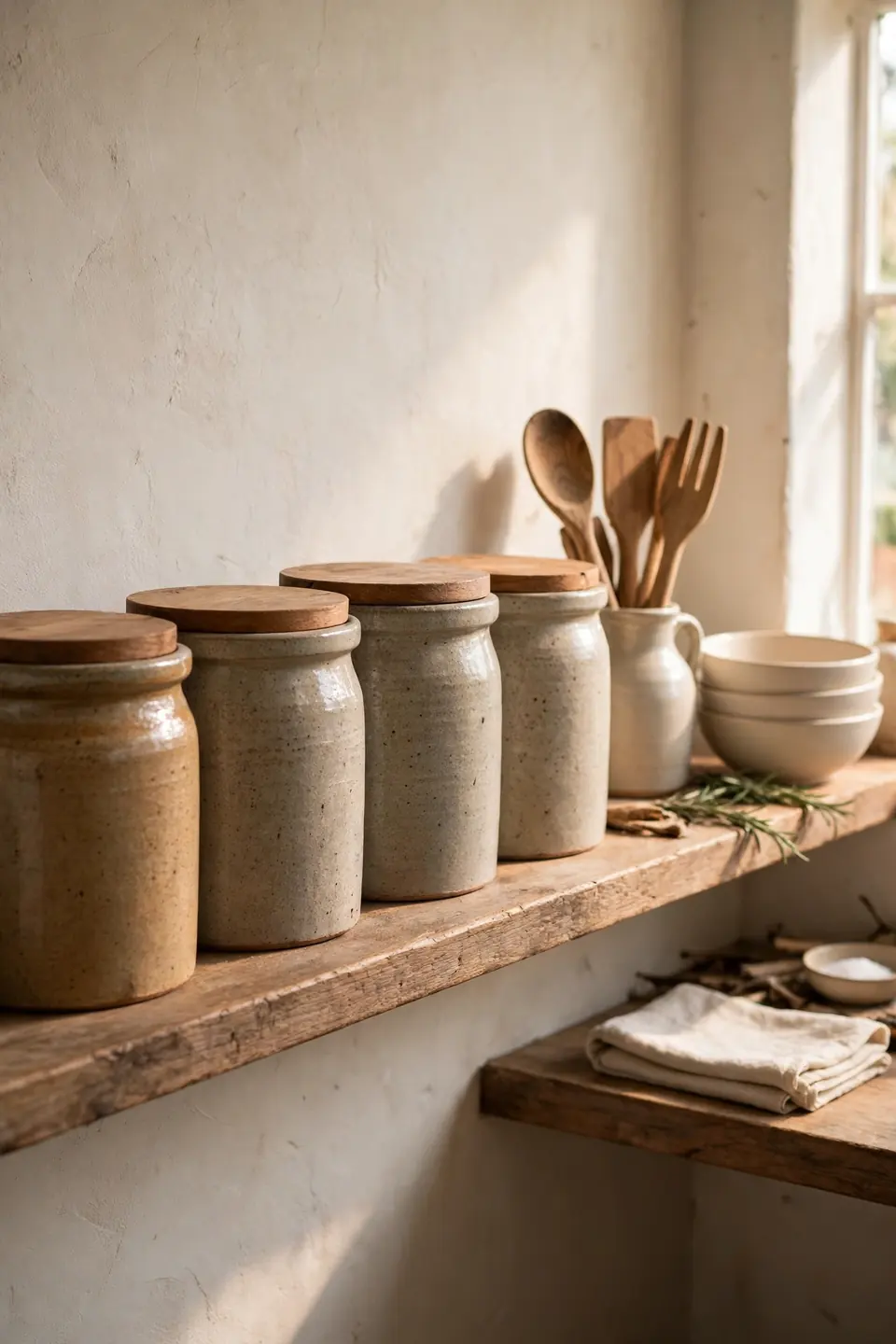
BEFORE: Packets, jars with three different labels, and a tired plastic tub turned the kitchen shelf into a cupboard with no doors. Cooking meant digging, and guests saw the mess before they saw the room.
AFTER: Flour, grains, and pasta now live in wide mouth stoneware crocks with wooden lids, lined along the shelf in daily use order. A small jug holds utensils, a stack of bowls waits beneath, and every item earns its place by working hard.
Working pottery proves daily that beauty and usefulness belong on the same shelf. Keep the heaviest crocks on the lowest shelf and decant in small batches so nothing goes stale. A shelf that serves breakfast every morning never needs a special occasion to look its best.
Books Between Pottery Bookends
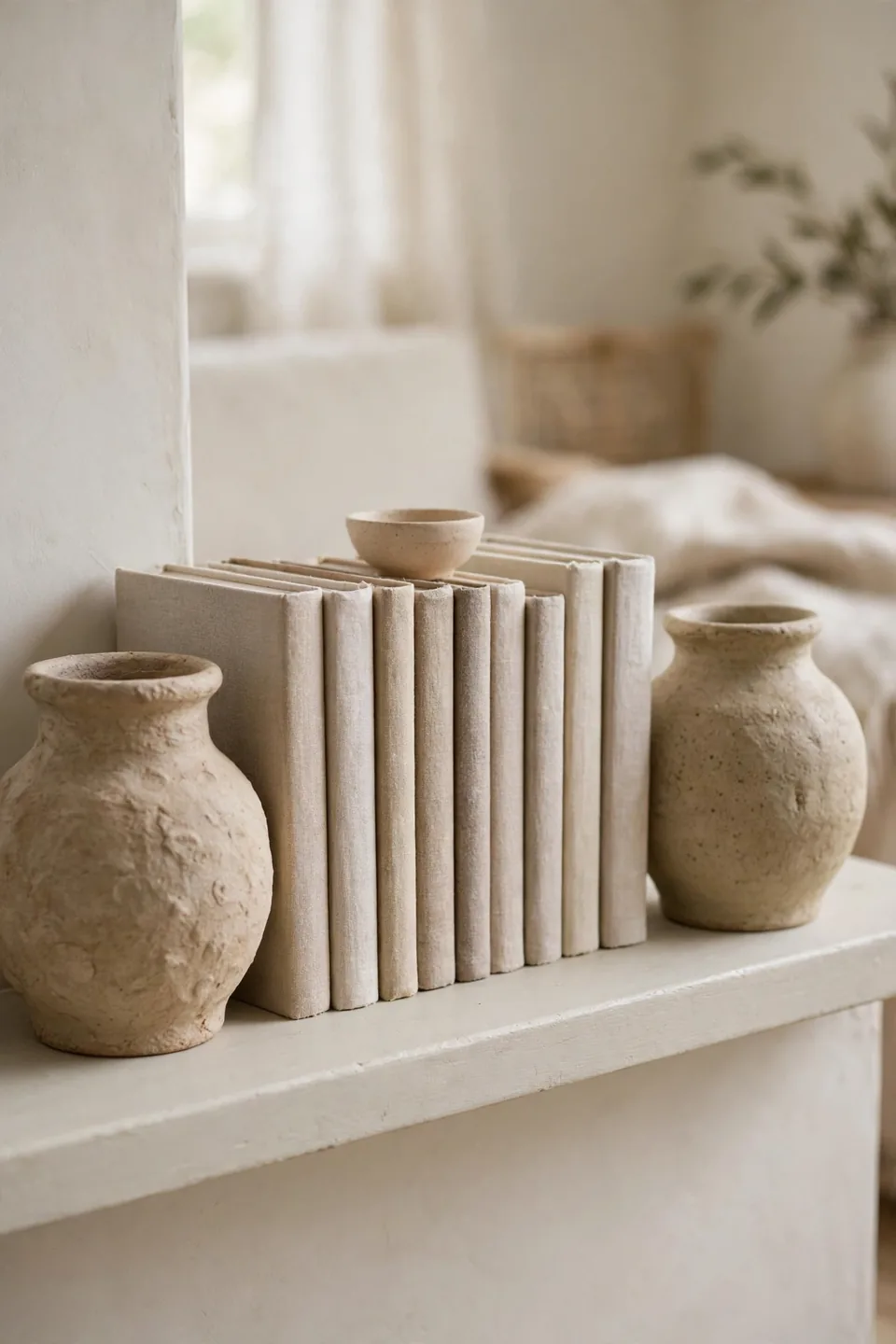
- Pick two sturdy pottery pieces with flat sides, like chunky vases or small crocks.
- Stand six to ten books between them, spines softened in linen or plain paper covers.
- Angle the end pieces slightly inward so the row feels held, not squeezed.
- Top the books with one tiny bowl or leave the surface bare and calm.
Books give pottery height and company, while pottery keeps books from slumping into a tired lean. This pairing suits shelves in living rooms and bedrooms where reading happens within arm’s reach. Keep book colors quiet, and the clay stays the shelf’s main character from morning to night.
Glossy Meets Matte Finishes

| Glossy Glaze | Matte Glaze |
|---|---|
| Reflects light and brightens dark corners | Absorbs light for a soft, chalky calm |
| Shows off bold color and painted detail | Lets shape and texture carry the piece |
| Wipes clean in seconds after kitchen use | Hides dust and small scuffs gracefully |
| Feels formal, like fine tableware | Feels earthy, like clay from the ground |
Side by side, glossy and matte finishes make each other look better, the shine lending sparkle and the matte lending rest. Aim for roughly one glossy piece in every three, placed where window light can strike it. Too much shine turns a shelf restless, so let matte pieces hold the majority.
Rotate Pieces With Seasons
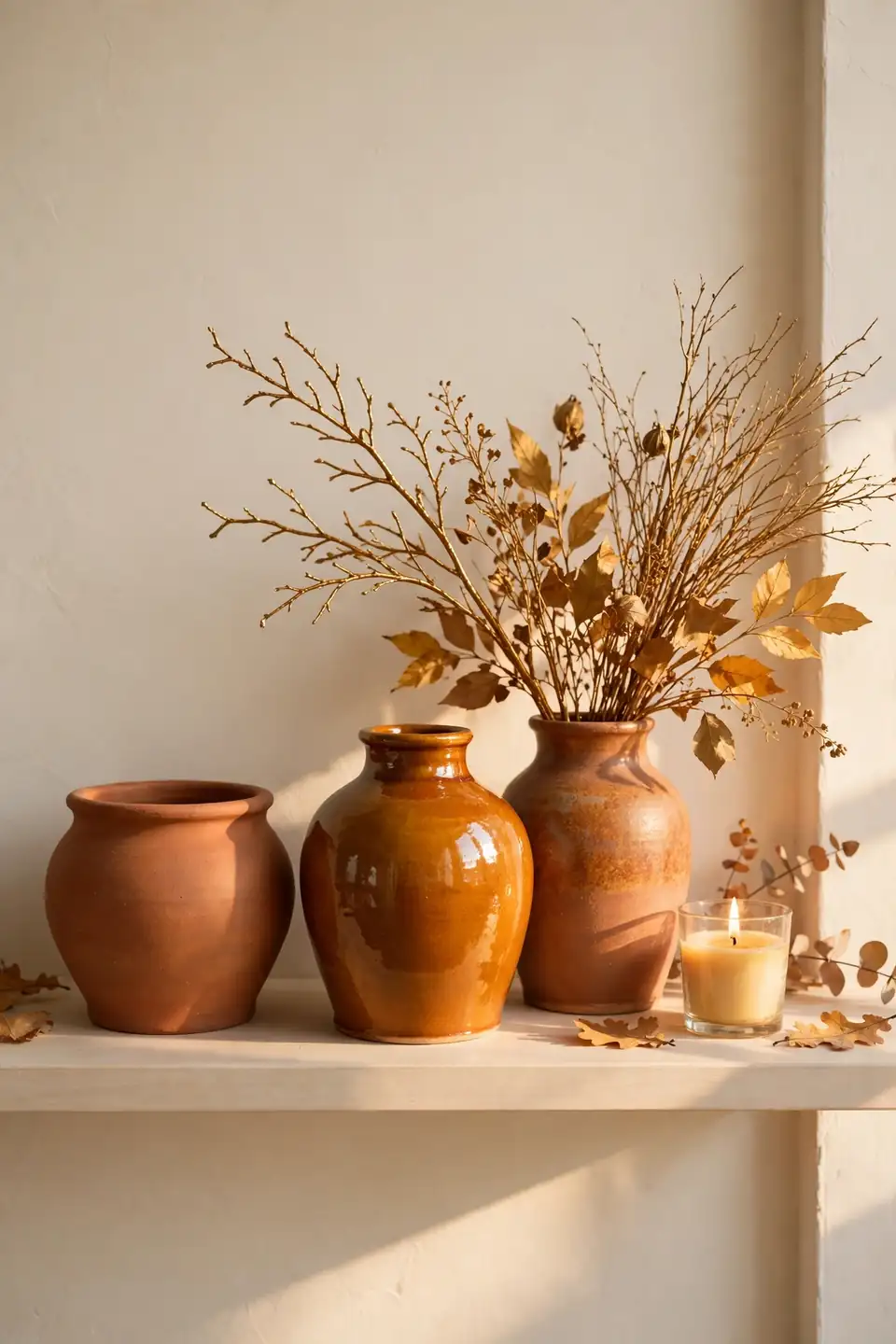
Do:
- Bring forward warm terracotta and amber glazes when autumn light turns golden.
- Rest stored pieces in a cupboard so each rotation feels like new stock arriving.
- Photograph each season’s shelf before changing it, building a styling diary.
Don’t:
- Do not swap every piece at once; the shelf loses its familiar anchor points.
- Avoid storing pottery stacked without padding between glazed surfaces.
- Never retire a favorite piece for a whole year; rotation should pause, not exile.
A shelf that changes with the seasons stays interesting without a single new purchase. Spring might lighten the palette to chalk white and sage, while winter asks for deeper browns and candlelight beside the clay. Small shifts, made four times a year, keep the whole room feeling awake.
Small Shelf Smart Styling
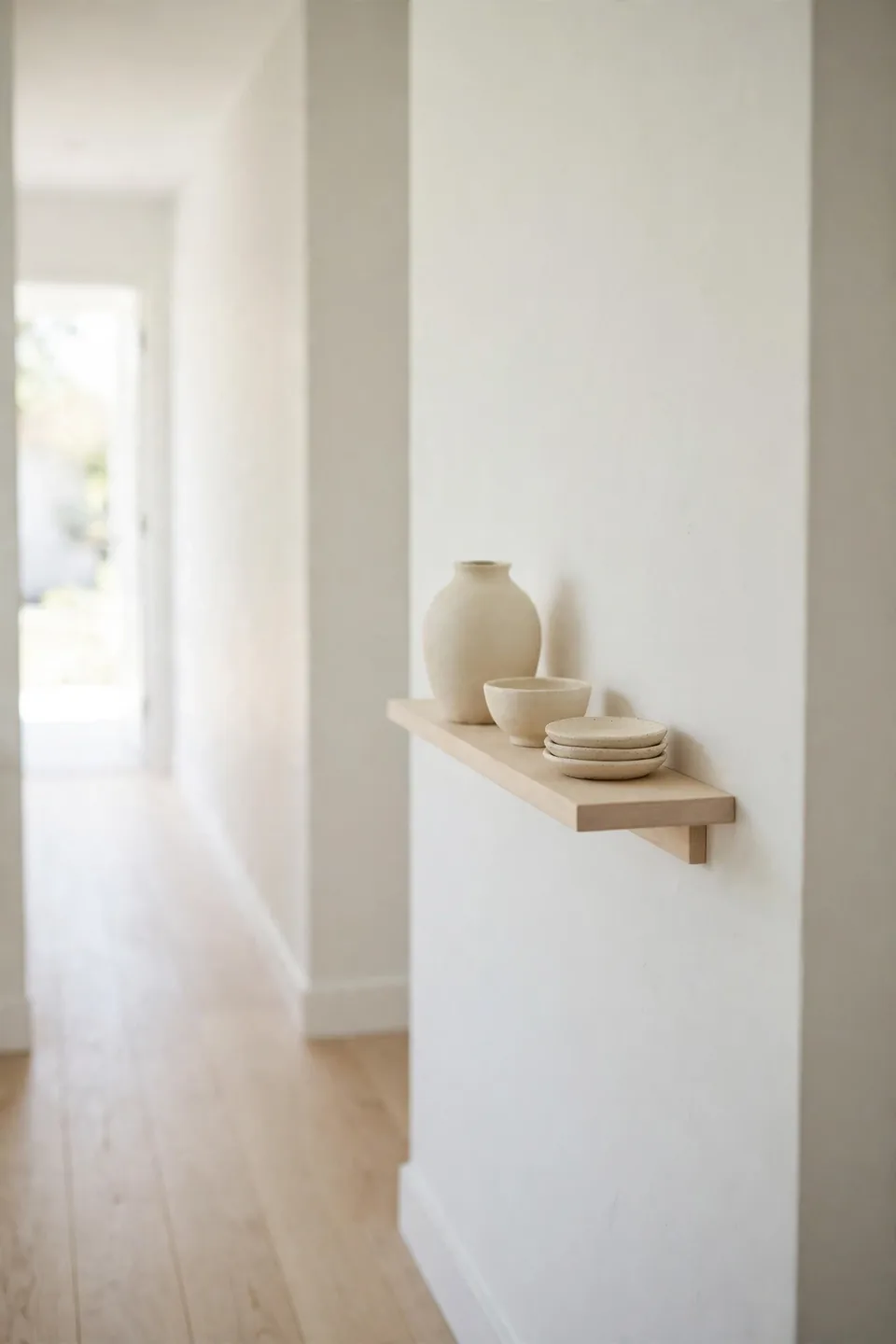
Cost: Very low, three to five pieces are plenty | Time: Under one hour | Skill Level: Beginner | Best For: Bathrooms, hallways, and rental kitchens
A short shelf is a gift, not a limitation, because it forces honest choices. One vase, one bowl, and one small stack of dishes fill a metre of shelf with room to spare. Small shelves also forgive beginners: rearrange them in minutes, learn what the eye likes, then carry those lessons to bigger walls with confidence. A tiny plant or a candle can take the fourth spot on the shelf when the season asks for green or glow.
Drippy Glaze Feature Vases
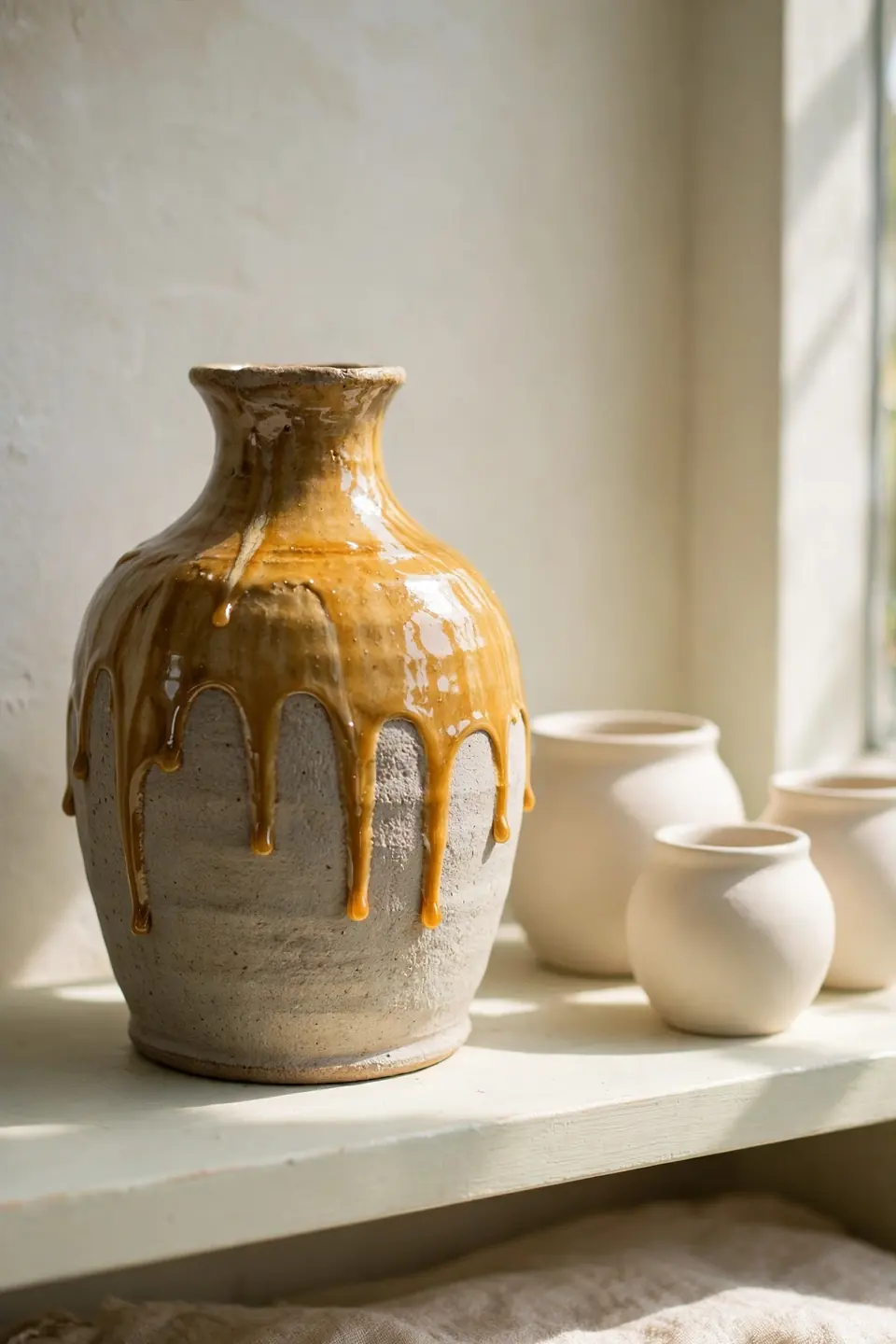
Glaze that runs and pools down a vase’s shoulder carries the maker’s hand in every streak. No two drips land alike, which makes these vases the natural focal point of a quiet shelf. Set one where daylight rakes across it, and the runs glow like slow honey over stone. The effect never looks mass produced.
Let the rest of the shelf step back in flat, matte tones so the glossy runs stay in charge. One drippy vase per shelf is plenty; two start competing like soloists in the same song. Guests always ask about these pieces first, so place yours where conversation naturally gathers nearby.
Vintage Crocks New Life
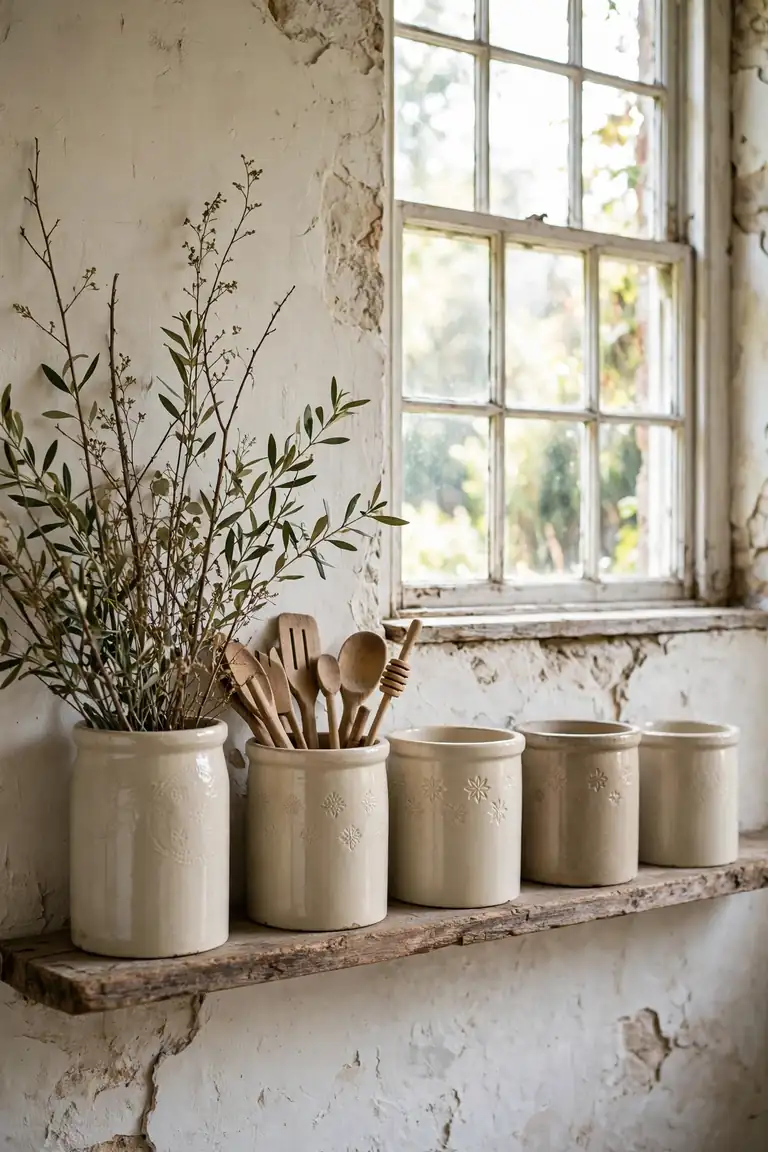
- Scrub old crocks with warm water and a soft brush; skip harsh chemicals on aged glaze.
- Line crocks that held food with a glass jar inside before storing utensils or plants.
- Group crocks by their stamped numbers or maker marks for a quietly graphic display.
- Fill one crock with tall branches and leave its neighbor empty for contrast.
Old crocks carry farmhouse history that new pottery can only imitate, and flea markets still price them kindly. Their thick walls suit heavy jobs, from holding kitchen tools to anchoring a shelf of lighter pieces. A row of crocks under a window sill may be the hardest working display in the whole house.
Odd Numbers Grouping Trick

Quick Tip: Count your groups out loud as you style: three, five, seven. Odd groups let the eye settle on a center piece, while even groups split attention down the middle and leave the shelf feeling politely unfinished.
Stylists reach for odd numbers because our eyes read them as gathered, not arranged. A trio of small pots, a line of five tiny bowls, a cluster of seven bottles: each feels like a moment caught rather than a display built. When a shelf feels off and you cannot name why, remove one piece and check the count. The trick costs nothing and fixes more shelves than any purchase.
Entryway Shelf First Impression
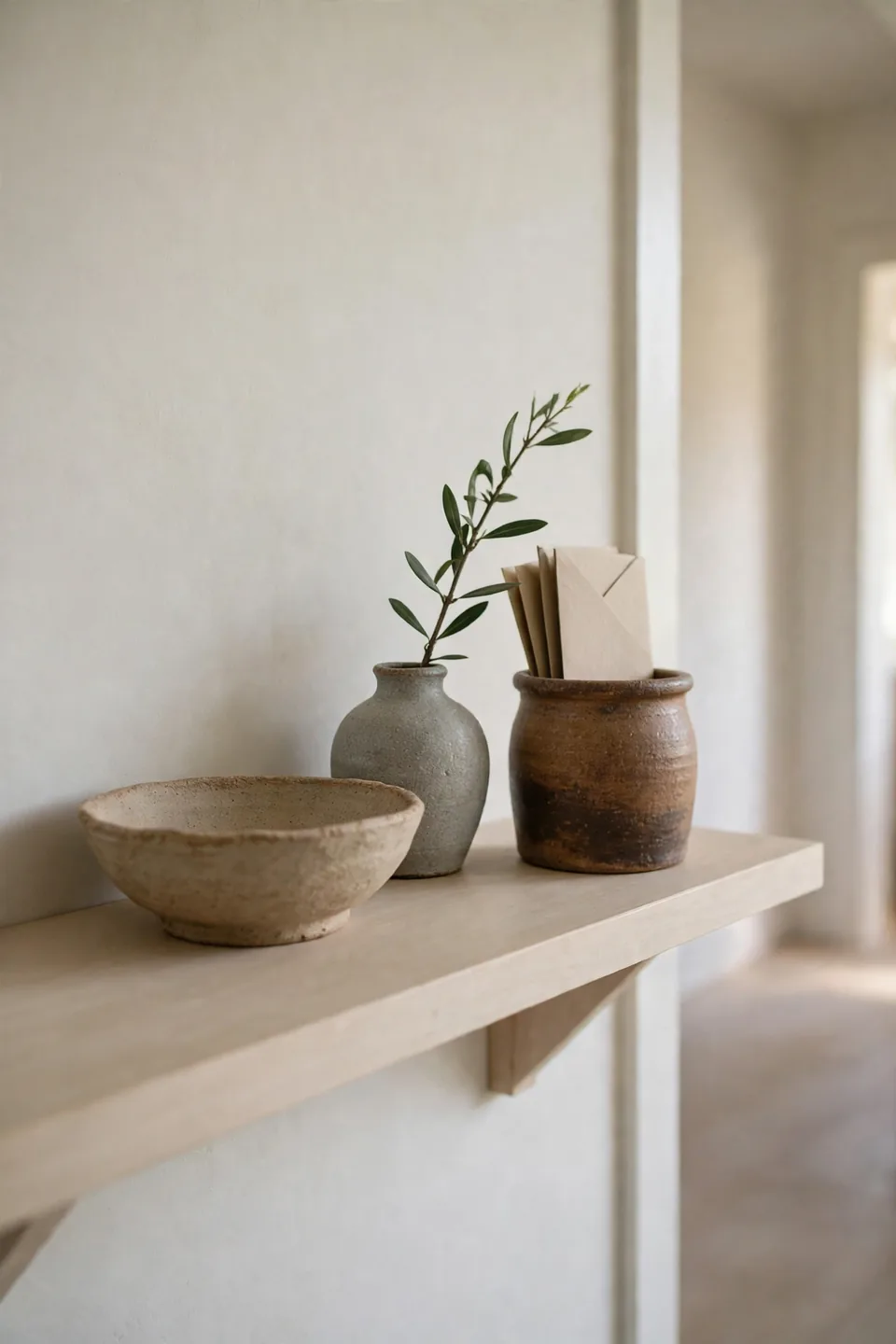
BEFORE: The entry shelf held a tangle of keys, sunglasses, mail, and one dusty plastic plant. Guests stepped into clutter before they stepped into the home, and the shelf taught them to expect mess everywhere else.
AFTER: A shallow handmade bowl now catches keys beside a small stoneware vase with a single branch. Mail stands in one pottery crock, and the rest of the shelf stays bare, calm, and ready for the next arrival home.
The entryway shelf sets the home’s tone in the first three seconds, so give it the same care as the living room. Keep daily clutter inside the pottery, never beside it, and refresh the branch monthly. A calm arrival makes the whole evening feel slower and kinder.
Corner Shelves Styled Right

- Start at the corner itself with the tallest piece, since corners swallow height quickly.
- Step pieces down in height as they travel outward along both walls.
- Bridge the two sides with one shared color or glaze family, repeated twice.
- Check the corner from the room’s doorway, where awkward gaps show up first.
Corner shelves turn dead space into the room’s quiet gallery, and pottery’s rounded shapes suit the angle perfectly. Keep the middle shelf lightest, since eyes land there first, and let the top shelf hold one tall piece against the ceiling’s calm. Corners styled this way make small rooms feel deliberately finished.
Conclusion
Shelves reward the patient collector. Start with one shelf, one glaze family, and pieces your hands love holding, then let the display grow at the speed of flea markets and pottery fairs. These handcrafted pottery shelf styling ideas work because handmade clay brings warmth no printed decor can fake. That’s why many experts recommend building slowly, shelf by shelf, rather than buying a whole look in one cart. Save your favorite ideas to Pinterest, try one shelf this weekend, and share the corner that finally feels finished. Small shelves, styled with honest pieces, have a way of changing how the whole home greets you at the door.