How to Make a Large Open Wall Feel Less Empty
A huge blank wall can make even a beautiful room feel cold and unfinished. If you have been wondering how to make a large open wall feel less empty, you are not alone. Most of us stare at that empty stretch and feel stuck.
The good news is that you do not need expensive art or a designer. With the right mix of scale, texture, and lighting, that wall can become the coziest part of your home. If your rooms also fight with how to decorate a home with low natural light, these tricks pair well with brighter styling choices.
Below, I walk you through 10 simple styling ideas that fill the space beautifully. Grab a tape measure and let us get started.
Start With the Right Scale Mindset
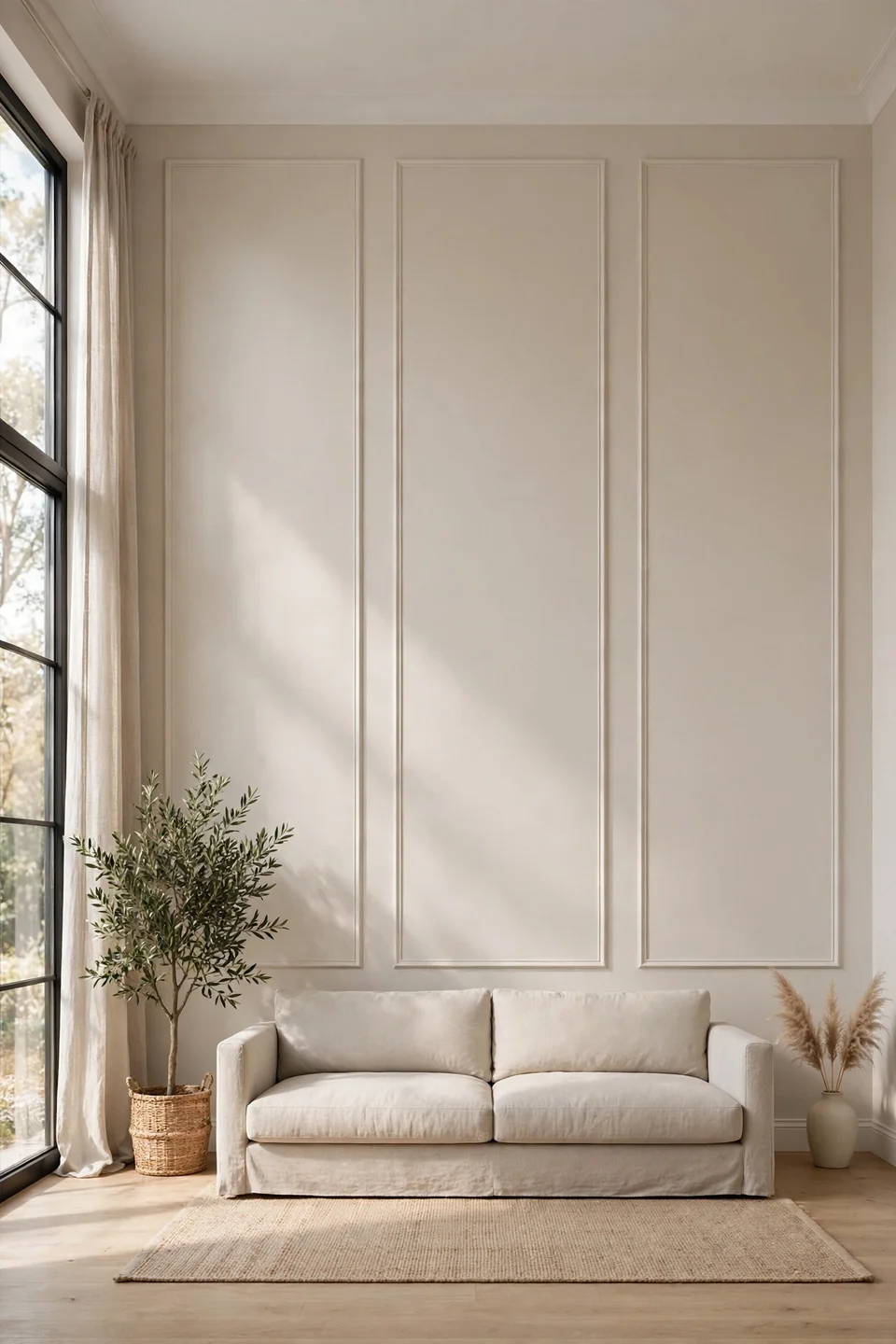
Most people decorate a large wall like a small one, with one small frame floating in the middle. That leaves the wall feeling emptier than before. The secret is thinking in zones instead of single objects. Break the wall into two or three zones and give each one a job.
Walk across the room and look at the wall the way guests see it. Notice where your eye stops and where it slides off. Those bare patches are your map. In my experience, one tall item in the right spot can change the whole feeling of a room.
Anchor the Wall With One Oversized Piece
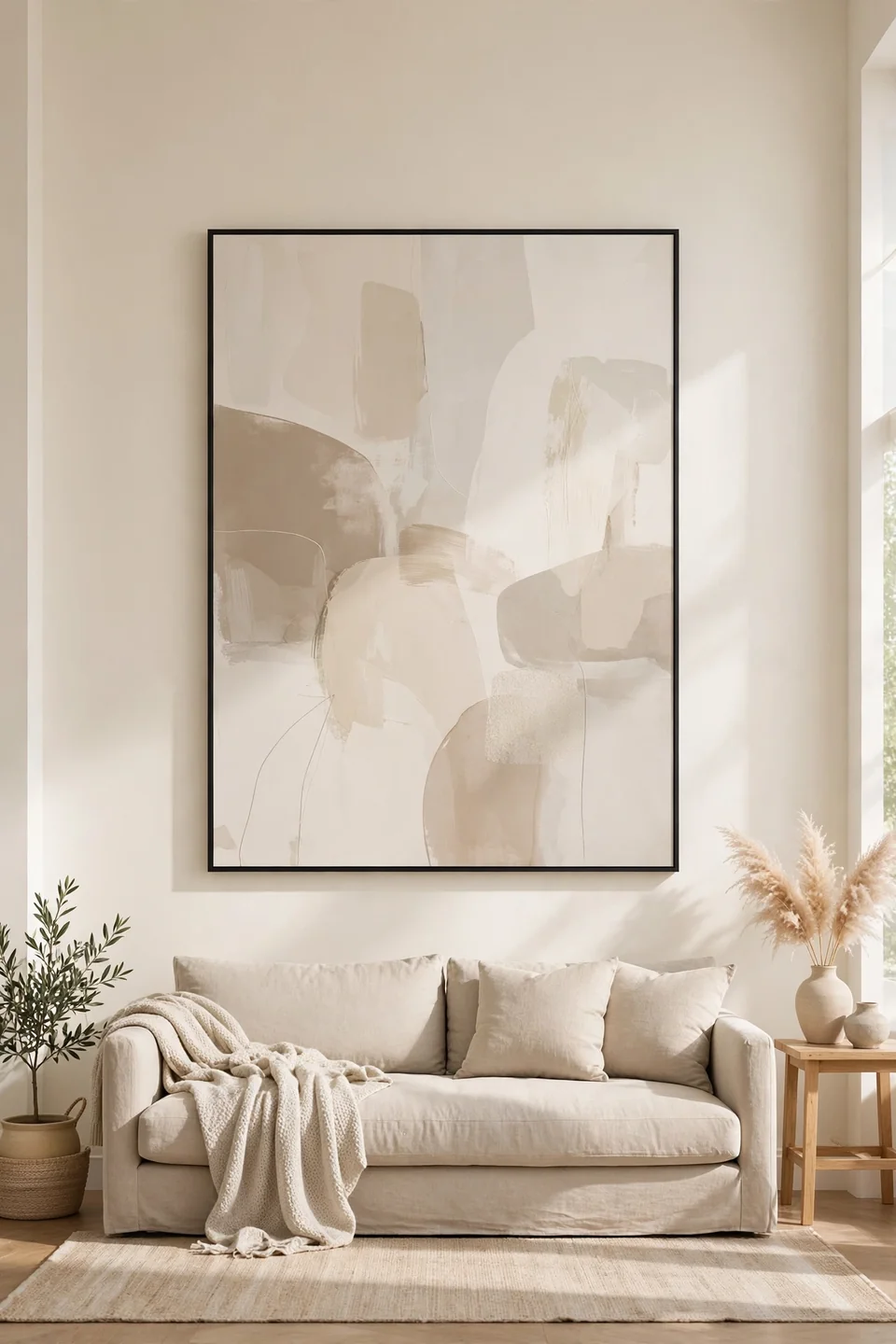
A single oversized piece of art does more for a big wall than five small frames ever could. Scale is the whole game here, so pick one statement item and let it boldly claim the center of the entire wall.
- Measure the wall and choose art that covers at least two thirds of its width.
- Hang the center of the piece at eye level, about 57 inches from the floor.
- Leave at least 6 inches of breathing room between the art and any furniture below it.
Build a Gallery Wall That Fills the Frame
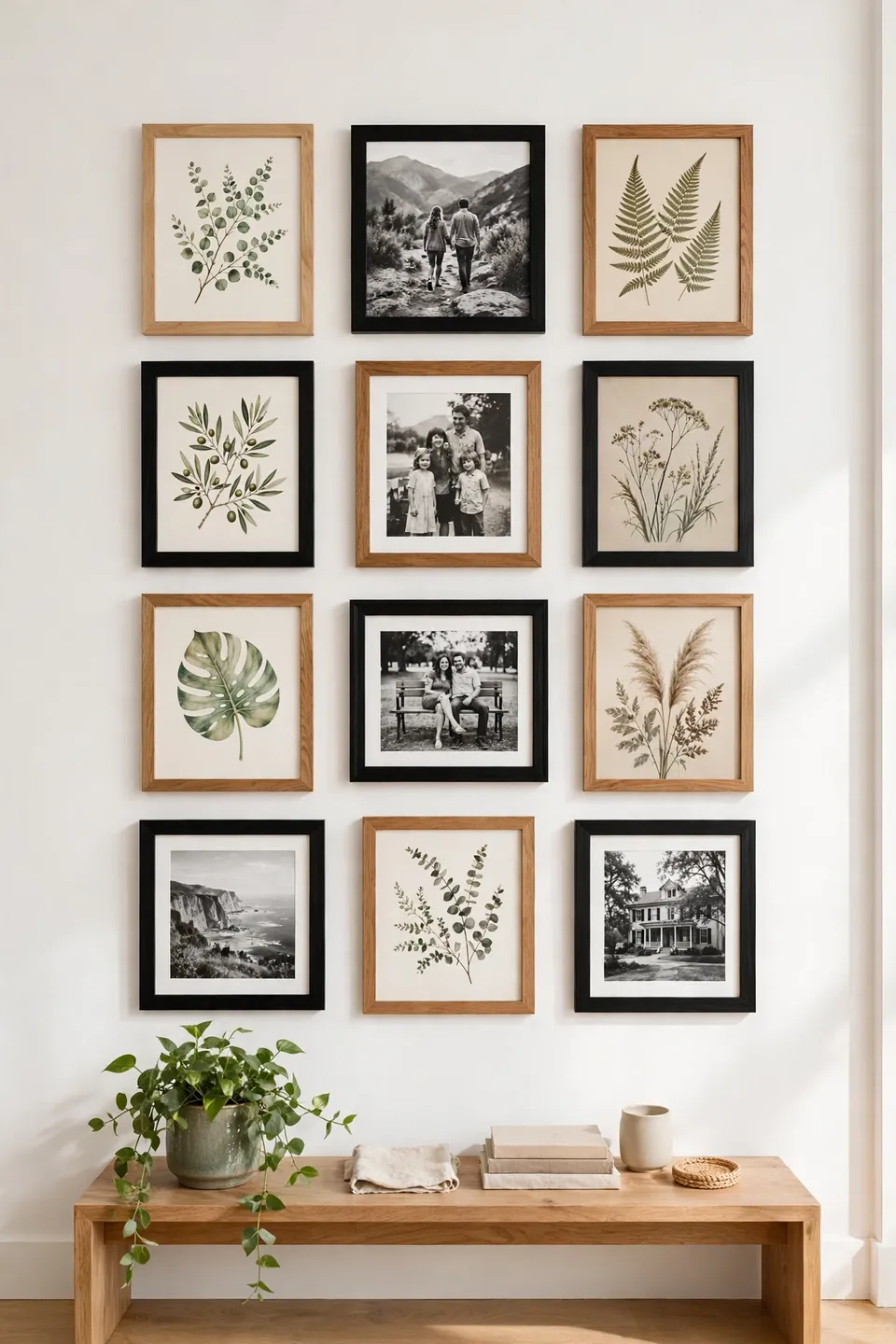
Quick Tip: Trace each frame onto kraft paper and tape the shapes to the wall first. Move them around until the arrangement feels full, then hammer the nails.
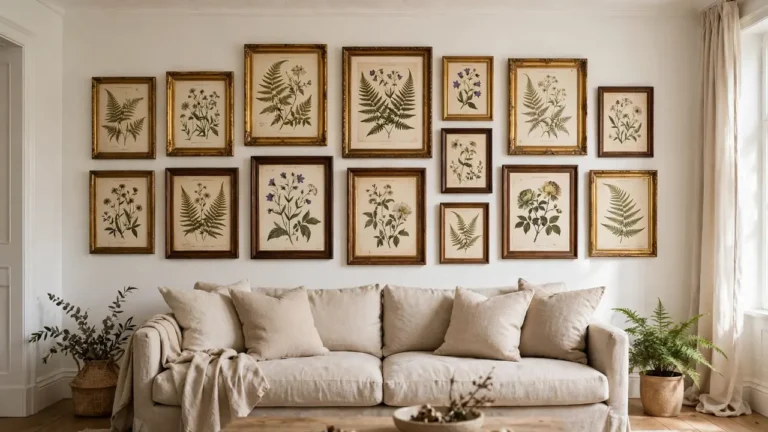
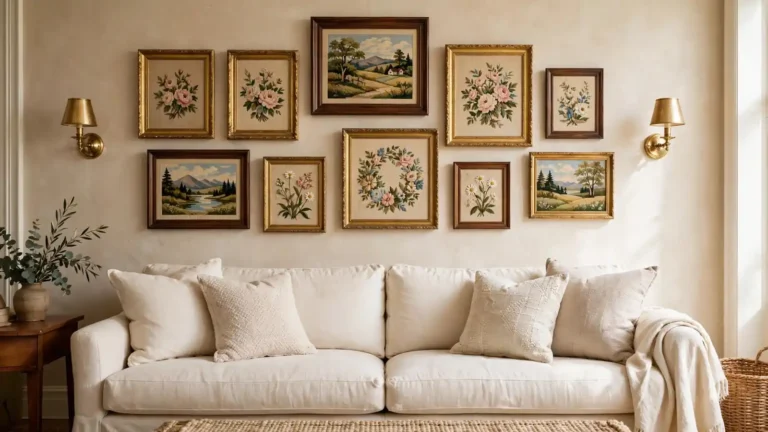
A gallery wall works best when it reads as one large composition rather than scattered dots. Keep frames close, about 2 to 3 inches apart, and let the outer edges form a rough rectangle. Mix photo sizes but stick to two frame finishes so the collection looks planned instead of random.
Layer Art With Furniture
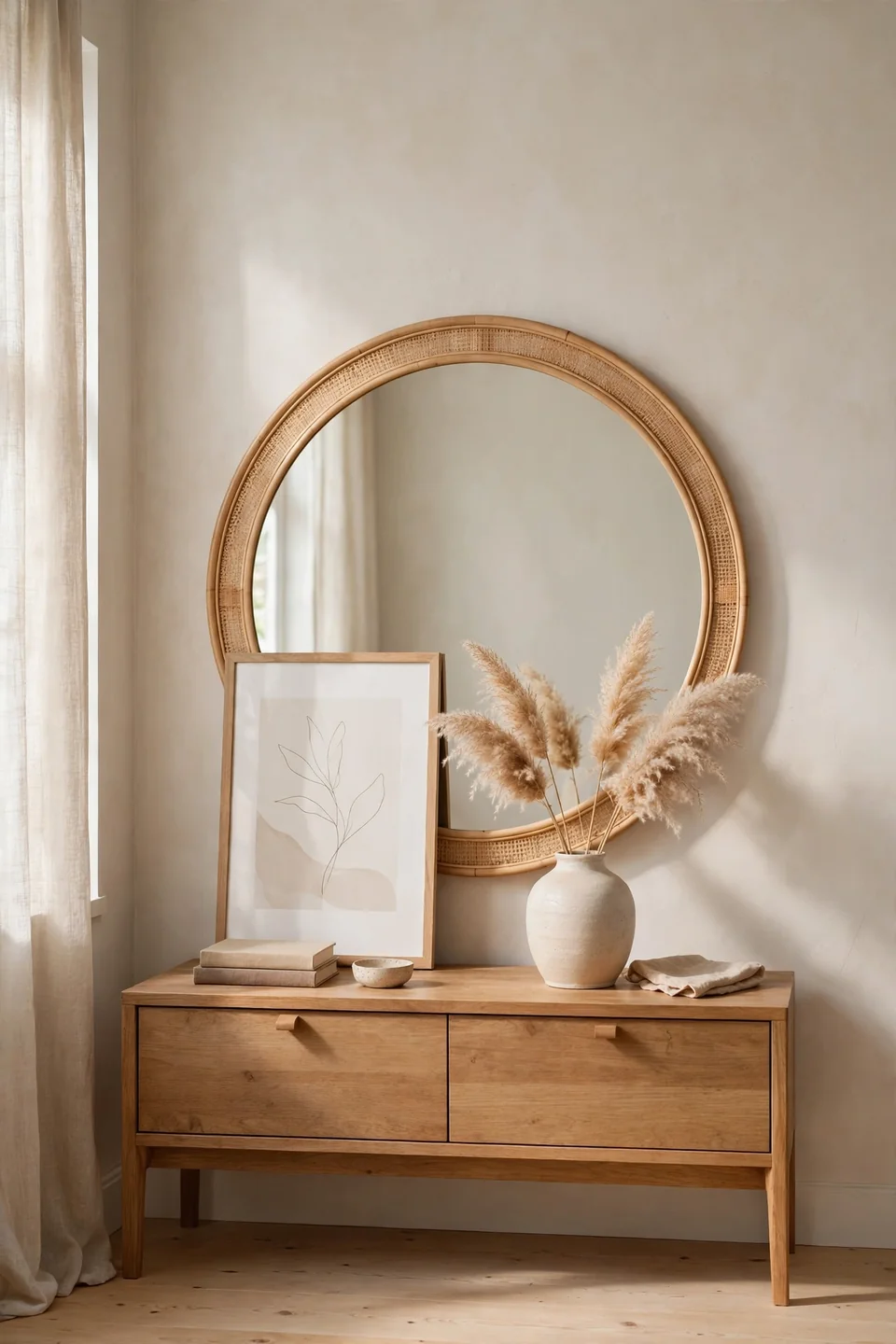
Common Mistake: Many people hang art high above the sofa with a big empty gap in between. The pieces never connect, so the wall still reads as blank.
The Fix: Pull the art down so the bottom of the frame sits 6 to 8 inches above the furniture. That small gap ties the two layers together and makes the whole wall feel styled.
Layering gives a tall wall depth instead of one flat plane. Try a console table with a mirror above it, then lean a smaller frame against the mirror. In my experience, overlapping pieces like this fill vertical space faster than any single item, and the room gains a finished, collected feel.
Add Tall Plants and Floor Pieces
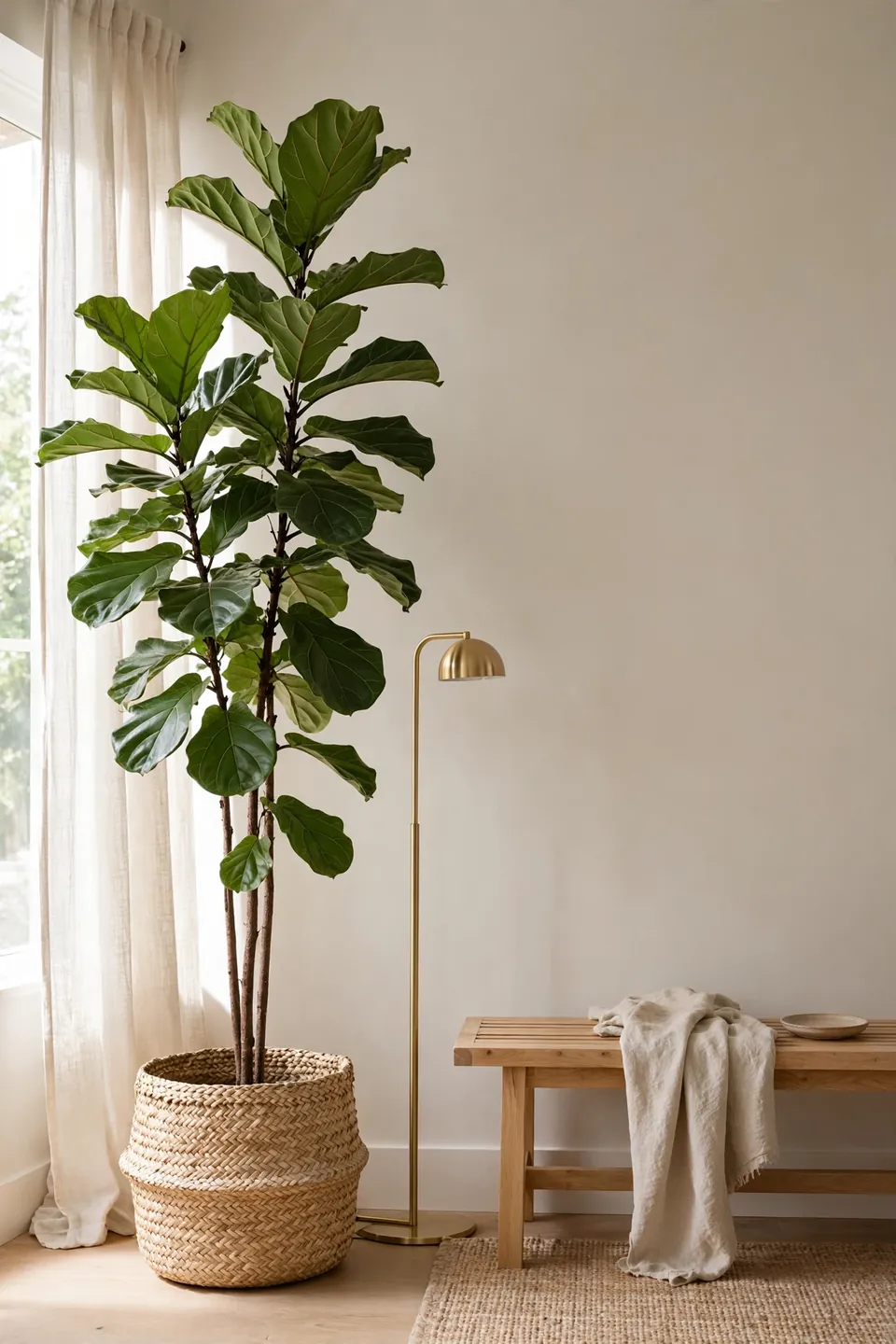
What You Need:
- A floor plant at least 4 feet tall, like a fiddle leaf fig, to claim vertical space.
- A woven basket or ceramic pot that echoes your room’s palette.
- A slim floor lamp to add warm light near the greenery.
- A low bench or storage ottoman to ground the base of the wall.
Plants are the fastest way to make a tall wall feel less empty because they bring life and height in one move. Place the tallest plant off-center rather than dead middle so the arrangement looks natural. I have seen this make a real difference in rooms where art alone felt too flat.
Paint or Panel a Bold Accent Zone
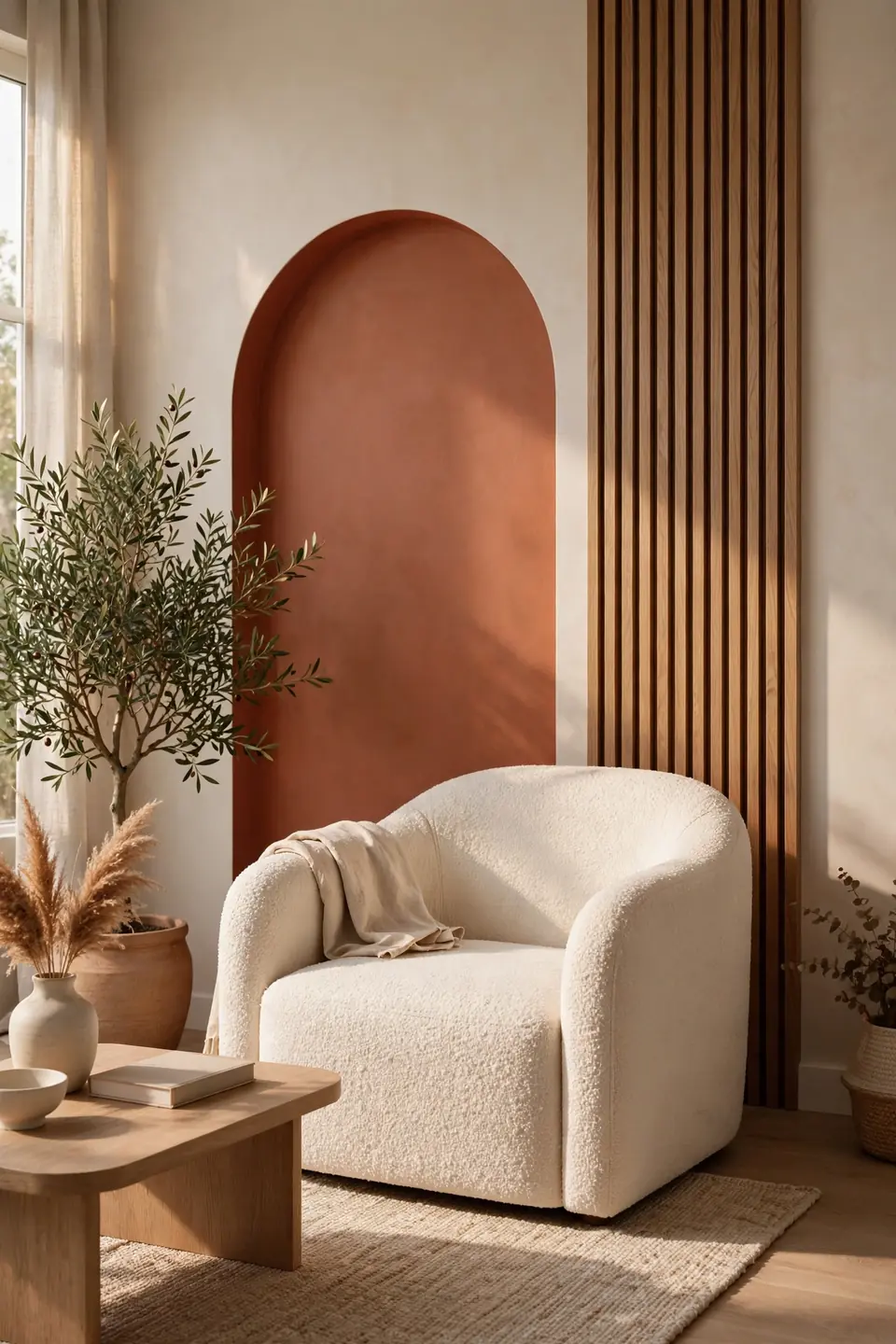
BEFORE: The wall stretches from floor to ceiling in flat white, and every piece you hang looks small against it. Nothing holds the eye, so the room feels unfinished no matter what you add.
AFTER: A painted arch or a few wood slats break the wall into a defined zone with its own color and texture. Suddenly the furniture below it looks intentional, and the whole corner feels pulled together.
You do not need to paint the entire wall. A wide color block behind the sofa creates a visual anchor. If your corner holds tricky windows, read our guide on how to arrange furniture around a bay window first. Test the color on a large board and live with it for a day before committing.
Mix Textures for Visual Weight
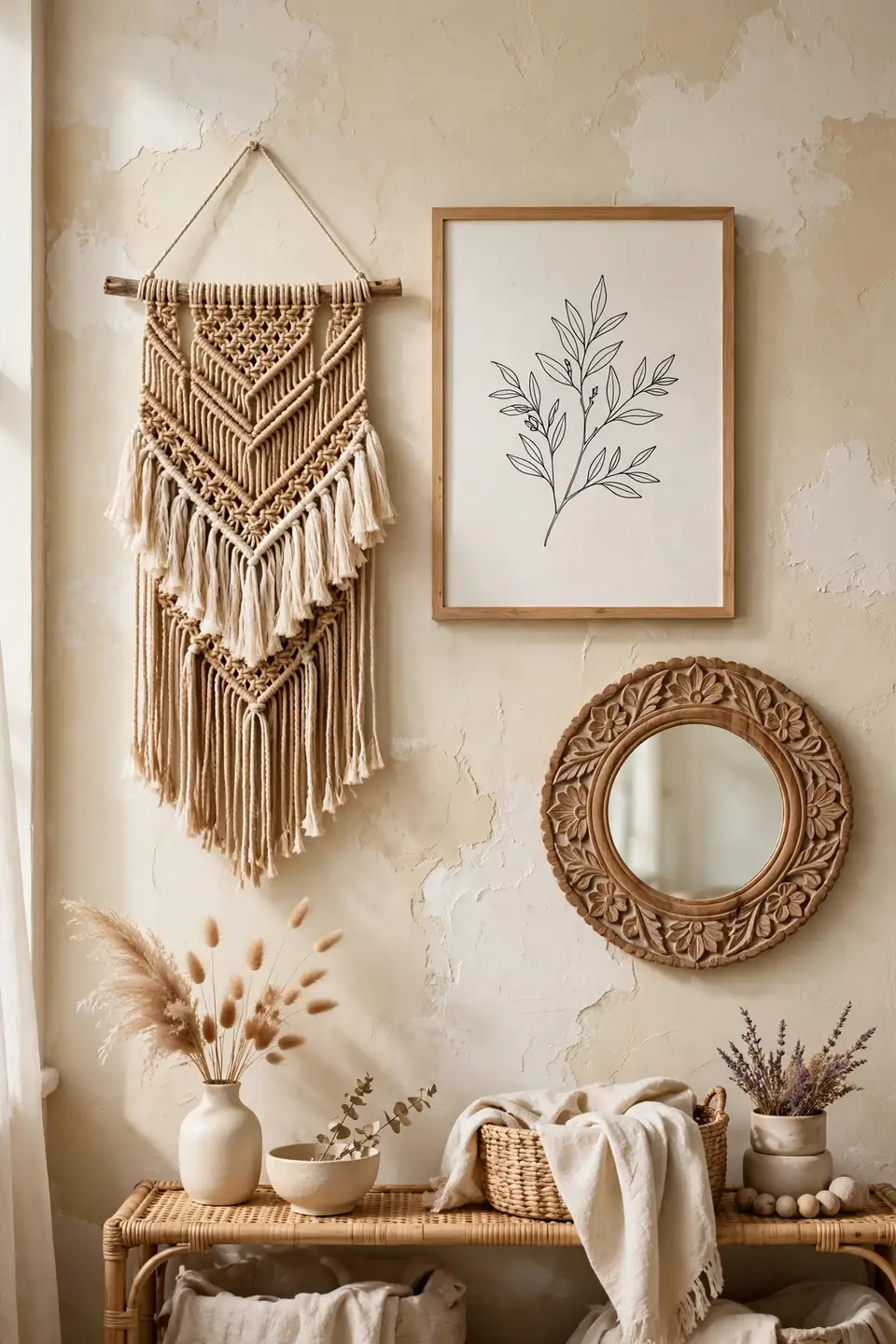
Do This:
- Hang a woven wall hanging next to framed art for softness.
- Add a macrame piece or fabric panel to break up hard surfaces.
- Use a carved wooden mirror to catch light and add depth.
Avoid This:
- Hanging only flat posters with no texture variation.
- Choosing pieces all in the same finish and weight.
- Leaving the bottom third of the wall completely bare.
Texture tricks the eye into feeling fullness even when objects are few. A chunky knit hanging beside a smooth metal frame gives the wall layers to explore. Keep the palette tight, with three or four tones, so the mix looks rich and inviting rather than busy.
Use Lighting to Sculpt the Wall
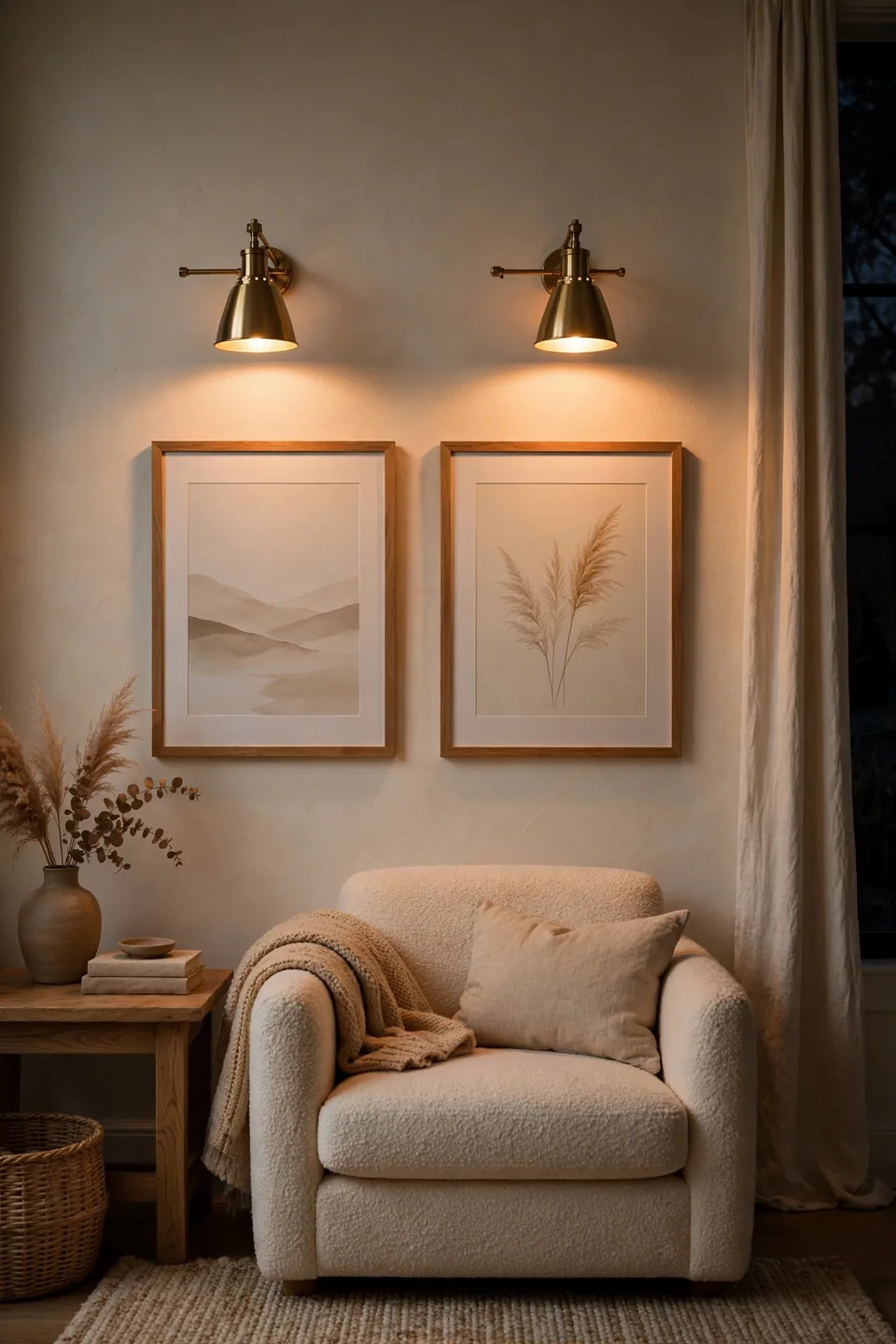
Time Needed: 20 minutes
Difficulty: Easy
Cost: Low to medium
Best For: walls that look fine by day but empty at night
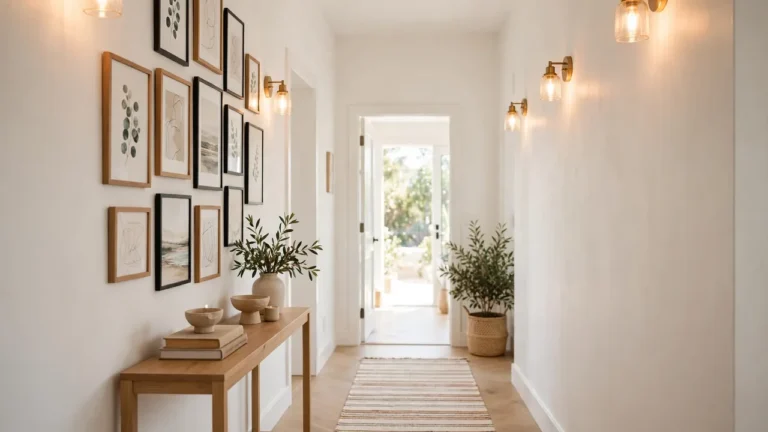
Light changes how full a wall feels after dark. A picture light above art or a pair of sconces flanking a mirror draws the eye across the whole surface. Warm bulbs make the wall glow and invite attention, so the space feels cozy instead of bare.
Create Zones With Floating Shelves
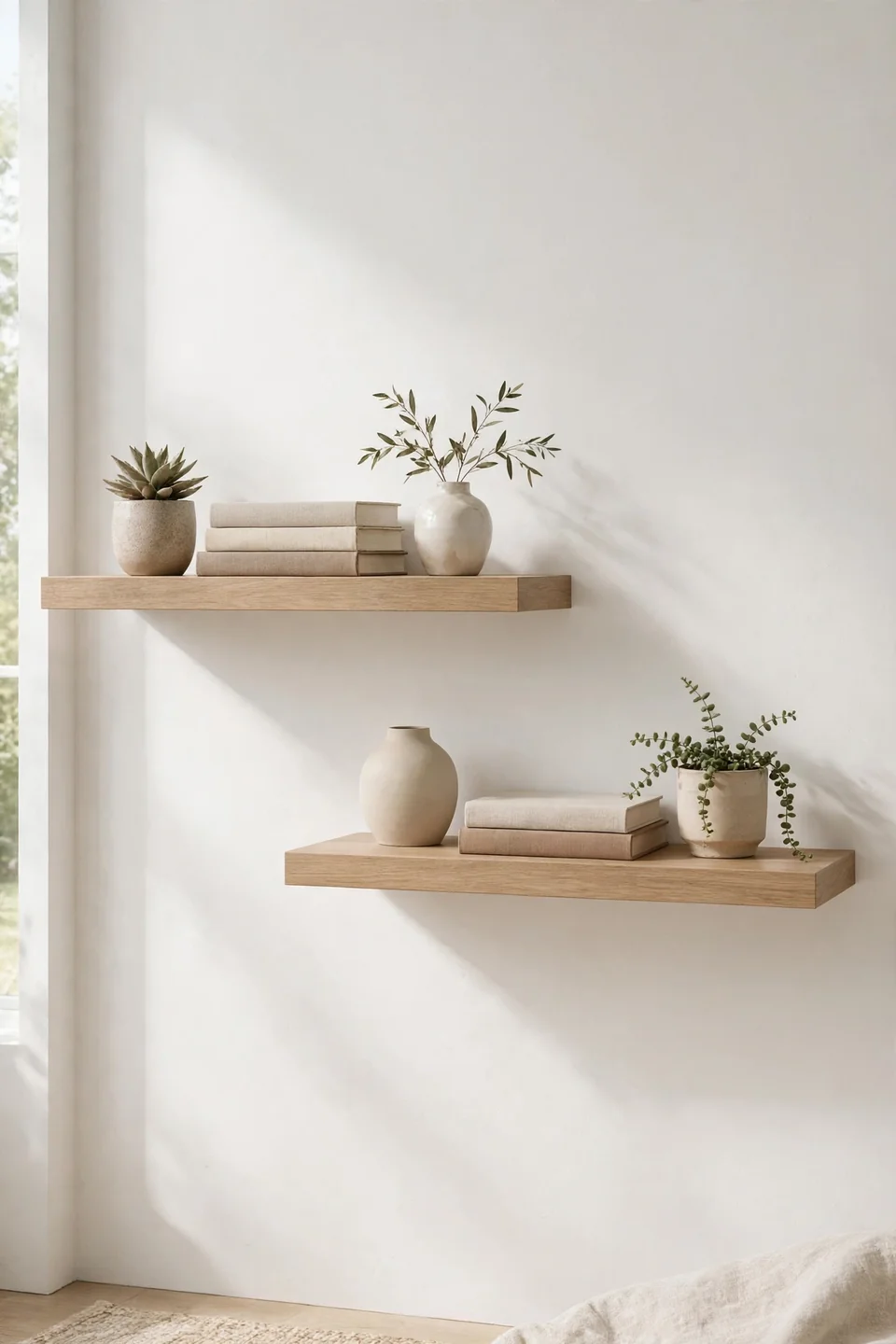
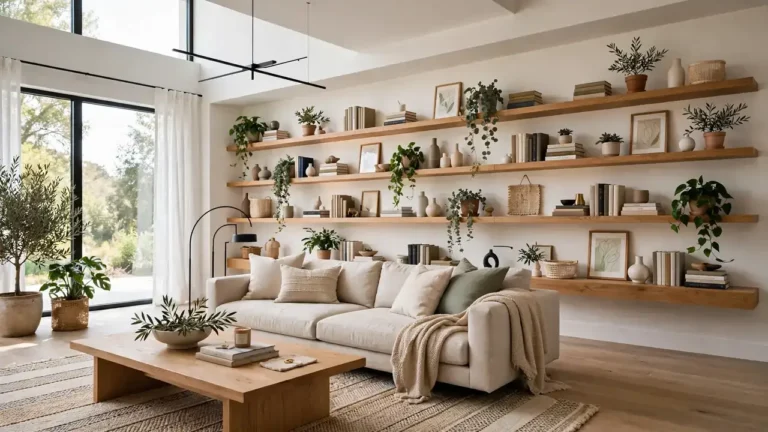
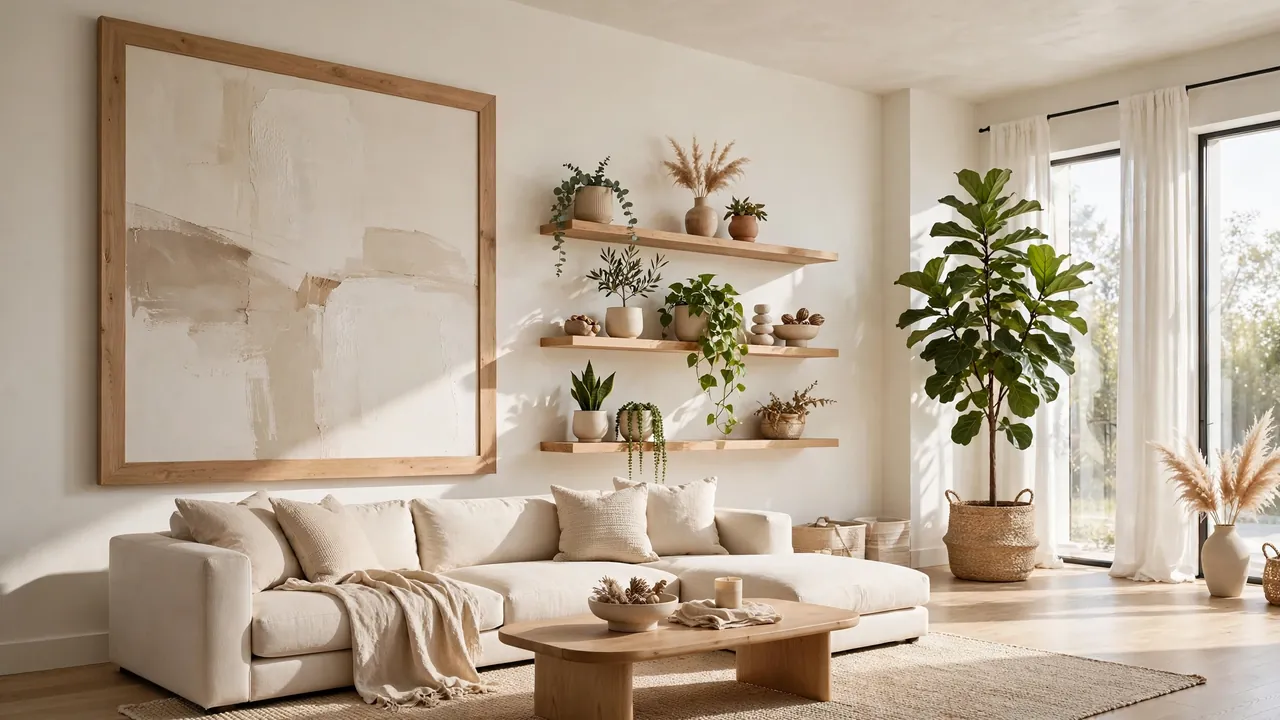
Floating shelves turn a blank wall into a living display that you can change with the seasons. Mount two or three long shelves in a staggered row and leave generous space between them. Each shelf becomes its own small scene with books, plants, and decorative objects.
Resist the urge to fill every inch. Negative space between objects is what makes shelves look styled instead of cluttered. Step back often and remove one item from any shelf that feels crowded. I have noticed that less truly is always more on open shelving.
Finish With a Style Audit
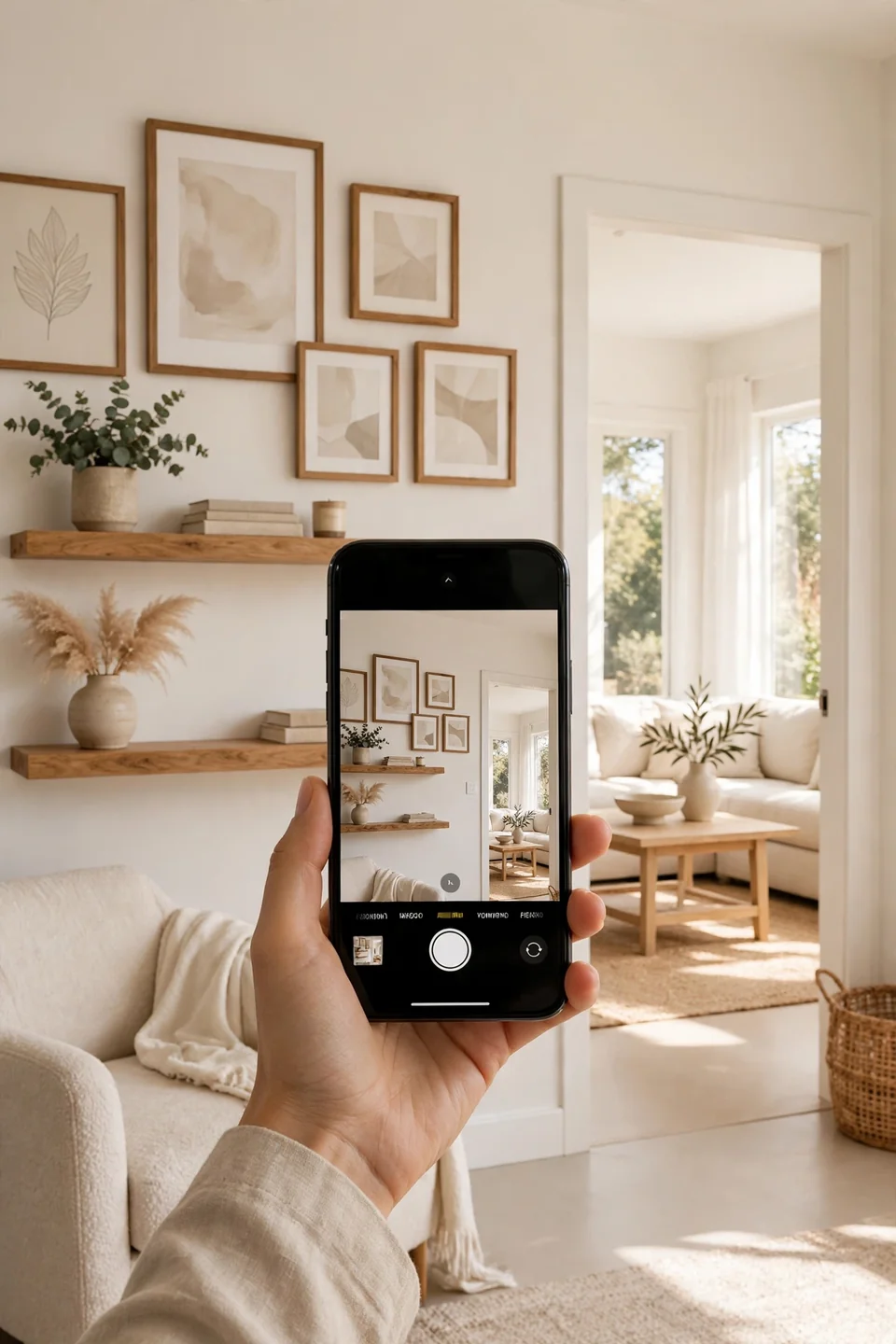
Before you call the wall done, do one final walkthrough. Stand at the doorway, squint slightly, and notice where the wall still feels thin or unfinished. A small tweak now saves you from a full redo later. Take your time with this last check.
- Check that the arrangement spans at least two thirds of the wall’s width.
- Confirm the color palette still matches the rest of the room.
- Tighten any loose frames and dust the tops of shelves.
- Snap a photo; the camera reveals gaps your eyes miss.
Conclusion
A large wall stops feeling empty the moment you give it scale, texture, and purpose. You now know exactly how to make a large open wall feel less empty using art, plants, shelving, and light. Start with one idea that fits your budget, then layer in more as you go.
Pin this guide to your home decor board on Pinterest so you can find it when you are ready to style. I have seen how making this one change can completely shift the feel of a room. Your wall is waiting.