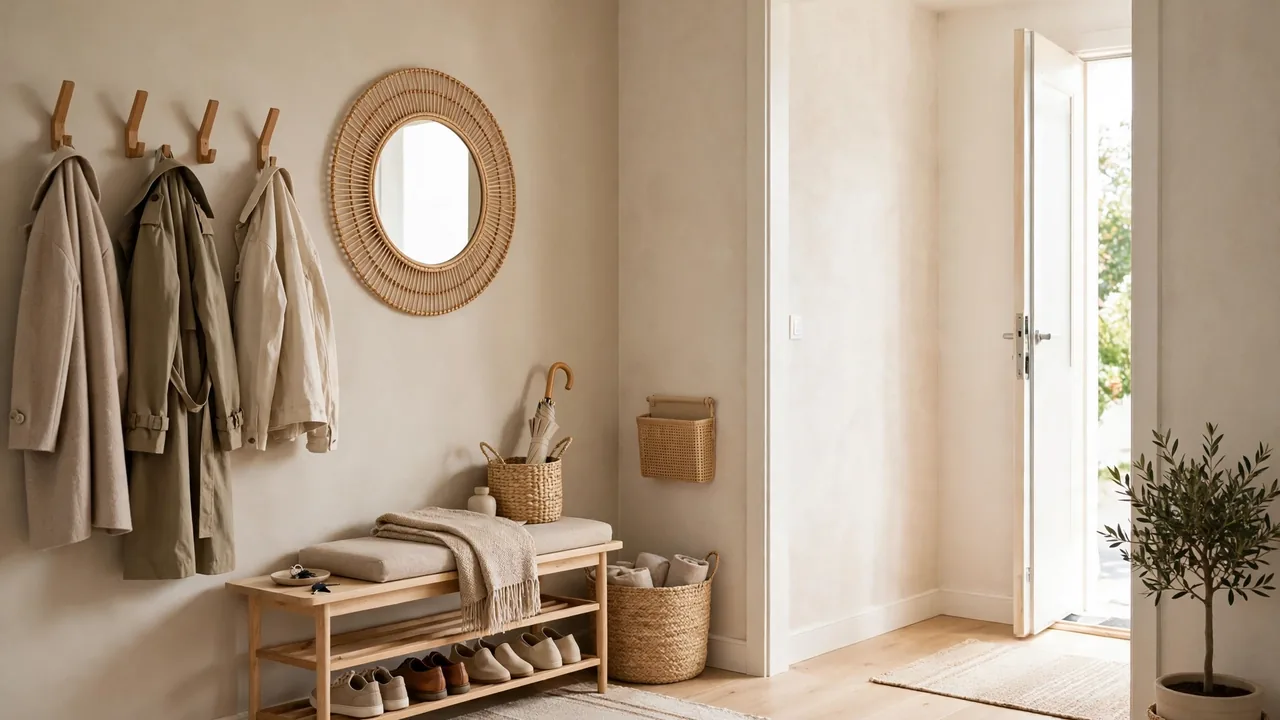
How to Create a Drop Zone in a Small Home
Every home needs a landing spot for keys, bags, and shoes, and learning how to create a drop zone in a small home makes daily routines smoother from the moment you walk in. Without a plan, clutter piles up fast.
In my experience, small homes feel twice as messy when the entry has no system. Coats land on chairs, mail stacks up on counters, and shoes scatter across the floor. A simple drop zone fixes all of this in one small corner.
This guide walks you through every step, from finding the right spot to keeping it tidy for good. You will see how it connects with ideas in how to decorate a living room with a large window, since entries and living rooms often share light and flow.
Why Drop Zones Matter
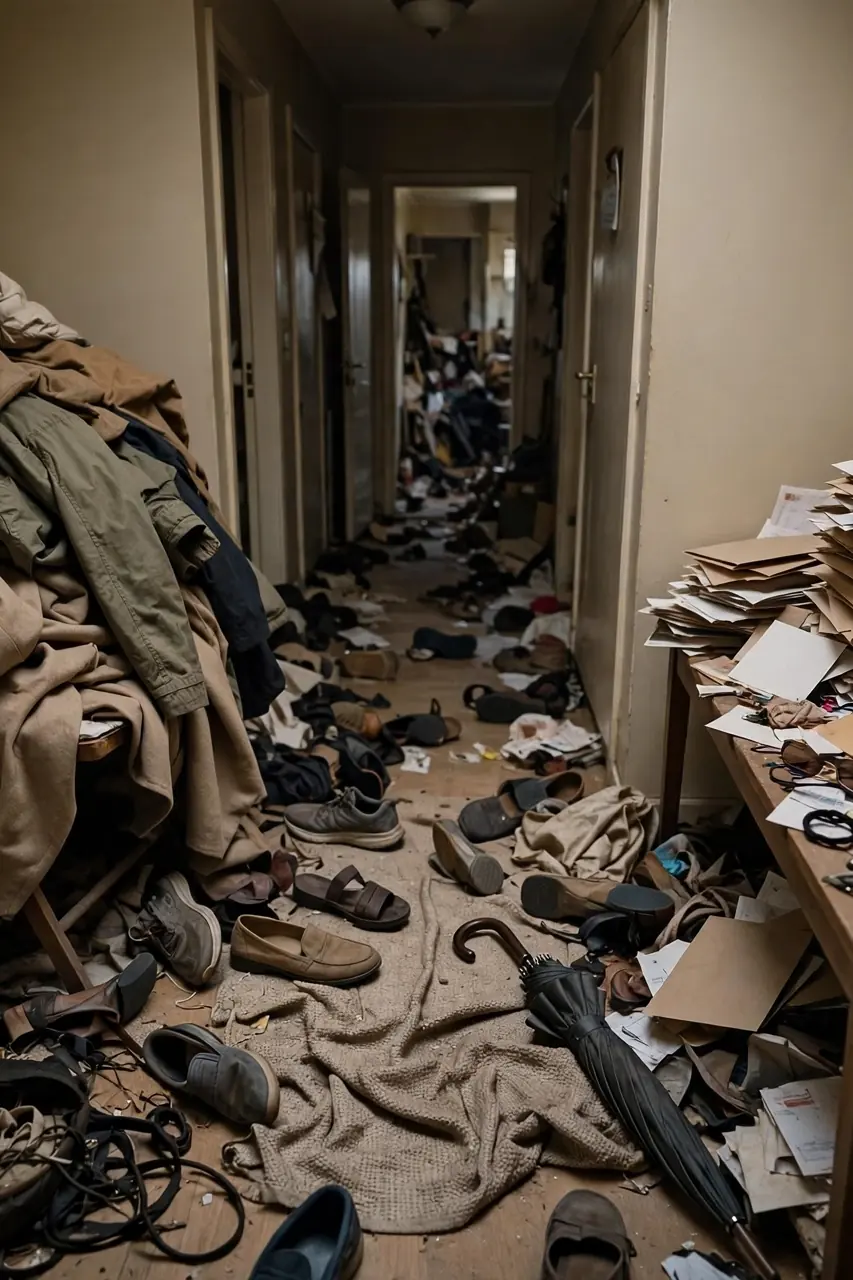
A drop zone gives every coming-and-going item a home of its own. Keys stop vanishing, bags stop blocking the hallway, and shoes stop piling by the door. That one small but mighty station quietly sets the tone for your whole house.
Without one, even a tidy home feels chaotic within minutes of arriving. The entry is the first thing you see and the last thing you touch before leaving, so it shapes your whole day. Get this corner right and the rest of your home feels so much easier to manage.
Find Your Spot
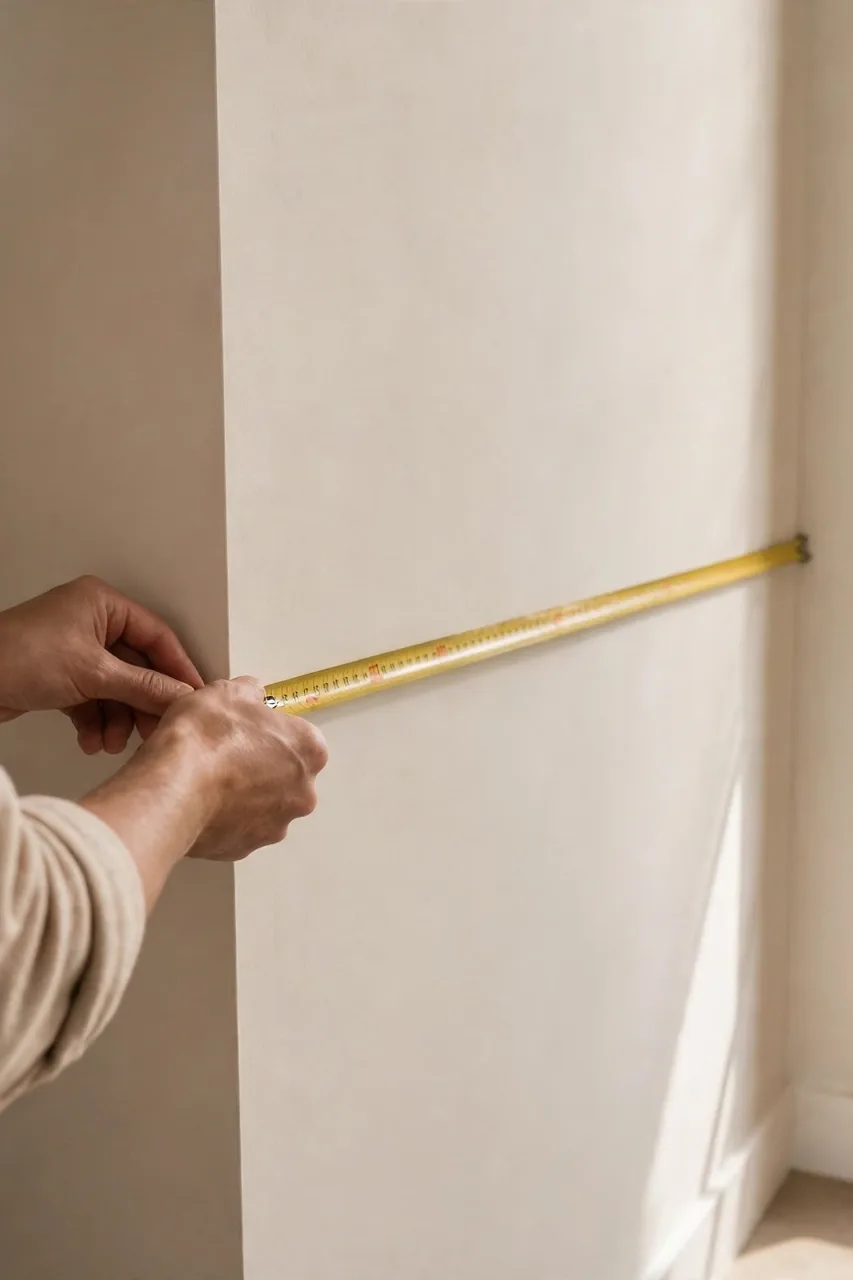
The best drop zone lives where you naturally pause when you walk in. Watch your own routine for a day and notice where bags land and keys get tossed. That instinctive spot is where your station belongs, even if it is just a narrow wall.
- Stand at your front door and note the first surface you reach; that is your prime zone.
- Measure the space so new pieces fit without blocking the doorway or walkway.
- Pick a wall or corner within arm’s reach of the door for hooks and a small bench.
- If no wall is free, claim a slim console or shelf right beside the entrance.
Add Wall Hooks
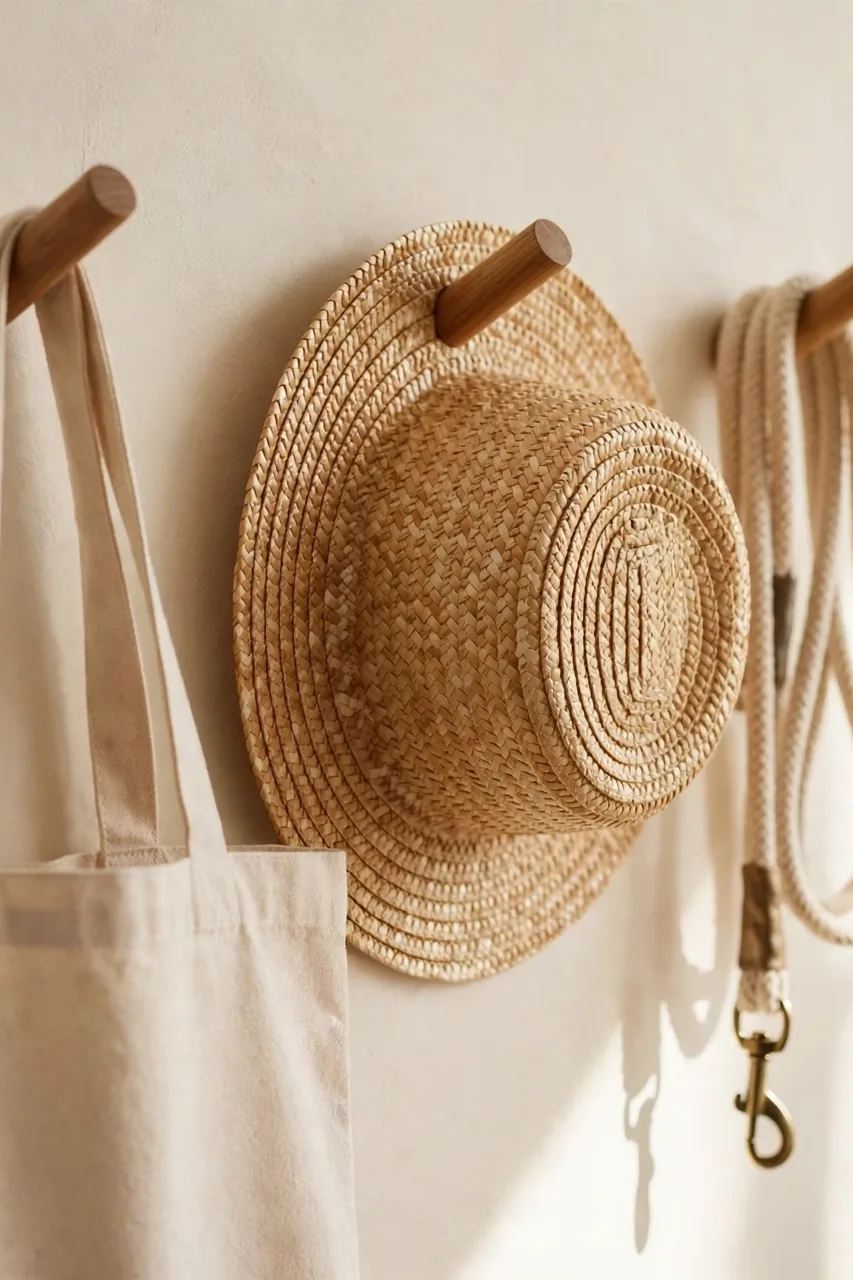
Quick Tip: Mount hooks at two heights so adults and kids each get their own row. Stagger them by a few inches for a neat look. Choose sturdy hooks rated for heavy coats and bags.
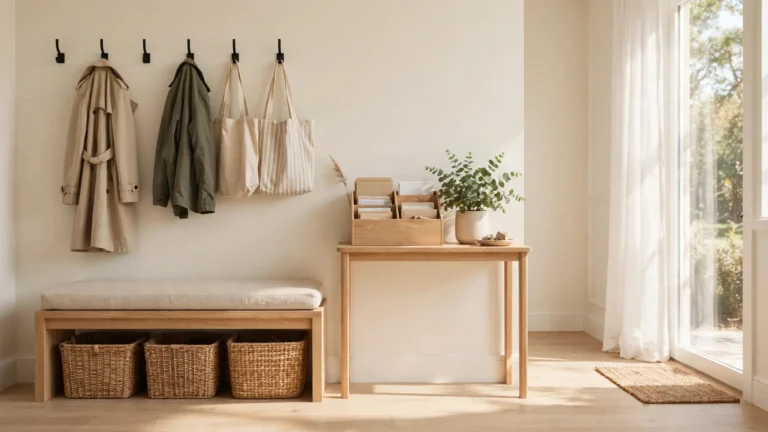
Wall hooks turn bare walls into hard-working storage without using floor space. Hang coats, leashes, hats, and reusable bags where you can grab them in seconds. Leave one hook empty on purpose so guests and extras always have a place to land. This simple habit keeps the wall looking tidy instead of overloaded.
Use a Slim Bench
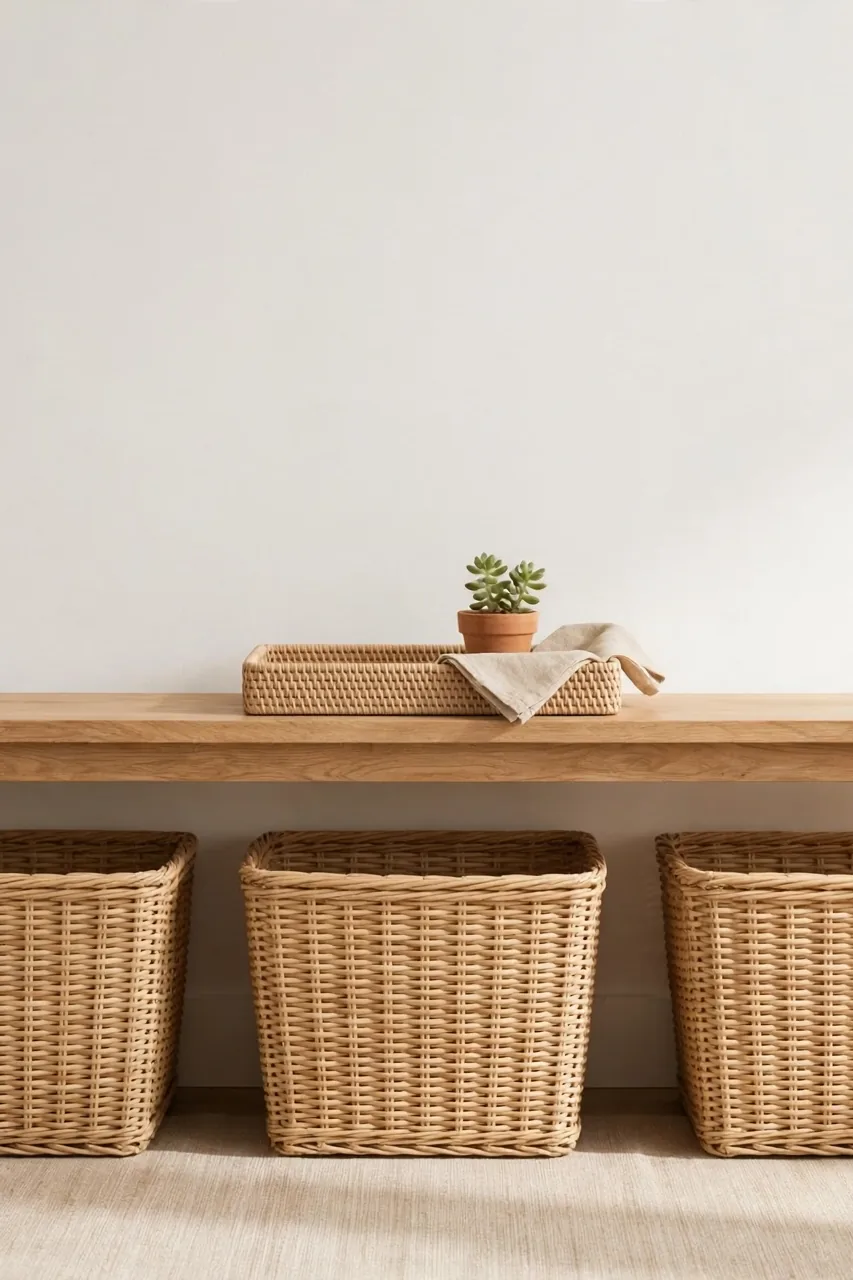
Common Mistake: Many people squeeze in a deep bench that eats the whole walkway. It becomes a dumping ground for clutter instead of a helpful seat. Traffic jams at the door make the entry feel smaller.
The Fix: Choose a bench no deeper than 12 to 14 inches so it hugs the wall. A slim bench still seats you for shoe changes and hides baskets underneath. Keep the top clear for a tray and one small plant.
The right bench earns its place by doing three jobs at once. It offers a perch for pulling on shoes, a lid or shelf for hidden storage, and a landing spot for bags. Measure twice before you buy so it fits your wall without crowding the door.
Corral Shoes
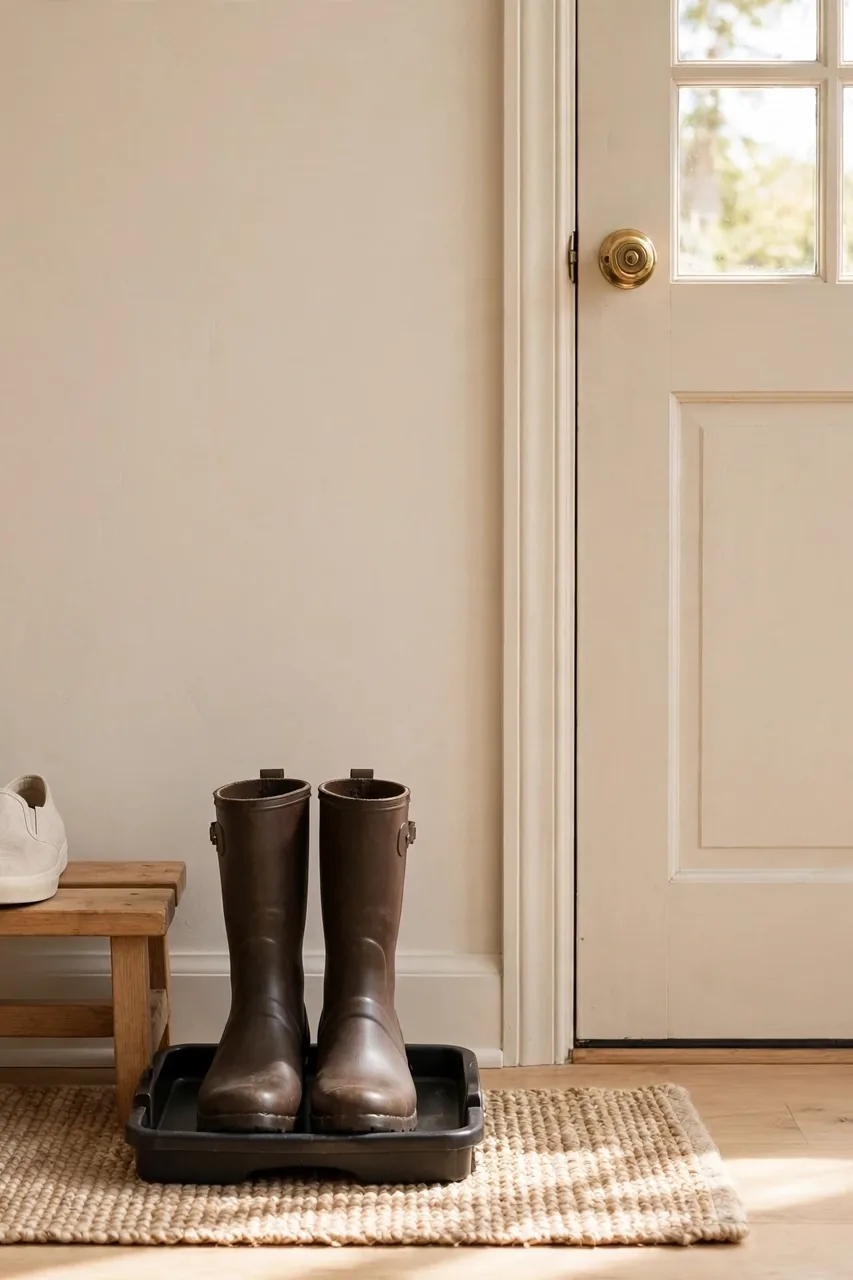
What You Need:
- A low shoe rack: keeps pairs visible and off the floor in a slim footprint.
- A boot tray: catches mud and rain so floors stay clean.
- Labeled bins: give each person one box for their own shoes.
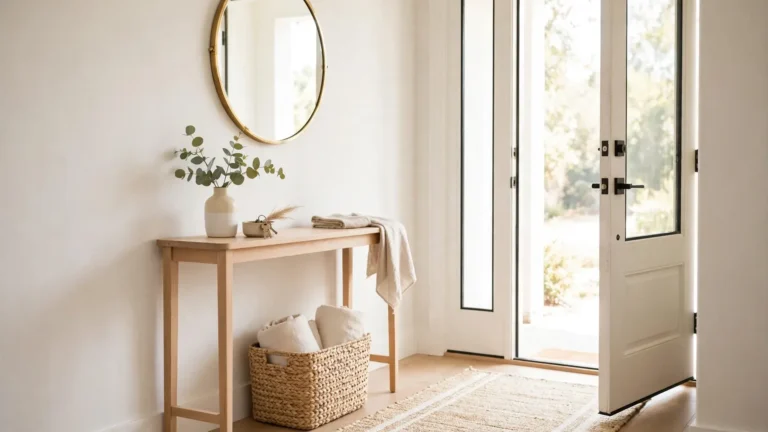
- A small rug: defines the shoe zone and adds warmth.
- Door hooks: hold slippers or flip-flops you grab daily.
Shoes multiply fast, so give them strict boundaries from day one. When you learn how to create a drop zone in a small home, the shoe area is where most people see the biggest change. Limit each person to three active pairs and store the rest elsewhere.
Add a Mirror
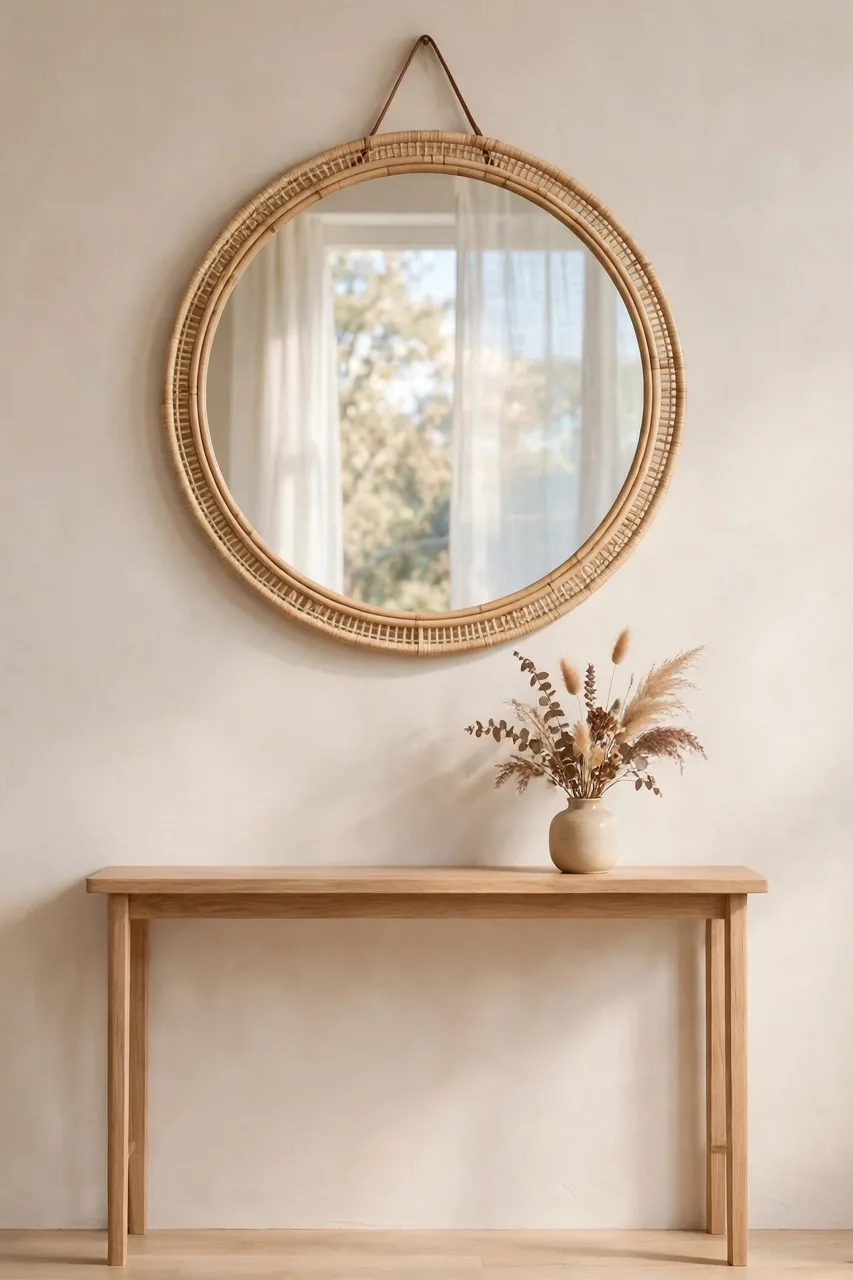
Before: The entry feels dark and boxed in, and you leave without checking how you look. The space reads as a passage you rush through instead of a room you enjoy.
After: A mirror bounces light around and doubles the sense of space. Quick outfit checks become effortless, and the wall suddenly feels finished and welcoming.
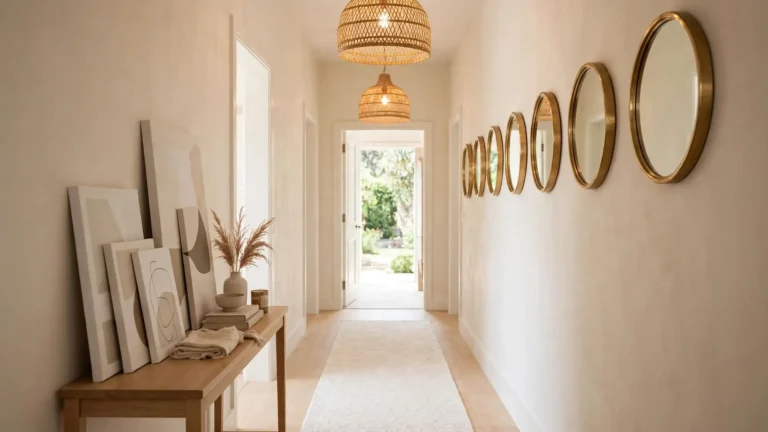
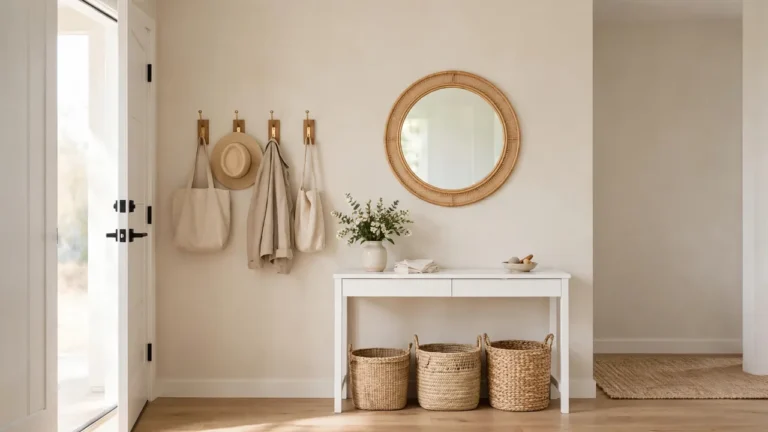
Hang the mirror at eye level where it catches the most light, ideally across from a lamp or window. A round or arched shape softens tight corners better than a sharp rectangle. Keep the frame slim so it reads as decor, not bulk, and wipe it weekly for a clear shine.
Go Vertical
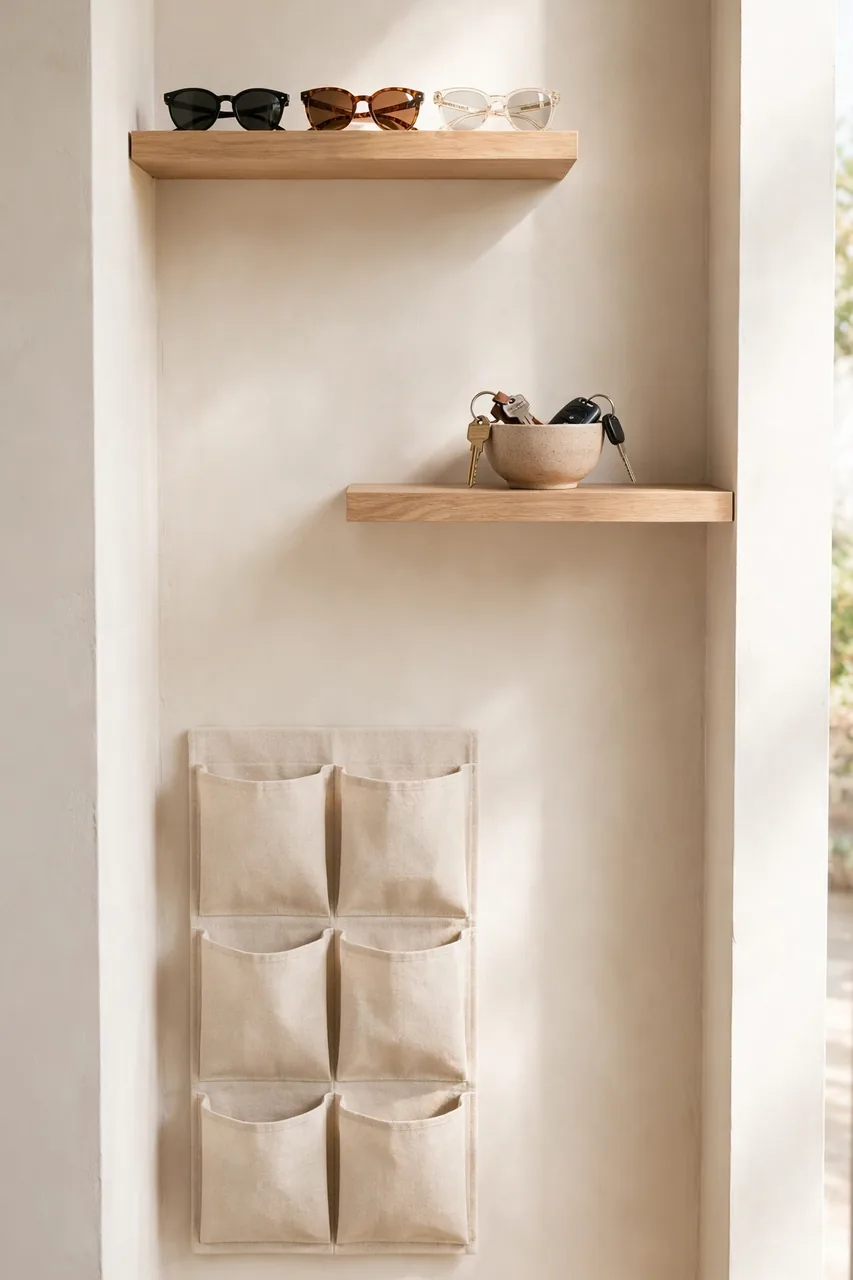
Do This:
- Mount a floating shelf above the bench for sunglasses and keys.
- Add a tall, narrow cabinet if floor space allows one.
- Hang a wall organizer with pockets for mail and small items.
Avoid This:
- Do not stack boxes on the floor where they block the door swing.
- Do not hang shelves so high you cannot reach them daily.
- Do not crowd every inch of wall; leave breathing room.
Vertical storage multiplies what a tiny entry can hold without stealing floor space. Think in layers: hooks at hand height, a shelf above, and baskets below the bench. Every item gets a level, so nothing lands on the floor by default. This layered approach keeps even the smallest entry feeling open and calm.
For more small-space ideas, see how to arrange furniture in a small sunroom.
Keep It Tidy
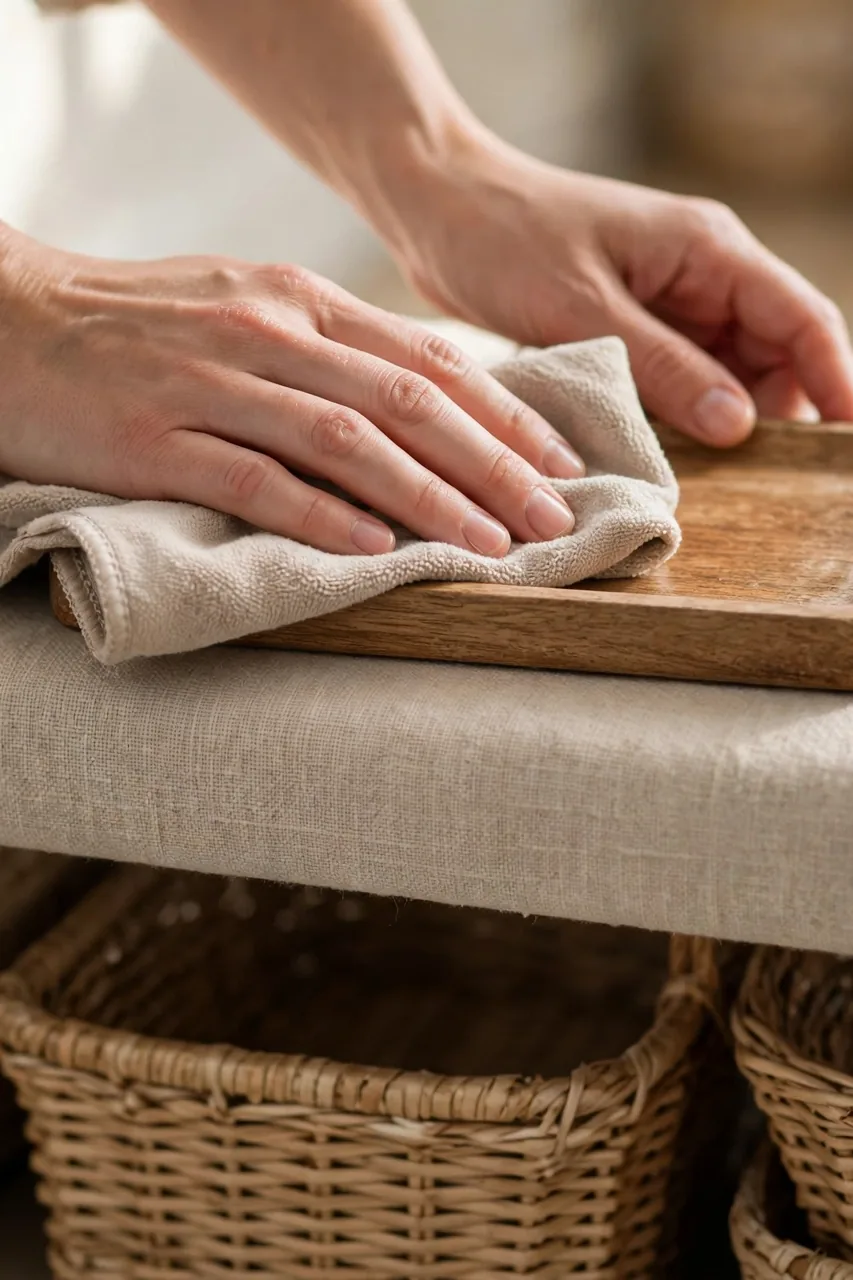
Time Needed: 10 minutes a week | Difficulty: Easy | Cost: Low, mostly baskets and hooks | Best For: Entries that collect clutter fast
A drop zone only works if it stays tidy, so build a tiny weekly reset into your routine. Return stray items to their rooms, wipe the tray, and toss expired coupons and junk mail. Five minutes on Sunday keeps Monday mornings calm. Small effort, big payoff for your daily flow.
Common Drop Zone Mistakes

The biggest mistake is making the zone too complicated to use. If putting keys away takes more than two seconds, you will skip it. Complicated systems die fast, while simple ones stick for years. Every extra lid, latch, or compartment adds friction your tired evening self will not bother with.
Another trap is letting the bench become a mail mountain. Sort paper the moment it arrives and recycle junk. Keep decor minimal so the station reads as calm storage, not another cluttered surface. Give every paper a home or a bin the day it enters, and the pile never forms.
Pro Tips for Tidy Entries
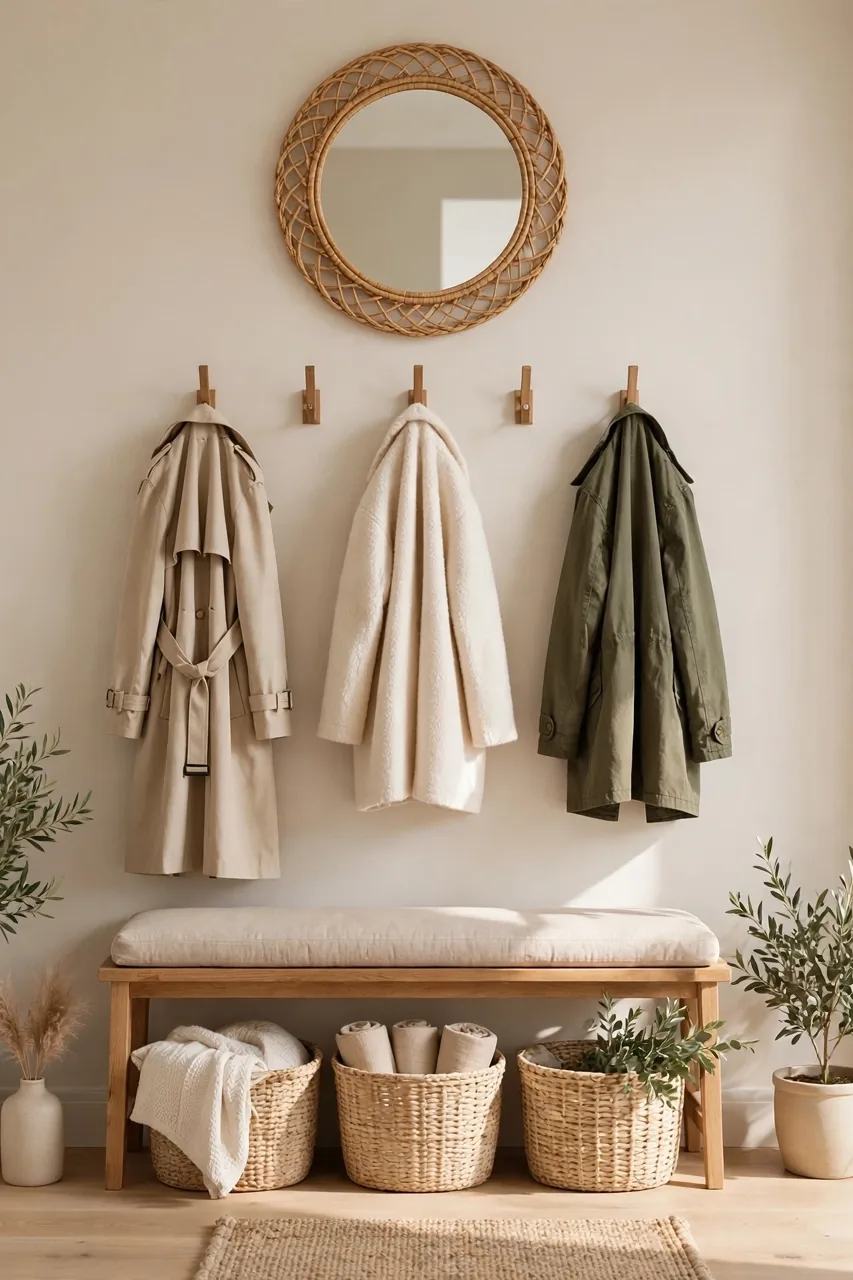
These small upgrades make your drop zone work even harder without any big spending. Each one takes minutes but pays off every single day you walk through the door. Pick the two that fit your space and start there today.
- Add a small tray on the bench so keys and sunglasses always land in one spot.
- Label each basket with a family member’s name to end mix-ups for good.
- Place a lidded bin nearby for out-of-season gear you rarely grab.
- Hang a small chalkboard or notepad for reminders on your way out.
Conclusion
A calm entry changes how your whole home feels, and now you know exactly how to create a drop zone in a small home that actually lasts. Start with one hook and one basket, then build from there as the habit sticks. Save this guide on Pinterest so you can find it when you are ready to set yours up. I have seen how one small corner can turn hectic mornings into smooth ones, and yours can too. Take it one step at a time and enjoy the process of shaping a space that truly serves you.
One Comment