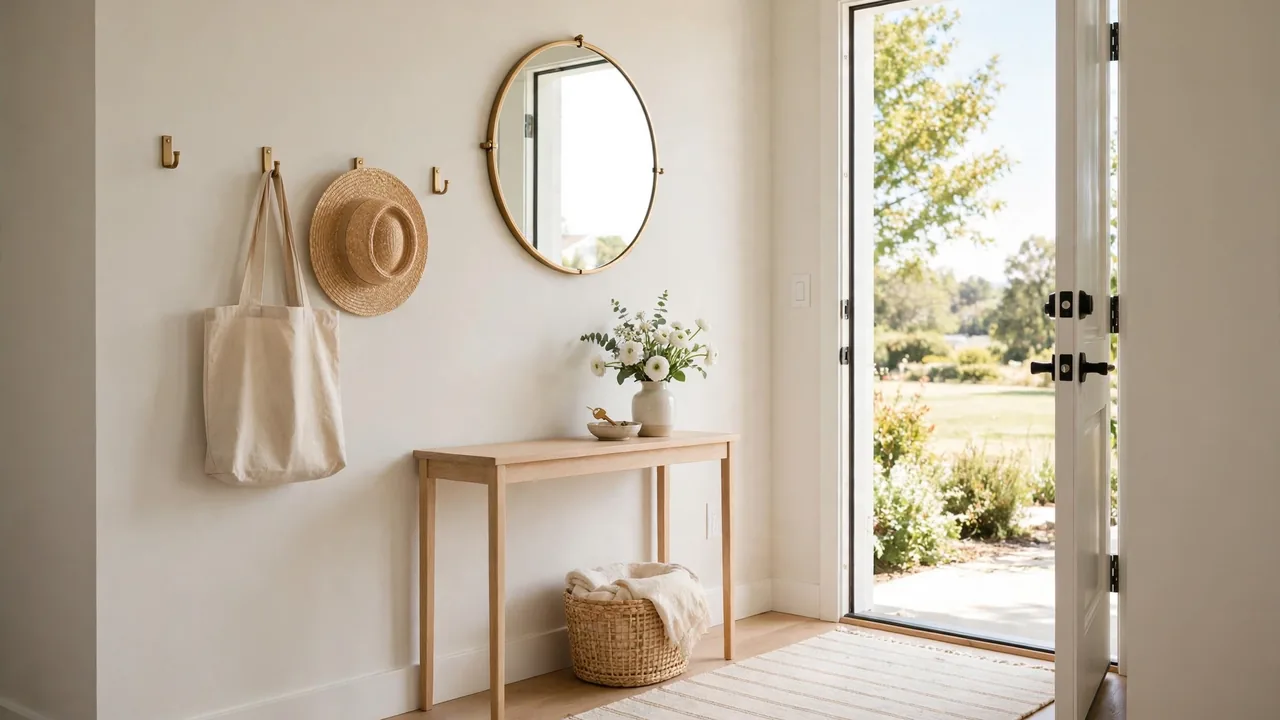
How to Make a Small Entryway More Functional
Your front door opens and there is nowhere to put your bag. Keys land on the floor, shoes pile up, and that tiny space feels useless. If you are wondering how to make a small entryway more functional, you are not alone.
In my experience, even the smallest nook can work hard with a few smart changes. A narrow wall can hold hooks, a slim table can catch mail, and the whole space can greet you like a proper room. For more room-by-room ideas, read how to decorate a bedroom with mismatched furniture.
This guide walks you through ten practical steps, from defining the space to daily habits that keep it tidy. By the end, your entryway will feel calmer, more useful, and ready for busy mornings.
Why Small Entryways Feel Useless
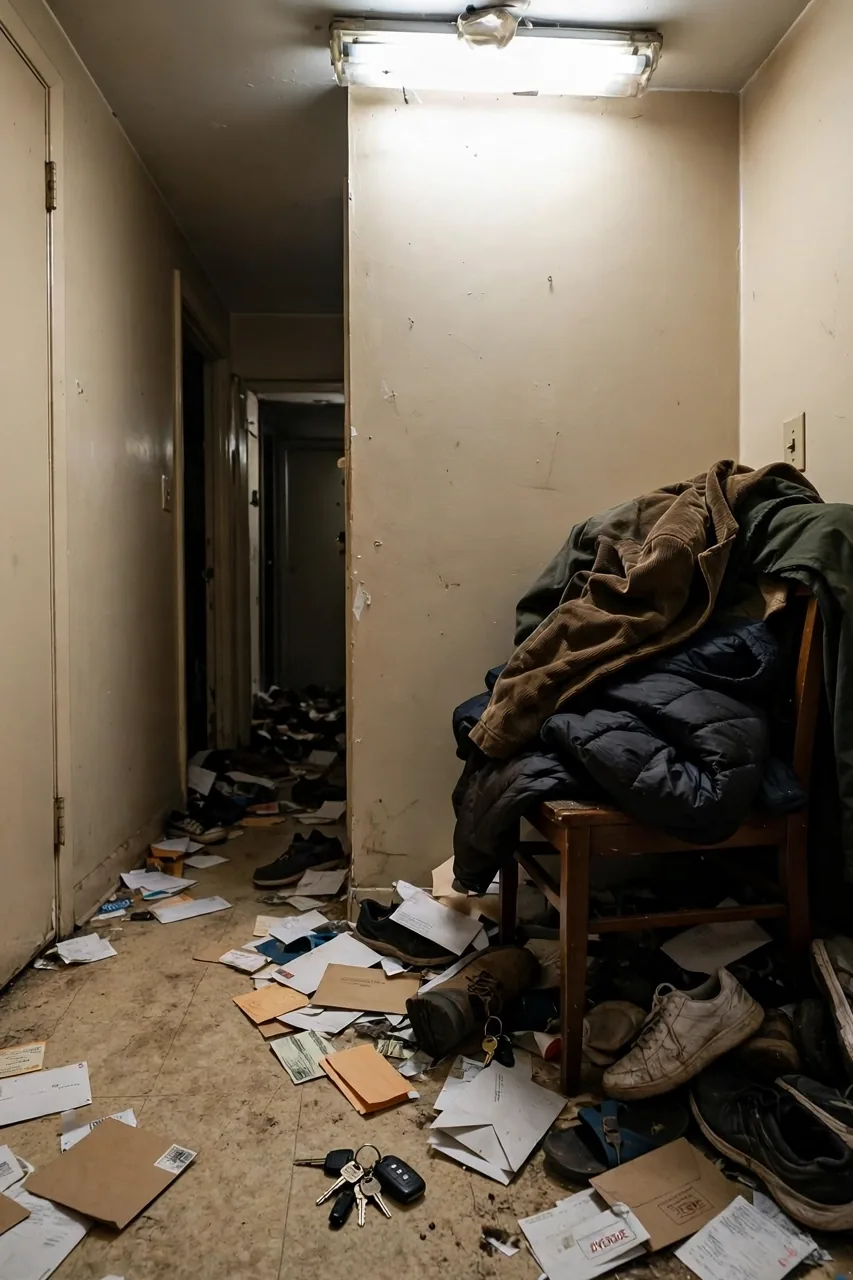
Small entryways collect everything the rest of the house does not want. Bags, coats, shoes, mail, and keys all land in the same two square feet because there is no system to catch them. Without defined spots, clutter spreads fast and the space starts working against you instead of for you.
The good news is that size is rarely the real problem. Most entryways fail because nothing has a home, not because they are small. Once every item gets a designated spot, even a narrow corner can handle the daily rush without stress.
Define the Space
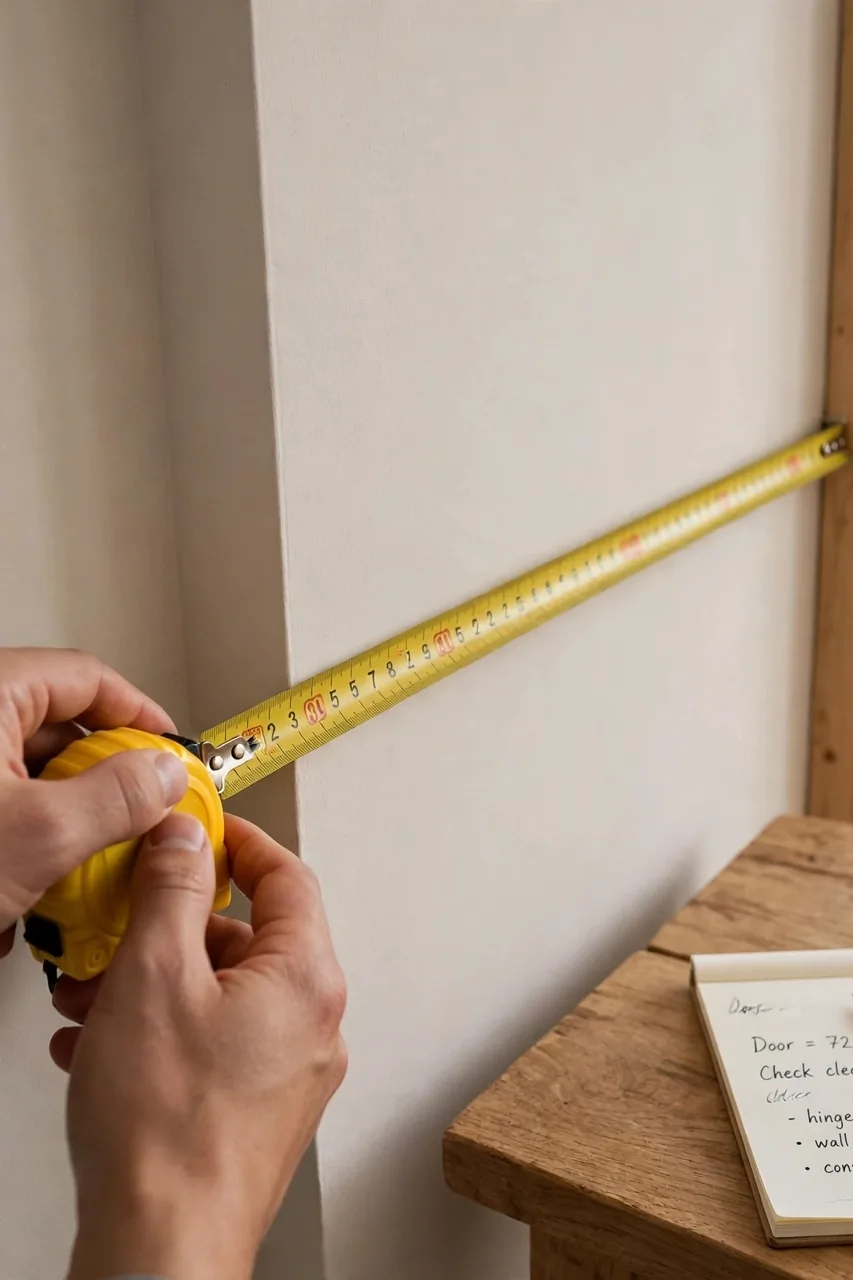
Before buying a single hook, take ten minutes to define what your entryway actually is. Most people skip this step and end up with storage that fights the room. A clear plan makes every later step easier, cheaper, and faster without any guilt.
- Measure your wall space and floor area so you know exactly what will fit.
- List the items that land there daily: shoes, keys, bags, mail, and coats.
- Decide which items need a permanent home and which can move elsewhere.
- Sketch a rough layout on paper, marking hooks, shelves, and the walking path.
Add Wall Hooks
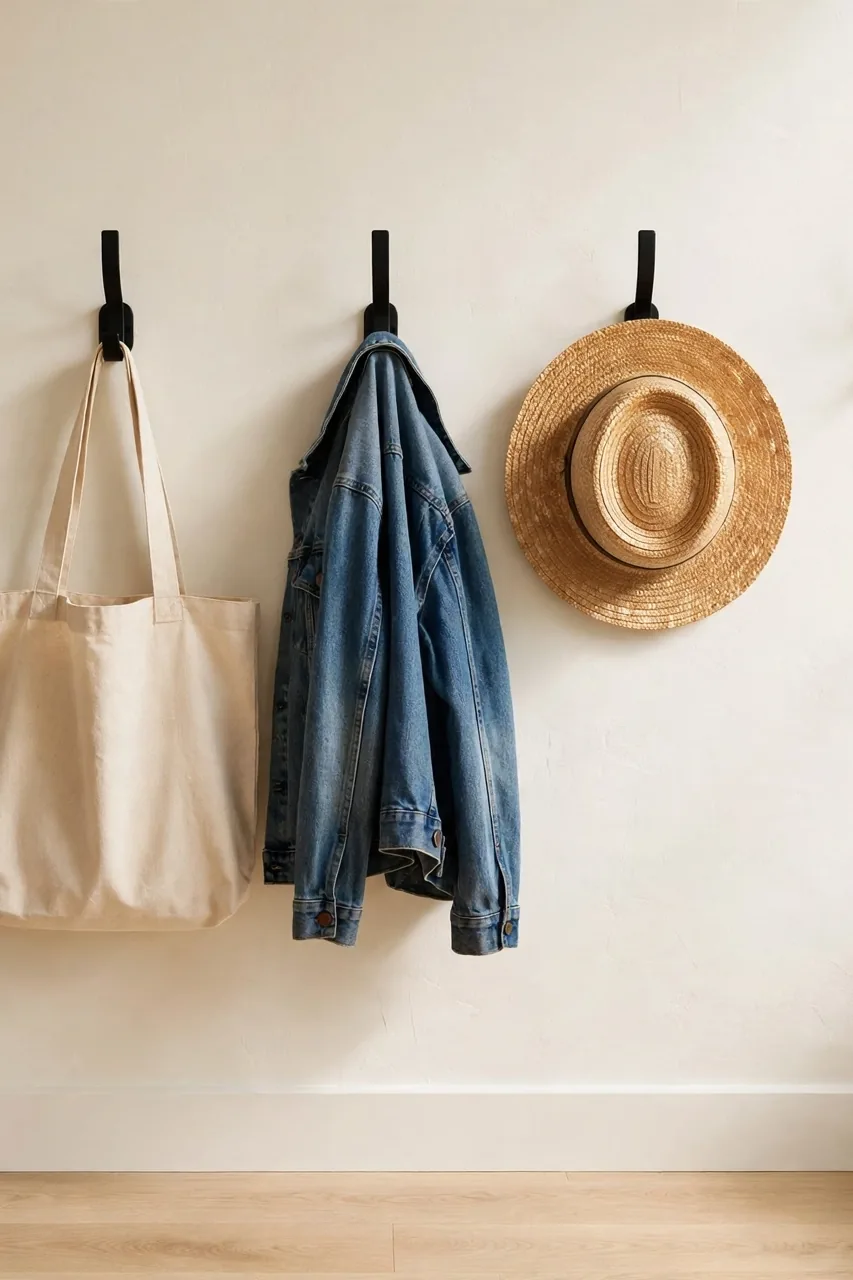
Quick Tip: Hooks beat shelves in tight entryways because they use vertical wall space instead of precious floor area. Install one hook per family member at a height everyone can reach. Stagger the heights if kids share the space.
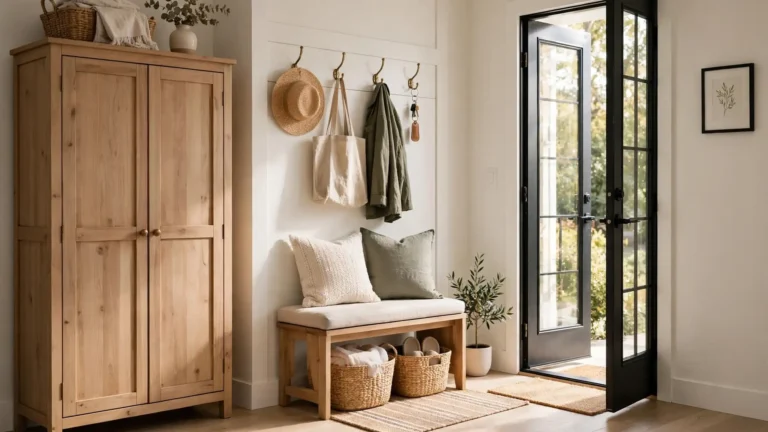
Wall hooks are the fastest way to add function to a small entryway. They hold coats, bags, scarves, and dog leashes without taking up any floor space. Choose sturdy metal hooks, mount them into a stud or use strong anchors, and space them eight inches apart for easy grabbing.
Use a Slim Console
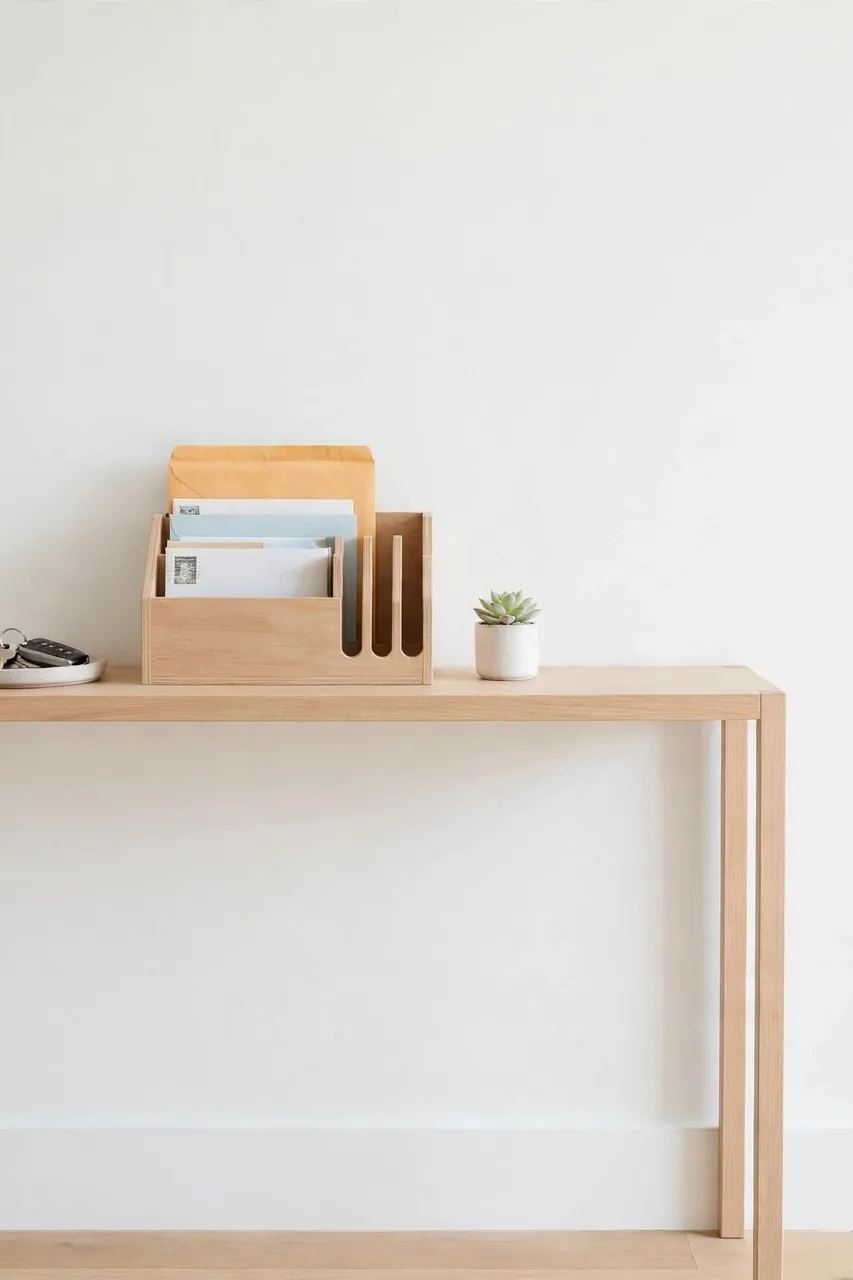
Common Mistake: Most people push a bulky console table into a narrow entryway and call it done. The table eats the walking path, mail piles on top, and the space feels tighter than before. Big furniture in a small entryway creates the exact problem it was meant to solve.
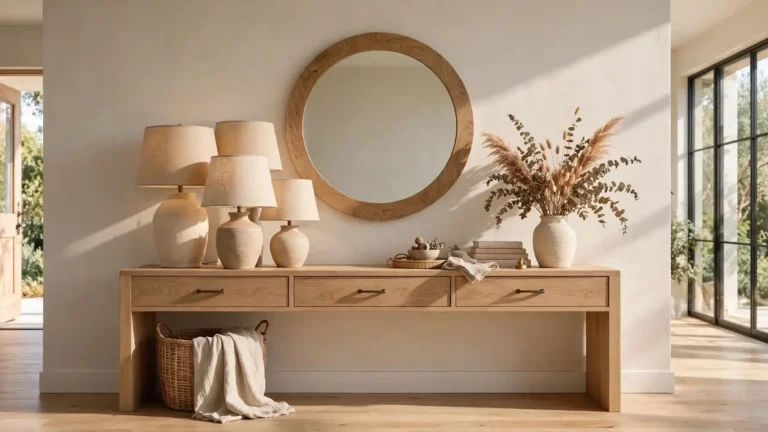
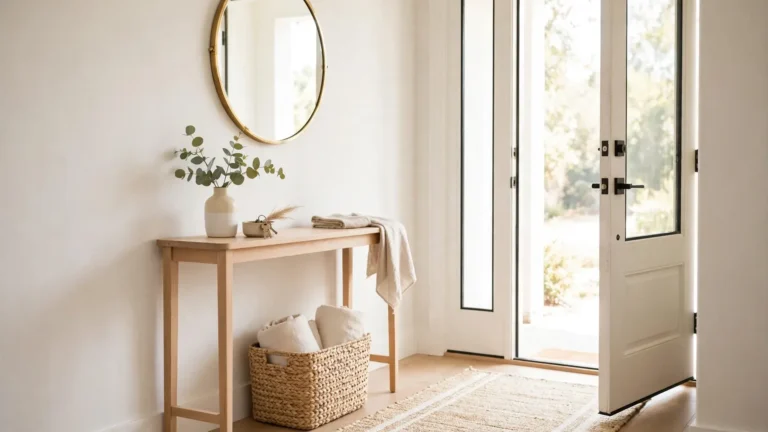
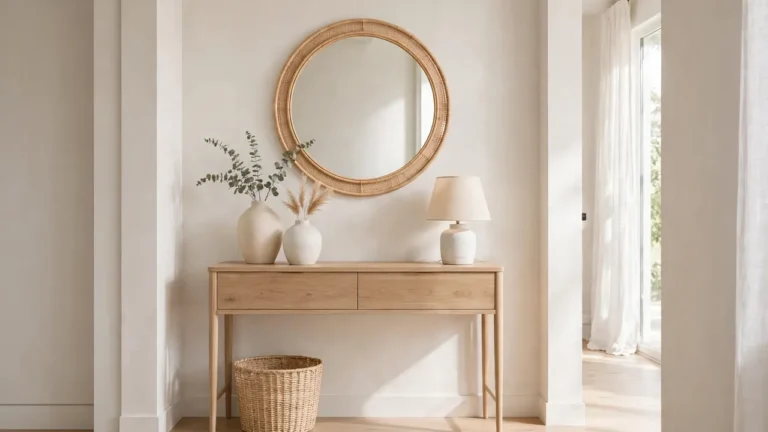
The Fix: Choose a console no deeper than ten inches so it hugs the wall. A slim table still catches keys and mail but leaves the walkway clear. Look for open or leggy designs that let light pass through and keep the floor visible.
A slim console works like a landing strip for your daily carry. Keys drop in a small tray, mail slides into a sorter, and sunglasses rest in a dish. Everything stays visible and reachable, yet nothing blocks the door swing or your stride on busy mornings.
Corral Shoes
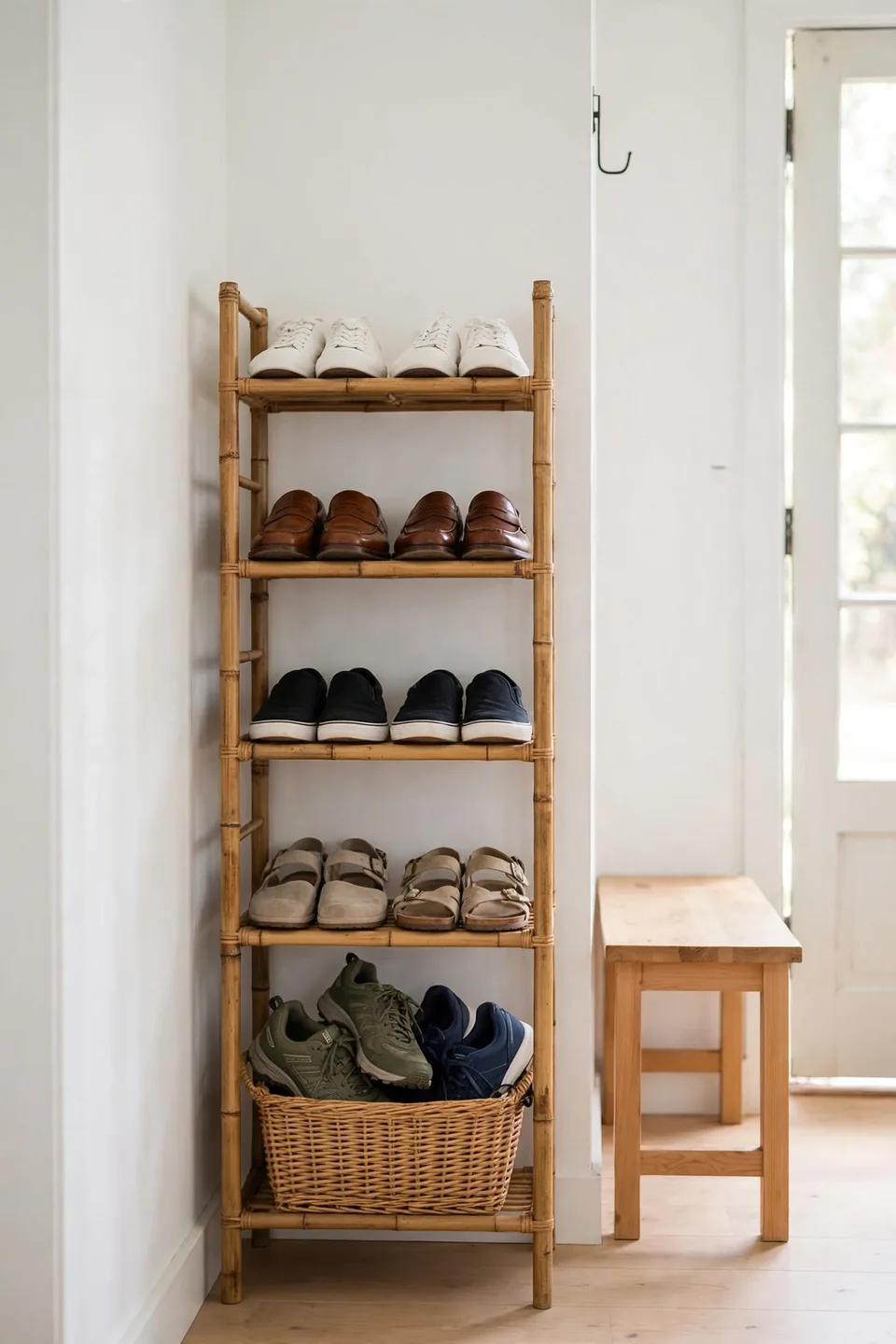
What You Need:
- Slim shoe rack: keeps up to eight pairs stacked vertically instead of sprawled across the floor.
- Under-bench baskets: hide off-season shoes and gear out of sight but within reach.
- Shoe tray by the door: catches wet or muddy shoes on rainy days.
- Over-door rack: adds extra pairs without using any floor space.
- Small bench: gives you a spot to sit while tying laces.
Shoes are the fastest clutter source in any entryway, and knowing how to make a small entryway more functional starts with taming them. A dedicated shoe system keeps pairs paired and floors clear. When every shoe has a home, the whole entryway feels calmer the moment you walk in.
Add a Mirror
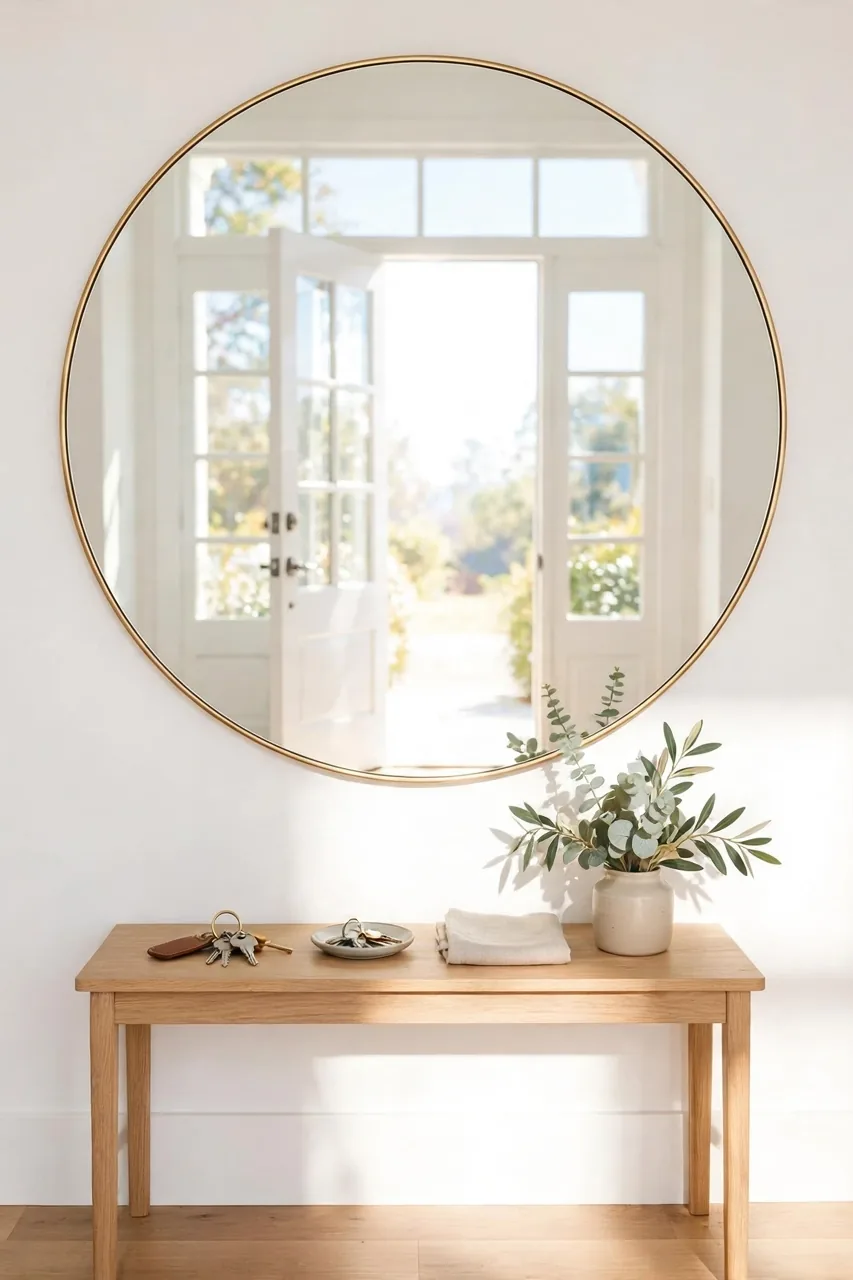
Before: Without a mirror, a narrow entryway feels like a dark tunnel. You rush through without glancing back, and the space gives nothing back. It is purely a passage, not a place.
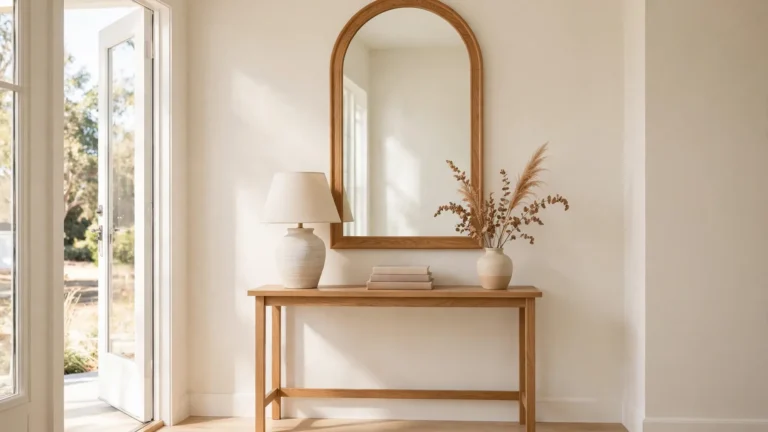
After: A large mirror on the wall doubles the light and the sense of space instantly. You catch your reflection on the way out, check your coat, and the entryway feels twice as wide. One mirror changes how the whole area works and feels.
Hang the mirror at eye level across from the door or a window for the best light bounce. A round mirror softens sharp corners, while a tall rectangle stretches the wall visually. Keep the frame slim so the mirror reads as air, not bulk in a tight space.
Go Vertical
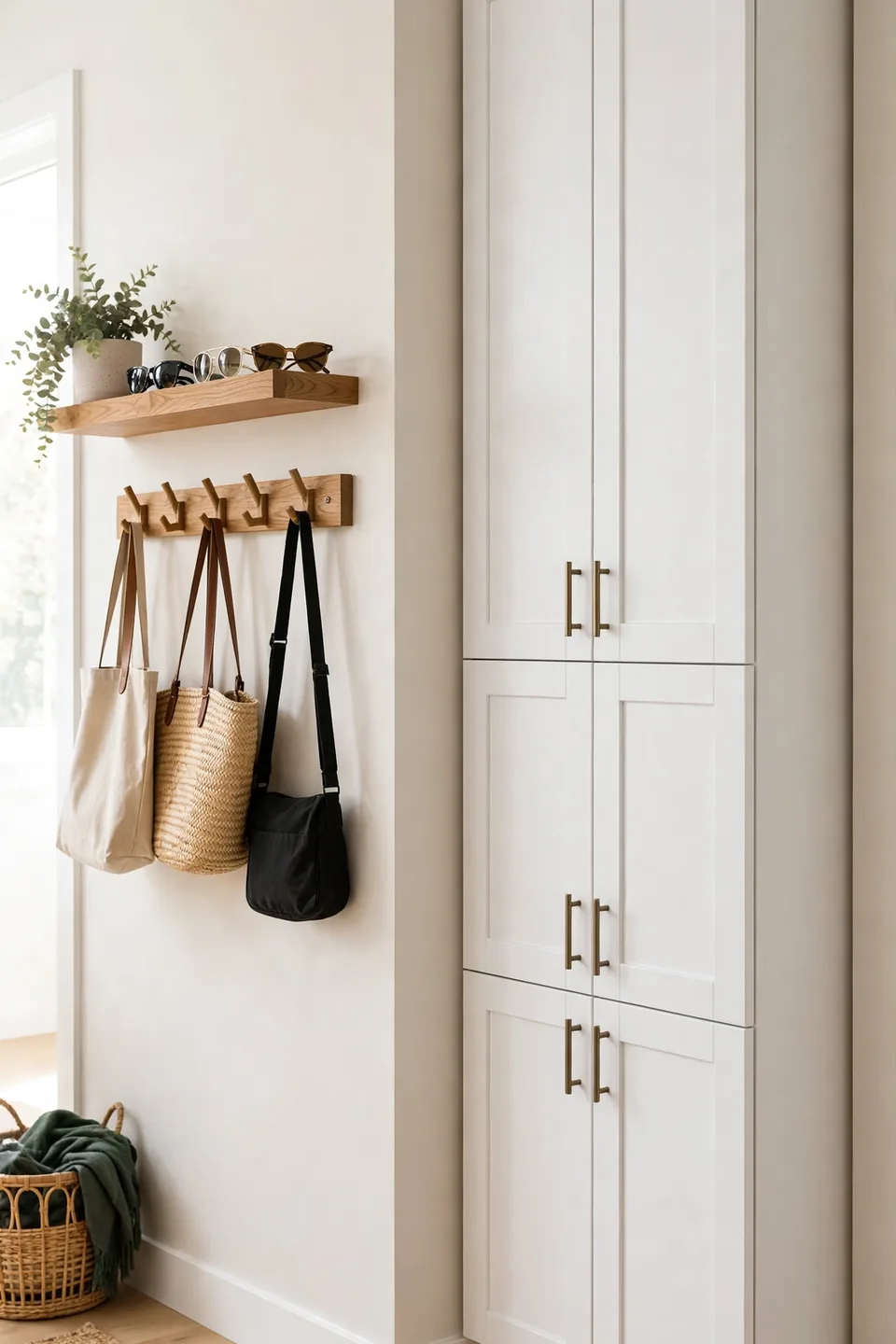
Do This:
- Mount a floating shelf above the hooks for sunglasses and small items.
- Use the inside of a closet door for extra hanging space.
- Add a tall narrow cabinet if you have one spare corner.
- Hang a small peg rail for bags and umbrellas.
Avoid This:
- Stacking boxes on the floor where they block the door swing.
- Using deep bookcases that swallow the walking path.
- Leaving the tops of tall furniture empty and wasted.
Thinking vertically multiplies your storage without touching a single inch of floor. Walls, doors, and the space above head height all offer room most people ignore completely. Every inch you claim upward is an inch you keep clear at foot level for easy walking daily.
For another tricky space, see how to organize a bathroom vanity with no drawers.
Keep It Tidy
Time Needed: 10 minutes daily
Difficulty: Easy
Cost: Free
Best For: busy households with constant in-and-out traffic
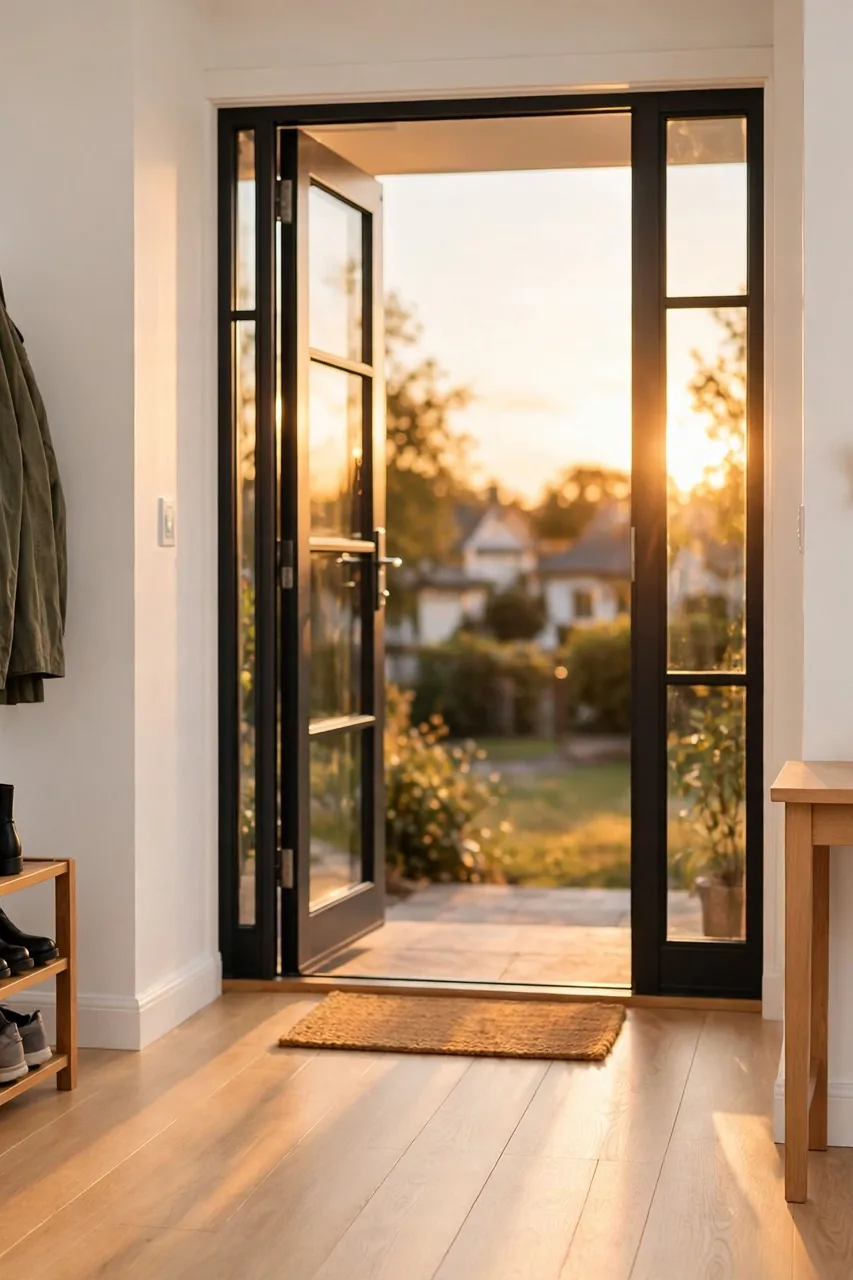
A tidy entryway is a daily habit, not a weekend project. Spend ten minutes each evening resetting shoes, hanging coats, and clearing the console surface. Small daily resets beat one big monthly purge every single time, and your entryway stays welcoming for everyone who walks through.
Common Entryway Mistakes
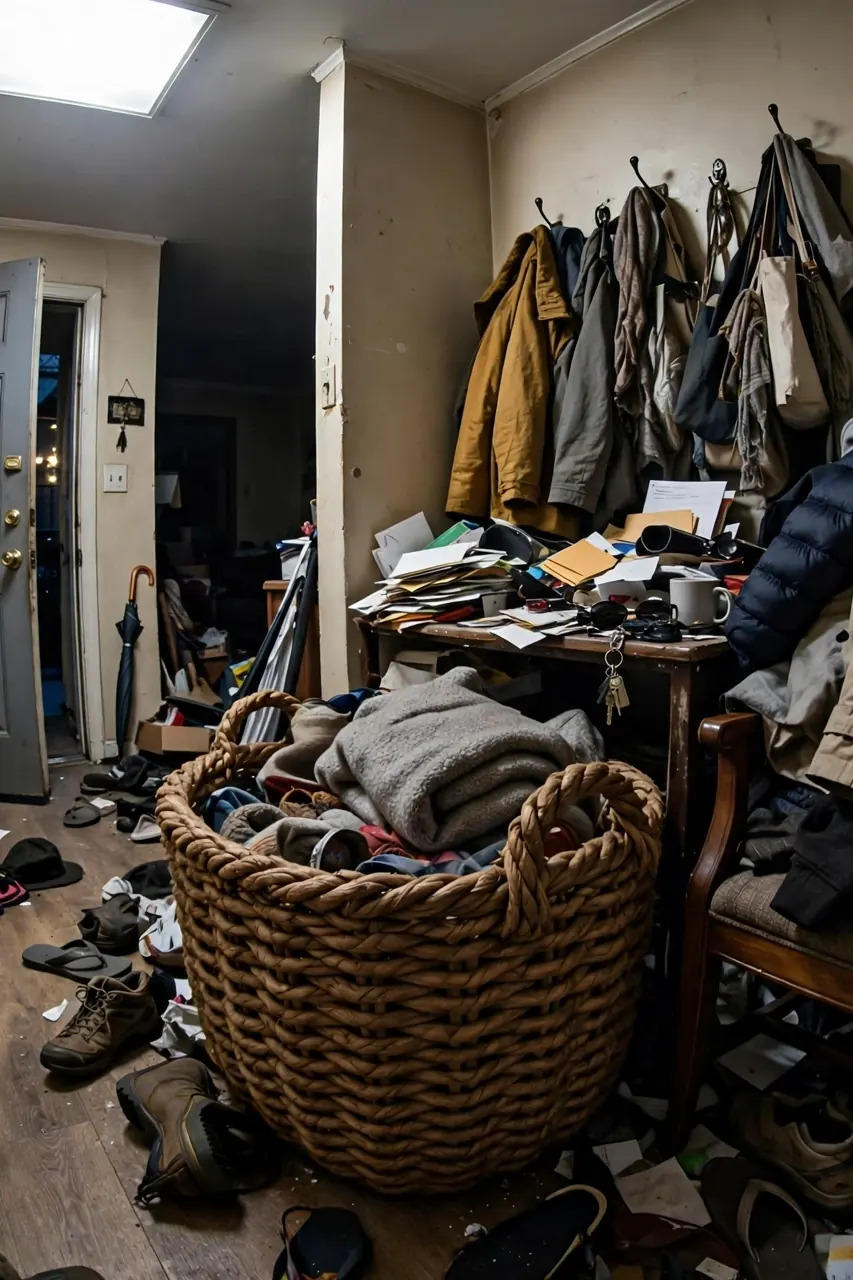
The biggest mistake is treating the entryway as a dumping ground instead of a room. When anything can land anywhere, nothing gets put away. The second mistake is copying a large foyer look into a space one third the size, which only highlights the squeeze.
I have noticed that oversized rugs and chunky baskets cause the most regret. They look great online but eat the floor you need for walking. Scale every piece to the room, keep pathways clear, and the entryway will feel generous instead of cramped on busy days.
Pro Tips for Functional Entryways
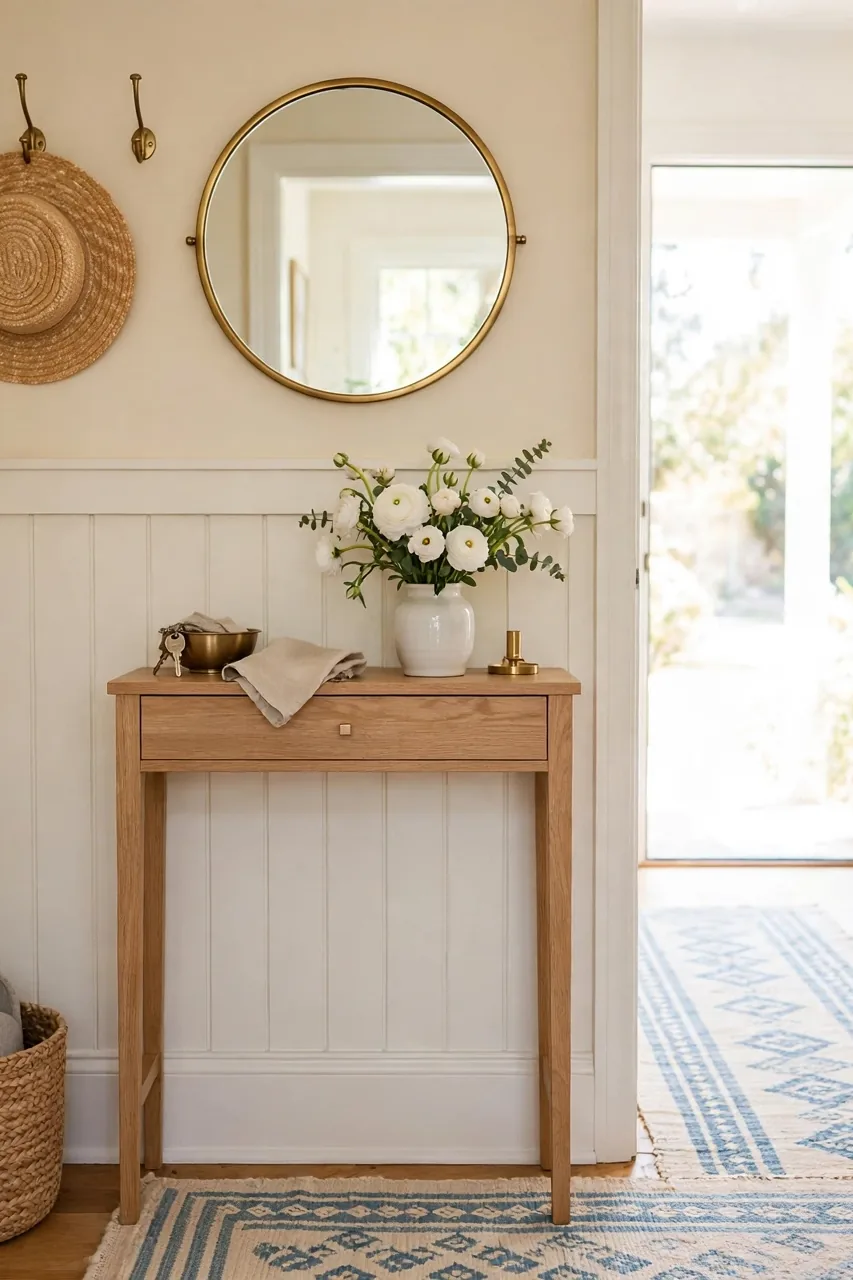
These final touches take your entryway from simply functional to genuinely delightful. Small upgrades make the space feel intentional, personal, and cared for. Pick the ones that fit your routine and budget, and skip the rest for now without any guilt.
- Add a small tray or dish on the console for keys, so they never wander.
- Place a washable runner rug to define the space and protect the floor.
- Hang a piece of art you love at eye level to make the entryway feel like a room.
- Set a tiny plant or fresh flowers on the shelf for a living welcome.
Conclusion
A functional entryway changes how your whole home feels at the start and end of each day. Once you know how to make a small entryway more functional, the daily scramble fades and calm takes its place. Save this guide on Pinterest so you can revisit each step while you shop for hooks and trays. Try the steps this weekend and share this article with someone whose entryway needs the same rescue. I have seen how making this one change can completely shift the result. Start with one wall, one hook, and one tray tonight, and your future self will thank you every morning.
One Comment