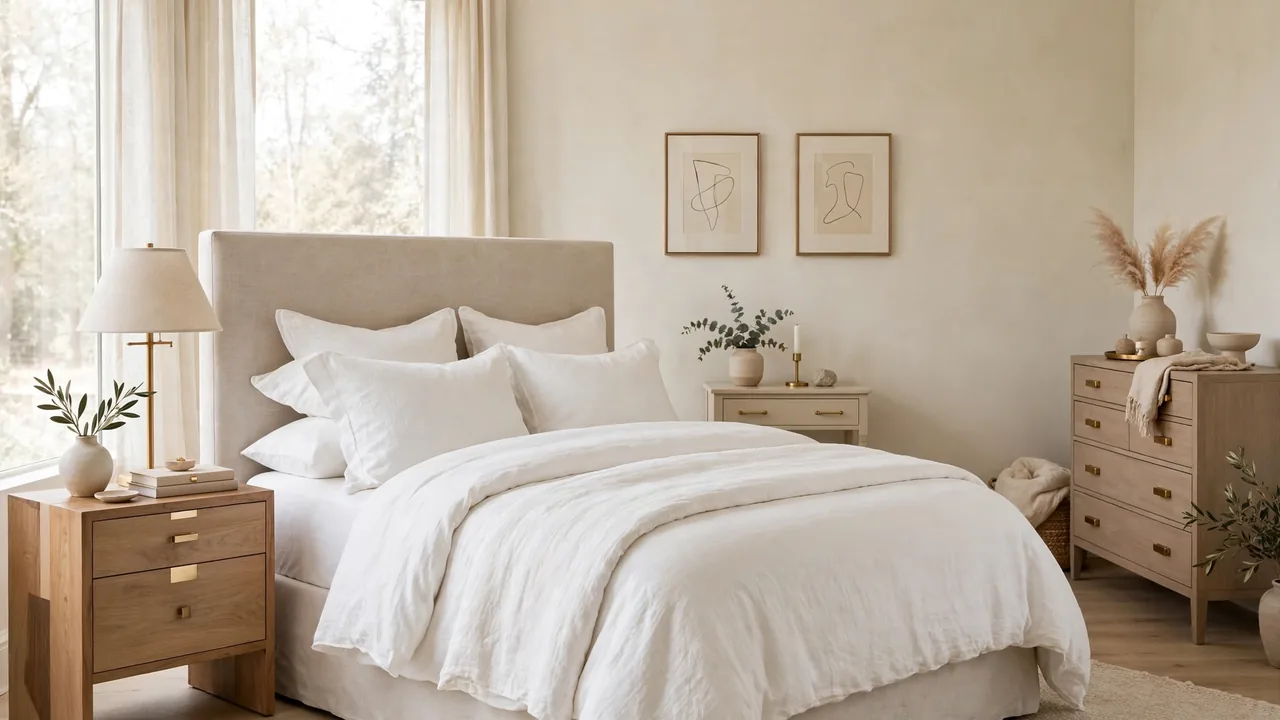
How to Decorate a Bedroom With Mismatched Furniture
Your dresser is cherry, your nightstands are painted black, and the desk in the corner is a white hand-me-down. If your bedroom looks like a furniture showroom exploded, don’t worry. Learning how to decorate a bedroom with mismatched furniture begins with accepting what you own instead of replacing everything.
The good news is that mismatched pieces can look collected and charming with a simple plan. You don’t need a budget or a design degree, just a few guiding rules. For more small-space ideas, see how to organize a bathroom vanity with no drawers.
In my experience, the rooms that feel most personal are rarely the matching ones. Walk through the steps below at your pace, and you’ll start seeing your odd pieces as a collection instead of a problem.
Why Mismatched Furniture Feels Messy
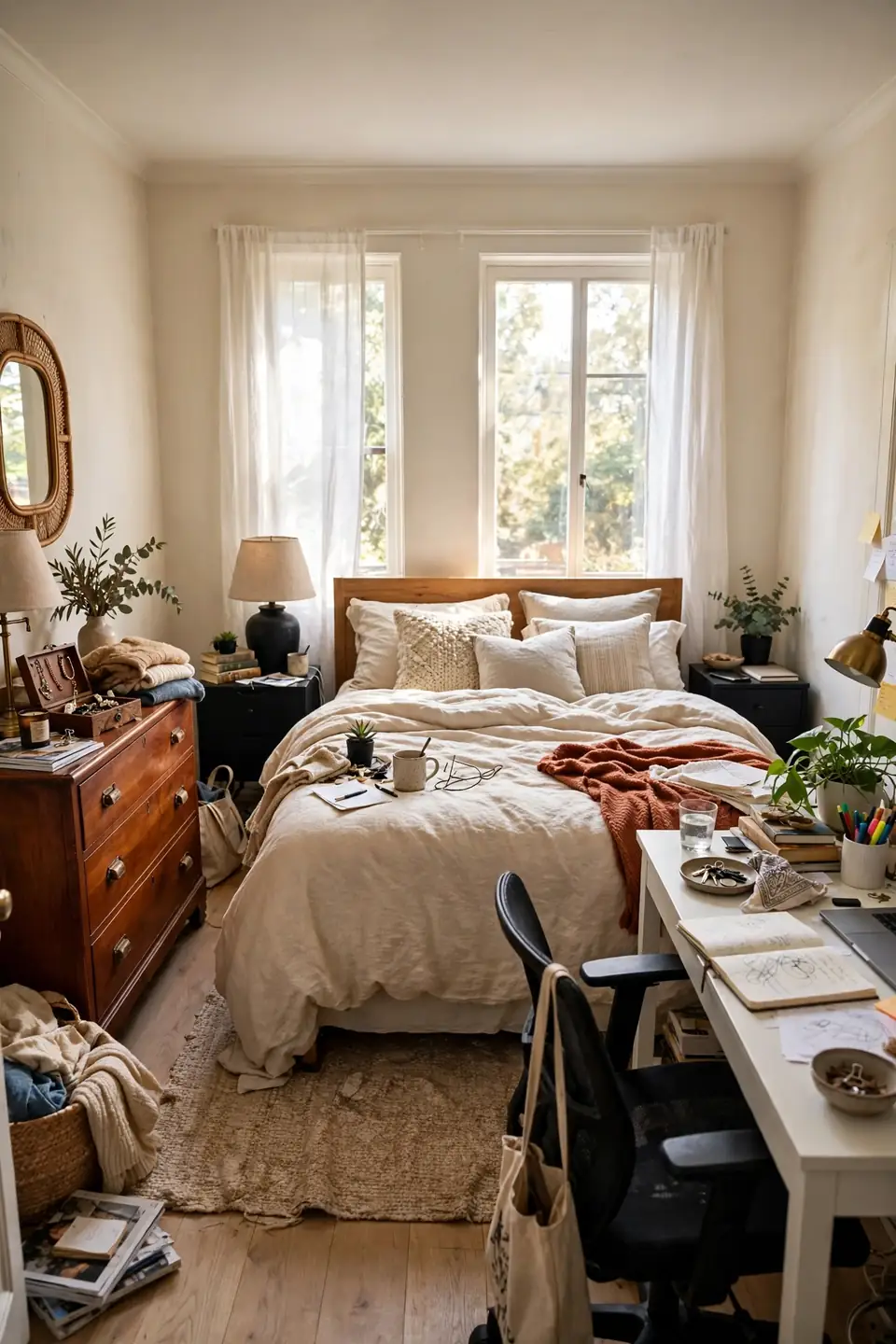
A bedroom full of different furniture styles looks random because the eye has nothing to connect. Your brain searches for a pattern, and when it finds none, the whole room reads as cluttered noise. That is the whole problem, and it is easier to fix than you think.
Mismatched pieces also fight for attention when they sit at different heights and finishes. A tall dark dresser next to a tiny white nightstand creates visual tension. Once you understand that balance, not matching, is the goal, the room starts coming together. Own the mix and the room follows.
Find Your Unifying Element
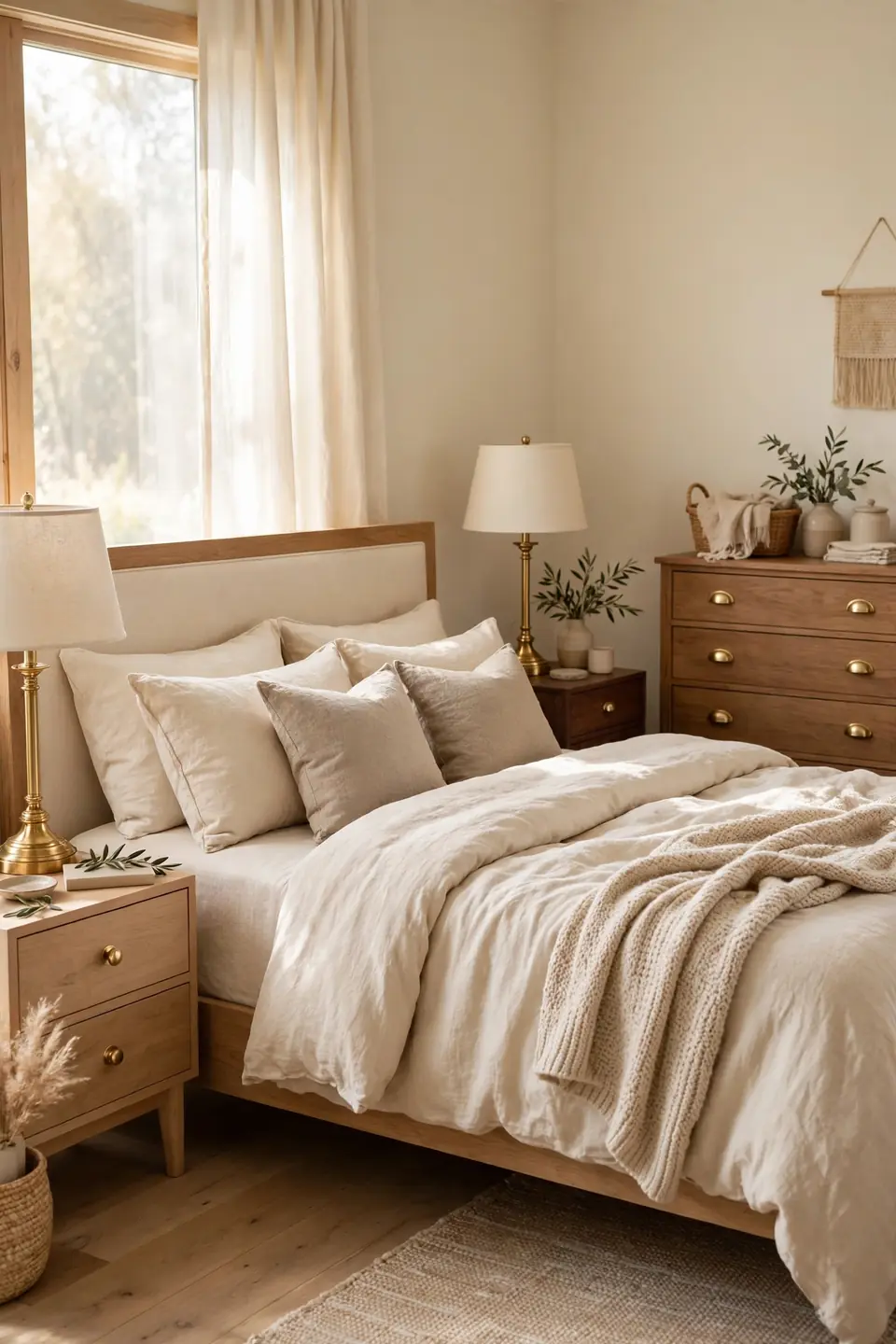
Every cohesive room has one element that repeats across the pieces. Finding your unifying thread gives mismatched furniture a shared language. Look for what your pieces already have in common before buying anything new. It could be a color, a finish, a shape, or even a mood.
- Stand in the doorway and list what your three largest pieces share, even loosely.
- Pick the strongest common thread and commit to repeating it at least three times.
- If nothing matches, choose a paint color and refinish one small piece first.
- Test the idea by gathering similar-toned accessories from other rooms.
Stick to a Color Palette
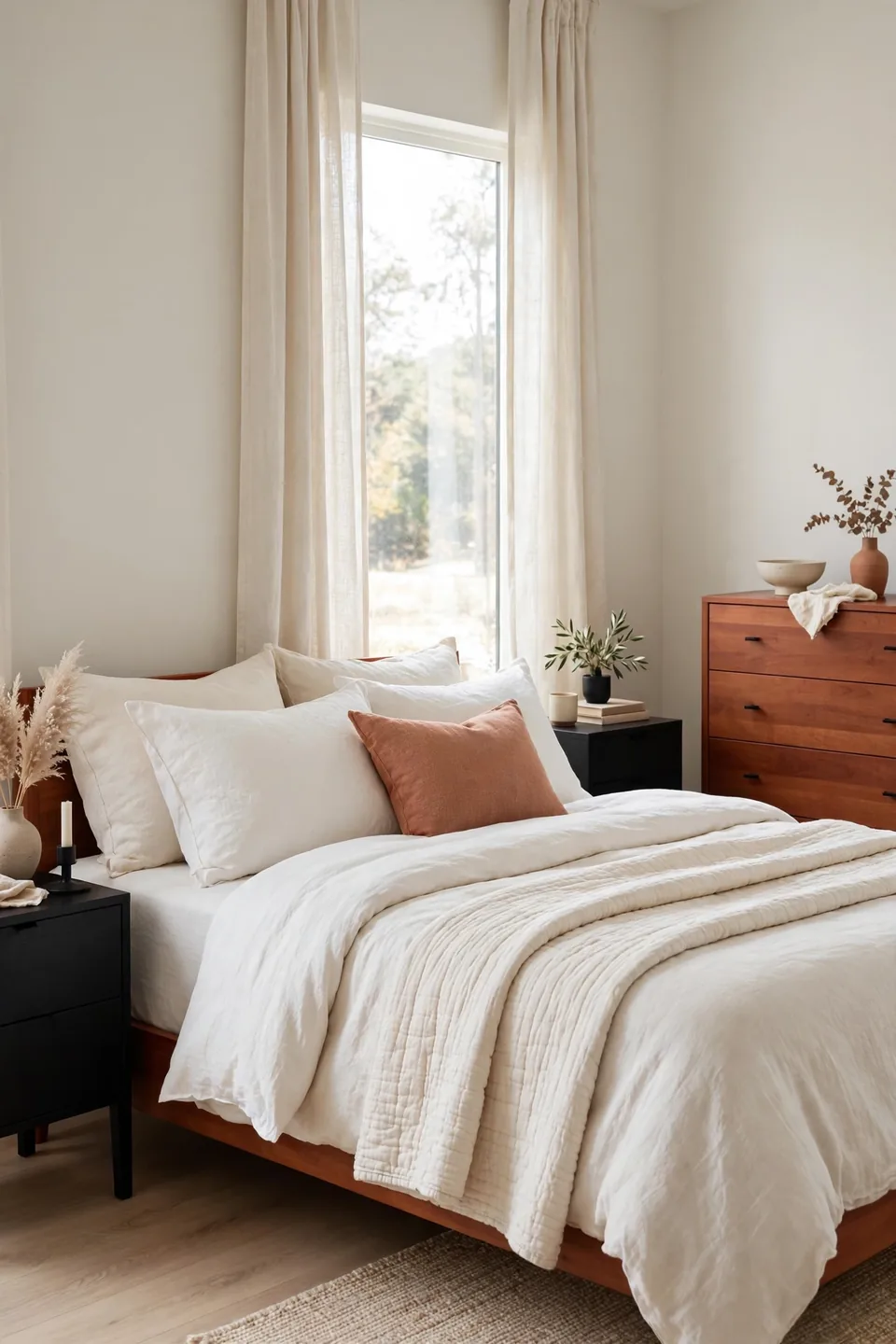
Quick Tip: Limit your palette to three colors maximum: a base neutral, one wood tone family, and a single accent. Most mismatched rooms fail because they juggle five or six colors at once. Three keeps everything calm and lets the furniture shapes stand out.
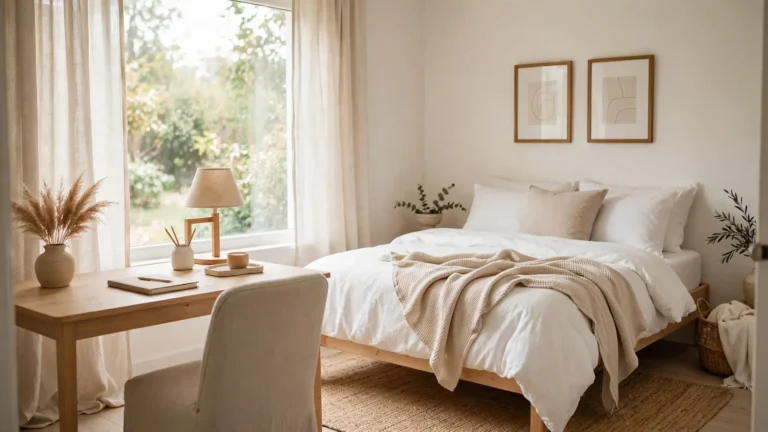
White bedding and cream walls give you a forgiving background, so a cherry dresser and black nightstands stop clashing. Repeat your base color in textiles and art to spread it around. When the palette is tight, different furniture reads as intentional rather than accidental by design.
Mix Wood Tones Carefully
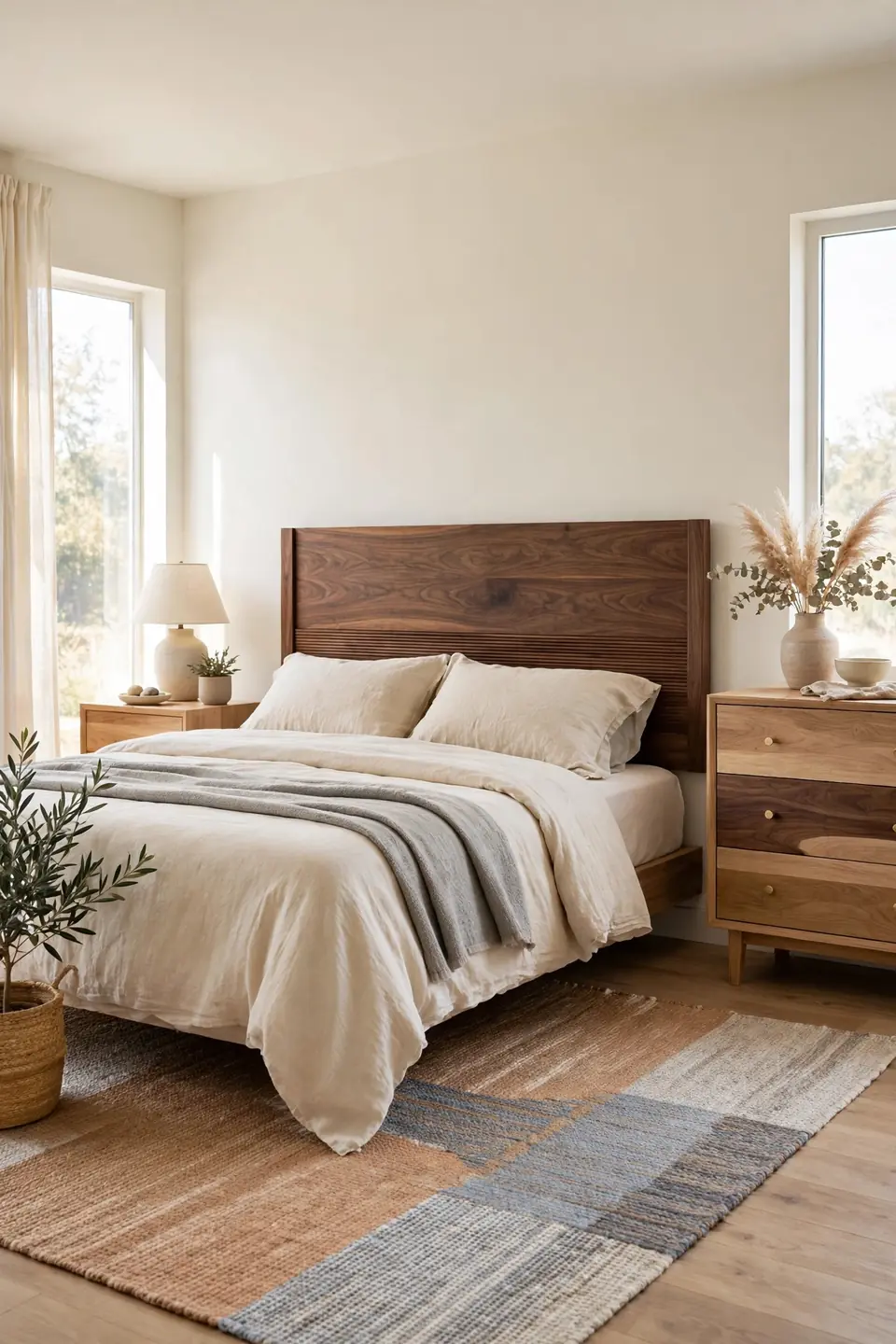
Common Mistake: Most people try to match wood tones exactly and end up frustrated when the cherry and walnut never blend. They either repaint everything a flat black or give up and leave the clash in place. Neither approach respects the character of the pieces.
The Fix: Instead, let woods live in two families: warm and cool. Keep all warm-toned pieces on one side of the room and cool ones on the other, or bridge them with a rug that contains both. Small doses of a third finish, like brass handles, tie them together.
Mixed wood tones feel intentional when each one appears at least twice. A walnut headboard and a walnut picture frame create a deliberate echo. Spread repeats evenly so no single finish looks like an accident left behind. Even small accessories count toward the repeat. Count a tray, a frame, or a knob.
Repeat Materials
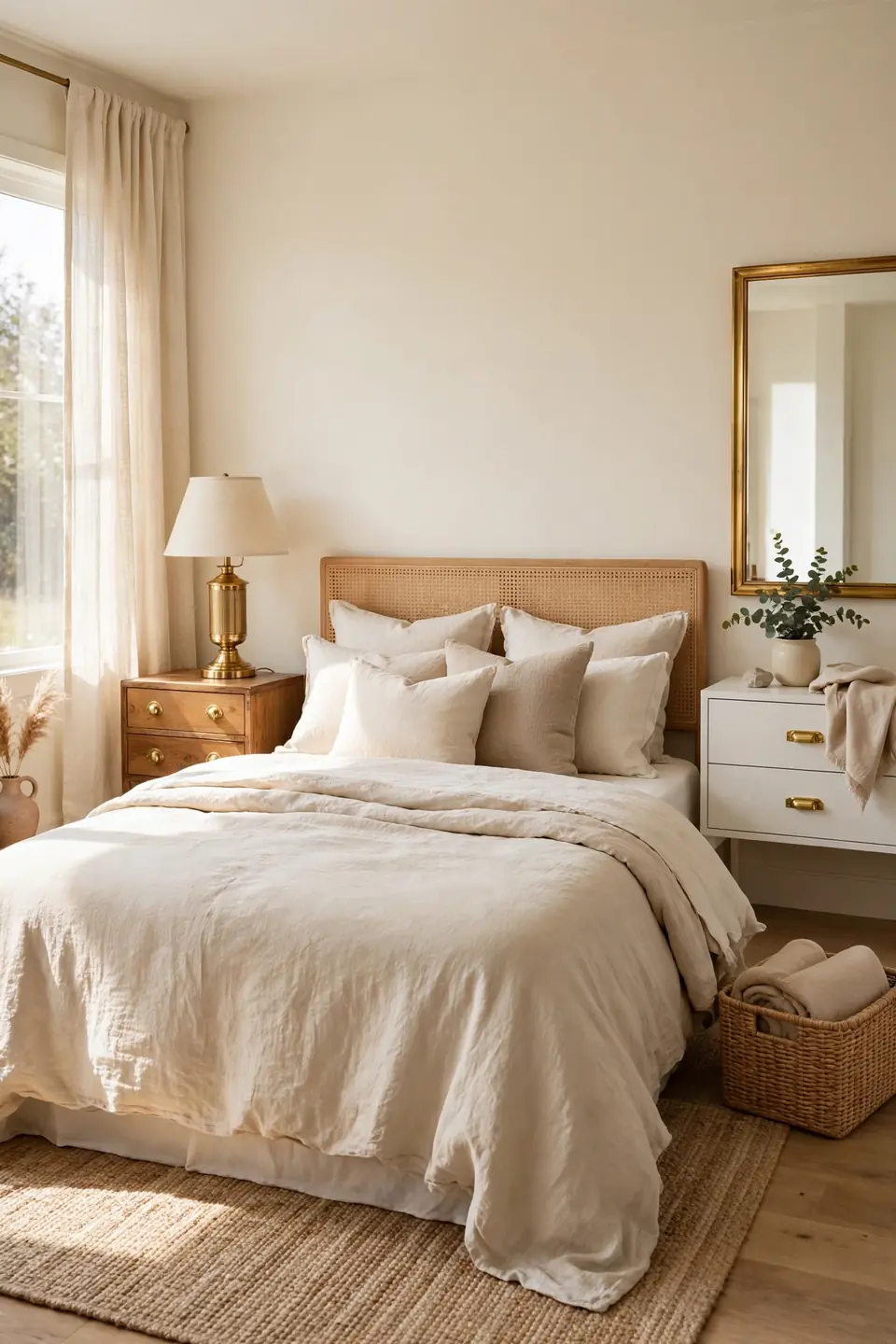
What You Need:
- Matching drawer pulls: swapping hardware unifies different case goods in one afternoon.
- A neutral rug: grounds the whole room and connects pieces across the floor.
- Coordinating bedding: the bed is the largest surface, so matching linens calm everything.
- Two or three frames: repeating the same frame style on art or photos creates rhythm.
Materials repeat louder than colors. A brass lamp base, brass drawer pulls, and a brass mirror frame tell the eye these pieces belong together. Learning how to decorate a bedroom with mismatched furniture gets easier once you spot these material echoes around the room everywhere.
Balance Old and New
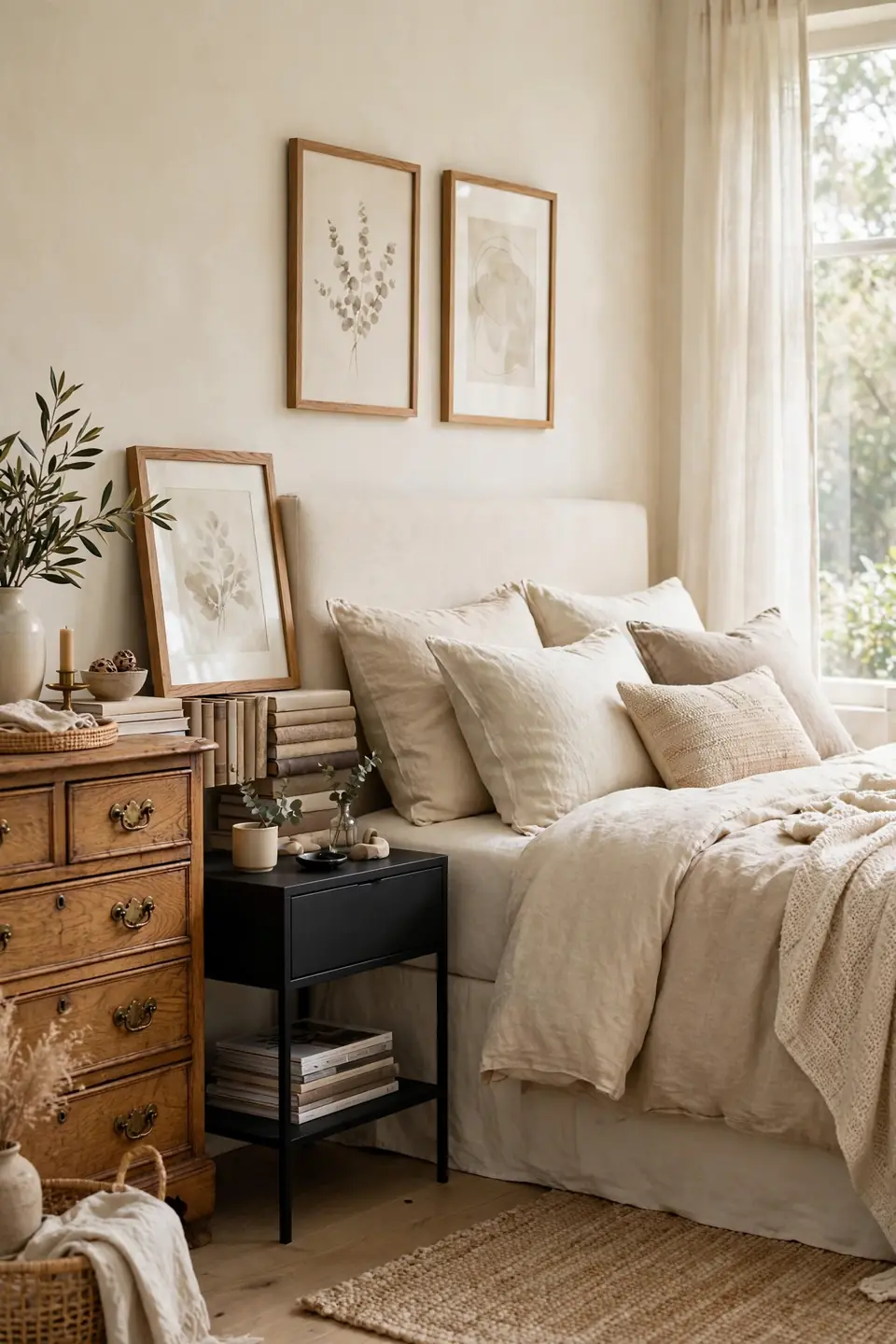
Before: A vintage oak dresser sits next to a sleek modern nightstand, and the pairing feels like a mistake. The two pieces come from different decades, different styles, and different finishes. The room feels like a storage unit instead of a bedroom.
After: A small stack of books on the nightstand and a framed print above the dresser bridge the decades. The oak and the modern lines now read as a collected, layered look. The room feels personal, like it evolved over time.
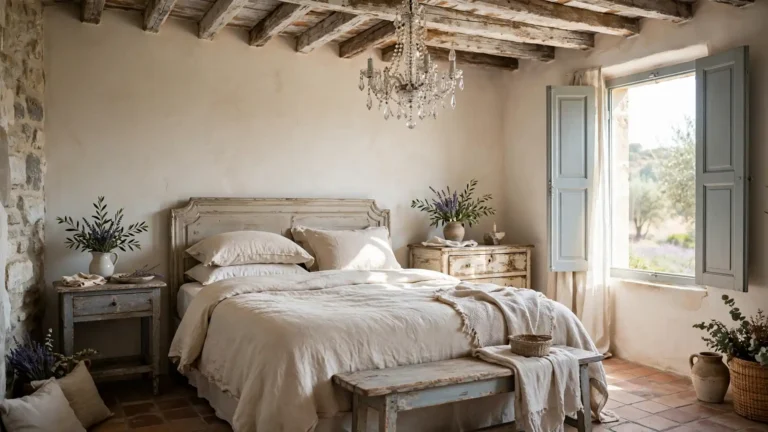
Old and new pieces need a translator. A mid-century lamp on a traditional dresser, or a modern mirror above a vintage chest, links the eras. Give each old piece one modern companion and the contrast starts to feel deliberate. Repeat this pairing twice and the whole room relaxes.
Use Textiles to Tie In
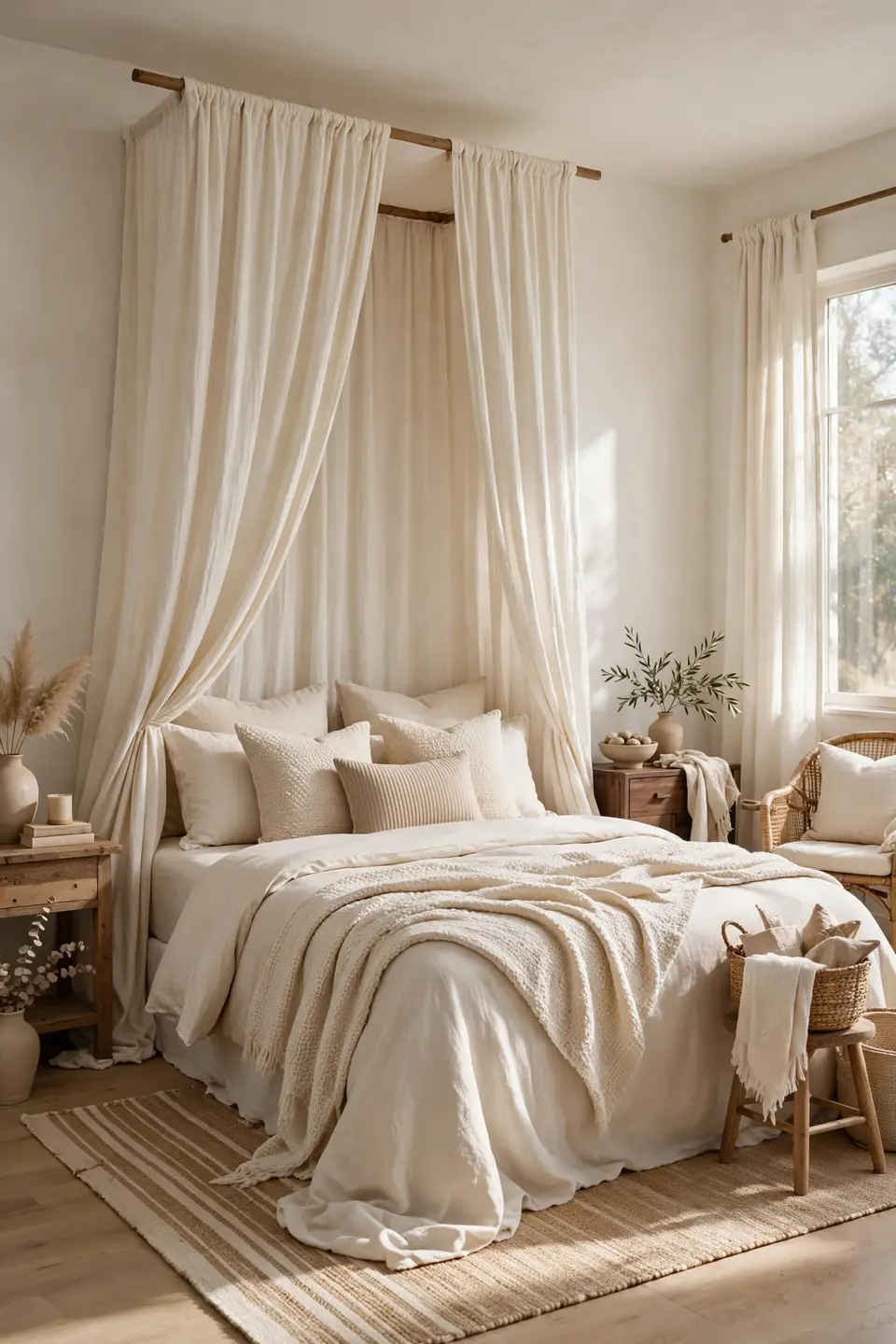
Do This:
- Repeat one accent color in bedding, art, and a small accessory.
- Keep all furniture roughly the same visual weight.
- Let the largest piece set the tone for the room.
Avoid This:
- Do not paint every piece the same color out of panic.
- Avoid mixing more than two furniture styles at once.
- Never push all tall pieces against one wall.
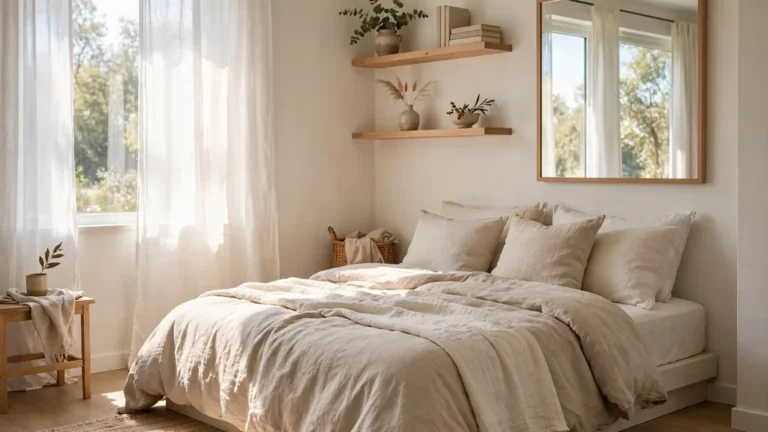
Textiles are the fastest way to unify a room. Matching curtains, a shared throw blanket, and coordinating pillow covers wrap different furniture in one story. When fabrics agree, the furniture underneath can disagree quietly. Start with bedding since the bed dominates the room. Then echo it twice.
For more small-space organization ideas, see how to create storage in a rental kitchen.
Create Focal Points
Quick Facts:
Time Needed: One weekend to rearrange and style | Difficulty: Easy, no tools required | Cost: Under $50 for hardware and textiles | Best For: Bedrooms with hand-me-down or thrifted furniture
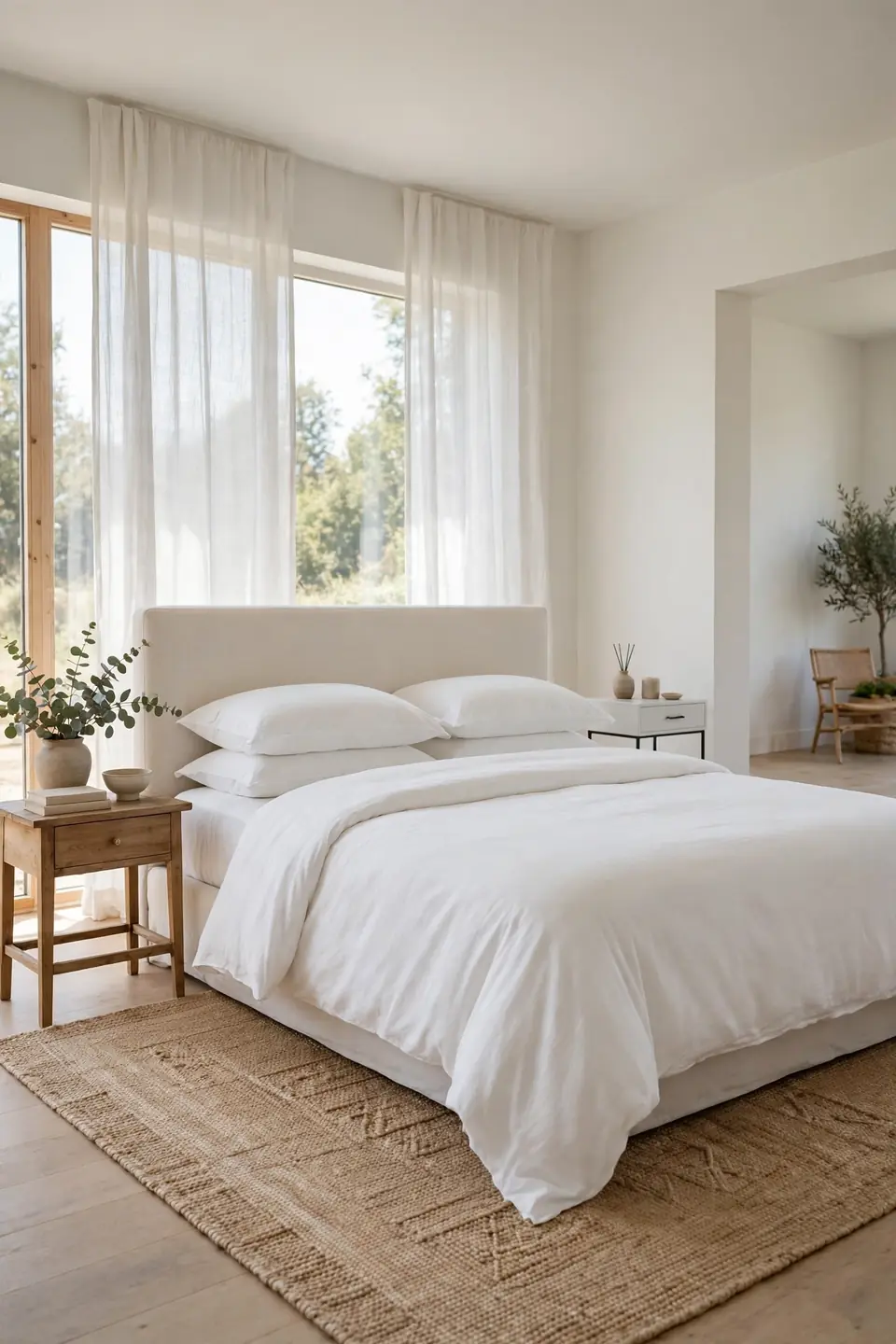
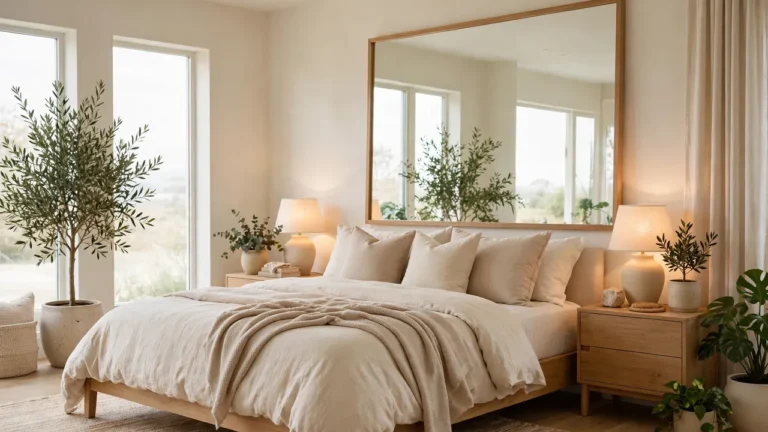
Every room needs one place for the eye to land first. Make the bed the hero with crisp bedding and a simple headboard moment. When the focal point is strong, the supporting furniture can be wonderfully mismatched. Anchor it with a rug and the composition feels complete.
Common Mismatched Mistakes
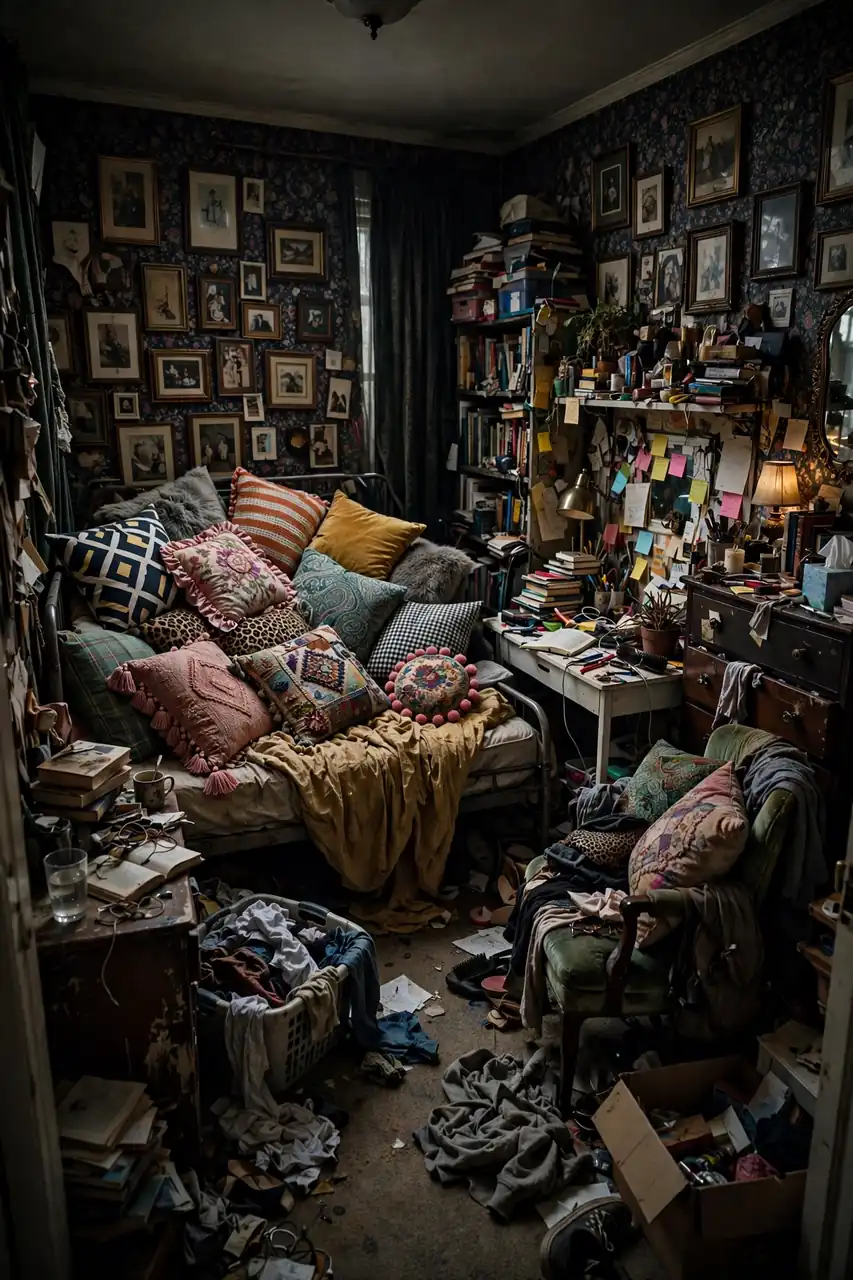
The biggest mistake is trying to hide the mismatch instead of working with it. People shove odd pieces into dark corners or drape them with throws, which only draws more attention to the awkwardness. Confidence beats camouflage every single time in a bedroom.
Another common error is piling on new accessories to fix the furniture problem. A room with twelve throw pillows, three blankets, and mismatched case goods looks busier, not calmer. Edit accessories down to a few strong pieces and let the furniture breathe. Two or three repeats of one material do more than a dozen finds.
Pro Tips for Cohesive Bedrooms
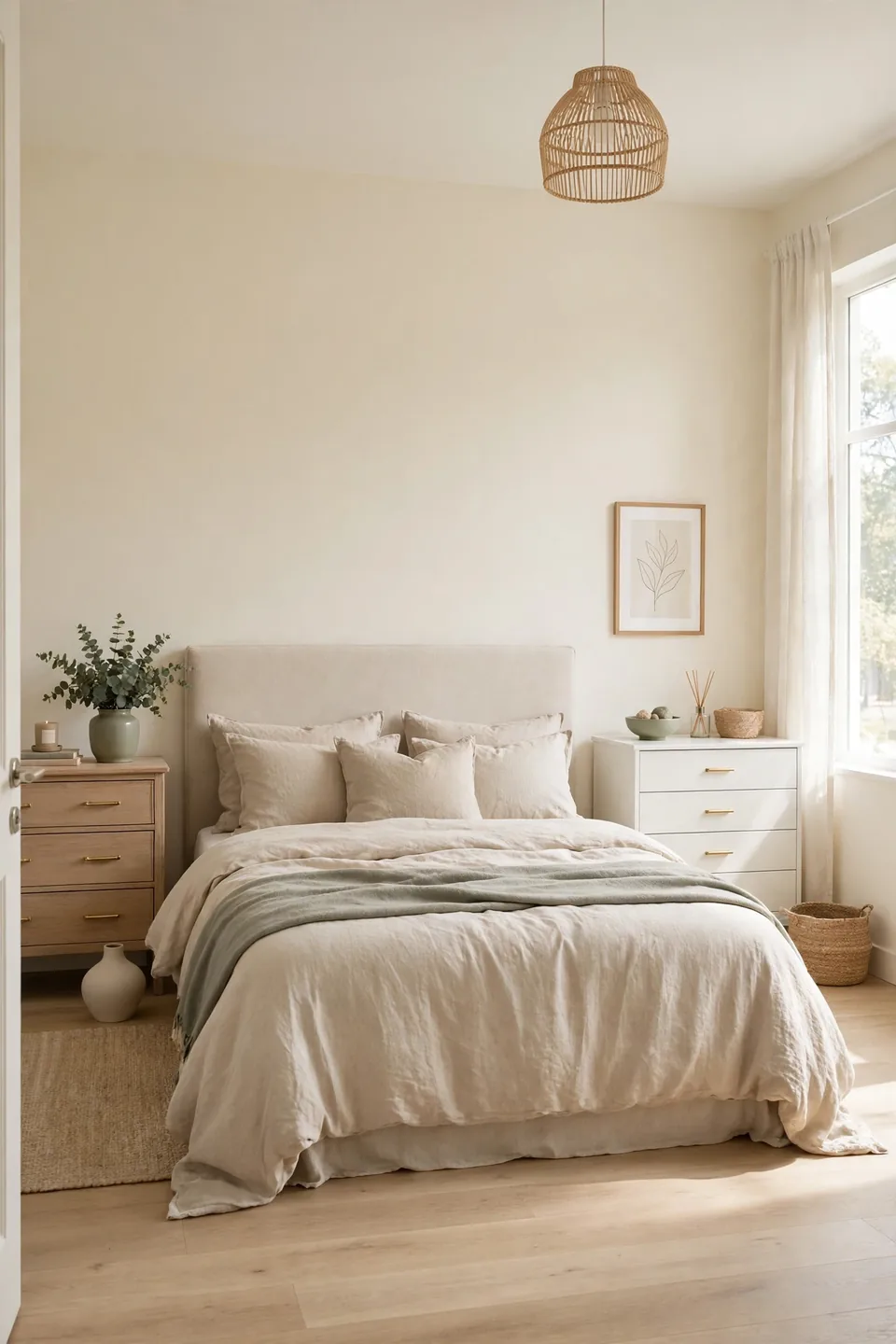
Small finishing choices pull a mismatched bedroom together fast. These pro moves cost almost nothing and work in any rental or owned home. Run through them in order and watch the room settle into itself. None of them require new furniture.
- Swap all drawer pulls and knobs to one finish for instant unity.
- Dress the bed in one neutral palette so it anchors the room.
- Repeat your accent color in exactly three spots.
- Step back, photograph the room, and remove one item that fights the rest.
Conclusion
Mismatched furniture stops feeling like a problem the moment you give it a plan. A tight palette, repeated materials, and one strong focal point turn a random collection into a room with real personality. Remember, learning how to decorate a bedroom with mismatched furniture is really about learning to trust your eye. Save this guide to your bedroom board on Pinterest so you can revisit the steps while you shop your own home. I’ve seen renters pull this off with thrifted pieces and a single weekend, and the result always feels more personal than a matching set ever could.

2 Comments