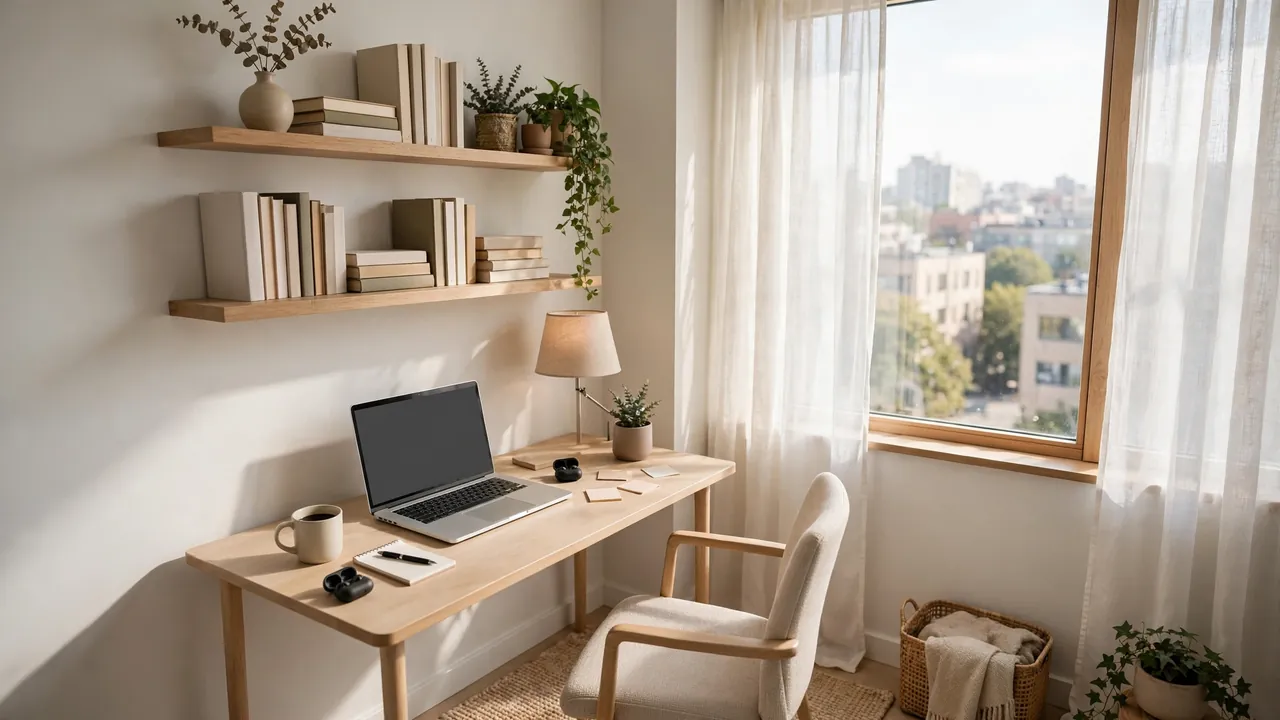
How to Create a Functional Home Office in a Small Space
Working from the kitchen table stopped feeling fun months ago. If you are wondering how to create a functional home office in a small space, you are not alone. Millions now work from apartments where every square foot has a job.
Before you buy anything, zone your space the way designers do; if you have read about how to decorate a long living room, you know defining zones changes how a room feels. In my experience, the difference between a cramped desk and a real office comes down to planning, not square footage.
This guide walks you through ten practical moves, from picking the right corner to keeping cables under control. Each step is beginner friendly and budget conscious. By the end, your tiny workspace will feel intentional.
Why Small Home Offices Feel Impossible
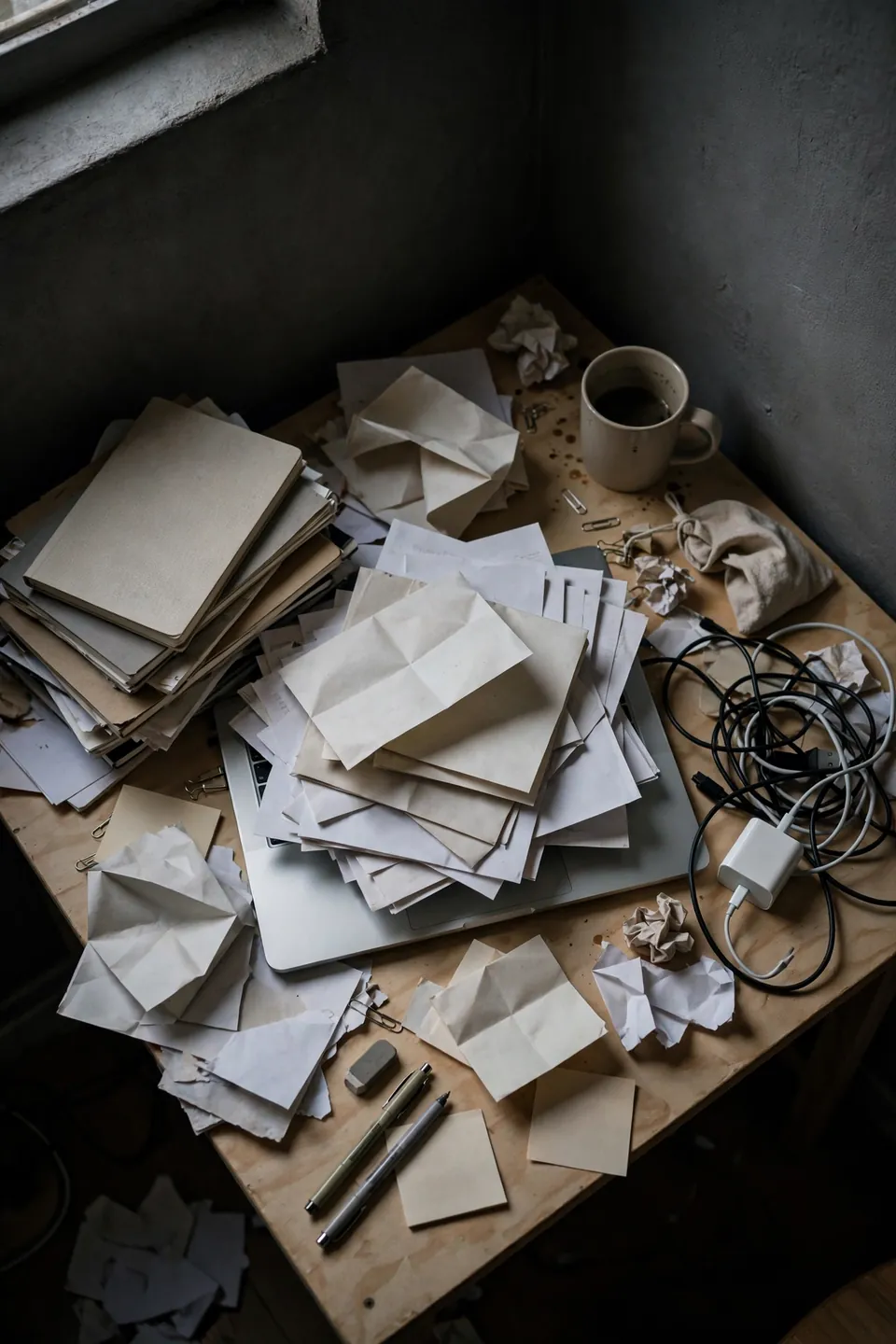
Most tiny workspaces fail for the same reason: everything lands in one pile. The laptop shares space with mail, chargers, notebooks, and a cold coffee mug. Without clear zones, your brain never gets the signal that this corner means work. It just feels like clutter.
The good news is that function has very little to do with size. A well planned 30 square foot nook can outperform a sprawling spare room with no system. Give every item a home, protect the space from distractions, and even the smallest setup starts to feel like a proper office.
Find Your Corner
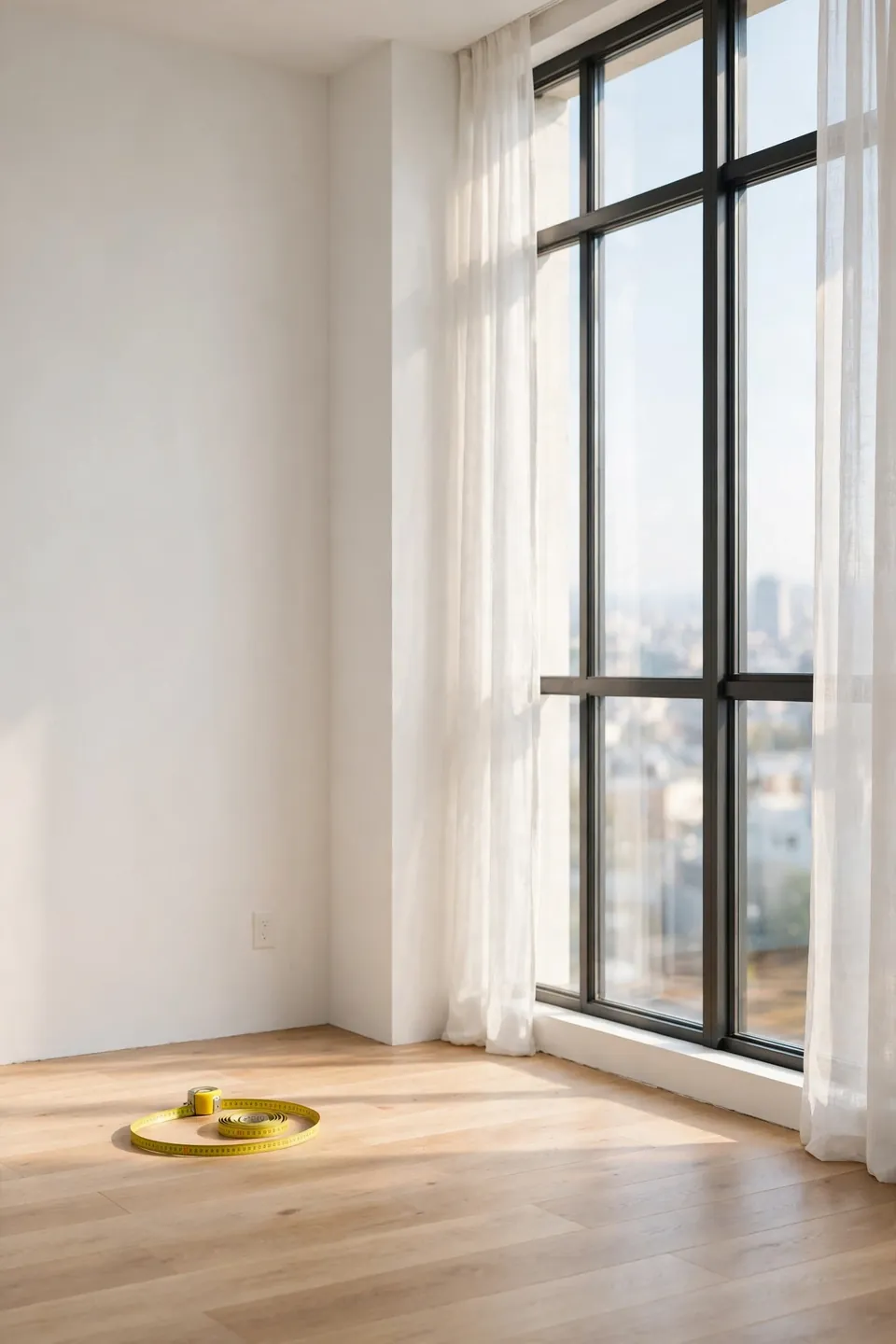
The best office spot is rarely the obvious one. Look for underused edges of your home where a small desk can live permanently. A corner that catches daylight and sits away from foot traffic will beat a bigger space in a noisy hallway.
- Walk through your home at the time you usually work and note where natural light falls strongest.
- Measure three candidate spots with a tape measure so you know the exact desk width each one allows.
- Test noise levels by standing in each spot for two minutes during a normal busy moment.
- Pick the spot closest to an outlet, since extension cords across walkways become a daily annoyance.
Choose Compact Furniture
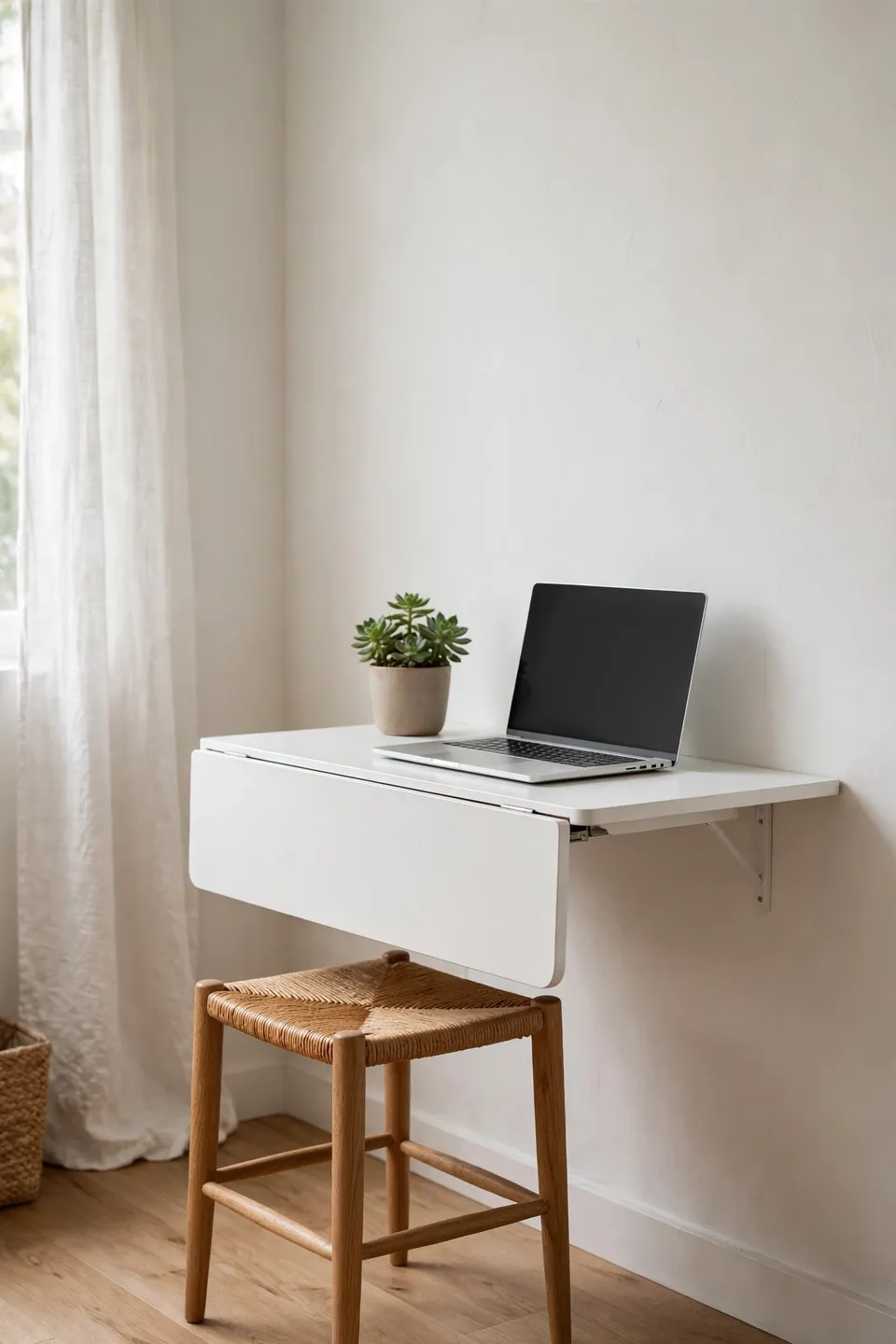
Quick Tip: Choose a desk no deeper than 20 inches for truly tight spaces. A slim profile still holds a laptop, a notebook, and a coffee mug comfortably. Anything deeper eats floor space you cannot spare.
Wall mounted drop leaf desks are brilliant for tiny areas because they fold flat when the workday ends. Pair one with a comfortable stool that tucks underneath, not a bulky office chair. Look for pieces with built in cable holes so wires never dangle. Every inch you save on furniture becomes breathing room for you.
Go Vertical With Storage
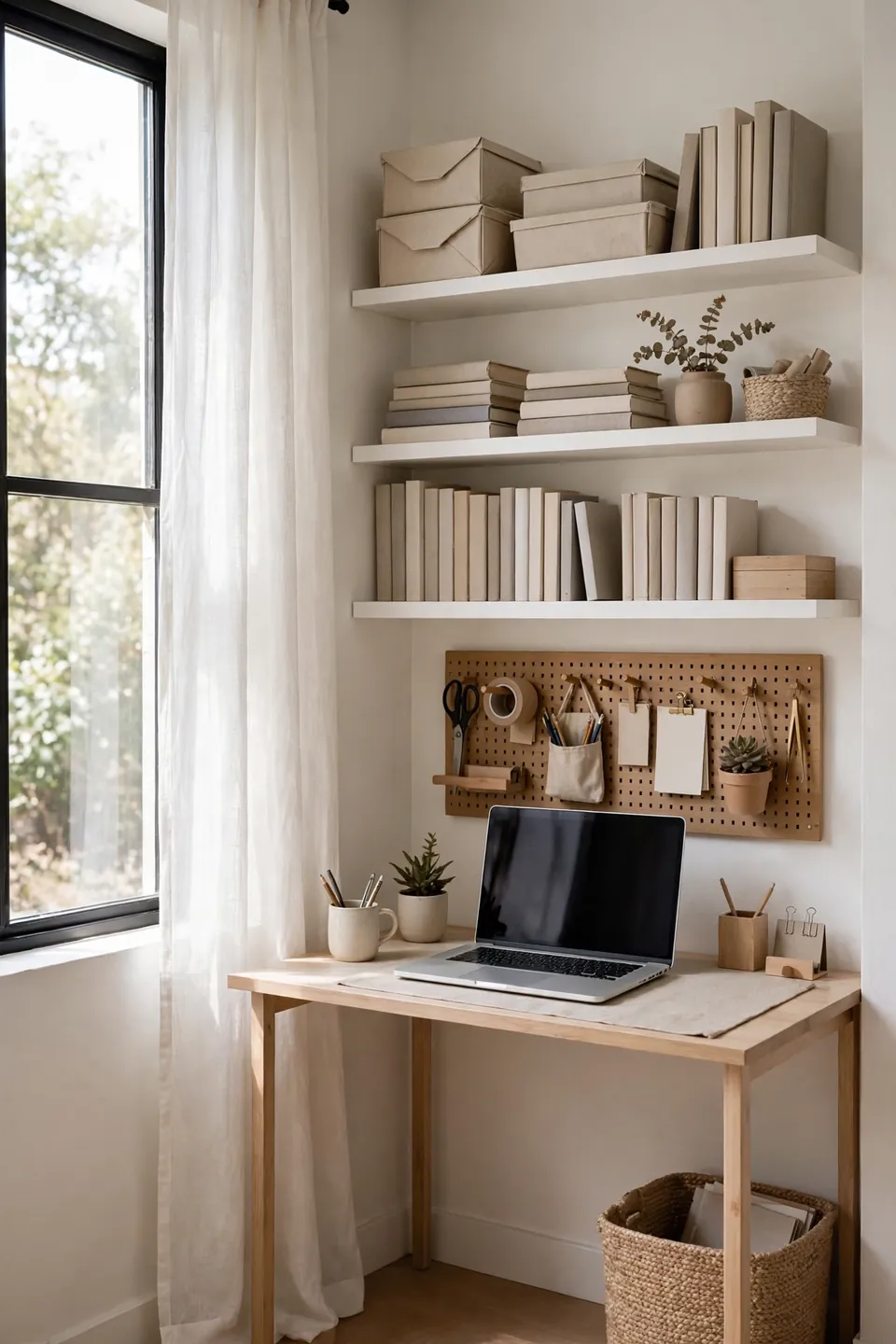
Common Mistake: Most people try to fit all their office storage on the desk surface. Piles of papers and supplies eat the actual work area within a week. The desk becomes a shelf, and real work migrates back to the couch.
The Fix: Move storage up the wall instead of across the desk. A single floating shelf above the desk holds everything those piles contained. Your work surface stays clear for actual work.
Pegboards are perfect for this because you can rearrange hooks as your needs change. Add a small wall mounted file holder for papers you must keep. A narrow bookcase beside the desk handles the rest without stealing floor space. Vertical storage keeps supplies visible but off your work zone.
Light It Right
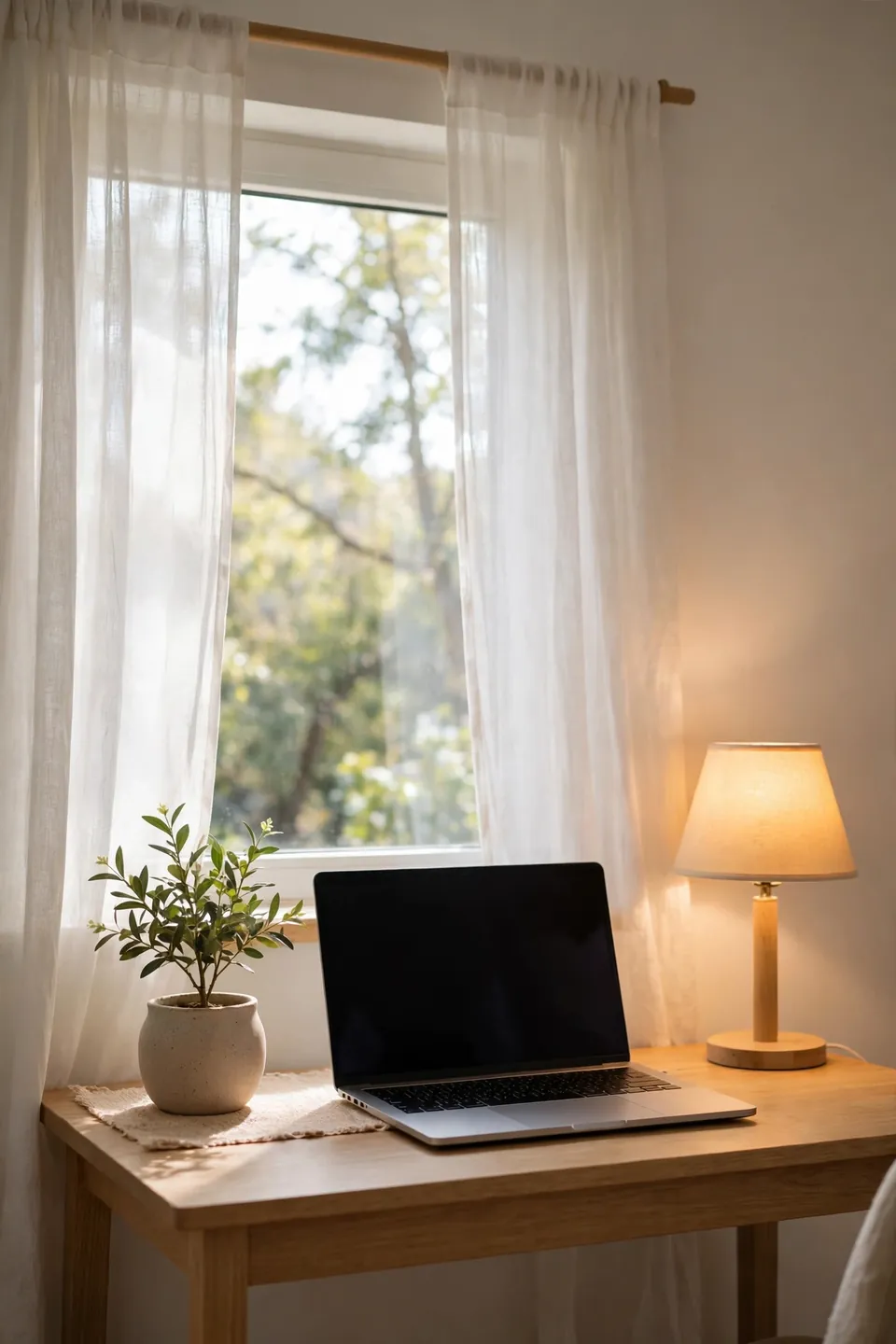
What You Need:
- A daylight bulb desk lamp: bright, focused light reduces eye strain during long sessions.
- A small clip on light: clamps to shelves or monitors where a full lamp will not fit.
- Sheer curtains: soften harsh sun without blocking the daylight your mood needs.
- A warm floor lamp: adds cozy background light for video calls after dark.
Good lighting is the fastest upgrade for any workspace, and anyone tackling how to create a functional home office in a small space should start here. Layer a focused task lamp with soft ambient light so the corner feels inviting at any hour. Your eyes stay fresh and video calls look far better.
Minimize Distractions
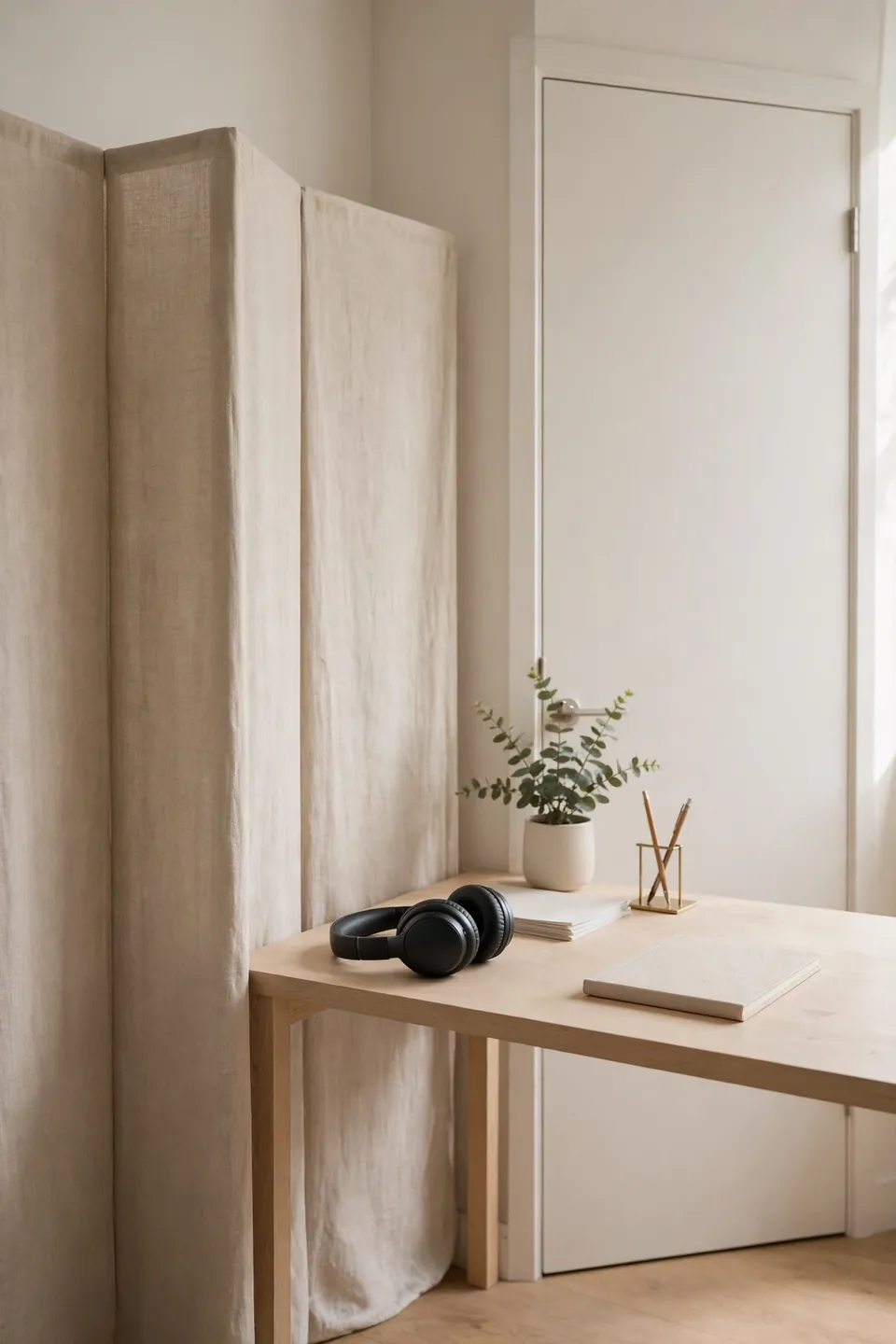
Before: Your phone buzzes next to the keyboard, the TV glows from the next room, and every chore in sight demands attention. Focus fractures into tiny pieces. A full workday somehow produces only an hour of real output.
After: The phone charges in another room, a simple room divider blocks visual clutter, and noise cancelling headphones create a quiet bubble. Deep work happens in focused blocks. You finish the day feeling genuinely accomplished.
Boundaries matter more than willpower in a small home. Tell housemates your work hours and close the door when you need focus time. A small “do not disturb” sign works surprisingly well, and most people respect it. Protecting attention turns even a corner desk into a serious workplace.
Add Personal Touches
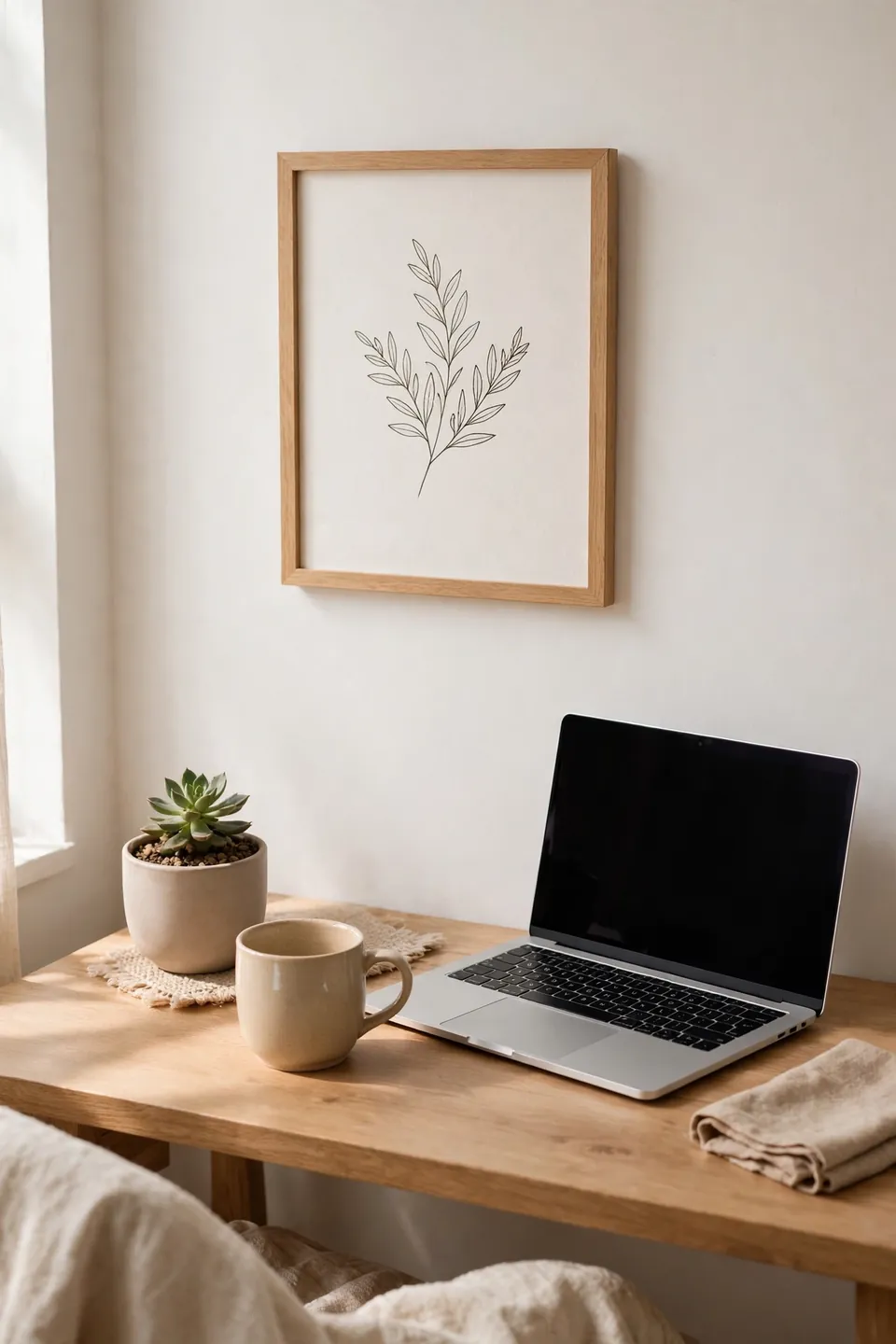
Do This:
- Hang one piece of art you love at eye level.
- Keep a small plant on the desk for a touch of life.
- Use a mug you enjoy for your daily coffee ritual.
Avoid This:
- Do not cover every wall with posters and photos.
- Avoid cluttered knickknacks that collect dust.
- Skip scented candles near important papers.
Personality keeps a workspace from feeling like a cubicle. One or two meaningful objects remind you why you work hard each day. Keep decorations minimal so they inspire rather than distract you. A space that feels like yours is a space you will actually want to use.
Short on space everywhere, not just at your desk? The same visual tricks in how to make a small dining room look bigger can open up any cramped room in your home.
Keep Cables Tidy
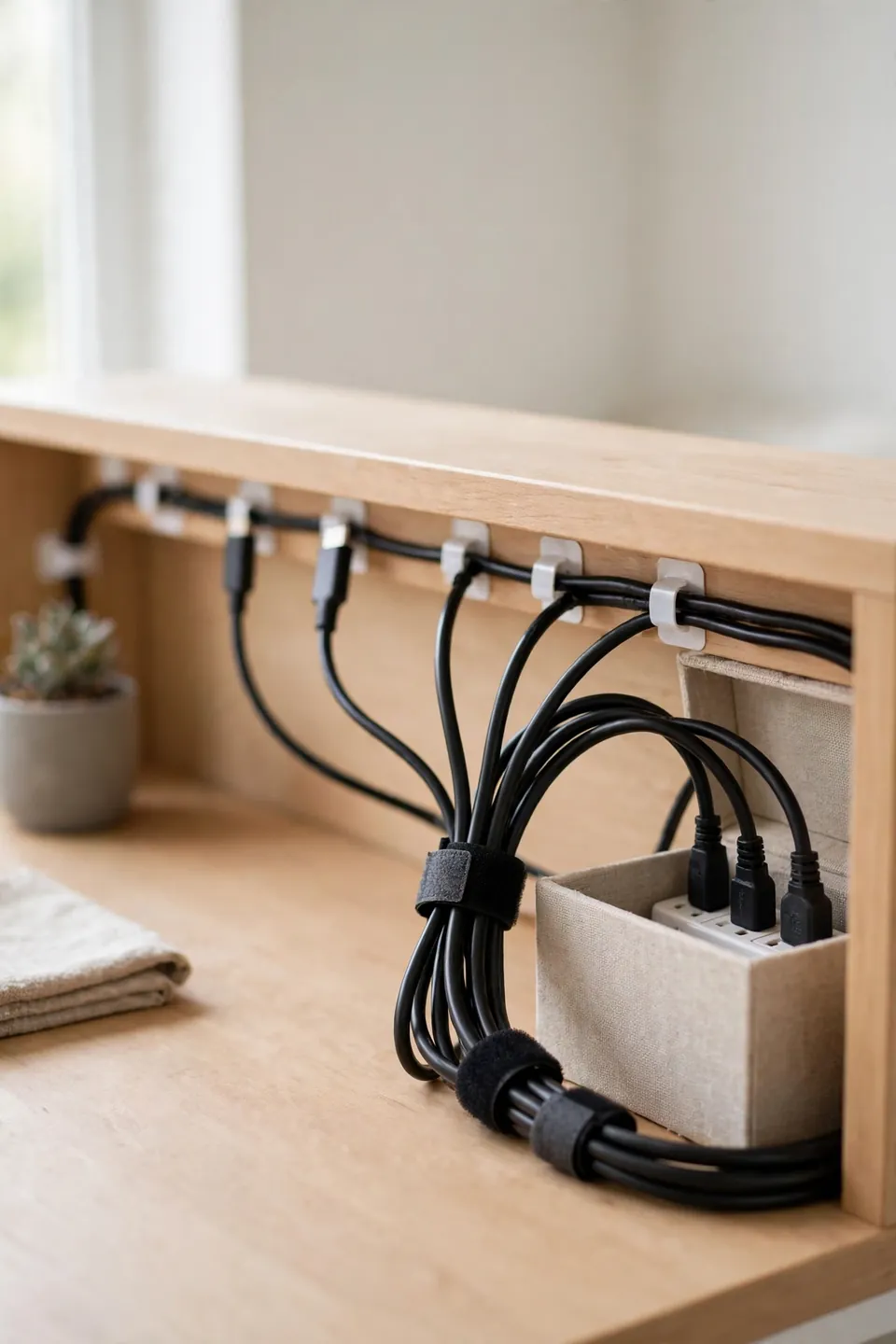
Time Needed: 20 minutes | Difficulty: Easy | Cost: Under $15
Tools Required: Cable clips, zip ties, a small power strip
Best For: Any desk with more than two plugged in devices
Result: A clean desk edge with zero visible cord tangles
Tangled cables make even a tidy desk look chaotic. Route cords along the back edge of the desk with adhesive clips. Bundle extras with reusable ties and hide the power strip in a small box. Clean cables instantly make the whole setup look more professional.
Common Small Office Mistakes
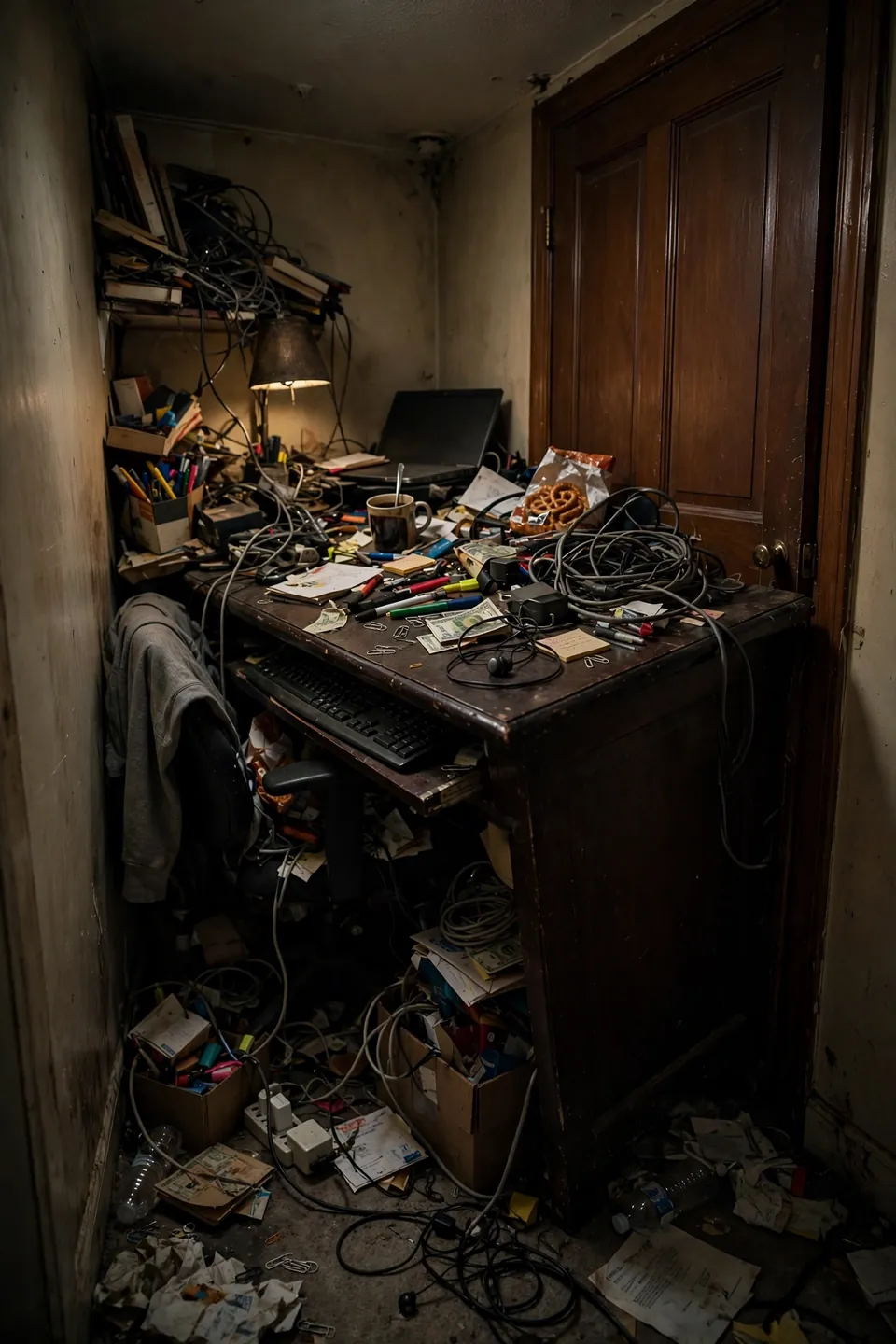
The biggest mistake is buying furniture before measuring. That perfect desk becomes a nightmare when it blocks the closet door or leaves no room for your chair. Always measure twice and tape the footprint on the floor first. A few minutes with a tape measure prevents weeks of regret.
The second mistake is ignoring ergonomics to save space. A chair that hurts your back and a monitor at the wrong height will cost you far more in pain than they save in square feet. I’ve noticed that people who invest in comfort first end up far more productive.
Pro Tips for Productive Spaces
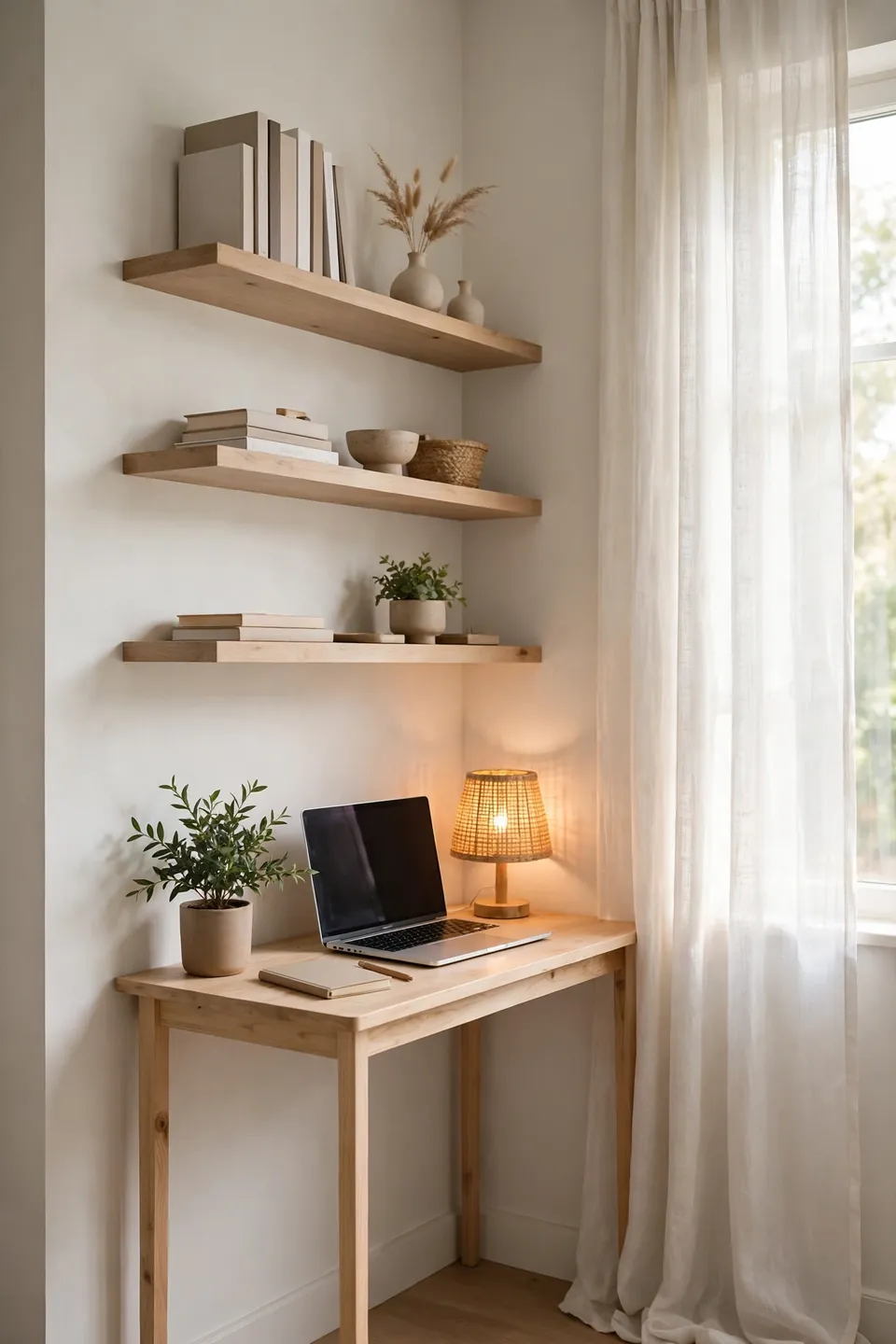
These final touches separate a desk that merely works from a space that truly supports deep focus. Small upgrades compound into big daily wins over time. Apply them one at a time and notice the difference each single change makes.
- Keep a small notebook on the desk for capturing ideas before they vanish.
- End each day with a two minute reset so tomorrow starts clean.
- Add a desk plant; greenery quietly boosts mood and focus.
- Review your setup monthly and remove anything you have not used in weeks.
Conclusion
Your tiny corner has real potential, and now you know exactly how to create a functional home office in a small space that actually works for you. Start with one change today, maybe the lighting or the cable cleanup, and build from there. I’ve seen how making this one change can completely shift the result for busy beginners. Save this guide on Pinterest so you can revisit each step as your setup grows. Your most productive days might just start in the smallest room of your home. Small spaces reward smart choices, so trust the process and enjoy watching your corner transform.