How to Decorate a Living Room With No Windows
A room with no windows can feel dark and flat no matter how nicely you furnish it. If you are learning how to decorate a living room with no windows, start by thinking of light as your main decorating tool. In my experience, artificial lighting done well can feel just as inviting as daylight.
In this guide you will learn how to layer lighting, choose colors that bounce light around, and add depth with mirrors and texture. I also covered a related trick in my article on how to make a guest room multifunctional, where flexible lighting plays the same role.
By the end, your windowless living room will feel brighter, warmer, and much larger. Let us get started.
Why Windowless Rooms Feel Flat
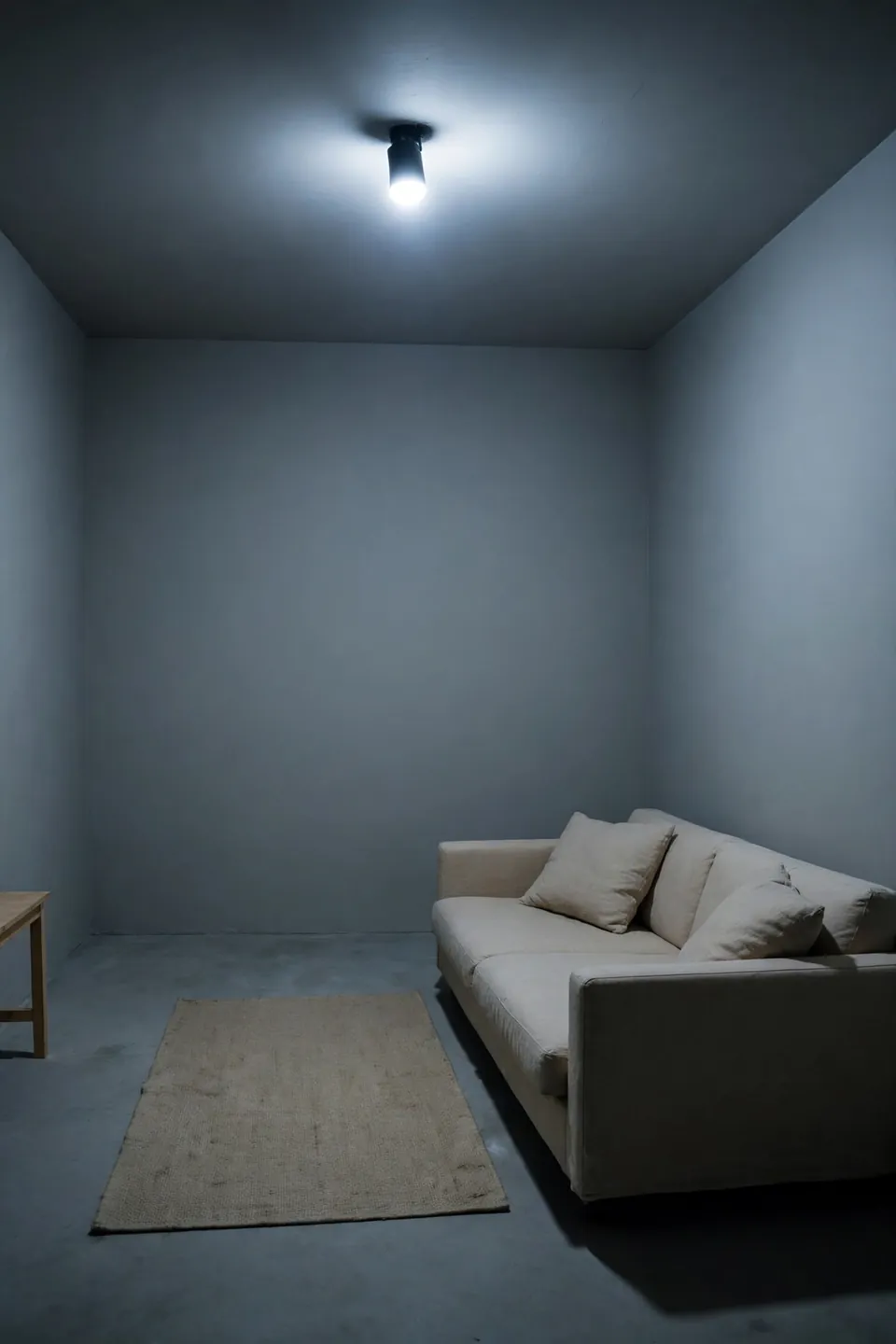
Without windows, a room loses the one thing our eyes depend on most: shifting natural light. Sunlight changes through the day, which gives rooms depth and movement. When that is gone, walls can look dull and colors fall flat, even under bright bulbs. Even beautiful furniture looks tired in flat light.
That is why simply adding a brighter ceiling light rarely fixes the problem. A single overhead source creates harsh shadows and dark corners. The fix is learning to build light in layers, so every corner of the room glows a little.
Layer Your Lighting
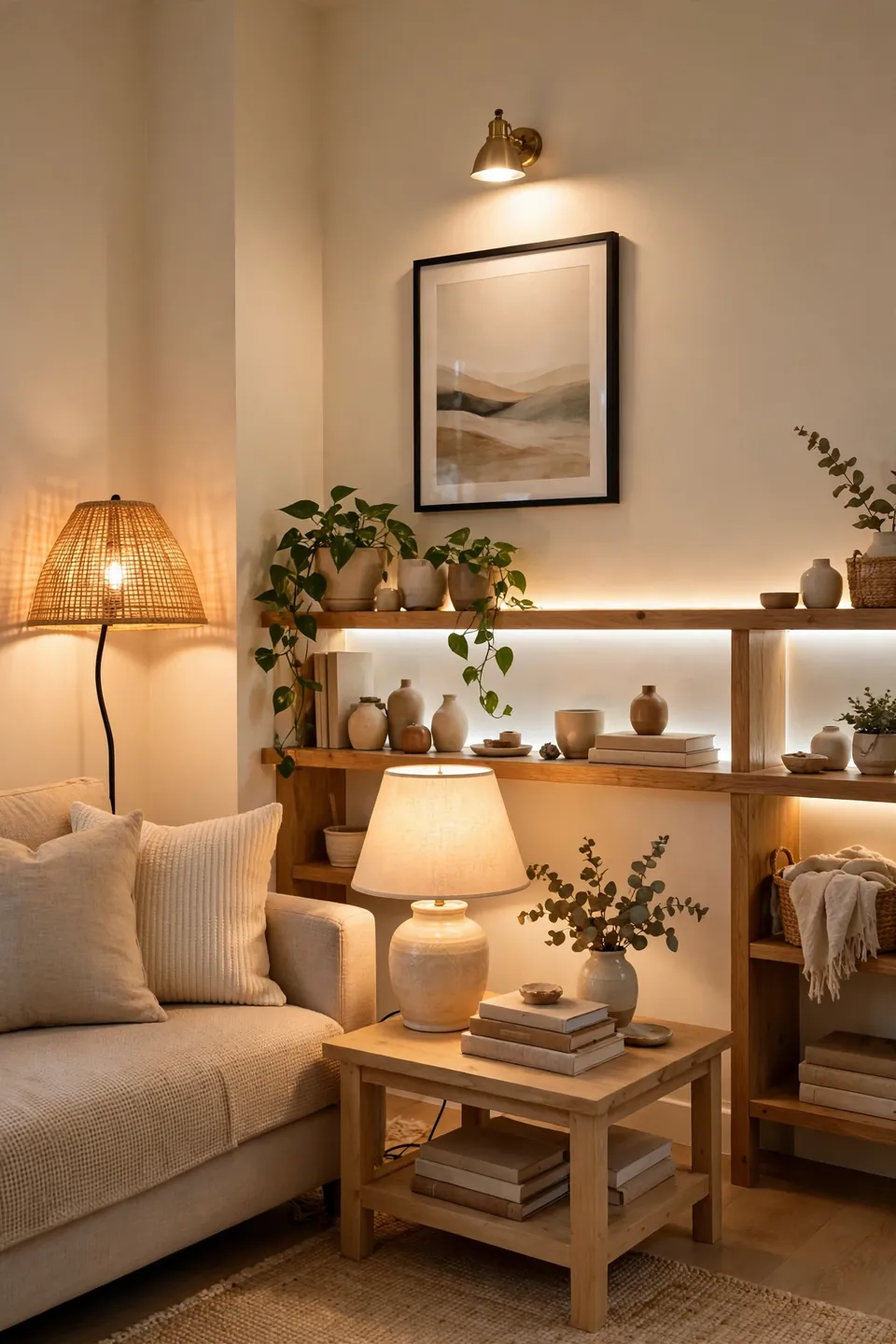
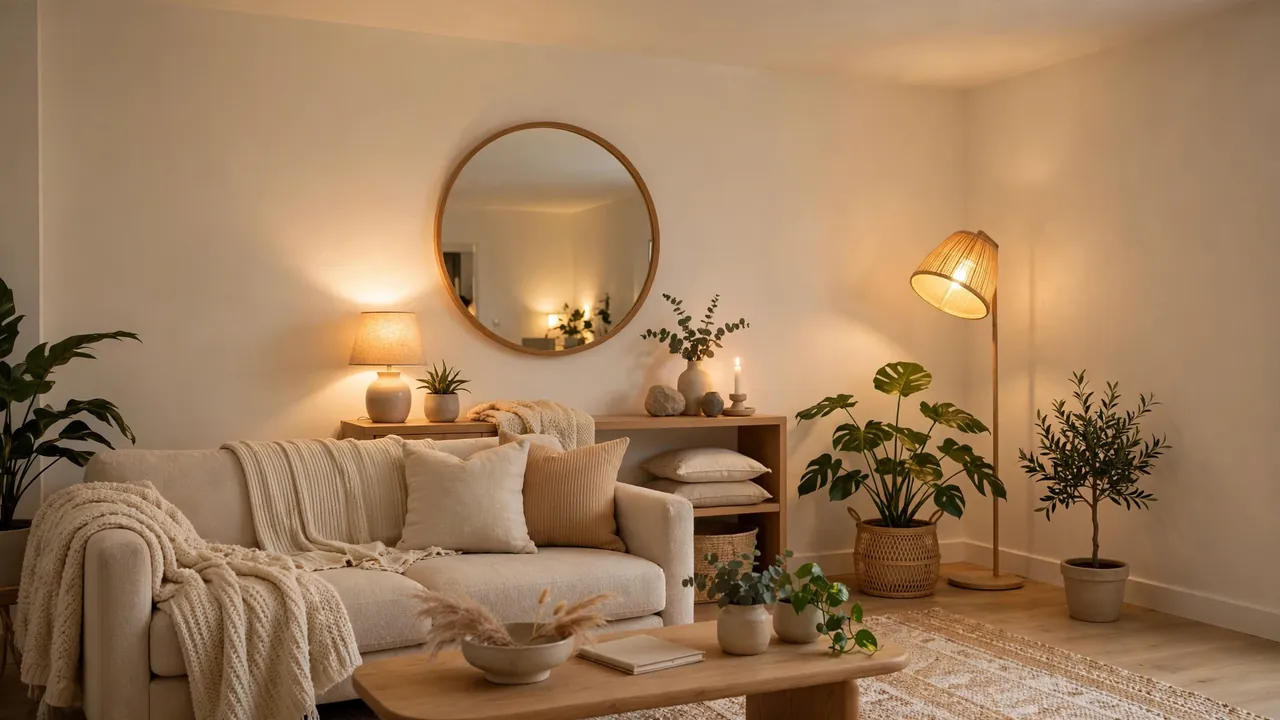
Layered lighting is the single most important trick for a windowless room. Three light sources at different heights replace what daylight would do naturally. Start with what you have and add layers one by one. Your room will feel brighter after each one you add.
- Start with ambient light: add a ceiling fixture or two floor lamps that wash the walls with soft warm light. Aim for 2700 to 3000 Kelvin bulbs for a cozy glow.
- Add task lighting: place a reading lamp by the sofa and a small lamp near any work or hobby spot. This puts light exactly where you use the room.
- Finish with accent light: picture lights over art, LED strips behind a shelf, or a small spotlight on a plant. Accents create the sparkle daylight usually provides.
- Put key lamps on dimmers so you can shift the mood from bright and active to soft and relaxed in seconds.
Lighten the Walls
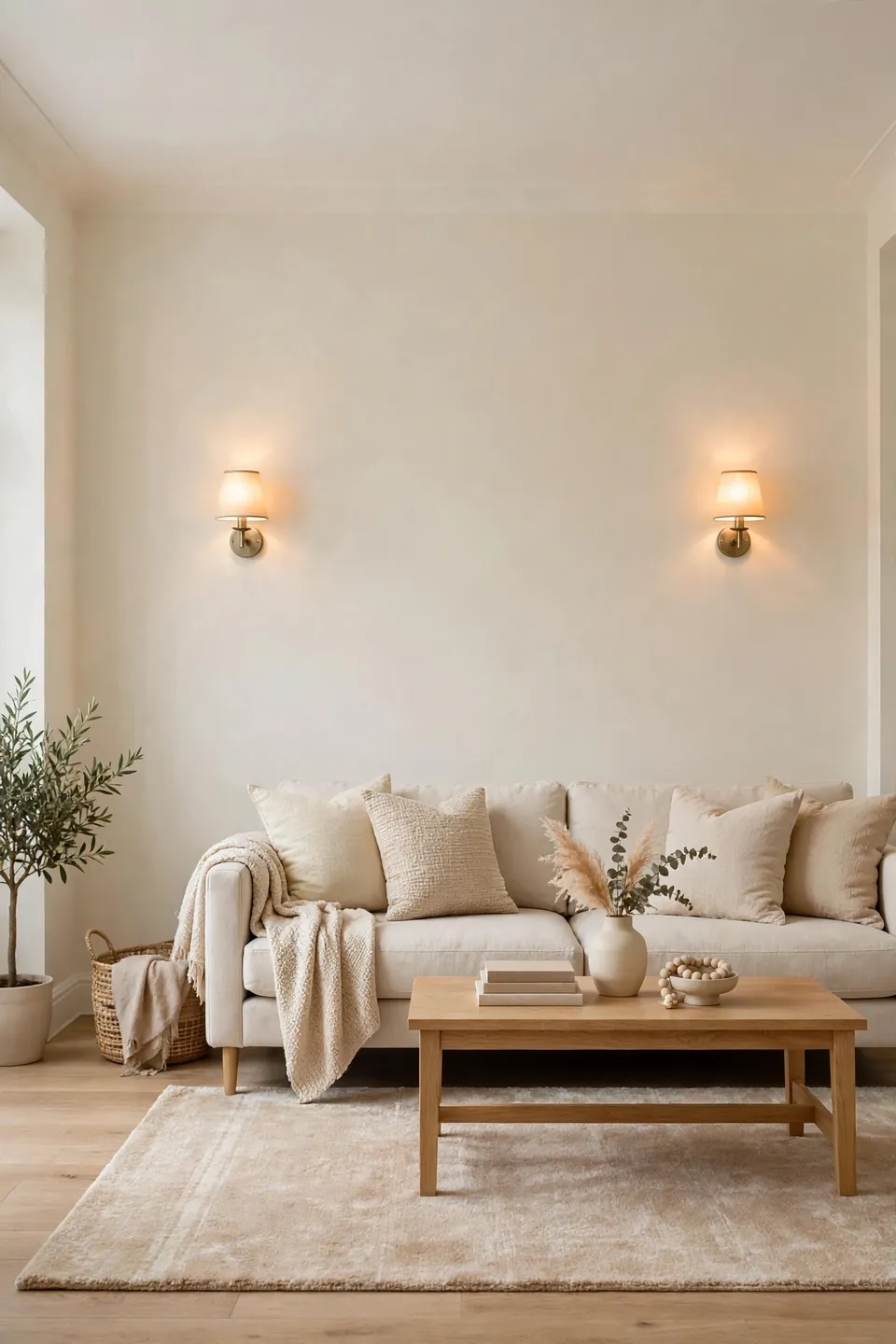
Quick Tip: Test paint samples on the wall and look at them under your evening lighting, not just daylight. Colors look darker without windows, so always go one shade lighter than your first instinct.
Pale walls bounce the light you do have around the room instead of swallowing it. Soft white, warm cream, and pale greige work beautifully in windowless spaces. Keep the ceiling a clean white or one shade lighter than the walls so it lifts the room upward.
Add Mirrors for Depth
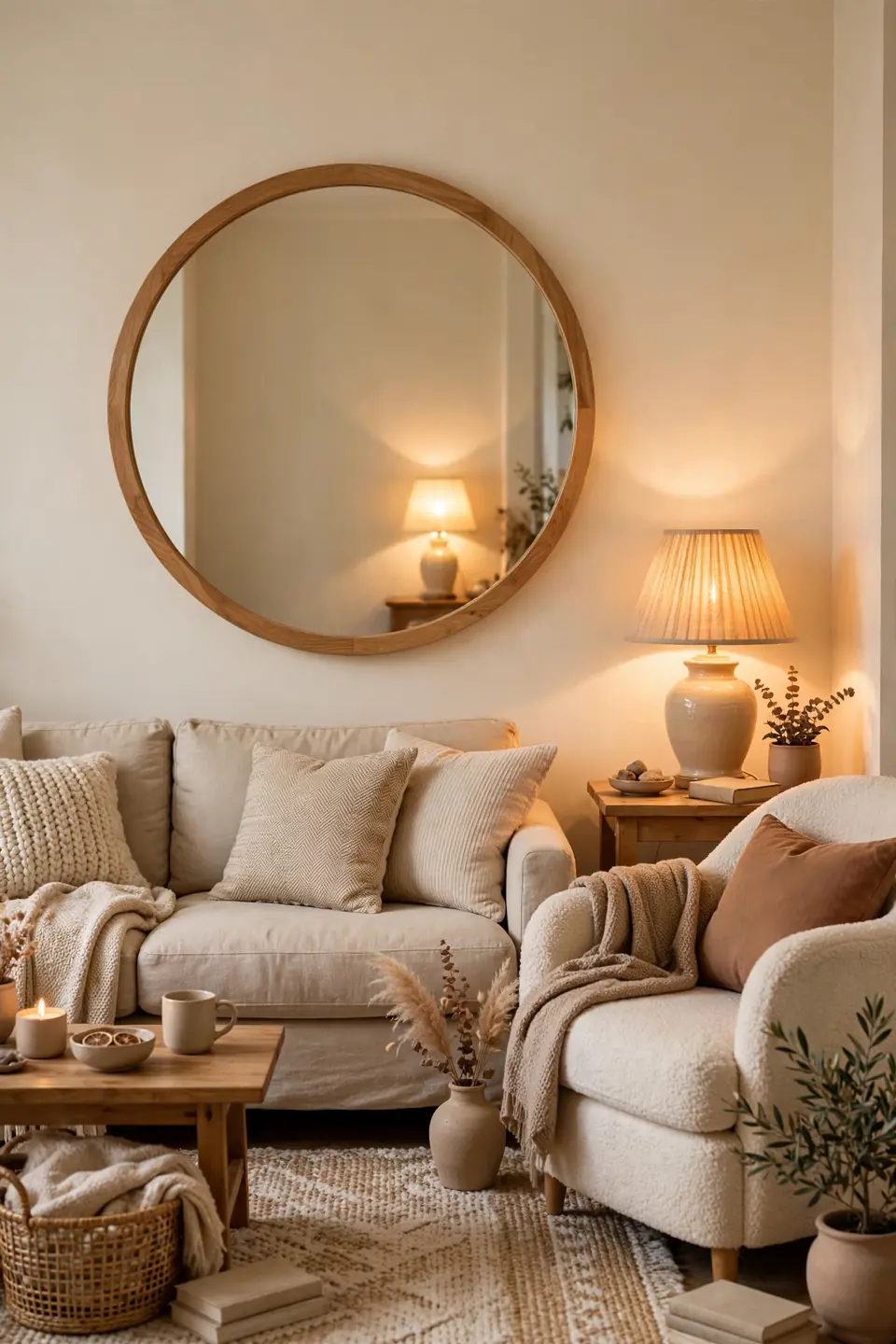
Common Mistake: Most people hang one small mirror too high and expect a big change. A tiny mirror in the wrong spot reflects a blank ceiling and does almost nothing for the room.
The Fix: Go large and aim mirrors at something beautiful, like a lamp, a plant, or a lit piece of art. A big mirror opposite your brightest light source doubles the glow and adds instant depth.
Mirrors are the closest thing to a fake window you can buy. They bounce light across the room and trick the eye into seeing more space. I have noticed that even one large mirror can make a windowless room feel twice as open. Place it where it catches your best lamp.
Bring in Greenery
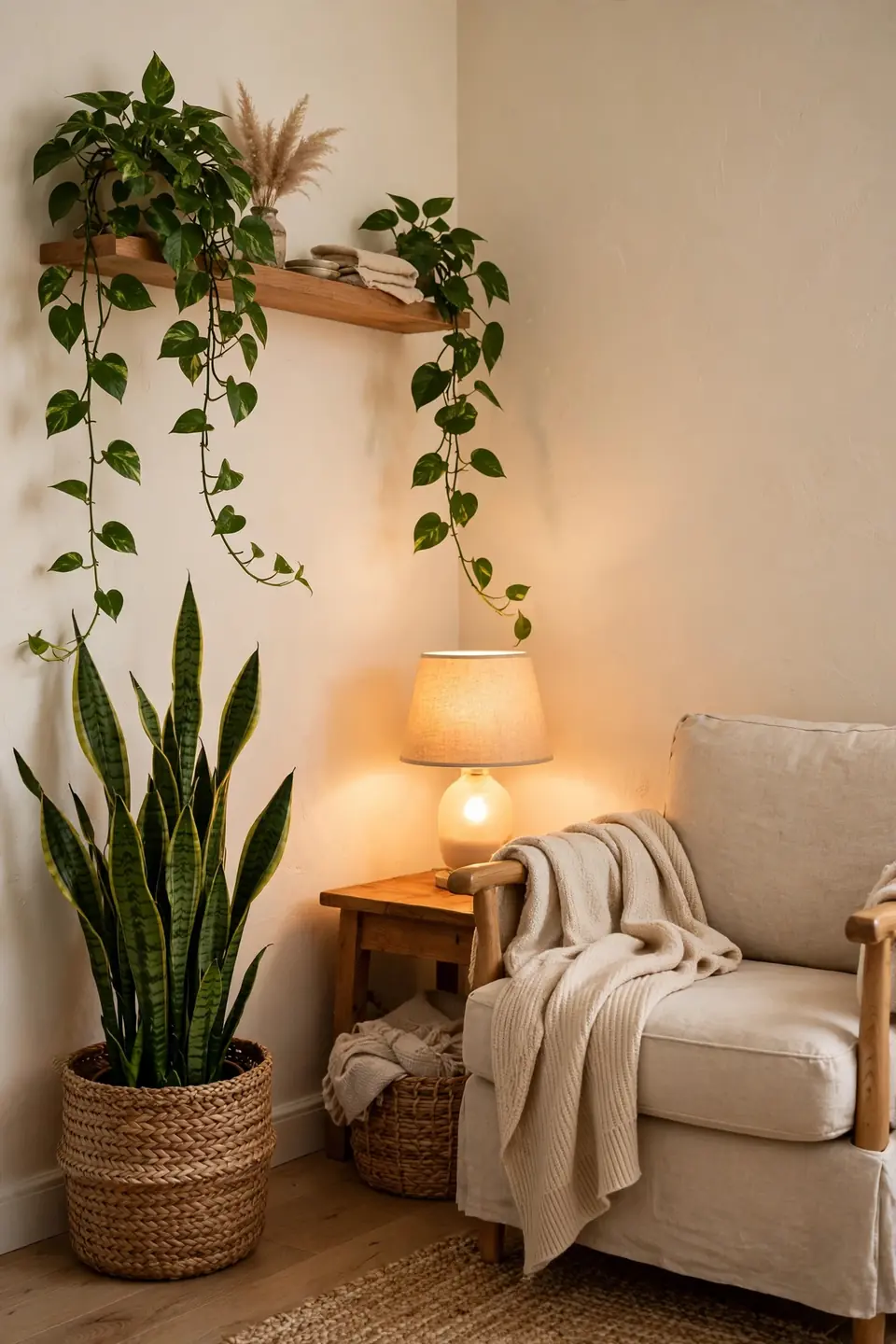
What You Need:
- A tall low-light plant: a snake plant or ZZ plant thrives under artificial light and adds life to dark corners.
- Small potted herbs or pothos: trailing plants soften shelves and bring color to eye level.
- A quality grow light bulb: one full-spectrum bulb in a regular lamp keeps plants happy without special fixtures.
- Natural fiber pots: woven baskets or clay pots add warm texture that keeps plants looking styled, not clinical.
Plants do more than decorate; they make a windowless room feel alive and cared for. When you learn how to decorate a living room with no windows, do not skip greenery, because leaves catch lamplight beautifully and soften hard edges. Start with two or three easy plants and add more as you gain confidence.
Choose Warm Textures
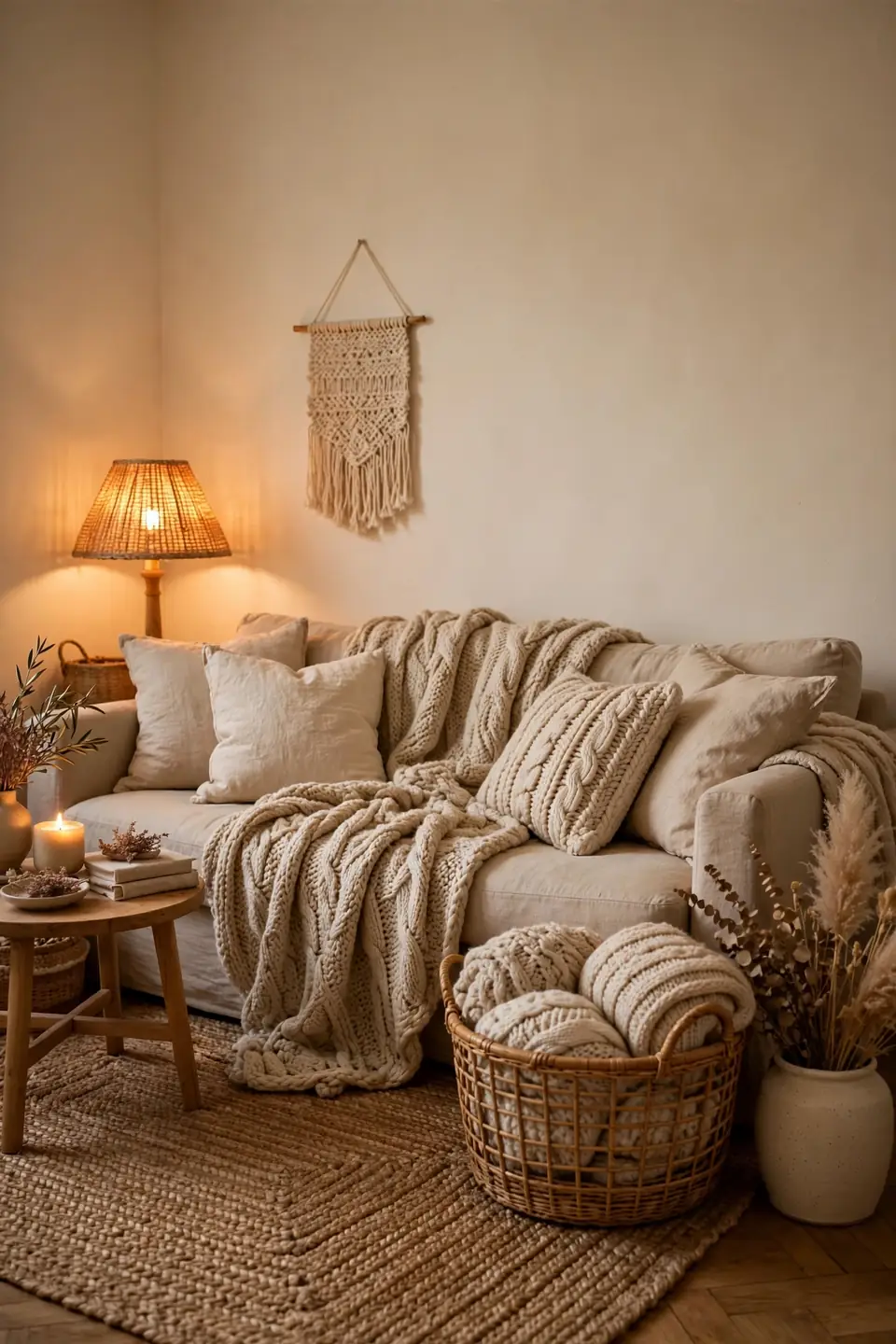
Before: A windowless room full of hard, smooth surfaces feels cold and flat. Leather, glass, and metal bounce light harshly and leave the space feeling unfinished and uninviting.
After: Layered wool throws, a chunky knit rug, linen pillows, and woven baskets change everything. Soft textures absorb harsh light and give the room the warmth daylight usually brings.
Texture is what makes a room feel expensive and cozy at the same time. Mix at least three textures in every seating area, like smooth, nubby, and woven. Your windowless living room will feel rich and inviting instead of stark and flat. Start with pillows and a throw; they are the easiest swap.
Create a Focal Point
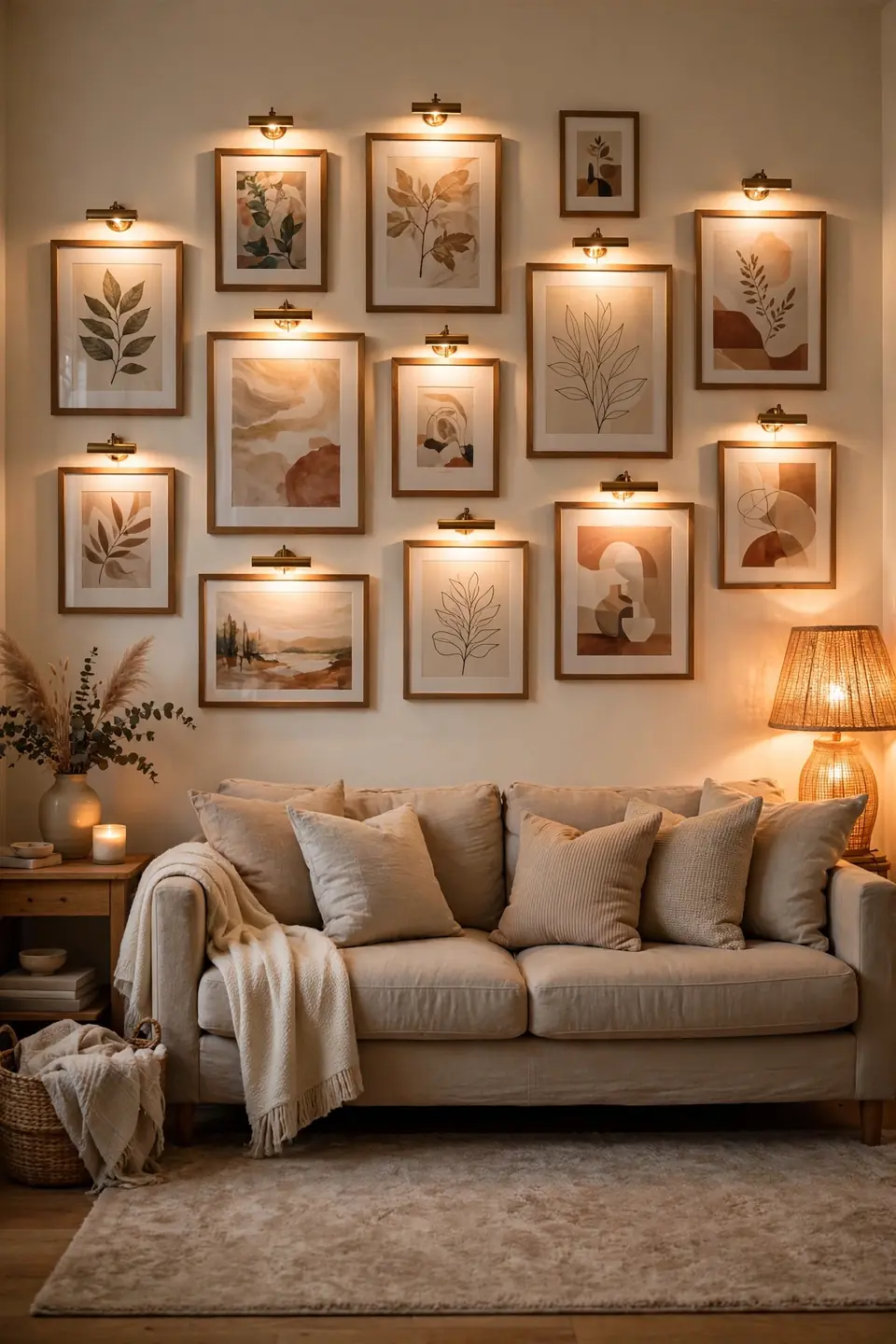
Do This:
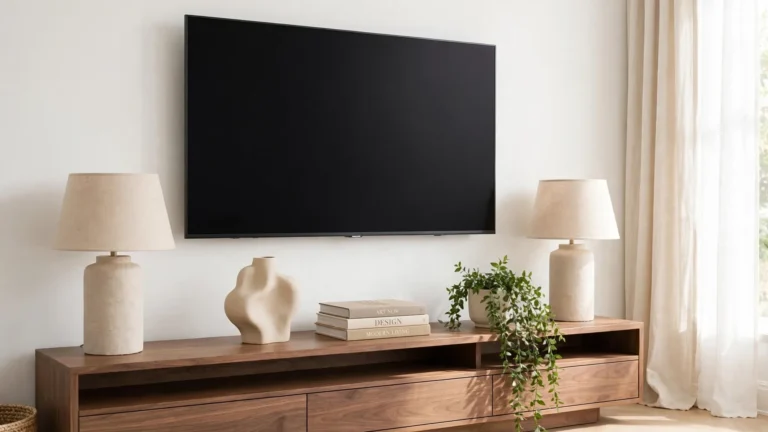
- Build one clear focal point, like a gallery wall, a bold piece of art, or a styled media console.
- Light your focal point with a picture light or small spotlight so eyes land there first.
- Keep the rest of the room calmer so the focal point can shine.
Avoid This:
- Do not scatter five small competing focal points around the room.
- Do not leave every wall equally decorated with no clear star.
- Do not choose a focal point that needs daylight to look good, like a light-sensitive art print.
A strong focal point gives a windowless room purpose and direction. Without windows to look out of, guests need somewhere beautiful to rest their eyes. Choose one wall, make it special, and let the rest of the room support it quietly. This one move makes the whole space feel designed, not accidental.
If storage is also tight in your home, my guide on how to maximize storage in a tiny bedroom shares clever ideas that work in any small space.
Keep Air Flowing
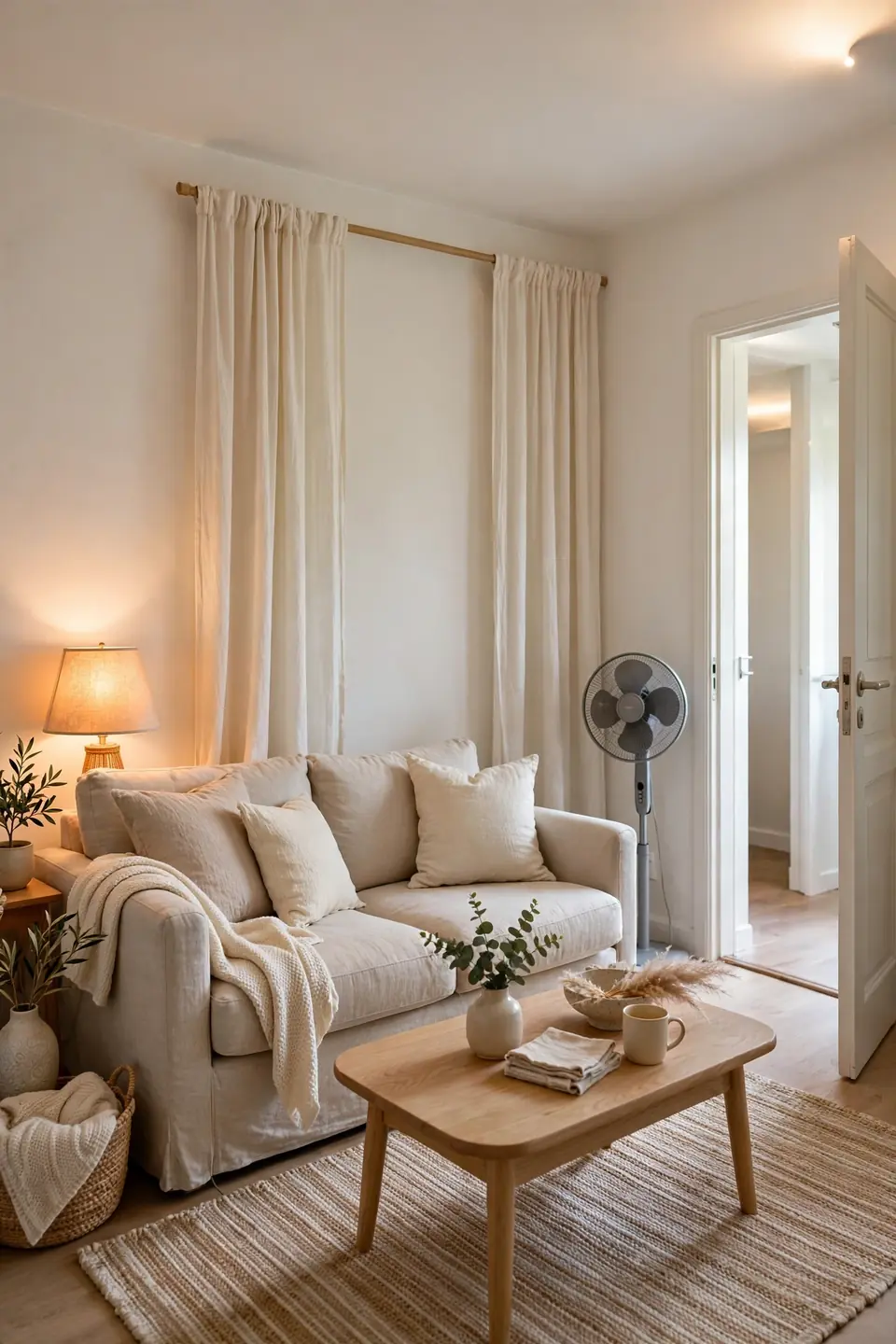
Time Needed: 1 hour to reposition fans and vents
Difficulty: Easy
Cost: Low, mostly rearranging what you own
Result: A room that feels fresh instead of stuffy
Windowless rooms can feel stuffy, and stuffy air makes a space feel smaller. Crack the door when you can, run a quiet fan, and avoid blocking vents with furniture. Fresh moving air makes the whole room feel lighter and more open. Even a small air purifier helps the room feel crisp and clean.
Common Windowless Mistakes
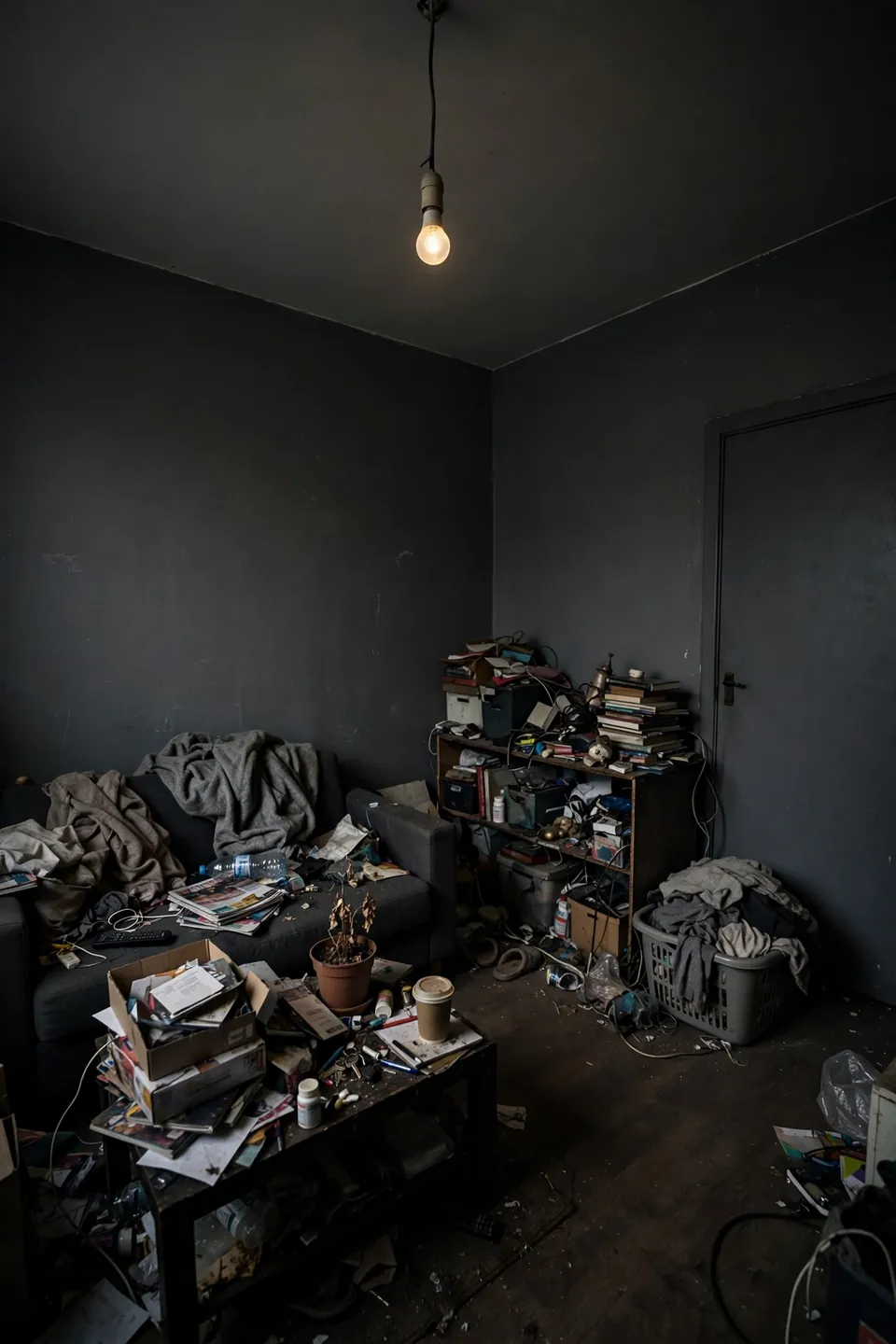
The biggest mistake is relying on one ceiling light and calling it done. Another is painting the walls a dark moody color because it looked great in a photo of a room with windows. Without daylight, dark paint just closes the room in. That shade needs sunlight to glow.
Skipping mirrors is another common miss, and so is forgetting dimmers. I have seen rooms go from gloomy to gorgeous with just three changes: lighter walls, one large mirror, and lamps on dimmers. Avoid these mistakes and your room will already feel twice as bright.
Pro Tips for Bright Rooms
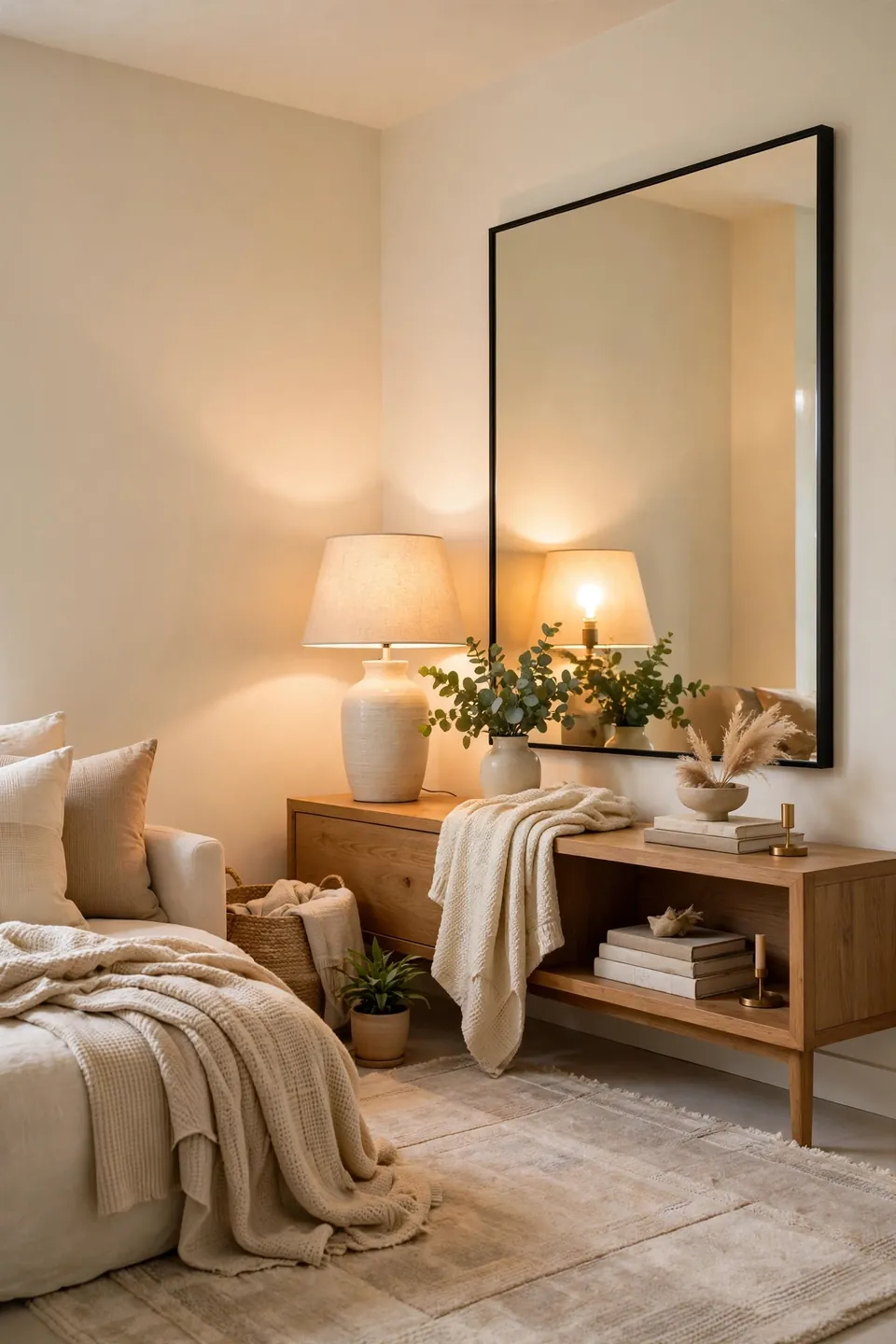
These finishing touches take a good windowless room and make it great. Each tip is quick, cheap, and beginner friendly. Pick the ones that fit your space and try them this weekend. Small changes stack up fast when there is no daylight to hide behind.
- Swap all bulbs to warm white LEDs around 2700 Kelvin for a consistent cozy glow.
- Add a large mirror to the wall facing your main lamp to double its light.
- Keep one wall mostly clear so light has room to travel and bounce.
- Refresh textiles seasonally: lighter throws in summer, chunkier knits in winter.
Conclusion
You now have a full plan for a brighter, warmer living room, even without a single window. Layered lighting, pale walls, mirrors, greenery, and soft textures work together to replace what daylight would do. The best part is that most of these ideas cost little and take only a weekend. If you found this guide on how to decorate a living room with no windows helpful, save it to Pinterest so you can find it again. I have seen how making these small changes can completely shift how a room feels, and yours is next.