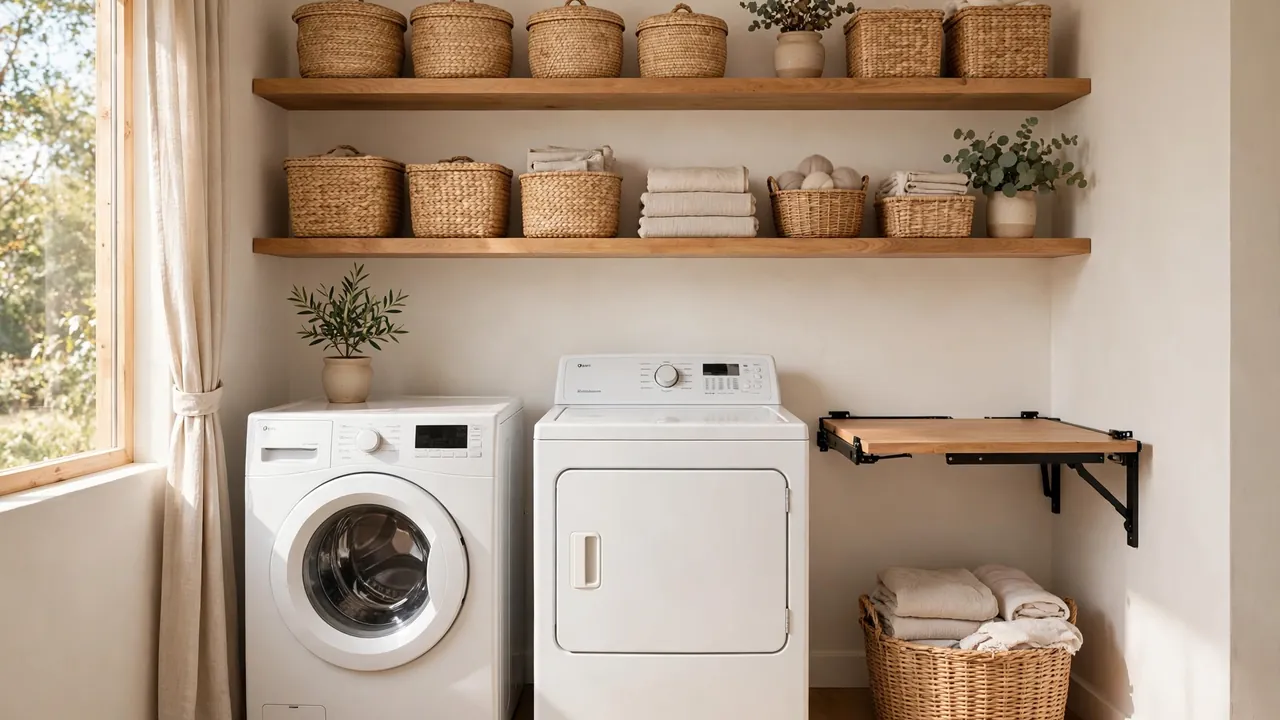
How to Organize a Small Laundry Room
A cramped laundry room can turn a simple chore into a daily headache. When bottles crowd the washer lid and clean clothes have nowhere to land, even small loads feel overwhelming. Learning how to organize a small laundry room changes all of that, because every inch starts working for you instead of against you.
In my experience, the tiniest laundry corners become the hardest-working spots in the home once they are set up with intention. The same smart-zone thinking in this guide to how to add storage to a small entryway applies here, and the ideas ahead cost far less than you might expect.
A little planning now saves years of daily frustration, so let us walk through it step by step.
Why Small Laundry Rooms Overflow
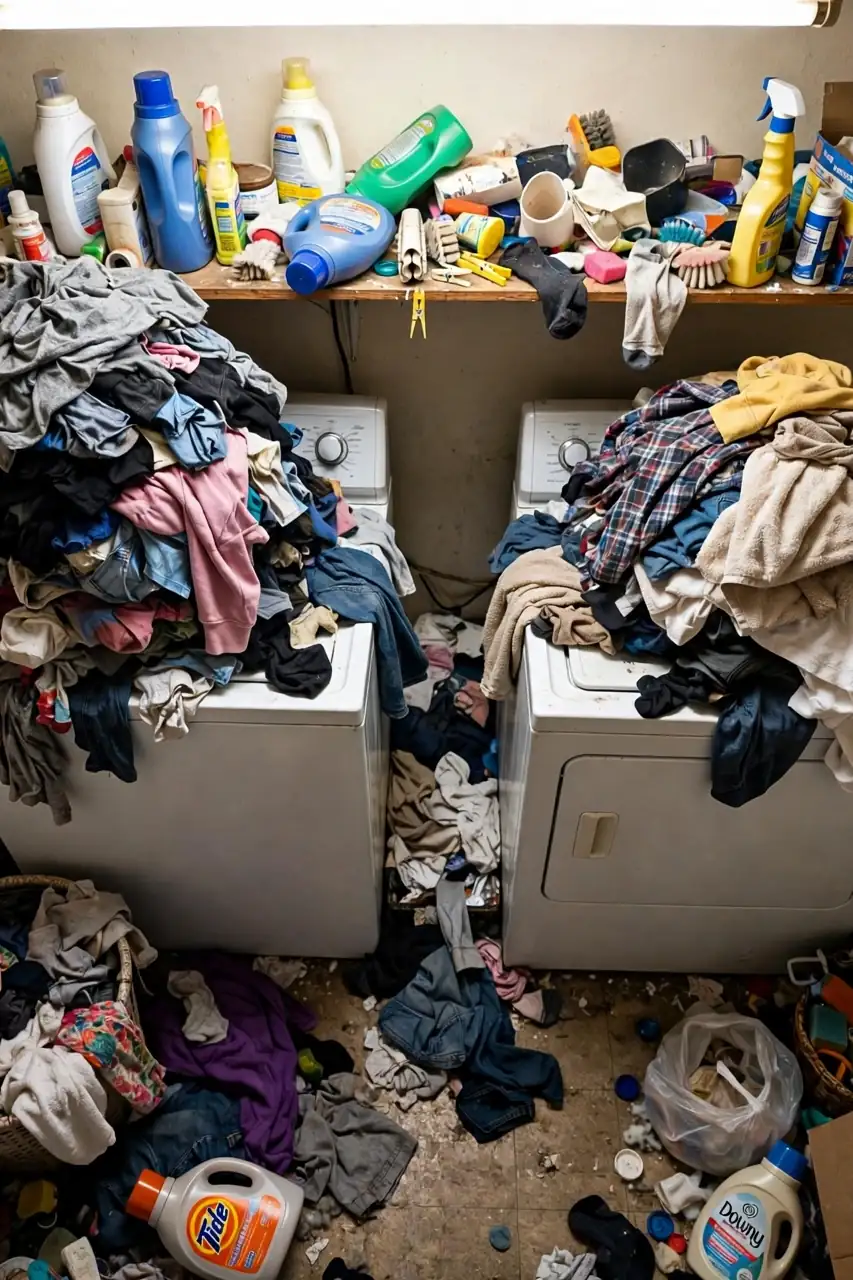
Tiny laundry rooms overflow because every task demands its own gear and none of it has a fixed home. Detergent, softener, hangers, and the endless stream of clean and dirty clothes all compete for the same few square feet, so everything migrates to the washer lid.
We treat small laundry spaces as afterthoughts, so clutter builds one dropped dryer sheet at a time. Once you see the space as a real room with a real job, organizing it becomes a project worth doing. A clear plan turns that cramped corner into your hardest-working spot.
Clear Everything Out
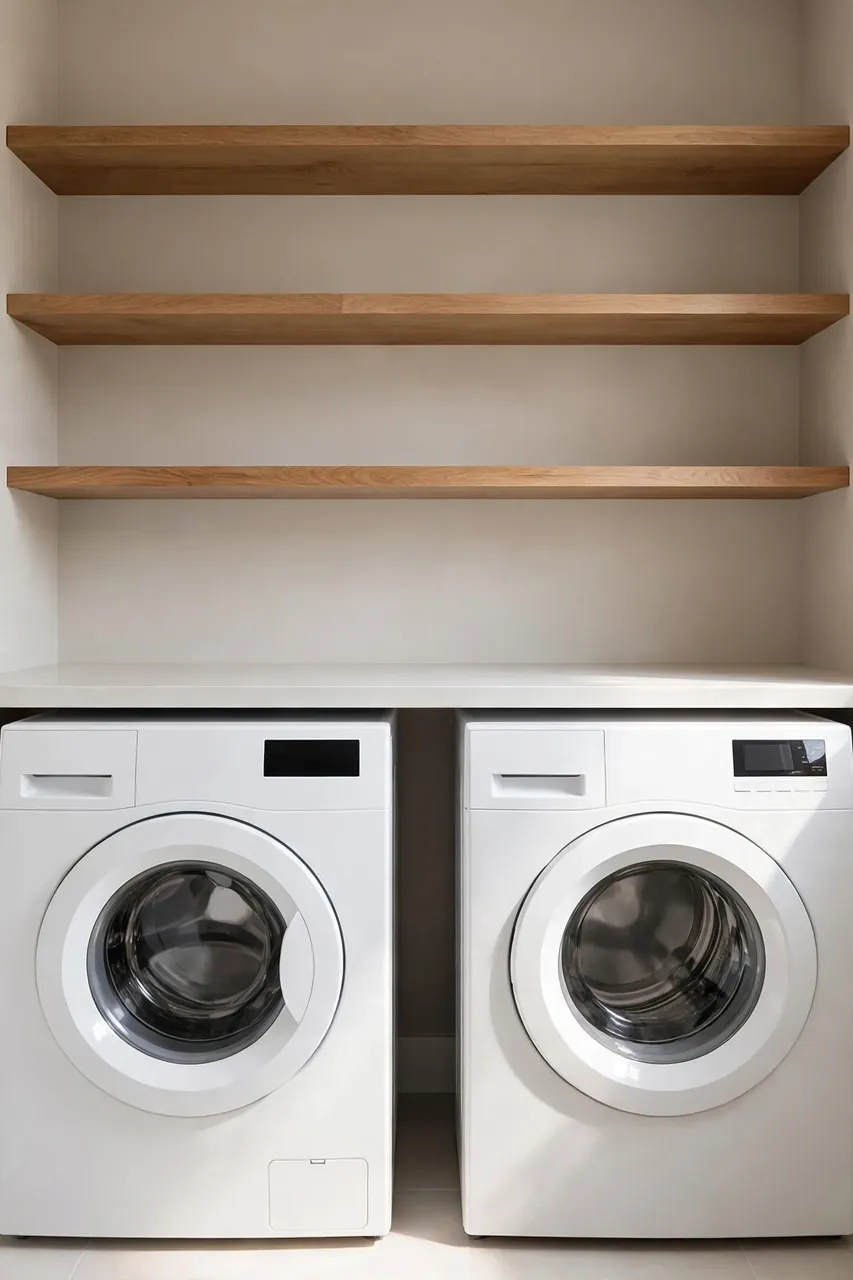
You cannot organize a space you cannot see, so the very first move is a full reset. Pulling everything out shows you exactly what you own and how much space you truly have to work with.
- Take every item off the shelves, out of the cabinets, and off the floor.
- Toss dried-out dryer sheets, empty bottles, and anything you have not used in a year.
- Wipe down all surfaces so you are starting from a clean, blank slate.
- Group what remains into wash, dry, fold, and store piles before putting anything back.
Zone by Task
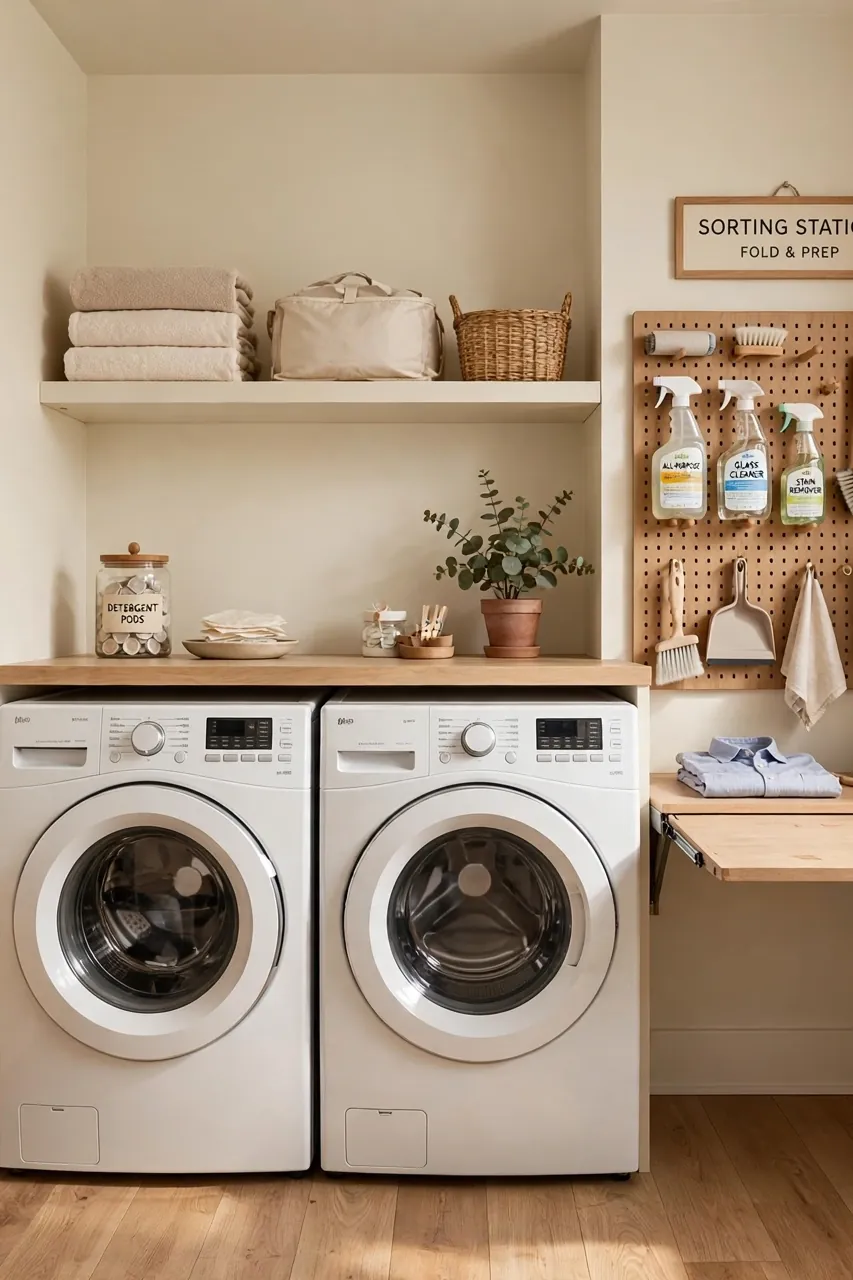
Quick Tip: Treat your laundry room like a tiny factory line. Washing, drying, and folding should flow in one direction so you never backtrack. This simple shift cuts the time each load takes and keeps piles from migrating across the room.
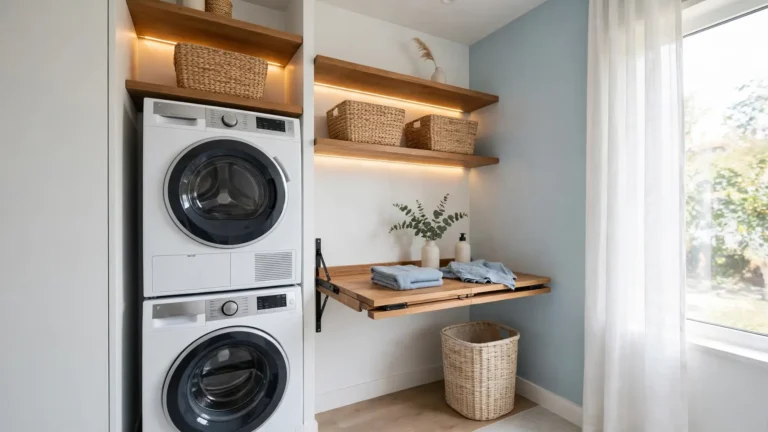
Assign one spot for dirty laundry incoming, one for the washer and dryer, and one for folding and hanging finished items. Even in a closet-sized space, a wall-mounted drop zone for hampers and a fold-down table for sorting creates a clear path. When every task has its own corner, the whole room runs on autopilot.
Use Wall Space
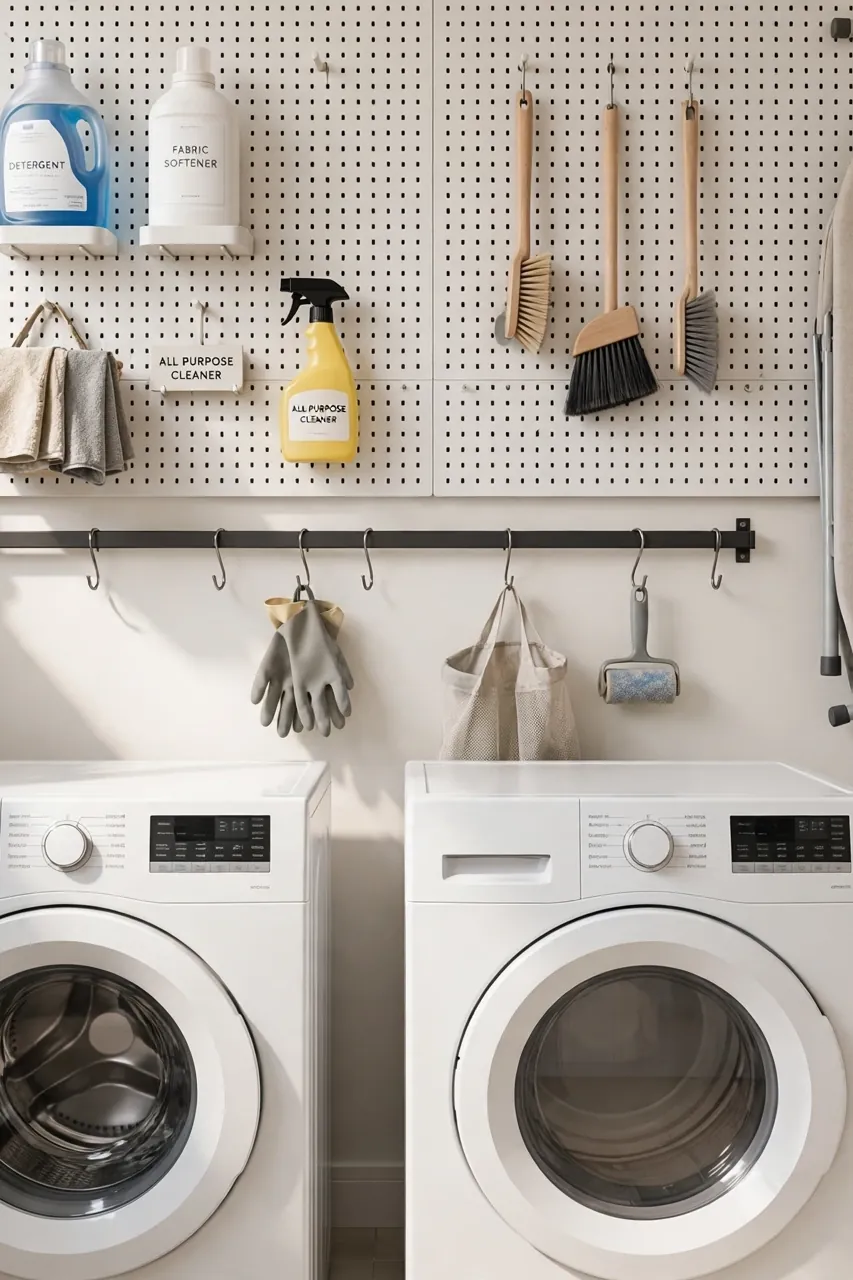
Common Mistake: Most people stack everything on the washer and dryer and call it storage. The constant vibration knocks items over, bottles slide behind machines, and you lose half your supplies to the gap between appliances.
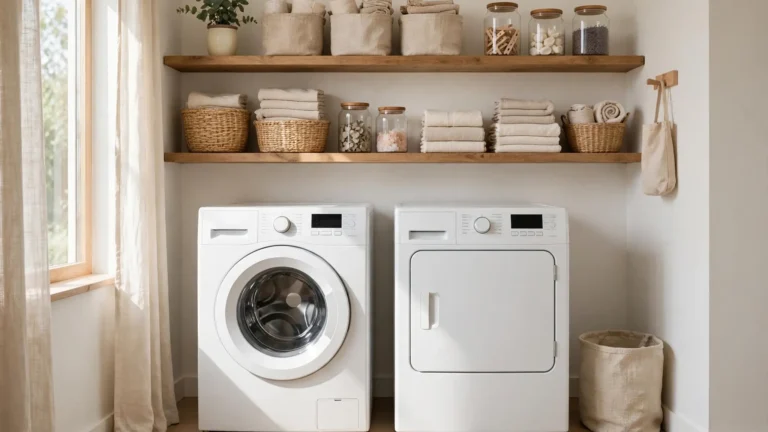
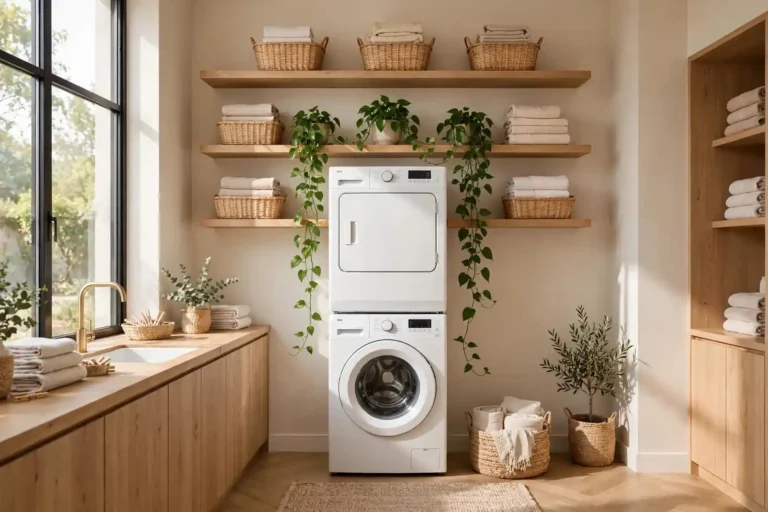
The Fix: Move storage to the walls where vibration cannot reach it. Pegboards, slim rail systems, and shallow shelves keep detergents and tools within arm’s reach but off the machines. Your appliances stay clear, and every bottle has a fixed, shake-proof home.
Wall storage also frees the floor, which makes the room feel noticeably larger. Start with one rail or pegboard above waist height and add hooks for your ironing board, broom, and drying rack. Once the walls work harder, the floor finally breathes. That open floor is what makes the whole room feel calmer.
Add Over-Washer Shelves
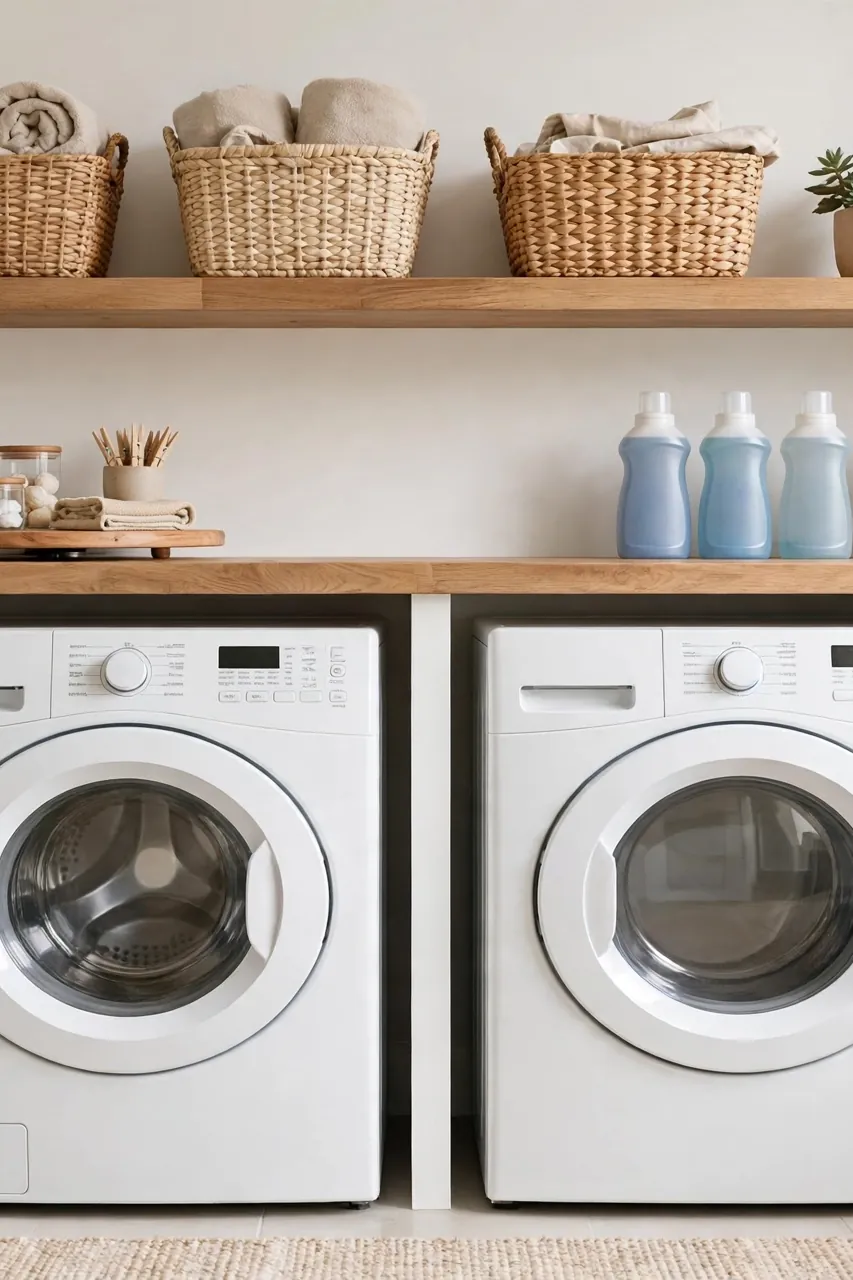
What You Need:
- Two sturdy shelves: Mounted into studs so they hold full detergent bottles safely.
- Small baskets: One per shelf section to group dryer sheets, stain sticks, and clothespins.
- Turntable: A lazy susan keeps deep shelves usable without digging behind bottles.
- Labels: Simple tags on each basket so the whole household puts things back correctly.
- Shelf liner: Protects shelves from drips and makes spills easy to wipe up.
Measure the space between your machines and the ceiling before you shop so the shelves fit with room to reach over the washer lids. Keep daily items on the lower shelf and backstock up high. Two well-planned shelves can swallow an entire cabinet’s worth of supplies.
Corral Supplies in Bins
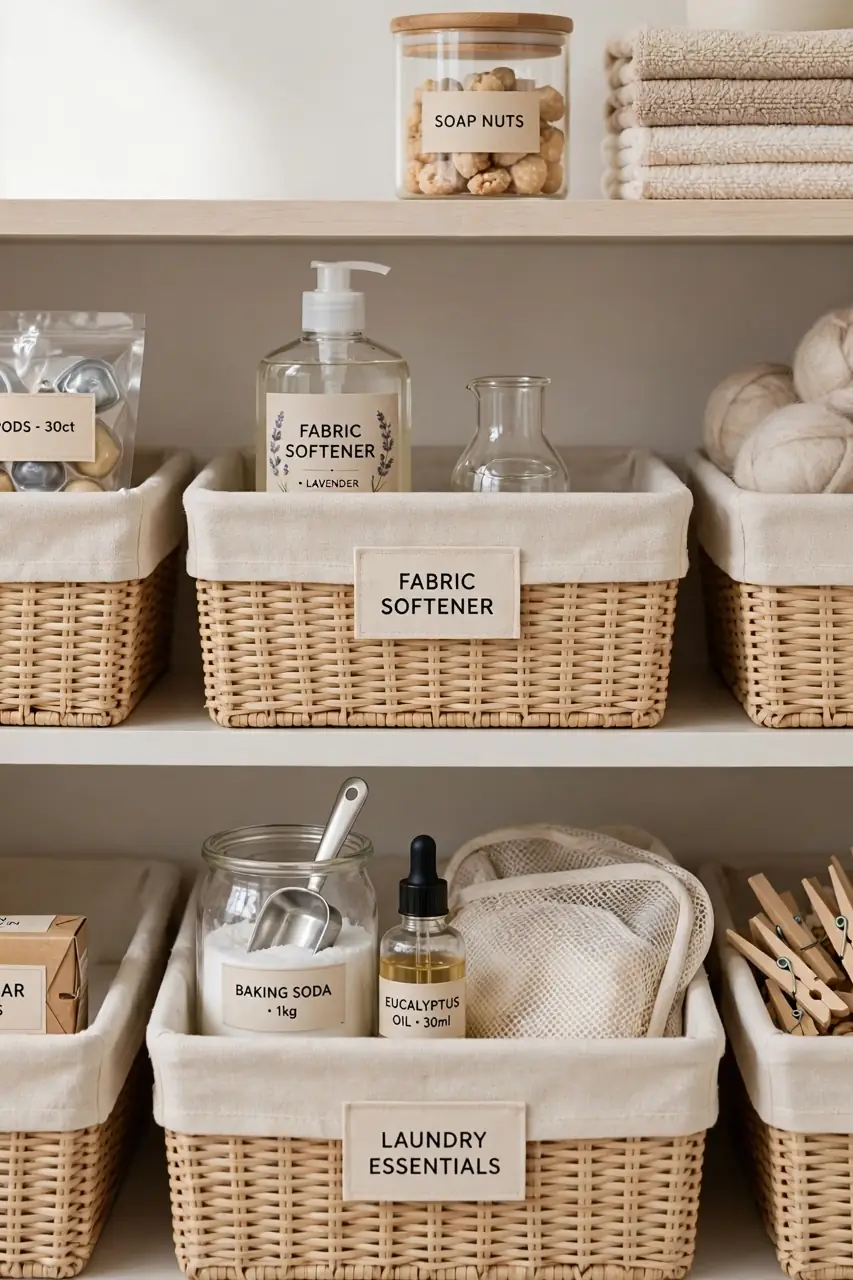
Before: Bottles of every size crowd the shelf edge, caps come loose, and you knock over the softener reaching for the bleach. Finding anything means shoving the whole row aside, and half the labels face the wall.
After: Each supply type lives in its own labeled bin, pulled out like a drawer when needed. One glance tells you what is running low, and restocking takes seconds because everything has a visible, fixed spot.
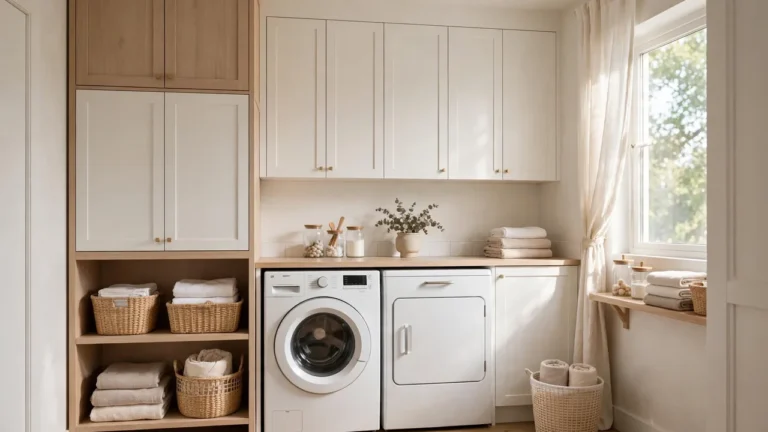
The beauty of bins is that they turn open shelves into closed compartments without any carpentry. When you are learning how to organize a small laundry room, this one habit does more than any expensive cabinet, because bins forgive the chaos of daily use while keeping it hidden in plain sight.
Fold and Store Smartly
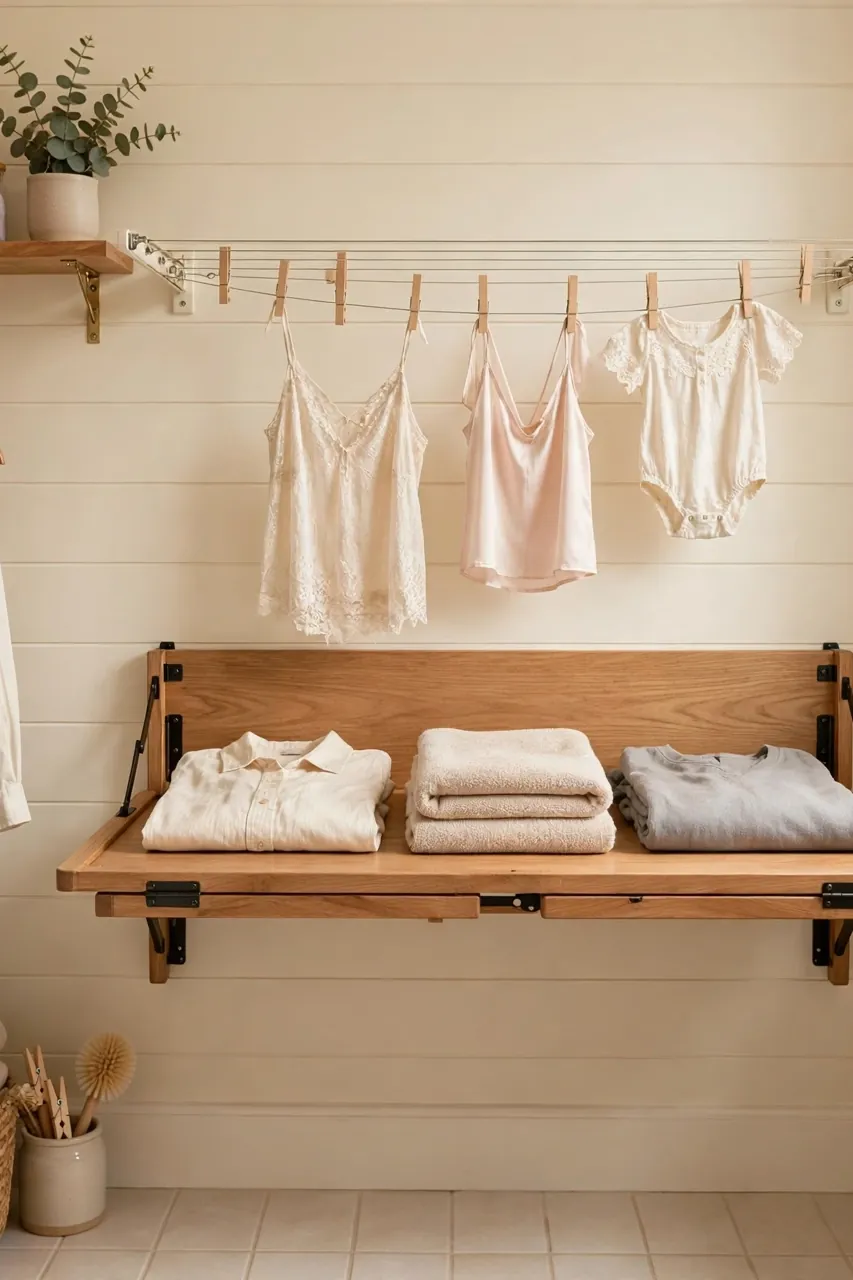
Do This:
- Fold clothes immediately off the line or dryer so piles never form.
- Use a wall-mounted fold-down table if counter space is missing.
- Keep a small basket for items that need ironing or mending.
- Hang delicates on a retractable wall line instead of draping them everywhere.
Avoid This:
- Letting clean laundry sit in baskets, where it wrinkles and doubles your work.
- Storing ironing boards loose where they block doors and walkways.
- Piling folded clothes on the dryer, where vibration topples the stack.
- Ignoring the lost-sock bin until it overflows into a second bin.
A folding station does not need to be big, it just needs to exist. One pull-down shelf or a sturdy board across two brackets gives you a dedicated landing spot, and that single surface breaks the cycle of clean clothes living in baskets for days.
A similar mindset helps in other tight spots, as shown in this guide to how to decorate a rental apartment, where removable, renter-friendly solutions keep small spaces functional without permanent changes.
Keep a Tidy Routine
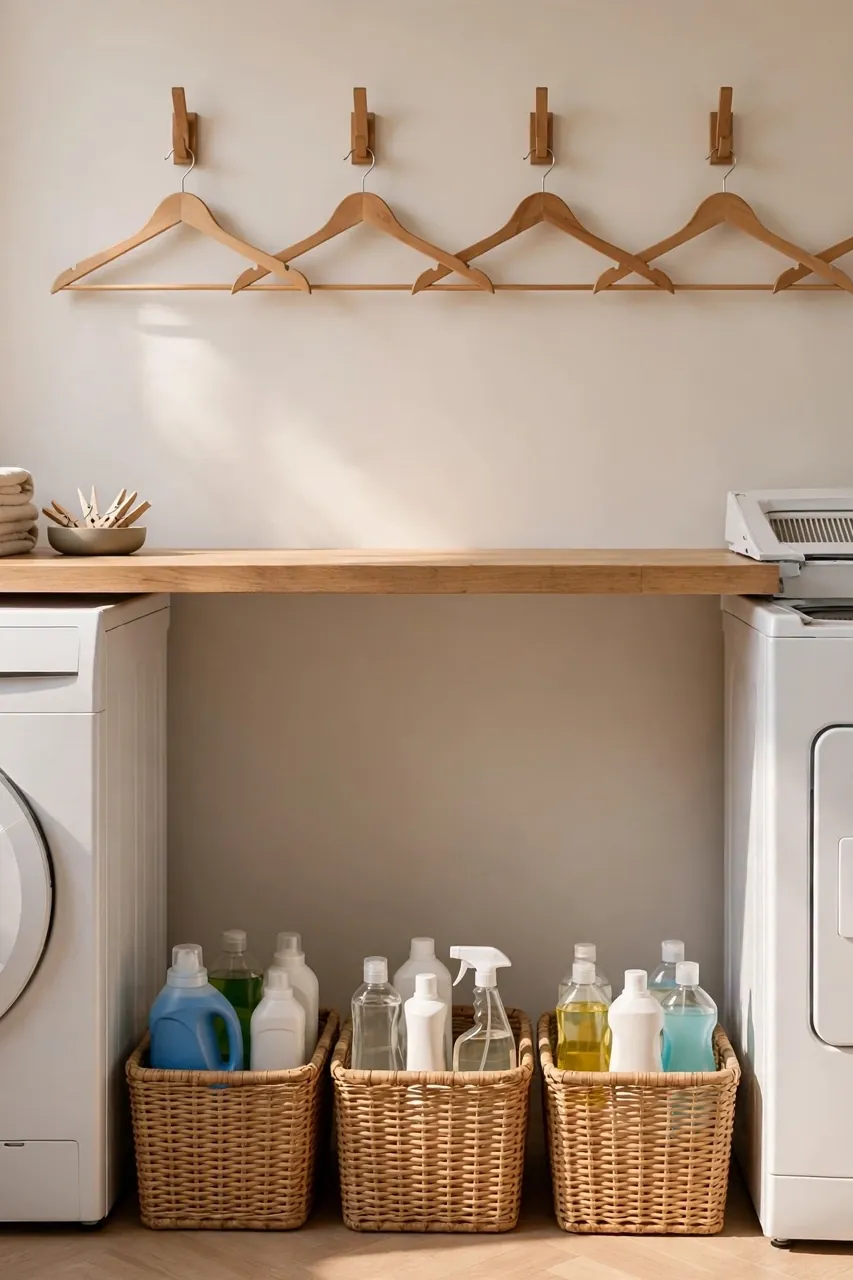
Time Needed: 5 minutes per laundry day | Difficulty: Easy | Cost: Free | Best For: Preventing clutter from creeping back
The secret to a permanently tidy laundry room is a two-minute reset after every load. Wipe the lint trap, return bottles to their bins, and toss stray hangers into their hook while the dryer runs. These tiny habits compound fast, and the room stays organized without a single big cleanup session ever again.
Common Laundry Room Mistakes
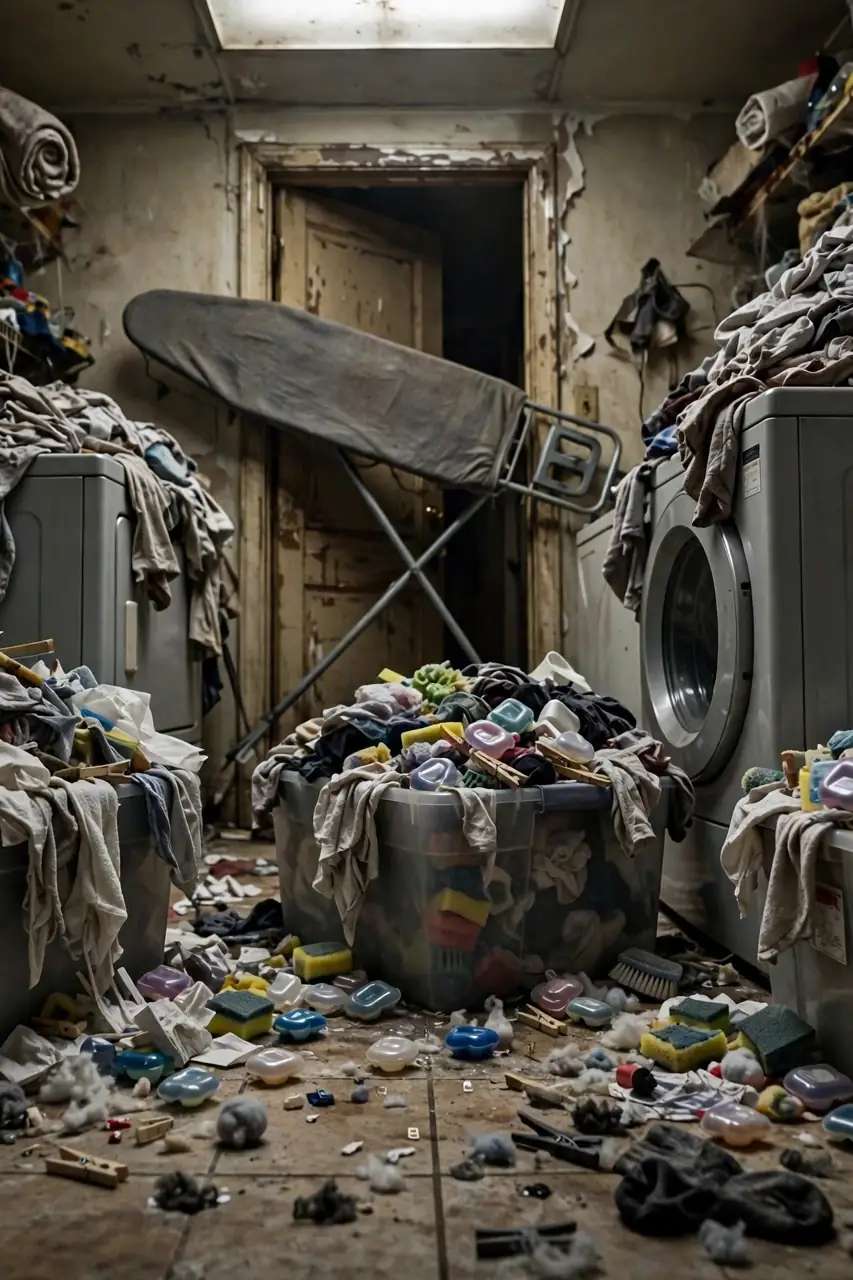
The biggest mistake is buying organizers before measuring the space. Pretty bins that do not fit the shelves become expensive clutter, and a cart that blocks the dryer door makes the room harder to use. Measure first, then shop with a tape measure in hand.
The second error is skipping labels because you assume you will remember where everything goes. You might, but the rest of the household will not, and unlabeled bins invite everyone to stash things wherever they fit. Labeling takes ten minutes and protects all the work you put in.
Pro Tips for Lasting Order
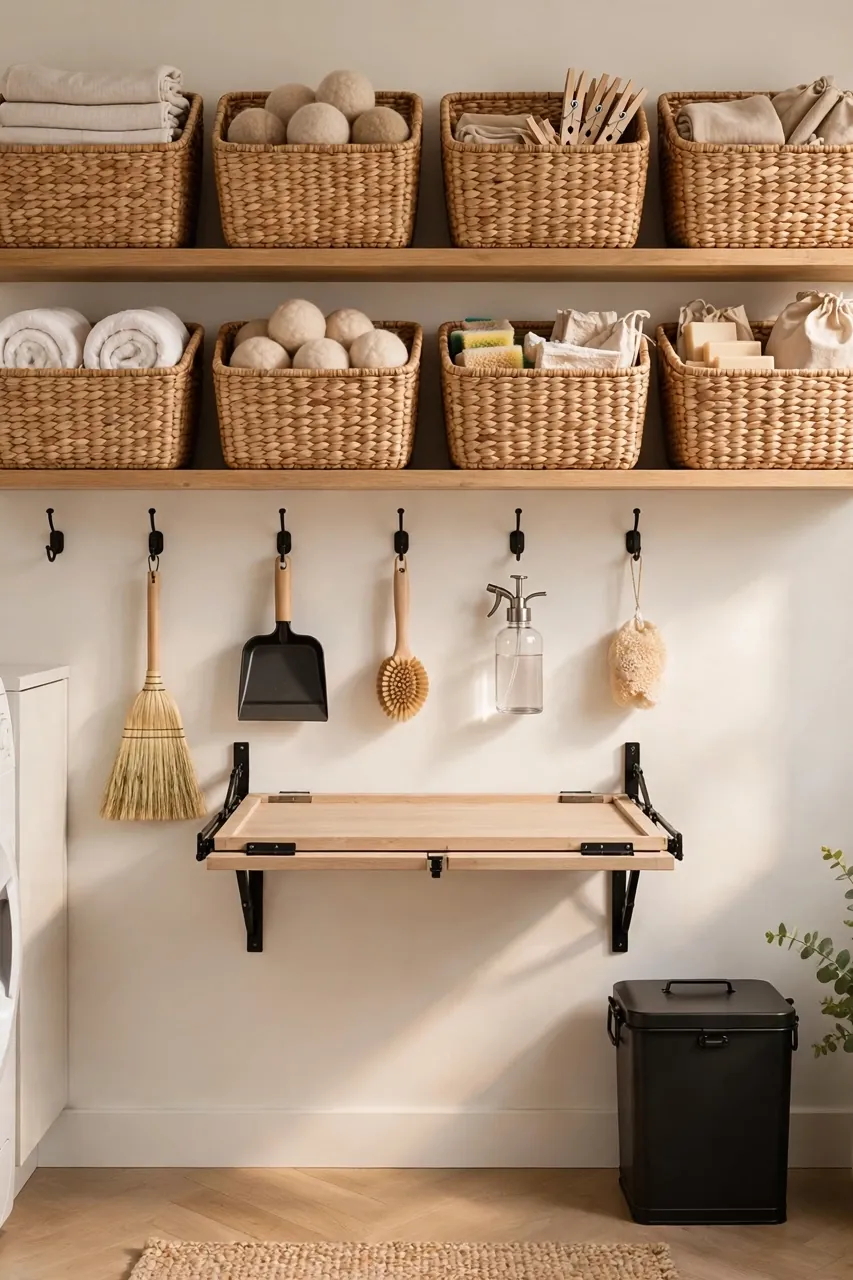
These finishing touches separate a laundry room that stays tidy from one that slides back into chaos within a month. They are small, cheap, and take only minutes each, yet they protect every bit of the organizing work you have done.
- Keep a small trash bin nearby so lint, tags, and empty packaging never hit the floor.
- Store a stain-treatment kit within arm’s reach of the washer for instant action.
- Hang a mesh bag on the wall for single socks until their partners appear.
- Schedule a five-minute monthly check to toss expired products and restock bins.
Conclusion
A small laundry room stops feeling like a burden the moment every item gets a home and every task gets a zone. Learning how to organize a small laundry room is really about working with the space you have instead of fighting it, and the payoff shows up every single laundry day. Save this guide on Pinterest so you can tackle it step by step this weekend, and share it with anyone whose laundry corner could use the same rescue. I have seen the smallest laundry rooms become the most satisfying spaces in a home, and yours can too.

One Comment