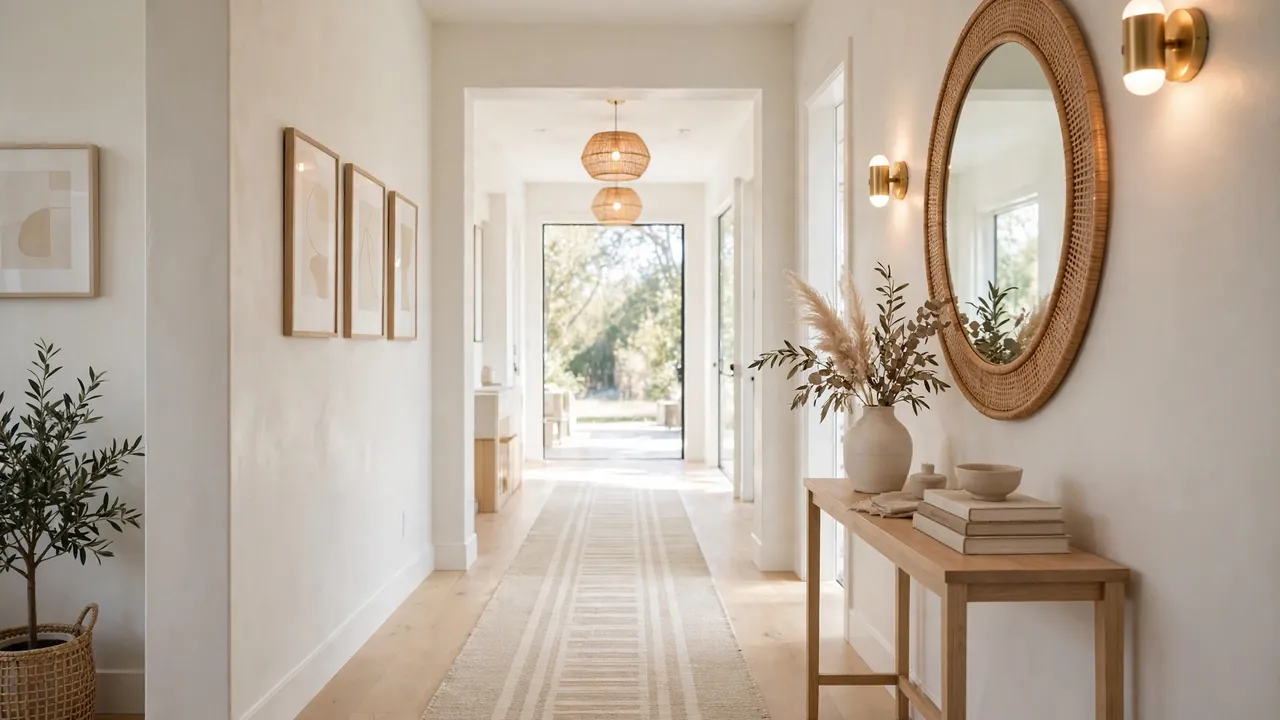
How to Make a Narrow Hallway Look Wider
Every narrow hallway has the same problem: it squeezes you in and makes your home feel smaller than it is. But learning how to make a narrow hallway look wider takes nothing more than paint, light, and a few styling choices. In my experience, these small shifts open up the space fast.
Most people treat the hallway as a pass-through and leave it dark and bare, which only makes it feel tighter. This guide walks you through ten beginner-friendly fixes that visually widen the space. For more layout help, see our guide on how to arrange furniture in a small bedroom.
Start with the simplest change first, then build from there.
Why Narrow Hallways Feel Squeezed
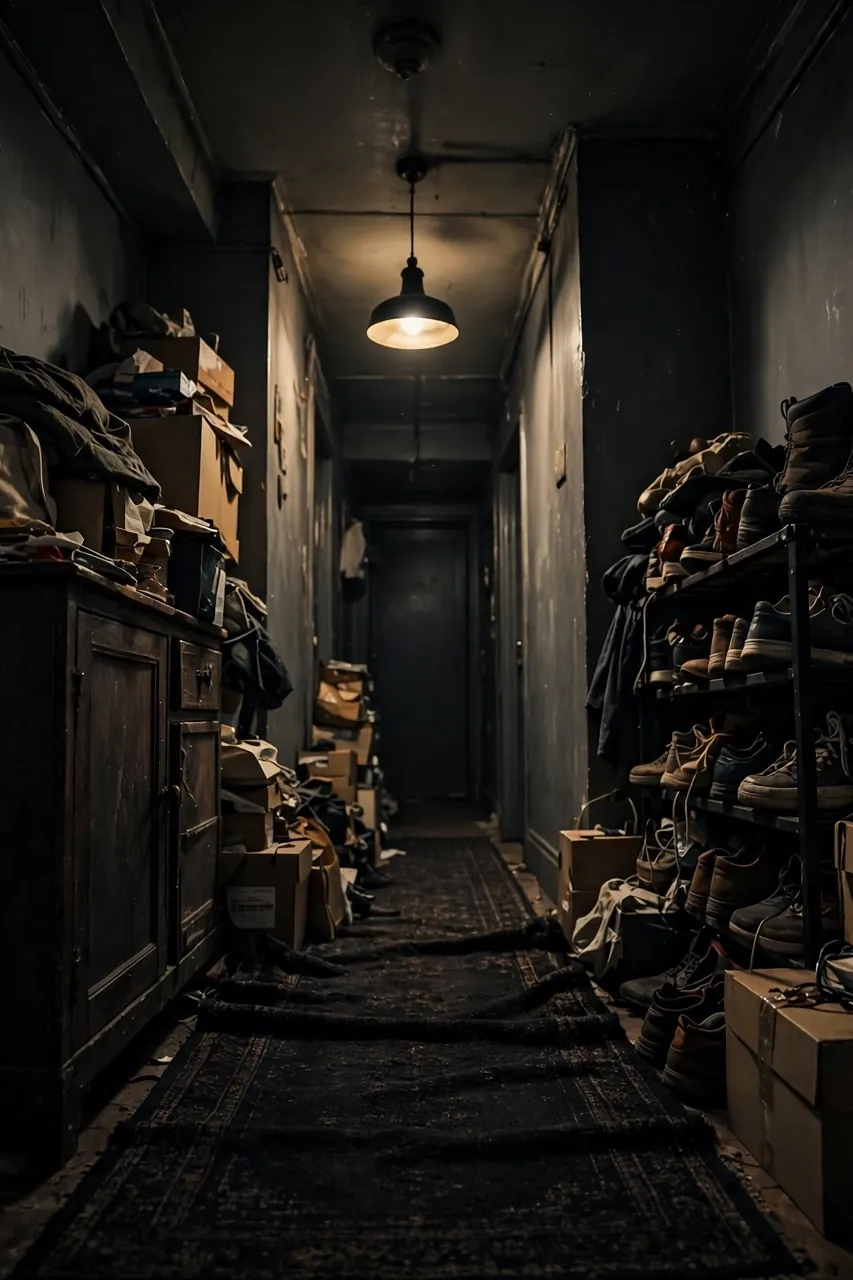
A narrow hallway feels tight because your eyes read the walls as closing in on you. Low light, dark paint, and furniture sticking out from the sides all push the walls closer together. Your brain interprets this as less room to move, even when the actual width has not changed.
The good news is that the same visual tricks work in reverse. Bright surfaces, clear floors, and light reaching every corner tell your eyes the space is bigger. Once you know which cues shrink a hallway, you can flip each one.
Lighten the Walls
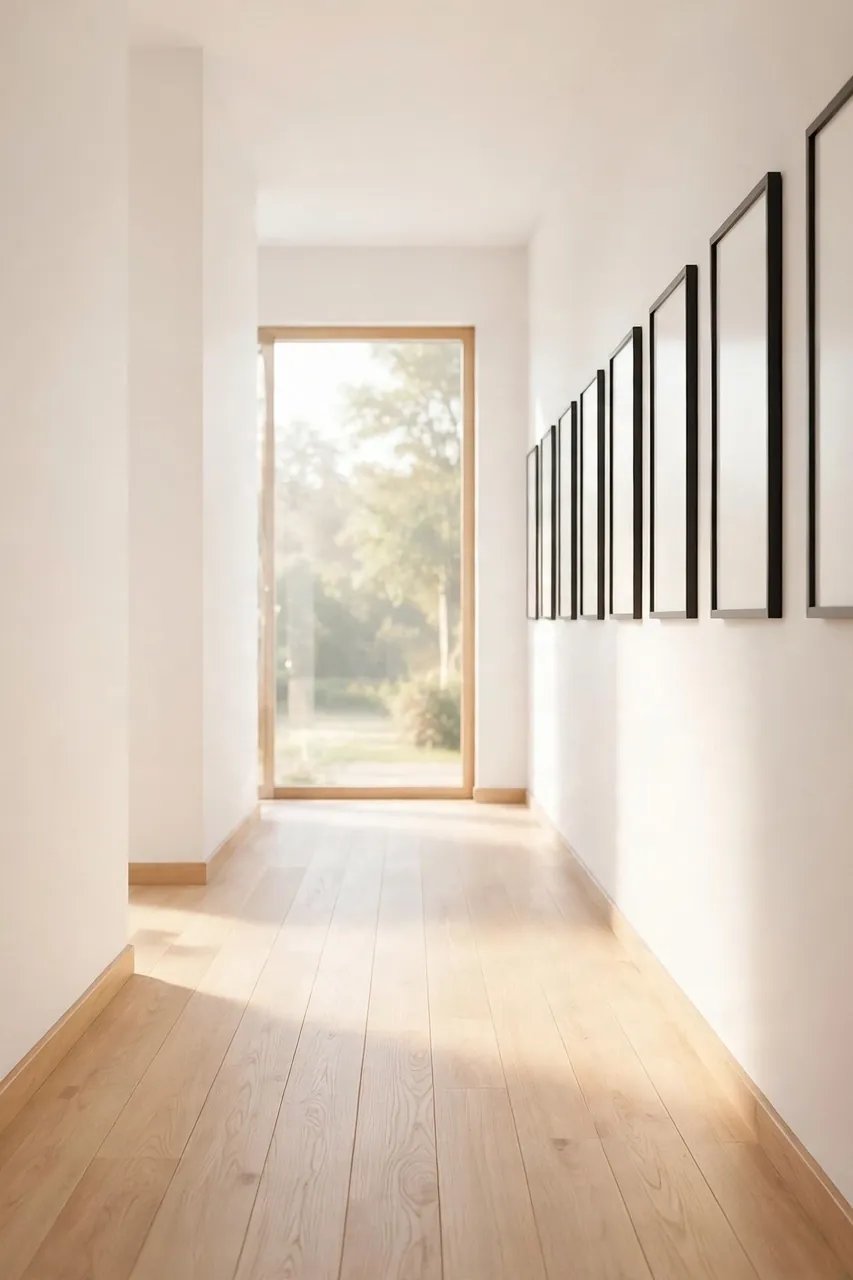
Paint color changes a narrow hallway more than anything else you can buy. Dark or busy walls press inward, while pale shades reflect light and push the walls back visually. This one weekend project costs little and makes the biggest difference of all.
- Choose a warm white or soft cream with a hint of warmth, and use an eggshell or satin finish so it bounces light around.
- Paint the walls, ceiling, and trim the same color to blur the edges and make the hallway feel taller and wider.
- If you want contrast, add it with art or a runner instead of a dark accent wall, which would shrink the space.
- Test two paint samples on the wall and view them at different times of day before committing to a full gallon.
Use Wide Stripes
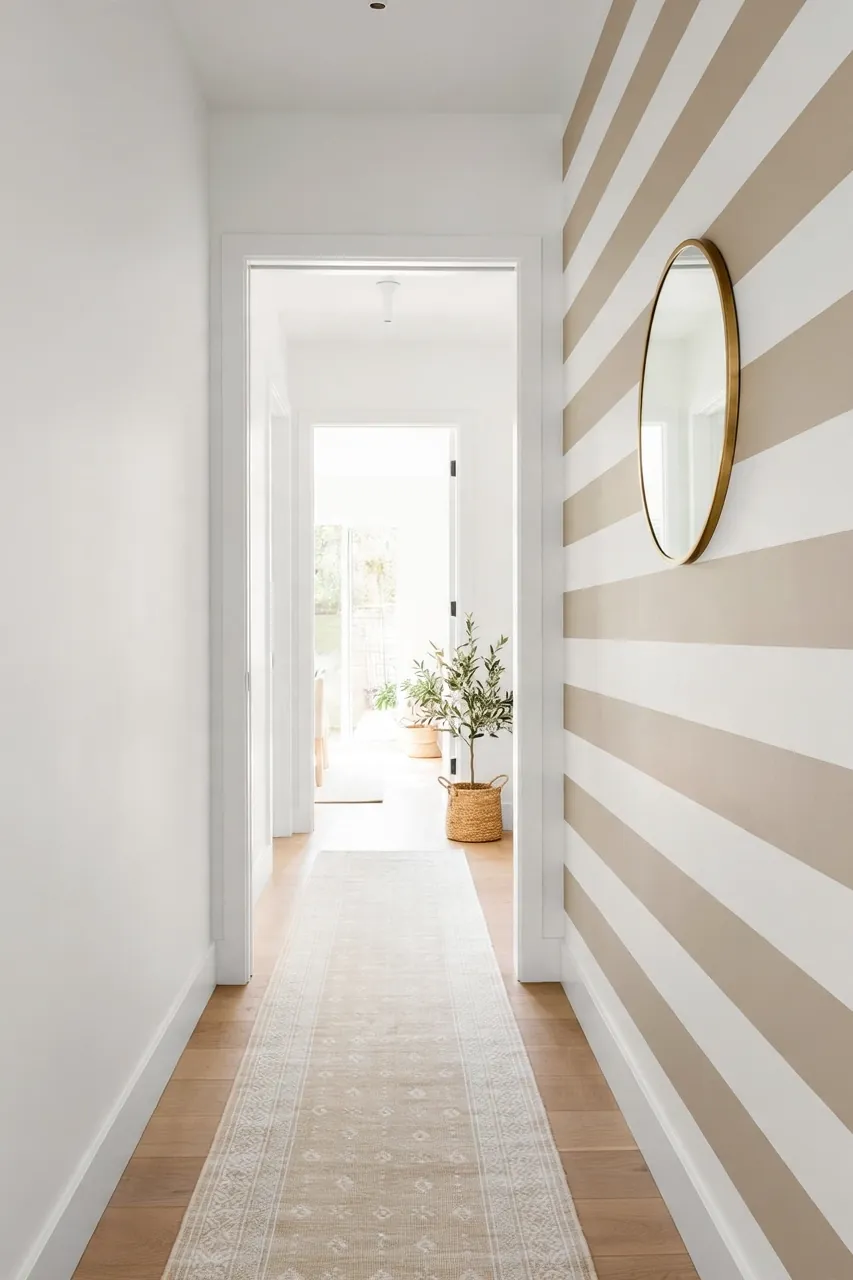
Quick Tip: Wide horizontal stripes are the fastest way to make walls feel farther apart. Keep them soft, wide, and low contrast so they read as texture rather than pattern.
Stripes wider than eight inches work best in a tight hallway because thin busy stripes can look dizzy. Paint the stripes in two close shades of the same color, like warm white and pale beige. You can also get the same effect from striped wallpaper if painting straight lines sounds stressful.
Add Big Mirrors
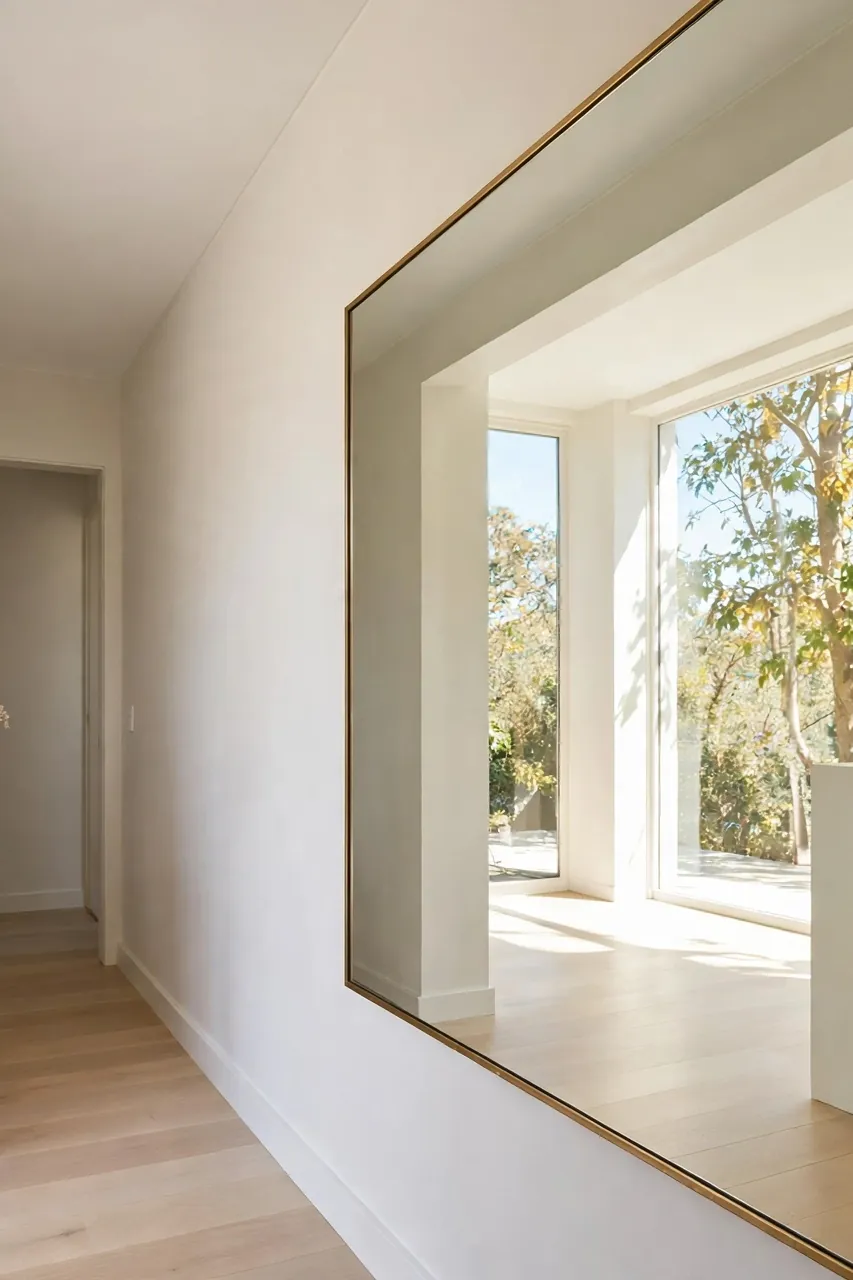
Common Mistake: Most people hang a tiny mirror in the hallway and wonder why nothing changes. A small mirror reflects a small patch of wall and adds almost no sense of depth to the space.
The Fix: Hang one oversized mirror that covers most of the wall, ideally facing a window or light source. The reflection doubles the daylight and tricks your eyes into seeing a second hallway beyond the wall.
A mirror at least two-thirds the width of the wall gives the biggest widening effect. Lean a tall floor mirror against the wall if you rent, since it needs no holes. Keep the mirror clean, because smudges show up fast and dull the brightening effect.
Choose the Right Runner
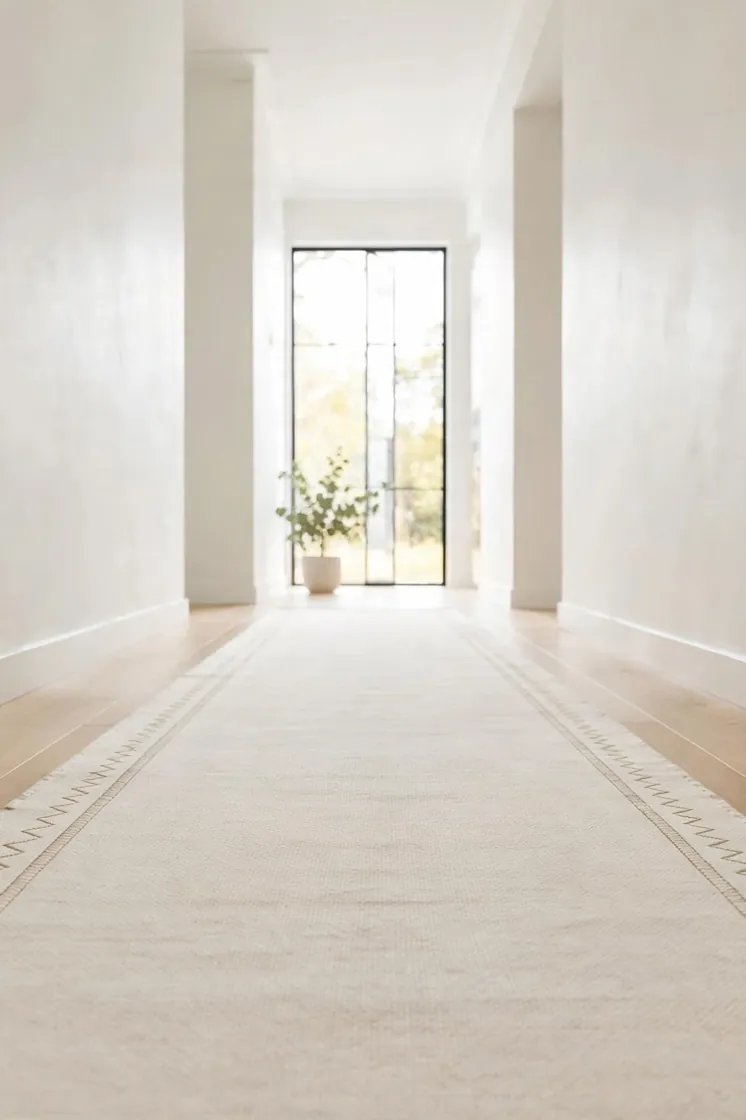
What You Need:
- Flat-weave runner: it stays thin underfoot so doors swing over it without catching.
- Light neutral color: cream or pale gray keeps the floor feeling bright and open.
- Simple pattern: subtle borders or small motifs guide the eye without busy noise.
- Right length: let it run nearly the full hall, leaving a few inches of floor at each end.
- Non-slip pad: it keeps the runner flat and safe on smooth floors.
Runners pull the eye down the length of the hall and make the walls feel farther apart. Skip thick plush rugs, which eat visual width and trip up doors. A washable flat-weave option also survives muddy shoes and still looks fresh after a quick rinse.
Keep It Uncluttered
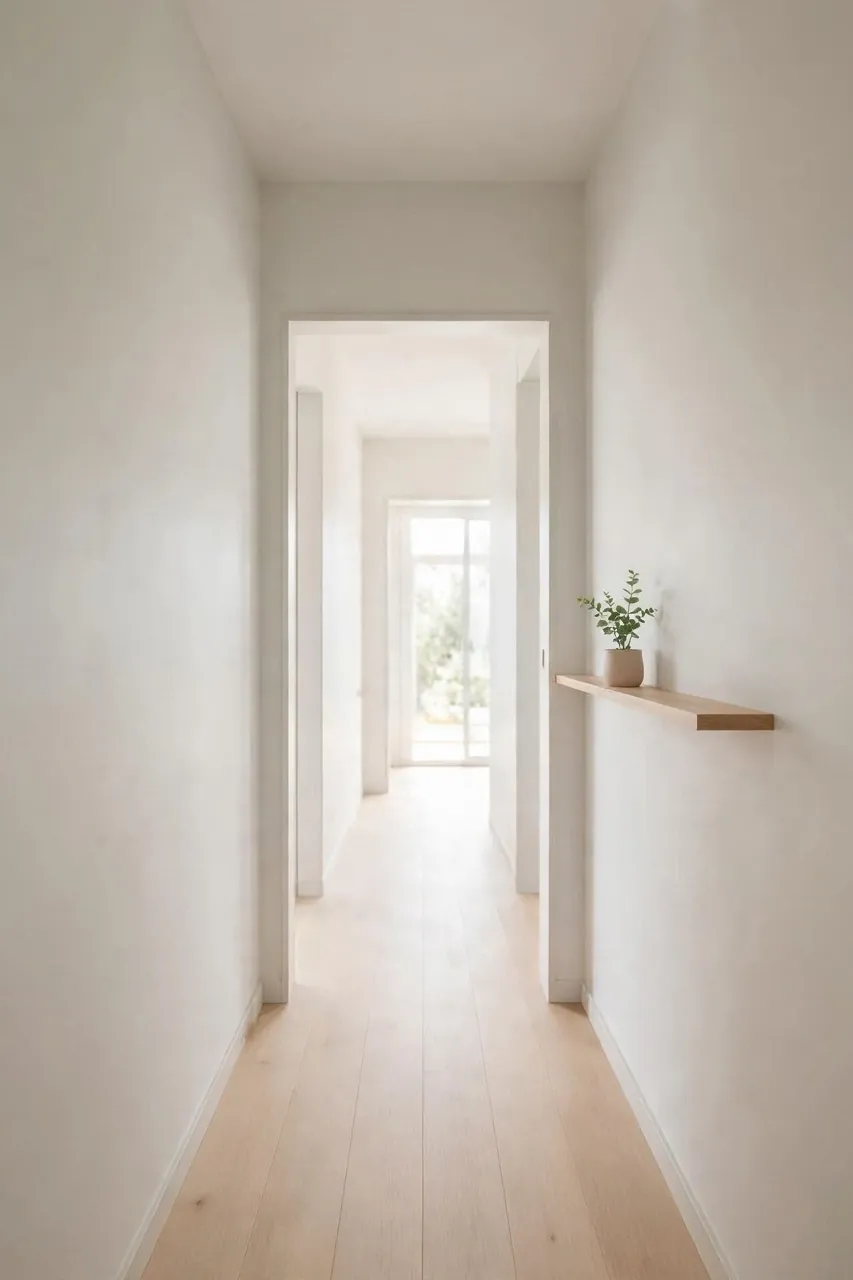
Before: A hallway crammed with shoe racks, coat hooks, and stacked boxes forces you to squeeze past everything. Each object juts into the walkway and makes the walls feel closer than they are.
After: Moving that clutter into a closet or a slim cabinet frees the full width of the hallway. The walkway feels generous, light moves through easily, and the whole hall reads wider in an instant.
Give every item a home outside the corridor and the hallway stays open on its own. A single slim shelf or one wall hook can hold daily essentials without eating width. Do a quick five-minute reset each evening and clutter never gets the chance to pile up again.
Light It Brightly
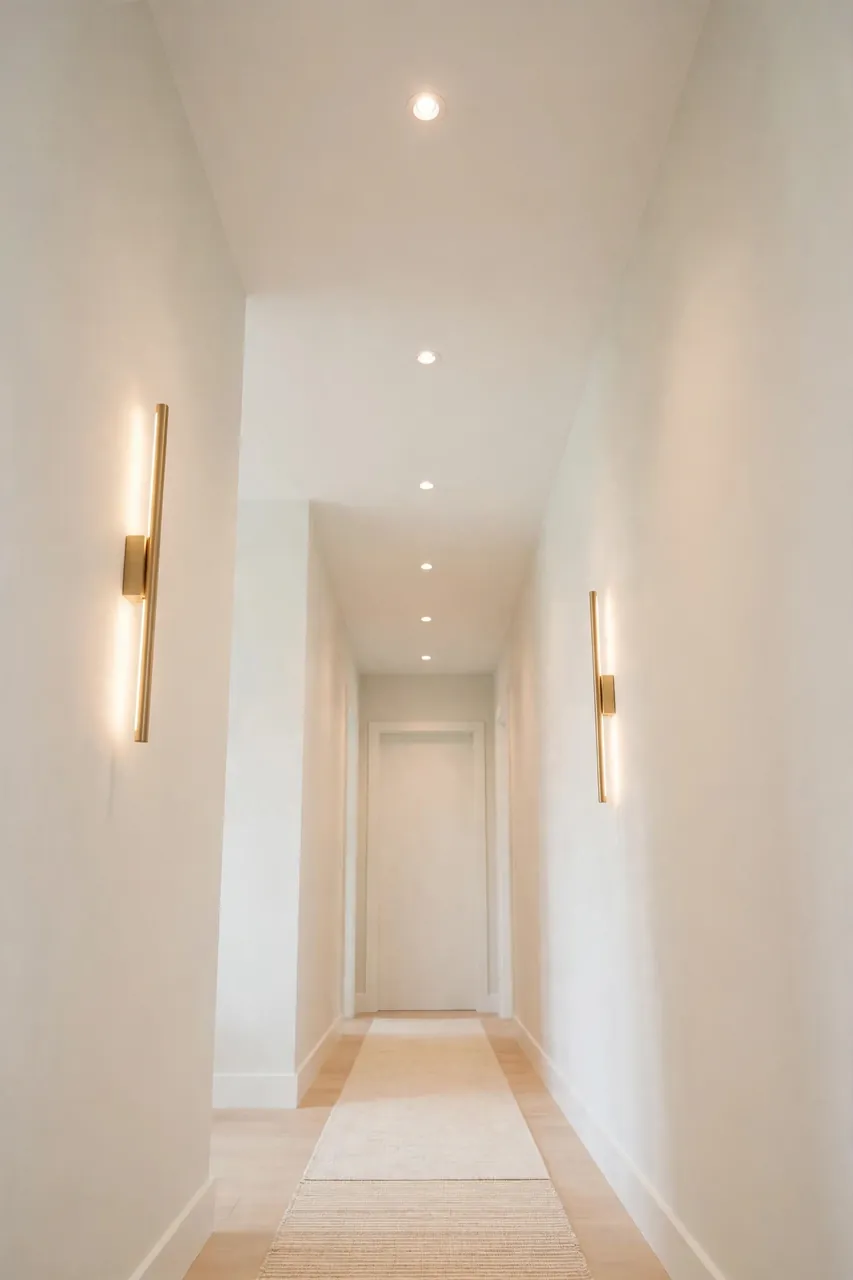
Do This:
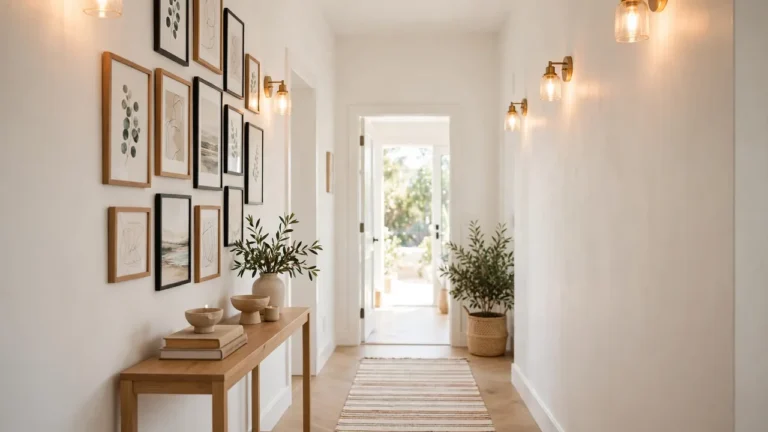
- Space small ceiling lights evenly down the full length of the hall.
- Add slim wall sconces at eye level for warm, even glow.
- Use daylight bulbs around 4000K for a bright, clean look.
Avoid This:
- Relying on one dim fixture at the end of a long hall.
- Using harsh colored bulbs that cast yellow or blue tints.
- Leaving any corner dark, since shadows shrink the space fast.
Even lighting removes the shadows that make walls close in. In my experience, two or three light sources beat one bright one every time. Put hallway lights on a dimmer if you want a soft evening mood without losing that bright daytime width. Add a small plug-in light wherever corners still look shadowy.
Draw Eyes Down the Hall
Time Needed: One afternoon | Difficulty: Easy | Cost: Low to medium | Best For: Hallways with a bare dead-end wall
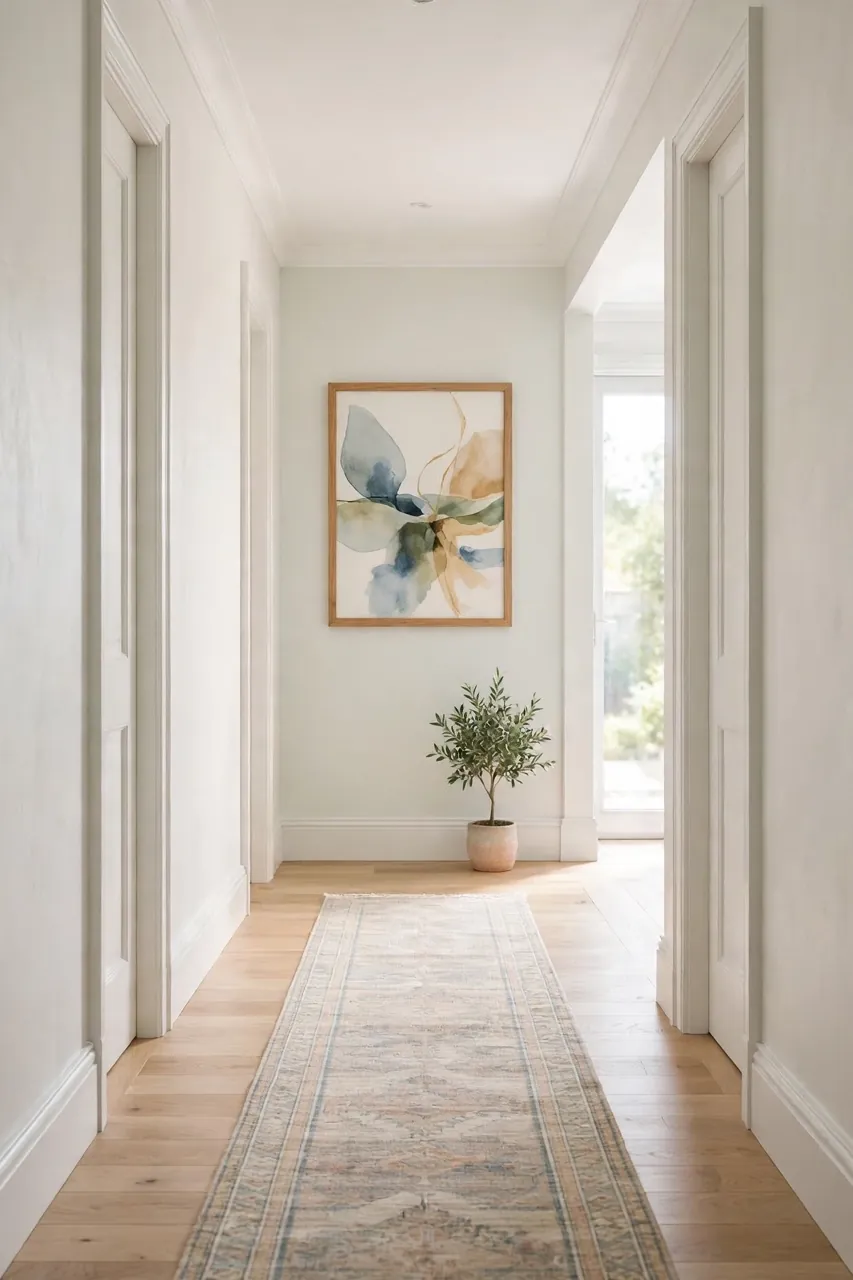
A focal point at the far end gives your eyes somewhere to land, which stretches the hall in your mind. Hang a bold piece of art, place a small plant, or set a slim bench at the end. Keep it light and simple so it draws you forward instead of blocking the way.
Common Narrow Hallway Mistakes
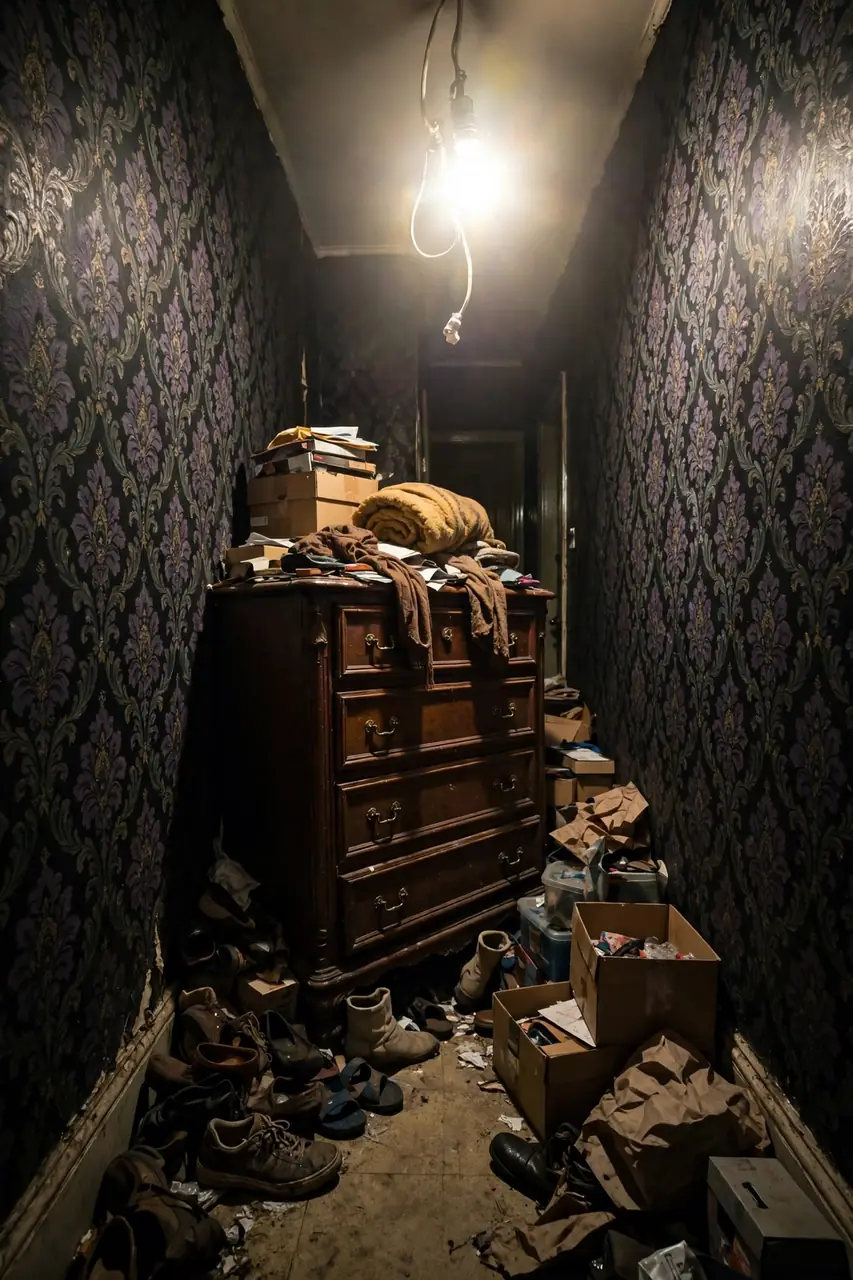
The biggest mistake is painting a narrow hallway dark to hide its size. Dark walls close in fast and make the corridor feel like a tunnel. Another common error is lining the hall with bulky furniture that eats the walkway and blocks your path.
Another frequent mistake is ignoring the ceiling and floor while only styling the walls. Learning how to make a narrow hallway look wider means treating every surface as part of the trick. Paint the ceiling light, keep floors clear, and the whole corridor opens up beautifully.
For more ways to style tricky spots around the house, read our guide on how to decorate around a wall mounted tv.
Pro Tips for Wider Hallways
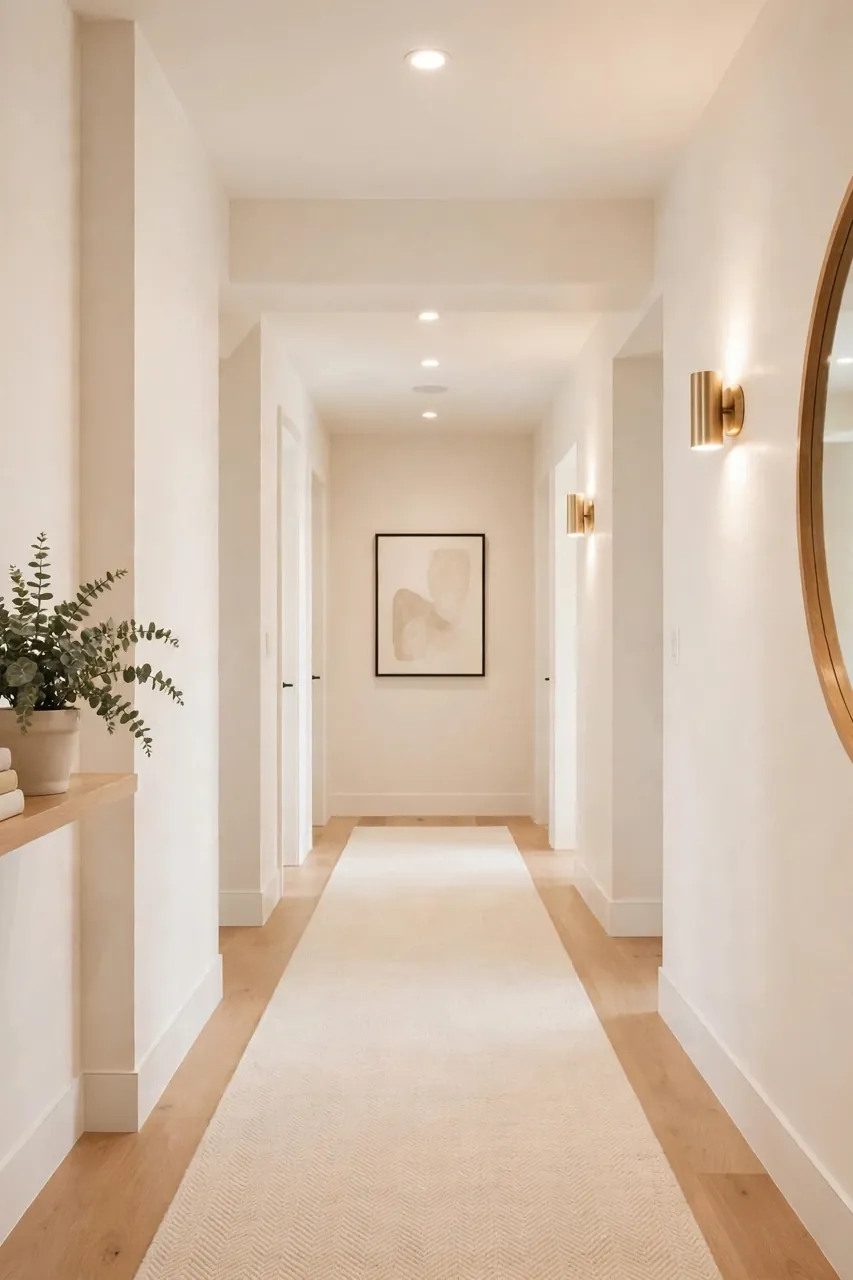
These finishing moves take the hallway from better to genuinely spacious. None of them cost much, and each one stacks with everything you already did. Pick two or three and finish the transformation this weekend. Small final details often create the biggest visual shift of all.
- Hang art at eye level on only one wall so the other side stays visually open.
- Add a long, low bench only if the hall is at least four feet wide.
- Keep doorways open or paint doors the same color as the walls.
- Refresh the look each season with a new runner or fresh art.
Conclusion
You now have every trick you need to open up a tight hallway, from light paint to smart mirrors to the right runner. Put even half of these ideas to work and you will feel the difference the first time you walk through. Remember, learning how to make a narrow hallway look wider is really about giving your eyes more light, more space, and fewer obstacles. Save this guide to Pinterest so you can find it when you start your weekend project. I have seen how small changes like these turn the most cramped corridor into a bright, welcoming path through the home.
One Comment