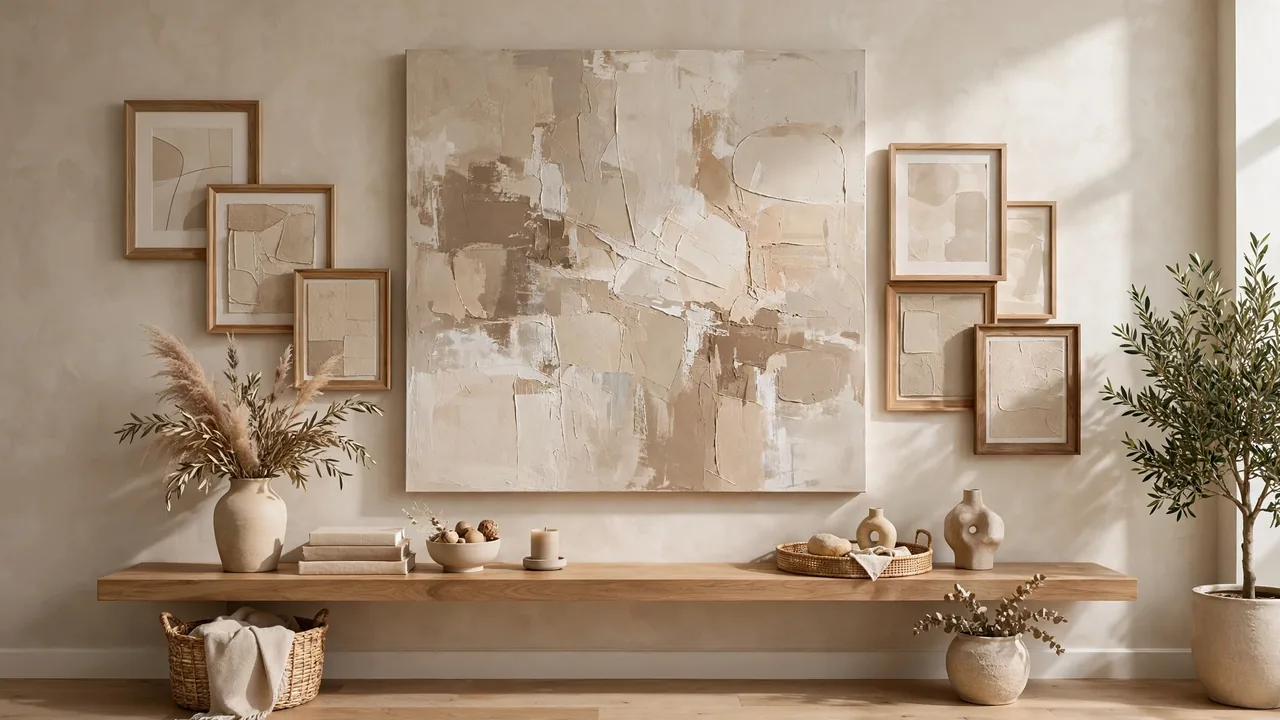
How to Decorate Large Blank Walls
You walk past that huge empty wall every single day, and every day it whispers that your room is not quite finished. Learning how to decorate large blank walls changes that feeling fast. A few smart moves turn dead space into the part of the room everyone notices first.
In my experience, the secret is scale, not spending. Big walls need bold gestures, and most of them cost less than you think. If you also have a fireplace giving you trouble, read how to arrange furniture around fireplaces after this one.
This guide walks you through measuring, choosing art, and styling step by step. No design background needed, just a free afternoon. By the end, that wall will feel like it was always meant to look this good.
Why Large Blank Walls Feel Intimidating
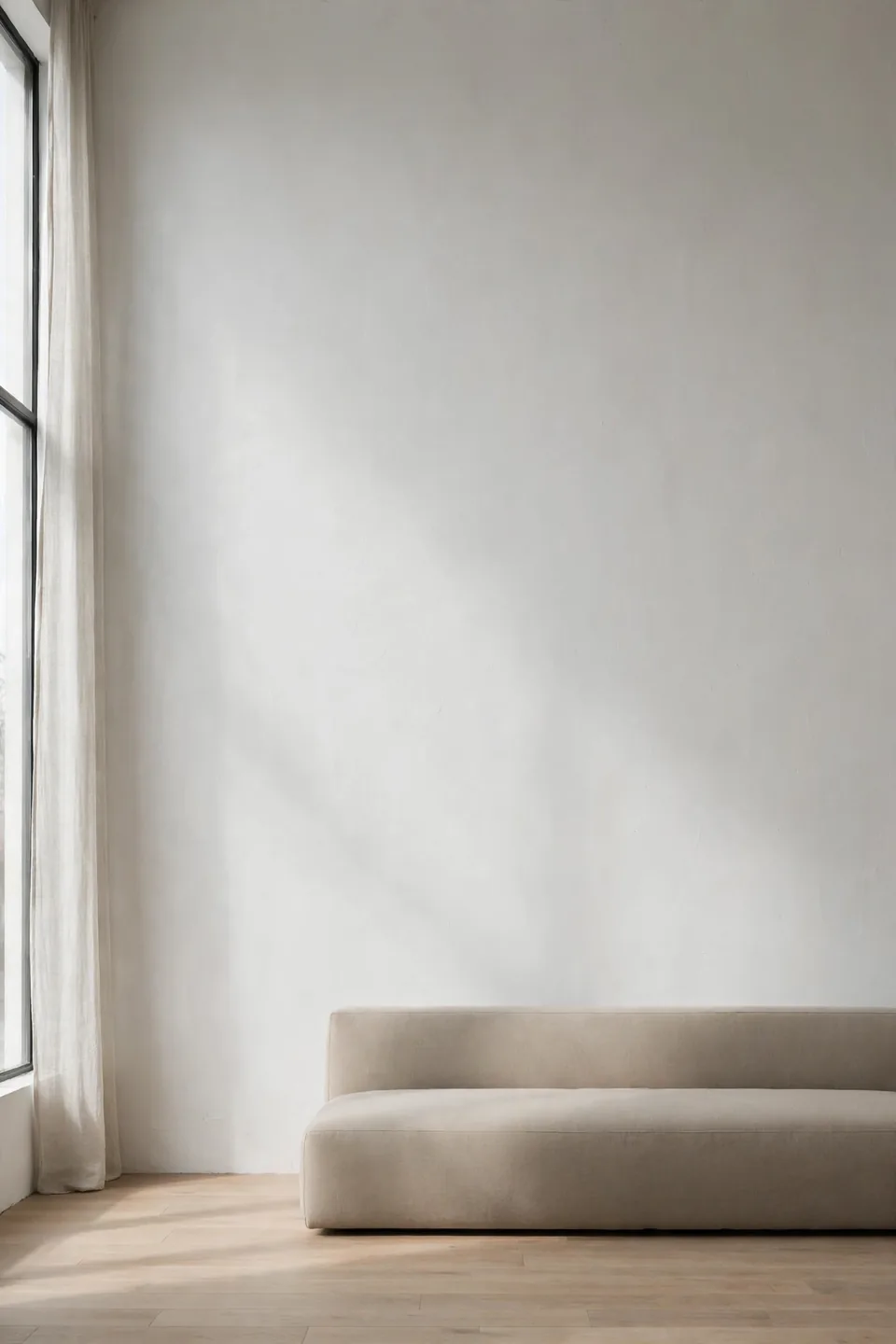
A big empty wall stares back at you every day, and it is hard to know where to start. Small frames look lost, one lonely picture looks sad, and doing nothing starts to feel like the safest choice. Most people freeze because they see one giant project instead of a surface with a clear center.
Think of your wall in zones instead: a center anchor, supporting pieces around it, and breathing room at the edges. Once you see zones instead of emptiness, every choice gets easier. That blank wall stops feeling intimidating and starts feeling like an opportunity.
Measure and Plan Your Wall
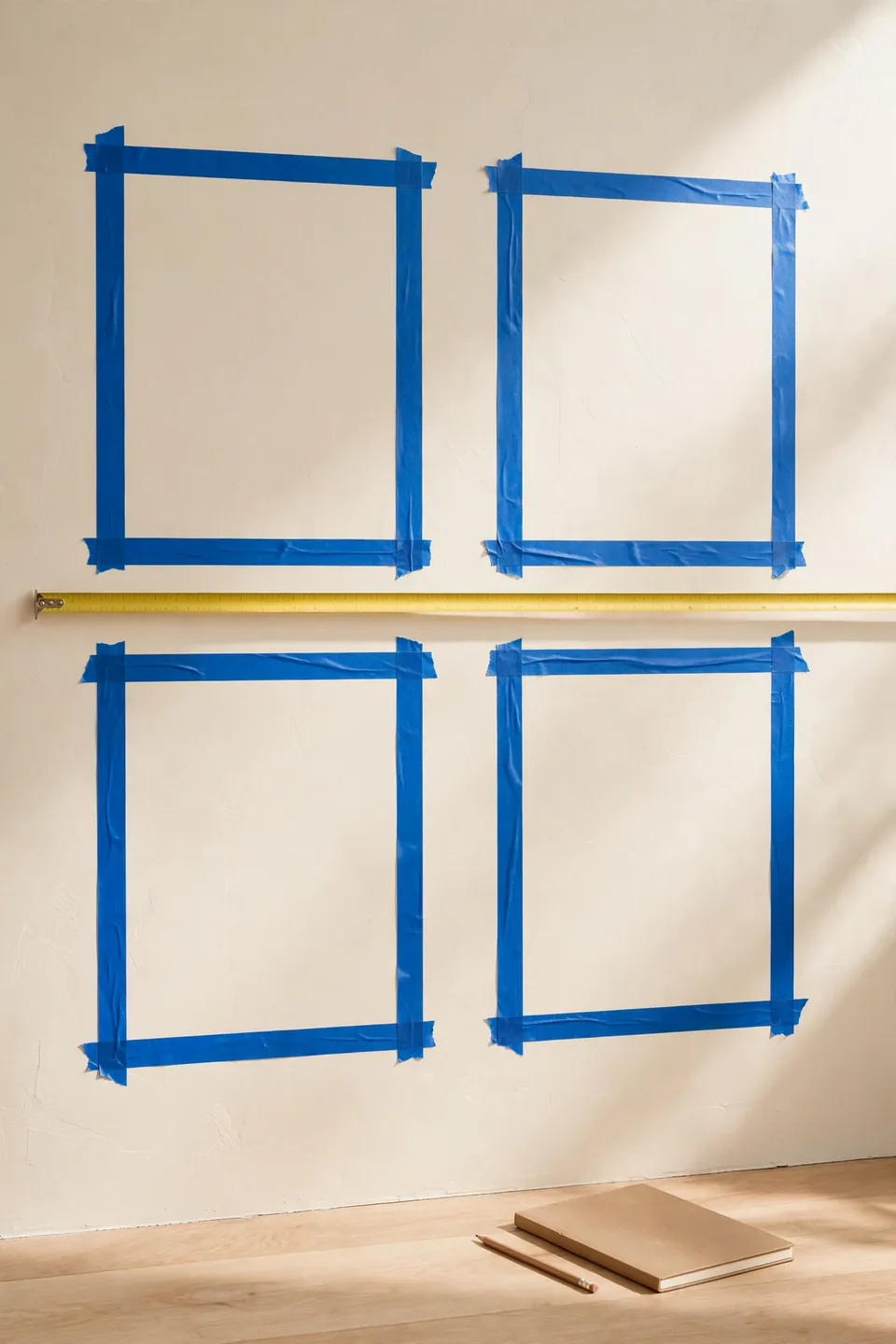
Measuring first saves you from the most common big-wall regret: art that is too small or hung too high. Ten minutes with a tape measure gives you a plan you can trust. I have seen this one step change the whole result.
- Measure the wall width and height, then mark the center point lightly with painter’s tape so you always know your anchor spot.
- Aim for your arrangement to fill about two thirds of the wall width. Anything smaller will look lost on a large surface.
- Hang the center of your art or grouping at eye level, around 57 inches from the floor. This keeps everything feeling grounded and natural.
- Step back ten feet and look at the taped outline. If it looks small from there, scale up before hanging anything.
Go Big With Oversized Art
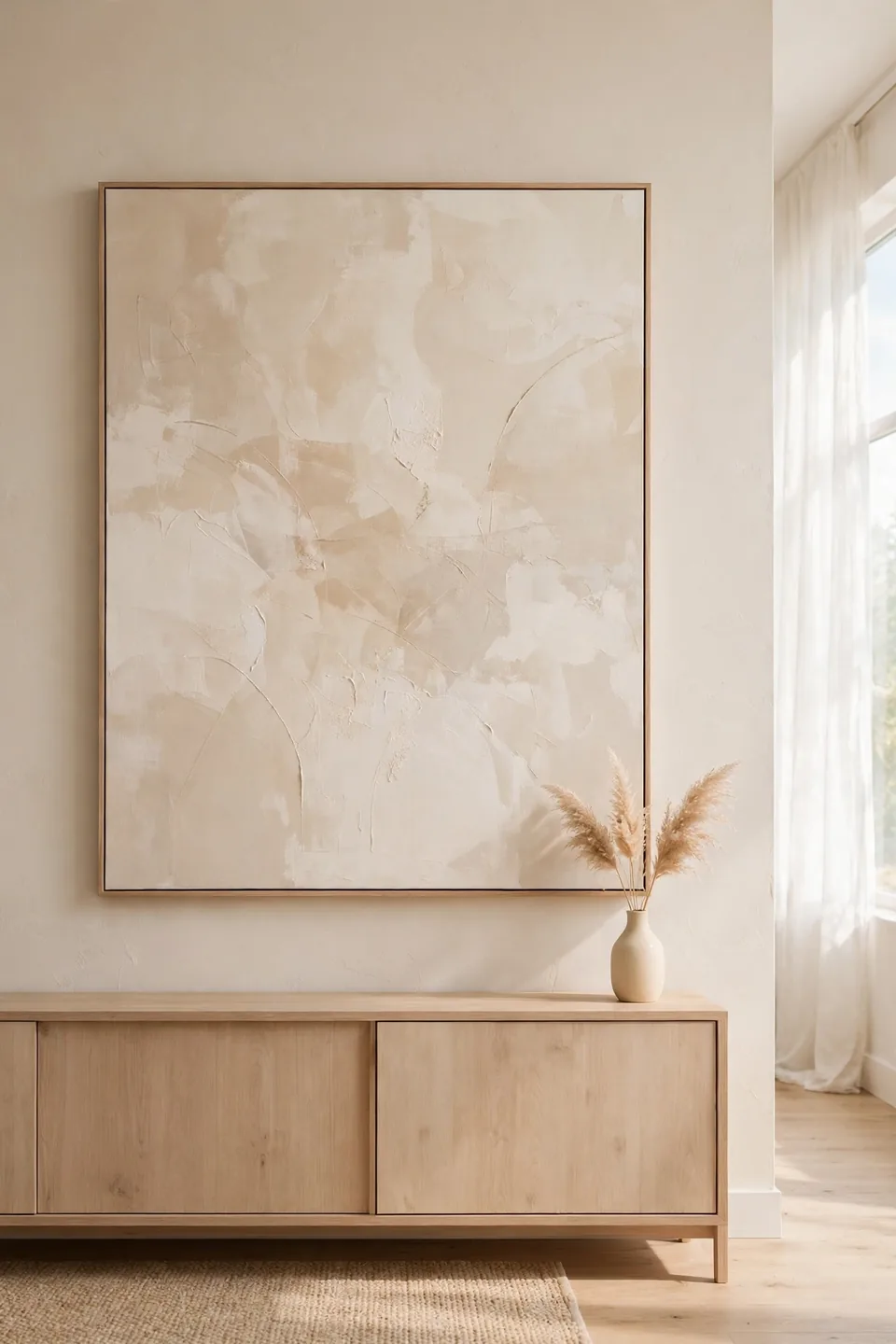
Quick Tip: When in doubt, go bigger than you think. One oversized piece fills a large wall with confidence, while several small pieces often look scattered. A single bold canvas can carry a twelve-foot wall on its own.
Oversized art works because it matches the scale of the wall instead of fighting it. Look for canvas pieces at least two thirds as wide as your sofa or console below it. Thrift stores and printable art keep this affordable, and the result feels calm and intentional.
Create a Statement Gallery Wall
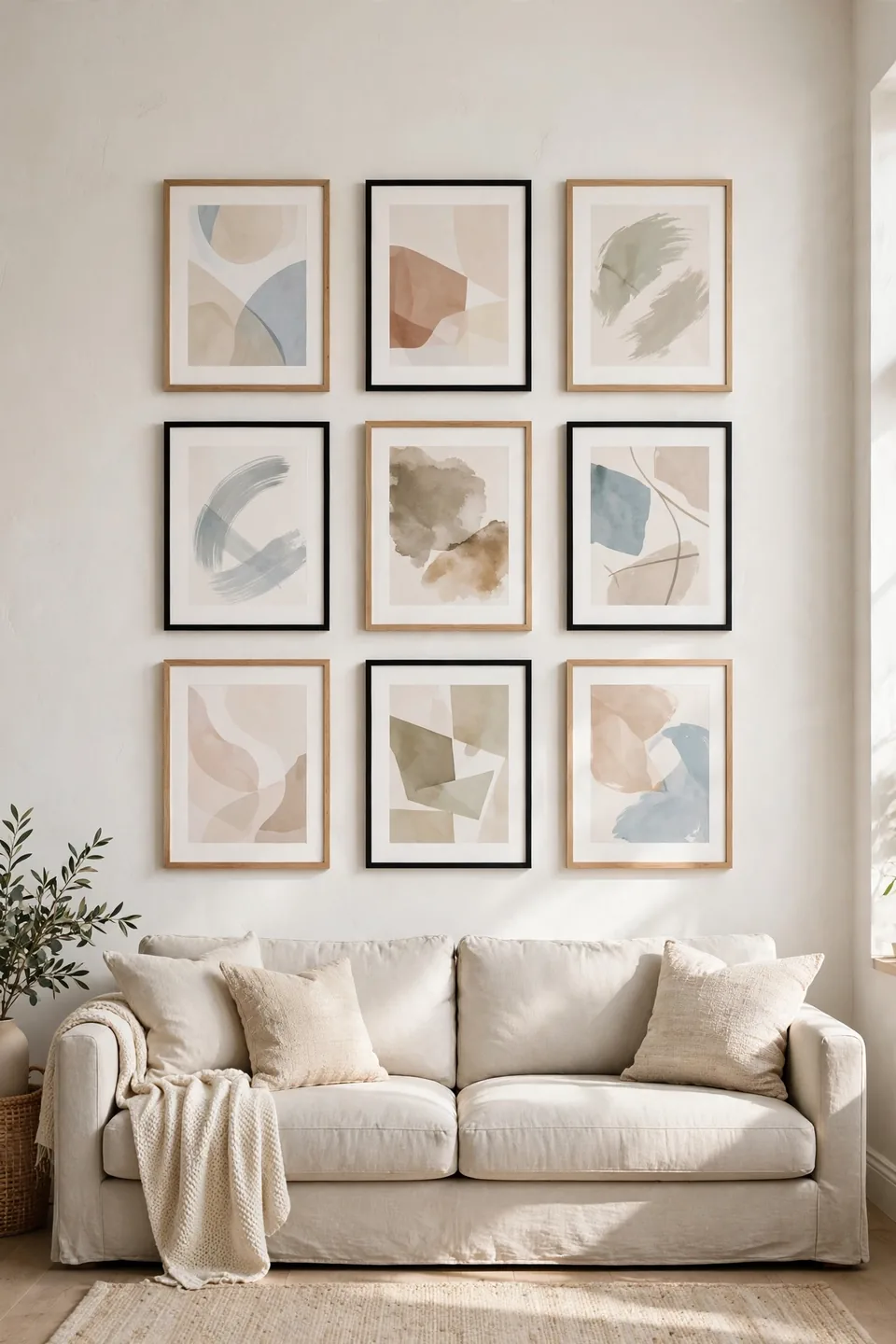
Common Mistake: Most gallery walls fail because every frame is the same small size and they are spaced too far apart. The pieces float on the wall with no connection, so the whole thing reads as clutter instead of a collection.
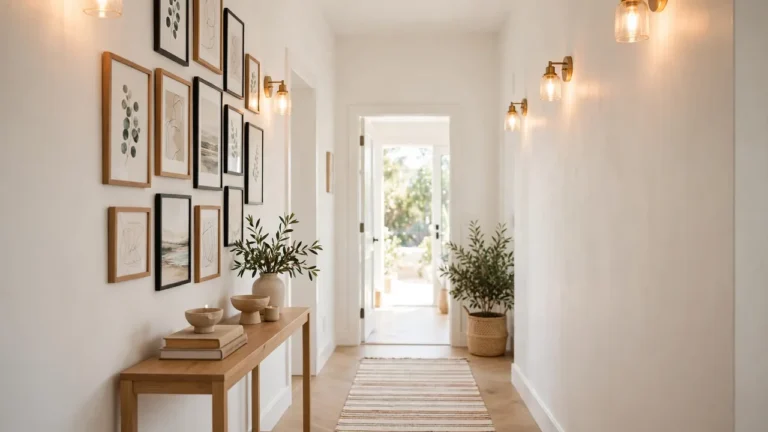
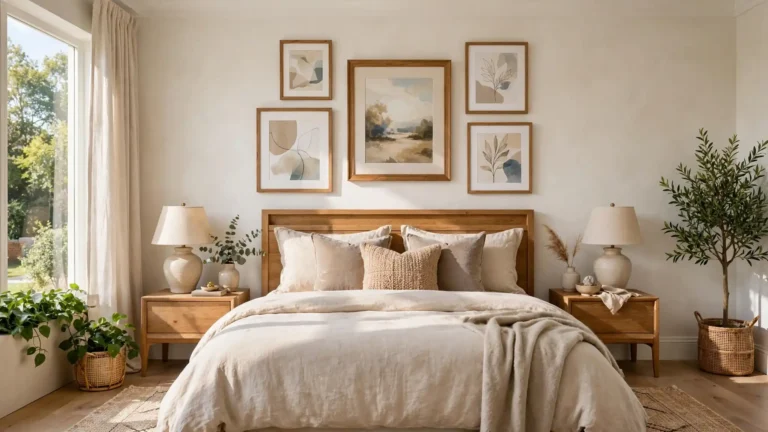
The Fix: Mix frame sizes with one or two large anchors, and keep spacing tight, about two to three inches between frames. Lay the arrangement on the floor first and photograph it. What looks balanced on the floor will look balanced on the wall.
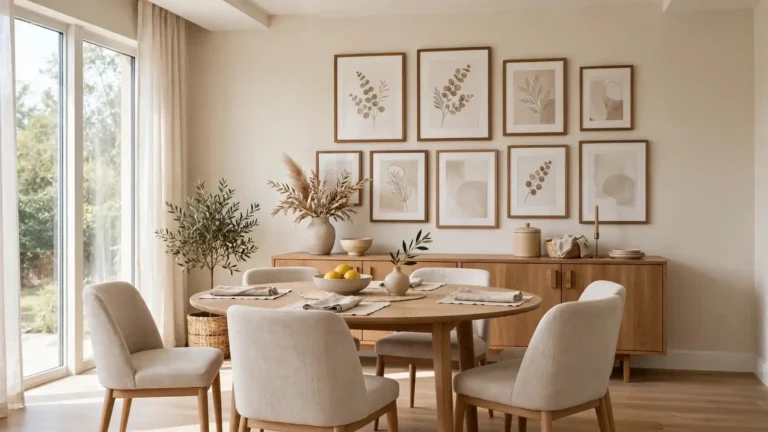
A statement gallery wall needs a clear shape, like a rectangle or a loose grid, to feel organized. Start with your largest piece slightly off center, then build outward. Keep frame colors in one family, warm wood and black for example, and the tight spacing makes it read as one intentional piece.
Try Peel-and-Stick Murals
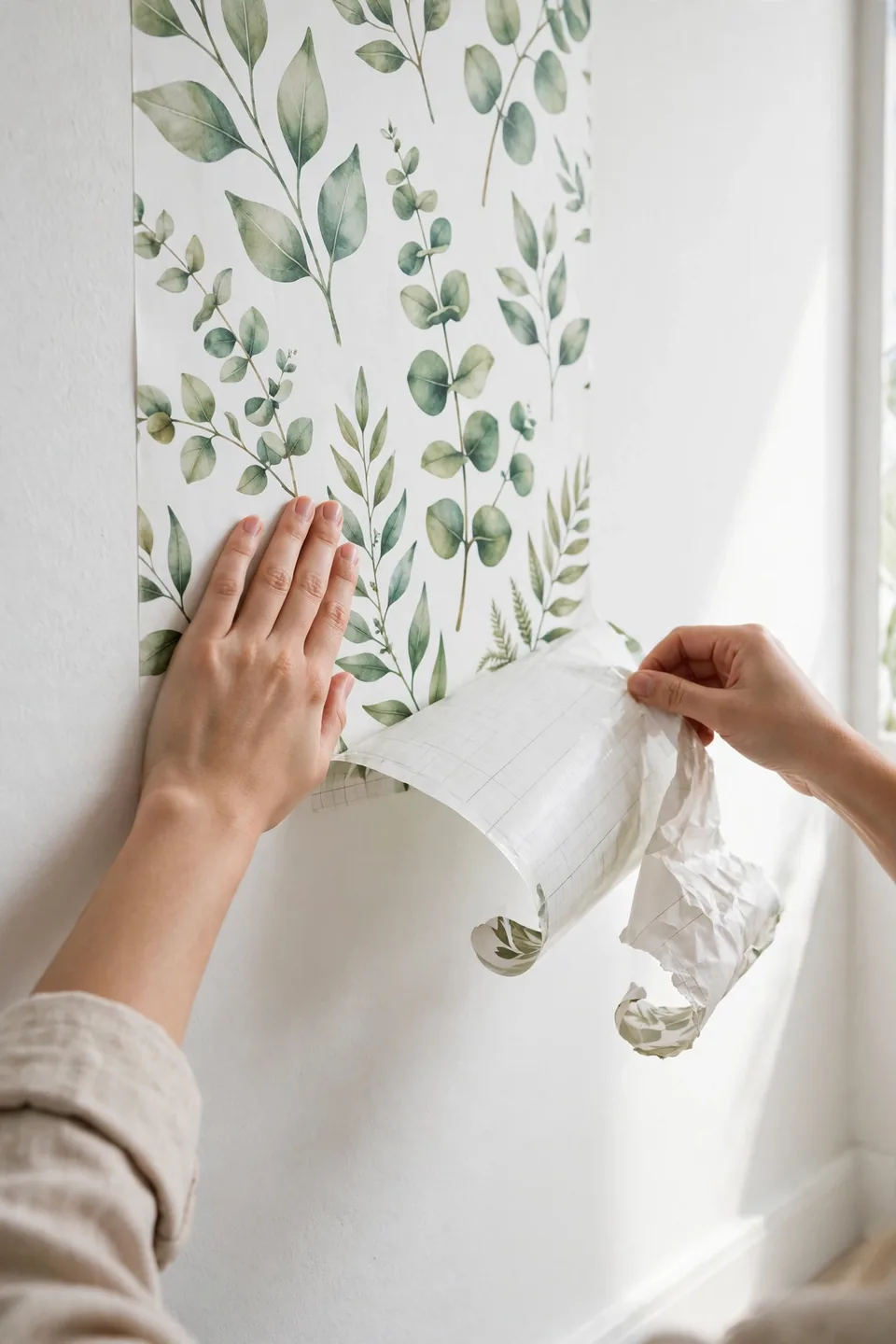
What You Need:
- Peel-and-stick mural panels: large printed sections that apply like wallpaper but remove cleanly when you move.
- A smoothing tool or old credit card: pushes out air bubbles so the mural lies flat and smooth.
- A sharp utility knife: trims excess at the ceiling line and corners for a crisp edge.
- A level or laser line: keeps your first panel straight, which keeps every panel after it straight.
- A step stool: gives you safe reach for the top of a tall wall without stretching.
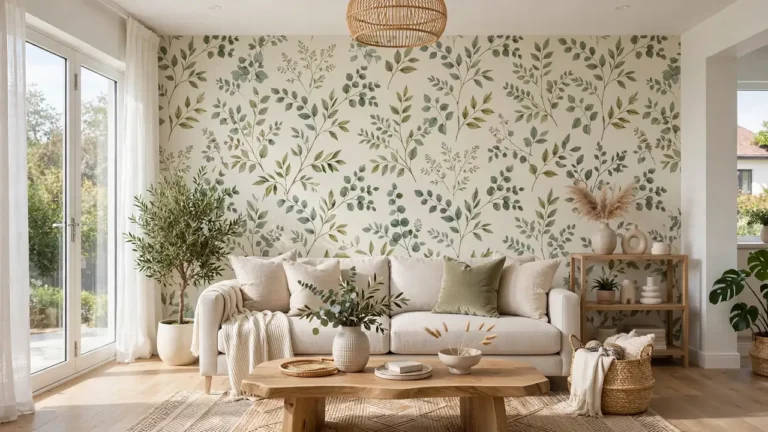
Murals cover huge areas in an afternoon, which makes them ideal when you are learning how to decorate large blank walls without committing to paint. A soft botanical print adds depth that flat paint cannot. Choose muted tones that match your furniture, and most murals go up in two to three hours.
Add Architectural Interest
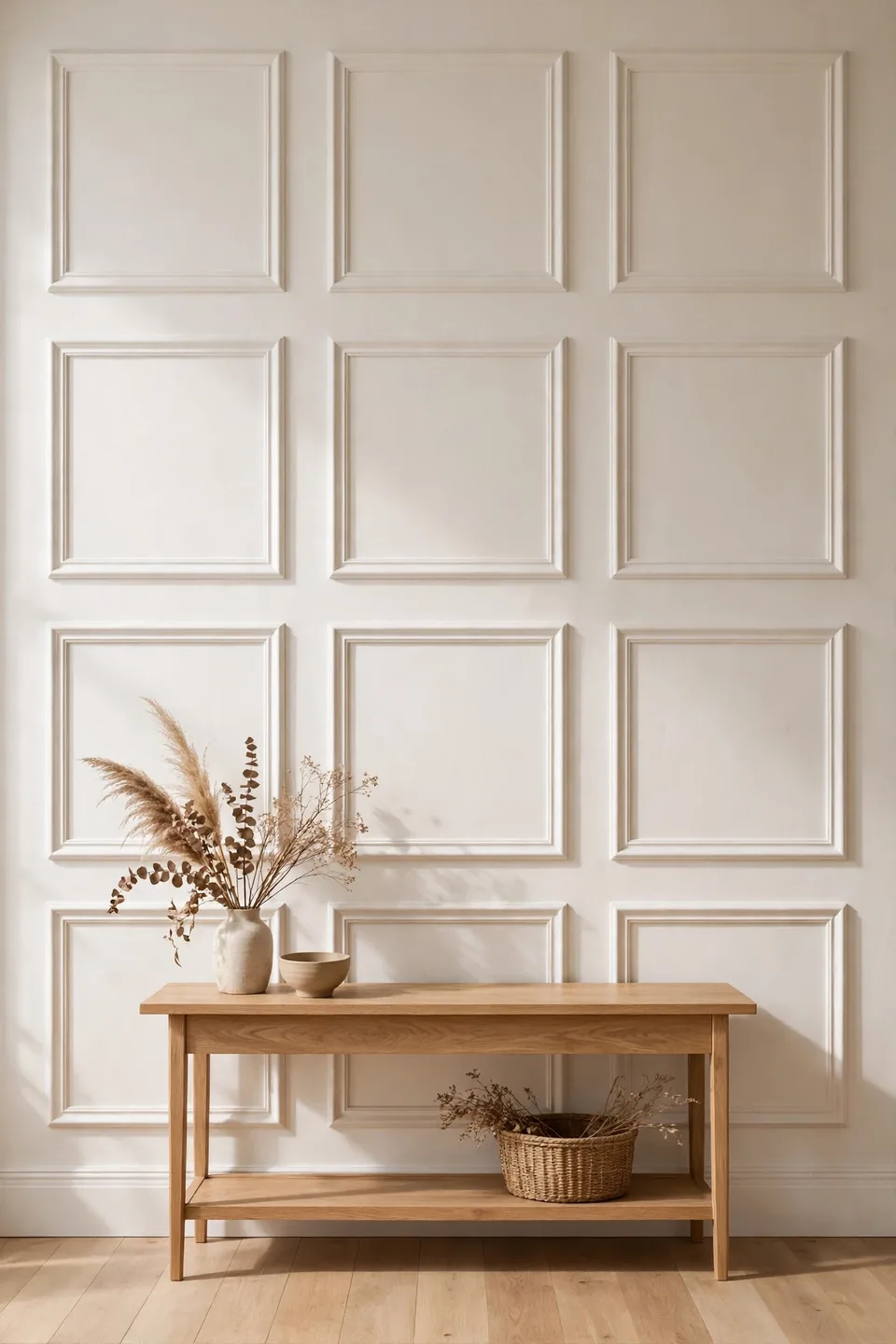
Before: Right now the wall is flat and featureless, just drywall and paint. It bounces light around but gives the eye nothing to rest on. The room feels unfinished no matter how nice the furniture is.
After: With simple molding boxes painted the same color as the wall, the surface gains quiet architecture. Shadows fall softly inside each rectangle, adding depth without color contrast. The room suddenly looks custom and considered.
Paintable molding strips from any home store attach with construction adhesive, so no advanced skills are needed. Keep the boxes evenly spaced and sized to match your wall proportions. Paint everything one color for a subtle, expensive look. This trick works in living rooms, dining rooms, and bedrooms alike.
Layer Mirrors and Frames
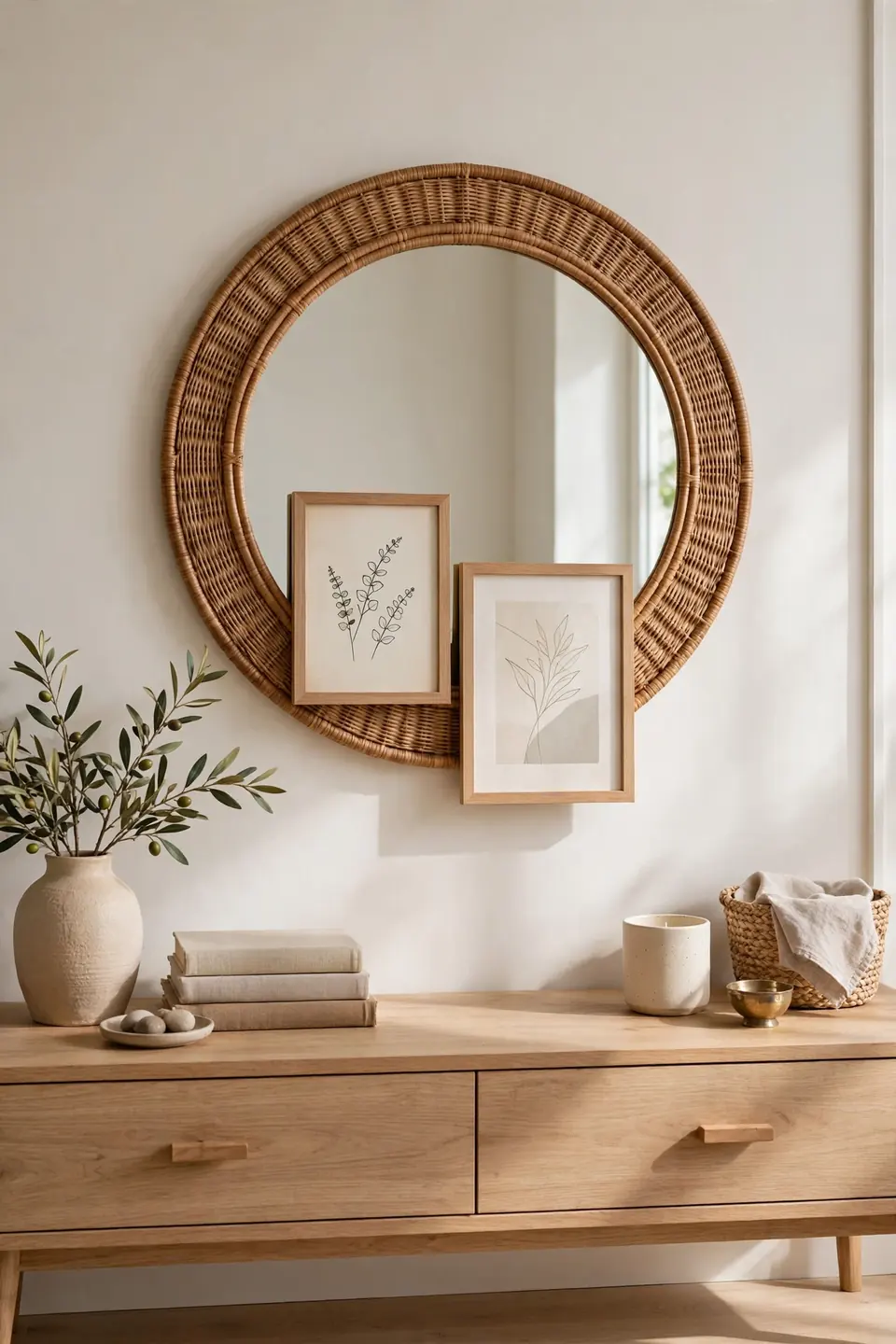
Do This:
- Lean a large round mirror against the wall on a console for instant depth.
- Mix mirror shapes with framed prints so reflections feel collected, not staged.
- Place mirrors where they bounce daylight, not where they reflect clutter.
Avoid This:
- Do not hang a tiny mirror alone in the middle of a huge wall.
- Avoid mirror walls that face a television, since the glare doubles.
- Skip ornate heavy frames that fight a calm, modern room.
Mirrors trick the eye into seeing more space, which is exactly what a large blank wall needs. A big round mirror breaks up the flat surface without adding visual noise. The reflection pulls more light into the room, and layering a small frame in front keeps it feeling collected.
If your walls are rentals, you will also like these ideas for how to make rental walls look expensive without risking your deposit.
Use Textiles for Warmth
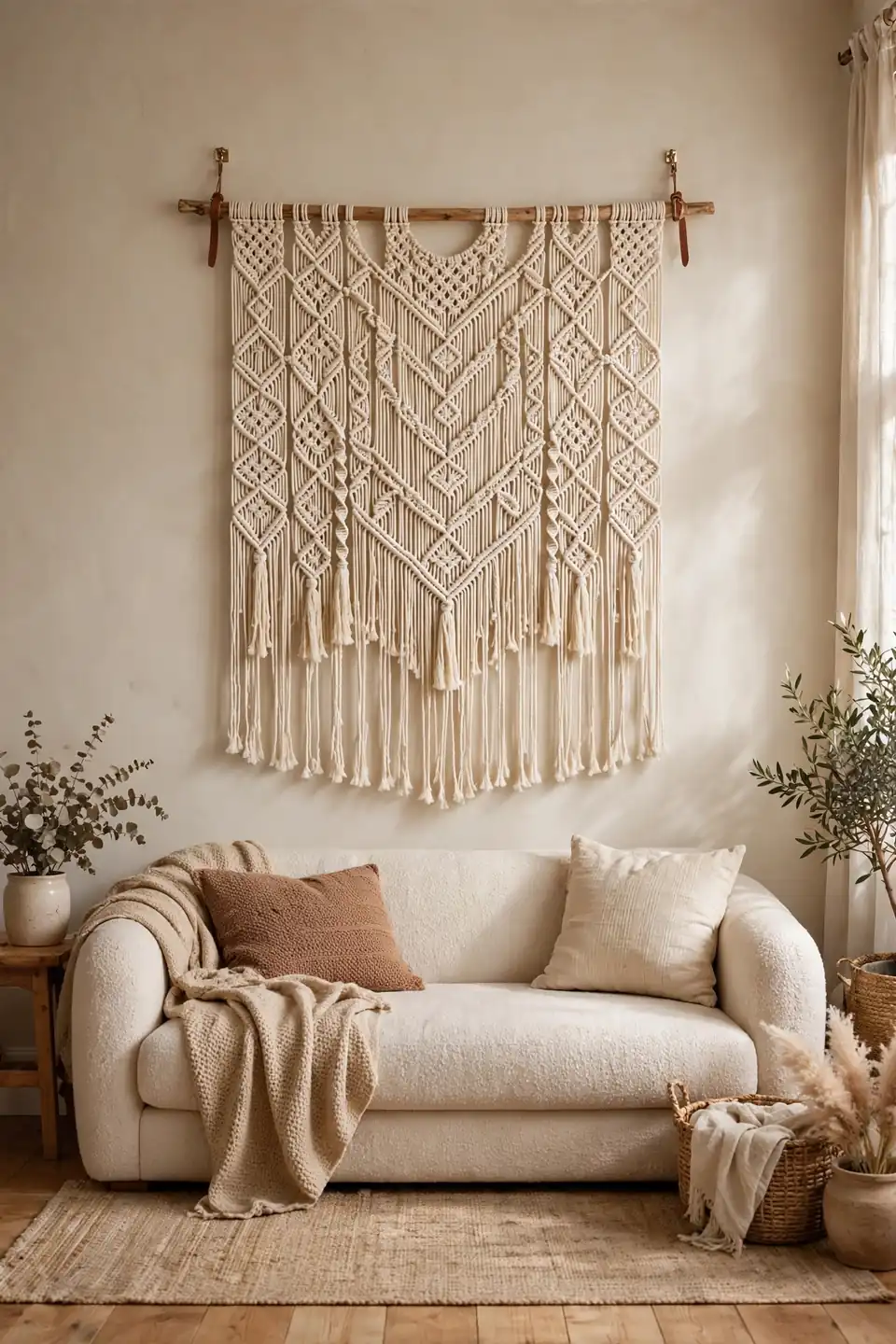
Time Needed: 1 hour | Difficulty: Easy | Cost: $40 to $120
Best For: bare walls above sofas or beds
Tools Required: none, just a sturdy hook or rod
Pro Tip: hang textiles slightly wider than the furniture below
A large textile softens a wall in a way hard frames cannot. Woven hangings or a beautiful flatweave rug add texture and warmth at a fraction of art prices. Hang it from a simple wooden dowel, and the fabric absorbs sound too, which makes the room feel calmer.
Common Big-Wall Mistakes
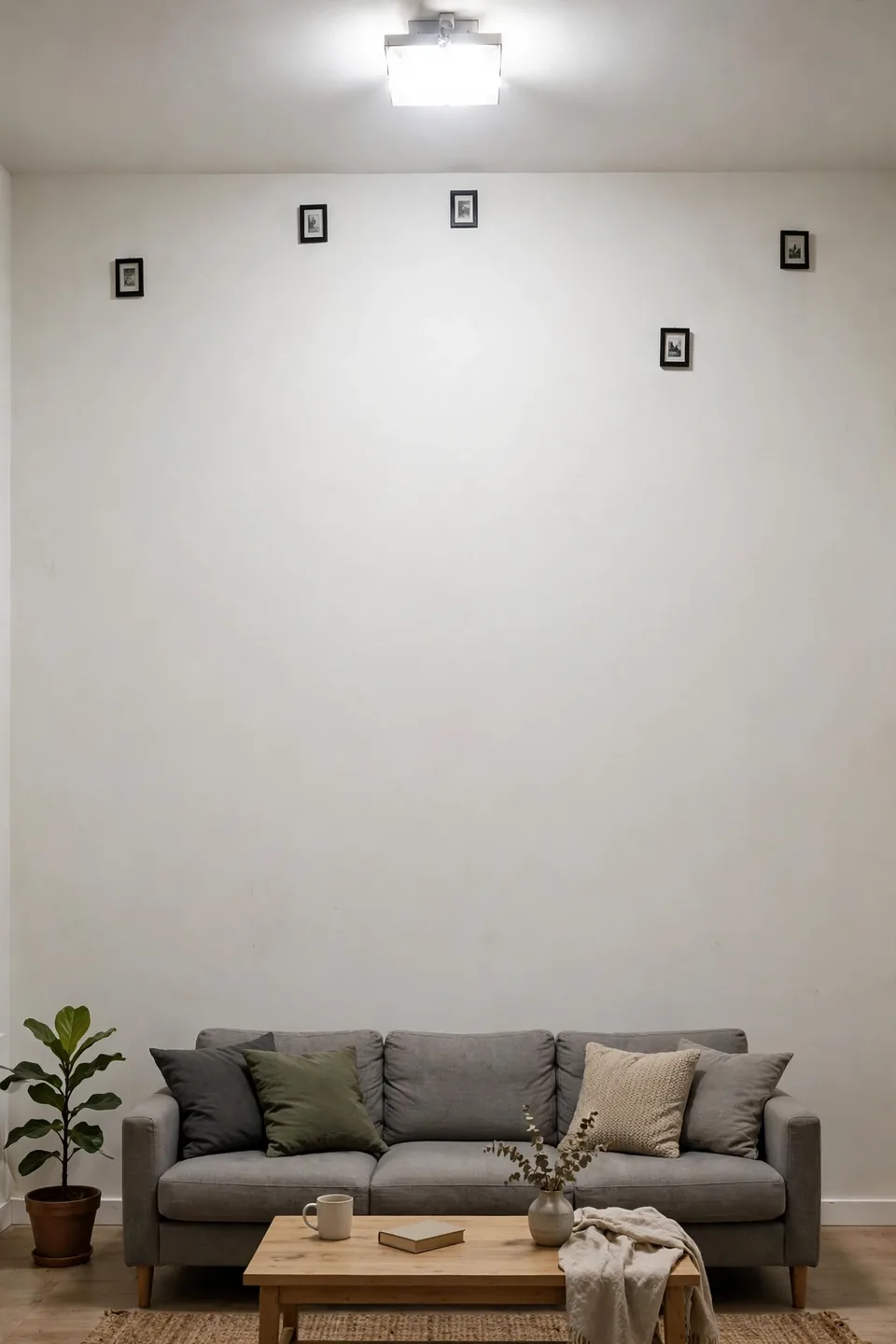
The biggest mistake I see is hanging art too high, leaving a strange gap between the furniture and the frames. Another common one is scattering many tiny pieces across a huge wall, which makes the emptiness feel even bigger. Both mistakes come from underestimating how much visual weight a large wall needs.
Dark, heavy colors in a windowless corner can also make a big wall feel oppressive instead of bold. And ignoring scale is the quietest mistake of all. When every piece is too small, the wall wins. Fix the scale first, and most other problems solve themselves.
Pro Tips for Balanced Walls
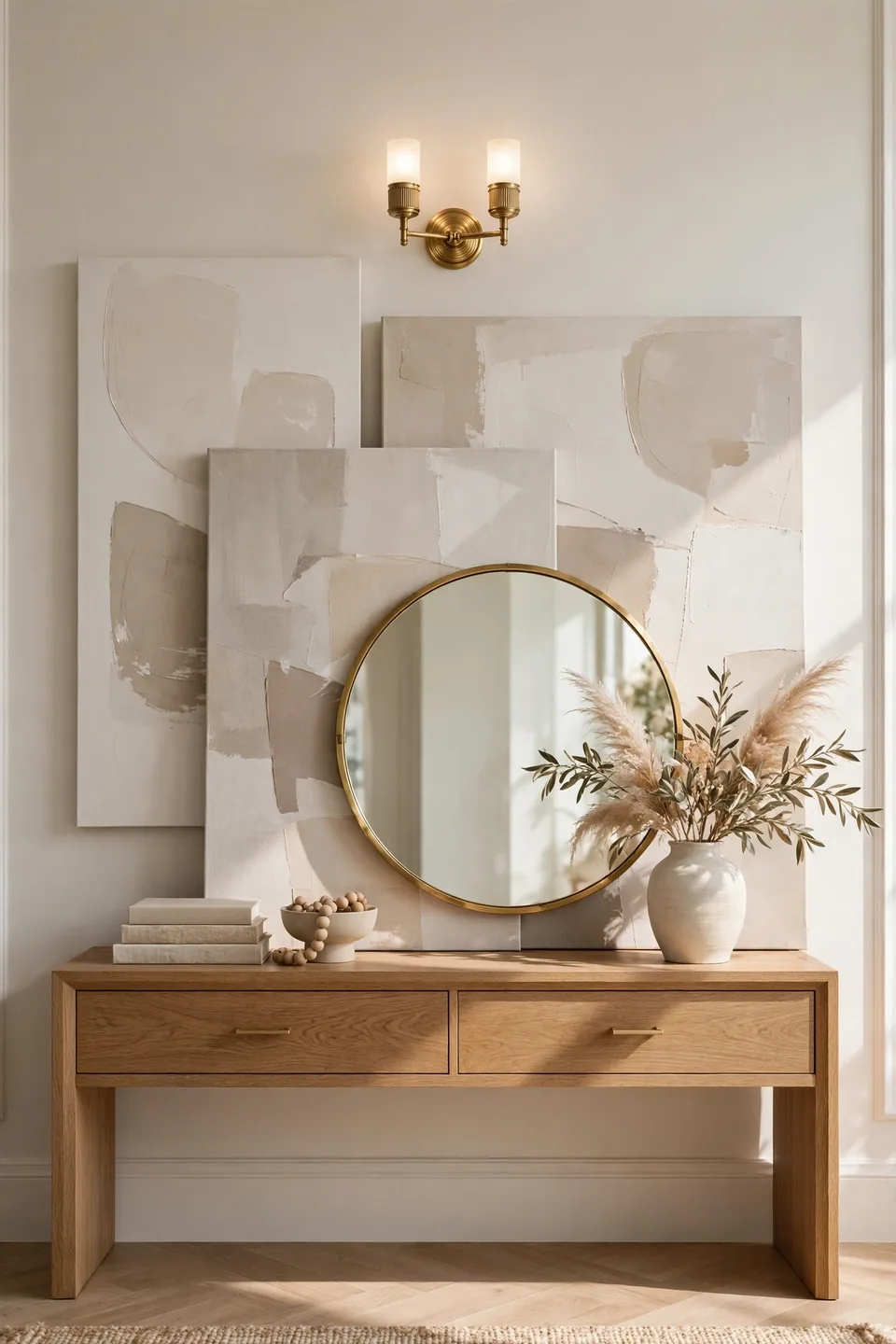
A balanced wall is not about filling every inch. It is about giving the eye a clear path: anchor, support, breathing room. These final checks pull the whole project together. Run through them before you call the wall done, and adjust as needed.
- Check the two-thirds rule one more time. Your arrangement should span roughly two thirds of the wall width.
- Look for even visual weight left to right. If one side feels heavy, shift a medium piece to balance it.
- Confirm the center sits near eye level. Anything floating near the ceiling will feel disconnected.
- Live with painter’s tape outlines for a day. Fresh eyes in the morning catch what tired evening eyes miss.
Conclusion
That blank wall does not have to stay blank, and now you know exactly how to decorate large blank walls with confidence. Start with measuring, pick one bold anchor, and build around it at the right scale. Take it one section at a time so the project stays fun instead of overwhelming. Save this guide on Pinterest so you have it when the frames arrive. I have seen how making this one change can completely shift how a room feels. Your wall is waiting, so go make it the best part of the room.
One Comment