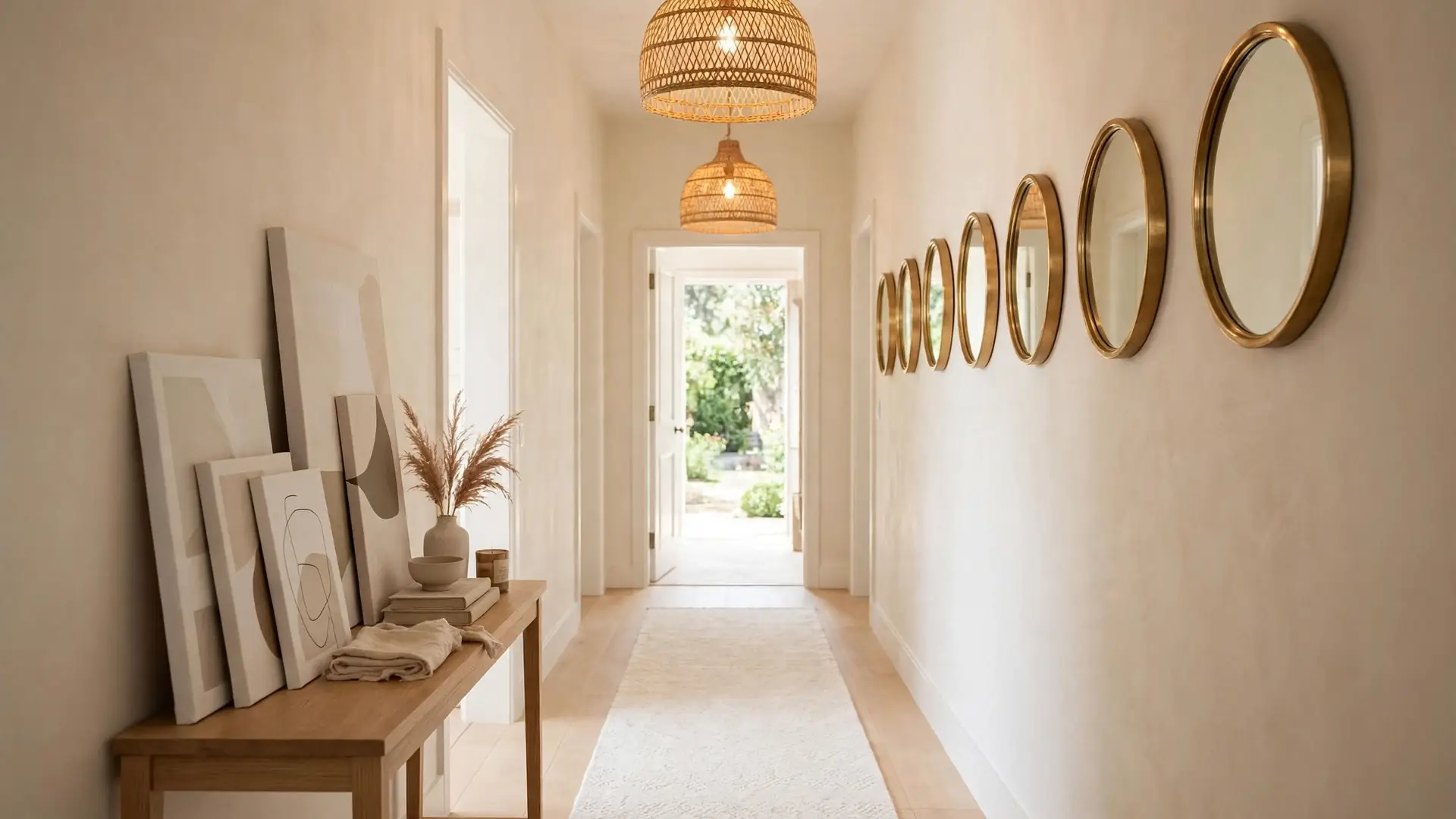
21 Narrow Hallway Decor Ideas to Make Tight Spaces Shine
Hallways are the most walked-through and least decorated spaces in most homes, yet the right narrow hallway decor can turn a tight corridor into the prettiest route in the house. Most hallways measure just 36 to 44 inches wide, which means every choice has to work hard. I have styled hallways in old apartments and new builds alike, and the best ones share a trick: they treat the corridor like a gallery, not a gap between rooms.
Start with the floor and the light, because those two set the whole mood. A runner that fits the length, plus one reflective surface, can make a 40 inch hallway feel generous. My favorite entry-adjacent trick, which I borrowed from small entryway decor, is to give the hallway its own color story so it reads as a destination. Below are 21 ideas that work in rentals and owned homes, each one sized for real, narrow spaces.
Slim Runner Magic
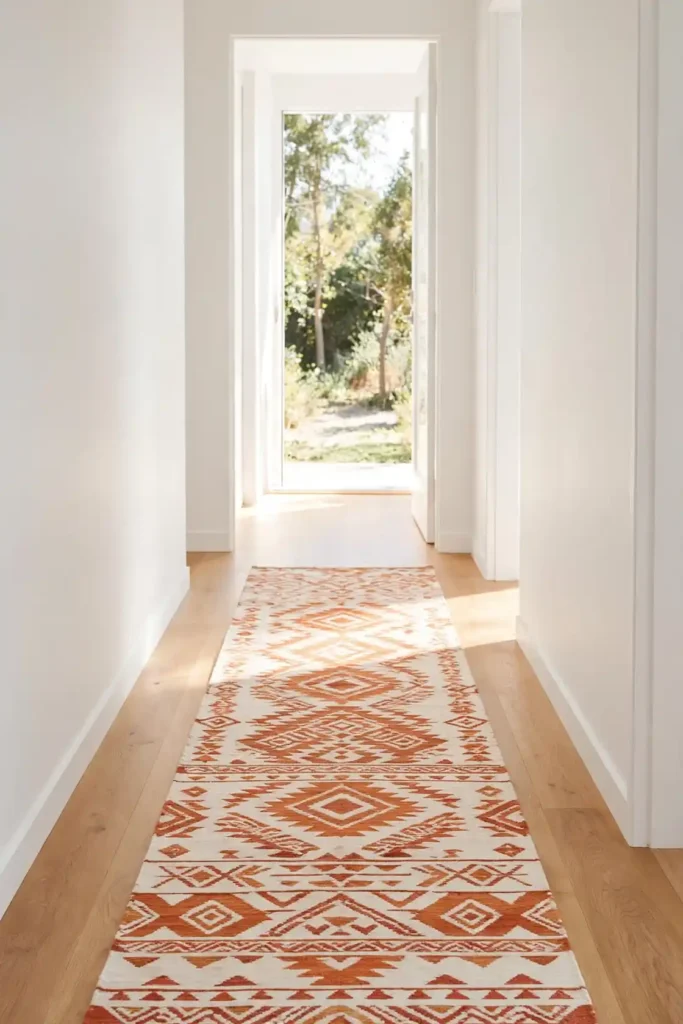
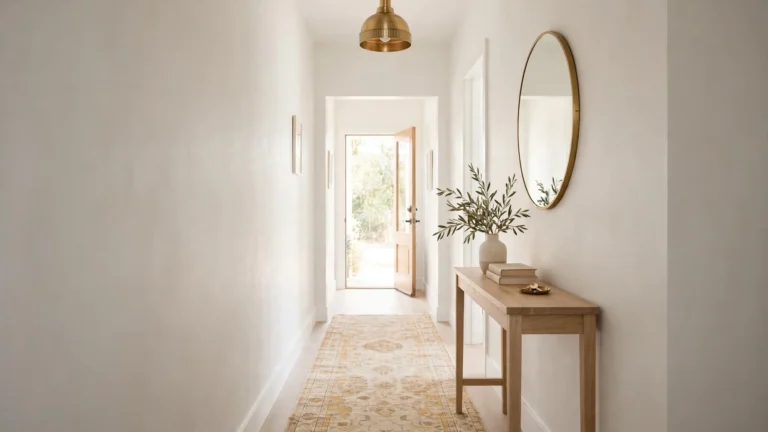
A runner is the single biggest upgrade for a narrow hallway, stretching the eye from door to door. Measure the corridor and subtract six inches from each end so floor shows at both sides. Low pile styles in warm neutrals hide foot traffic while letting doors swing freely. I always pick washable runners since hallway floors take the most daily dirt.
Pattern does heavy lifting in tight spaces: a lengthwise stripe pulls the eye forward and makes the hallway feel longer. Keep the palette tied to nearby rooms so the corridor flows instead of chopping the home apart. A thin non-slip pad stops bunching and adds softness underfoot. Runners are the easiest seasonal decor swap in the house.
Mirror Wall Tricks
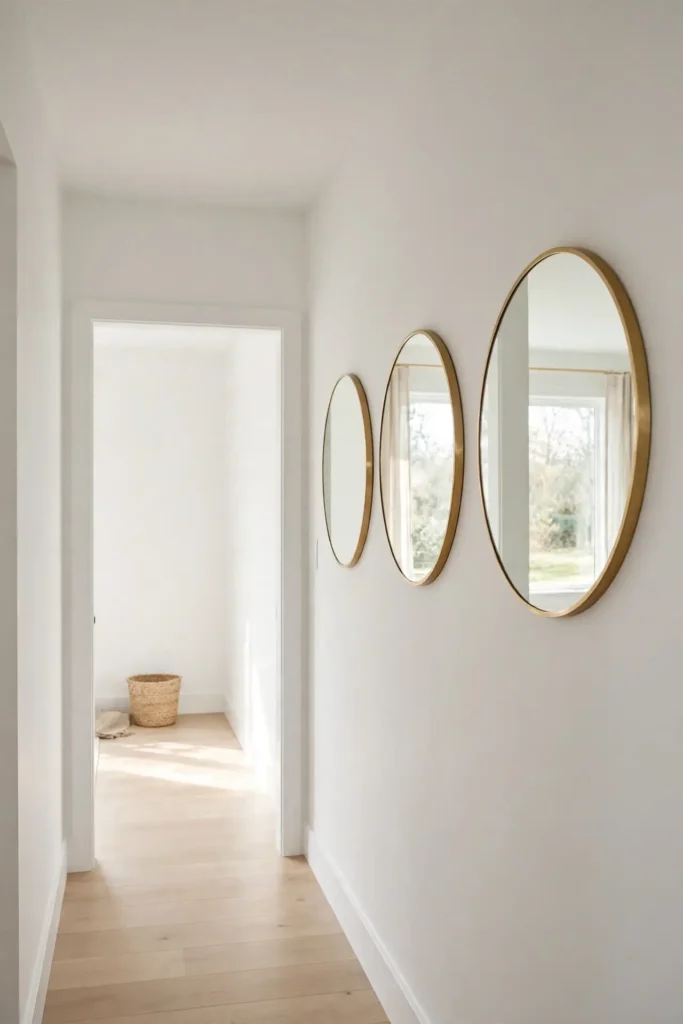
- Hang a row of two or three round mirrors to bounce light sideways and make the corridor feel wider.
- Choose thin metal frames that echo other finishes in the home for a pulled-together look.
- Position mirrors to face a window or bright doorway so they catch and throw real daylight.
- Keep frames slim and matching; chunky ornate styles crowd tight walls.
- Wipe glass monthly since hallway mirrors collect dust fast from constant foot traffic.
Mirrors add depth where hallways have none. I have noticed that a horizontal row of round mirrors softens the tunnel feeling better than one large rectangle. Hang them at eye level, about 58 inches to center, so reflections feel natural. Two mirrors can do the job in short corridors.
Gallery Strip Walls
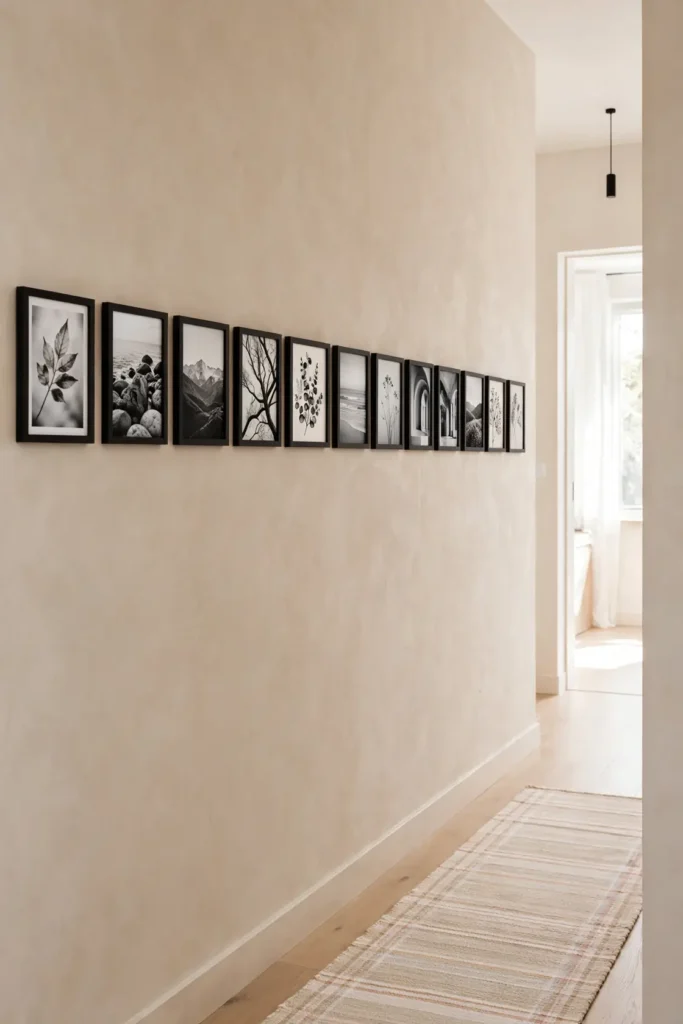
Quick Tip: Build your gallery in a single horizontal band, keeping frame centers between 55 and 62 inches high. Use matching thin frames in one finish, and lay the arrangement on the floor first to lock the spacing before you hang a single nail. Two inches of breathing room between frames keeps the strip neat.
A gallery wall turns a plain corridor into a personal museum, and a horizontal strip suits narrow walls best. Stick to one frame color and vary only the art inside for a collected look that reads calm, not chaotic. I mix family photos with affordable prints so the wall feels alive. Paper templates taped to the wall save you from extra holes.
Pendant Row Lighting
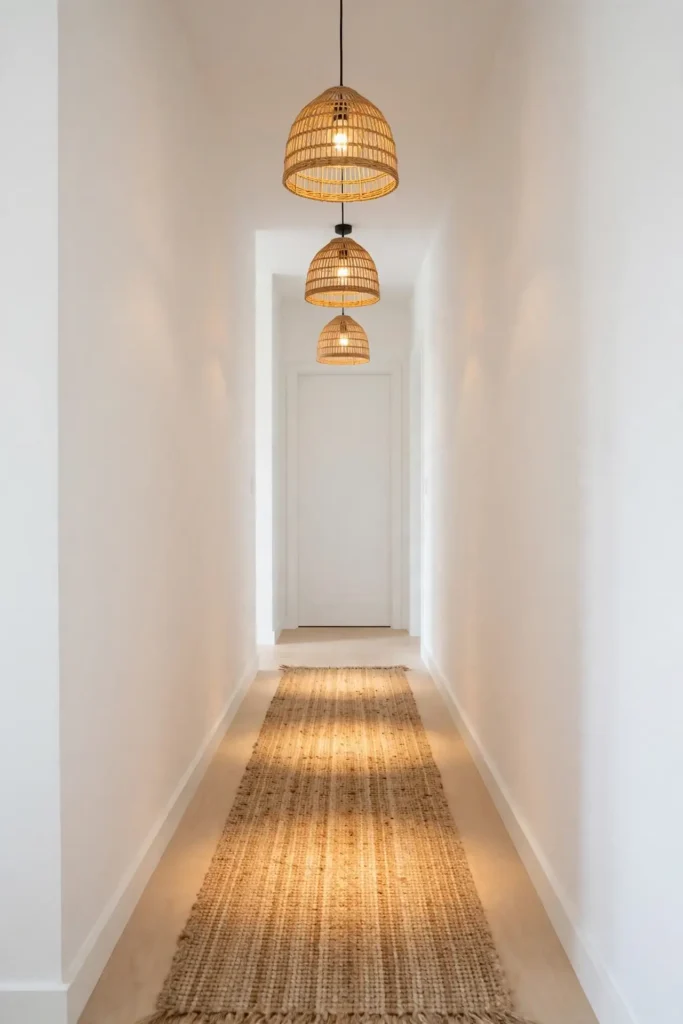
BEFORE: One dim flush mount in the middle left both ends of the hallway in shadow. The corridor felt like a tunnel at night, and guests used phone flashlights to see the floor.
AFTER: Three small pendants spaced six feet apart wash the whole length in warm, even light. The ceiling gained a rhythm, the runner glows, and the hallway feels like a designed room after dark.
Overhead lighting sets the entire tone of a hallway, and a row of small pendants beats a single fixture every time. Hang them 7 feet up so tall guests never duck. I favor warm 2700K bulbs for a welcoming glow. Thoughtful narrow hallway decor starts with light, because no paint or art can fix a corridor you can barely see.
Paint Stripe Illusions
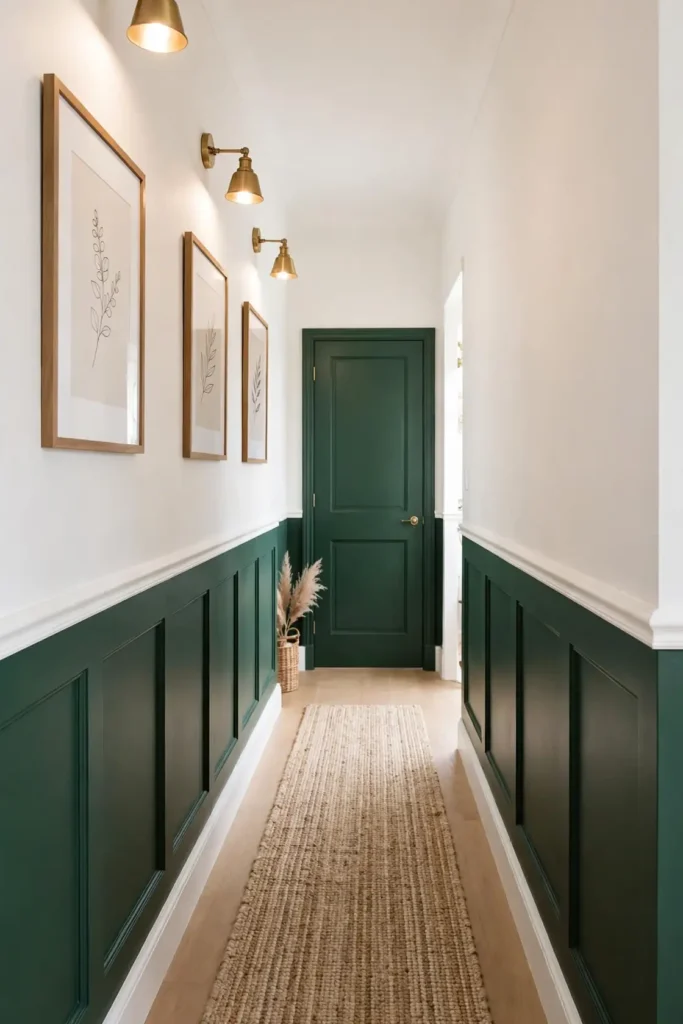
- Paint the lower third of the hallway walls in a rich color and the upper two thirds in warm white.
- Use painter’s tape and a level to keep the dividing line razor sharp at 36 inches high.
- Carry the lower color onto the baseboards for a seamless, built-in look.
- Add picture lights or sconces above the line to highlight the two-tone effect.
Two-tone paint is the cheapest way to add architecture to a flat hallway. The darker lower band grounds the space while the light upper half keeps the ceiling feeling high. I have used this trick in rentals with peelable paint, and it peels off cleanly at move-out. One weekend and two quarts of paint is all it takes.
Floating Shelf Ledges
| Picture Ledges | Fixed Frames | |
|---|---|---|
| Flexibility | Swap art anytime | Locked in place |
| Install | One level shelf | Many nail holes |
| Depth | 3 inches off wall | Flush to wall |
| Best for | Renters, changers | Permanent displays |
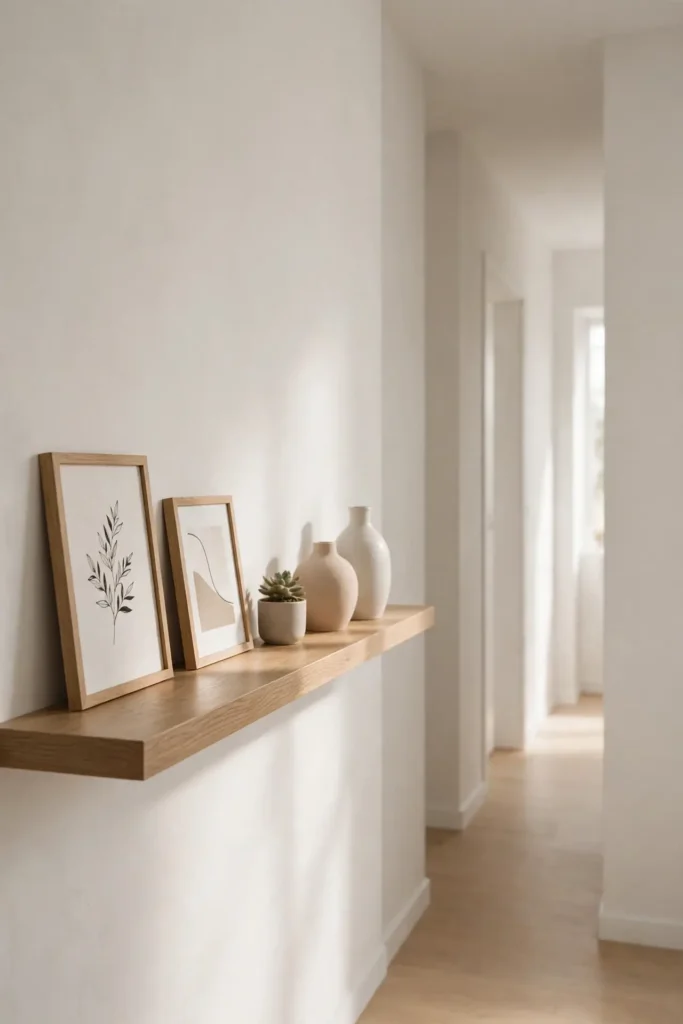
A slim picture ledge gives you gallery freedom with a fraction of the commitment. Art leans instead of hangs, so you can restyle the whole hallway in minutes without new holes. I keep ledges under 3 inches deep so shoulders never brush them. Layer small frames in front of larger ones for depth, and add one tiny plant for life. The shallow profile keeps the walkway fully clear while the display still reads rich and layered.
Charming narrow hallway decor
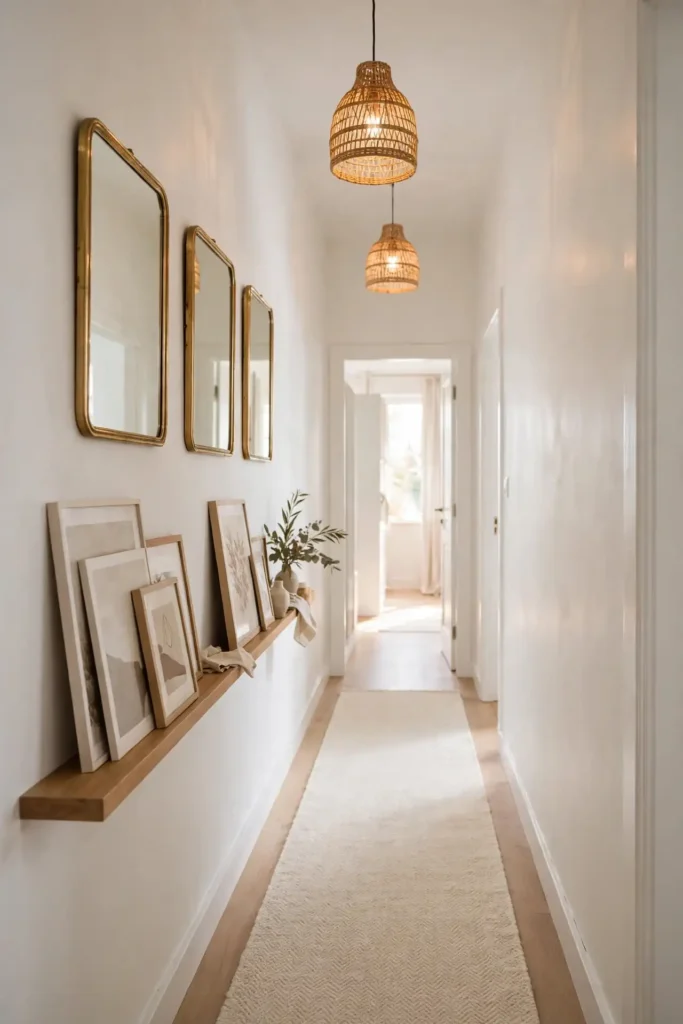
DO: Keep the palette to three colors so the long space feels calm. Light the ends of the corridor so it never goes dark. Choose slim pieces under 6 inches deep for the walls.
DON’T: Hang art on both walls at once; one decorated wall keeps the walkway open. Skip bulky furniture that narrows the path. Avoid dark paint on both walls, which can close the space in.
The golden rule of corridors is simple: decorate one side, keep the other quiet. This balance stops the hallway from feeling crowded while still giving it personality. I walk every hallway I style with arms out; if my hands hit decor, pieces come off. Leave 36 inches of clear walking width, and the space will always feel generous.
Wainscoting Thin Walls
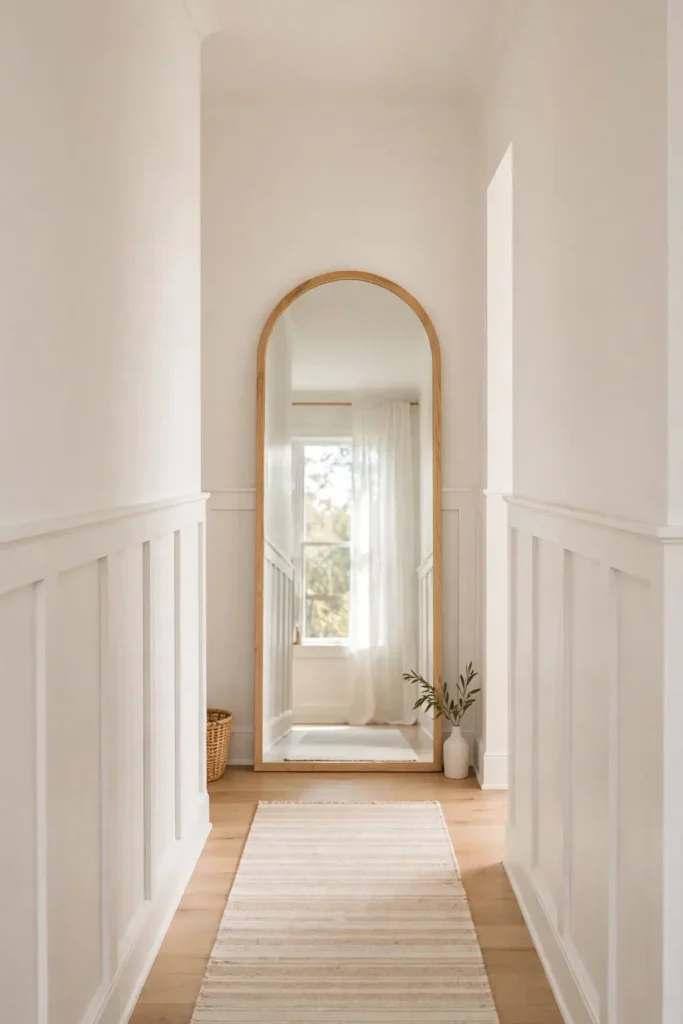
Cost: Low, paintable MDF strips run under $40 for a full hallway. Time: One weekend, mostly drying time between coats. Skill Level: Beginner, just measuring and straight cuts. Best For: Flat, boring walls that need texture.
Wainscoting adds the architecture that narrow hallways usually lack, and paintable strips keep it renter friendly. I paint the whole wall one color so the texture reads as shadow, not stripes. The vertical lines draw the eye up, which lifts low ceilings. Measure twice, cut once, and caulk the seams for a built-in finish that fools everyone. A chair rail cap on top gives the wall a finished edge and a narrow shelf for tiny frames.
Rattan Light Accents
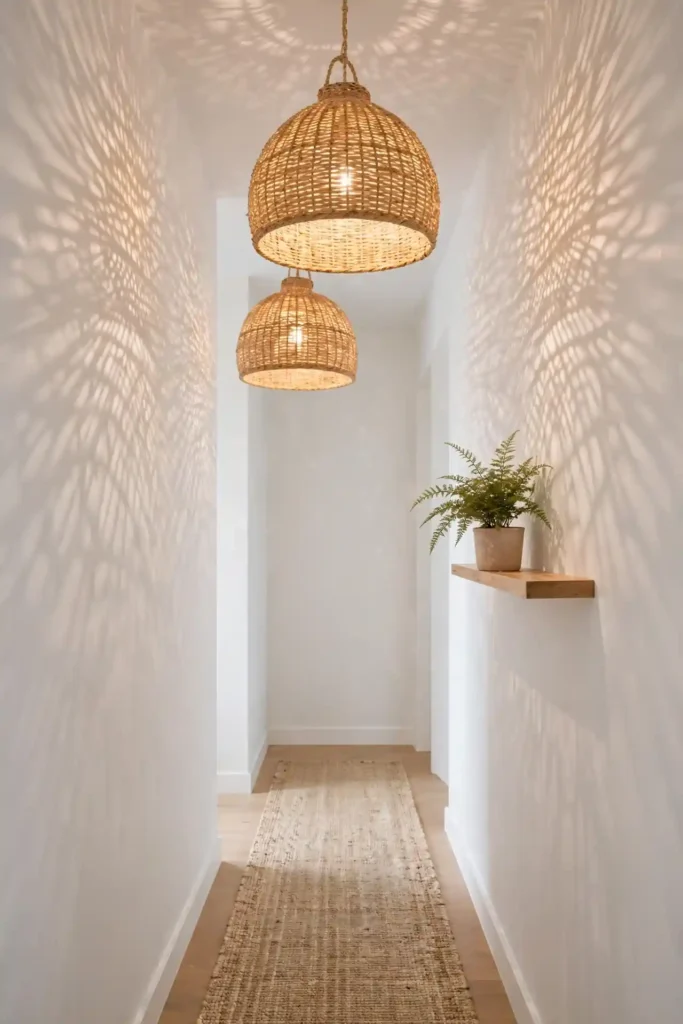
Natural textures stop a hallway from feeling like a sterile pass-through, and woven pendants are the fastest way to add them. Rattan shades throw patterned shadows that make plain walls interesting without a single nail. I swapped harsh flush mounts for two rattan pendants in my own hallway, and the corridor went from forgotten to favorite in an afternoon. Warm bulbs matter here; cool light kills the cozy effect.
Keep the shades small, around 12 inches wide, so they never crowd a low ceiling. Hang them centered in the walkway at 7 feet high for clearance. Pair with a natural fiber runner to double the organic feel. The combination reads calm and collected, like a boutique hotel corridor. Dust the weaves monthly so the texture stays crisp.
Console Table Slivers
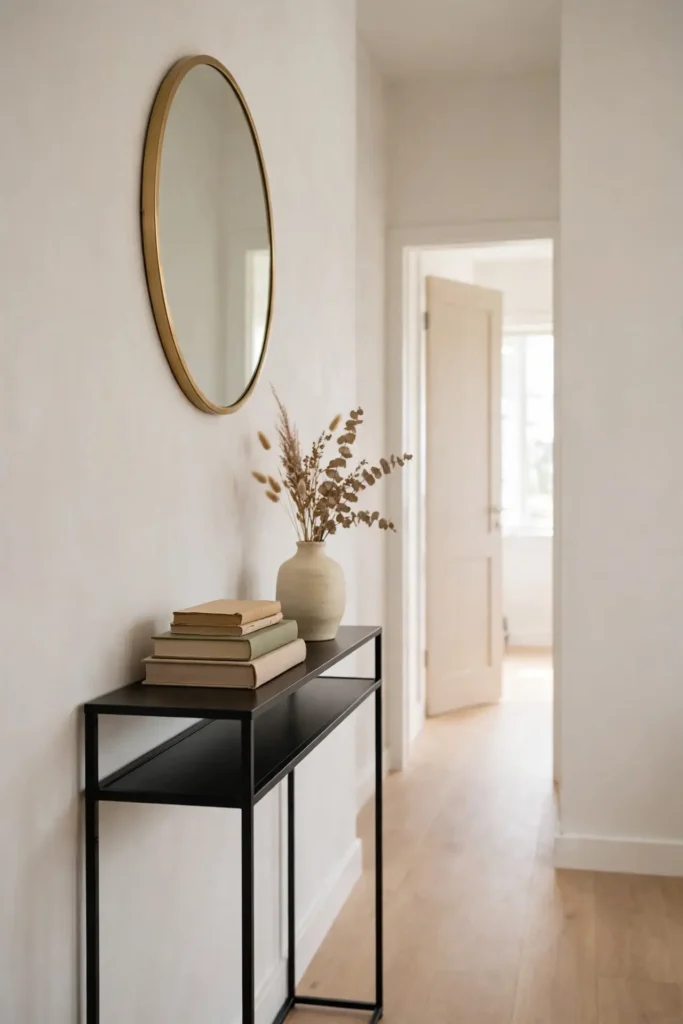
- Pick a console no deeper than 10 inches so the walkway stays at least 30 inches wide.
- Anchor it with a mirror or art above so the slim table looks intentional.
- Style the top with three items: something tall, something flat, something living.
- Hide a power strip underneath for a small lamp or phone charging.
- Leave the lower shelf open for a basket that catches mail and keys.
A sliver console turns dead wall space into a working surface without stealing the walkway. I have styled 8 inch deep tables that hold everything a hallway needs. Smart narrow hallway decor respects the traffic lane first, and a slim console earns its inches by catching keys, mail, and sunglasses. Keep styling minimal so the table never looks cluttered.
Door Color Pops
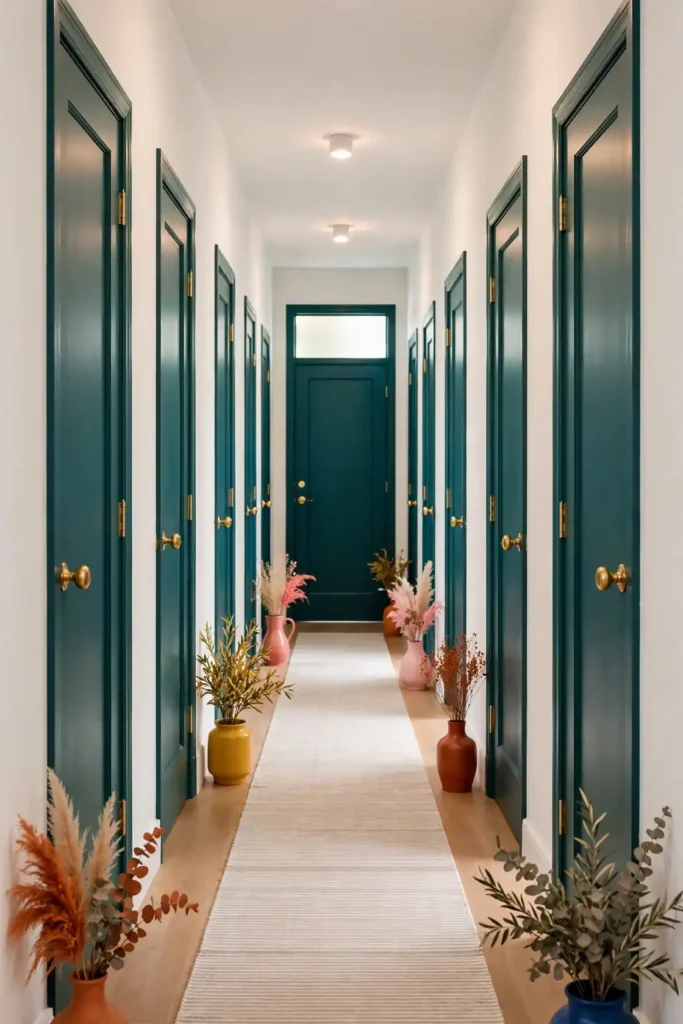
Quick Tip: Paint just the hallway-facing sides of your interior doors in one bold color. Satin finish resists fingerprints, and a quart covers two doors. Tape the hinges carefully, remove the handles, and roll two thin coats for a factory smooth finish that dries overnight.
Doors are the largest blank surfaces in most hallways, so color on them reads as intentional design, not noise. A deep green or navy on every door creates rhythm down the corridor. I love pairing bold doors with warm white walls so the color pops without darkening the space. Swap in brass hardware to finish the jewel box effect.
Sconce Symmetry Lines
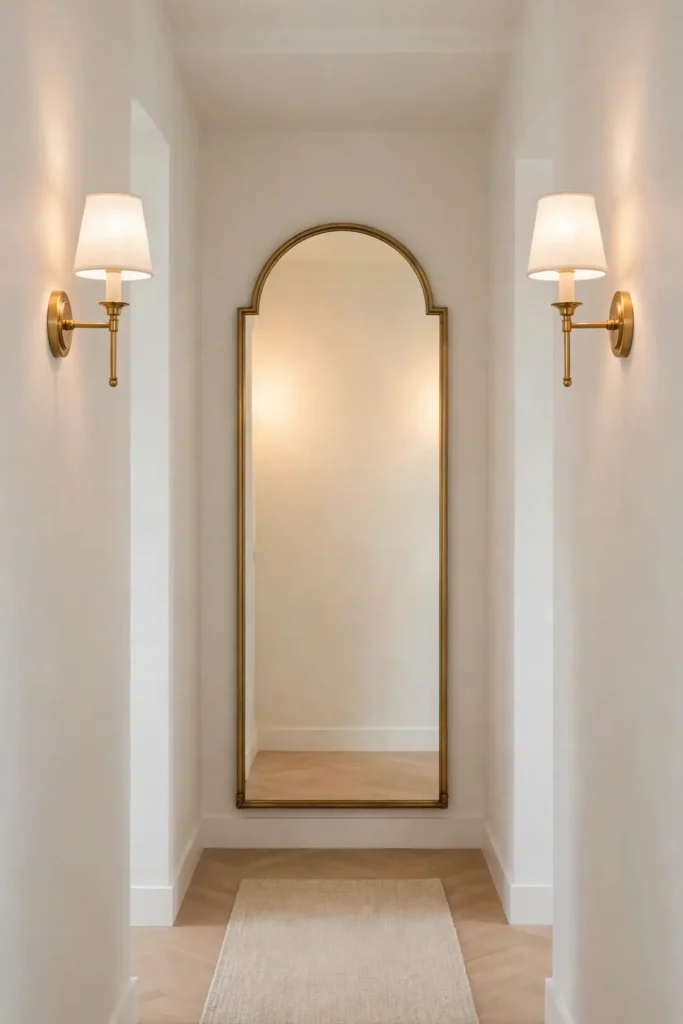
BEFORE: The end of the hallway was a dead wall that collected scuffs and nothing else. Overhead light faded before reaching it, so the corridor stopped awkwardly at a blank corner.
AFTER: Two matching sconces flank a tall arched mirror on the end wall for a glowing focal point. The hallway now has a destination, and warm light pulls you forward instead of letting the corridor fizzle out.
End walls are the most wasted surface in hallways, and sconces turn them into art. Flanking a mirror doubles the glow and makes the corridor feel twice as deep. I use plug-in sconces with painted cord covers in rentals. For more wall drama, the fish wallpaper ideas I styled show how bold pattern can transform a pass-through into a talking point.
Basket Storage Corners
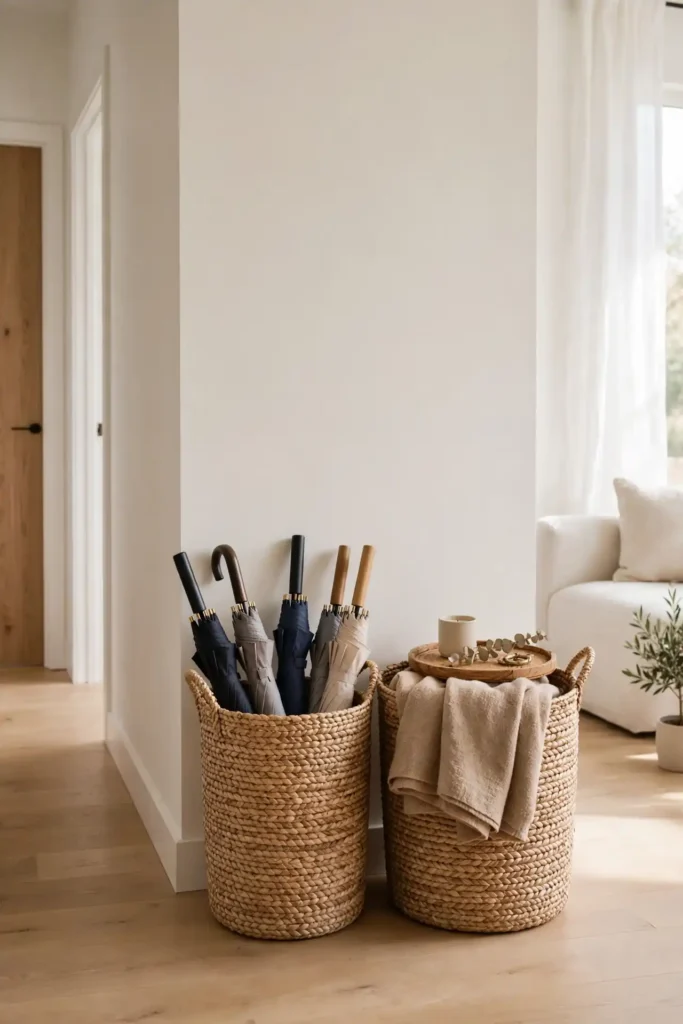
- Find the dead corner where the hallway meets a room; even 12 inches of floor space works.
- Choose two tall baskets in the same material for a deliberate, paired look.
- Assign each basket a job: umbrellas in one, throws or pet gear in the other.
- Add a small round tray on top of one basket to double it as a side table.
Hallway corners usually collect dust, but a pair of baskets turns them into storage that looks styled. Woven textures warm up white corridors instantly. I keep one basket for outgoing items like returns so they never get forgotten. The tray-on-top trick is my favorite; it gives you a landing spot for a coffee cup in a space that had none.
Ceiling Paper Surprises
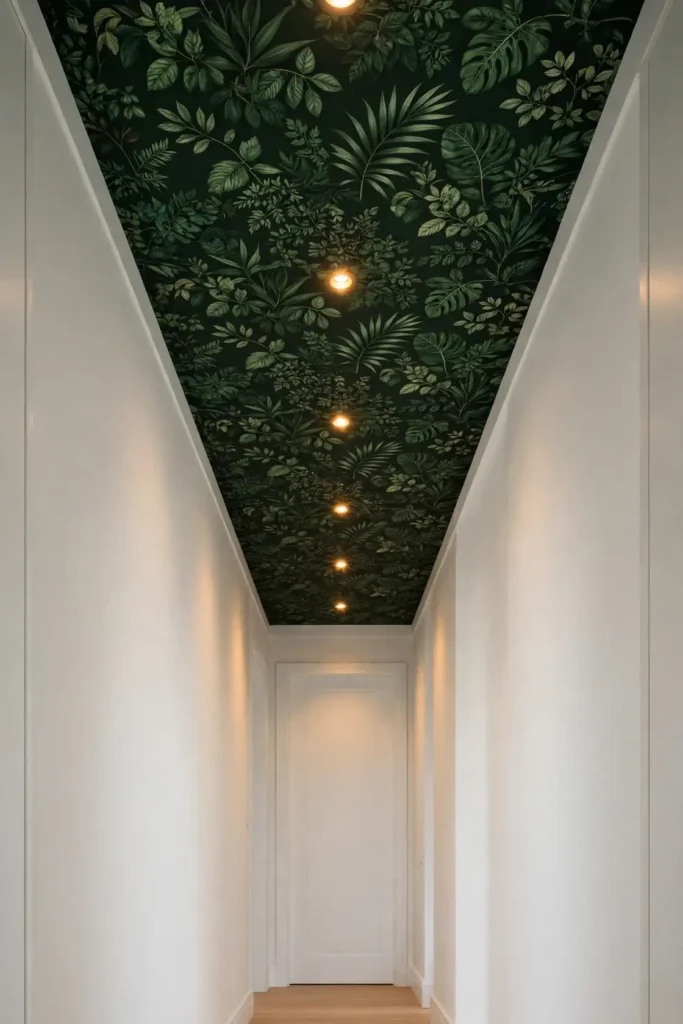
| Ceiling Wallpaper | Wall Wallpaper | |
|---|---|---|
| Impact | Unexpected wow moment | Classic statement |
| Space feel | Adds drama overhead | Can close in walls |
| Install | Tricky, get help | Easier solo project |
| Best for | Low, plain ceilings | One feature wall |
Nobody expects pattern overhead, which is exactly why a papered ceiling stops guests mid-step. It adds drama without touching the walls, so the corridor keeps its width. I pick peel-and-stick for ceilings because gravity makes paste work miserable. Clever narrow hallway decor uses surprise in small doses, and the ceiling is the perfect canvas for one bold move. Pair it with simple white walls and the ceiling becomes the star of the whole corridor.
Arched Mirror Focus
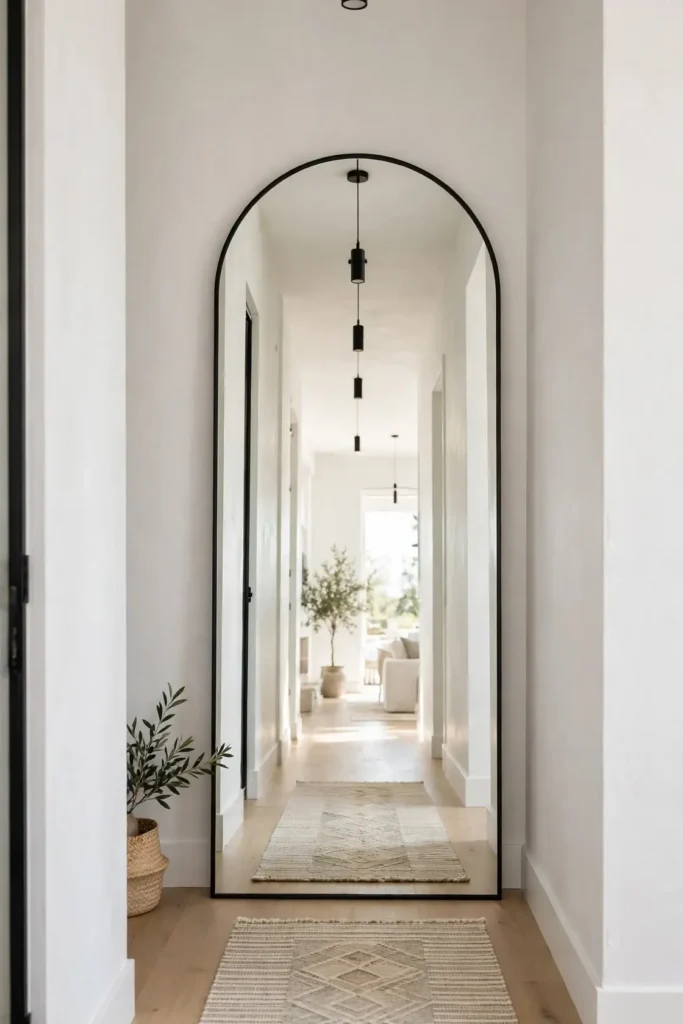
DO: Lean a tall arched mirror against the end wall to fake extra depth. Choose a frame that matches your metals. Let it reflect the prettiest part of the hallway.
DON’T: Hang it where it faces clutter; mirrors double whatever they see. Skip leaning mirrors in homes with toddlers unless you anchor them. Avoid placing one opposite a bathroom door.
An arched mirror softens all the hard rectangles of a corridor while adding the depth flat walls lack. I lean rather than hang at hallway ends; the casual angle feels styled and lets me move it for cleaning. The arch shape echoes doorways, so it blends in. One statement mirror beats three small ones when the goal is drama.
Bench Nook Squeezes
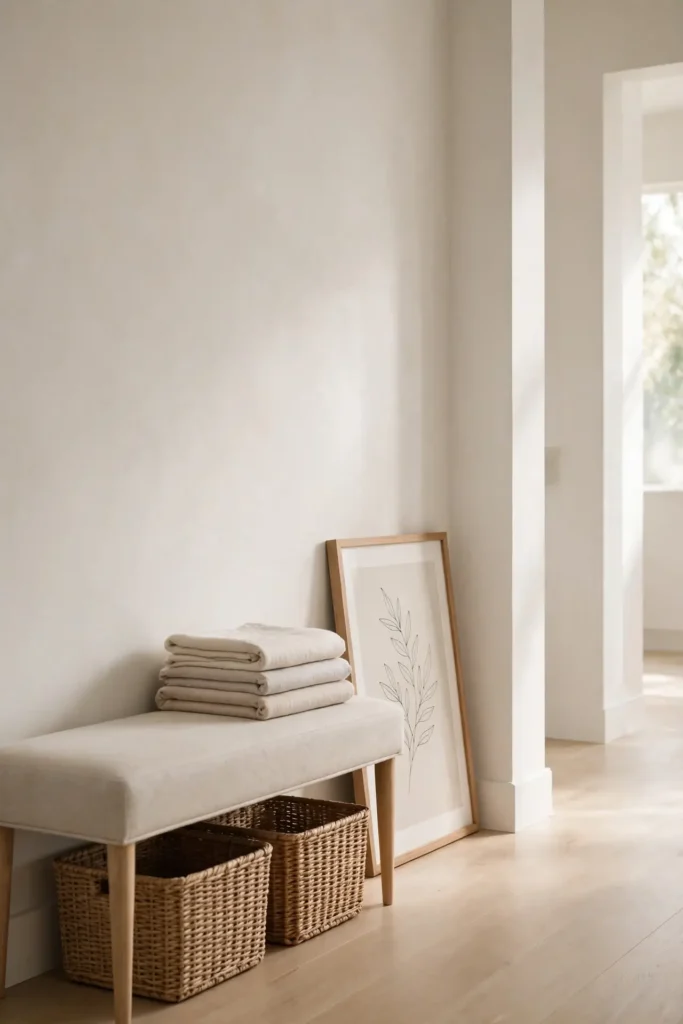
Cost: Medium, slim benches run $60 to $150. Time: An afternoon to style. Skill Level: None, just place and style. Best For: Hallways wider than 44 inches with a dead stretch.
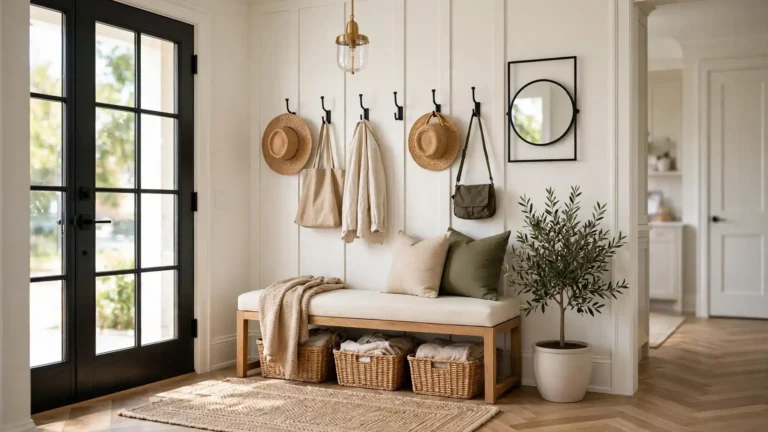
Where a hallway widens even slightly, a slim bench claims the extra inches beautifully. It gives you a perch for pulling on shoes and hides baskets underneath. I keep benches under 14 inches deep so the walkway never suffers. Top it with one cushion and a folded throw, then stop; restraint keeps a small bench from looking cluttered. In my experience, the bench becomes the most used seat in homes where the hallway sits near the front door.
Monochrome Flow Palettes
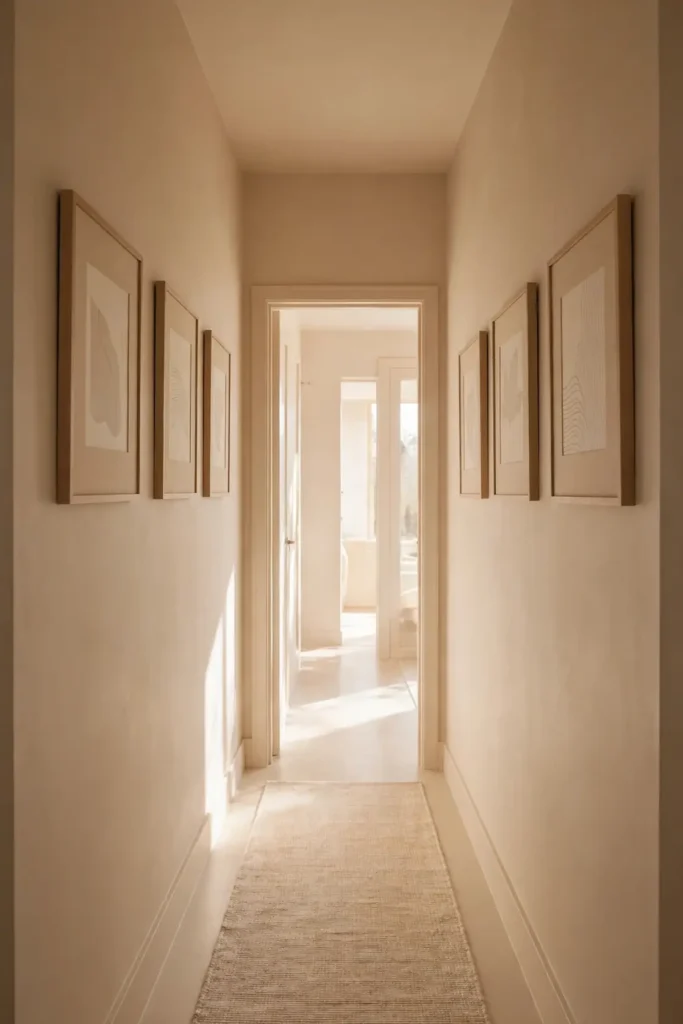
Painting every surface one color sounds risky in a tight space, but monochrome hallways feel calmer, not smaller. Without trim lines chopping up the walls, the corridor reads as one continuous cocoon. I use warm whites or soft greiges with an eggshell sheen that bounces light. The trick is varying texture: matte walls, satin trim, woven runner. Each surface catches light differently, which keeps the single color from feeling flat.
Monochrome also erases visual clutter, which is gold in hardworking corridors. Cords, vents, and uneven patches all fade into the background wash. I have seen narrow hallway decor settle down instantly once the palette went single-note; the space finally exhales. Add art with quiet frames in the same tone family, and the hallway will feel like a gallery wing.
Picture Ledge Layers
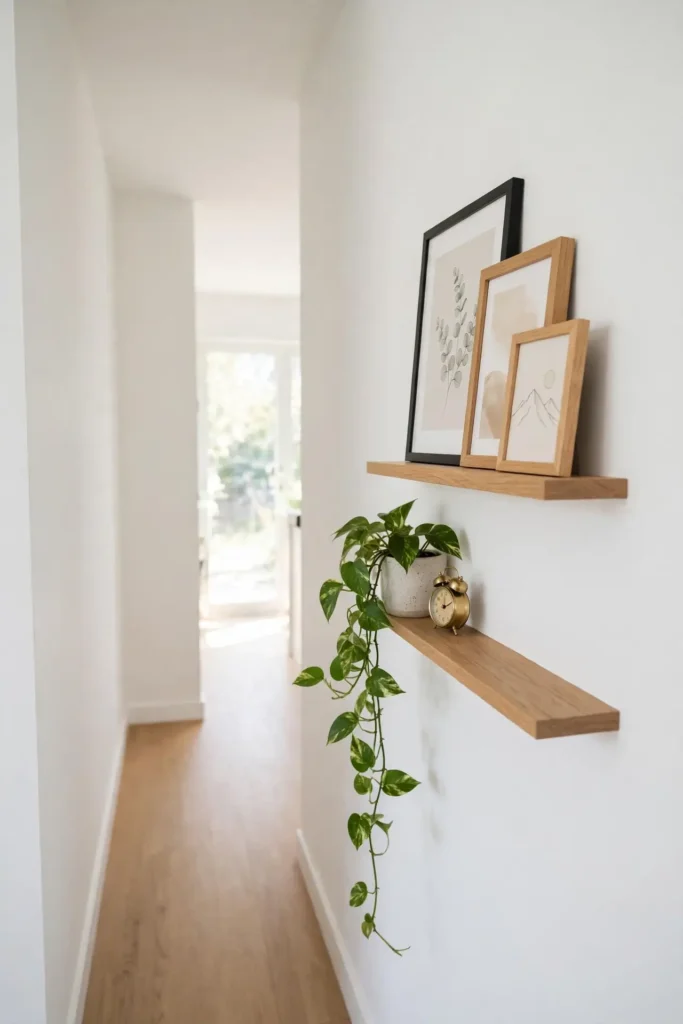
- Mount two ledges 14 inches apart for a stacked look that fills vertical wall space.
- Layer small frames in front of larger ones to build depth on the shallow shelf.
- Add one living thing, like a trailing pothos, to soften all the straight lines.
- Keep the palette tight: two frame finishes maximum for a calm display.
- Restyle seasonally by swapping just the front layer; the back layer stays put.
Stacked ledges use vertical wall space that single rows waste, which matters when walls are your only canvas. I love that ledges let art overlap; the layering adds depth a flat gallery wall cannot match. Keep each shelf under 3 inches deep so shoulders clear them. A small plant trailing off one end brings the whole arrangement to life.
Botanical Print Rows
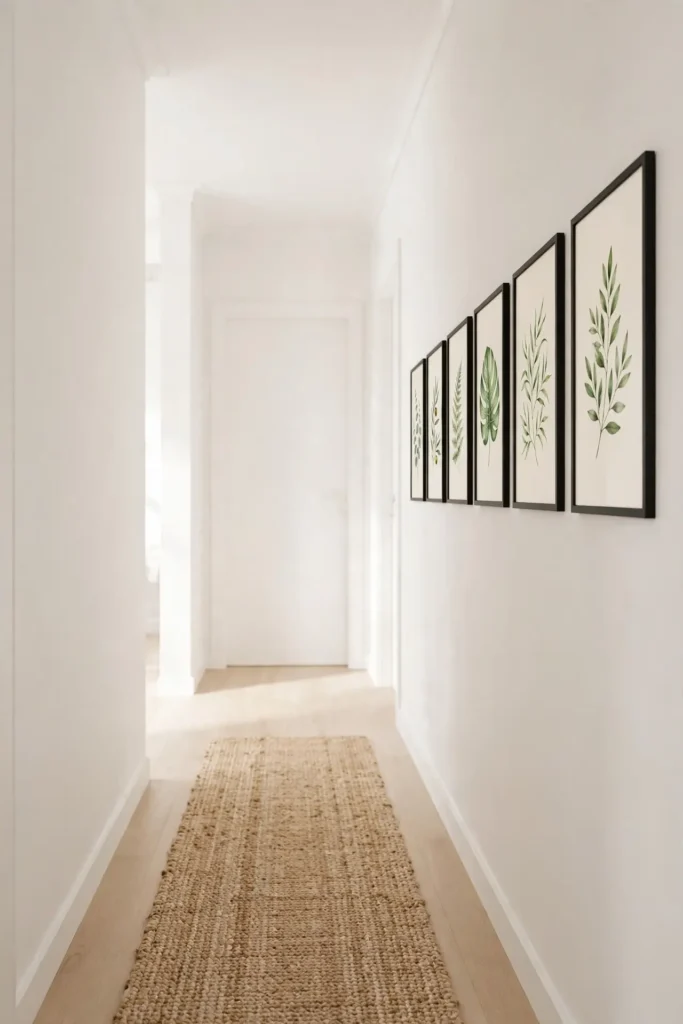
Quick Tip: Buy one set of six matching botanical prints and hang them in a straight row at eye level. Identical frames and even 3 inch spacing create rhythm that pulls the eye down the corridor. Thrift stores often sell matching frame sets for a few dollars each.
Matching prints in a row give narrow hallways the rhythm that makes them feel designed. Botanical subjects work everywhere because green reads as neutral. I frame pages from old books when budgets are tight; the aged paper adds character new prints lack. Keep the row on one wall only so the opposite side stays quiet and the walkway feels open.
Under Console Baskets
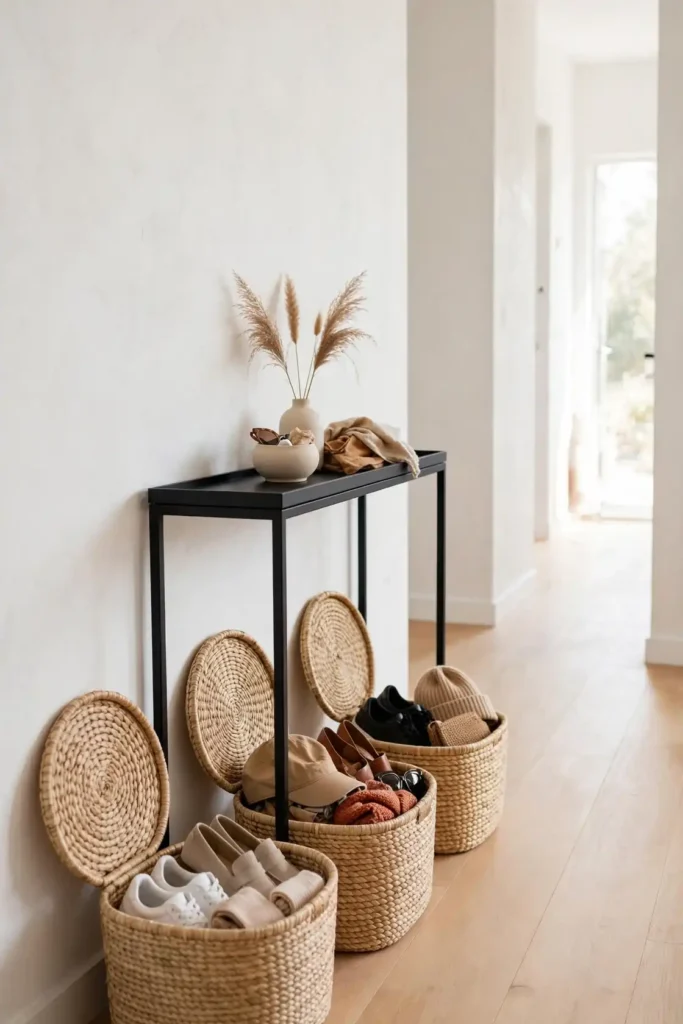
BEFORE: Shoes scattered along the hallway walls forced everyone into single file. The corridor felt narrower every day as pairs multiplied, and the beautiful runner disappeared under clutter.
AFTER: Three lidded baskets slide under the slim console, swallowing shoes, pet gear, and winter accessories. The floor is clear, the runner shows fully, and the hallway finally feels as wide as it actually is.
Under-console space is free real estate that most hallways waste completely. Lidded baskets hide the mess while the woven texture warms the corridor. I label the inside of each lid so family members keep the system. Measure the console clearance before buying; baskets need an inch of wiggle room to slide easily.
Glow Up Lighting
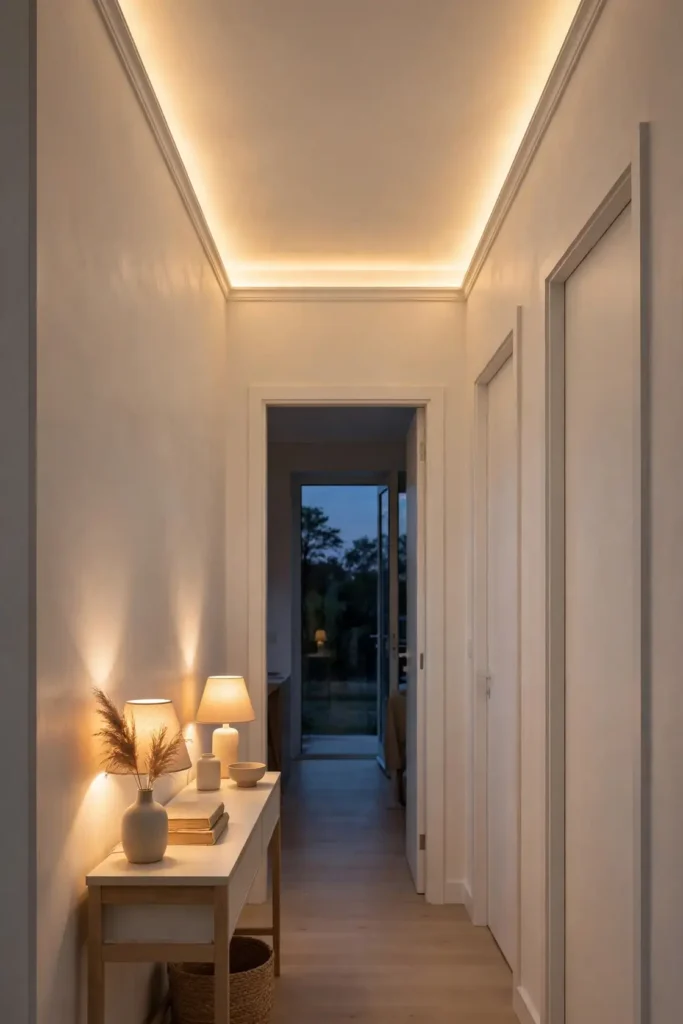
- Swap cool bulbs for warm 2700K LEDs in every hallway fixture first.
- Add a plug-in picture light or two over art to create glowing focal points.
- Hide an LED strip behind crown molding or a ledge for soft ceiling wash.
- Put hallway lights on a dimmer or smart plug for evening ambiance.
Layered light is what separates forgettable hallways from memorable ones. Warm bulbs alone change the mood more than any paint color. I add at least two light sources per hallway: one overhead and one at art level. Dimmers let the corridor glow softly at night instead of blasting. Small upgrades, huge payoff.
Conclusion
Your hallway works harder than any room in the house, and it deserves better than bare walls and a single sad bulb. These 21 ideas prove that thoughtful narrow hallway decor turns tight corridors into favorite spaces, one runner, mirror, and warm bulb at a time. Start with light and the floor, then layer in the pieces that make you smile. I have seen how small changes like these can completely shift the way a space feels. Save your favorites to Pinterest, try one idea this weekend, and enjoy the prettiest walk in your home.
One Comment