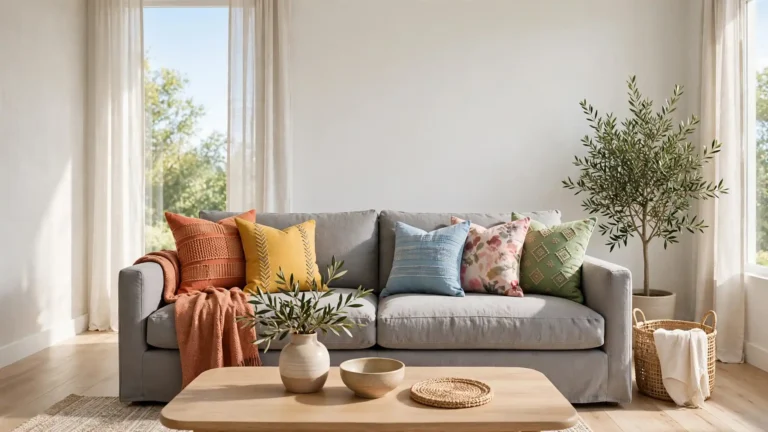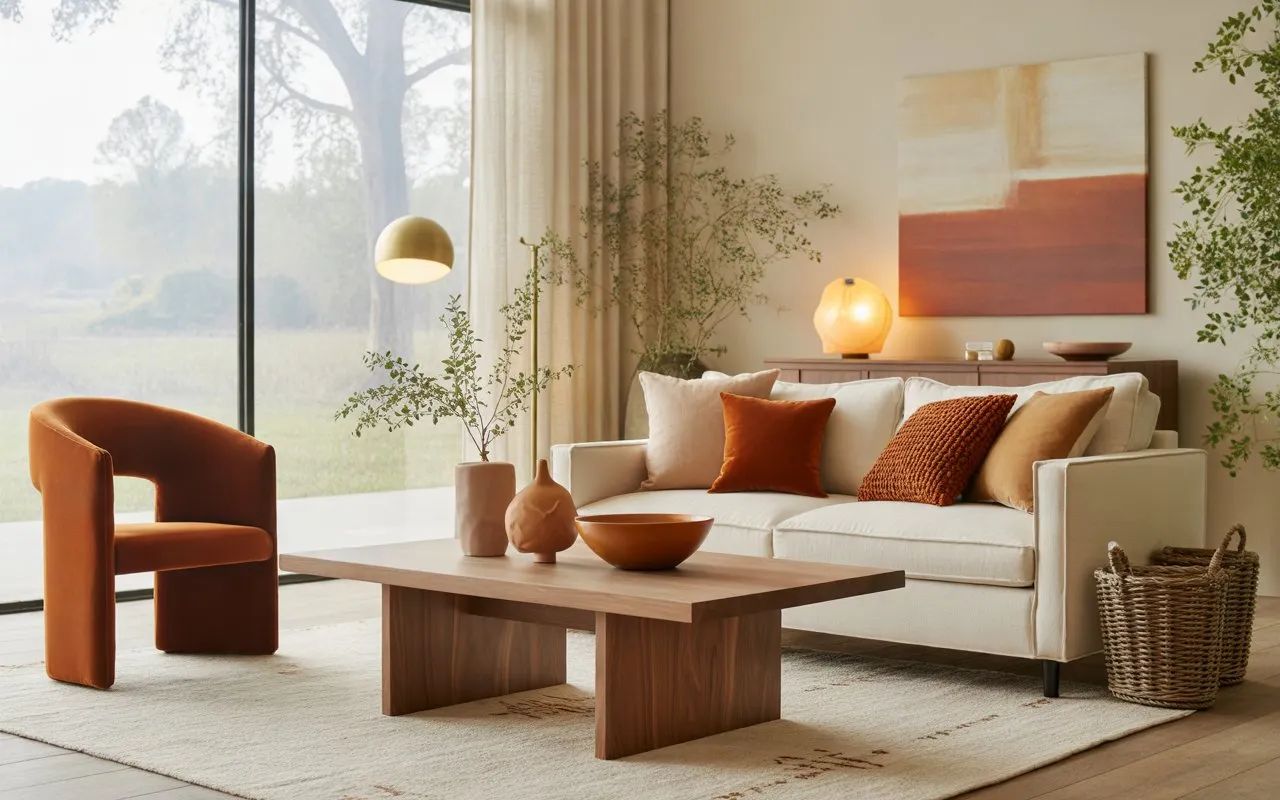
22 Rust Accent Living Room Decor Ideas for Cozy Charm
A warm living room does not need a complete makeover to feel more inviting. Rust accent living room decor can add depth, warmth, and personality with just a few thoughtful changes.
From plush pillows and textured throws to earthy artwork, warm wood, and statement furniture, rust works beautifully with cream, beige, ivory, olive, and natural materials. These ideas are especially helpful if your living room feels a little flat or overly neutral and you want more character without making it feel crowded.
In my experience, starting with one or two rust accents makes the process much easier. You can see how the color works with your existing furniture before adding more. Ahead, you’ll find practical ways to layer this rich earthy shade while keeping your room comfortable, balanced, and easy to live in.
Rust Throw Pillows
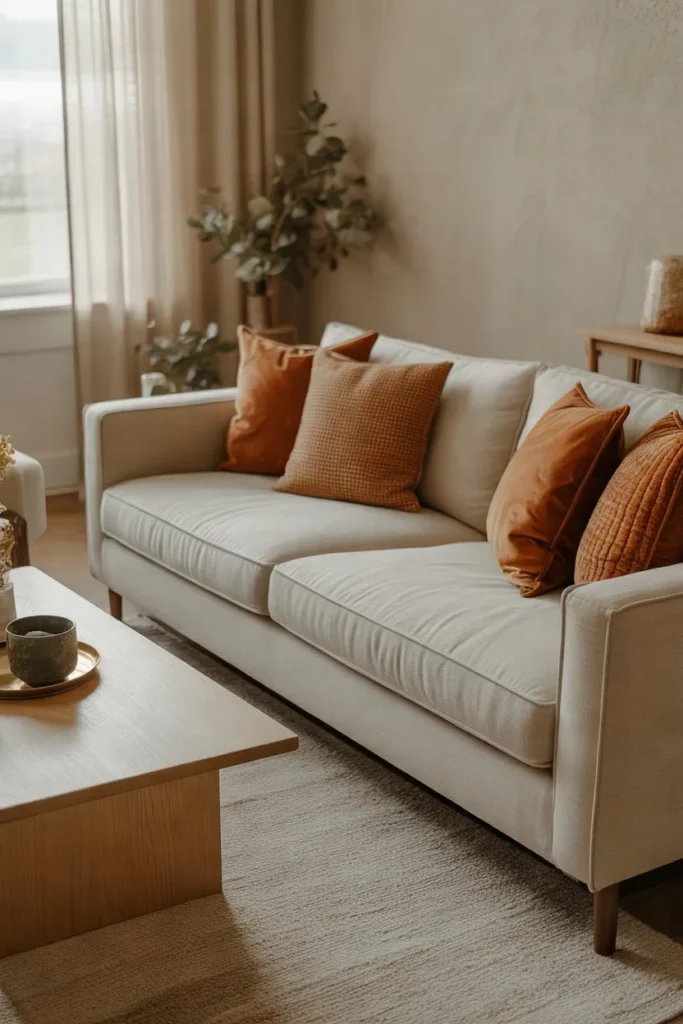
A few well-placed pillows can introduce rust tones without making the room feel overly warm. Mix rust velvet with cream boucle, beige linen, or subtle geometric patterns for contrast. Keep two or three rust pieces together so the color feels intentional rather than scattered across the sofa.
I’ve noticed that pillow texture matters almost as much as color. A matte woven cover beside a soft velvet one creates depth while keeping the palette relaxed. For a smaller sofa, use two rust pillows with one neutral lumbar cushion. This keeps the seating area balanced and visually comfortable.
Rust Accent Chair
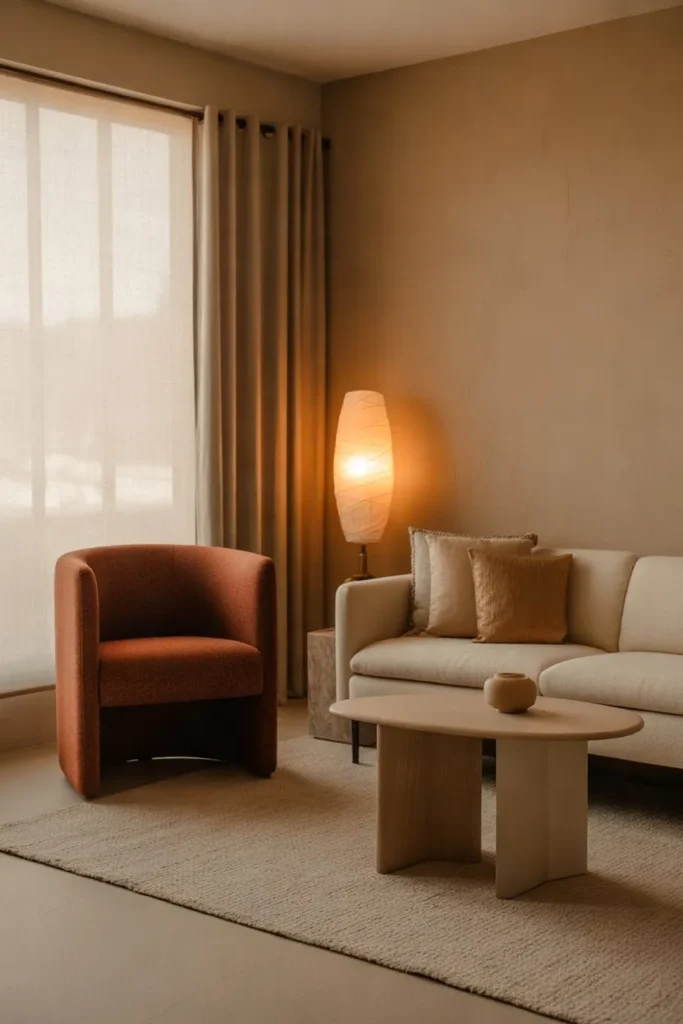
- Choose rust upholstery in velvet, linen, or textured boucle for added depth.
- Place the chair opposite or beside the main sofa to create visual balance.
- Pair it with a neutral cushion in cream, oatmeal, or soft beige.
- Add a small wood or brass side table beside the chair.
- Keep surrounding accessories simple so the chair remains the focal point.
A rust chair works especially well when the rest of the room stays restrained. Its warm color can anchor an otherwise neutral seating arrangement without requiring a complete redesign. For open-plan rooms, position the chair near a rug edge or reading corner to create a defined, useful zone.
Rust and Cream Palette
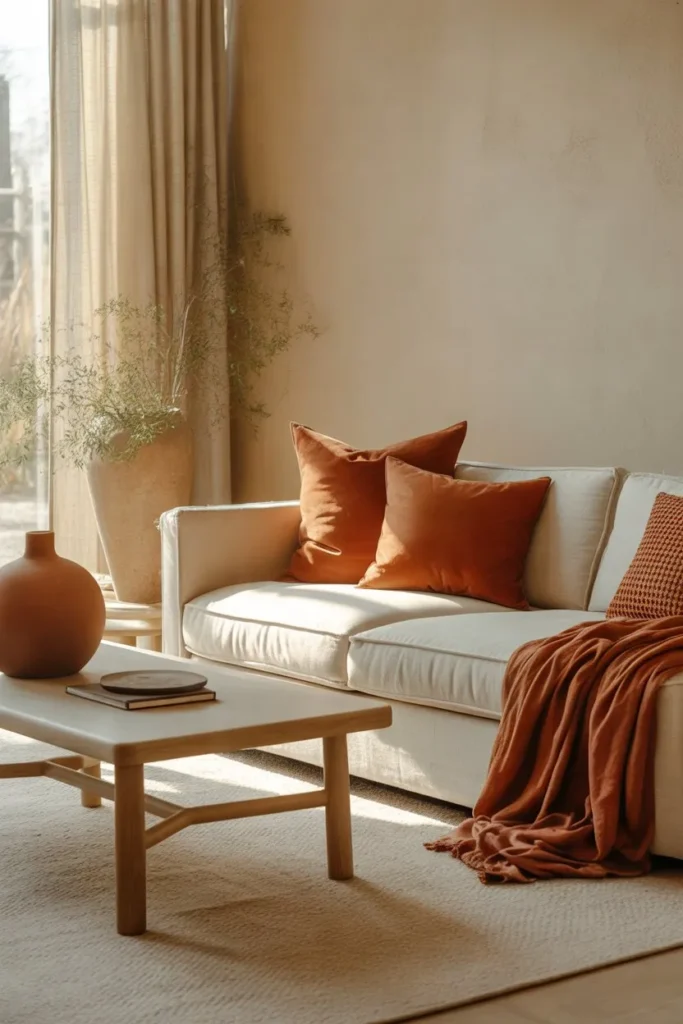
Quick Tip:
Keep cream as the dominant color and let rust act as the supporting shade. Use rust across two or three elements, such as pillows, artwork, and a ceramic accessory, so the palette feels connected without becoming heavy.
A cream foundation gives rust accents room to stand out while keeping the overall space bright. Choose warm ivory rather than stark white for a softer transition between colors. In my experience, adding natural wood alongside this combination makes the room feel grounded and prevents the warm tones from appearing too intense.
Rust Accent Wall
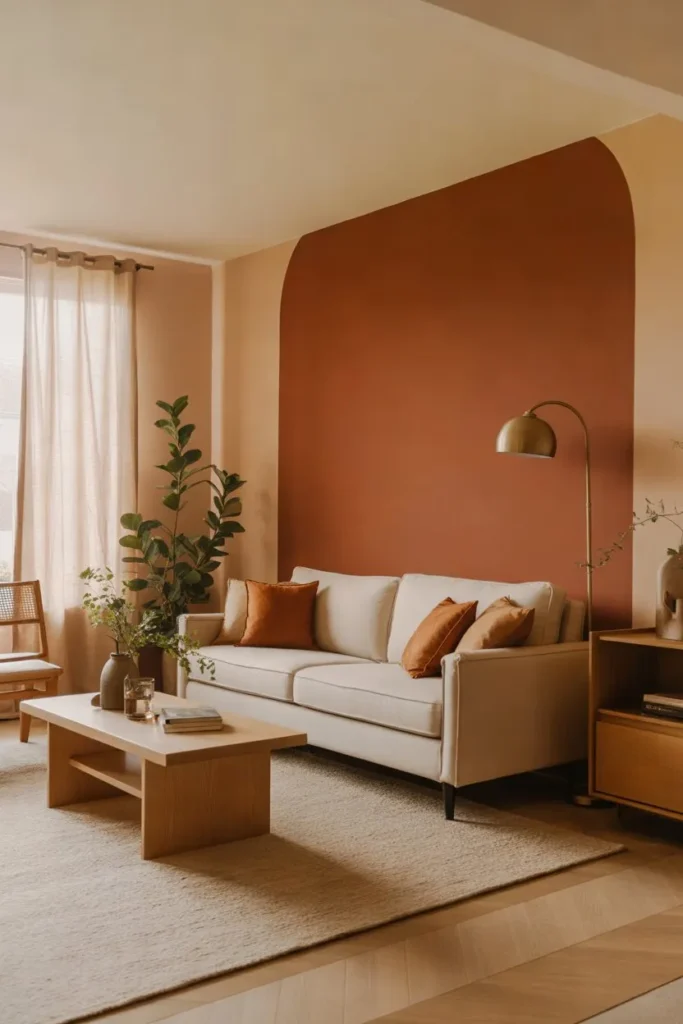
BEFORE: A neutral living room can feel flat when every wall, furnishing, and accessory stays within the same pale palette. The seating area may lack a clear focal point, especially in a large open room.
AFTER: A rust accent wall creates an immediate visual anchor behind the sofa or media console. The deeper color adds warmth while giving surrounding cream, wood, and brass pieces more definition.
Keep the remaining walls light to prevent the room from feeling enclosed. A muted rust paint with earthy undertones usually works better than an overly bright orange-red shade. Test a sample beside your flooring and furniture first because natural and artificial light can change how the color appears.
Rust Area Rug
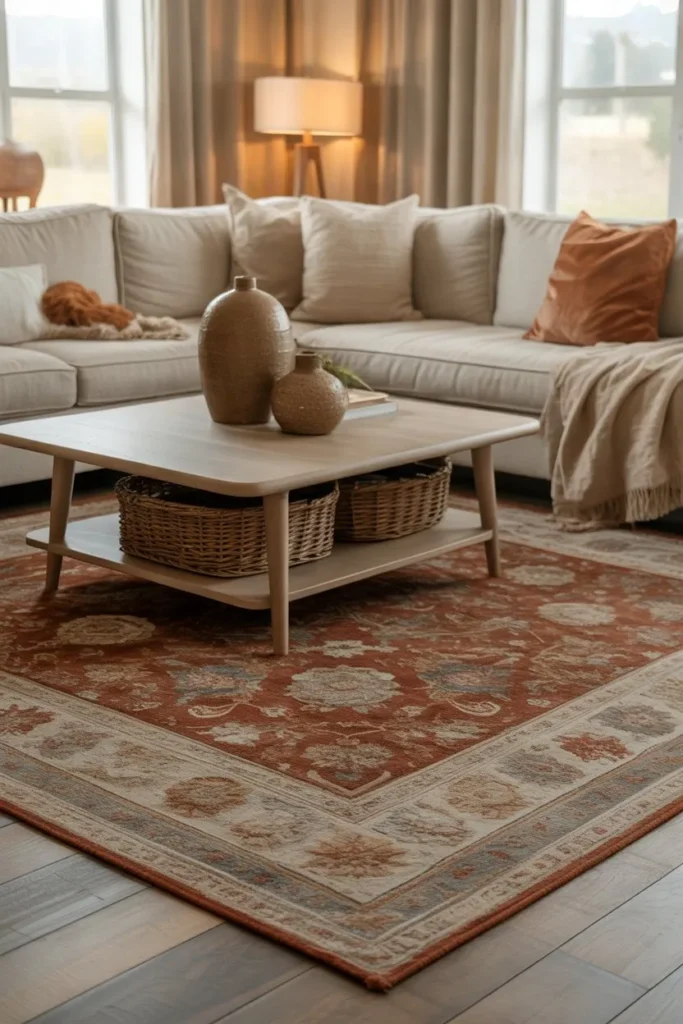
- Measure the seating area before choosing the rug size, leaving enough coverage beneath the sofa and chairs.
- Look for rust paired with cream, taupe, beige, or muted brown rather than several competing warm colors.
- Center the coffee table on the rug and position at least the front legs of larger seating pieces over it.
- Repeat one small rust detail elsewhere, such as a cushion or vase, to connect the room visually.
A patterned rug can introduce warmth across a larger surface without committing to painted walls or bold furniture. For busy households, choose a medium-patterned design that disguises everyday marks. I’ve seen this approach work particularly well in neutral rooms where the floor needs more visual interest without overwhelming the seating arrangement.
Rust vs Terracotta
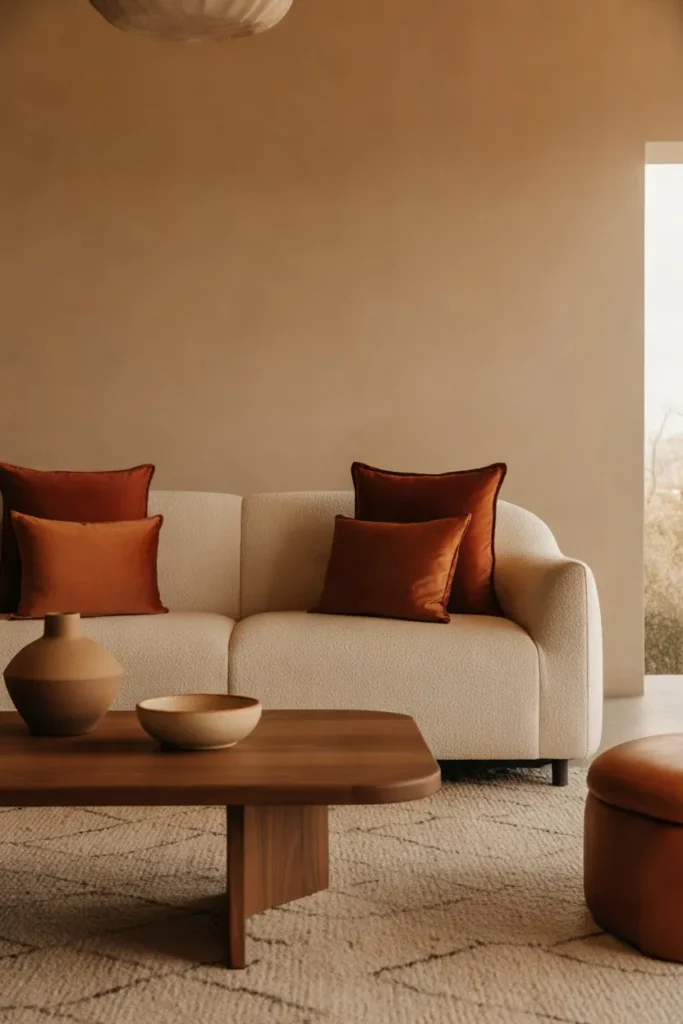
| Comparison | Rust | Terracotta |
| Overall tone | Deeper and richer | Lighter and more clay-like |
| Best textiles | Velvet, wool, linen | Cotton, linen, woven fabrics |
| Visual effect | Cozy and grounded | Warm and earthy |
| Easy pairings | Cream, walnut, brass | Beige, ivory, natural wood |
Both shades can bring warmth into a neutral living room, but rust usually creates a deeper visual presence. Choose it for upholstery, cushions, or larger accents when you want stronger contrast. Terracotta works nicely for ceramics and smaller decorative pieces, giving the room warmth without competing with larger furniture.
Rust Velvet Sofa
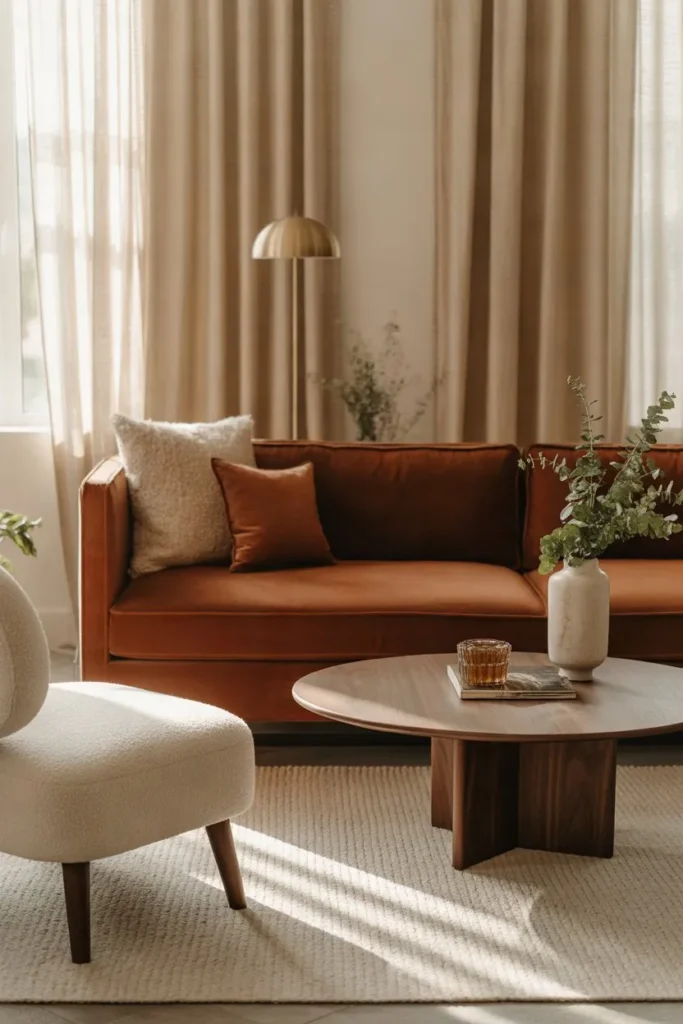
DO:
- Balance the sofa with a light rug and cream or ivory seating.
- Add two neutral cushions to soften the rich upholstery.
- Choose walnut or natural wood furniture for warmth.
- Repeat small rust details elsewhere in the room.
DON’T:
- Fill every surface with orange or rust accessories.
- Pair the sofa with several equally dark furniture pieces.
- Use overly shiny fabrics that compete with the velvet.
- Place it against a similarly dark wall.
A rust velvet sofa becomes the strongest color statement in the room, so surrounding pieces should provide breathing space. In my experience, cream textiles and natural wood make rich upholstery feel inviting rather than dramatic. Add one patterned cushion or woven throw for texture, then let the sofa remain the main attraction.
Rust Ceramic Accents
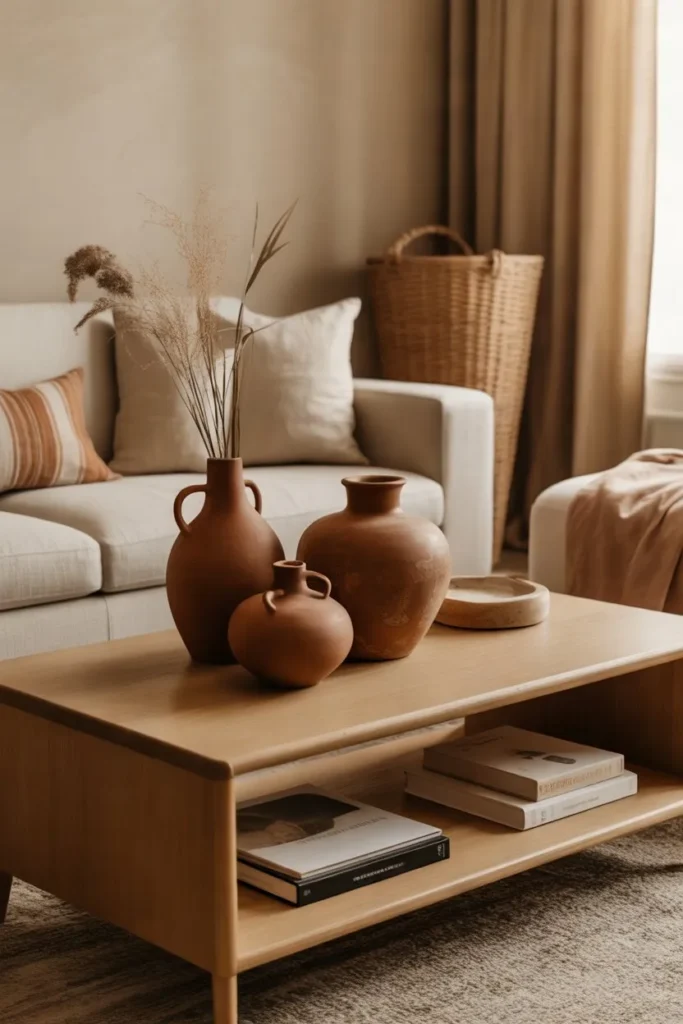
Cost: Low to moderate
Time: 15 to 30 minutes
Skill Level: Beginner
Best For: Shelves, coffee tables, consoles
Result: Small warm color accents with minimal commitment
Ceramic pieces offer an easy starting point for bringing deeper earthy color into a neutral room. Choose matte finishes, irregular shapes, or handmade-looking textures to keep the display natural. Group one larger vase with two smaller vessels rather than spreading individual pieces across every surface. Dried branches can add height without introducing another strong color.
Rust Gallery Wall
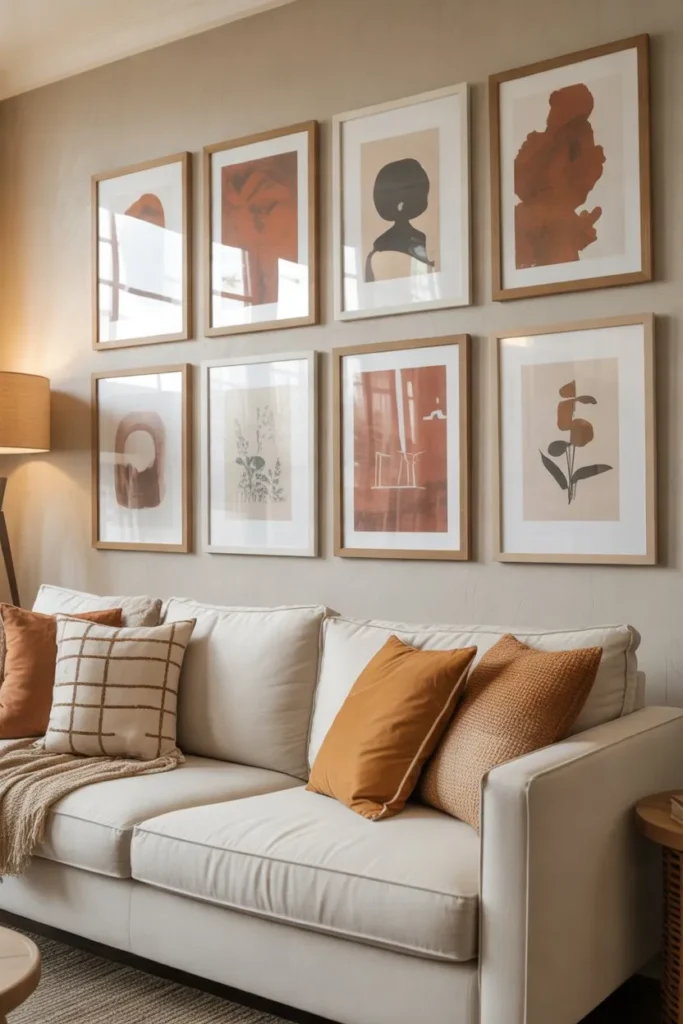
A gallery wall can bring several rust accents together without relying on matching decor. Start with one artwork containing a noticeable rust shade, then surround it with cream, brown, black, or muted beige prints. Mix frame sizes and orientations while keeping the color palette controlled.
Leave consistent visual spacing between frames so the arrangement feels intentional rather than crowded. For a sofa wall, keep the gallery roughly two-thirds of the sofa’s width. I’ve noticed that repeating rust in just two or three prints creates enough connection without making the artwork feel overly coordinated.
Rust Curtains
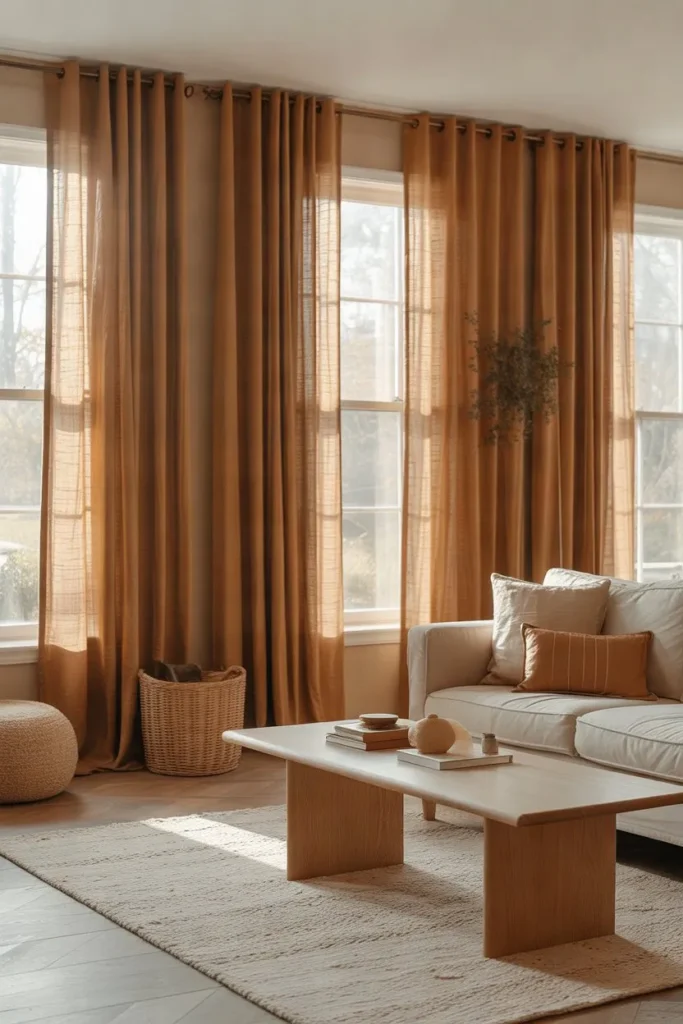
- Choose linen or linen-look curtains for a soft, relaxed finish.
- Hang the curtain rod several inches above the window frame to create visual height.
- Let the fabric reach the floor for a more finished appearance.
- Balance the deeper color with cream seating and light flooring.
- Repeat a small rust detail in a cushion, vase, or artwork.
Rust curtains work especially well when the windows receive plenty of natural light. The fabric filters bright sunlight while giving the room a warmer visual layer. If full rust panels feel too bold, use them only around the main window and keep nearby furnishings neutral for a cleaner composition.
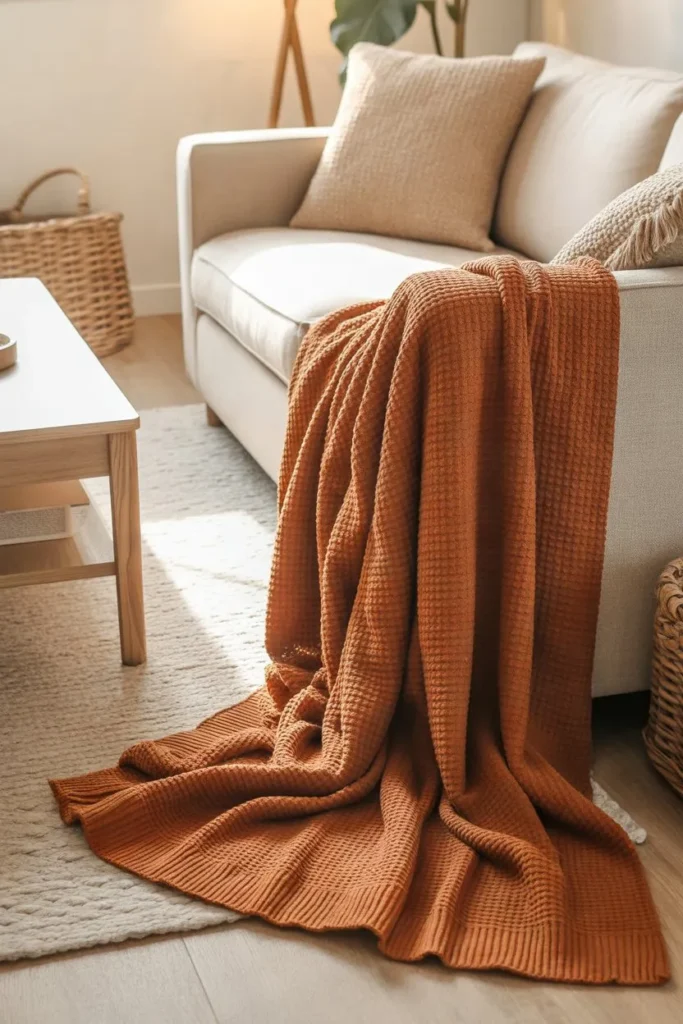
Rust Throw Blanket
Quick Tip:
Drape the blanket loosely over one sofa arm or across a corner of the seat rather than folding it into a perfect rectangle. Choose a chunky knit, brushed cotton, or woven texture to make the rust shade feel softer.
A throw is one of the easiest ways to test a warmer color before committing to larger pieces. Keep the surrounding cushions neutral, then repeat a small amount of rust in artwork or ceramics. This approach gives the seating area a connected palette while keeping the room flexible through different seasons.
Rust Coffee Table Styling
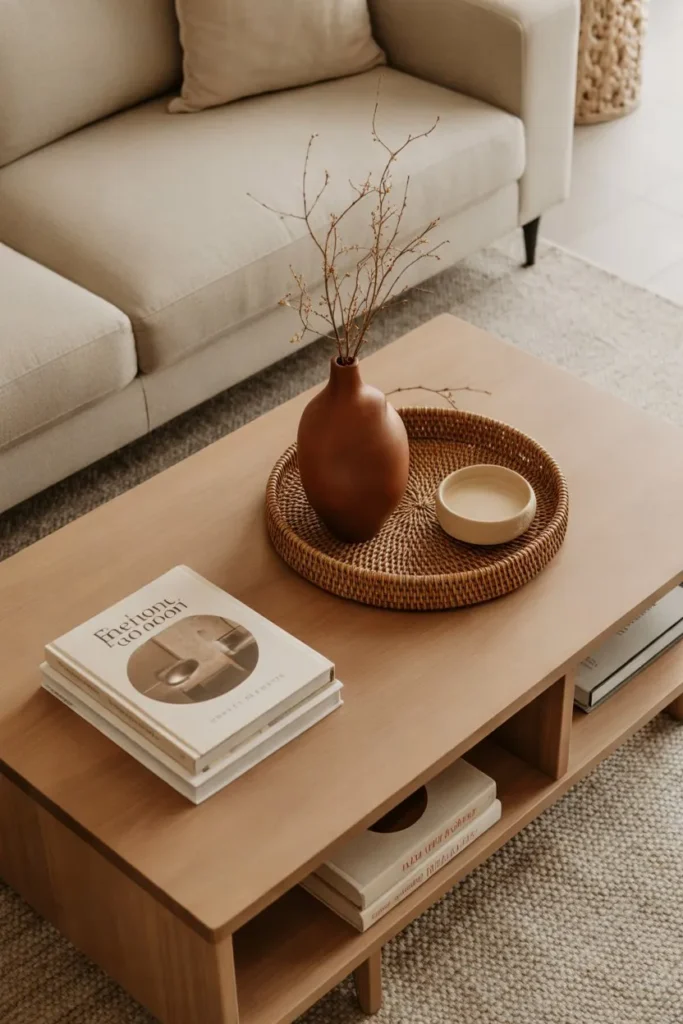
BEFORE: A neutral coffee table may have useful pieces but still look disconnected, with books, trays, and accessories placed randomly across the surface.
AFTER: A rust ceramic vase or decorative object gives the arrangement a warm focal point. Pair it with stacked books, a woven tray, and one natural element to create height and texture without clutter.
Keep the tallest item slightly off-center rather than directly in front of the sofa. Use a tray to group smaller objects and leave part of the tabletop open. This makes the arrangement easier to clean and keeps the rust accent noticeable without turning the coffee table into a crowded display.
Rust and Wood Layers
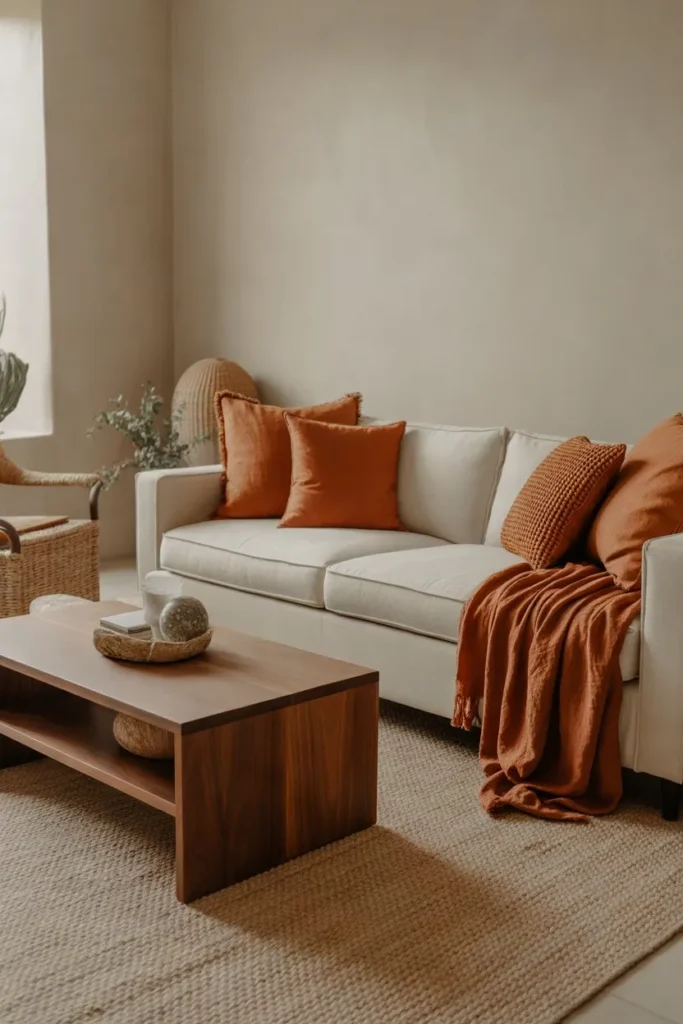
- Start with a neutral base using cream upholstery, beige walls, or an ivory rug.
- Add one substantial wood element, such as a walnut coffee table or oak console.
- Introduce rust through two or three textiles, ceramics, or artwork.
- Finish with woven accessories to bridge the wood and fabric textures.
Natural wood helps soften the stronger presence of rust while adding warmth through grain and texture. Walnut creates a richer look, while pale oak keeps the room brighter. I’ve seen this combination work especially well in living rooms that need warmth but still want a clean, contemporary foundation.
Rust and Navy Accents
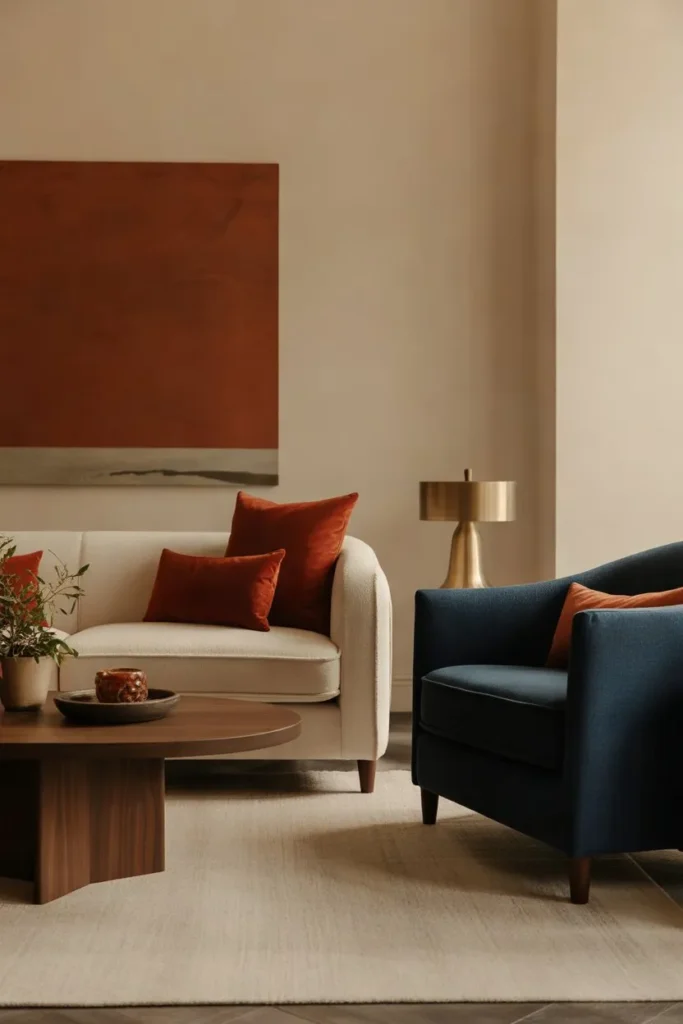
| Design Element | Rust Focus | Navy Focus |
| Main accent | Cushions or artwork | Chair or accessories |
| Best neutral | Cream or ivory | Beige or warm white |
| Wood pairing | Walnut | Medium or dark wood |
| Metal finish | Aged brass | Brass or matte black |
Rust and navy create strong contrast, so the neutral background should stay fairly light. Let one shade lead and the other support it instead of giving both equal visual weight. A cream sofa with rust cushions and a single navy chair creates a balanced palette without making the room feel overly colorful.
Rust Floor Lamp
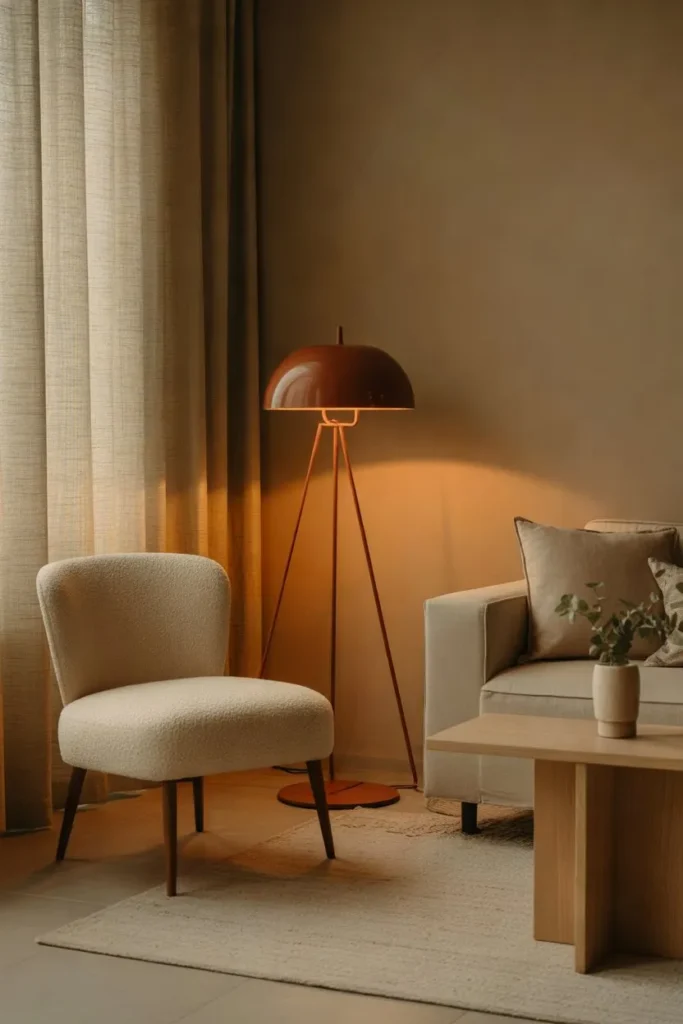
DO:
- Place the lamp beside a sofa or reading chair.
- Choose a rust shade or base with a matte finish.
- Use a warm white bulb for comfortable evening light.
- Keep nearby furniture neutral to highlight the lamp.
DON’T:
- Position the lamp where it blocks a walking path.
- Mix several competing warm metal finishes nearby.
- Use an overly bright bulb that washes out the rust tone.
- Crowd the base with too many accessories.
A rust floor lamp combines color with useful lighting, making it more practical than a purely decorative accent. Position it near a seating zone where extra illumination is helpful for reading or relaxing. The warm light will also deepen the rust tone after sunset, giving the room a noticeably cozier evening feel.
Rust Leather Ottoman
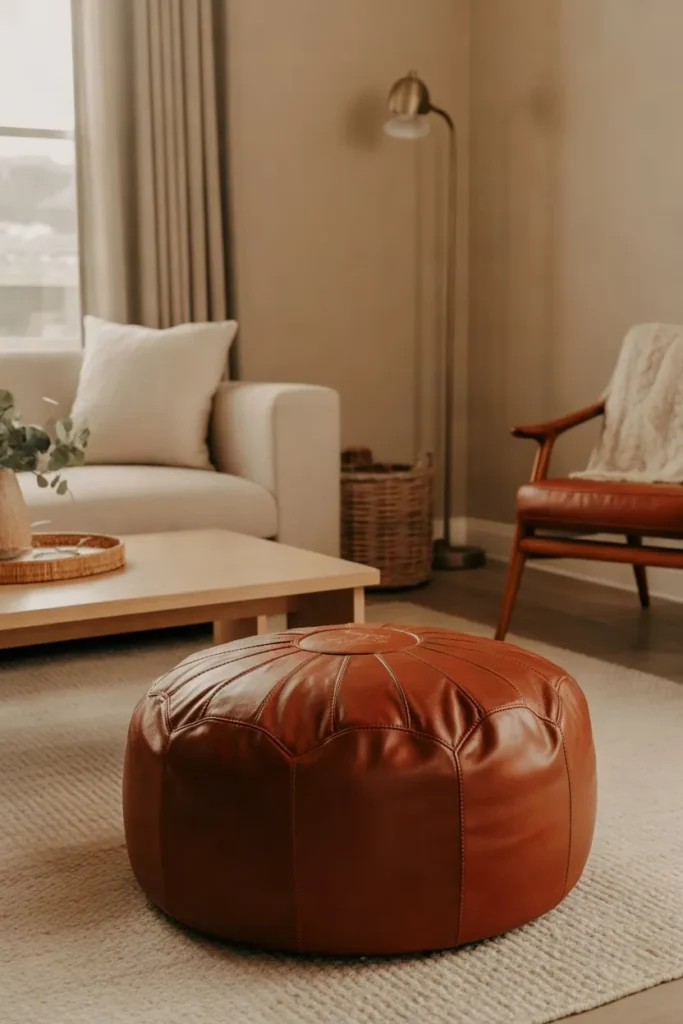
n: Cost: Moderate
Time: 30 minutes for styling
Skill Level: Beginner
Best For: Flexible seating and footrests
Result: Warm color with practical function
A leather ottoman adds both seating flexibility and a rich rust tone without requiring a large furniture change. Choose a compact shape if the room is tight, or a larger upholstered version for generous seating. Pair it with a light rug and cream sofa so the leather remains visually grounded rather than dominating the room.
Rust Patterned Pillows
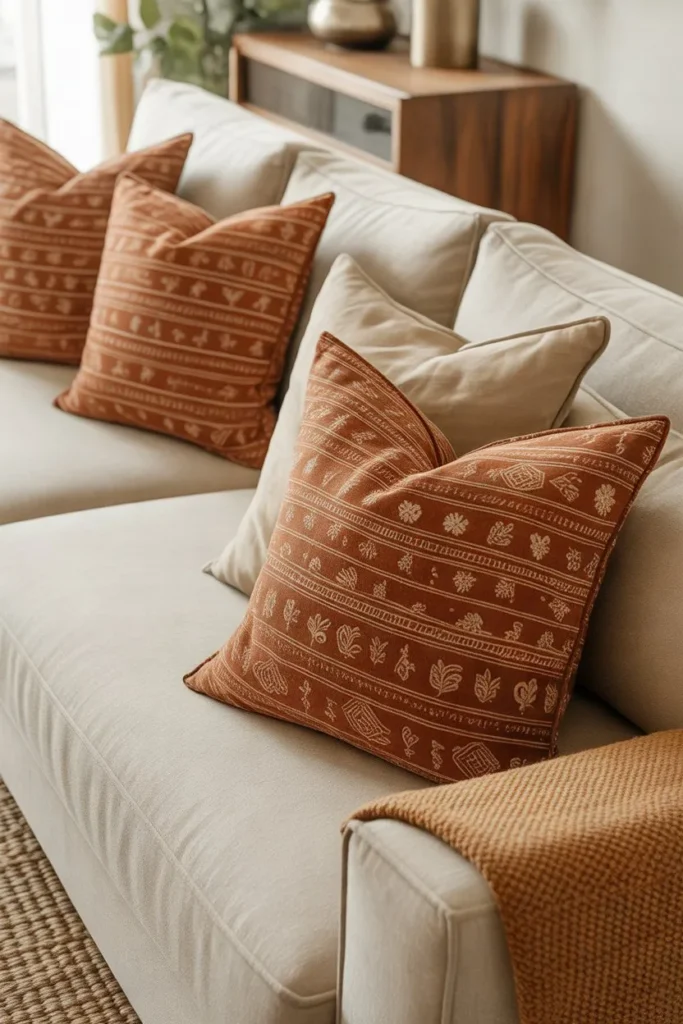
Pattern brings personality to a seating area without requiring bold changes elsewhere. Look for pillows combining rust with cream, beige, muted brown, or soft olive. Mix one patterned cover with two solid cushions to keep the arrangement readable and prevent too many competing motifs.
For a polished look, vary both scale and texture. A small geometric print can sit beside a larger botanical pattern, while a plain rust cushion ties them together. I’ve noticed that odd-numbered pillow groupings often feel more relaxed, especially when the sofa already has several layers of fabric.
Rust Accent Artwork
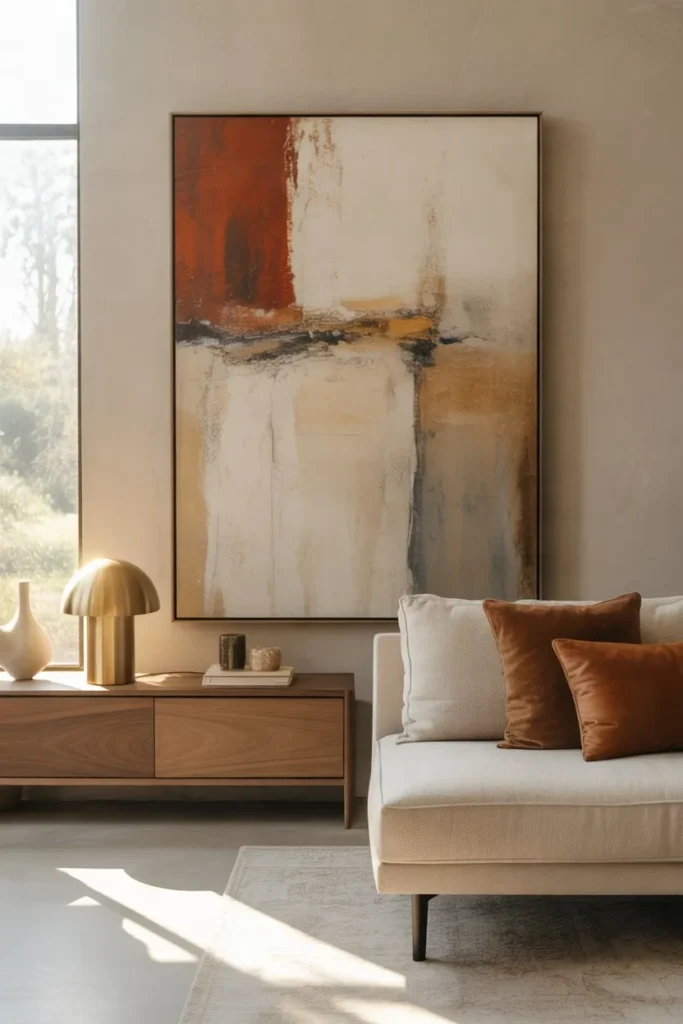
Quick Tip:
Choose artwork where rust occupies part of the composition rather than covering the entire print. Repeat one secondary shade from the artwork in nearby textiles or furniture to make the wall feel connected to the rest of the room.
Large artwork can establish the color story faster than several small accessories. Hang the center of the piece around eye level and keep enough breathing room above the sofa. If the room already contains patterned upholstery, choose a simpler abstract print with broad color areas for a calmer result.
Rust Accent Console
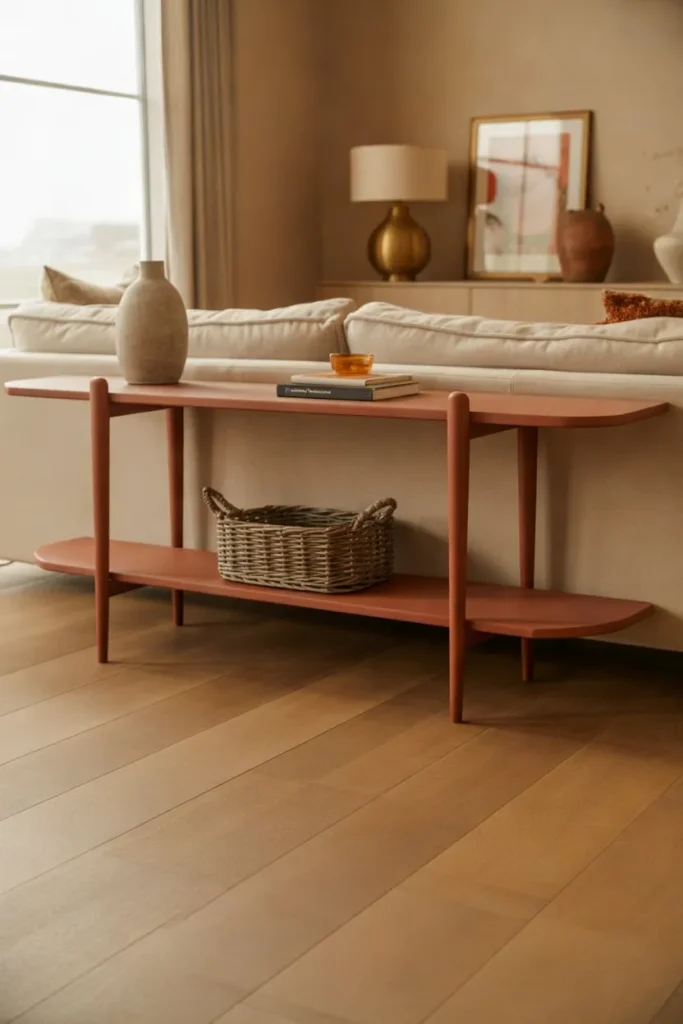
- Choose a slim console if the room has limited walking space.
- Pair rust with pale oak, cream, or warm beige for contrast.
- Style the surface with one lamp, a ceramic vase, and a small stack of books.
- Leave some open space between decorative objects.
- Use the console to visually connect the sofa with nearby wall decor.
A console gives rust color a defined place without taking up much floor area. For a cohesive room, repeat a small rust detail in artwork or textiles nearby. Keep the display relatively simple, especially if the console sits behind a patterned sofa or close to a busy gallery wall.
Rust Accent Pouf
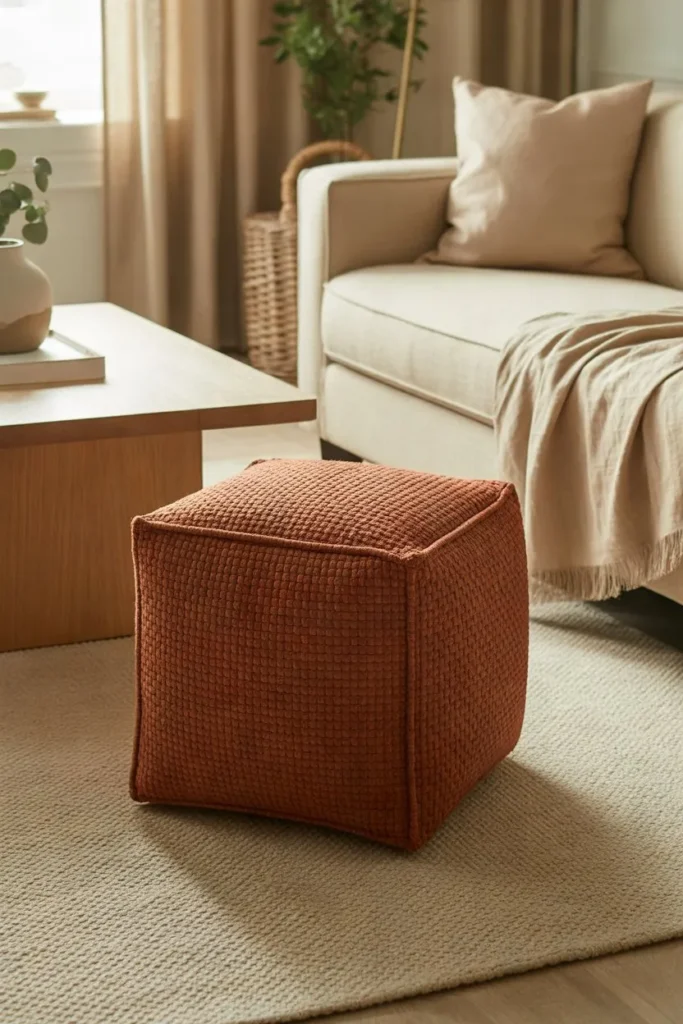
Quick Tip:
Choose a pouf with a firm, structured shape if it will be used as extra seating. For mostly decorative use, a softer woven style can sit beside the sofa with a folded cream throw placed nearby.
A rust pouf is useful in smaller living rooms because it can serve as seating, a footrest, or a flexible surface for a tray. Its smaller scale also makes it easier to experiment with deeper color. Tuck it beneath a console or beside the coffee table when you need more open floor space.
Rust and Beige Layers
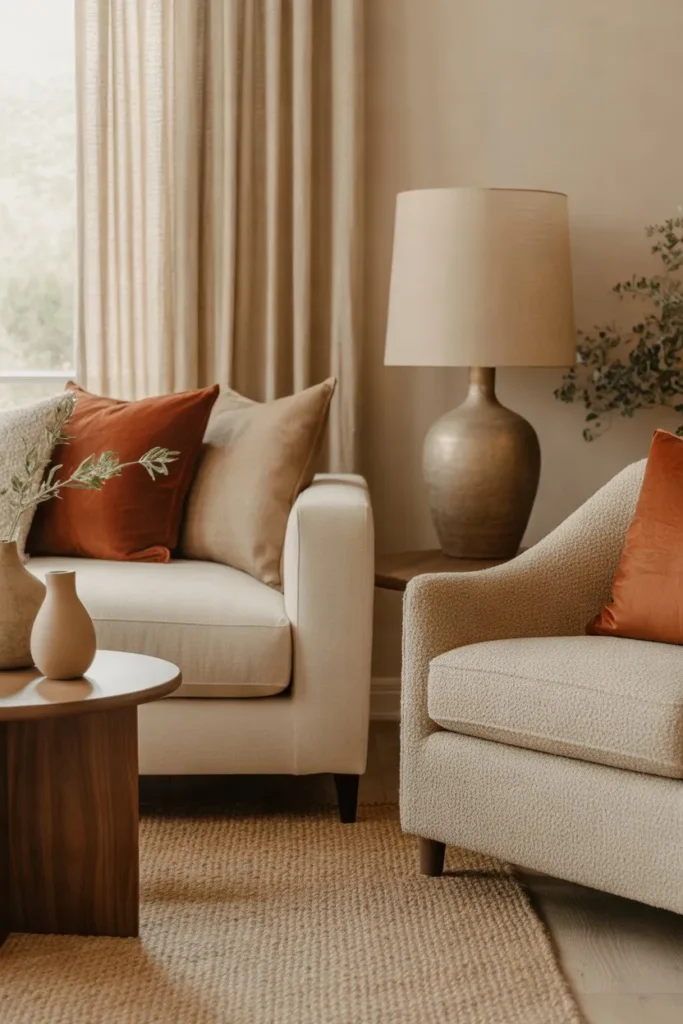
BEFORE: A beige living room can sometimes look one-dimensional when every surface uses nearly the same neutral shade. Furniture may blend together instead of creating clear visual layers.
AFTER: Rust accents introduce a deeper tone that gives beige furnishings more definition. Add rust through cushions, a throw, artwork, or ceramics while keeping larger pieces light and neutral.
Start with beige as the foundation, then introduce rust at different heights around the room. A cushion near the sofa, artwork above it, and a ceramic piece on the coffee table create repetition without matching everything. This layered approach keeps the palette warm while giving the eye several points of interest.
Rust Accent Bookshelf
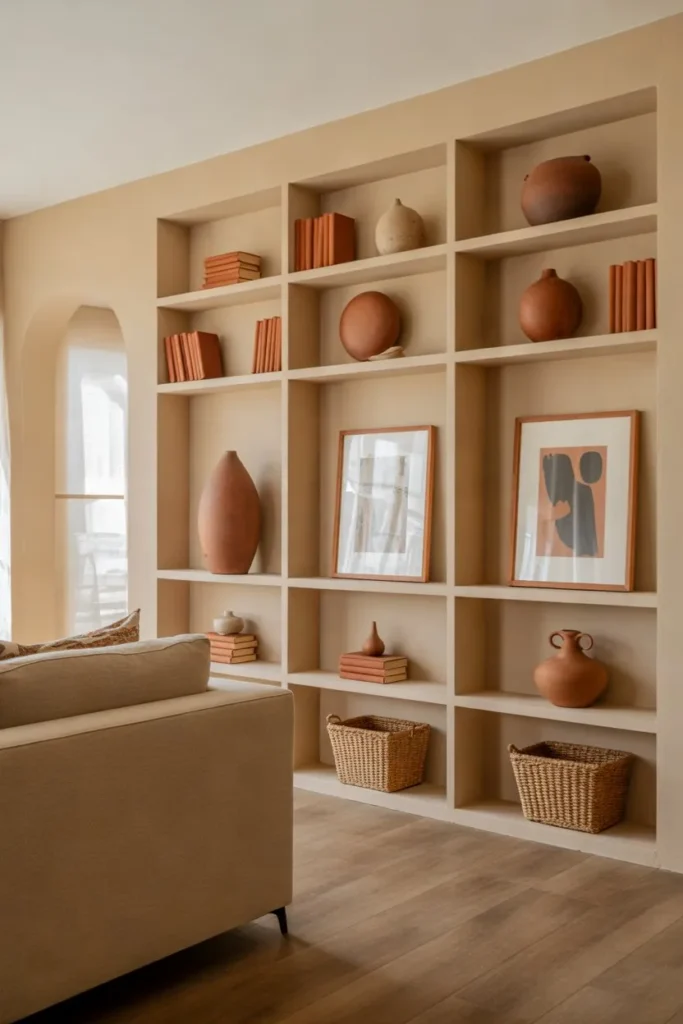
- Clear one or two shelf sections before styling so the display has breathing room.
- Place a rust ceramic piece or framed print at eye level.
- Stack neutral books horizontally beside taller vertical books.
- Add woven baskets or natural wood pieces to soften the color contrast.
- Repeat rust on another shelf without making every level match.
A bookshelf gives you several small areas to repeat warm color naturally. Keep rust accents separated by neutral books, wood, and greenery so the display does not become visually heavy. This works particularly well in built-ins because the surrounding shelving provides structure while the accessories bring personality and warmth. If you’re also looking for practical ways to keep bedroom shelving, closets, and bedside areas organized, these cozy bedroom storage ideas offer useful inspiration for creating a calmer, more functional space.
Conclusion
Rust can bring remarkable warmth to a living room without requiring a dramatic redesign. From pillows and throws to rugs, artwork, furniture, and ceramics, these rust accent living room decor ideas offer plenty of ways to introduce the shade at your own pace.
Start with one small accent, then build around it with cream, beige, wood, or other earthy tones. I’ve seen how small changes like these can completely shift the way a space feels. Save this post on Pinterest for your next decorating project, try the ideas that fit your room, and share it with someone looking for cozy inspiration.