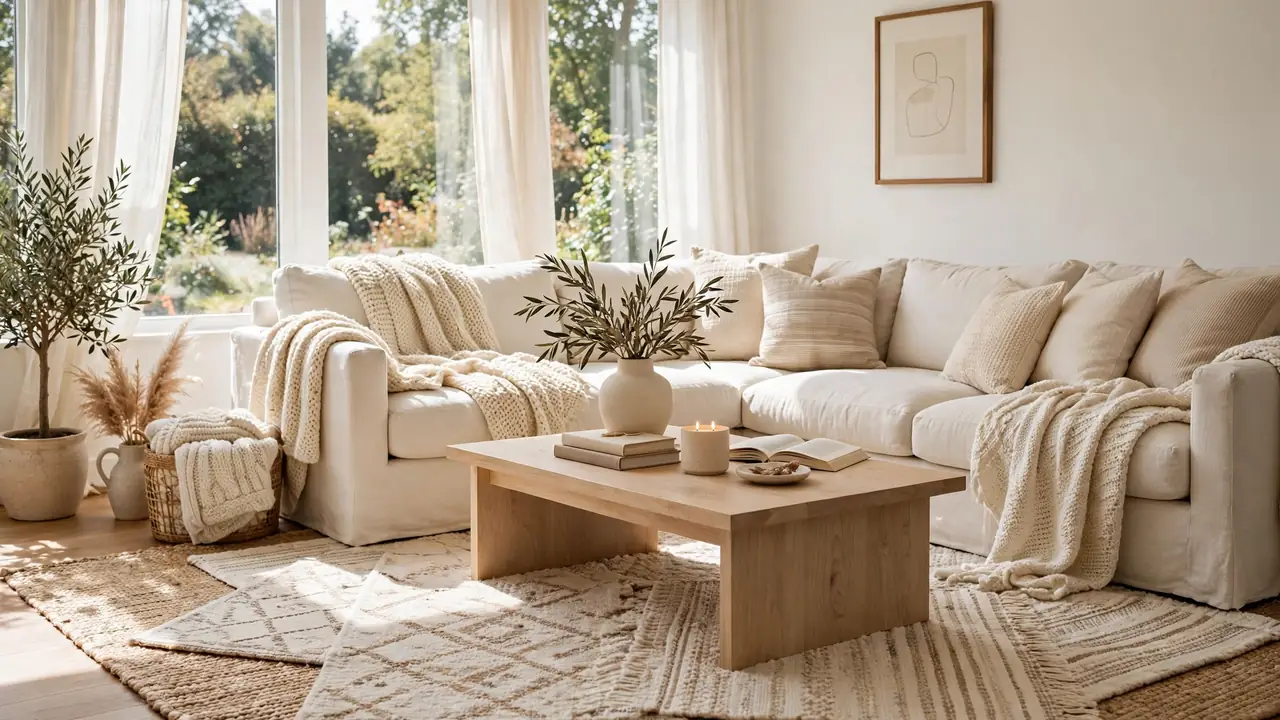
22 Cozy Living Room Decor Ideas With Layered Rugs for Warmth
Nothing warms up a living room faster than Cozy Living Room Decor Ideas With Layered Rugs. I have tried this trick in my own home, and the difference is instant. A single rug can feel flat and unfinished, but two or three layered pieces add depth, softness, and that collected over time charm. The best part is how forgiving the technique feels. You do not need matching sets or expensive pieces. A large neutral base with a smaller patterned rug on top creates instant warmth, and you can swap the top layer with the seasons.
In this guide, I am sharing 22 ideas that show exactly how to layer rugs for maximum coziness. You will find pairings for every style, from jute bases and vintage overlays to plush shag accents and faux fur touches. Each idea includes practical tips on sizing, placement, and texture mixing so you can layer with confidence. For more small space inspiration, see these small living room ideas with sectional sofa. Let us find the combination that makes your living room the warmest spot in the house.
Jute Base Layer
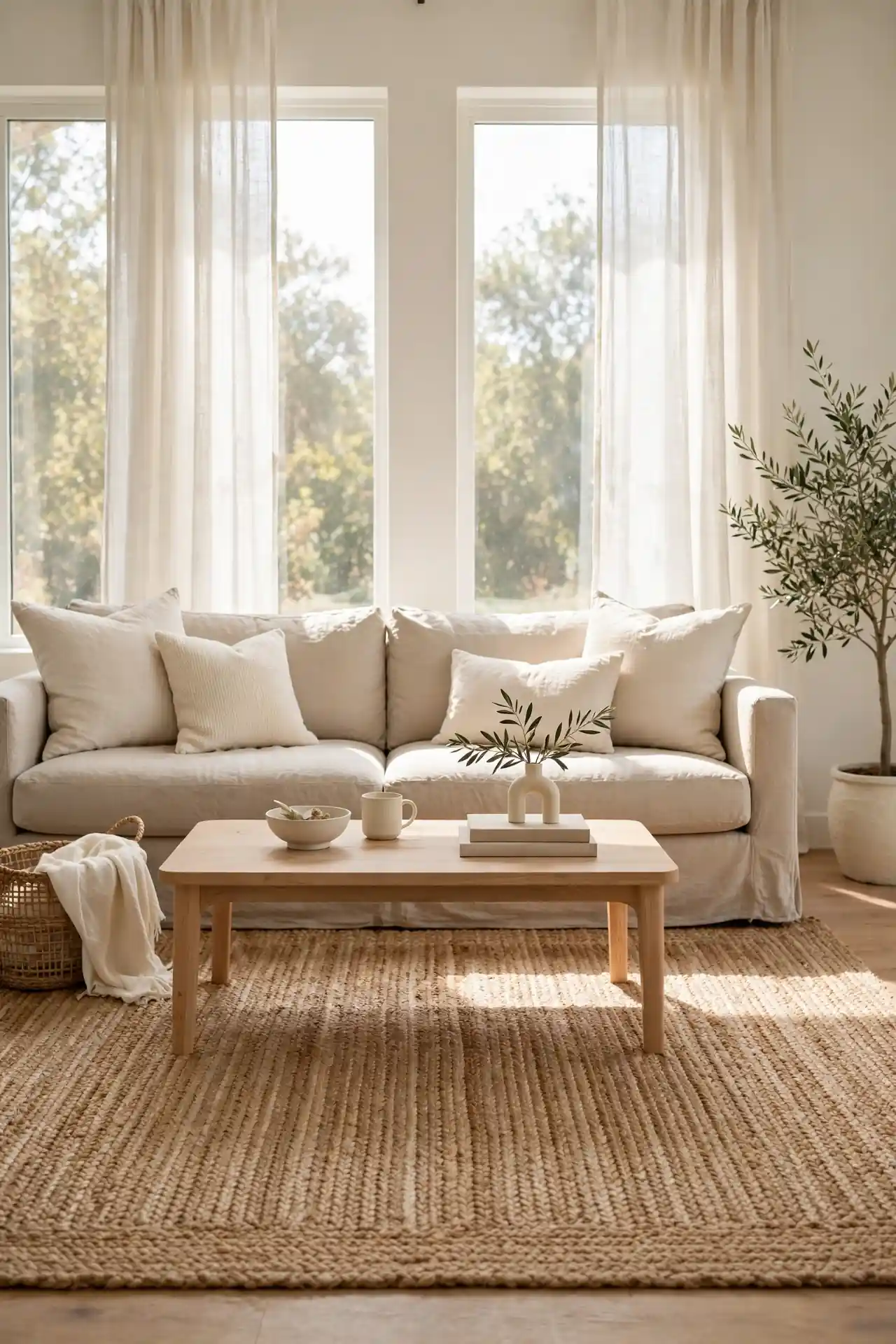
A natural jute rug placed under everything instantly anchors the whole seating area. Start with a flat-weave jute in a size that reaches at least under the front legs of your sofa and chairs. The coarse woven texture warms hard floors and gives the top rug a solid base.
Jute works because it hides wear beautifully and keeps patterns on top from sliding around. Choose a weave tight enough to vacuum easily, and add a thin rug pad beneath for extra grip. The result feels relaxed and collected, like a room layered over time rather than decorated in a day.
Vintage Rug Overlay
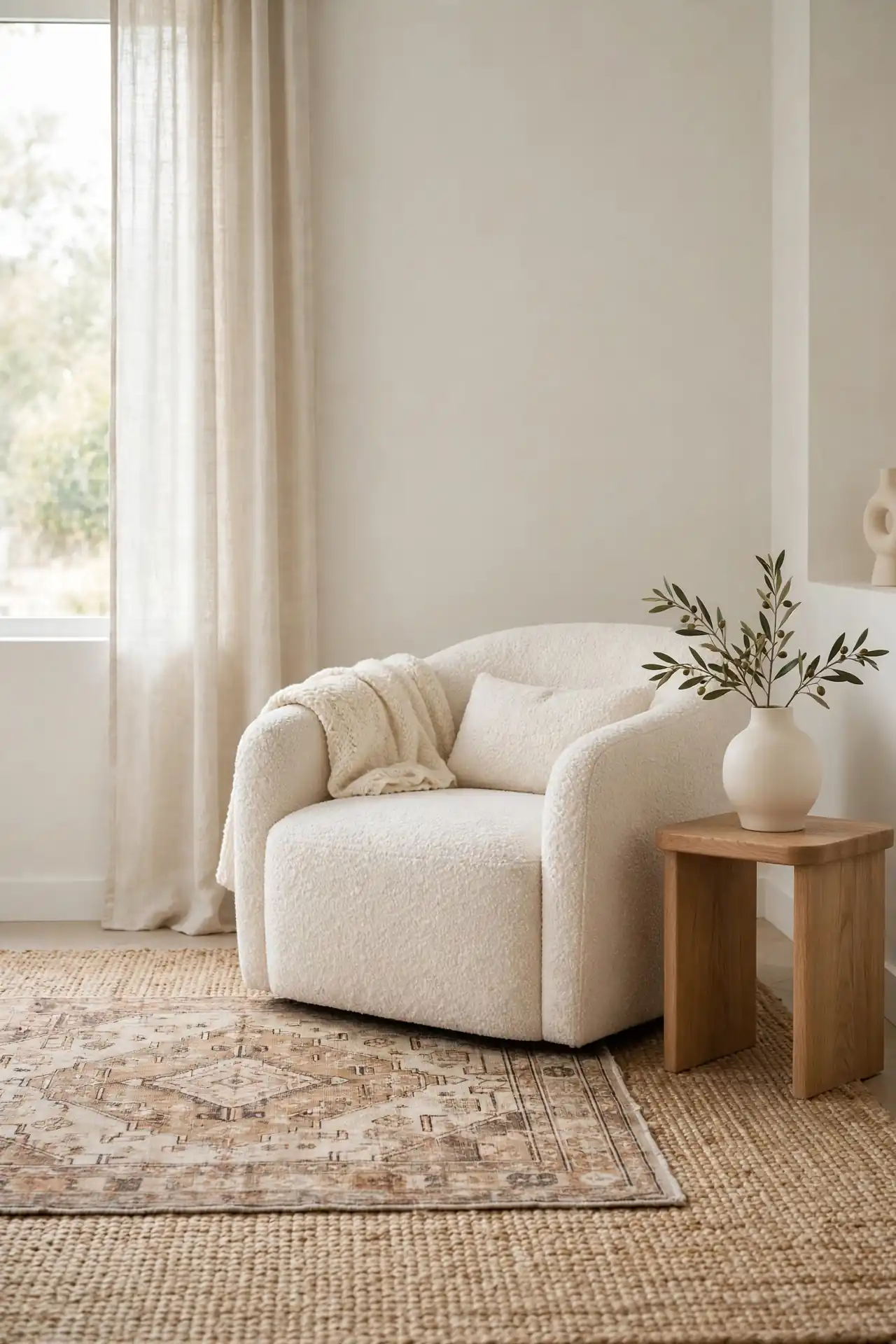
- Lay a smaller vintage rug over the jute at a slight angle so both layers stay visible.
- Look for Persian or Turkish styles with warm reds, blues, or faded creams that complement your palette.
- A worn patina is a plus; it adds character and hides everyday footprints well.
- Keep the overlay large enough to tuck under the coffee table so it looks intentional.
- Rotate it seasonally for even wear, since vintage rugs fade faster in direct sun.
The beauty of a vintage overlay is that no two rooms look alike. In my experience, a slightly imperfect hand-knotted piece brings more warmth than a brand-new print ever could. Let the jute base peek out around the edges for a contrast that feels collected and relaxed.
Plush Shag Accent
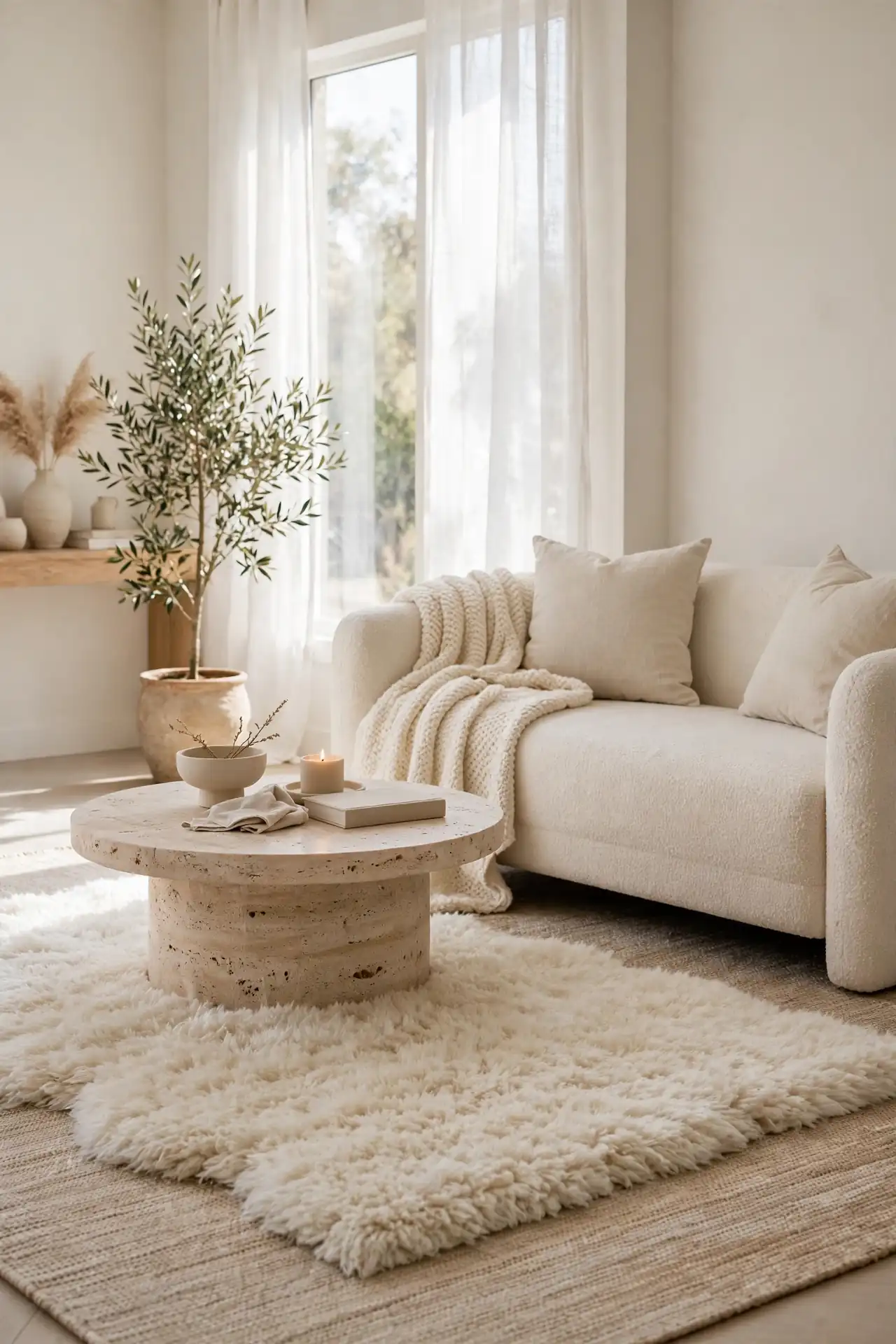
Quick Tip: Place a small plush shag rug beside the sofa or under a reading chair rather than in the main walkway, where constant foot traffic would flatten the pile within a few weeks. Low-traffic spots keep it fluffy, clean, and inviting for much longer. Shake it out monthly and vacuum with the beater bar off.
Shag brings softness that flat weaves simply cannot deliver. A creamy ivory or warm gray shag over jute adds welcome depth under bare feet and invites everyone to gather a little closer. Choose a medium pile so it stays easy to vacuum without losing that cushioned, sink-in feel.
Neutral Tone Stack for cozy living room decor with layered rugs
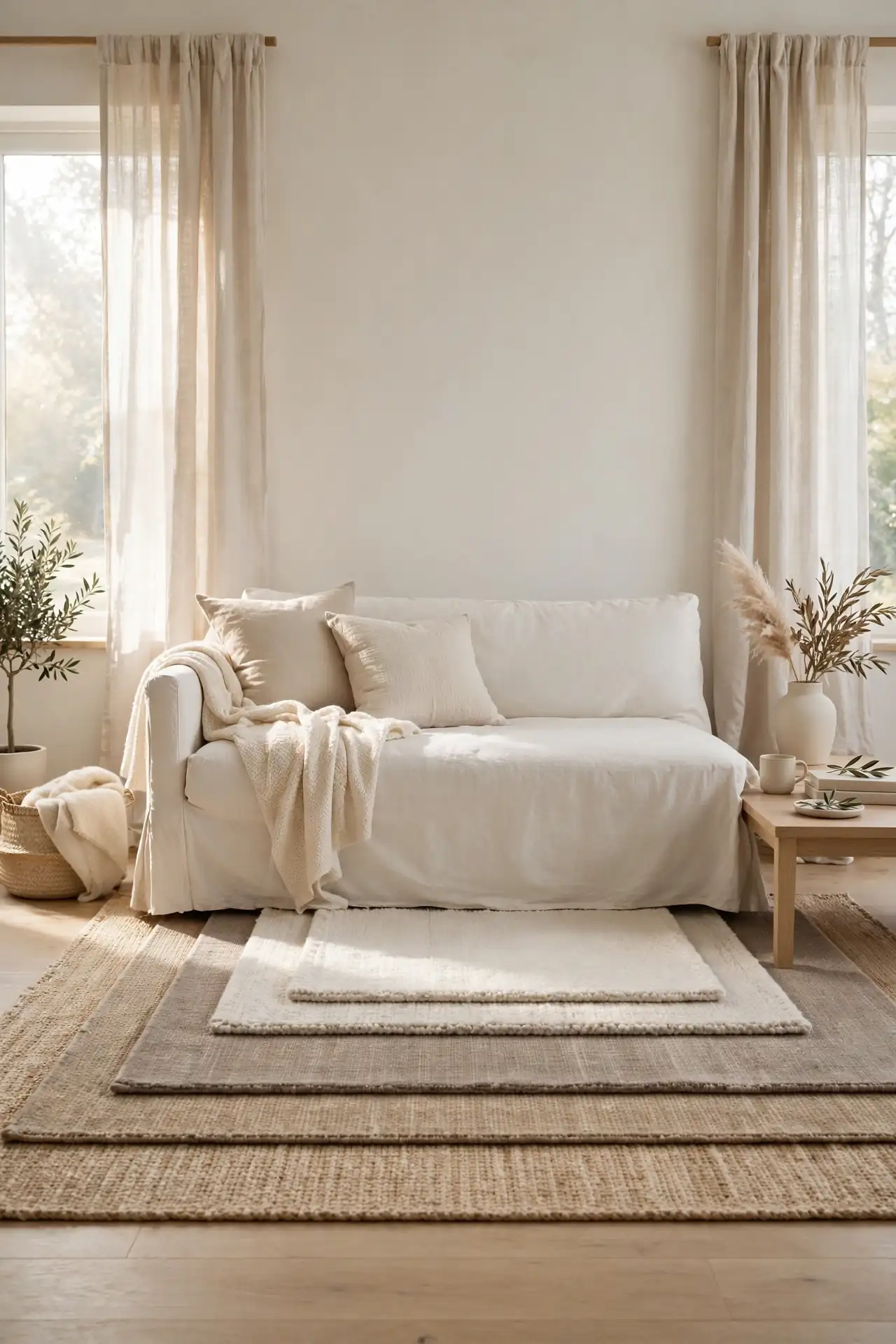
BEFORE: A single beige area rug floats alone on the hardwood, leaving the room feeling flat and unfinished. The sofa and coffee table look like they are placed, not gathered.
AFTER: A jute base with a neutral wool rug layered on top pulls every piece together. Warm tones of sand, oatmeal, and stone give the floor depth without adding visual noise.
Neutrals work because they let furniture and art carry the color while the floor stays calm. Stick to a tight palette of three tones at most so the layers read as intentional rather than random. A thin cotton rug on top of jute softens the look even further without adding bulk.
Pattern Mix Pairing
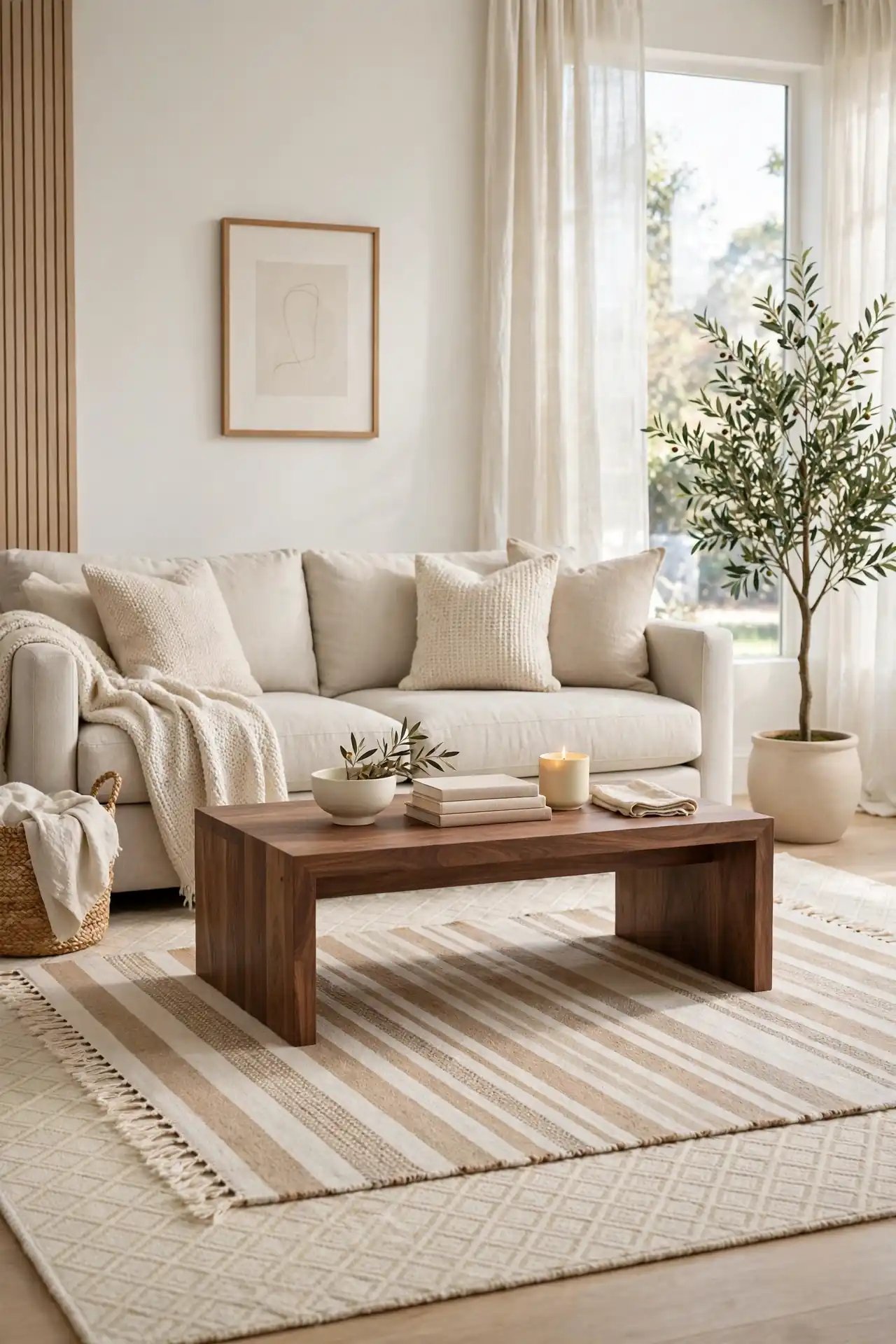
- Start with a solid or lightly textured base rug so the pattern above has breathing room.
- Add a mid-scale pattern next, like a stripe or diamond weave, that shares one color with the base.
- Finish with a small bold accent, such as a kilim or geometric runner, angled across one corner.
- Step back and check the mix from the doorway; every pattern should feel connected, not competing.
The secret to pattern mixing is scale and shared color, which is why so many successful rooms feature cozy living room decor with layered rugs built on simple combinations. Keep prints to two or three and repeat one tone in each layer. Pull it off and the room gains energy without losing its calm.
Round Rug Center
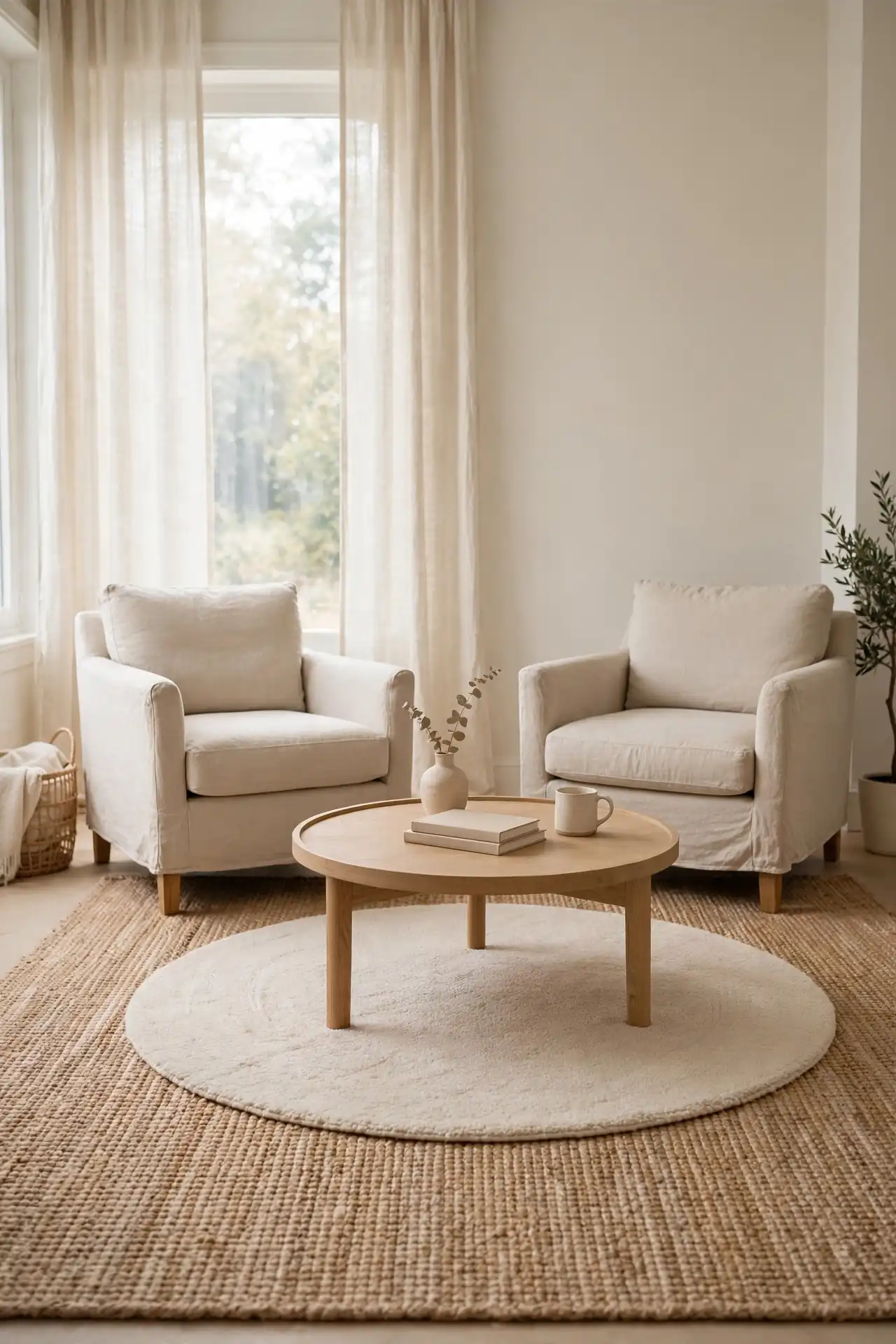
| Round Rug On Top | Round Rug Underneath | |
|---|---|---|
| Placement | Centered on the base rug, under the coffee table | Tucked beneath the rectangle base rug |
| Look | Bold focal point with clear contrast | Softened edges with a subtle texture peek |
| Best With | Glass or slim coffee tables | Chunky wooden coffee tables |
| Tip | Use a round at least five feet wide | Match base rug length to the sofa |
Your coffee table tells you which option to choose. Glass or slim tables let the round shape show, so the top-layer placement wins. Chunky wooden tables look better anchored by a rug underneath them. Leave at least eight inches of the base rug visible around the circle so the layering reads clearly.
Fringed Edge Detail
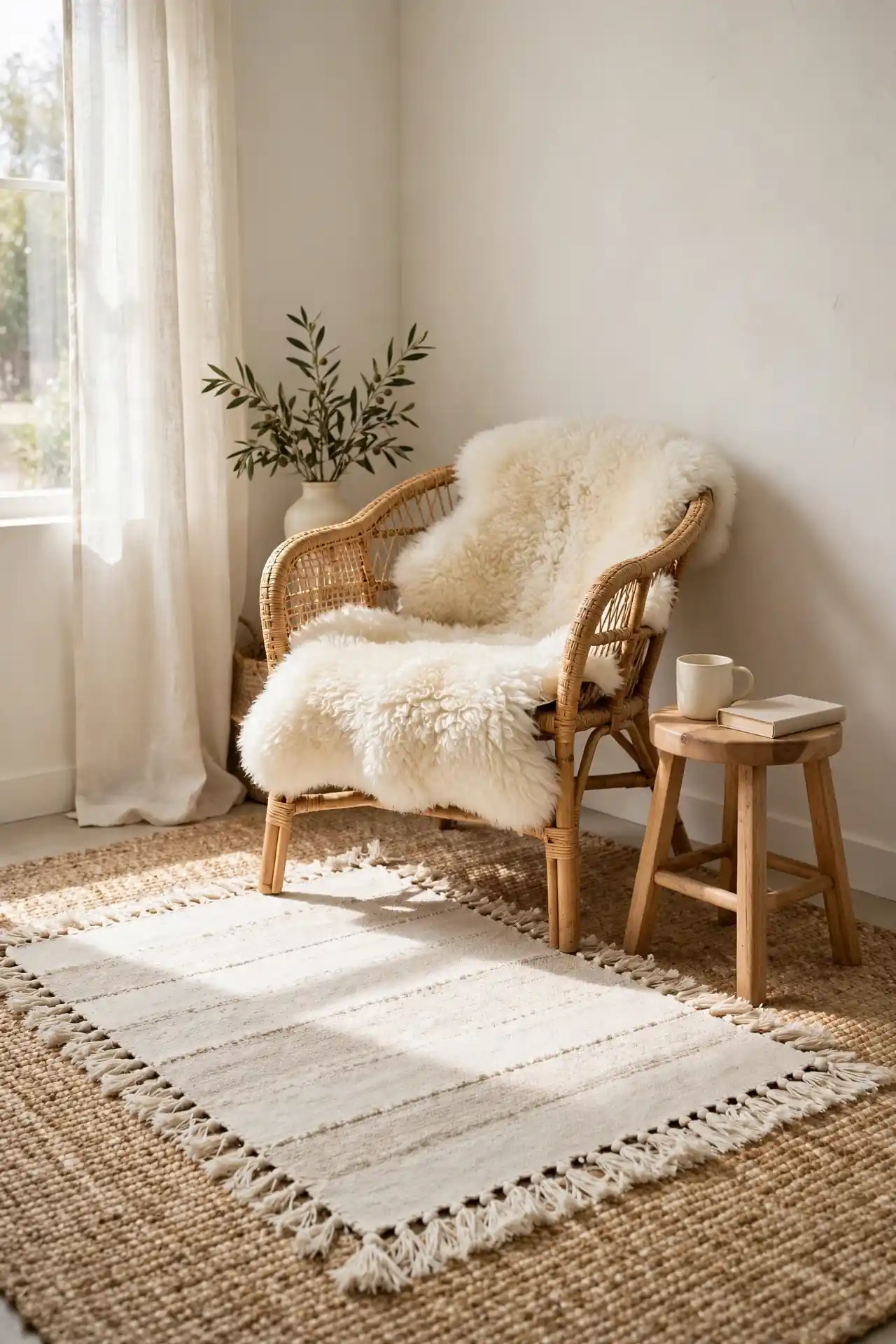
DO:
- Leave the fringe loose and natural instead of folding it under the rug.
- Place fringed edges where bare feet will brush against them daily.
- Match the fringe tone to the base rug so the layers blend together.
DON’T:
- Trim the fringe short because it kills the handmade, relaxed look.
- Let fringe sit in doorways or walkways where shoes catch and snag it.
- Stack two fringed edges directly on top of each other, which looks messy.
Fringe adds craft character that flat edges cannot copy. When both rug layers have fringe, offset them so only one edge shows at the foot of the sofa. Vacuum across the fringe with the hose attachment, never the beater bar, which chews the threads over time.
Low Pile Combo
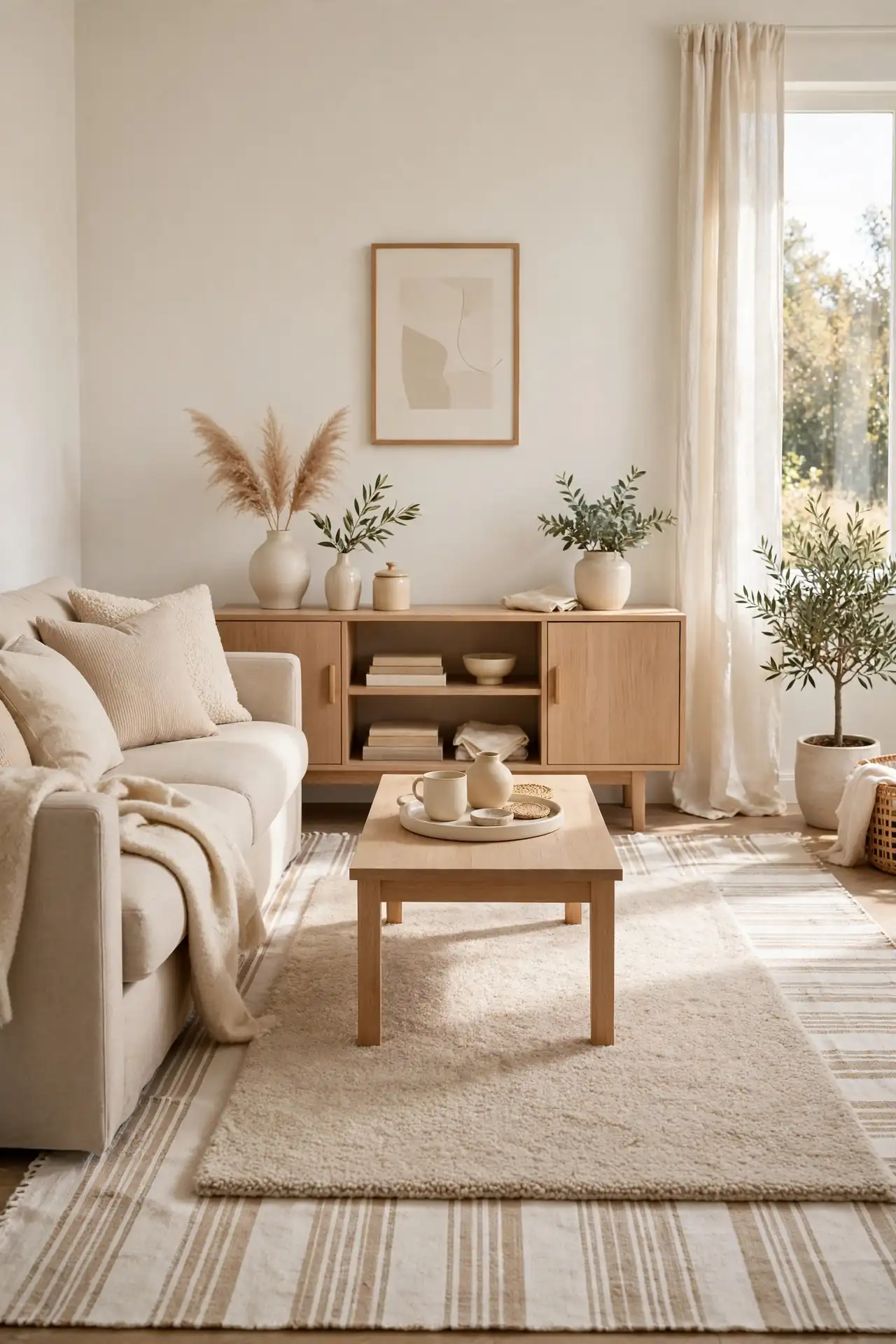
Cost: Budget friendly | Time: One afternoon | Skill Level: Beginner | Best For: high-traffic family rooms
Low pile rugs are the practical backbone of layered floors because chairs slide easily and dirt stays on the surface instead of sinking in. Put a flatweave jute or dhurrie down first, then add a soft low-pile wool or synthetic rug on top for warmth without thickness. This combination survives kids, pets, and daily foot traffic better than any plush pairing. Vacuum both layers weekly from the edges inward to stop dust settling between them. If the top rug slides, a thin non-slip pad underneath solves it instantly.
Sheepskin Soft Touch
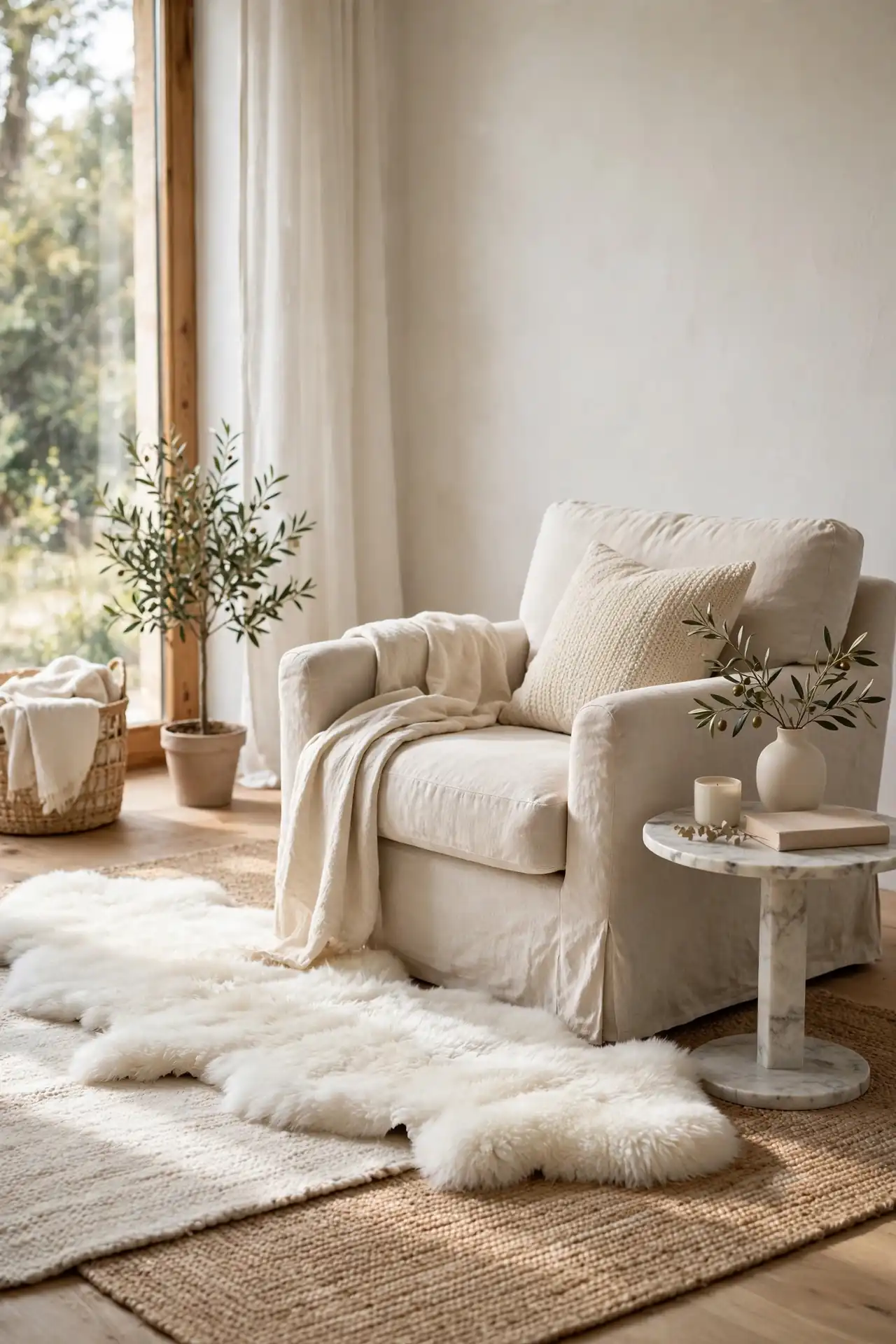
A draped sheepskin breaks the straight lines of layered rugs with something soft and touchable. Toss one over the corner of the top rug near a reading chair or across the sofa arm so it reads as lived-in comfort. White and ivory skins suit neutral rooms best, while gray or brown tones warm up darker palettes.
Shake the skin outside weekly and brush the wool with a comb to keep it fluffy. Keep sheepskins away from direct sun, which yellows the wool over time. One well-placed skin does more than three scattered ones, so resist the urge to add extras.
Kilim Color Pop
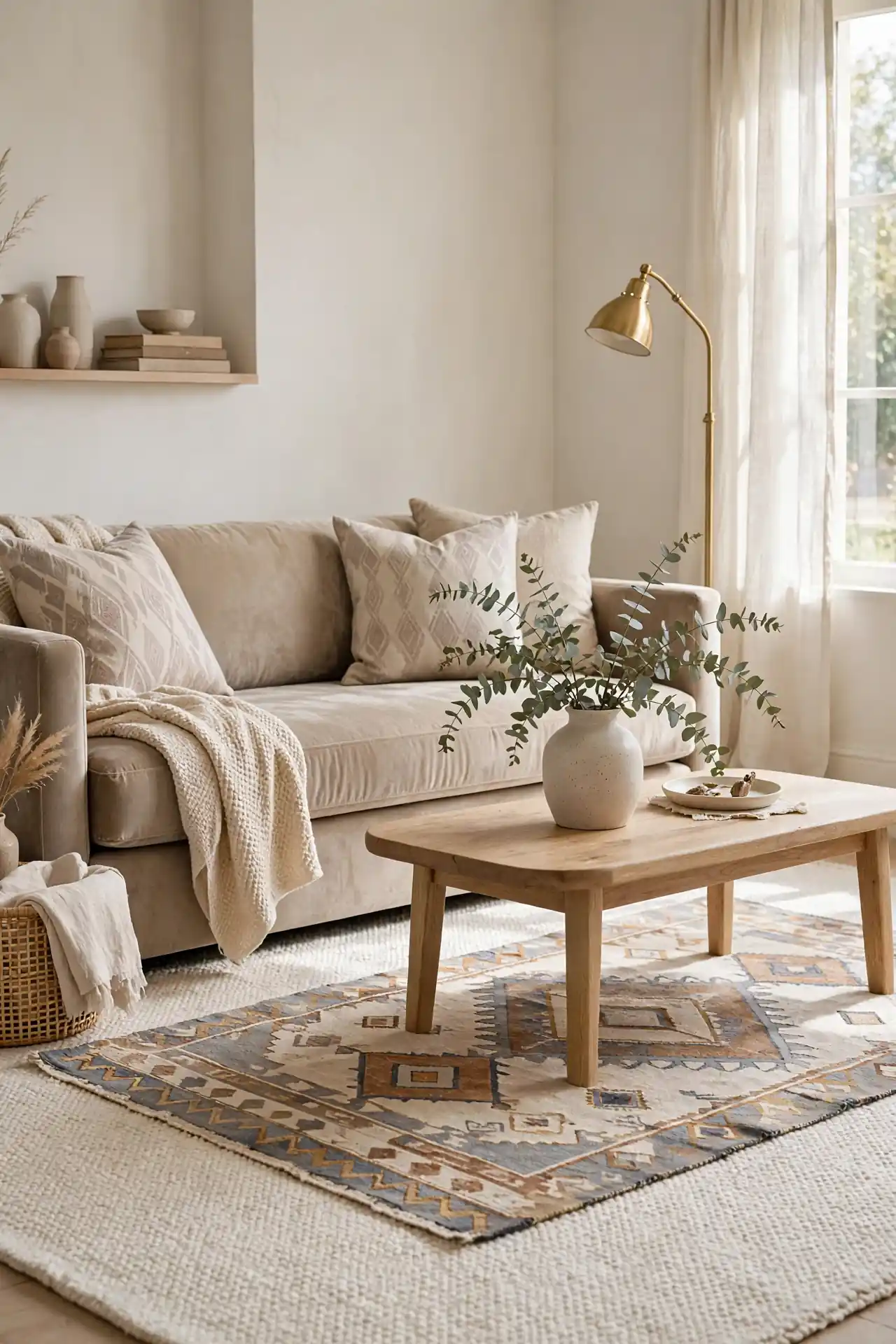
- A flat kilim on top of a solid base rug injects pattern without adding bulk.
- Pick one color from the kilim and echo it in cushions or throws for cohesion.
- Center the kilim under the coffee table so the border pattern frames it neatly.
- Choose wool kilims for durability; they hide foot traffic marks well.
Kilims bring geometric energy that plain layers lack, so let the base rug stay quiet and neutral. Keep the surrounding palette calm, since the kilim already carries enough visual weight. When guests compliment the pattern, you will know the pop landed exactly where it should.
Oversized Base Rug
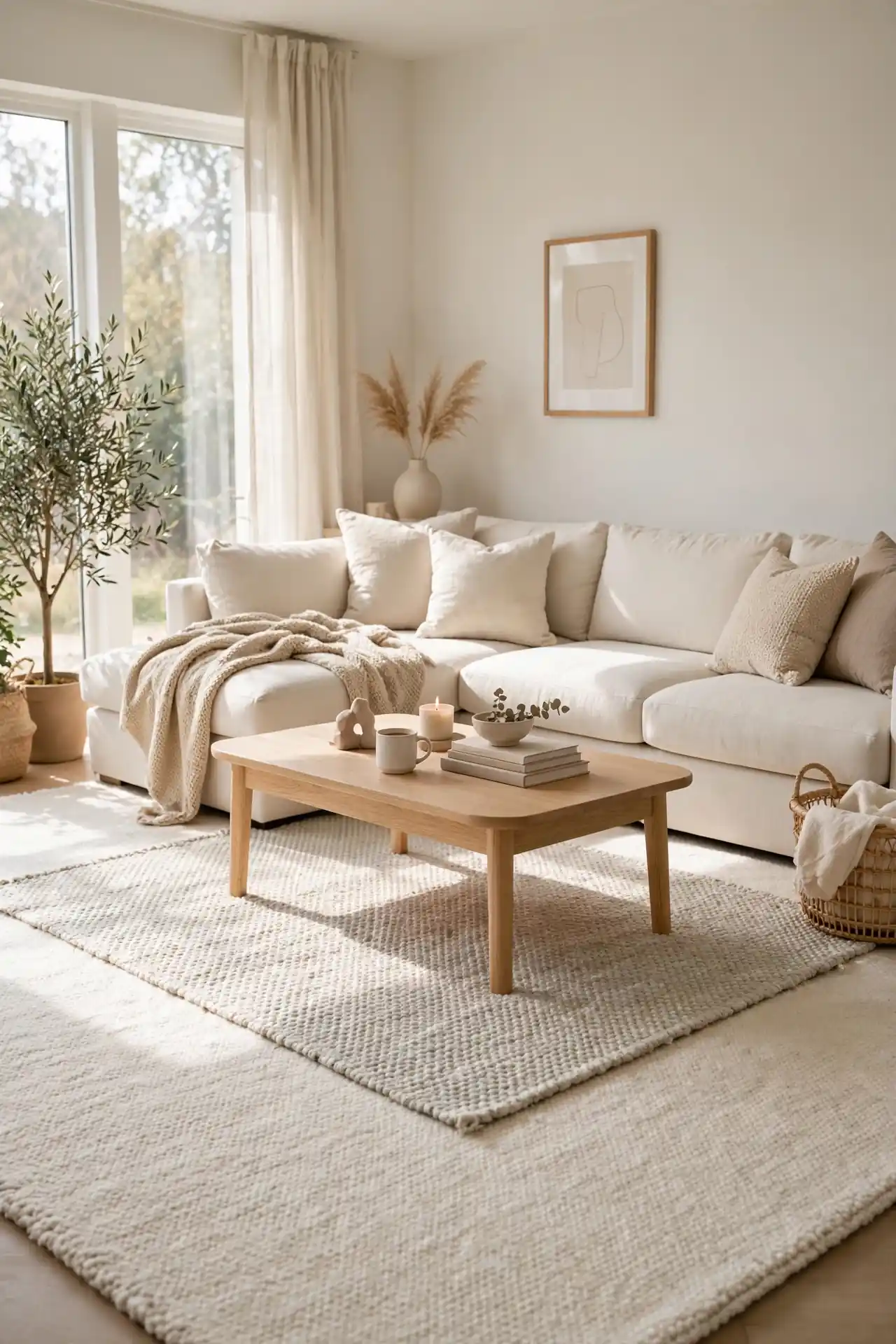
Quick Tip: Choose a base rug that extends at least six inches beyond your furniture footprint so the arrangement feels anchored rather than floating. A flat weave or low pile works best underneath because it keeps the top layer from sliding and adds no extra bulk.
Large rooms swallow small rugs and leave seating groups looking disconnected. An oversized base in jute or a neutral flat weave gives every layered piece beneath it a calm, unified foundation. Make sure the sofa front legs rest fully on it, and let coffee table and chairs share the same base for balance. I’ve noticed this one move makes even mismatched accent rugs look intentional, which is exactly the effect you want.
Runner Cross Layer for cozy living room decor with layered rugs
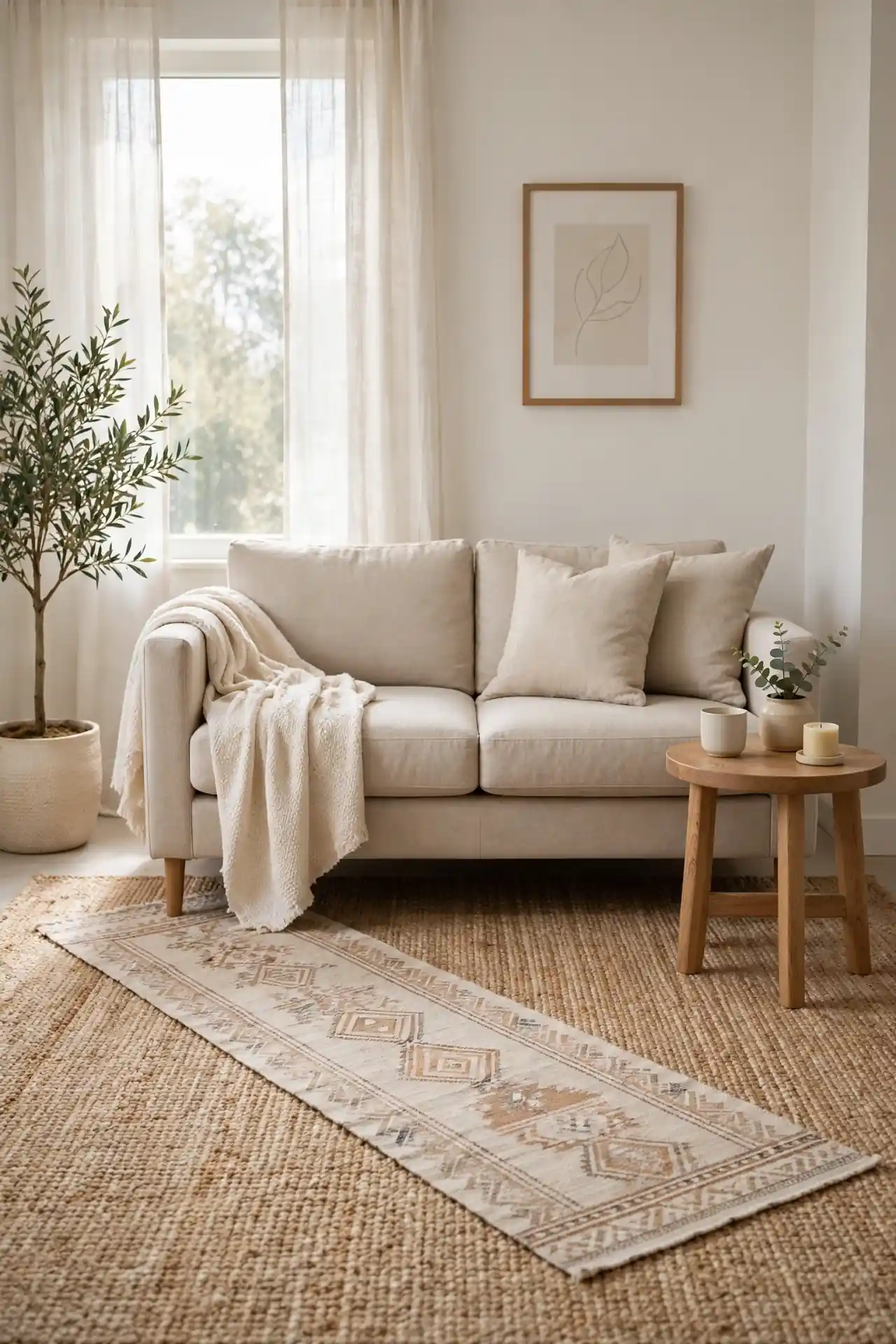
BEFORE: Most people lay a single rectangle rug and accept whatever flatness follows. The floor zone beside the sofa reads as empty, and the whole corner feels like an afterthought.
AFTER: Now imagine a runner crossing over the main rug at a slight angle. Suddenly there is movement, direction, and a designer-level layer that draws the eye along the seating zone.
Pick a runner two to three feet shorter than the base rug so both layers stay visible at each end. Cross it perpendicular or at a relaxed diagonal over high-traffic walkways to protect the base weave. Keep patterns in the same color family so the overlap reads as intentional layering, not competition.
Textured Weave Duo
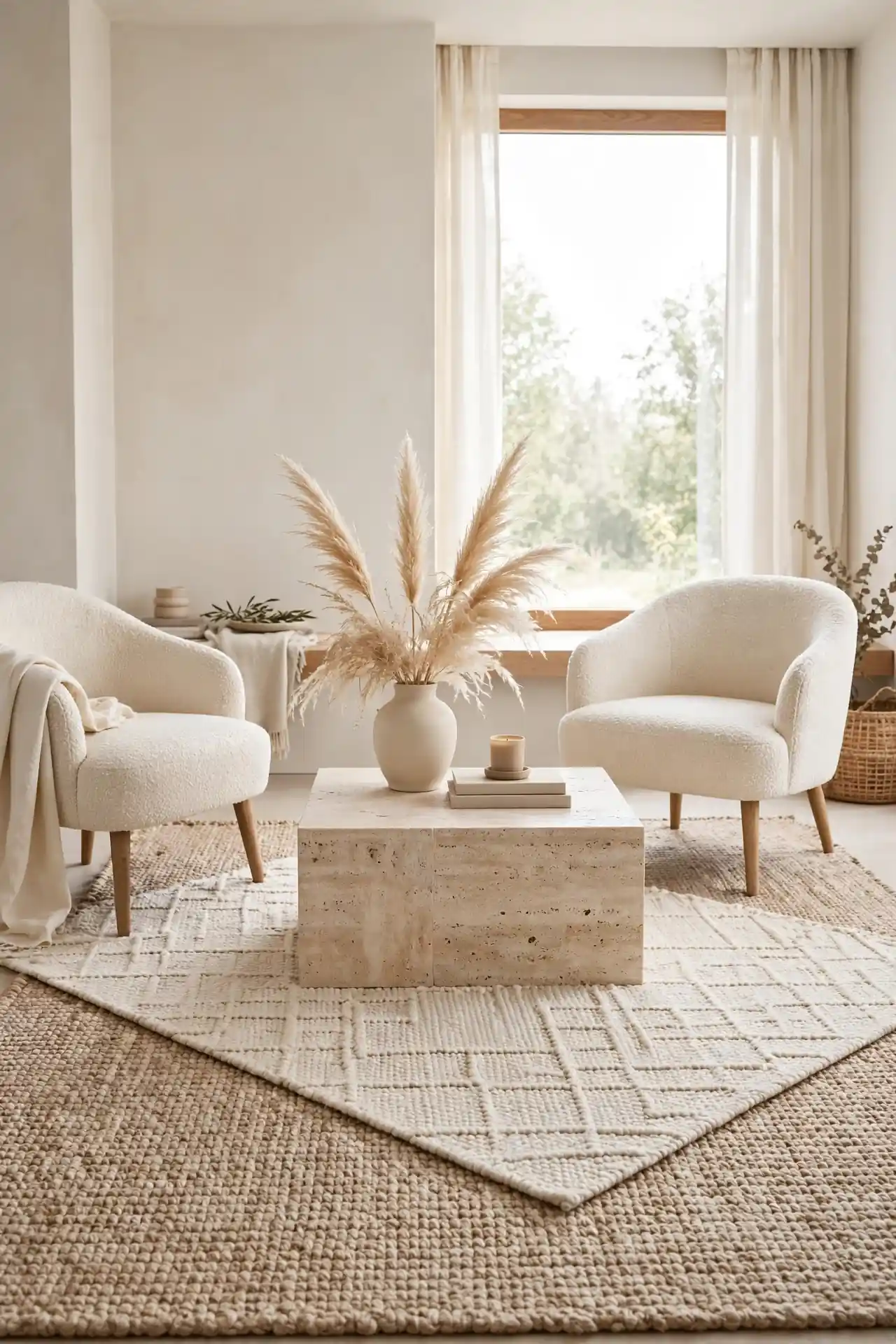
- Start with a chunky natural fiber base like jute or sisal that adds raw texture and grips the floor.
- Layer a softer patterned rug on top, leaving a border of the base weave showing around all edges.
- Mix finishes on purpose: flat weave under low-pile or shag, so each texture reads clearly.
- Finish by checking the pair from the doorway, since layering should look balanced from every entry point.
A weave duo succeeds when the two textures contrast without fighting each other. Let the coarser base stay neutral so the patterned top can carry the visual interest. For more fireplace-season warmth, try christmas fireplace mantel decor ideas and watch how layered textiles echo the mantel styling across the room.
Faux Fur Warmth
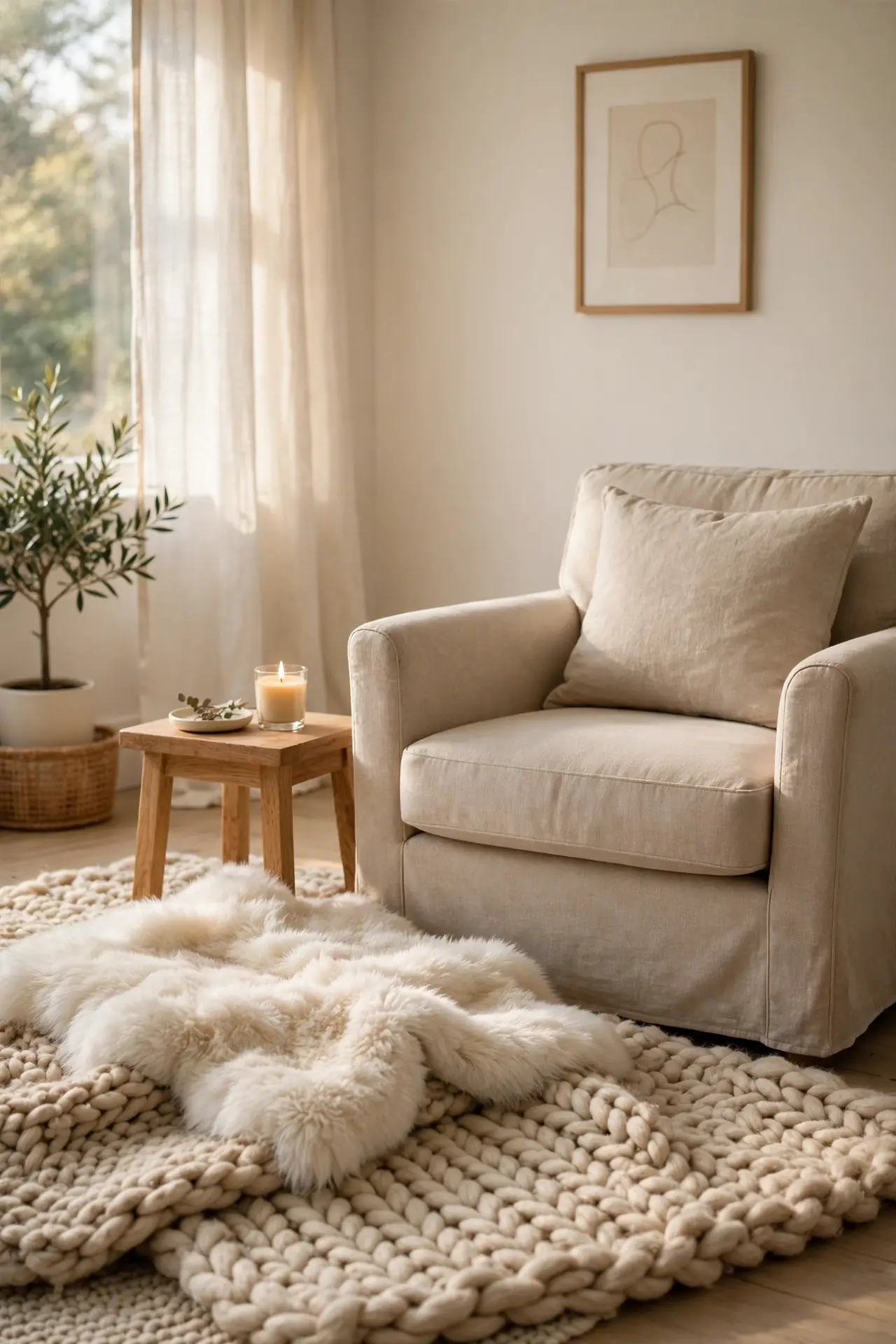
| Option A | Option B |
|---|---|
| Faux fur throw layered on top | Full-size faux fur rug as the base |
| Lightweight with a soft sheen finish | Deep plush pile that feels luxurious |
| Ideal for seasonal accents and small zones | Best as a warm layer under coffee tables |
| Easy to lift and reposition anytime | Stays anchored and holds top layers steady |
Choose real-looking faux fur with dense fibers so it reads as plush rather than flat. Keep it to one zone, such as under the coffee table, so the room stays calm instead of busy. When faux fur stays the softest texture, cozy living room decor with layered rugs looks settled and complete.
Moroccan Print Layer
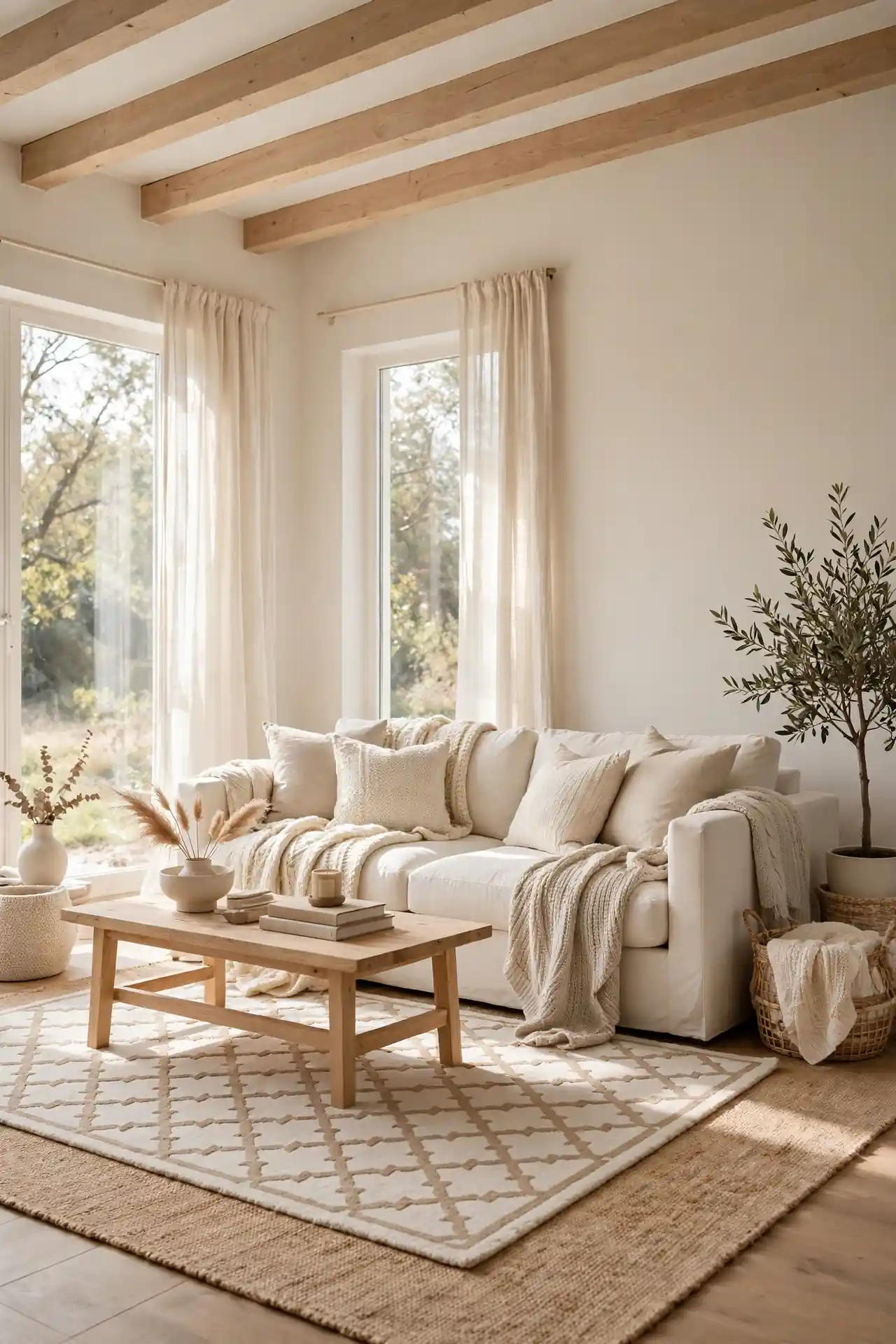
DO:
- Pick a Moroccan print with ivory and charcoal tones that suit neutral rooms.
- Layer it over a solid wool base so the pattern breathes.
- Echo the print in small doses through cushions or a throw.
- Keep the scale medium so it complements rather than competes.
DON’T:
- Don’t pair a busy Moroccan rug with a patterned base underneath.
- Don’t let it overlap other prints in the same sightline.
- Don’t size it too small, or the room loses its focal point.
Moroccan prints bring graphic energy that wakes up quiet neutral rooms. Let the geometric pattern anchor the seating area while softer pieces around it stay simple. This style rewards restraint, so hold back on competing patterns and let one strong print do the talking on its own.
Sisal Foundation Rug
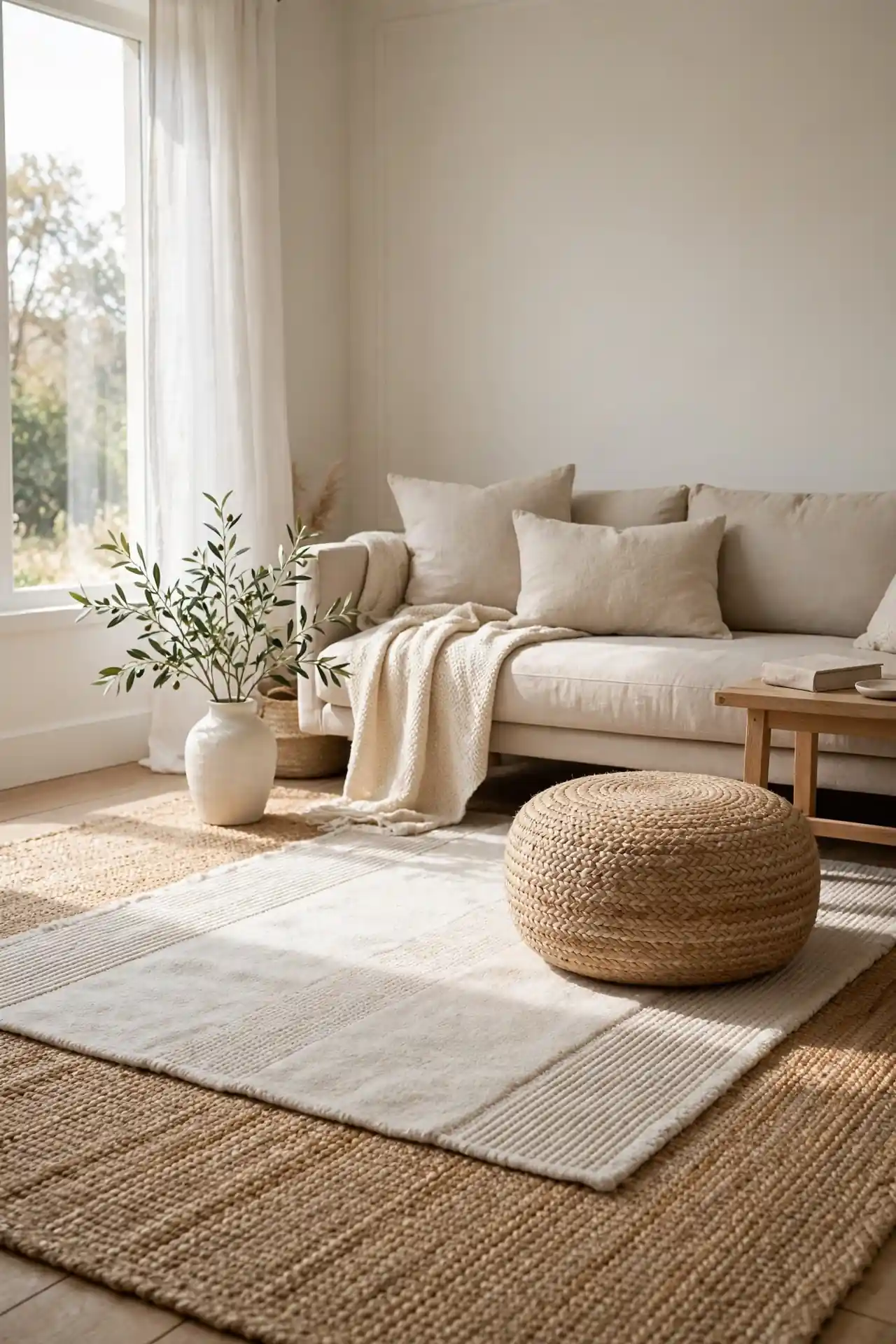
Cost: Low | Time: One afternoon | Skill Level: Beginner | Best For: living rooms needing a textured base | Rugs Needed: two
A flat sisal or jute rug gives every softer rug above it a sturdy place to land. I once watched a plush shag slide straight across bare hardwood every time someone walked by; the sisal base stopped the slipping and the layering finally looked intentional. Pick a natural weave in honey or oatmeal tones and let it extend six to eight inches past the rug on top. The texture contrast keeps the pile from matting down in high traffic spots too.
Cozy Corner Nook
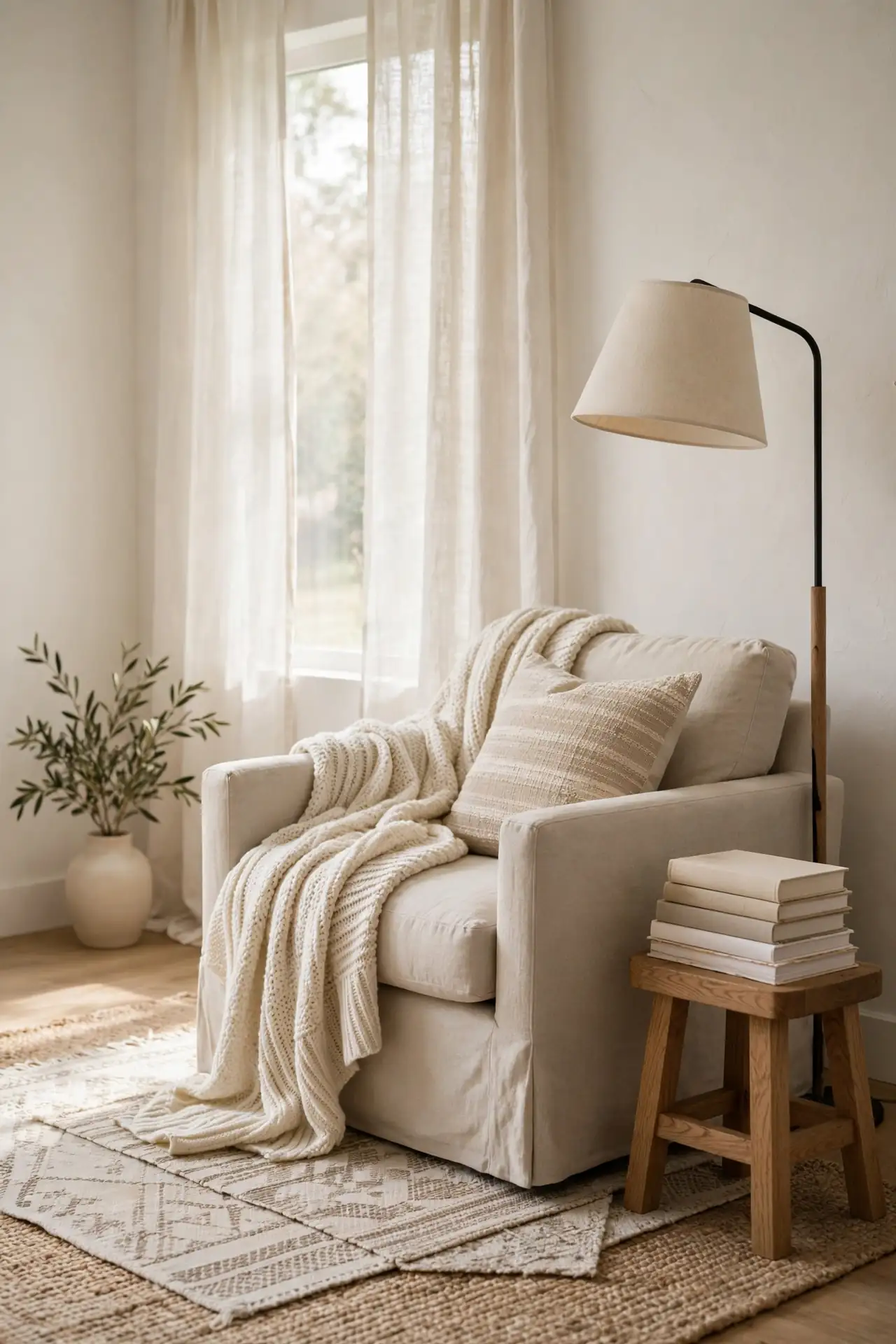
Hardwood in the corner collects nothing but dust and forgotten charging cables. A small round sheepskin or a thick wool rug turns that dead spot into the room’s favorite seat. Low pile works best here so a recliner or swing door still clears it, and a round shape keeps foot traffic flowing around the corner instead of cutting across it.
Layer the small rug over the main area rug’s edge so the nook feels connected instead of stranded. Add a floor cushion and a small side table for coffee, and the corner starts pulling people away from the sofa on quiet evenings. If you read there, this setup quietly becomes the most-used seat in the house.
Coffee Table Anchor
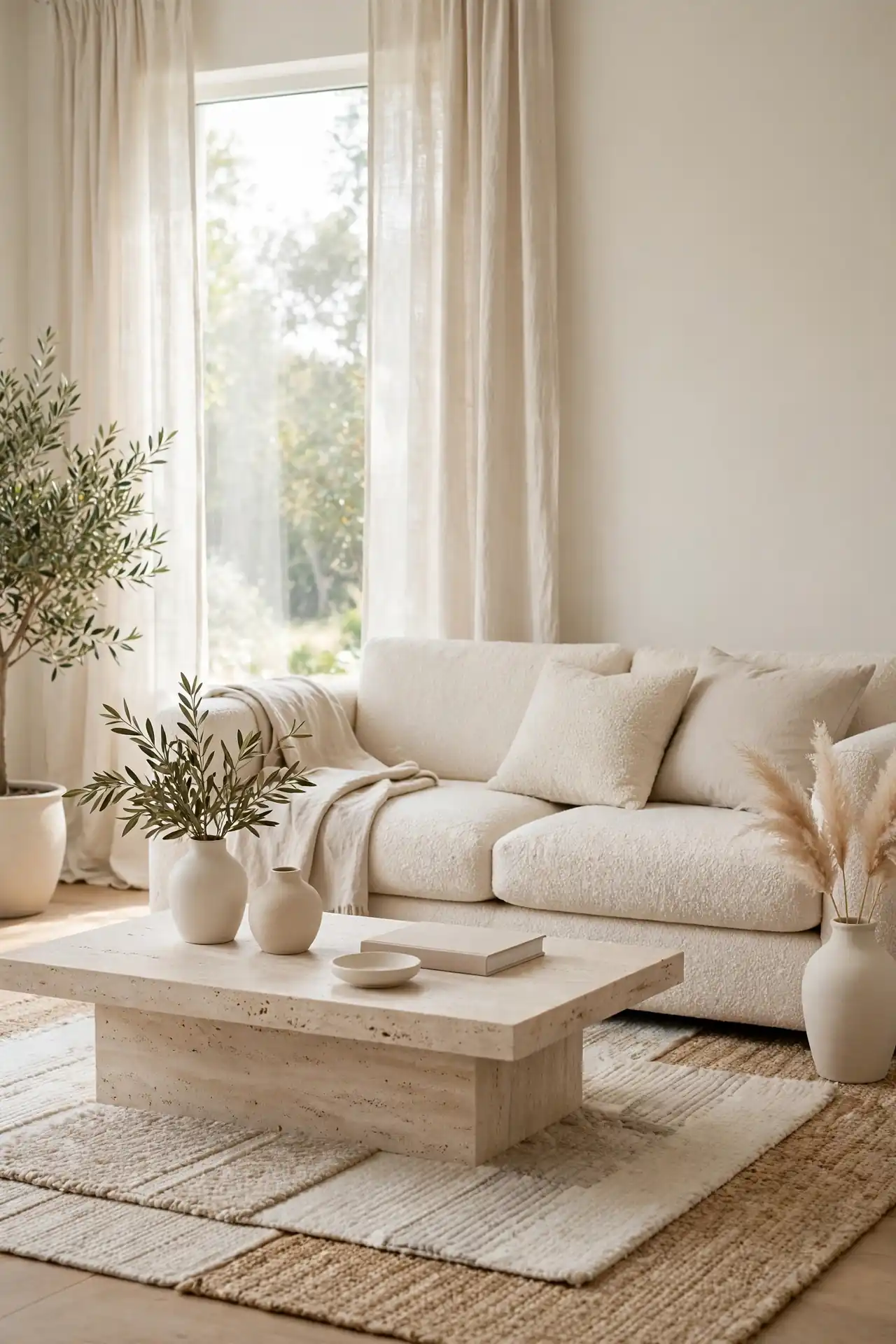
- Set the coffee table on the upper rug so its front legs straddle the layer line.
- Leave at least eight inches of the top rug visible on every side for balance.
- Use a low pile top layer so mugs and books sit steady without wobbling.
- Rotate the top rug seasonally: wool in winter, cotton flatweave in summer.
- Tape the layers together underneath with rug tape to stop shifting.
The coffee table decides where the eye lands, so grounding it across both rug layers ties the arrangement together. When the top rug peeks out evenly around the table base, the layering reads as deliberate. Walk around the table once; if a corner curls or slides, adjust the tape before guests arrive.
Fireplace Hearth Layer for cozy living room decor with layered rugs
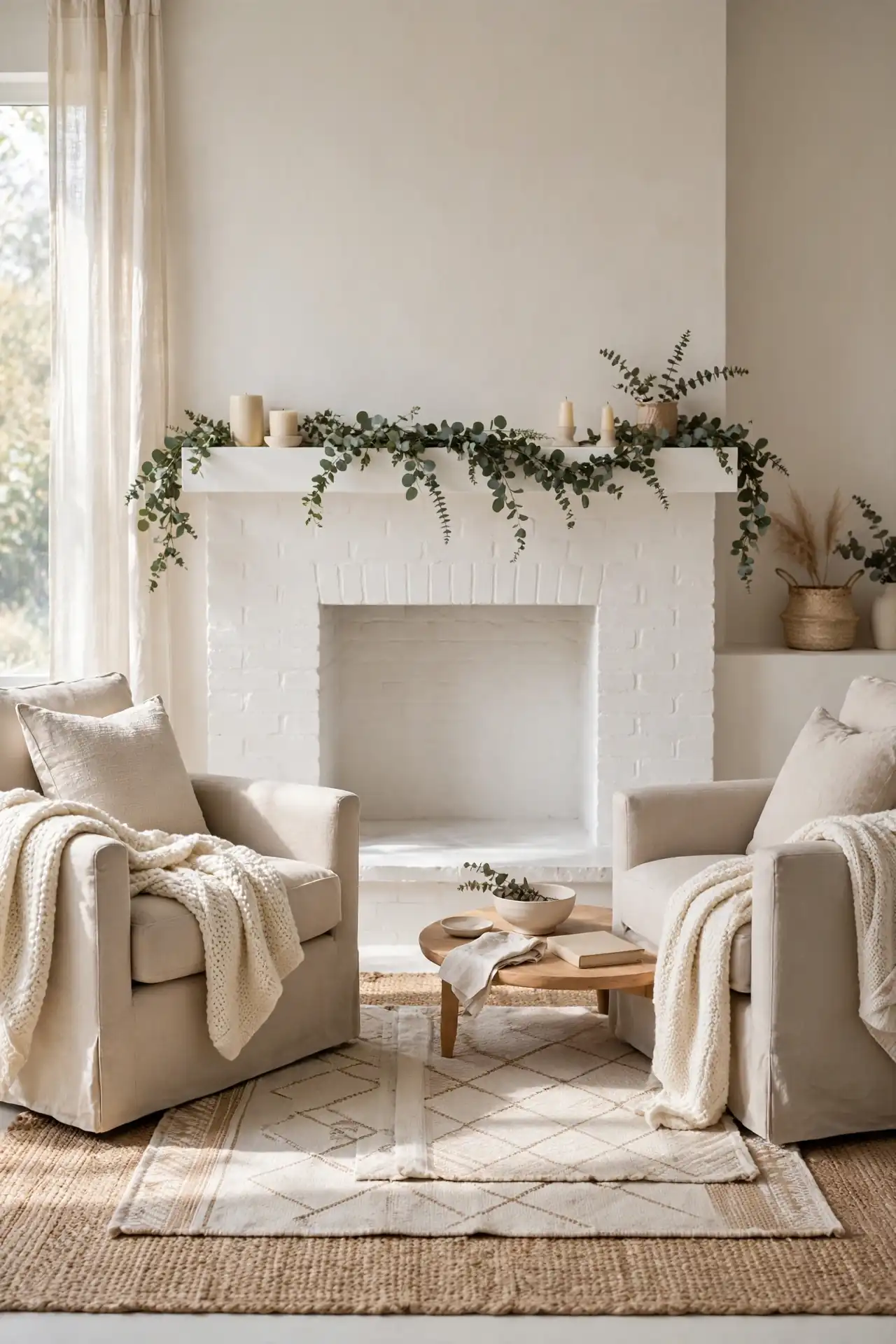
Quick Tip: Place a fire-resistant wool rug closest to the hearth, with a softer decorative rug layered just outside the heat zone. Wool naturally resists sparks better than synthetics. Measure the clearance the fireplace maker recommends and keep every textile outside it.
The hearth is the natural gathering point in winter, and bare stone or tile feels cold underfoot. A layered rug setup softens the transition from seating area to fire, so people linger longer on chilly nights. Echo the stone or brick tones of the surround for a pulled-together look. Check the layers monthly, since heat dries fibers and tape can loosen.
Reading Spot Rug
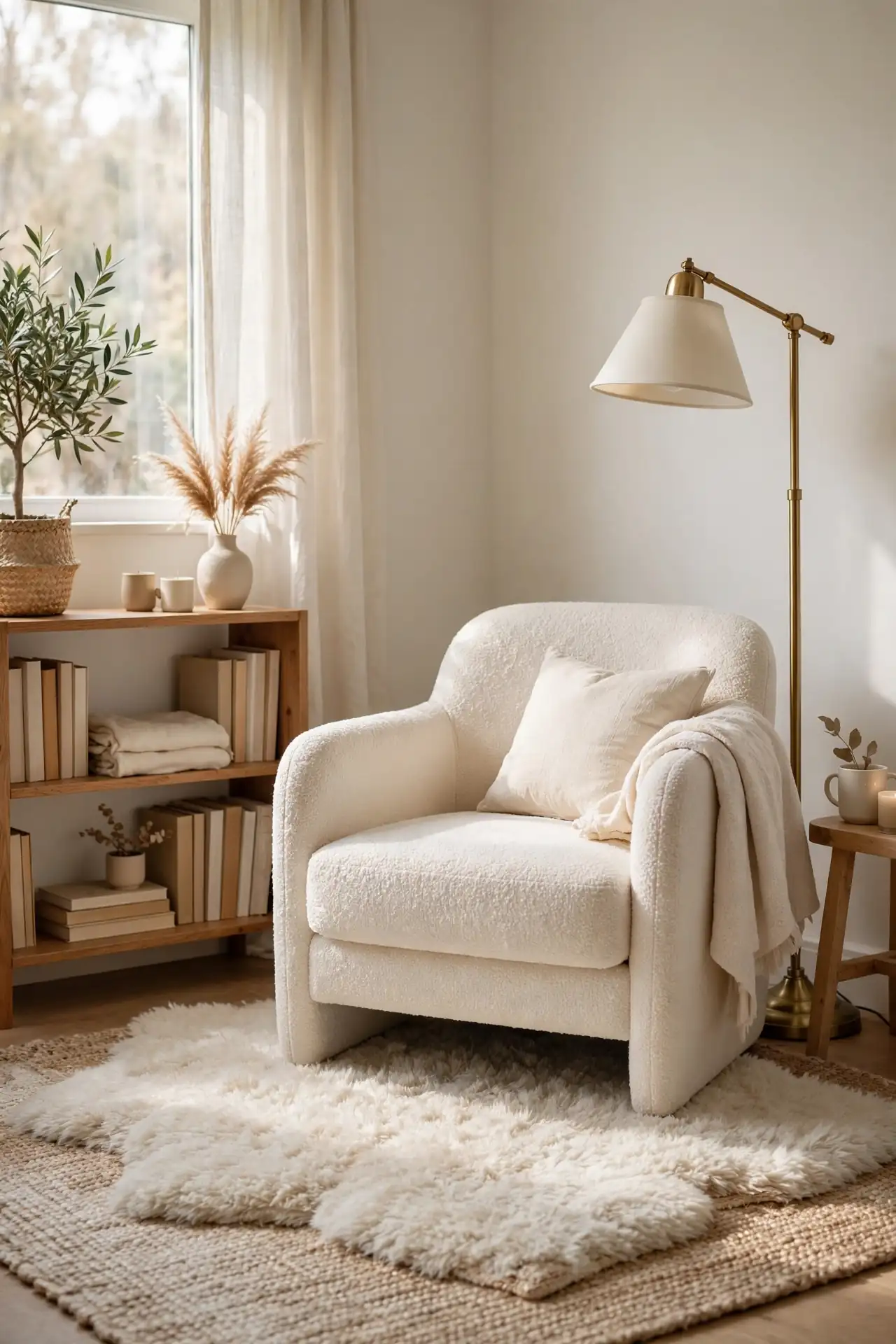
BEFORE: A lone armchair sits on bare floor with a thin mat that slides every time the chair rocks. The spot feels temporary, and feet get cold within minutes. Nobody settles in for more than a chapter.
AFTER: A plush rug layered over a larger flatweave turns the chair into a real destination. Feet stay warm, the chair stops drifting, and a small lamp plus side table complete the scene. The spot starts attracting readers daily.
Position the chair so its front legs rest on the top rug and the overlap keeps everything locked together. A medium pile works best here, thick enough for bare feet but thin enough that the chair swivels. Avid readers in the household will claim this corner within a week.
Soft Glow Pairing
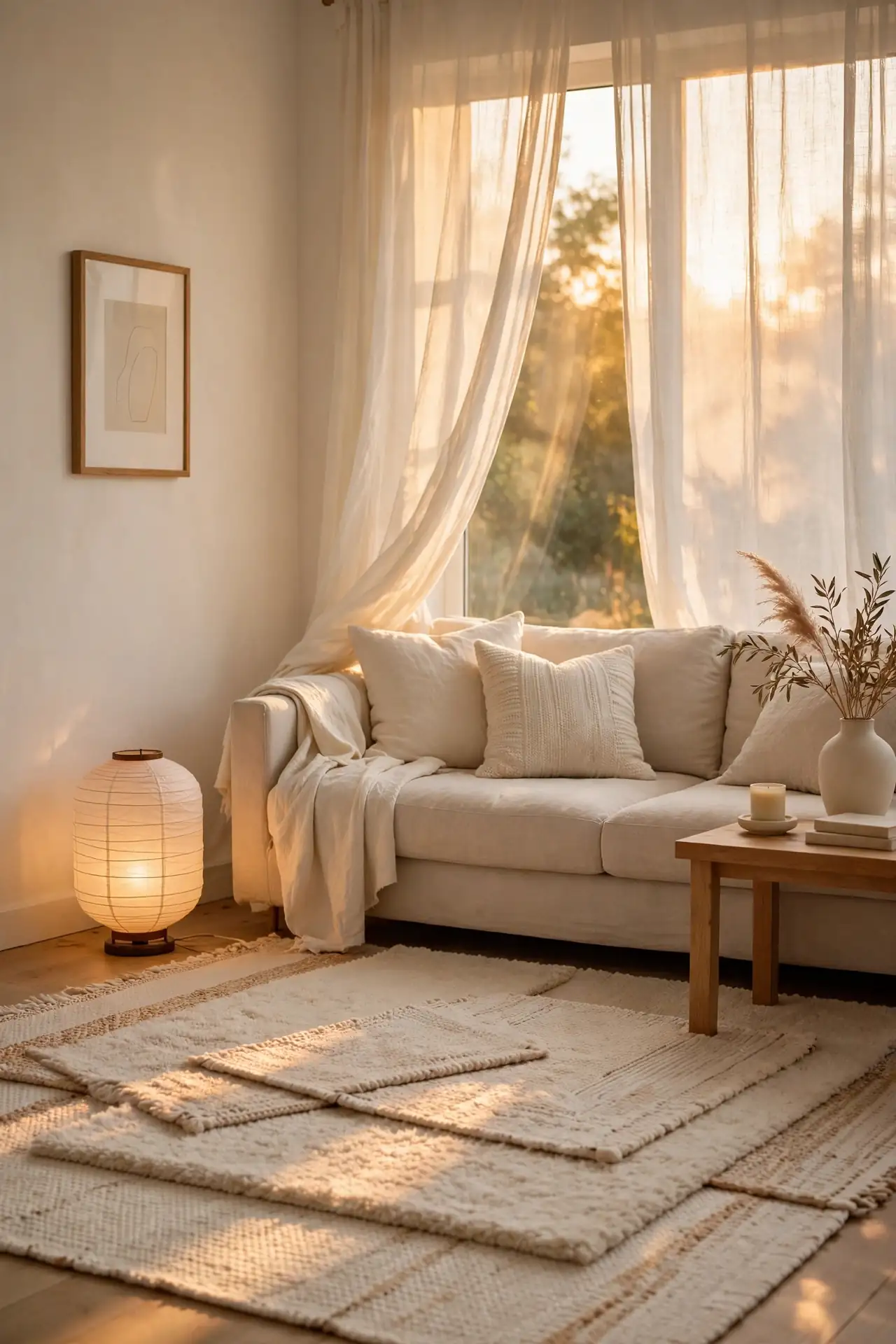
- Layer a smaller soft rug over the main one so the glow of a nearby lamp lands on contrasting texture, not bare floor.
- Keep warm-toned bulbs in the two nearest light sources so both rug layers read in the same inviting tone.
- Place a low bench or floor cushion half on the top rug to anchor the pairing and catch light at its edge.
Soft lighting changes how layered rugs look after dark, so a lamp pointed low across the pile reveals depth that daylight hides. A dimmer on the nearest fixture lets you tune that glow from evening bright to movie-night low. Check the pairing at night before settling on bulb warmth.
Warm Entry Transition
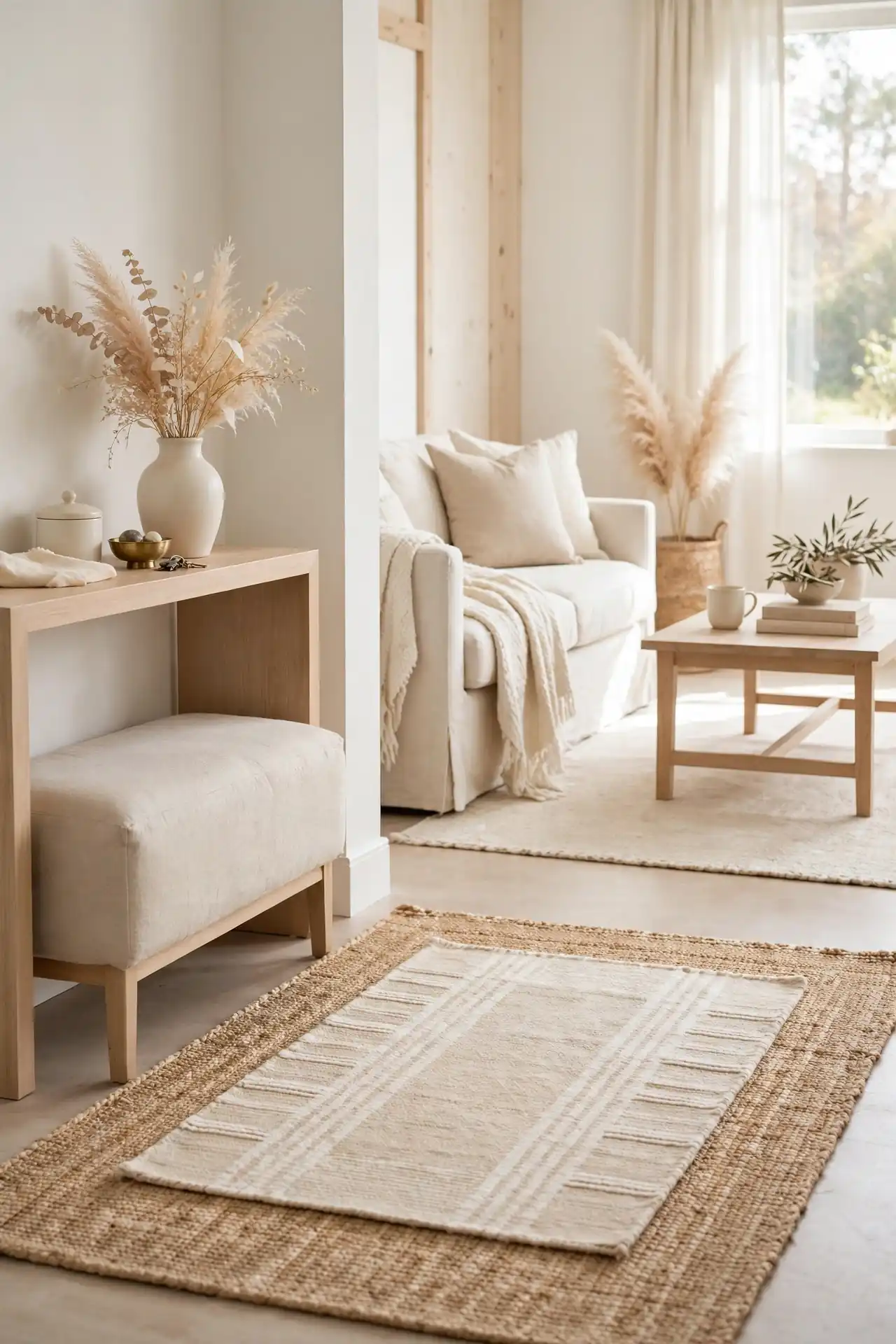
| Runner Rug | Layered Doormat |
|---|---|
| A slim runner softens the path from door to sofa | A small mat on a larger flat rug catches grit first |
| Warm wool or jute handles heavy foot traffic | Swap the top mat by season without lifting the base |
| Fits narrow entry halls without crowding the door swing | Fits rental entries where tape beats a pad |
Entries set the tone, so a layered landing zone tells guests the comfort continues inside. Matching the entry’s top texture to the living room’s base layer keeps the flow unbroken from doorstep to sofa. Avoid thick pile right at the threshold, since doors stick and dirt hides fast.
Conclusion
Layering rugs is one of the simplest ways to make a living room feel warm and lived in. Start with a large base that fits your seating area, then add a smaller rug with pattern or texture on top. Do not worry about perfect matching. The charm of cozy living room decor with layered rugs comes from the mix, not the match. I have seen how small changes like these can completely shift the way a space feels. Save your favorite ideas on Pinterest, try one pairing this weekend, and share the result with a friend. Your coziest living room is only one layer away.


One Comment