23 Modern Tudor Living Room Ideas for Classic Sophistication
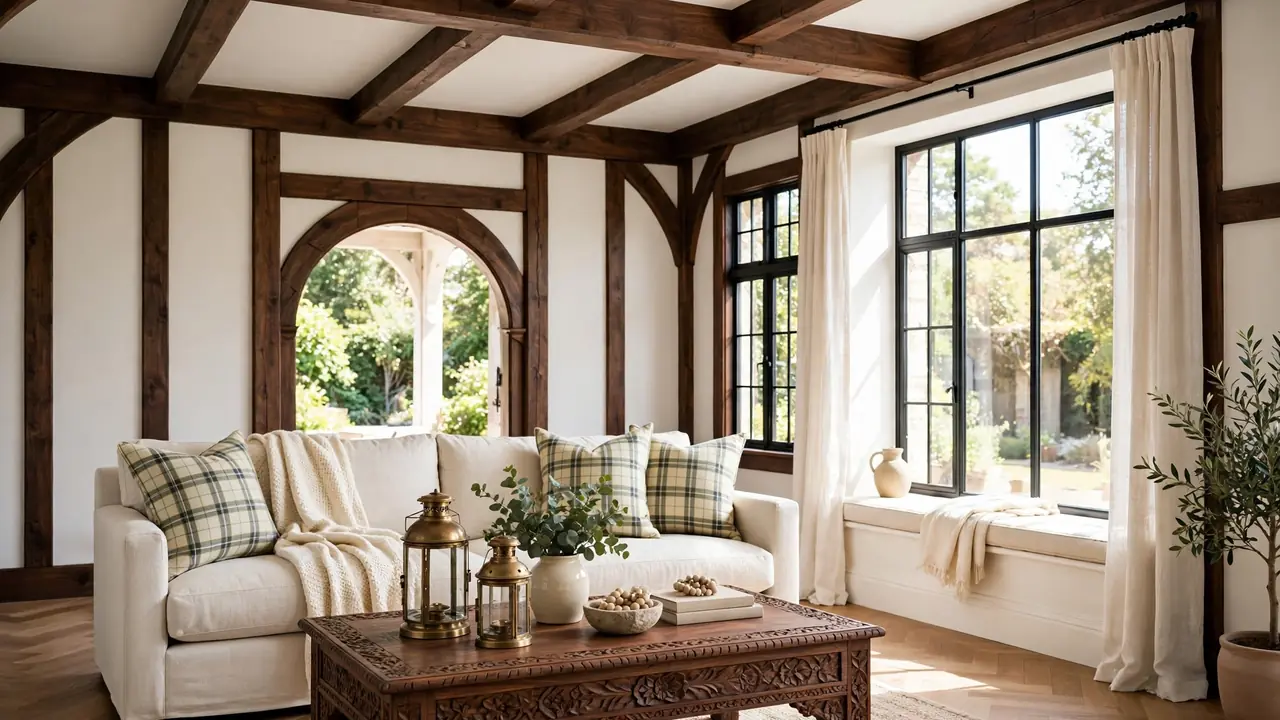
Dark beams, graceful arches, and carved wood can feel grand without turning a home into a museum. The smartest modern Tudor living room ideas pair those classic bones with cream upholstery, clear sightlines, and warm brass light. In my experience, restraint is what makes the drama livable: one strong architectural note, repeated calmly, beats a room crowded with themed pieces.
Begin with the largest shape in the room, then layer texture, metal, and pattern in a steady rhythm. Readers drawn to the rich contrast of cream and burgundy home decor will recognize the same love of depth here, translated into walnut, iron, and stone. Ahead, seating, fireplaces, windows, and textiles show how the style adapts to compact rentals and generous family rooms alike.
Arched Doorway Drama
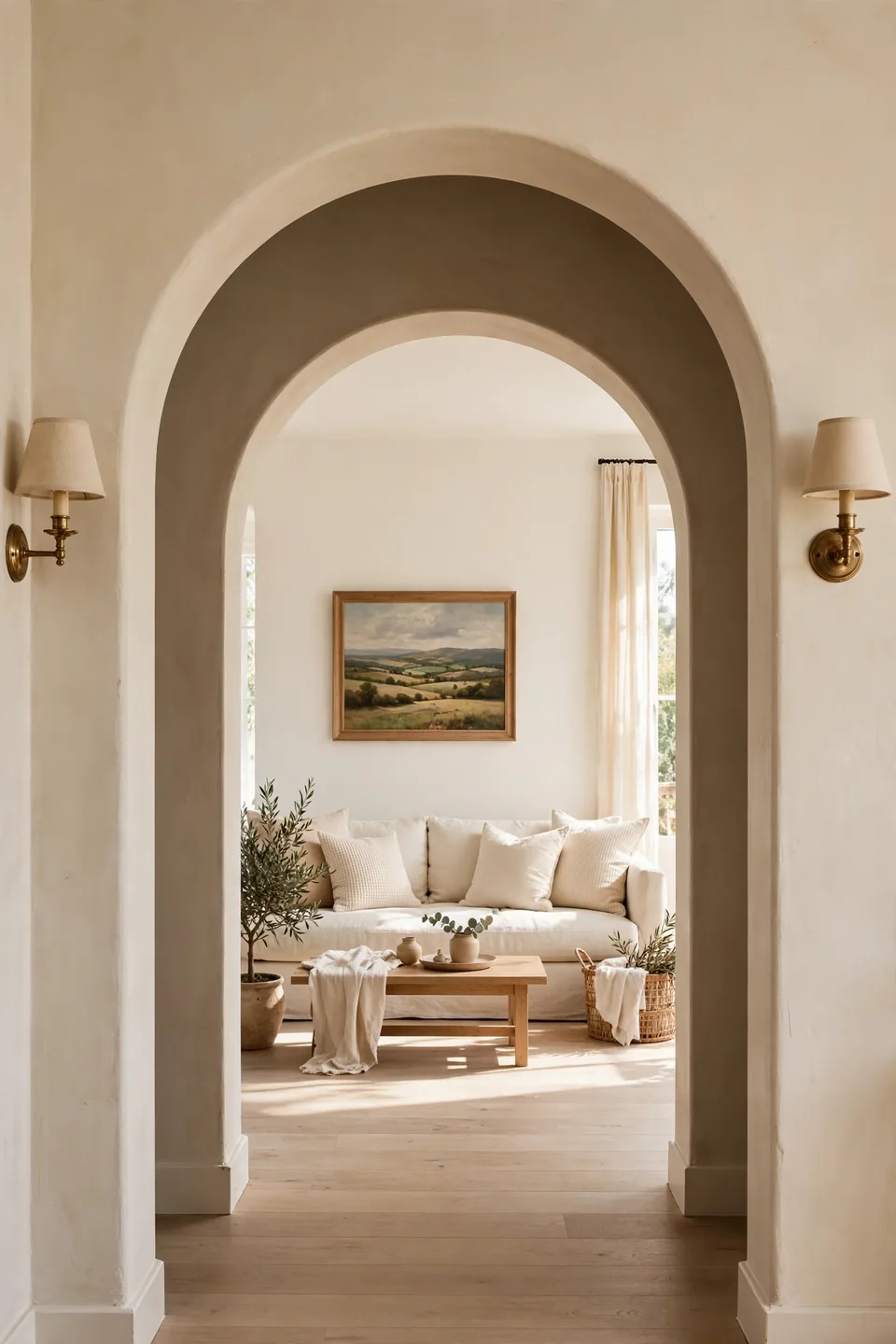
An arched doorway gives a plain rectangle instant ancestry. Paint the arch surround in warm cream, keep the inner reveal a shade deeper, and let the curved line frame the sofa like a portrait. A narrow brass sconce on each side sharpens the outline after dark.
Renters can fake the silhouette with a large peel and stick arch decal or a curved top bookcase placed against the entry wall. Keep furniture low beneath the arch so the eye reads height first. One framed landscape inside the curve finishes the view without crowding it. The trick works best when nearby trim stays simple and pale.
Dark Wood Beam Ceilings
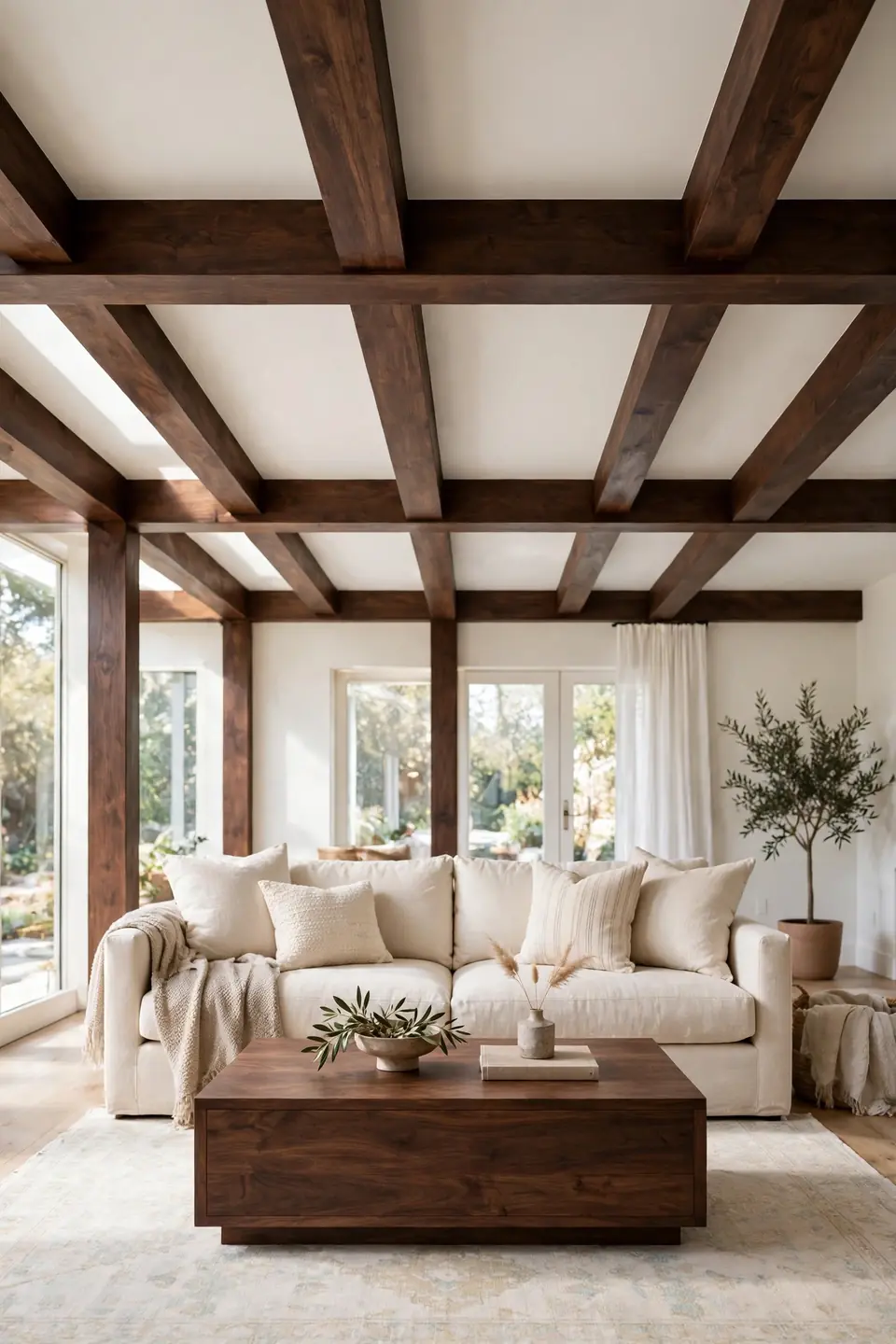
- Faux beams in walnut stain warm a white ceiling without structural work or permits.
- Space beams evenly across the shortest span so the room feels wider, not lower.
- Stop beams at the wall line; wrapping them downward makes corners feel crowded.
- Match beam tone to one furniture wood so the ceiling joins the scheme below.
- Leave bright gaps between beams for daylight to bounce back into seating.
Ceiling drama succeeds when the floor stays calm. A pale rug, cream sofa, and low profile furniture let the beams read as architecture rather than decoration. I’ve noticed lighter upholstery also keeps the dark overhead lines from pressing down on conversation areas during long evenings at home.
Brass Lantern Lighting Layers
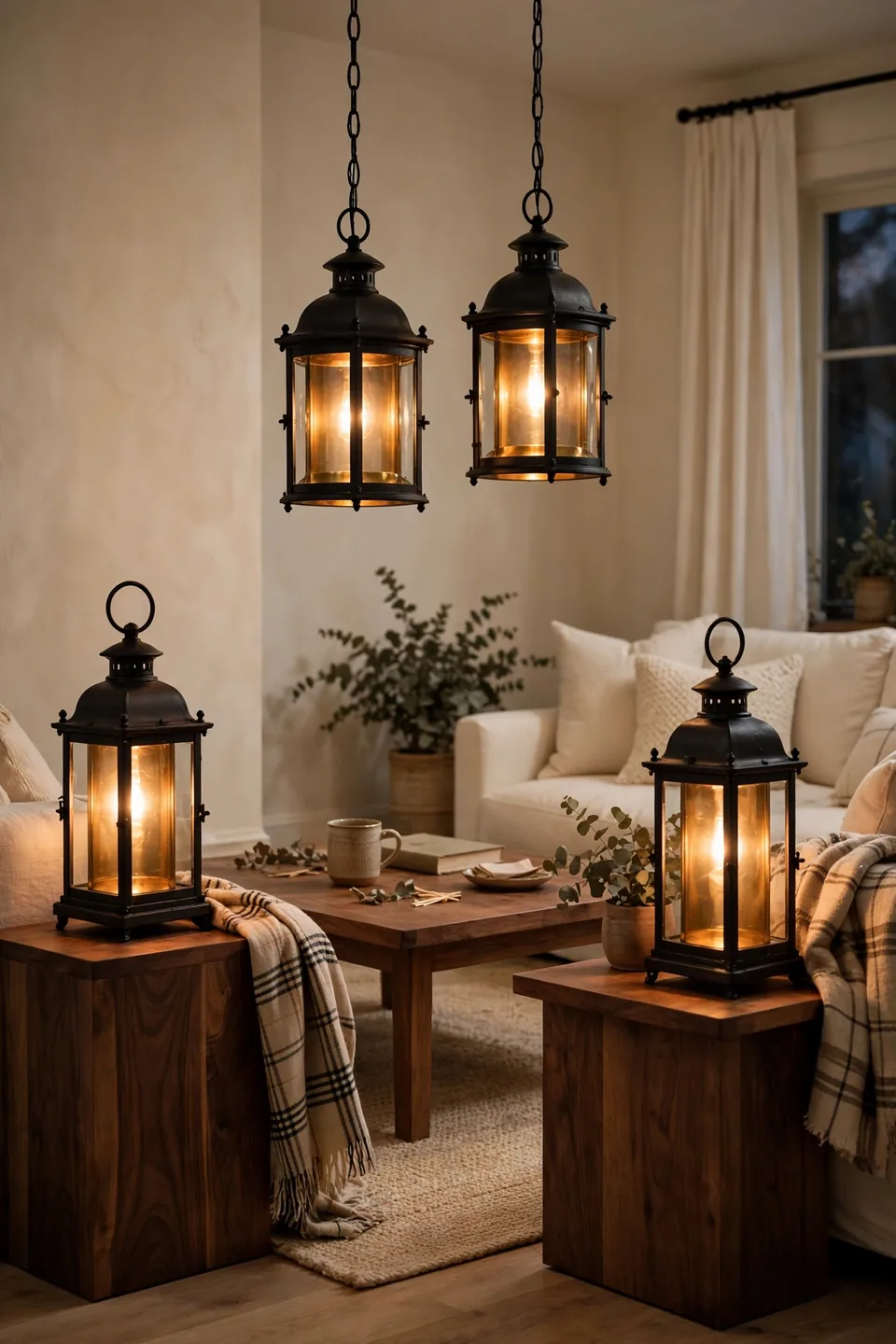
Quick Tip: Lantern silhouettes deliver Tudor character even in a new build. Choose blackened iron frames with brass interiors, hang one pendant over the coffee table zone, and repeat the shape in two smaller table lamps so the motif feels planned from every seat in the room.
Light temperature decides whether dark wood glows or sulks. Warm bulbs around 2700K soften beams and carved panels, while dimmers let the room shift from board games to slow evening drinks. Place the brightest source near reading chairs, and keep one low lamp beside the fireplace for depth. Small changes in height keep every corner awake.
Flat White Room Transformation
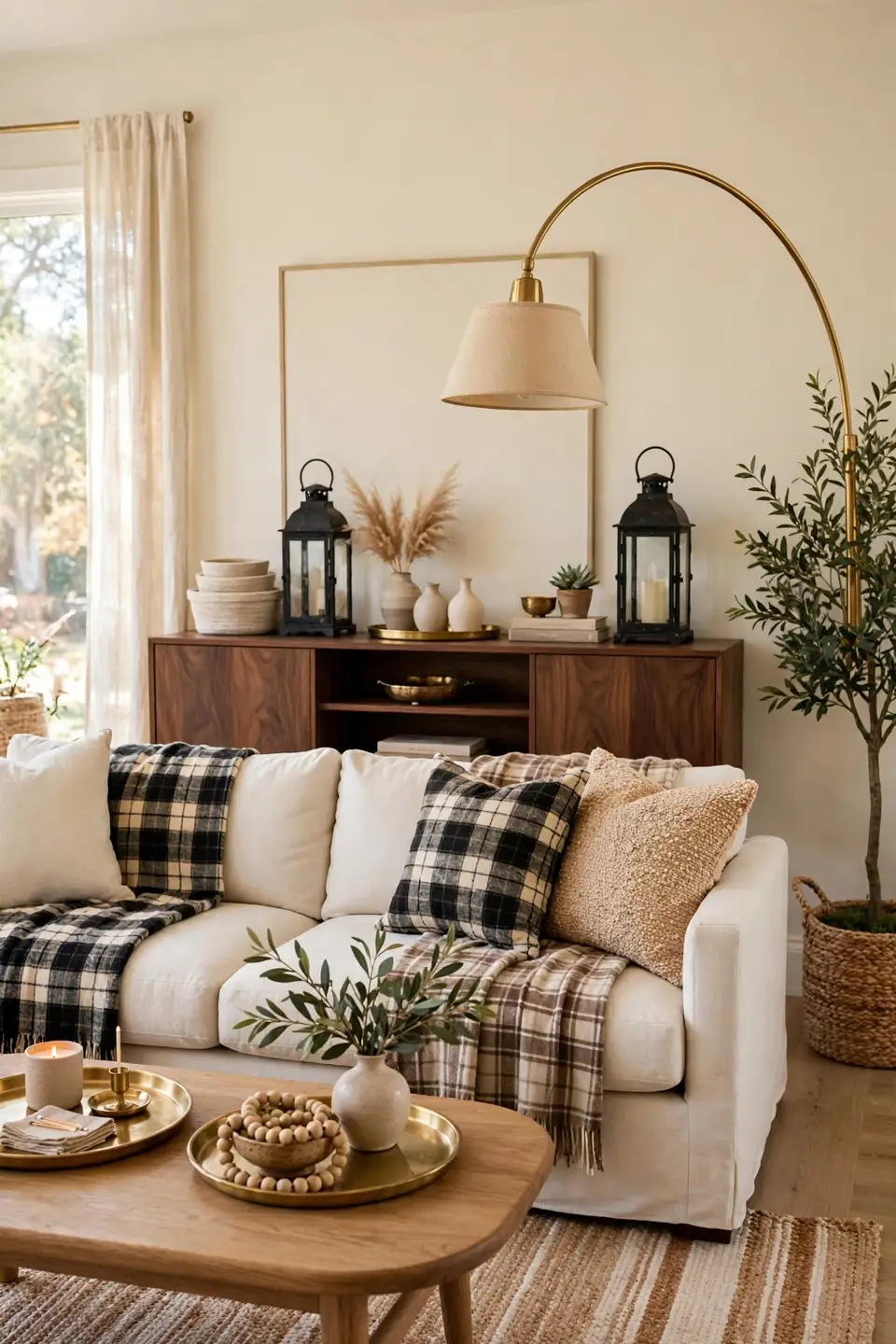
BEFORE: White walls, a gray sofa, and one ceiling light left the room bright but forgettable. Nothing cast a shadow, nothing curved, and the seating floated with no focal point to gather around.
AFTER: A walnut media console, arched floor lamp, and black iron lanterns gave the same footprint depth and rhythm. Cream cushions stayed, but plaid throws and brass trays added the contrast the pale shell was missing.
Start with portable pieces when walls cannot change. A tall arch shape, one dark wood anchor, and repeated metal finishes can shift the mood in a weekend. Photograph the room at dusk; the after picture should show pools of light, clear layers, and one strong silhouette from the doorway.
Panelled Wall Styling Steps
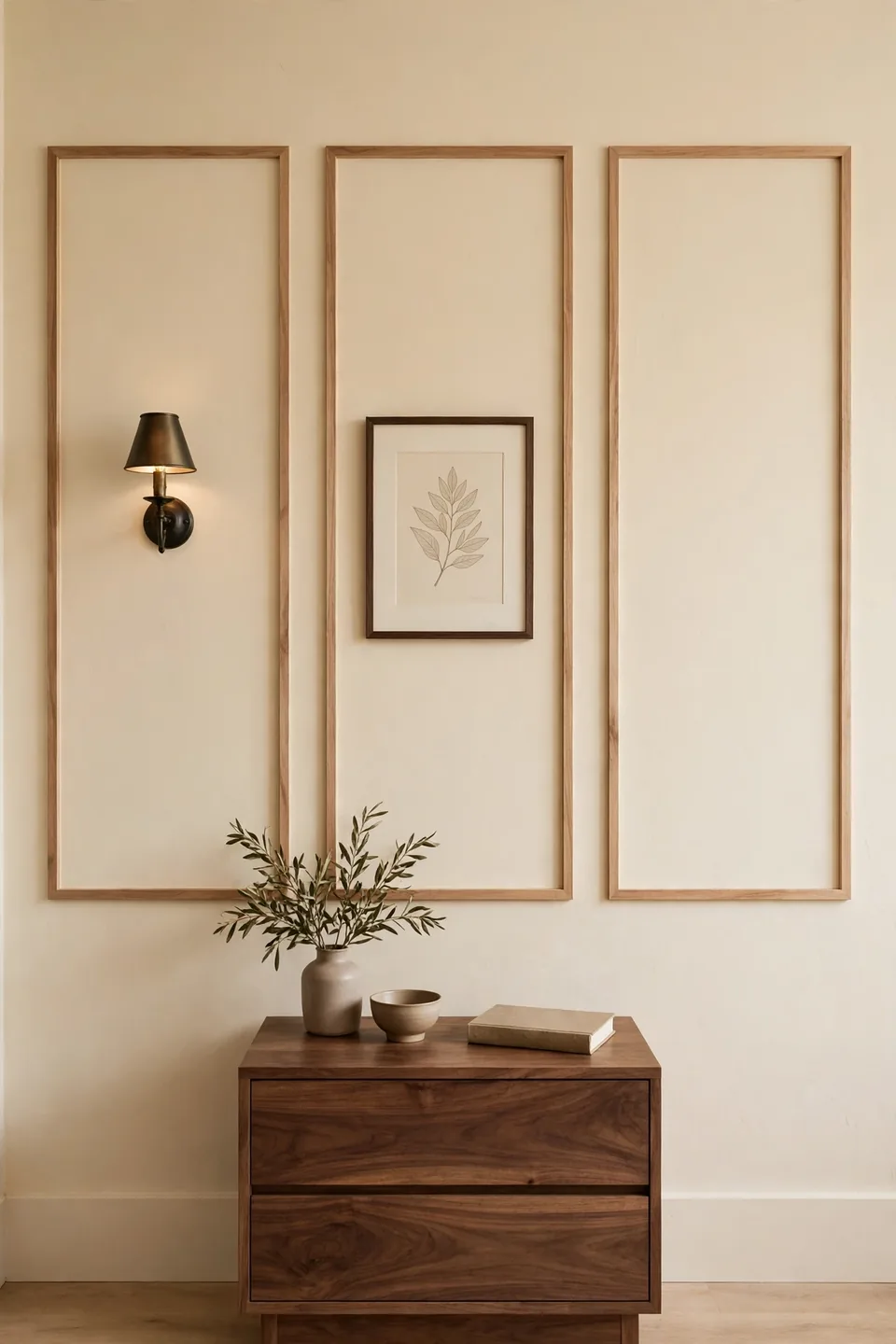
- Measure the sofa wall and sketch three equal panels with painter’s tape first.
- Fit slim wood battens inside the tape lines for a shallow, classic grid.
- Paint panels and wall one warm cream shade so texture, not color, does the work.
- Hang one framed print or iron sconce at the center of each panel.
- Step back at lamp height and adjust spacing until shadows fall evenly.
Panel moulding flatters Tudor rooms because it adds age without darkening the palette. Keep panels behind seating only, and let other walls stay smooth for contrast. In my experience, shallow battens read expensive in daylight while deep boxes can look heavy in smaller rooms with low ceilings.
Leather Versus Velvet Seating
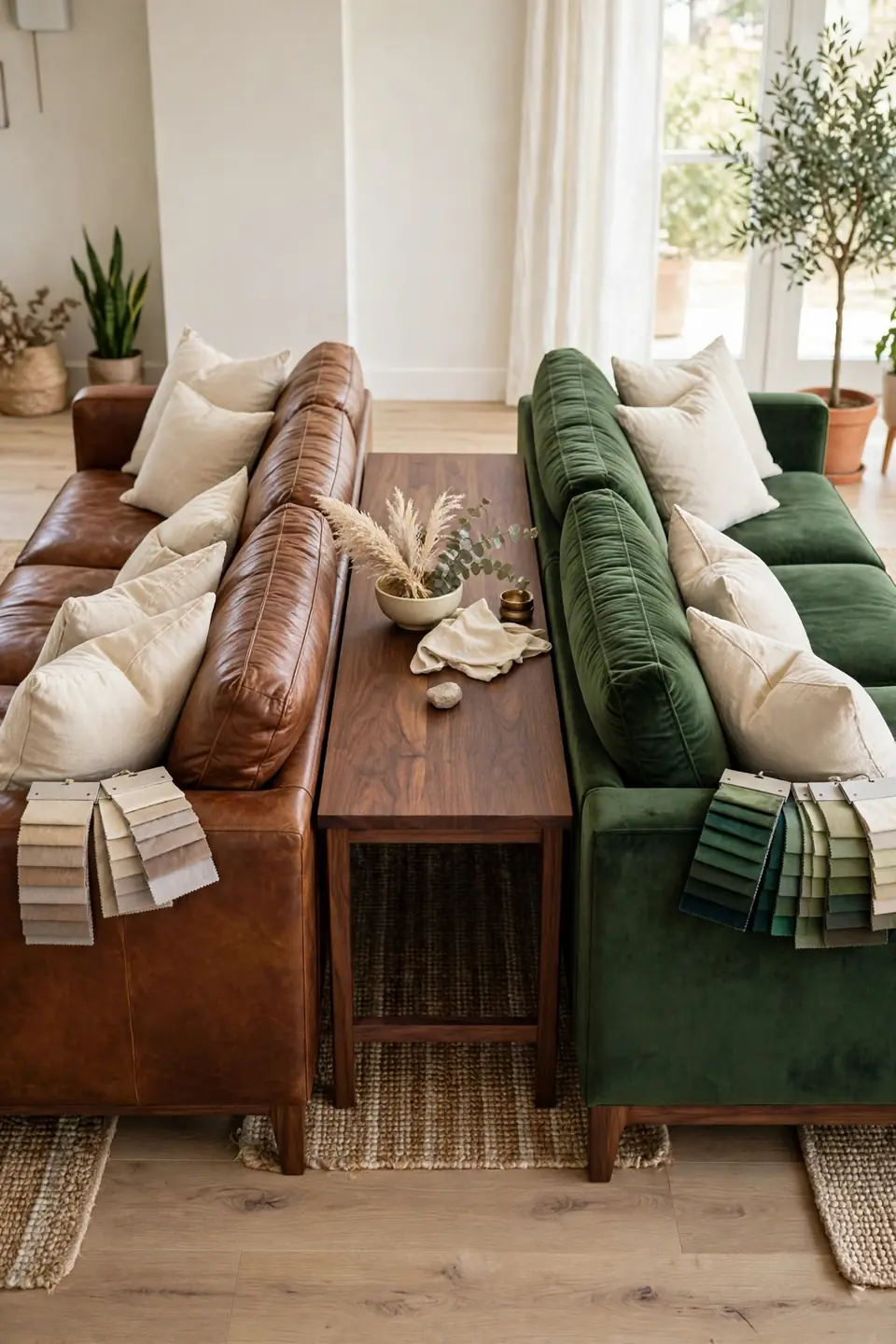
| Feature | Brown Leather | Green Velvet |
|---|---|---|
| Feel | Smooth and tailored | Soft and plush |
| Care | Wipes clean fast | Brush pile weekly |
| Aging | Gains rich patina | Fades in sun |
| Best For | Daily family lounging | Guest ready drama |
Leather earns its keep where dogs, kids, and movie nights rule the calendar, while velvet belongs where evenings slow down and lamplight can play across the pile. Either seat looks right beside cream walls and dark wood when cushions borrow the opposite texture. Test both fabrics at home for a full day, because north facing light can cool leather and deepen velvet in ways showroom spots never reveal. A plaid throw across one arm ties the winner to the wider scheme.
Tudor Color Ground Rules

Do:
- Ground the palette in cream, walnut, iron black, and one jewel accent.
- Repeat the accent three times in textiles, art, and ceramics.
- Let pale upholstery occupy the largest visual area for balance.
- Warm every dark corner with brass or amber glass light.
Don’t:
- Stack black furniture against dark wood until details disappear.
- Buy themed castle pieces that turn history into costume.
- Paint every wall deep green and starve the room of light.
- Mix five wood stains and hope the grain settles down.
Rules protect the mood that drew you to the style in the first place. Break one rule at a time, live with it for a week, and the room will tell you quickly whether the exception earns its place.
Classic Palette Quick Facts
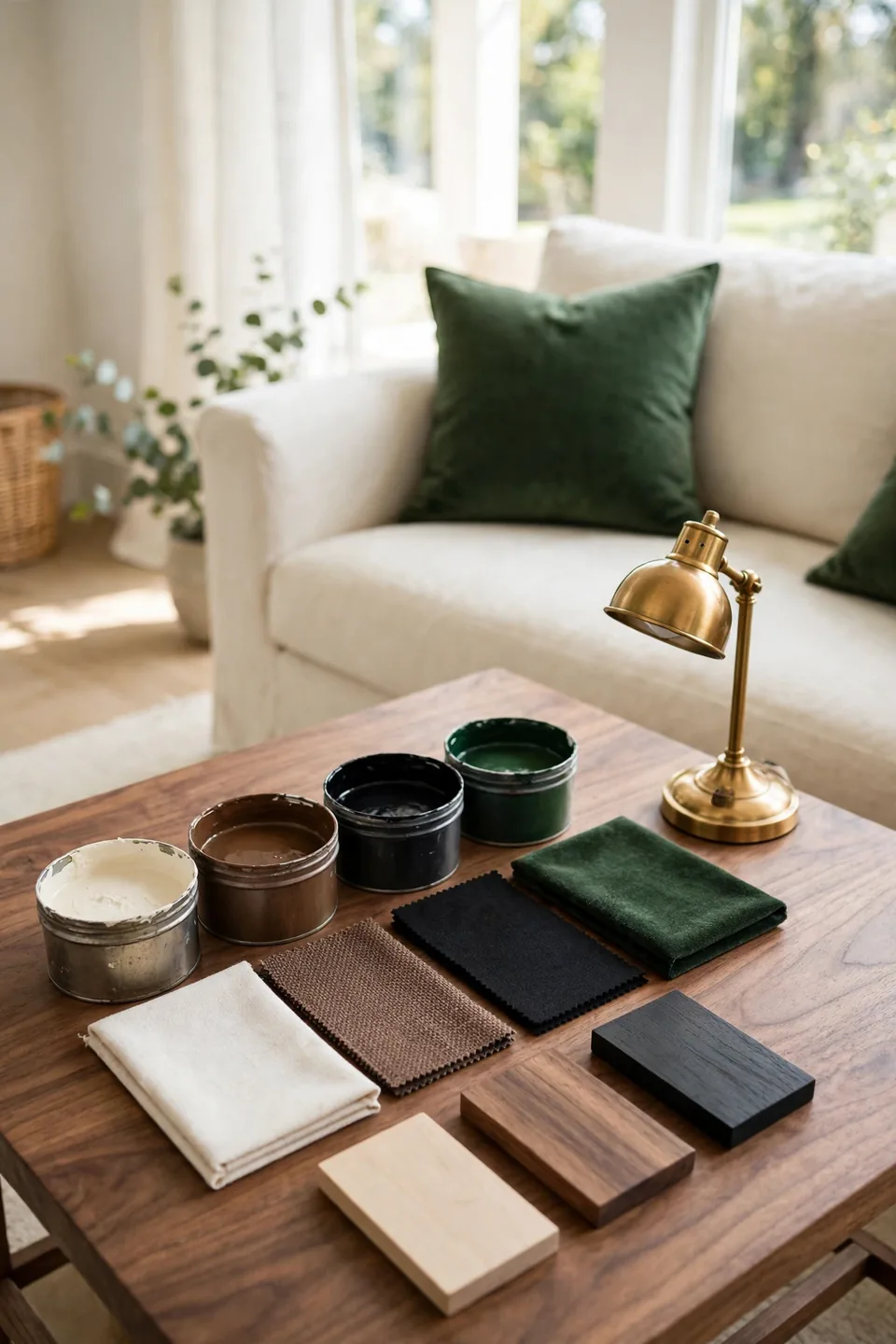
Cost: Medium | Time: Two weekends | Skill Level: Beginner | Best For: Pale rooms needing depth
A classic Tudor palette is mostly discipline, not budget. Cream paint, one dark wood anchor, black iron accents, and a single jewel tone can carry a whole room when each finish repeats with intention. Spend first on the piece touched daily, usually the sofa or rug, and let smaller decor follow. Swatches matter more than shopping speed here: walnut can read red beside cool light, and green velvet can turn blue near north windows. Live with samples through morning and lamplight before committing. That’s why many experts recommend building the palette on paper first, then buying in order from largest surface to smallest detail.
Cream Sofa Dark Frame
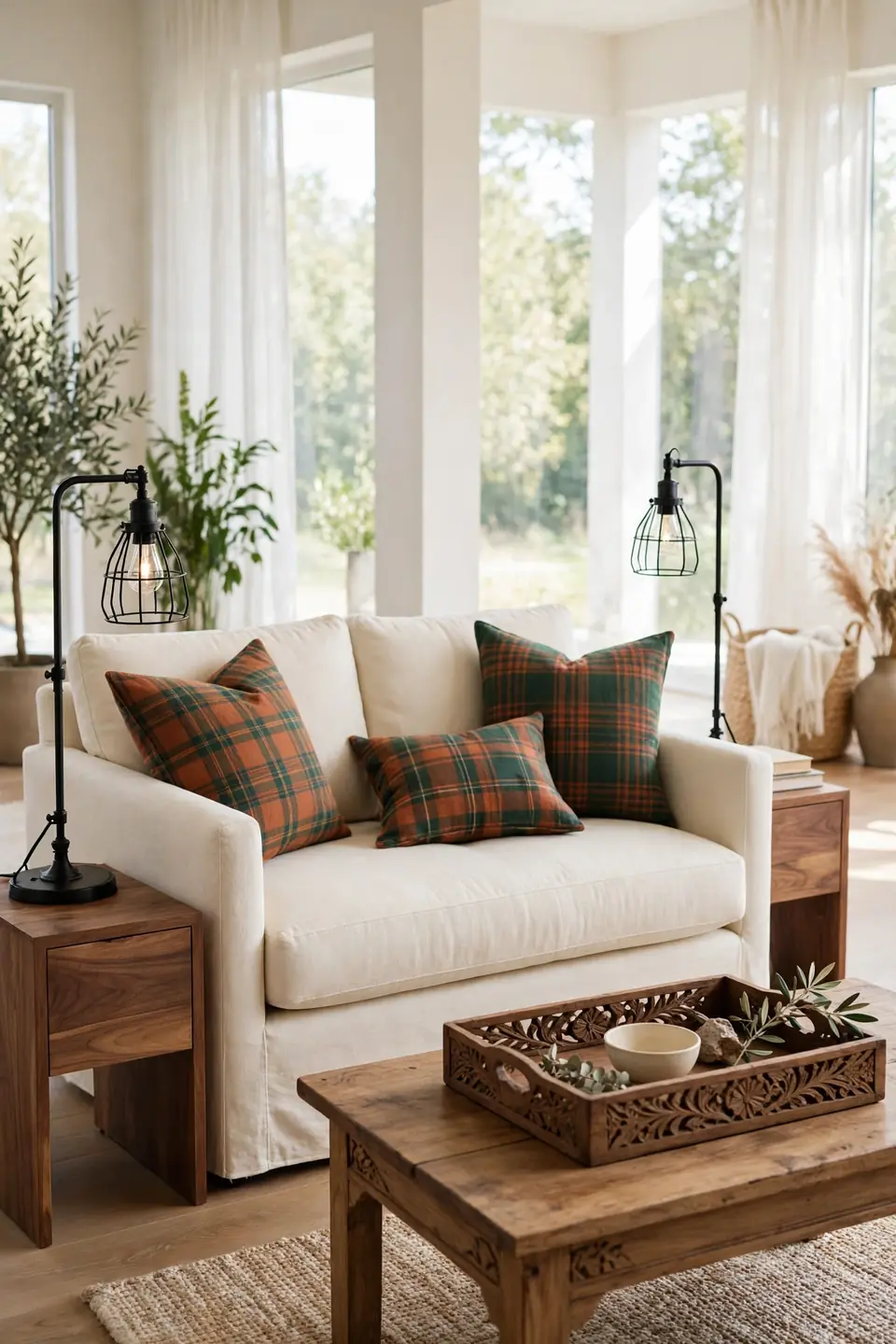
A cream sofa framed by dark wood feels like sunlight caught in a chapel window. The pale seat keeps the room generous, while walnut side tables and black iron lamps draw a firm outline around it. Plaid cushions in rust and forest nod to heritage pattern without shouting.
Washable cream covers handle daily use, the dark frame hides scuffs, and one carved tray corrals remotes on the coffee table. This is where modern Tudor living room ideas prove their flexibility for real family life. Add a cream throw over the arm nearest the window to soften the contrast at midday.
Stone Fireplace Fresh Balance
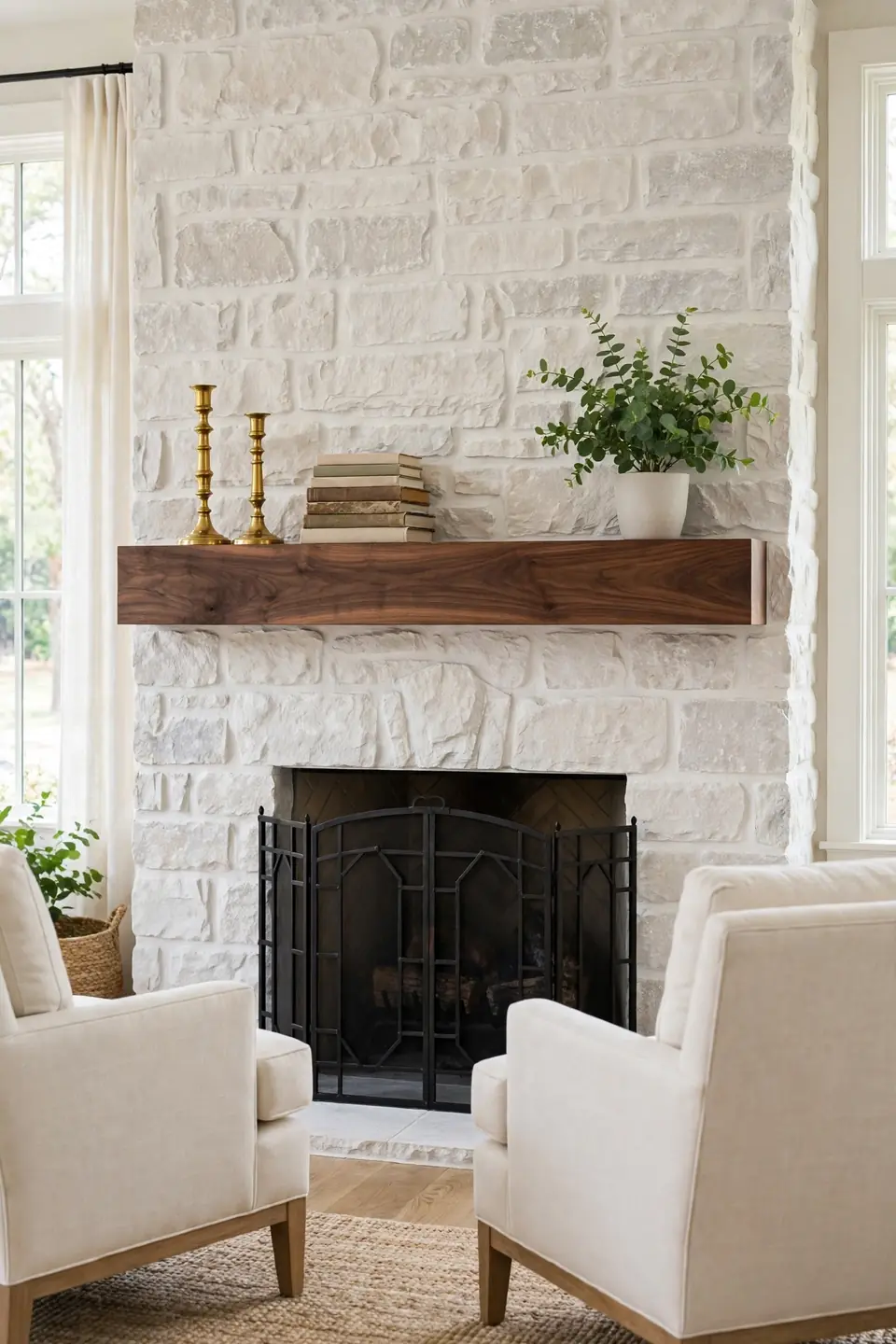
- Whitewash tired stone lightly so texture shows through the pale finish.
- Cap the hearth with a thick walnut mantel for warmth and weight.
- Style the mantel in threes: brass candlesticks, stacked books, one green plant.
- Keep fireside chairs cream or oatmeal to hold the daylight.
- Lay a pale patterned rug close enough to catch stray sparks safely.
A fireplace should anchor the room, not darken it. Pale stone, warm wood, and bright seating keep the hearth generous at noon and glowing by night. I’ve seen this work well in many cases where one black iron screen supplied all the contrast the corner needed. Simple, balanced, and calm.
Leaded Glass Window Light
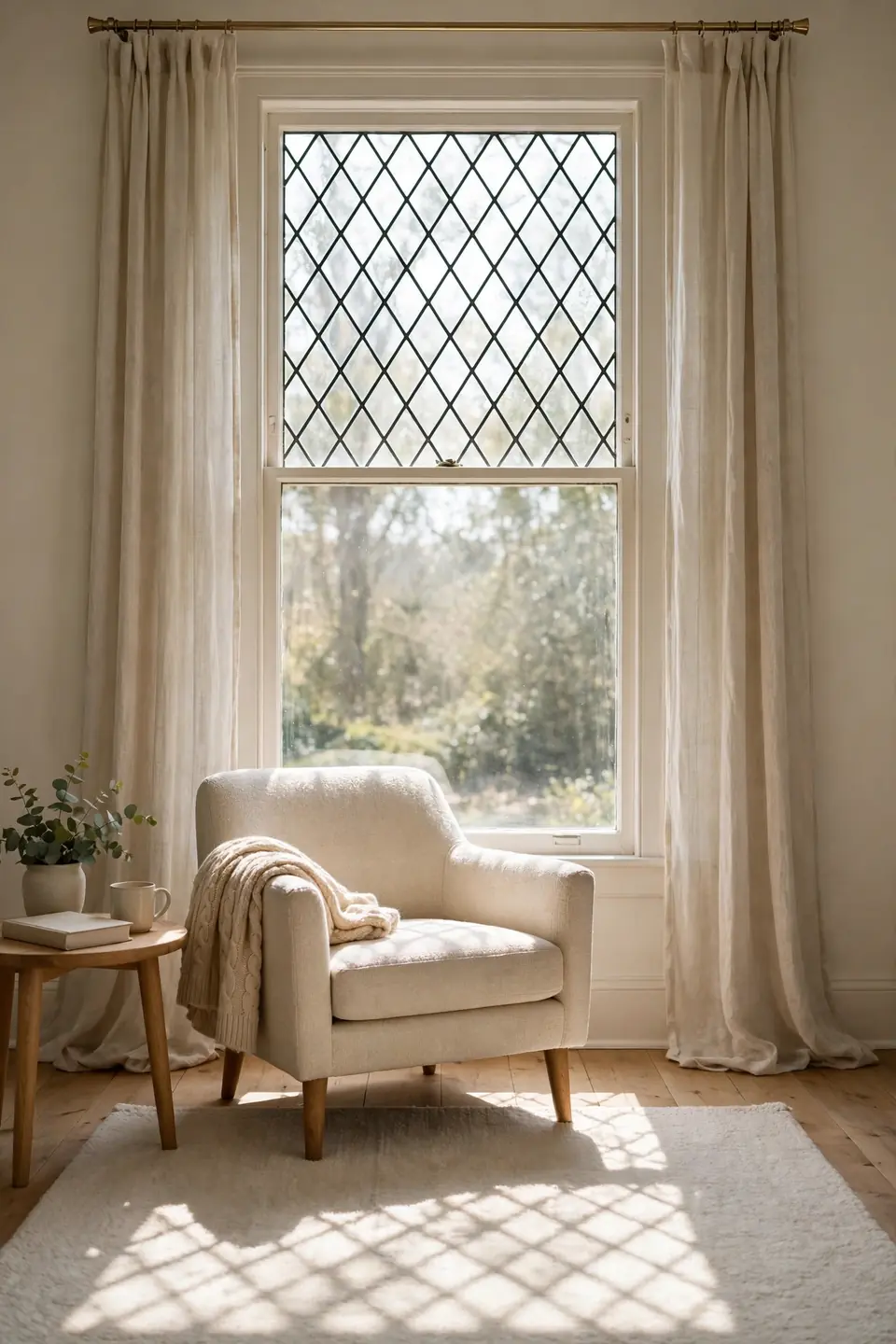
Quick Tip: Leaded glass film brings diamond patterned light to plain windows for very little money. Apply the film to the upper sash only, keep curtains sheer and cream, and let low sun throw soft geometry across the rug on bright afternoons at home.
Real stained glass can overwhelm a modest room, so scale is the secret. One patterned window near the reading chair feels storied; four patterned windows can feel like a theme park. Brass curtain rods and simple linen panels keep the focus on the light itself. Clean the film with a soft cloth only, since rough sponges cloud the leading lines.
Shadowy Corner Reading Nook
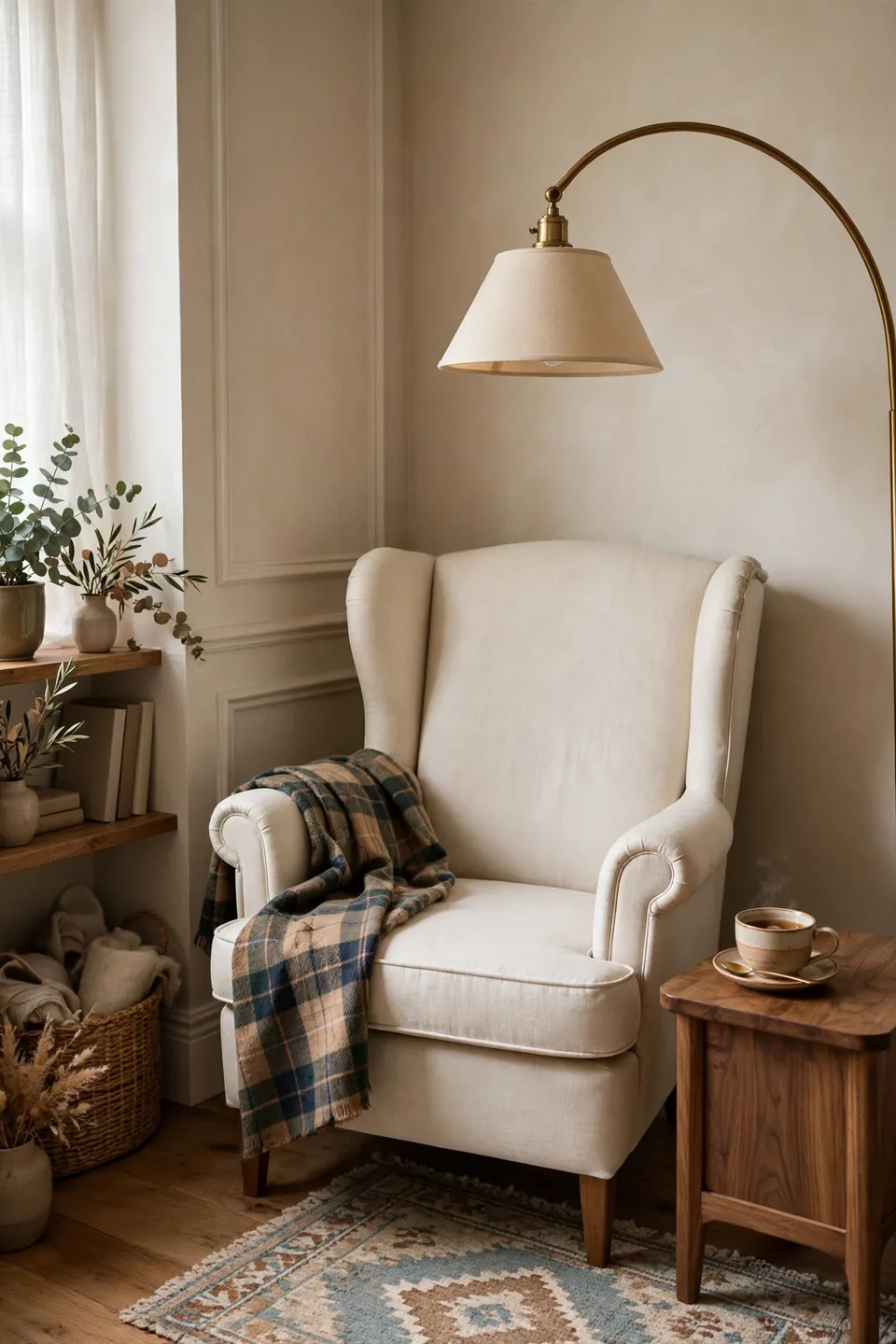
BEFORE: A shadowy corner held one chair, a cold floor lamp, and a stack of unread books. The seat faced the wall, the light glared, and nobody chose the spot for more than a minute.
AFTER: The chair now angles toward the room beneath an arched brass lamp. A walnut side table holds tea and glasses, while a plaid throw and cream cushion make the corner feel claimed and calm.
Corners borrow confidence from richer schemes, including moody blue living room decor ideas, where one deep corner becomes the favorite seat. Borrow the principle, not the palette: warm light, one dark outline, and soft layers at hand height. A small rug under the chair legs marks the territory clearly.
Carved Coffee Table Styling
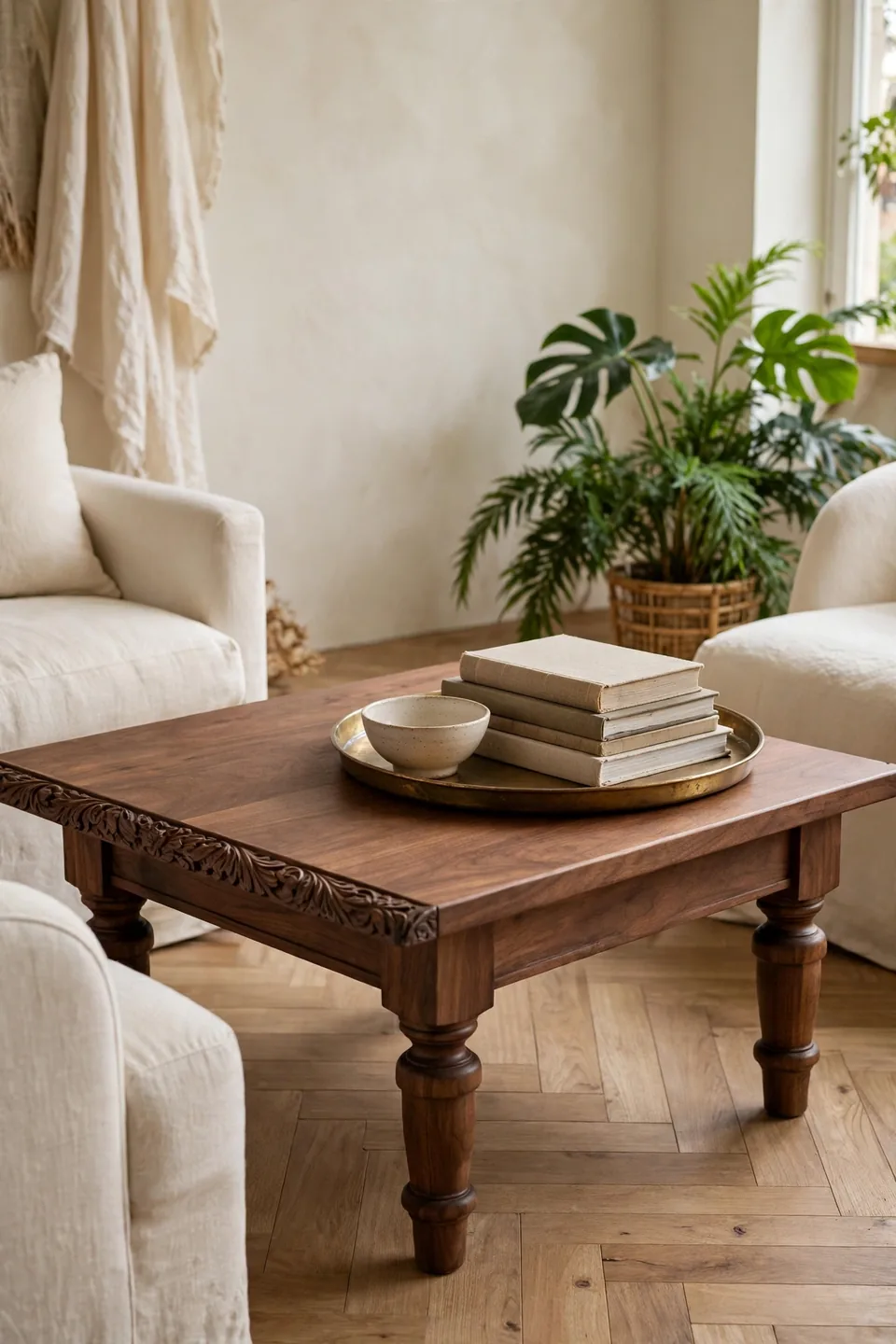
- Choose a walnut coffee table with one carved edge or turned legs.
- Ground the surface with a shallow brass tray at the center.
- Stack two art books inside the tray and top them with a ceramic bowl.
- Leave one third of the table empty for cups, feet, and breathing room.
- Repeat the carved line in a picture frame or chair leg nearby.
A coffee table carries the room’s manners. Guests read its styling before they settle, so order matters more than ornament. Keep heights low and varied, and let one green plant soften the geometry. In my experience, a single carved piece looks collected, while carved everything turns theatrical by the second glance.
Oak Versus Walnut Woods
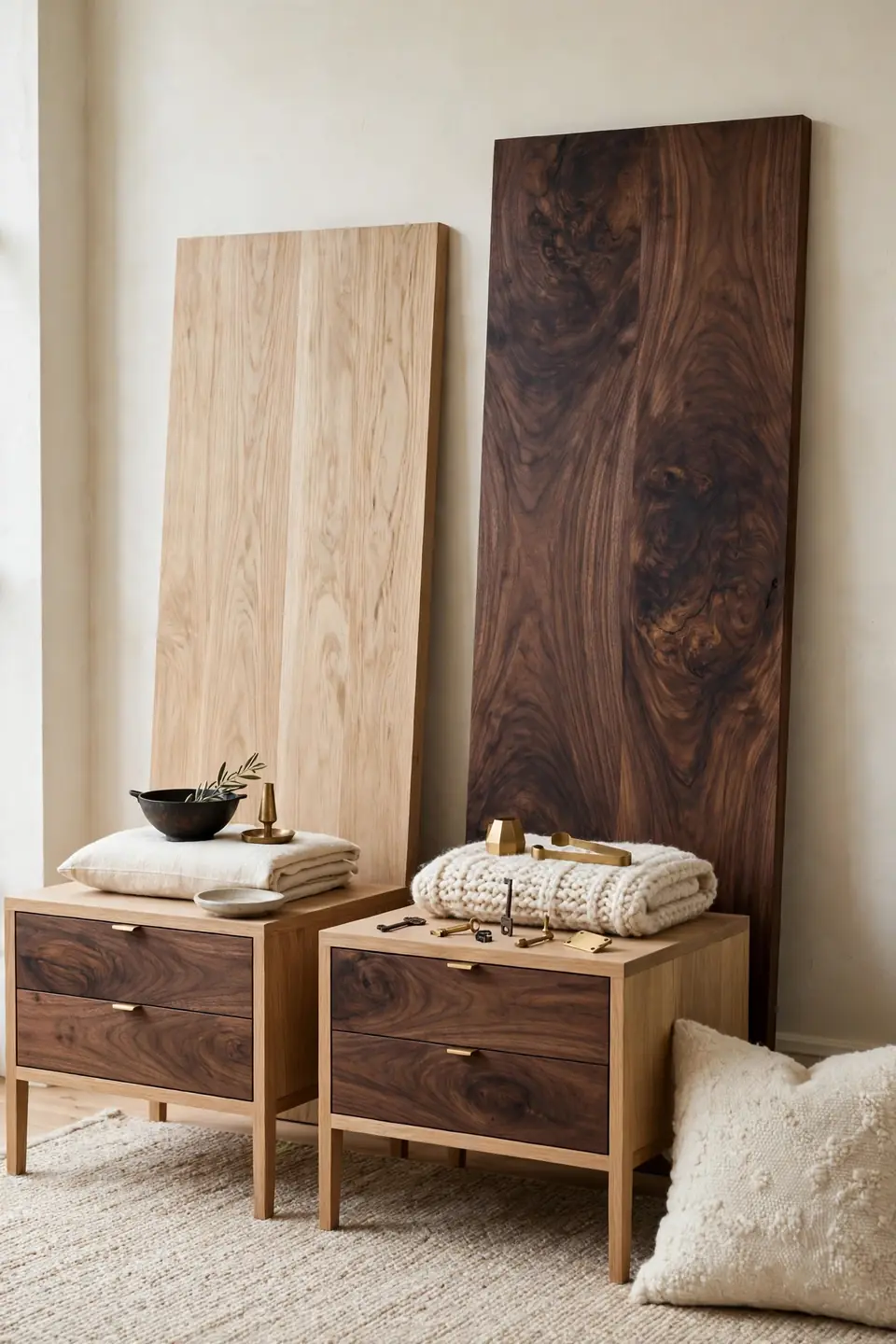
| Feature | Light Oak | Dark Walnut |
|---|---|---|
| Mood | Airy and relaxed | Deep and grounded |
| Grain | Subtle and straight | Rich and swirling |
| Pairing | Cream linen, brass | Cream wool, iron |
| Best For | Small bright rooms | Large classic rooms |
Oak suits compact rooms that need the Tudor outline without the weight, while walnut suits generous rooms where beams and bookcases can hold their own. Either wood warms beside cream textiles and black iron, especially when the second wood appears only in frames or stool legs. Rub samples with the oil you plan to use and view them beside the sofa fabric, because finish can shift oak honeyed and walnut nearly black under warm evening bulbs at home.
Pattern Mixing With Plaid
Do:
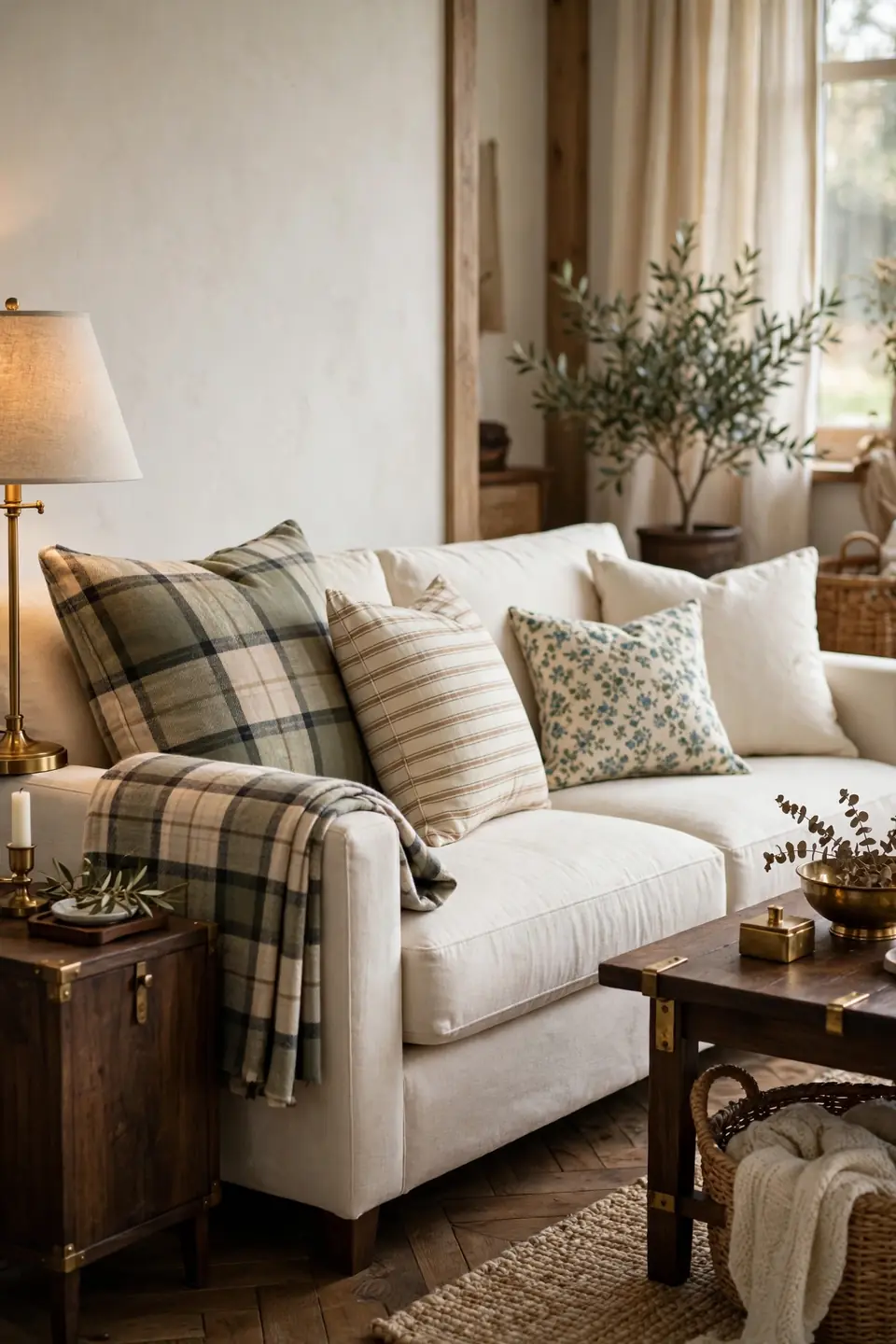
- Pick one plaid as the hero and pull its colors into solids.
- Pair plaid with one stripe and one small floral at most.
- Repeat the hero pattern twice, then stop adding new prints.
- Rest the eye with a solid cream cushion between patterns.
Don’t:
- Let every textile compete at the same scale and volume.
- Match plaid colors exactly across old and new fabrics.
- Forget texture; flat prints alone can look paper thin.
Pattern mixing fails on scale, rarely on courage. Keep one loud print, one quieter companion, and let weave do the rest. Photograph the sofa from the doorway; clashes appear on a small screen long before they bother you in the room.
Smart Tudor Budget Facts
Cost: Low to medium | Time: One weekend | Skill Level: Beginner | Best For: Renters and first refreshes
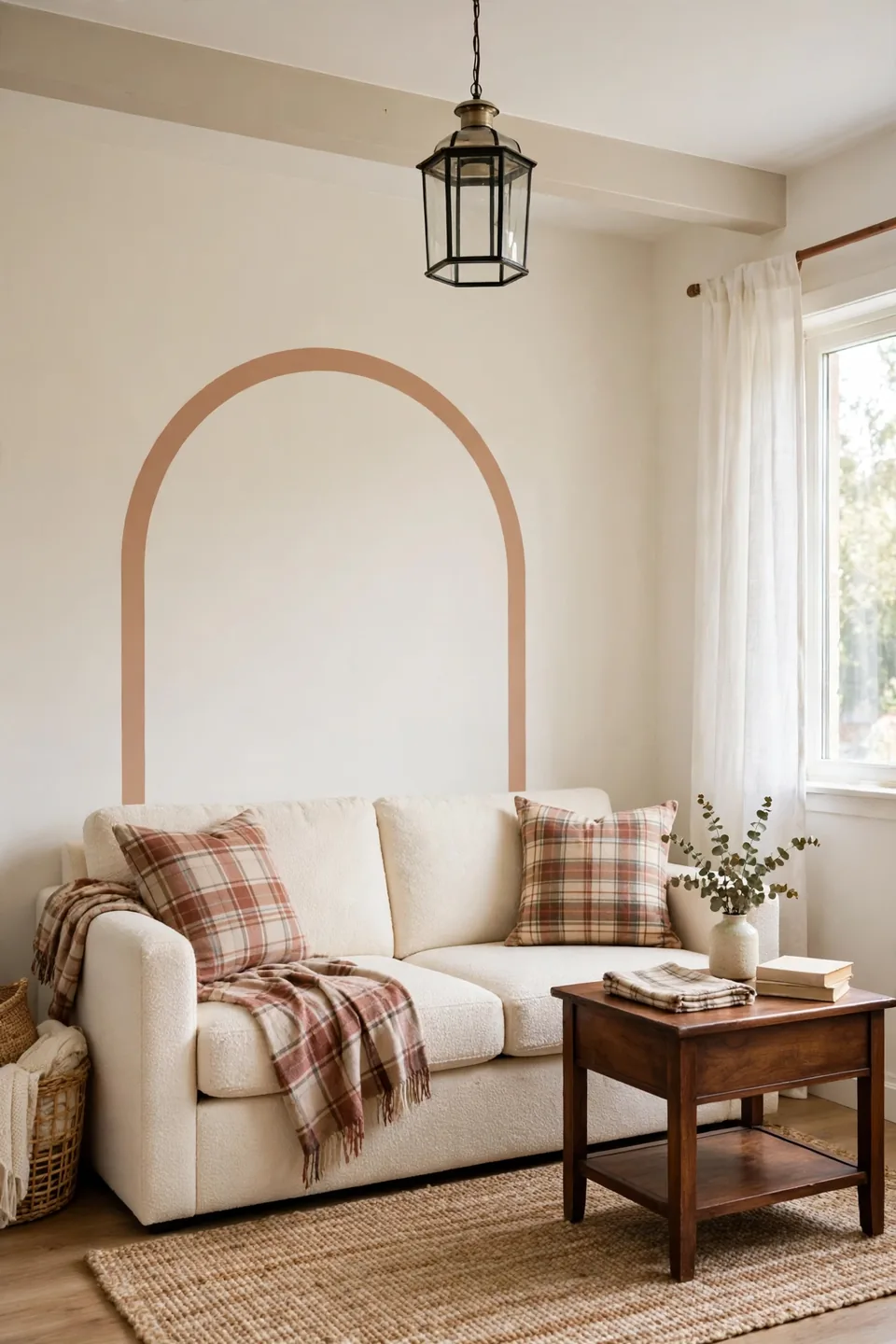
Tudor character rarely requires renovation. Arch decals, faux beams, lantern pendants, and plaid textiles can all arrive by delivery and leave with you later. Spend the serious money on one walnut piece with real weight, because flimsy furniture undermines every historic line around it. Shop secondhand for carved frames, brass lamps, and leather chairs; age is the one finish new factories cannot fake well. I’ve noticed older pieces also forgive modern sofas, giving the room a collected story instead of a showroom set. Build slowly, one layer per month, and the style stays personal rather than purchased all at once.
Wingback Chairs Cream Throws
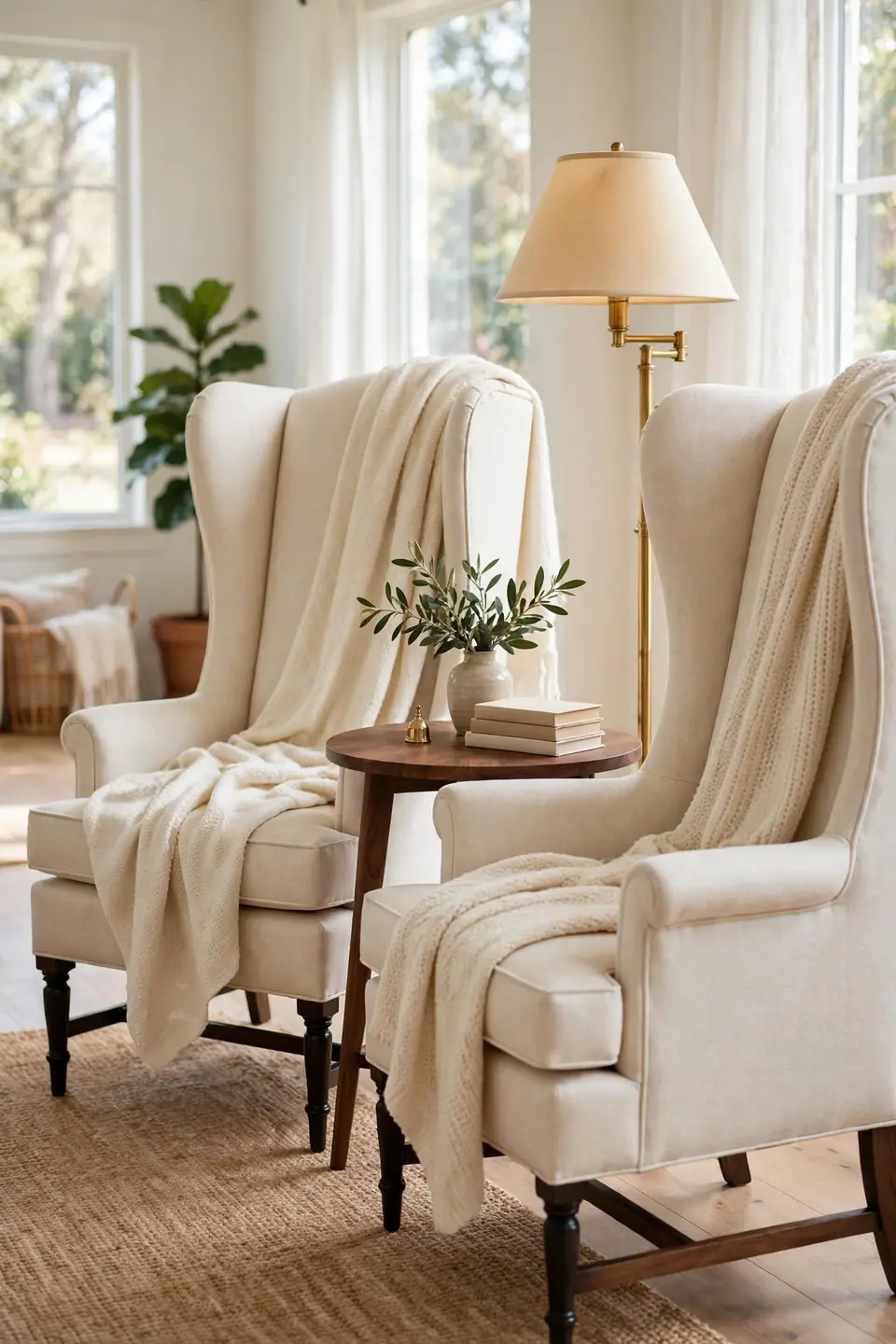
Two wingback chairs turn a sofa wall into a conversation. Their tall backs echo Tudor arches, while cream upholstery keeps the pair from looming over the room. Angle them slightly inward, add a small walnut table between, and the seating suddenly feels intentional from the doorway.
Drape one cream throw over the chair nearest the window and fold the second across the ottoman. The soft layers invite lingering, and washable fabrics keep the formality honest for daily life. A brass reading lamp behind one shoulder completes the pairing after dark. Choose legs in dark wood so the pale seats still carry the classic outline.
Iron Chandelier Soft Glow
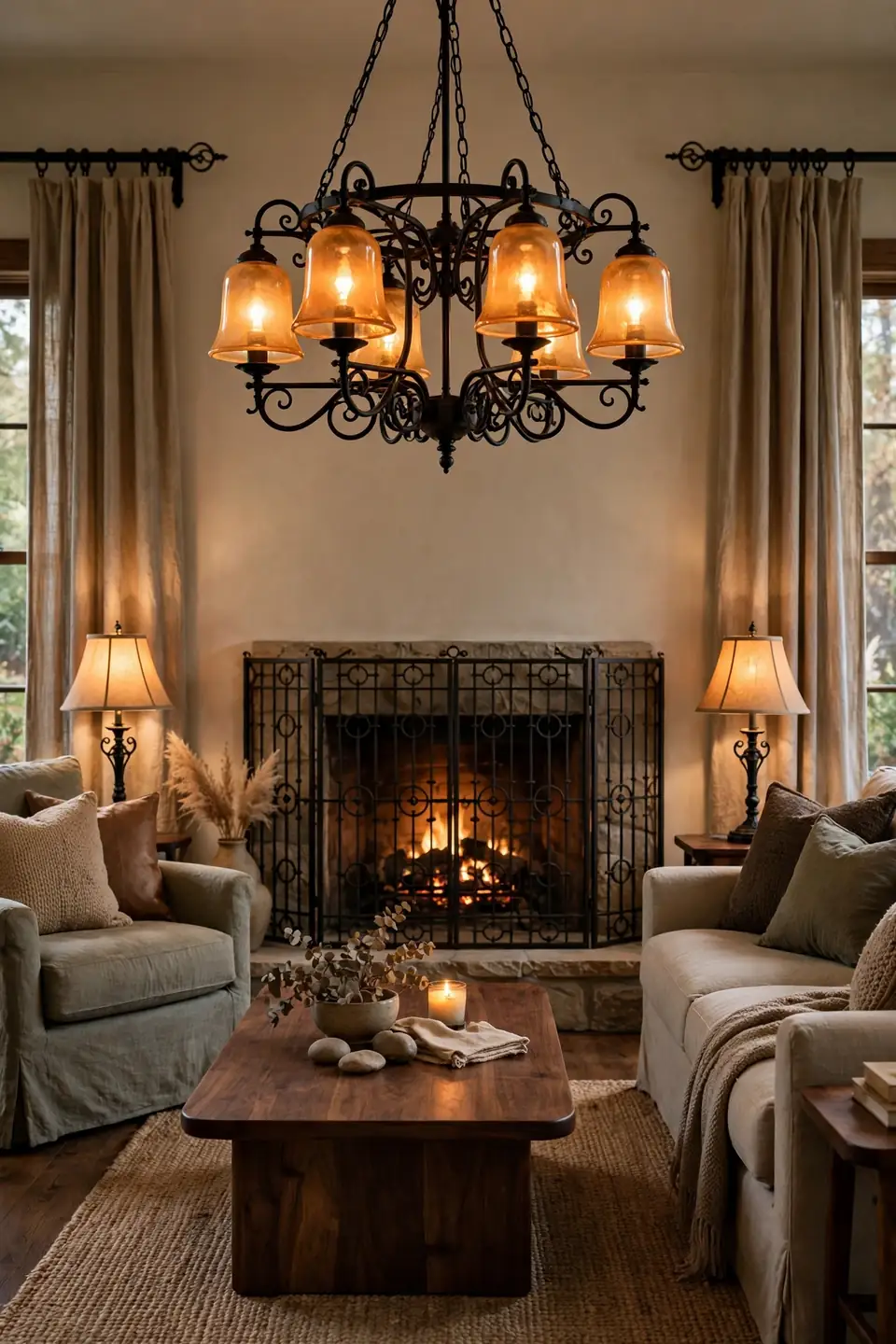
- Hang a black iron chandelier low enough to crown the seating, not the ceiling.
- Choose amber glass shades so faces look warm beneath the light.
- Put the fixture on a dimmer for mornings, games, and late talks.
- Repeat iron in curtain rods and one fireplace screen for rhythm.
- Keep bulbs consistent in temperature across every lamp in view.
Overhead light sets the room’s manners after sunset. A strong iron outline with soft amber bulbs gives Tudor rooms their evening ceremony without glare. I’ve noticed guests linger longer when the brightest light sits at table height, so let the chandelier glow gently and lamps do the real work.
Arched Bookcase Styling Guide
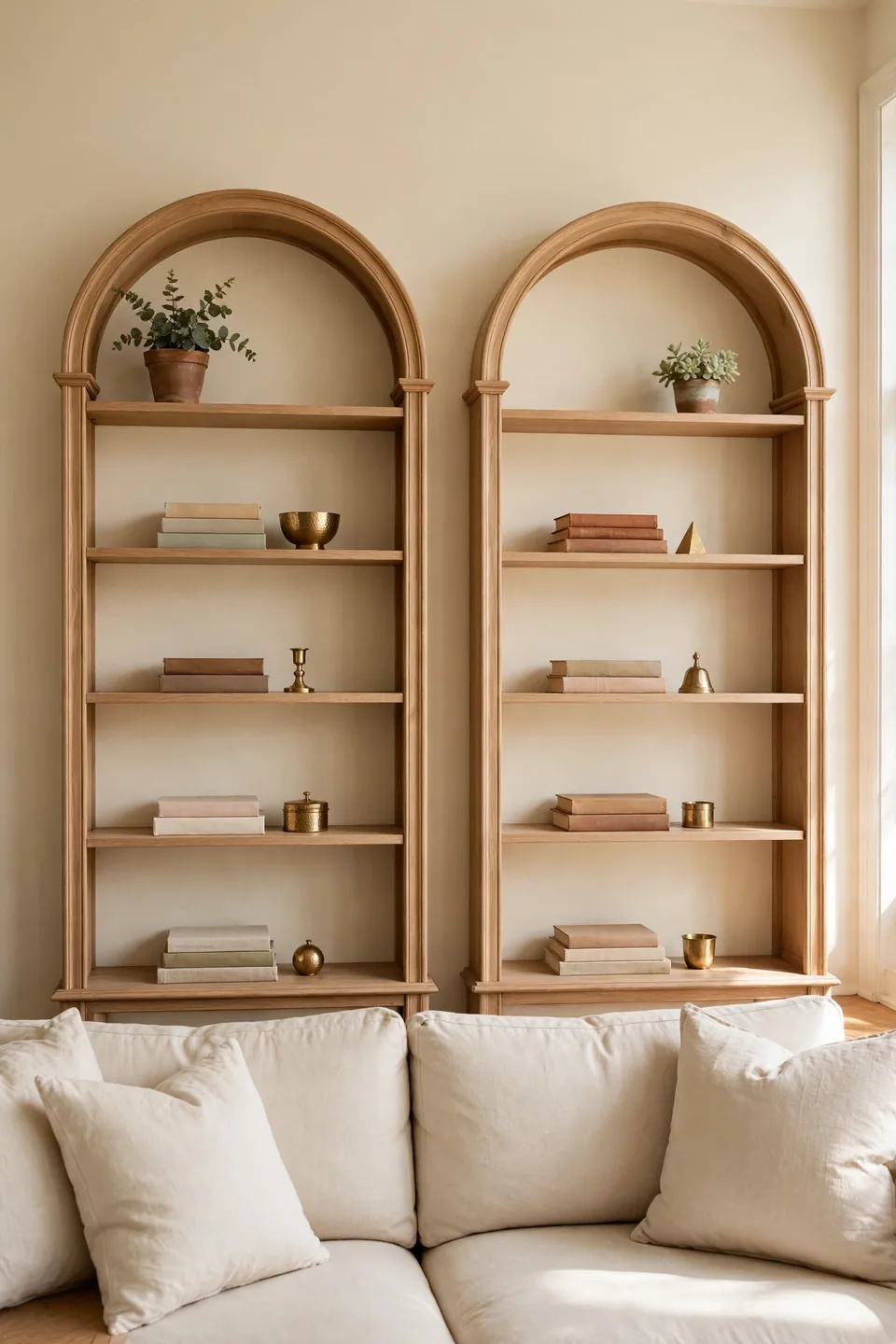
Quick Tip: Arched bookcases deliver the silhouette without carpentry. Stand two tall cases on the sofa wall, paint their backs warm cream, and style shelves with books laid low so the curved tops stay visible from across the room on bright days.
Shelf styling rewards restraint. Group books by height, rest one brass object beside each stack, and leave a third of every shelf empty for shadow and air. A small plant on the top shelf softens the architecture. Rotate one object seasonally and the bookcase feels collected rather than decorated once and forgotten by everyone. Calm shelves photograph beautifully too.
Dull Rental Living Makeover
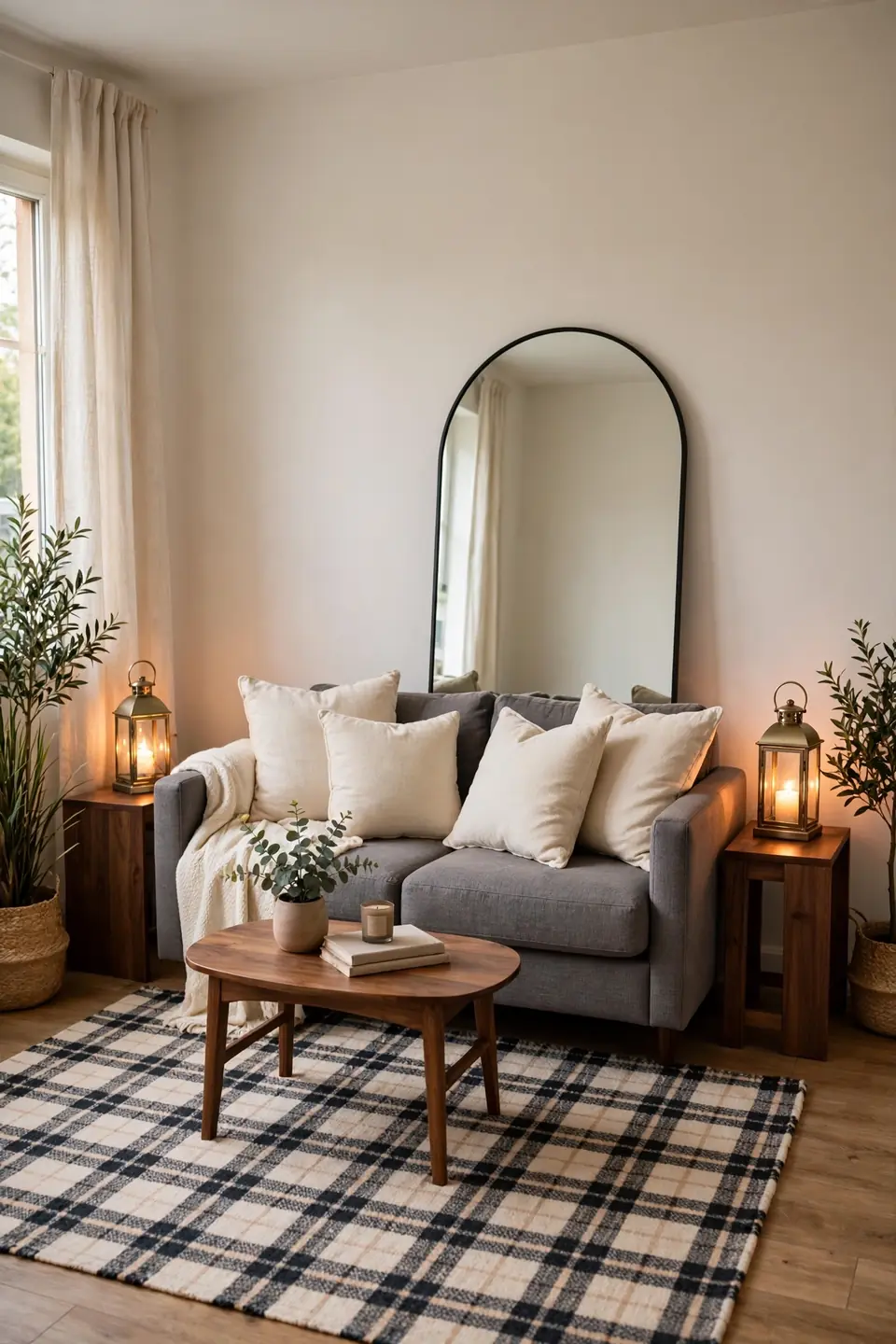
BEFORE: Beige carpet, white blinds, and a landlord gray sofa made the rental feel temporary. Nothing could be painted, drilled, or changed, so the room stayed polite and personality free for months.
AFTER: A plaid rug, arched mirror, and walnut side tables gave the same room a story in one afternoon. Lantern lamps warmed the corners, cream cushions brightened the sofa, and every change can leave with the deposit intact.
Rental Tudor style lives in movable layers. Lean the arch shapes, plug in the lanterns, roll out the pattern, and photograph the result before signing anything permanent elsewhere. Landlords rarely object to beauty that packs into boxes when the lease ends and moving day arrives.
Textured Rug Layering Steps

- Roll out a large cream rug to define the full seating zone.
- Layer a smaller plaid or Persian style rug at an angle on top.
- Align the top rug with the coffee table, not the walls.
- Tuck edges under the sofa legs so layers stay calm and safe.
- Vacuum both layers weekly to keep the pattern edges crisp.
Layered rugs supply the age and pattern Tudor rooms crave, especially over plain rental carpet. Keep the base pale and the top pattern deep, and the seating gains a center without a single wall changing. In my experience, thin rug pads between layers stop creeping and make the stack feel plush underfoot.
Linen Versus Wool Textiles
| Feature | Linen | Wool |
|---|---|---|
| Feel | Cool and crisp | Warm and dense |
| Care | Washable covers help | Brush and air |
| Season | Summer evenings best | Winter nights best |
| Best For | Bright family rooms | Fireside reading corners |
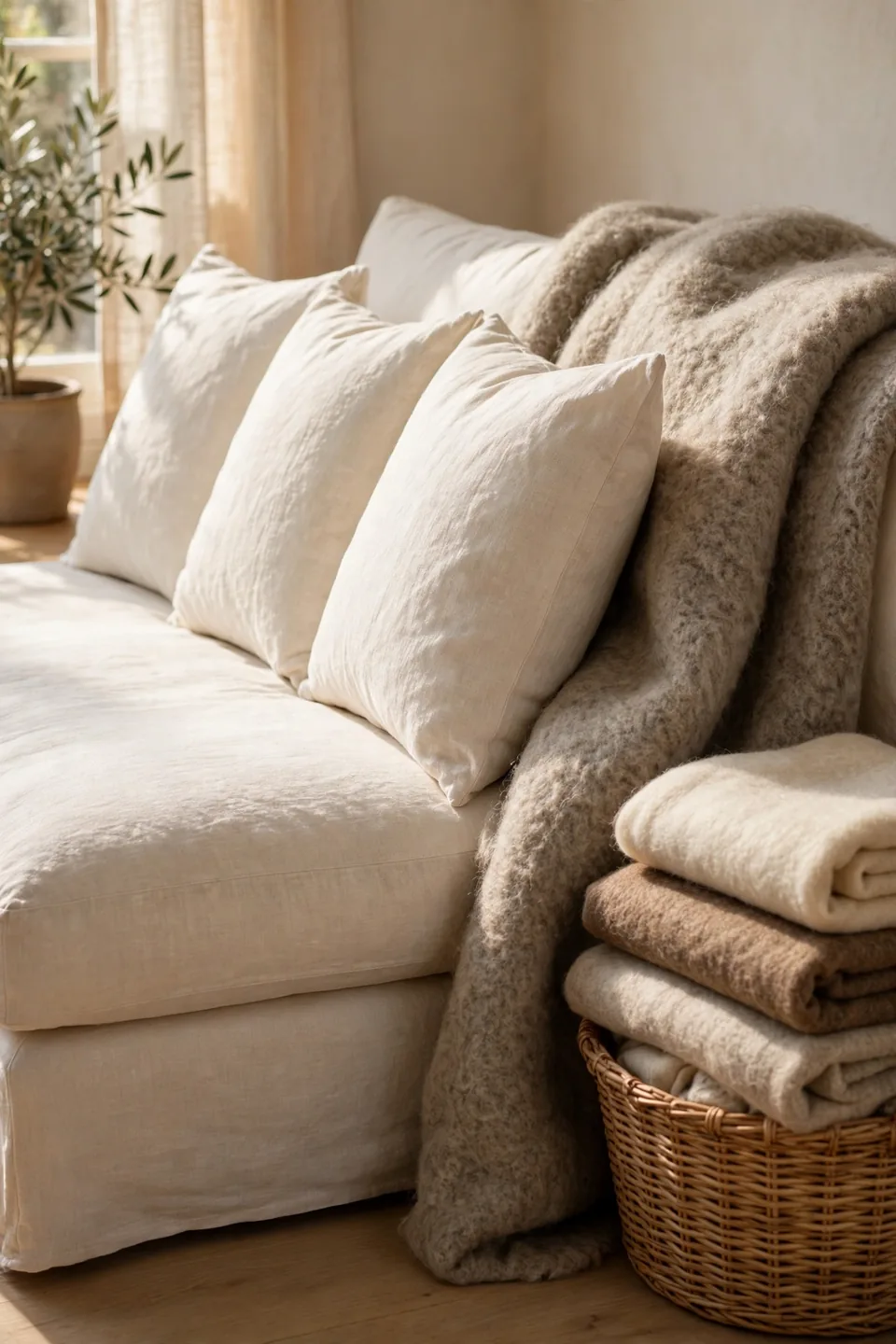
Linen keeps cream upholstery breezy through summer, while wool throws and cushions give winter evenings their weight. Either fiber suits the style when the palette stays cream, walnut, and iron, because texture is doing the decorating. Test both against the rug at home, since linen can read gray beside warm wood and wool can deepen under amber bulbs. Keep one basket near the sofa so off season layers stay close, folded, and ready for the first cold night of the year.
Gallery Wall Heraldic Touch
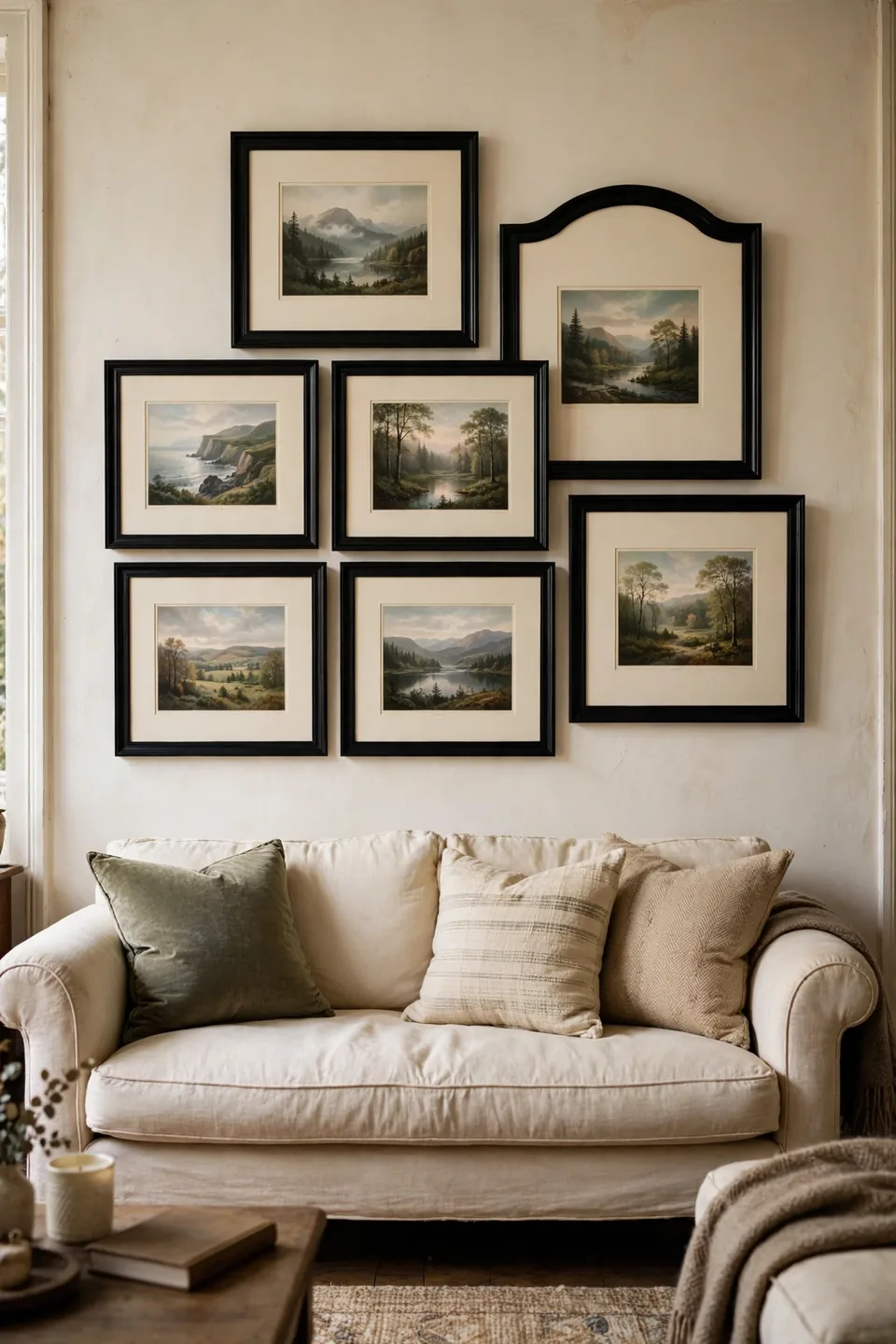
Do:
- Group black framed landscapes and portraits in one tight salon cluster.
- Mix one arched frame among rectangles for the Tudor note.
- Keep mats cream so dark art never merges into shadow.
- Hang the cluster at seated eye level for intimacy.
Don’t:
- Scatter small frames across every wall until the room stutters.
- Buy crest prints and crown motifs that tip into costume.
- Hang art so high that guests must crane to enjoy it.
A gallery wall should feel inherited, not installed. Leave one frame slightly imperfect in the grid, step back, and let the cluster settle. The heraldic touch lands through shape and story, never through shields printed on cushions or novelty signs by the door.
Conclusion
Start with one arch, one dark wood anchor, and light that flatters faces after sunset. Save the rooms that made you pause, test the layers with textiles first, then let permanent pieces follow when the balance feels right. Shared with a friend planning a refresh, modern Tudor living room ideas reward patience every time. I’ve seen how small changes like these can completely shift the way a space feels, turning a plain room into a place with story, warmth, and welcome. Classic does not mean stiff here; it means every piece earns its place and the room still makes room for naps, games, and long talks. Pin your favorite idea tonight and begin this weekend.