23 Rustic Modern Living Room Decor Ideas for Cozy Sophistication
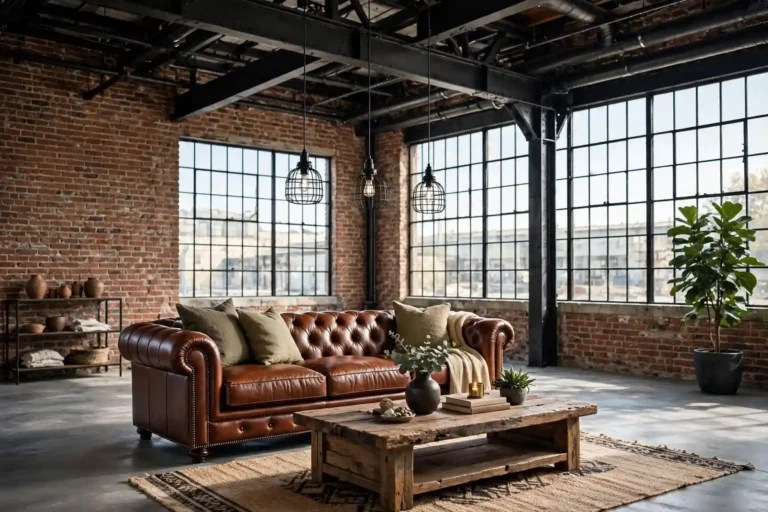
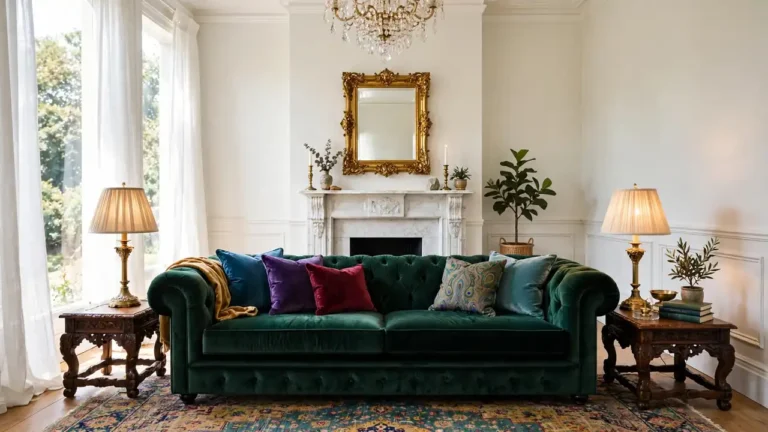
Raw wood, worn leather, and clean lined furniture share one room beautifully when rustic modern living room decor sets the rules. The style pairs the honesty of reclaimed materials with the calm of modern shapes, so a space feels collected and warm without ever turning cluttered or themed.
The twenty three ideas ahead cover beams, stone, textiles, and the small styling choices that keep rustic pieces feeling current. An open plan home carries the same mix into eating and cooking spaces, as shown in these modern cottage kitchen decorating ideas, and every idea below balances one rugged texture against one smooth surface. Start anywhere; each change stands on its own.
Reclaimed Wood Beam Ceilings
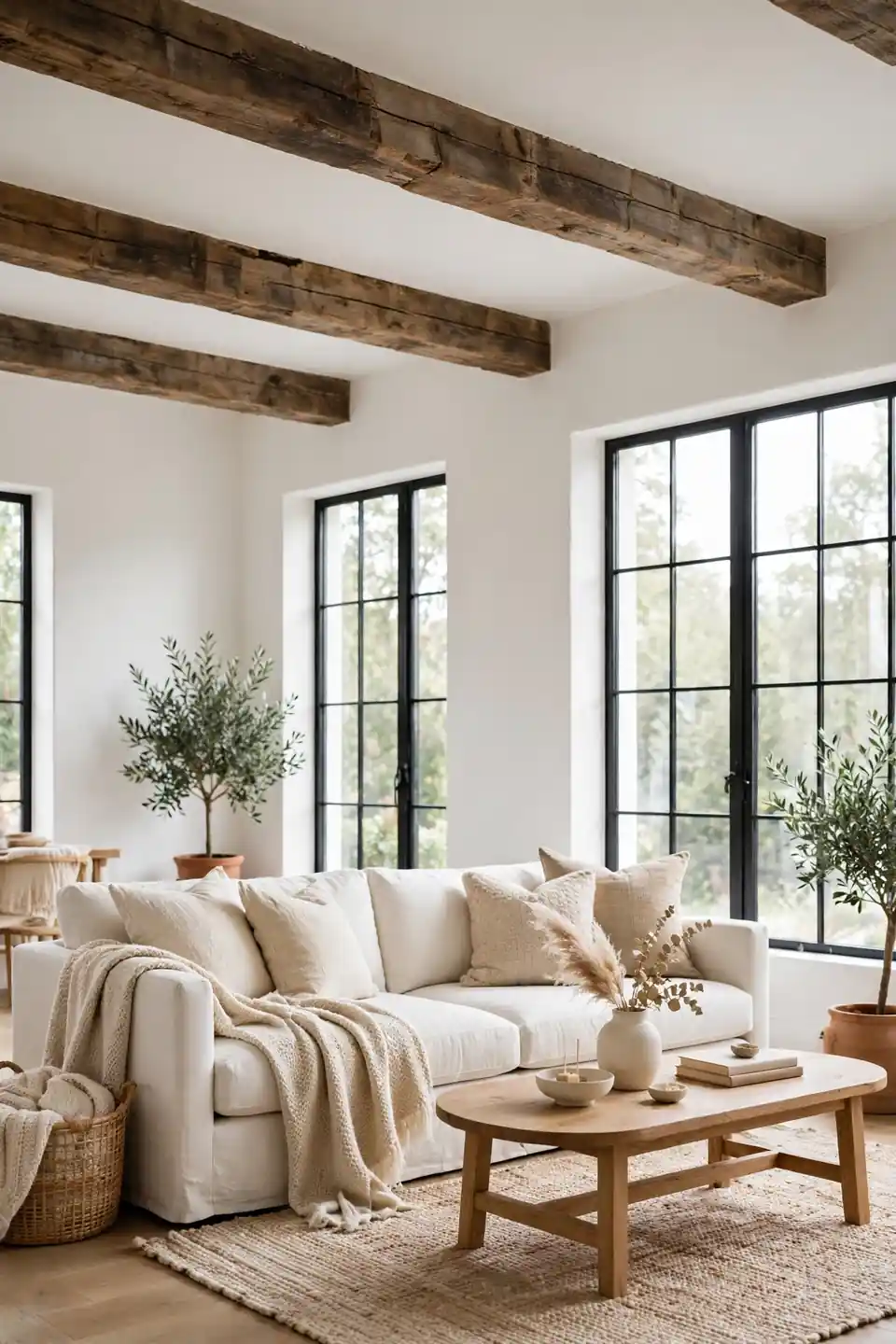
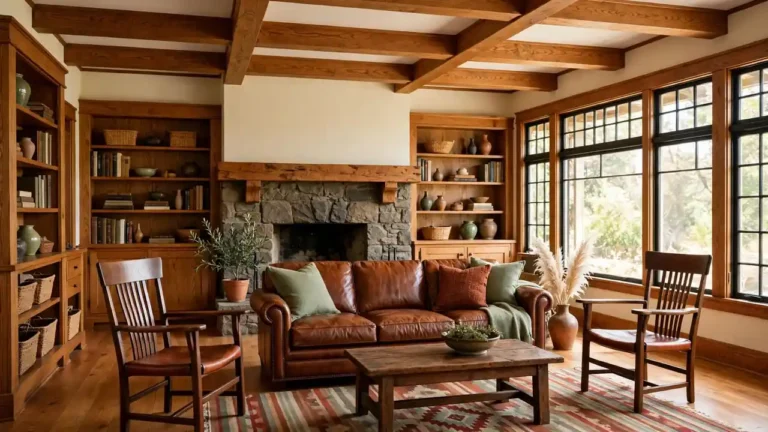
Few features change a ceiling faster than reclaimed beams with real saw marks and weathered color. The timber carries history overhead while the furniture below stays simple, and that contrast is exactly where rustic modern rooms find their balance. Stain stays natural, never orange, so the grain reads warm grey brown in daylight.
Spacing matters more than size. Beams set roughly four feet apart suit most rooms, and a single run across a short ceiling can work better than a full grid in a small space. In my experience, faux beams fool nobody at close range, so choose solid reclaimed stock or honest new timber with a rough sawn finish.
Stone Fireplace Clean Lines
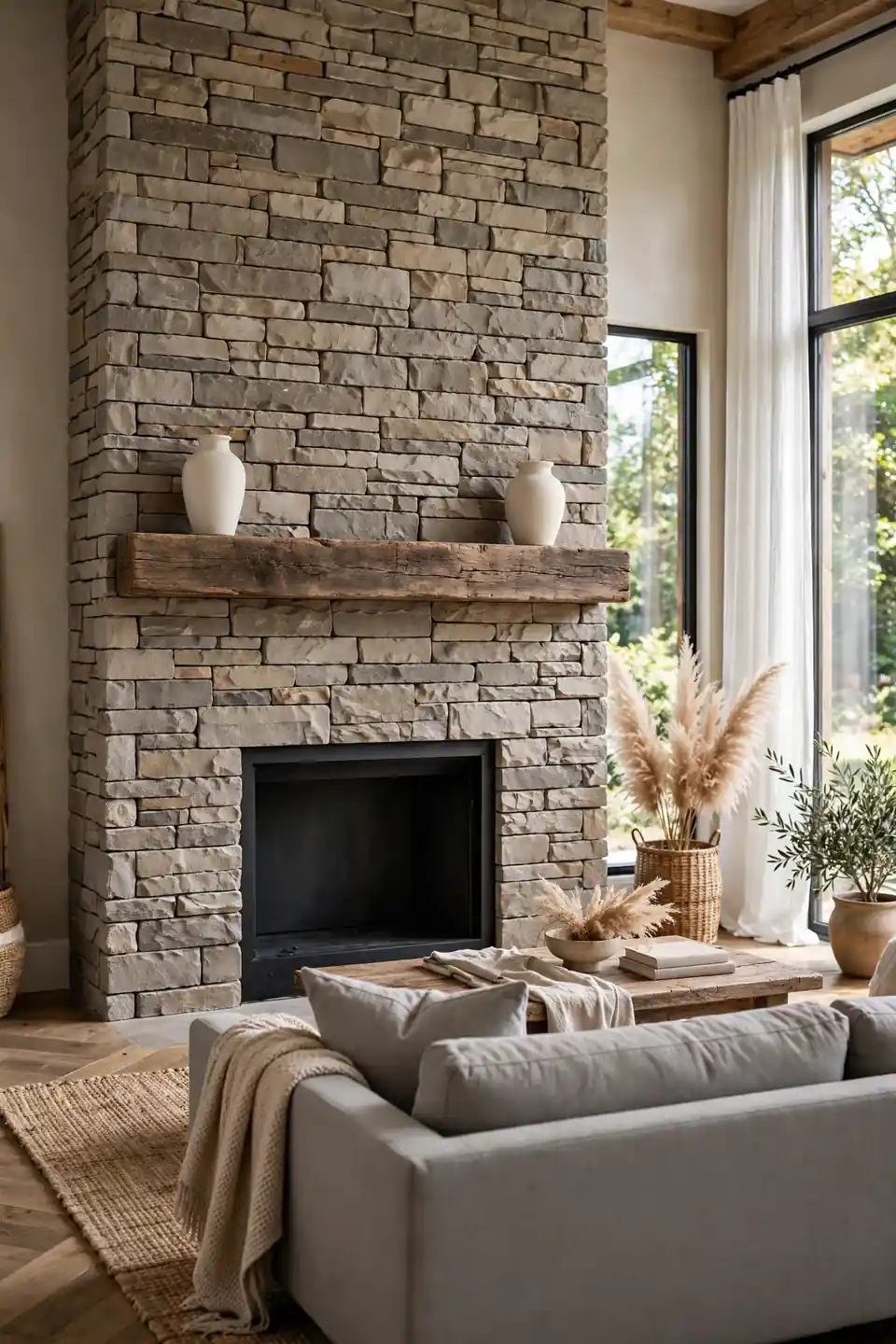
- Choose stacked stone or large cut blocks over small river rock for a calmer, more modern face.
- Keep the mantel shelf thick and plain, in reclaimed oak or blackened steel, with no corbels.
- Stop stone at a clean edge; a crisp border keeps texture from looking unfinished.
- Limit the hearth styling to two objects, such as a ceramic vase and a stack of logs.
- Match mortar to the lightest stone so the wall reads soft, not busy.
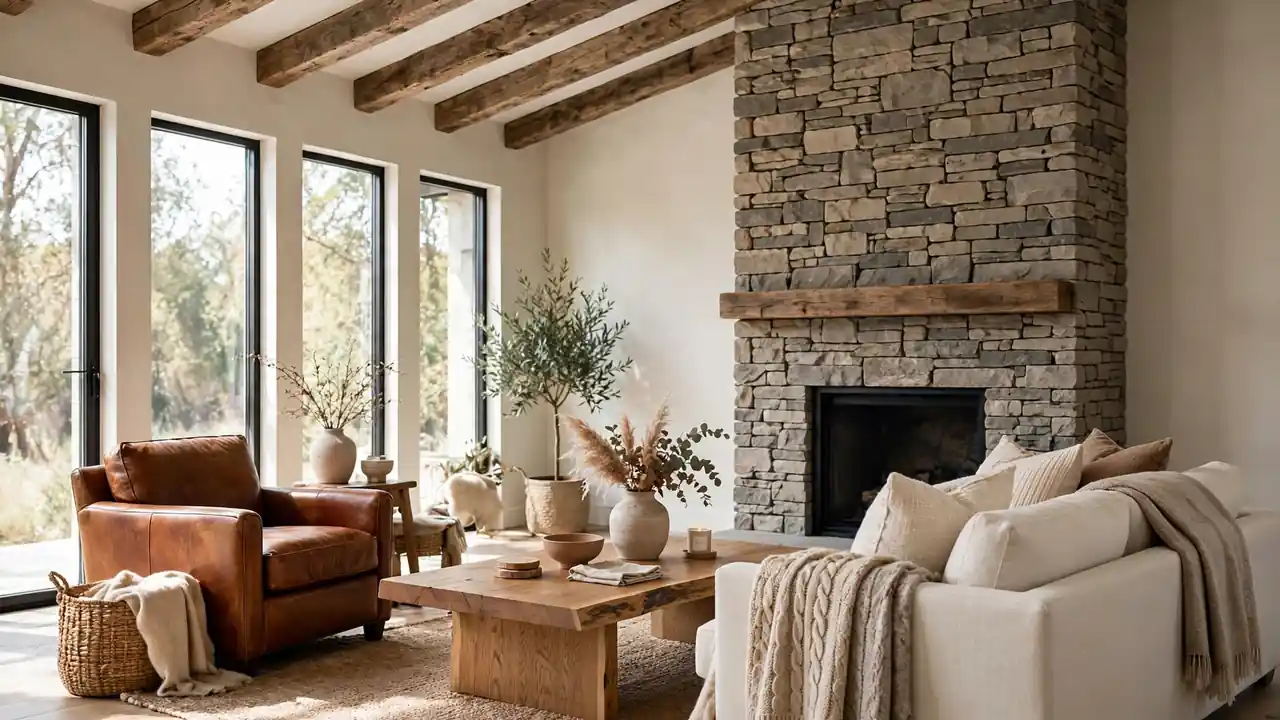
Stone earns its keep when the lines around it stay quiet. A plain surround lets the rock texture carry the whole wall, while a busy mantel would fight it. Keep seating low and simple in front of the fire, and the fireplace becomes the room’s anchor without shouting.
Leather Sofa Warm Patina
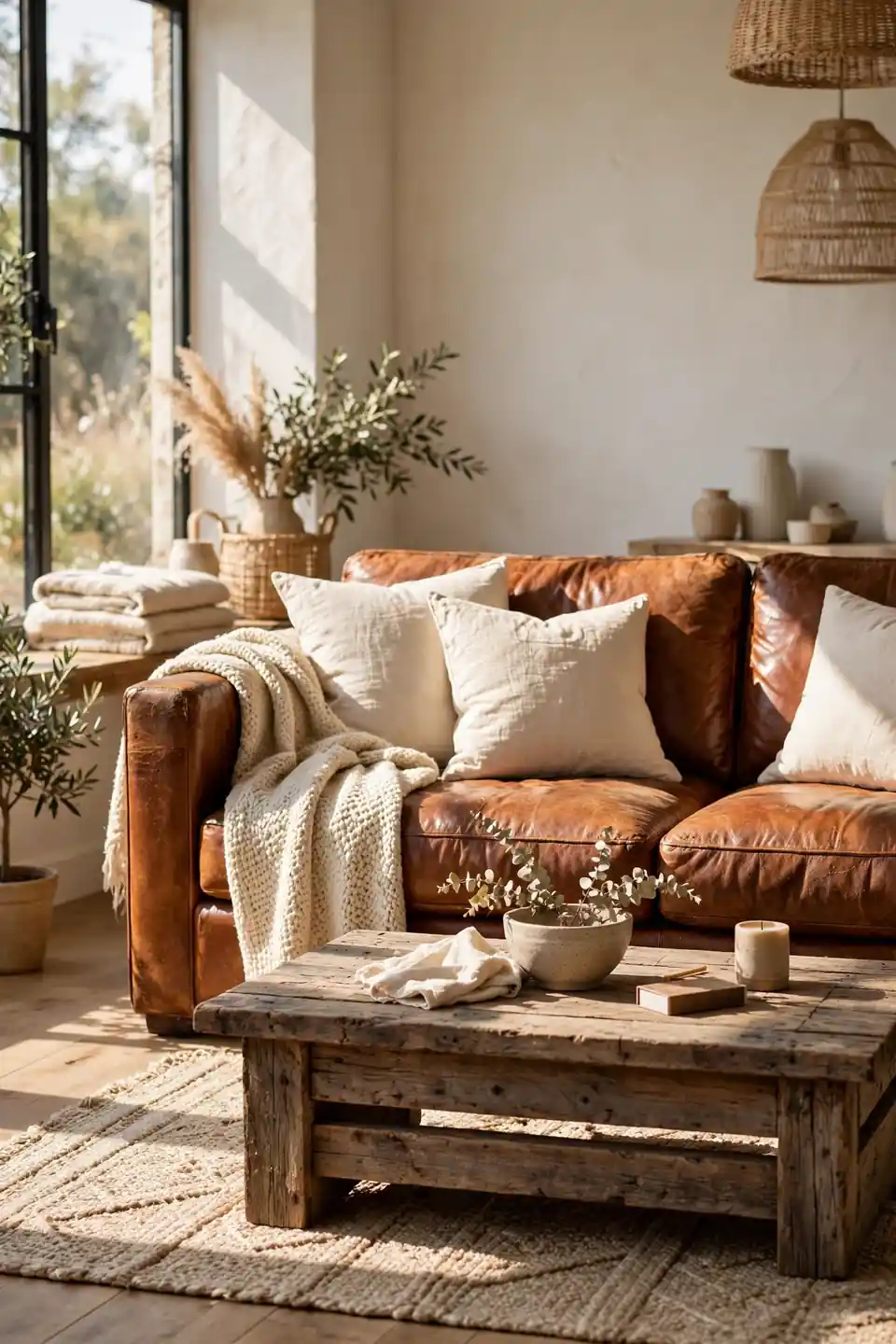
Quick Tip: Condition a leather sofa twice a year with a balm made for aniline hides. The surface drinks it in within an hour, dry patches fade, and the patina deepens evenly instead of cracking at the creases where people sit most.
Cognac and warm tan leathers suit this style best because they glow against pale walls and dark wood alike. Scratches and soft sheens are part of the bargain; a hide that shows life looks richer every year. Pair the sofa with linen cushions and one wool throw so the leather stays the single shiny surface. Skip black leather here; it reads office, not hearth.
Bare Walls Rustic Makeover
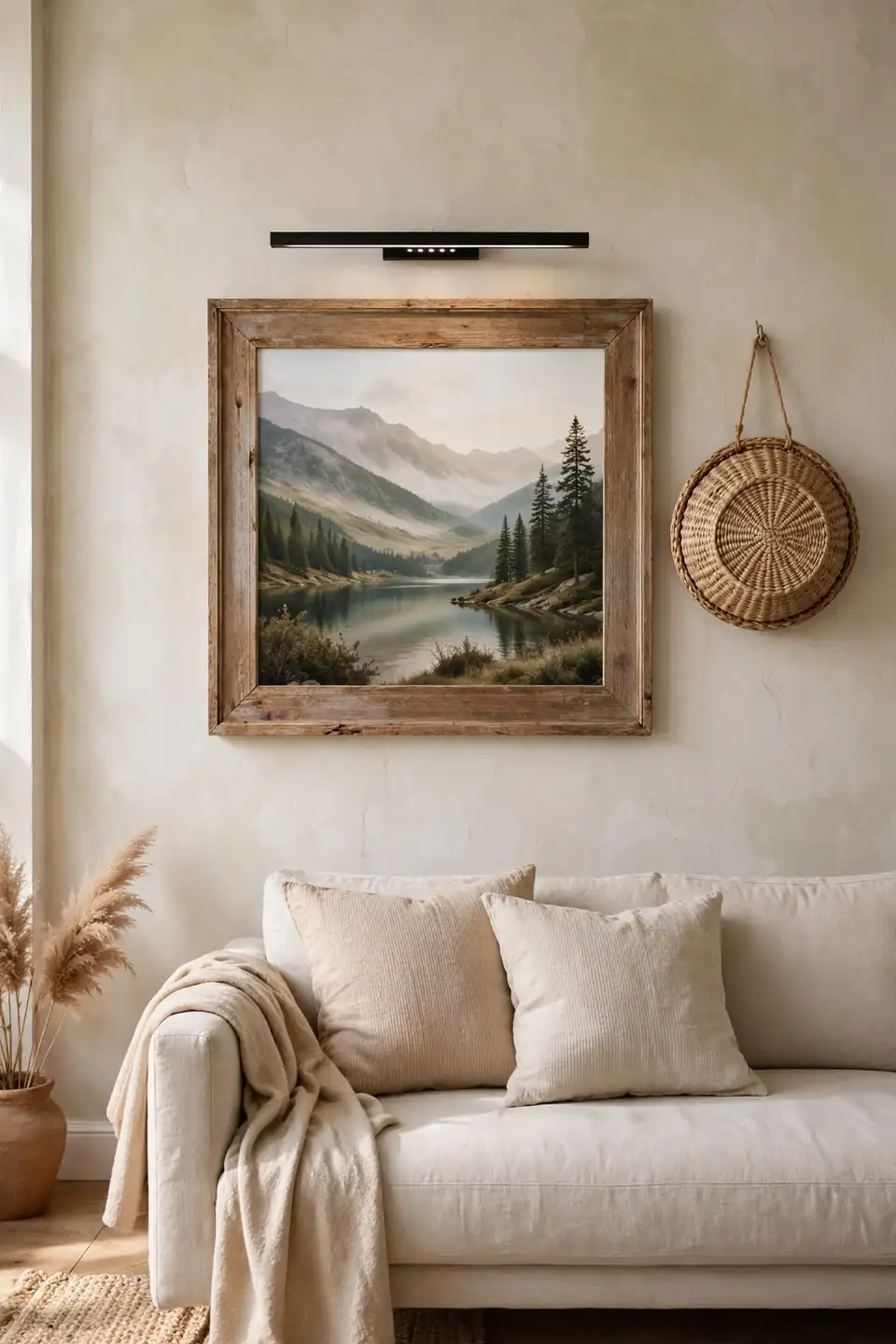
BEFORE: Blank plaster walls stretched from corner to corner with nothing to catch the eye. The sofa floated in the middle of the room, evenings felt flat under one ceiling light, and the space read as a waiting room rather than a place to settle.
AFTER: One oversized landscape print in a weathered oak frame now anchors the wall above the sofa. A slim picture light warms the art after dark, a woven basket adds texture at the edge, and the wall finally earns its share of attention.
Scale solves most bare wall problems. One large piece hung at eye level beats a scatter of small frames because it gives the rustic textures below it room to breathe. Aim for art spanning two thirds of the sofa width.
Layered Rug Styling Steps
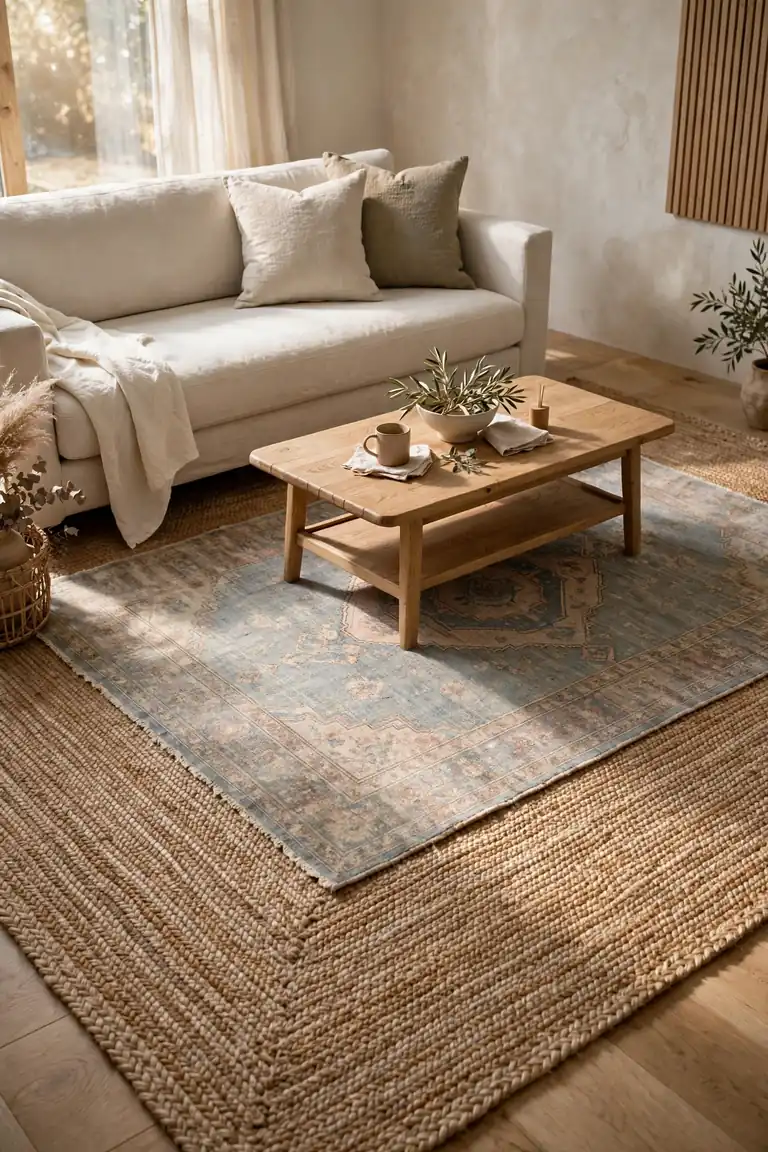
- Start with a flat jute or sisal base rug sized so front sofa legs rest on it.
- Center a smaller wool or vintage style rug over the base, leaving a border of jute showing.
- Align the top rug with the coffee table so the seating zone reads as one island.
- Tape the corners of the top layer or use a thin pad so edges stay flat underfoot.
- Check the stack height against door swings and chair legs before settling the furniture back.
Layering lets a plain natural rug do the sizing work while a smaller patterned piece brings the character. The stack also softens footsteps and warms cold floors through winter. Keep colors in one family so the layers read as one decision, not two rugs arguing.
Wood Versus Metal Accents
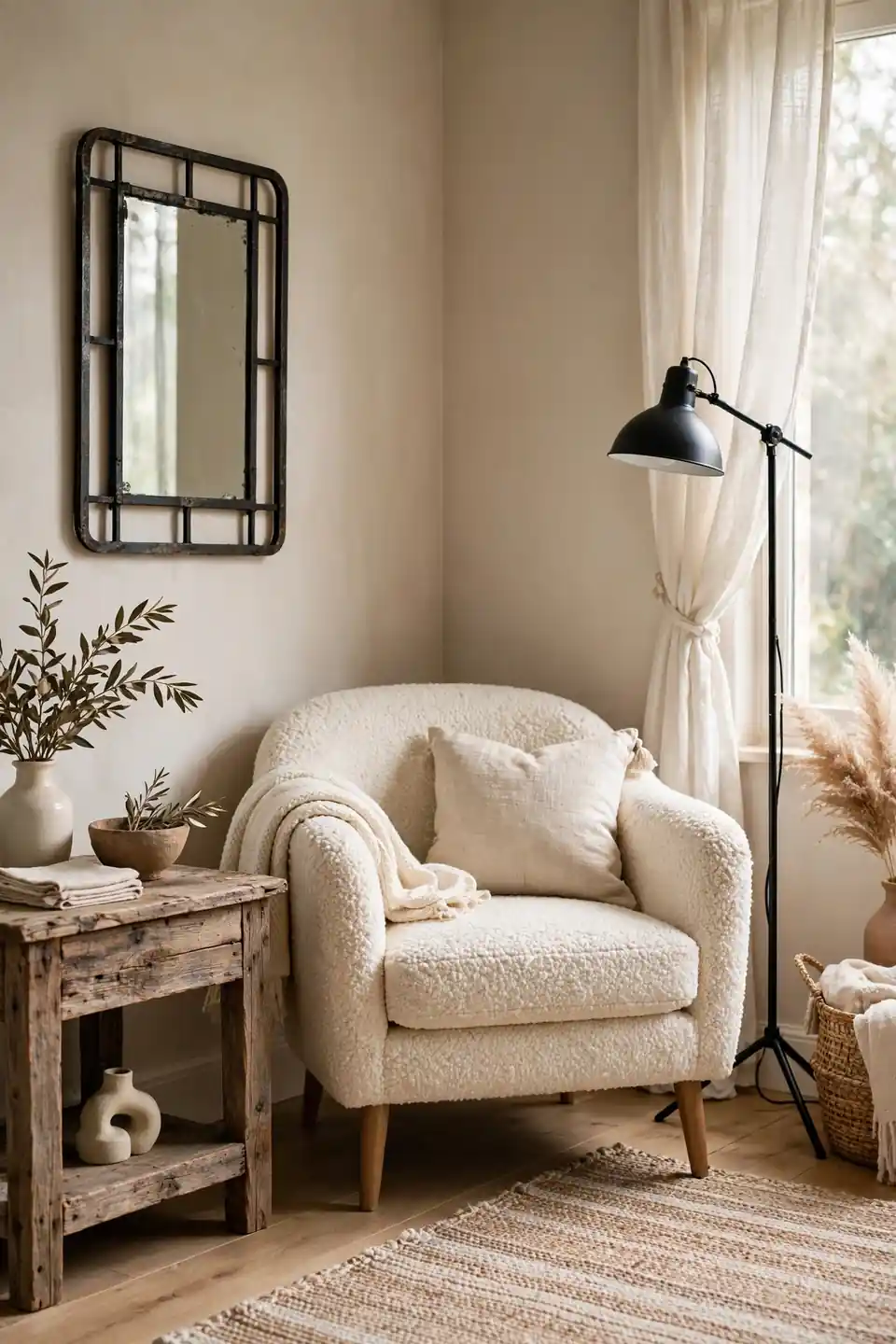
| Detail | Reclaimed Wood | Black Metal |
|---|---|---|
| Feel | Warm, grainy, and organic | Cool, smooth, and precise |
| Best Role | Tables, beams, and shelving | Lamps, frames, and legs |
| Care | Oil yearly, embrace marks | Wipe clean, watch for rust |
| Pairs With | Linen, wool, and stone | Leather, glass, and concrete |
Rooms feel richest when the two materials trade places across the space rather than clustering in zones. A wood table beside a metal lamp, then metal frames above a wood bench, keeps the eye moving. Keep the ratio near seventy percent wood to thirty percent metal and the warmth wins without going soft. One material should always lead.
Open Shelving Styling Rules
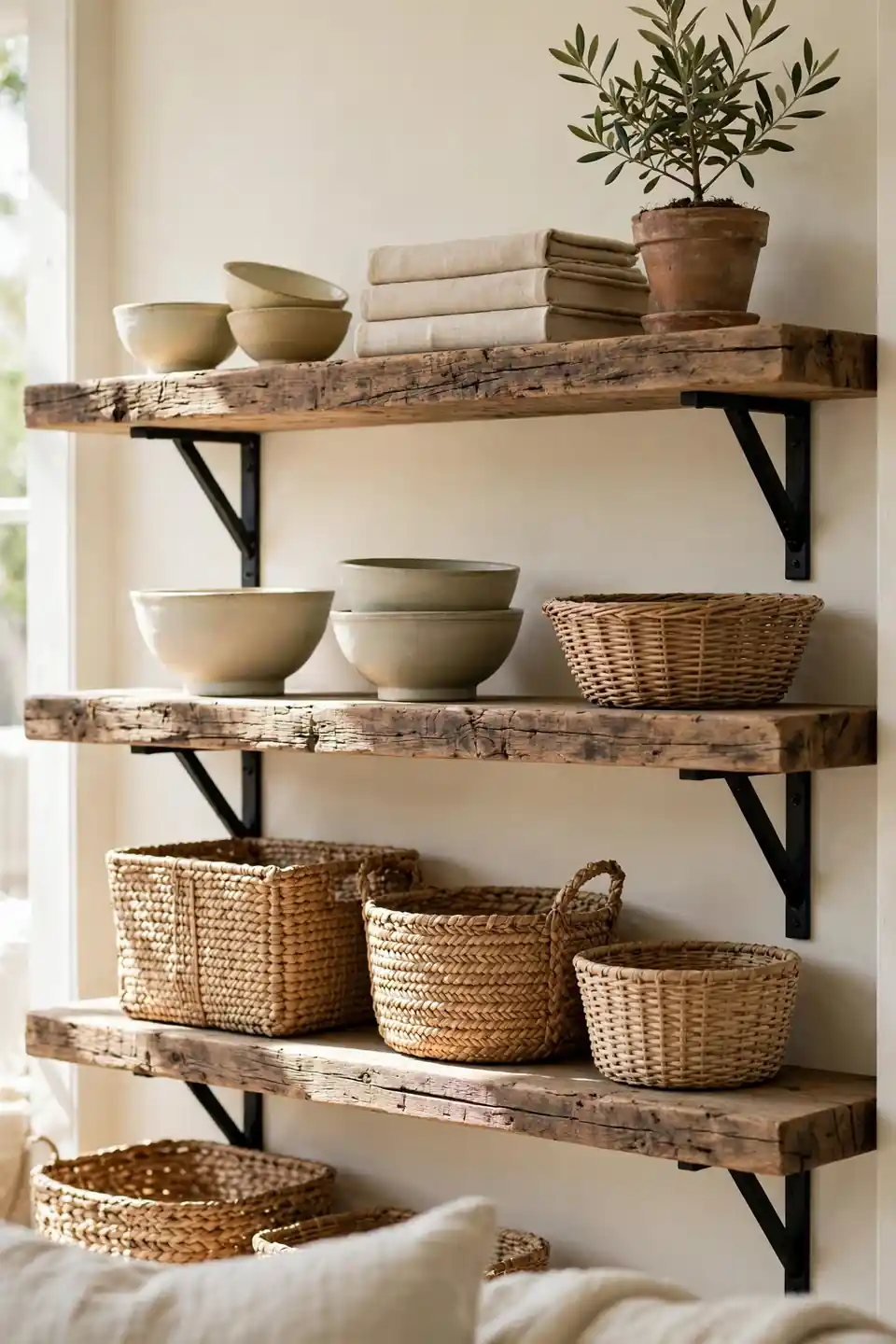
Do:
- Group objects in threes: one tall, one round, one flat piece per shelf.
- Leave a third of each shelf empty so the wood stays part of the display.
- Set heavy baskets and books lowest to ground the arrangement.
Don’t:
- Line objects in straight rows like a shop display.
- Stuff shelves with tiny pieces that read as clutter.
- Mix three or more metal finishes on one wall.
Open shelves reward restraint because everything on them stays visible all day. Edit monthly, removing one object each time, until the shelves hold only pieces worth dusting. The wood grain then does the decorating, and the objects simply punctuate it.
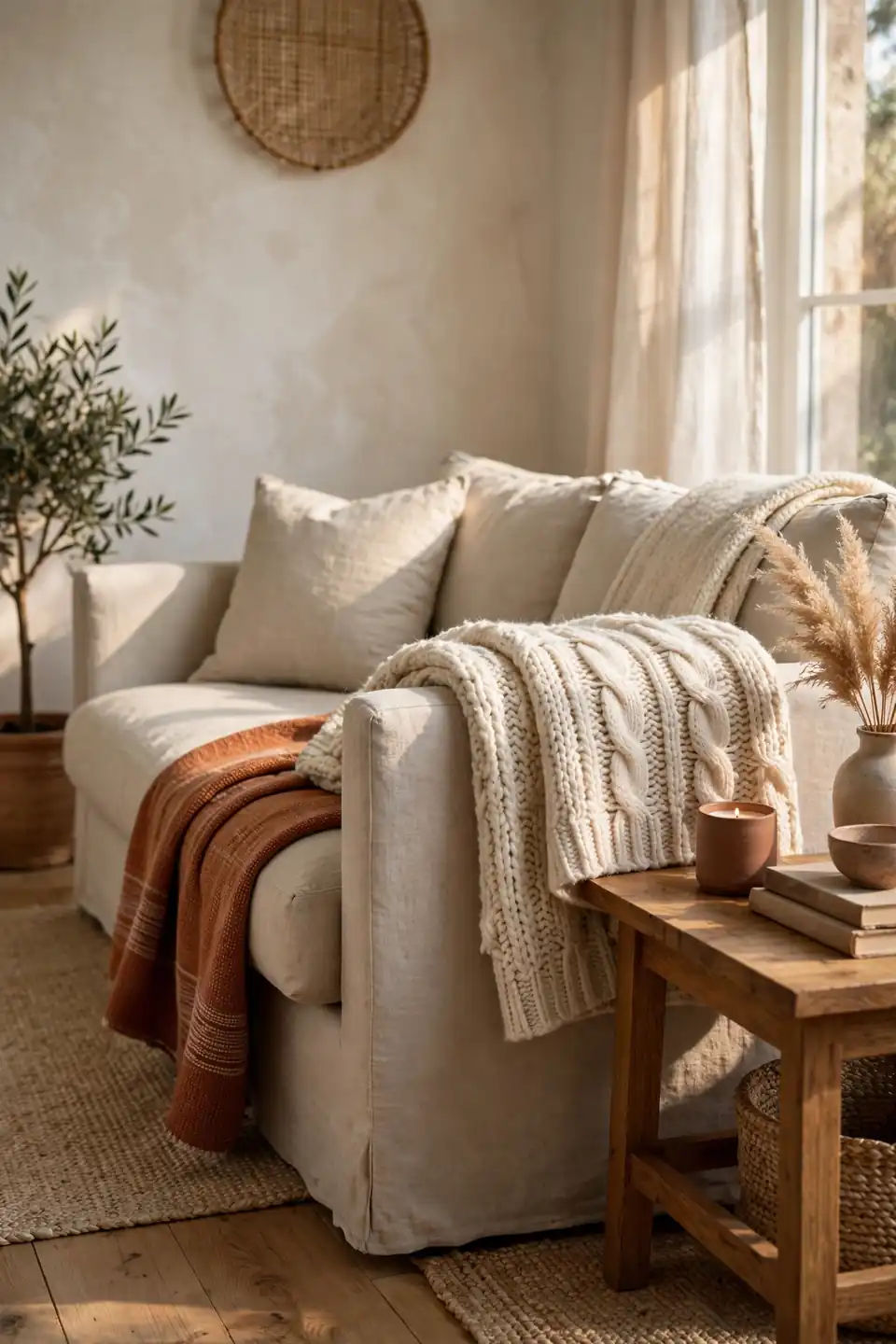
Wool Throw Texture Layers
Cost: One good wool throw runs forty to ninety dollars and outlasts several synthetic ones.
Time: Ten minutes of folding and draping restyles the whole sofa.
Skill Level: Beginner; texture mixing needs no tools and no measuring.
Best For: Neutral sofas that need warmth without new upholstery.
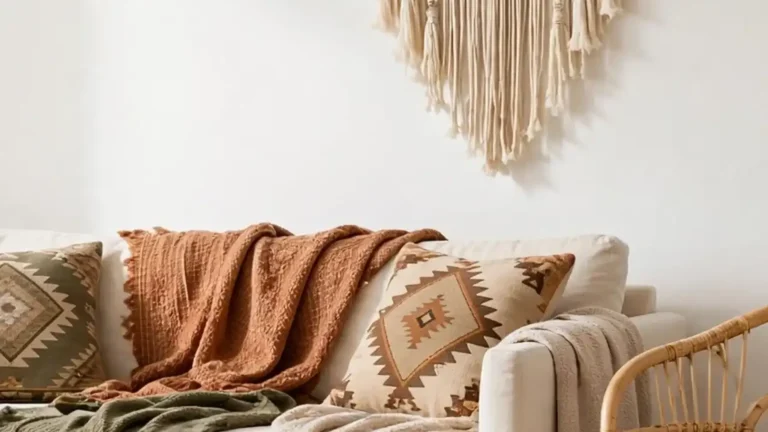
Two throws in different weaves give a plain sofa the layered depth this style runs on. Fold the chunky knit over the arm where hands land, and drape the flat weave across the back so both textures show from the doorway. Rotate colors with the seasons and the same sofa keeps changing character all year.
Neutral Palette Wood Warmth
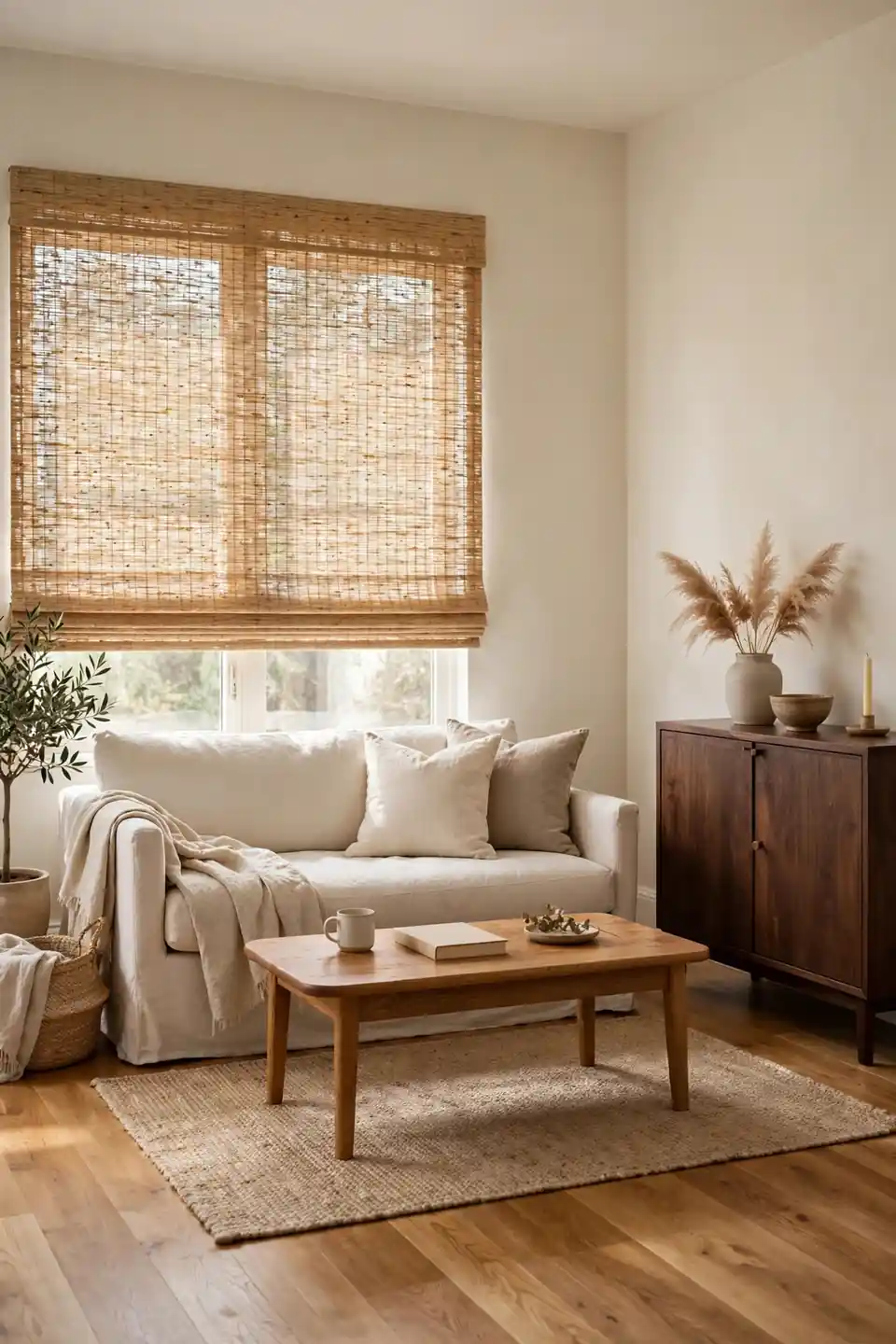
Warm neutrals carry rustic modern rooms because they let wood grain become the color. Cream walls, oatmeal linen, and pale stone set a quiet background, then honey oak and walnut pieces supply every shade the palette needs. Nothing competes, so the room feels calm at any hour. The effect reads expensive because it looks unforced.
Depth comes from one darker anchor, such as a walnut sideboard or a blackened steel lamp, placed where the eye lands first. This is where rustic modern living room decor proves its discipline: three wood tones at most, repeated twice each, and every textile inside the same warm family.
Black Metal Light Fixtures
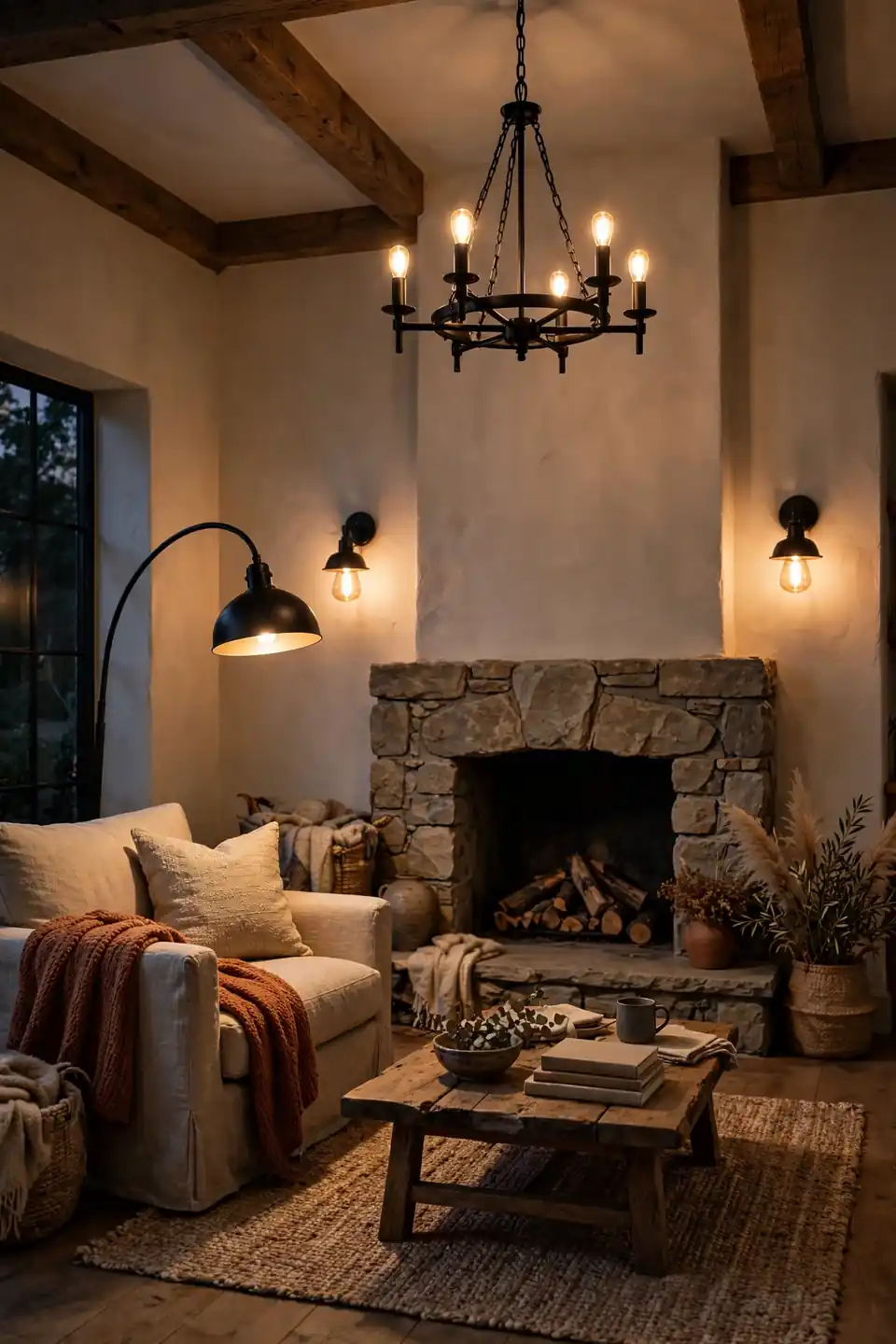
- Choose matte black finishes; glossy black reads modern office rather than rustic hearth.
- Mix fixture types, one arched floor lamp, two sconces, and one overhead piece per room.
- Keep bulbs warm white so black metal glows amber instead of looking cold and flat.
- Repeat the black in small doses, curtain rods, picture frames, and fireplace tools.
- Scale up: an oversized arc or chandelier suits rustic rooms better than dainty pieces.
Black metal is the punctuation of this style, sharpening soft wood and pale textiles wherever it lands. One finish across every fixture keeps the room coherent, and warm bulbs stop the metal from feeling industrial. Hang sconces at eye level beside the fireplace for the strongest effect.
Live Edge Coffee Table
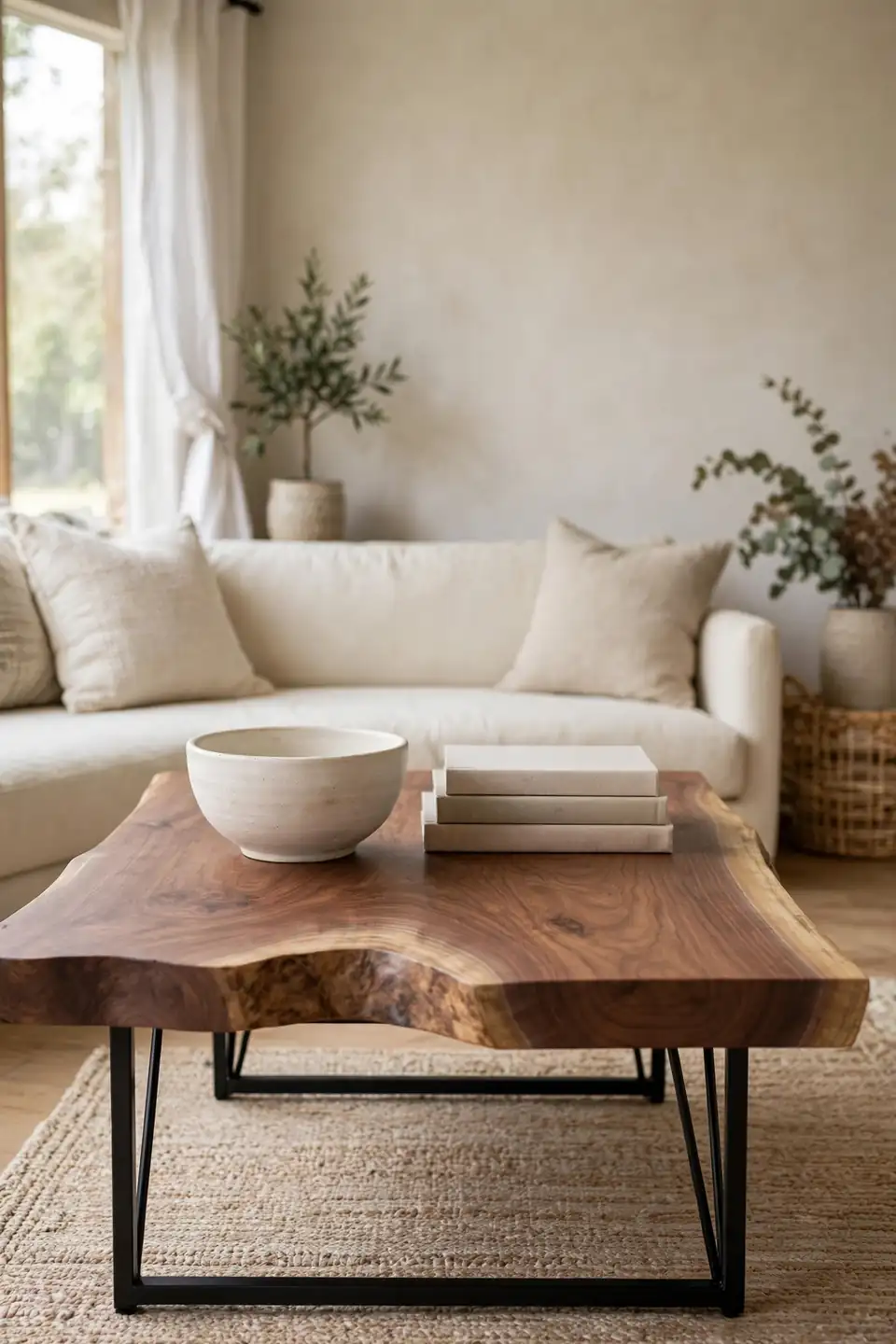
Quick Tip: Turn the wildest edge of a live edge table toward the sofa, not the walkway. Hips and shins meet the smooth side while the dramatic grain faces the people sitting down, and a coat of hardwax oil once a year keeps the surface sealed against coffee rings all year long.
One honest slab of walnut does the work of three styled accessories. The natural edge breaks the room’s straight lines, the grain gives every guest something to look at, and the thickness keeps low modern seating from feeling flimsy. Choose legs in black steel to keep the wood the star.
Cold Room Cozy Transformation
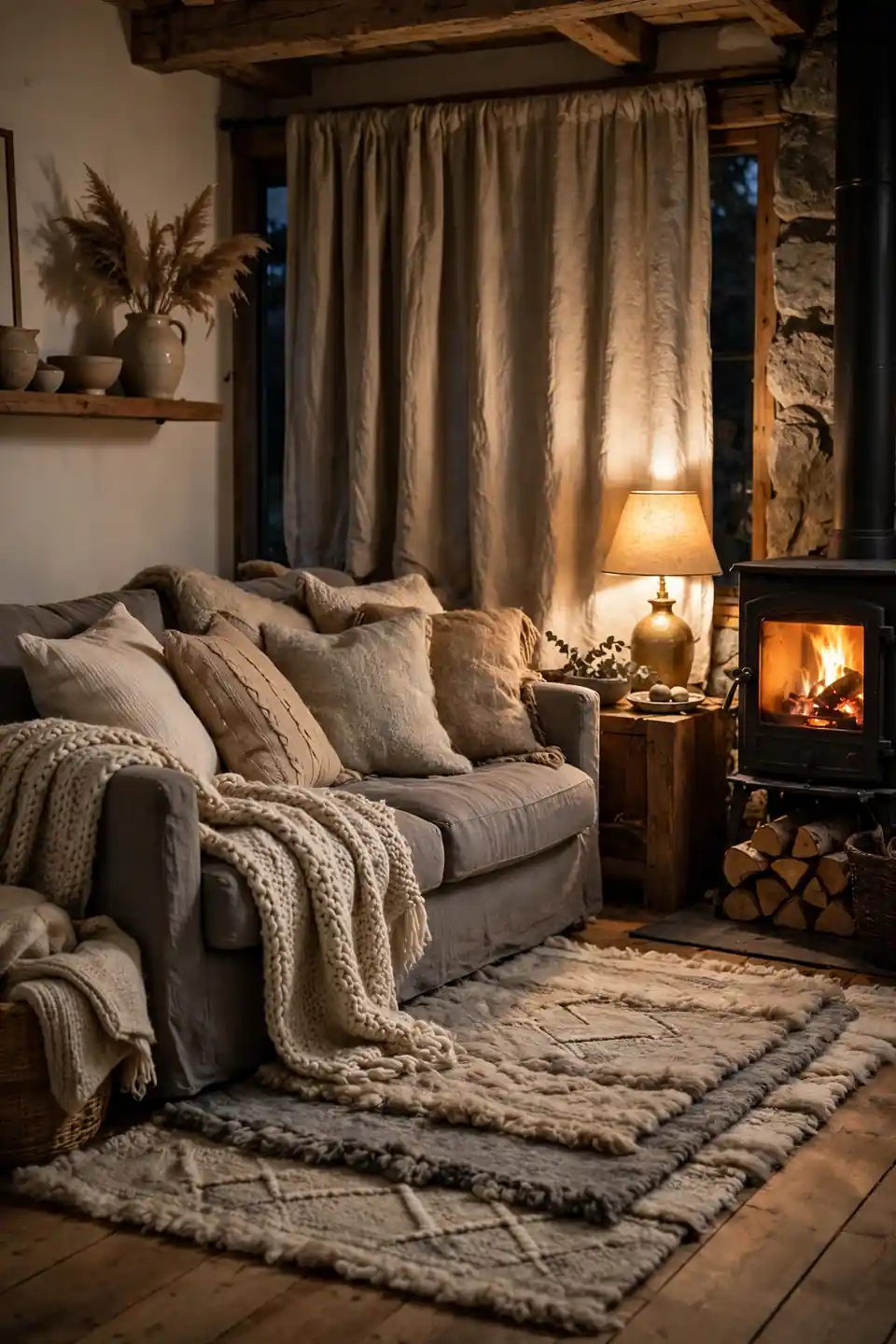
BEFORE: Bare floors echoed, one ceiling bulb lit the room like a clinic, and the grey sofa sat against a white wall. Guests kept their coats on, conversations stayed short, and the room worked only as a hallway to somewhere warmer.
AFTER: A layered wool rug silences the floor, two lamps pool warm light at sitting height, and a knit throw plus cushions crowd the sofa invitingly. Heavy linen curtains close at dusk, the wood stove ticks nearby, and nobody checks the time.
Cold rooms rarely need more furniture; they need softness at floor, seat, and eye level all at once. Textiles do that work quietly and cheaply, and light at sitting height finishes it. Fix those three layers and even a stark room starts holding people longer.
Gallery Wall Rustic Frames
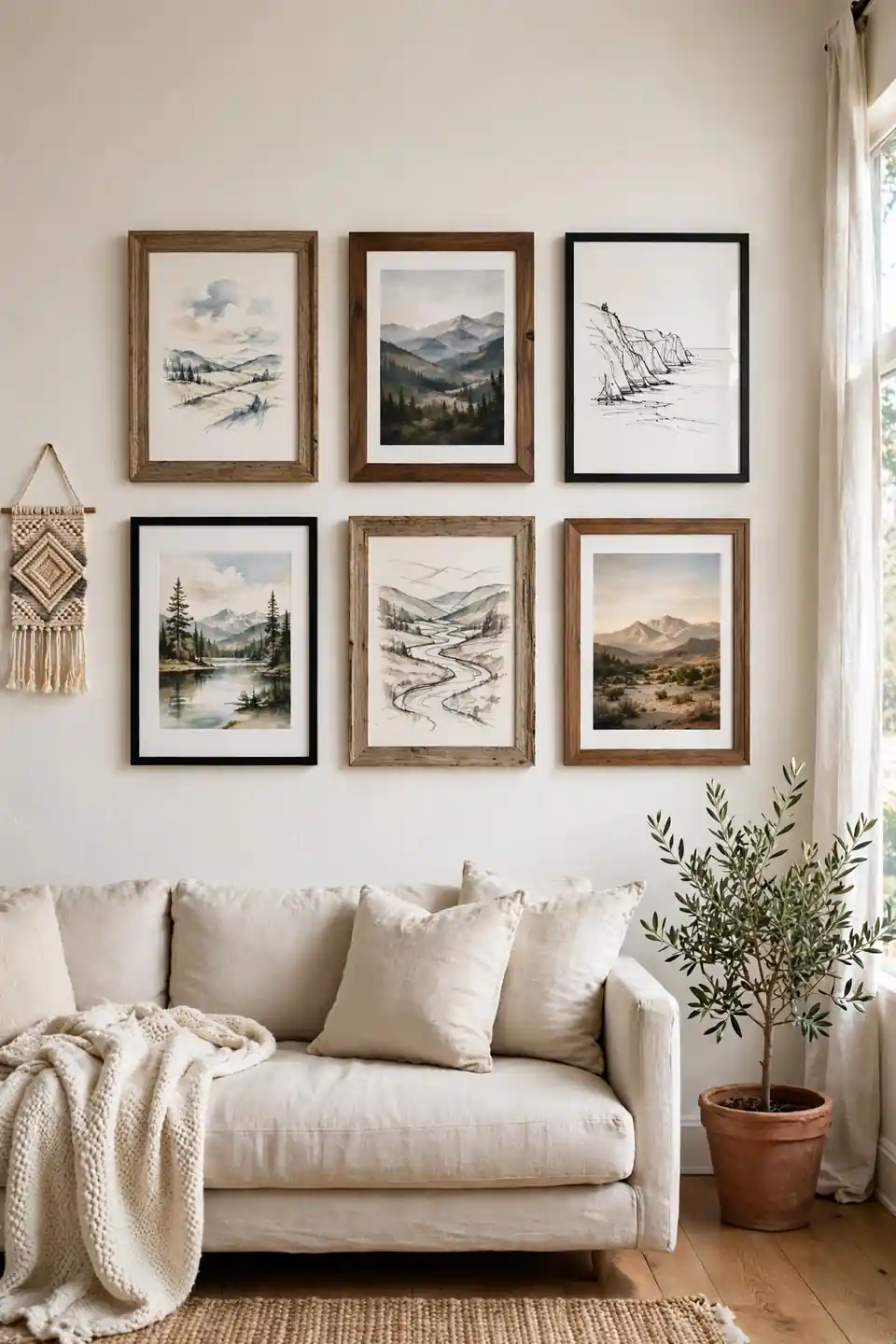
- Lay every frame on the floor first and photograph the arrangement before touching the wall.
- Keep gaps even at two to three inches; rustic frames look deliberate when spacing stays strict.
- Mix frame woods freely but keep all mats the same warm white for a calm grid.
- Start from the center frame at eye level and build outward in both directions.
- Hang the largest landscape at one end to anchor the group, not in the middle.
Mixed wood frames suit this style because the woods echo the beams and tables elsewhere in the room. Paper templates taped to the wall for a day reveal spacing mistakes before any nail holes exist. Live with the layout overnight before hanging anything.
Linen Versus Leather Sofas
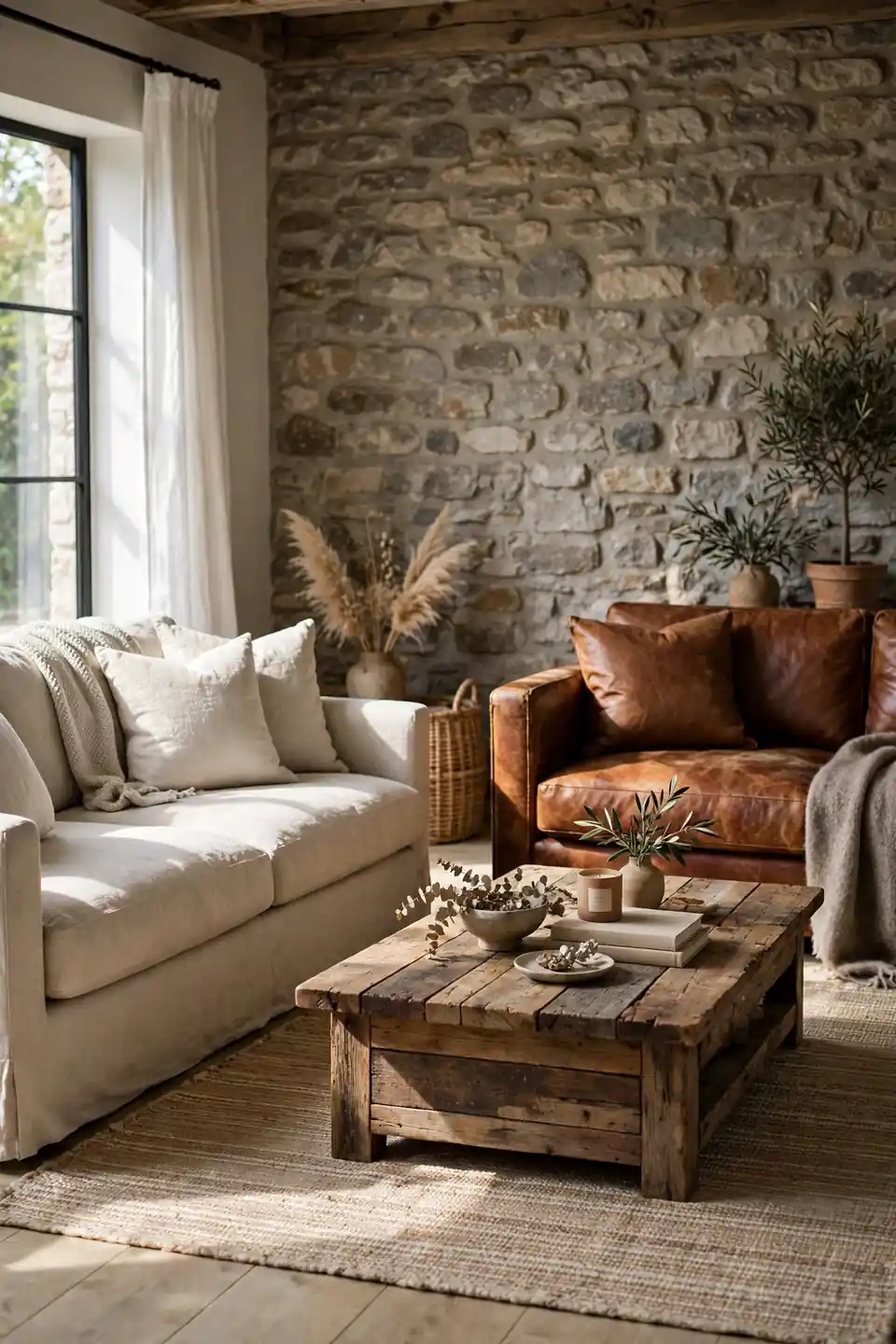
| Detail | Linen Sofa | Leather Sofa |
|---|---|---|
| Feel | Soft, matte, and relaxed | Smooth, rich, and warm |
| Upkeep | Covers wash, stains show | Wipes clean, needs balm |
| Aging | Fades gently in sunlight | Patina deepens with years |
| Best With | Wool throws, pale rooms | Dark wood, stone walls |
| Cost | Lower upfront, replaceable covers | Higher upfront, decades of service |
Neither fabric is wrong; the room’s light and habits decide. Linen softens bright rustic spaces and forgives a relaxed household, while leather brings the weight a stone fireplace demands. I’ve seen this work well in many cases: buy the best frame available and let fabric be the later upgrade.
Firewood Storage Styled Niches
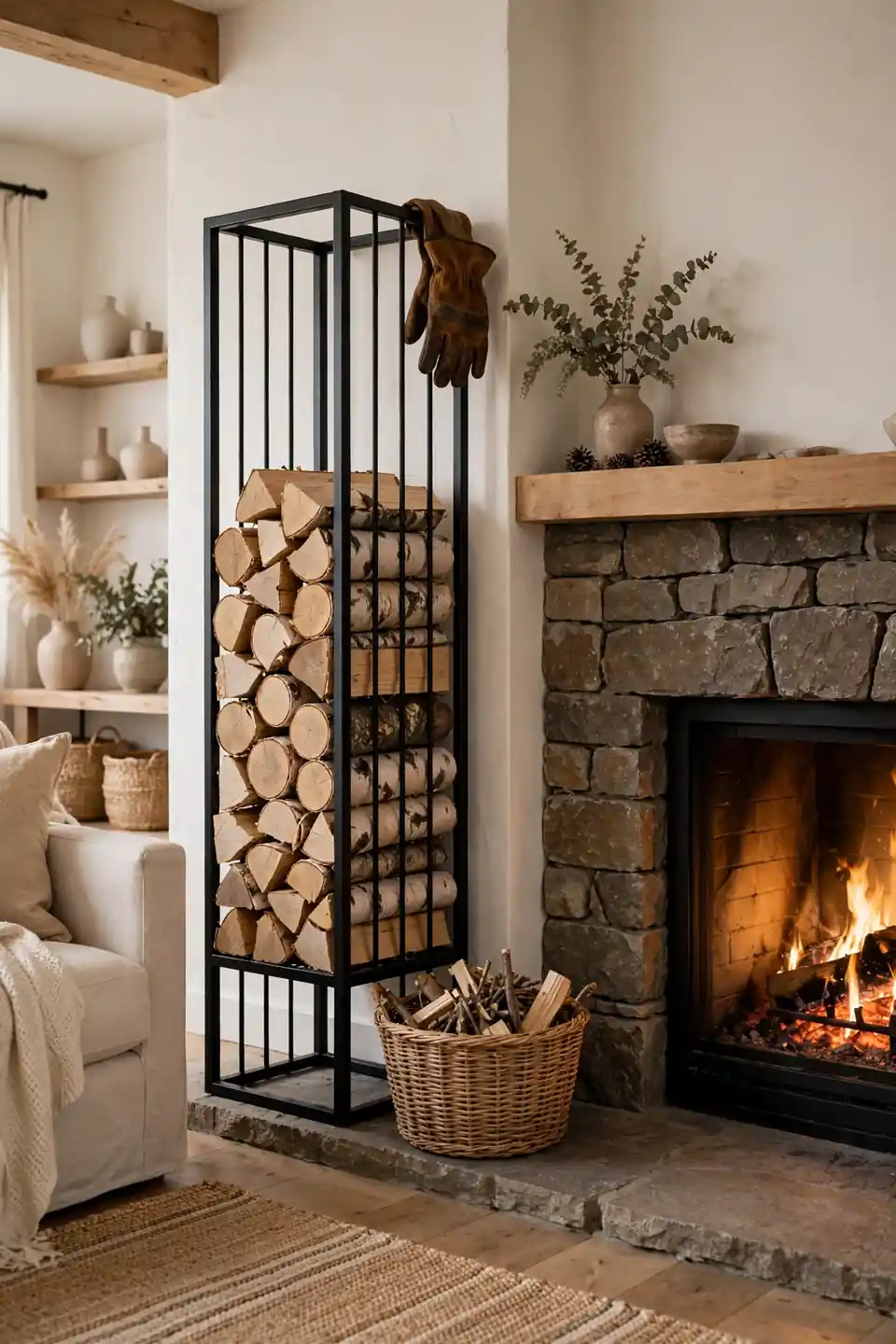
Do:
- Stack logs with bark facing out for a uniform, textured wall of wood.
- Keep a two day supply indoors; a full cord belongs outside under cover.
- Match the holder finish to the fireplace tools and light fixtures.
Don’t:
- Pile logs loose on the hearth where they shed bark and dust.
- Store damp wood inside; it smokes, smells, and invites insects.
- Block the fireplace opening with storage that has to move nightly.
Firewood is the rare accessory that is both useful and decorative, so it deserves a proper holder rather than a heap. A tall frame turns fuel into a vertical texture beside the stone, and neat stacking makes the whole fireplace wall look tended.
Woven Basket Storage Solutions
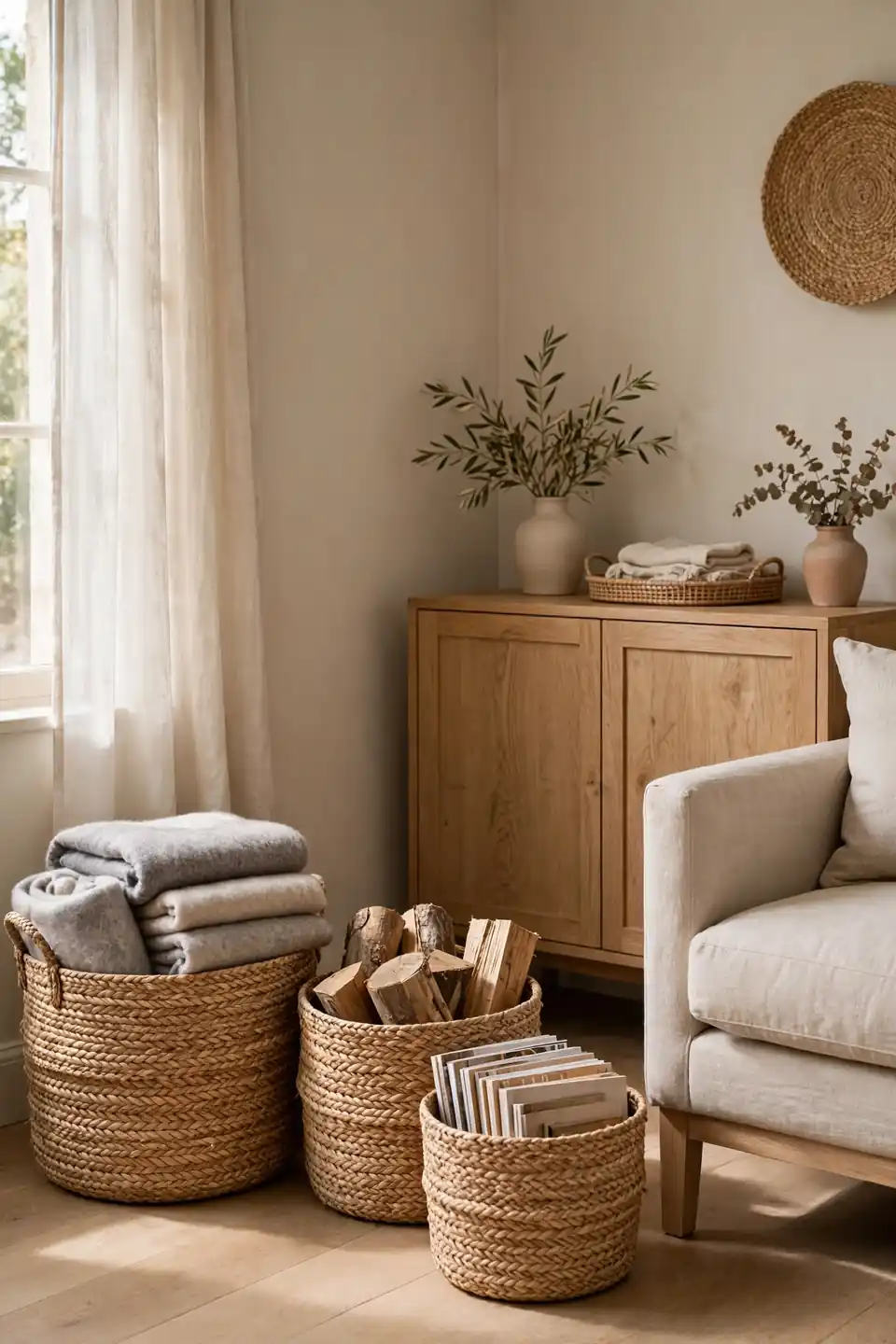
Cost: Sturdy seagrass baskets run fifteen to forty dollars each at most home stores and markets.
Time: Twenty minutes groups blankets, remotes, and magazines into their own baskets.
Skill Level: Beginner; if it holds a shape, it works as storage.
Best For: Blanket hoards, toy drift, and firewood kindling near the hearth.
Baskets hide the everyday mess while adding the woven texture rustic rooms run on. The same natural materials appear across the house in these natural stone bathroom decor ideas, proof that one honest palette can carry every single room. Keep basket sizes graduated so the group looks collected, not matched.
Exposed Brick Modern Balance
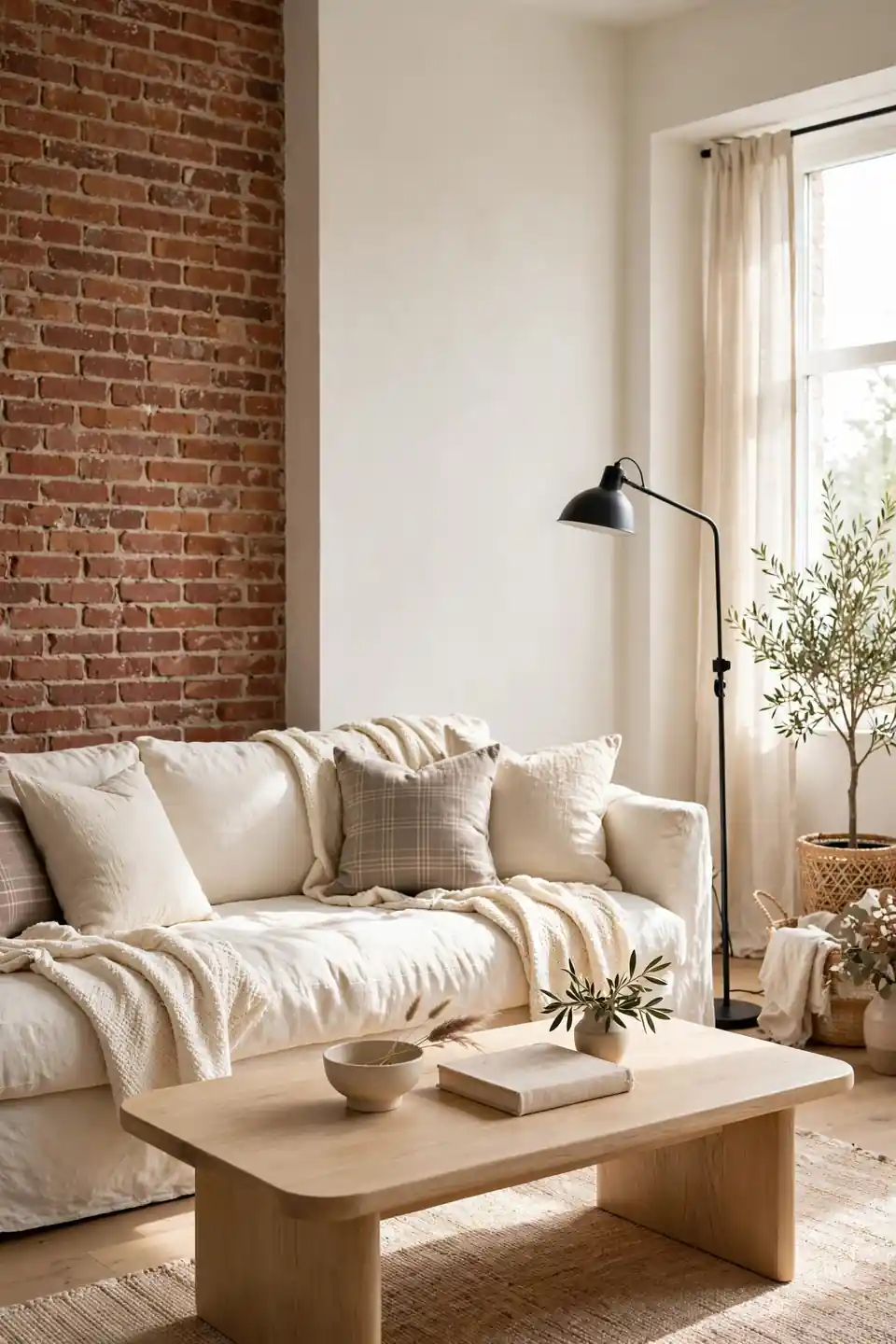
Brick brings the rustic weight, so everything else in the room should lighten the load. A cream linen sofa, pale oak, and smooth plaster on the other walls keep the brick as backdrop instead of battle. Sealing the brick with a matte clear coat stops dust without adding any shine at all.
Hang one large mirror or a pale canvas on the brick to break its grid and bounce light back into the room. Skip small decor against brick; the busy mortar lines swallow anything delicate. Big shapes and soft fabrics are the whole recipe. The wall then reads as texture, not noise.
Chunky Knit Blanket Layers
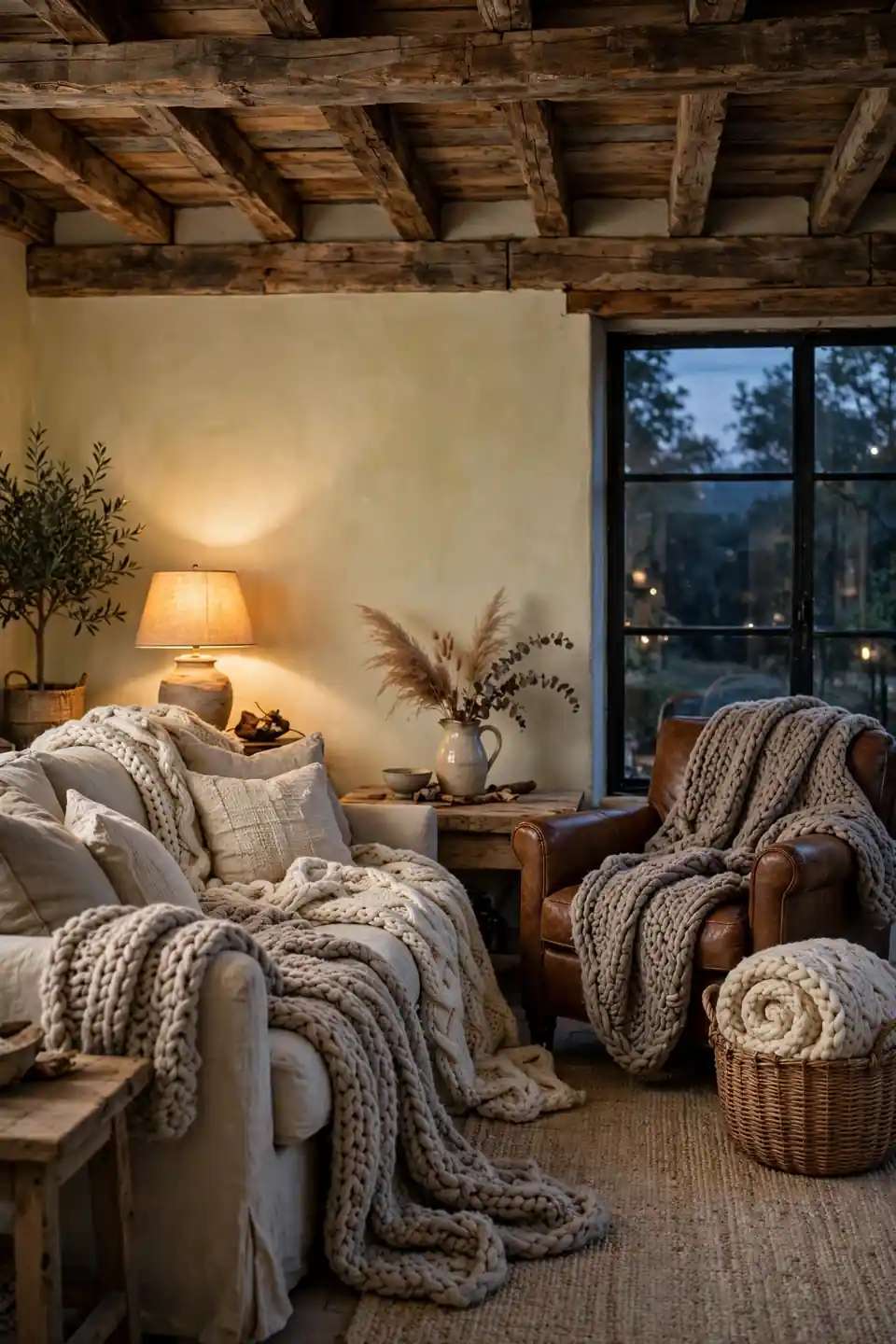
- Drape one chunky knit over the sofa arm where hands naturally reach for it.
- Fold a second blanket across the seat back so its texture shows from the door.
- Keep the palette to two colors; cream and warm grey layer with everything rustic.
- Store the spare rolled in a basket, visible and ready, instead of hidden away.
- Wash knits rarely and air them outdoors; heavy yarn hates frequent machine cycles.
Chunky knits are the softest counterweight to beams, stone, and leather, and they ask for nothing but a fold. Their oversized stitches read as texture from across the room, which is why a single blanket can warm a whole seating area visually before anyone sits down.
Sliding Barn Door Accent
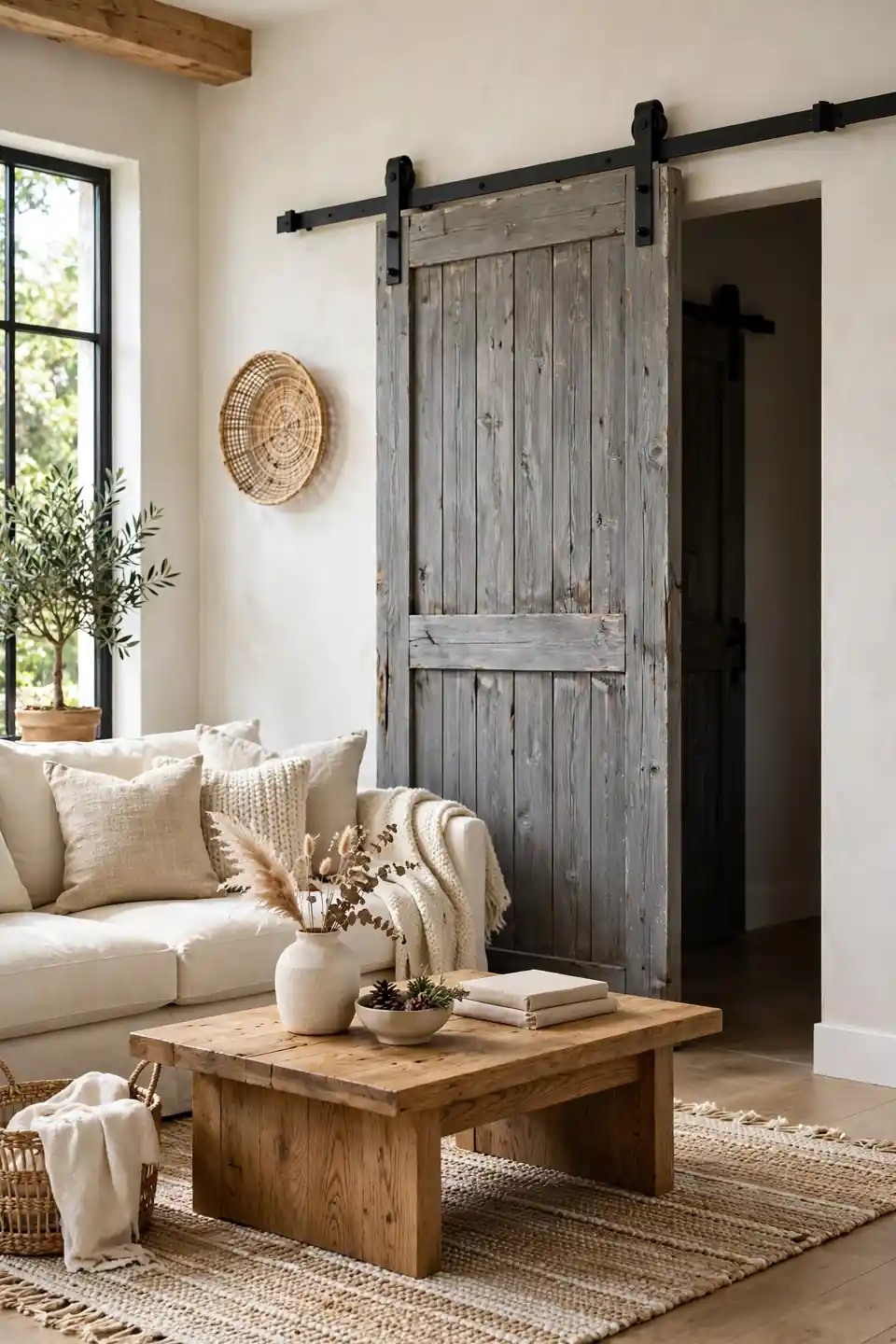
Quick Tip: Mount the rail at least two inches above the door frame and add soft close bumpers at both ends. The door then glides instead of clattering, clears the trim cleanly, and stops without the bang that makes barn doors feel like shed hardware indoors.
A barn door earns its wall when the finish stays weathered and the hardware stays black and simple. Treat it as a moving piece of wall art: keep the doorway clear of furniture, let the grain show, and choose a door wider than the opening so gaps never reveal the room beyond. It should feel crafted, never themed.
Dark Corner Reading Nook
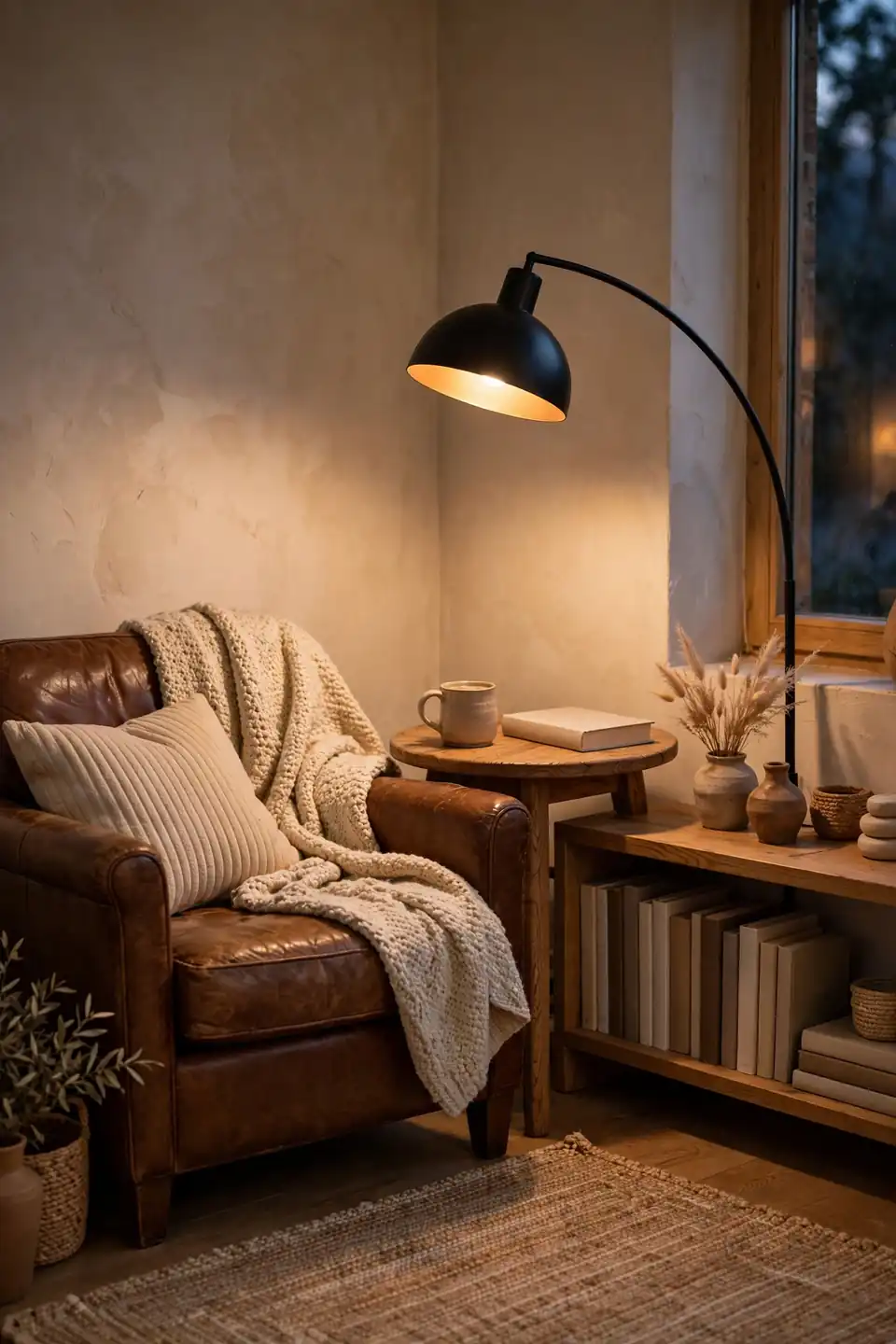
BEFORE: The corner behind the sofa collected dust, a dead plant, and the router blinking in the dark. Nobody sat there, the lamp light never reached it, and the room’s best window view went completely to waste.
AFTER: A deep leather chair angled toward the window, an arched lamp pouring warm light over the shoulder, and a side table for tea turned the dead corner into the seat everyone claims first. A wool throw waits over the arm every evening.
Every living room has one neglected corner, and a reading nook is its highest use. The recipe never changes: a chair worth sinking into, light aimed at the page, and a surface within reach. Add a small shelf and the corner starts paying rent.
Mantel Styling Simple Steps
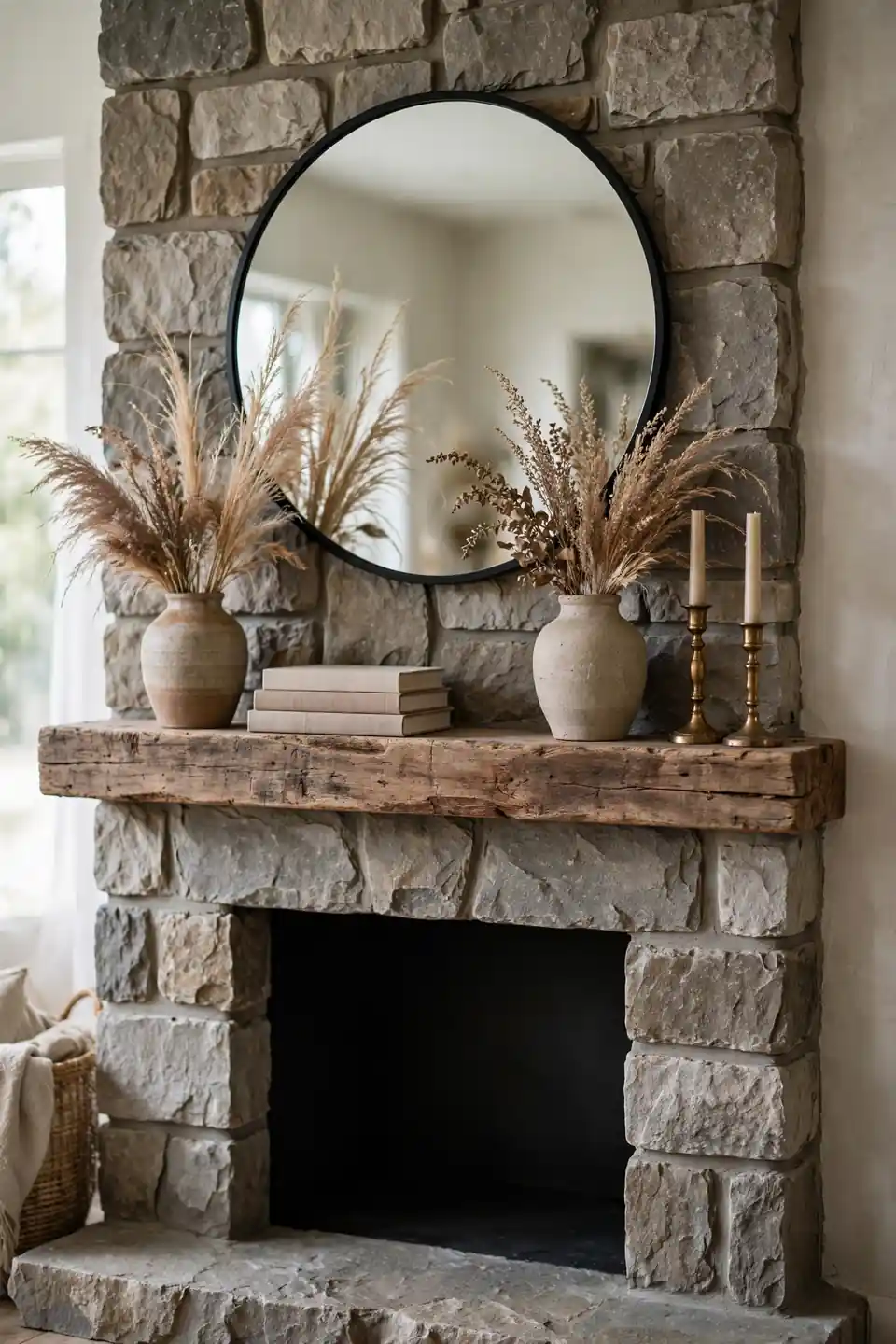
- Hang one large mirror or artwork first, centered, with its base resting near the mantel shelf.
- Set the tallest vase or candlestick pair at one end to give the arrangement a high point.
- Balance the other end with a low stack of books or a wide ceramic bowl.
- Bridge the middle with one horizontal piece, such as a small woven tray or garland.
- Step back to the doorway and remove one item; mantels almost always start overfilled.
Height, weight, and one bridge piece: that triangle keeps a mantel calm instead of cluttered. Dried grasses and ceramics suit the rustic palette because they add shape without color noise. Restyle seasonally by swapping only the bridge piece.
Jute Versus Wool Rugs
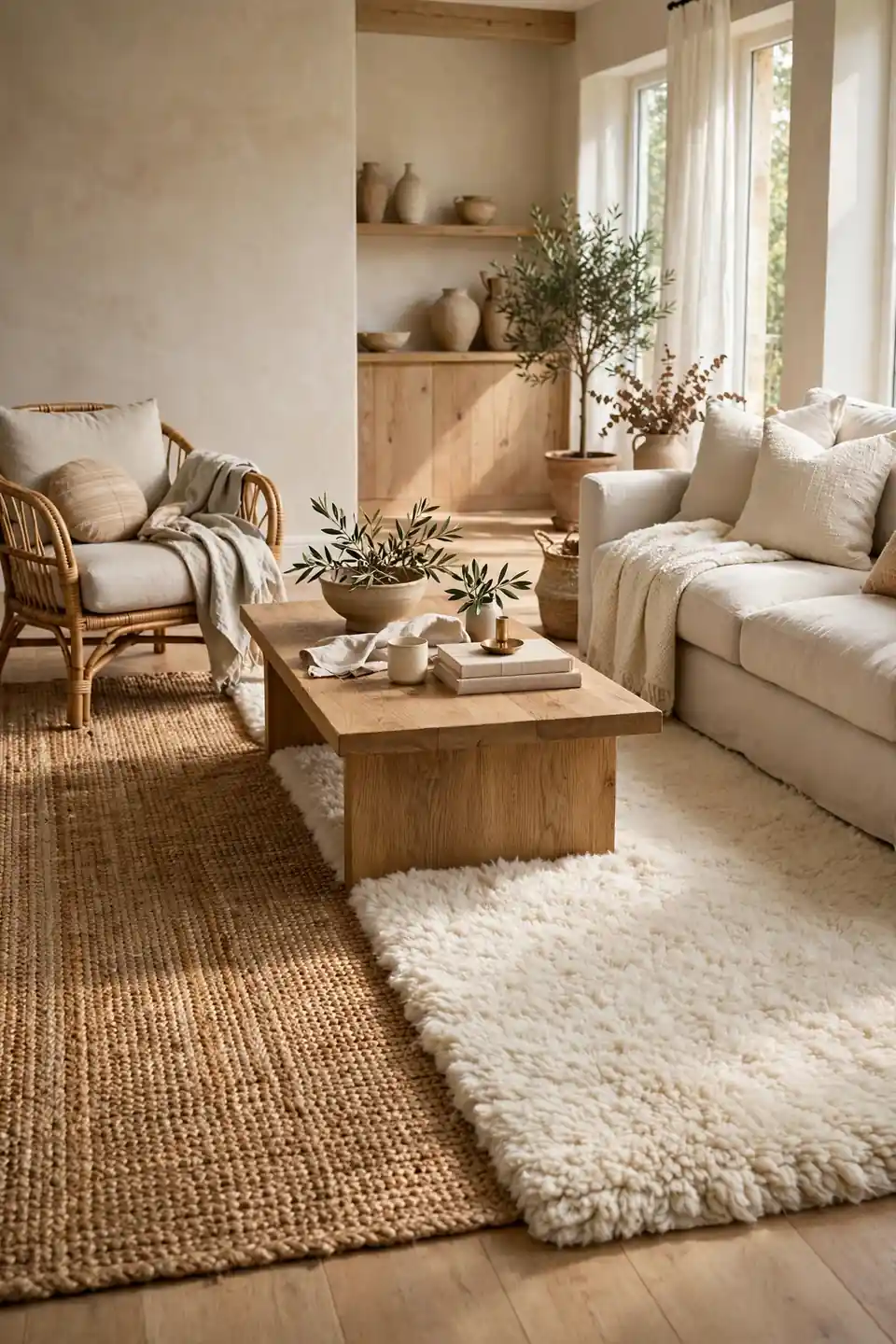
| Detail | Jute Rug | Wool Rug |
|---|---|---|
| Feel | Dry, firm, and textured | Soft, warm, and cushioned |
| Upkeep | Shake out, avoid soaking | Vacuum gently, blot spills |
| Lifespan | Three to five good years | Decades with basic care |
| Best Spot | Under dining style tables | Beneath sofas and chairs |
| Cost | Easy on most budgets | Investment, buys comfort |
| Warmth | Cool underfoot in summer | Insulates through cold winters |
Choose by footfall and bare feet. Jute handles the busy center of a room and forgives crumbs, while wool rewards the seating zone where people actually linger. Layering the two, wool over jute, quietly delivers both. That’s why many experts recommend the pair for rustic floors.
Seasonal Swaps Rustic Touches
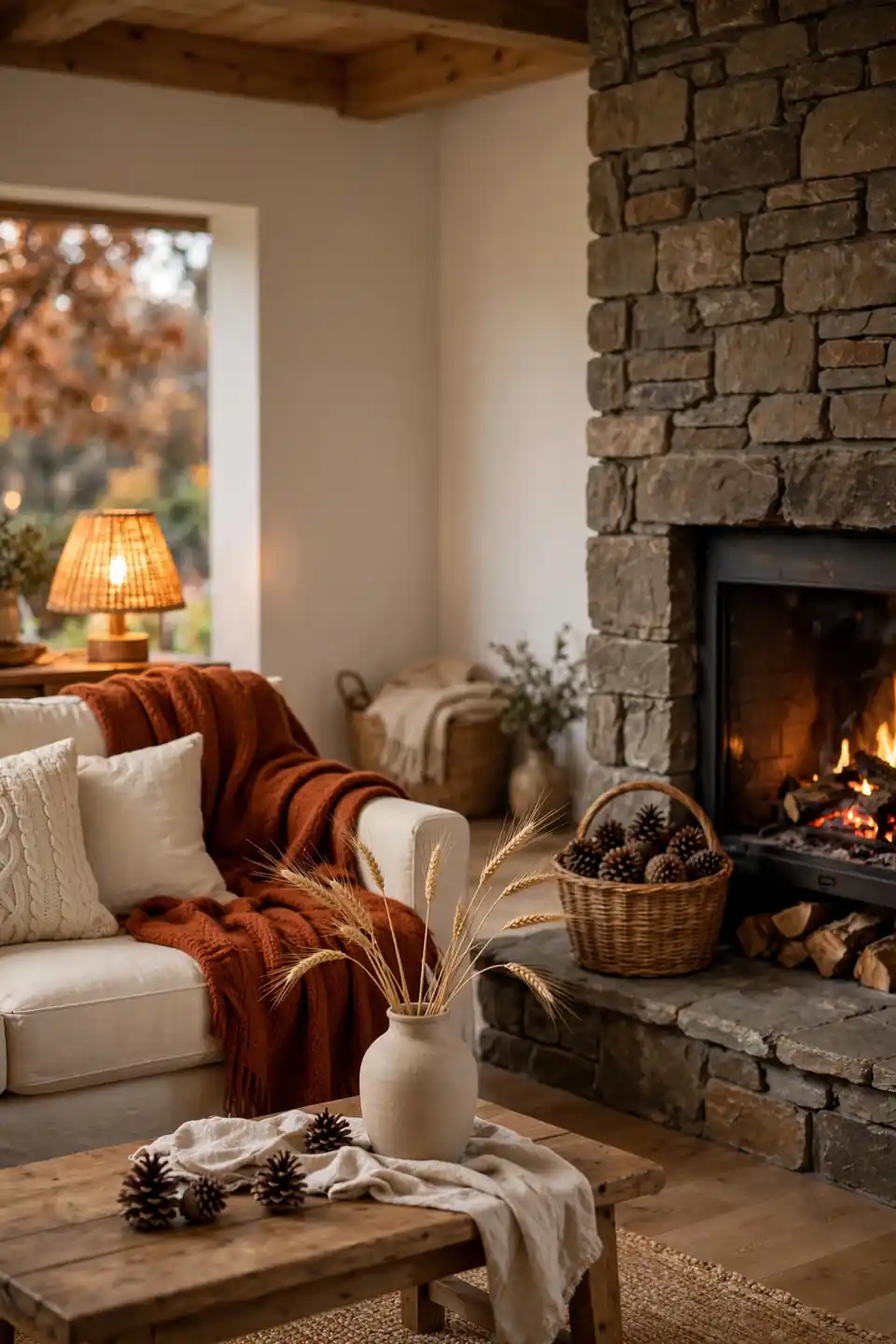
Do:
- Swap throw and cushion colors first; textiles change the room’s temperature fastest.
- Bring one natural find indoors per season, pinecones, branches, or dried grasses.
- Store off season pieces in one labeled basket so swaps take minutes.
Don’t:
- Buy themed decor that only works for three weeks a year.
- Change the big pieces; beams, stone, and wood stay constant year round.
- Let holiday colors fight the palette; tint them toward rust and cream.
Seasonal change works in this style because the bones never move. Wood, stone, and leather stay put while small textiles and gathered naturals carry the calendar. Four swaps a year keep the room feeling tended without a single new piece of furniture.
Conclusion
Rustic modern rooms prove warmth and clean lines belong in the same space. Start with one honest material, wood, stone, or leather, then layer textiles and black metal until the room feels settled. These rustic modern living room decor ideas reward small steps, so pick one corner this weekend and begin there. Save this list to your Pinterest living room board before you shop, try an idea, and share the corner that changes most. Your room is closer than it looks. The rooms people love longest are built slowly, one true material at a time.