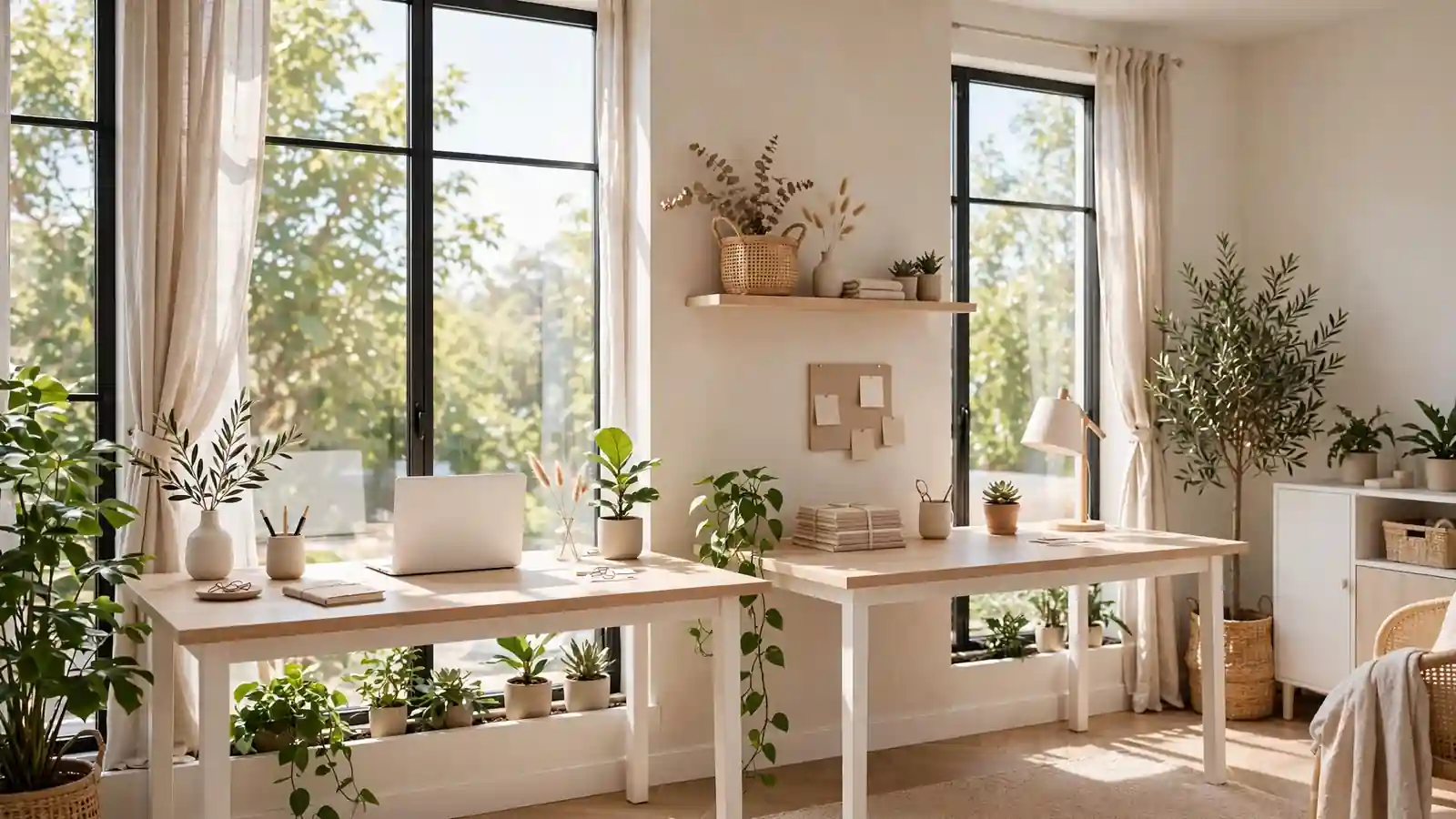
20 Shared Home Office Ideas for a More Organized Workday
Working from home with a partner can test your patience when laptops, chargers, and papers spread across every surface. A well planned shared home office gives each person room to focus while keeping the whole setup calm and organized. I’ve noticed that couples who design their workspace together argue less about clutter and get more done during the day. The secret is defining clear zones, choosing furniture that fits two workflows, and building storage that both people actually use.
These 20 ideas cover everything from dual desk layouts to clever dividers, so you can build a space that works for two without feeling cramped. If you also work from a bedroom corner, our bedroom office ideas pair perfectly with these setups. Let’s turn that spare room or corner into a shared workspace you’ll both love.
Dual Desk Zones
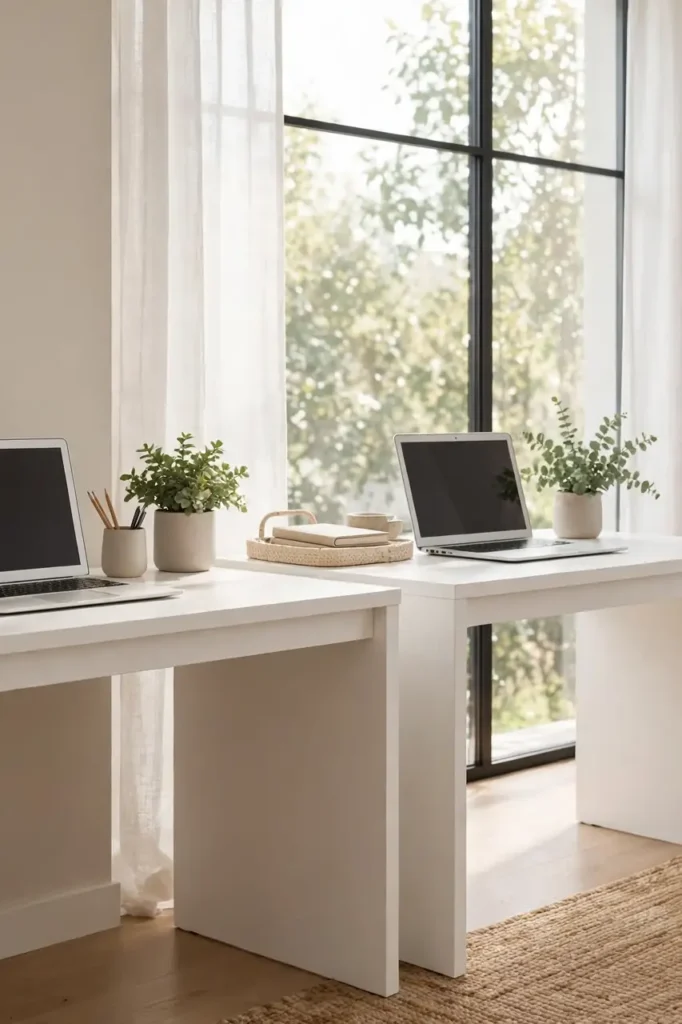
Side by side desks remain the simplest way for two people to share one room. Each person gets a full work surface, their own chair, and a clear boundary that prevents the slow creep of papers and mugs into shared territory. Matching desks create a calm, unified look, while different desk styles let each personality shine through.
Leave at least 30 inches between the desks so chairs can roll back without bumping. A shared power strip mounted under one desk keeps cables tidy for both stations. In my experience, couples who agree on desk placement first avoid most later disagreements about the room.
Mirrored Workstations
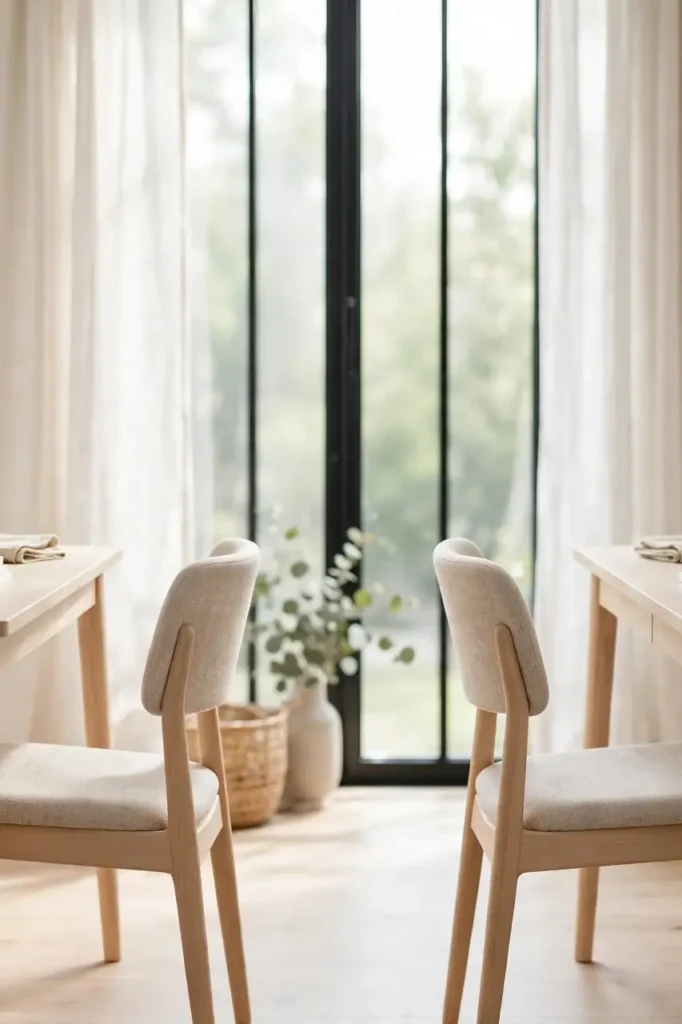
- Place two identical desks facing each other to create a balanced, symmetrical setup that feels intentional.
- Choose matching chairs, lamps, and organizers so neither side looks like an afterthought.
- Add a low shared shelf or plant row down the middle as a friendly divider.
- Keep monitors at the same height to avoid neck strain on either side.
- Use a rug underneath both desks to visually anchor the pair as one zone.
Mirrored setups work beautifully in square rooms where wall space is limited. The symmetry tricks the eye into seeing order, which helps both people stay focused. I’ve seen this work well in many cases where couples want equal footing in a shared space. Start with matching basics, then let each side add one personal item.
L-Shaped Partners
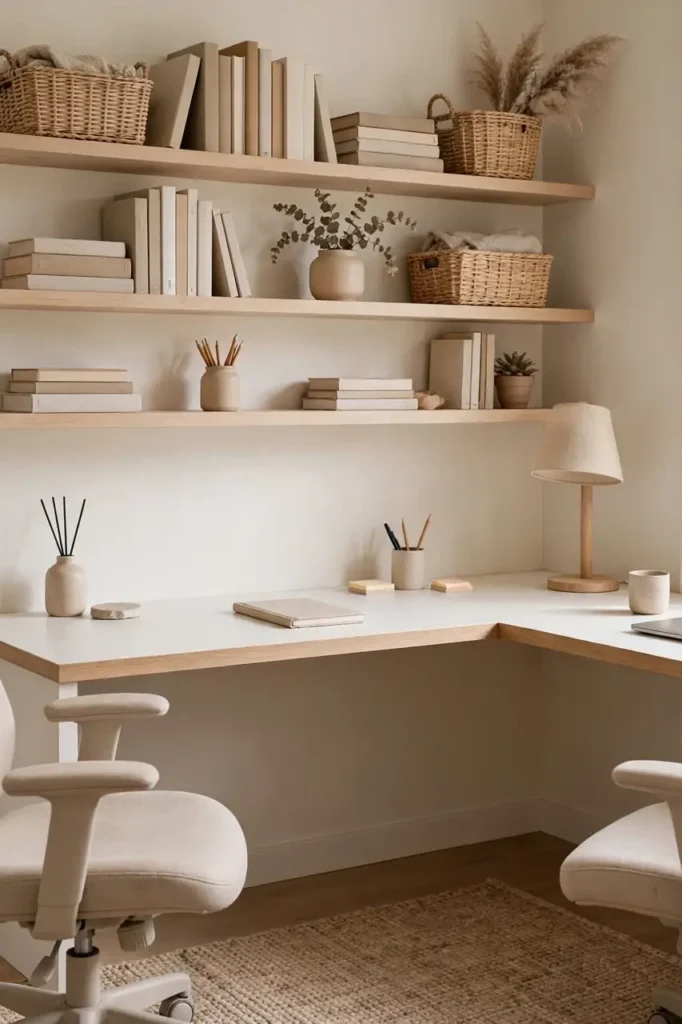
Quick Tip: Place the L-shape in a corner to free up the center of the room. Each person claims one arm of the L, which naturally defines personal space without any dividers or awkward barriers.
L-shaped desks give each person generous surface area while sharing one footprint. The corner becomes bonus storage for a printer or reference books both people use. This layout suits long, narrow rooms where two separate desks would block the walkway. Measure carefully before buying so the arms fit your walls. Add a small lamp to each arm so both people get focused light without shadows. That’s why many experts recommend defining the corner as shared storage from day one.
Floating Shelf Desks
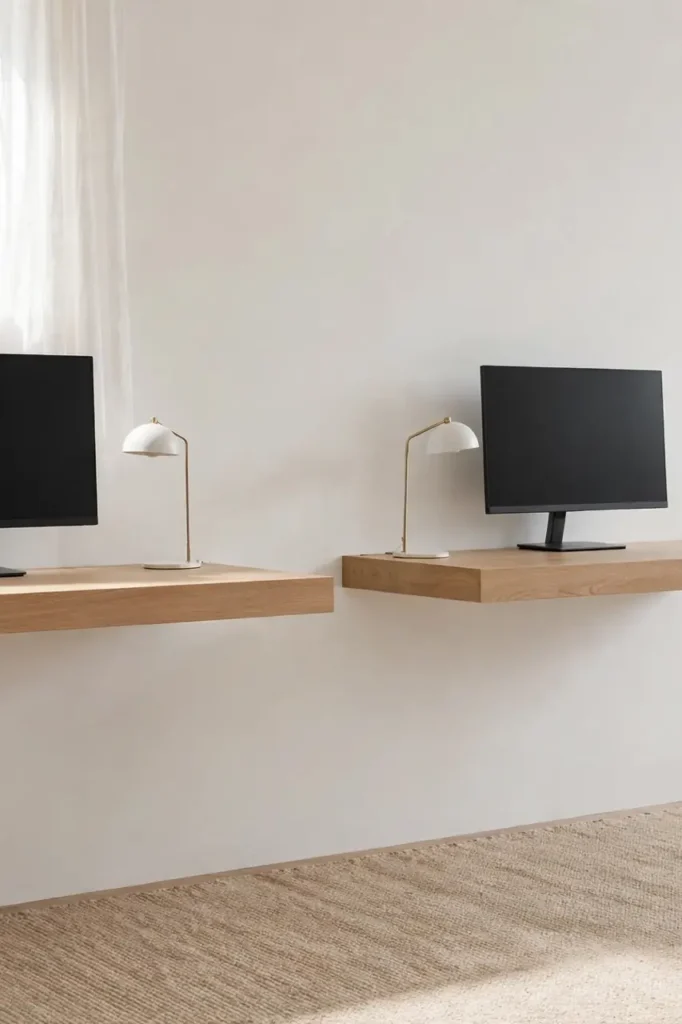
BEFORE: Two bulky desks ate up the floor space and made the small bedroom feel crowded. Chairs barely fit, and the room doubled as a guest space only with great difficulty.
AFTER: Slim wall-mounted desks freed the floor completely. Each person folds their workspace away in seconds, and the room breathes again.
Floating desks are a smart pick for any shared home office squeezed into a bedroom. Mount them at the same height for a clean line, and add wall shelves above for shared supplies. They cost less than full desks and install in an afternoon with basic tools. Choose sturdy brackets rated for at least 50 pounds so monitors and books stay safe.
Back-to-Back Tables
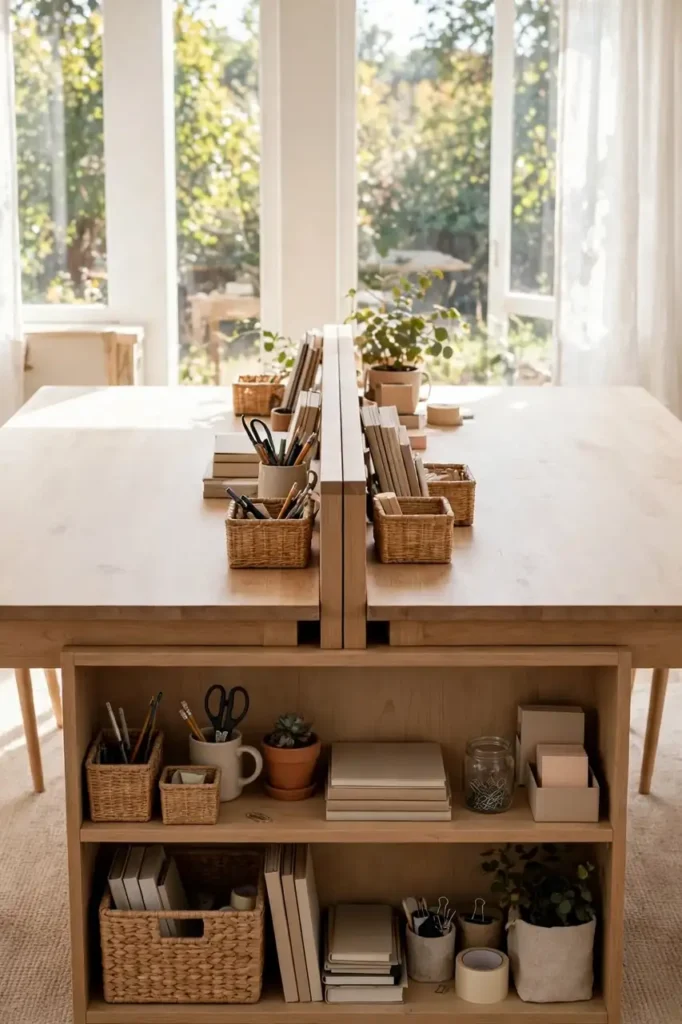
- Push two tables together back to back in the center of the room, leaving walkway space on both sides.
- Place a low bookshelf or storage unit between them to hold supplies both people share.
- Give each person a desk lamp and organizer on their own side.
- Run a single power strip along the middle so both sides can plug in easily.
This setup creates two private-feeling zones without any walls. It works best in larger rooms where the center can hold furniture. The shared middle storage keeps communal items within arm’s reach. Agree on quiet hours if one person takes calls while the other needs silence.
Window Facing Desks
| Feature | Shared Long Desk | Two Separate Desks |
|---|---|---|
| Cost | One large purchase | Two smaller purchases |
| Flexibility | Fixed arrangement | Easy to rearrange |
| Personal space | Less defined | Clearly defined |
| Cable management | Simpler | Needs two setups |
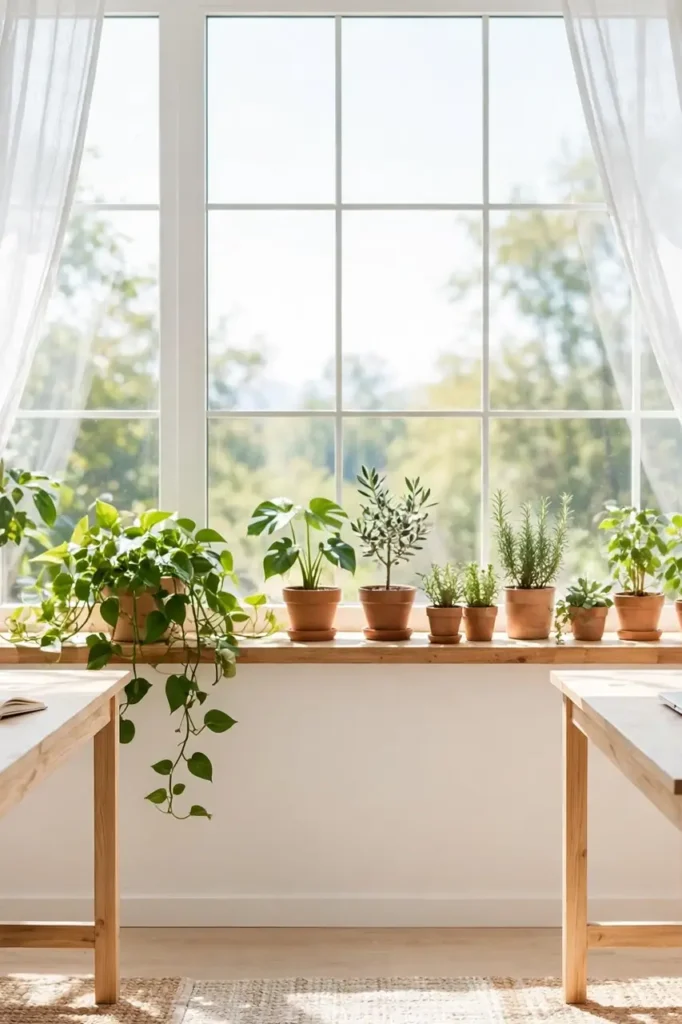
Facing the window gives both people natural light, which reduces eye strain and lifts mood during long workdays. Sheer curtains soften glare on screens without blocking brightness. Keep the sill clear of clutter so the view stays calming. Plants on the sill thrive in the light and mark the shared boundary. If glare still hits screens at midday, add a light-filtering roller blind behind the sheers. I’ve noticed that workers facing windows report fewer headaches by the end of the week.
Charming shared home office
DO:
- DO agree on a color palette so the room feels cohesive.
- DO give each person one display shelf for personal items.
- DO schedule a weekly five-minute tidy of shared surfaces.
- DO use matching storage bins to keep the look calm.
DON’T:
- DON’T let one person’s clutter spill onto the other’s desk.
- DON’T choose wildly different chair styles that clash visually.
- DON’T skip lighting; each side needs its own lamp.
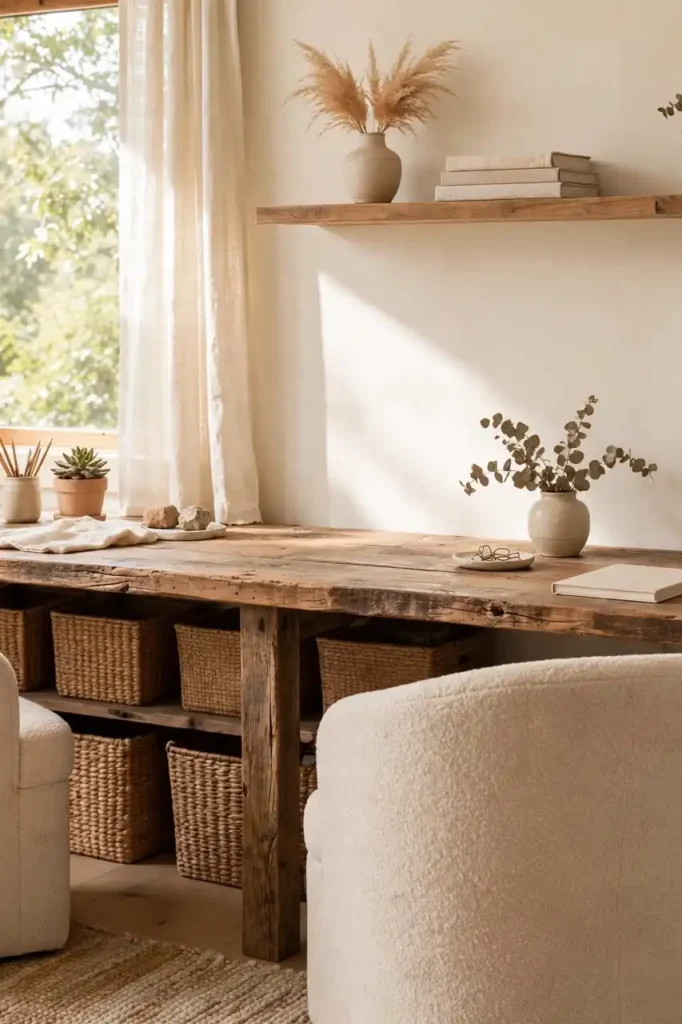
Charm comes from small, thoughtful touches rather than big spending. A shared rug, matching frames, and a couple of plants pull two workstations into one inviting room. Keep personal flair to your own zone so the shared areas stay neutral. The result feels like a real office, not a compromise.
Corner Desk Nooks
Cost: Low | Time: One weekend | Skill Level: Beginner | Best For: Small bedrooms
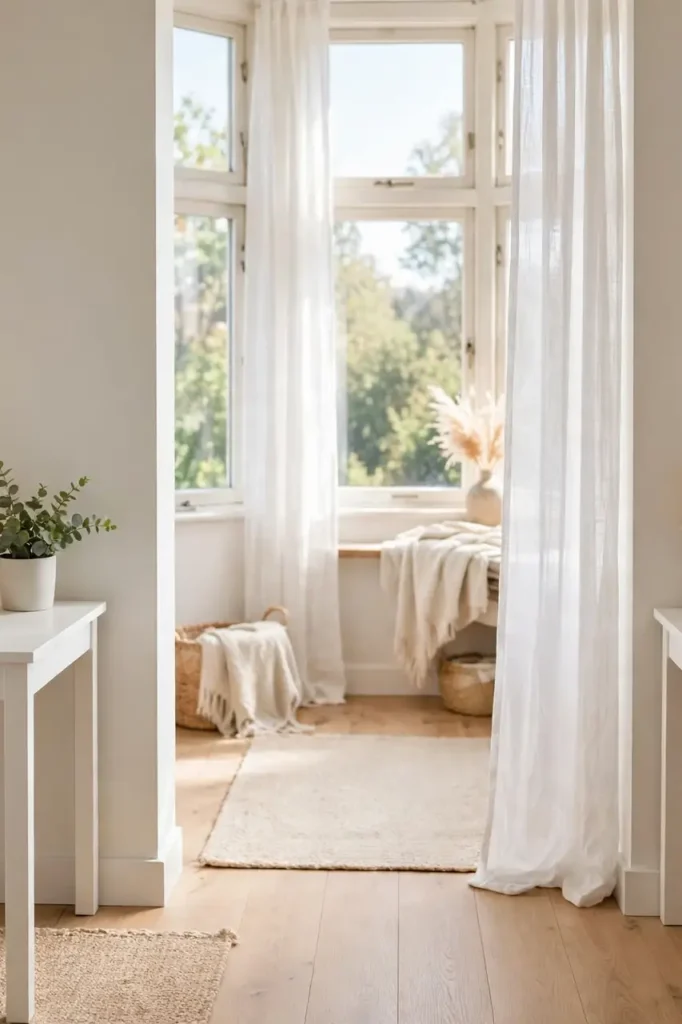
Tucking each desk into its own corner gives both people a sense of privacy, even in one room. Corners often go unused, so this layout reclaims dead space smartly. Add a small lamp and a plant to each nook so they feel finished. Face the chairs slightly inward to keep conversation easy. A small rug under each desk warms up the corner and defines it as a personal zone. Keep the walls above the desks clear or add one floating shelf for books. This setup works beautifully when one person needs quiet mornings and the other takes afternoon calls.
Standing Desk Pair
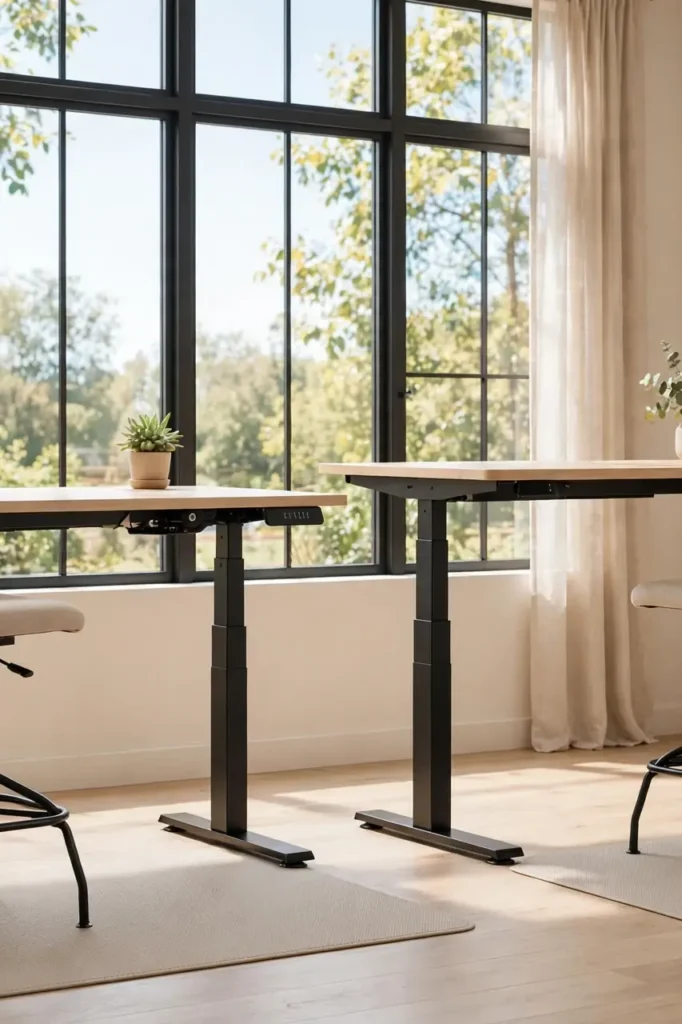
Two standing desks side by side let both people switch between sitting and standing through the day. Health benefits multiply when you both build movement into your routine, and matching desks keep the room looking sharp. Electric models adjust quietly, so one person can stand while the other sits without disturbing calls. Choose desks with memory presets to jump back to your perfect heights instantly.
Anti-fatigue mats under each desk make standing comfortable for longer stretches. Set a shared reminder to change positions every hour. In my experience, partners who stand together stick with the habit far longer than those who go it alone. Your coworkers will thank you.
Vintage Table Duos
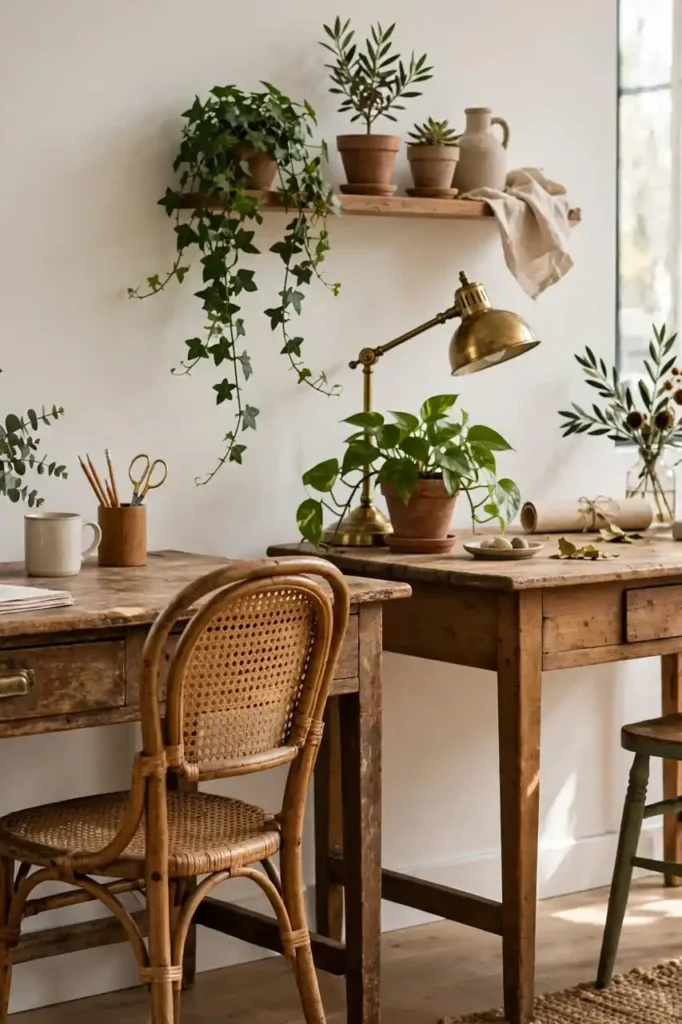
- Hunt for two vintage tables with similar wood tones so they feel like an intentional pair.
- Refinish the tops with the same stain for a cohesive look.
- Pair them with modern ergonomic chairs for comfort during long days.
- Add brass or black lamps to tie the vintage wood to a current style.
Vintage tables bring warmth and character that flat-pack furniture cannot match. They often cost less than new desks and last far longer. Check the height before buying; older tables sometimes sit lower than standard desk height. A glass top can protect worn wood while keeping its charm visible.
Cable-Free Stations
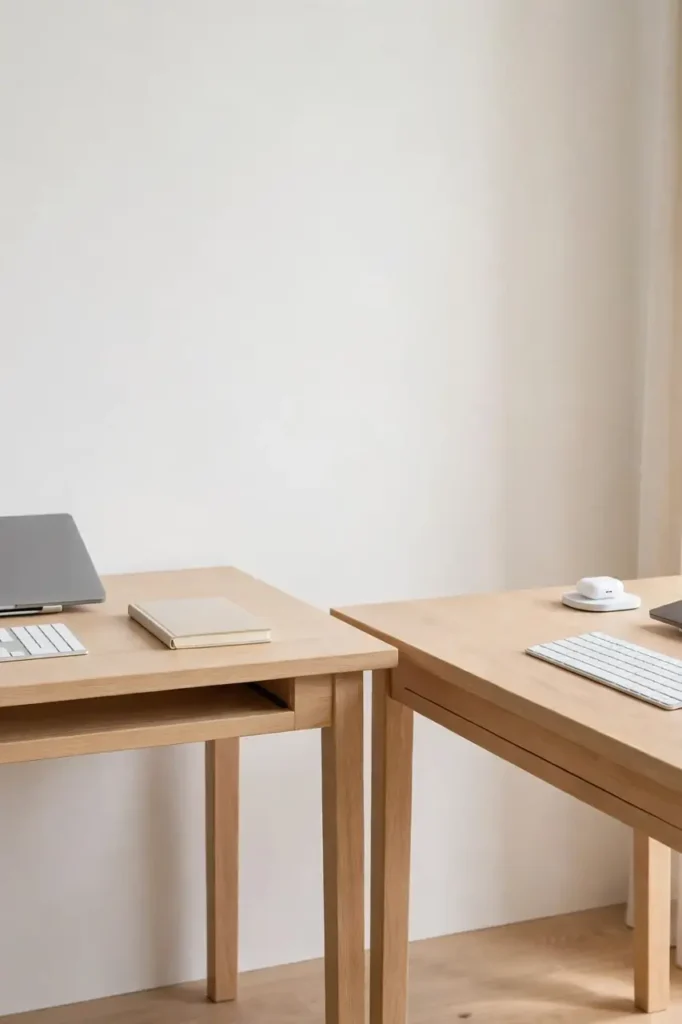
Quick Tip: Mount a cable tray under each desk and run one power strip per person. Label every charger with a small tag so unplugging the wrong device never causes an argument.
Tangled cords make even a beautiful shared home office feel chaotic fast. Wireless keyboards and mice cut half the clutter instantly. Route remaining cables through trays or raceways painted to match the desk. A ten-minute cable reset each Friday keeps both stations looking clean for the week ahead. Buy a label maker and tag every brick and cable so guests can plug in without unplugging your monitor. Hide the power strips behind the desks where feet cannot kick them loose.
Bookshelf Room Dividers
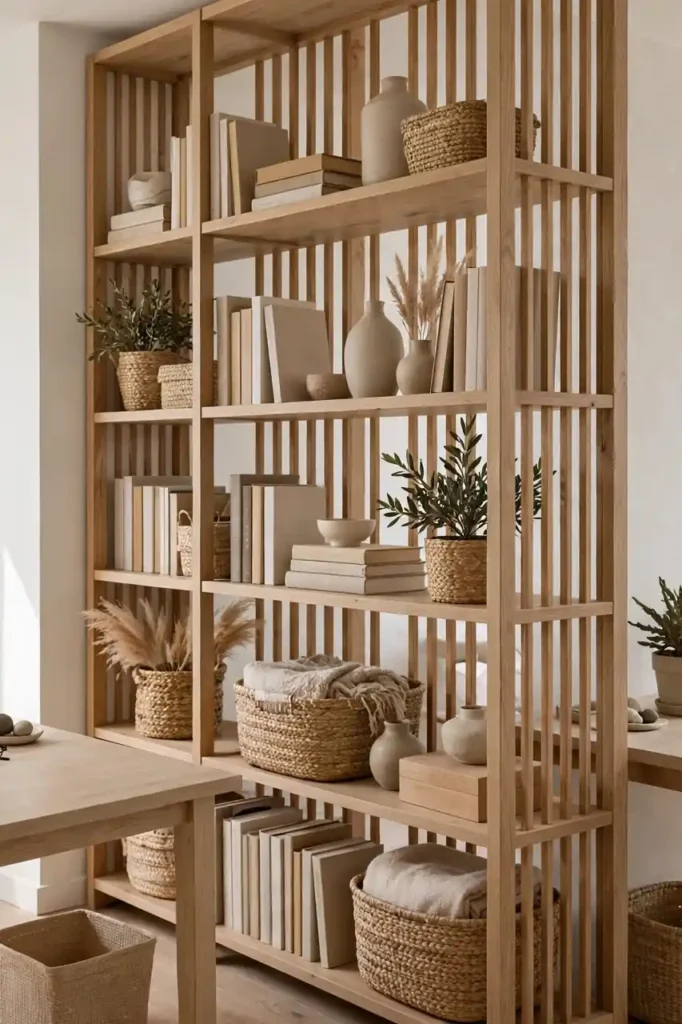
BEFORE: The open room felt exposed, and every video call showed the other person’s background. Both workers felt watched, which killed focus during deep work sessions.
AFTER: A low open bookshelf now divides the room into two cozy zones. Each person has a tidy backdrop, and the shelves hold shared supplies within easy reach.
Open shelves divide without blocking light, which keeps the room feeling airy. Style them with books, baskets, and a few plants so they look intentional. Keep the top shelf low enough to chat over easily. This divider doubles as storage, so it earns its footprint twice.
Filing Cabinet Benches
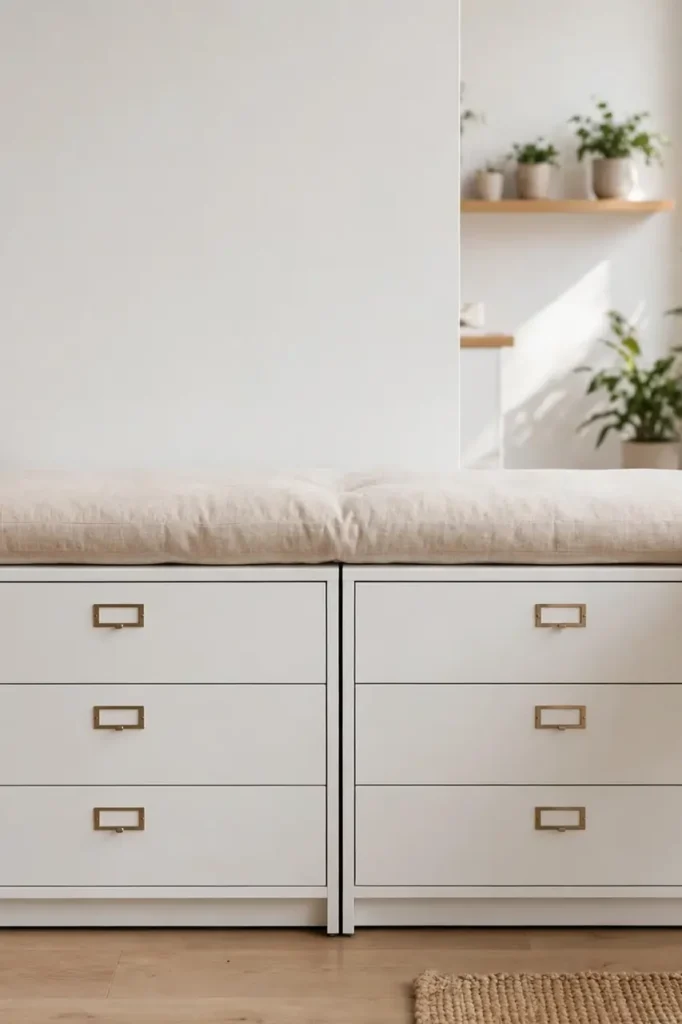
- Choose two matching low filing cabinets, one for each person’s documents.
- Top them with a cushion to create a bench between or beside the desks.
- Label every drawer so filing takes seconds, not minutes.
- Keep a shared inbox tray on top for papers that need both signatures.
Filing cabinets pull double duty as seating and storage, which is gold in a small shared room. Guests get a perch, and paperwork stays sorted by person. Lockable drawers protect sensitive documents when one partner works in finance or healthcare. Choose cabinets in the same finish as the desks. Top the bench with a washable cushion so it stays fresh through daily use.
Pegboard Command Walls
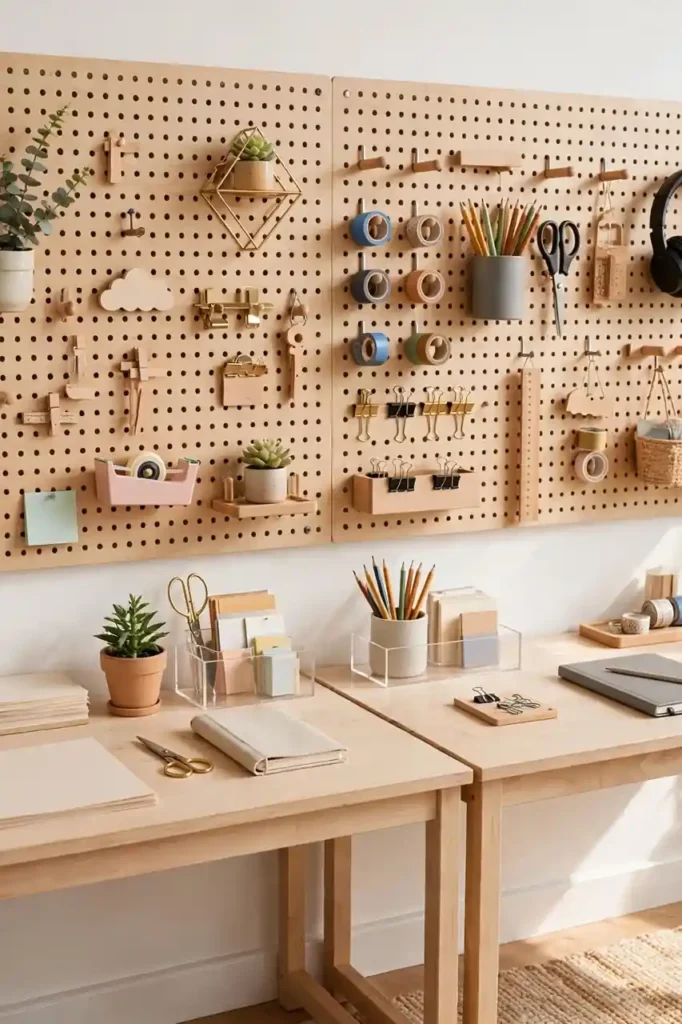
| Feature | Pegboard Wall | Floating Shelves |
|---|---|---|
| Cost | Budget friendly | Mid range |
| Flexibility | Hooks move easily | Fixed positions |
| Capacity | Holds many small items | Better for books |
| Style | Crafty and fun | Clean and modern |
Pegboards turn a blank wall into shared command central for calendars, supplies, and headphones. Each person gets one half, which ends debates about whose stuff goes where. Paint the board to match the walls for a built-in look. Hooks rearrange in seconds as needs change through the year. Add small baskets for mail and a clip for the weekly schedule both people share. I’ve seen this work well in many cases where couples juggle overlapping deadlines.
Rolling Cart Helpers
DO:
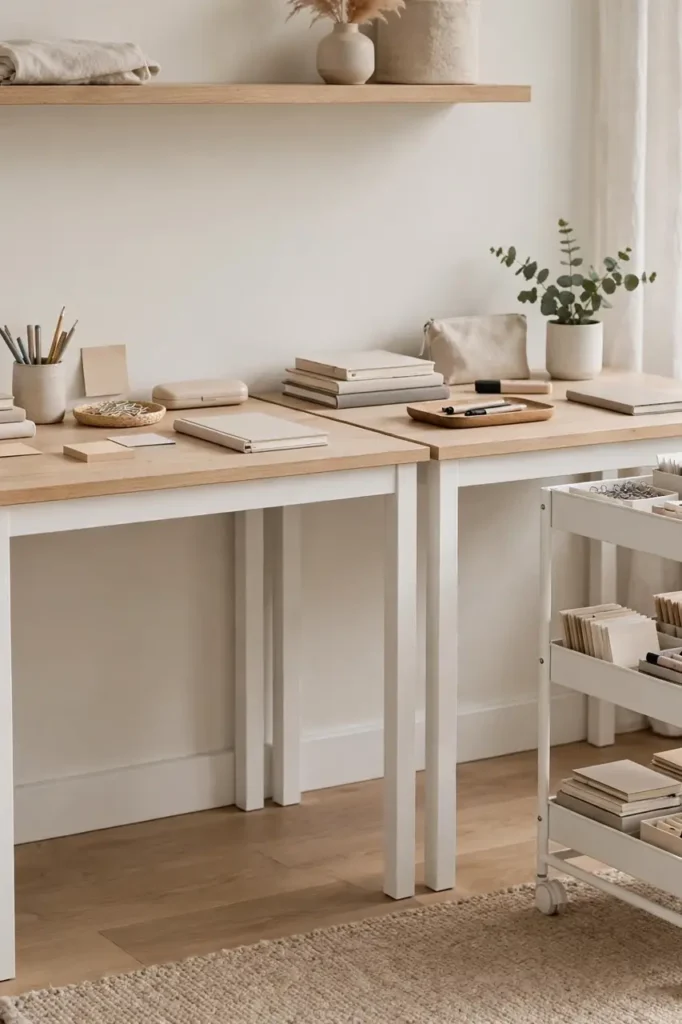
- DO assign one cart per person for daily supplies.
- DO park carts under the desk when not in use.
- DO use the top tray for items you grab constantly.
DON’T:
- DON’T overload carts until they tip or jam.
- DON’T store shared items on personal carts.
- DON’T forget to lock the wheels during video calls.
Rolling carts are the unsung heroes of tight shared offices. They add storage without any installation and move wherever the work happens. A slim three-tier cart tucks beside almost any desk. For bigger wins, our small bedroom storage ideas pair well with these carts on busy workdays.
Quiet Focus Corners
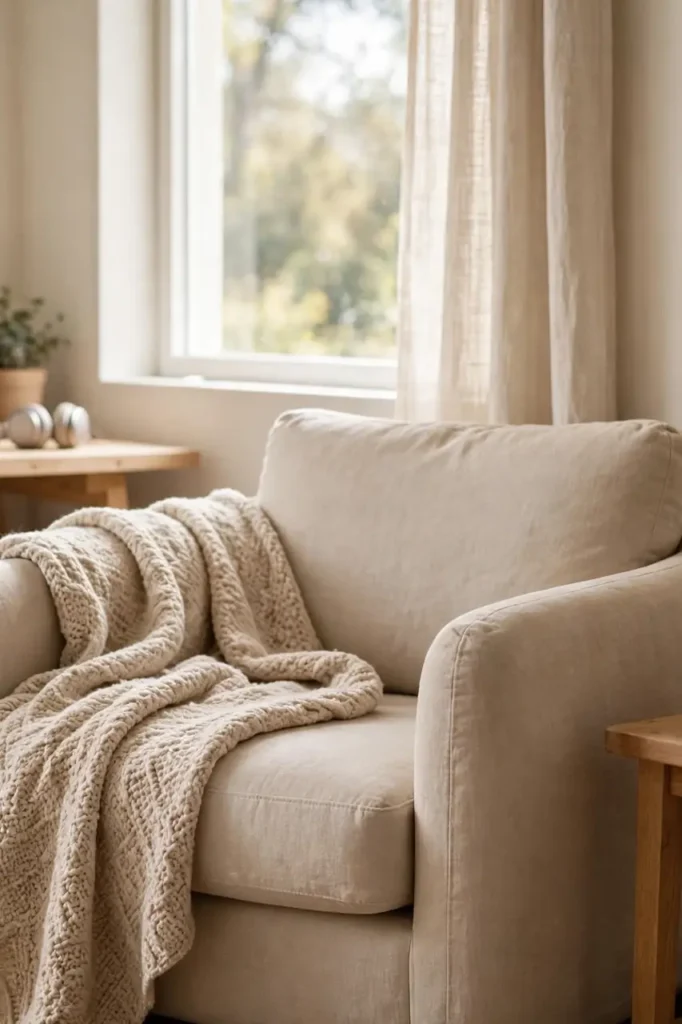
Cost: Low | Time: One afternoon | Skill Level: Beginner | Best For: Deep work
Even the best shared home office needs a spot for heads-down work. A single comfortable chair with a side table and good lamp creates a retreat within the room. Use it for reading, planning, or calls that need quiet. Agree that the corner means do-not-disturb unless truly urgent. A soft throw and a small bookshelf make the corner inviting enough to use daily. Noise-canceling headphones live on the side table, ready for deep work sessions. This little retreat often becomes the favorite seat in the whole house.
Acoustic Panel Walls
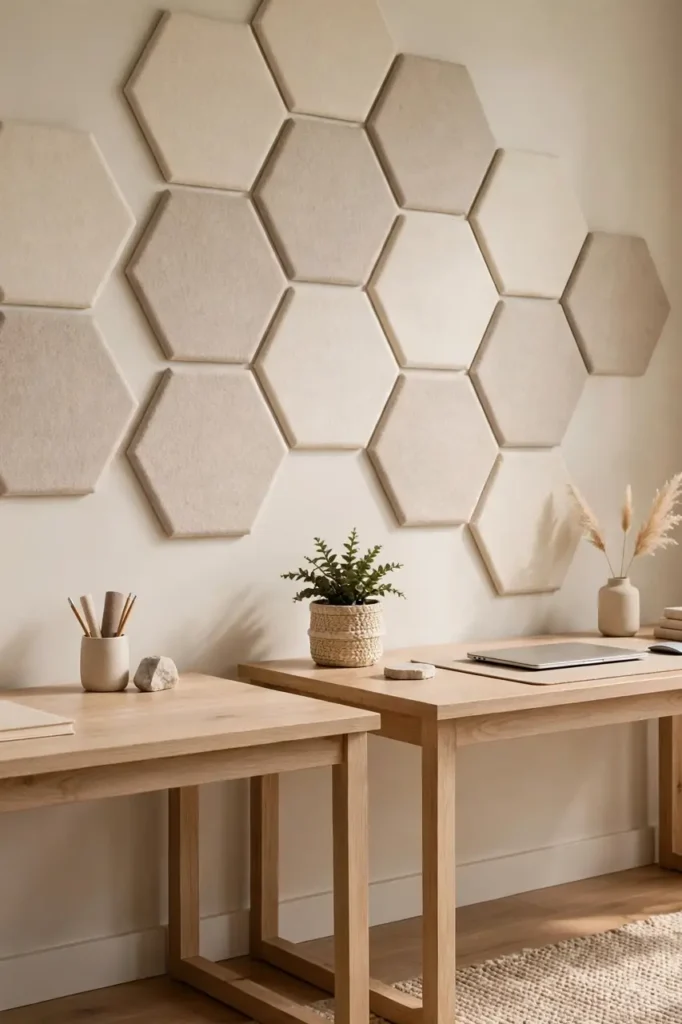
Hard walls bounce sound around, which makes two simultaneous calls miserable for everyone. Decorative acoustic panels absorb that echo while adding texture and color to the room. Felt hexagons or wood-slat panels both work beautifully, and they install with simple adhesive strips. Place them on the wall behind each desk where microphones pick up the most reflection.
Start with the wall each person faces during calls for the biggest impact. I’ve noticed that even six panels make a clear difference in call clarity. Choose colors that match your decor so they look like art, not office equipment. Your coworkers will thank you.
Double Monitor Mounts
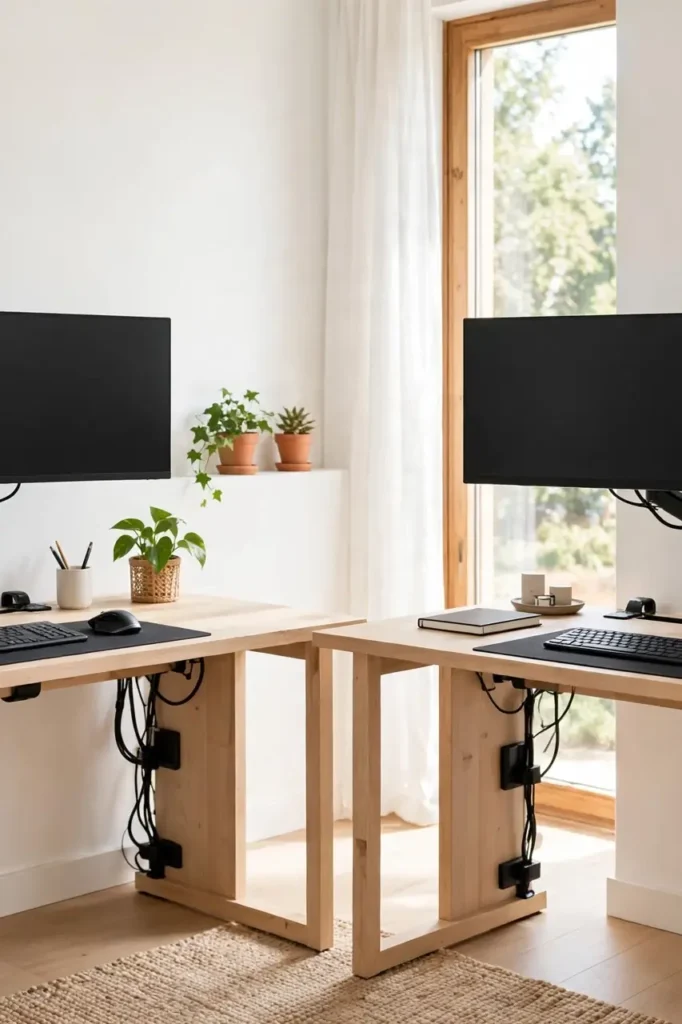
- Mount both monitors on a single arm to free the entire desk surface.
- Position screens at eye level, about an arm’s length away.
- Use one ultrawide instead of two screens if desk space is truly tight.
- Match monitor heights across both workstations for a tidy look.
Dual monitors boost productivity for spreadsheets, design, and research, but they eat desk space fast. Arms lift screens off the surface and let each person adjust angles independently. Clamp mounts need no drilling, which renters love. Tidy the cables with Velcro ties for a clean finish. Set both workstations to the same screen height so the room looks balanced from the door.
Task Lamp Pairs
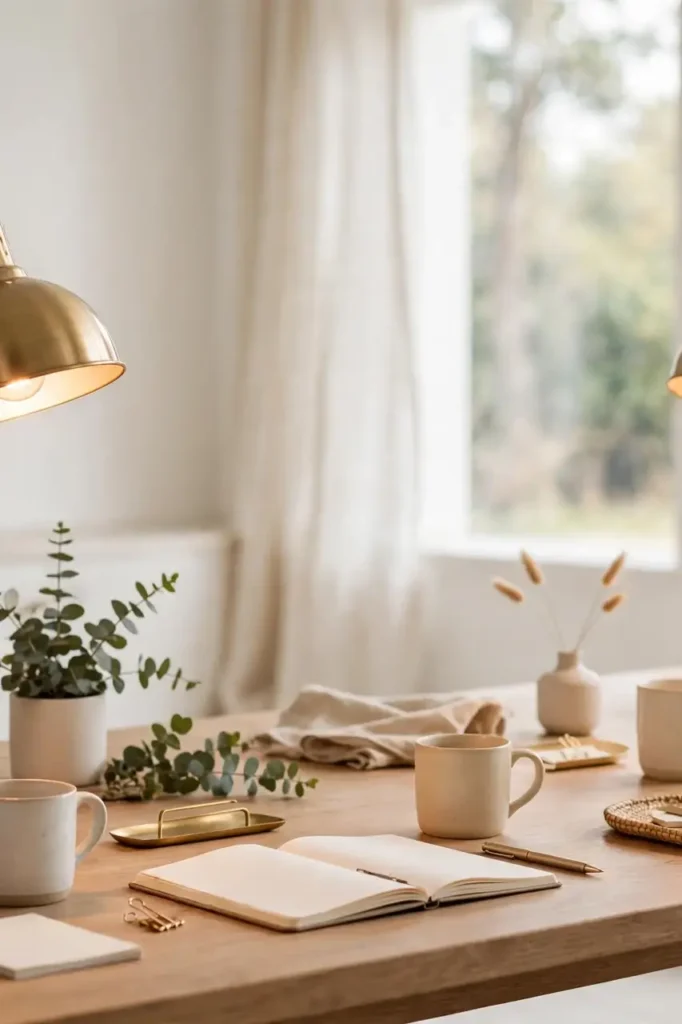
Quick Tip: Choose lamps with adjustable arms and warm-white bulbs around 3000K. Matching lamps on a shared desk create visual rhythm, while separate switches let each person control their own light.
Good lighting prevents the afternoon slump that hits shared offices hard. Overhead lights alone create screen glare, so each person needs a dedicated task lamp. Position lamps on opposite sides to avoid shadows on writing hands. Dimmable models let night owls work late without flooding the room. In my experience, warm light in the evening helps both people wind down after the workday ends. Keep spare bulbs in a shared drawer so a burnout never leaves one side dim.
Personal Touch Displays
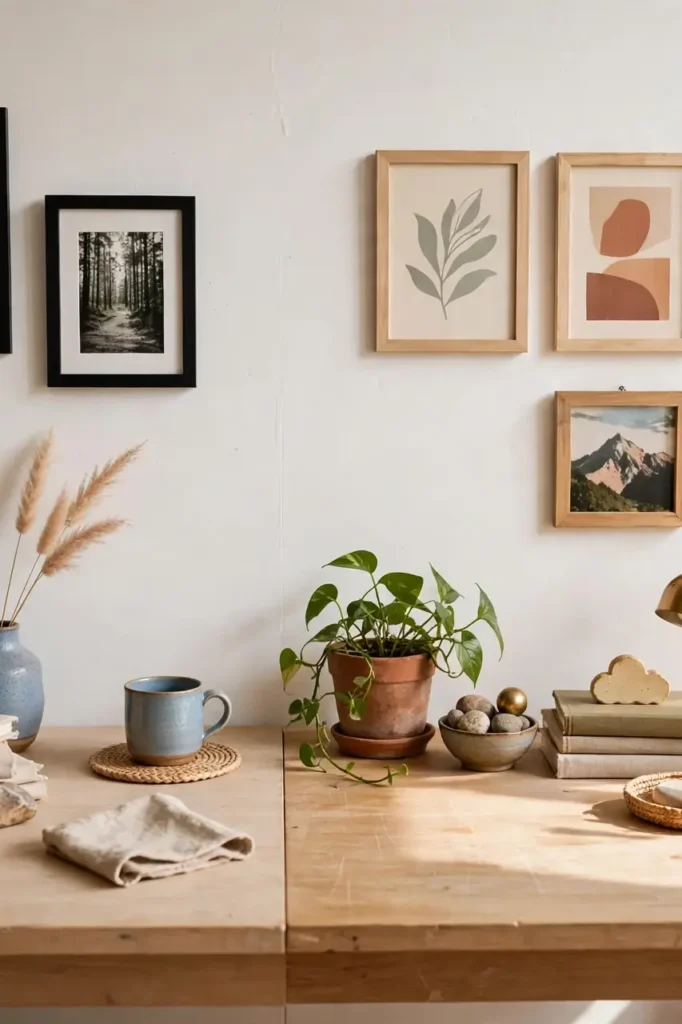
BEFORE: The shared desk looked sterile, like a hotel business center. Neither person felt attached to the space, and motivation dipped by midweek.
AFTER: Each side now shows framed photos, a small plant, and one piece of art. The desk feels personal on both halves, yet the shared middle stays clean.
Personal touches make a shared home office feel like yours, not just a workstation. Limit displays to your own half so the shared zones stay neutral. A framed photo, a souvenir, and a plant are plenty. Refresh them seasonally to keep the space feeling alive and inspiring. A small pinboard for tickets and notes adds personality without cluttering the desk.
Conclusion
Two people, one room, zero clutter. That is the promise of a well designed shared home office, and these 20 ideas give you the blueprint to build it. Start with the layout that fits your room, add storage that serves you both, and agree on a few simple ground rules. I’ve seen how small changes like these can completely shift the way a space feels. Save your favorite ideas on Pinterest, try one upgrade this weekend, and share the results with someone who works from home too. Your most productive workdays are waiting on the other side of a little planning.
One Comment