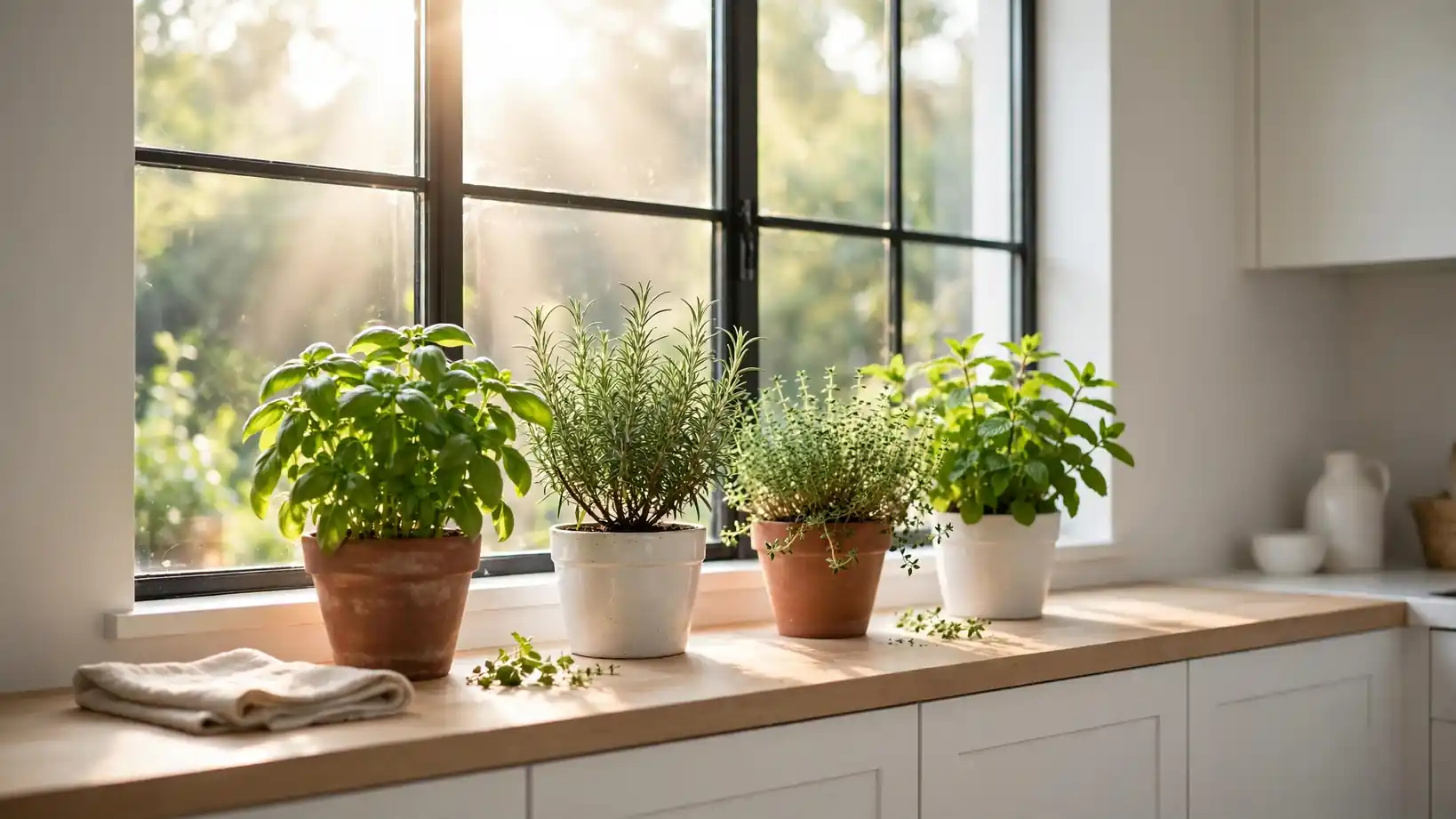
24 Indoor Herb Garden Ideas for Kitchen Windows to Grow Fresh Herbs
Fresh basil within arm’s reach changes how you cook. These indoor herb garden ideas for kitchen windows turn the sunniest sill in your home into a living pantry, so snipping rosemary for dinner takes seconds instead of a grocery run. I have kept a window herb garden for years, and it never stops paying for itself. For more small-space growing, these small backyard garden decor ideas pair perfectly with your indoor setup.
A kitchen window gives herbs what they crave most: hours of bright light and quick access at mealtimes. South-facing glass is the gold standard, but even east or west light grows parsley, mint, and chives with ease. Every idea below fits a standard windowsill or mounts right on the glass, so renters and small kitchens are fully covered. Pick one setup, pot up three starter plants this weekend, and you will be cooking with fresh herbs by the end of the month.
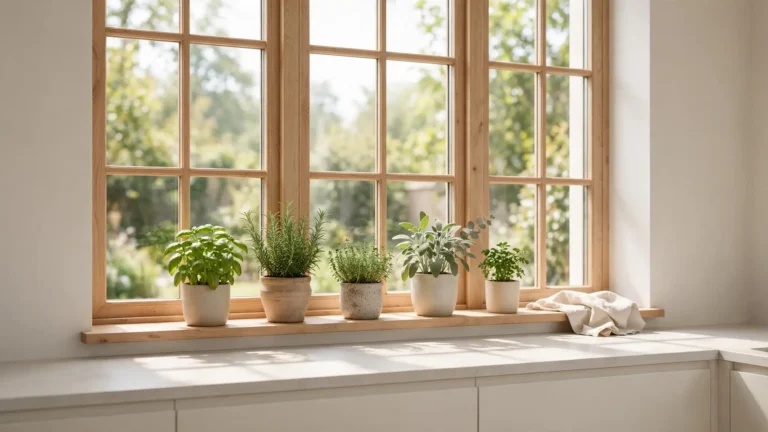
Terracotta Trio
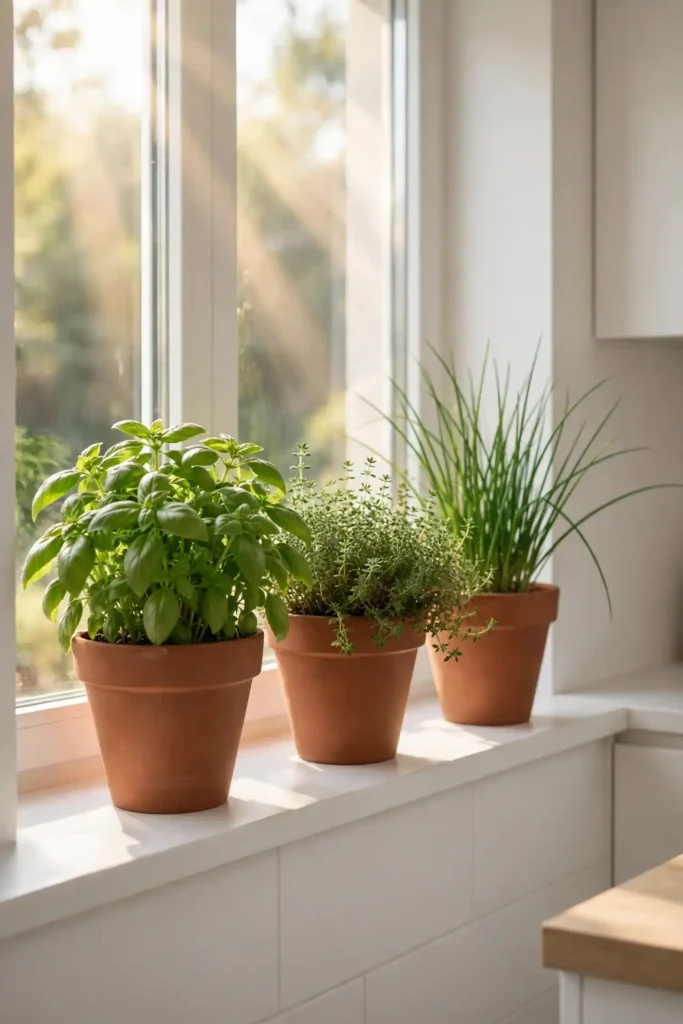
Three matching terracotta pots lined along the sill never look wrong. Basil, thyme, and chives cover most weeknight cooking, and the warm clay color flatters every kitchen style from farmhouse to modern. I have noticed herbs root more freely in porous terracotta because the walls breathe. Buy one size up from what seems right so roots have room.
Water when the top inch of soil feels dry, which usually means every two or three days near a sunny window. Terracotta dries faster than plastic, so check on hot afternoons. Turn the row a quarter turn every week to keep stems growing straight instead of leaning toward the glass.
Hanging Macrame Pots
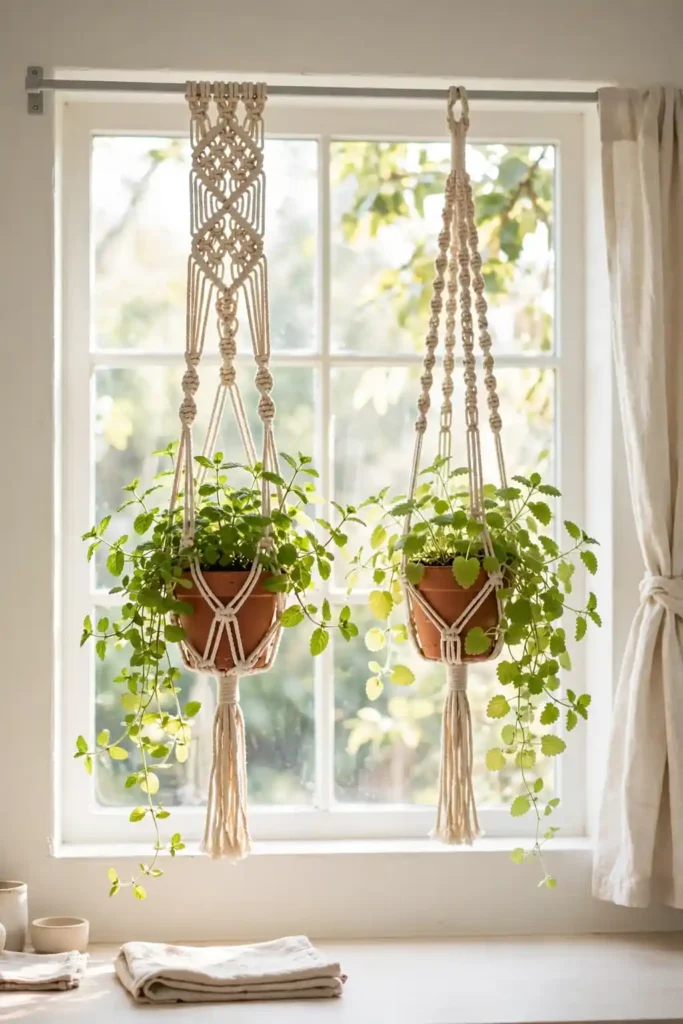
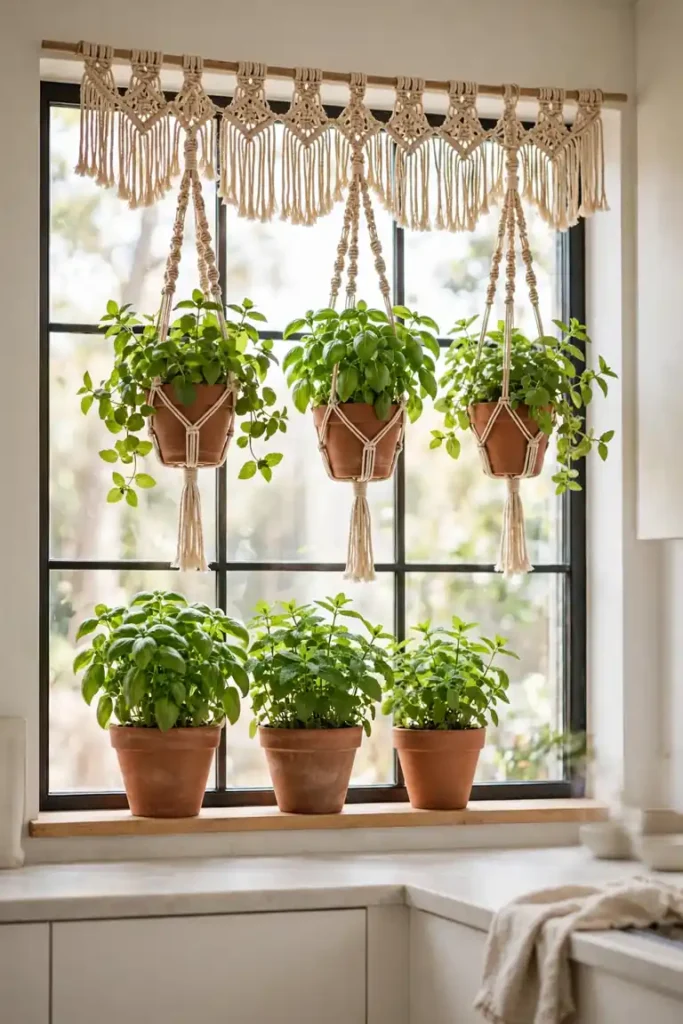
- Hang two or three macrame holders from a tension rod or cup hooks in the window frame.
- Trailing herbs like mint and lemon balm look best spilling over the rim.
- Line the pot with coco fiber so water does not drip on the sill below.
- Keep the hangers at different heights so every plant catches direct light.
A macrame hanger lifts plants into the brightest part of the glass without taking a single inch of sill space. In my experience, trailing varieties stay healthier hanging because air moves around them freely. Snip from the longest stems first to keep the shape full and encourage new growth lower down.
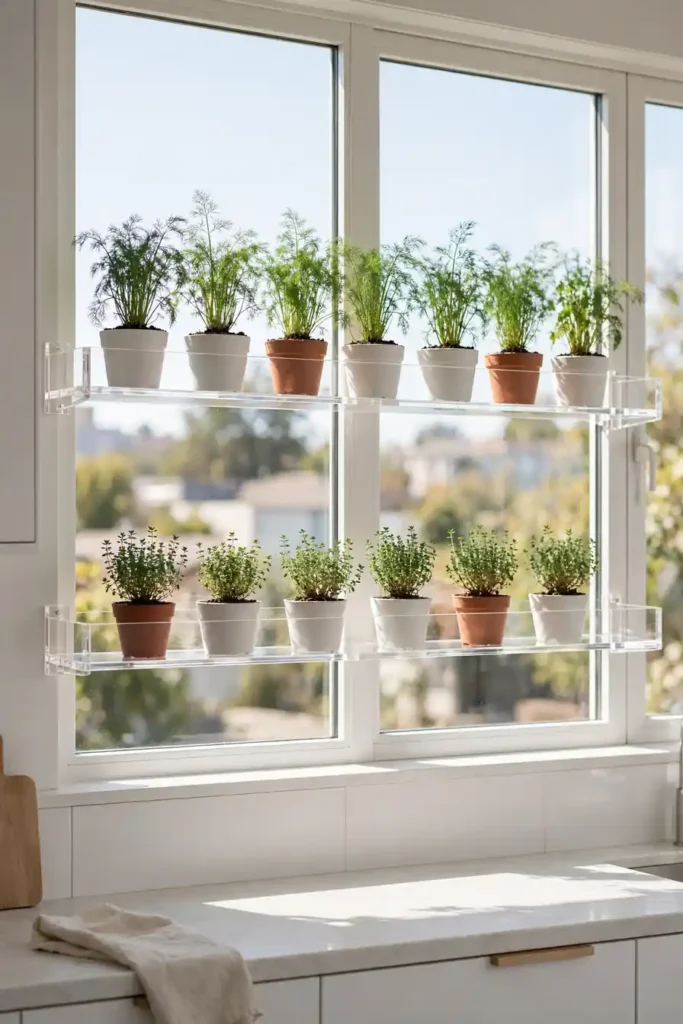
Sunny Shelf Rows
Quick Tip:
Stack two slim shelves across the window width and keep thirsty herbs on the lower shelf where spills are easier to clean. Taller plants like dill go on top, shorter ones like thyme sit below where they will not get shaded out. Leave an inch between pot rims and the glass above so leaves do not scorch.
Shelf rows turn one window into three growing levels without any drilling. Clear acrylic shelves disappear against the glass and let light pass through to every tier. Pair the setup with a kitchen coffee bar ideas corner nearby, and the whole window wall starts working harder for your mornings.
Mason Jar Greens
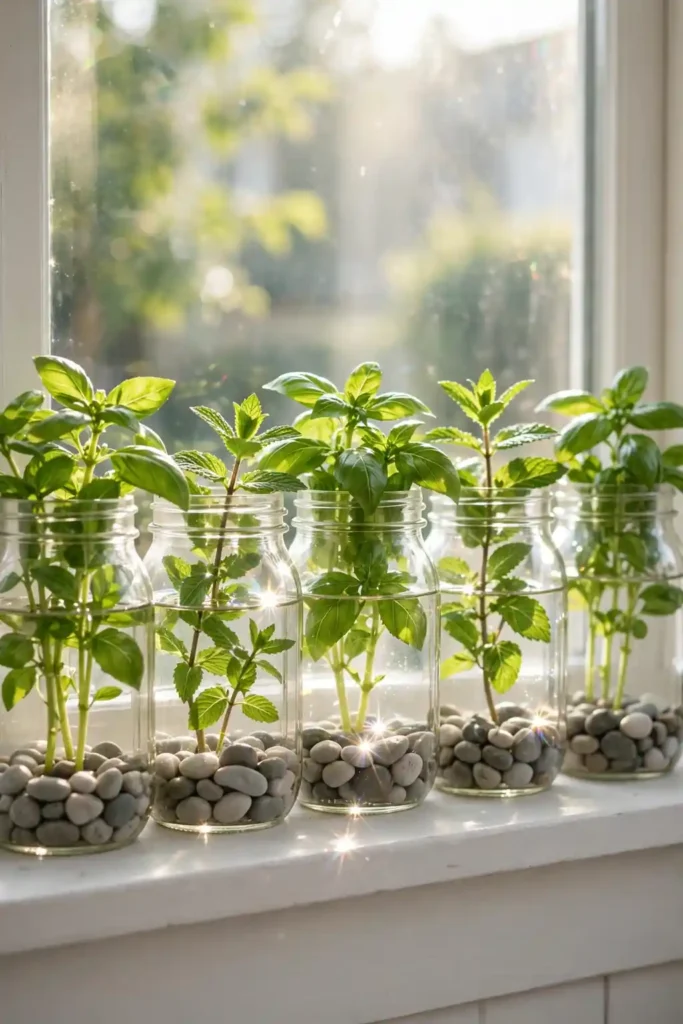
BEFORE: My old windowsill was a graveyard of nursery pots in plastic trays, messy and leaking. Herbs sulked in the shade of mismatched containers, and I forgot to water them because the setup looked so sad.
AFTER: Now the same sill holds a neat row of mason jars with pebbles in the bottom and herbs thriving on top. The glass jars catch the light beautifully, and I see at a glance which plant needs water.
Mason jars cost almost nothing and suit cuttings you root in water first. Add pebbles for drainage since jars have no holes, and keep soil level an inch below the rim. Basil and mint root eagerly in jars, so start with those if you are new to the whole thing.
Tiered Corner Stand
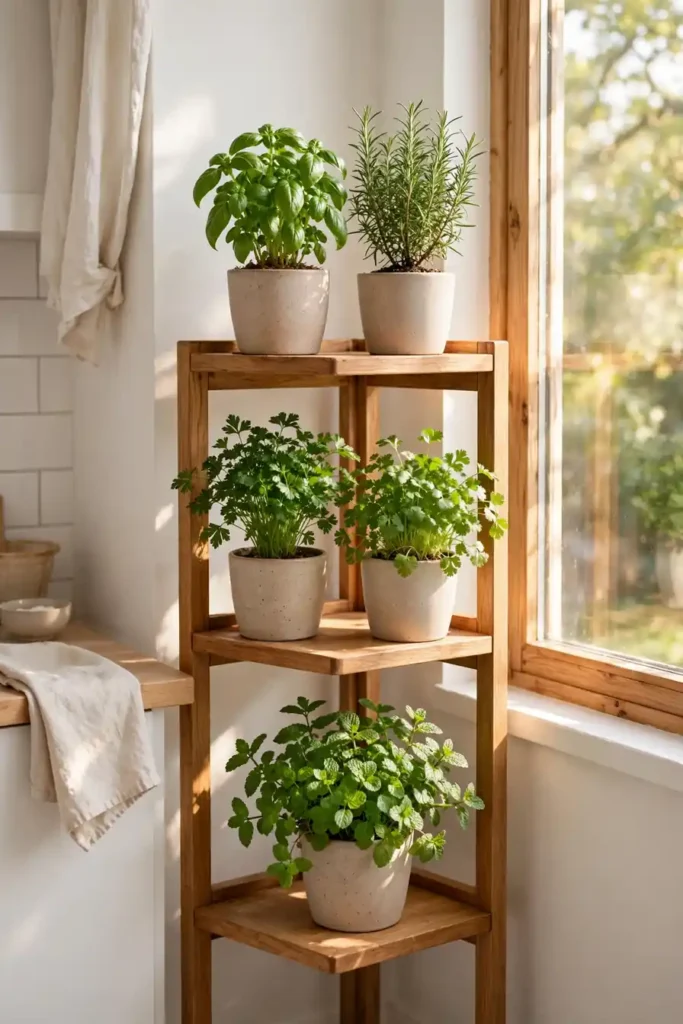
- Place a three-tier corner stand in the window corner where the glass meets the wall.
- Put light-hungry herbs like basil and rosemary on the top shelf nearest the sun.
- Arrange medium-light plants such as parsley and cilantro on the middle shelf.
- Reserve the bottom shelf for mint and chives, which tolerate a little shade.
- Tuck moss between the tiers to hide gaps and hold extra moisture.
A corner stand uses dead space most kitchens waste, turning it into a green focal point. In my experience, the corner of a south-facing window stays warmest in winter, so tender herbs survive cold snaps there. Rotate each pot weekly so stems do not stretch toward the brightest pane. Stain the wood with food-safe oil so humidity does not warp it.
Charming indoor herb garden ideas for kitchen windows
| Feature | Terracotta Set | Hanging Garden |
| Cost | Low | Medium |
| Space Needed | Twelve inches of sill | Zero sill space |
| Best For | Beginners | Narrow windows |
| Watering | Every two to three days | Check weekly |
| Sun Needs | Full bright light | Full bright light |
| Best Herbs | Basil, thyme, chives | Mint, lemon balm |
| Skill Level | Beginner | Beginner |
Pairing terracotta pots with a hanging row covers both sill and air space in one window. I have seen this mix work well in many cases because the two styles catch light at different heights. Keep watering on one fixed day so neither setup gets forgotten in a busy week. Place a small saucer under every pot, since kitchen windowsills double as prep space and water stains show fast.
Rail-Mounted Planters
DO:
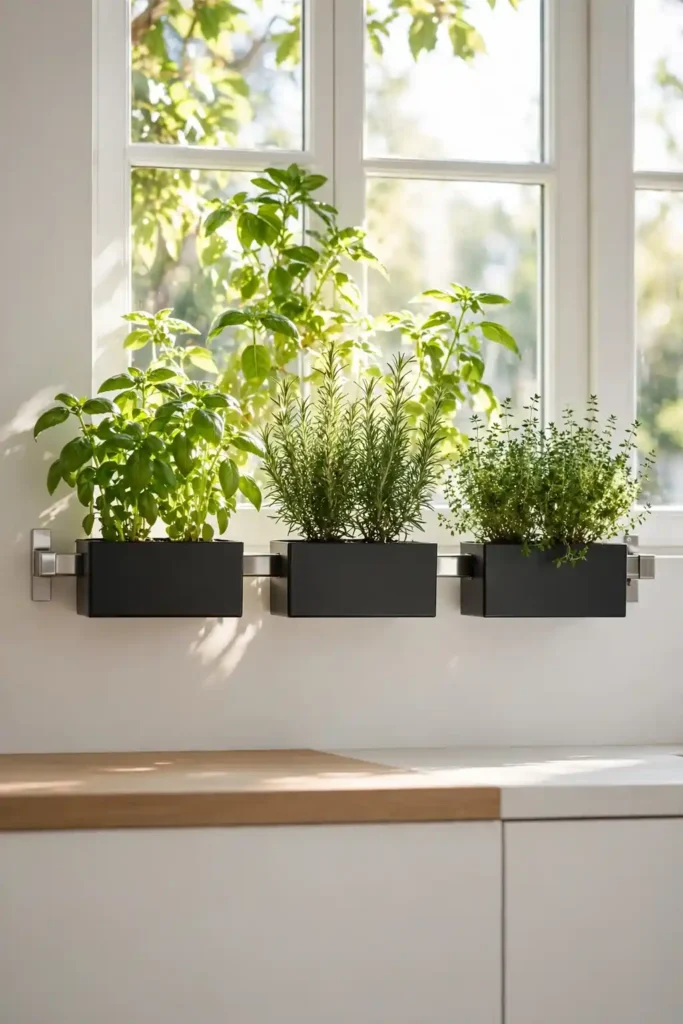
- Measure the rail width before buying so brackets grip the metal firmly.
- Choose shallow rectangular planters that sit close to the glass.
- Water slowly so excess drains into the tray, not onto the floor.
DON’T:
- Do not overload one rail with heavy ceramic pots that strain the brackets.
- Do not block the window latch, since kitchens need ventilation on hot days.
- Do not forget drip trays, because rails channel water straight down.
Rail-mounted planters float your herbs at eye level right against the light. In my experience, herbs on rails get more even sun than sill pots because nothing sits in front of them. Tighten the brackets once a season so a full planter never takes a surprise dive.
Frosted Glass Pots
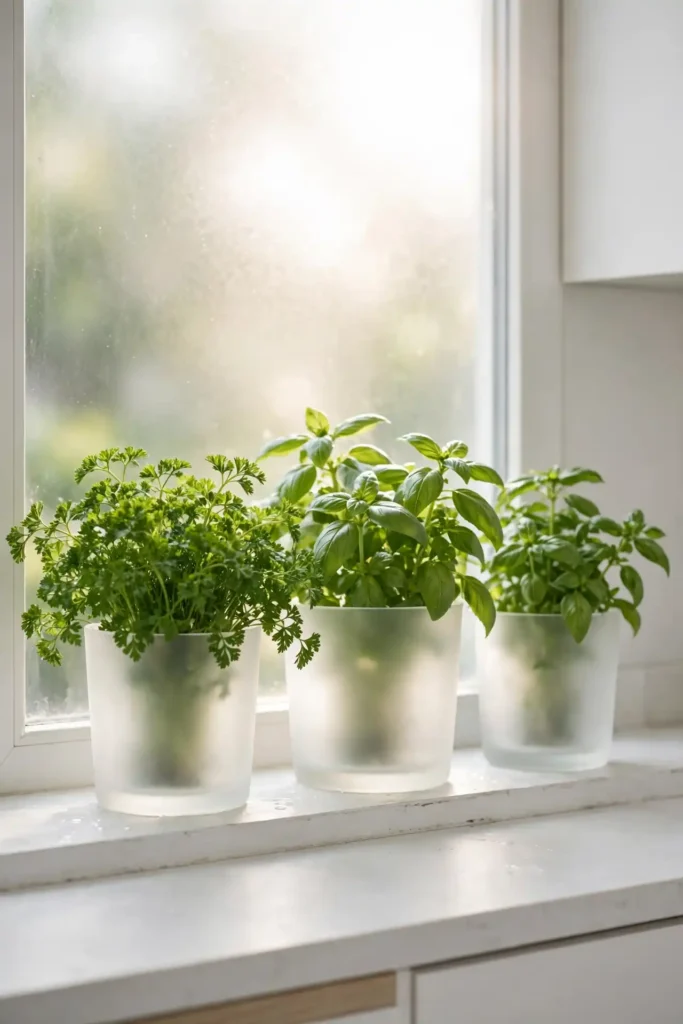
Cost: Low | Time: One afternoon | Skill Level: Beginner | Best For: Bright modern kitchens | Works In: Any sunny sill | Result: Soft glowing planters
Frosted glass softens harsh sunlight and hides water rings inside the pot. These vessels suit modern kitchens, and they make even simple parsley look styled. For anyone new to indoor herb garden ideas for kitchen windows, frosted pots are a forgiving first buy because they show water levels through the glass.
I top every frosted pot with white gravel, which finishes the look and slows soil drying between waterings. The gravel also keeps fungus gnats away from the damp surface, a common headache for window growers. Mist the leaves on dry winter mornings when indoor heating runs hard.
Window Ledge Boxes
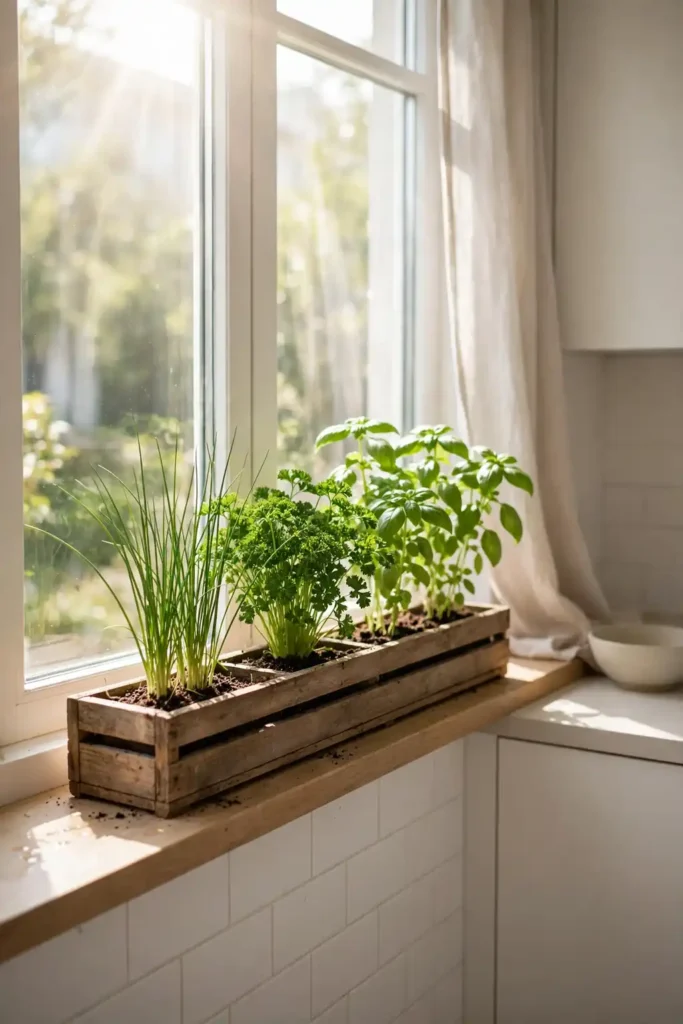
A narrow box planter along the ledge holds a whole salad garden in one row. Chives at one end, parsley in the middle, basil at the other, and you have a cutting station steps from the stove. I have seen renters take these boxes to three apartments in a row. Wooden boxes look warm, metal troughs look crisp.
Line the box with landscape fabric so soil stays put but water drains freely. Sow fast herbs like cilantro every three weeks for a steady supply. Keep the box an inch from the glass so condensation does not soak the back row overnight. Tuck a coffee filter over the holes to keep soil in while water drains.
Tiny Clay Sets
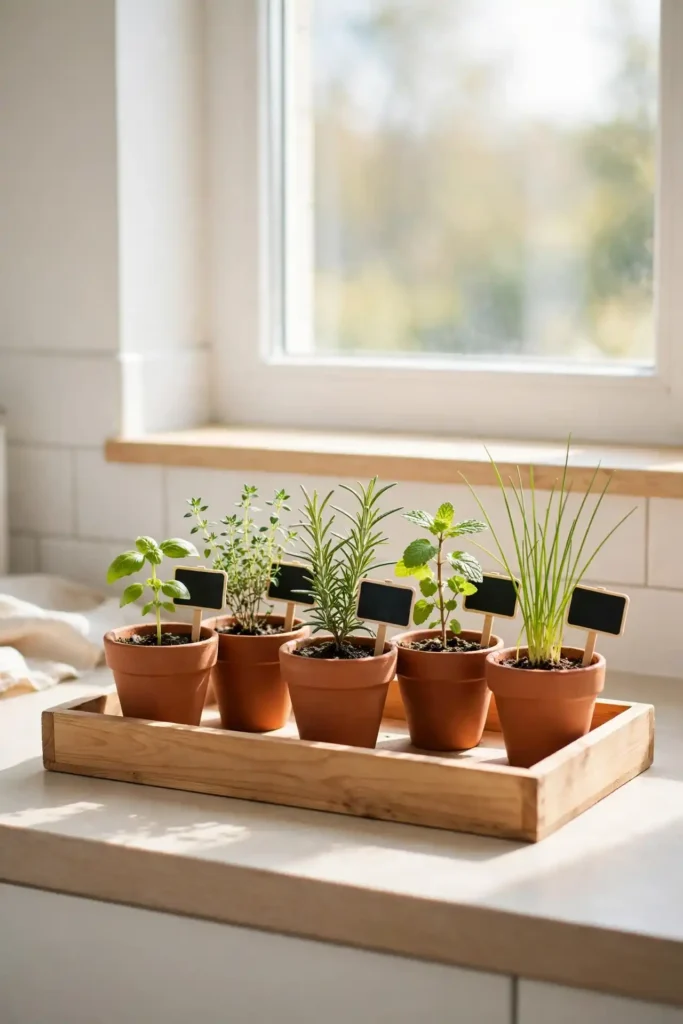
- Group five or six mini clay pots in a shallow wooden tray for one tidy unit.
- Label each pot with a chalkboard stake so guests know what to snip.
- Cluster pots tightly; the shared humidity helps seedlings establish faster.
- Rotate the tray weekly so every pot gets its turn in the brightest spot.
Tiny pots dry out fast, so this setup suits cooks who pass the window daily. In my experience, a small morning watering becomes part of the coffee routine within a week. The tray catches every drip, which keeps the sill spotless. Refill the tray gravel instead of the pots when you travel for a weekend.
Magnetic Strip Gardens
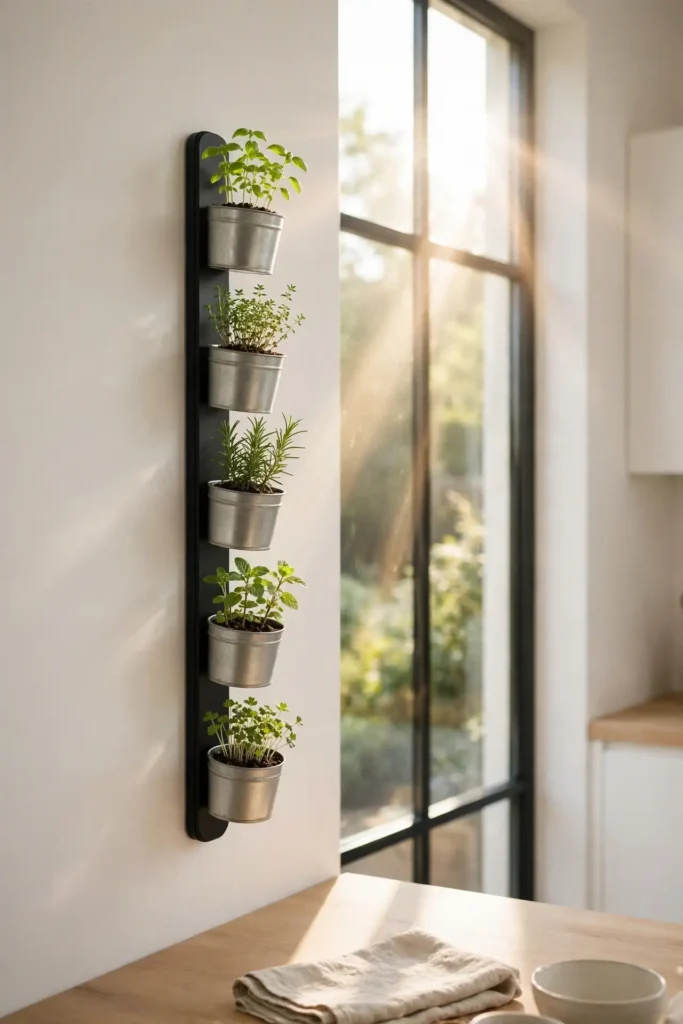
Quick Tip:
Screw a magnetic knife strip to the window frame or a side wall and hang small metal tins from strong hooks. Fill each tin with soil and one herb seedling. This vertical strip turns dead wall space beside the glass into a growing wall. Choose tins with drainage holes or drill your own. Seal the board with water-resistant paint so steam does not warp it.
Magnetic strips are the renter’s secret weapon because they leave only tiny screw holes. Light tins warm quickly in the sun, so water a little more often than you would for clay. Basil, mint, and chives all thrive in this setup through every season. Space tins an inch apart so leaves get airflow.
Bright indoor herb garden ideas for kitchen windows
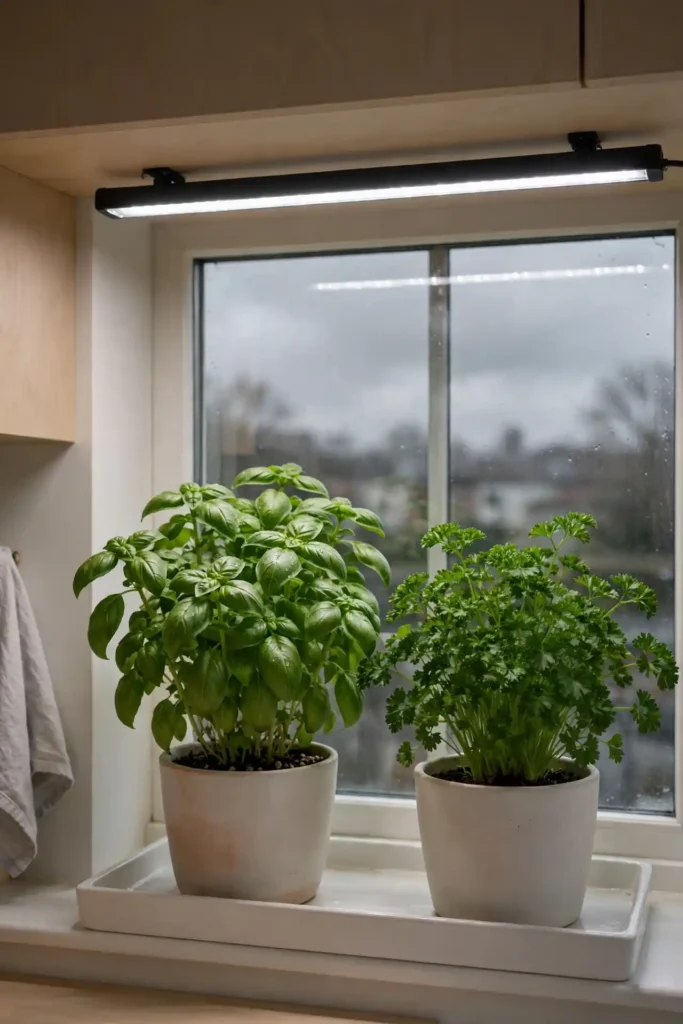
BEFORE: My kitchen window faced a brick wall and I assumed herbs could not survive there. Every seedling stretched pale and leggy toward the weak light, then gave up by week three.
AFTER: A simple daylight LED bar mounted above the sill changed everything. The same dim window now grows stocky basil and perky parsley year-round, no matter how gray the sky stays.
Supplemental light is the honest fix for dark kitchens, and one bar covers a whole sill. Run it fourteen hours a day on a cheap timer, keeping it six inches above the leaves. Your electric bill barely notices, and your herbs certainly do. Pair the bar with reflective foil behind pots to bounce extra light.
Stacked Wooden Crates
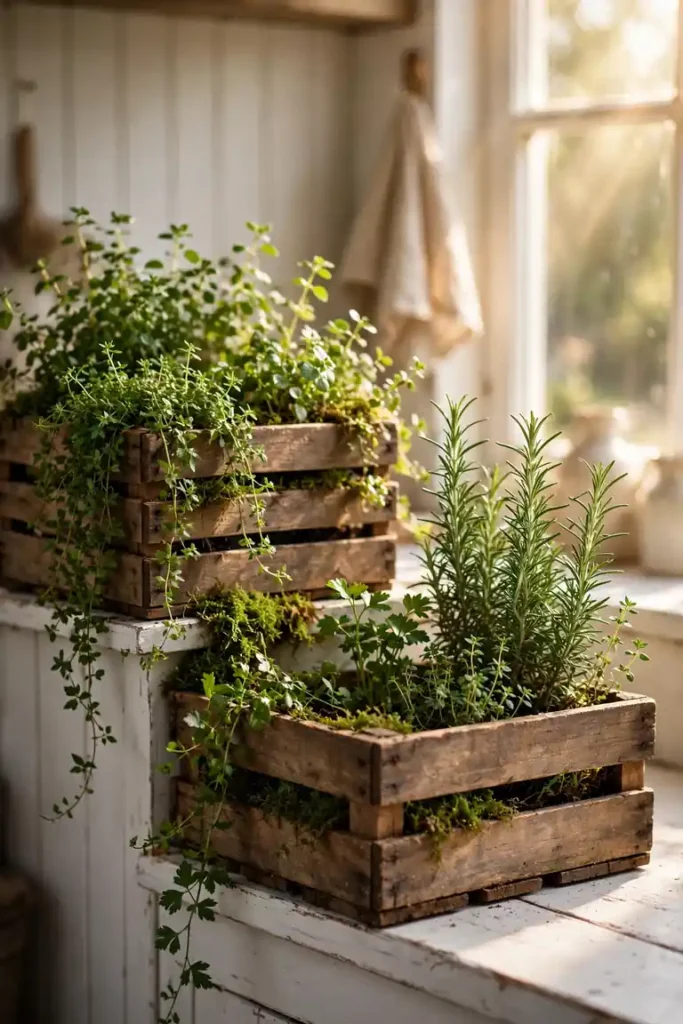
- Stack two small wooden crates on the sill, offset like stair steps.
- Line each crate with landscape fabric to hold soil and slow drainage.
- Plant trailing herbs on the top crate and upright ones below.
- Water the top crate first so runoff feeds the lower level gently.
- Tuck moss between the crates to hide gaps and hold extra moisture.
Crates bring farmhouse texture that flatters rustic and cottage kitchens alike. In my experience, the stepped shape catches light on every level, so nothing stays in shadow. Sand rough edges before planting to avoid splinters during watering. Stain the wood with food-safe oil so humidity does not warp it.
Suction Cup Planters
| Feature | Glass Jars | Suction Planters |
| Cost | Very low | Low |
| Mounting | Sits on sill | Sticks to glass |
| Best For | Cuttings | Tiny kitchens |
| Watering | Every three days | Every two days |
| Sun Needs | Bright light | Bright light |
| Best Herbs | Mint, basil | Chives, thyme |
| Rental Friendly | Yes | Completely |
| Capacity | One plant | One plant |
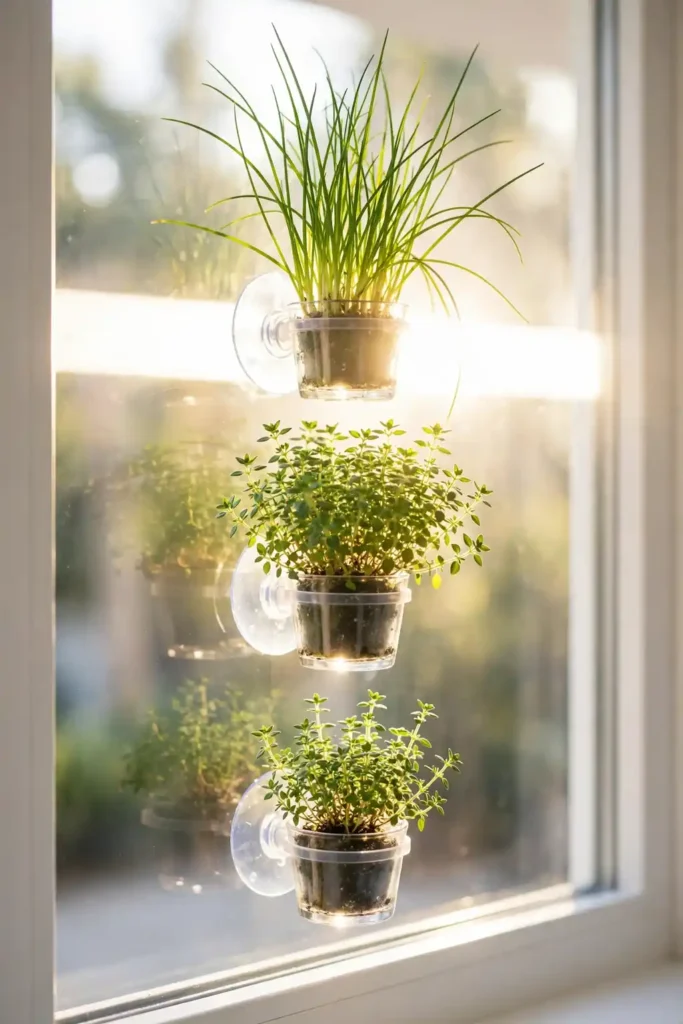
Suction planters cling right to the windowpane, floating herbs in the brightest band of light. I have seen this work well in many cases for apartments with sills too narrow for pots. Press each cup onto clean dry glass and test the hold before adding soil. Re-wet the cups monthly so the seal never weakens.
Floating Glass Shelves
DO:
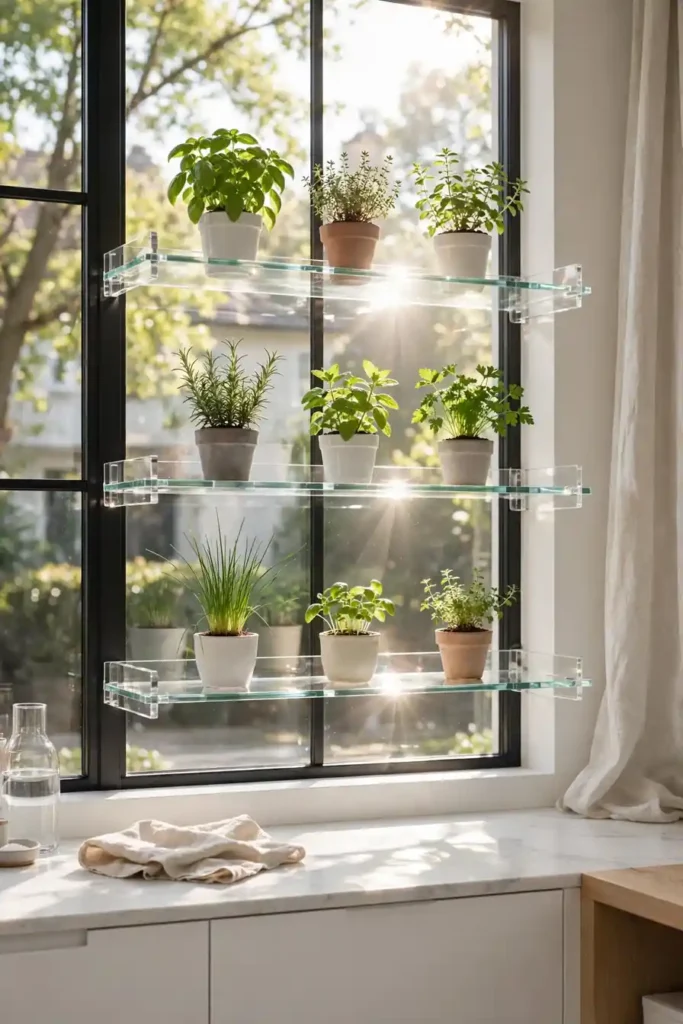
- Anchor brackets into studs or use heavy-duty drywall anchors rated for the load.
- Keep shelf depth under eight inches so pots stay near the light.
- Add a thin lip or rail at the edge to stop pots sliding.
DON’T:
- Do not crowd the shelf edge, since watering makes pots heavier than they look.
- Do not use plain glass shelves thicker than herbs need; acrylic is lighter.
- Do not forget to dust leaves, because dusty plants photosynthesize poorly.
Floating shelves frame the window like a gallery and keep every herb visible at a glance. In my experience, glass shelves suit modern kitchens best, where the see-through look keeps small rooms feeling open. Leave six inches between shelves so tall basil never gets squashed.
Woven Basket Clusters
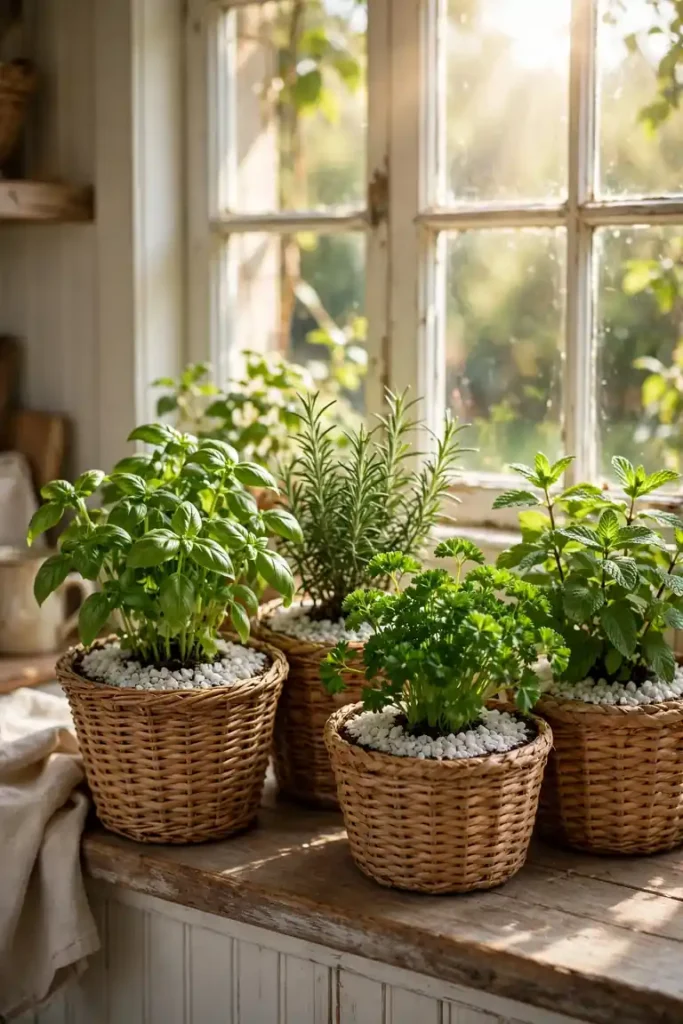
Cost: Low | Time: One hour | Skill Level: Beginner | Best For: Cozy cottage kitchens | Works In: Sunny or east-facing windows | Result: Warm textured display
Woven baskets soften a kitchen window instantly and hide plain plastic nursery pots inside. Line each basket with a plastic bag with holes poked for drainage. For lovers of indoor herb garden ideas for kitchen windows, baskets add warm texture that plain pots never can.
I rotate three baskets through the seasons, swapping tired plants for fresh seedlings each spring. The weave breathes, so soil dries evenly and roots stay healthy. Mist the leaves on dry winter mornings when indoor heating runs hard.
Vintage Tin Pails
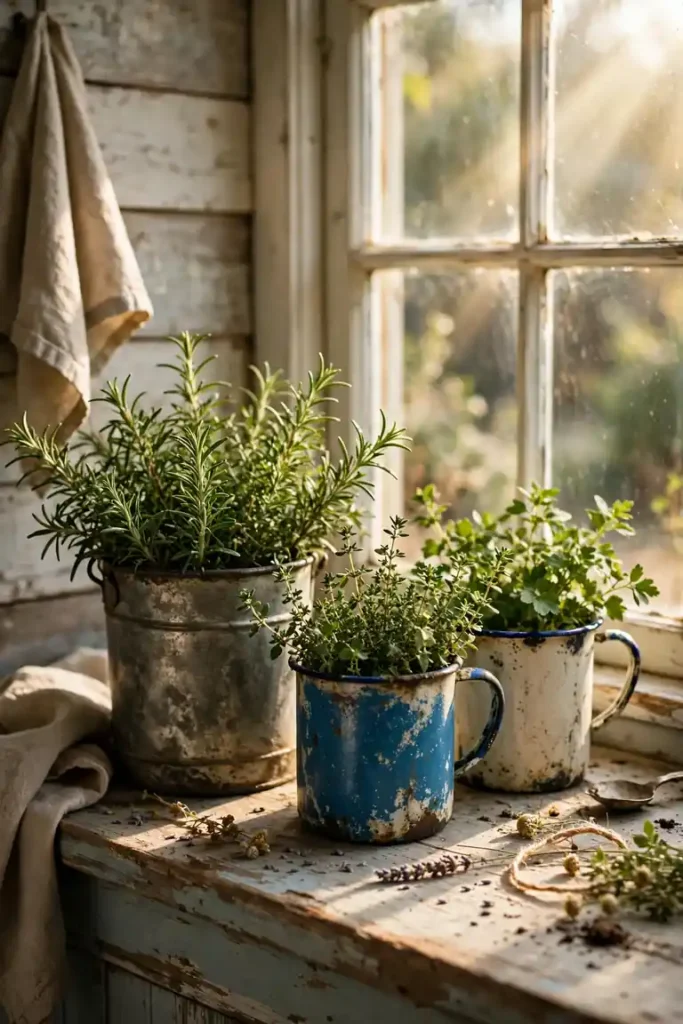
Old tin pails and enamel cups from flea markets make the most charming herb pots. Their patina tells a story no new pot can fake, and herbs seem to love the slight rust runoff, which adds iron. Drill three holes in the bottom of each pail before planting. I have filled a whole sill this way for under ten dollars.
Keep the vintage look by leaving the outside untouched and only drilling underneath. Rustic pails suit farmhouse kitchens, while enamel cups fit brighter modern spaces. Either way, your herbs get a home with character. Tuck a coffee filter over the holes to keep soil in while water drains.
Fresh indoor herb garden ideas for kitchen windows
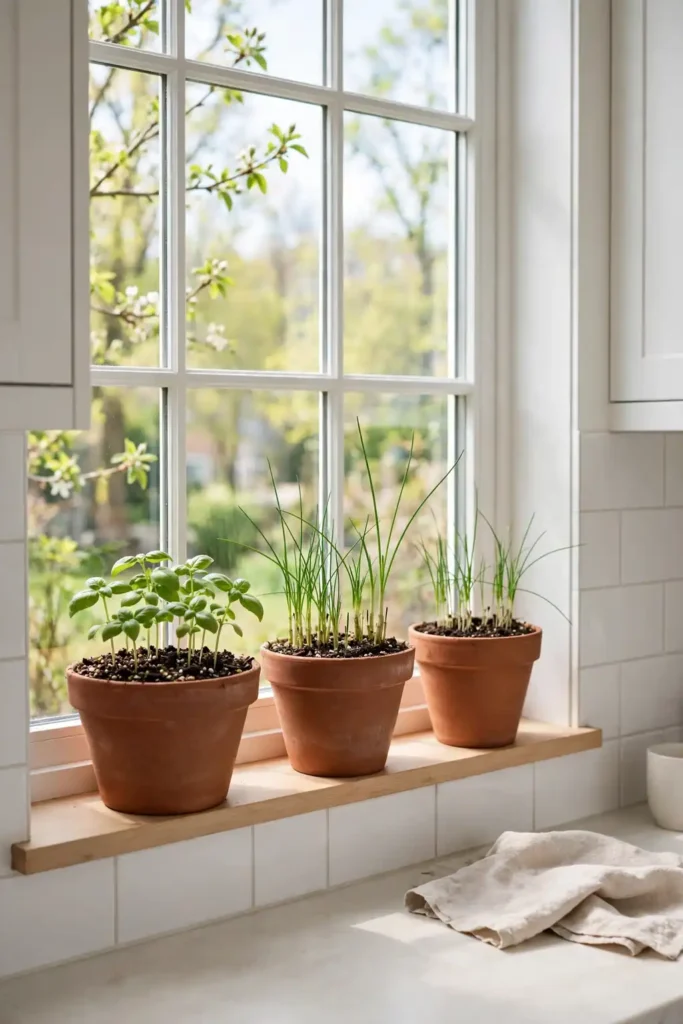
- Refresh tired soil each spring by replacing the top two inches with new potting mix.
- Prune woody rosemary and thyme hard in March to spark fresh growth.
- Swap summer basil for winter chives as daylight hours shrink in fall.
- Wipe the window glass inside and out so maximum light reaches the leaves.
A seasonal refresh keeps a window garden productive instead of slowly declining. In my experience, the spring soil swap matters most, because old mix compacts and starves roots. Mark the calendar and your herbs will reward you all year. One afternoon of maintenance beats months of struggling plants.
Pegboard Herb Walls
Quick Tip:
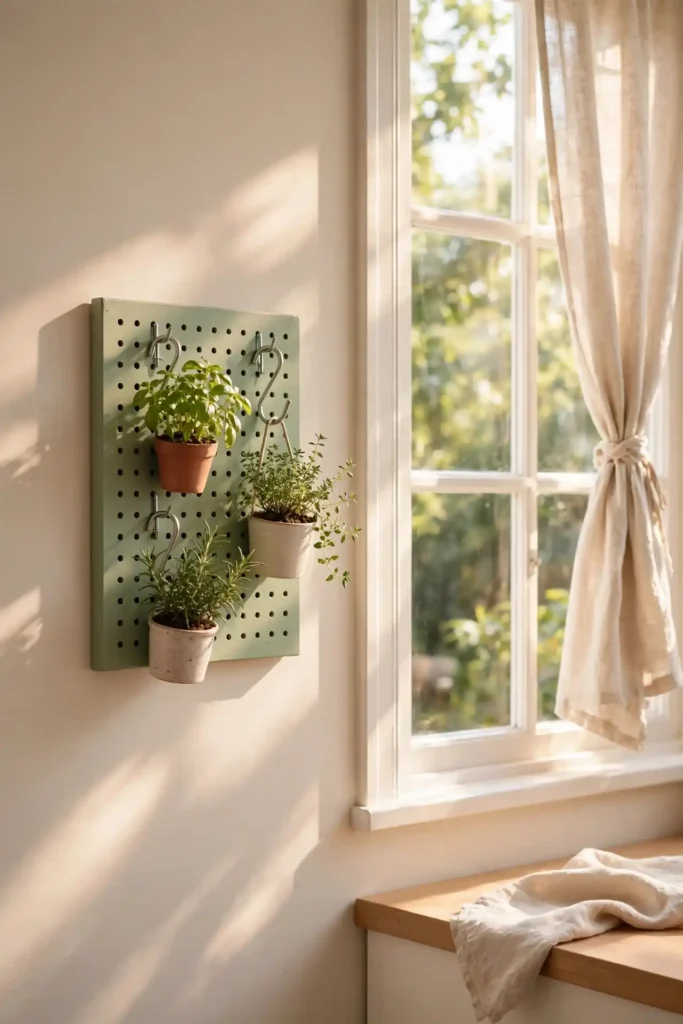
Mount a small painted pegboard on the wall beside the window and hang pots from sturdy S-hooks. Paint it the same color as the wall so the green plants become the decoration. Leave two inches between the board and the wall for airflow behind the pots. Seal the board with water-resistant paint so steam does not warp it.
Pegboard turns the wall beside your window into flexible growing space you can rearrange in minutes. Small pots hang securely and catch side light all afternoon. I have seen this work well in many cases for kitchens where the sill itself is too shallow for pots.
Rotating Herb Towers
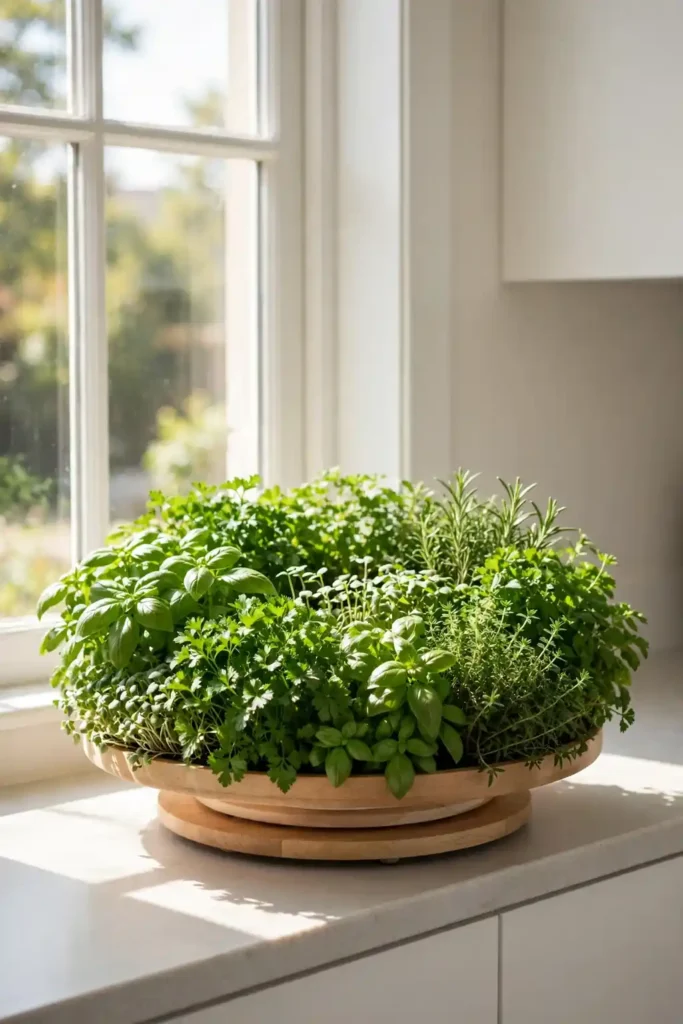
BEFORE: Herbs on a flat sill all lean toward the glass, leaving bare stems on the dark side. I rotated each pot by hand every few days, but the back half always looked thin and sad.
AFTER: A small rotating turntable under a round tray solved it completely. One gentle spin each morning gives every side equal light, and the whole garden grows evenly for the first time ever.
Turntables cost a few dollars at kitchen stores and fit standard trays perfectly. Give the tray a quarter turn with your morning coffee and forget about lopsided growth. In my experience, even light is the difference between scraggly herbs and lush ones. Lazy Susans made for cabinets work just as well.
Narrow Sill Strips
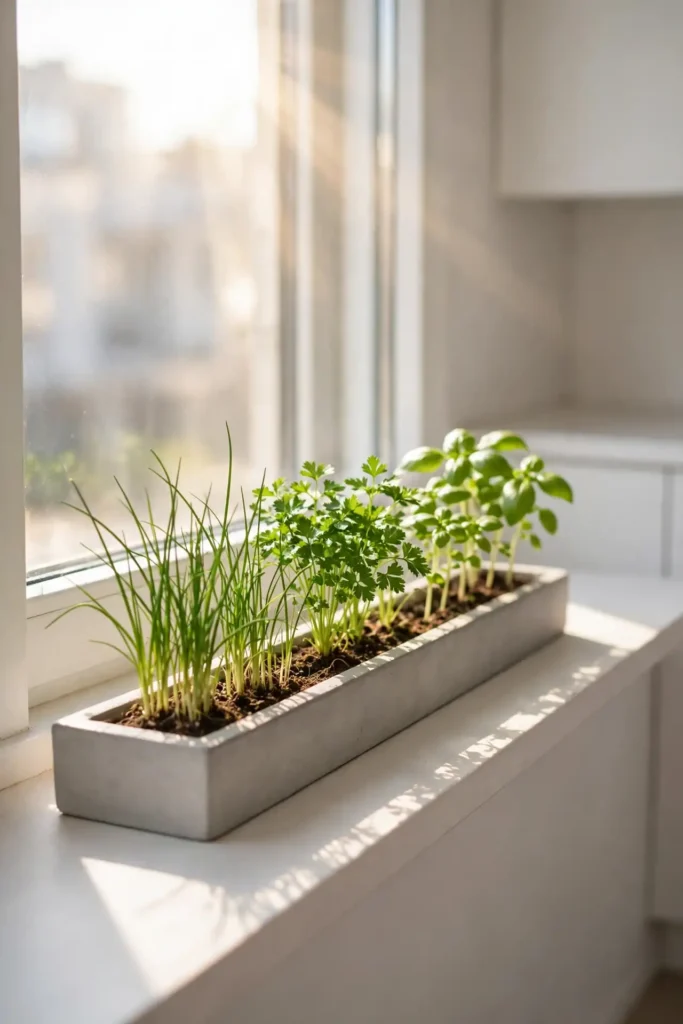
- Measure the sill depth and buy a strip planter two inches narrower.
- Fill the strip with light potting mix blended with perlite for drainage.
- Sow chives, parsley, and basil seeds directly in a neat row.
- Mist daily until sprouts appear, then water at the base.
Strip planters are made for the shallow sills common in apartments. One long strip holds a surprising amount of herbs in a footprint barely wider than a book. In my experience, direct sowing works best here because seedlings never suffer transplant shock. Thin seedlings to two inches apart once they stand tall. A clear plastic dome over the strip speeds germination on cool sills.
Pretty indoor herb garden ideas for kitchen windows
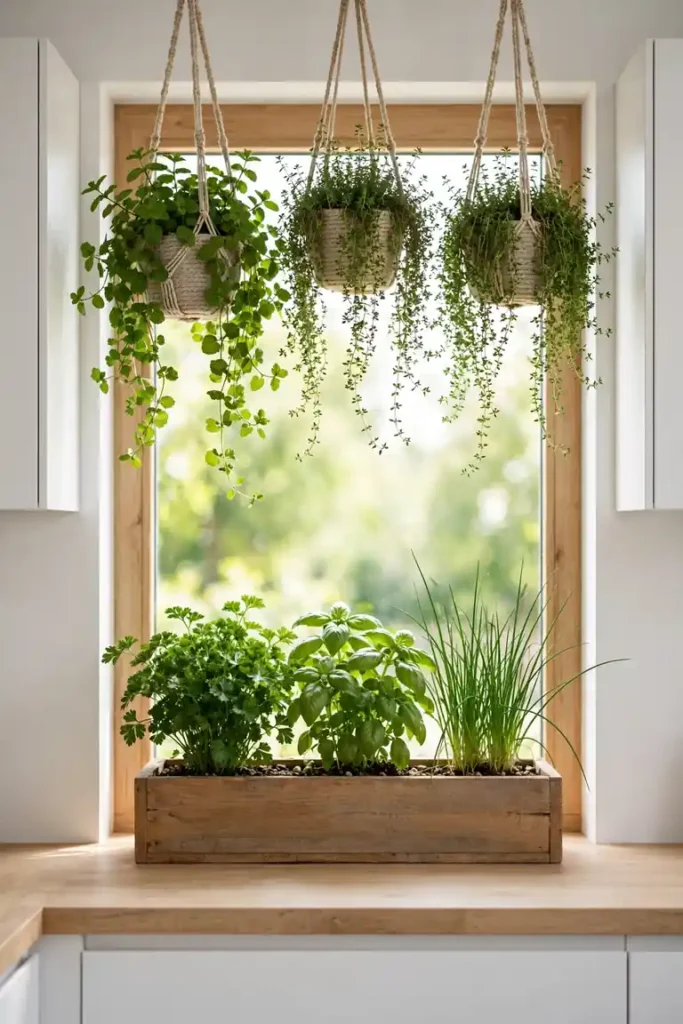
| Feature | Window Box | Hanging Trio |
| Cost | Low | Medium |
| Space Needed | Full sill width | Zero sill space |
| Best For | Families | Tiny kitchens |
| Watering | Every two days | Weekly check |
| Sun Needs | Bright light | Bright light |
| Best Herbs | Parsley, basil, chives | Mint, thyme |
| Skill Level | Beginner | Beginner |
| Cleanup | Wipe tray weekly | Dust leaves monthly |
| Lifespan | Years | Years |
A window box plus a hanging trio turns one window into a two-level garden. I have seen this work well in many cases because families get bulk herbs below and pretty trailing ones above. Water the box first, then the hangers, and you are done in five minutes.
Self-Watering Pots
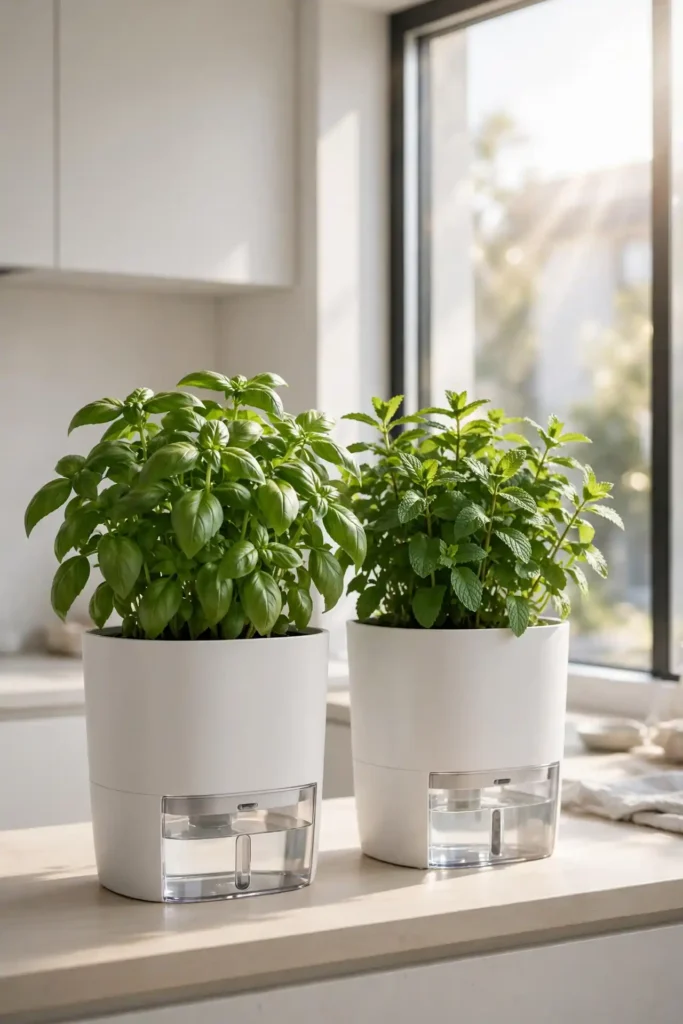
DO:
- Fill the reservoir fully on watering day and let the wick do the rest.
- Check the water window weekly so the reservoir never runs bone dry.
- Use them for thirsty basil and mint that hate drying out.
DON’T:
- Do not use self-watering pots for rosemary and thyme, which prefer dry feet.
- Do not let algae grow in the reservoir; rinse it monthly.
- Do not assume they need zero attention, since wicks clog over time.
Self-watering pots are the closest thing to a set-and-forget herb garden. In my experience, they shine for busy cooks and weekend travelers who cannot water daily. Flush the soil monthly to prevent salt buildup from the constant wicking. One reservoir fill usually lasts a full week in bright light.
Fairy Light Herbs
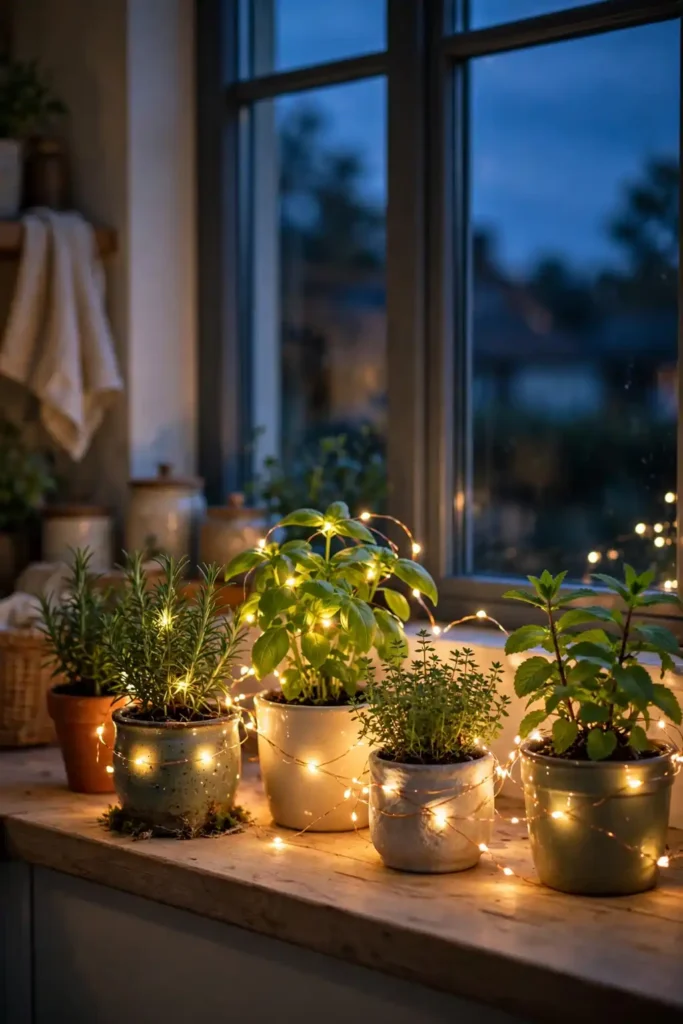
Cost: Low | Time: One evening | Skill Level: Beginner | Best For: Cozy evening kitchens | Result: Magical glowing display
A string of warm fairy lights woven through your herb pots turns the window into evening magic. The tiny bulbs highlight leaves beautifully after dark and cost pennies to run. I drape one short strand across the back of the sill every winter. Battery timers switch them on at dusk automatically.
Keep lights away from direct water spray and choose low-heat LED strands only. The glow makes the kitchen feel alive long after the sun sets. Herbs do not mind the light, and you will find yourself watering more happily under the glow.
Conclusion
Your kitchen window is the easiest garden you will ever grow. These indoor herb garden ideas for kitchen windows prove that a little light and the right pot turn any sill into a year-round harvest. Start with three herbs you cook with most, learn their rhythms, and expand when the habit sticks. I have seen how small changes like these can completely shift the way a space feels. Pin your favorites, pot up this weekend, and enjoy cooking with fresh herbs you grew yourself. Share your setup with a friend who loves to cook, and watch the idea spread from window to window.


One Comment