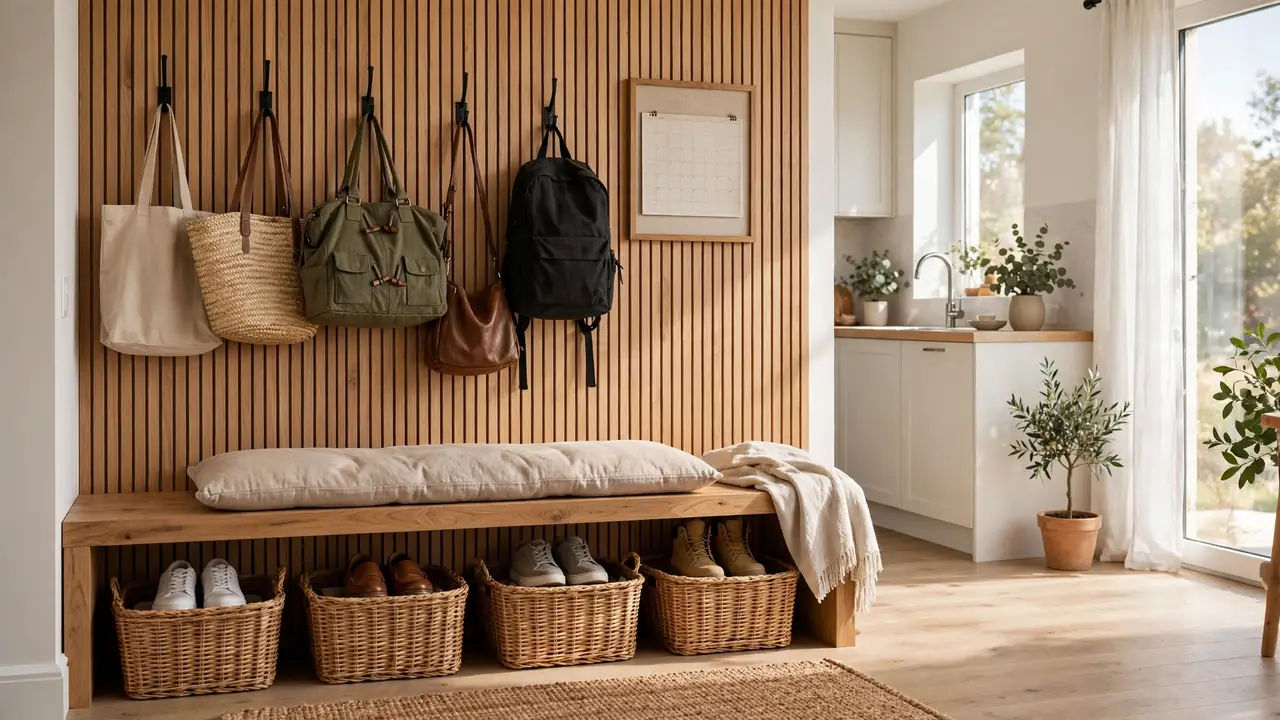
23 Kitchen Drop Zone Ideas for Effortless Daily Order
Every busy home needs a landing pad, and these kitchen drop zone ideas create exactly that. Keys, mail, chargers, and sunglasses all need a home near the door, or chaos takes over the counters. I have tested plenty of small organizing systems, and the drop zone is the one that pays off daily. These 23 ideas bring calm order to the busiest corner of your kitchen. From simple trays to full command centers, every idea earns its place through daily use. Start with one small change, and watch the whole kitchen feel lighter within a week. Your counters will thank you every single day.
Below are 23 smart drop zone ideas, from wall mounted key hooks to a nightly reset routine. If you love rustic character too, take a look at my apartment tour in horse stables. For more kitchen inspiration, see my sage green kitchen hardware lighting. Let’s get organized.
Wall Mounted Key Hooks
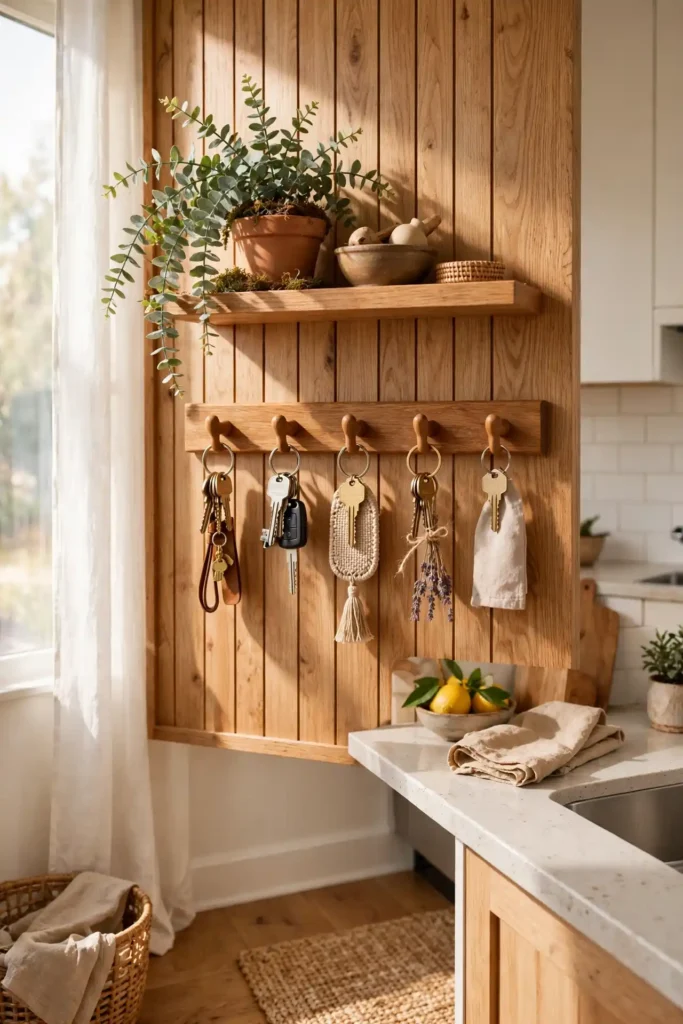
Keys vanish at the worst moments, and a wall mounted hook row ends the search forever. Mount the hooks at eye level near the kitchen entrance, where every family member passes daily. Each person gets their own hook, which ends all arguments.
Choose hooks that match your kitchen hardware for a pulled together look. I’ve seen this work well in many cases where families waste ten minutes hunting keys each morning. The humble hook is the hardest working organizer in the home.
Charging Station Drawer
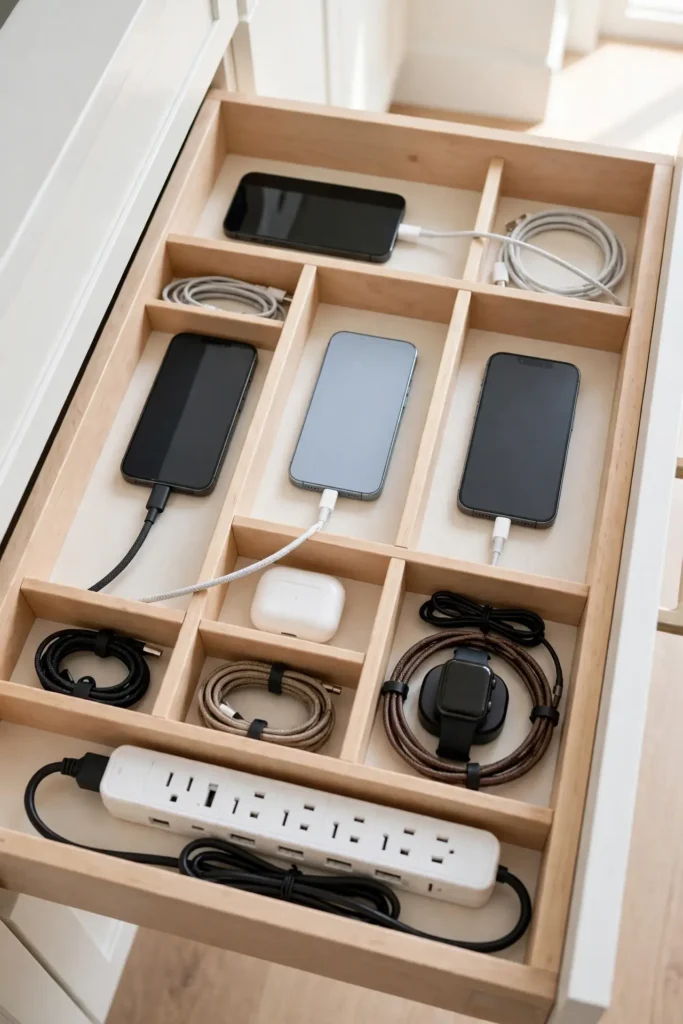
- A deep kitchen drawer near the drop zone becomes a hidden charging station. Drill a small hole in the back for the power strip cord, and devices charge out of sight.
- Add dividers so each device has its own slot. The dividers stop the dreaded cable tangle and keep everything easy to grab.
- Choose a drawer close to an outlet to keep the wiring simple. Short cable runs are safer and look tidier.
- Label each slot with a family member’s name for zero confusion. Kids learn to dock their own devices fast.
Countertops stay clear when chargers live inside a drawer. The kitchen looks calm even while four devices power up. In my experience, hidden charging is the upgrade guests notice most.
Mail Sorting Trays
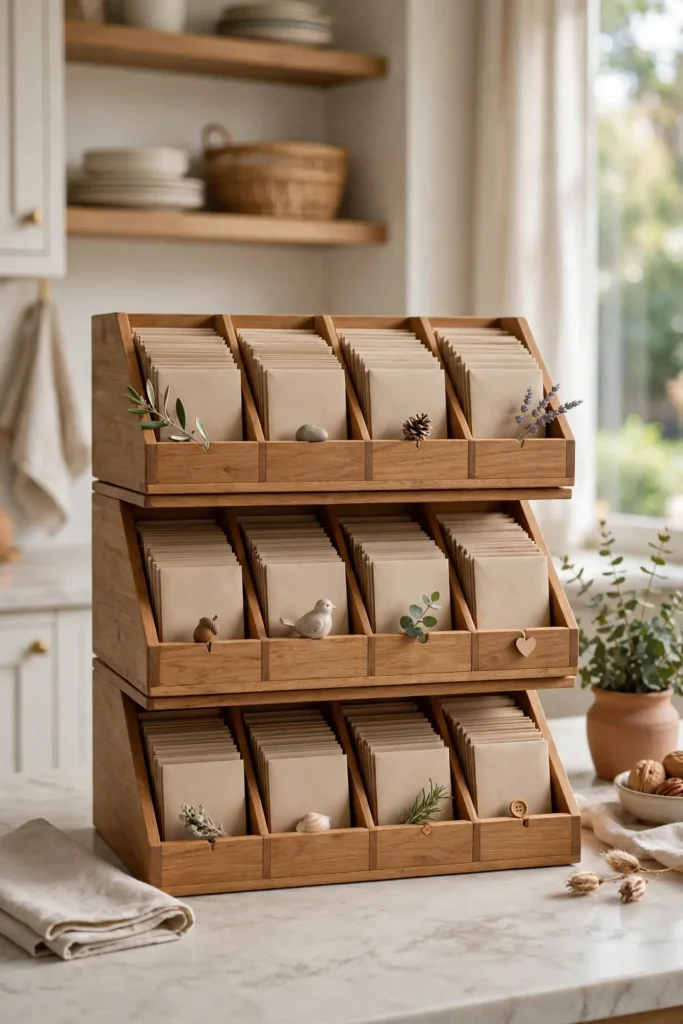
Quick Tip: Sort mail the moment it enters the house using three trays: action, file, and recycle. The action tray holds bills and forms, the file tray holds keepers, and everything else goes straight to recycle. Touch each piece of paper exactly once, and the pile never grows. The habit takes a week to build and pays off for years.
Paper piles shrink dramatically when every piece has a labeled home. The tray system takes five minutes to learn and saves hours of searching later. A tidy counter always starts with tamed mail, so make the trays your first drop zone upgrade.
Compact Entry Bench
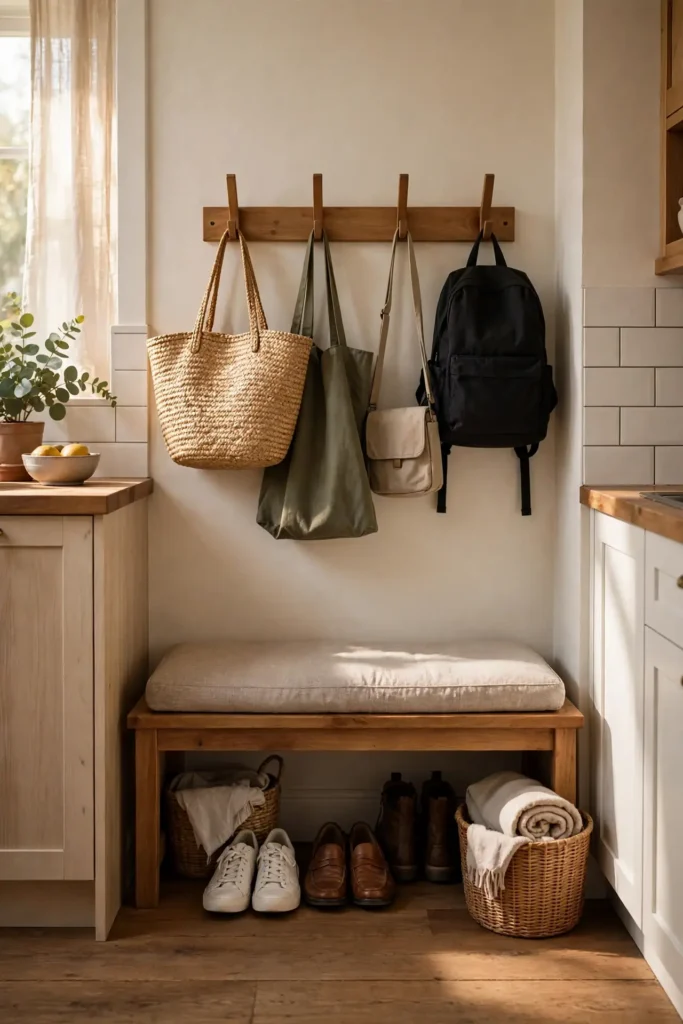
BEFORE: Bags landed on kitchen chairs and shoes scattered across the floor. The entrance felt chaotic, and sitting down to remove shoes meant balancing on one foot.
AFTER: A compact bench anchors the drop zone with a proper perch. Shoes tuck neatly below, bags hang on hooks above, and the whole corner finally makes sense.
A bench turns a pass through corner into a true landing zone. The seating invites a calmer arrival, and hidden storage below swallows the clutter. Small footprint, huge daily impact.
Family Command Center
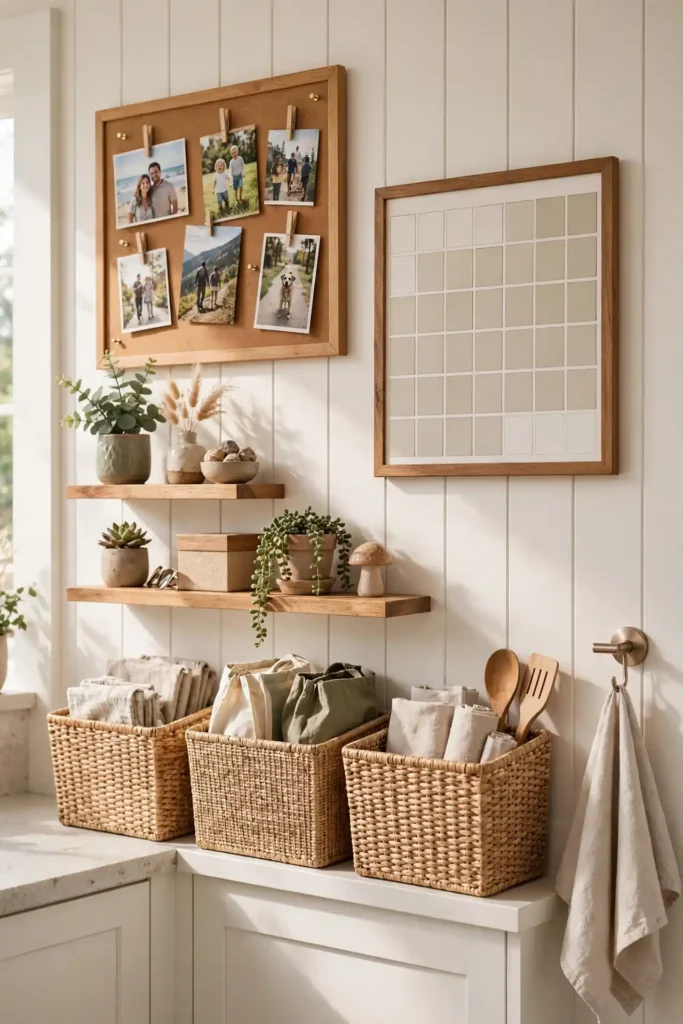
- Hang a large monthly calendar at the heart of the drop zone. Every practice, appointment, and deadline lives in one visible place.
- Add a corkboard beside it for permission slips and invitations. The board catches the paper that used to migrate to the fridge.
- Mount a small shelf below for pens, stamps, and a notepad. The writing supplies stay where the planning happens.
- Finish with a labeled bin per family member for personal papers. The bins stop the great paper migration across the kitchen.
The command center becomes the family’s shared brain. Everyone checks the same wall, so nothing gets missed. That’s why many experts recommend centralizing family planning in the drop zone.
Hidden Cord Corral
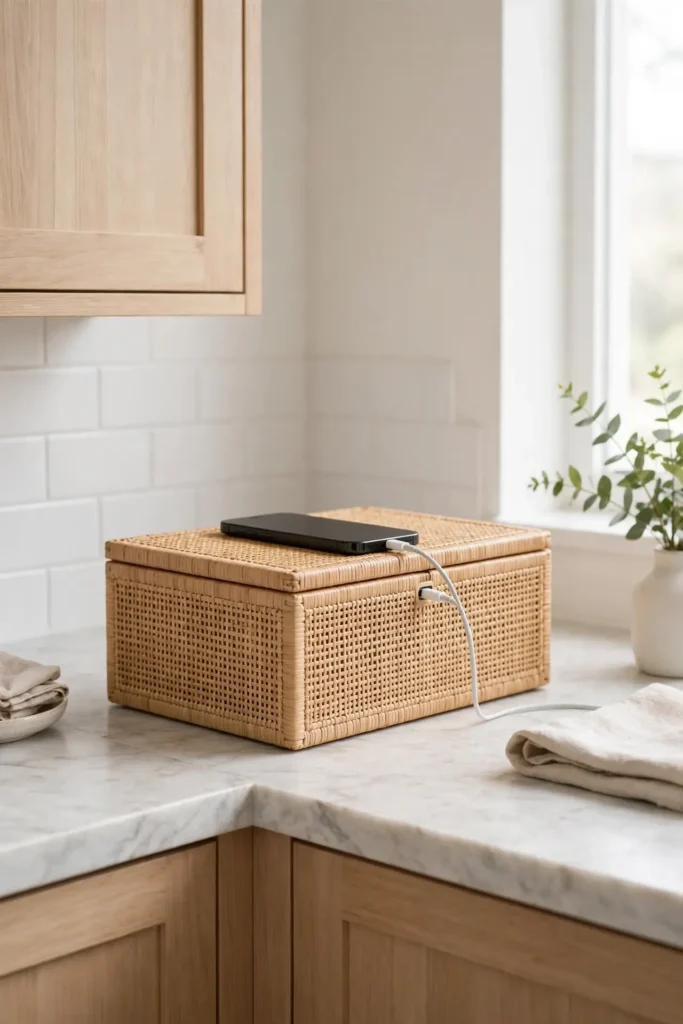
| Feature | Loose Cords | Cord Corral Box |
|---|---|---|
| Look | Tangled and messy | Clean, single box on the counter |
| Safety | Snag and spill risk | Cords contained and protected |
| Cleaning | Dust collects in the tangle | Wipe the box, done |
| Speed | Hunt for the right cable | Each cable has its own slot |
A cord corral box hides the spaghetti of chargers in one handsome container. The box keeps cables untangled, dust free, and easy to grab. Tidy cords make the whole kitchen feel instantly calmer and more intentional.
Labeled Basket System

Do:
- Give every family member their own labeled basket in the drop zone.
- Choose baskets that fit your shelf depth exactly for a built in look.
- Empty the baskets into proper homes once a week.
Don’t:
- Don’t let baskets overflow; a full basket is a failed system.
- Don’t skip the labels, since unlabeled baskets become junk drawers.
- Don’t buy baskets before measuring your shelf space.
Labeled baskets give every stray item a temporary home with an owner. The labels create accountability, and the weekly emptying keeps the system honest. Simple baskets outperform fancy organizers when the whole family uses them.
Pocket Item Tray
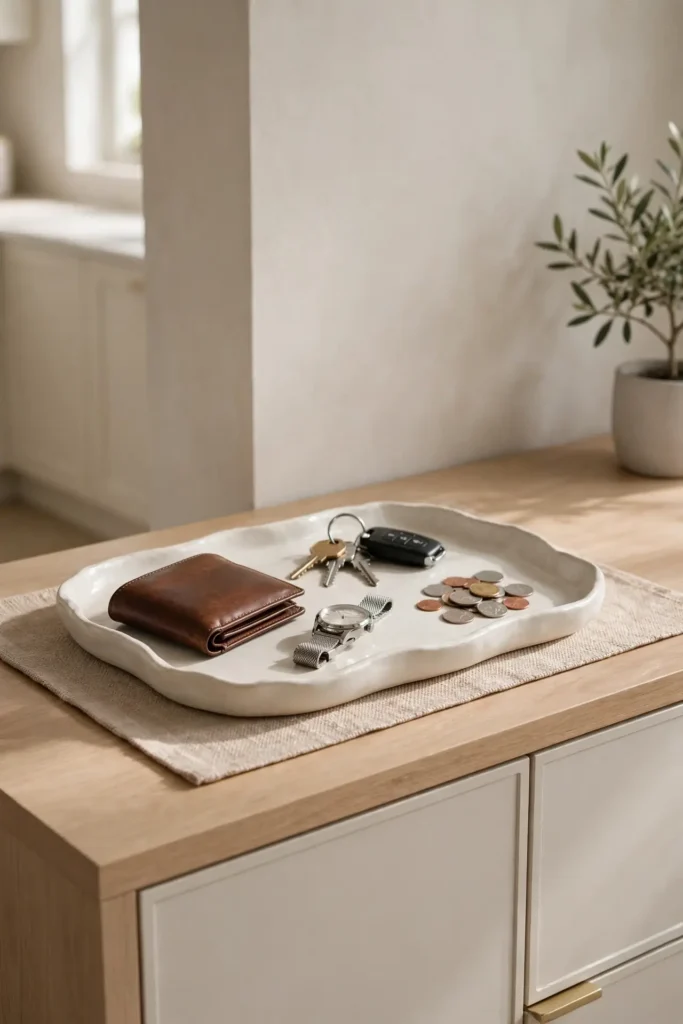
Best spot: The tray lives on the console or shelf closest to the door you use most. Size: Choose a tray large enough for keys, wallet, and watch with room to spare. Material: Ceramic or leather trays look intentional and catch small items quietly. Habit: Empty pockets into the tray every single evening without exception.
The humble tray is the drop zone in its purest form. One beautiful dish catches everything that used to scatter across counters. I’ve noticed that the simpler the system, the more likely the whole family follows it.
Backpack Hook Row
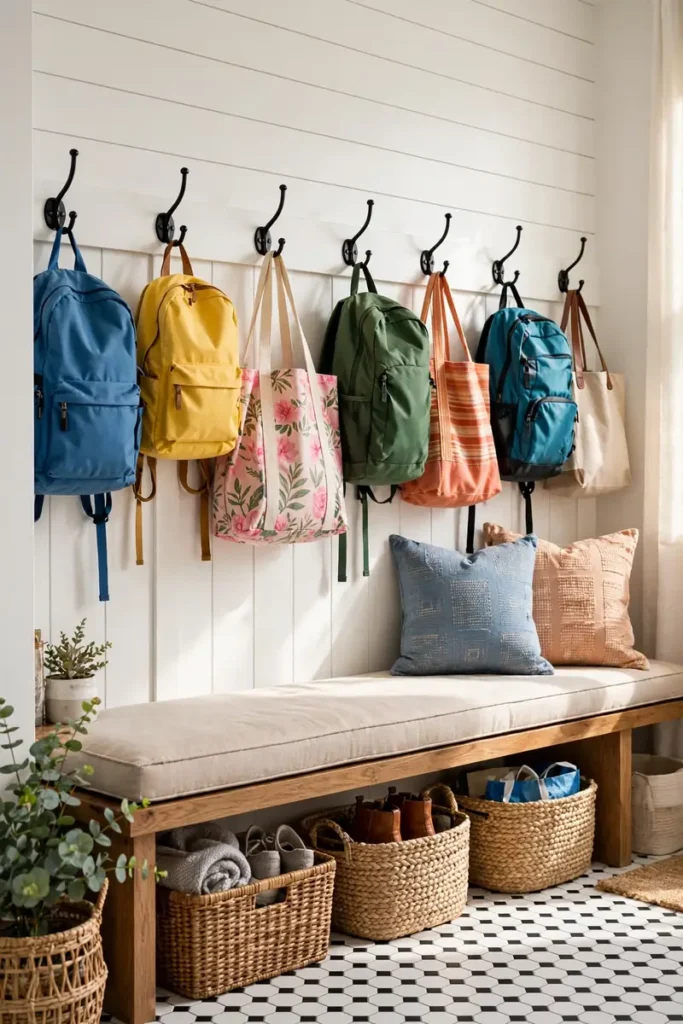
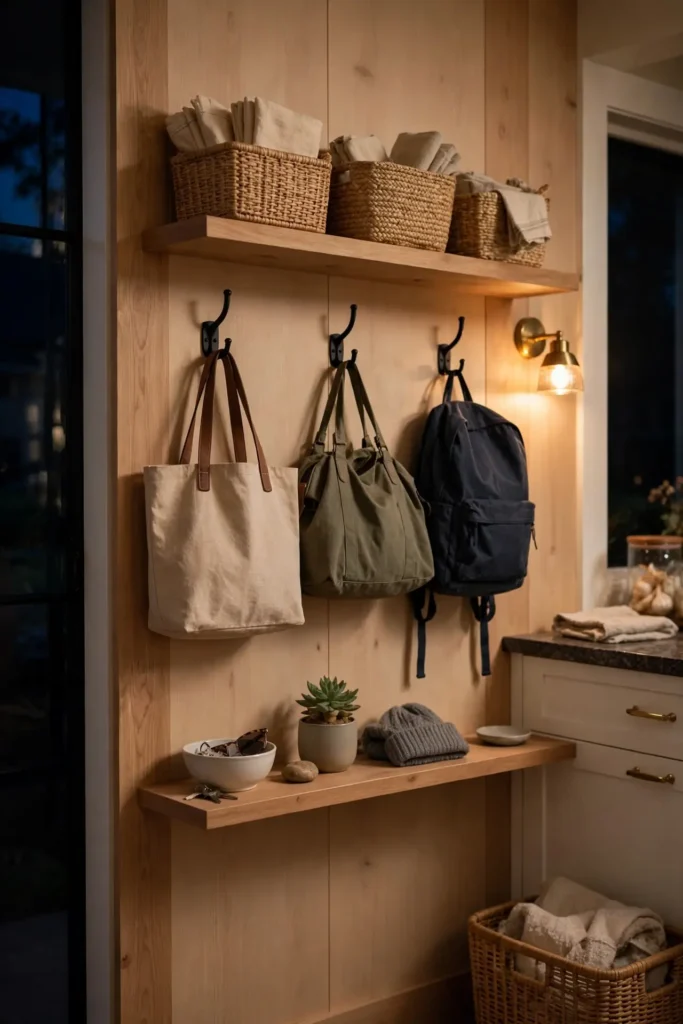
Backpacks have a talent for landing in walkways, and a dedicated hook row fixes it overnight. Mount heavy duty hooks at kid height so little ones hang their own bags. The row keeps every bag visible, accessible, and off the floor. Morning departures get smoother when bags wait in their own spot.
Space the hooks widely enough for puffy winter backpacks, not just slim ones. I’ve seen this work well in many cases where morning chaos drops by half. The hook row teaches kids organization without a single lecture. Hang the bags tonight, and tomorrow morning starts calm.
Sunglasses Catchall Dish
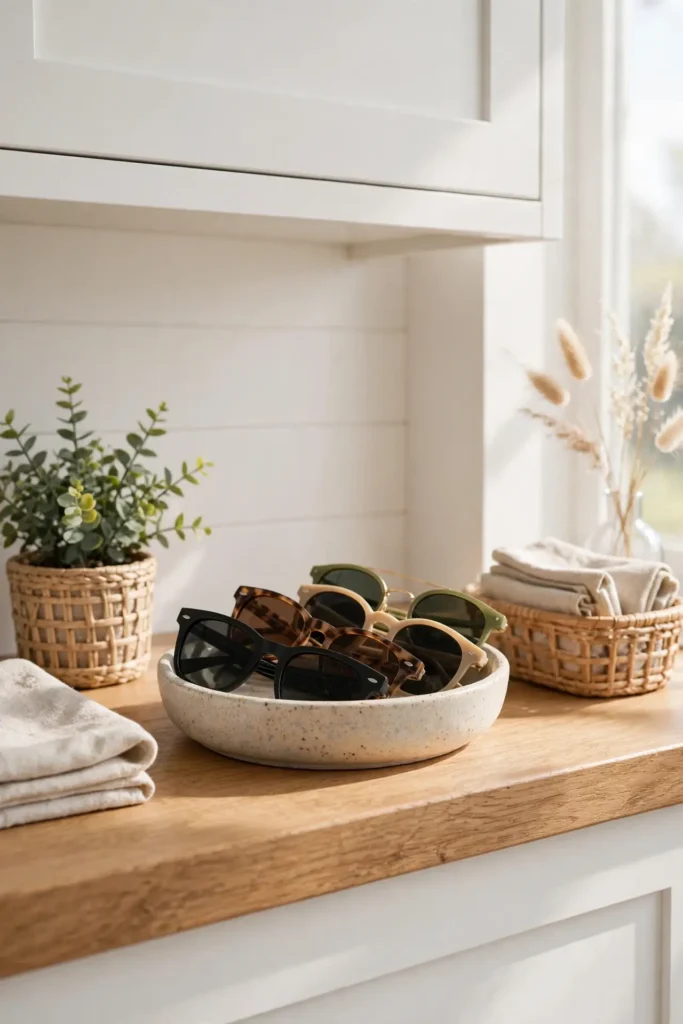
- Sunglasses scratch easily in drawers, so a soft lined dish protects them. The dish lives in the drop zone where glasses come off.
- Choose a dish with a wide, stable base that won’t tip. A tipped dish defeats the whole purpose.
- Keep it shallow so every pair is visible at a glance. Digging through a deep bowl wastes the time you saved.
- Clean the dish monthly, since dust dulls both the dish and the lenses. A quick wipe keeps everything sparkling.
A dedicated dish ends the scratched lens epidemic. Sunglasses get a safe landing spot instead of the counter edge. Small habit, expensive glasses saved.
Dog Leash Station
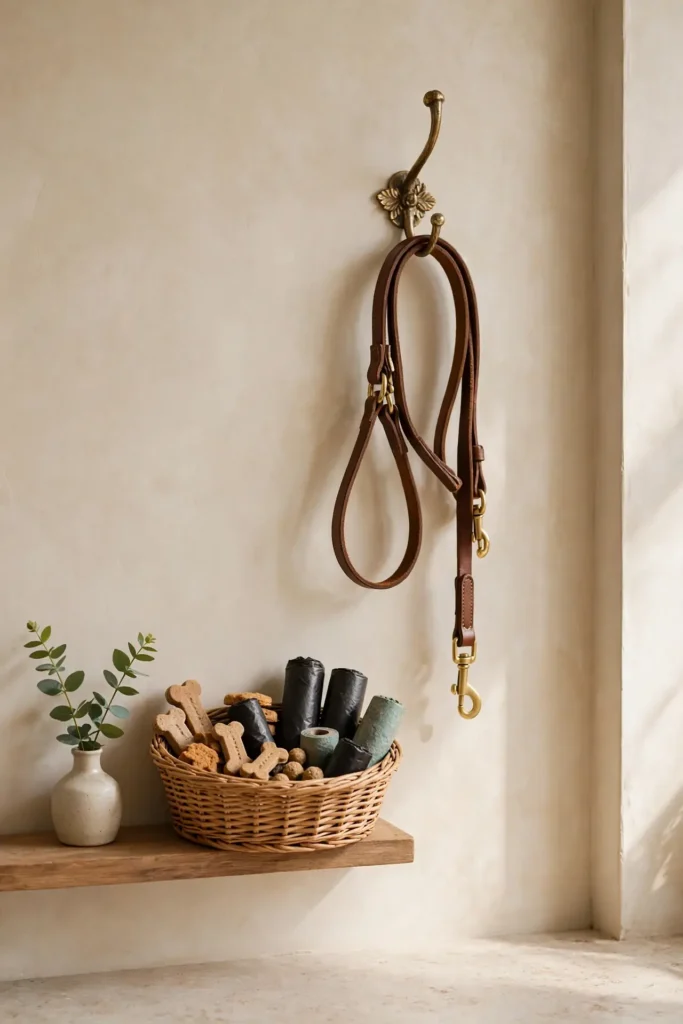
Quick Tip: Hang the leash on a hook by the door with a small basket below for treats and waste bags. Everything for the walk lives in one spot, so nobody hunts for gear while the dog dances with excitement. Add a towel hook nearby for muddy paw days.
Dog gear scattered through the kitchen is a tripping hazard with fur. The leash station keeps walks smooth and the floor clear. Your dog will learn to wait by the hook, which is adorable.
Outgoing Mail Slot
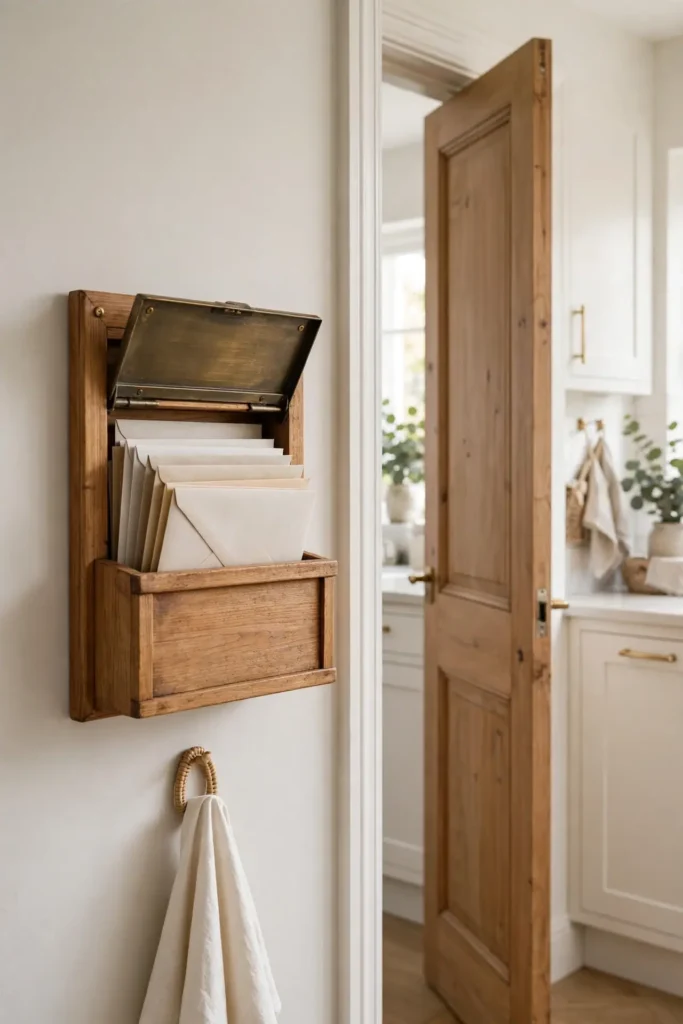
BEFORE: Outgoing letters sat on the counter for days, buried under new mail. Important envelopes missed the mailbox more than once, and late fees followed. The counter chaos had a real cost.
AFTER: A wall mounted slot catches every outgoing piece in one visible spot. Grab the stack on the way out, and nothing misses the post again. The visible slot reminds everyone to check before leaving.
The outgoing slot closes the loop on paper management. Incoming mail gets sorted, outgoing mail gets sent, and the counter stays clear. Every drop zone needs an exit as well as an entrance. The slot is small, but it completes the paper system beautifully.
Tech Drawer Dividers
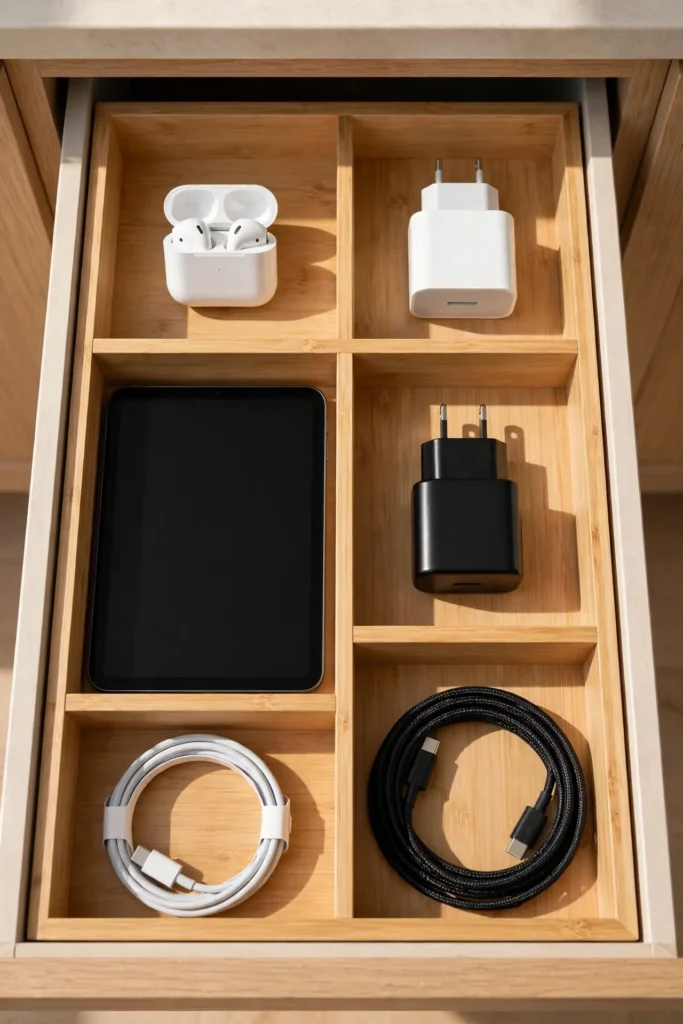
- Measure the drawer interior before buying dividers. A precise fit stops the dividers sliding around.
- Assign each gadget type its own compartment: earbuds, chargers, tablets, and cables each get a home.
- Add small cable ties or velcro straps inside the drawer. Bound cables never tangle, even in a busy drawer.
- Do a monthly purge of dead cables and obsolete chargers. The drawer only works if it holds what you actually use.
Dividers turn a junk drawer into a tech command post. Every gadget has a slot, so nothing gets lost or crushed. The drawer stays functional because the system is simple enough to maintain.
Wall Pocket Organizer
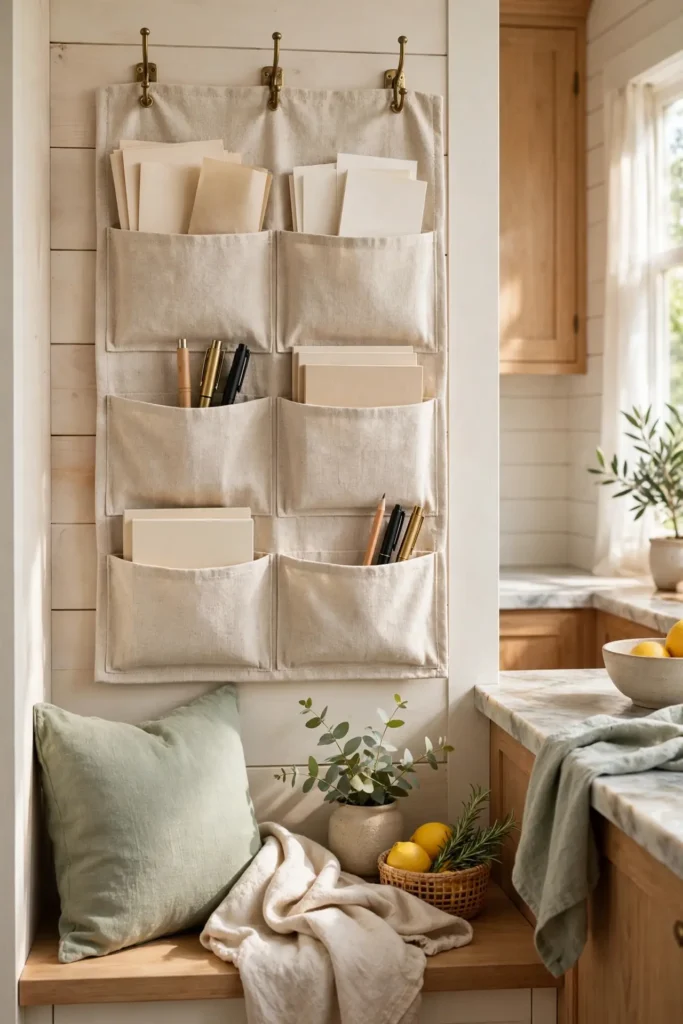
| Feature | Counter Pile | Wall Pockets |
|---|---|---|
| Space used | Eats precious counter | Uses empty wall space |
| Visibility | Buried and forgotten | Every pocket visible at once |
| Sorting | One mixed heap | Labeled pockets by category |
| Cleaning | Move the pile to wipe | Wipe around, nothing to move |
Wall pockets move the paper chaos off the counter and onto unused wall space. Each labeled pocket holds a category, from coupons to receipts, all visible at a glance. The wall works harder while the counter breathes easy and stays beautifully clear.
Purse Hook Perch
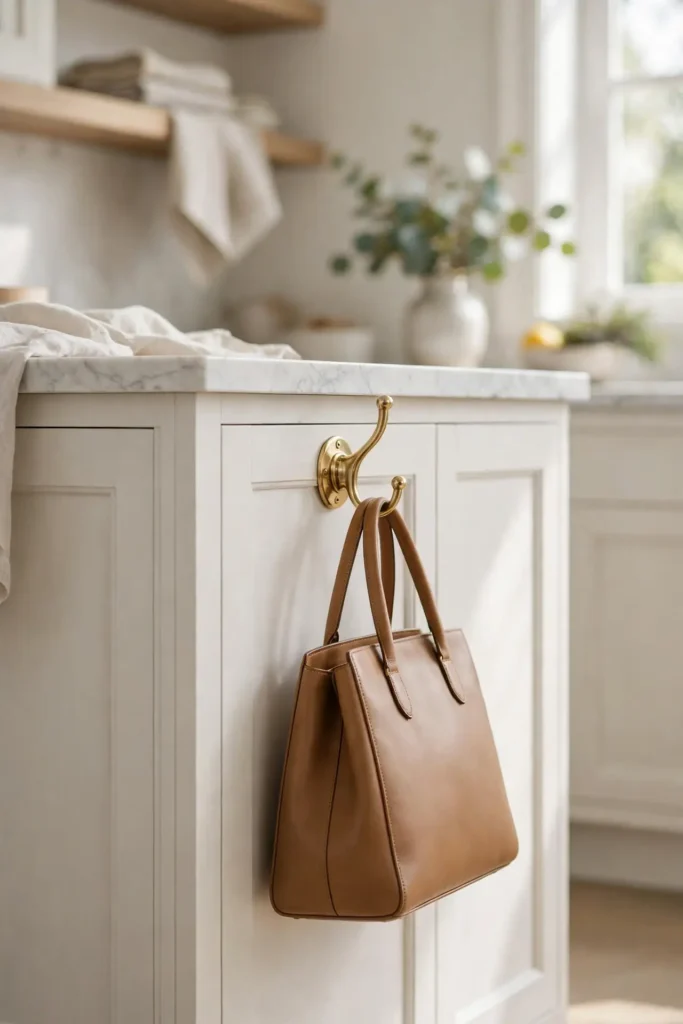
Do:
- Install a sturdy hook on the kitchen island side for your everyday bag.
- Choose a hook rated for real weight, since bags get heavy.
- Keep the hook at hip height for easy grab and go.
Don’t:
- Don’t hang the bag on chair backs where it slides off.
- Don’t place the hook where it blocks walkway traffic.
- Don’t forget a second hook for guests and their bags.
A dedicated purse hook keeps your bag off the floor and off the food prep zones. The hook saves the bag’s shape and the floor’s cleanliness. Small hardware, daily dignity.
Mini Message Board
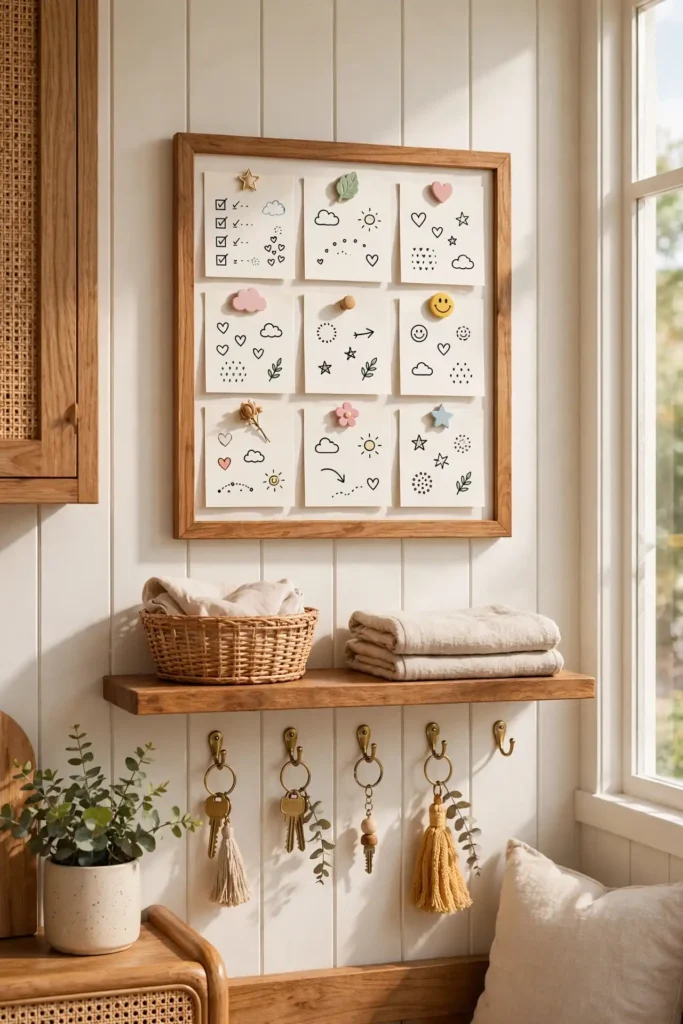
Best size: A small board fits the drop zone without overwhelming the wall. Best spot: Hang it at eye level right where bags land each day. Best tools: Chalk markers wipe clean and always look neat. Best habit: Update the board every Sunday evening for the week ahead.
The mini board catches the reminders that sticky notes lose. One glance shows the day’s essentials, from school pickups to the password for the repairman. Little board, big peace of mind for the whole busy family.
Shoe Tray Zone
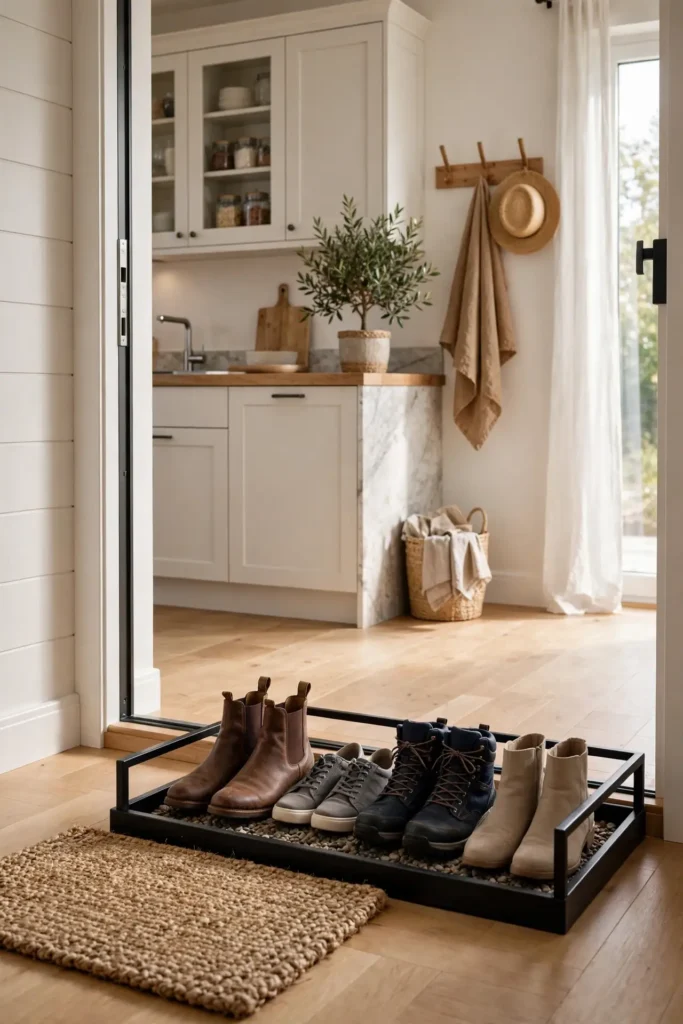
Shoes multiply by the door like rabbits, and a boot tray contains the herd. The tray’s raised edge catches water, mud, and winter salt before it reaches the floor. Every pair lands in one defined rectangle instead of wandering the kitchen. The boundary works even when nobody is watching.
Choose a tray large enough for the family’s daily pairs, not the whole collection. I’ve noticed that a defined boundary trains everyone faster than any reminder. The floor stays clean because the tray does all the catching. Add a second tray in winter when boots join the lineup.
Seasonal Swap Basket
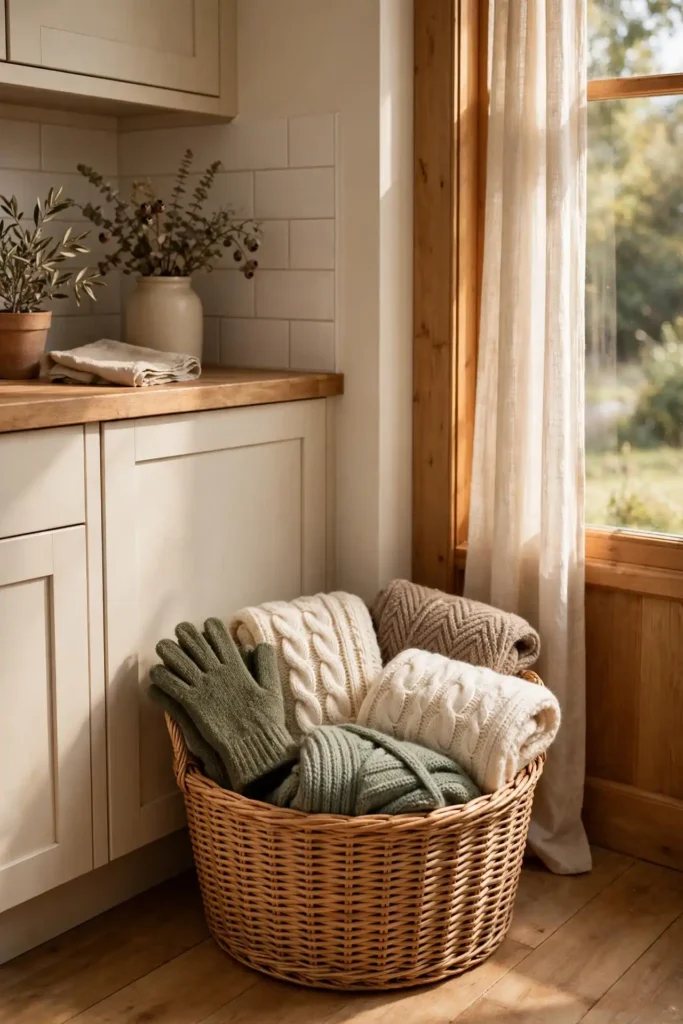
- Keep one basket for the current season’s gear: gloves and scarves in winter, sunscreen and hats in summer. The basket swaps contents four times a year.
- Store off season gear elsewhere so the drop zone never holds two seasons at once. The zone stays lean and relevant.
- Label the basket clearly so guests know where spare items live. A labeled basket invites use instead of confusion.
- Place it at the edge of the drop zone, not the center. Seasonal items matter, but daily items matter more.
The seasonal basket keeps the drop zone relevant all year. Winter gear exits when summer arrives, and the zone never clutters with out of season bulk. Rotate with the calendar, and the system stays fresh.
Under Cabinet Hooks
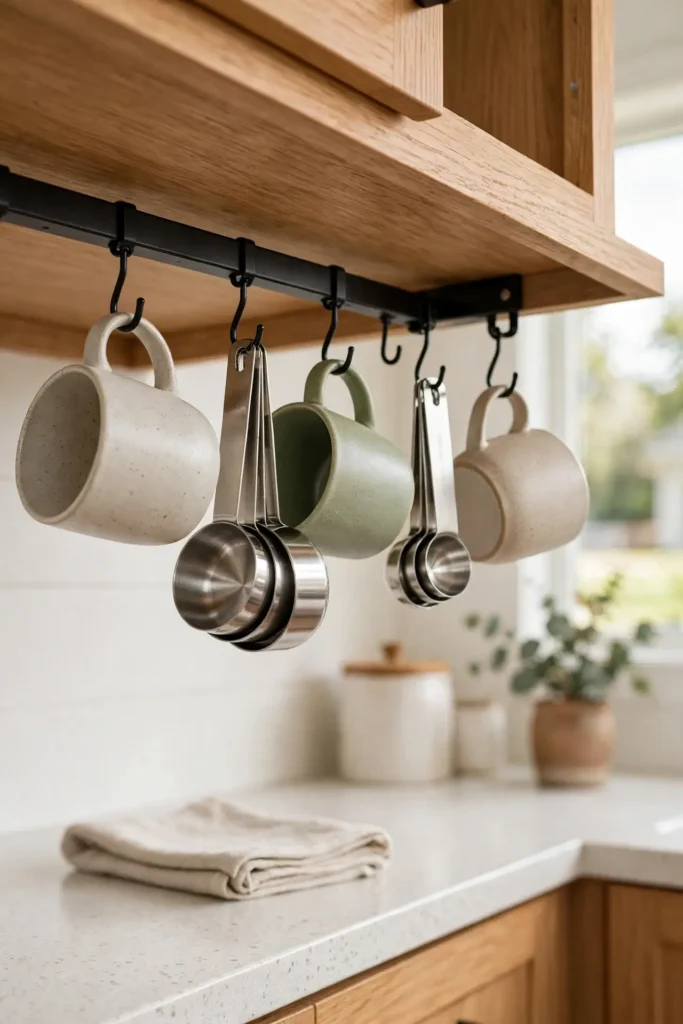
Quick Tip: Screw small cup hooks under the kitchen cabinet above your drop zone counter. Mugs, measuring cups, and even headphones hang in the dead air space that cabinets waste. The hooks turn forgotten inches into hardworking storage that costs almost nothing to add.
Under cabinet space is the drop zone’s secret weapon. The hooks keep daily items visible and within reach while the counter below stays clear for real work. Look up, and storage appears exactly where none existed before. The best organizers are the ones you barely notice.
Umbrella Stand Corner
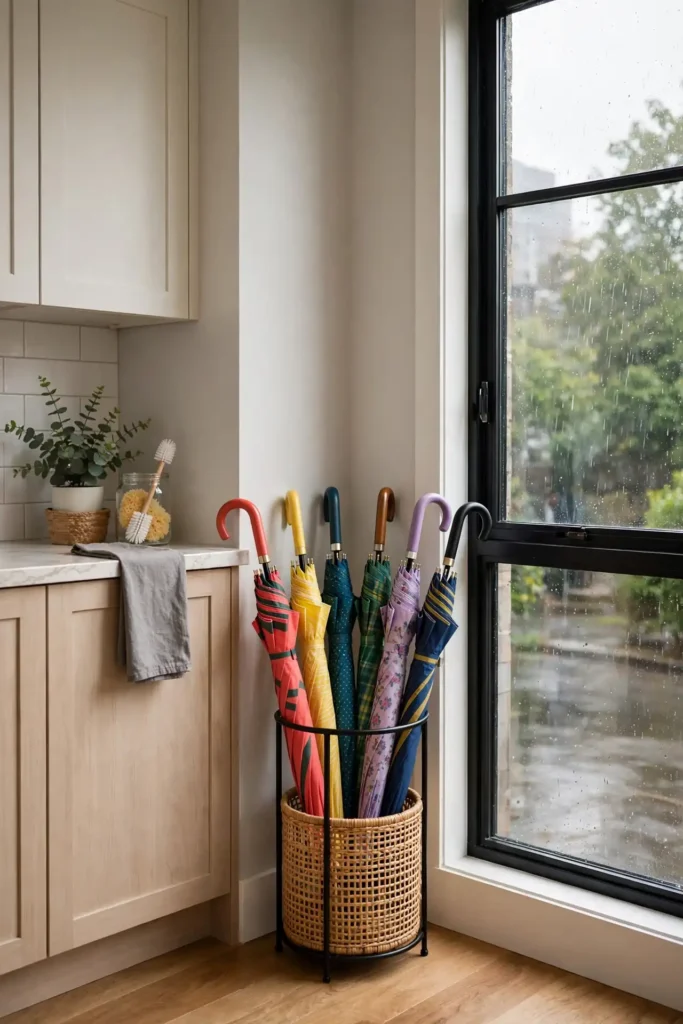
BEFORE: Wet umbrellas leaned against the wall, dripping onto the floor. The sad puddle by the door greeted everyone on rainy days.
AFTER: A handsome stand corrals every umbrella in one drip catching corner. The floor stays dry, and the stand itself looks like decor.
An umbrella stand is the detail that separates good drop zones from great ones. Rainy day gear gets a proper home instead of a sad lean. Choose a stand with a drip tray, and puddles become history.
Calendar Command Wall
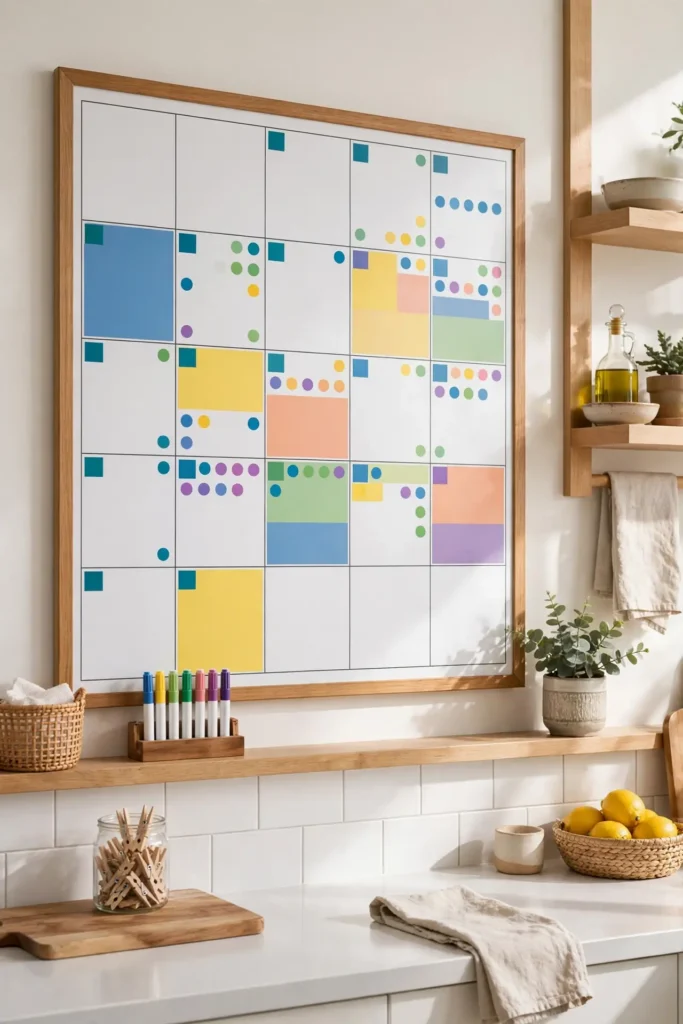
- Mount a large dry erase calendar where the whole family sees it daily. Size matters: small calendars get ignored.
- Assign each family member a marker color for instant visual sorting. The color coding turns chaos into a readable rainbow.
- Record recurring events once, then add the one offs weekly. The system takes minutes but prevents most scheduling collisions.
- Photograph the calendar monthly as a backup. The photo saves the day when someone wipes a week by accident.
The command wall ends the “nobody told me” era. Every commitment lives in color on one wall that nobody can miss. Shared visibility is the whole secret of family scheduling.
Cord Label System
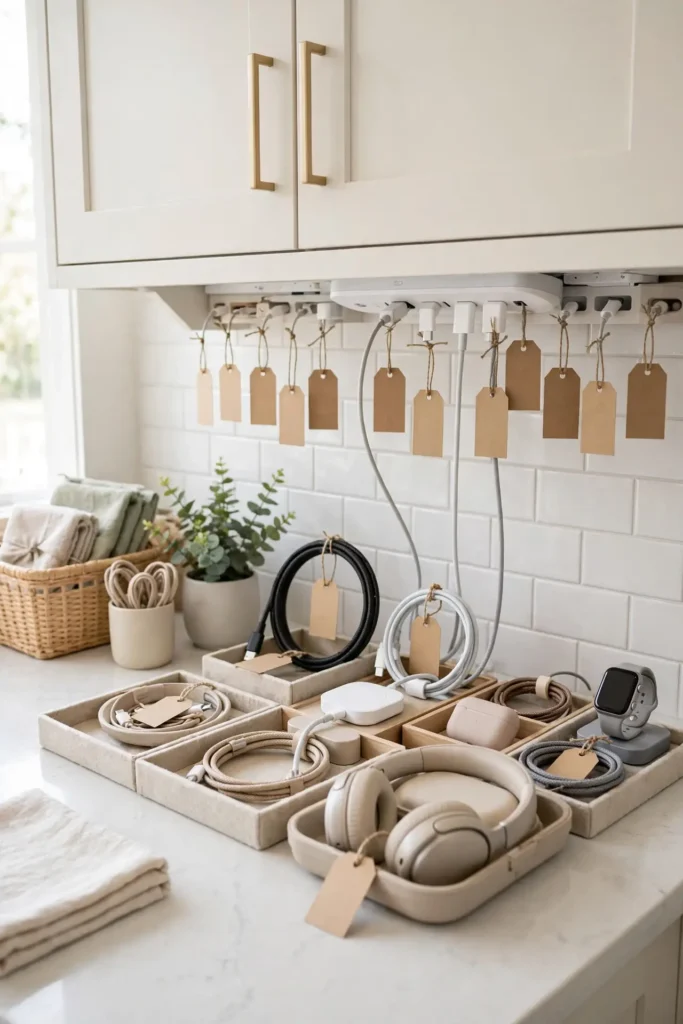
| Feature | Unlabeled Cords | Labeled Cords |
|---|---|---|
| Identification | Unplug and guess | Read the tag, grab the right one |
| Family use | Only one person knows which is which | Anyone can find their charger |
| Replacement | Buy duplicates by mistake | Know exactly what you own |
| Neatness | Mystery tangle | Ordered, intentional bundle |
Tiny labels on every cable end the charger guessing game. A bread clip tag or washi tape flag tells you which cord belongs to which device. The two minute labeling job saves endless daily frustration for the whole family.
Nightly Reset Routine
Do:
- Spend five minutes each night returning every item to its labeled home.
- Plug in all devices so the morning starts at one hundred percent.
- Check tomorrow’s calendar while the zone is tidy and calm.
- Involve the kids; the routine becomes a family habit fast.
Don’t:
- Don’t skip nights, since one skip becomes a week of chaos.
- Don’t let mail pile up; sort it during the reset.
- Don’t reset alone; shared zones need shared effort.
The nightly reset is the habit that protects every other idea on this list. Five minutes each evening keeps the drop zone working like day one. Systems need maintenance, and this tiny ritual is the whole maintenance plan.
Conclusion
These kitchen drop zone ideas prove that a calm kitchen starts at the door. From labeled baskets to a nightly reset routine, each idea tames one small chaos into lasting order. Which system will you try first? Save your favorites on Pinterest, set up one zone this weekend, and share this list with a friend whose counters need rescuing. A calm kitchen is closer than you think, and your future self will thank you every single morning. Start tonight, and wake up to order instead of chaos. Small systems, faithfully used, are what keep a busy home running beautifully.
One Comment