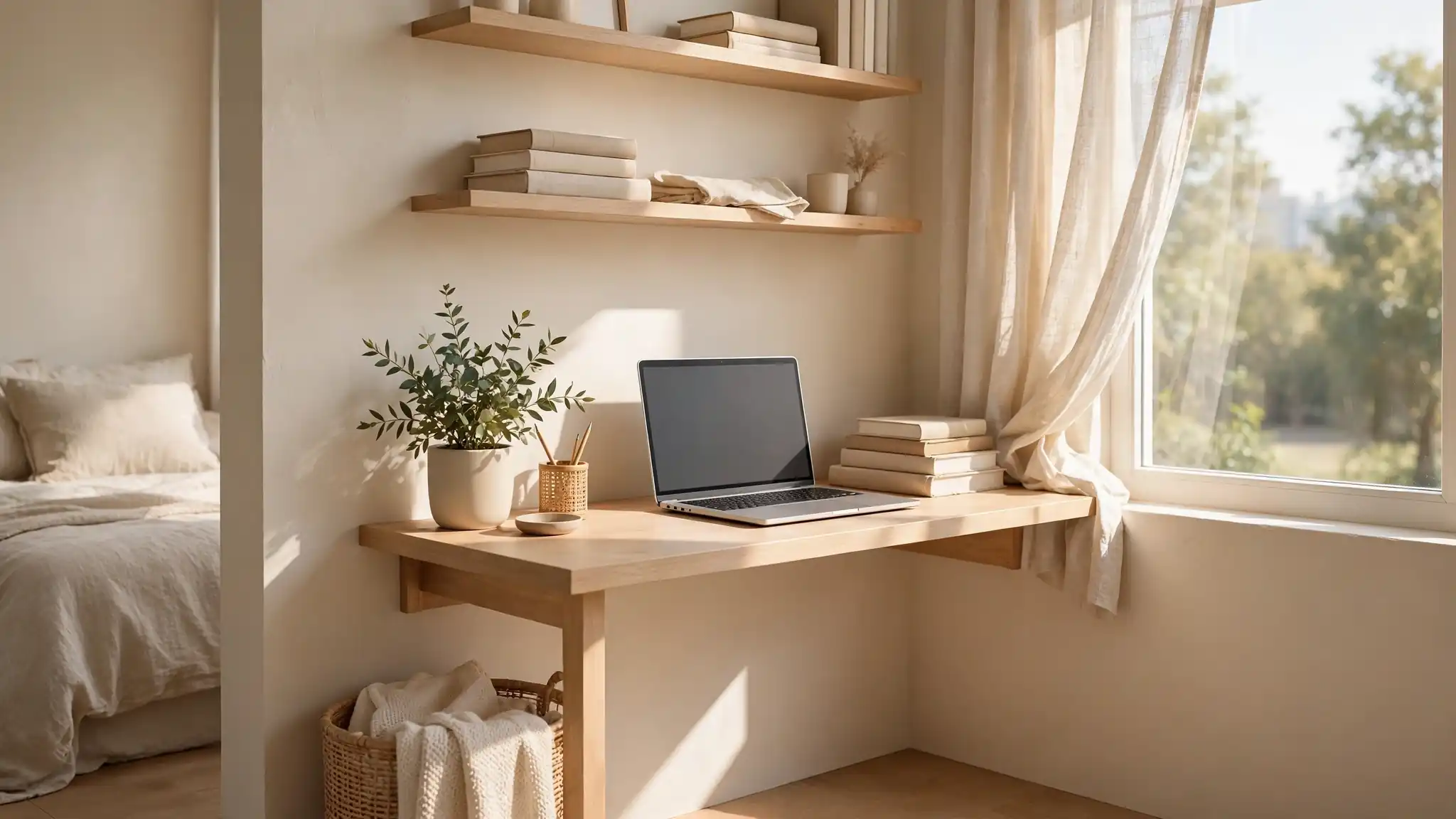
23 Homework Station Ideas for Small Spaces That Boost Focus
Cramped bedrooms and tiny apartments do not have to mean distracted homework time, and homework station ideas for small spaces prove that a focused study zone can fit almost anywhere. A dedicated corner, even one just three feet wide, signals to a child that it is time to concentrate. In my experience, kids settle faster when their supplies have a fixed home instead of migrating across the kitchen table every evening.
Below you will find 23 clever setups, from wall mounted desks to cozy closet nooks, each designed for real homes with limited square footage. Pick the one that matches your space and your child’s habits, then build it in a single weekend. If you need broader inspiration first, vintage americana decor ideas pair nicely with these compact study zones. Grab a measuring tape and let us carve out a corner where focus comes naturally.
Wall Mounted Desk
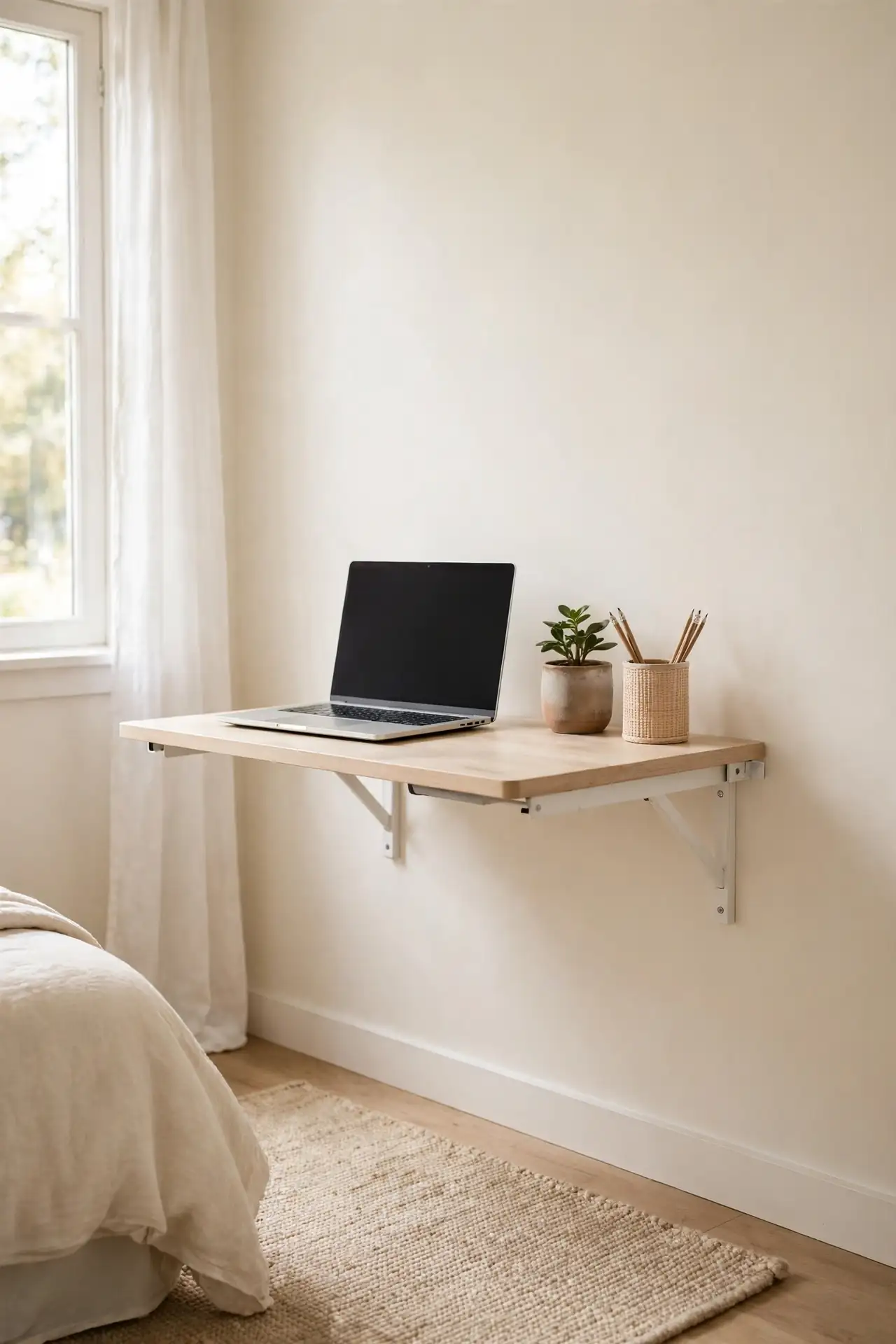
A wall mounted desk frees every inch of floor space while giving homework a permanent address. Choose a sturdy fold down model rated for at least 25 pounds so books and a laptop sit safely. Mount it at elbow height when your child sits, roughly 28 inches for elementary ages and 30 for teens. Anchor into studs, not just drywall, because wobbly desks kill concentration fast.
Add a small wall shelf above for supplies and a clip on lamp for task lighting. When homework ends, fold the surface up and the room breathes again. This setup shines in shared bedrooms where floor space doubles as play area by day.
Closet Nook Station
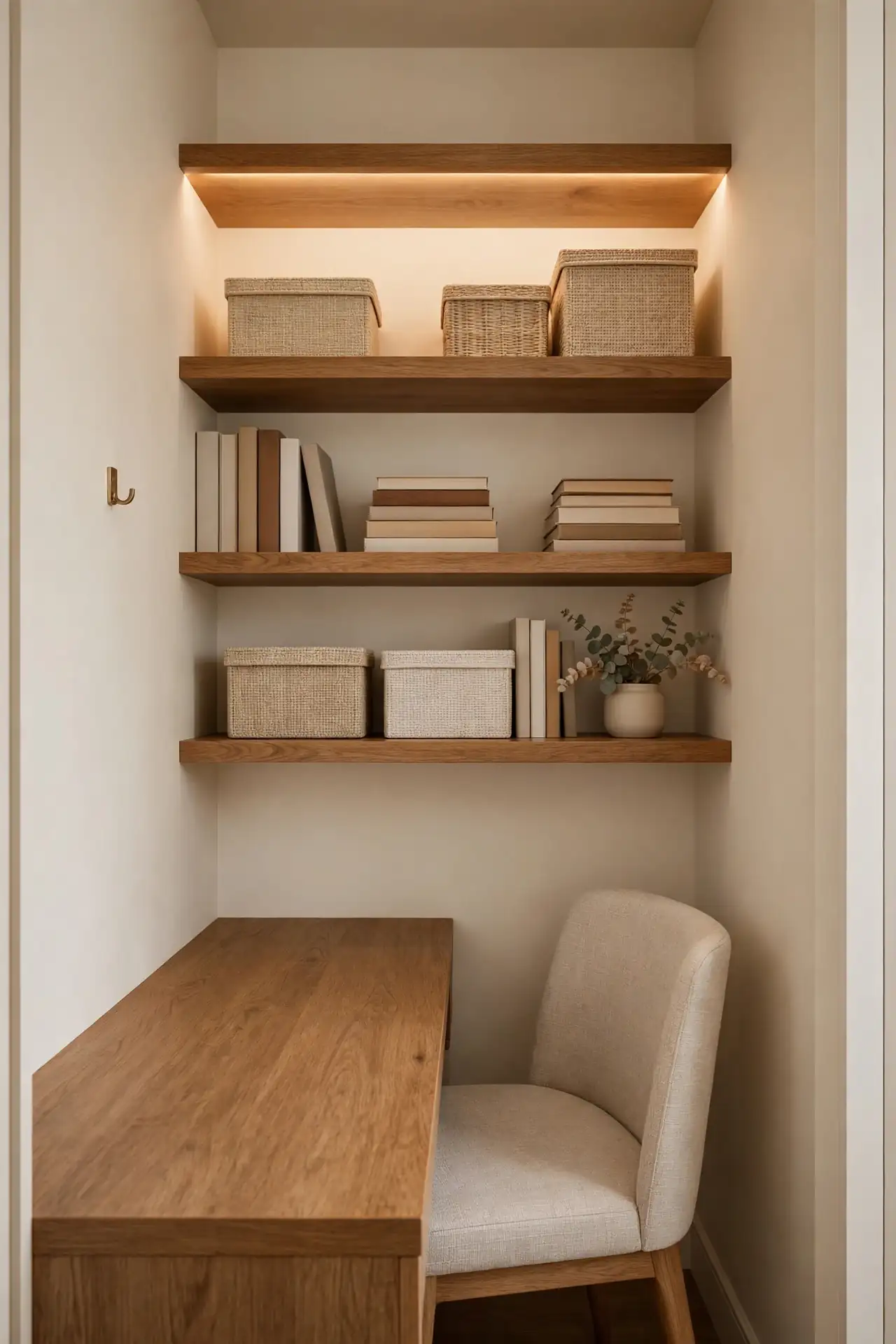
- Remove the closet doors to open the nook and let natural light reach the desk.
- Install a desktop board at sitting height, supported by cleats on both side walls.
- Hang two floating shelves above for books, bins, and a small clock.
- Add a battery LED strip under the top shelf for warm, shadow free task light.
- Slide a slim chair or stool in; it tucks fully inside when the day ends.
That underused closet becomes the quietest study spot in the house, naturally separated from bedroom distractions. Paint the interior a light warm white so the small space feels open, and add a cork strip for pinning schedules. Kids love having a hideaway that feels made just for them.
Rolling Cart Desk
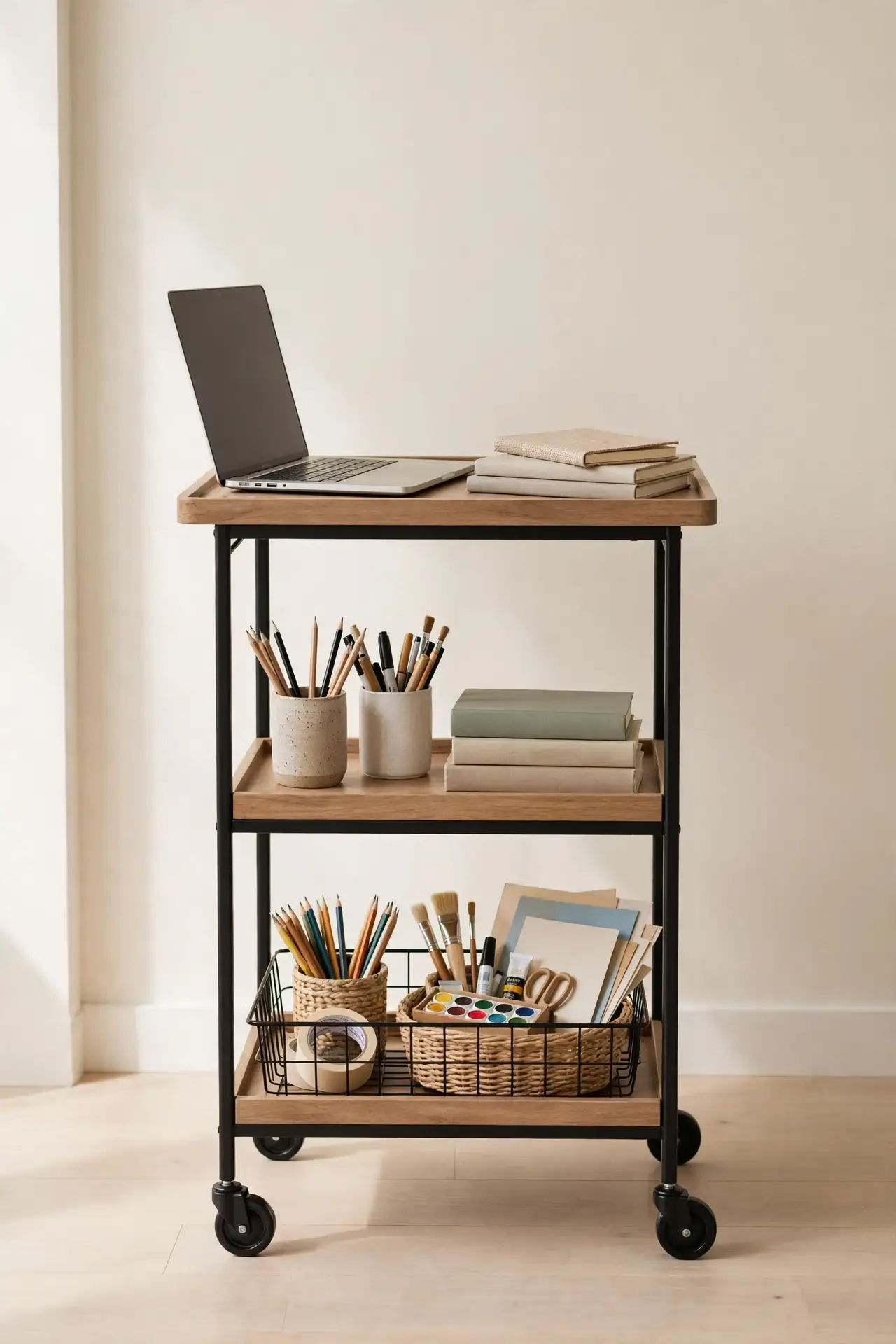
Quick Tip: Pick a three tier metal cart with locking wheels. The top tray becomes the writing surface, the middle shelf holds daily supplies, and the bottom basket swallows bulkier items. Lock the wheels during homework so the station stays put, then roll it into a closet when guests arrive.
This mobile station works beautifully in studio apartments where every piece must earn its footprint. Stock each tier by subject so Monday’s math kit never hunts through Friday’s art supplies. Add a small trash bin on the bottom tier and the station handles full sessions without trips across the room. The whole setup costs less than most desks and moves wherever the quietest corner happens to be.
Fold Down Table
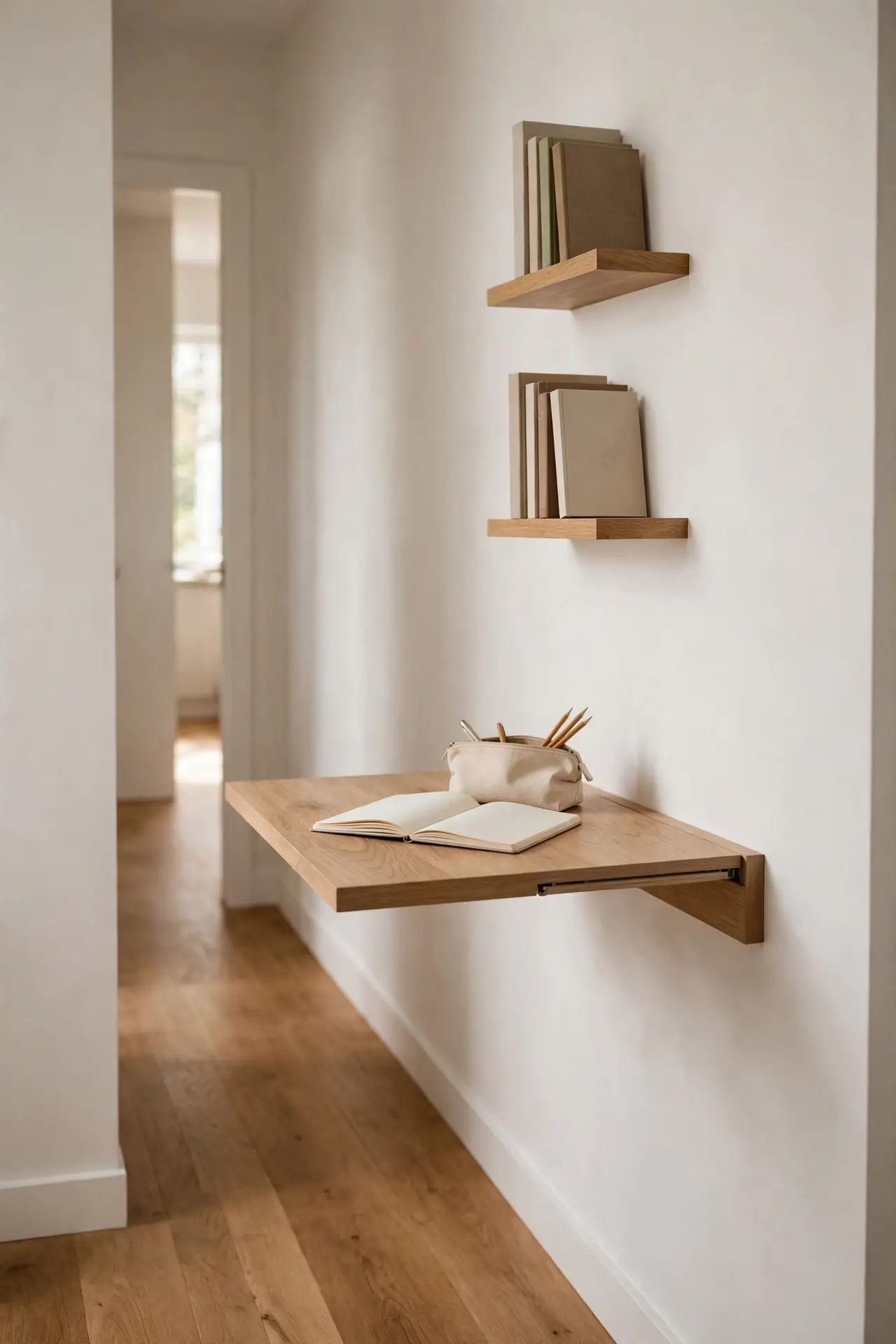
BEFORE: Homework happened wherever space appeared, usually the dining table, which meant clearing plates first and losing supplies between sessions. The lack of a fixed spot made starting feel like a chore every single afternoon.
AFTER: A fold down table on the hallway wall creates a study zone in under two square feet. The surface drops in seconds, holds a laptop comfortably, and folds flat when dinner needs the walkway. Supplies live on the shelves above, so setup takes zero minutes.
Choose a model with a safety hinge that cannot slam on small fingers. I’ve seen this work well in many cases where families need the hallway clear by evening. The visual cue of the table dropping down becomes a reliable start homework signal.
Corner Desk Setup
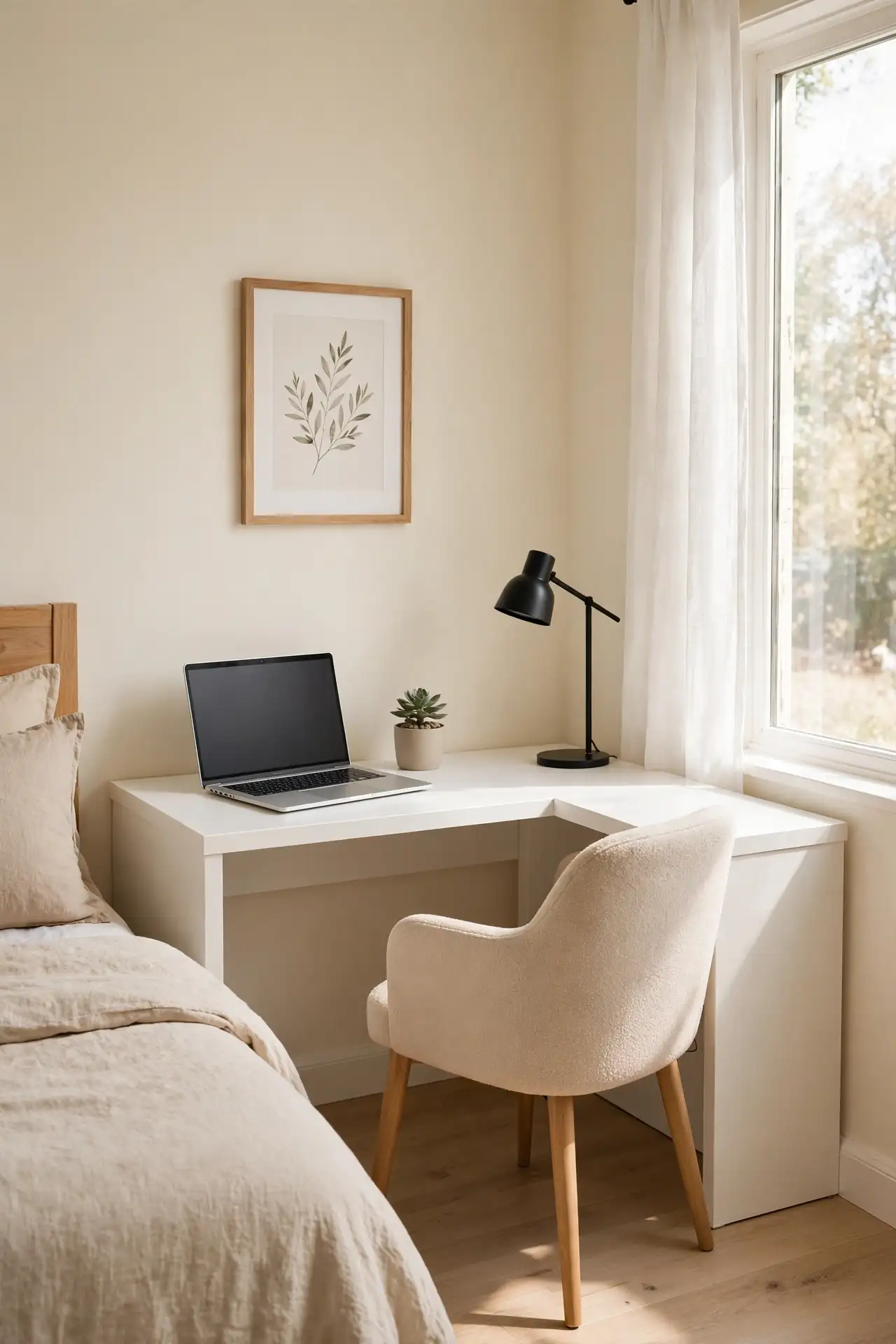
- Measure the corner precisely, then choose an L shaped desk that leaves two inches of clearance on each wall.
- Place the monitor or laptop on the longer wing, facing into the room for better posture.
- Use the shorter wing for textbooks, a lamp, and a pencil organizer.
- Mount a power strip under the desktop to keep cords off the floor and out of sight.
Corners are the most wasted square footage in small rooms, and an L shaped desk turns that dead zone into prime study real estate. The wrap around surface keeps everything within arm’s reach, which cuts the fidgeting that comes from hunting for supplies. Add a footrest and the setup rivals any full size office.
Window Seat Study
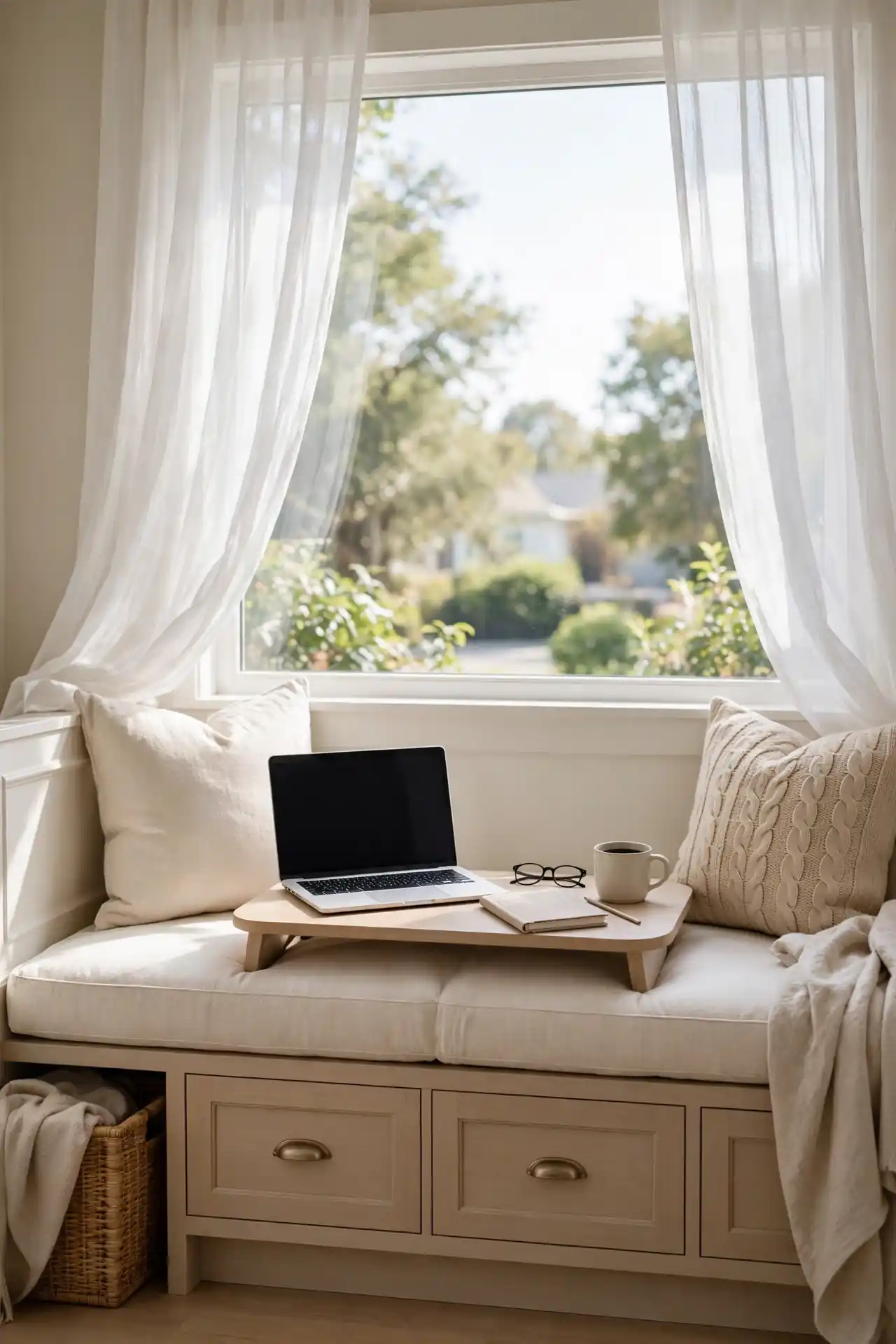
| Option | Best For | Cost |
| Built in window bench | Permanent cozy nook | Medium |
| Cushioned storage ottoman | Renters and flex spaces | Low |
| Wide sill desk board | Ultra narrow rooms | Low |
Natural light is a proven focus booster, and a window seat study puts your child right in it. Add a lap desk or a narrow board across the seat for a stable writing surface. Keep the view pleasant but not busy; sheer curtains soften distractions while preserving daylight. A small basket beside the seat holds the day’s books so setup takes seconds. In my experience, children linger longer over reading when the spot feels special rather than assigned.
Bunk Bed Desk
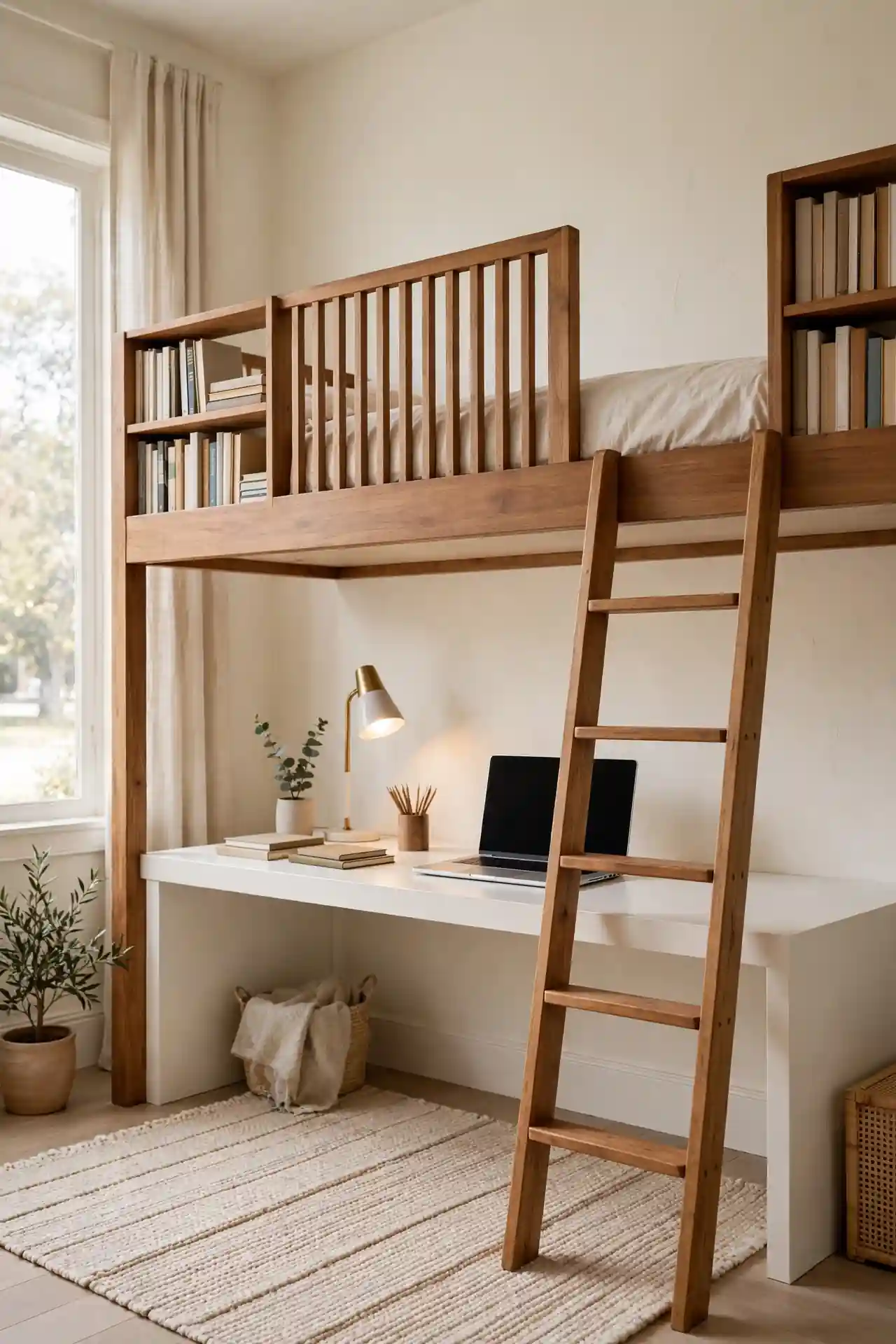
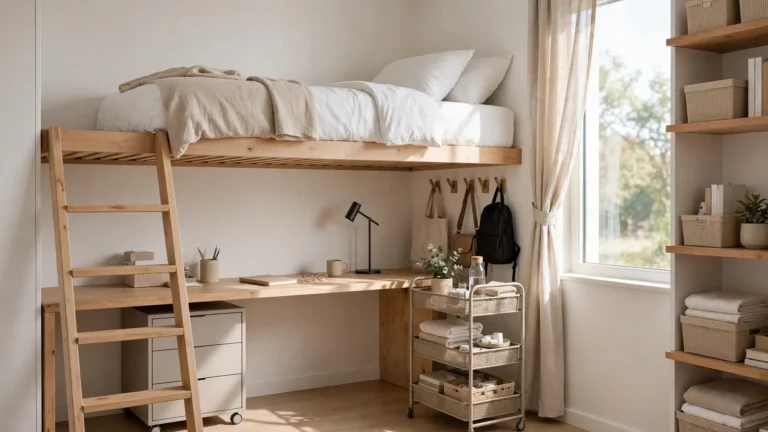
DO: Measure the under bed clearance before buying, aim for at least 55 inches of sitting height. Choose a loft with a built in desk shelf to save assembly headaches. Add a clip on reading light to the bed frame for evening sessions. Use the side rails for hanging supply caddies.
DON’T: Skip the guardrail check; the study zone below must stay clear of dangling cords. Don’t place the desk under a low loft meant only for storage. Avoid bulky chairs that cannot slide fully under the desktop.
Going vertical is the smartest move in a shared kids room, doubling its function without adding a square foot. The enclosed feeling helps children focus, like a cozy cave built for thinking. That’s why experts recommend defined study zones, even tiny ones.
Floating Shelf Desk
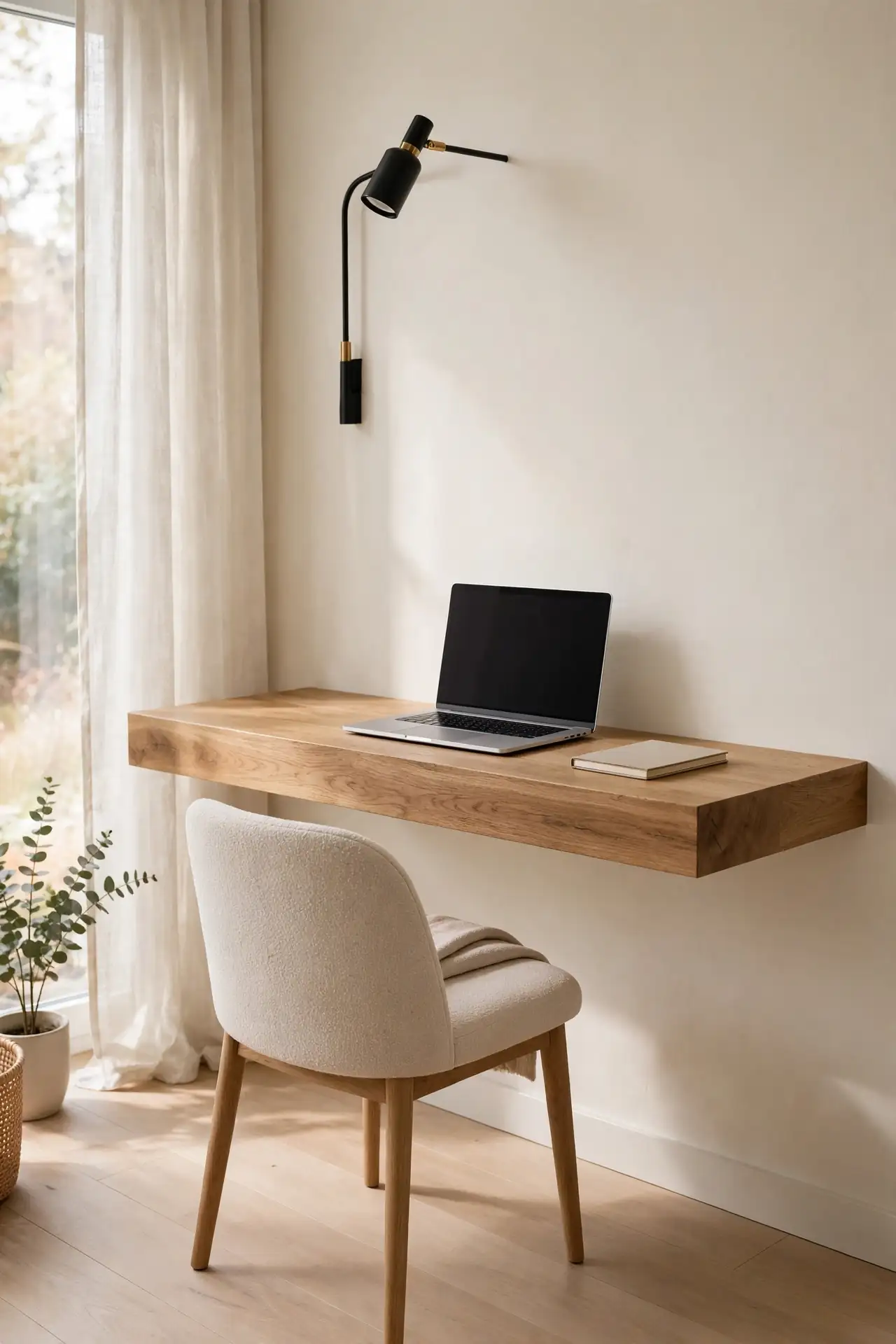
Cost: Low | Time: One afternoon | Skill Level: Beginner | Best For: Renters and minimalists
A single deep floating shelf becomes a desk that visually disappears when not in use. Choose a shelf at least 12 inches deep and 36 inches wide, mounted into studs with heavy duty brackets. Pair it with a comfortable chair and a wall mounted lamp, and homework has a home. Sand and seal the shelf edge so little arms rest comfortably during long sessions. The airy look keeps small rooms feeling open and calm, which matters when the bedroom also serves as play space.
Lap Desk Lounge
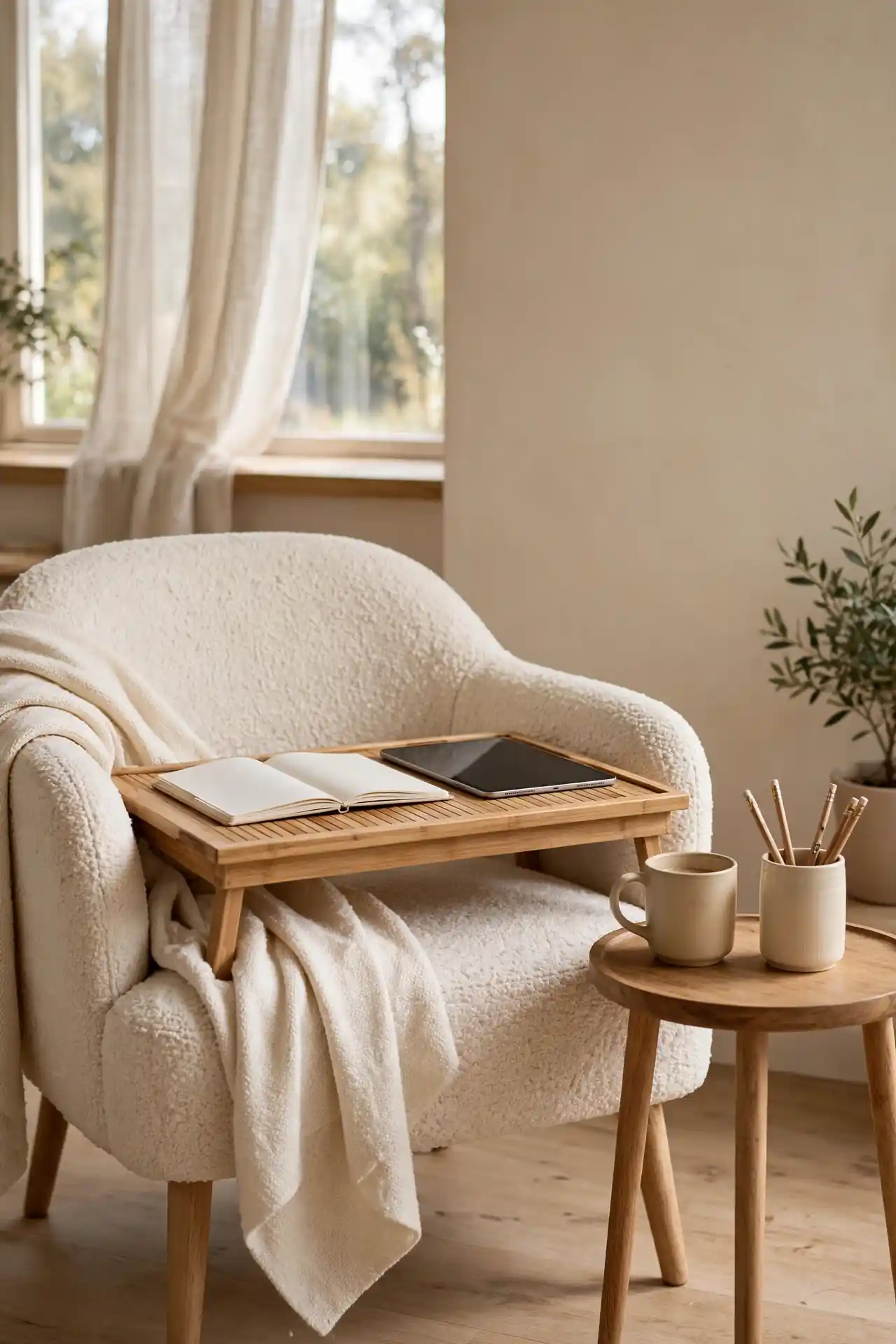
Some kids think better when their body gets to choose the position, and a quality lap desk respects that. Look for one with a built in cushion base, a device ledge, and a flat writing surface big enough for a notebook. The cushion molds to the lap so the desk stays steady through long assignments. Pair it with a supportive chair or floor cushions near good light.
Store the lap desk on a hook by the door so it never vanishes into bedroom clutter. This approach suits wiggly learners who focus better with slight movement, and it costs a fraction of a traditional desk setup.
Entryway Study Spot
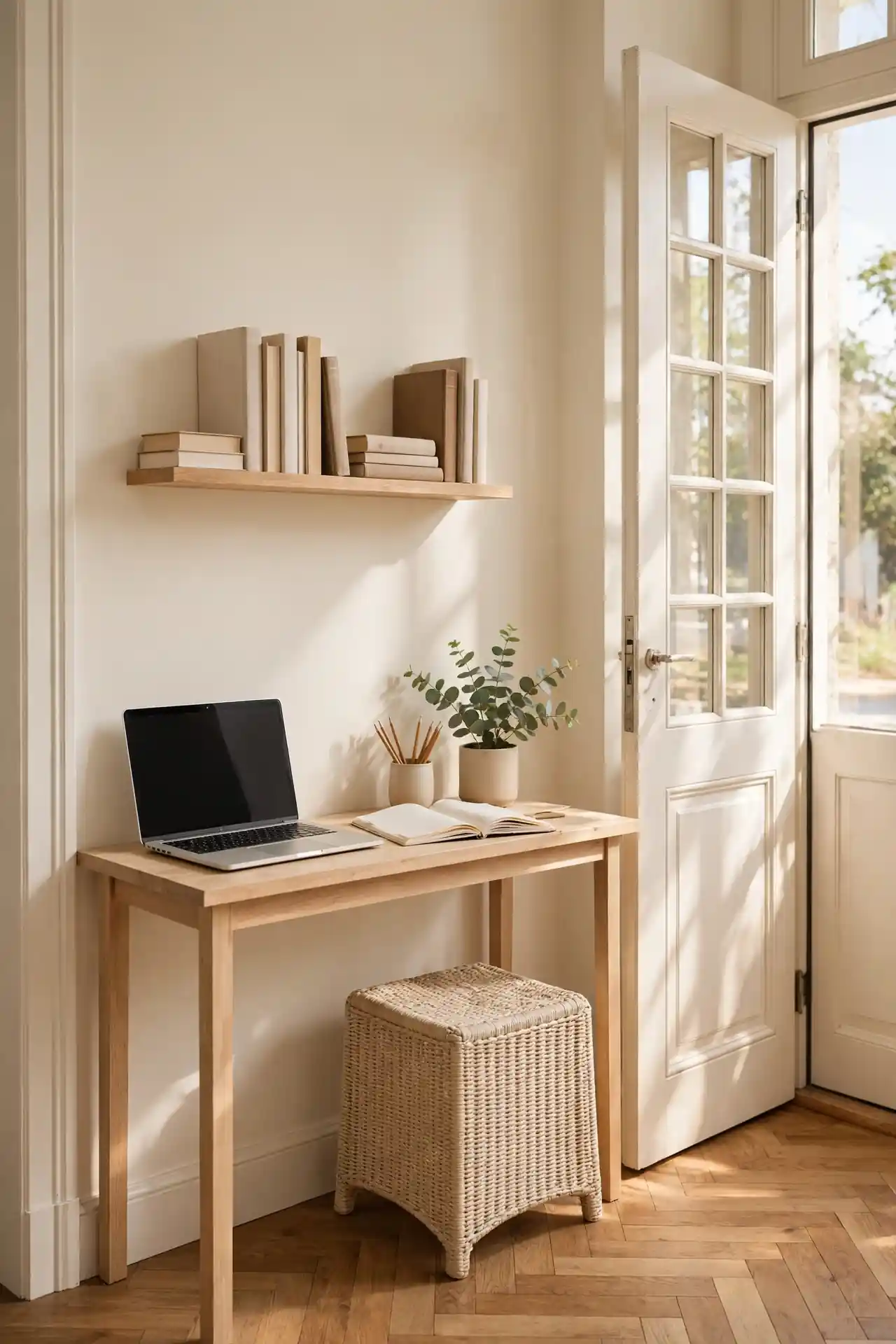
- Claim the often ignored wall beside the front door with a 10 inch deep console table.
- Hang a small shelf above for textbooks and a wall mounted light.
- Choose a backless stool that slides completely under the table.
- Add a tray for keys and mail on one end so the table still serves the entryway.
- Use a timer to signal homework hours, keeping the spot calm and purposeful.
The entryway sits empty most of the afternoon, which makes it a surprisingly peaceful study zone while parents cook nearby. Keep the styling tidy so the home’s first impression stays welcoming. A small rug under the stool defines the zone and dampens hallway noise.
Kitchen Counter Corner
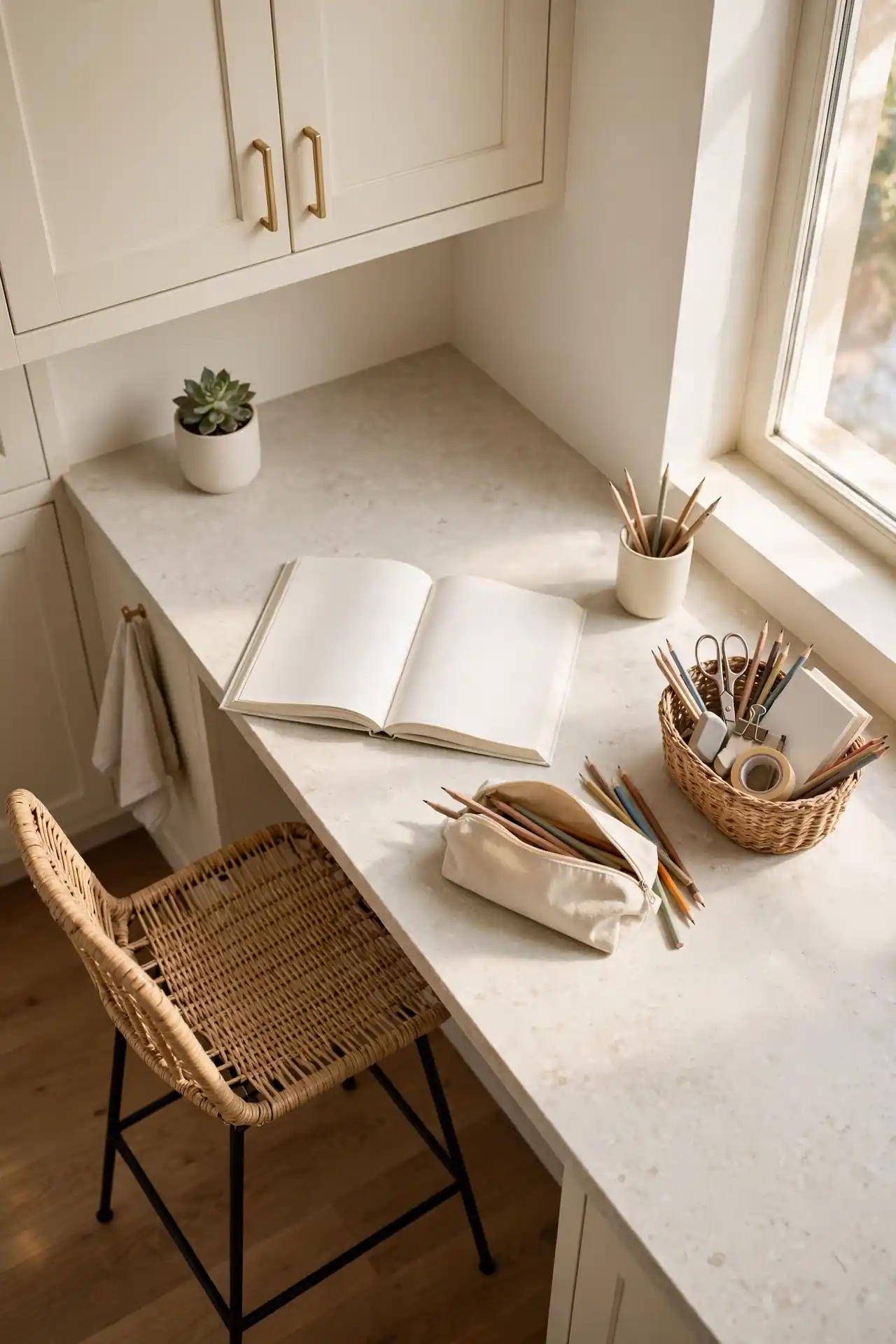
Quick Tip: Dedicate the far end of the kitchen counter as the homework zone and defend it with a supply caddy that lives there permanently. A comfortable counter stool with a footrest makes long sessions bearable. Keep the surface clear of appliances on that end so books have room to spread.
Younger kids often work best within sight of a parent, and the kitchen counter delivers that without sacrificing the dining table. Set a clear rule: the counter corner is a classroom from four to six, then it returns to kitchen duty. I’ve noticed children transition faster when the space has a consistent start and end ritual.
Ladder Desk Design

BEFORE: The living room corner collected random clutter because nothing there had a purpose. Homework drifted to the couch, where the TV hummed and focus scattered within minutes of sitting down.
AFTER: A leaning ladder desk claims that corner with a footprint barely two feet deep. The graduated shelves hold a laptop at writing height, books above, and decor on top. Its open frame keeps the room feeling airy while giving every supply a visible home.
Anchor the top to the wall for safety, especially with climbing toddlers around. The ladder silhouette reads as furniture rather than office equipment, so it blends into living rooms beautifully. This is a renter friendly win since it needs only two small wall screws.
Murphy Desk Magic
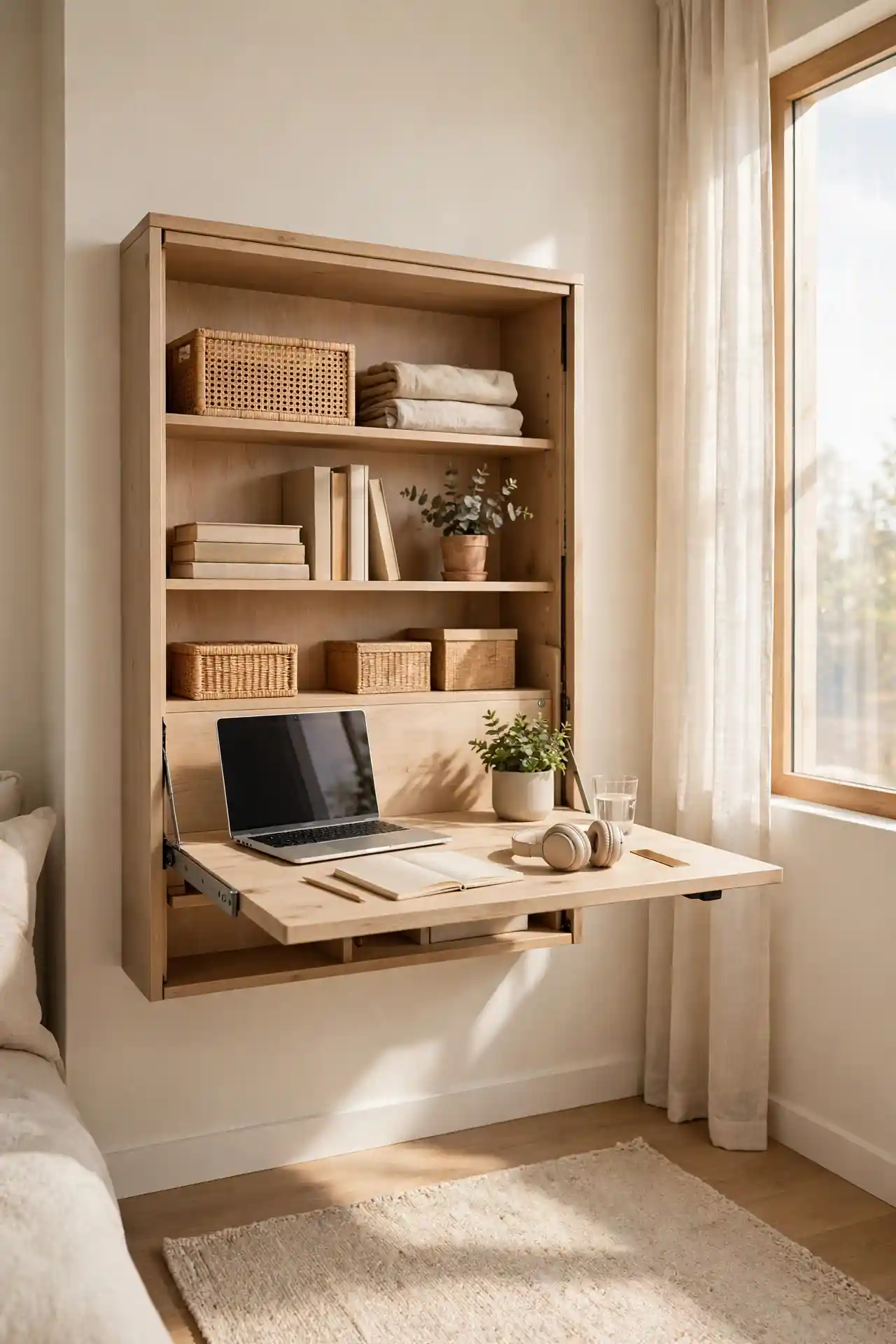
- Choose a wall with at least 36 inches of clear width and no door swing conflicts.
- Mount the cabinet box into studs using the manufacturer’s heavy duty hardware.
- Set the desktop height between 28 and 30 inches for comfortable writing posture.
- Organize the interior shelves with labeled bins before the first homework session.
- Teach the fold up routine: clear, lift, latch, done in under a minute.
A murphy desk vanishes into what looks like a slim cabinet, making it the ultimate disguise for homework in a studio or guest room. The interior shelves keep supplies sorted even when folded, so nothing gets lost between sessions. This is the closest small spaces come to having a dedicated office that appears on demand.
Under Stair Study
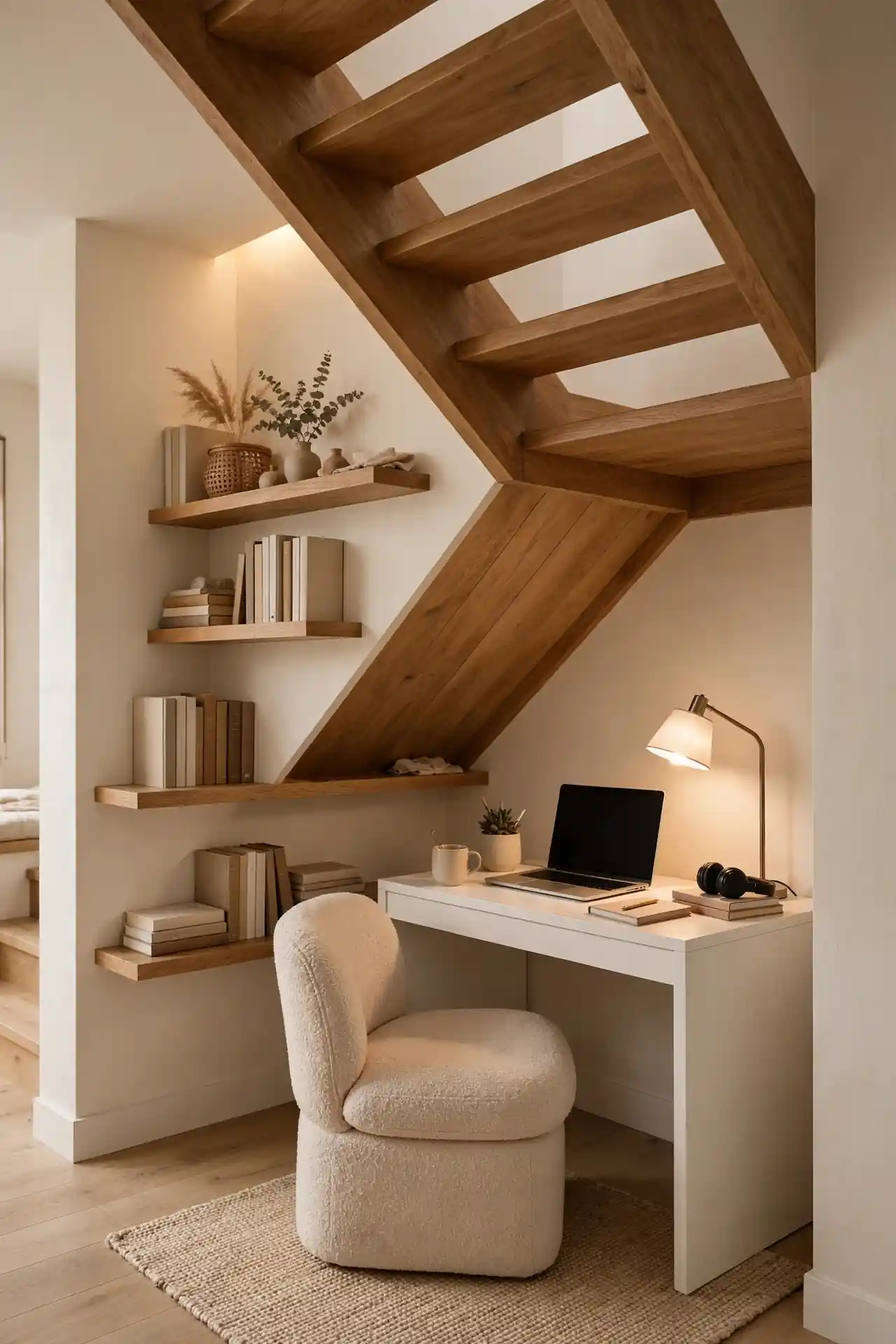
| Option | Needs | Effort |
| Desk under stairs | 48 inch clearance | One weekend |
| Reading nook first | Cushions and light | One afternoon |
| Storage plus desk | Custom shelving | Two weekends |
The triangle under the stairs is prime real estate hiding in plain sight. A compact desk slides right in, with the sloped ceiling creating a naturally cozy enclosure. Add warm lighting since these spots run dark, and paint the walls light to bounce every bit of brightness. Measure the tallest point carefully so the chair fits without head bumps. Kids really adore the secret clubhouse feeling this clever little nook creates every single day.
Door Back Organizer
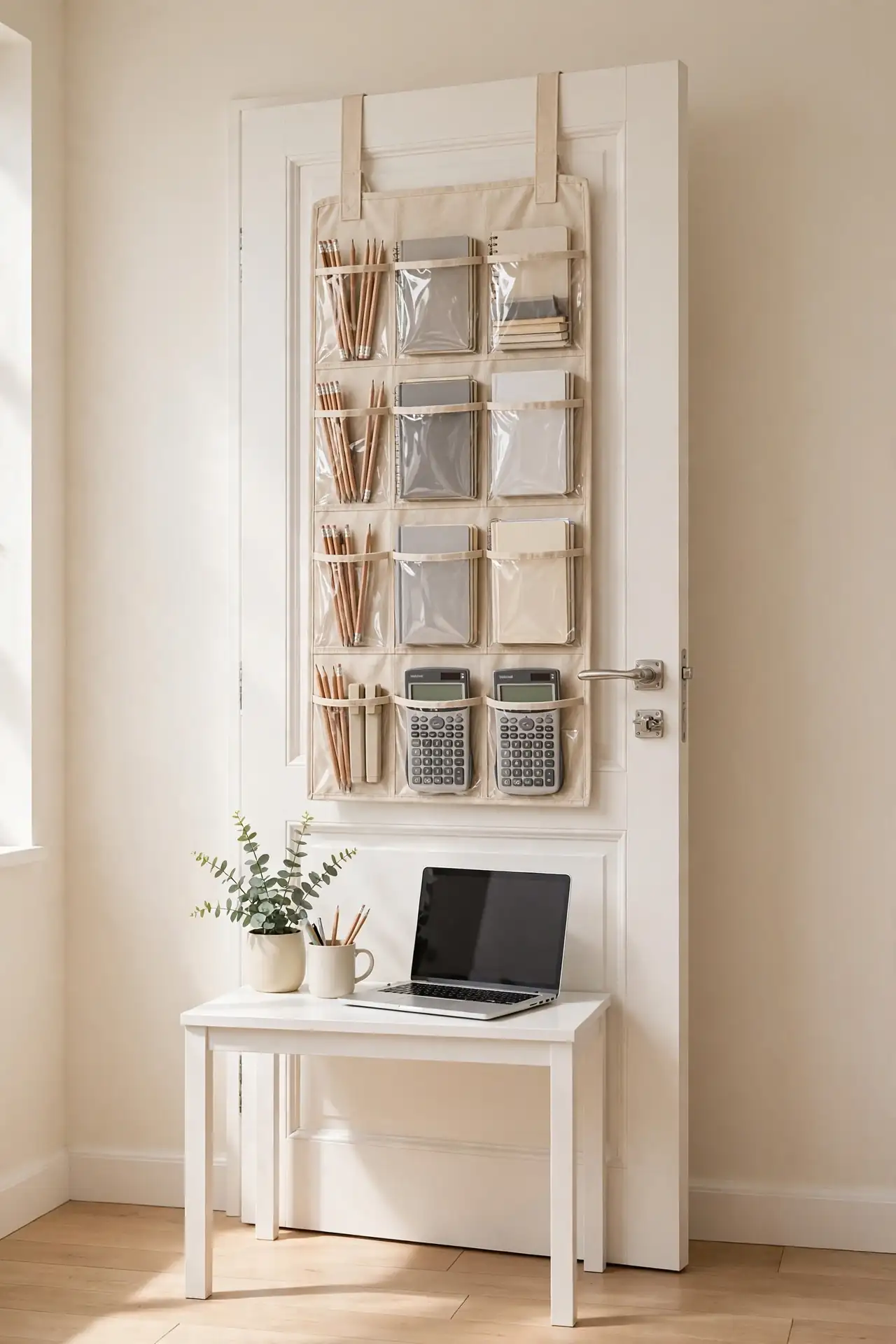
DO: Use an over door organizer with clear pockets so supplies stay visible. Label each pocket by subject for grab and go ease. Hang it on the bedroom door nearest the desk. Restock every Sunday evening to start the week ready.
DON’T: Overload pockets until the door won’t close properly. Don’t store heavy textbooks here; keep those on a shelf. Avoid organizers with tiny pockets that swallow pencils whole.
The back of the door is free storage most families never use, and claiming it keeps the desktop clear for actual work. Pair the organizer with a small desk and the whole station fits in a four foot stretch of wall. For more ways to squeeze function from tight rooms, small bedroom ideas offer smart layouts that stretch every inch.
Bedside Study Tray
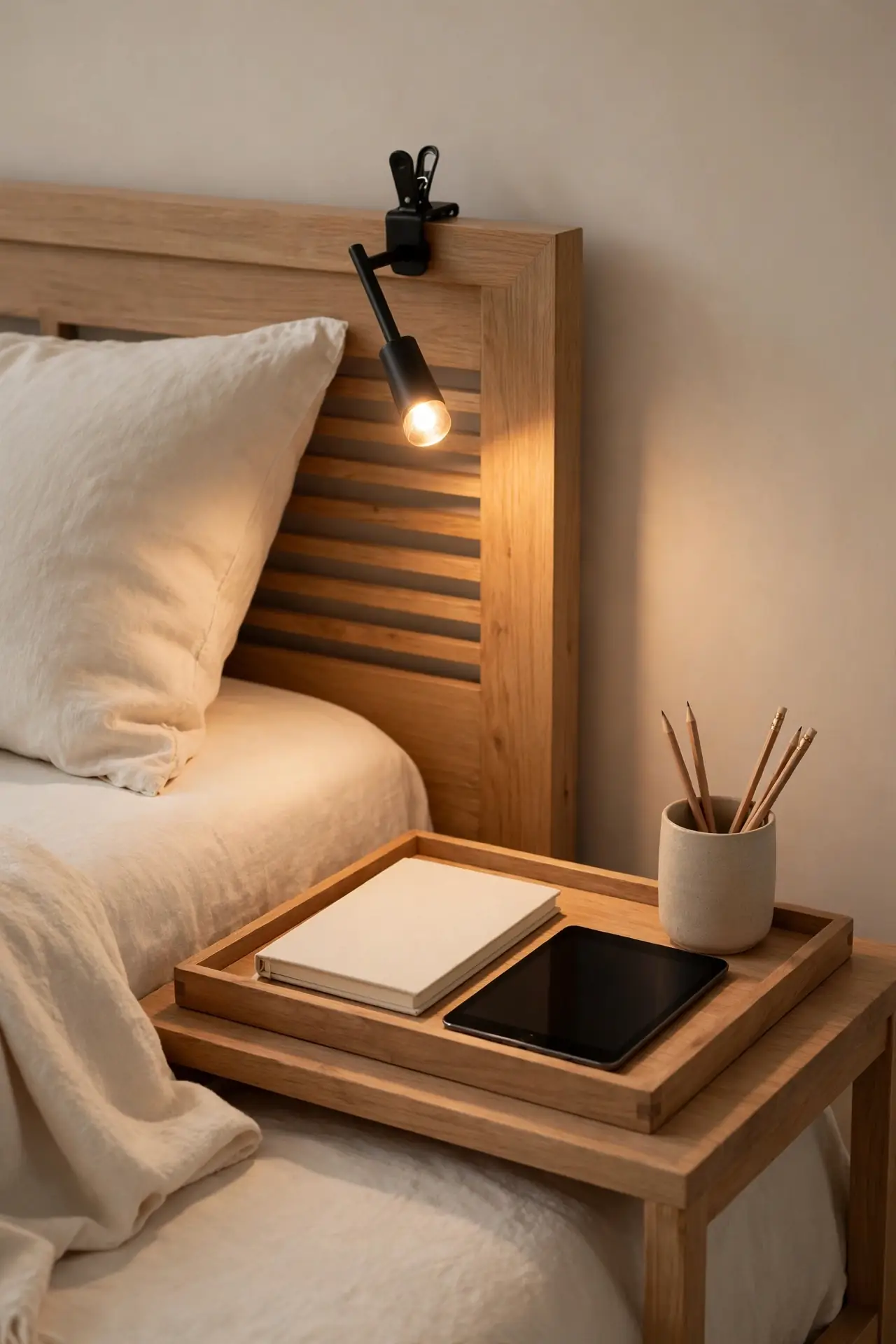
Cost: Very low | Time: Under an hour | Skill Level: Beginner | Best For: Teens and night owls
When the bedroom barely fits the bed, the nightstand can moonlight as a homework station. A sturdy tray corrals the notebook, tablet, and pencils into one portable kit. Clip a reading light to the headboard for focused illumination that won’t disturb a sleeping sibling. Choose a tray with raised edges so nothing slides off during late sessions. This micro station suits short assignments and quiet evening reading sessions best, giving teens a truly private spot without ever demanding any extra furniture.
Narrow Console Desk
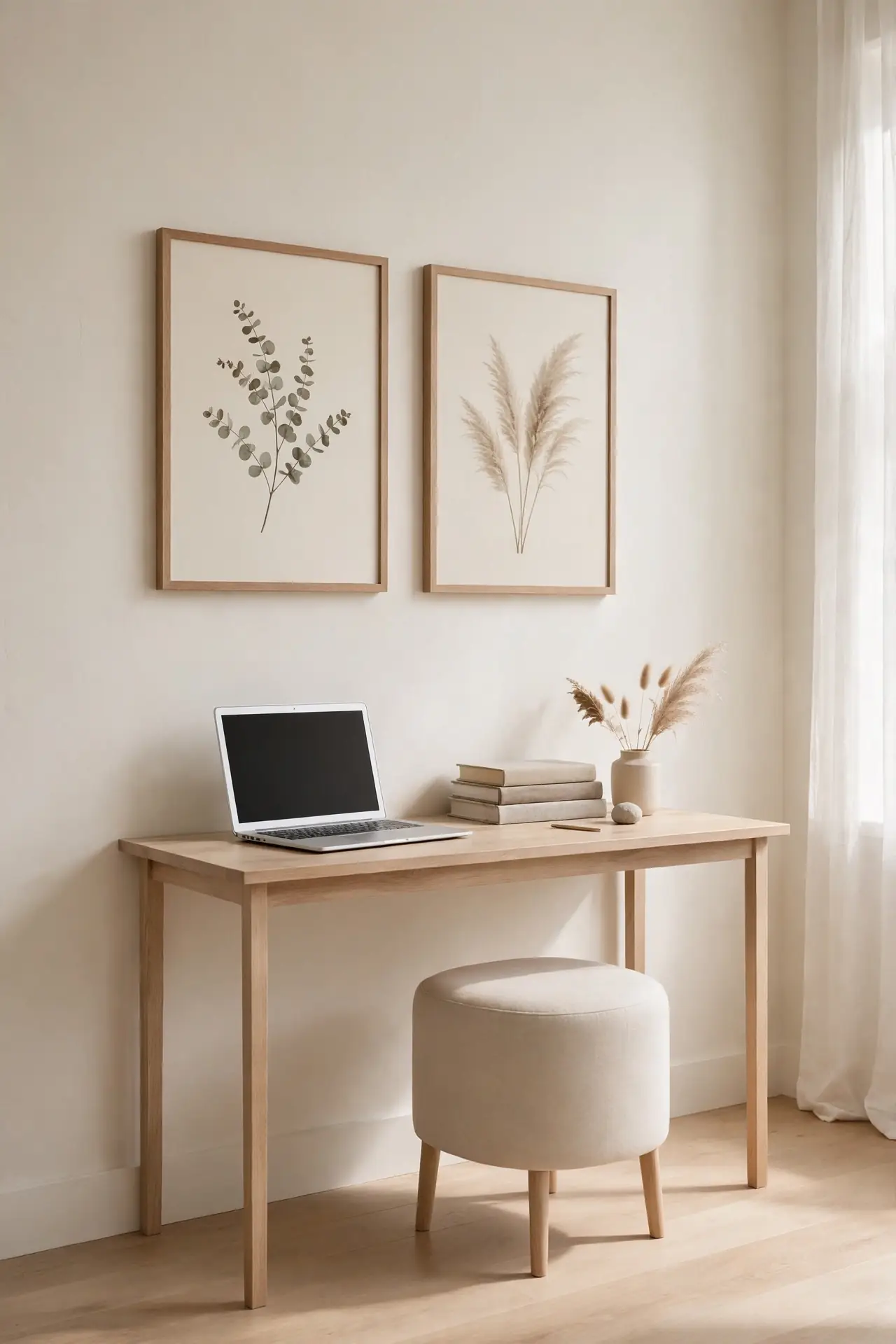
Hallways and the foot of the bed often hide a perfect 12 inch deep strip for a console desk. These slim tables were made for tight spots, yet the surface comfortably holds a laptop and an open textbook side by side. Choose one with a lower shelf for baskets of supplies. A stool that tucks fully underneath keeps the walkway clear when homework ends.
Style the wall above with a pinboard or a single framed print to mark the zone. This setup works in rentals because it leans on furniture, not wall modifications. The narrow profile means it can live almost anywhere without crowding the room.
Pegboard Wall Hub
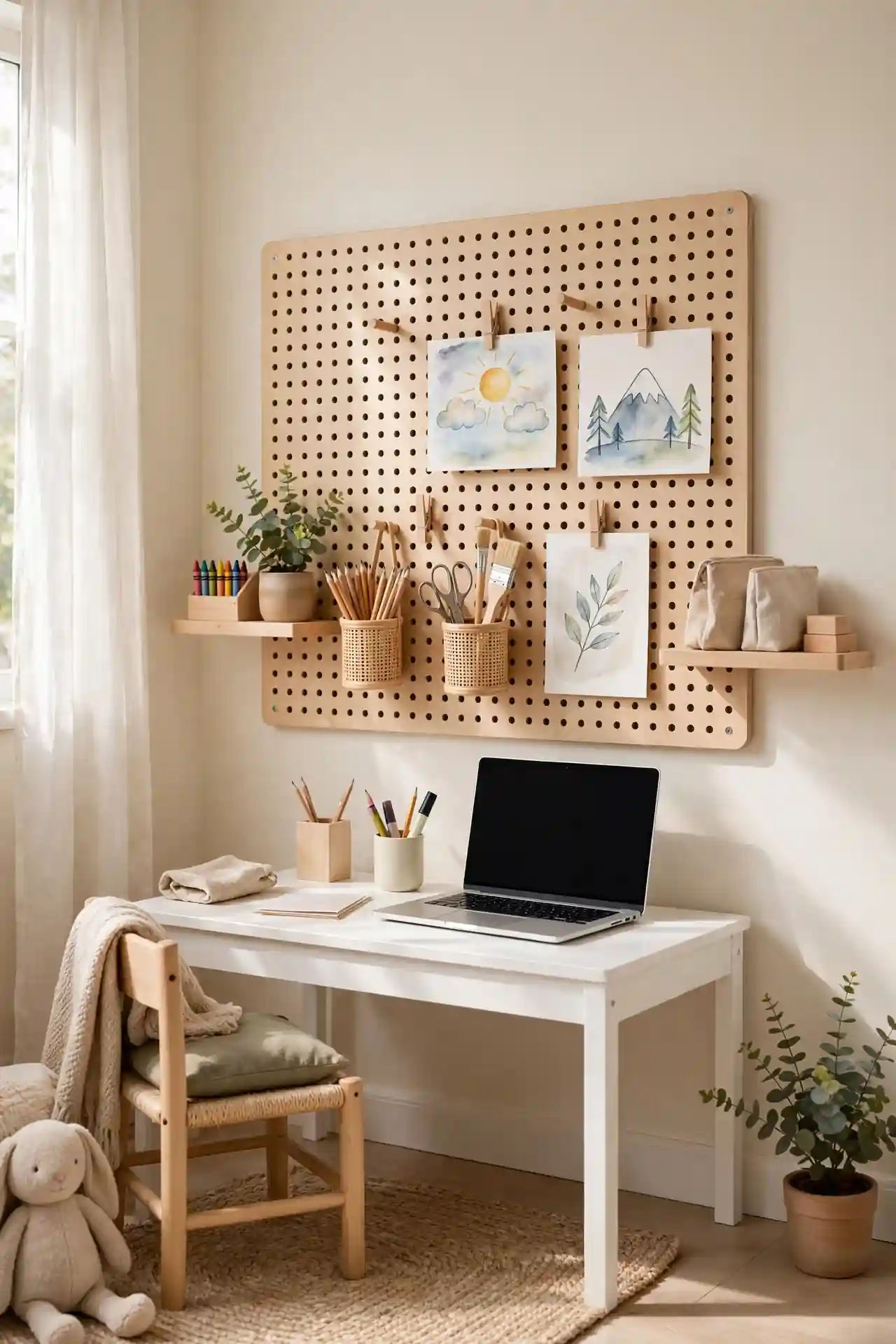
- Mount a 24 by 36 inch pegboard above any small desk or table surface.
- Hang cups for pens, small shelves for books, and clips for artwork.
- Leave one zone empty for the weekly schedule and assignment list.
- Rearrange hooks monthly as subjects and supplies change through the year.
A pegboard turns dead wall space into a fully customizable supply hub, which is gold when the desktop is tiny. Everything stays visible and within reach, cutting the drawer digging that eats homework time. Paint the pegboard to match the wall for a built in look. Let your child arrange the hooks themselves; ownership of the setup builds ownership of the routine.
Ottoman Storage Seat
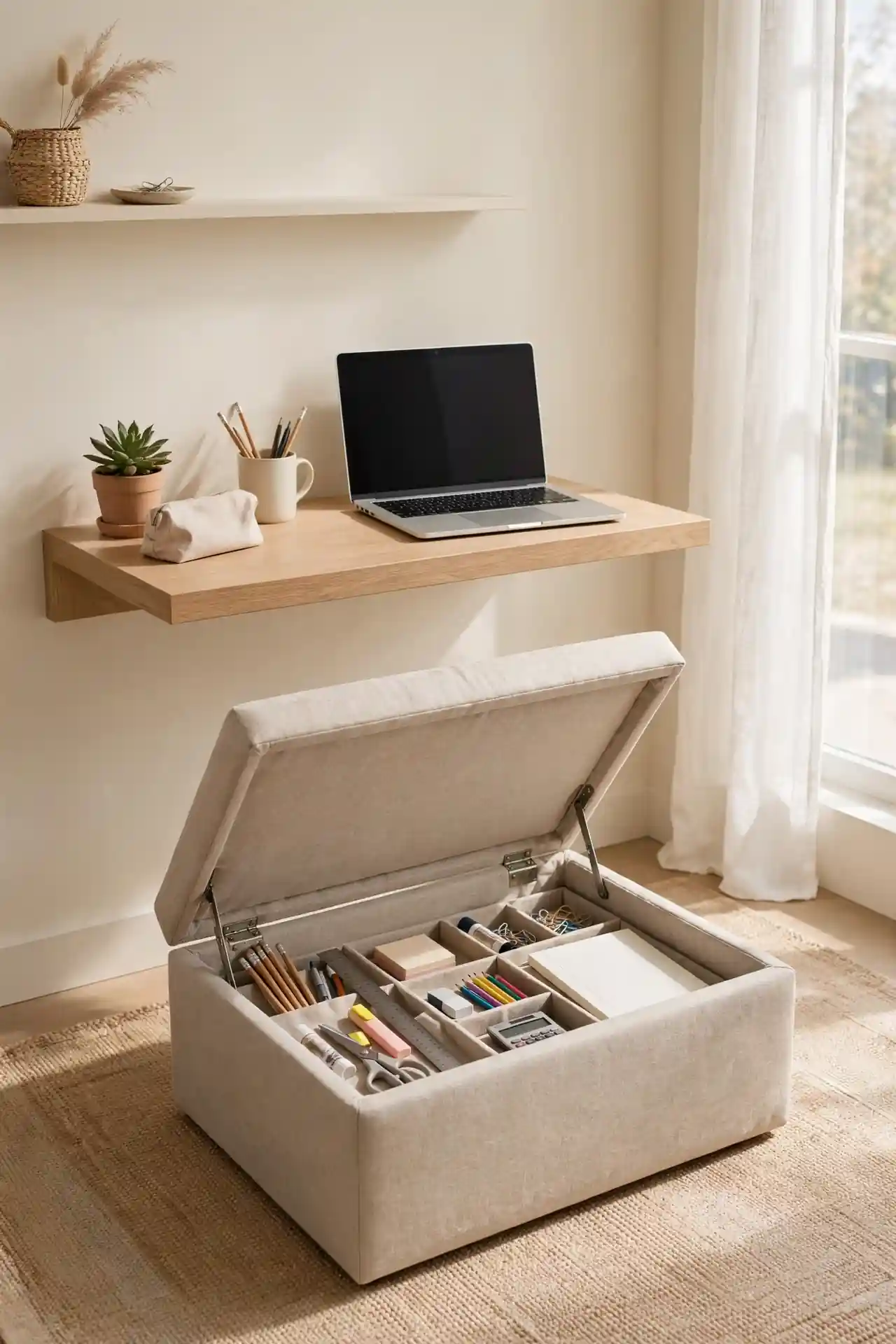
Quick Tip: Choose a storage ottoman with a flat, firm lid that doubles as a seat at a low desk or wall table. Inside, keep a zippered pouch per subject so supplies travel neatly. The firm top supports comfortable sitting for an hour, and the hidden storage swallows clutter the moment homework ends.
This double duty piece is a small space hero, replacing both a chair and a supply bin. Pick performance fabric that wipes clean, since it will see daily use. Some ottomans even flip into a small table for extra function. Tuck it under the desk when not needed and the floor stays completely clear.
Balcony Study Corner
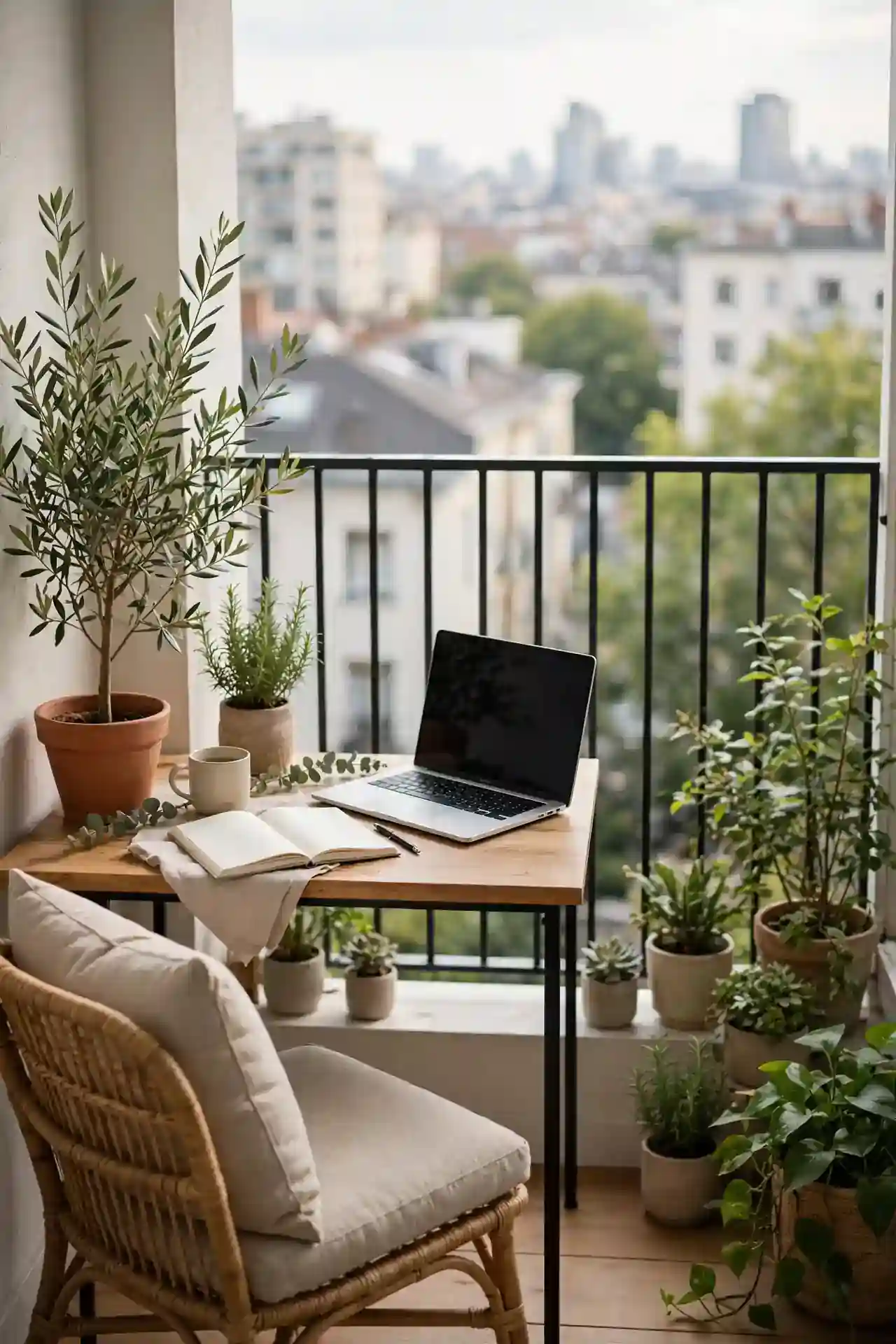
BEFORE: The balcony held a drying rack and forgotten planters, useful but joyless. Homework stayed indoors under artificial light, and afternoons felt long and stuffy for everyone.
AFTER: A compact bistro table and a weather resistant chair turn the balcony into the freshest study spot in the home. A small outdoor rug and two potted plants make it inviting, while a clip on umbrella handles harsh sun. Fresh air genuinely sharpens afternoon focus.
Check the wifi reaches comfortably and keep a waterproof box for supplies. This works best for reading and laptop work rather than paper heavy projects on breezy days. Even one outdoor session a week can reset a restless learner’s whole attitude.
Divider Screen Zone
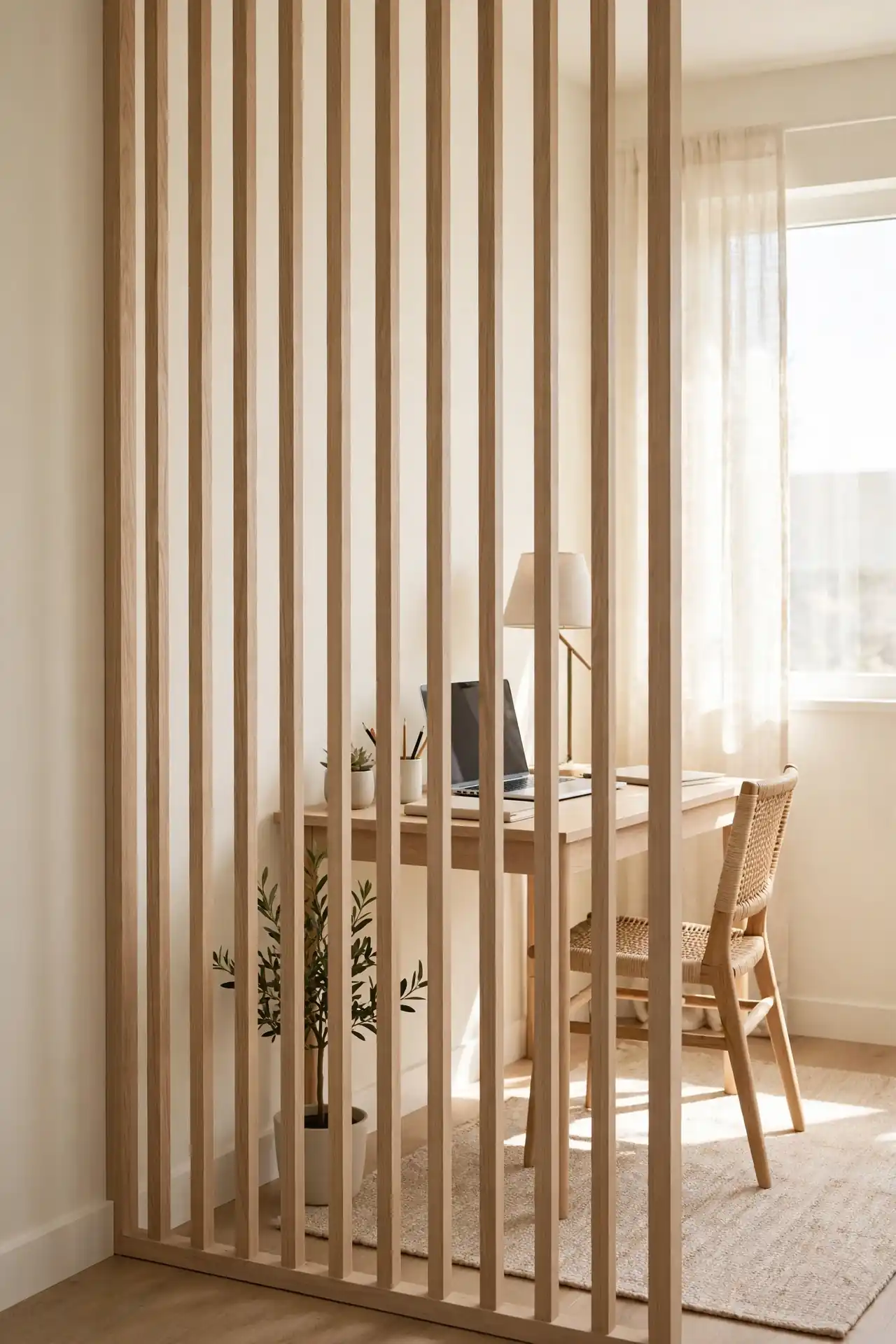
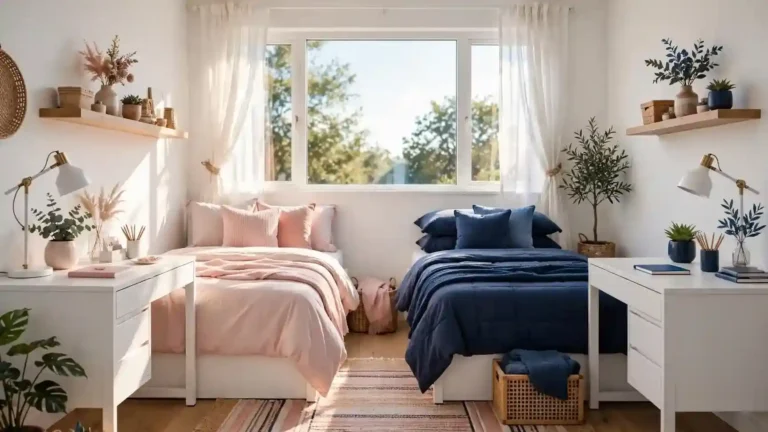
- Place a folding screen or open bookshelf to carve a visual boundary in a shared room.
- Set the desk facing the divider so the child’s back is to household activity.
- Add a rug under the desk to anchor the zone physically and dampen sound.
- Keep the divider below eye level when seated so the space feels open, not boxed in.
In shared bedrooms and studios, a visual boundary does half the focusing work. The screen signals to siblings that the zone is in study mode, reducing interruptions without a single word. Choose a slatted or open design so light still flows through and the room never feels chopped up.
Stackable Crate Desk
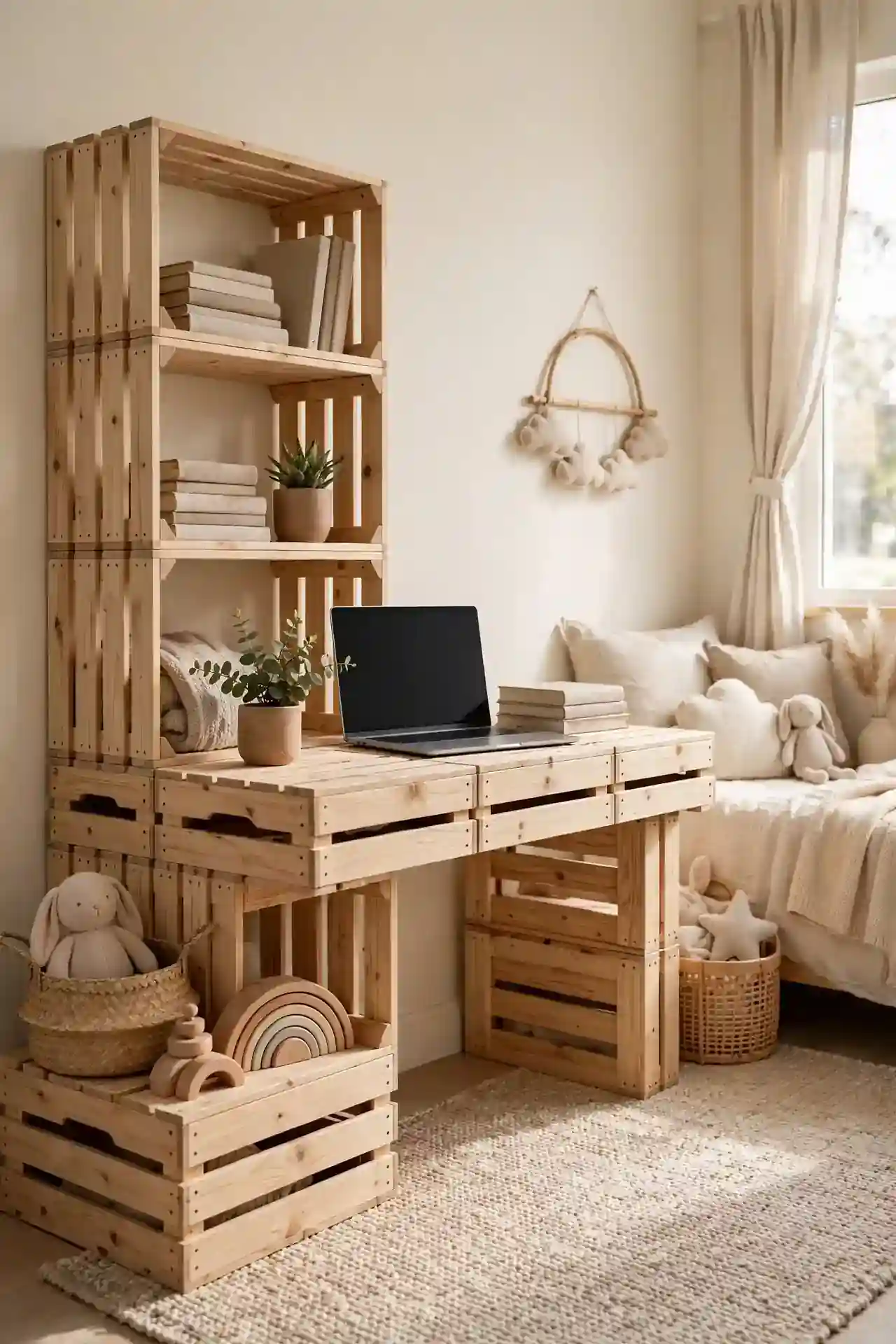
| Option | Stability | Look |
| Wooden crates | High with brackets | Rustic playful |
| Plastic cubes | Medium | Modern clean |
| Metal grid cubes | High | Industrial chic |
Stackable crates build a desk that grows and rearranges with your child. Two columns of crates with a board across the top create the work surface, while the cubbies below swallow books and bins. Secure the stacks with small brackets so nothing wobbles mid assignment. Let kids line the cubbies with colorful paper for a personal touch they will love. Label each cubby by subject for extra organization power every day. The whole piece breaks down flat for moving day.
Headboard Shelf Study
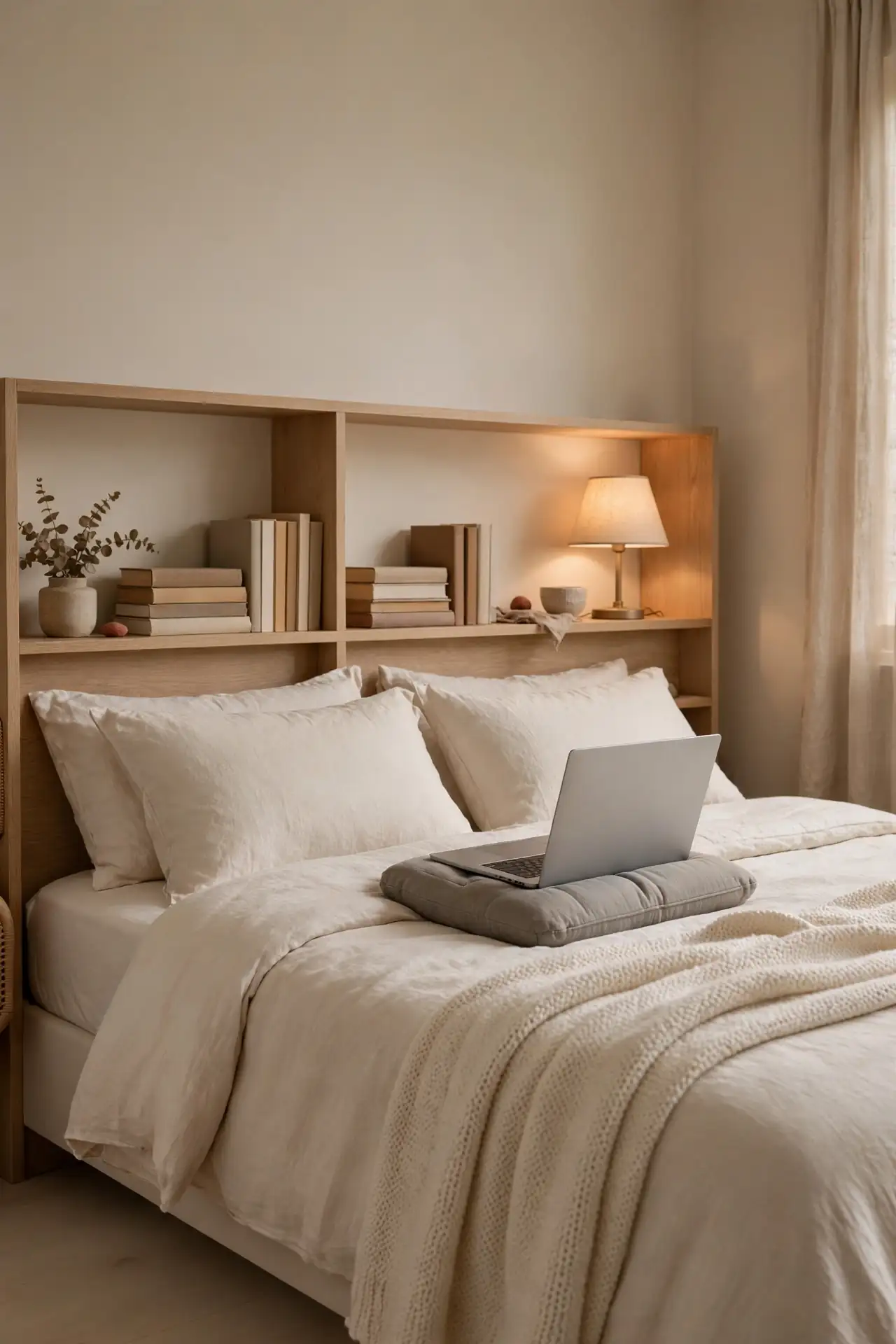
DO: Choose a headboard with a deep ledge, at least 8 inches, for books and a lamp. Add a bed desk pillow with a firm surface for writing. Keep a small basket on the ledge for the current week’s supplies.
DON’T: Let the bed become the only study spot; mix in upright sessions too. Don’t pile the ledge so full that things tumble onto pillows. Avoid working flat on the back, which strains necks fast.
The headboard ledge is the most overlooked shelf in a small bedroom, and it makes a fine command center for reading and review. This setup suits older kids who need a quiet wind down spot for evening assignments. Pair it with a proper desk elsewhere for longer writing sessions.
Conclusion
Small spaces ask for creativity, not compromise, and these homework station ideas for small spaces show how a focused corner can appear almost anywhere. Start with one setup that fits your room this weekend, then refine it as you learn your child’s habits. Measure twice, build once, and enjoy the calm a dedicated study spot brings to the whole home. Save your favorites to Pinterest, share them with a fellow parent, and watch homework time get calmer week by week. I’ve seen how small changes like these can completely shift the way a space feels for everyone.
One Comment