24 Japanese Garden Ideas for a Peaceful Zen Escape
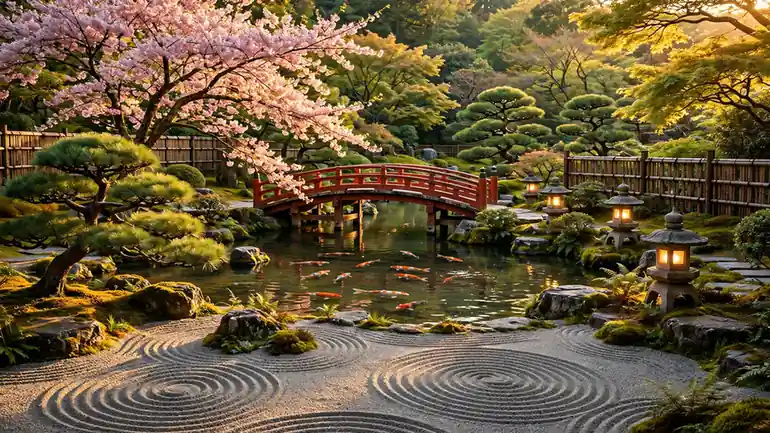
These japanese garden ideas bring calm into even the smallest backyard. Serene gravel patterns, still water, and sculpted greenery work together to create a space that feels worlds away from daily noise. I’ve noticed that gardens built around simplicity age beautifully, because every element earns its place. Start with one corner, shape it with intention, and let the quiet grow from there.
Scroll through the sections below to find the look that fits your yard and your budget. If you prefer a more playful style, these whimsical garden ideas offer a fun contrast. Each idea below keeps things simple and peaceful, so you can mix them without clutter. A calm garden is built choice by choice, not all at once.
Tranquil Koi Pond
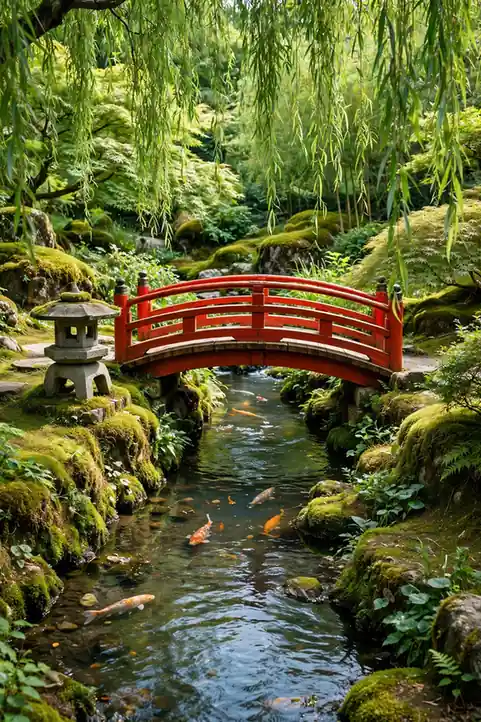
Still water anchors a garden like nothing else can. A small koi pond, even one only a few feet wide, draws the eye inward and quiets the whole yard. Fish gliding under lily pads add gentle movement that never feels busy. Line the edges with smooth river stones so the transition from water to planting looks natural and soft.
Keep the design simple and the pond practically maintains itself. A small pump keeps water clear, and a few shade plants stop algae from taking over. In my experience, ponds under four feet deep stay easiest to clean each spring. Add one flat boulder at the edge as a sitting spot, and you have a morning ritual waiting to happen.
Stone Lantern Glow
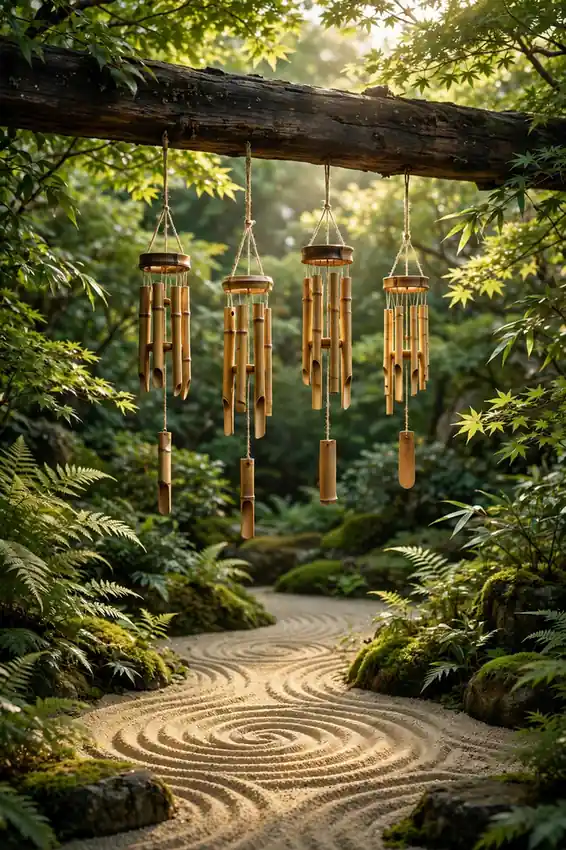
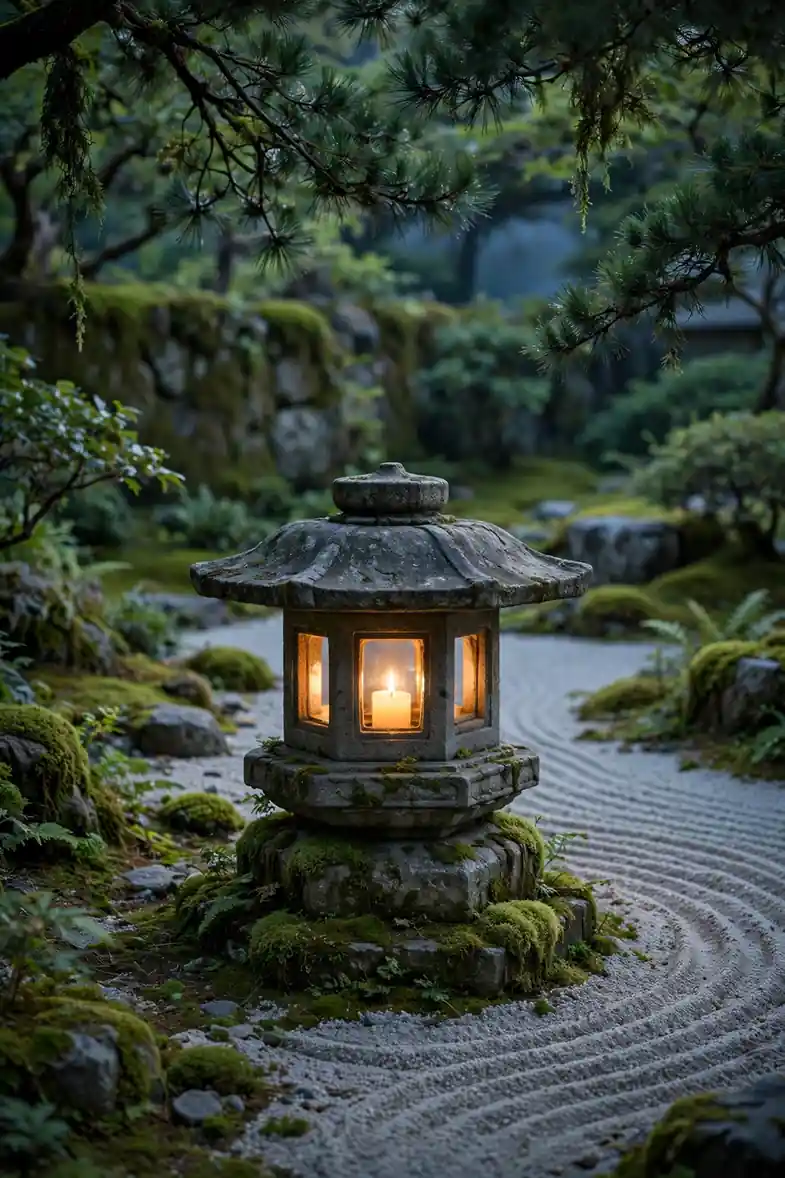
A stone lantern turns an ordinary corner into a place that feels considered.
- Place one lantern where paths meet so it guides evening strolls.
- Choose granite or basalt; both weather into soft gray tones.
- Set the base on a flat stone pad to keep it level through frost.
- Tuck low moss around the footing so it looks settled, not new.
- Add a candle insert for a warm glow after sunset.
Lanterns work best in odd numbers, so pair this one with two smaller stones nearby. I’ve noticed that a single lantern near water reflects beautifully at dusk. Keep the area around it clear of tall plants so the shape stays visible from across the yard. One well-placed lantern beats three scattered ones every time.
Zen Sand Raking
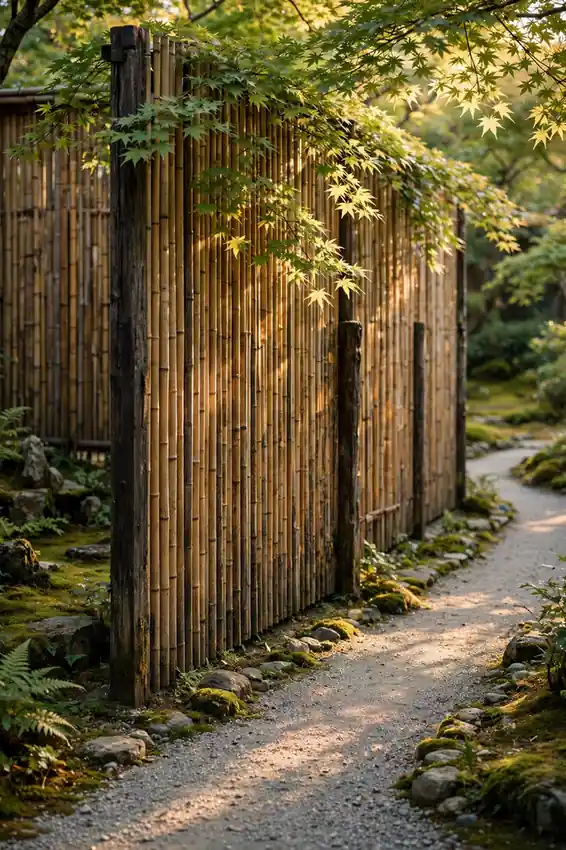
Quick Tip: Rake your gravel bed early in the morning when the light is low and the air is still. Use a wooden rake with wide teeth for bold wave lines, or a narrow-toothed rake for fine ripples. Work from the edges inward so your footprints disappear as you finish.
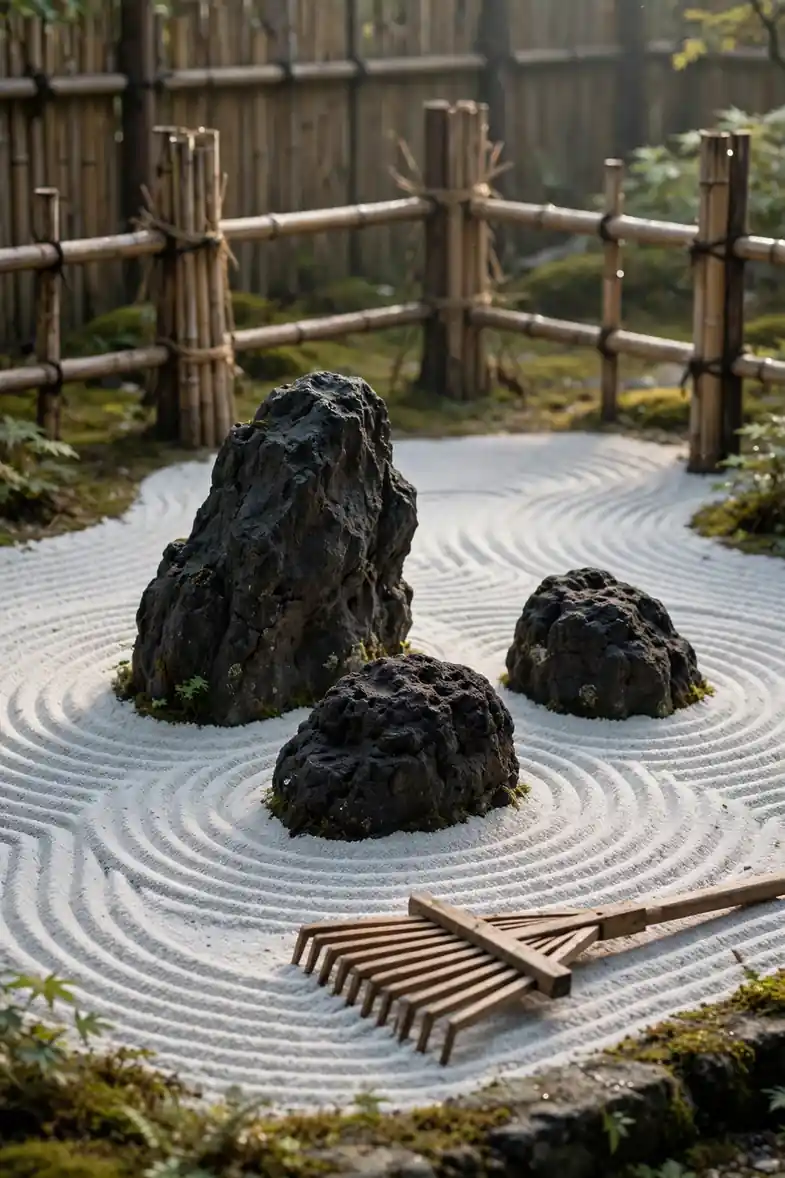
A raked gravel bed needs almost no upkeep once it is set. Weeds stay rare because the gravel layer runs deep, and rain drains straight through. Smooth the surface again after heavy storms, and the pattern returns in minutes. I treat raking as a quiet weekend ritual rather than a chore, and the garden always rewards the effort.
Bamboo Fence Screen
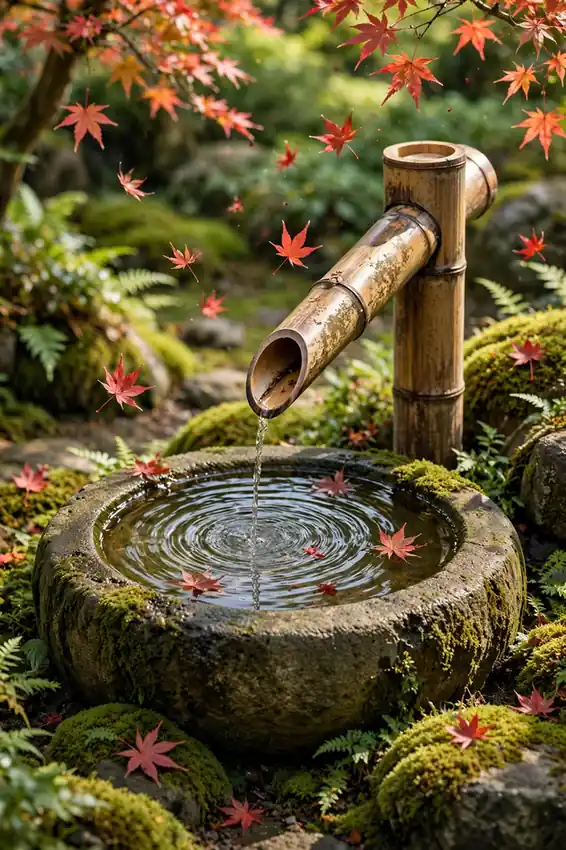
BEFORE: The side yard sat fully exposed to the neighbor’s windows, and every outdoor moment felt watched. Wind rushed straight through, scattering cushions and drying out the soil beds within a single afternoon.
AFTER: A six-foot bamboo screen now filters the view and softens the wind to a gentle rustle. The space behind it feels private and calm, like a small courtyard garden. Morning tea out there has become a daily habit.
Install the screen on sturdy posts set in concrete so it stands through winter storms. Leave a two-inch gap at the bottom for airflow, which keeps the bamboo dry and long-lasting. Stain it once every two years with a natural oil finish, and the warm tone will hold for a decade.
Moss Garden Carpet
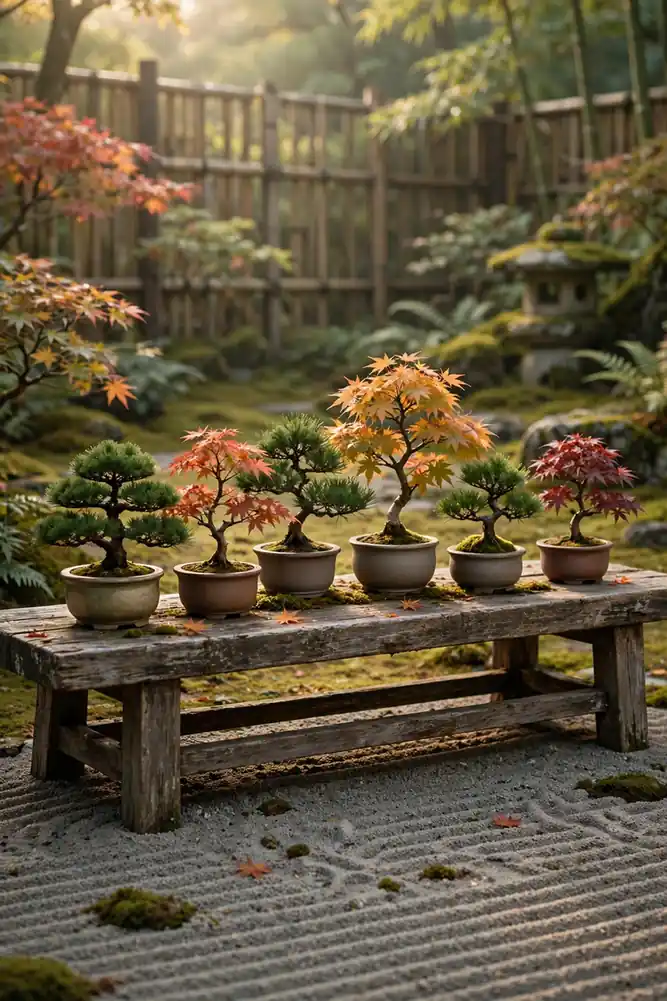
Moss gives a garden that soft, ancient feeling no lawn can match.
- Clear the area of weeds and lay a two-inch base of acidic soil mix.
- Press moss sheets or fragments firmly onto the damp soil surface.
- Water gently every morning for the first three weeks while roots knit.
- Keep foot traffic off the new carpet until it feels spongy underhand.
Moss thrives in shade and poor soil where grass gives up, which makes it perfect for tricky corners. It needs no mowing and stays green through mild winters. I’ve seen this work well in many cases where homeowners fought bare patches for years. Mist it during dry spells, pull the odd weed, and the carpet thickens every season.
Arched Red Bridge
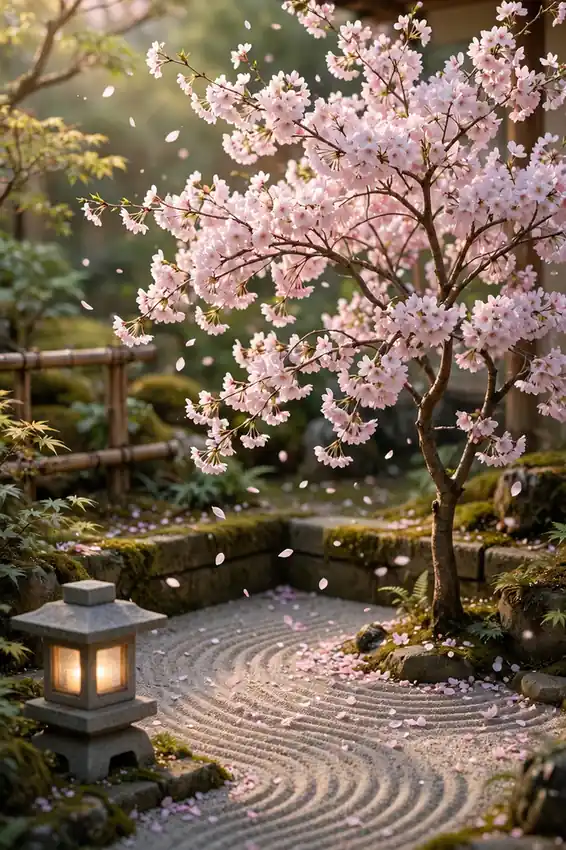
A small bridge turns a stream crossing into the most photographed spot in the yard.
| Option | Best For | Cost | Upkeep |
|---|---|---|---|
| Wooden arch bridge | Classic look over water | Medium | Reseal yearly |
| Flat stone slabs | Modern, low profile | Low | Almost none |
| Red lacquered bridge | Bold focal point | Higher | Touch up paint |
Pick the bridge that matches your garden’s mood rather than the boldest one. A flat stone crossing suits a quiet moss garden, while the classic red arch sings over a koi pond. Keep the span short so it feels like a garden feature, not a structure. One bridge is plenty for most yards.
Pagoda Stone Tower
A stone pagoda adds height and history without a single plant.
DO:
- Set it on a level stone base so it never tilts.
- Nestle it among low shrubs so it looks discovered, not placed.
- Let moss grow on it freely for an aged, settled look.
DON’T:
- Don’t center it in the yard like a monument.
- Don’t surround it with bright flowers that fight its calm mood.
- Don’t buy one taller than your sightline from the main viewing spot.
Pagodas read best slightly off-center, glimpsed between branches rather than stared at head-on. I’ve noticed that a three-tier tower suits small yards while five tiers need more space to breathe. Wipe off bird droppings now and then, and the stone will silver gracefully with age.
Bonsai Tree Display
A few well-shaped bonsai bring an entire landscape down to tabletop scale.
Cost: Low to medium | Time: One weekend to set up | Skill Level: Beginner friendly | Best For: Patios and small yards
Start with hardy species like juniper or Japanese maple, which forgive beginner mistakes. Water when the top inch of soil feels dry, and feed lightly through the growing season. Prune in early spring to keep the silhouette tight and balanced. Display the trees on a simple wooden bench at different heights for depth. Rotate each pot weekly so growth stays even on all sides, and shield the bench from harsh midday sun in midsummer.
Pebble Path Walkway
A winding path slows visitors down, and that is exactly the point. Lay smooth pebbles in a gentle curve rather than a straight line so each step reveals something new. Set the stones close enough that the stride feels natural, about a foot apart. Dark soil or fine gravel between the pebbles keeps weeds down and makes the stones pop.
Paths shape how a garden is experienced, so plan the route before planting anything. Curve it past your best features: the pond, the lantern, the moss bed. I’ve tried straight paths in small yards and they always feel rushed. Edge the walkway with low groundcover to soften the line, and it will look like it has always been there.
Tea Garden Corner
A dedicated tea spot gives the garden a purpose beyond looking pretty.
- Pick a quiet corner with morning sun and afternoon shade.
- Set a low stone basin with a bamboo spout for hand washing.
- Place a simple wooden bench or two flat stones for seating.
- Plant fragrant shrubs nearby so the air carries scent.
If you love tiny detailed garden scenes, these fairy garden ideas pair nicely with a tea corner’s scale. Keep the planting loose and natural around the seating so it feels tucked away. A small gravel pad under the bench stops muddy feet after rain. This corner will become your favorite seat in the house.
Wishing Stone Cairn
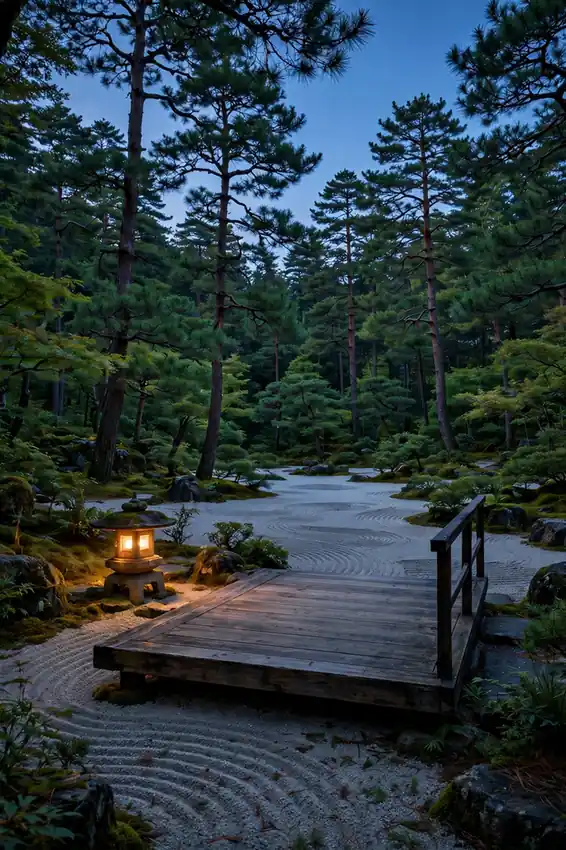
Quick Tip: Build your cairn with flat, wide stones and test each layer’s balance before adding the next. Start with the largest stone at the bottom and shrink each layer by roughly a third. A tiny dab of outdoor-safe adhesive under the top stone keeps it standing through wind.
Cairns work as quiet focal points in gravel beds and moss gardens. Stack three to seven stones for the best proportions; fewer looks unfinished, more looks fussy. Let kids help build one, because the balancing act teaches patience better than any lecture. Check the stack after storms and restack any tumbled stones. It takes five minutes and feels like a small ceremony.
Willow Shade Canopy
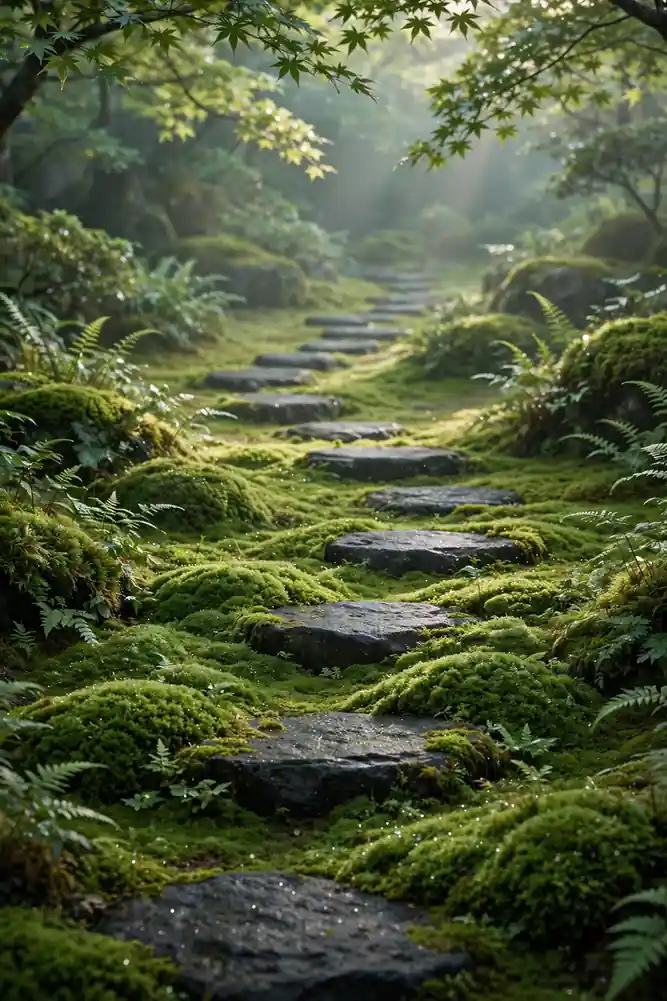
BEFORE: The pond corner baked in full afternoon sun, and algae bloomed every single week. The water felt harsh and exposed, and nobody lingered there past noon.
AFTER: A young willow now drapes soft shade over the water, and the algae problem faded within a month. Dappled light dances on the surface, and the corner has become the coolest seat in the yard.
Plant the willow at least fifteen feet from the pond edge so roots stay clear of the liner. Water deeply the first two summers, then let it find its own rhythm. Prune low branches each winter to keep the sweeping shape off the ground. That’s why many experts recommend willows for water gardens: the payoff far outweighs the early care.
Bamboo Water Fountain
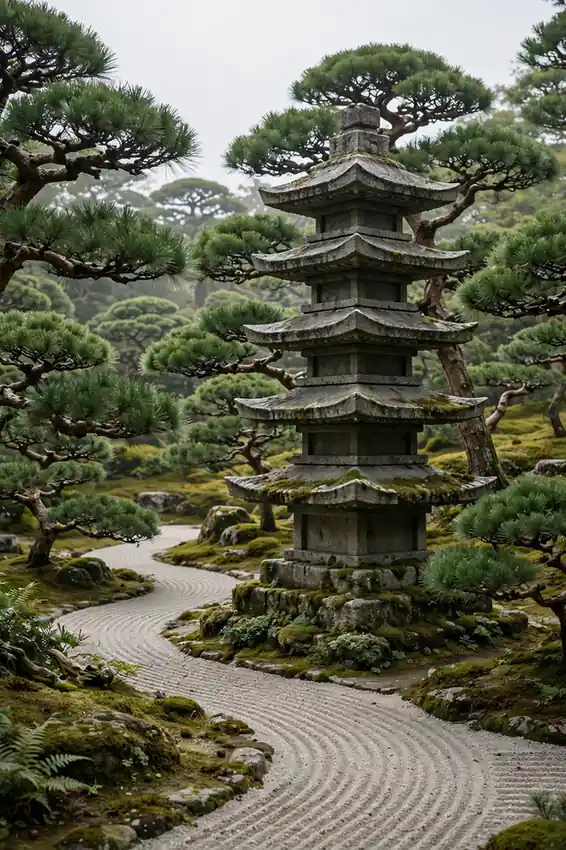
The hollow knock of a bamboo fountain is the soundtrack of a calm garden.
- Dig a shallow basin and set a waterproof liner with a small pump inside.
- Mount a horizontal bamboo pipe so it tips and strikes a stone when full.
- Run the pump tubing up through the bamboo arm and test the flow.
- Surround the base with moss and pebbles to hide the mechanics.
Keep the water topped up in hot weather so the pump never runs dry. Clean the basin monthly to stop leaves from clogging the intake. The gentle knock-and-splash masks street noise better than any speaker. Site it near a window you open often, and the whole house borrows the calm.
Rock Garden Cluster
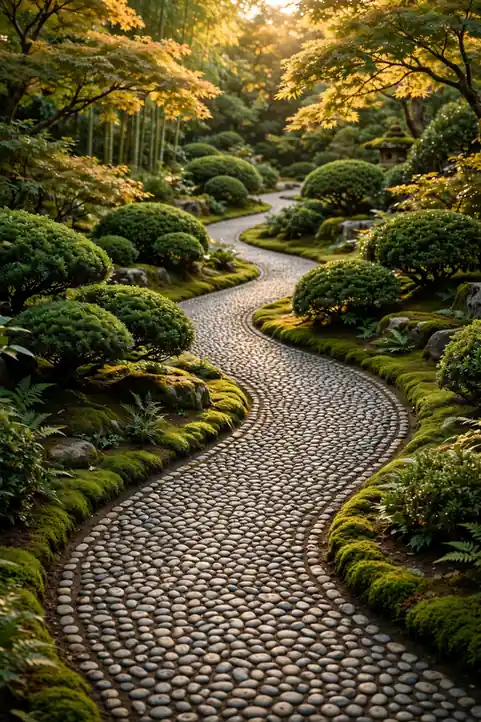
Rocks are the bones of a Japanese garden; everything else is clothing.
| Stone Type | Look | Best Use |
|---|---|---|
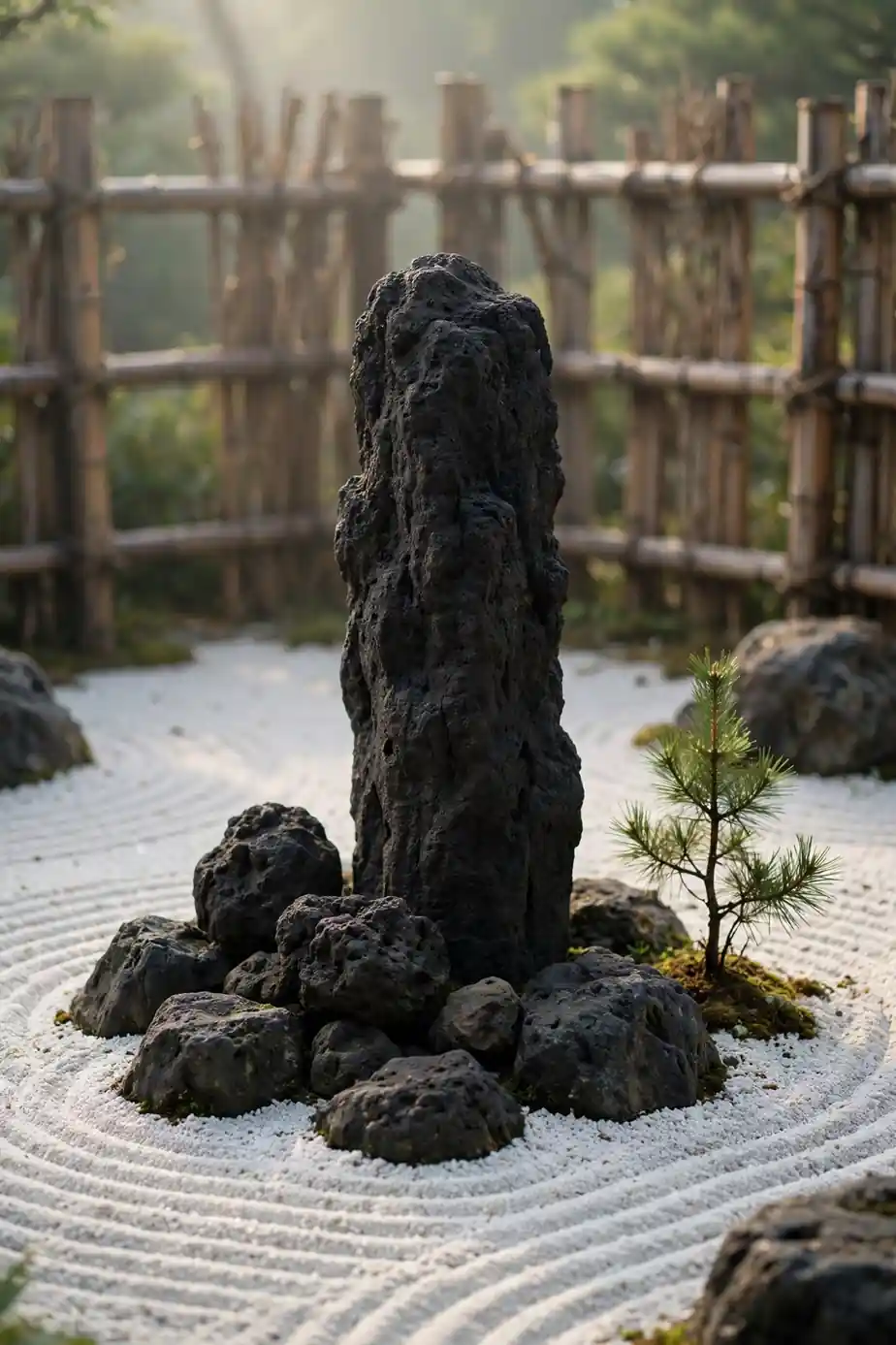
| Volcanic basalt | Dark, dramatic | Single tall focal stone |
| Granite boulders | Soft gray, rounded | Cluster groupings |
| River stones | Smooth, varied | Edging and groundcover |
| Slate slabs | Flat, layered | Stepping paths |
Group stones in odd numbers and bury the bottom third so they look rooted, not dropped. Mix sizes boldly: one tall stone with two low companions reads better than three equals. Walk around the cluster as you place each rock, because gardens are viewed in the round. Take your time here; rock placement rewards patience.
Cherry Blossom Corner
One flowering cherry delivers a whole season of drama in a single week.
DO:
- Choose a compact variety so blossoms stay within reach and view.
- Plant it where falling petals land on gravel or moss, not lawn.
- Prune right after flowering to shape next year’s display.
DON’T:
- Don’t plant near paths where sticky petals become a slipping hazard.
- Don’t expect year-round interest; plan evergreen neighbors for balance.
- Don’t overfeed, because rich soil pushes leaves at the cost of flowers.
Site the tree where you see it from your favorite indoor seat, because bloom week passes fast. Underplant with evergreen ferns so the corner stays composed after petals fall. A single blossom tree with a bench beneath it is a complete garden moment.
Iris Pond Planting
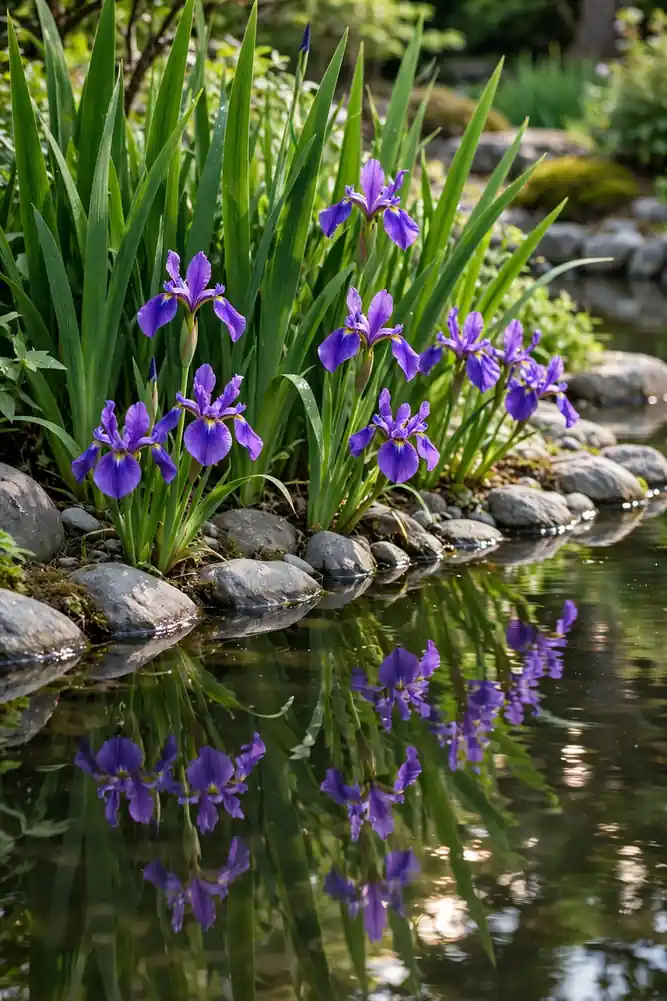
Iris flowers bring vertical elegance to pond edges in early summer.
Cost: Low | Time: One afternoon to plant | Skill Level: Easy | Best For: Pond and stream banks | Bloom: Late spring
Plant rhizomes just at the waterline in rich, damp soil and they will settle in fast. Divide crowded clumps every three years to keep blooms coming strong. Cut back spent foliage in autumn but leave the green fans standing through summer. Pair purple iris with white blooms nearby for a classic contrast. They ask little and give back armfuls of color. Mulch the bank with shredded bark to hold moisture through dry spells, and each clump will double within two seasons.
Stepping Stone Path
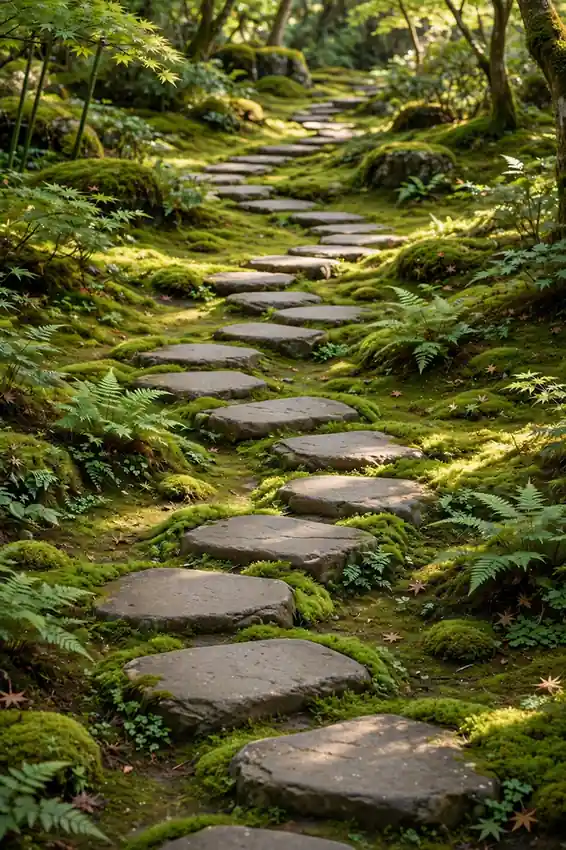
Flat stones set in moss invite slow, deliberate steps through the garden. Choose irregular slabs rather than perfect circles so the path feels found, not manufactured. Sink each stone until its top sits level with the surrounding moss, which keeps ankles safe and the look seamless. Space them to match your natural stride for a walk that never feels awkward.
Let moss creep right up to the stone edges instead of trimming it back hard. The soft green frame makes hard stone feel gentle underfoot and under the eye. I’ve noticed paths like this photograph beautifully in every season, from spring green to autumn gold. Hose the stones off each spring to keep them grippy and bright.
Maple Leaf Contrast
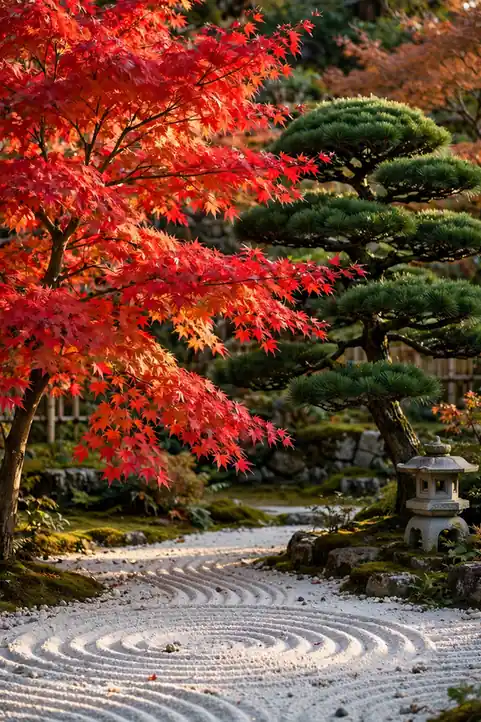
A red maple against dark evergreen is the boldest quiet statement you can plant.
- Plant the maple where low sun backlights the leaves in autumn.
- Keep one dark pine or yew behind it for year-round contrast.
- Mulch with bark to protect shallow roots from summer heat.
- Prune lightly in winter to keep the layered branch structure open.
Maples earn their keep across three seasons: fresh green spring leaves, deep summer shade, and fiery autumn color. Even the bare winter branches hold a sculptural beauty worth framing. Give the tree room to spread, because a cramped maple never shows its true shape. This single planting can carry a whole corner.
Wabi Sabi Bench
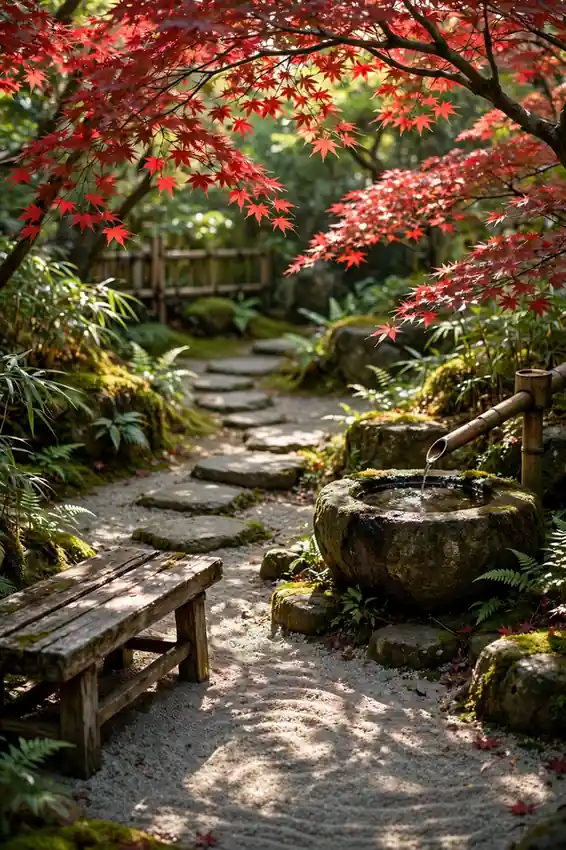
Quick Tip: Let your wooden bench weather naturally instead of fighting it with stain. Silvered, cracked wood embodies wabi sabi, the beauty of imperfection and age. Choose rot-resistant cedar or teak, oil it once at the start, then leave it alone to develop character.
Place the bench where the view rewards sitting: facing the pond, the gravel bed, or the maple. Keep the seat height low, around sixteen inches, so it feels grounded rather than perched. Tuck a flat stone beside it as a side table for tea. A bench that invites daily sitting will shape your routine around the garden.
Bamboo Chime Corner
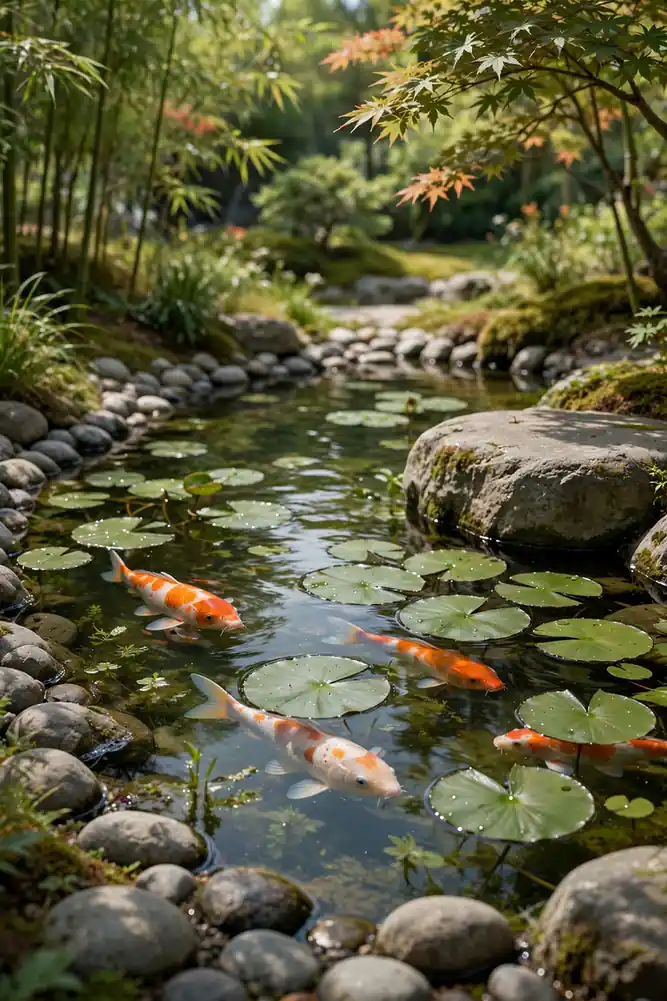
BEFORE: The back corner sat silent and forgotten, a dead zone between the shed and the fence. Nothing drew the eye there, so the garden felt smaller than it was.
AFTER: A set of bamboo chimes now hangs from a simple wooden beam, and the corner sings in every breeze. The sound pulls visitors toward it, and the garden suddenly feels twice as deep.
Hang chimes where wind funnels naturally, like a gap between buildings or a slope. Choose deep-toned bamboo tubes over thin metal for a softer, woodier voice. Oil the hanging cords yearly so weather never snaps them mid-season. Sound is the most overlooked garden sense, and the cheapest to add.
Moon Viewing Deck
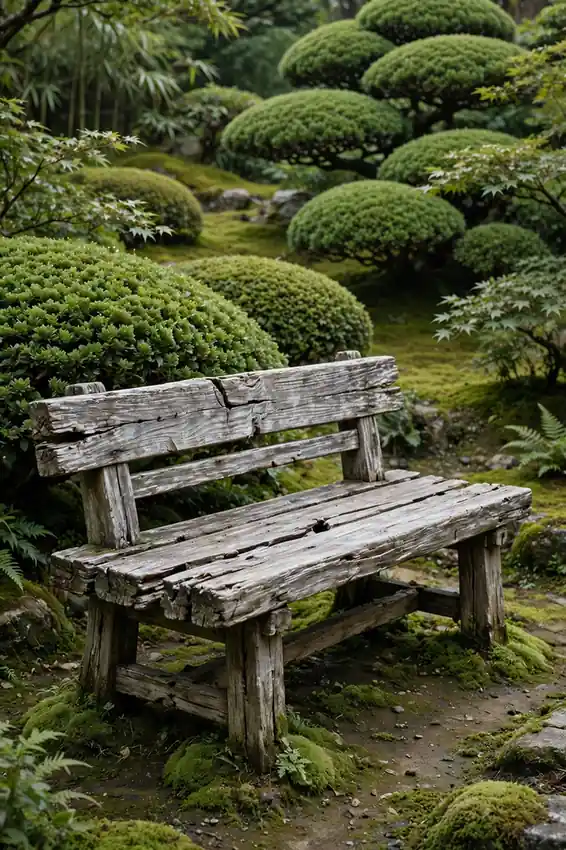
A low deck built for moon gazing turns evenings into an event.
- Choose a spot with a clear eastern view where the moon rises unobstructed.
- Build the platform low, about a foot off the ground, from cedar planks.
- Leave wide gaps between boards so rain drains and the wood dries fast.
- Add a simple railing on one side and floor cushions for comfort.
Keep the planting around the deck low so nothing blocks the sky. A single lantern at the deck’s edge gives just enough light to find your seat. I’ve seen this work well in many cases where families wanted more evening time outdoors. Check the lunar calendar and make the full moon a standing date.
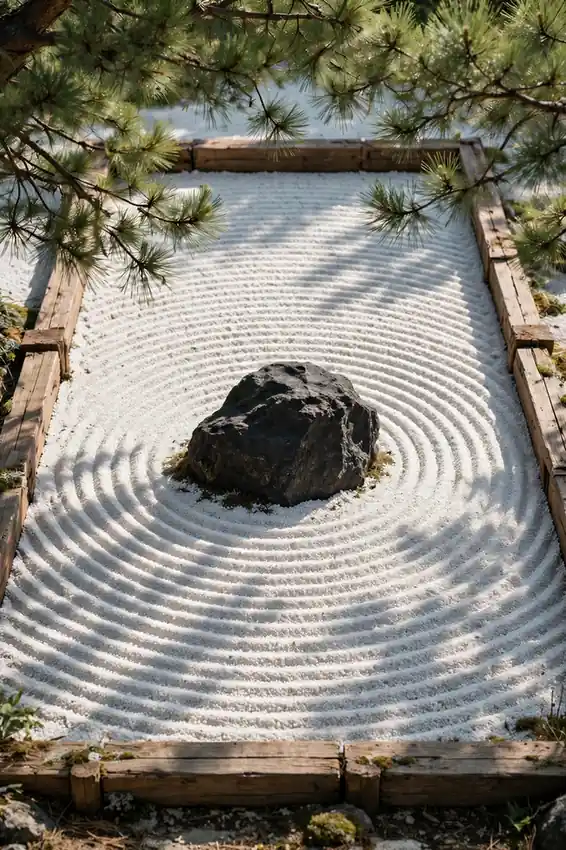
Gravel Ripple Bed
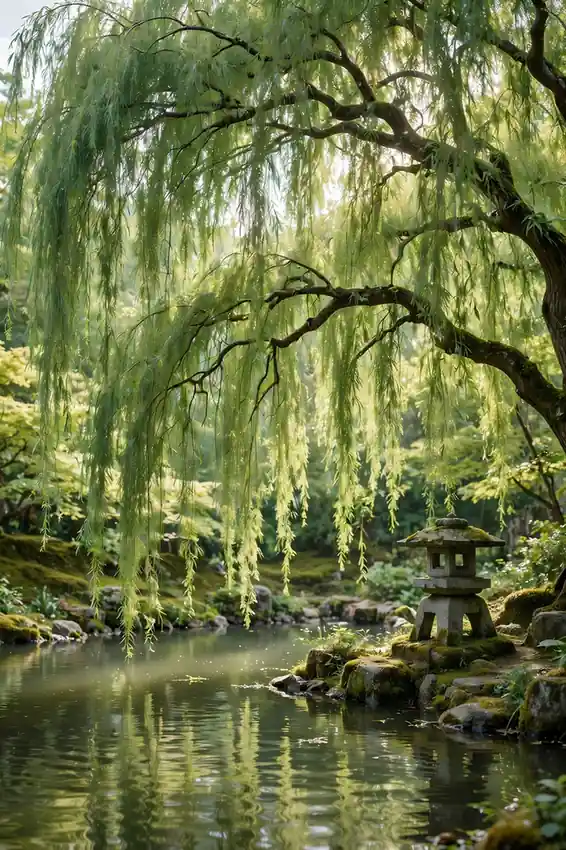
A dedicated ripple bed lets you practice raking as a daily meditation.
| Rake Style | Pattern | Mood |
|---|---|---|
| Wide-tooth rake | Bold ocean waves | Energetic, flowing |
| Narrow-tooth rake | Fine ripples | Calm, detailed |
| Straight lines | Parallel rows | Orderly, crisp |
| Circles | Rings around stones | Contemplative |
Frame the bed with low wooden edging to keep gravel contained and lines crisp. Use crushed granite rather than pea gravel, because angular stone holds patterns far longer. Rake in the morning and let the design sit all day as living art. Change the pattern with the seasons to keep the ritual fresh. A small wooden bench beside the bed invites you to sit and admire each new design.
Sacred Torii Gate

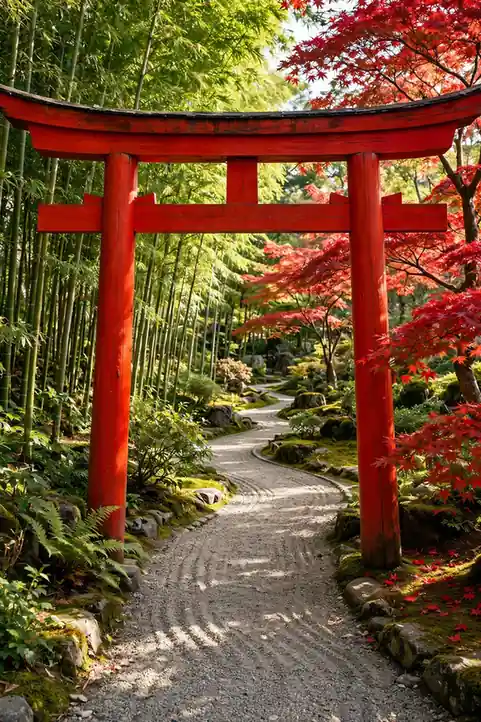
A torii gate marks the moment you step from the everyday into the calm.
DO:
- Place it at the garden’s entrance where the path naturally begins.
- Paint it classic vermilion red for the traditional sacred signal.
- Keep the area beneath it clear so passing through feels ceremonial.
DON’T:
- Don’t shrink it to decoration size; a gate should feel like a gate.
- Don’t clutter it with hanging plants or lights that dilute the form.
- Don’t place a second gate nearby, because one threshold is enough.
Build it from cedar or redwood so it stands for decades with basic care. Seal the post bases where they meet soil to slow rot. Walking under a torii shifts your mindset before you take a single step inside.
Garden Moss Steps
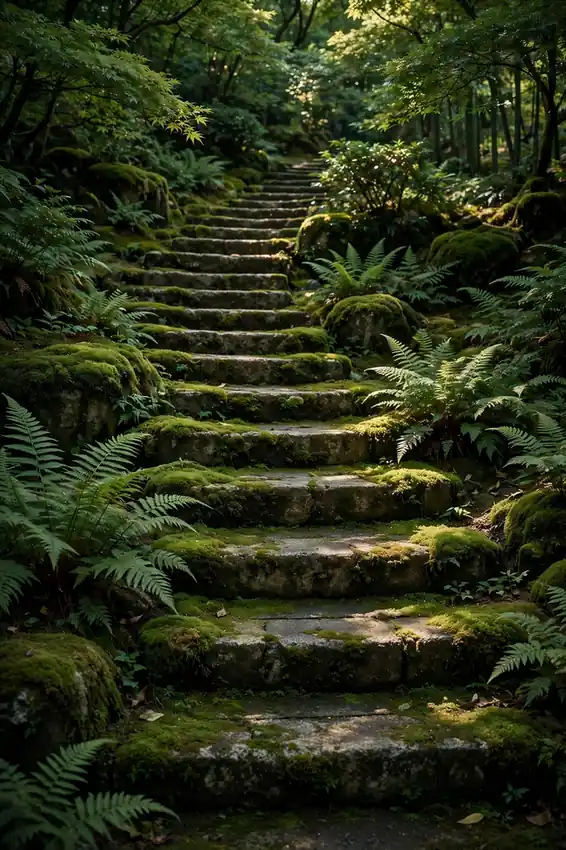
Moss-covered steps feel like they have been climbed for a hundred years.
Cost: Low | Time: One weekend to lay | Skill Level: Beginner | Best For: Shaded slopes | Upkeep: Minimal
Lay rough-cut stone treads with slight gaps where moss can take hold naturally. Keep the steps shaded and damp, because moss colonizes fastest where grass struggles. Brush the treads lightly each season to keep them safe underfoot without stripping the green. The older these steps look, the better they work. Tuck small ferns into the gaps between treads for extra texture, and the staircase will look centuries old within a few seasons.
Conclusion
Choose two or three of these japanese garden ideas and begin with the one that feels easiest. A raked gravel bed or a single stone lantern can shift the mood of a whole yard within a weekend. I’ve seen how small changes like these can completely shift the way a space feels. Save your favorite pins to your garden board, sketch a simple plan, and add one element each month. Peace grows the same way gardens do: slowly, and then all at once. Invite friends over for tea once the corner is finished and enjoy what you built. You will be glad you started.