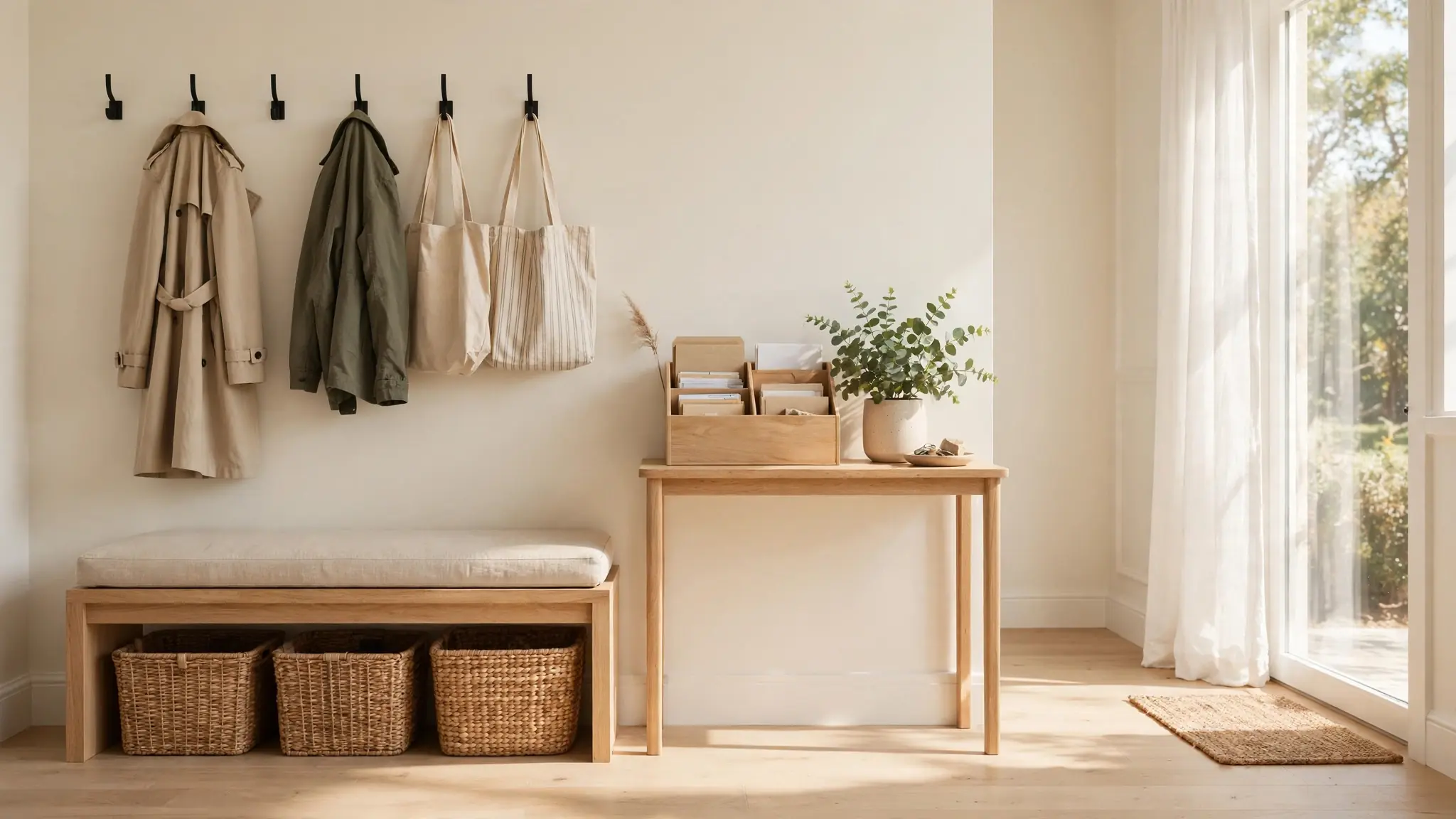
22 Entryway Organization Ideas for Small Spaces That Work
A cramped front hall can swallow keys, shoes, and mail in seconds, but entryway organization ideas for small spaces turn that chaos into calm without knocking down walls. The secret is thinking vertically, doubling up functions, and giving every daily item a defined home. Small square footage rewards smart choices more than big spending. When each piece earns its place, even a narrow hallway feels open and welcoming.
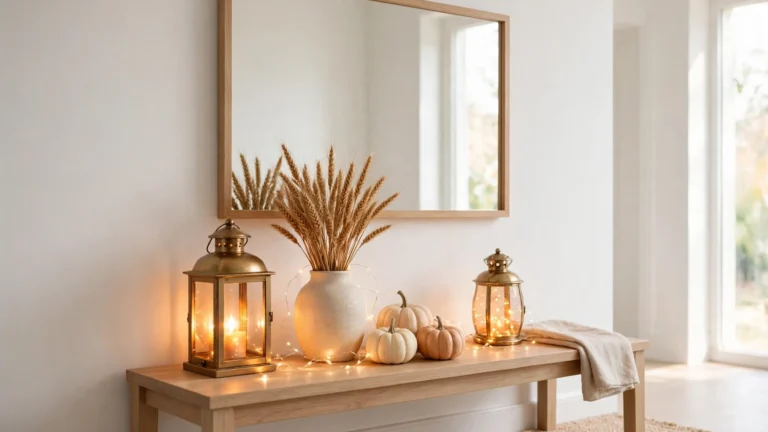
In my experience, the tidiest small entryways share one habit: nothing lands on the floor because hooks, trays, and bins catch everything first. If you are styling the space for a season, our fall entryway table decor ideas show how to layer seasonal warmth over the same organized base. Below are 22 ideas built for real life, each one sized to fit tight corners, narrow walls, and rental-friendly rules.
Slim Wall Hooks
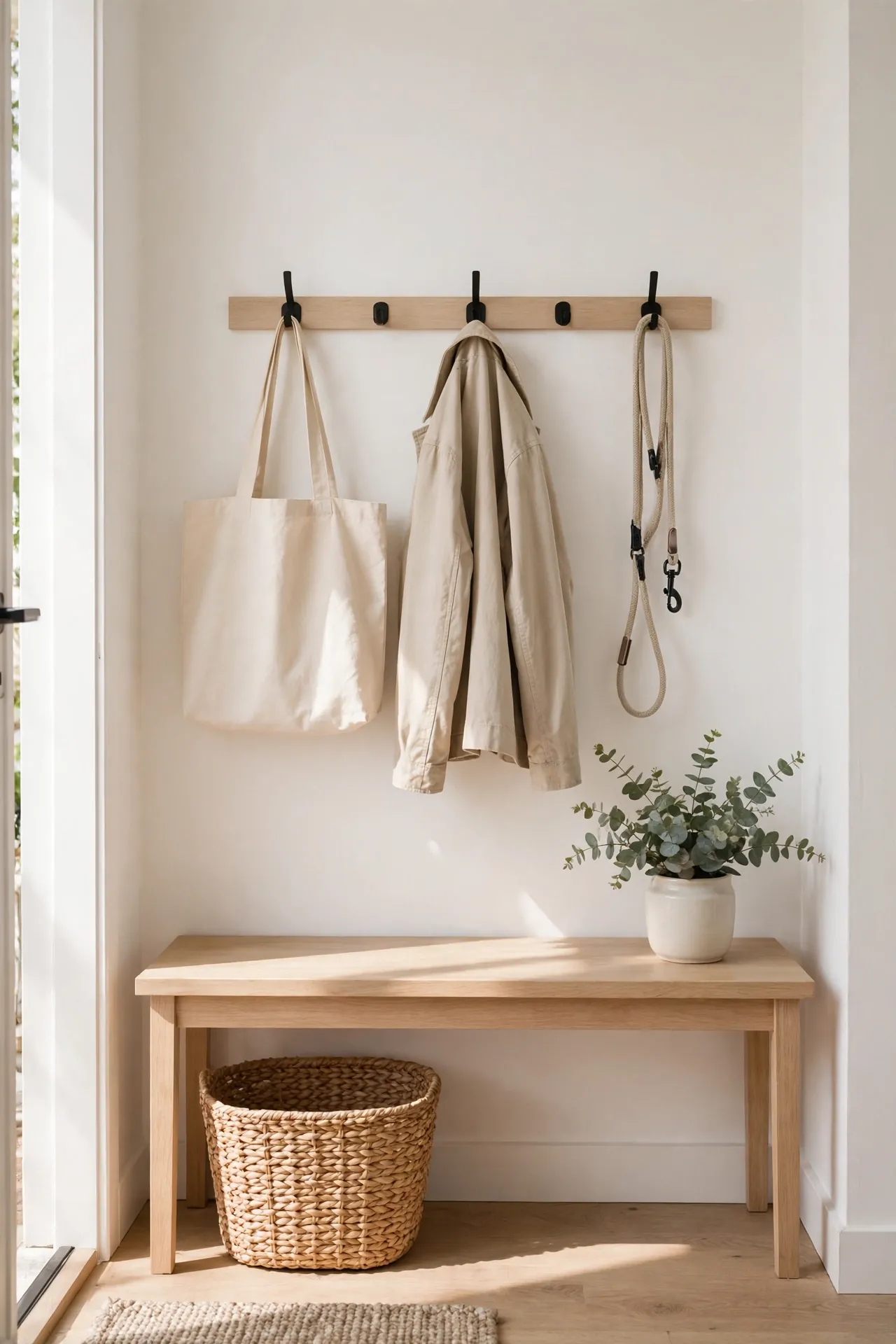
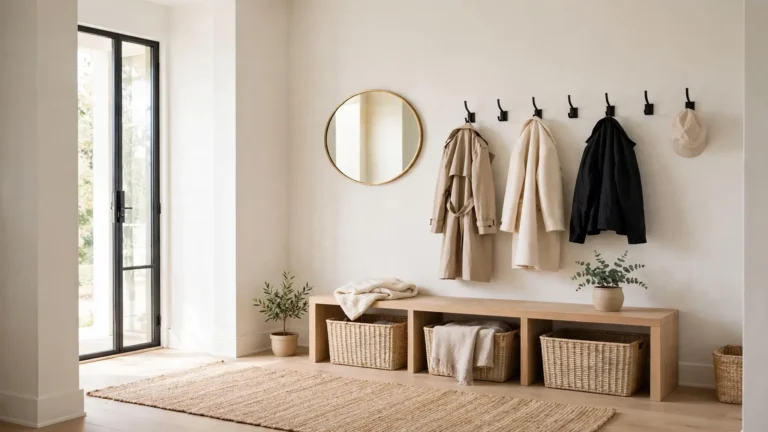
Wall hooks are the hardest working square inches in a small entryway. A slim row of hooks holds coats, bags, and leashes on the wall instead of piling them on the floor. Choose hooks that project only two or three inches so they never bump shoulders in a tight hallway. In my experience, one hook per family member plus one guest hook ends the daily scramble.
Mount the row at a height kids can reach, and hang the most used items in the middle for grab and go mornings. A narrow wood rail with hooks looks neat and keeps spacing even. Label the rail with small brass tags so each person claims a spot.
Floating Corner Shelves
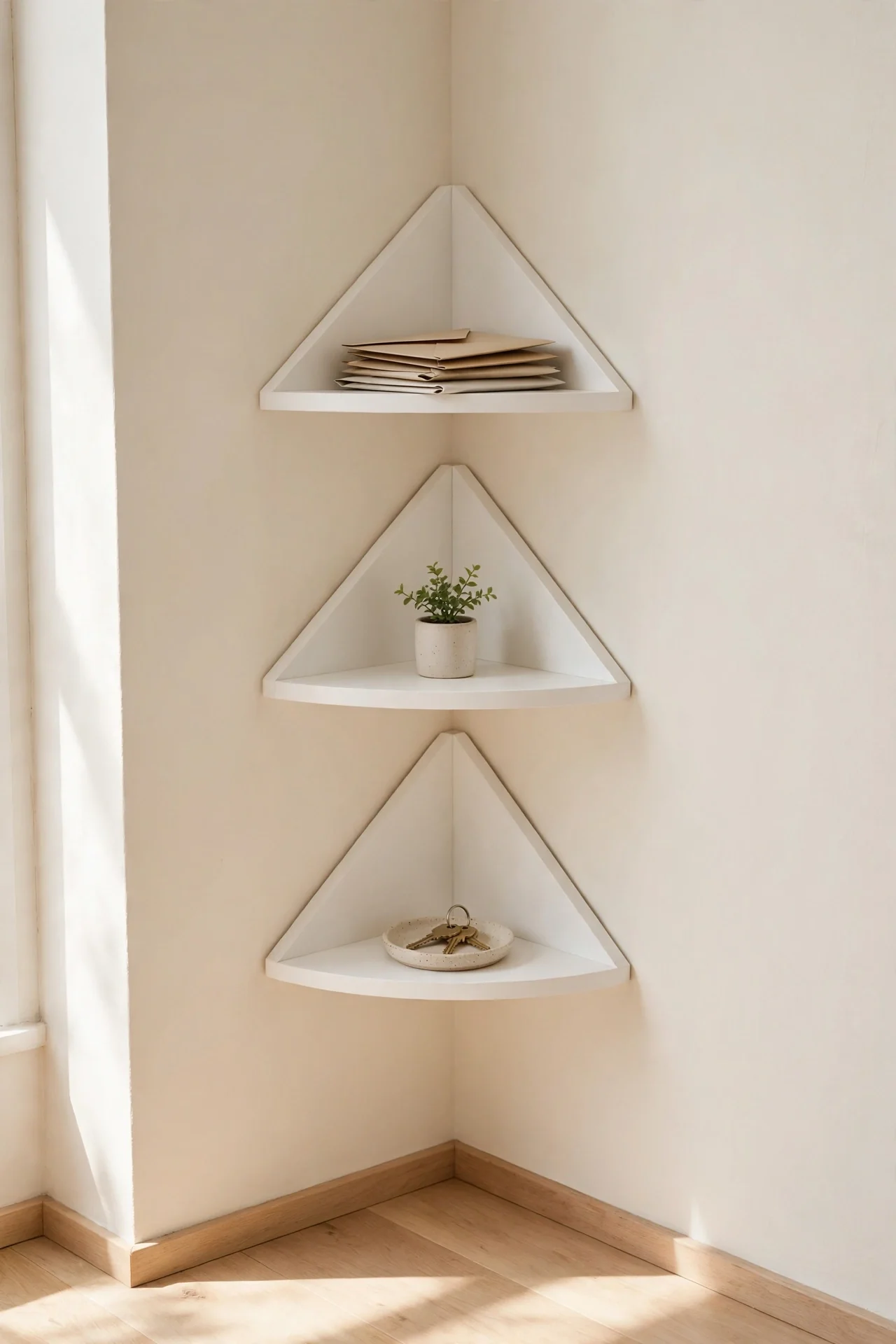
- Corners are dead zones in tight entryways, and a floating shelf turns them into a key and mail station.
- Stack two or three small shelves upward to hold sunglasses, wallets, and mail without using floor space.
- Keep shelves six to eight inches deep so they never poke into the walking path.
- Paint them the wall color for a built-in look that keeps the corner feeling light and open.
Floating corner shelves also give your hallway decor ideas a neat frame: style the top shelf with a small plant or photo so the corner looks decorated, not just functional. Dust them monthly since high shelves collect grime fast. This one project tames the daily drop zone in an afternoon.
Overdoor Pocket Organizer
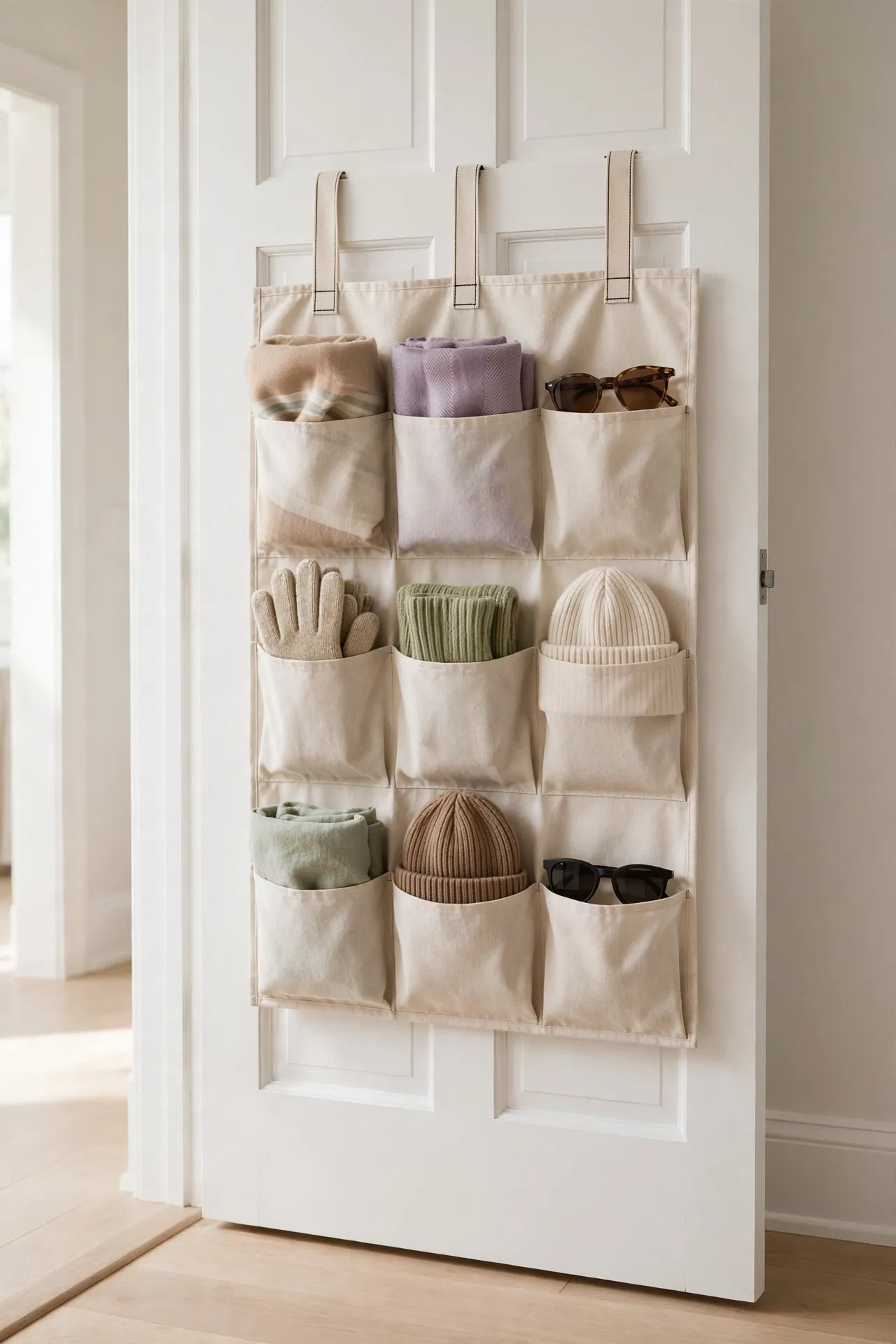
Quick Tip: Hang a clear pocket organizer on the inside of the entry closet door to sort scarves, gloves, hats, and sunscreen by pocket. The slim profile adds zero bulk to the room, yet it holds a full season of small gear. Label the top pockets by family member so mornings run without questions.
Overdoor organizers work because they use door backs you already ignore. Choose fabric pockets for soft items and clear vinyl for things you need to spot fast. In my experience, this one addition clears two drawers of clutter in about ten minutes. Hang it high enough that the bottom pockets clear the floor swing.
Bench With Hidden Storage
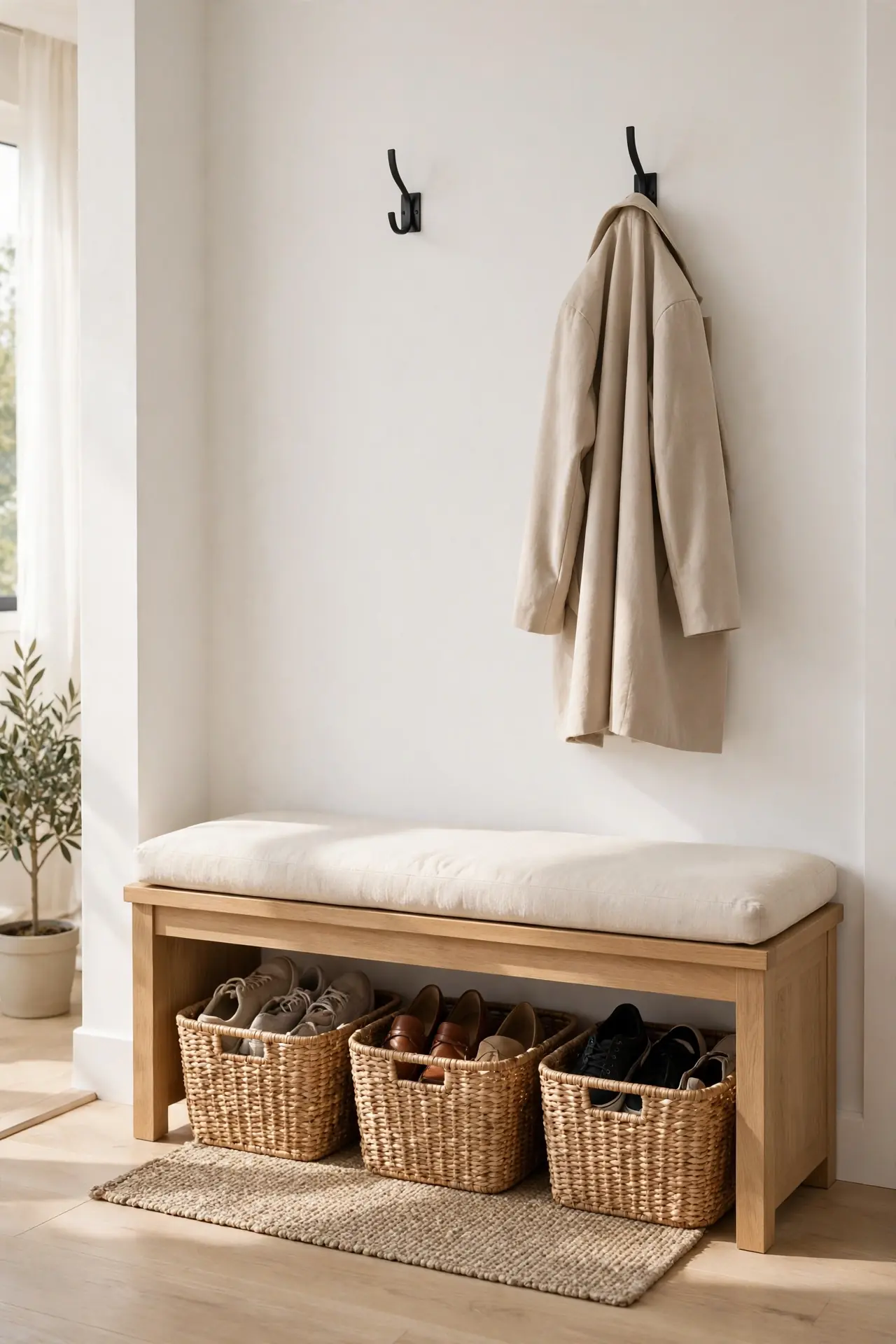
BEFORE: Shoes lined the wall in a wobbly row, and bags slid off the narrow chair every morning. The entryway felt cramped before anyone even left the house.
AFTER: A slim storage bench now holds shoes, sports gear, and tote bags behind a closed lid. Sitting to tie shoes each morning feels calm instead of chaotic, and the floor stays clear.
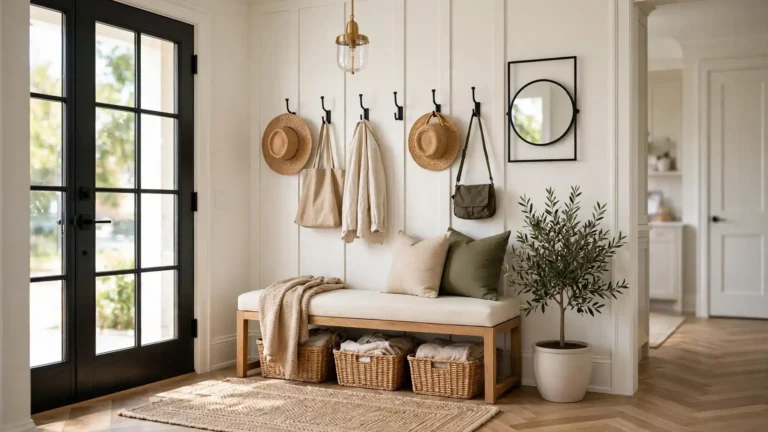
A storage bench doubles as seating and hidden clutter control, which is gold in a tight entry. Look for a bench no deeper than fourteen inches so the walkway stays open. Inside, use small dividers so shoes stand in pairs instead of piling. The closed lid keeps everything looking tidy even on the messiest days.
Wall Grid Panels
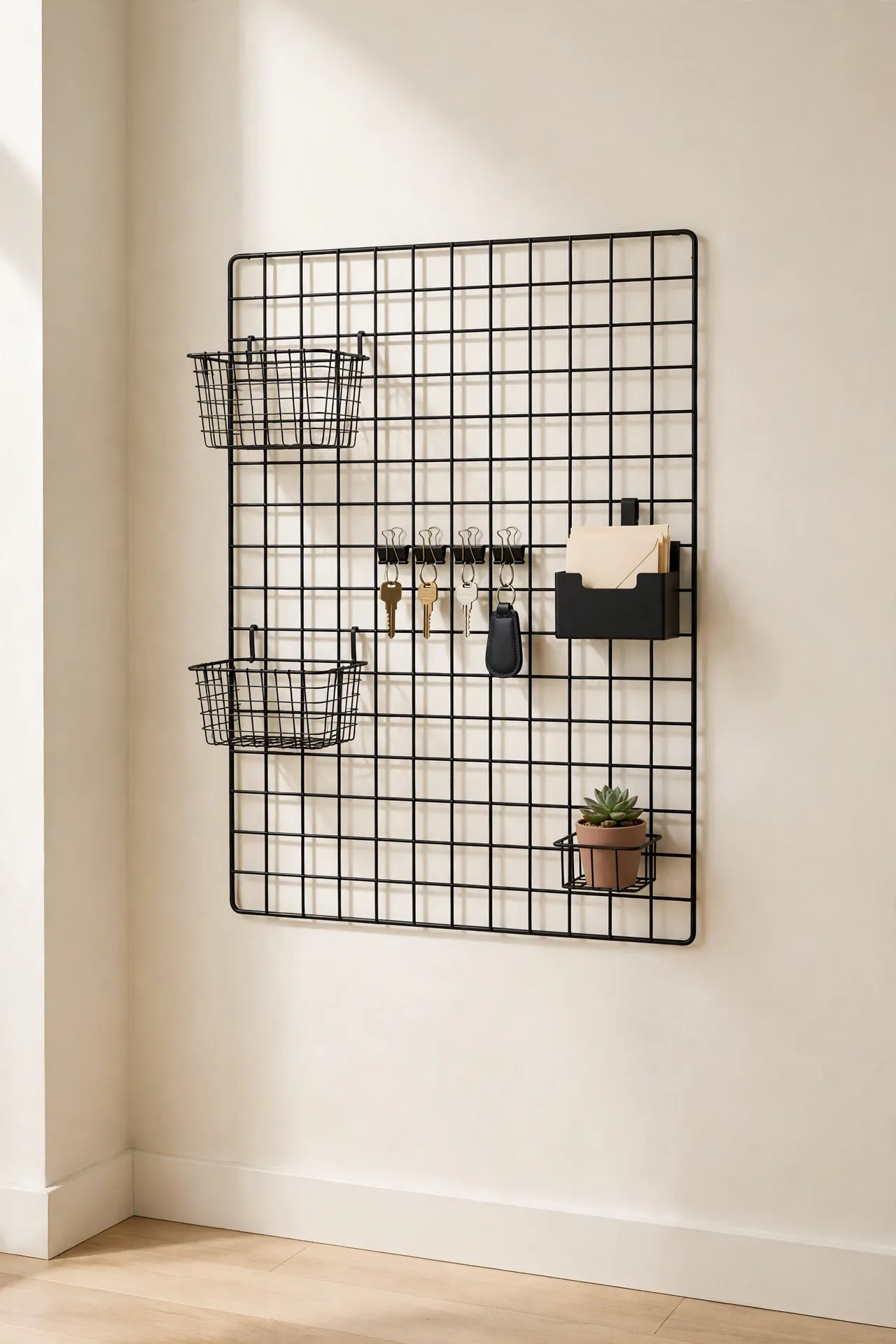
- Mount a metal grid panel on the narrowest free wall section, keeping it above shoulder height for easy reach.
- Clip on small hooks, baskets, and a letter holder, spacing them so nothing overlaps the walking path.
- Assign one row per person and add name clips so everyone knows their zone.
- Restyle the clips monthly as seasons change, swapping winter gloves for summer sunglasses.
Grid panels beat pegboards in tight spaces because the open wire barely adds visual weight. Everything hangs flat against the wall, so the hallway keeps its full width. Spray paint the panel matte white or black to match your door hardware. This wall workhorse holds a surprising amount of daily gear.
Pegboard Command Center
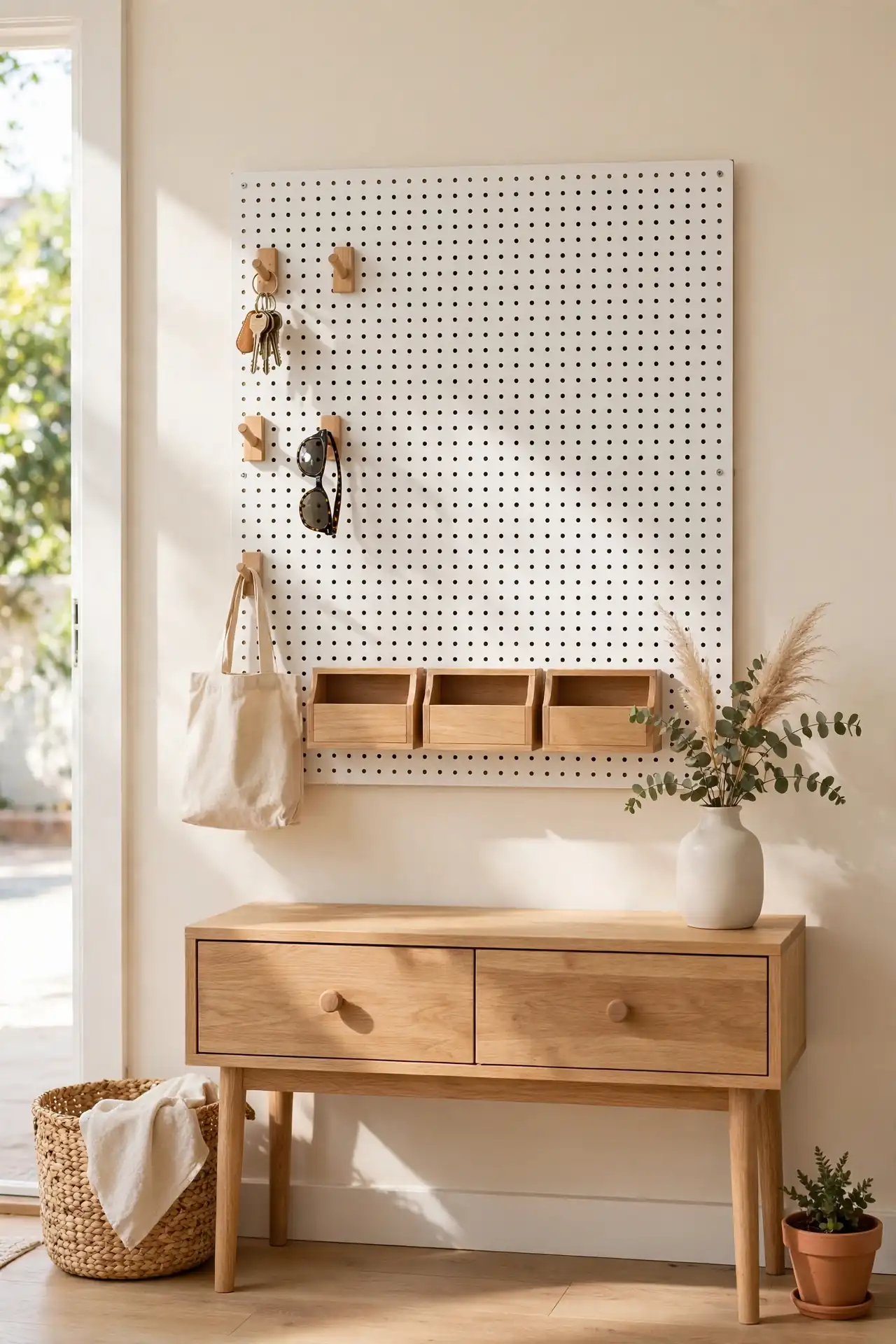
A pegboard command center puts keys, mail, and masks in one visible spot. Compare these two popular layouts before you drill.
| Feature | Full-Size Board | Half-Size Board |
|---|---|---|
| Coverage | Whole family gear | One or two people |
| Footprint | 24 inches wide | 12 inches wide |
| Best for | Busy households | Singles and couples |
| Install | Two wall anchors | Single center anchor |
Pegboards adapt as your routine changes, which is why they outlast most entryway systems. Move hooks in seconds when the seasons shift or kids grow taller. Keep the bottom row for daily items and the top for spares. A tidy board also signals to guests that your small entry runs on purpose.
Tiered Shoe Racks
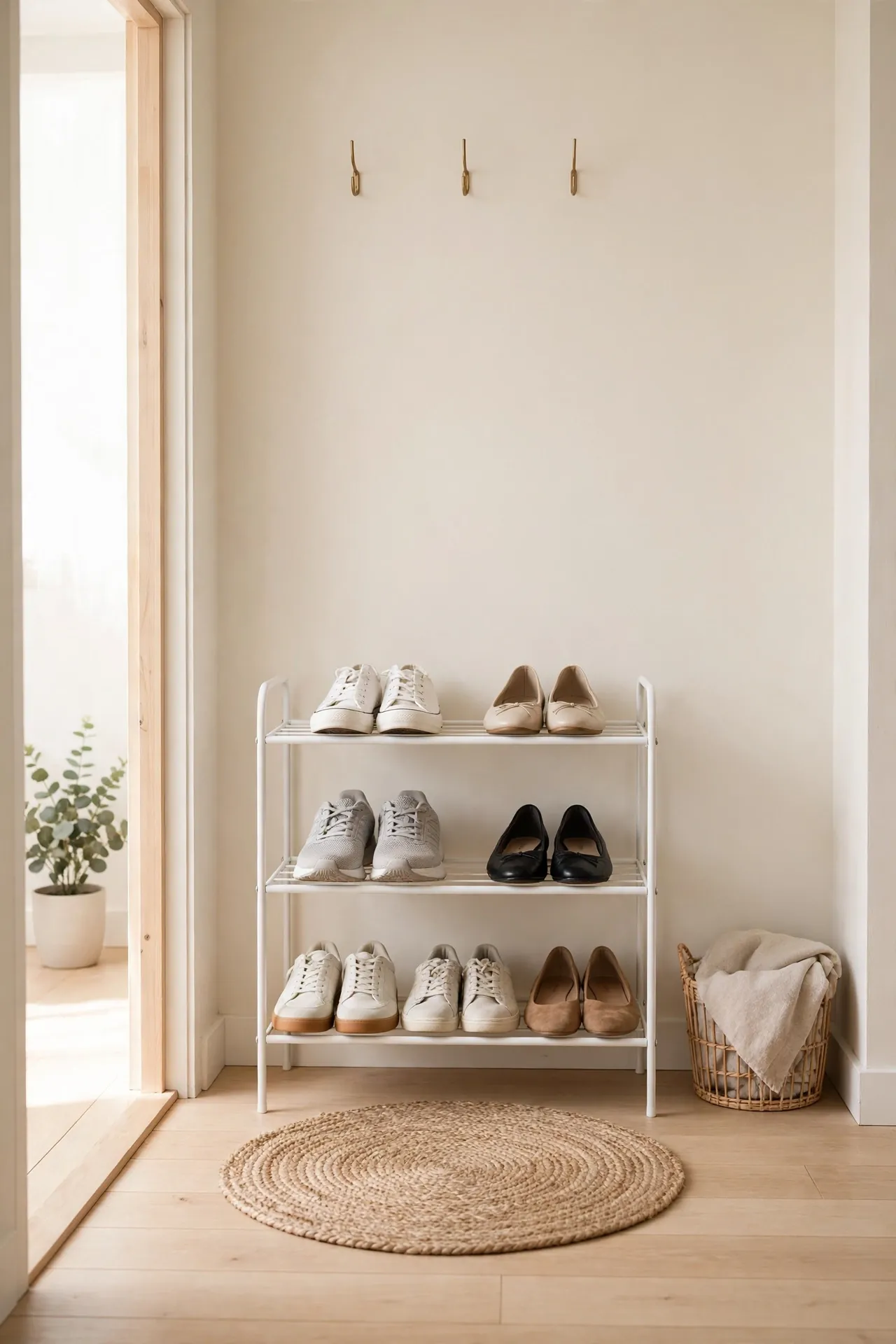
- DO: Choose a rack no deeper than ten inches so shoes stack vertically.
- DO: Assign one tier per person and keep daily pairs on the lowest shelf.
- DO: Pick an open-frame design so air circulates and shoes dry faster.
- DON’T: Let the rack grow wider than the door swing.
- DON’T: Stack more than two pairs per tier or clutter returns.
- DON’T: Hide the rack behind a door where forgotten shoes pile up unseen.
Tiered racks solve the number one entryway complaint: shoes everywhere. Measure your wall width before buying, since slim racks come in tricky sizes. I’ve noticed homes that cap the shoe count at two pairs per person stay tidiest. Donate the extras and enjoy the breathing room.
Vertical Coat Valet
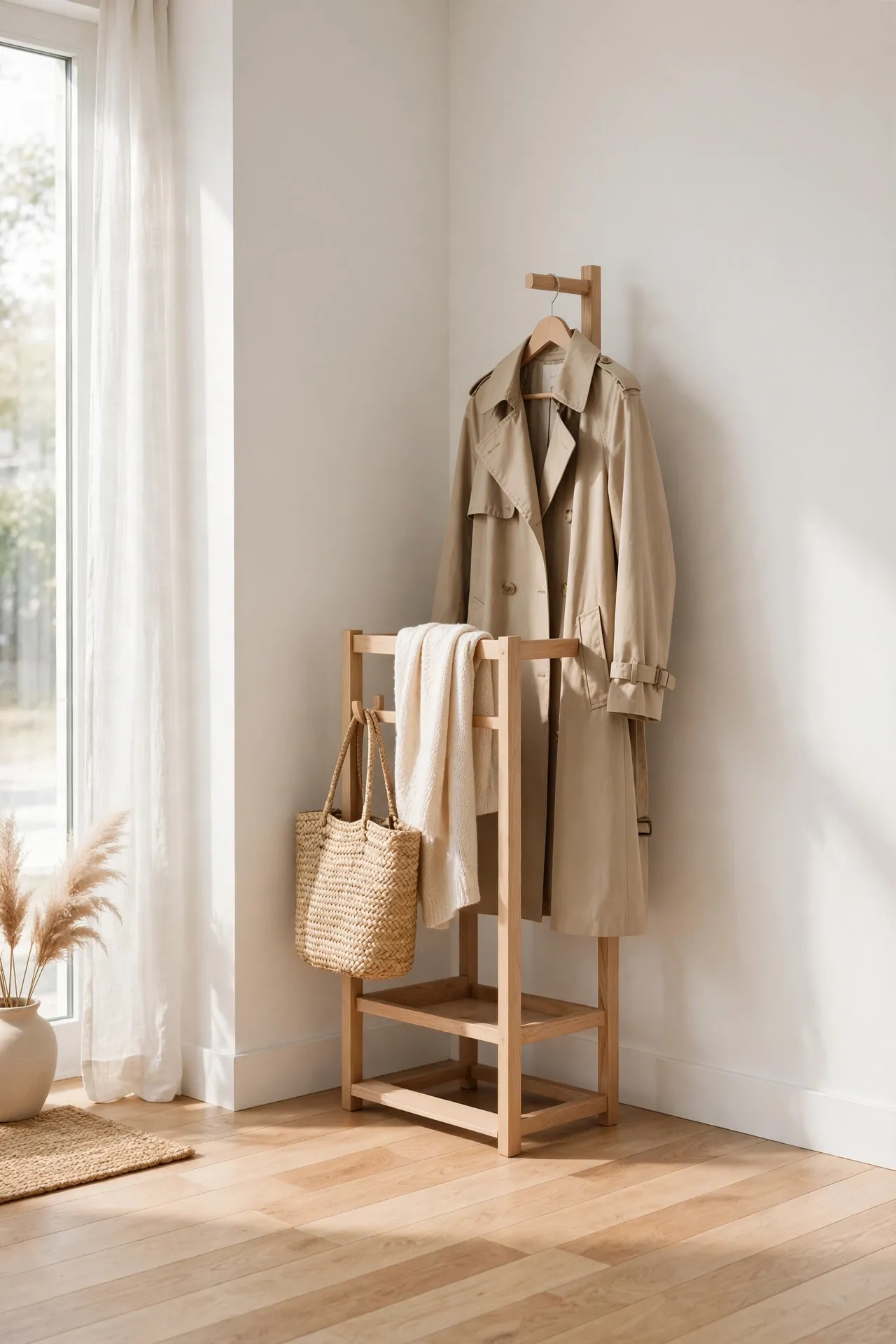
Cost: $40 to $90 for a freestanding valet stand
Time: Ten minutes to assemble, no tools beyond the included wrench
Best For: Narrow corners where wall hooks are not allowed
Skill Level: Beginner, a drill and a level are enough
Result: Four to six coats and bags stored in one square foot
A coat valet stands alone, so renters get full storage with zero wall holes. The weighted base keeps it steady even loaded with winter coats. Slide it into the corner by the door where a closet would be. Move it around freely until the corner that works best reveals itself. It handles guests beautifully during party season too.
Narrow Console Table
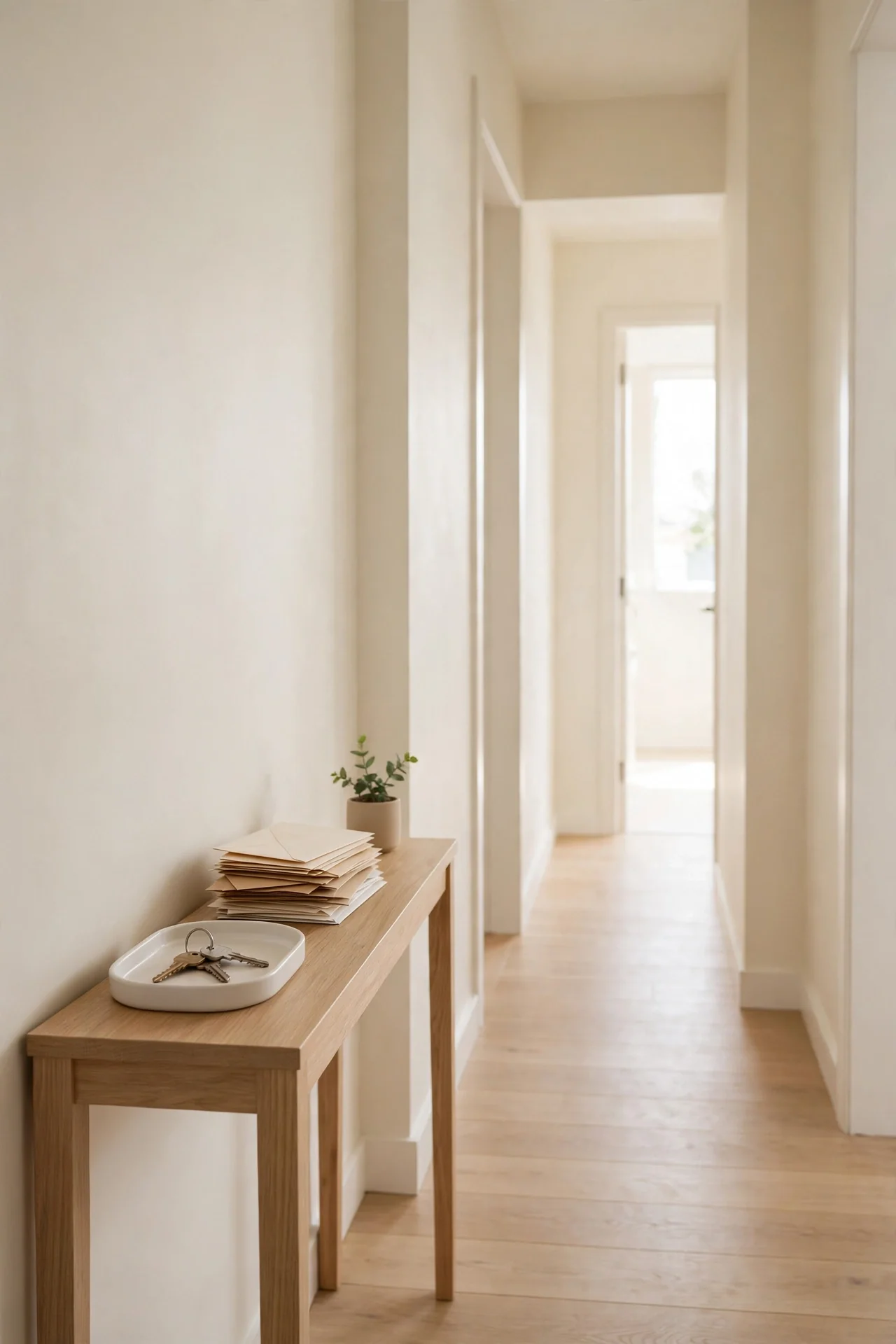
How much storage can fit in six inches of depth? More than you think. A narrow console table hugs the wall while holding a key tray, a mail slot, and a small basket below. The slim profile keeps the walkway wide and the surface becomes your daily launch pad. Everything you need for the door lives within arm’s reach.
Choose a table with a lower shelf so bins slide underneath for extra storage. Style the top with one tray and one small plant, leaving room for daily items. I’ve seen this work well in many cases, especially in rentals where wall changes are limited. The table turns a bare wall into a working station.
Basket Drop Zones
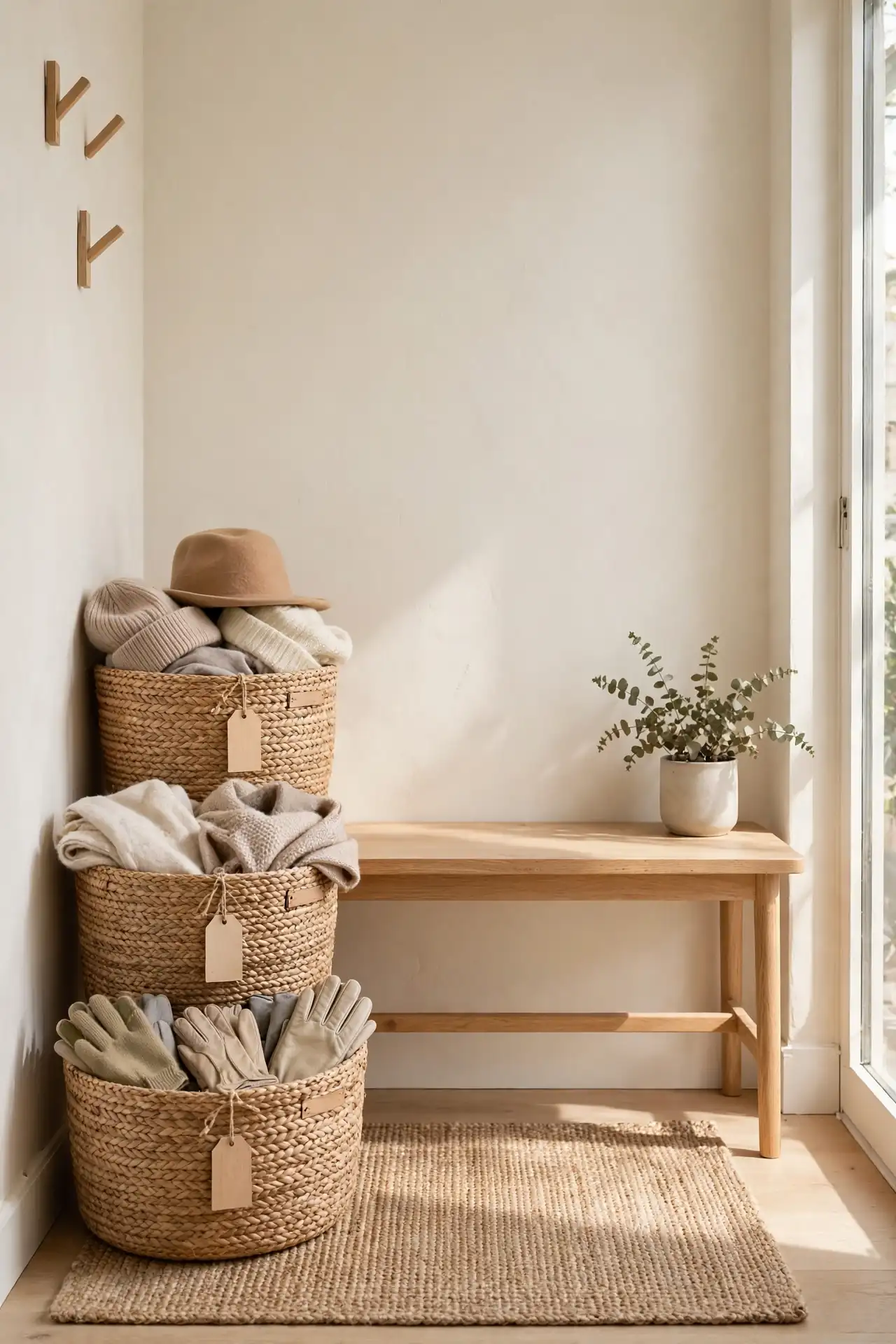
- One basket per person ends the mystery of missing gloves, since everyone learns their own spot.
- Stackable cubes or open bins fit under consoles and benches, using space you already have.
- Label each basket with a wood tag or chalkboard clip for a tidy, personal touch.
- Empty the baskets weekly so old receipts and broken umbrellas never take over.
- Choose washable liners inside woven baskets to catch dirt from shoes and umbrellas.
Baskets forgive messy habits better than any other organizer. Toss items in all week, then sort during your Sunday reset. Natural fibers like seagrass keep the look warm and calm. This simple system trains the whole household in about a week. Keep one spare basket for guests so their coats never land on your sofa.
Magnetic Key Strip
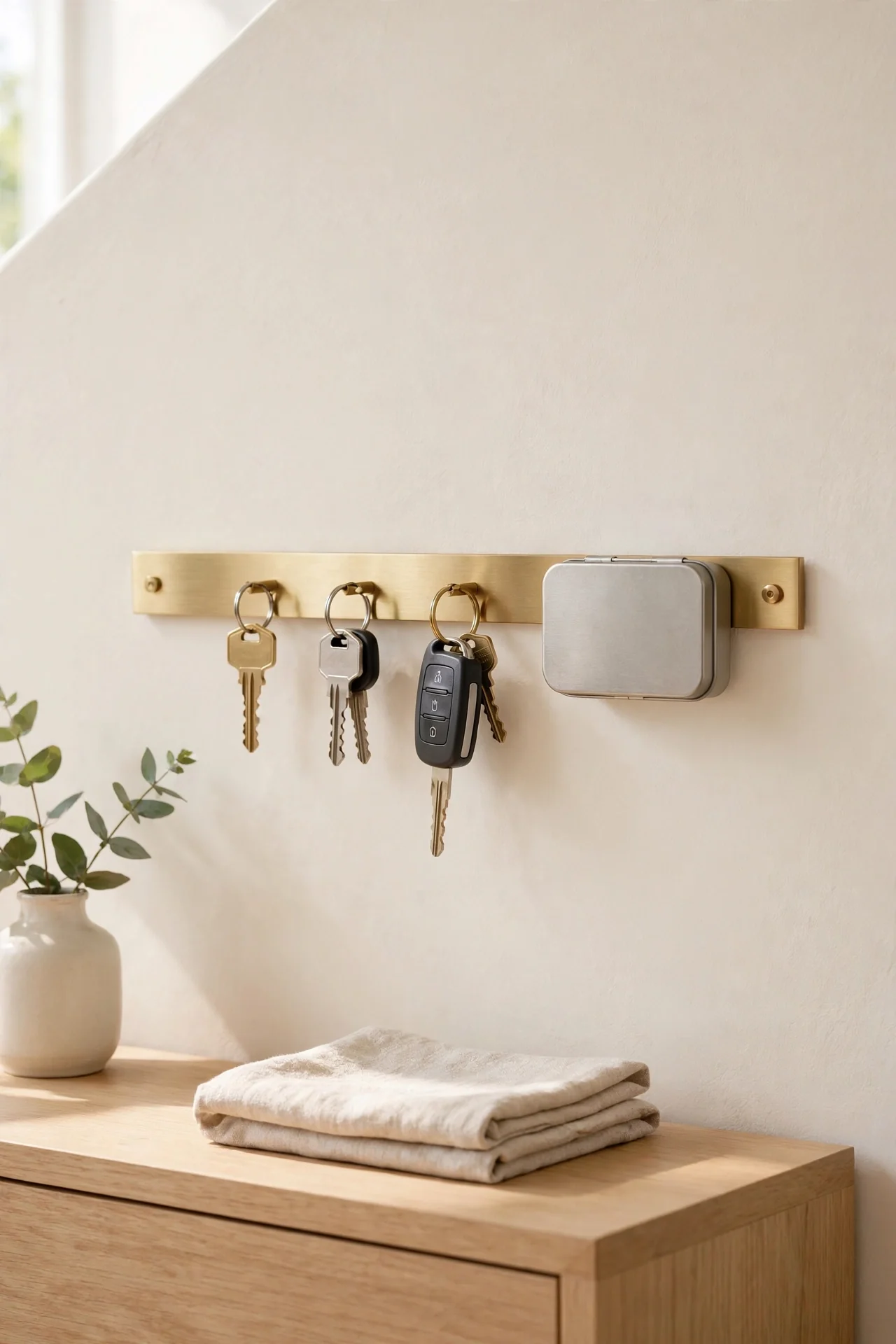
Quick Tip: Mount a slim magnetic strip inside a cabinet door or on the wall to hold keys, spare change in a tin, and even small tools. Keys snap on with a satisfying click, so everyone actually uses it. Place it at eye level right beside the door for grab-and-go speed, and never lose keys to a cluttered bowl again.
Magnetic strips disappear into the background while doing serious work. Choose a strip rated for at least five pounds so heavy key rings never slide. Wipe it down quarterly since metal strips collect dust. This tiny upgrade ends the frantic morning key search for good.
Stacked Crate Cubbies
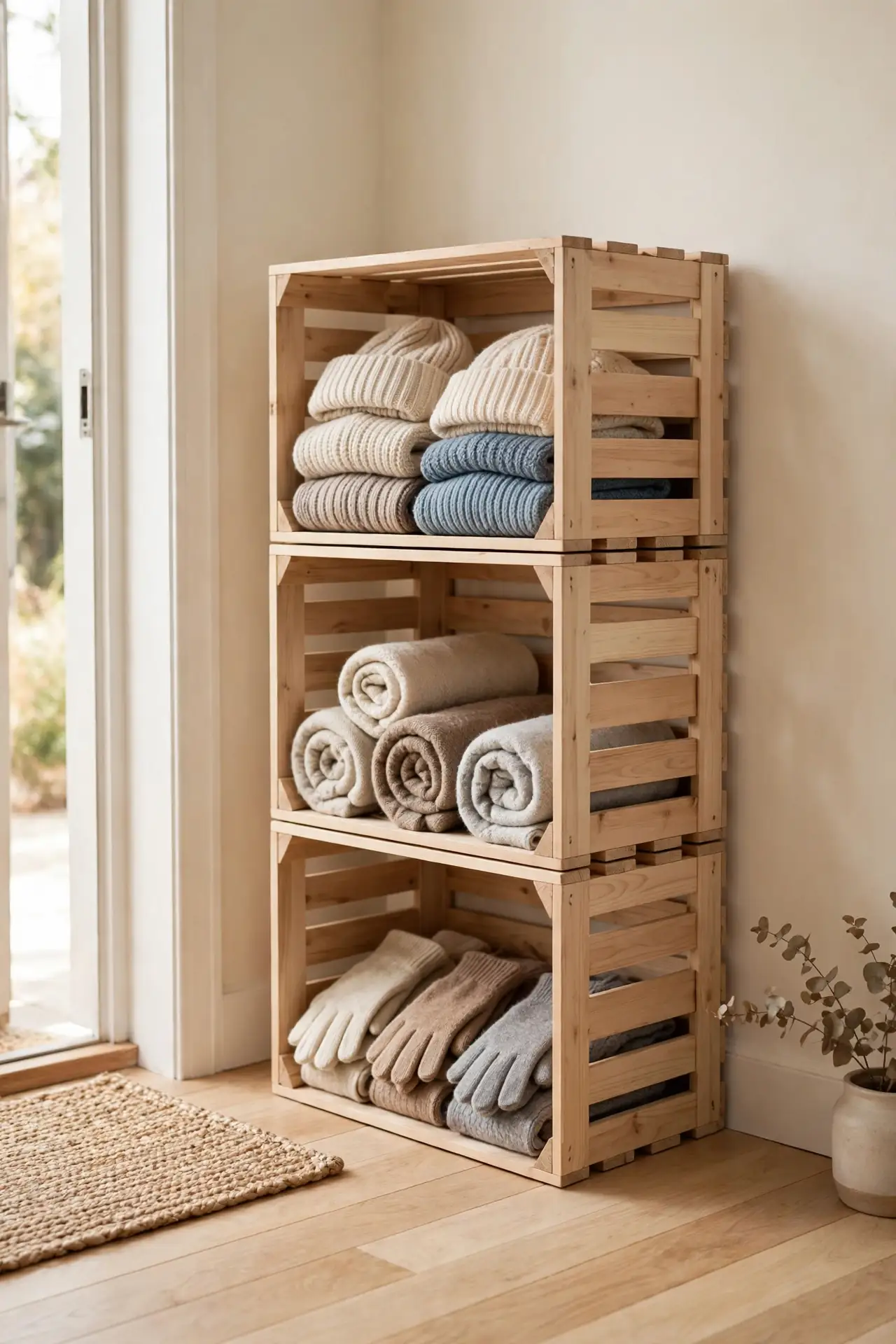
BEFORE: Hats, scarves, and mittens lived in one tangled pile on the closet shelf. Finding a matching pair took longer than the walk to the car.
AFTER: Three wooden crates stacked on their sides now give every season its own cubby. Gloves land in the top cube, hats in the middle, and scarves below, all visible at a glance.
Crates are the cheapest cubby system you will find, and they stack to fit any wall height. Sand the edges smooth and stain them a light oak for a finished look. Secure the stack to the wall with one bracket so it never tips. This weekend project costs less than dinner out.
Tension Rod Shelves
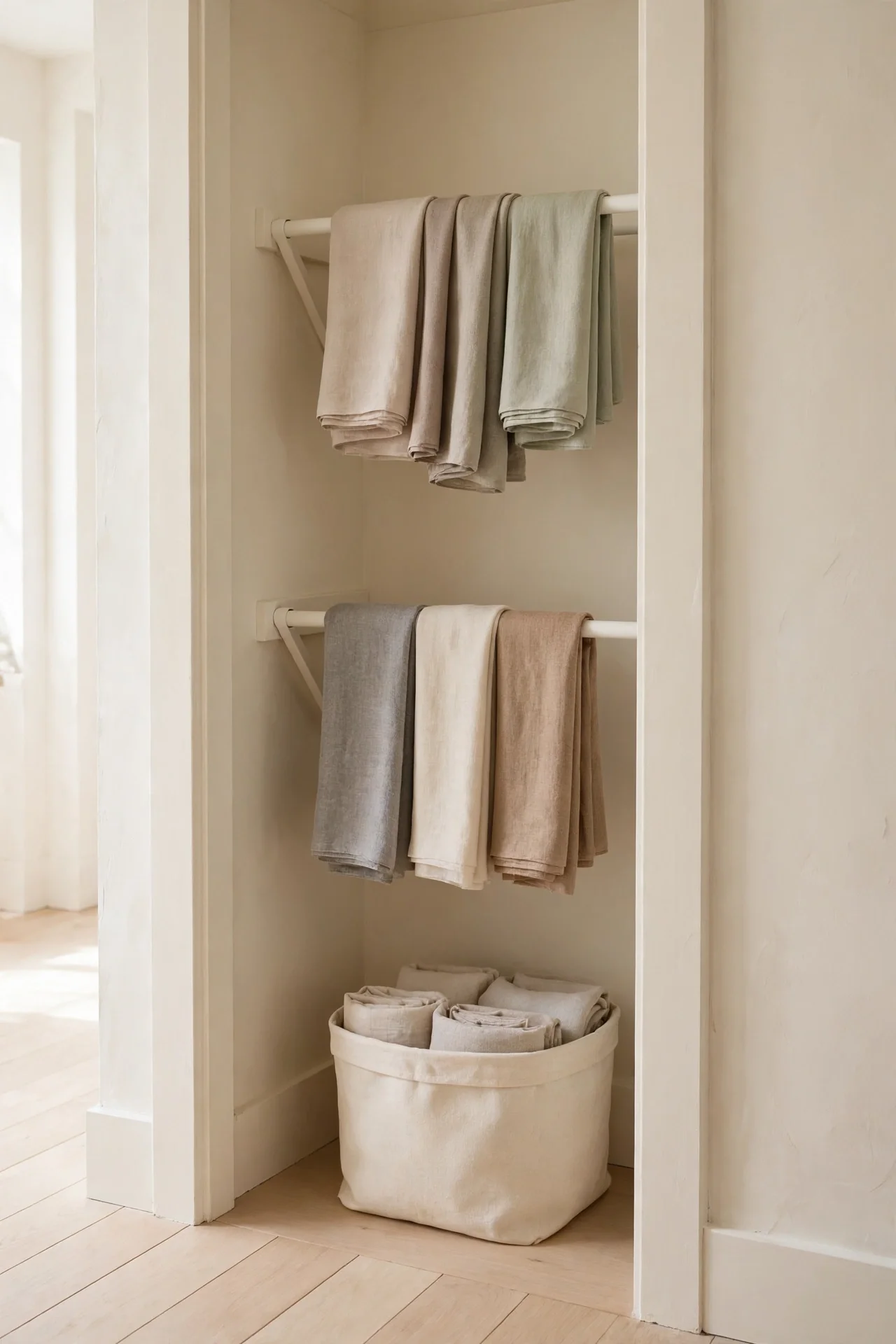
- Measure the inside width of your entry closet or alcove at two heights, since walls often taper.
- Twist each tension rod to the measured width and wedge it firmly between the walls.
- Rest light bins or folded scarves on each rod, keeping heavy items on the lowest level.
- Add a second rod below the first to double hanging space for short jackets.
Tension rods create instant shelves with zero drilling, which makes landlords happy. They hold surprising weight when sized correctly for the span. Test each rod with a firm tug before loading it. Keep the spans under three feet so the rods never bow in the middle. This trick turns the saddest closet corner into usable storage.
Mirror With Storage
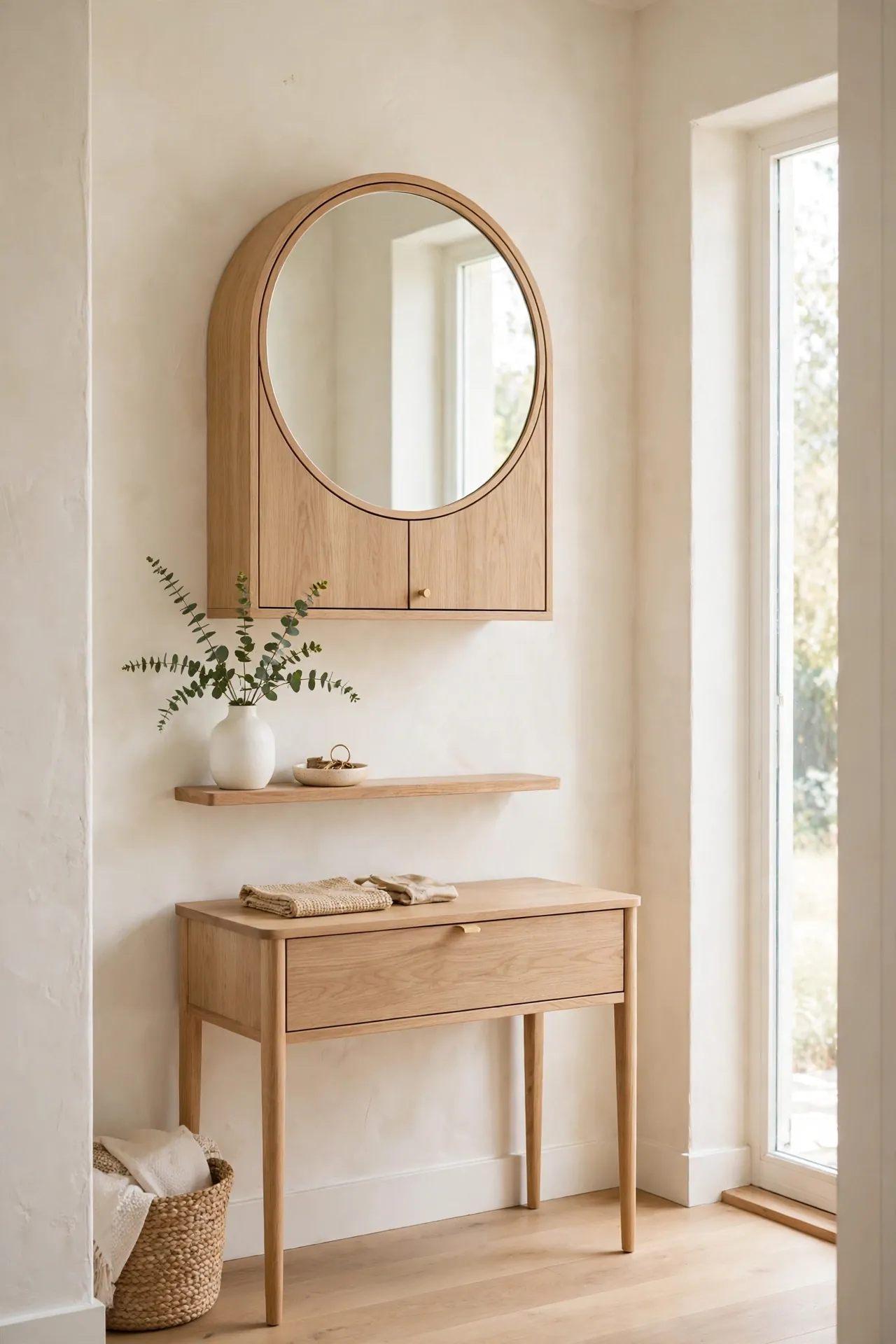
A mirror with built-in storage earns its wall space twice: you check your look and stash your essentials in one spot. Here is how the two best styles compare.
| Feature | Medicine Cabinet Mirror | Mirror Shelf Combo |
|---|---|---|
| Depth | 3 inches, flush look | 6 inches with ledge |
| Storage | Hidden behind mirror | Open shelf below |
| Install | Recessed or mounted | Surface mounted |
| Price | Higher, custom feel | Budget friendly |
Either style bounces light around a dark entry while hiding the small stuff. Mount at eye level so the reflection shows faces, not foreheads. Keep the shelf or cabinet stocked with only daily items. A mirror that stores earns its place in the tiniest hall.
Umbrella Corner Solutions
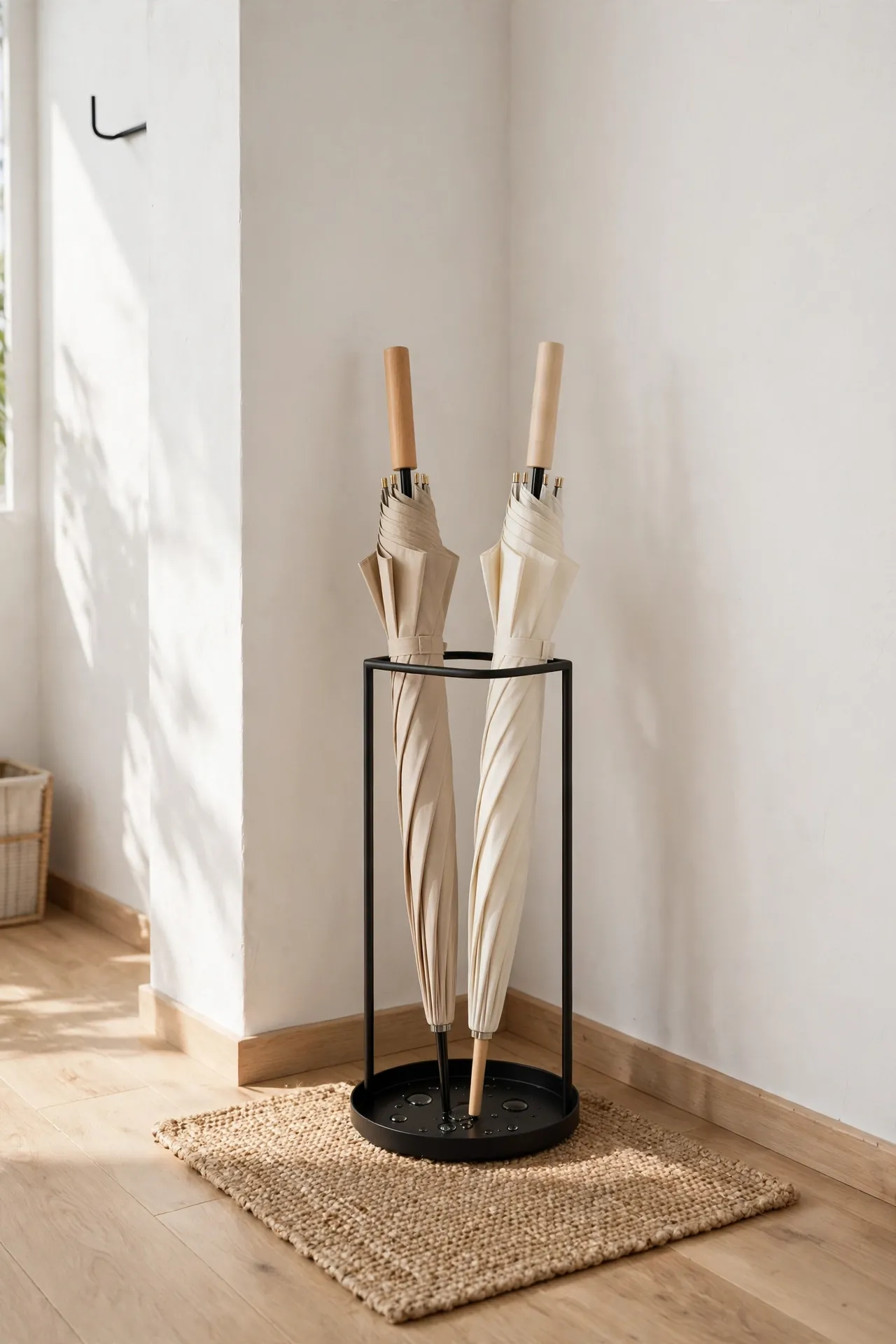
- DO: Pick a slim stand under eight inches wide that tucks into the tightest corner.
- DO: Choose a drip tray base so wet umbrellas never puddle on your floor.
- DO: Keep only two umbrellas here and store spares in the closet.
- DON’T: Use a wide decorative crock that steals a foot of walking space.
- DON’T: Skip the tray, or rainy days will ruin your entry rug.
- DON’T: Hang wet umbrellas on wall hooks where they drip down the paint.
Umbrellas cause more entryway damage than any other item, so give them a real home. A corner stand keeps drips contained and handles within reach. Empty and wipe the tray monthly. This small corner earns its keep every rainy season.
Fold-Down Wall Hooks
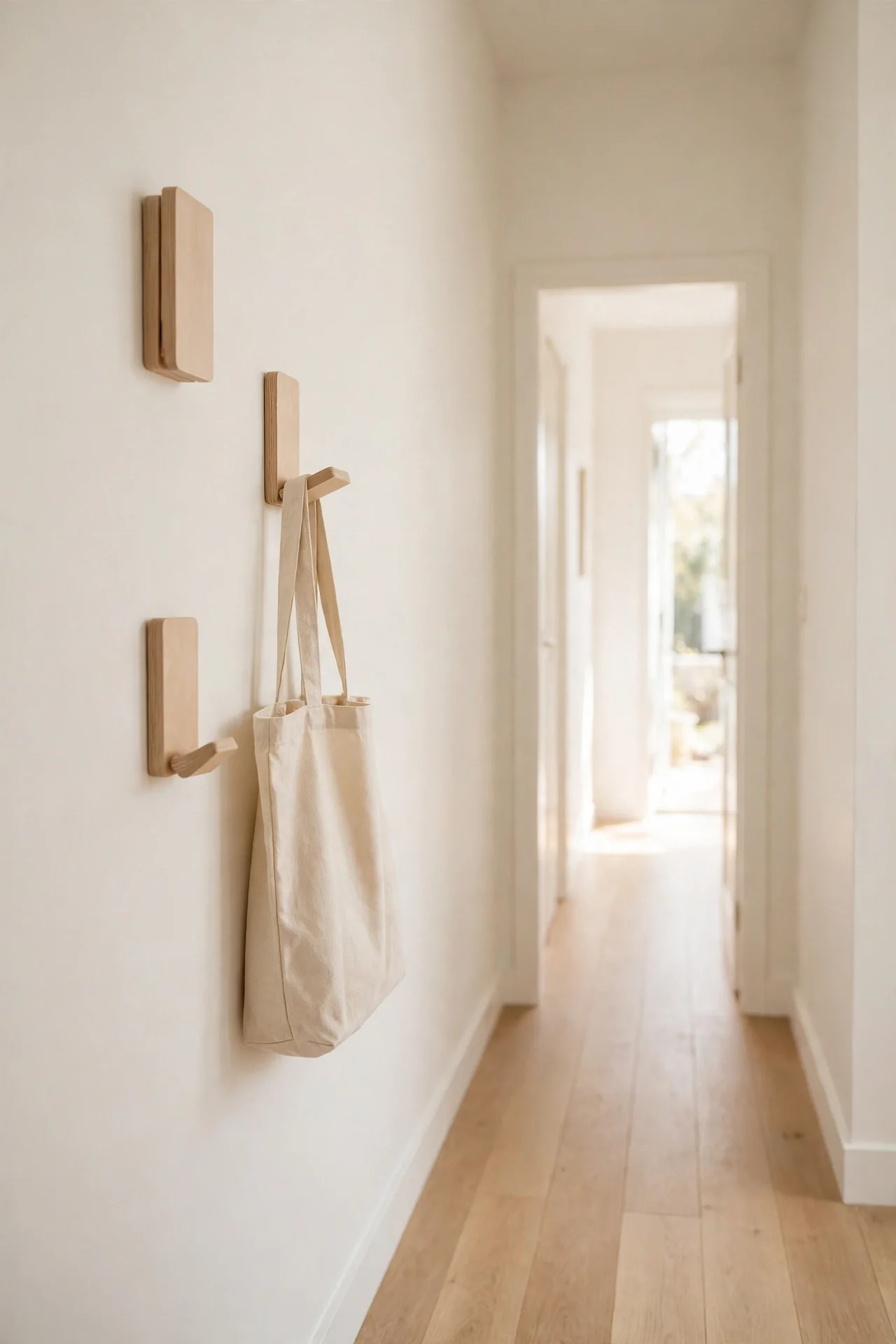
Cost: $15 to $35 for a set of three fold-down hooks
Time: Twenty minutes to install with basic screws
Best For: Hallways under three feet wide where fixed hooks snag coats
Skill Level: Beginner, a drill and a level are enough
Result: Hooks that fold flat when empty and hold 15 pounds each
Fold-down hooks disappear when you do not need them, which keeps narrow halls feeling open. Press to fold the hook down, hang your bag, and push it flat when you leave. Kids love the mechanism and actually use the hooks. This tiny detail makes a three-foot hallway feel twice as wide.
Mini Mudroom Zone
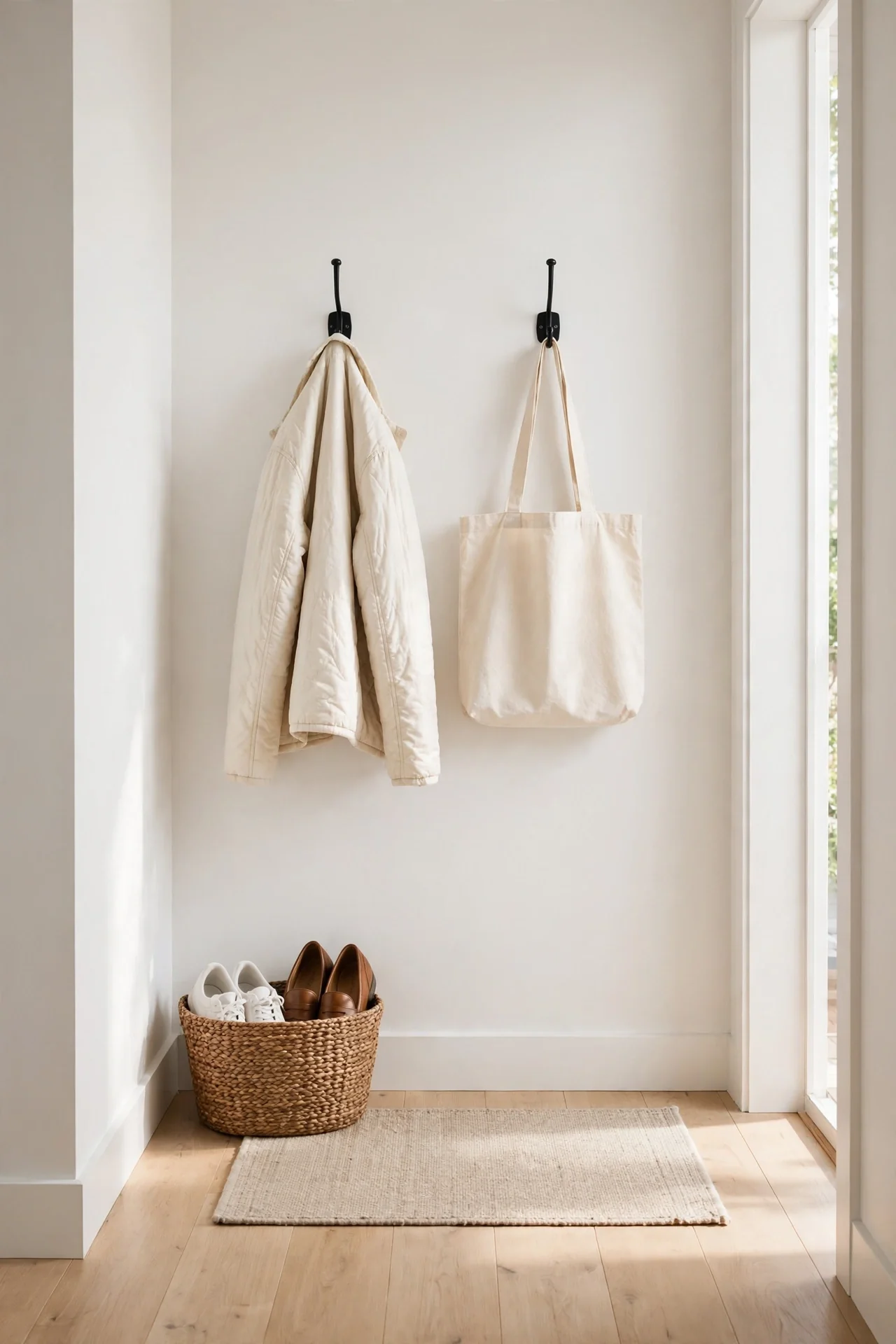
No mudroom? Claim a two-foot square and call it one. A small rug, two hooks, and one basket define a mudroom zone inside any entryway. The rug marks the boundary, the hooks hold the daily coats, and the basket catches shoes. In my experience, this invisible room changes behavior faster than any furniture purchase.
Keep the zone tight so the rest of the entry still breathes. Choose a washable rug since this square takes the most abuse. The defined edge tells kids exactly where shoes stop. Rug tape keeps the edges from curling into a trip hazard. A mini mudroom gives apartment living a house-like rhythm.
Rotating Mail Sorter
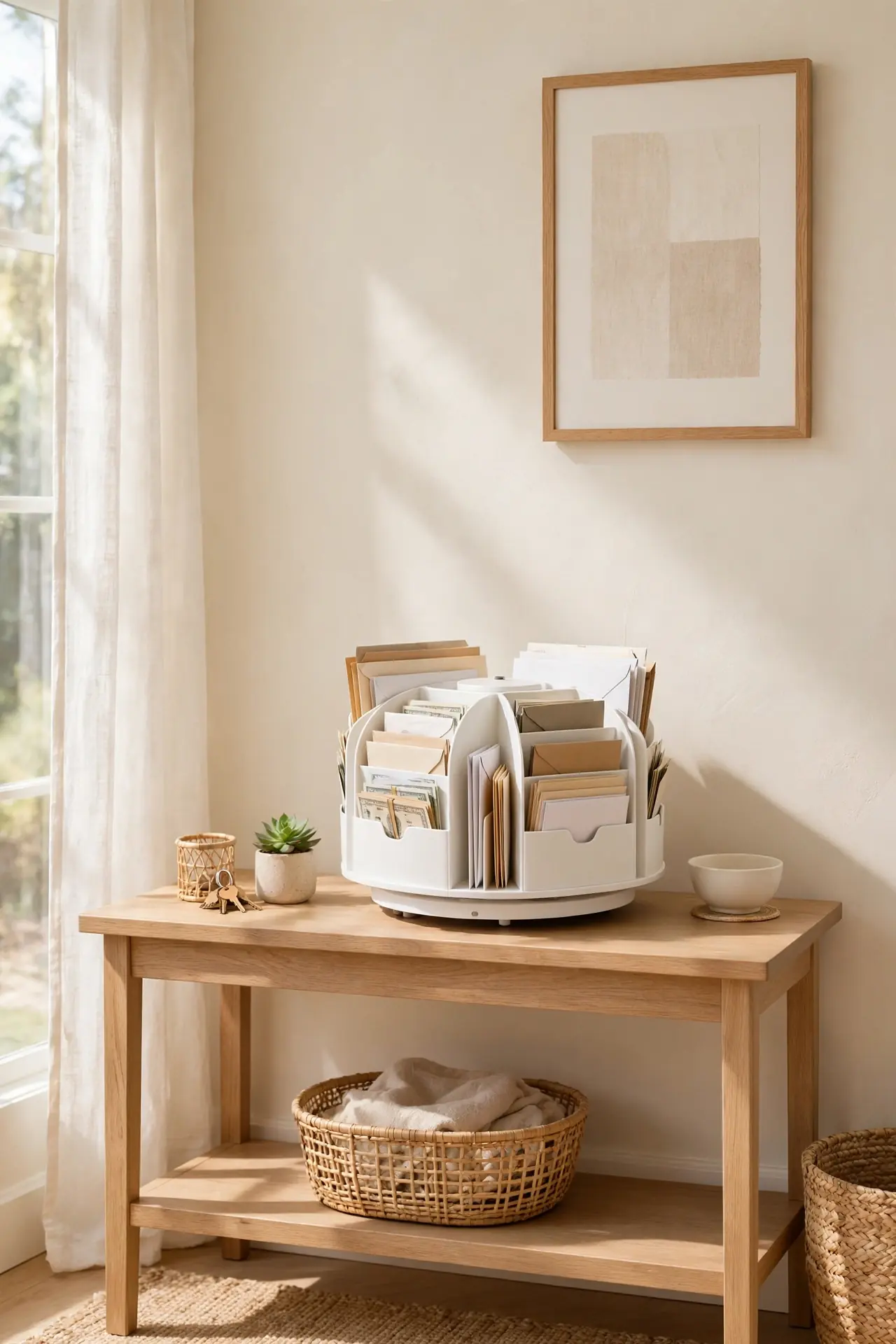
- A rotating sorter spins to reveal labeled slots for bills, school papers, and invitations.
- The round footprint fits on a narrow console without hogging the surface.
- Spin it weekly during your reset and file or toss everything inside.
- Choose one with a weighted base so it never topples when full.
Mail piles are the fastest way to make a small entry feel chaotic. A sorter gives every paper a labeled home the moment it crosses the threshold. That’s why many experts recommend processing mail at the door instead of the kitchen counter. This one habit keeps counters clear and bills paid on time.
Under-Bench Bins
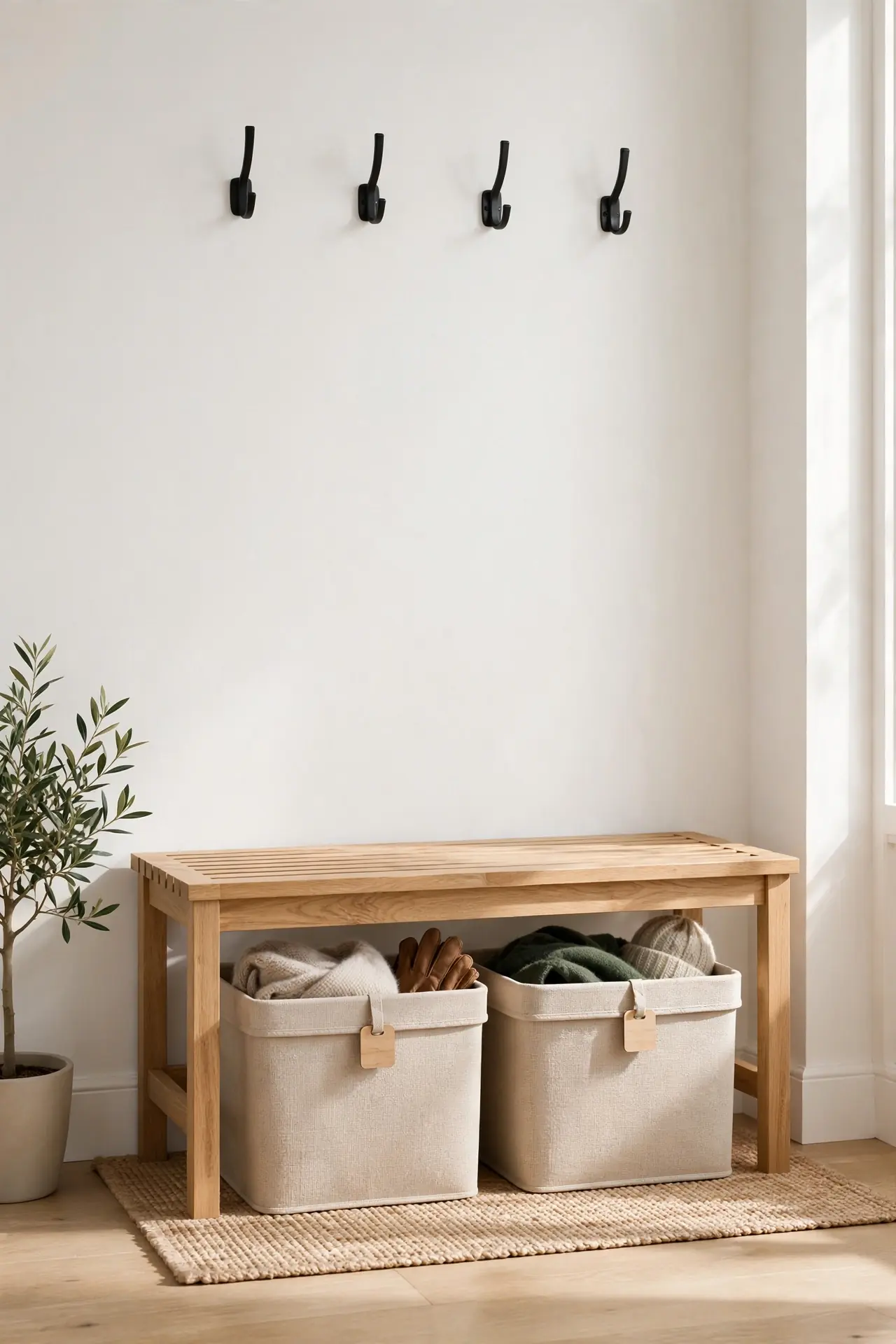
Quick Tip: Slide lidded bins under your entry bench to sort seasonal gear: winter accessories in one, sports equipment in another. Measure the bench clearance first so bins glide in without scraping. Label the fronts so guests find guest slippers without asking, and rotate contents as the seasons change.
The gap under a bench is free storage most people waste. Low bins turn it into a seasonal wardrobe that swaps in minutes. Choose bins with handles so pulling them out feels easy. Dust the bins monthly since floor-level storage collects grime faster. This hidden layer doubles your bench’s storage without adding a single inch.
Slim Cabinet Tower
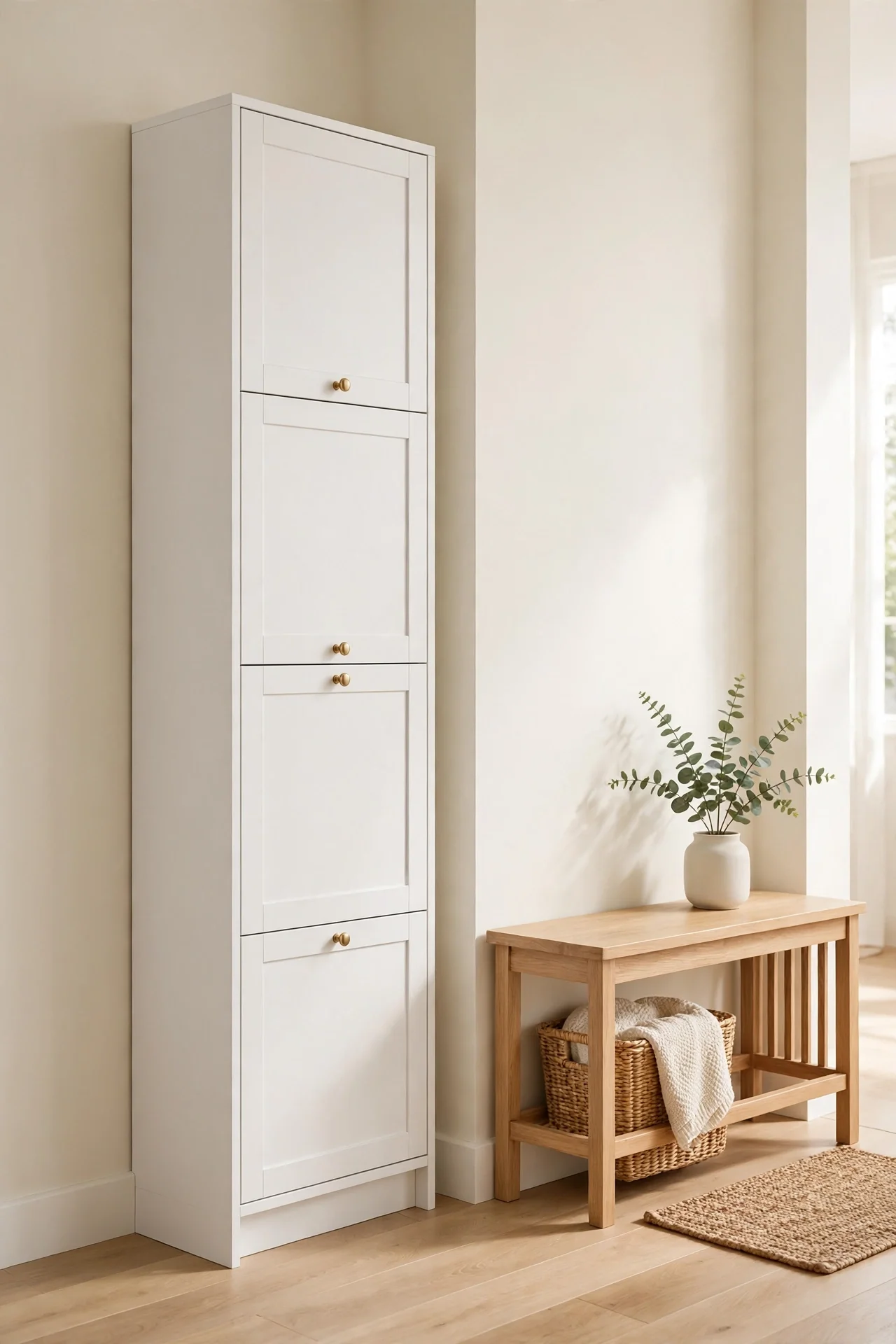
BEFORE: Cleaning supplies, spare bulbs, and the dog leash shared one crowded closet shelf. Every grab sent something tumbling to the floor.
AFTER: A twelve-inch-wide tower cabinet now stands in the dead corner, with shelves for supplies and hooks inside the door for the leash. Everything has a labeled shelf, and the door closes on the chaos.
Tower cabinets exploit vertical inches that narrow entries waste. Look for adjustable shelves so tall bottles fit without wasted headroom. Anchor it to the wall since tall, narrow pieces tip easily. Choose a shallow twelve-inch depth so the tower hugs the wall and never crowds the walkway. This single column replaces a whole closet shelf.
Entryway Charging Station
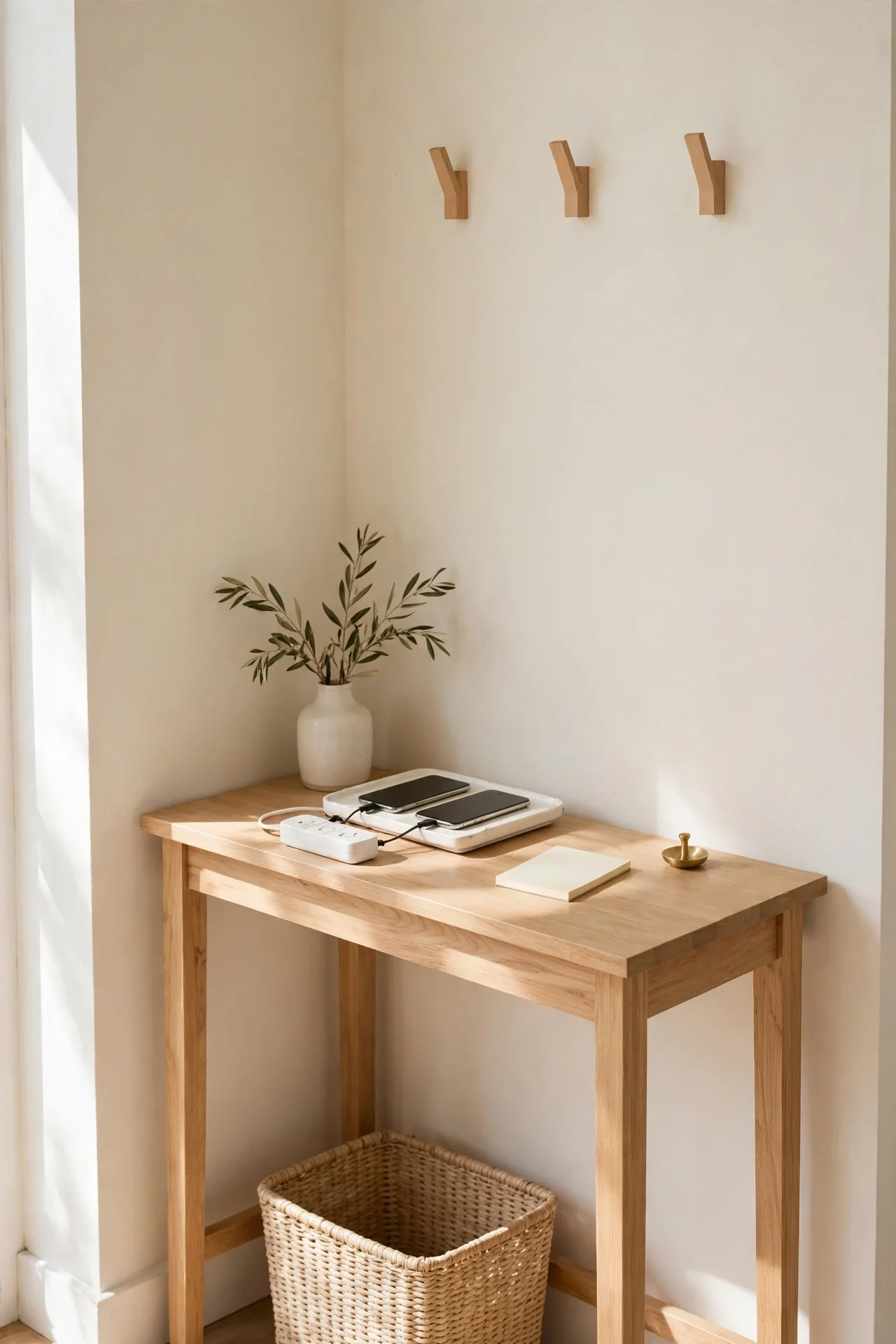
- Clear one small tray or drawer near the door and call it the charging zone.
- Add a compact power strip with short cables so cords never tangle.
- Label one cable per person with colored tape so phones always find their charger.
- Set a house rule: devices land here at dinner and leave charged by morning.
Phones die at the door more than anywhere else, so charge them where they land. A tidy station also stops chargers from migrating around the house. Keep a small notepad beside it for quick reminders. This zone saves more morning minutes than any other idea here.
Labeled Family Bins
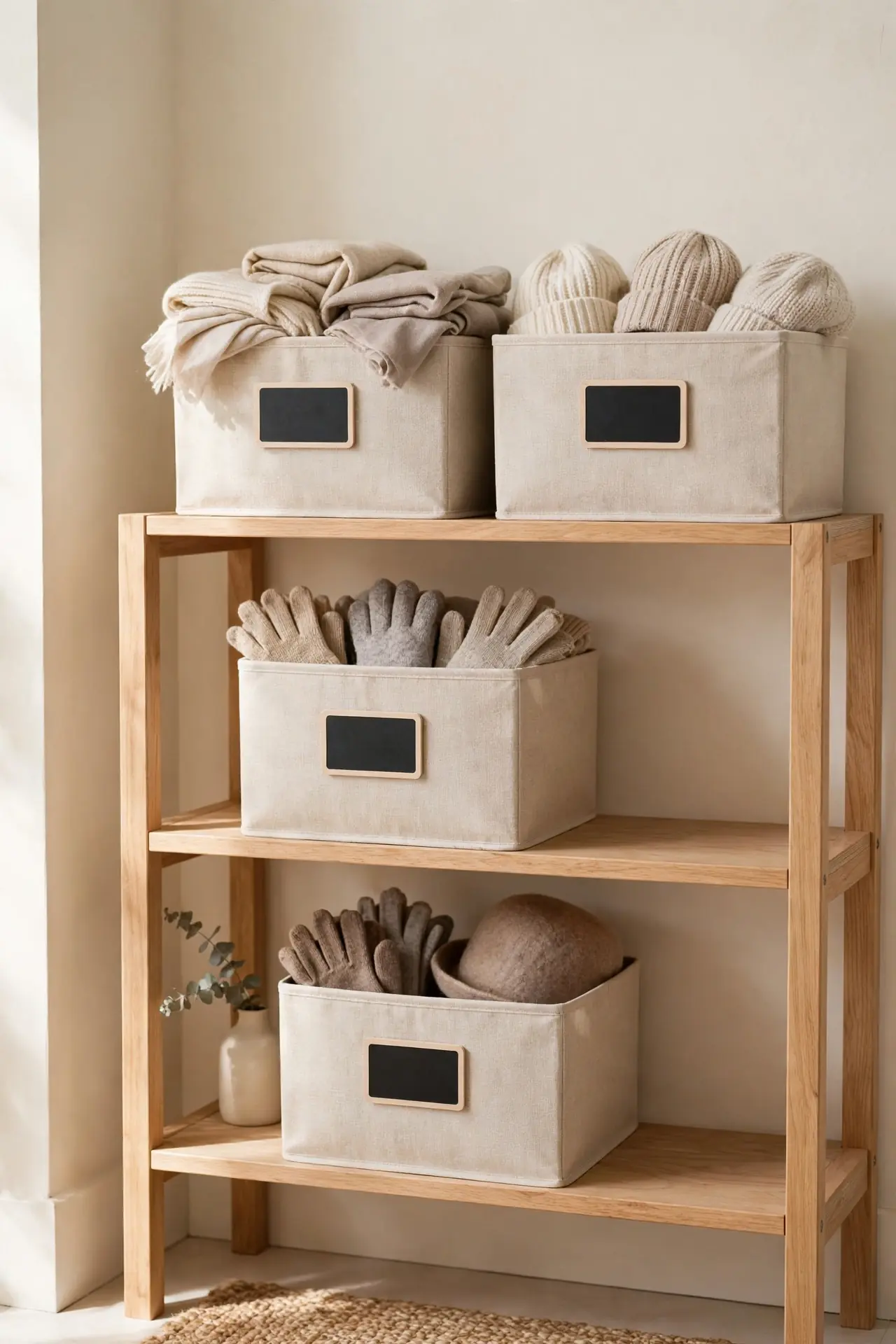
Labeled bins end the daily question of where things go. Each person gets one bin, and the label makes ownership obvious. Compare open versus lidded bins to pick your style.
| Feature | Open Bins | Lidded Bins |
|---|---|---|
| Access | Toss and grab fast | Lift lid, neater look |
| Dust | Collects more dust | Stays cleaner inside |
| Kids | Easy for small hands | Harder for toddlers |
| Look | Casual and airy | Tidy and uniform |
Labels turn ordinary bins into a system the whole family respects. Use a label maker or simple chalk tags for a clean look. Review the bins monthly and reassign as kids grow. This final idea ties every other system in this guide together.
Conclusion
An organized entryway changes how your whole home feels the moment you step inside. These 22 entryway organization ideas for small spaces prove that tight square footage is no barrier to a calm, welcoming front hall. Pick the one that solves your biggest daily frustration first, then add a second idea next weekend.
I’ve seen how small changes like these can completely shift the way a space feels. Pin your favorites to Pinterest so they are ready when the weekend project begins. Try one this week, share the result with a friend, and enjoy a front hall that finally works as hard as you do.

One Comment